
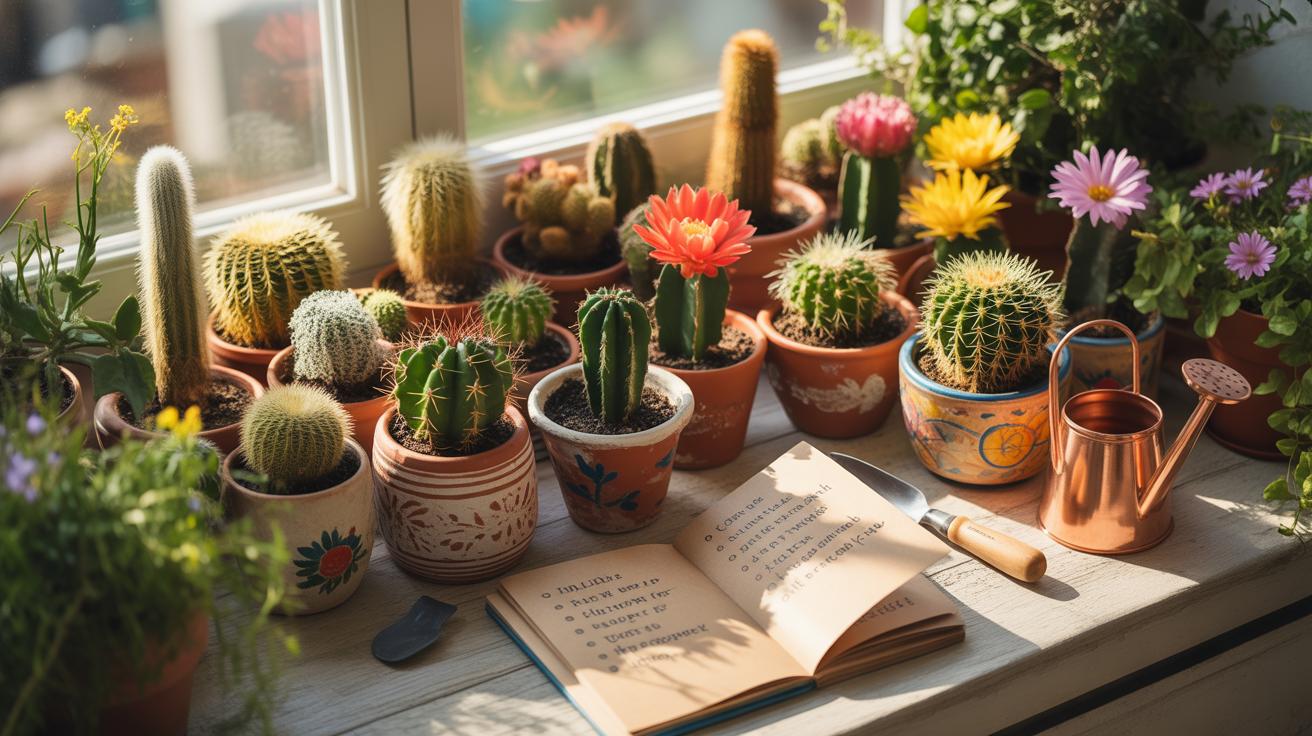
Understanding The Basics Of Cactus Care For Beginners
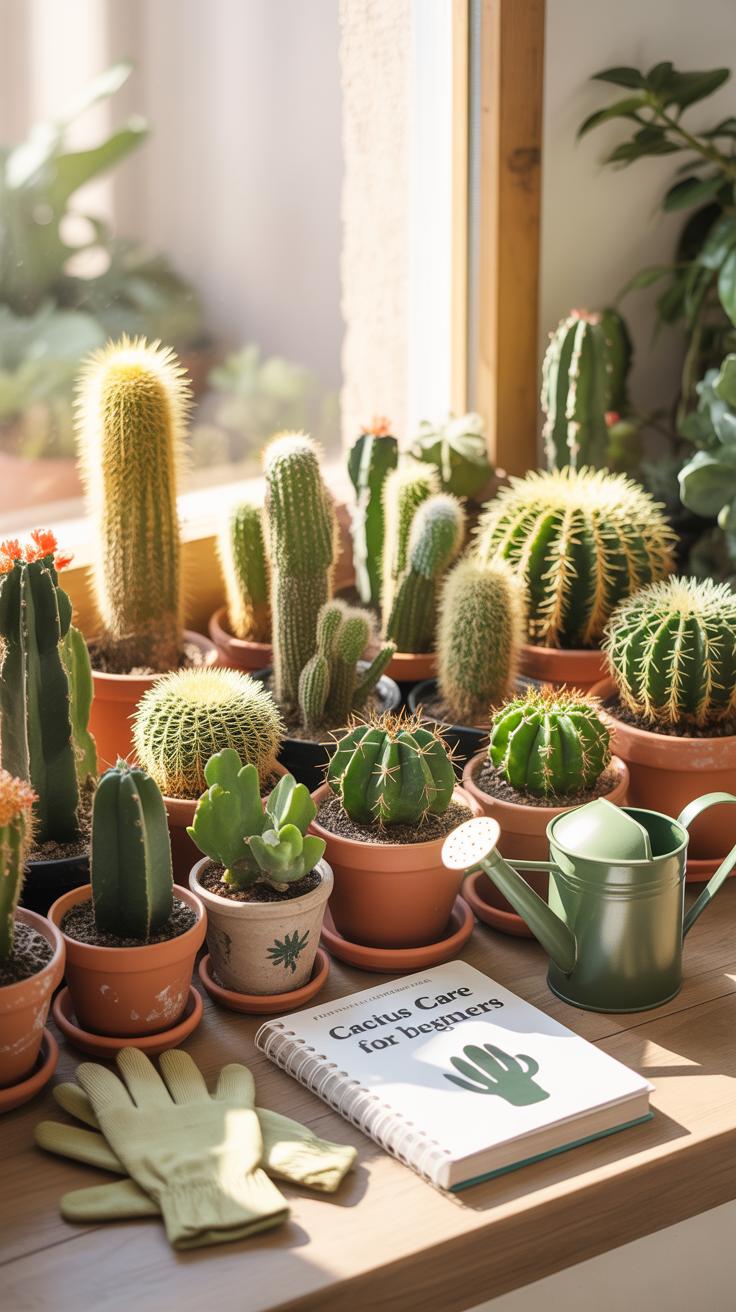
What Makes Cacti Unique Compared To Other Houseplants
Cacti belong to the Cactaceae family and possess distinct biological traits. Most species lack true leaves. They utilize modified stems to store large water volumes for survival during droughts. While most houseplants use stomata for gas exchange during the day, cacti perform Crassulacean Acid Metabolism. They open pores at night to reduce water loss. This metabolic shift dictates their slow growth rate and high light requirements.
Unlike standard foliage plants, cacti feature areoles. These small bumps produce spines, hairs, or new growth. Spines serve multiple tactical roles. They protect the plant from herbivores and provide shade for the stem. Spines also collect moisture from the air to drip onto the soil. These features make cacti resilient in low-humidity environments. They require significantly less frequent watering than most tropical indoor plant species.
How To Identify The Right Cactus Species For Your Environment
Strategic cactus selection depends on your light and temperature levels. Desert cacti require intense, direct sunlight to maintain structure. Without high light, these plants suffer from etiolation. This condition causes thin, weak growth as the plant stretches for light. If you have south-facing windows, choose species like Mammillaria or Echinocactus. These varieties handle heat and high light intensity well. Match the species to your actual window exposure.
Not all cacti thrive in dry heat. Holiday cacti like Schlumbergera are tropical epiphytes. They grow in rainforests rather than deserts. These plants need more water and less direct sun than desert types. Check for the presence of large thorns or leaf-like segments to distinguish between types. Identifying the native habitat allows you to mimic the correct moisture and light levels. Proper identification prevents early plant death from incorrect care.
Choosing The Best Soil And Potting Mix For Cactus Care Indoor
Why Well Draining Soil Is Essential For Healthy Cactus Growth
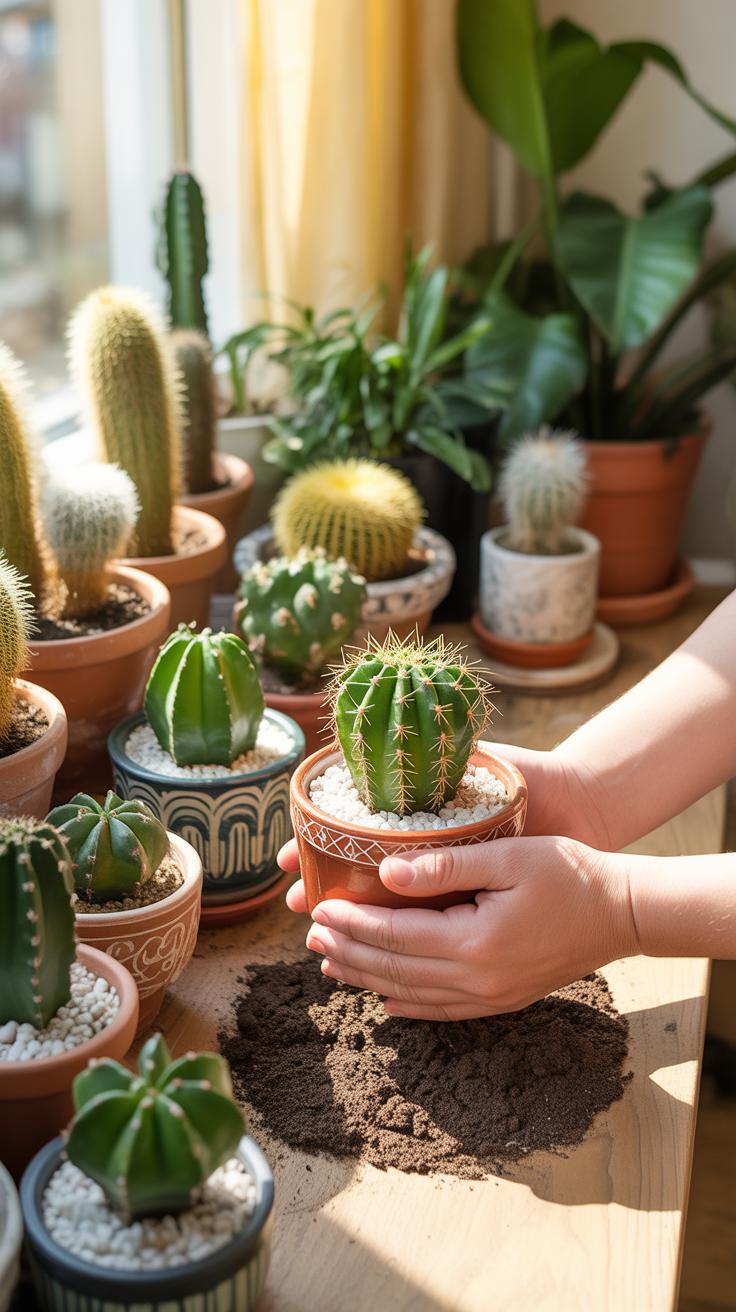
Cactus roots require oxygen to survive. Standard potting soil holds too much water for desert species. High moisture levels trigger anaerobic conditions that rot the root system. Once rot starts, the plant cannot absorb nutrients. It eventually collapses and dies. You must provide a medium that allows water to pass through quickly. This mimics natural arid environments found in the Americas.
Rapid drainage prevents salt buildup from tap water. Mineral salts damage sensitive root hairs over time. Well-draining soil creates air pockets even after heavy watering. These pockets allow roots to breathe and stay firm. Proper aeration also discourages fungal pathogens and pests like fungus gnats. Strategic soil choice is the foundation of long-term plant health. It reduces the risk of overwatering mistakes significantly.
How To Mix Your Own Cactus Potting Blend At Home
Commercial mixes often contain too much peat moss for indoor environments. Mixing your own substrate provides total control over drainage and aeration. You need inorganic materials to create the necessary gritty texture. These components ensure the soil does not compact over time. Hardened soil blocks water and air from reaching the roots. A custom blend lasts longer than store-bought bags.
- Horticultural Pumice: Use pumice to increase aeration and drainage without adding weight. It is a volcanic rock that does not break down or float like perlite. This material keeps the soil structure open for years.
- Coarse Sand: Incorporate washed granite or quartz sand to add weight and grit. Avoid fine play sand because it clogs air pores and creates a cement-like texture. Sharp sand provides the best results for desert plants.
- Perlite: Add perlite for a cheap way to improve drainage. It is lightweight and prevents soil compaction. While it can float to the surface, it remains a reliable tool for keeping the root zone dry.
- Pine Bark Fines: Use small pieces of composted pine bark to provide a stable organic base. These fines hold a tiny amount of moisture without becoming waterlogged. They also provide a steady source of nutrients as they decompose.
- Turface or Calcined Clay: Select these porous ceramic granules to absorb excess water while maintaining air space. They act as a buffer against overwatering. This material is popular in professional succulent nurseries for their durability and consistent size.

Combine three parts grit with one part organic matter for the best results. Test the mix by squeezing a damp handful. It should fall apart immediately when you release your grip. This test ensures the blend will not trap moisture against the stem. Adjust the ratios based on your home humidity levels. Reliable Cactus Care Tips start with a substrate that prioritizes drainage over water retention.
Mastering Watering Schedules With These Cactus Care Tips Indoor
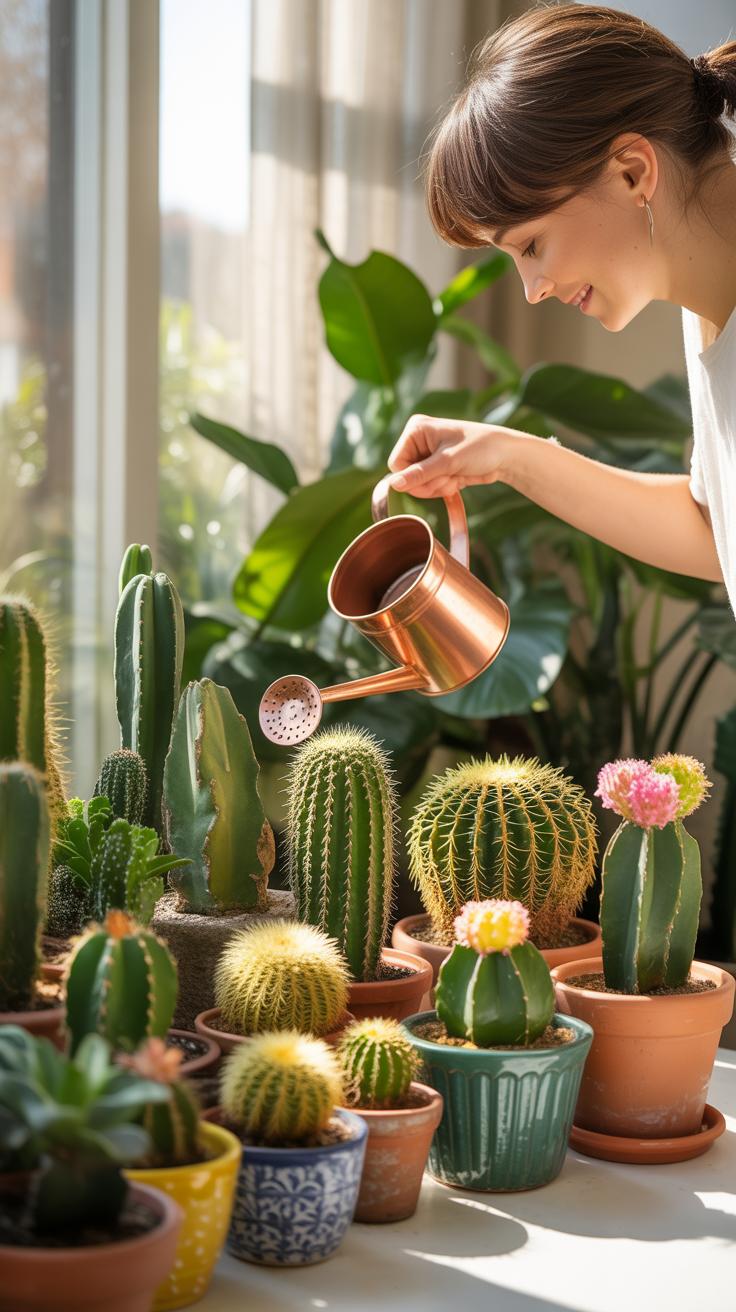
How Often Should You Water An Indoor Cactus
Standard calendars fail because indoor environments fluctuate. You must water based on soil dryness and light levels. Most indoor cacti require water every two to four weeks during the active growing season. This period usually spans from spring through late summer. Check the soil depth with a finger or wooden skewer. Only apply water when the substrate is completely dry from top to bottom.
Winter dormancy changes the strategy entirely. Cacti metabolism drops when light levels decrease. You should reduce watering to once every six or eight weeks during cold months. Some species require no water at all until spring returns. Overwatering during dormancy leads to certain root death. Always use room temperature water to avoid shocking the root system. Pour water until it drains freely from the bottom holes.
Signs Of Overwatering And Underwatering In Cactus Plants
Overwatering kills more indoor cacti than any other factor. Visual cues start at the base of the plant. Look for yellowing tissues or a translucent appearance in the stems. If the base feels soft or mushy, fungal rot has likely started. This damage is often irreversible once the core softens. Black spots or a foul smell from the soil confirm that the roots are suffocating from lack of oxygen.

Underwatering presents different physical symptoms. A dehydrated cactus will look shriveled or wrinkled as it uses its internal water reserves. The ribs of columnar species will become more pronounced and sharp. You might notice the plant losing its rigid structure and leaning over. While cacti tolerate drought, long periods without water cause root hairs to die back. Rehydrate the plant slowly to avoid splitting the skin from sudden internal pressure.
Sunlight And Placement Strategies For Indoor Cactus Plants
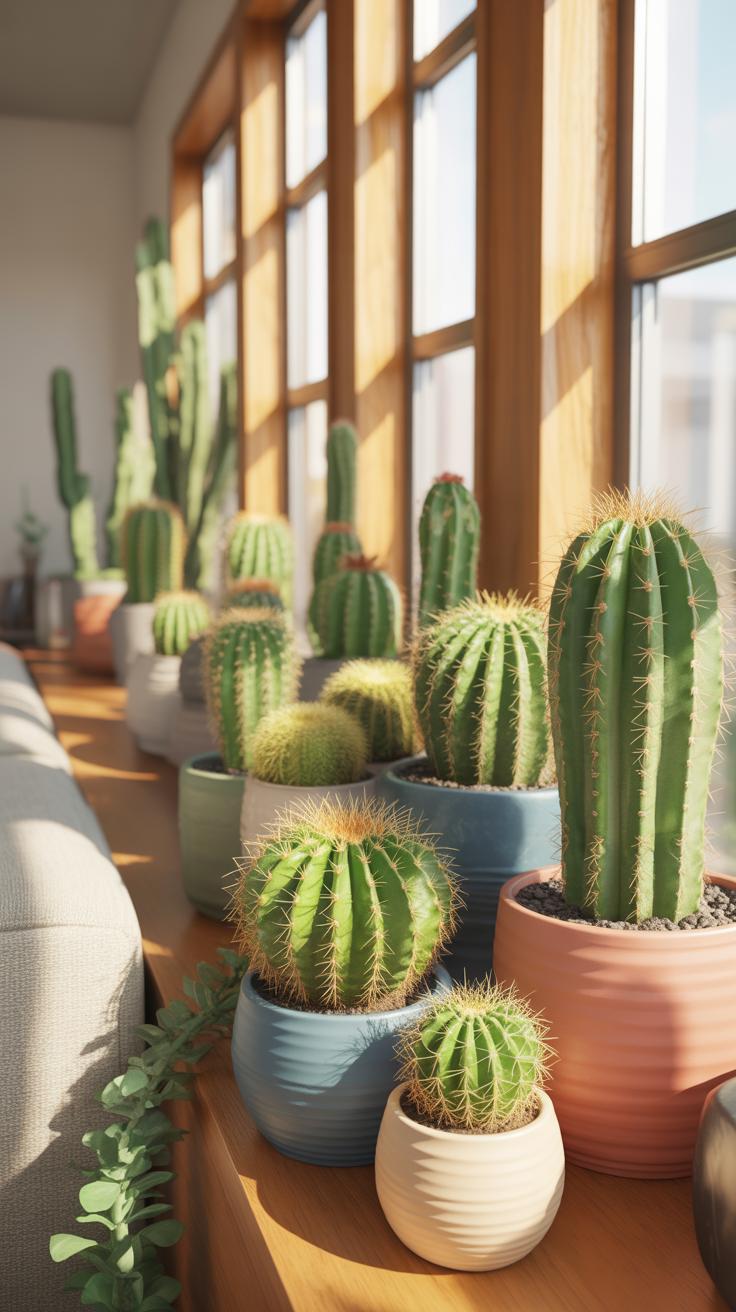
How Much Light Do Indoor Cactus Plants Actually Need
Indoor cacti require direct light to maintain health and structural integrity. Deserts provide intense solar radiation that most interior spaces cannot match. You must provide at least six hours of bright light daily. Insufficient light causes etiolation where the plant stretches and weakens. This growth pattern is permanent and ruins the aesthetic value. Monitor your plant for any pale green discoloration at the tips.
Light intensity dictates the metabolic rate of the cactus. High light levels allow the plant to process water and nutrients efficiently. Low light leads to damp soil and root rot because the plant stops growing. You should adjust placement based on the season. Winter months bring shorter days and lower intensity. Move your plants closer to the glass during this period to prevent dormancy issues or death.
Best Window Orientations And Artificial Lighting Options For Cacti
South facing windows offer the most consistent and intense light for cacti. These locations mimic the natural habitat by providing high heat and solar exposure. West facing windows serve as a strong second choice with intense afternoon sun. You must avoid north facing windows entirely. They do not provide enough energy for desert species. East windows work for some forest cacti but fail for desert types.

If natural light is low, you must use full spectrum LED grow lights. Standard household bulbs do not provide the correct wavelengths for photosynthesis. Set your grow lights on a timer for twelve to fourteen hours daily. Keep the light source within six to twelve inches of the plant. Close proximity ensures the cactus receives enough foot candles to thrive. Cheap lights often lack the power to sustain growth.
Temperature And Humidity Requirements For Indoor Cactus
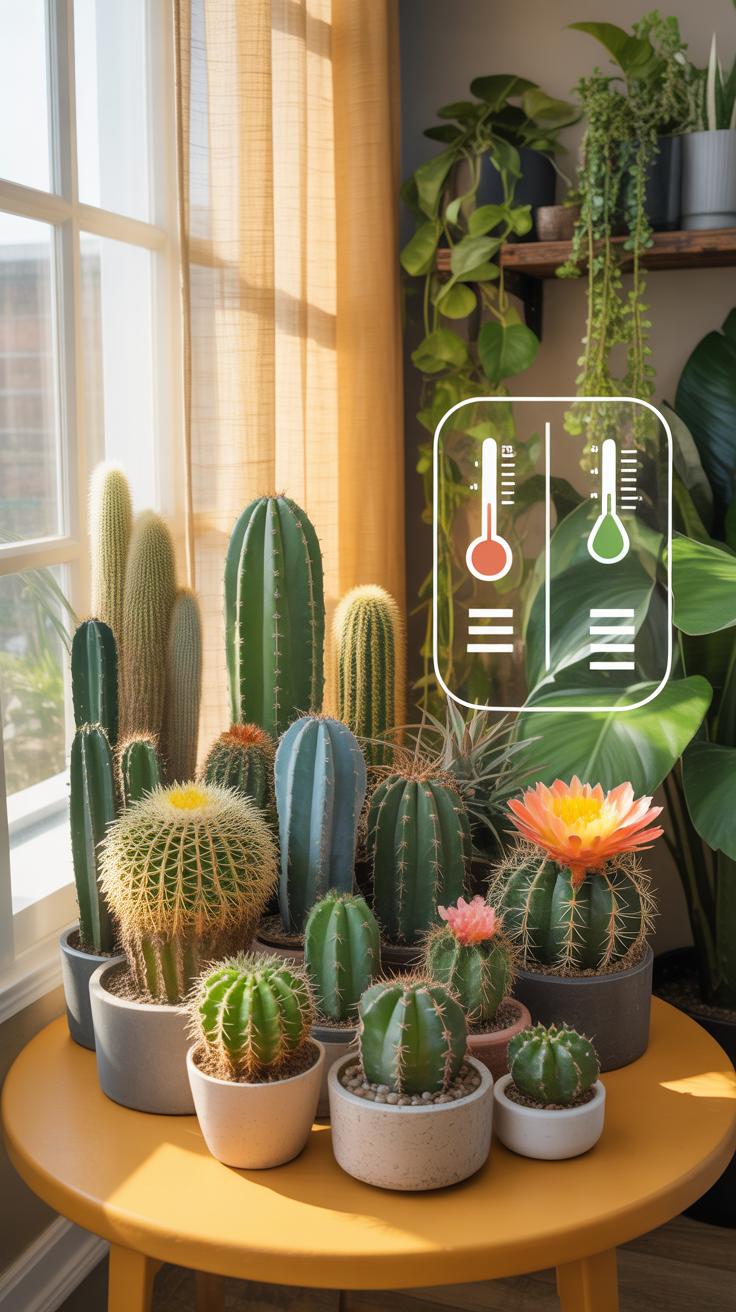
What Temperature Range Keeps Your Indoor Cactus Thriving
Most indoor cacti thrive in daytime temperatures between 70 and 80 degrees Fahrenheit. These plants originate from arid regions with high solar radiation. Stable heat during the day supports active photosynthesis and nutrient processing. You must maintain these levels to ensure the plant has enough energy for structural growth. Avoid placing pots near cold drafts or air conditioning vents to prevent tissue damage.
Nighttime temperatures should drop to between 50 and 55 degrees Fahrenheit. This temperature shift mimics natural desert cycles and triggers necessary metabolic changes. Many species require this cooling period to enter dormancy during winter months. Failure to provide a cooler night environment can lead to weak growth and prevent flowering. Keep your cactus away from heaters and radiators to avoid excessive heat stress during the night.
How Indoor Humidity Levels Affect Cactus Health And Growth
Cacti require low humidity levels ranging from 10 to 30 percent. High moisture in the air prevents the soil from drying out quickly. This leads to fungal infections and root rot. Most residential homes provide the dry air these plants need naturally. You should monitor areas like kitchens or bathrooms where steam increases moisture. High humidity stunts growth by interfering with the plant’s transpirational cooling process.
Air circulation is vital when managing humidity for your indoor cactus. Stagnant air allows moisture to settle on the plant skin. This creates a breeding ground for pests and pathogens. Use small fans to move air in tight spaces or crowded shelves. Do not mist your cactus as it provides no benefit and encourages surface rot. Always prioritize dry air and consistent ventilation to maintain long-term cactus health.
Fertilizing And Cactus Growing Tips For Maximum Vitality
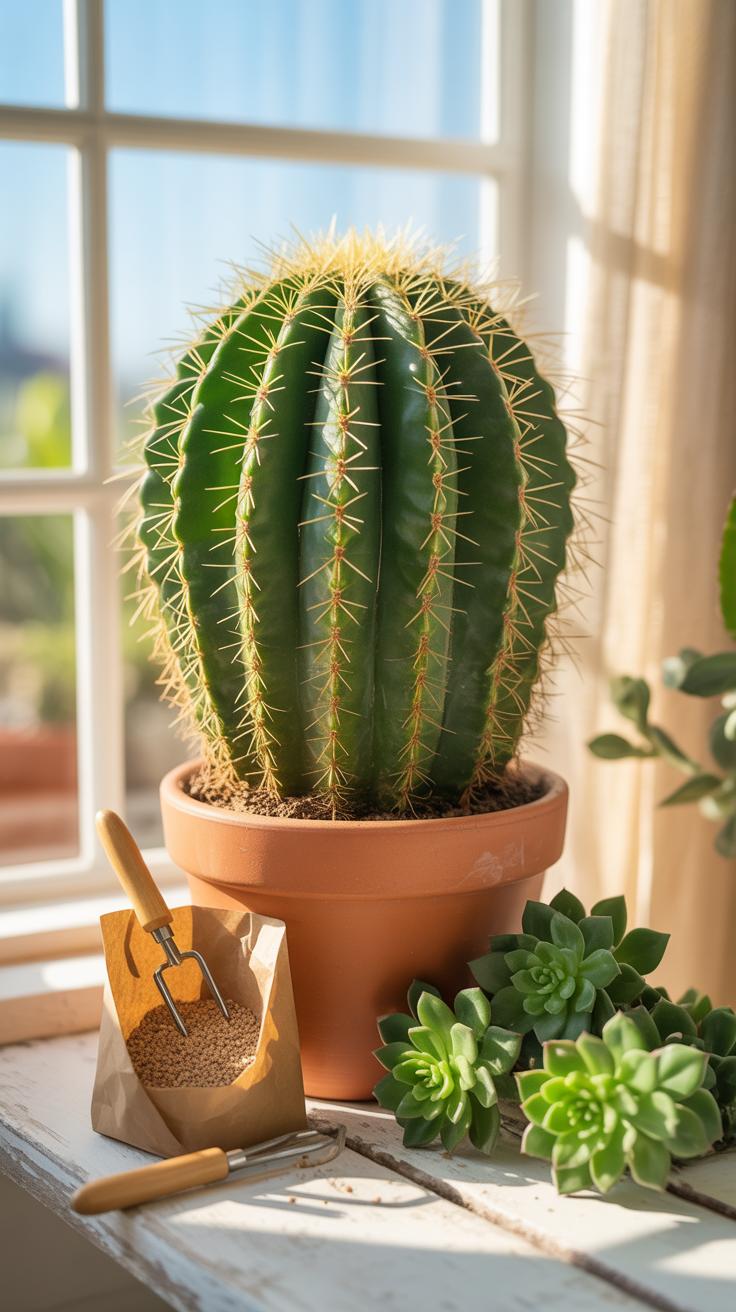
When And How To Fertilize Cacti For Optimal Growth
Fertilize cacti only during their active growing season. Most species grow from early spring through late summer. Stop all feeding when temperatures drop in autumn. Cacti enter dormancy during winter months and cannot process nutrients. Applying fertilizer while the plant rests leads to salt buildup in the soil. This mineral accumulation burns delicate root systems and stunts future growth cycles.
Dilute water-soluble fertilizer to half the recommended strength to prevent chemical burns. Apply the solution directly to the soil after a light watering. Wet soil protects roots from sudden nutrient shocks. Never fertilize a bone-dry plant or one showing signs of heat stress. Strategic feeding supports tissue expansion and replaces minerals lost to drainage. Follow a consistent schedule every four to six weeks during the peak heat.
Choosing The Right Nutrients To Encourage Blooming And Strong Roots
Select a fertilizer high in phosphorus and potassium but low in nitrogen. High nitrogen levels cause weak and watery growth that invites pests. You need a balanced NPK ratio like 5-10-10 or 10-10-10 used at half strength. Phosphorus drives flower production and seed development. Potassium strengthens the internal structure and helps the plant resist disease. Pure organic matter often retains too much moisture.

Use specialized cactus food or low-nitrogen liquid formulas for the best results. Granular slow-release options work but offer less control over nutrient delivery. Micros-nutrients like magnesium and iron also assist with photosynthesis and color. Check the label for these trace elements to ensure long-term health. Correct mineral balance ensures the cactus remains firm and develops a thick skin. Proper nutrition prevents the plant from stretching toward light sources.
Repotting And Propagation Techniques For Cactus Plants
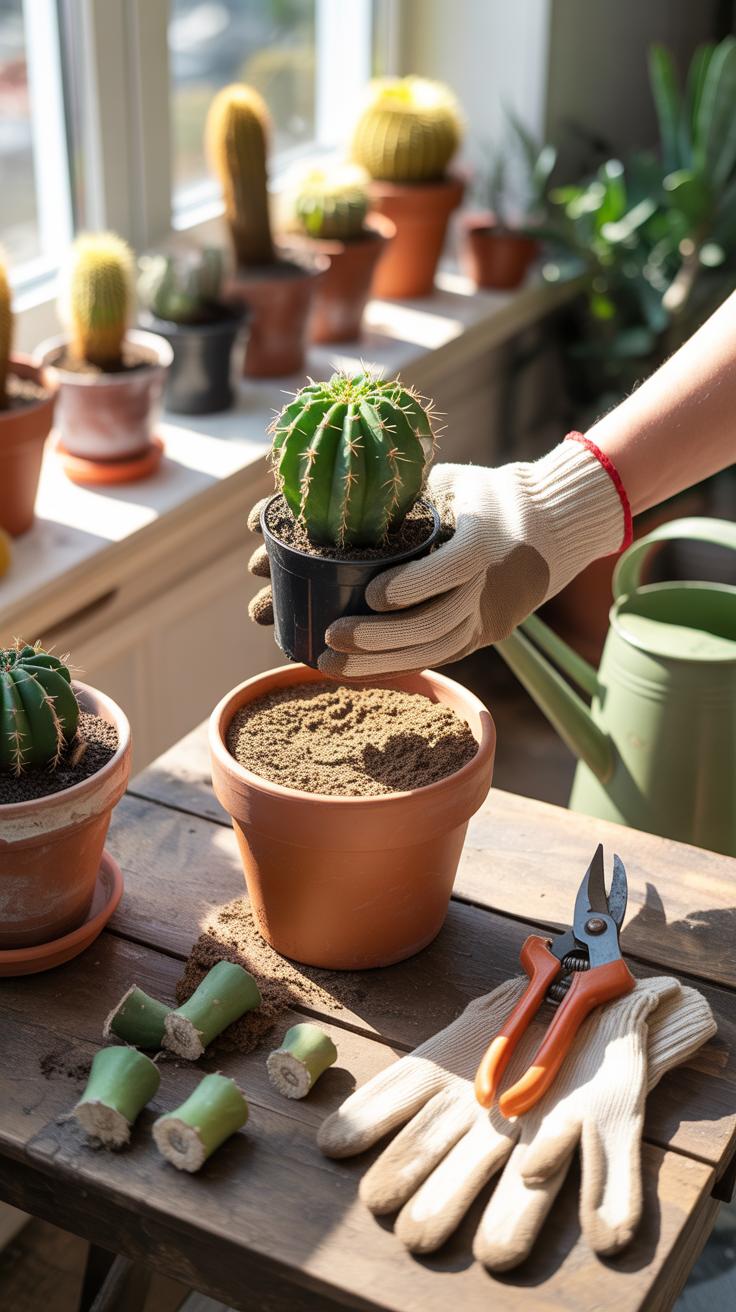
How To Safely Repot A Cactus Without Damaging Its Roots Or Spines
Repotting a cactus requires physical protection for the handler and the plant. Use thick leather gloves or a folded newspaper wrap to move the specimen. This prevents spine breakage and skin punctures. Choose a pot only one size larger than the current container. Excess soil holds too much water. This moisture leads to root rot and fungal infections quickly.
Carefully slide the cactus from its old pot. Inspect the root ball for pests or dead tissue. Trim away any mushy or blackened roots with sterilized shears. Place the plant in a dry, gritty soil mix designed for desert species. Do not water the cactus for at least one week after repotting. This allows damaged roots to callus and prevents infection.
Step By Step Guide To Propagating Cactus Offsets And Cuttings
Propagation expands your collection through asexual reproduction. Many species produce offsets or small clones at the base of the parent plant. You can also take stem cuttings from upright varieties. Always use a clean blade to minimize tissue damage. Identifying the correct growing season is vital for success. Most cacti respond best during active growth in the spring or summer months.
- Sanitize Tools: Use isopropyl alcohol to clean your knife or shears before every cut. Pathogens spread easily through open plant wounds. A clean cut ensures the parent plant heals without developing rot or mold.
- Identify Offsets: Locate small pups growing near the base of the mother plant. Gently twist or cut them away at the joint. Ensure you capture a clean surface area to allow the new plant to form its own roots.
- Callus Period: Place cuttings in a dry, shaded area for several days until the wound dries. This hardened layer acts as a barrier against soil-borne bacteria. Skipping this step often causes the cutting to liquefy and die when planted.
- Rooting Medium: Insert the callused end into a shallow tray of perlite or coarse sand. Avoid standard potting soil which retains too much moisture for new cuttings. Keep the medium slightly damp but never soaked to encourage downward root growth.
- Monitor Growth: Check for resistance when gently pulling the cutting after three weeks. Resistance indicates that roots have formed and are anchoring the plant. Once established, transition the new cactus to a permanent pot with standard inorganic soil mixes.

Successful propagation depends on patience and moisture control. Do not rush the callusing process or the plant will fail. Provide bright, indirect light rather than harsh sun during the initial rooting phase. Intense heat can dehydrate a cutting before it develops a root system to absorb water. Once you see new growth, treat the plant according to standard cactus care protocols.
Designing A Beautiful Indoor Cactus Garden In Your Home
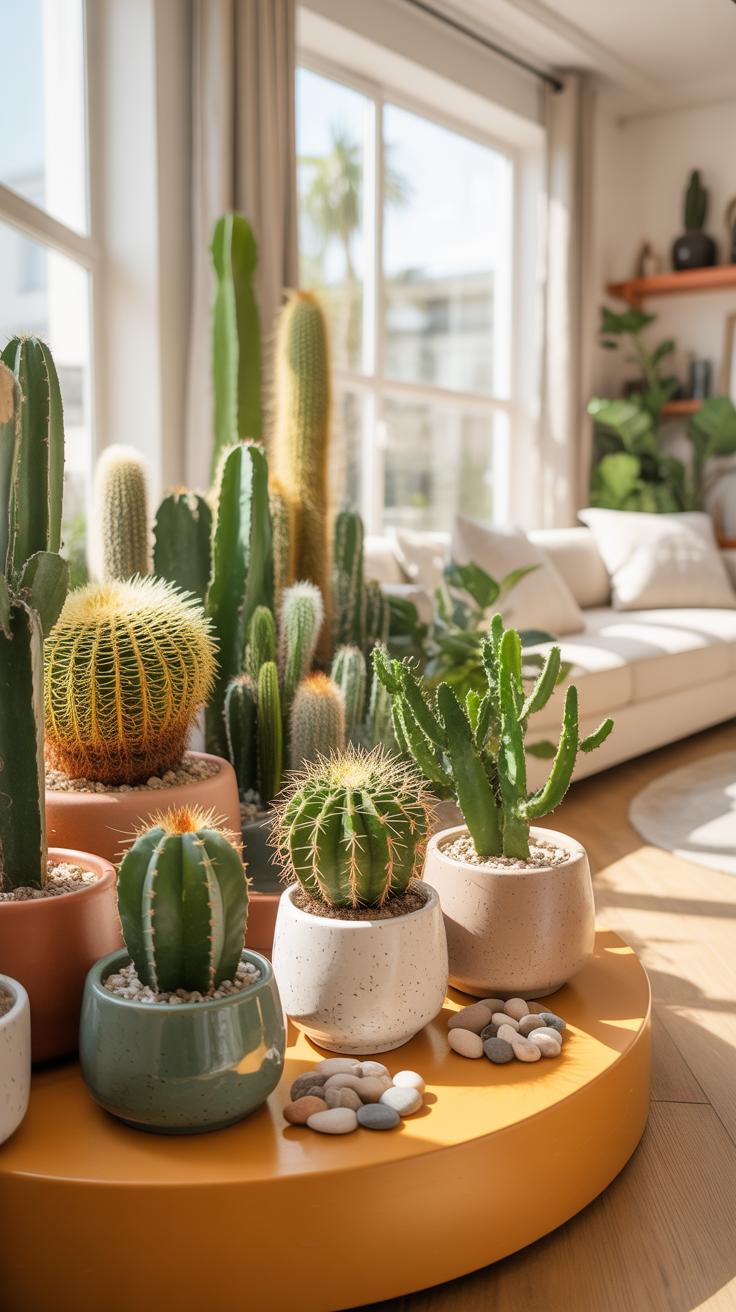
How To Arrange And Style An Eye Catching Indoor Cactus Garden Display
Strategic cactus placement requires a focus on light and scale. Group plants with similar light needs near south facing windows to ensure health. Use the principle of thirds to create visual depth. Place the tallest specimens in the rear and shorter ones in front. This creates a natural slope that mimics desert landscapes. Avoid placing plants in a straight line because it looks artificial.
Effective styling uses contrast to create impact. Pair smooth cacti like Lophophora with spiny species like Ferocactus. This variation in texture keeps the eye moving across the display. Match the growth habits of your plants to the room size. Large columnar species suit floor corners while small globose types fit shelves. Maintain clear space between pots to prevent spine damage and allow sufficient airflow for the plants.
Like the resilient cactus, true beauty flourishes when we nurture it with gentle patience and the wisdom of the sun. Even the sharpest thorn holds a story of grace if you take the time to tend it with love.
Selecting Complementary Plants And Decorative Containers For Your Arrangement
Choose containers based on drainage and material science. Terracotta pots remain the standard because they allow moisture to evaporate through the walls. This prevents root rot in high humidity environments. Modernist designs often use concrete or unglazed ceramic for a clean look. Ensure every vessel has a large drainage hole. Use a uniform color palette for pots to make the varied green hues of the plants stand out.

Select companion plants that share the same watering cycle as your cacti. Succulents like Haworthia or Gasteria work well because they tolerate similar dry soil conditions. Avoid mixing moisture loving tropicals with desert species in the same container. Use top dressing like crushed granite or lava rock to finish the look. This surface layer keeps the plant base dry and gives the entire arrangement a professional appearance.
Seasonal Christmas Cactus Care Tips For Year Round Blooms
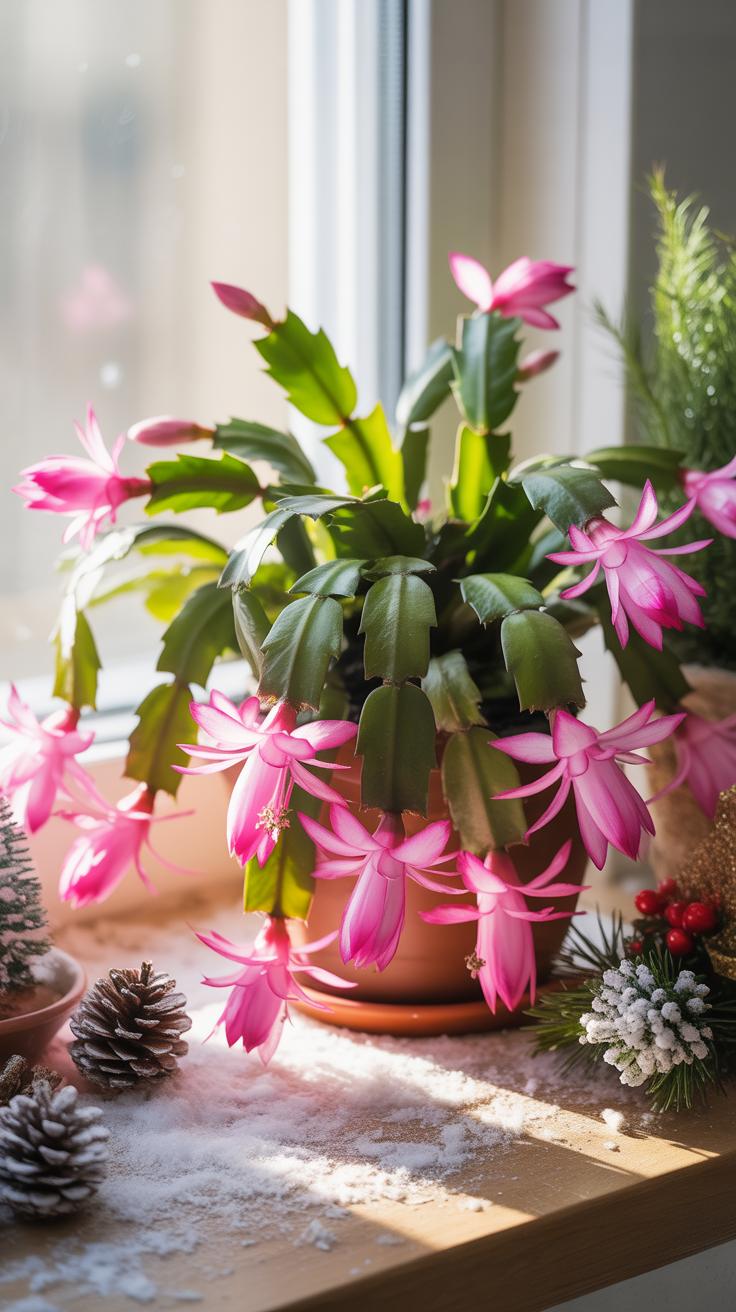
Understanding The Blooming Cycle Of The Christmas Cactus
The Christmas cactus is an epiphyte from the coastal mountains of Brazil. It does not act like a desert cactus. Its cycle depends on photoperiodism and temperature changes. The plant enters a growth phase during spring and summer to build energy. In early autumn, shorter days and cooler nights trigger the dormant state. This shift signals the plant to produce flower buds for the winter.
Bud development starts when the plant senses twelve to fourteen hours of continuous darkness. If you disrupt this cycle with artificial light, the plant will stay in a vegetative state. Keep temperatures between fifty and sixty degrees Fahrenheit during this time. Consistent care during the active months ensures the plant has enough strength to support a full bloom. Fail to follow this cycle and you get zero flowers.
How To Encourage Your Christmas Cactus To Rebloom Every Holiday Season
To force blooms, place the cactus in total darkness for fourteen hours each day starting in October. Use a closet or a dark room to prevent light leaks. Cool temperatures are mandatory for bud set. Reduce watering during this period but do not let the soil dry out completely. Apply a high phosphorus fertilizer once every month until the buds appear. Stop feeding once the flowers open.
Avoid moving the plant after buds form. Sudden changes in light or temperature cause the buds to drop. Keep the humidity high by placing the pot on a tray of pebbles and water. This mimics the tropical mountain environment. Once the blooming ends, prune the stems to encourage new growth for the next year. This cycle ensures the plant remains productive every season without fail.
Troubleshooting Common Pests And Diseases In Cactus Care
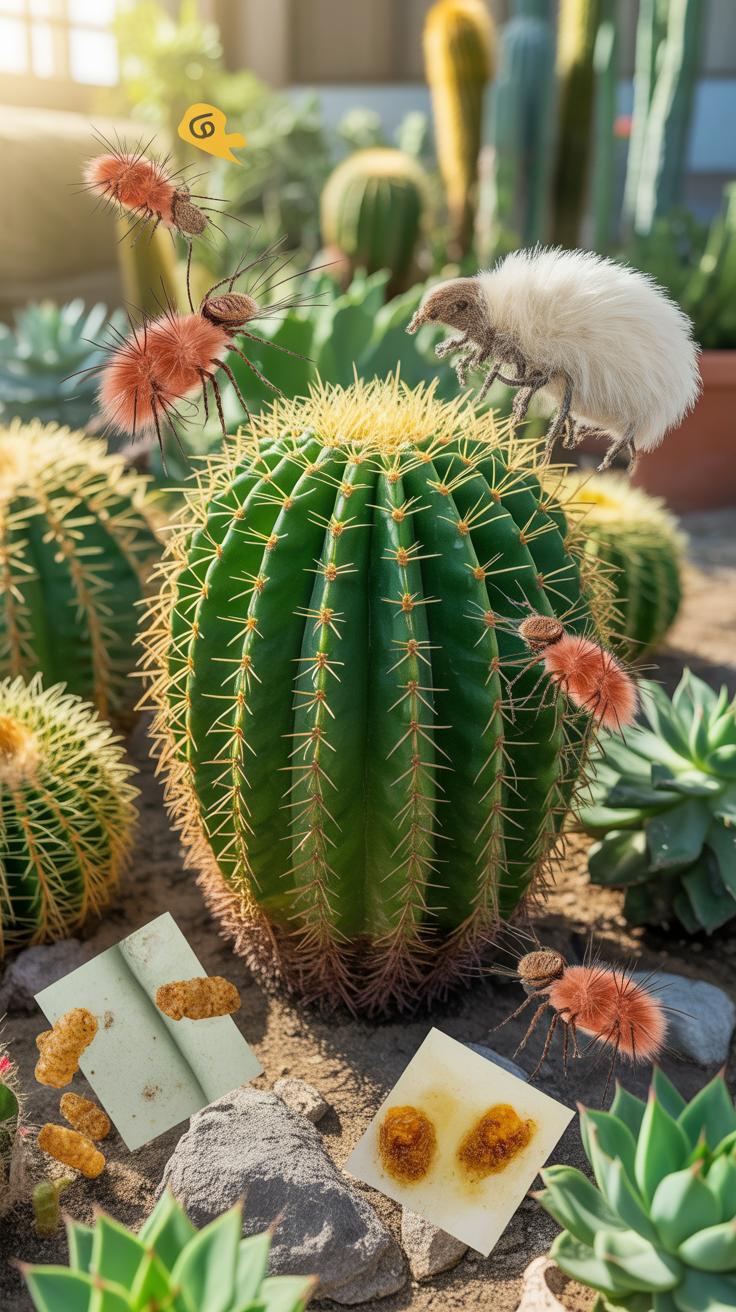
Identifying The Most Common Pests That Attack Indoor Cactus Plants
Scale and mealybugs represent the primary threats to indoor cacti. Mealybugs appear as small white cotton-like clusters in the crevices of the plant ribs. These insects suck sap and weaken the specimen over time. Scale insects look like raised brown or grey bumps on the skin of the cactus. They often hide near the base of the plant or under new growth spines.
Spider mites thrive in dry indoor air and create fine webbing between the needles. You will notice yellow spotting on the skin before the actual mites are visible. Fungus gnats indicate soil that stays too wet for too long. These small black flies lay eggs in organic potting mix. Identifying these pests early prevents permanent scarring of the cactus tissue and stops the spread.
Natural And Chemical Treatment Methods To Restore A Struggling Cactus
Isopropyl alcohol effectively kills mealybugs and scale on contact. Dip a cotton swab in seventy percent rubing alcohol and dab the insects directly. This method works for small infestations without damaging the plant skin. For larger outbreaks, use insecticidal soap or neem oil sprays. Apply these treatments during evening hours to avoid sunburn on the plant. Proper ventilation helps the spray dry quickly.
Fungal rot requires immediate surgical intervention to save the plant. Use a sterile knife to cut away soft or blackened tissue until only healthy green flesh remains. Dust the open wound with sulfur powder to prevent further infection. Stop all watering until the wound forms a hard callus. Move the cactus to a brighter spot with better airflow. Strategic neglect often helps a treated cactus recover faster.
Frequently Asked Questions

What are the most important things for a beginner to know about keeping a cactus alive?
Starting your plant journey is exciting, but the most vital Cactus Care Tips involve mastering the balance of light and water. Beginners often make the mistake of overwatering; instead, let the soil dry out completely between soakings. Ensure your cactus sits in a bright spot with plenty of natural sunlight. Choosing a pot with drainage holes is also essential to prevent root rot and keep your low-maintenance desert friend thriving for years.
How do I know exactly when and how to water my cactus properly?
To water like a pro, use the “soak and dry” method. Insert your finger or a wooden skewer two inches into the soil; if it feels bone-dry, it is time to hydrate. Pour water directly onto the soil until it runs out of the drainage holes, avoiding the plant’s body. Following these practical Cactus Care Tips ensures the roots get deep hydration without sitting in stagnant moisture, which is key for healthy growth.
Can I grow a beautiful cactus collection on a tight budget?
Absolutely! You don’t need expensive equipment to grow a stunning indoor garden. You can save money by propagating pups from a friend’s plant or buying smaller, younger specimens at local nurseries. For affordable containers, reuse old ceramic mugs or bowls, just remember to carefully drill a drainage hole in the bottom. Simple, cost-effective habits are often the most successful way to maintain a vibrant collection without overspending on fancy supplies.