
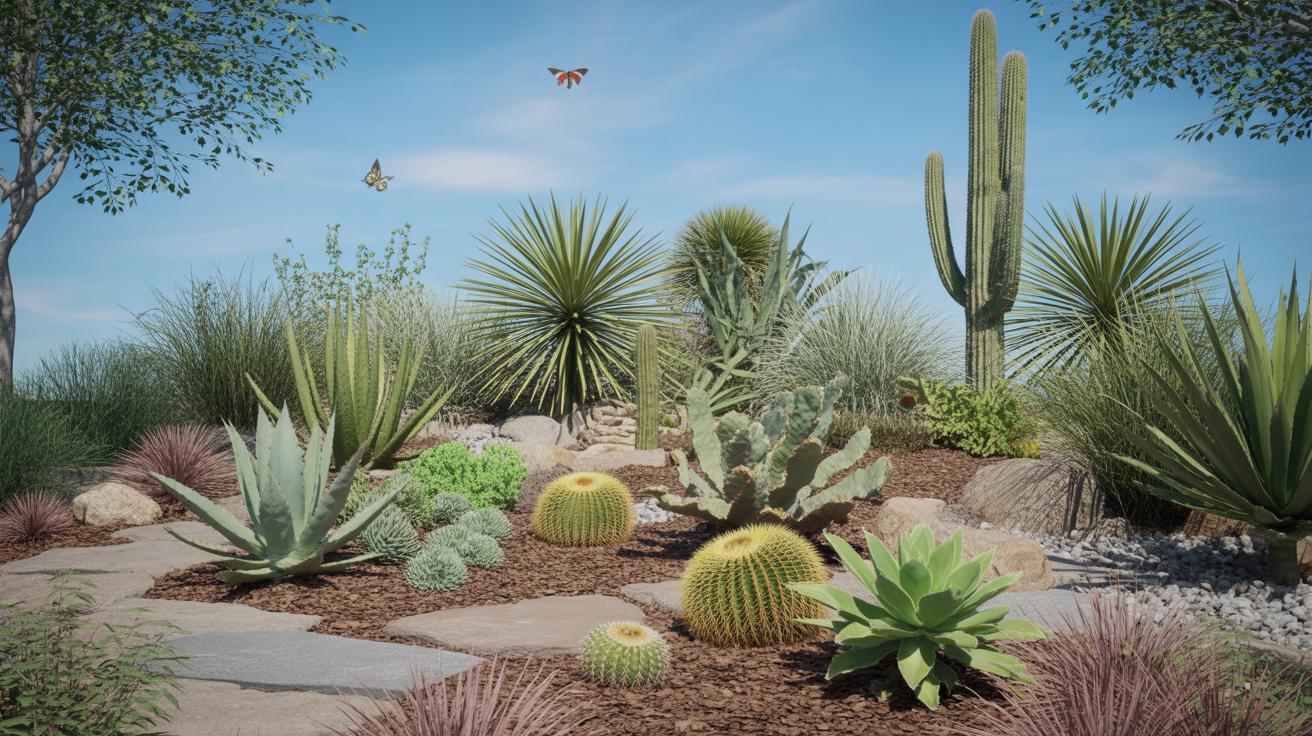
Understanding The Core Principles Of Xeriscape Landscaping
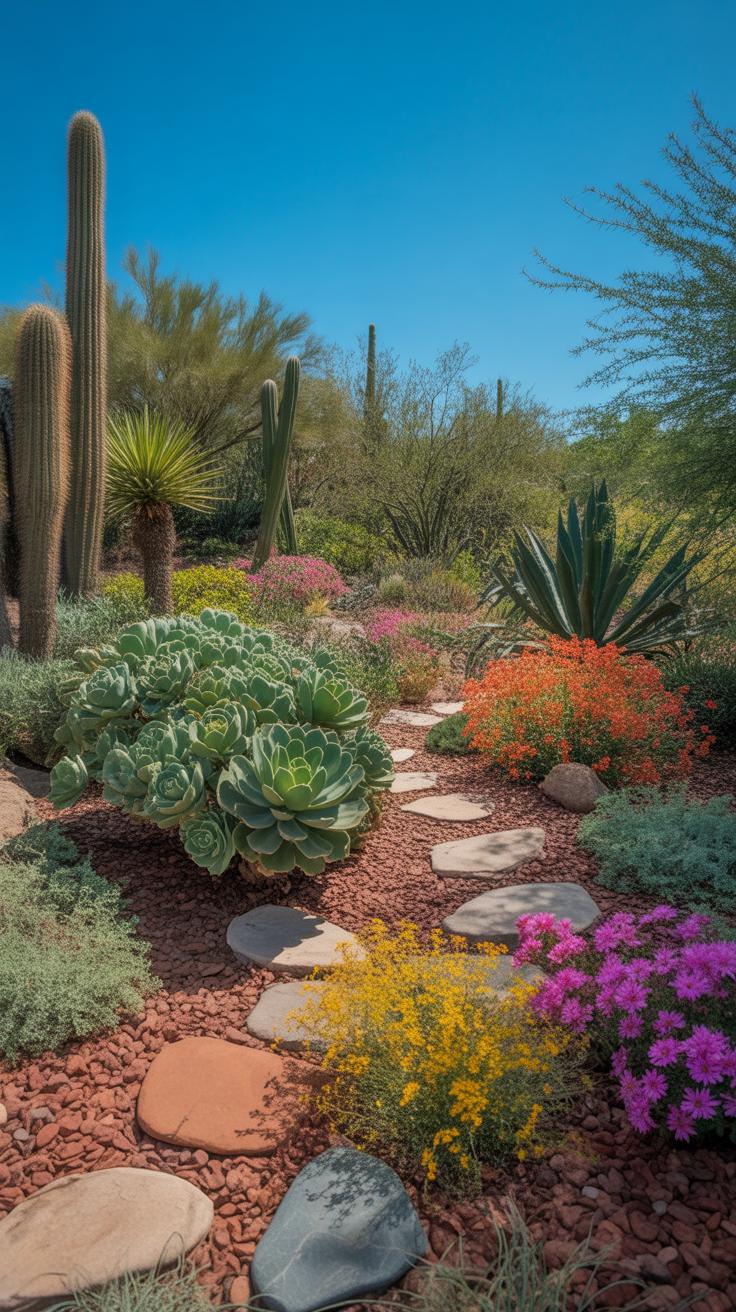
The Seven Foundational Principles That Define Xeriscape Landscaping
Denver Water coined the term xeriscape in 1981 to address chronic water shortages. This methodology uses seven specific pillars to reduce or eliminate the need for supplemental irrigation. It is not just about rocks and cactus. It is a scientific approach to resource management. Designers must integrate each principle to create a functional and self-sustaining outdoor environment.
- Planning and Design: Create a comprehensive scale drawing that accounts for regional climate and site topography. Consider sun exposure, wind patterns, and existing slopes to maximize water retention. A solid plan groups plants by water needs to prevent overwatering dry-zone species.
- Soil Analysis and Improvement: Test your soil to determine its composition and drainage capabilities. Use organic matter like compost to improve water retention in sandy soils or aeration in clay soils. Most native plants require specific drainage speeds to avoid root rot and nutrient deficiencies.
- Practical Turf Areas: Limit high-water turf to small, functional spaces like play areas. Replace non-essential grass with groundcovers, decks, or patios. Select drought-tolerant grass species like Buffalo grass or Fine Fescue that require significantly less irrigation than standard Kentucky Bluegrass or Ryegrass varieties.
- Plant Selection: Choose native or well-adapted plants that thrive in your local hardiness zone. Group these species into hydrozones based on their specific thirst. Use low-water plants for the majority of the landscape. This strategy ensures each plant receives the correct amount of water without wasting resources.
- Efficient Irrigation: Install drip systems or bubblers to deliver water directly to plant roots and minimize evaporation. Avoid overhead sprays that lose water to wind and heat. Use smart controllers that adjust watering schedules based on real-time weather data and soil moisture levels for maximum efficiency.
Mulching and maintenance complete the framework. Apply thick layers of organic or mineral mulch to suppress weeds and cool the soil. This reduces evaporation and protects roots from temperature spikes. Strategic pruning and seasonal weeding keep the system efficient. These seven steps work together to cut water consumption by up to sixty percent compared to traditional turf-heavy designs.
How Xeriscaping Differs From Conventional Landscape Design Approaches
Conventional landscaping relies on heavy irrigation to maintain non-native species and large lawns. This approach views water as a cheap, infinite resource. It often ignores local soil conditions and forces plants to grow in unnatural environments. This creates a high-maintenance cycle of constant watering, mowing, and fertilizing. Conventional designs frequently suffer when local governments impose strict water restrictions during summer droughts.
Xeriscape Landscape Design prioritizes ecological logic over aesthetic trends. It uses the natural environment as a blueprint rather than a hurdle. You save money by reducing water bills and labor costs. This method builds a resilient ecosystem that survives without human intervention. Instead of fighting the local climate, you leverage it. The result is a durable landscape that maintains its value during extreme heat and water shortages.

Top Xeriscape Ideas To Inspire Your Water Smart Garden
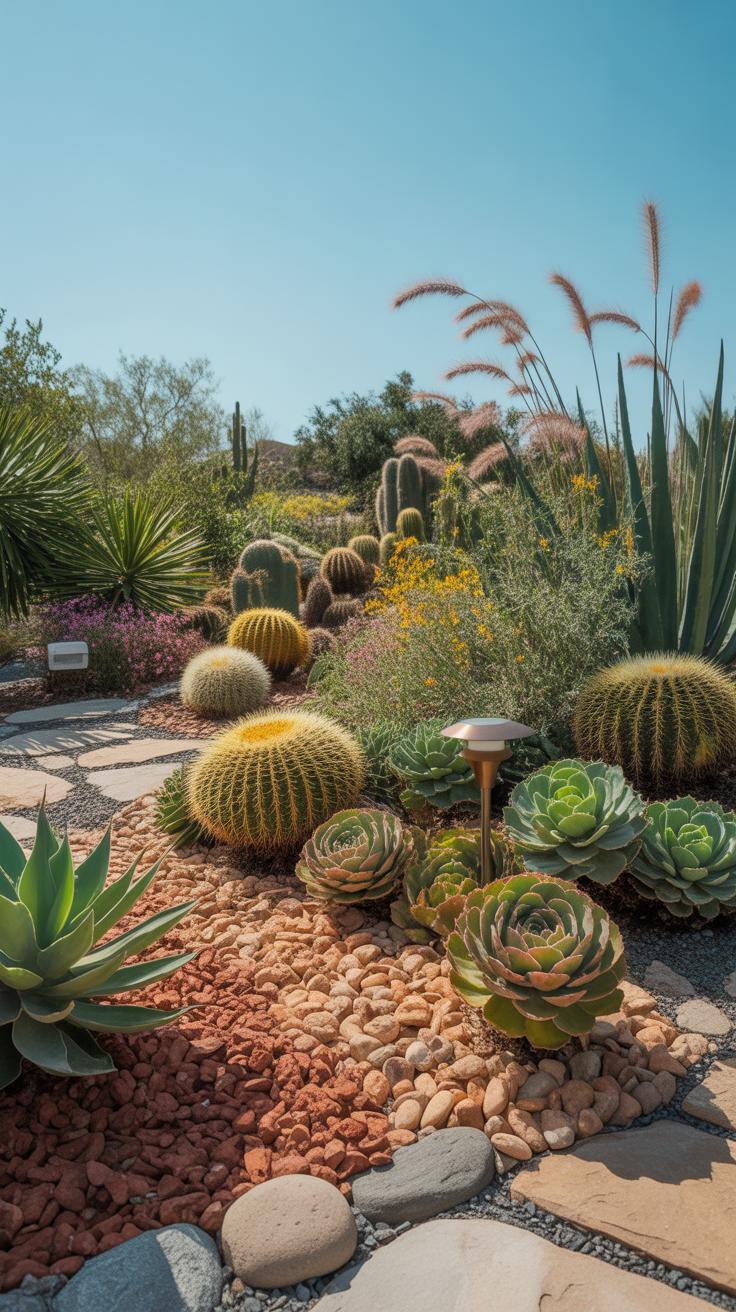
Creative Xeriscape Ideas Using Rock, Gravel, And Mulch As Ground Cover
Hardscape materials provide the foundation for any successful xeriscape. Use crushed stone or pea gravel to replace thirsty turf. These materials suppress weed growth and allow rainwater to reach the soil. Use different sizes and colors of rock to define distinct zones. Larger river rocks create dry creek beds that redirect runoff. This design tactic stops erosion and helps manage water flow during heavy storms.
Organic mulch serves a different but vital function. Use wood chips or bark to insulate plant roots. This layer prevents moisture from evaporating too quickly in the heat. Apply mulch at a depth of three inches for the best results. Keep the material away from plant stems to avoid rot. Organic covers break down over time and improve the soil structure. Choose light colors to reflect heat in desert climates.
Incorporating Native Plants And Ornamental Grasses Into Your Xeriscape Design
Native plants belong in your local environment. They evolved to survive on the natural rainfall of your specific region. These species require less maintenance and fewer chemical inputs than exotic varieties. Group your plants by their water needs to maximize efficiency. This technique is called hydrozoning. It ensures you do not waste water on plants that do not need it. Use local shrubs to provide structure and height.

Ornamental grasses add movement and texture to your garden layout. These plants are tough and survive harsh droughts. Use species like blue fescue or switchgrass for reliable results. These grasses have deep root systems that hold the soil in place. They require minimal pruning and stay attractive throughout the year. Cut them back once in early spring to encourage new growth. Mix different heights to create visual layers.
Designing A Stunning Xeriscape Front Yard That Boosts Curb Appeal
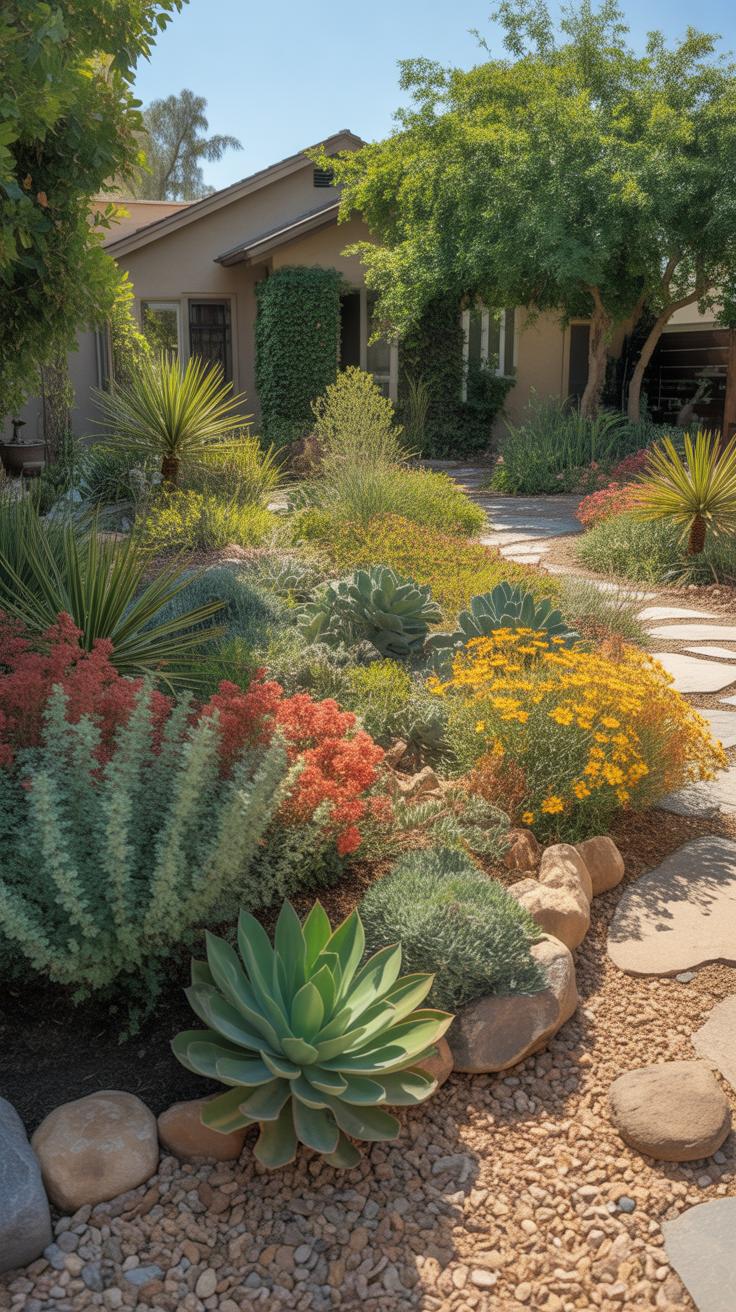
How To Plan A Xeriscape Front Yard Layout That Balances Beauty And Function
Effective design starts with logical zoning based on water needs. Group plants with similar requirements into hydrozones to prevent overwatering. Place high-impact specimens near the entryway where people see them most. Use hardscape elements like stone paths or small walls to define the space. These structures provide visual interest even when plants are dormant. Clear paths guide visitors and simplify maintenance tasks.
Balance the visual weight of the yard using a mix of textures and heights. Use large boulders as anchors to ground the design and create focal points. Incorporate different sizes of gravel or mulch to define specific areas. Keep slopes in mind to manage water runoff and prevent erosion. Proper grading ensures rain reaches your plant roots rather than the street. Plan for mature plant sizes to avoid future overcrowding.
Replacing Grass With Low Water Alternatives In Your Xeriscape Front Yard
Traditional turf consumes more water and lime than any other landscape feature. Remove existing grass using sod cutters or solarization techniques to kill roots. Replace these thirsty areas with permeable materials like decomposed granite or pea gravel. These surfaces allow water to soak into the ground instead of running off. This change reduces your monthly water bill and eliminates the need for gas-powered lawn mowers.

Choose groundcovers that thrive in your specific climate zone for natural green space. Creeping thyme or clover options provide a soft look without the heavy water demand. Use inorganic mulches like river rock to suppress weeds and stabilize soil temperature. Decorative stone adds permanent color that does not fade or require seasonal replanting. This strategy cuts down on labor while maintaining a clean and professional appearance for your home.
Building Thriving Xeriscape Gardens With Purposeful Plant Zoning
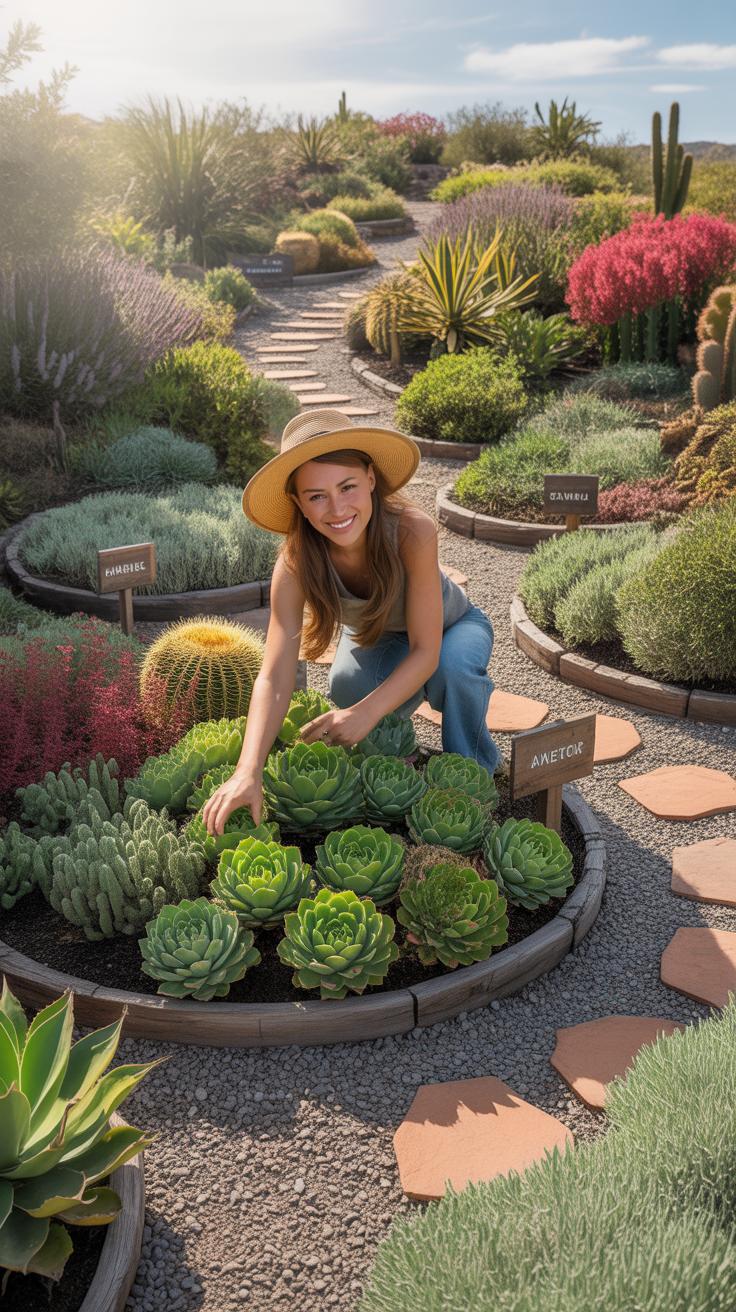
Understanding Hydrozoning To Group Plants By Water Needs In Xeriscape Gardens
Hydrozoning is the backbone of efficient irrigation. You must group plants with identical water requirements into specific irrigation zones. This prevents overwatering drought-tolerant species and underwatering thirsty ones. Use a high-water zone near the house for high-impact plants. Place low-water species on the perimeter where maintenance is difficult. This strategic placement ensures every drop of water serves a specific biological need.
Effective hydrozoning reduces water waste and prevents root rot. Most failures in Xeriscape Garden Design stem from mixing desert plants with turf or lush ornamentals. Separate your zones into high, moderate, low, and very low water needs. High-water zones should occupy less than ten percent of the total landscape. This system allows you to program irrigation timers for maximum efficiency and long-term plant health.
How Soil Preparation And Amendment Support Healthy Xeriscape Gardens
Successful xeriscaping requires soil that matches the plant palette. Native plants usually prefer lean, well-draining soil without heavy fertilizers. Adding too much organic matter can harm desert species by retaining excessive moisture. Test your soil drainage before planting. Dig a hole and fill it with water to see how fast it empties. This test dictates whether you need to add gravel or compost.
Compacted soil kills plant roots by cutting off oxygen. Use a tiller or garden fork to break up hard ground before adding any new plants. Incorporate inorganic amendments like expanded shale or crushed granite to improve aeration. Avoid heavy tilling around existing tree roots. Healthy soil structure allows roots to grow deep. Deep roots find moisture during droughts and keep the garden resilient throughout the year.
Transforming Your Xeriscape Landscaping Backyard Into A Relaxing Retreat
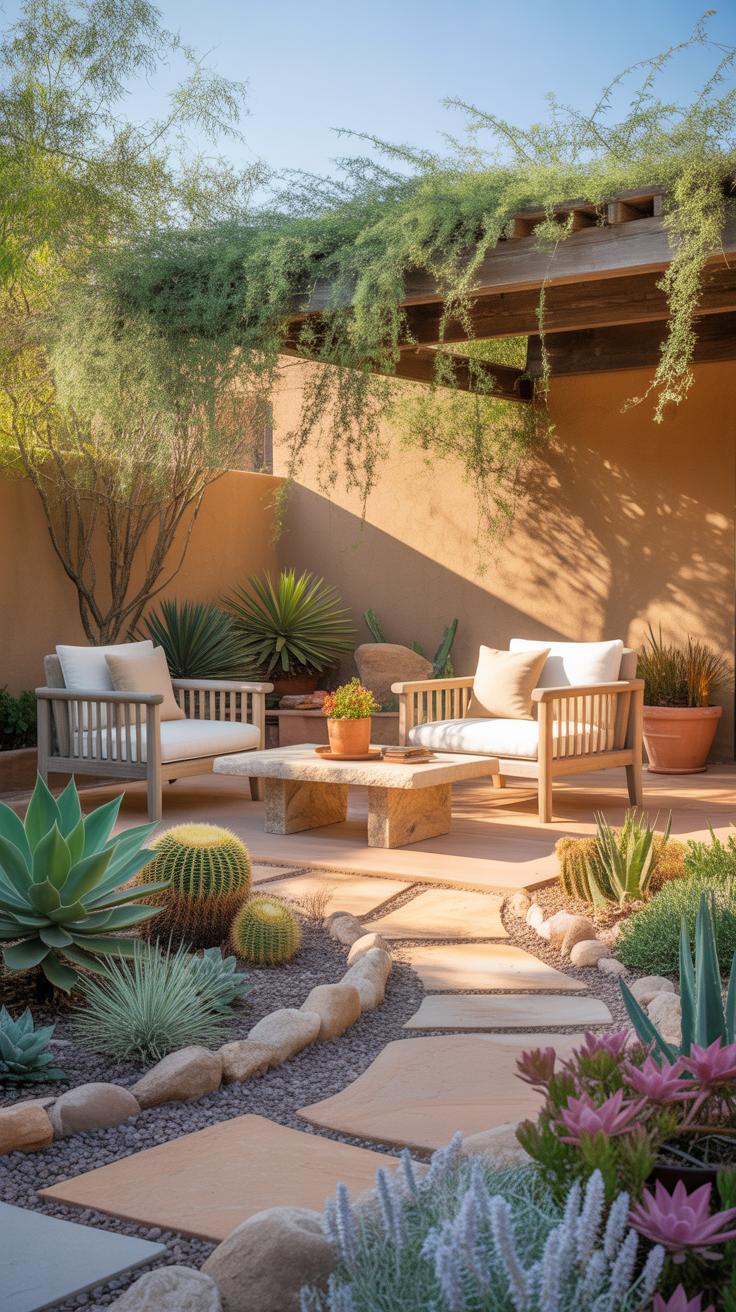
Adding Hardscape Features Like Pathways And Patios To Your Xeriscape Landscaping Backyard
Hardscape provides the structural foundation for functional xeriscaping. Install permeable pavers or flagstone to manage rainwater runoff effectively. These materials allow water to reach the soil instead of pooling or draining into sewers. Use crushed stone or decomposed granite for pathways to ensure stability and drainage. Proper grading prevents erosion and protects your home foundation while defining specific high-traffic zones.
Select materials based on local climate and thermal mass properties. Light-colored stones reflect heat and keep the backyard cooler during peak sun hours. Avoid asphalt or poured concrete which trap heat and increase the ambient temperature. Use recycled brick or local stone to reduce environmental impact. High-quality hardscaping replaces water-intensive turf. This shift lowers your maintenance needs and provides a permanent surface for outdoor living.
Using Shade Trees And Canopy Plants To Reduce Water Evaporation In Your Backyard Xeriscape
Strategic planting creates a microclimate that preserves soil moisture. Position deciduous shade trees on the southwestern side of your property to block intense afternoon sun. These trees shield smaller plants and mulch from direct heat. This cooling effect slows the rate of evaporation from the ground. Lower temperatures mean your garden requires less frequent irrigation. Select native species that thrive without supplemental water once established.

Canopy layers act as a natural umbrella for the garden floor. Use mid-sized shrubs under larger trees to create windbreaks. High winds strip moisture from leaves and soil quickly. Blocking these gusts keeps humidity levels stable near the ground. This layered approach mimics natural forest structures and improves plant survival. A well-designed canopy protects your investment and reduces your total water bill. Use these living shields to maximize every drop.
Smart Irrigation Strategies For A Water Efficient Xeriscape Backyard
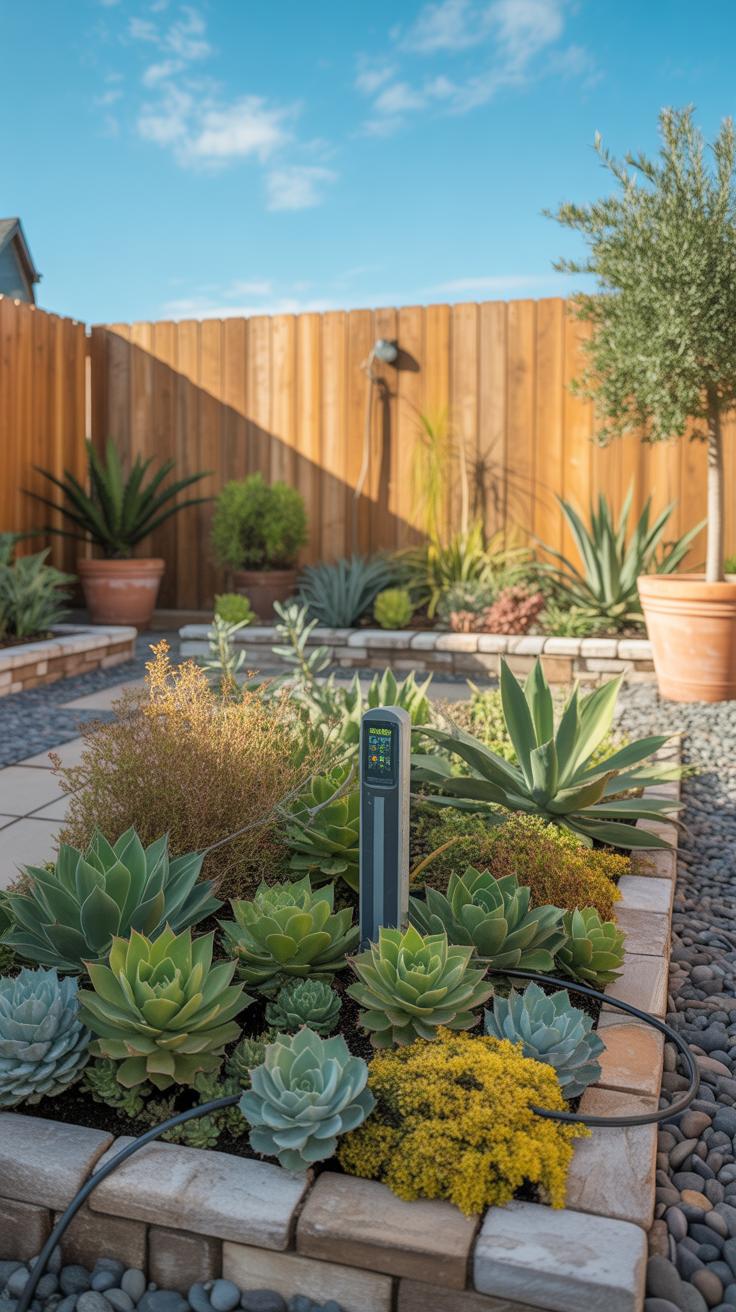
Why Drip Irrigation Is The Gold Standard For Watering A Xeriscape Backyard
Drip irrigation delivers water directly to the root zone of each plant. This method eliminates evaporation losses common with overhead sprays. It prevents water from landing on leaves and causing fungal diseases. You control the exact volume of water for every individual plant. This precision reduces weed growth by keeping the soil dry between your desired plants.
Low-volume emitters maintain soil moisture at a consistent level. Deep watering encourages roots to grow downward rather than staying near the surface. This creates stronger plants that survive heat waves and droughts better. Automation adds another layer of efficiency to the system. Proper installation requires pressure regulators and filters to prevent clogging. Use poly tubing or emitter lines for maximum durability.
Rainwater Harvesting And Greywater Recycling To Support Your Xeriscape Backyard
Active rainwater harvesting captures runoff from roofs using barrels or cisterns. This water contains no chlorine or salts found in treated city water. You can connect these tanks to your drip system or use them for manual spot watering. It reduces the load on local storm drains during heavy rain. Gravity-fed systems provide a low-cost way to move water across the landscape.

Greywater recycling uses discarded water from sinks, showers, and laundry machines. Diverter valves send this water to the backyard instead of the sewer. This provides a constant supply of water even during strict drought bans. Choose biocompatible soaps to ensure the water does not harm soil microbes. Subsurface distribution prevents human contact with the water and keeps your garden thriving.
Choosing The Best Drought Tolerant Plants For Your Xeriscape Design
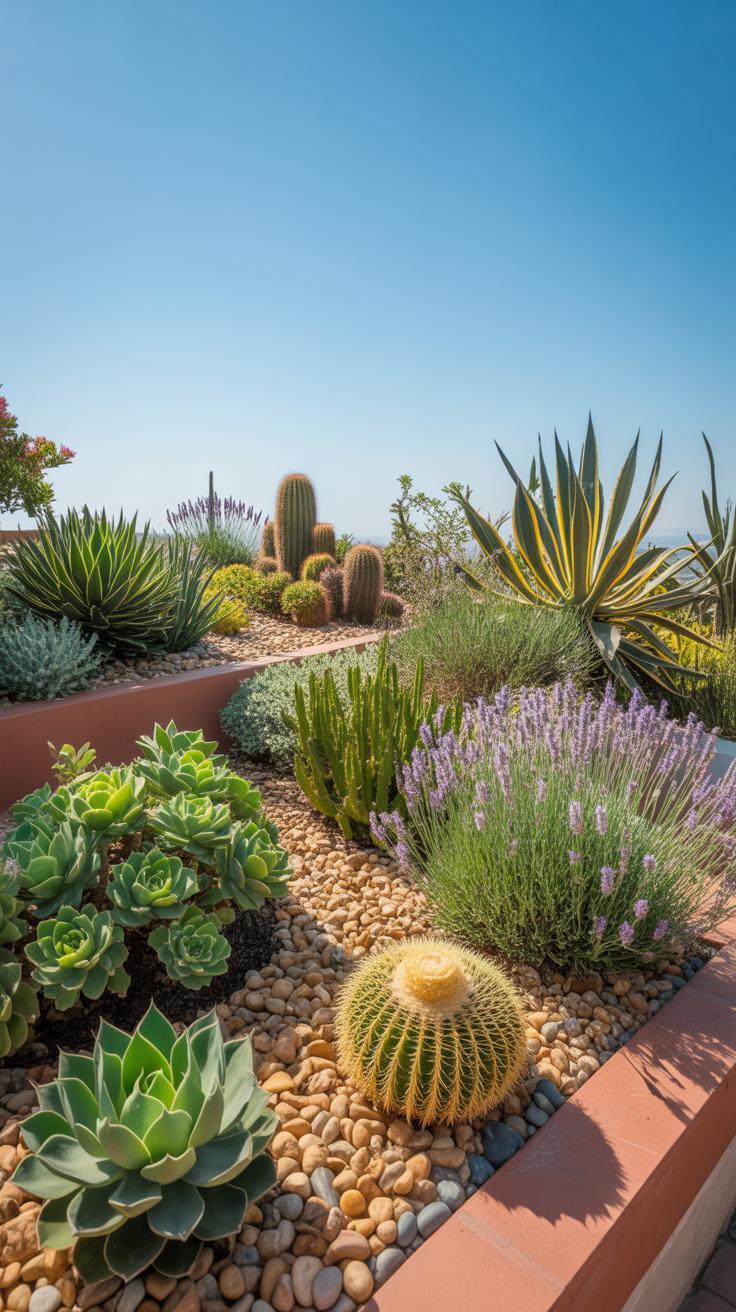
Top Drought Tolerant Perennials, Shrubs, And Groundcovers For Xeriscape Gardens
Select plants based on biological efficiency and water storage capabilities. Perennials provide deep root systems that seek moisture far below the soil surface. Shrubs create windbreaks that reduce evaporation rates for smaller plants. Groundcovers act as living mulch to keep soil temperatures low. Focus on species with narrow or waxy leaves. These features prevent moisture loss during peak sun hours.
- Lavender: This hardy perennial thrives in poor soil and requires minimal water once established. Its silver foliage reflects sunlight to stay cool. It thrives in well drained areas and resists most common garden pests effectively.
- Agave: These succulents store large water reserves in their thick leaves to survive long dry spells. They offer strong structural elements for modern designs. Use them as focal points in areas with high sun exposure.
- Russian Sage: This plant tolerates heat and drought while providing height to your garden beds. It grows well in alkaline soils often found in arid regions. The woody stems remain upright without requiring extra support or water.
- Manzanita: These evergreen shrubs feature smooth bark and leathery leaves that minimize transpiration. They are native to dry climates and stabilize slopes well. Use them for year round color without high maintenance or irrigation needs.
- Stonecrop: This groundcover forms a dense mat that prevents weed growth and retains soil moisture. It stores water in fleshy leaves to survive extreme heat. Many varieties handle light foot traffic and spread quickly in rocky soil.
Proper placement ensures these plants thrive without supplemental irrigation. Group species with identical water needs into specific hydrozones. This creates an efficient system where you only water when necessary. Avoid mixing high water plants with drought tolerant varieties. This mistake leads to root rot or plant death. Strategic grouping maximizes the natural hardiness of your chosen perennials and shrubs.
How To Evaluate Climate Zones When Selecting Drought Tolerant Plants For Your Region
Consult the USDA Plant Hardiness Zone Map before buying any materials. This map tells you the lowest temperature a plant can survive. Regional humidity and seasonal rainfall also dictate plant success. A desert plant might fail in a humid coastal area even if temperatures are similar. You must match the plant biology to your specific local weather patterns.

Analyze the microclimates within your own property to fine tune your selection. South facing walls reflect heat and create hotter zones than north facing areas. Low spots in the yard collect water and might stay too wet for cacti. Check your soil type to ensure it drains fast enough for dry climate species. Testing your site conditions prevents expensive plant losses and ensures long term growth.
Exploring Desert Xeriscape Landscaping Styles And Aesthetic Approaches
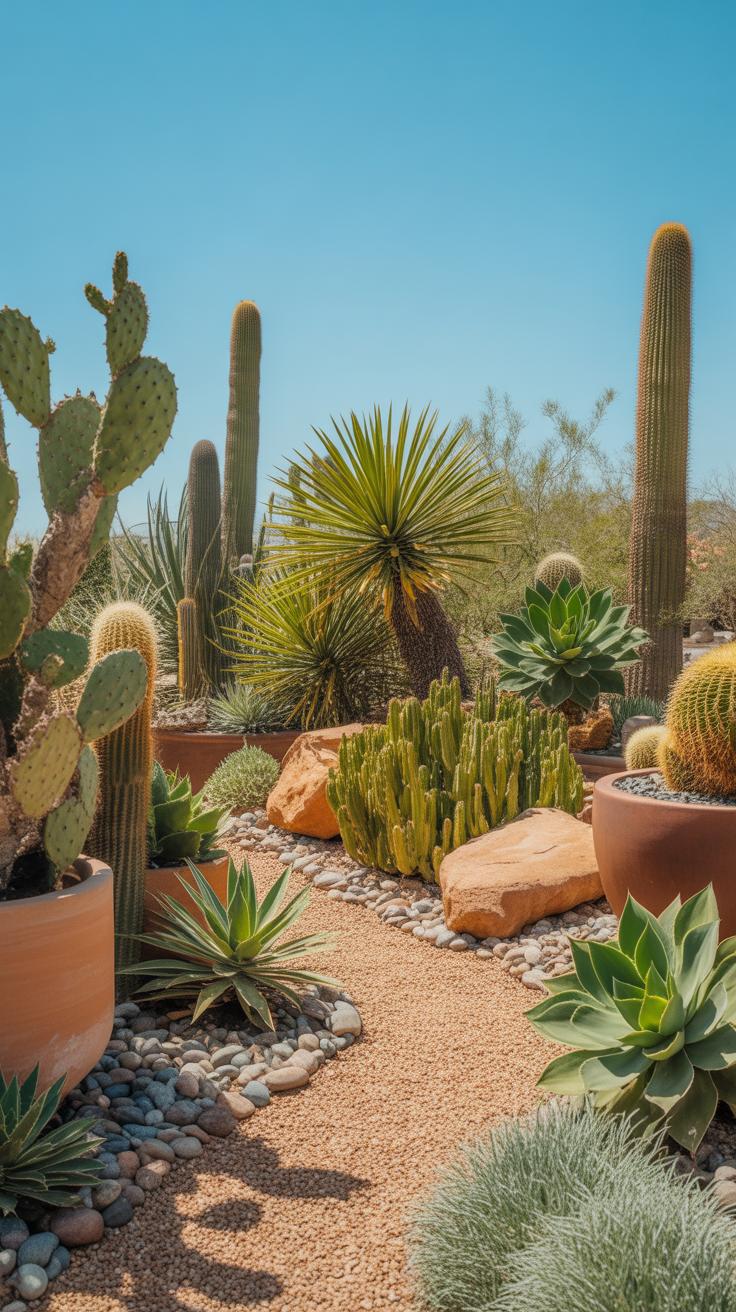
Key Design Elements That Define The Desert Xeriscape Landscaping Aesthetic
Desert xeriscape design prioritizes high thermal mass and minimal water demand. Designers use decomposed granite to suppress weed growth and retain soil moisture. Earth tones dominate this style to mirror the natural arid environment. You must select plants with specific physiological adaptations. These include waxy cuticles and small leaf surface areas. These traits reduce transpiration rates and ensure plant survival during extreme drought periods.
Structural geometry defines the visual appeal of this style. Use clean lines and defined edges to create a sense of order. Focus on negative space to highlight individual plant forms. Proper grading ensures that occasional rainfall moves toward planting zones rather than away from them. This technique maximizes every drop of water. Use locally sourced stone to maintain geological consistency. This approach creates a cohesive look that feels authentic to the region.
To plant a garden is to dream of tomorrow, nurturing a timeless landscape that thrives in harmony with the sun and spirit of the earth.
How To Blend Cacti, Succulents, And Desert Boulders In Desert Xeriscape Landscaping
Boulders serve as the primary structural anchors in a desert garden. Place them deep in the soil to mimic natural outcroppings. This creates microclimates and provides shade for smaller root systems. Surround these anchors with cacti and succulents of varying heights. Use the “rule of three” to create natural clusters. This prevents the landscape from looking cluttered. Proper placement allows for better air circulation and reduces fungal risks.

Balance sharp textures with smooth surfaces to create visual contrast. Position a large Agave near a smooth granite boulder to highlight its architectural form. Use varying sizes of river rock to simulate dry creek beds. This directs the eye and manages drainage effectively. Group plants with similar water needs together. This practice is called hydrozoning. It ensures that you do not overwater cacti while trying to sustain thirstier desert shrubs.
Mulching Techniques And Soil Health In Xeriscape Garden Design
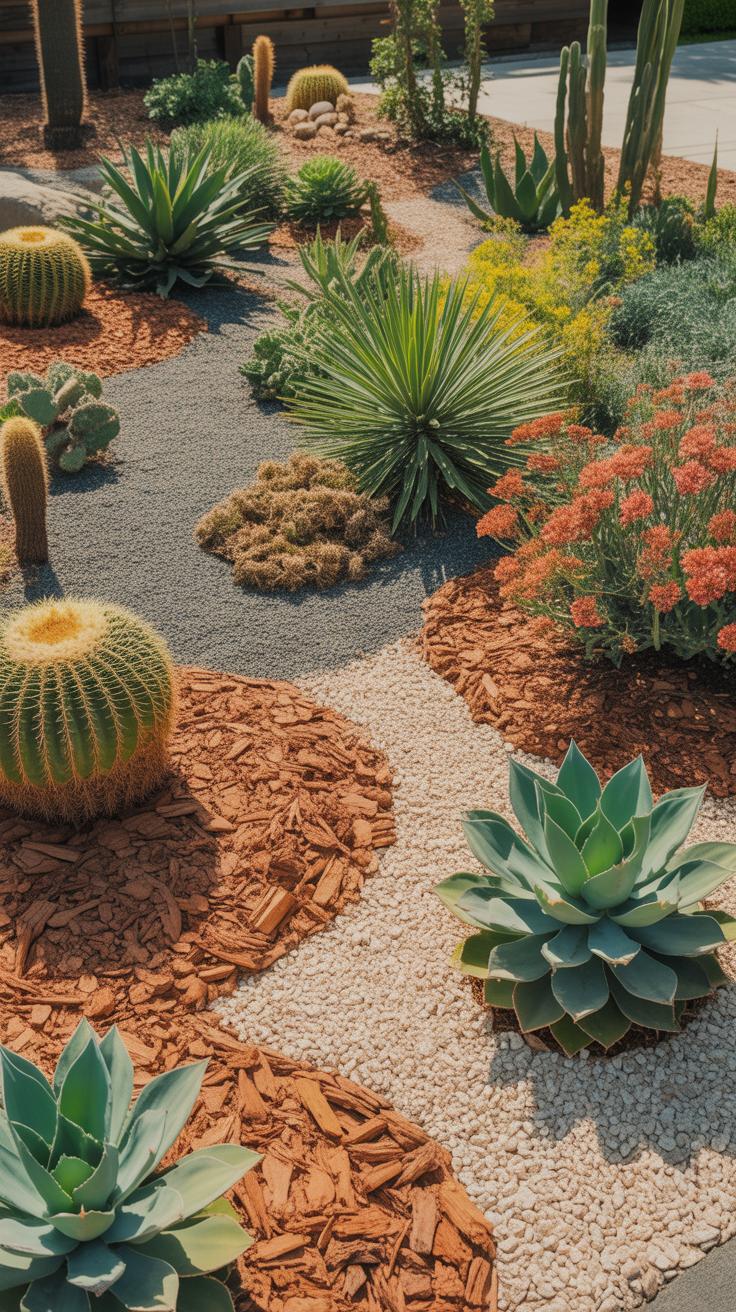
How Organic And Inorganic Mulch Types Conserve Moisture In Xeriscape Gardens
Organic mulches like wood chips or bark break down over time to improve soil structure. These materials act as a physical barrier against solar radiation and wind. They lower soil surface temperatures and slow down the evaporation of water from the root zone. Effective application requires a depth of three to four inches. This thickness prevents weed seeds from germinating and competing for limited water resources.
Inorganic mulches such as gravel, river rock, or decomposed granite offer permanent coverage. These materials do not decompose or require frequent replacement. They are ideal for high heat areas because they reflect or absorb heat without losing mass. Stone mulches work best around plants that prefer dry crowns and excellent drainage. Proper installation includes a permeable weed barrier underneath to prevent the stones from sinking into the soil.
Building Healthy Soil Biology To Reduce Watering Needs In Xeriscape Landscaping
Healthy soil biology creates a stable ecosystem that holds water longer. Incorporating compost increases the cation exchange capacity and improves water retention in sandy soils. Fungal networks like mycorrhizae extend the reach of plant roots to access deep moisture pockets. These organisms create a porous soil structure that allows rain to penetrate the ground instead of running off the surface.
Avoid heavy tilling to protect existing soil life and prevent various gasses from escaping. Disturbed soil loses carbon and dries out faster than undisturbed ground. Test your soil to determine nutrient levels before adding any amendments. Use natural fertilizers to support microbes rather than harsh chemicals that kill beneficial insects. Strong soil biology ensures plants remain resilient during long periods of drought without extra irrigation.
Maintaining Your Xeriscape Garden Design For Long Term Success
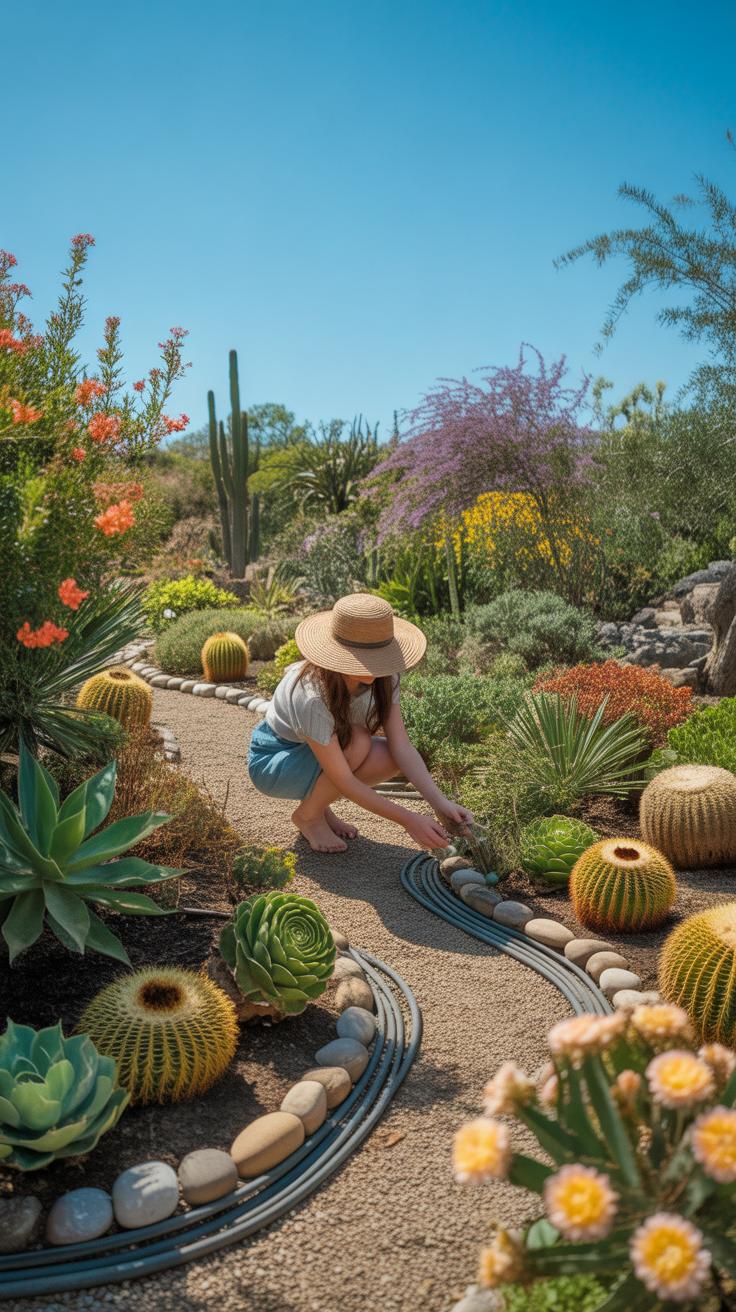
Seasonal Maintenance Tasks That Keep Your Xeriscape Garden Design Looking Its Best
Successful xeriscape management requires specific seasonal intervention to ensure plant health. Spring focuses on hardware inspection and debris removal. Check irrigation lines for leaks or clogged emitters before the heat intensifies. Prune dormant shrubs to encourage new growth and remove winter damage. Apply a fresh layer of organic mulch to keep soil temperatures stable. This layer prevents evaporation and suppresses weed growth during the peak growing season.
Fall tasks center on preparation and moisture control. Reduce irrigation frequency as daylight hours decrease and plants go dormant. Clean gravel areas of fallen leaves to prevent nutrient buildup in the stone mulch. This prevents weed seeds from germinating in decomposed organic matter. Inspect the grade of your soil to ensure water continues to move away from structures. Proper drainage remains critical even in low water landscapes during winter rains.
Common Xeriscape Mistakes To Avoid And How To Correct Them Over Time
Many owners fail by overwatering drought tolerant species during the establishment phase. Native plants require deep, infrequent watering to develop strong root systems. Constant light watering keeps roots near the surface where they die in high heat. Correct this by adjusting your controller to run longer but less often. Monitor soil moisture two inches below the surface. Adjust your schedule based on actual plant stress signs rather than a fixed calendar.
Selecting the wrong mulch material creates long term maintenance headaches. Fine wood chips decompose quickly and turn into soil. This allows weeds to grow directly on top of your barrier. Replace thin mulch with coarse bark or decorative stone to provide better insulation and drainage. Ensure the mulch layer stays three inches deep across the entire garden. Consistent depth prevents sunlight from reaching the soil surface. This tactical fix reduces your weeding time significantly.
Frequently Asked Questions

What exactly is xeriscaping, and is it only meant for desert climates?
Xeriscaping is a sustainable landscaping method designed to minimize or eliminate the need for supplemental watering. While often associated with arid regions, xeriscape garden design is actually applicable to any climate. The core philosophy involves using drought-tolerant native plants and efficient irrigation techniques to create a lush, thriving environment that conserves local water resources while remaining remarkably low-maintenance for the average homeowner.
How do I begin transitioning my traditional lawn into a xeriscape?
Start by analyzing your yard’s sun exposure and soil quality to select the right vegetation. Replace thirsty turf grass with permeable materials like gravel or wood chips, and group plants with similar water needs together, a practice called hydrozoning. Integrating a thoughtful xeriscape garden design involves layering native shrubs, perennials, and groundcovers to create visual depth while ensuring your new landscape requires significantly less water than a traditional green lawn.
Is xeriscaping expensive to install, or can it be done on a budget?
While professional installations vary, xeriscaping is highly accessible for DIY enthusiasts on a budget. You can save money by repurposing local rocks, starting with smaller nursery plants, or propagating succulents. Because this approach focuses on hardy, native species, you will significantly reduce long-term costs associated with water bills, fertilizers, and lawn mower maintenance. It is a cost-effective investment that increases property value while supporting the local ecosystem sustainably.