Why Wedding Reception Florals Set The Tone For Your Entire Celebration
The Emotional Impact Of Flowers At A Wedding Reception
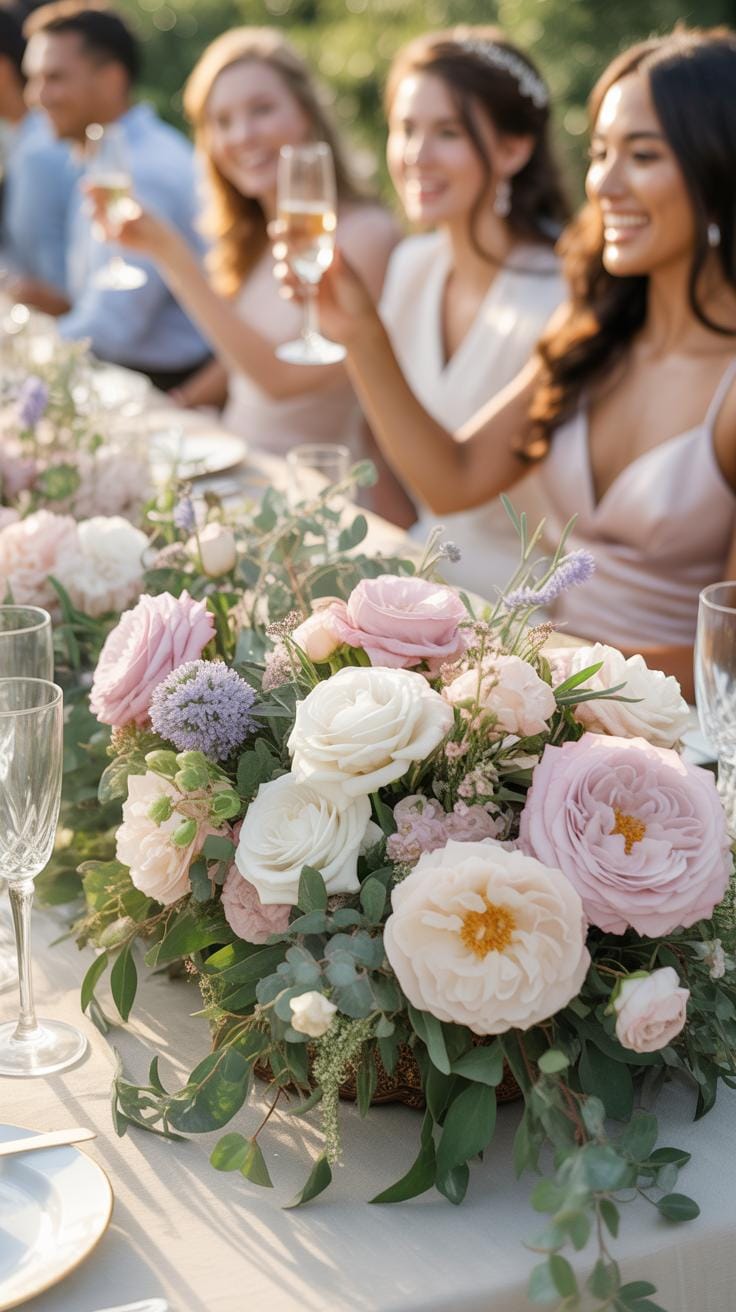
Flowers trigger immediate sensory responses in guests. Scientific studies show that floral scents and colors influence mood and social behavior. Strategic placement of arrangements creates comfort and signals the start of the formal celebration. High-quality florals establish an atmosphere of care and investment. Guests associate fresh blooms with life and growth. This creates a psychological foundation for a positive and memorable event experience.
Effective floral design manages guest expectations through visual cues. Warm colors promote energy and conversation in social areas. Cool tones encourage relaxation during dinner service. Consistency in flower selection reinforces the event identity. Designers use these natural materials to direct focus and movement. Proper floral execution ensures the room feels occupied and intentional before the program begins. Natural elements soften harsh architectural lines and improve acoustics.
How Florals Tie Together Your Wedding Venue And Theme
Florals act as the visual bridge between a venue and a couple’s design goals. Industrial spaces benefit from organic shapes that break up concrete and steel textures. Historical ballrooms require arrangements that respect period appropriate scales and heights. Designers use specific blooms to ground the theme in a physical reality. Without these natural elements, large rooms often feel cold and disconnected from the intended aesthetic direction.
Color theory in floral design dictates the cohesion of the entire room. Florals carry the wedding palette across different zones including bars and tables. Experts match flower varieties to the specific architectural style of the building. This creates a unified look that makes the decor feel permanent rather than temporary. Strategic floral choices hide layout flaws and highlight the best features of the room. This tactical approach ensures a professional finish.

Bringing The Outdoors In Wedding Decor Garden Style Florals For Your Reception
Choosing Garden Inspired Blooms That Feel Natural And Effortless
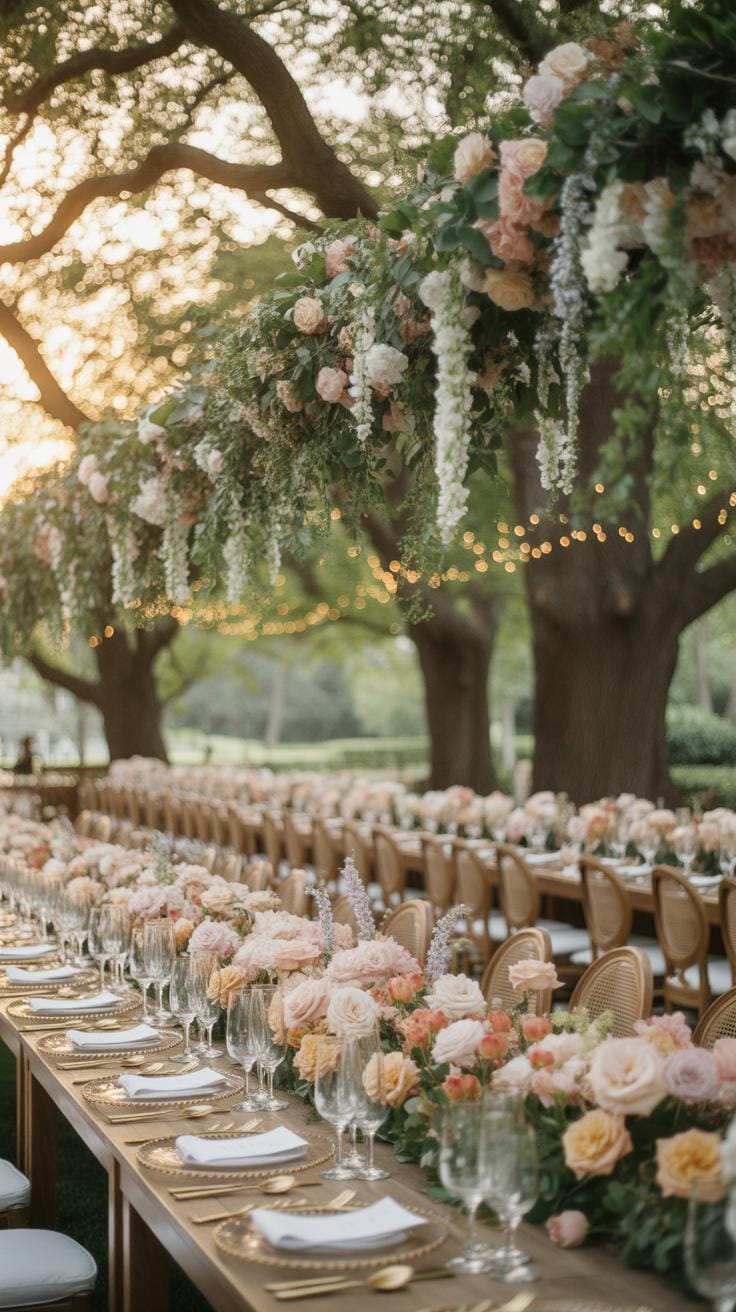
Select flowers that mimic the growth patterns found in a wild garden. Focus on varied stem lengths and irregular shapes. Historical Dutch master paintings provide a blueprint for this look. Use focal flowers like garden roses or ranunculus. These blooms have high petal counts and open fully. Combine them with delicate accent flowers like cosmos or sweet peas to create depth and movement within each piece.
Prioritize seasonality to ensure the best bloom quality and stem strength. Locally sourced flowers often feature the characteristic curves necessary for an organic look. Avoid stiff, mass-produced stems that lack natural bending. Look for varieties with multiple buds on a single branch. This choice adds realism to the arrangement. Aim for a palette that mimics nature. Use different shades of one color to create a realistic, variegated effect.
How To Style A Garden Themed Reception With Loose, Foliage Rich Arrangements
Structure your arrangements using a heavy ratio of greenery to blooms. Use at least three types of foliage to build a textured base. Different leaf shapes and shades of green provide visual interest. Start with woody branches for framework. Add trailing vines like jasmine or clematis to break the container edges. This technique mimics how plants climb and spill in an untamed garden setting.
Placement on the table should feel intentional but not rigid. Use low containers or compote bowls to keep sightlines clear. Avoid perfect symmetry in your floral placement. Distribute the weight of the flowers unevenly to suggest natural growth. Use kenzan frogs or chicken wire instead of floral foam. These mechanics allow stems to sit at various angles. This freedom is essential for achieving a loose, airy, and professional garden aesthetic.
Dream Wedding Decorations Building A Floral Vision That Feels Personal
How To Define Your Floral Style Before You Start Shopping
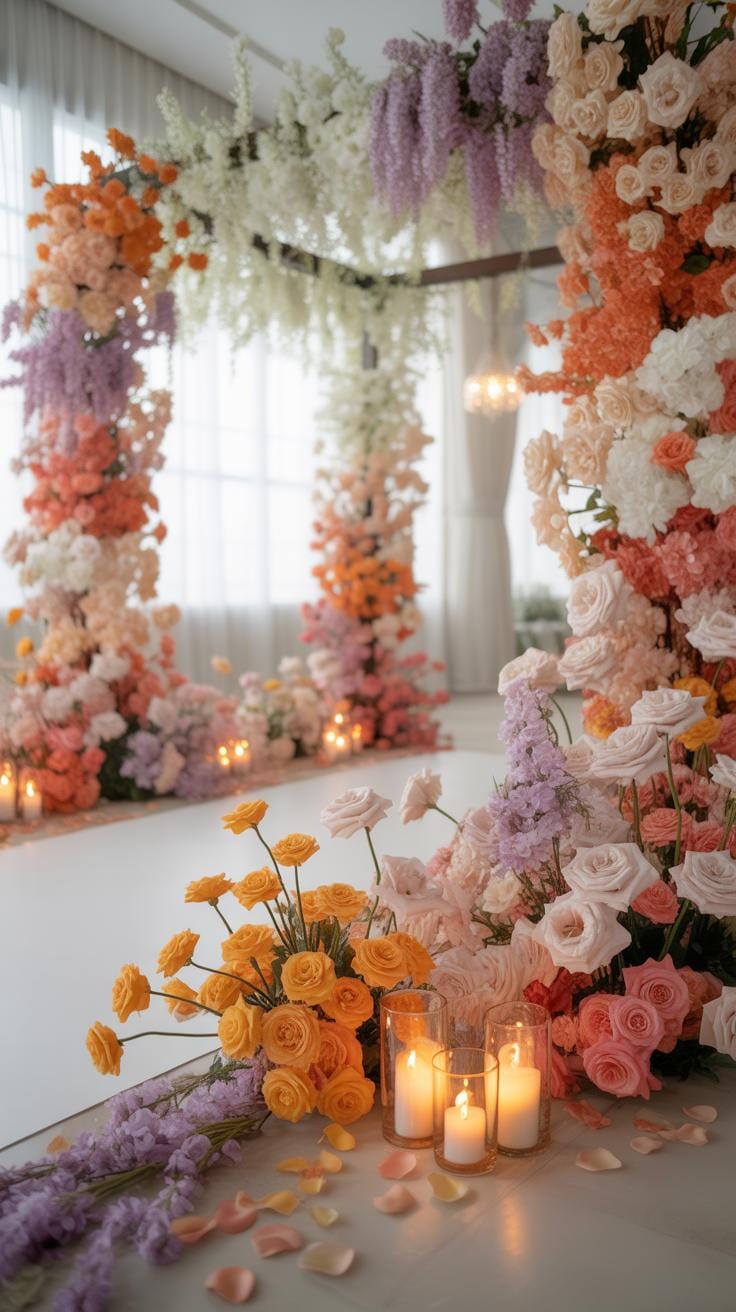
Identify your core aesthetic by analyzing your reception venue architecture. Industrial spaces with exposed brick require different textures than traditional ballrooms or outdoor gardens. Look at the existing lines and materials of your space. Do not focus on specific flowers yet. Focus on the shape and density of the arrangements. Decide if you prefer structured geometric designs or loose organic shapes.
Collect images of arrangements that match your venue type. Group these images by their common visual traits like height and volume. This process reveals your functional preferences. You must determine if you want tall centerpieces that allow conversation or low clusters that fill table space. Establishing these physical parameters prevents overspending on blooms that do not fit your specific environment or layout.
Matching Your Floral Palette To Your Wedding Colors And Season
Select a color palette based on seasonal availability to ensure flower quality and lower costs. Spring offers bulb flowers like tulips and ranunculus in pastels. Summer provides vibrant zinnias and dahlias. Autumn features deeper tones and dried textures. Winter relies on hardy evergreens and berries. Using flowers in their natural growing season guarantees they will arrive fresh and stay hydrated throughout your reception.
Integrate your wedding colors by using the 60-30-10 rule. Your primary color should cover sixty percent of the floral surface area. Use a secondary hue for thirty percent and a bold accent color for the final ten percent. This balance creates visual depth without overwhelming the eye. Avoid exact color matches between linens and petals. Contrast allows the flowers to stand out against the table settings.
The Beauty Of The Low Centerpiece Elegant Florals That DonT Overpower The Table
Why Low Centerpieces Encourage Guest Connection And Conversation
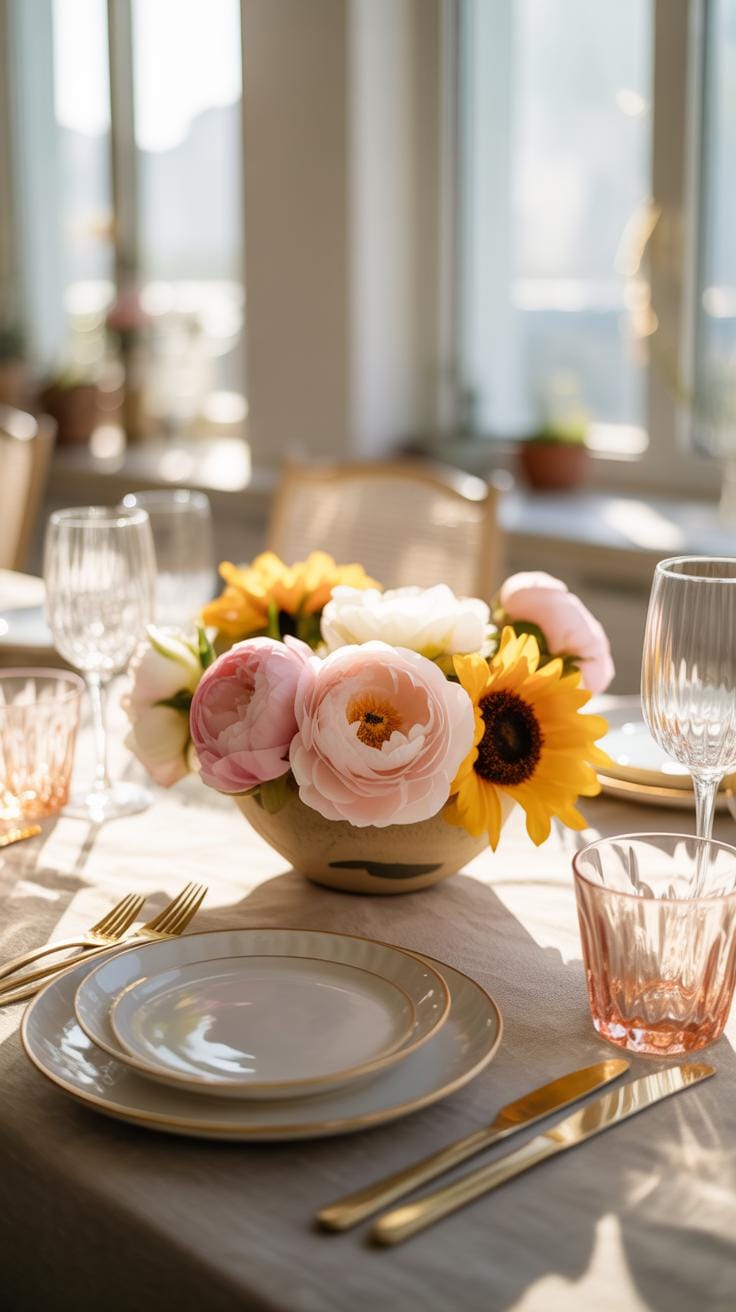
Effective wedding reception florals facilitate social interaction rather than obstructing it. High arrangements often create physical barriers that block sightlines across the table. Guests must lean or crane their necks to see the person sitting opposite them. Low centerpieces stay below eye level. This height choice allows for natural eye contact. It keeps the focus on the conversation rather than the decor.
Strategic planners prioritize guest comfort to ensure a successful event. A centerpiece should never exceed fourteen inches in height. This specific measurement keeps the flowers out of the visual field of seated adults. By removing these physical obstructions, you encourage a steady flow of dialogue. This layout fosters an intimate atmosphere. People stay engaged longer when they can see their companions clearly without visual interference.
Simple Low Centerpiece Designs You Can Recreate On Any Budget
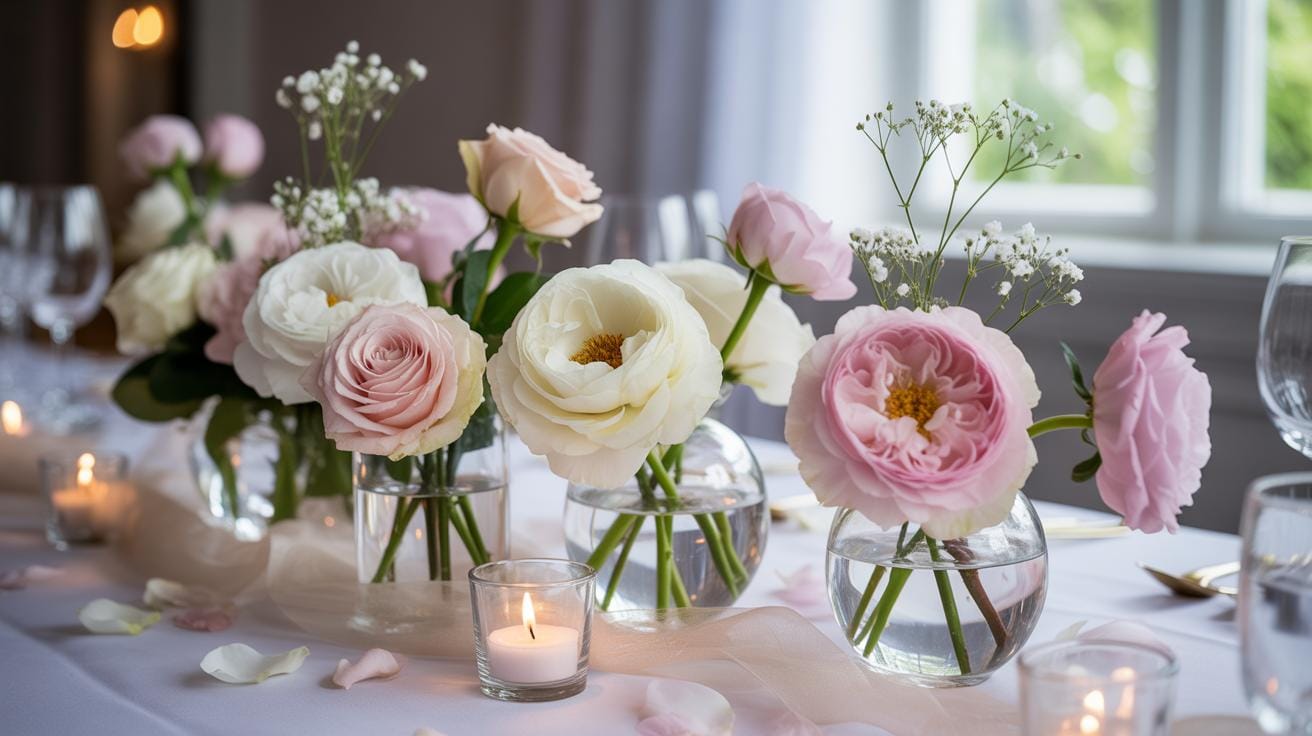
Low designs offer versatility across various aesthetic styles and price points. The cluster method uses small bud vases of varying heights to create visual interest. You place three to five stems in each vessel. This technique requires Fewer blooms than a traditional dense arrangement. It allows for a clean look that covers the table length. It works well for long rectangular tables or circular setups.

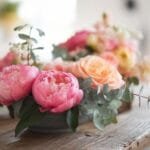
Compote bowls provide a structured yet low-profile option for classic designs. These footed vessels hold wet floral foam or chicken wire to secure the stems. Designers use localized greenery to create a base before adding focal flowers. This method mimics the Dutch Still Life style of the seventeenth century. It emphasizes a sprawling and natural shape. It delivers a high-impact look while maintaining a practical height for guests.
Flower Center Table Arrangements Making Every Table A Focal Point
How To Choose The Right Vessel Or Vase For Your Flower Center Table Display
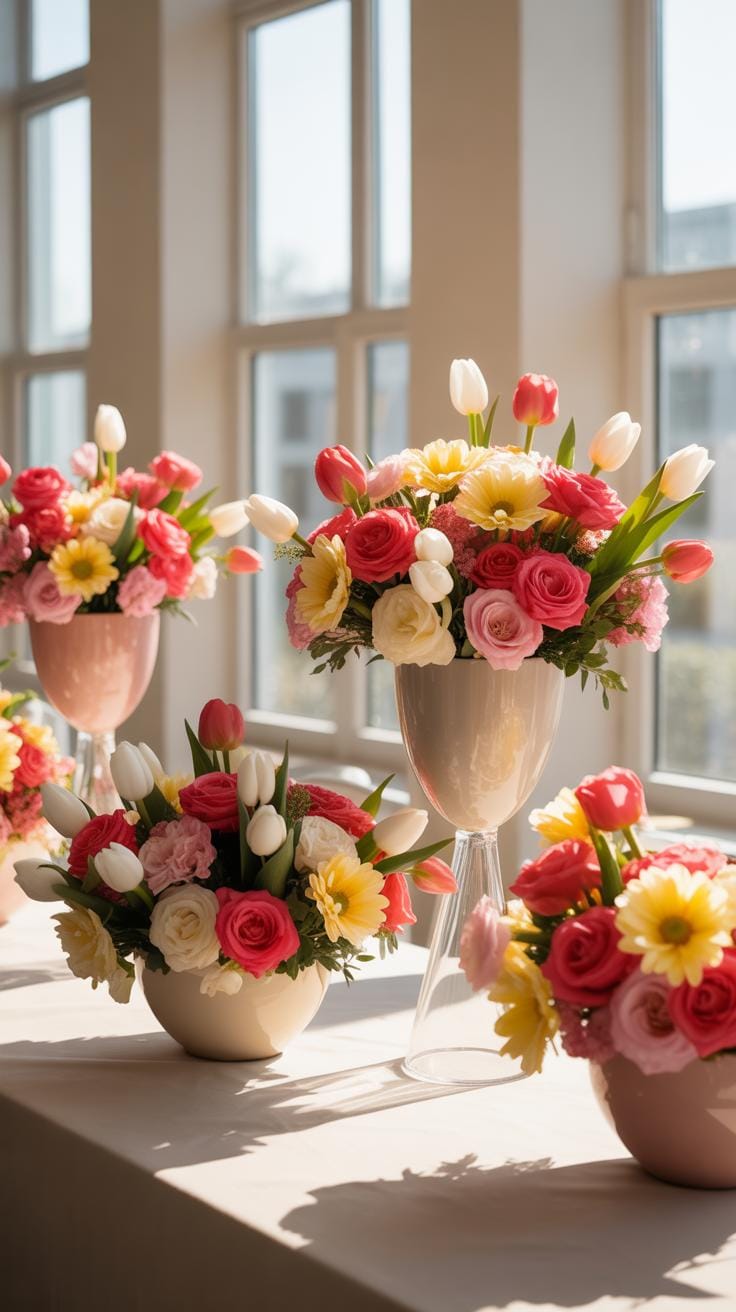
Vessel selection determines the technical feasibility of your arrangement. You must match the container weight to the floral mass to prevent tipping. Use heavy glass or ceramic for top-heavy blooms like hydrangeas. Ensure the neck opening diameter supports the stem count without crowding. Narrow openings create structure naturally. Wide openings require mechanics like floral foam or chicken wire to hold stems in place.
Clear glass offers a modern look but exposes dirty water and messy stems. Clean your stems thoroughly or use opaque vessels to hide structural elements. Compote bowls create a sprawling horizontal shape suited for low conversation levels. Cylinder vases work best for submerged looks or single-variety clusters. Match the vessel material to the table linens. Stone and wood suit rustic themes while metallic finishes reflect light.
Balancing Height Texture And Color In A Centered Floral Arrangement
Height management is the most critical tactical decision for guest comfort. Keep arrangements under 12 inches or over 24 inches to maintain sightlines across the table. Use the “rule of thirds” to establish proportions between the vase and the flowers. Low arrangements focus on detail and fragrance. Tall arrangements use thin stands to elevate the bulk of the flowers. This keeps the table surface clear for place settings.
Texture provides visual depth without adding physical weight. Incorporate varied foliage like eucalyptus or ferns against smooth petals to create contrast. Use a primary color for 60 percent of the display to establish a base. Add a secondary color for 30 percent and a high-contrast accent for the final 10 percent. This ratio ensures the design looks intentional. Avoid monochromatic schemes without varying the flower shapes and sizes.
Flower Table Centerpieces Wedding Guests Will Remember Styles And Inspirations
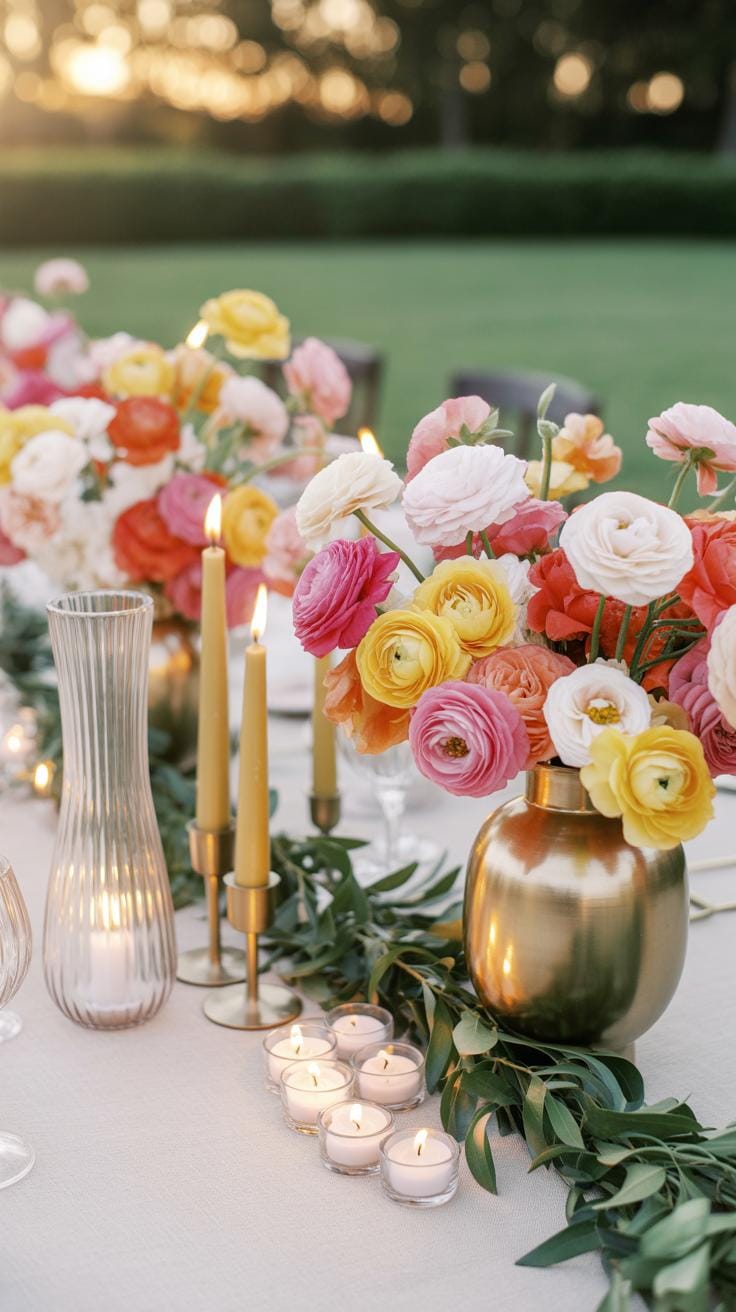
Classic Flower Table Centerpiece Styles From Romantic Roses To Wildflower Clusters
Classic centerpieces rely on geometry and color theory to guide the eye. The romantic style uses dense clusters of roses or peonies to create a sense of fullness. Low-profile arrangements allow guests to see across the table without obstruction. Floral designers often use oasis foam or wire cages to maintain these shapes throughout the event. This structural foundation ensures every bloom stays in its designated position.
Wildflower clusters represent the Dutch Still Life tradition of organic movement. This style uses varying stem lengths to mimic a natural meadow. It works best with slender vases like bud jars or glass bottles. Use thin stems like Queen Anne’s Lace or Cosmos to add height without adding bulk. This approach requires less total product but demands careful placement to balance negative space and visual weight effectively.
Budget Friendly Tips For Stunning Flower Table Centerpieces At Your Wedding
Managing costs requires a focus on volume and seasonality. Professionals prioritize hardy, large-headed flowers to fill space quickly. Hydrangeas and garden roses provide massive surface area for the price. Buying from local growers reduces shipping expenses and ensures the product lasts through the reception. You must also repurpose ceremony flowers to maximize your investment. Move altar pieces to the head table immediately.
- Greenery Foundations: Use varieties like Ruscus or Eucalyptus to build the primary structure of the arrangement. These materials cost significantly less than flowers by the bunch. Greenery adds bulk and covers mechanical parts like tape or foam while providing a clean backdrop for a few focal blooms.
- Seasonal Selection: Always choose flowers that bloom naturally during your wedding month. Out-of-season imports carry high surcharges due to climate-controlled shipping and low availability. Sticking to local seasonal crops ensures the most vibrant petals and the lowest price points per stem for the entire reception.
- Bud Vases: Scatter small glass bottles across the table instead of one large arrangement. This technique uses fewer stems but covers more table surface area. It creates a high-end look using common garden flowers. Guests can often take these home as favors at the end of the night.
- Monochromatic Palettes: Limit your color choices to one or two shades to simplify the buying process. Bulk purchasing one variety often triggers price breaks from wholesalers. Single-color designs also look more expensive and intentional than multi-colored mixes. This strategy reduces waste and makes the design process much faster.
- Focal Bloom Strategy: Place one premium flower like a Protea or Peony in the center of a basic arrangement. Surround it with cheaper filler flowers like Carnations or Alstroemeria. This draws the eye to the expensive bloom while the cheaper flowers provide the necessary volume to fill the vase.
Smart floral planning avoids complex mechanics that require hours of expensive labor. Focus on simple water-based designs that you can assemble quickly. Use clear glass to keep the tabletop looking light and modern. If you use tall stands, make sure the base is thin so it does not block guest views. Efficiency in design lowers labor costs and allows for more money to go toward the flowers.
Flower Wedding Table Decor Beyond The Centerpiece Petals Runners And More
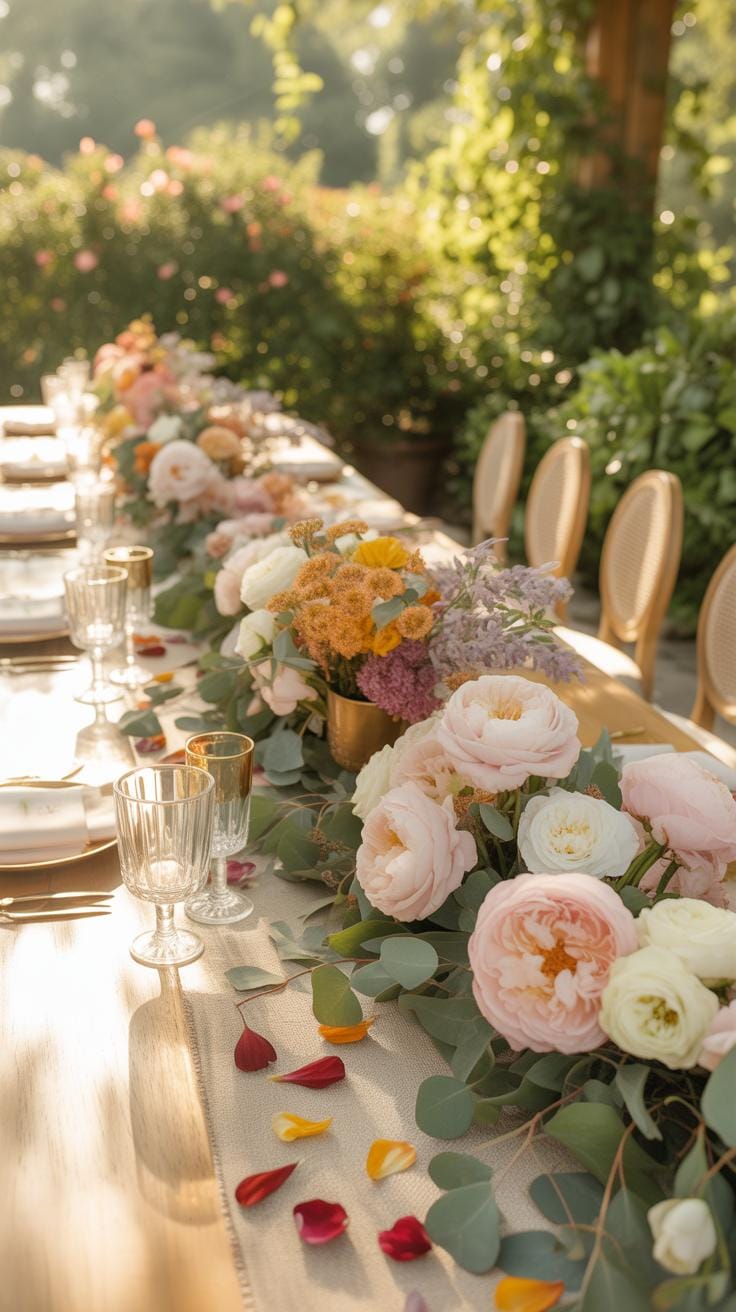
Using Scattered Petals And Bud Vases To Complement Your Main Floral Display
Scattered petals provide a low-cost method to extend color across a table surface. Use fresh rose petals or freeze-dried options to prevent wilting during long receptions. Focus placement around the base of your primary centerpiece to soften hard lines. This technique creates a visual bridge between individual design elements. Proper spacing prevents the table from looking cluttered or disorganized.
Bud vases offer a modular approach to table design. Place single stems of ranunculus or anemones in narrow glass vessels to fill empty gaps. This strategy allows you to use premium blooms without the high cost of large arrangements. Position these smaller units at varying distances from the main display. This creates depth and ensures guests have a floral view from every seated angle.
How Candles And Greenery Enhance Flower Wedding Table Decor Without Extra Cost
Greenery serves as a natural runner that replaces expensive fabric. Use hardier foliage like ruscus or eucalyptus for their endurance and low price point. Lay these stems directly on the table to create a continuous line of color. This foundation supports your main floral focal points. It hides technical elements like water tubes or floral foam. Strategic greenery use reduces the total stem count needed.
Candles add essential lighting height without the expense of tall floral towers. Use pillar candles of varying heights to create vertical interest. Place them near mirrors or glass vases to double the light output through reflection. Unscented wax is mandatory to avoid clashing with food aromas. This combination of fire and foliage occupies significant space. It allows you to spend your budget on a few high-impact flowers.
Wedding Table Flower Decorations For Every Season What Blooms Work Best
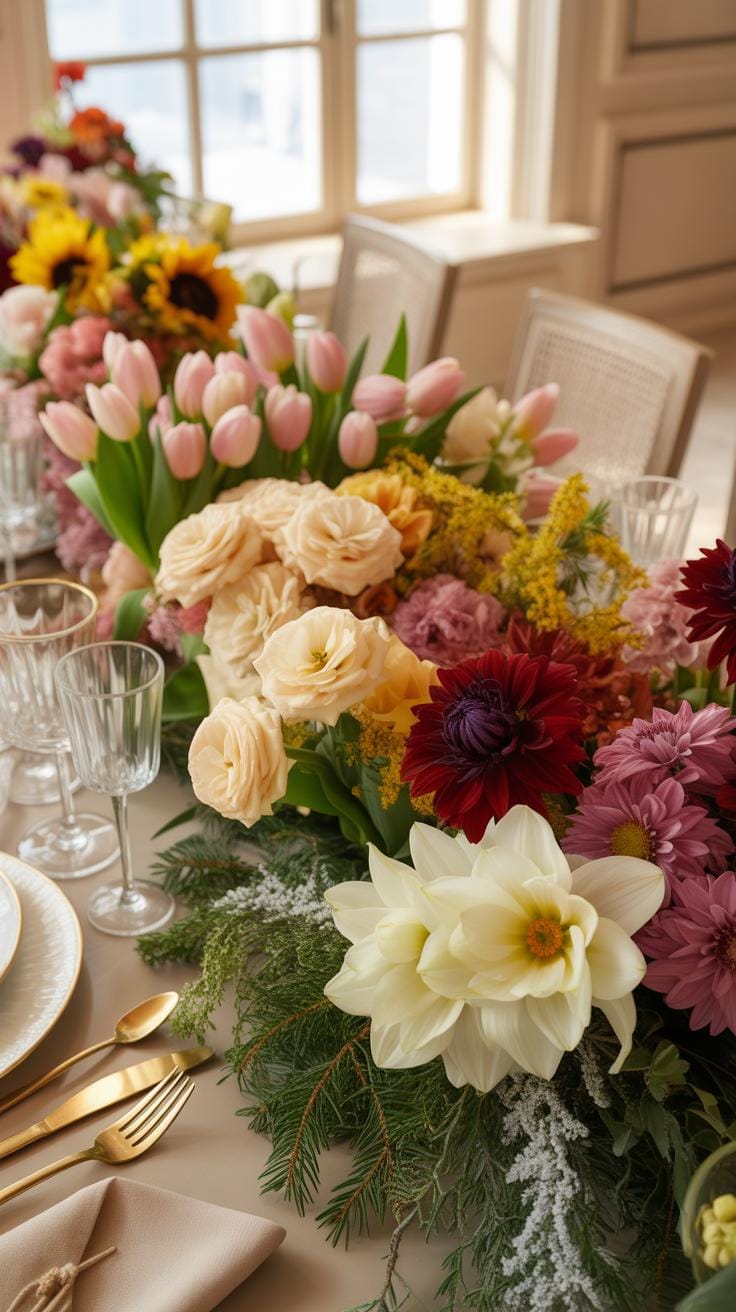
Seasonal Flower Guide: Matching Your Wedding Table Flower Decorations To The Time Of Year
Select your wedding reception florals based on the natural growth cycle of plants. Nature dictates availability and quality at any given time. Using out-of-season blooms requires long-distance shipping and chemical preservation. This hurts your budget and reduces the lifespan of the arrangements. Stick to varieties that thrive during your wedding month to ensure the flowers stay upright throughout the entire evening event.
- Spring Peonies: These large blooms offer high visual impact for centerpieces between April and June. They fill space quickly which allows you to use fewer stems per table. Their soft petals work well in traditional and garden-style arrangements.
- Summer Dahlias: Available in late summer, dahlias provide structural variety and vibrant colors. They have strong stems that hold up well in heat. These flowers serve as focal points in large reception displays without needing much filler.
- Autumn Chrysanthemums: These hardy flowers withstand cooler temperatures and frequent handling. They come in deep earth tones that match the fall aesthetic perfectly. Their long vase life makes them ideal for multi-day celebrations or transport.
- Winter Hellebores: Often called Lenten Roses, these blooms thrive in cold weather. They offer a delicate look but remain resilient against indoor heating systems. Use them for low-profile table decorations to add texture without blocking guest sightlines.
- Year-Round Roses: Modern greenhouse farming makes roses a reliable choice for every season. They offer consistent sizing and a predictable color palette. This reliability allows for precise planning of floral recipes and total cost estimations.
Assess the temperature of your reception venue before finalizing your selection. High-heat environments wilt delicate spring bulbs like tulips within hours. Heavy autumn textures like berries and dried grasses survive better in dry indoor air. Always prioritize structural integrity over specific shades of color. A sturdy flower in a slightly different hue looks better than a dead flower in the perfect shade.
Love is the flower you’ve got to let grow, and sometimes the most beautiful arrangements are those gathered simply by hand.
Why Choosing In Season Flowers Saves Money And Looks More Beautiful
Buying in-season flowers reduces the logistics costs associated with your wedding reception florals. Wholesalers price local crops lower because they do not pay for air freight or cold storage. You get more stems for every dollar spent when you buy what is currently blooming nearby. This allows for fuller centerpieces and more impressive entrance displays without increasing your total floral budget or overall spending.
Seasonal blooms have better scent and color saturation than forced greenhouse alternatives. They haven’t spent days in a shipping box, so they arrive at your table with natural vitality. Fresh flowers stand taller and look more vibrant in photographs. You avoid the limp stems and brown edges common with imported stock. High-quality local flowers simplify your design work because the blooms perform exactly as they should.
Summer Table Centerpiece Ideas Fresh Vibrant Florals For Warm Weather Weddings
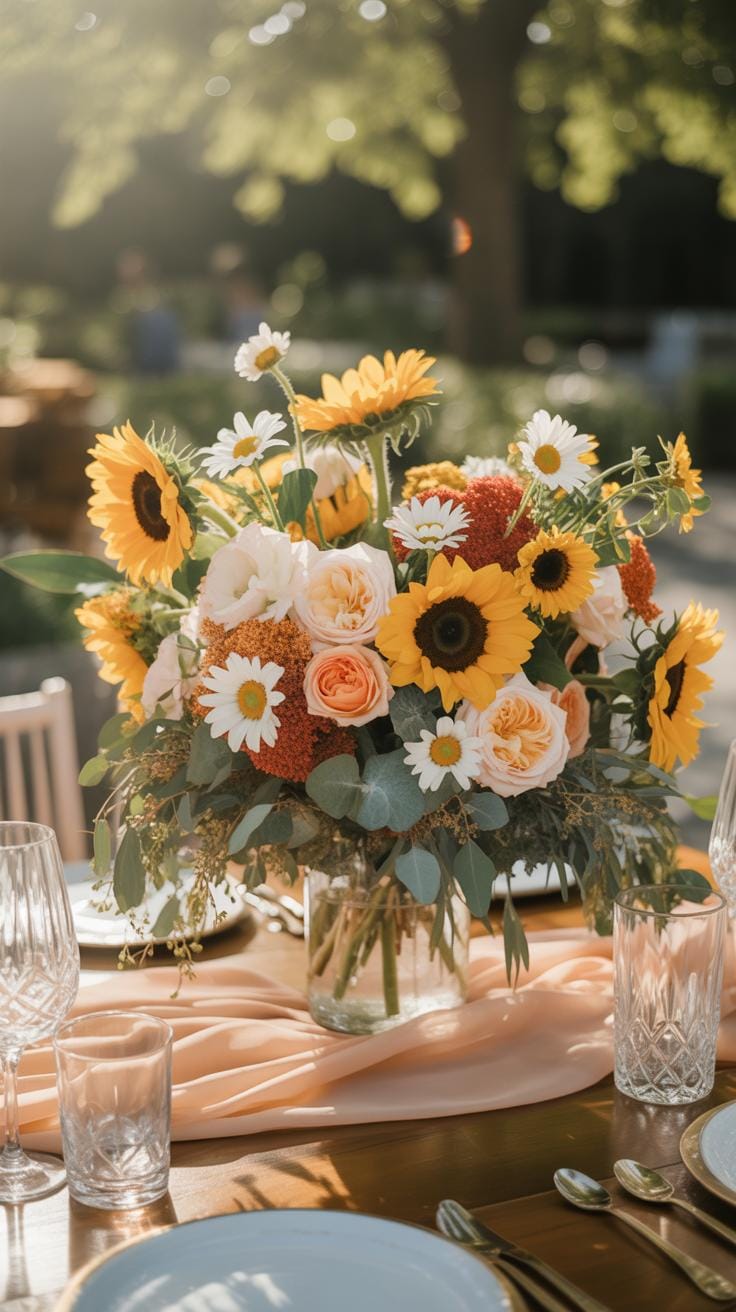
The Best Summer Blooms For Bright And Cheerful Reception Centerpieces
High temperatures require durable flowers. Sunflowers and zinnias withstand heat better than soft-stemmed varieties. These species have thick stems that transport water efficiently. Dahlias offer large heads and many colors for focal points. Use local sourcing to minimize transport stress on the plants. Seasonal availability ensures the freshest product for your event.
Focus on structural integrity when selecting your palette. Snapdragons and celosia add height and texture without wilting quickly. Avoid hydrangea unless you use water tubes or deep vases. These shrubs lose moisture through their petals and fail in direct sun. Focus on field-grown varieties that thrive in natural summer light. These choices guarantee your Wedding Reception Florals remain upright.
Keeping Your Summer Table Centerpiece Fresh Throughout The Reception
Hydration management is the primary goal for outdoor or warm venues. Cut stems at a sharp angle before placing them in water. This increases the surface area for water intake. Use clean vases to prevent bacteria growth. Bacteria clog the stems and stop water flow. Add floral preservative to the water to provide nutrients and kill germs.
Temperature control prevents premature wilting. Keep arrangements in a cool, dark space until the reception begins. Avoid placing tables in direct sunlight or near heat vents. Airflow helps, but strong winds accelerate moisture loss. Mist the petals lightly with water if humidity is low. These tactical steps ensure your Wedding Reception Florals look crisp from the first toast to the final dance.
Flower Centerpieces For Long Tables Creating A Cohesive Floral Runner Effect
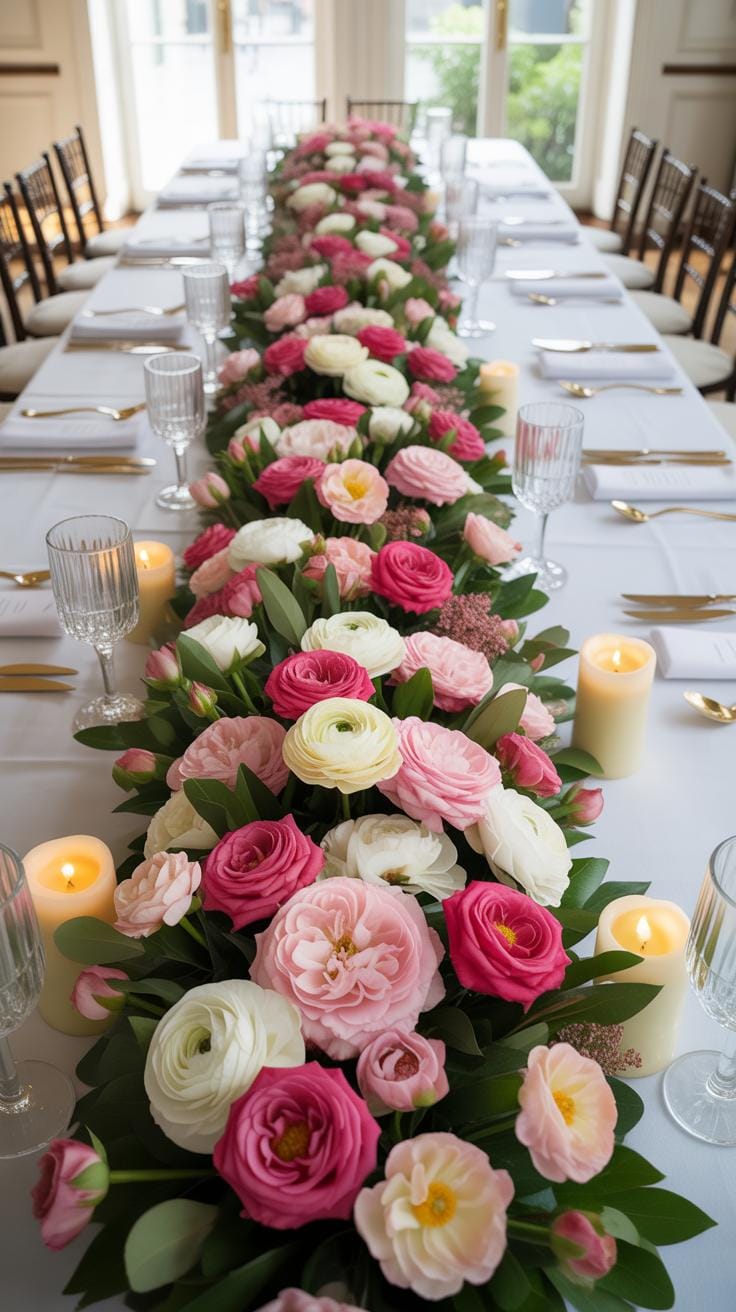
How To Design Flower Centerpieces For Long Tables Using Clusters And Runners
Long tables require a linear approach to floral design. You must maintain a clear path along the center of the table. Use small bud vases or low containers to create a repeating pattern. This method ensures every guest has a view of the flowers. Space these clusters every twelve to eighteen inches. This creates a rhythm that guides the eye across the entire length.
A floral runner effect relies on proximity. Place greenery like eucalyptus or ruscus directly on the table surface as a base. Direct placement hides the mechanics of your design. Nest floral clusters within this greenery to simulate a solid row of growth. This technique mimics the English Garden style. It provides a lush look without the high cost of a solid bloom runner.
Mixing Tall And Low Elements To Add Dimension Along A Long Reception Table
Dimension prevents a long table from looking flat. Place tall arrangements at specific intervals to break the horizontal line. Use thin stands or glass trumpets to keep the sightline clear at eye level. This strategy draws from the Baroque tradition of height and grandeur. It fills the vertical space of a large room. High elements also make the ceiling feel lower and more intimate.
Pair these tall towers with low arrangements to ground the design. These low pieces should sit in heavy ceramic or metallic bowls. This contrast creates a layered landscape. It mimics natural variations in growth height. Keep the low elements under twelve inches tall. This height allows guests to talk across the table. Use the same flower types in both heights to ensure the design stays cohesive.
Frequently Asked Questions

What are the easiest flowers for a beginner to use for a wedding?
If you are new to floral design, stick with sturdy, forgiving blooms like roses, hydrangeas, or carnations. These varieties hold up well without constant misting and have thick stems that are easy to trim. When planning your wedding reception florals, choosing flowers with larger heads allows you to fill space quickly, meaning you need fewer stems to create a lush, professional look with very little technical effort or experience.
How do I keep DIY centerpieces fresh until the celebration begins?
To ensure your wedding reception florals stay vibrant, prep your stems two days before the event by cutting them at a 45-degree angle under water. Store the arrangements in a cool, dark room away from direct sunlight and ripening fruit. Using floral foam or adding a drop of bleach to the water can prevent bacterial growth, keeping your handmade centerpieces looking crisp and photo-ready from the ceremony until the final dance.
How can I create beautiful floral arrangements on a tight budget?
The secret to affordable decor is embracing seasonal blooms and greenery. Instead of expensive out-of-season imports, use “filler” plants like eucalyptus, baby’s breath, or ferns to add volume and texture. You can also save money by repurposing ceremony flowers for your reception tables. Focusing on a few high-impact focal flowers surrounded by inexpensive foliage creates a high-end aesthetic while keeping your overall floral costs manageable and within a modest budget.