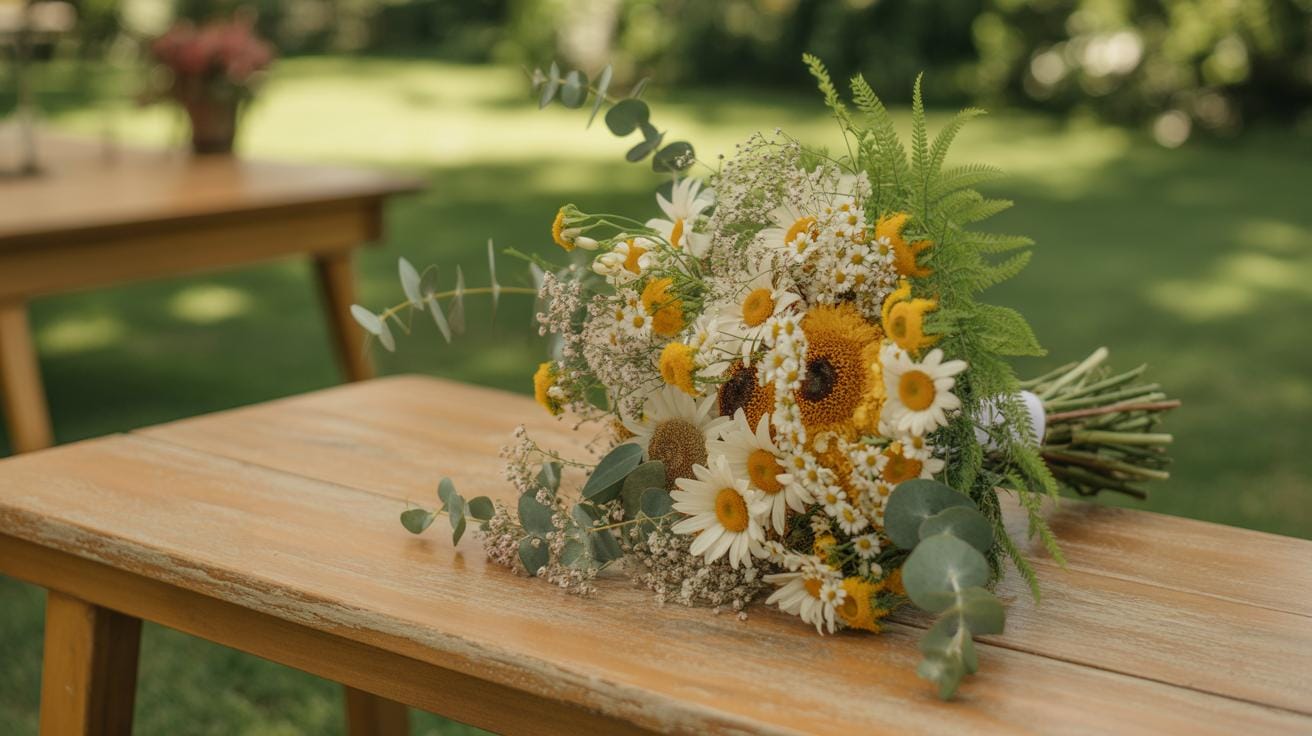
What Are Boho Wedding Flowers Understanding The Wedding Ideas Boho Aesthetic
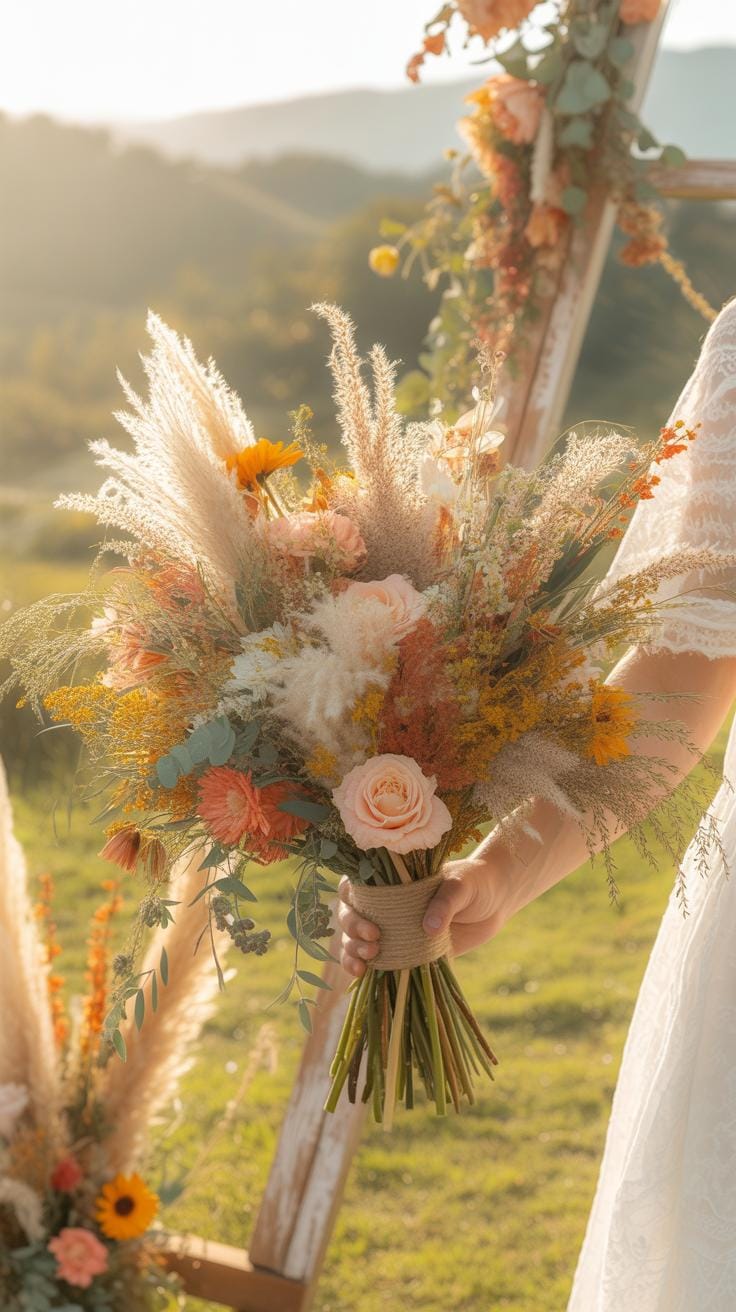
The Core Philosophy Behind The Boho Wedding Style
The bohemian floral aesthetic prioritizes nature over formality. It draws heavily from the 1960s and 1970s counterculture movements. Designers focus on an effortless look that mimics a garden or meadow. This style rejects rigid structures and identical patterns. It centers on artistic expression and individuality. Florists use varied colors and shapes to create a sense of movement and raw organic beauty.
High quality boho design balances chaos with intent. It utilizes seasonal availability and local growth cycles to dictate the palette. This movement values authenticity and textures found in the wild. Practitioners often incorporate non-traditional botanical elements to add depth. The goal is a relaxed atmosphere that feels personal and unforced. It avoids the polished commercial appearance of high-production events to maintain a grounded feel.
How Boho Floral Design Differs From Traditional Wedding Floristry
Traditional floristry relies on symmetry and tight groupings. It uses classic shapes like the round ball or teardrop. Traditional arrangements often hide stems and use uniform flower lengths. In contrast, boho designs feature wide, asymmetrical shapes. They use varying stem lengths to create layers. This technique allows individual blooms to stand out. It creates a wild look that feels gathered rather than manufactured.
Standard arrangements focus on premium soft blooms like roses or hydrangeas. Boho designs mix these with hardy elements like dried grasses and seed pods. This style uses negative space to highlight focal flowers. Traditional methods prioritize perfection and longevity through chemicals. Boho style embraces the natural lifecycle of plants. This includes wilting, browning, and uneven growth. It creates a honest representation of nature within a formal ceremony.
Best Flower Decoration Wedding Picks For A Boho Look
Top Blooms That Define The Boho Flower Decoration Style
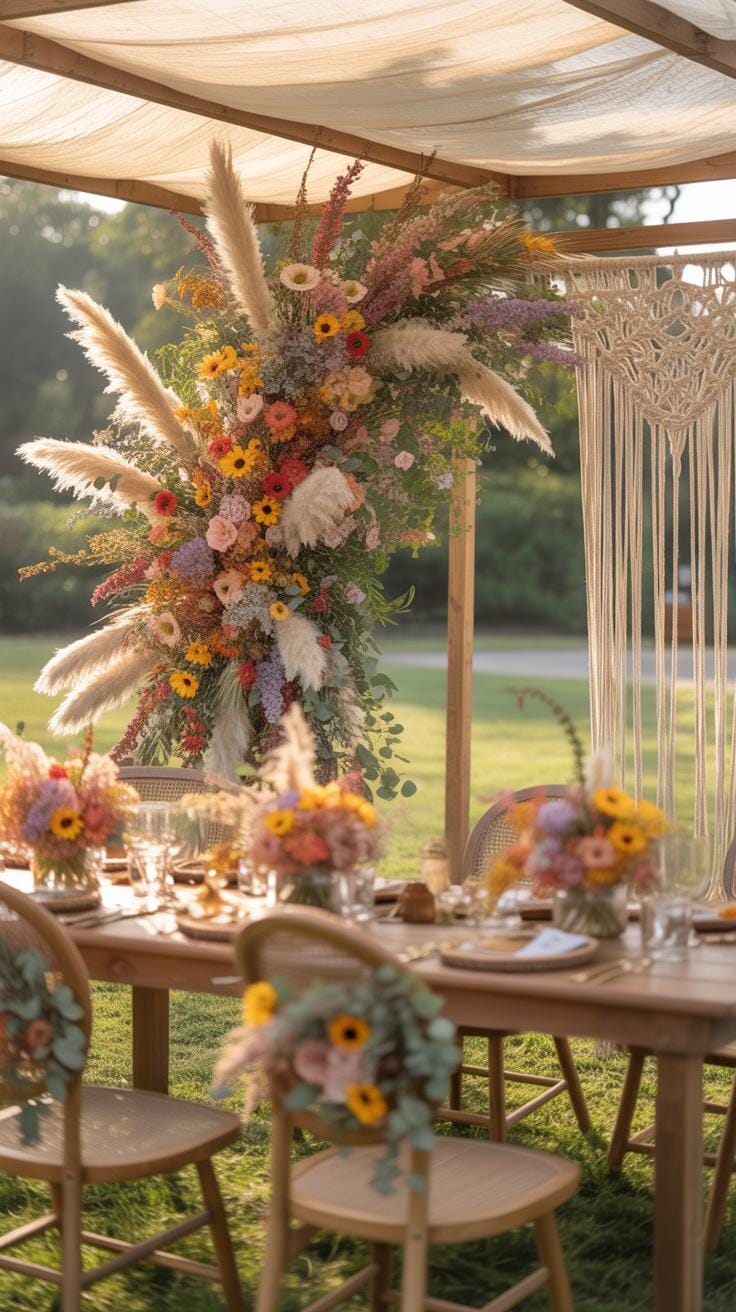
Boho floral design focuses on specific natural shapes and muted color palettes. You must select flowers that offer architectural interest and organic movement. Avoid stiff, perfectly symmetrical blossoms. Instead, choose focal flowers with high petal counts and varied stages of bloom. These selections anchor your arrangements and provide the foundational visual weight needed for a professional, unrefined appearance at any wedding venue.
- Pampas Grass: Use this dried ornamental grass to add height and a feathered texture. It defines the desert boho aesthetic and works well in large floor installations. It provides a neutral, sandy color that complements most palettes without overpowering the focal blooms in your design.
- Protea: Select the King or Queen Protea for a bold, structural centerpiece. These prehistoric looking flowers offer a hard, pointed texture that contrasts with softer petals. Their durability makes them ideal for outdoor events where high heat or wind might wilt more delicate species.
- Ranunculus: Use these flowers for their tight, circular petal layers and curved stems. They add a delicate detail to bouquets and boutonnieres. Their natural stems often bend, which helps create the wild, sweeping lines necessary for an authentic bohemian flower arrangement style.
- Dried Palm Spears: Incorporate these to establish a geometric, mid-century modern influence within your floral decor. They are sturdy and provide a sharp, fan-like silhouette. They require no water, making them a practical choice for overhead installations or wall backdrops that stay up for hours.
- Quickfire Roses: Choose these for their dusty, muted tones that mimic naturally aged flowers. Their desaturated colors avoid the bright, synthetic look of traditional wedding roses. They bridge the gap between fresh and dried elements, allowing for a seamless blend of different biological textures in one piece.
Strategic selection of these species ensures your decor aligns with historical bohemian trends. These movements prioritize botanical variety and unconventional materials over formal structure. By mixing these specific blooms, you create a visual narrative of curated chaos. This approach allows for creative flexibility while maintaining a high standard of professional design. Stick to these core varieties to ensure your floral plan remains cohesive.
How To Layer Textures And Greenery For A Lush Boho Effect
Layering requires a tiered approach to visual depth. Direct the eye by placing flat, wide leaves at the base of your arrangement. Use silver-toned greens like Eucalyptus to provide a cool background for warmer flower colors. Contrast these smooth surfaces with jagged elements like Ferns or Seeded Eucalyptus. This method creates a dense, three-dimensional look that mimics a natural forest floor or wild garden.
Avoid uniform green shades throughout your installation. Incorporate variegated foliage or dark, burgundy leaves to create shadows and highlights organically. Position trailing vines like Jasmine or Ivy to spill over the edges of containers. This breaks the hard lines of tables and altars. High-quality boho decor relies on this interaction between structural stems and flowing greenery. Ensure every layer serves to emphasize the focal flowers while hiding structural foam or wire.
How To Use Wedding Dried Flowers Bouquets In Your Boho Arrangements
Why Dried Flowers Are A Natural Fit For The Boho Wedding Aesthetic
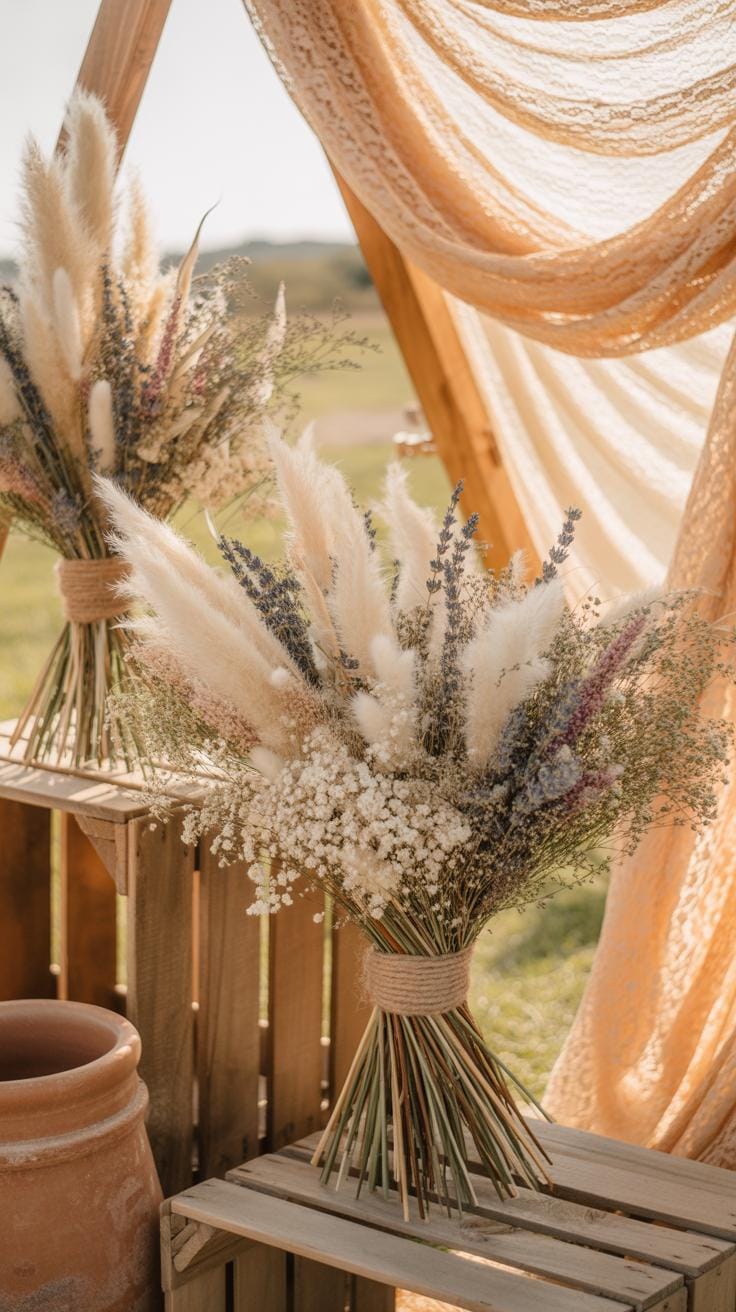
Dried flowers provide the muted tones and structural variety central to boho design. This style rejects the bright colors found in traditional formal displays. Instead, it relies on desaturated shades like beige, terracotta, and dusty rose. These colors mirror the natural world. Dried materials maintain their shape and hue throughout the entire event. They do not wilt in heat or direct sunlight.
Practitioners value dried botanical elements for their durability and lack of water requirements. This makes them ideal for outdoor desert or forest venues. Elements like pampas grass and palm spears add height and architectural interest. Historical boho trends draw from the 1970s resurgence of natural textures. Using preserved stems ensures the floral pieces remain intact as keepsakes. This practicality serves both the budget and the aesthetic.
Earth laughs in flowers, and a simple wildflower bouquet is the most honest way to celebrate a free-spirited love. Let nature do the work so your soul can stay wild and present on your wedding day.
Combining Dried And Fresh Blooms For A Balanced Boho Bouquet
Successful boho arrangements balance the rigidity of dried stems with the softness of living plants. Fresh blooms provide moisture and life to the design. Use focal flowers like protea or garden roses to anchor the piece. Surround these with dried textures like ruscus or bunny tails. This contrast creates visual depth. It makes the arrangement look intentional rather than haphazard. The mix ensures the display feels modern.

Technique matters when mixing these two mediums. Keep fresh stems in water vials if the primary structure is dry. Alternatively, build a fresh base and insert dried accents last. This protects the delicate preserved fibers from becoming damp and limp. A 70 to 30 ratio of fresh to dry often works best. This balance maintains the movement of a natural garden. It prevents the bouquet from appearing too stiff or static.
Seasonal Inspiration Choosing Fall Wedding Flowers For Your Boho Celebration
Which Fall Blooms Work Best In A Loose Boho Arrangement
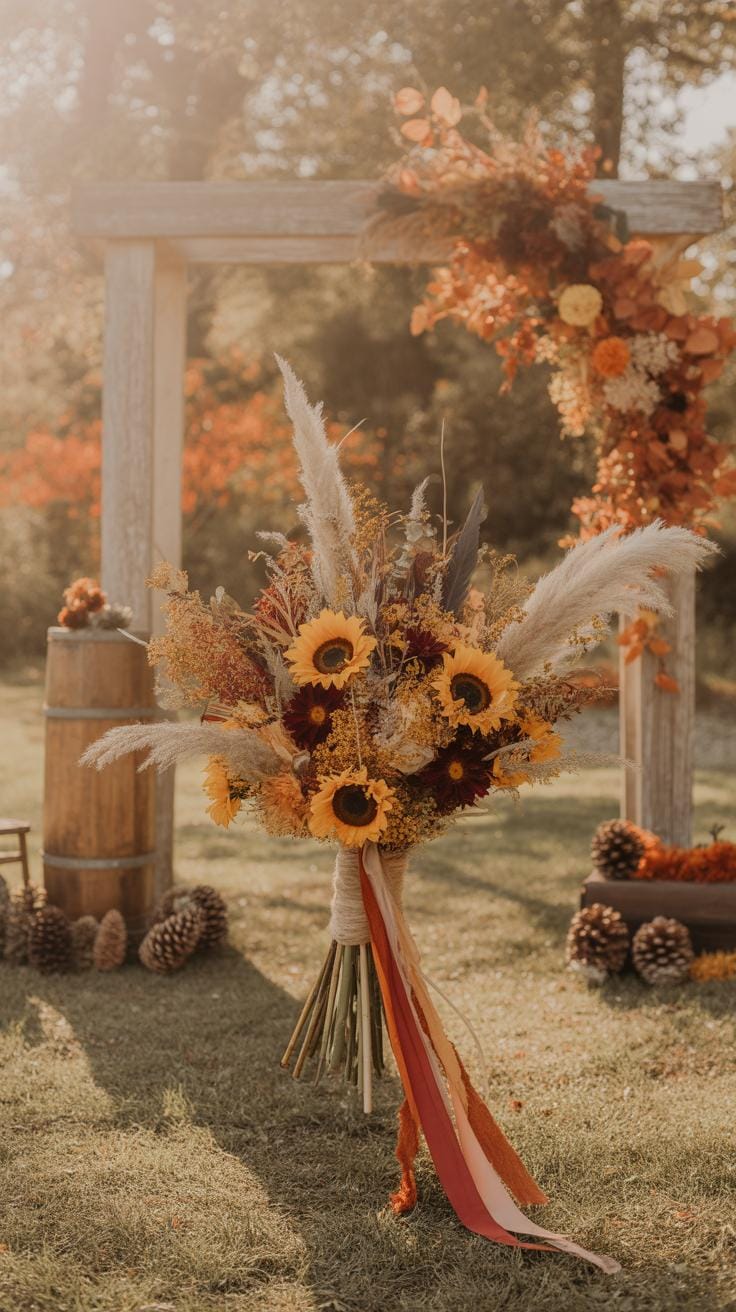
Select focal flowers with strong stem structures and heavy petal counts to anchor the design. Dahlias serve as the primary choice for fall boho arrangements because of their geometric patterns and varied sizes. Their rigid stems support the weight of blooms in asymmetric placements. Pair these with Ranunculus to add smaller textures that fill gaps without adding bulk or distracting from the primary focal points.
Texture defines the boho style during the autumn months. Integrate dried elements like preserved ferns or bleached pampas grass to create architectural height and movement. Scabiosa pods and Amaranthus add a downward visual flow that breaks traditional rounded shapes. These materials hold up well in low humidity and require less water than delicate spring blooms. Use them to extend the physical footprint of the bridal bouquet.
Working With Fall Wedding Colors To Create Warm Boho Palettes
Establish a base using desaturated tones like terracotta, rust, and mustard. These colors mirror the natural decay of the season and provide a grounded foundation. Avoid bright primary colors that look artificial in outdoor settings. Focus on tonal shifts within the same color family to create depth. This strategy ensures the flowers look cohesive even if you use several different types of greenery.
Contrast these heavy earth tones with neutrals like cream or parchment. Darker accents such as burgundy or deep plum add the necessary visual weight for high-contrast photos. Use darker foliage like Cotinus or agonis to frame the lighter blooms. This technique pulls the eye toward the center of the arrangement. Accurate color balancing prevents the bouquet from looking like a flat mass of brown or orange.
Dream Wedding Decorations Styling Boho Flowers Beyond The Bouquet
Creating Boho Floral Arches, Crowns, And Table Centerpieces
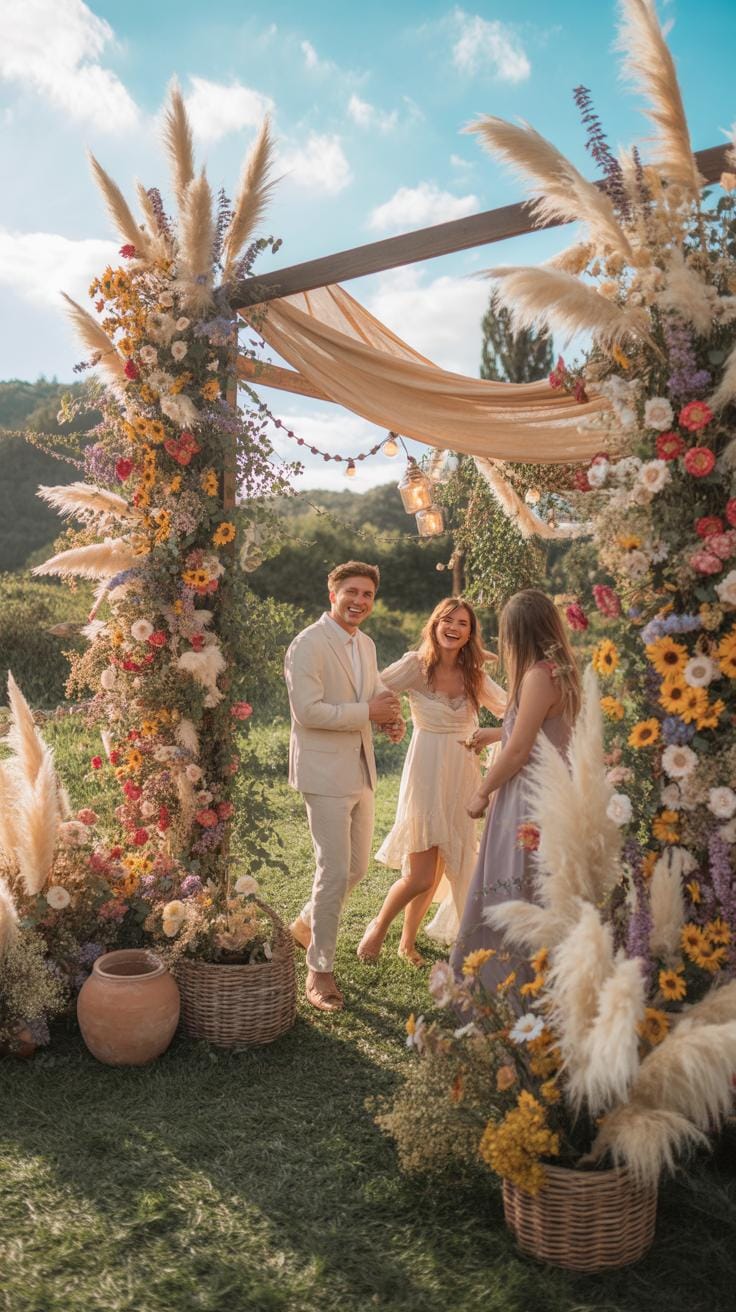
Build boho arches using asymmetrical designs to mimic natural growth. Use ground nests or broken arches to keep the sightlines open. Use chicken wire or floral foam cages to secure heavy blooms like protea and pampas grass. Ensure the structure is bottom heavy to prevent tipping in wind. Focus on texture over color to achieve the desired organic aesthetic for outdoor or indoor ceremony spaces.
Floral crowns require thin gauge wire and floral tape for a secure fit. Select hardy flowers that survive hours without water such as waxflowers or spray roses. For centerpieces, use low vessels to encourage guest conversation. Group mismatched bud vases of varying heights to create visual interest. Incorporate dried elements like bunny tails to add height without blocking views across the dinner table.
Using Trailing Vines And Foliage To Enhance Your Dream Wedding DéCor
Trailing vines provide the movement necessary for boho styling. Use Italian Ruscus or Smilax for long runs over doorways and rafters. These species remain green for long periods without a direct water source. Drape foliage loosely to create a relaxed atmosphere that avoids rigid lines. Layer different shades of green to build depth and make the floral installations look substantial and permanent.
Incorporate silver dollar eucalyptus or seeded eucalyptus for a dusty color palette. These leaves add a matte texture that contrasts well with bright flowers. Use ivy or jasmine vines for delicate draping on chair backs and signage. Secure these stems with clear zip ties or bind wire for invisible support. Natural greenery reduces the total cost of decorations while filling large empty spaces effectively and quickly.
Evergreen Forest Wedding Vibes Bringing Nature Into Your Boho Floral Design
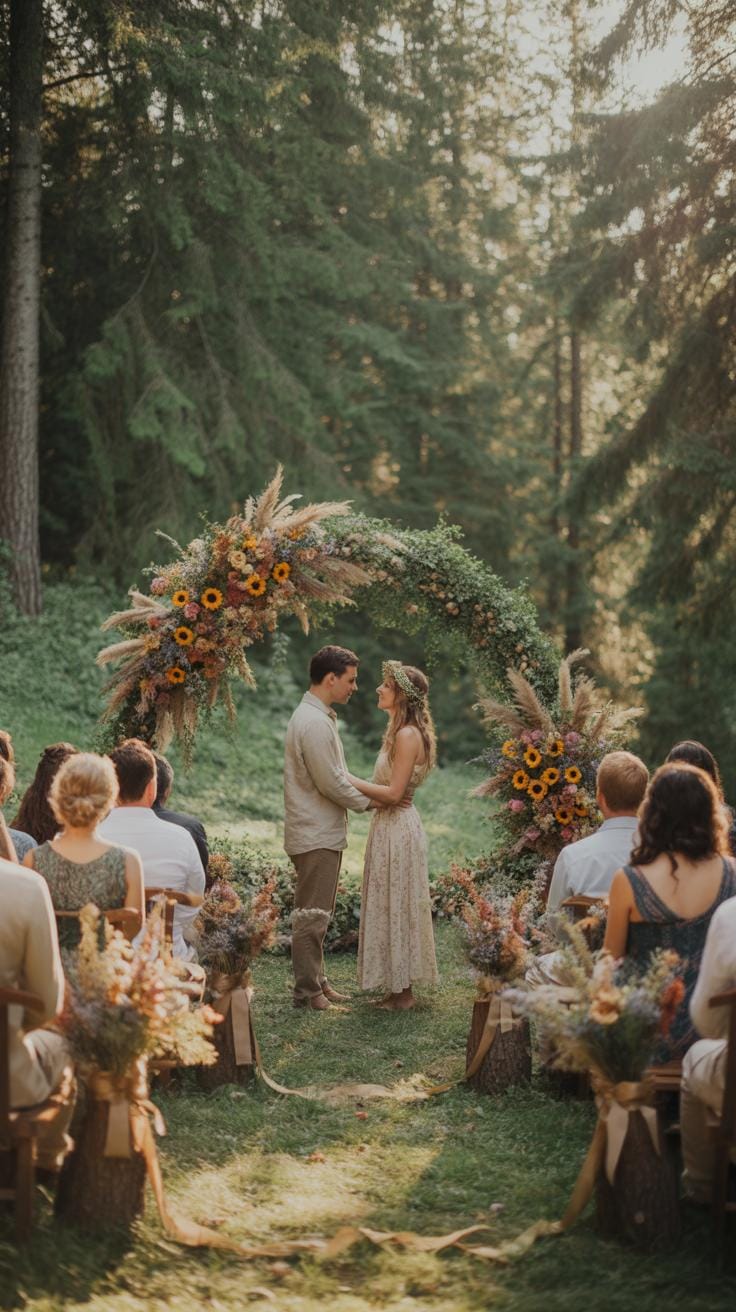
Foliage And Greenery Varieties That Capture An Evergreen Forest Wedding Feel
Forest aesthetics require deep tones and varied textures. Use Seeded Eucalyptus to provide structural weight and muted blue-green colors. Incorporate Plumosa Fern to mimic the soft floor of an old growth forest. These plants create a foundation that looks established rather than arranged. You want the design to look like it grew in place. Select dark greens to contrast against light boho blooms.
Add Silver Dollar Eucalyptus for its round leaves and matte finish. Use Italian Ruscus for long trailing lines in bouquets or arches. These varieties survive well without constant water sources. They hold their shape and color throughout long wedding days. Avoid glossy tropical leaves that break the forest theme. Stick to needle-like textures and dusty finishes to maintain a realistic woodland appearance.
How To Source Sustainable And Local Greenery For Your Boho Wedding
Forage responsibly by checking local land laws before cutting any branches. Focus on invasive species or plants that require pruning in your specific region. This method reduces carbon footprints and ensures the greenery matches the local environment. Local sourcing provides fresher stems that last longer than shipped imports. Freshly cut cedar or pine branches offer a natural scent that synthetic sprays cannot replicate.
Contact local Christmas tree farms or timber yards for seasonal offcuts. These businesses often discard branches that work perfectly for floor installations or heavy garlands. Reuse these materials to lower costs and minimize waste. Check for pests and clean all foraged items before bringing them indoors. Authentic forest design relies on using what the earth provides in your immediate area during the current season.
Designing A Wildflower Flower Bouquet That Looks Effortlessly Boho
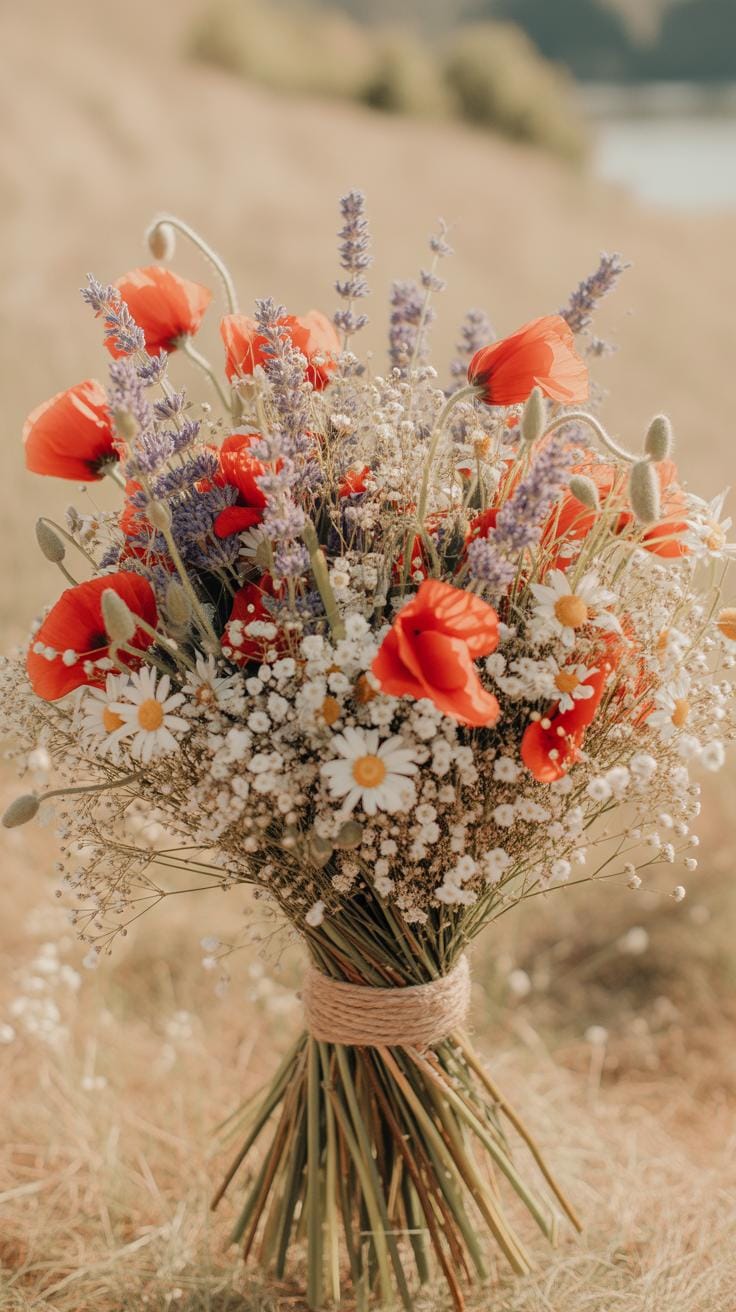
What Makes A Wildflower Bouquet The Perfect Boho Bridal Choice
Wildflower bouquets define the boho style through intentional asymmetry and varied textures. These arrangements reject the stiff, rounded shapes of traditional florist designs. They mimic the natural growth patterns of a meadow. Use diverse stem lengths to create visual depth and movement. This approach honors the counterculture roots of the 1960s aesthetic. It focuses on raw beauty instead of formal structure.
Strategic selection of native species ensures the bouquet looks authentic and stays fresh. Boho designs rely on heavy greenery to frame vivid blooms. This contrast highlights the irregular shapes of each flower head. Using uncultivated varieties provides a sense of place and time. It creates a relaxed atmosphere that fits outdoor venues perfectly. You gain a high-impact look without using expensive, rare hothouse imports.
Step By Step Tips For Assembling A Natural Wildflower Bouquet At Home
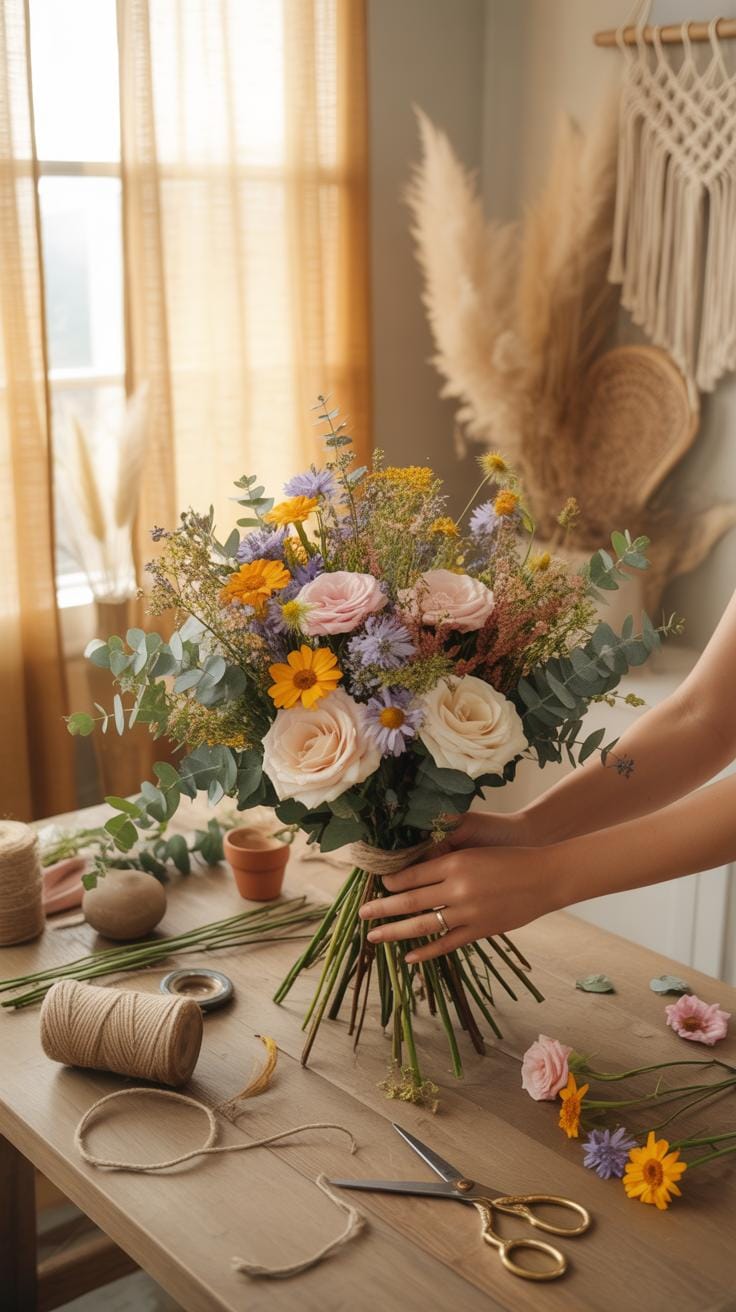
Home assembly requires proper preparation and the right tools for a professional finish. Start by hydrating all stems for at least twelve hours before building. Strip all foliage that will sit below the water line to prevent bacterial growth. Work in front of a mirror to track the overall shape and balance. This allows you to spot gaps in real time.
- Spiral Stem Placement: Hold the bouquet in one hand and add stems at a consistent angle. Rotate the bundle after every two additions to ensure an even distribution of weight. This technique prevents crushing the stems and allows the flowers to flare outward naturally.
- Varying Focal Heights: Position your largest blooms at different levels rather than in a straight line. Place some deep within the greenery and others slightly protruding. This creates a three-dimensional effect that mimics how flowers grow in the wild. It adds immediate visual interest.
- Adding Texture Stems: Incorporate dried elements like pampas grass or seed pods alongside fresh petals. These materials provide a rugged contrast to soft blooms. Textural diversity is a core pillar of the boho movement. It breaks up the visual monotony found in standard floral shop arrangements.
- Greenery Base Layer: Build a structural frame using eucalyptus or ferns before adding delicate wildflowers. This base supports the thinner stems and gives the bouquet its width. Strong greenery prevents the arrangement from collapsing or looking too thin. It ensures the final product holds its shape all day.
- Securing With Twine: Wrap the stems tightly with floral wire and then cover it with natural jute twine. Leave the stem ends exposed so the bouquet can sit in water during the reception. Exposed ends and rustic cordage reinforce the handmade, organic aesthetic. It looks purposeful and unrefined.
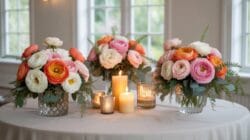
Finish the design by gently pulling a few light fillers outward to soften the edges. Use a sharp knife for a final clean cut on the bottom of the stems. Mist the blooms lightly with water to maintain turgidity. Store the finished bouquet in a cool, dark location until the ceremony begins. Proper finishing steps ensure the arrangement survives the heat of the event.
The Daisy Wildflower Bouquet A Simple And Iconic Boho Wedding Flower Choice
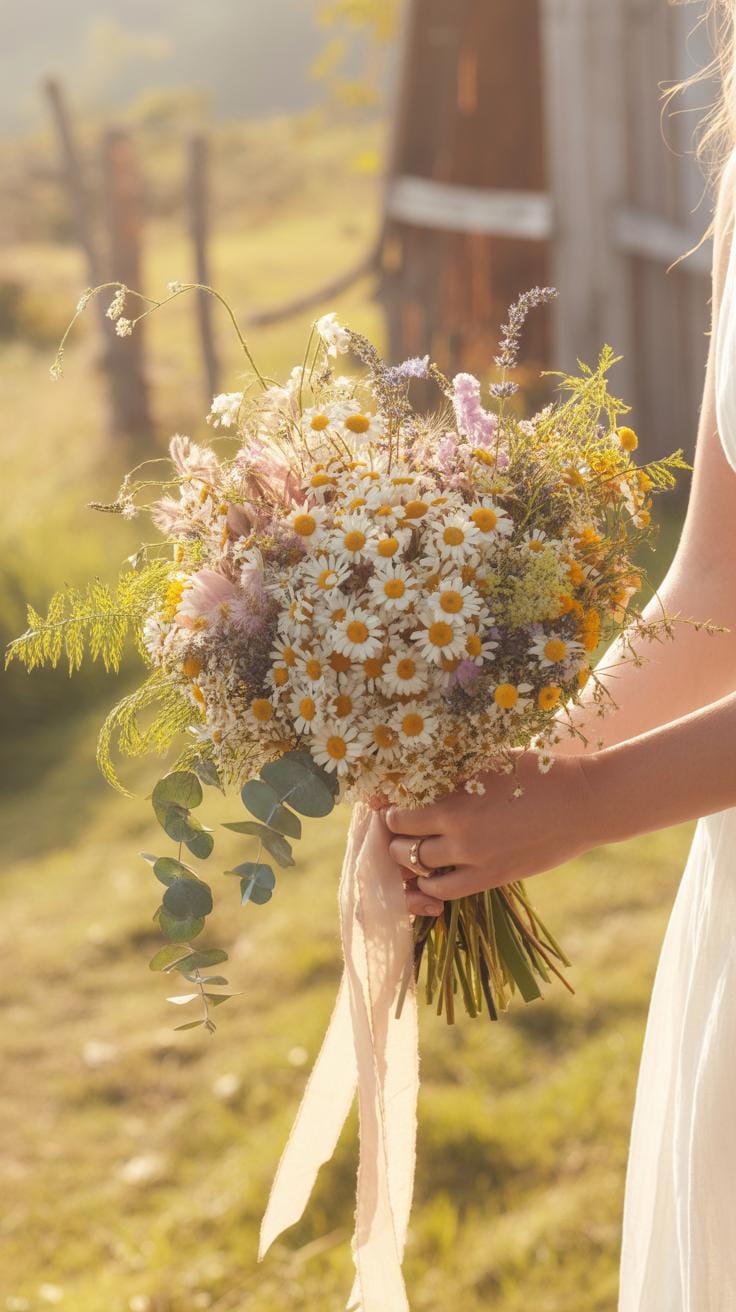
Why Daisies Are A Timeless Symbol Of Natural, Carefree Bridal Beauty
Daisies symbolize purity and new beginnings. This flower fits the boho aesthetic because it looks unforced. It grew in popularity during the 1960s and 1970s flower power movement. Modern brides choose it for its sturdy stems and long vase life. It resists wilting in outdoor heat. This makes it a reliable choice for summer ceremonies held in fields or gardens.
The daisy has a distinct radial symmetry that draws the eye. Its yellow center provides a natural pop of color without needing dyes. This flower works well for beginners because it requires no complex wiring. You can bundle them quickly with twine for a finished look. They represent a shift away from stiff, formal arrangements. Use them to create a relaxed and approachable wedding atmosphere.
Pairing Daisies With Other Wildflowers For A Cohesive Boho Bouquet
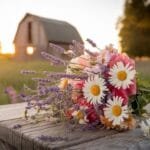
Pairing daisies with other textures creates a balanced look. Use delicate fillers like baby’s breath or Queen Anne’s lace to soften the edges. These smaller blooms add volume without competing for attention. Contrast the round shapes of the daisies with vertical elements like lavender or snapdragons. This variation in height mimics a natural meadow. It keeps the bouquet from looking flat or repetitive.
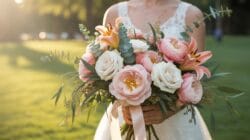
Incorporate greenery to ground the bright whites and yellows. Seeded eucalyptus or ferns provide a muted green backdrop. This helps the daisies stand out. Avoid overcomplicating the color palette. Stick to three or four species maximum to maintain a focused design. If you use several wildflower types, ensure they have similar water needs. This keeps the entire arrangement fresh throughout the wedding day events.
Beginner Tips For DIY Boho Wedding Flowers Budget Sourcing And Prep
Where To Buy Or Forage Boho Wedding Flowers Without Overspending
Buying from wholesale floral markets saves the most money. These vendors sell in bulk to the public or license holders. You get higher quality than grocery stores at lower prices. Local flower farms offer seasonal stems that fit the boho aesthetic perfectly. Visit these farms during the growing season to secure specific colors and textures. This direct sourcing eliminates middleman markups and shipping fees.
Foraging offers free materials but requires strict rules. Only take plants from private land with clear permission. Focus on grasses and woody branches that add height to arrangements. Avoid picking endangered species or plants near busy roads treated with chemicals. Combine these found items with focal flowers bought in bulk. This strategy balances professional quality with a natural, wild look while keeping the total cost low.
How To Keep Your Boho Wedding Flowers Fresh From Prep Day To The Ceremony
Hydration determines if your flowers survive the heat. Cut stems at a forty five degree angle under water. This prevents air bubbles from blocking water intake. Remove all leaves that sit below the water line in your buckets. Rotting leaves create bacteria that kill flowers quickly. Store your buckets in a cool, dark room away from direct sunlight or ripening fruit.
Temperature control is vital for delicate boho blooms. Keep flowers between thirty eight and forty five degrees Fahrenheit if possible. Use floral sealant sprays to lock moisture into petals after arranging them. Check water levels twice daily because thirsty plants empty vases fast. Avoid placing finished pieces near air vents or drafty windows. Stable environments ensure your arrangements look vibrant from the morning photos until the final dance.
Frequently Asked Questions

What are the best flower varieties for a beginner to use in a boho wedding?
Beginners should look for hardy, forgiving blooms that thrive in a relaxed, unstructured arrangement. Proteas, ranunculus, and dried pampas grass are excellent choices because they naturally hold their shape and embody the earthy aesthetic. Selecting these resilient boho wedding flowers allows you to achieve that sought-after whimsical look without needing the advanced technical skills required for more traditional, rigid floral designs often seen in formal ceremonies.
How can I assemble my own bridal bouquet in the bohemian style?
To create a DIY bouquet, start with a “focal” bloom and build outward using asymmetrical layers. Instead of aiming for perfect symmetry, tuck in sprigs of eucalyptus, silver dollar greenery, and wildflowers at varying heights. Secure the stems with floral tape, then wrap them in long, flowing silk ribbons. This loose, airy construction is the hallmark of boho wedding flowers, making the process much easier for novices to master successfully.
Can I achieve a beautiful boho floral look on a tight budget?
Absolutely! The beauty of the bohemian aesthetic is its reliance on natural, foraged elements and inexpensive textures. You can save money by mixing premium focal flowers with affordable fillers like baby’s breath, waxflowers, or even dried wheat stalks. Using greenery as your primary base creates a lush, high-end feel for a fraction of the cost, proving that stunning boho wedding flowers are accessible regardless of your overall decoration budget.