
A Living Legacy The Fascinating Origins Of The Protea Flower
From Ancient Gondwana To Modern Gardens: The Botanical History Of The Protea Flower
Protea flowers belong to the Proteaceae family. This family dates back 300 million years to the supercontinent Gondwana. When the land mass split, these plants remained in what is now Africa and Australia. Fossil evidence confirms their presence long before modern flowering plants appeared. This ancient lineage makes them one of the oldest groups of angiosperms still in existence today.
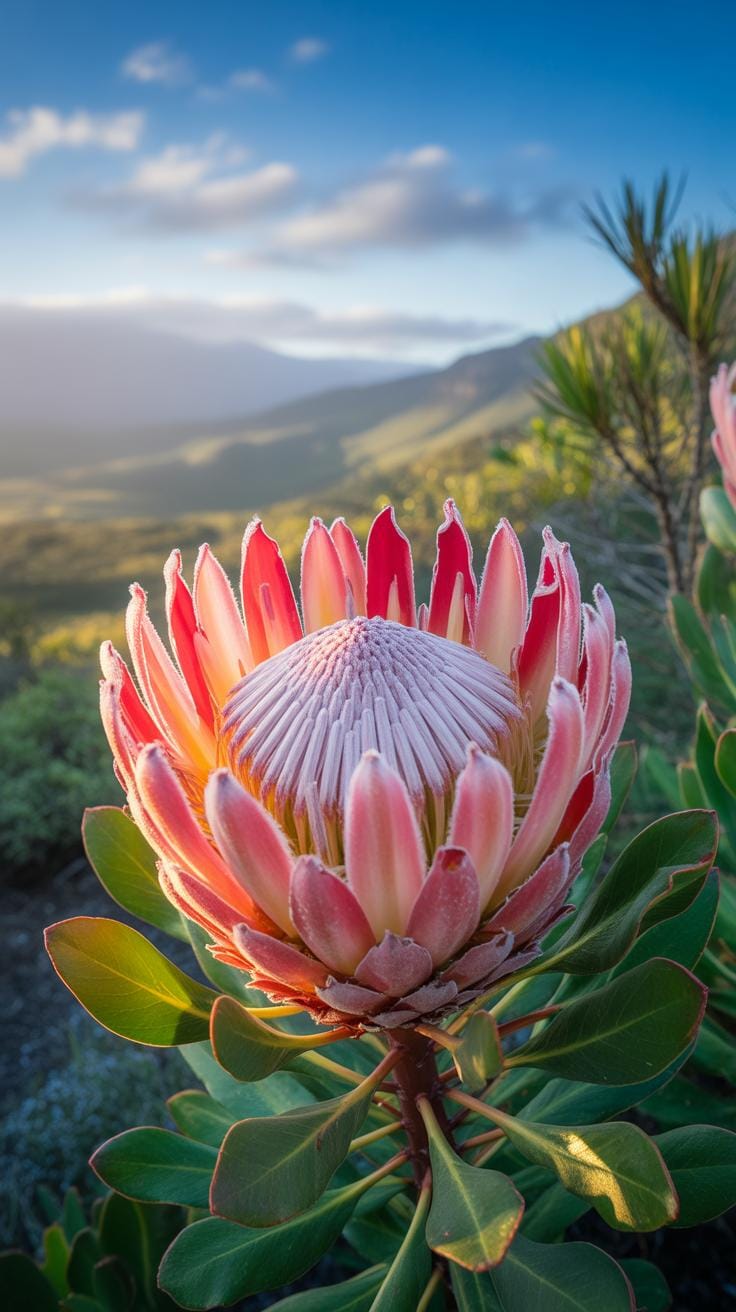
The Cape Floristic Region in South Africa serves as the primary hub for these plants. Wild species thrive in nutrient-poor soil and harsh fire-prone environments. Evolutionary adaptations allow them to survive extreme conditions. Modern cultivation began in the 1700s when European botanists collected specimens. Today they are a global commodity in the floral trade. Growers in California and Israel now produce them for international markets.
Why The Protea Was Named After The Greek God Proteus And What It Means For Its Identity
Carl Linnaeus named the genus Protea in 1735. He chose the name of the Greek sea god Proteus. Legend says Proteus could change his shape at will. This choice reflects the massive diversity found within the species. No two varieties look exactly the same. They vary in size, color, leaf shape, and bloom structure. This variety defines the brand of the flower.
This naming convention highlights the adaptability of the plant. Some species look like small shrubs while others grow as majestic trees. The flowers range from delicate white cups to massive spiked crowns. This physical versatility allows designers to use them in many different settings. The name serves as a functional description of the botanical diversity. It tells florists that the genus offers a solution for almost any aesthetic requirement.
The Diverse World Of Proteas Flower Varieties Used In Special Event Floristry
King Protea, Pincushion, And Beyond: Identifying The Most Popular Proteas Flower Varieties
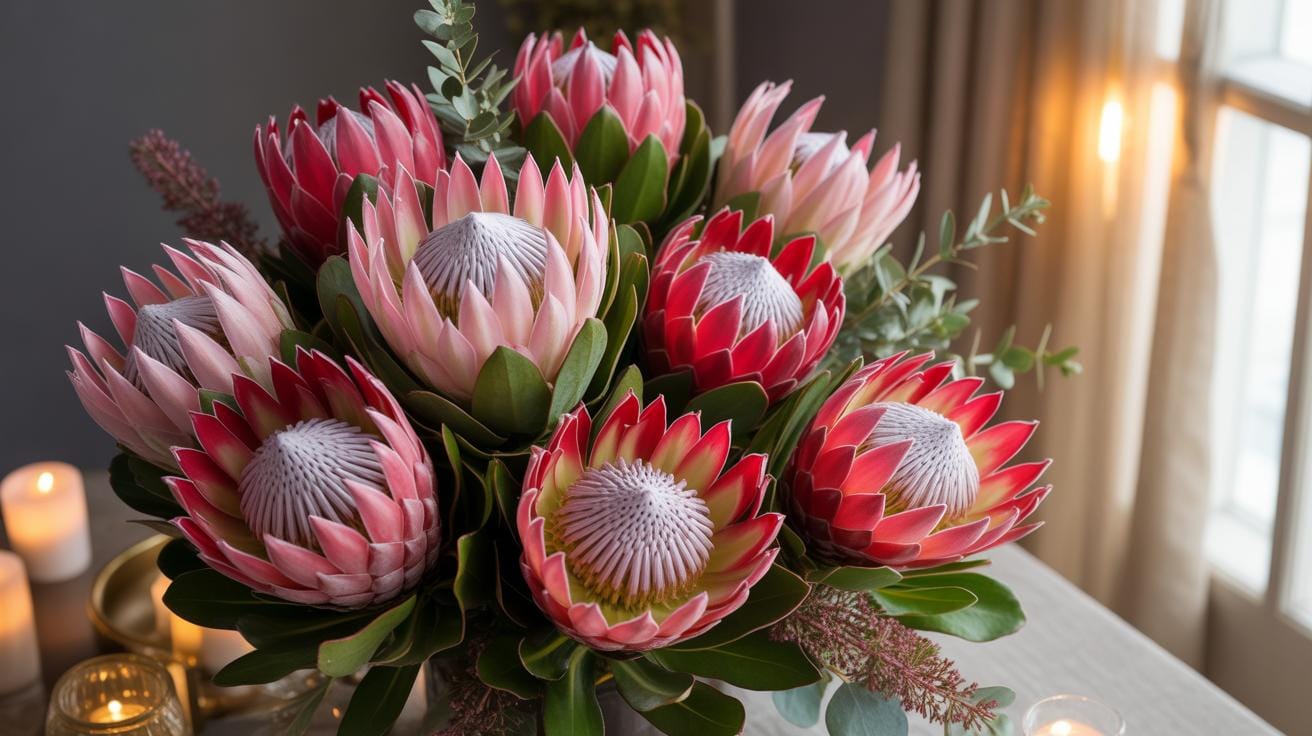
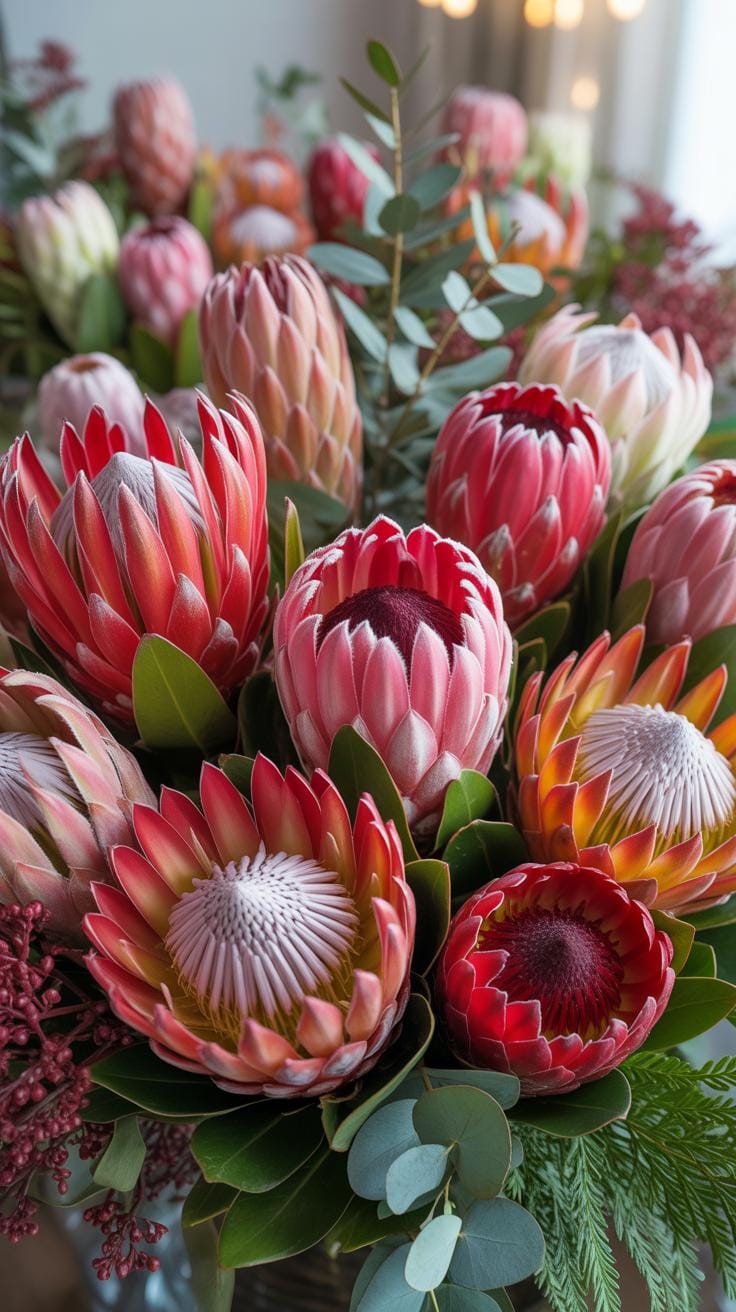
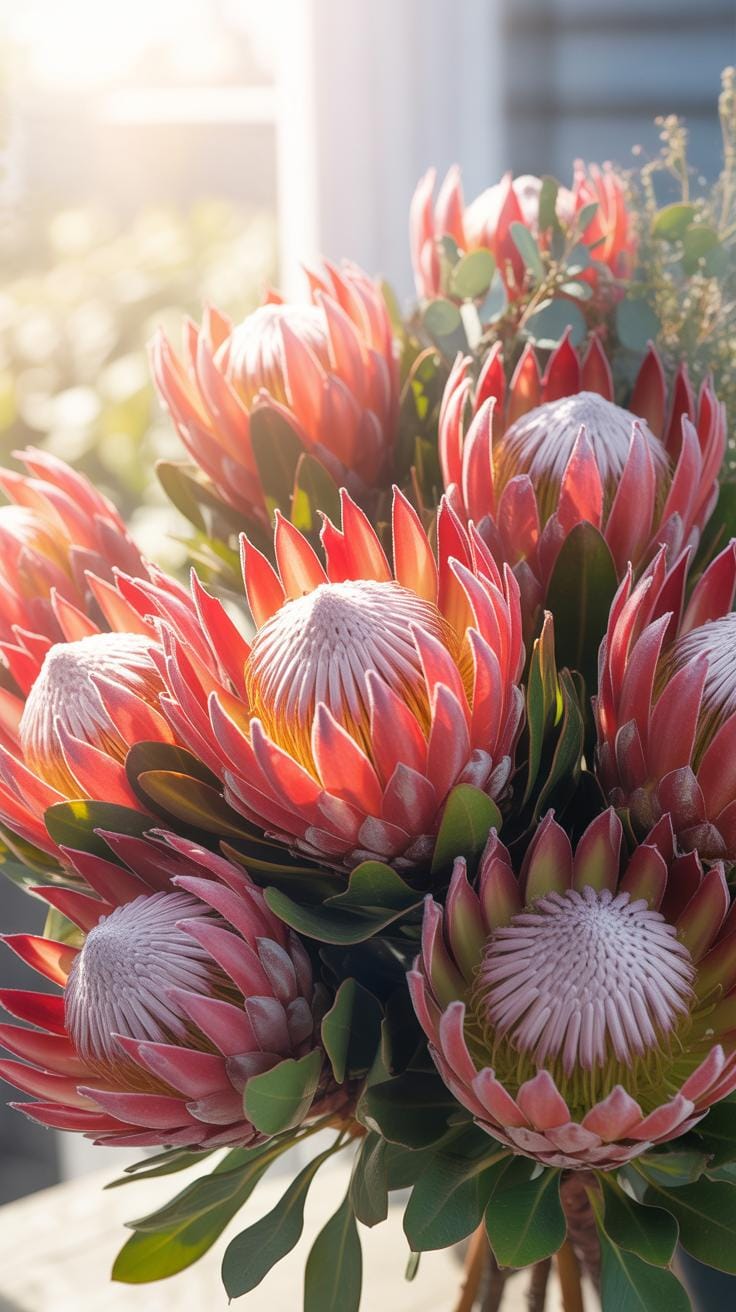
The King Protea stands as the most recognizable species in event design. It features a massive flower head surrounded by stiff colored bracts. Floral designers use this variety as a central focal point due to its sheer scale. It provides immediate visual weight in bridal bouquets and large pedestal arrangements. The natural diameter of the bloom can reach twelve inches in ideal growing conditions.
Leucospermum or Pincushion Proteas offer a distinct aesthetic contrast. These flowers consist of hundreds of needle like styles that create a globed shape. They lack the large outer bracts of the King variety but offer high durability. Florists select these for their long vase life and vibrant warm tones. Their rigid structure ensures they remain intact throughout long events and high heat environments.
How Different Protea Varieties Carry Unique Textures And Forms That Elevate Event Arrangements
Protea flowers provide structural diversity that other blooms lack. The serrated foliage and woody stems offer a rugged texture. This allows designers to move away from soft traditional aesthetics. Using these flowers creates a sense of architectural depth in modern installations. The matte finish of the petals absorbs light differently than waxy flowers. This creates a grounded look for professional event photography.
Designers utilize the varied shapes to guide the eye through an arrangement. The pointed tips of the Blushing Bride Protea add delicate movement to small clusters. In contrast, the sturdy Mink Protea provides a fuzzy texture that softens industrial spaces. Mixing these different forms creates visual tension and interest. Strategic placement of these varieties ensures the floral design looks intentional and high end from every angle.
Australian Flower Protea Flowers A Native Treasure In Celebration Arrangements
How Australian Flowers Like Proteas Have Shaped The Identity Of Native Floral Design
Australian floral design shifted away from European traditions by embracing the rugged textures of Proteaceae family members. Designers leverage the structural rigidity of these blooms to create vertical interest and architectural depth. This movement prioritizes local flora over delicate imports. It creates a distinct national aesthetic that values durability and bold forms. Proteas provide the focal point for this style because they withstand harsh environmental conditions.
The integration of these flowers forced a change in technical mechanics. Standard floral foam often fails to support the heavy weight of Protea stems. Designers now use chicken wire and heavy gauge floral wire for stability. This shift in technique allows for massive installations that remain upright during long events. Industry professionals focus on the raw geometry of the flower. They use these plants to symbolize resilience in contemporary Australian arrangements.
Why Florists And Event Planners Are Increasingly Turning To Australian Flower Protea Flowers For Modern Celebrations
Event planners choose these flowers because they offer an unmatched shelf life. Many Protea varieties remain vibrant for two weeks without significant wilting. This longevity allows planners to prep large installations days in advance. It reduces labor costs on the day of the event. The blooms also dry exceptionally well. They maintain their shape and color long after the celebration ends. This adds value for clients seeking a permanent keepsake.

Modern design trends favor minimalism and organic textures. Proteas fit this requirement because a single stem can dominate a space. Planners use them to fill large gaps without needing expensive filler flowers. Their thick stems and leathery leaves communicate a premium high end feel. This reduces the need for elaborate ribbons or plastic decorations. Professionals rely on these flowers to bridge the gap between classic elegance and raw natural beauty.
The Symbolic Meaning Of Protea Sugarbush Flowers In Cultural Ceremonies And Milestones
Courage, Change, And Diversity: Unpacking The Symbolism Behind Protea Sugarbush Flowers
Protea flowers derive their name from the Greek god Proteus. This deity could change his form at will. The flower reflects this trait through its vast diversity of shapes and sizes. It represents transformation and the ability to survive in harsh conditions. For centuries, these plants have symbolized courage because they thrive in nutrient poor soil. Their physical resilience makes them a powerful emblem.
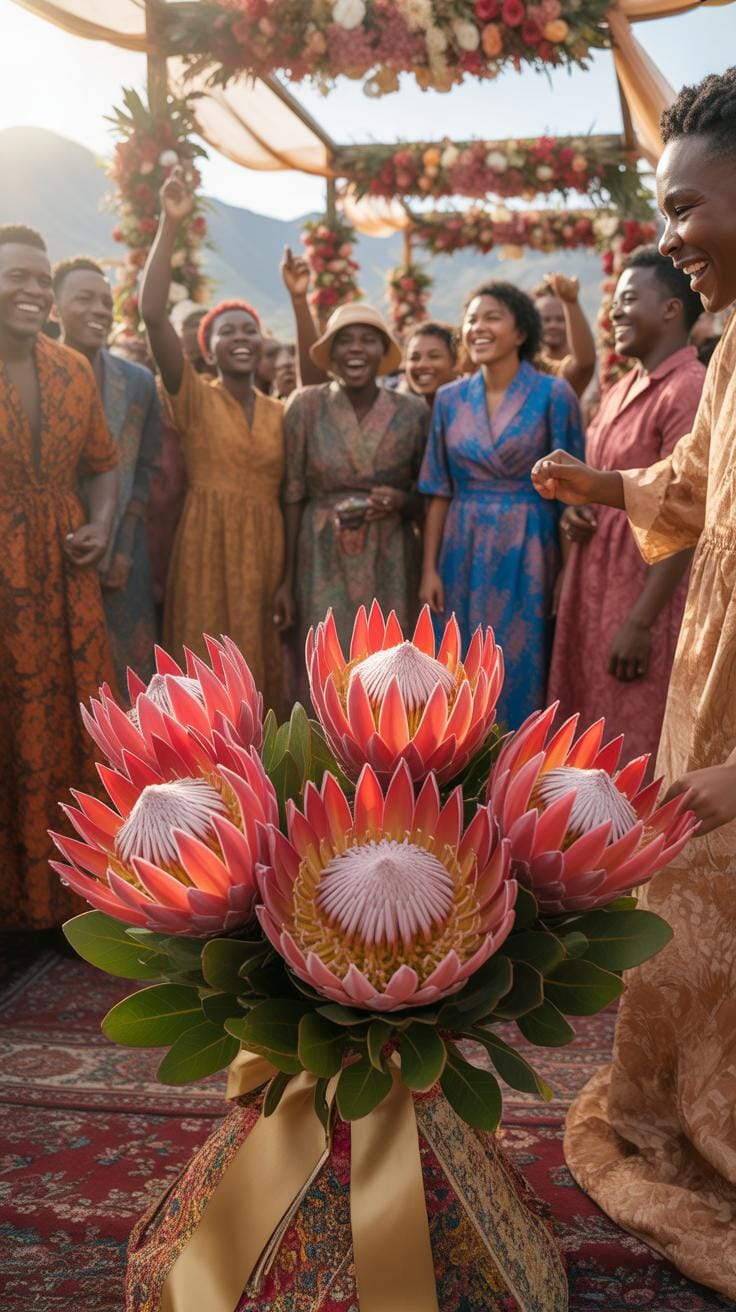
Diversity is a core attribute of the Protea family. These plants belong to the Proteaceae group which contains over 1,600 species. This variety represents the beauty of different cultures coming together. In South Africa, the King Protea stands as a national symbol. It represents the strength of a multidimensional society. Botanists and designers use the flower to signal a bold embrace of change and personal growth.
How To Match Protea Symbolism To The Right Special Occasion For A Meaningful Floral Gift
Matching Protea flowers to a specific event requires understanding their physical traits. Use King Proteas for milestone achievements or major career shifts. Their size and spiked petals command respect and project authority. They work best for celebrations that mark a significant transition. These flowers serve as a tactical choice for leaders and innovators. They communicate a message of strength and endurance without using words.
For weddings or anniversaries, the Blushing Bride Protea offers a softer look with the same durability. It symbolizes a long lasting bond that survives external pressure. Use the Sugarbush variety for housewarming gifts to represent stability. These plants endure for weeks as cut stems. This longevity mirrors a wish for a lasting legacy. Select the specific genus based on the weight of the milestone to ensure the gift aligns with the goal.
Creative Ways To Use Protea Art And Dried Protea Blooms In Event DCor
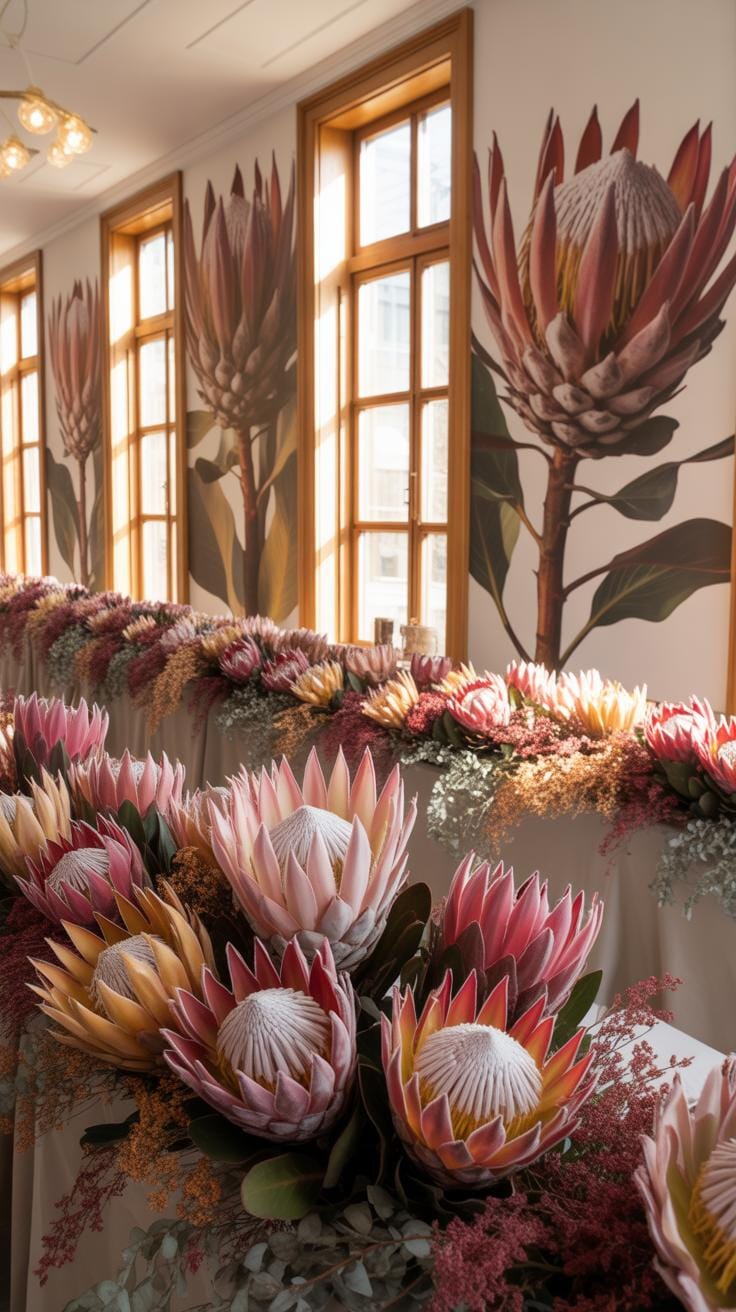
From Centerpieces To Wall Installations Incorporating Protea Art Into Weddings And Celebrations
Dried protea blooms serve as structural anchors in modern floral design. They work well in large scale wall installations because they retain their shape after moisture loss. Use the King Protea for central focus points in vertical displays. Their woody stems provide the necessary weight and stability for wire mounting. This technique ensures the decor remains intact throughout long events without needing water sources.
Protea art extends beyond physical flowers into textile and print mediums. Designers use botanical illustrations of the Proteaceae family for custom event stationery and backdrops. These illustrations provide a cohesive visual link between the table arrangements and the venue architecture. Integrating these patterns into linens or upholstery references the mid-century modern aesthetic. This approach creates a unified brand for the event through consistent botanical motifs.
Top Tips For Arranging And Styling Protea Flowers To Create Stunning Event Tablescapes
Successful tablescapes rely on the aggressive structural presence of Protea Flowers. These blooms possess a heavy biological weight that requires low center of gravity containers. Pair them with geometric vessels to echo the natural symmetry of the flower head. Use negative space around each bloom to highlight the intricate bracts. This prevents the arrangement from looking cluttered while maintaining a high impact visual profile.
- Stem Preparation: Cut stems at a forty five degree angle using sharp shears to maximize water intake. Remove all leaves that sit below the water line to prevent bacterial growth and foul odors during the event.
- Visual Balancing: Group smaller Protea types like Pincushions in clusters of three to balance a single large King Protea. This creates a focal hierarchy that guides the eye across the table landscape effectively.
- Height Variation: Use varying heights to prevent a flat appearance on long banquet tables. Place taller stems in narrow necked bottles to keep them upright while utilizing shorter, heavy headed blooms in low stone bowls.
- Texture Contrast: Combine the leathery texture of Protea bracts with soft foliage like Eucalyptus or Ferns. This contrast emphasizes the rugged durability of the Protea while adding a sense of movement to the static table arrangement.
- Color Mapping: Select Protea varieties based on their natural color gradients from deep burgundy to creamy white. Coordinate these colors with the table linens to create a monochromatic look or a sharp contrast that pops.
Incorporate dried elements to add longevity to the display. Dried Protea heads maintain their architectural integrity for months and provide a matte finish that absorbs harsh event lighting. This prevents glare in professional photography. Mix fresh and dried specimens to introduce tactical depth. This method allows organizers to reuse expensive floral assets for multiple event days or as take home gifts for guests.
Capturing Beauty Protea Flower Photography For Events And Keepsakes
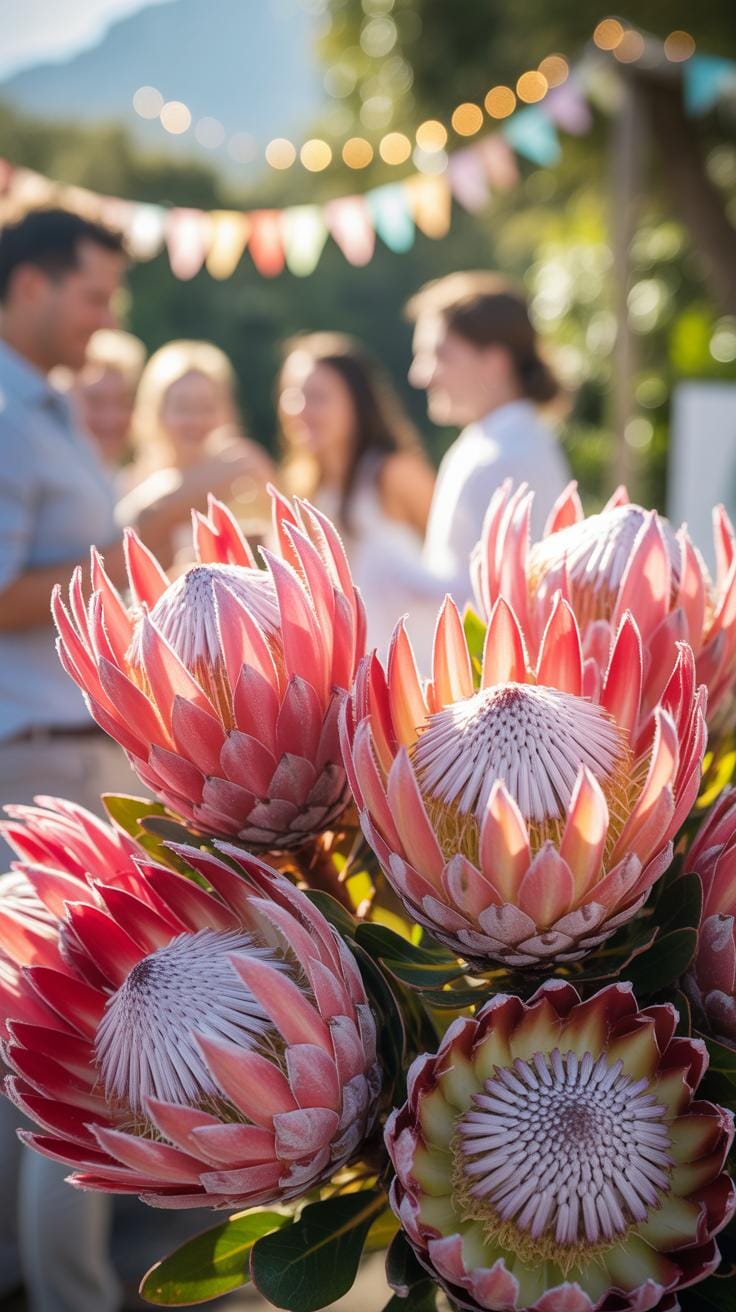
How Red Protea Flower Detail Shots Tell A Story Of Texture, Color, And Natural Drama
Red protea flowers possess a complex anatomy that demands close-up photography. The thick bracts create deep shadows and sharp highlights. These physical features provide natural contrast for event albums. A macro lens captures the fine hairs on the leaf edges. This level of detail shows the rugged nature of the plant. It moves the visual narrative beyond simple floral arrangements into botanical art.
Use side lighting to emphasize the structural layers of the bloom. This technique reveals the depth of the central dome. It highlights the transition from deep crimson to softer inner tones. Clear focus on the stiff textures communicates durability and strength. High-resolution detail shots serve as high-end keepsakes for clients. They document the specific organic qualities that make the red variety a premier choice for events.
Like the resilient protea, may your most cherished memories bloom with a timeless and creative grace.
Shooting The Red Protea Flower On Concrete Background: A Modern Aesthetic For Editorial And Event Photography
Using concrete backgrounds creates a brutalist style for floral photography. The gray, porous surface contrasts with the organic curves of the red protea flower. This pairing follows modern industrial design trends. The neutral tones of the stone make the red pigments pop without color interference. It removes the softness of traditional gardens. This setup works well for high-fashion editorial work and modern wedding stationery.

Adjust white balance to ensure the concrete stays neutral. Warm light can muddy the gray tones and ruin the industrial effect. Position the flower to cast a hard shadow on the stone surface. This adds a three-dimensional feel to the flat background. Concrete provides a raw, tactile foundation that mirrors the tough exterior of the protea. This approach targets a sophisticated audience that values minimalism and structural integrity over standard decorative styles.
Caring For Protea Flowers Before During And After Your Special Occasion
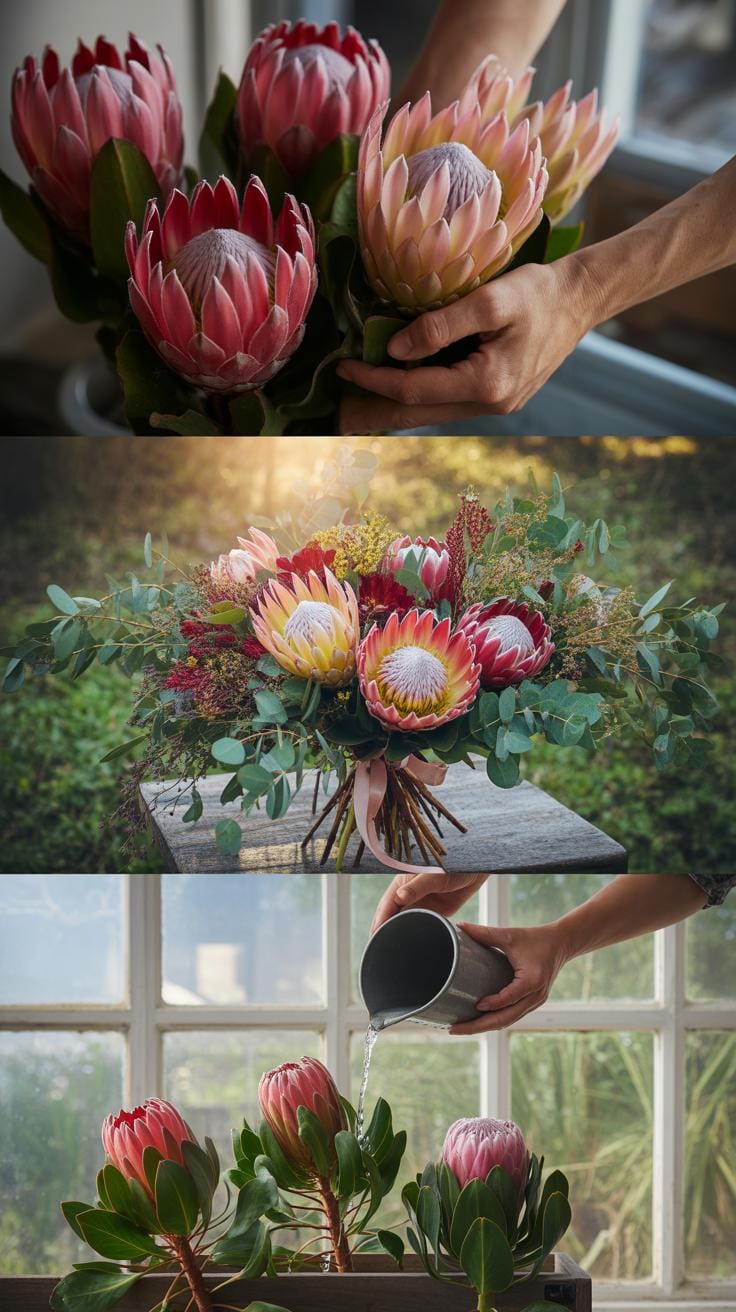
Understanding The Vase Life And Water Requirements Of Cut Protea Flowers For Events
Protea flowers possess a woody anatomy that dictates their hydration needs. They survive for two to three weeks if managed correctly. These blooms consume large volumes of water due to their high transpiration rates. You must monitor water levels daily because a dry vase leads to immediate leaf scorch. The heavy flower heads require a stable environment to prevent premature wilting or neck snap during the event.
Water quality directly impacts the longevity of these South African natives. Avoid using softened water containing high salt levels. Use room temperature water to ensure rapid uptake through the xylem. Proteas are sensitive to fluoride and high pH levels. Change the water every two days to prevent bacterial growth. Bacteria block the stem vessels and stop water flow. This maintenance ensures the bracts stay vibrant throughout your entire occasion.
Essential Care Steps To Keep Your Protea Blooms Fresh From Delivery To Final Display
Success starts the moment the flowers arrive at your venue. You must prepare the stems to maximize water absorption immediately. Use sharp, sterilized shears to make a clean cut. Remove all foliage that sits below the water line. This prevents rot and keeps the water clear for the duration of your event. Proper processing ensures the woody stems function at peak efficiency under stress.
- Stem Recutting: Cut two centimeters off the base of each stem at a forty-five-degree angle. This increases the surface area for water intake and removes air bubbles. Use a sharp knife or heavy duty bypass pruners to avoid crushing the sensitive vascular tissue of the woody stem.
- Leaf Removal: Strip all leaves from the bottom half of the stem. Foliage submerged in water decays rapidly and promotes bacterial blooms. Clean water is the most critical factor for extending the life of Protea flowers. Check the vase daily to ensure no leaf debris has fallen into the reservoir.
- Hydration Solution: Use a specialized bulb or woody stem flower food to provide necessary nutrients. These solutions also contain acidifiers that lower the pH of the water. This mimics the natural acidic soil conditions found in the Cape Floral Region. Proper pH levels allow the flower to drink more effectively during the display.
- Temperature Control: Store the flowers in a cool and dark location until the event begins. Keep them away from direct sunlight, heaters, and air conditioning vents. Excessive heat accelerates the opening process and causes the bracts to dry out. Constant temperatures between thirty-eight and forty-five degrees Fahrenheit are ideal for short term storage.
- Ethylene Management: Keep Protea flowers away from ripening fruit and dying vegetable matter. These items release ethylene gas which causes premature petal drop and leaf browning. Proteas are moderately sensitive to this gas. Strategic placement in a clean environment ensures the blooms remain crisp and aesthetically pleasing for your guests to enjoy.
After your event ends, maintain the care routine to extend the post-celebration display. Continue to trim the stems and refresh the water every forty-eight hours. If the bracts begin to dry, you can transition the Protea into a dried arrangement. These flowers hold their structural integrity well even after the moisture is gone. Simply hang them upside down in a dark room to preserve their shape and muted colors.
Sourcing And Ordering Protea Flowers Sustainably For Weddings Birthdays And Beyond
How To Choose Ethical And Locally Grown Protea Flower Suppliers For Your Next Special Event
Prioritize farms that follow Integrated Pest Management practices. These growers reduce chemical use to protect native pollinators. Identify suppliers with certifications from recognized environmental organizations. Verify that your source respects the natural growth cycles of the plants. Sustainable farming ensures soil health and prevents erosion. Seek out domestic growers to minimize the carbon footprint of air transport. Local flowers last longer because they spend less time in shipping crates.
Work with wholesalers who provide transparent sourcing data. Ask specific questions about water usage and labor standards. Avoid vendors who cannot name their farm origins. Strategic buyers choose farms that practice field-grown methods rather than intensive greenhouse heating. This approach lowers energy consumption significantly. Select businesses that use recyclable packaging materials for delivery. Ethical sourcing supports the long term survival of the Proteaceae family in its native and cultivated habitats.
Seasonal Availability And Budget Considerations When Ordering Protea Flowers In Bulk
Protea flowers follow strict bloom calendars based on daylight hours and temperature. King Proteas peak in late winter and spring. Pincushions generally bloom from late spring into summer. Plan your event date around these natural windows to secure the best pricing. Ordering off-season requires expensive imports and increases the risk of damage. High demand during wedding seasons drives prices up. Book your orders six months in advance to lock in rates.

Bulk purchasing requires careful logistical planning. These heavy woody stems increase shipping costs by weight. Minimize expenses by ordering different sizes to fill gaps in arrangements. Use smaller species like Blushing Bride to supplement larger focal blooms. Evaluate the hydration needs of the stems upon arrival. Proper cold chain management extends vase life and protects your investment. Buying directly from the grower removes middleman fees. This strategy maximizes your floral budget effectively.
Frequently Asked Questions

What are protea flowers and why are they popular for events?
Protea flowers are ancient, structural blooms known for their striking shapes and prehistoric appearance. Originating primarily from South Africa, they have become a favorite for special occasions due to their incredible durability and symbolic meaning of transformation and courage. Their thick, woody stems and waxy petals allow them to remain vibrant throughout long ceremonies, making them a reliable yet breathtaking focal point for any creative floral arrangement or centerpiece.
How can I arrange proteas to ensure they last throughout my special occasion?
To keep your protea flowers looking fresh, trim the stems at a forty-five-degree angle and remove any leaves that sit below the waterline to prevent bacterial growth. Use a clean vase with room-temperature water mixed with floral preservative. Because these blooms are heavy, ensure your vessel is sturdy enough to support their weight. If you are using them in a bouquet, keep them in a cool, shaded spot until the event begins.
Are protea flowers expensive, and how can I use them on a budget?
While individual stems may have a higher price tag than roses, their massive size makes them surprisingly cost-effective. Because one single bloom can command as much visual attention as a full bouquet of smaller flowers, you actually need fewer stems to create a high-impact look. To save money, use one “King Protea” as a dramatic focal point and fill the rest of your arrangement with affordable greenery and textured dried grasses.