Understanding Magnolia Flowers History Symbolism And Natural Beauty
The Ancient Origins And Botanical History Of Magnolia Flowers
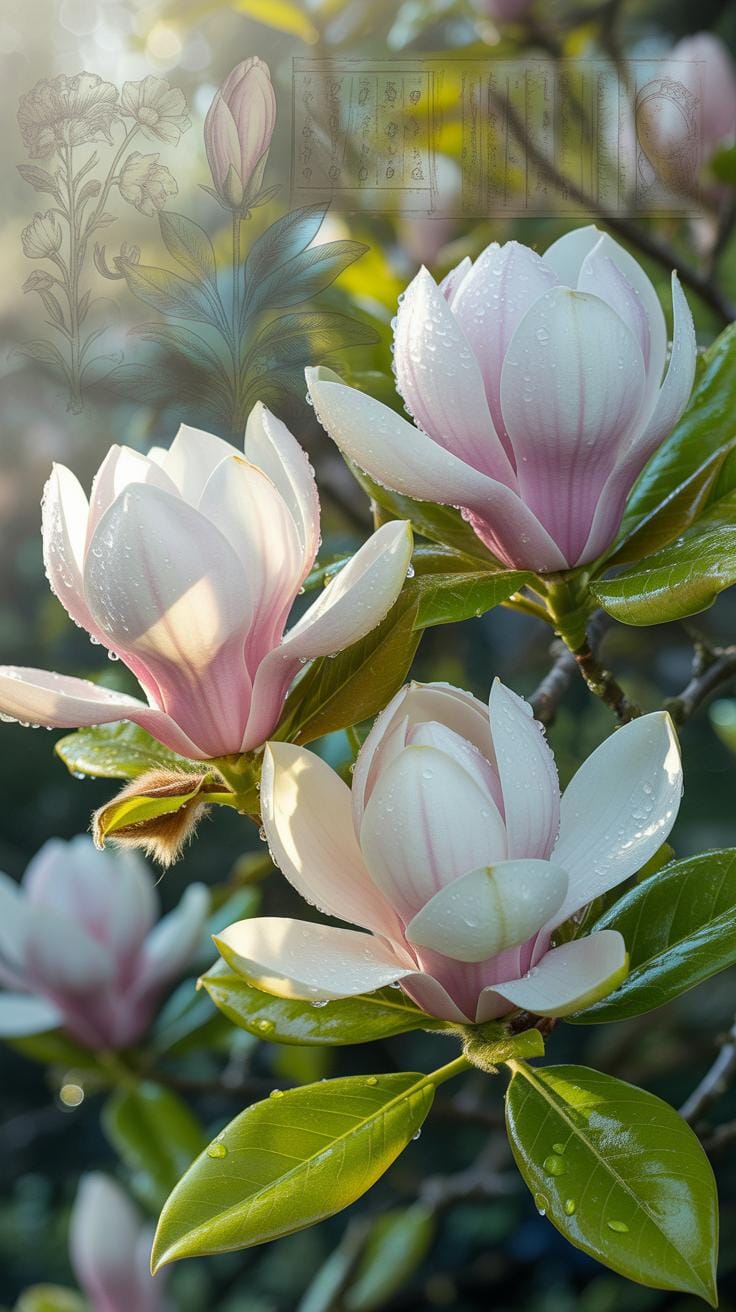
Magnolias rank among the oldest flowering plants on Earth. Fossil records prove these plants existed nearly 100 million years ago. They appeared before bees evolved. Because of this, magnolias rely on beetles for pollination. Their carpels are tough to prevent damage from these insects. This evolutionary design ensures the plant survives harsh conditions and predatory feeding habits during the pollination process.
The genus carries the name of French botanist Pierre Magnol. He helped create the modern botanical classification system. Magnolias grow natively in East Asia and the Americas. This disjunct distribution happened during the Tertiary period as glaciers moved. Today, gardeners value them for their primitive structure and heavy wood. Understanding this timeline helps you appreciate their resilience. These plants represent a direct link to the dinosaur era.
What Magnolia Flowers Symbolize Across Different Cultures
In Chinese culture, the magnolia represents nobility and purity. People have cultivated them since the Tang Dynasty. They often planted them near temples and the Emperor’s palace. The flower signals the arrival of spring and renewal. In traditional medicine, people use the bark and buds to treat respiratory issues. This historical use adds a layer of practical value to their aesthetic appeal.
In the American South, the magnolia symbolizes hospitality and endurance. It serves as a regional icon. People associate the large white blooms with strength because the petals are thick and waxy. This durability reflects the plant’s ability to withstand heat and humidity. Modern designers use these meanings to give projects a sense of permanence. Knowing these associations allows you to use the flower with specific intent.
Popular Magnolia Flower Varieties You Should Know Before Creating
Identifying The Most Recognized Magnolia Species And Their Unique Traits
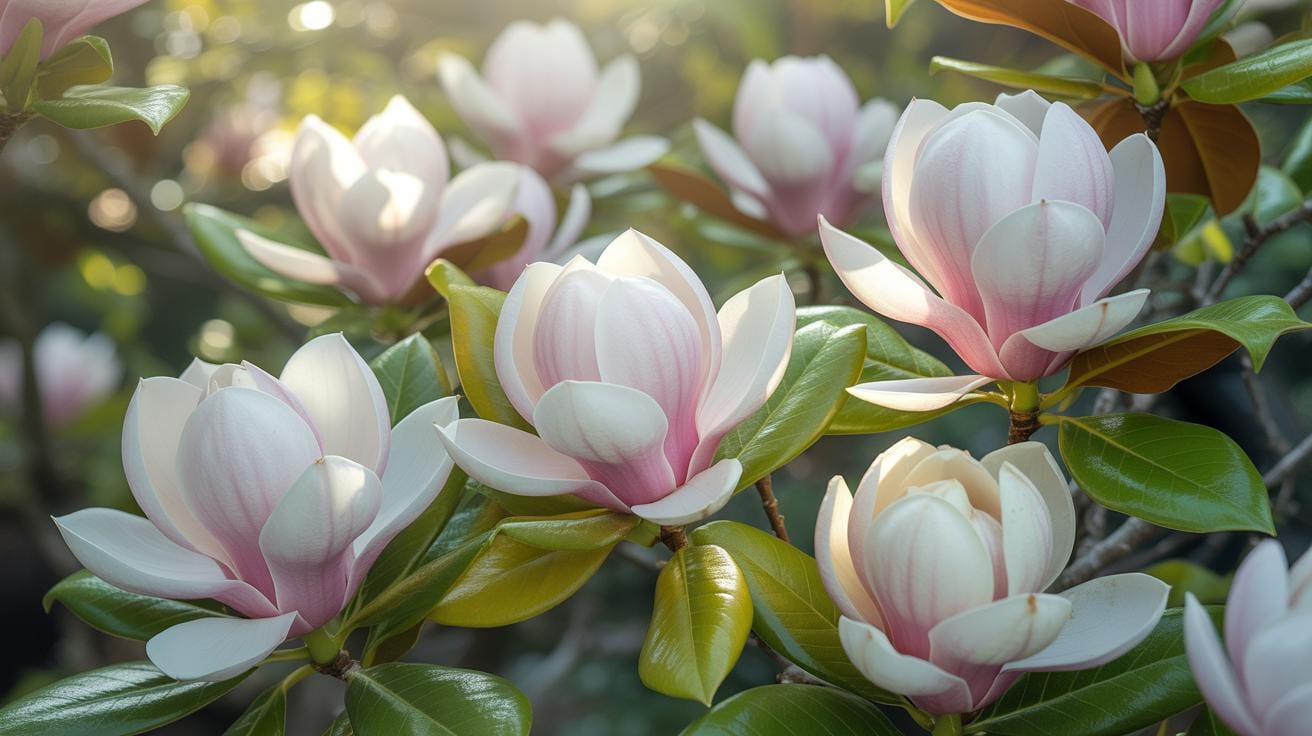
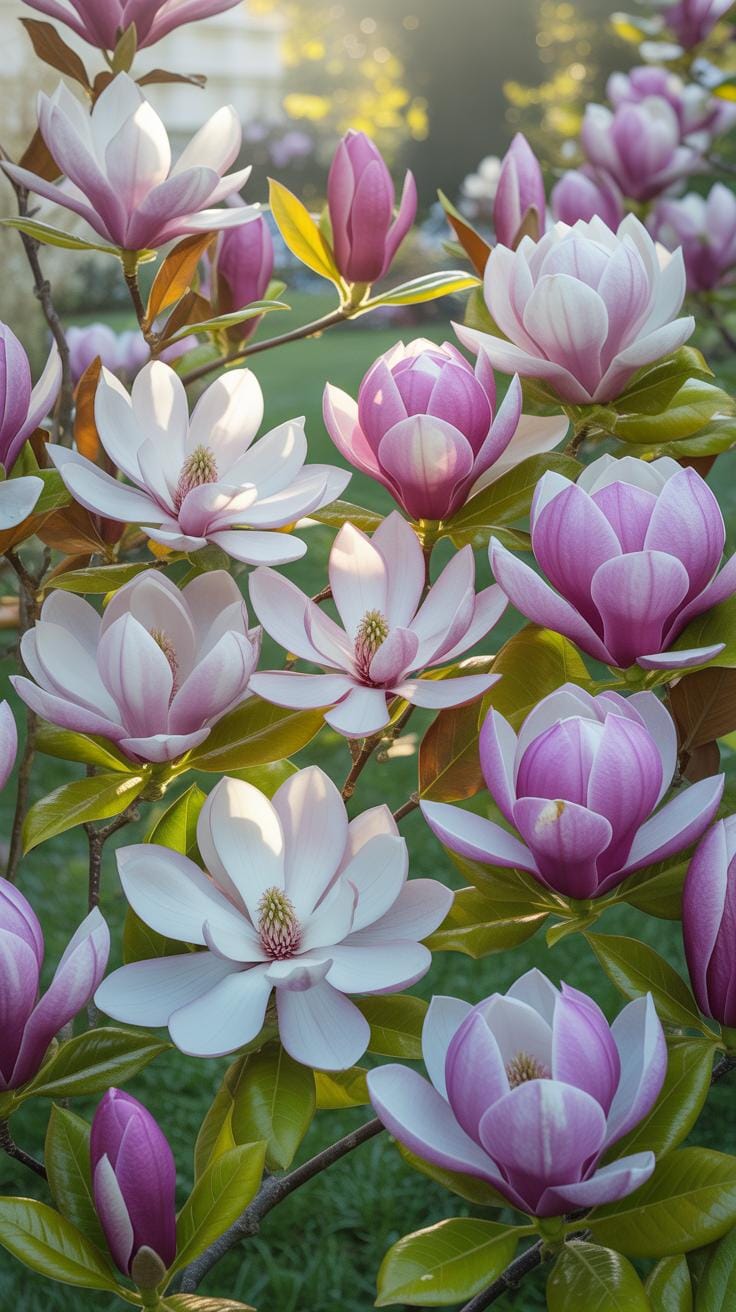
The Magnolia grandiflora remains the standard for southern design. This evergreen tree carries thick and waxy leaves with a rusty underside. Its flowers reach twelve inches in diameter and feature stiff petals. These traits make it the primary choice for structural floral arrangements and high-end botanical art. You must recognize its heavy texture and massive scale before planning any realistic recreation.
The Magnolia stellata offers a sharp contrast with its star-shaped form. This deciduous shrub produces narrow and ribbon-like petals that radiate from a central point. It blooms early in spring on bare wood before leaves appear. These flowers provide a delicate aesthetic for minimalist designs. Identifying these two distinct species allows you to choose between bold structural forms or fine linear details for your project.
To create a blossom as breathtaking as a magnolia, one must craft each petal with the patient heart of a gardener who remembers the sweetness of a Southern spring. True beauty is found when we slow down to capture the velvety grace that nature took years to perfect.
How Petal Shape Color And Bloom Season Differ Between Magnolia Varieties
Petal geometry dictates the visual impact of each variety. Species like the Saucer Magnolia show wide and cupped petals that create a heavy goblet shape. Other types feature slender and reflexed petals that curve backward. Color ranges from pure white to deep purple and soft yellow. You must match the petal curve and color gradient to the specific species to ensure botanical accuracy in your work.
Timing affects how you present these flowers in a scene. Deciduous magnolias bloom in late winter or early spring. These varieties appear on leafless branches which creates a stark and architectural look. Evergreen varieties bloom in late spring and summer amidst dense green foliage. Understanding these seasonal differences prevents errors in your design context. Choose your variety based on the desired emotional tone and environmental setting.
Essential Materials And Tools For Crafting Magnolia Flowers
The Best Materials To Use When Making Paper Or Fabric Magnolia Flowers
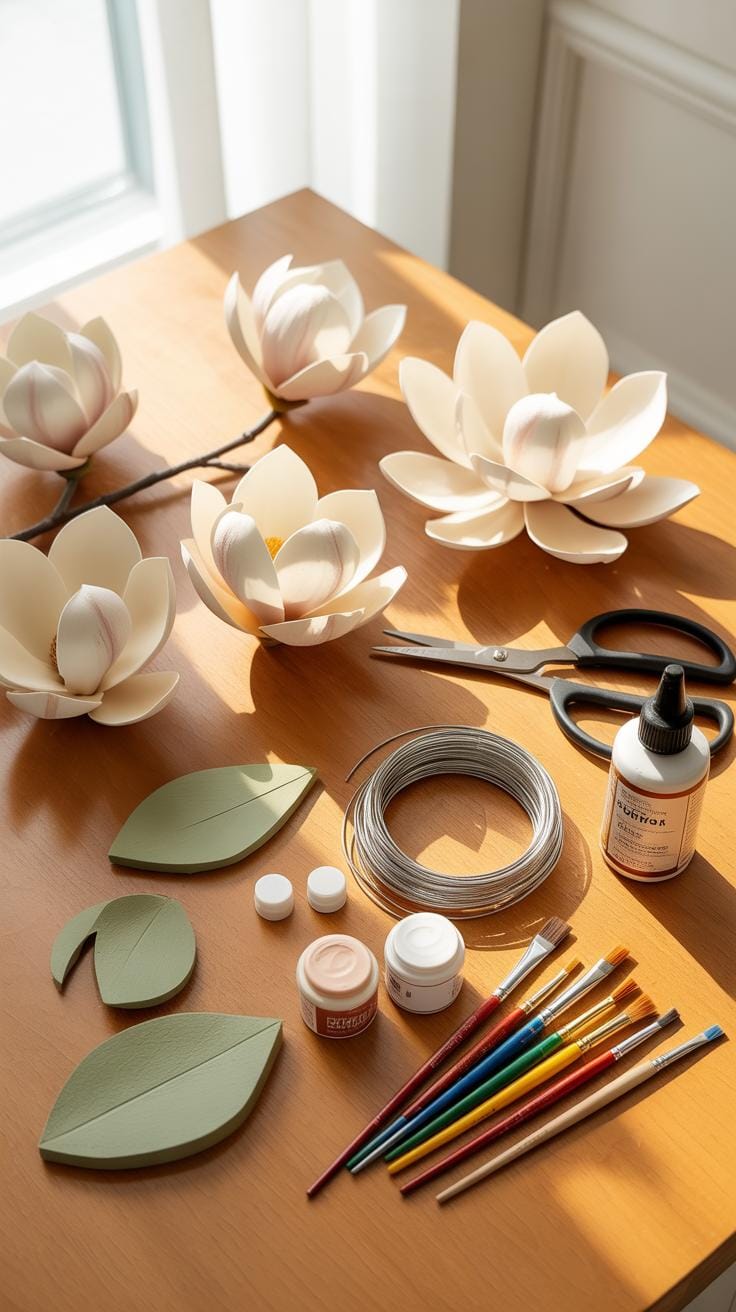
Magnolia flowers require heavy materials to mimic their thick and waxy petals. Lightweight papers will fail to hold the structure of the broad blooms. Use high grade crepe paper or silk fabrics to replicate the organic weight of the flower. These materials allow for the stretching and molding necessary to create the iconic deep cup shape of the Magnolia grandiflora.
- Double Sided Crepe Paper: This material provides the necessary thickness for large petals. The dual layers allow you to tint each side differently. This mimics the natural variation found between the underside and the top of a real magnolia petal.
- Heavyweight Italian Crepe: Use 180 gram weight paper for structural integrity. This paper expands significantly when stretched. It holds deep curves without collapsing under the weight of the flower head. It is the industry standard for realistic floral construction.
- Silk Habotai: This fabric offers a smooth surface that takes dyes exceptionally well. It captures the subtle sheen of a living petal. You must treat it with stiffener before cutting to prevent fraying and to maintain the specific petal anatomy.
- Floral Wire: Use 18 gauge wire for the main stem and 22 gauge for individual petals. Magnolias are heavy and require thick wire for support. Without proper gauging the flower will droop and lose its realistic upright posture on the branch.
- Tacky Glue: High viscosity glue is essential for immediate bond strength. Magnolia petals have a small attachment point at the base. You need an adhesive that sets quickly to secure the heavy petals to the central cone during the assembly process.
Color selection is a tactical decision for realism. Use off white or cream instead of pure bright white for the petals. Real magnolias often show brown or green tints at the base. Incorporating these subtle color shifts with pastels or markers adds necessary depth. The goal is to replicate the stiff and leathery texture that defines this ancient plant species.
Choosing The Right Tools To Achieve Realistic Petal Textures And Shapes
Sculpting tools are necessary to move beyond flat shapes. Use ball styluses and foam pads to break the fibers of the paper or fabric. This process creates the characteristic convex curve of the magnolia. Apply firm pressure from the center of the petal toward the edges. This technique ensures the petal stays cupped even after the moisture from the glue dries.
Heating tools provide the final touch for realistic shaping. A curling mandrel or a low heat iron allows you to roll the petal edges outward. This mimics the way older magnolia blooms begin to open and unfurl. Do not skip the veining step. Use a bone folder to press faint lines into the material. These lines replicate the vascular system visible in real botanical specimens.
Step By Step Guide To Creating Paper Magnolia Flowers From Scratch
How To Cut, Shape And Layer Petals For An Authentic Magnolia Look
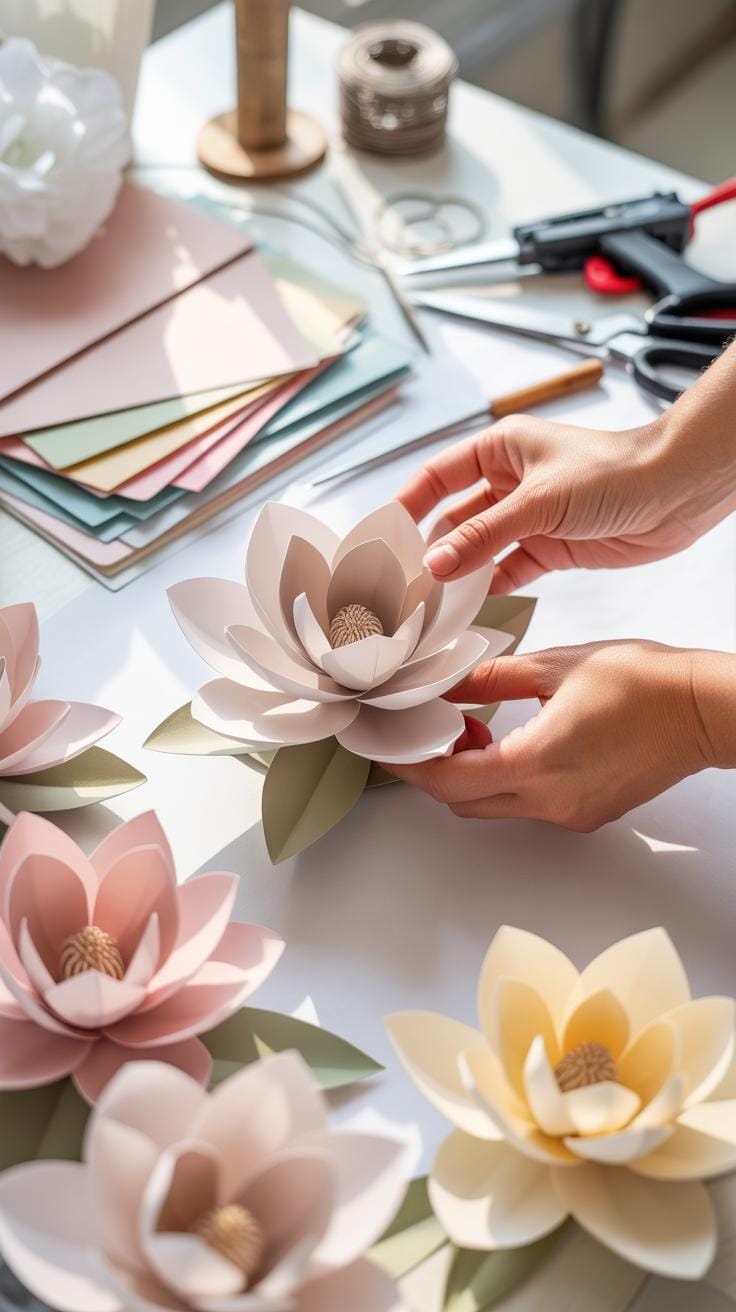
Cut six large outer petals and three smaller inner petals from heavy crepe paper. Use a template to ensure uniform shapes based on the Magnolia Grandiflora species. Align the grain of the paper vertically to allow for stretching. This grain placement is critical for structural integrity. Use sharp shears to prevent jagged edges. Precision during this initial cutting phase determines the final realism of your flower.
Shape each petal by pulling the paper from the center toward the edges. Use a bone folder to curl the tips outward for an organic appearance. Authentic magnolias have thick, waxy petals. Achieve this look by laminating two layers of paper with spray adhesive. Apply light pressure to create a natural cup shape. Arrange the inner petals in a tight triangle before adding the outer layer.
Assembling The Center And Finishing Touches That Bring Your Magnolia To Life
Construct the central cone using a wire stem and floral putty. Real magnolias feature a prominent gynoecium surrounded by spiral stamens. Wrap fine gold thread or thin paper strips around the base of the cone to mimic these reproductive parts. Secure each piece with quick-dry tacky glue. Ensure the center remains rigid to support the weight of the heavy paper petals added later.
Attach the petals to the base of the cone using floral tape. Start with the smallest petals and move outward in a spiral pattern. Overlap the edges slightly to hide the wire frame. Wrap the stem tightly with green floral tape to create a seamless transition. Rub a small amount of clear wax over the petals to replicate the natural sheen found on live magnolias.
Magnolia Flower Photography How To Capture Their Breathtaking Detail
Camera Settings And Natural Lighting Tips For Magnolia Flower Photography
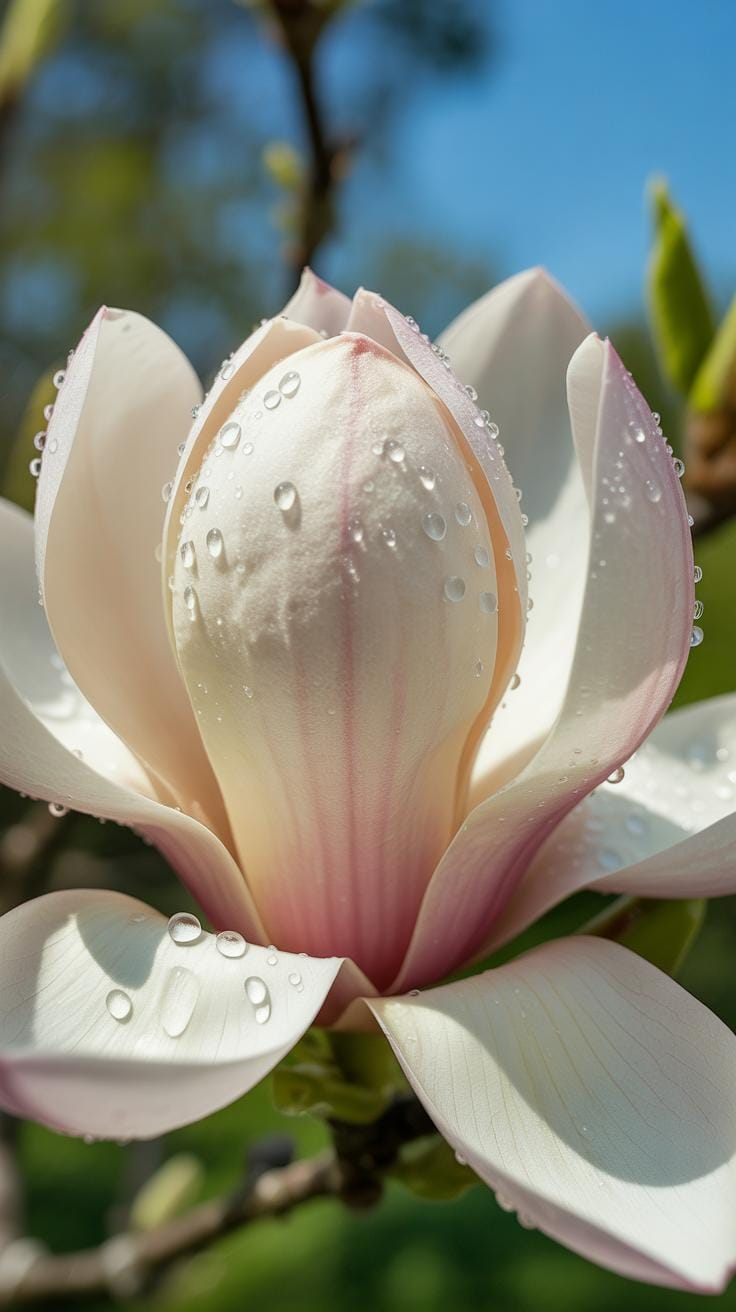
Set your aperture between f/2.8 and f/5.6 to isolate the bloom. Magnolia petals are thick and waxy. They reflect light easily. Use a low ISO of 100 to prevent digital noise on these smooth surfaces. Fast shutter speeds are necessary because even light wind moves the heavy branches. High shutter speeds keep the focus sharp on the reproductive center of the flower.
Shoot during the golden hour to avoid harsh shadows on the large petals. Midday sun creates blown-out highlights on white varieties like Magnolia grandiflora. Use a diffuser if you must shoot in bright light. Overcast days work best for pink and purple species like the Saucer Magnolia. Soft light saturates the colors without losing texture. Position yourself so the light hits the bloom from the side.
Composing A Magnolia Flower Close Up Shot That Reveals Every Stunning Detail
Focus on the center of the flower where the stamens and pistils sit. This area contains the most complex textures and patterns. Magnolias are some of the oldest flowering plants. Their structures are primitive and robust. Use a macro lens to capture the unique spiral arrangement of the carpels. Keep your camera sensor parallel to the petal edge to maintain sharpness across the frame.
Avoid busy backgrounds that distract from the flower shape. Use the large leaves as a natural backdrop to provide color contrast. If the flower sits high on a branch, use a tripod to stabilize the shot. Experiment with different angles to show the thickness of the petals. A side profile highlights the cup-like form of the bloom. Clean the petals of any debris before you press the shutter button.
How To Use Magnolia Flower Images HD And References For Accurate Artwork
Where To Find High Quality Magnolia Flower Pictures And Images HD For Reference
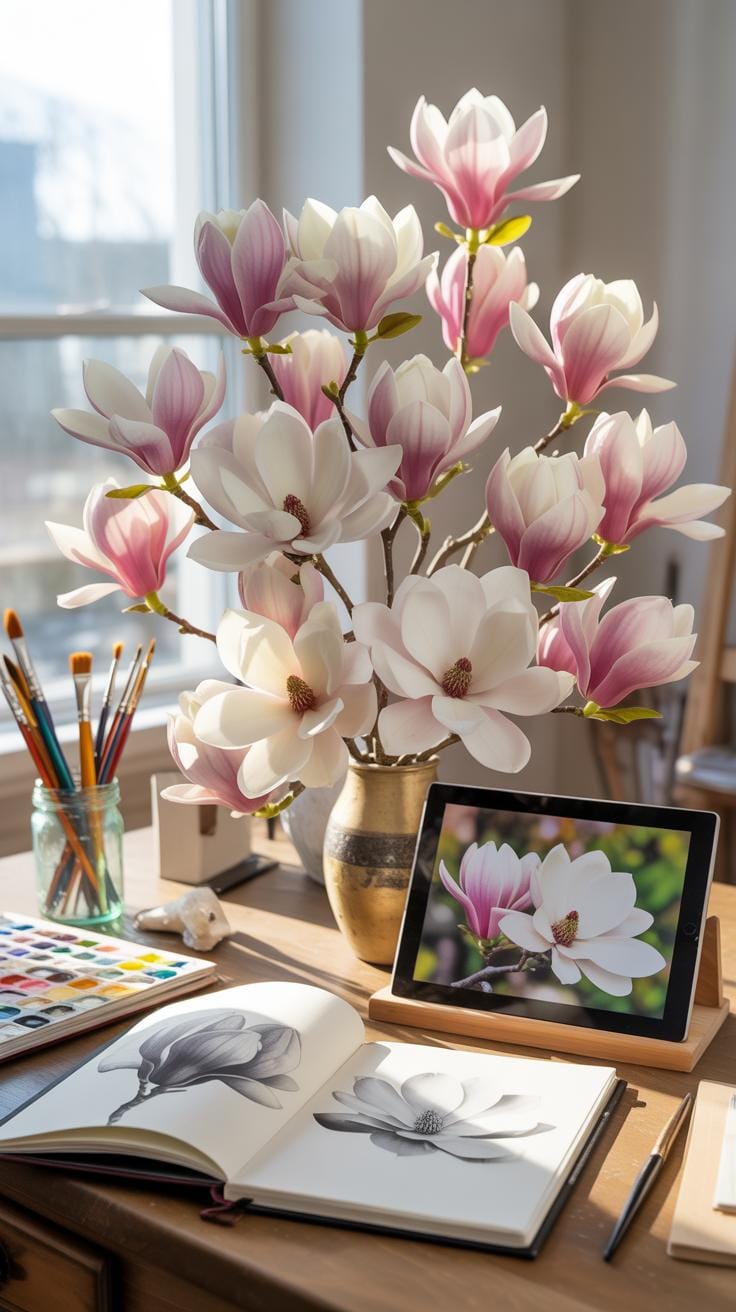
Access professional botanical databases like the Biodiversity Heritage Library for historical accuracy. These sources provide detailed plates from the 18th and 19th centuries. Digital herbariums at major universities offer high-resolution scans of actual specimens. Look for academic records that show the plant from multiple angles. This ensures you understand the physical structure before you begin your creative project.
Utilize commercial stock photography sites for modern high-definition visual data. Focus on macro photography that captures cell-level details of the tepals and reproductive organs. Avoid generic social media images that use heavy filters. Filters distort the true color profile of the flower. Stick to raw files or unedited photography to see the honest ivory and pink gradients found in nature.
How To Analyze Magnolia Flower Images HD To Improve Your Crafting Accuracy
Study the thickness of the tepals in your reference images. Magnolias do not have traditional petals. They have fleshy tepals that are much thicker than a rose or lily. Observe how the light hits these thick surfaces. The shadows will be deeper and the edges will be more rigid. Use these visual cues to choose materials that hold a specific weight and shape.
Examine the central cone clearly in high-definition photos. The stamens and pistils sit on a woody axis. This structure looks more like a cone than a standard flower center. Notice the spiral pattern of these parts. This arrangement follows a specific botanical sequence. Accurate replication of this spiral is the difference between a generic craft and a professional-grade botanical model.
Magnolia Art Painting And Drawing Magnolia Flowers Like A Professional
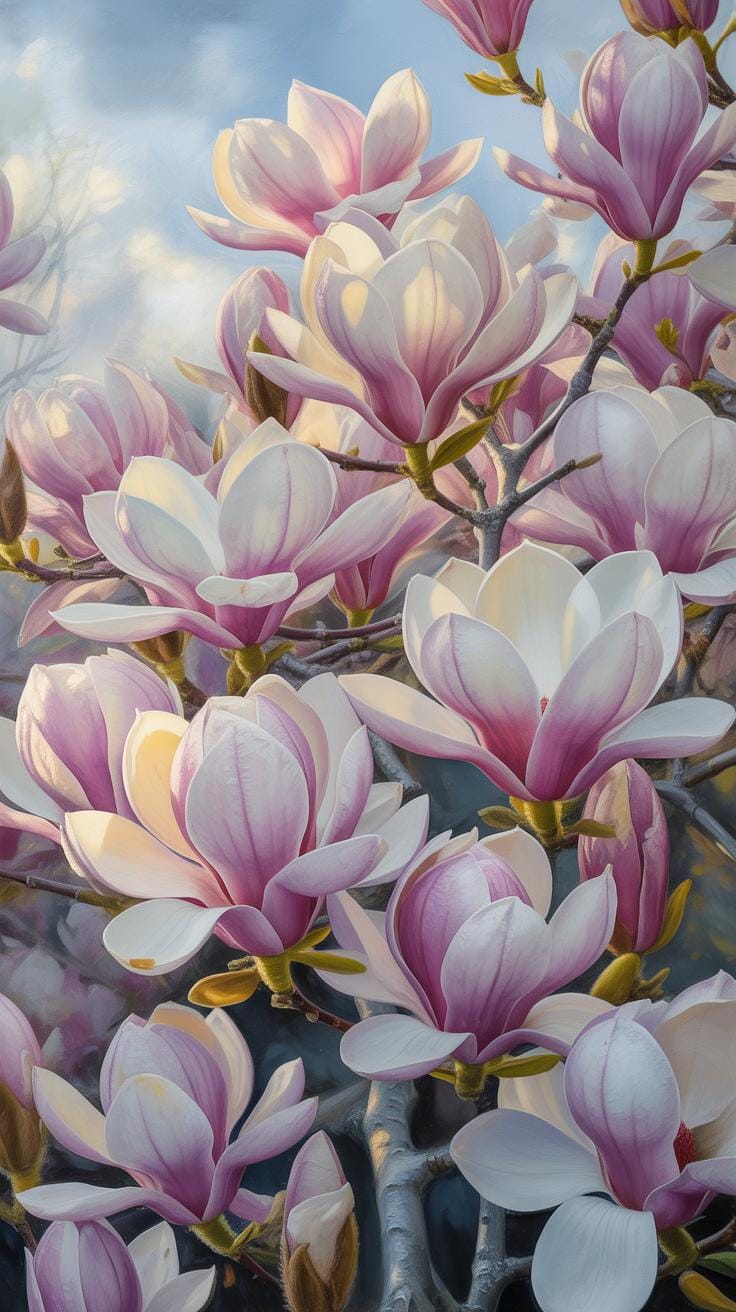
Techniques For Painting Magnolia Flowers In Watercolor And Acrylic
Watercolor necessitates a wet on dry approach to maintain the structural integrity of the petals. High quality cotton paper prevents buckling when applying heavy washes. Use a glazing technique to build color slowly. Start with a pale yellow or green at the base. Leave the edges pure white. This preserves the natural luminosity of the species. Do not overwork the paint or the layers will muddy.
Acrylic painting requires different mechanics due to rapid drying times. Use a retarder to keep the paint workable for blending. Build the thick, waxy texture of the petals using heavy body acrylics. Apply paint with a flat brush to mimic the broad surface of the flower. Use a palette knife for the central cone to add physical dimension. Focus on sharp edges to define each distinct petal layer clearly.
Drawing Magnolia Flowers With Pencil: Capturing Depth, Shadow And Petal Curves
Accurate drawing starts with the central reproductive axis. Study the spiral arrangement of the carpels before adding petals. Use an H lead for the initial skeleton. This keeps the lines light and easy to erase. Observe how the petals curve away from the center. Each petal has a thick midrib. Map this structure first to ensure the flower looks grounded and heavy rather than flat.
Transition to 2B and 4B pencils for shading the recessed areas. Real magnolias have deep shadows where petals overlap. Use directional strokes to follow the natural grain of the plant tissue. Smooth the gradients with a blending stump to replicate the matte finish of the bloom. Leave the highlights as untouched paper. High contrast between the dark interior and bright edges creates the necessary three dimensional effect.
Creating Magnolia Flower Wallpaper IPhone Designs Inspired By Real Blooms
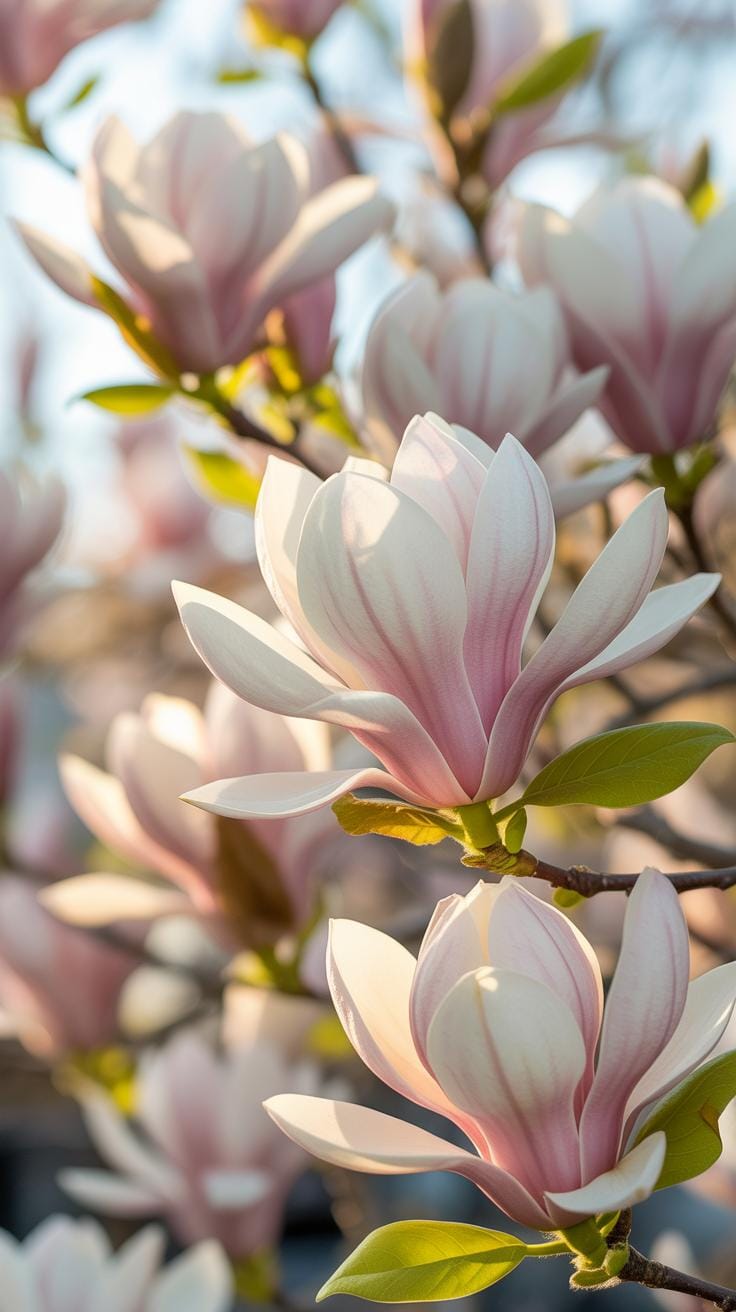
How To Design Or Select A Magnolia Flower Wallpaper IPhone That Feels Elegant
High quality digital wallpapers must respect the natural structure of the Magnolia grandiflora or Magnolia x soulangeana. Use macro photography principles to focus on the thick, waxy texture of the petals. Avoid cluttered backgrounds that distract from the flower. Proper placement ensures the clock and widgets on the iPhone lock screen do not obstruct the primary bloom. Negative space is your most important tool for clarity.
Apply a color palette based on historical botanical illustrations from the eighteenth century. Use creamy whites, deep greens, and soft pinks found in nature. High contrast between the dark foliage and pale petals creates depth. Ensure the lighting mimics natural sun to show off the velvet texture on the underside of the leaves. This approach maintains a clean aesthetic while highlighting the structural integrity of the magnolia species.
Free And Paid Tools To Create Your Own Custom Magnolia Flower Wallpaper IPhone
Professional creators use specific software to refine images for high resolution retina displays. You need tools that handle layers and color grading effectively. These applications allow you to remove distracting elements from the original photo. Proper software helps you adjust the aspect ratio to fit the vertical orientation of modern smartphones. Precision editing ensures the final design looks sharp and professional on any digital screen.
- Adobe Lightroom: This tool provides professional grade color correction for floral photography. Use it to enhance the subtle white tones in magnolia petals without blowing out the highlights. It works well for mobile and desktop workflows.
- Canva: This web based platform offers pre-set mobile dimensions and simple design elements. It is ideal for layering text over magnolia images. Users can quickly crop photos to fit specific iPhone models using the drag and drop interface.
- Procreate: Use this app on an iPad to hand draw magnolia illustrations. It allows for realistic brush strokes that mimic oil paints or watercolors. You can export these designs as high resolution files perfectly sized for phone wallpapers.
- Unsplash: This resource provides high resolution magnolia photography for free. Professional photographers contribute images that are already optimized for quality and composition. It serves as an excellent starting point for users who do not take their own photos.
- Adobe Express: This mobile app offers quick removal of backgrounds using artificial intelligence. It is effective for isolating a single magnolia bloom from a busy garden setting. The tool provides instant resizing options for various smartphone screen resolutions.
Select the tool that matches your technical skill level and desired output. Beginners should start with pre-shot imagery and simple cropping tools. Advanced users can utilize layering and masking to create complex artistic compositions. Always export your final file as a high quality PNG or JPEG to prevent compression artifacts. Testing the design on your device ensures the composition supports your daily app icon layout.
Growing Real Magnolia Flowers Tips For A Thriving Garden Display
Soil, Sunlight And Watering Conditions That Magnolia Flowers Need To Flourish
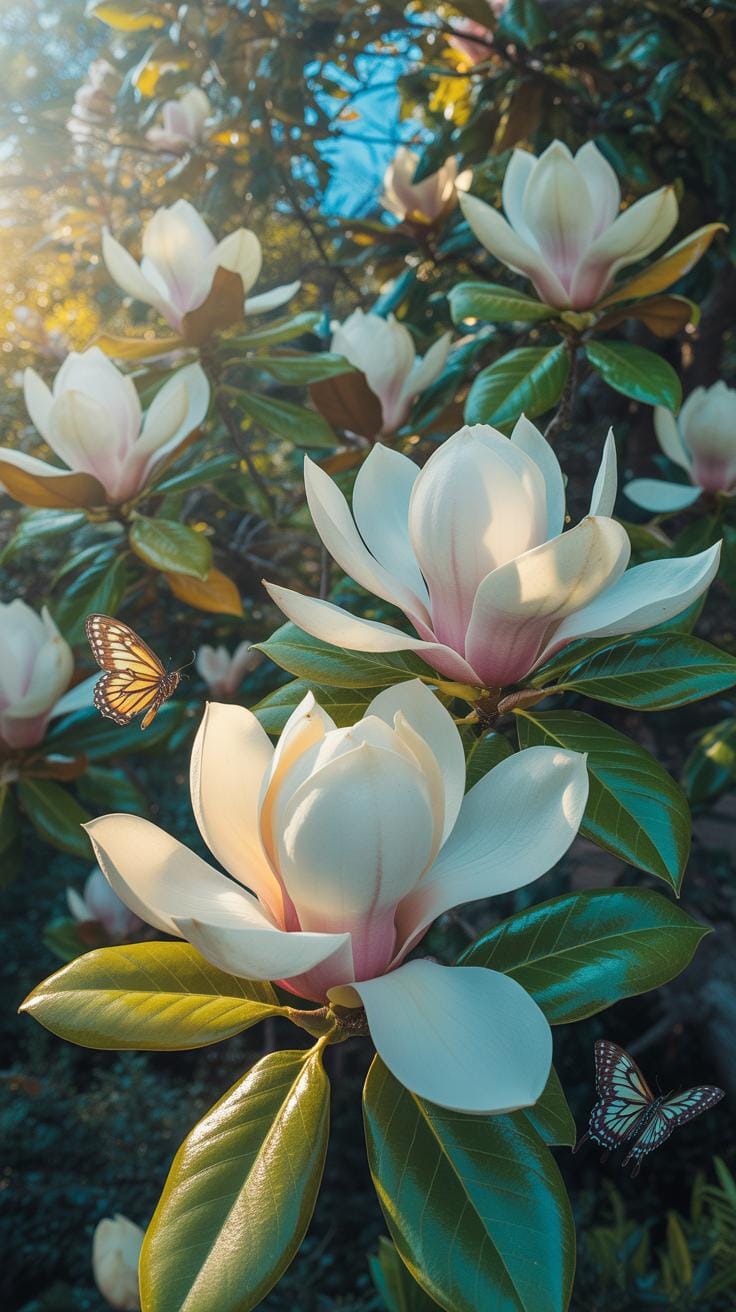
Magnolias require slightly acidic soil with a pH between 5.0 and 6.5 for optimal nutrient uptake. The ground must drain well to prevent root rot. Heavy clay soils trap too much water and kill the root system. Test your soil before planting. Add organic compost to improve drainage and nutrients. These trees establish deep roots and do not like being moved once planted in the ground.
Select a site that receives full sun or very light shade. Most varieties need at least six hours of direct sunlight each day to produce maximum blooms. Deciduous types need a spot sheltered from strong winds to protect large petals. Water young trees deeply twice a week during the first two growing seasons. Established trees tolerate some drought but need consistent moisture during summer heat.
Common Mistakes To Avoid When Growing And Caring For Flowers Magnolia In Your Garden
Avoid planting magnolias too deep in the soil. The top of the root ball should sit level with the ground surface. Deep planting suffocates the roots and stunts flower production. Never dig around the base of the tree. Magnolia roots stay close to the surface and break easily. Mulch the base with wood chips to keep moisture in and protect the shallow root system.
Do not prune these trees during the spring. Pruning at the wrong time removes the next season’s flower buds. Wait until the tree finishes blooming in summer to reshape branches. Avoid using high-nitrogen fertilizers late in the season. Excess nitrogen forces soft green growth that freezes during winter. Stick to balanced fertilizers in early spring to support healthy wood and strong flower bud development.
Displaying And Styling Magnolia Flowers In Home Decor And Floral Arrangements
How To Arrange Fresh Or Artificial Magnolia Flowers For Maximum Visual Impact
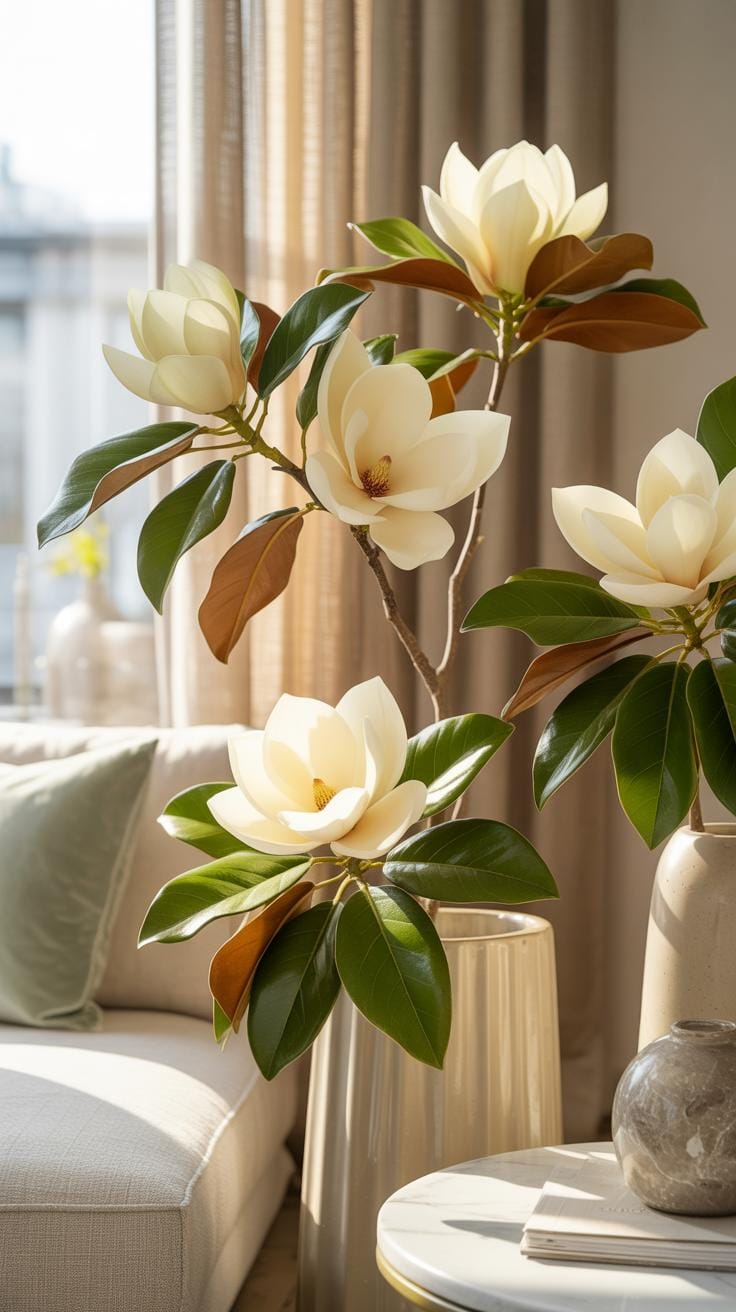
Magnolia flowers provide a strong vertical or horizontal architectural line. Use heavy ceramic or thick glass vases to support their weight. Fresh stems require a 45-degree clean cut to maximize water intake. Remove any leaves that will sit below the water line to prevent bacterial growth. Large blooms work best as a primary focal point. Group three stems together for a classic balanced look.
Artificial stems allow you to bend the wire for custom shapes. High-quality silk or latex magnolias mimic the thick texture of real petals. Real magnolias bruise easily when touched or moved. Place your arrangement away from air vents or direct sun to prevent brown spots. Use heavy floral foam to secure the thick branches in place. Minimalist designs highlight the dark green leaves and white petals effectively.
Interior Design Ideas That Celebrate The Elegance Of Magnolia Flowers Year Round
Magnolia flowers fit several design styles perfectly. Use them in Southern Traditional decor for a classic appearance. They also suit Modern Farmhouse styles when paired with rustic wood. The contrast of dark leaves against white flowers creates a clean palette. You can dry the leaves to maintain a golden brown color for autumn displays. This versatility makes them a reliable choice for every season.
Historical Neoclassical design often features magnolia motifs in plaster and fabric. Today, you can use fresh branches in tall entryways to create a sense of height. Place single blooms in shallow bowls for a Japanese-inspired minimalist aesthetic. Magnolia foliage remains green throughout most of the year in many climates. This provides a constant source of natural texture for your home. Choose these flowers for bold and simple statements.
Frequently Asked Questions

What are the best varieties of magnolia flowers for beginners to grow?
If you are new to gardening, the Star Magnolia or the Saucer Magnolia are excellent choices. These deciduous varieties are relatively hardy and produce breathtaking, fragrant blooms early in the spring. They adapt well to various soil types, making it easier for novices to successfully cultivate gorgeous magnolia flowers. Ensure you choose a sunny spot with well-draining soil to help your young tree thrive and establish strong roots for years to come.
How do I prune my tree to ensure I get larger magnolia flowers next season?
Pruning is essential for maintaining health and maximizing bloom size. The best time to prune is immediately after the blooming cycle ends in late spring or early summer. Remove any dead or crossing branches to improve air circulation and light penetration. By thinning out the canopy responsibly, you direct the plant’s energy toward developing fewer but significantly larger magnolia flowers, resulting in a much more dramatic and stunning display in your garden.
Is it possible to create the look of fresh magnolias on a tight budget?
Absolutely! You can achieve a high-end look without a large investment by using high-quality silk stems or crafting your own paper versions. Paper flowers allow you to customize colors and sizes to match your specific home decor. For those who prefer the real thing, foraging fallen branches during the off-season and forcing them to bloom indoors is a cost-effective way to enjoy the elegance of these iconic blossoms for free.