
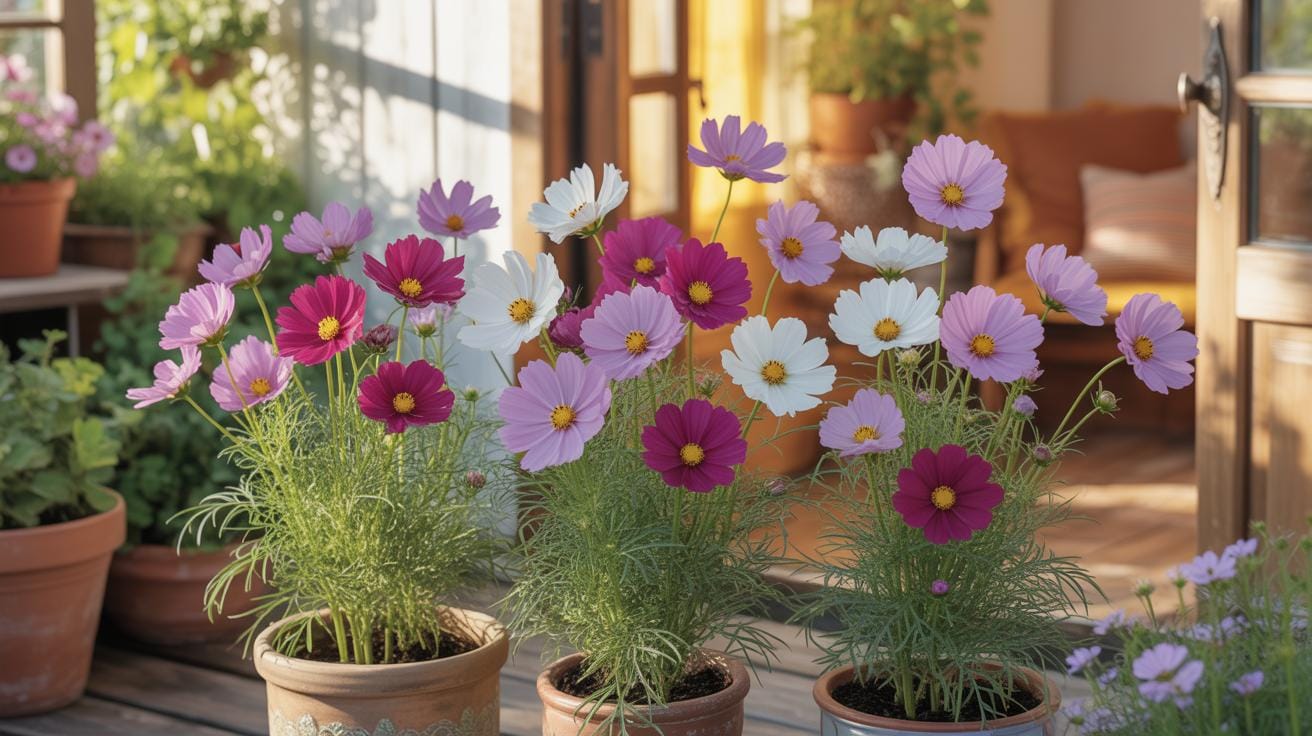
What Is A Cosmo Flower Origins History And Botanical Profile
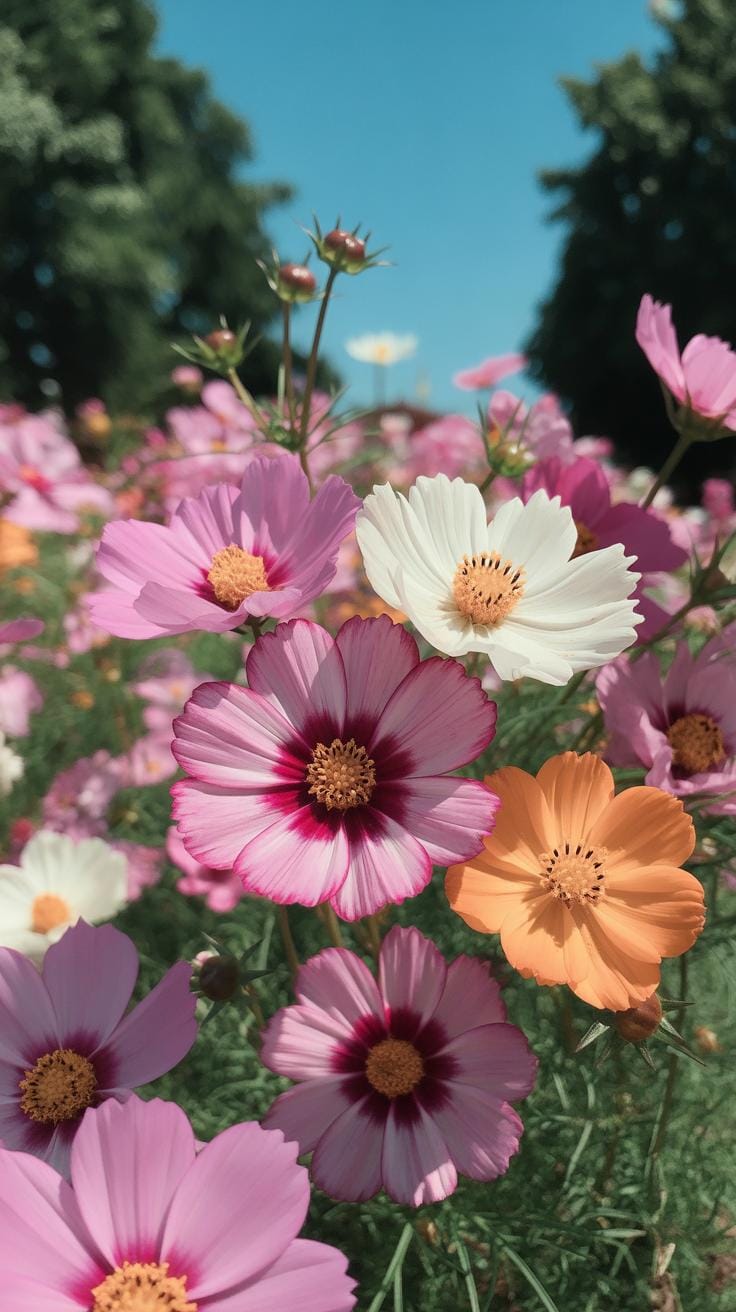
The Botanical Roots Of The Cosmo Flower: Family, Genus, And Native Habitat
Cosmos flowers belong to the Asteraceae family. This group includes sunflowers and daisies. The genus name is Cosmos. These plants are native to scrub and meadows in Mexico. They also grow in the southern United States and Central America. Most garden types come from two specific species. These are Cosmos bipinnatus and Cosmos sulphureus. They thrive in poor soil and high heat environments.
Botanists classify these plants as herbaceous perennials or annuals. The bipinnatus species features fine, thread-like foliage. The sulphureus species has broader, lobed leaves. Both types produce symmetrical ray florets around a central disk. This structure attracts pollinators like bees and butterflies. The plant uses a taproot system to survive drought conditions. It efficiently pulls moisture from deep underground. This makes it a hardy choice for dry climates.
How Cosmos Flowers Traveled From Mexico To Gardens Around The World
Spanish explorers first identified these plants in Mexico during the sixteenth century. Priests in mission gardens grew them for their orderly petal arrangement. They gave the flower its name from the Greek word for harmony and order. Seeds reached England in the late 1700s via the Marchioness of Bute. She was the wife of the British ambassador to Spain. The plant then spread across Europe.
The flower gained massive popularity in the United States during the nineteenth century. Seed companies began marketing it as a reliable garden staple. It fit the Victorian interest in botanical collection and formal displays. Hybridization efforts in the 1920s and 1930s created new colors and shorter heights. These changes made the plants easier to manage in small backyard spaces. Today, they remain a global favorite for low-maintenance landscaping and cut flowers.

Popular Varieties Of Flower Cosmos You Should Know About

Cosmos Bipinnatus Vs. Cosmos Sulphureus: Understanding The Two Most Grown Species
Cosmos bipinnatus stands as the standard garden variety. It features fine, fern-like foliage and comes in shades of white, pink, and rose. These plants thrive in temperate climates and reach heights up to five feet. They provide the classic daisy shape most gardeners recognize. Growers select this species for cutting gardens because the long stems support heavy blooms effectively in floral arrangements.
Cosmos sulphureus offers a different profile suited for hot, dry environments. The foliage is broader and less delicate than its counterpart. These plants produce yellow, orange, and red flowers. They resist drought and heat better than the bipinnatus species. Choose this variety for low-maintenance landscapes where soil quality is poor. It remains shorter on average, making it a stable choice for windy or open border areas.
Rare And Heirloom Flower Cosmos Varieties Worth Adding To Your Collection
Collectors seek out Cosmos atrosanguineus for its unique dark profile. Commonly known as Chocolate Cosmos, this Mexican native carries a distinct cocoa scent. It produces deep maroon petals that look almost black in certain light. Unlike common varieties, this species grows from tubers rather than seeds. It requires specific overwintering techniques in cold climates to survive. This plant adds high-contrast texture to professional garden designs.

Heirloom varieties like Sea Shells offer structural diversity. This bipinnatus cultivar features tubular petals instead of flat ones. The unique shape creates a fluted appearance that catches the eye. Other rarities include the Double Click series, which produces large, pom-pon style blooms. These heavy-headed flowers resemble carnations rather than daisies. Use these specific cultivars to differentiate a professional landscape from a standard residential garden with minimal extra effort.
How To Grow A Garden Cosmos Flower From Seed To Bloom

Soil, Sunlight, And Spacing: Setting Up The Ideal Growing Conditions For Garden Cosmos Flower
Cosmos bipinnatus and Cosmos sulphureus require full sun to thrive. Select a site that receives at least eight hours of direct light daily. These plants adapt to various soil types but perform best in poor to average soil. Rich soil with high nitrogen levels encourages foliage growth but reduces flower production. Avoid adding heavy fertilizers or organic matter to the planting area to ensure the best blooms.
Proper drainage is essential for preventing root rot and fungal issues. High moisture levels in heavy clay soil will kill the plants. Space your plants eighteen to twenty-four inches apart to allow for maximum air circulation. Good airflow prevents powdery mildew from developing on the feathery leaves during humid months. Tall varieties may require staking or protection from heavy winds to prevent the thin stems from snapping.
Step By Step Guide To Sowing, Watering, And Caring For Cosmos Seeds Outdoors
Direct sow seeds into the garden after the final spring frost. Clear all weeds and debris from the planting site before starting. Scatter the seeds over the soil surface and cover them with only one-quarter inch of fine dirt. The soil temperature must reach sixty-five degrees Fahrenheit for successful germination. Keep the area moist but not saturated during the initial growing phase to ensure strong root development.
- Moisture Control: Water the soil regularly until the seeds sprout and reach three inches in height. Once established, these plants possess high drought tolerance. Only water when the top two inches of soil feel dry to the touch to avoid overwatering issues.
- Thinning Seedlings: Crowded plants compete for nutrients and light which stunts their growth. Remove the weakest seedlings once they show two sets of true leaves. Ensure every remaining plant has enough physical space to expand its canopy without touching its neighbors throughout the season.
- Pinching Technique: Break off the central stem of the plant once it reaches twelve inches in height. This technique forces the plant to branch out rather than growing a single tall stalk. It results in a bushier shape and increases the total number of flowers produced.
- Deadheading Process: Remove faded blooms immediately to prevent the plant from producing seeds too early. Use sharp shears to cut the stem back to the first leaf node below the flower. This redirection of energy keeps the plant blooming consistently until the first hard frost kills it.
- Pest Management: Monitor the foliage for aphids and spider mites during dry spells. These pests usually appear on the undersides of leaves or on new buds. Use a firm stream of water to knock them off the plants before they cause significant damage to the stems.

Avoid using chemical fertilizers once the plants begin to bloom. Excessive nutrients will lead to weak stems that cannot support the weight of the flower heads. If the soil is extremely poor, apply a balanced liquid feed only once during the early summer. Stop all watering when the season ends and the plants turn brown. Allow the dry seed heads to fall naturally if you want the garden to self-seed.
The Timeless Beauty Of Pink Cosmos And Why They Remain A Garden Favorite
What Makes Pink Cosmos Stand Out: Color Depth Petal Structure And Visual Appeal
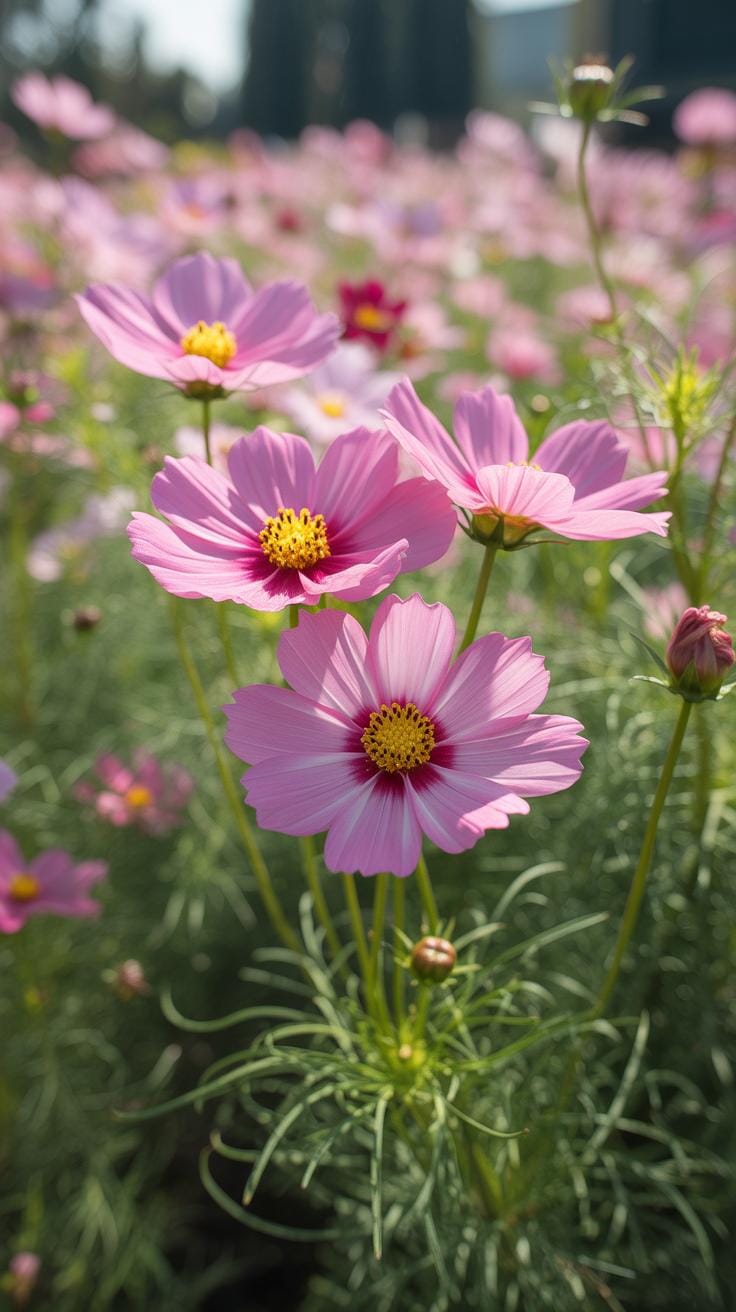
Pink Cosmos Bipinnatus dominates the landscape because of its unique light reflectivity. These flowers feature wide ray florets that surround a yellow central disc. This contrast creates a clear bullseye for pollinators like bees and butterflies. The pink pigment ranges from pale blush to deep magenta. This wide color spectrum allows gardeners to create depth in a border without using different plant species.
The petal structure provides a delicate texture that belies the plant hardy nature. Each petal often has a notched edge which adds a fringed look to the bloom. The fine thread-like foliage provides a soft green backdrop that makes the pink tones pop. This combination of airy leaves and bold discs creates a balanced visual weight. You get maximum color impact with minimal physical mass in the garden bed.
Best Pink Cosmos Varieties To Plant For A Stunning Seasonal Display
The Sensation series is the standard for height and reliability. These plants reach four feet tall and produce large blooms early in the season. They handle poor soil and heat better than most hybrids. Use them at the back of a border for structural support. Radiance is another top choice with deep rose centers that fade to light pink at the edges.

Versailles remains the preferred variety for cut flower production. It grows on long sturdy stems that do not flop in the wind. Sonata offers a dwarf alternative for pots and small spaces. It stays under two feet tall but keeps the classic flower size. Select Sea Shells if you want unique fluted petals that resemble small tubes. These specific cultivars ensure your garden stays bloom-heavy from midsummer until the first hard frost.
Cosmos Flowers Aesthetic Using Cosmos In Home DCor And Interior Styling
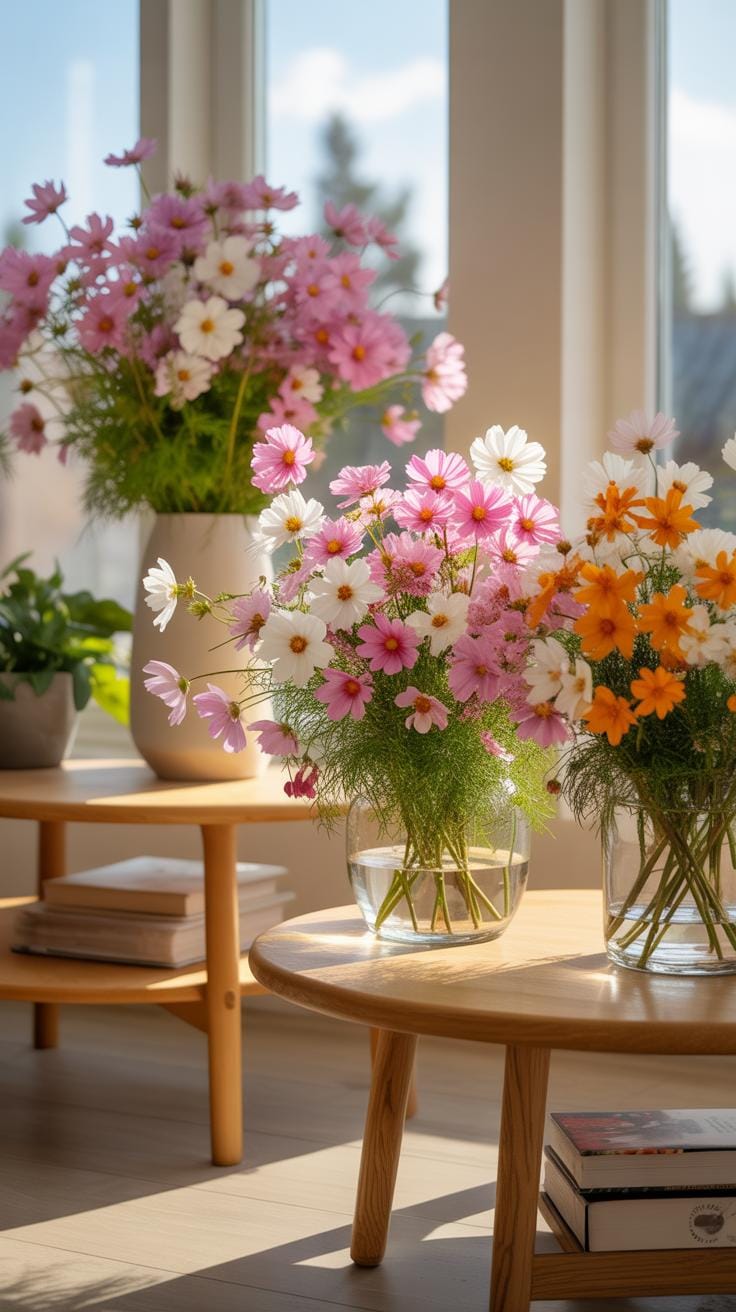
How The Cosmos Flowers Aesthetic Translates From The Garden Into Your Living Spaces
Cosmos flowers bring a wild and unstructured look into a house. These plants originated in Mexico and moved into European gardens in the late eighteenth century. Their open petals and visible centers fit the New Perennial design movement. This style focuses on natural shapes rather than stiff formal arrangements. Using them indoors recreates the feeling of a productive summer meadow within a structured room.
Interior designers use these flowers to add movement to static spaces. The thin stems sway with slight air currents. This creates a dynamic visual element in a kitchen or living room. The bright colors provide high contrast against neutral walls. You can use deep chocolate cosmos for a moody look or pink sulphureus varieties for warmth. These flowers bridge the gap between outdoor nature and indoor comfort.
Arranging Cut Cosmos Flowers In Vases: Simple Styling Tips For A Natural, Airy Look
Select a tall vase with a narrow neck to support the thin stems. Cosmos have high water needs once you cut them. Use clean glass to monitor the water level daily. Remove all foliage that sits below the water line to prevent bacterial growth. This tactic extends the life of the bloom. Stagger the heights of the stems to mimic how they grow outside.

Avoid packing too many stems into one container. The airy aesthetic depends on the negative space between the petals. Use the natural curves of the stems to create an asymmetric shape. This technique follows the principles of Japanese Ikebana by emphasizing line and form. Do not use floral foam because it blocks the delicate stems from drinking. Fresh water and space are the only requirements for a professional look.
Cosmos Flowers Springtime Planning Your Early Season Garden Display

When To Plant Cosmos Flowers Springtime For The Earliest And Most Abundant Blooms
Direct sow seeds into the soil after the last frost passes. These plants require warm soil to germinate quickly. If you live in a cold climate, start seeds indoors four to six weeks before the final freeze. Use peat pots to avoid disturbing the sensitive taproots during transplanting. Early planting leads to taller stems and more flowers throughout the summer months.
Monitor local soil temperatures carefully. Cosmos bipinnatus prefers ground that stays above sixty degrees Fahrenheit. Do not fertilize the soil before planting. High nitrogen levels encourage green leaves but stop flower production. Choose a site with full sun exposure for at least eight hours a day. Strong light prevents the plants from becoming leggy. Well drained soil ensures the roots remain healthy during early spring rains.
Pairing Cosmos With Other Spring Flowers For A Layered Colorful Garden Bed
Position cosmos at the back of the garden bed. These plants reach heights of up to five feet and can shade out smaller species. Combine them with snapdragons or digitalis for a structured vertical look. These pairings create depth in your garden layout. Choose varieties with different bloom times to ensure your garden remains productive. This technique provides a continuous flow of color as the seasons change.

Integrate low growing annuals like sweet alyssum or pansies at the base of your cosmos. These ground covers suppress weeds and maintain soil moisture. The fine texture of cosmos foliage contrasts well with broadleaf plants like zinnias. Use silver leaf dusty miller to highlight the bright pink and white cosmos petals. This layered approach creates an organized and professional appearance. Select plants with similar water needs to simplify your maintenance routine.
Pink Cosmos Flower Field Wallpaper Capturing And Using Cosmos Imagery At Home

Why Pink Cosmos Flower Field Wallpaper Has Become A Popular Choice For Accent Walls
Pink cosmos wallpaper serves a specific tactical purpose in modern interior design. Homeowners use these large scale floral patterns to create a focal point without adding physical clutter. The repetition of the daisy-like petals adds organic structure to a room. This design choice aligns with the maximalist movement, where bold nature scenes replace neutral paint. It creates a sense of depth in small spaces.
The color palette of pink cosmos ranges from pale blush to deep magenta. Designers select these tones to evoke specific psychological responses. Soft pinks provide a calming effect in bedrooms. Bright fuchsia tones add energy to home offices or creative studios. Large format digital printing allows for high resolution images that look realistic. These wall coverings are often peel and stick, making them a low risk DIY project.
Tips For Photographing Cosmos Fields To Create Your Own Stunning Digital Wallpaper
Professional photography of cosmos requires specific technical timing and equipment settings. You must shoot during the golden hour to capture the translucent quality of the petals. Backlighting the flowers emphasizes their delicate texture and fine stems. Use a wide angle lens to capture the vastness of the field for a wall mural. Ensure your camera sensor can handle high resolution for large scale printing.
- Focus on Aperture Control: Use a narrow aperture like f/11 or f/16 to keep the entire field in sharp focus. This depth is critical for wallpapers because blur distracts the eye on a large wall surface.
- Utilize a Tripod: Stability is mandatory for high resolution shots intended for printing. Even minor camera shake becomes obvious when you enlarge an image to eight feet tall. A tripod ensures total image clarity.
- Shoot in RAW Format: Capturing images in RAW preserves all data from the sensor. This allows you to adjust the pink hues and green stems during editing without losing image quality or creating digital noise.
- Mind the Horizon Line: Keep the horizon straight and positioned in the lower or upper third of the frame. This composition technique makes the final wallpaper feel balanced and professional when installed in a room.
- Check for Motion Blur: Cosmos stems are thin and sway in the slightest wind. Use a fast shutter speed to freeze the movement. Sharp edges are necessary for a clean look on an accent wall.

After capturing the images, use professional editing software to remove visual distractions like brown leaves or insects. Adjust the contrast to ensure the pink petals stand out against the green foliage. Most commercial printers require files at 300 dots per inch for the best results. Test a small sample print to check the color accuracy before committing to the full wall. Accurate color matching creates a cohesive home environment.
Cosmos Flowers Close Up Appreciating The Delicate Details Of Each Bloom
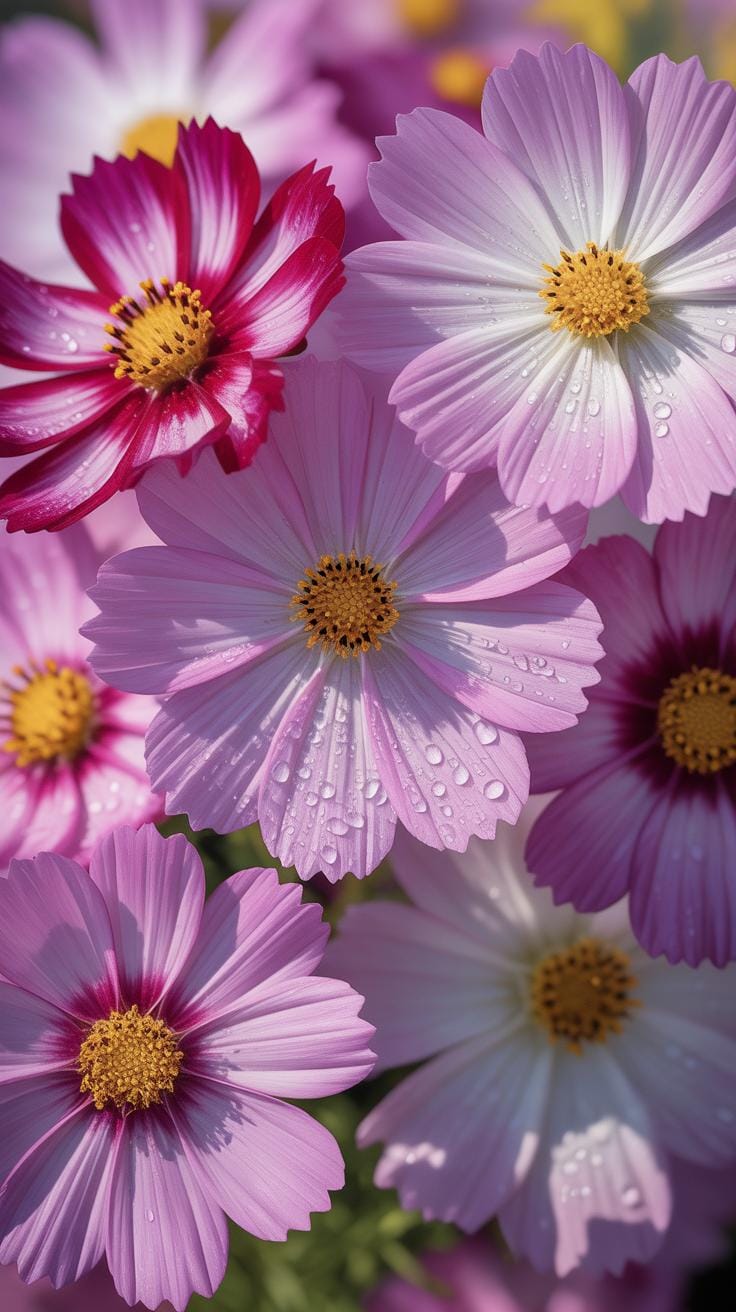
What A Cosmos Flowers Close Up Reveals About Petal Texture, Disc Florets, And Color Gradients
A close examination of cosmos bipinnatus reveals a sophisticated ray flower structure. The outer petals often feature longitudinal ridges that create a pleated texture. These ridges reflect light differently than flat surfaces. Observation shows that color saturation increases near the base of the petal. This creates a natural bullseye effect. Many varieties exhibit picotee edges where a secondary color defines the petal perimeter.
The center of the bloom contains a dense cluster of yellow disc florets. These fertile individual flowers open from the outside toward the center over several days. Each tiny floret provides a deep nectar source for pollinators. High magnification shows the pollen grains resting on these specialized structures. Analyzing the transition between the ray petals and the central disc helps identifying specific cultivars and their health.
A garden of cosmos is like a collection of old-fashioned secrets blooming in the summer air. To find a home for these swaying stars is to invite the simple joy of nature back into your soul.
Macro Photography Of Cosmos Flowers: How To Showcase Their Intricate Beauty At Home
Successful macro photography of cosmos requires controlled lighting to capture petal translucency. Direct sunlight creates harsh shadows that obscure fine details. Use a diffuser or shoot during golden hour for even light distribution. Focus on the central disc florets to ensure the most complex part of the flower remains sharp. A shallow depth of field isolates the bloom from distracting foliage in the background.

Stability is critical when shooting high magnification images of these thin stems. Even light wind causes significant motion blur in the frame. Use a tripod and a remote shutter release to eliminate camera shake. Position your lens parallel to the flower face to keep the entire disc in the focal plane. This technique highlights the geometric patterns found in the center of the cosmos.
White Cosmos Flowers Elegance Symbolism And Creative Uses Around The Home

The Symbolism And Cultural Meaning Behind White Cosmos Flowers In Different Traditions
White cosmos flowers represent purity and modesty in many cultures. The name derives from the Greek word kosmos. This word translates to order or harmony. People use the white variety to signal peace and a sense of calm. In Victorian floriography, the flower communicated intense joy and beauty. It served as a clear message of sincere affection between friends or lovers.
Modern practitioners focus on the flowers as symbols of mental clarity. The clean white petals contrast with the yellow center to show focus. They appear frequently in gardens designed for reflection and meditation. Gardeners choose this specific color to create visual breaks in high-energy landscapes. The plant remains a staple for those seeking to symbolize a fresh start or a clean slate in life.
Creative Ways To Use White Cosmos Flowers In Wedding DéCor, Table Settings, And Gifting
Event designers use white cosmos to add movement to floral arrangements. The thin stems allow the flower heads to dance in the breeze. This creates a natural and airy look for outdoor wedding ceremonies. They work well in bridal bouquets to soften the structure of heavier blooms like roses. Designers place them in simple glass bud vases to maintain a minimalist aesthetic for reception tables.
Select white cosmos for gifts when you want to show sophistication without the cost of lilies. They travel well if cut in the early morning and hydrated immediately. Use them in table settings by tucking a single stem into a linen napkin ring. This adds a tactical layer of texture to the dining experience. Their long vase life makes them a practical choice for home staging and gifts.
Cosmos Flowers And Wildlife Supporting Pollinators And Biodiversity At Home
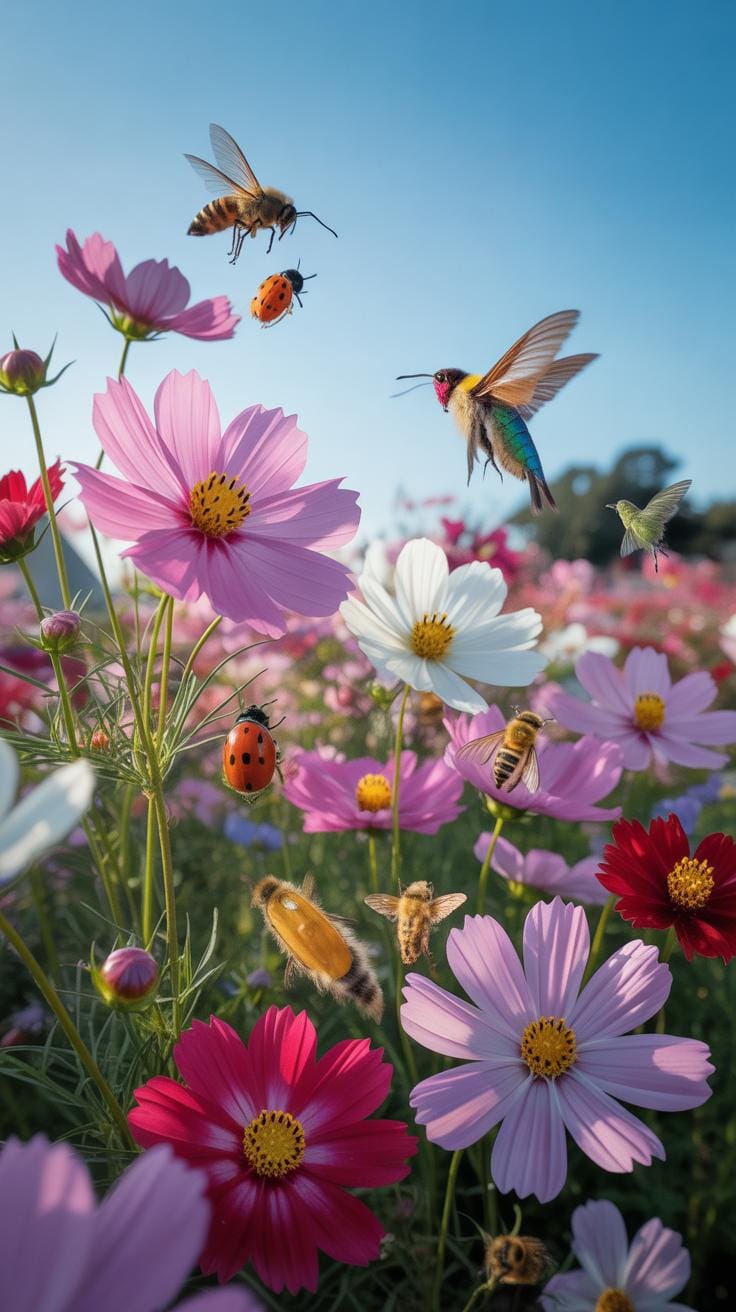
How Cosmos Flowers Attract Bees, Butterflies, And Beneficial Insects To Your Garden
Cosmos flowers feature open ray florets and a central disc profile. This design provides a flat landing pad for insects. Short-tongued bees and hoverflies easily reach the nectar and pollen. High nectar production ensures a steady energy source for foraging insects. Bright pigments in the petals act as visual beacons across the landscape. The flowers remain open throughout the day to maximize exposure to pollinators.
These plants attract more than just pollinators. Beneficial insects like lacewings and ladybugs hide in the fine foliage. These predators consume aphids and other common garden pests. Cosmos flowers also attract hoverflies that lay eggs near pest colonies. This creates a self-sustaining pest control system within your garden. The tall stems provide perches for dragonflies and small birds hunting for flying insects during the summer.
Planting Cosmos As Part Of A Pollinator Friendly Garden: What You Need To Know
Strategic planting requires grouping cosmos in large clusters rather than single plants. These drifts allow insects to find the flowers quickly from the air. Native to Mexico and the Americas, cosmos thrive in soil with low fertility. Rich soil produces excess foliage but fewer blooms. You must maximize bloom count to provide enough food for the local insect population throughout the entire growing season.
Succession planting extends the benefits to wildlife into the late fall months. Most garden flowers fade by September but cosmos continue blooming until the first hard frost. This late-season nectar supports migratory species like Monarch butterflies. Deadheading spent blooms keeps the plant producing new nectar sources for several months. Leave some seed heads in late autumn to provide natural food for goldfinches and other native birds.
Frequently Asked Questions

Are cosmos flowers easy for beginners to grow at home?
Absolutely! If you are new to gardening, cosmos flowers are the perfect starting point because they are incredibly resilient and low-maintenance. These charming blooms thrive even in poor soil conditions and are known for their drought tolerance. Simply scatter some seeds in a sunny spot after the last frost, and you will be rewarded with a vibrant sea of color that lasts throughout the entire summer season.
How do I harvest cosmos flowers for indoor floral arrangements?
To bring the beauty of cosmos flowers inside, harvest them just as the petals are beginning to unfold but before they have fully opened. Use sharp snips to cut the stems early in the morning when the moisture content is highest. Immediately placing them in lukewarm water helps ensure a long vase life. Regular cutting actually encourages the plant to produce even more blooms, keeping your home decor fresh and lively.
Is it expensive to start a cosmos garden on a budget?
Growing these stunning flowers is one of the most cost-effective ways to decorate your landscape and home. A single packet of seeds usually costs just a few dollars and can produce dozens of plants. Since they require very little fertilizer and attract beneficial pollinators naturally, you won’t need to spend money on expensive chemicals. You can even save the dried seeds in autumn to replant for free next year.