

Daily Affirmations for Confidence and a Positive Fitness Mindset
Daily affirmations are simple, positive statements that you repeat to yourself. They help build confidence and a positive mindset, especially when it comes to fitness. Using affirmations regularly can support your mental strength and motivation during workouts and health goals.
This article covers what daily affirmations are, how they impact your fitness mindset, and practical ways to use them daily. You will also find examples and common challenges with using affirmations, so you can make them work for you.
Benefits Of Daily Affirmations

Daily affirmations can subtly change how you think about your fitness journey. When you repeat positive statements to yourself, it’s not just about feeling good for a moment. These affirmations can actually increase your confidence, making it easier to face workout challenges that might have seemed daunting before. They also help chip away at mental blocks—those nagging doubts or excuses that hold you back.
By affirming your strength and commitment, you begin to reinforce a mindset that is persistent and positive. This can make motivation less wavering and more consistent over time. The small mental victories you gain from affirmations might translate into better focus and a willingness to push through discomfort during exercise. Yet, it’s not magic. Sometimes the effect is subtle or inconsistent, but often enough, this practice creates a mental environment where confidence grows naturally.

Imagine telling yourself, “I am capable of completing this workout,” right before you lace up your shoes. That simple statement can quiet the inner critic and sharpen your determination. It’s a little nudge towards trust in your own ability, which might be just what you need to get moving when motivation feels low.
What Are Daily Affirmations
Daily affirmations are positive statements you say or think repeatedly to yourself. They usually focus on personal strengths or goals and are crafted in the present tense, as if the desired state is already true. Saying “I am strong” instead of “I will be strong” is a common example. The present tense is key because it encourages your mind to accept these statements now, rather than postponing self-belief to some future time.
Affirmations should be personal and specific to your fitness goals or mindset. For example, “I enjoy moving my body” is more direct and meaningful than a vague statement like “Exercise is good.” The specificity helps your brain focus on exact qualities or behaviors you want to develop. Although this might sound straightforward, many people overlook the importance of crafting affirmations carefully, which can limit their effectiveness.
How Affirmations Improve Fitness Mindset
Using affirmations regularly can help maintain a positive attitude toward your fitness goals. They encourage you to focus on what you want to achieve instead of what might go wrong. This shift helps prevent negative spirals of doubt or frustration during tough workouts. Affirmations can make your mental state more resilient, so when you hit a plateau or face setbacks, you’re less likely to give up entirely.
Moreover, affirmations can bring your attention back to the moment, reducing distractions that lead to poor performance or early quitting. They act like a mental reset, reminding you of your commitment and energy. Sometimes, this means you power through an extra set or resist skipping a session, motivated by the confidence those words instill.

Does this work equally well for everyone? Probably not. Some days affirmations feel hollow or forced, but over time, they contribute to a mindset that prioritizes progress and self-kindness. So, they’re worth trying, especially if you find your confidence wavers in the face of fitness challenges.
Creating Effective Affirmations

Writing affirmations that truly motivate and feel authentic can be tricky, yet it’s crucial for them to work. It seems the key lies in keeping your words positive, specific, and believable. For instance, instead of saying, “I will not fail,” try, “I am becoming stronger and more capable every day.” The first sounds negative even though it’s about failure, the second focuses on growth. You want your affirmations to feel like they belong to your current experience, not something distant or forced.
Think about what realistically resonates with your mindset and goals. Overly grand statements can feel hollow. But if you make them just right, they might spark a subtle shift in thought patterns. The trick is to find that balance where your affirmations feel encouraging, not overwhelming or too vague.
Checklist For Writing Affirmations
Here are some practical tips that could help with crafting affirmations:
- Use present tense, as if the positive statement is already true.
- Make it personal and specific to your fitness journey.
- Steer clear of vague or abstract words like “always” or “never.”
- Keep the focus on what you want to cultivate, rather than what you want to avoid.
- Simple phrases often work better than complicated sentences.
- Repeat them during moments when your mind is quiet and open, to help them sink in.
Examples Of Fitness Affirmations
Here are a few you might relate to or adapt:
- “I enjoy challenging my body and respect its limits.”
- “Consistency in my workouts builds my confidence every day.”li>
- “My progress reflects my dedication, not perfection.”
- “I appreciate my body’s strength and resilience.”li>
- “I am patient with myself as I develop new habits.”

These examples blend motivation and realism. They don’t promise instant results but affirm persistent effort and positive mindset. Lastly, try to notice how each affirmation feels as you say it — if it rings true, your mind might just start to adopt it without you noticing.
When To Use Affirmations Daily

Choosing the right moments to say your affirmations can really change how effective they feel. I mean, it’s not just about repeating words—it’s about catching your mind in those windows when it’s most open to influence. The morning, for instance, is a sweet spot. Your mind is fresh, clear, and setting the tone for the day ahead.
Sometimes, I find that affirming before a workout fires me up more than a cup of coffee. It boosts energy and sharpens focus. Those few moments right before you start exercising are perfect to remind yourself you’re strong and capable. You tap into your inner drive, and suddenly, the workout feels less like a chore, more like a challenge you’re ready for.
Also, don’t overlook little pauses throughout the day—down times or breaks when your thoughts tend to wander. Tossing in an affirmation then might pull you back to positivity and motivation.
Morning Affirmations Routine
I’ve noticed that kicking off the day with affirmations sets a pretty distinct mood. It feels like giving your mind a roadmap for optimism. You might say something simple like, “Today, I choose energy and focus,” and that’s enough for your brain to start lining up your mindset. It’s not magic, but it’s like setting a mental GPS.

Starting your day with these declarations is also about readiness—not just for exercise, but for whatever hurdles might come your way. It primes your body and mind, so by the time you lace up your shoes, you’re already a step ahead mentally.
Pre Workout Affirmations
Before you hit the gym or start your run, saying affirmations can really shift your internal state. Things like “I am strong,” or “My body is capable,” help you move past fatigue or doubt. I sometimes catch myself hesitating before lifting weights, but these phrases nudge me forward.
There’s this subtle transformation when you affirm confidence and energy just before exercise. It’s like igniting a spark. You might feel more alert, pushing yourself harder, or simply enjoying the session instead of dreading it. These moments are great for anchoring positivity into your physical effort.
Using Affirmations With Fitness Goals

When you set a fitness goal, it often feels like plotting a course on a foggy day—clear destination, but uncertain path. That’s where affirmations step in, bridging the gap between hope and action. Tailoring your affirmations to your specific targets helps keep that goal in sharp focus. Instead of vague promises like “I am strong,” try something more precise: “I am committed to running three times a week to build endurance.”

This specificity does something subtle but powerful—it quietly reminds you what success looks like. The mind gets a clear marker to aim for, which can help with discipline on days motivation runs low. You can even shift your affirmations as goals change. Maybe it’s shedding pounds today, lifting heavier tomorrow, or mastering a yoga pose next week. Each new affirmation grounds you more firmly in your current focus.
Goal Setting With Affirmations
Combining affirmations with goal-setting creates a sort of mental double whammy. Goals provide the tangible milestones, while affirmations inject motivation and confidence. When you write down a goal like “I will increase my bench press by 20% in two months,” adding a corresponding affirmation, such as “I am steadily getting stronger every week,” puts a positive spin on the progress. It’s like setting a GPS and cheering yourself on at the same time.
This combination can stop you from feeling stuck or overwhelmed. When progress feels slow, or when setbacks occur, returning to your affirmations can gently nudge your focus back toward effort and persistence. Are you clear on your goals right now? What affirmations might keep you on track when enthusiasm dips?
Tracking Progress And Affirmations
Using a journal or app to track your fitness progress offers great feedback, but pairing that data with affirmations can add emotional depth to your journey. Each time you note improvement—whether it’s a longer run or another workout ticked off—you reinforce the belief behind your affirmations. The mental loop starts: “I am capable. I am improving.”
Sometimes, progress isn’t linear, and that’s where affirmations help steady the ship. They can remind you that success isn’t about perfection but persistence. When you see your numbers rise, even slightly, it confirms that the affirmations aren’t just hopeful words—they reflect real changes. Would you say tracking feels more motivating if accompanied by daily positive reinforcement phrases? What if your affirmations grew stronger as your records improved?
Common Pitfalls And Solutions

When Affirmations Feel Untrue
It’s quite normal to struggle with affirmations that seem entirely untrue when you first start. You might say, “I am confident,” but deep down feel the opposite. That discomfort can make you question the whole process. What to do? One approach is to tweak your affirmations to closer match your current feelings. Instead of “I am confident,” maybe try “I am learning to be confident” or “I am open to growing my confidence.” This feels more believable and reduces inner resistance. Sometimes it helps to pair the affirmation with small actions that prove it to yourself, like setting a tiny fitness goal and meeting it. Over time, this creates a bridge between words and reality, making the affirmations feel less forced.
Avoiding Overuse Of Affirmations
Too many affirmations can actually backfire. When you repeat a long list every day, your mind might start to tune out, like white noise. Quality matters more than quantity. Pick a few key affirmations that really resonate with you and focus on those. It’s about balance. Affirmations are a tool, not a magic wand. They work best when combined with real effort and reflection. Also, overuse can create unrealistic expectations — if you repeat “I am unstoppable” but then get discouraged by setbacks, that mismatch can reduce your belief in the process. So keep it simple, genuine, and grounded. It’s okay to pause and adjust your affirmations as you grow, so they keep feeling meaningful and motivating.
Scientific Insights On Affirmations


Daily affirmations tap into the brain’s complex networks in interesting ways. Research shows that affirmations can activate brain regions like the ventromedial prefrontal cortex and ventral striatum. These areas are linked with reward and valuation, suggesting that affirmations might help the brain assign positive value to one’s self-image and goals. It’s like the brain gets a gentle nudge to see itself in a more confident, capable light.
Studies point out that the impact of affirmations may hinge on your starting mindset. For example, people with high self-esteem often experience boosts from present-tense affirmations like “I am strong.” Yet those with lower self-esteem sometimes find these statements off-putting or even discouraging. Interestingly, future-oriented affirmations such as “I will improve” tend to work better for those individuals.
One idea is that affirmations help reduce stress by reinforcing a sense of personal control and optimism. Under pressure, people who engage in self-affirmation exercises have shown improved performance. This could be due to lowered stress responses or a sharper focus on values that matter, rather than on anxiety or fear.
But it’s not always straightforward. Some findings show affirmations work best when paired with real evidence of progress—taking actions that back up your words. This mix of belief and reality may build a stronger foundation for real behavior change and improved confidence, especially in fitness journeys where setbacks are common.
Affirmations Vs Negative Self Talk
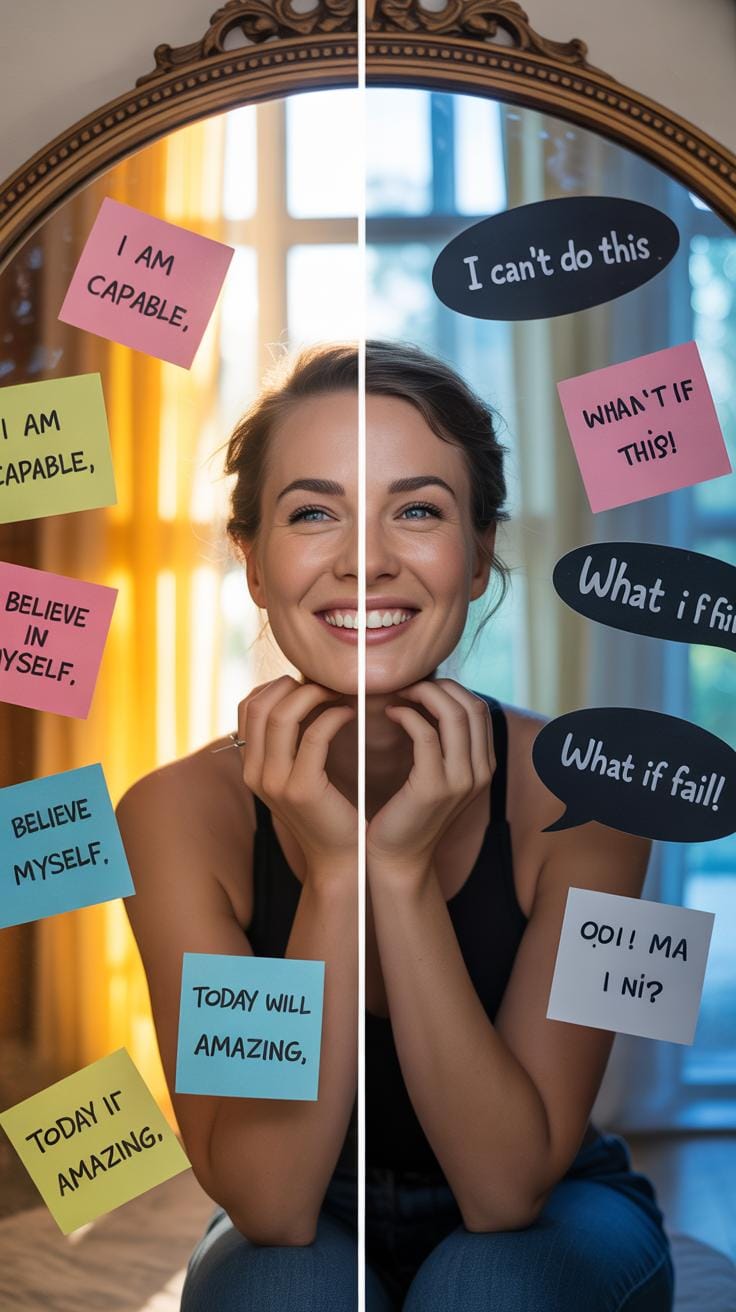
Negative Self Talk Effects
When negative self-talk creeps in, it’s easy to feel stuck. Motivation dips, and that confidence you once had? It starts to waver. I’ve noticed that even a few critical thoughts like “I’m not strong enough” can snowball quickly, making workouts feel like a chore instead of a challenge. Your mindset shapes more than just your mood—it can actually shape outcomes. For example, negative self-talk can increase stress levels, impair focus, and reduce perseverance during workouts. That’s why you might skip a session or hold back effort because, well, why bother if you think you won’t succeed?
Replacing Negativity With Affirmations
Switching from negative thoughts to positive affirmations doesn’t happen overnight, but small, practical steps can ease the shift:
- Catch the negative thought as soon as it appears. Awareness is key.
- Pause and reframe: Instead of “I can’t do this,” try “I’m learning and improving.”
- Make your affirmations specific and personal, like “I am becoming stronger every day.”
- Repeat your affirmations regularly—morning, before workouts, or even stuck in traffic.
- Celebrate small wins, however minor—they build proof that supports your affirmations.

It’s a bit like rewiring your mental habits. At first, the old thoughts feel more natural, but with practice, affirmations start to sound like the truth—and that can, quite literally, change how you feel and perform in fitness.
Practical Steps To Start Affirmations

Starting daily affirmations doesn’t need to be complicated. You might want to keep it simple, right? First, pick a few positive statements that feel believable to you. They don’t have to be grand or perfect, just something you can say with a bit of confidence. Something like, “I am capable of improving every day,” or “My efforts in fitness help me grow stronger.” It’s okay if the exact words don’t feel perfectly natural at first—you’ll tweak them as you go.
Then, think about reminders. Maybe set a phone alarm or sticky notes on a mirror, wherever you’ll see them. These nudges help keep affirmations from fading out of your mind during a busy day. Trying a daily schedule works best if it fits your lifestyle; some prefer mornings to boost motivation, others mornings and evenings to reinforce beliefs.
Finally, keep those affirmations visible. You can write them on cards, add them to apps, or jot them down in a journal. A glance here and there, even for a second, can make a difference. It’s a small effort, but over time, it helps shift your mindset, making positive self-talk almost second nature. Have you noticed how seeing a note can bring a fleeting thought back into focus? That’s the kind of subtle power this holds.
Conclusions
Daily affirmations can reinforce your self-belief and keep you motivated in fitness. They work best when you make them specific to your fitness goals and repeat them consistently. Combining affirmations with actions, like tracking your progress, enhances their impact.

Start with simple, positive affirmations and customize them to your needs. Use them to challenge negative thoughts, boost your focus, and encourage steady progress. Affirmations can be a practical tool in developing confidence and a positive attitude in your fitness journey.