
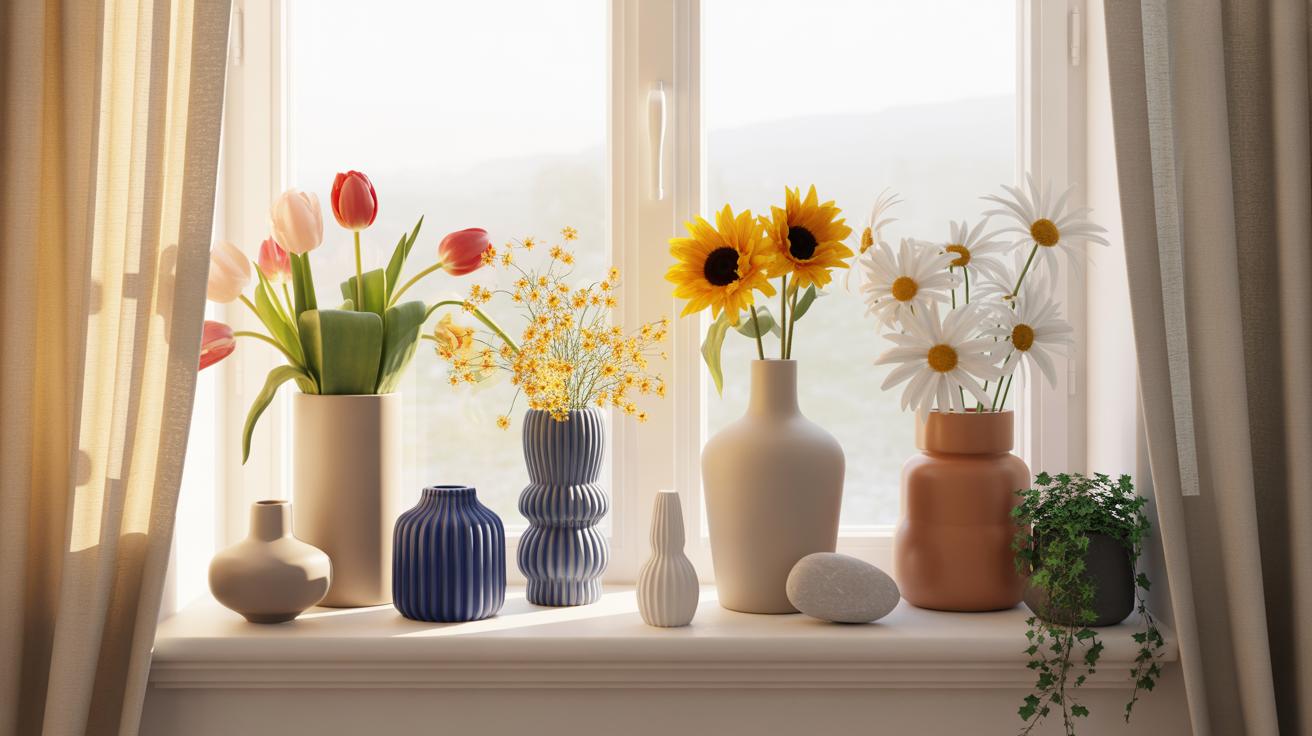
The Art Of Window Sill Decor Why Vases Are A Timeless Choice
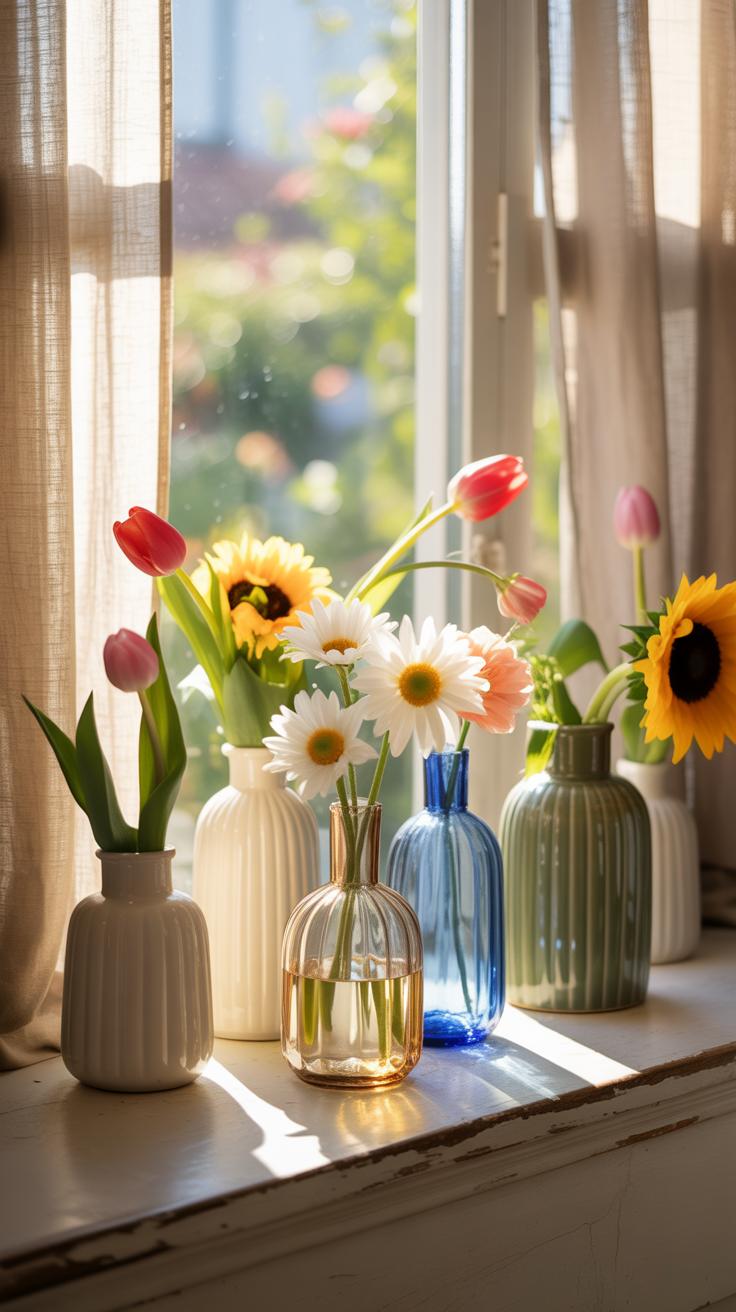
The Historical Role Of Vases In Interior Decoration
Vases serve as essential tools for interior design across history. Ancient civilizations used these vessels to store water, oils, and grains. The Greeks and Egyptians prioritised both function and form. They added intricate markings and artwork to clay bodies. This shift changed the vase from a utility item into a status symbol. Owners displayed them in prominent areas to show wealth and taste.
The Renaissance and Victorian eras solidified the vase as a decorative staple. Porcelain trade from East Asia introduced high density materials to Europe. Designers placed these objects on mantels and tables to anchor a room. The industrial revolution allowed mass production of glass and ceramic styles. This made vase styling accessible to all social classes. Today, vases remain the primary tool for introducing color and shape.
Why The Window Sill Is The Perfect Stage For Vase Displays
Window sills offer unique lighting conditions that other surfaces lack. Natural light hits glass and ceramic surfaces at direct angles. This exposure highlights the texture and glaze of the material. Backlighting creates depth and shows the true color of the contents. Sills also act as a physical bridge between the interior room and the outdoor environment. They provide a structural frame for any object.
Sill placement maximizes vertical space in small or crowded rooms. It keeps surfaces like tables and desks clear for work. Using the sill puts the vase at eye level for people passing by. It also protects delicate materials from high traffic areas in the home. Strategic placement takes advantage of the sun to produce shadows. These shadows add visual interest without using extra floor space or expensive furniture.
Harnessing Natural Light How To Style Vases For Maximum Visual Impact
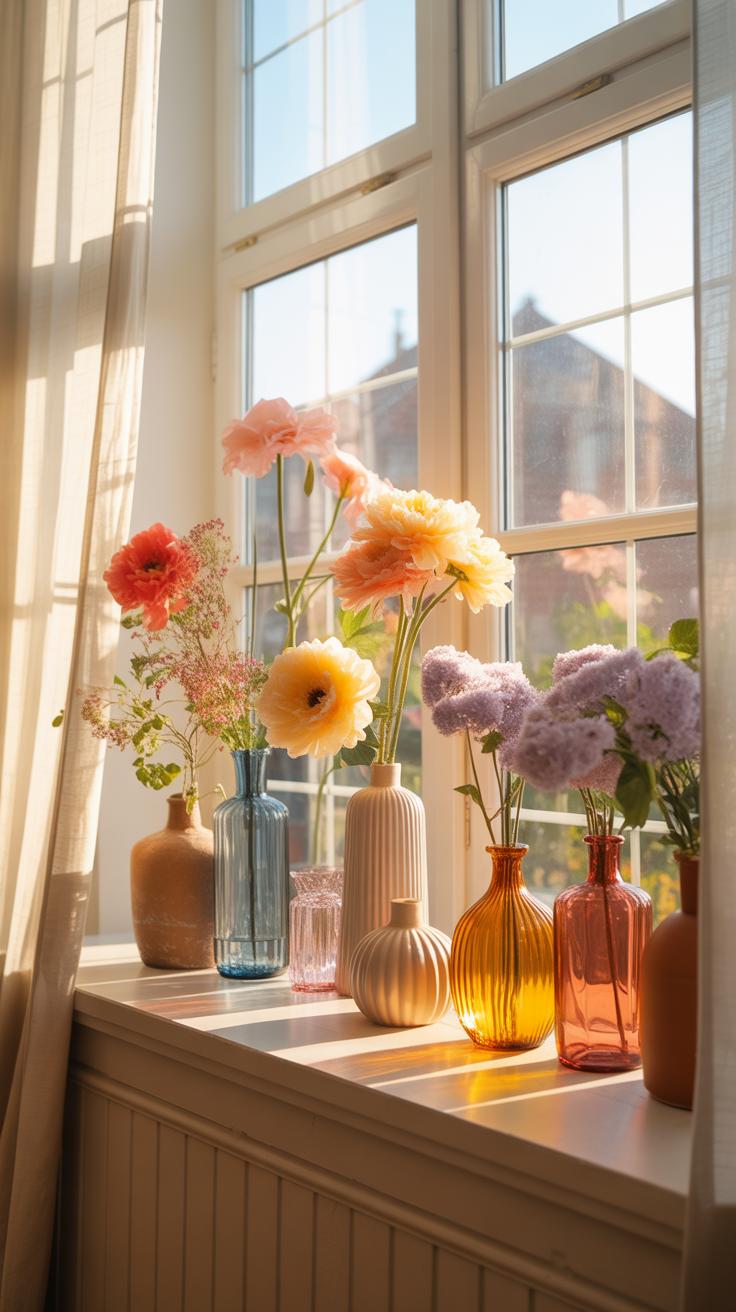
How Natural Light Transforms Vase Colors And Textures Throughout The Day
Direct sunlight alters color perception through spectral shifts. Morning light contains blue tones that make cool-colored vases look sharp and clean. Noon sun provides neutral white light that reveals the true pigment of the ceramic or glass. Late afternoon sun adds orange and red wavelengths. This warm light makes earth tones and metallic glazes glow. You must choose vase colors based on when you use the room.
Texture becomes visible through shadow and highlight. Low-angle morning light hits the side of a vase to create deep shadows in grooves or ridges. This highlights handcrafted details in wabi-sabi or mid-century modern ceramics. Flat noon light can make textured surfaces look dull. Position textured vases on east or west windows to maximize this shadow play. Smooth surfaces work better in bright overhead light to avoid glare.
Choosing Vase Materials That Interact Beautifully With Sunlight
Glass is the primary material for light manipulation. Transparent glass allows light to pass through and illuminate the water and stems inside. This creates a lens effect that projects light patterns onto the windowsill. Colored glass acts as a filter. It casts a tinted shadow on nearby surfaces. Use thick hand-blown glass to create caustic light patterns. These patterns add visual movement to a static display without adding physical clutter.

Opaque materials like stone or heavy clay block light entirely. They create a strong silhouette against the bright window background. This technique emphasizes the outline and shape of the vessel. Matte finishes absorb light to prevent distracting reflections. Polished metals or glazed ceramics reflect light back into the room. Use high-gloss finishes to brighten dark corners near a window window. Pick materials that achieve your specific lighting goal for the room.
Glass Vase On Windowsill Trends Looks And Styling Secrets
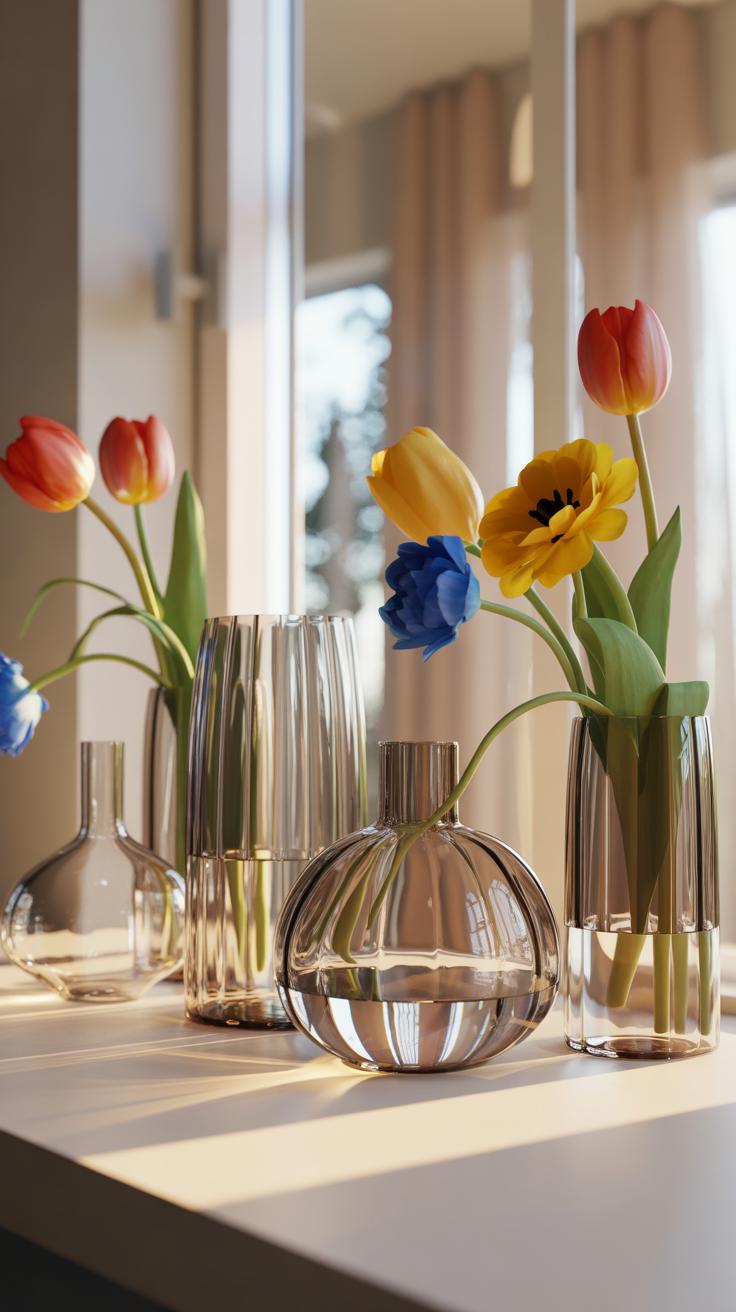
Why Glass Vases Remain A Go To Choice For Windowsill Displays
Glass vases maximize natural light efficiency. Unlike opaque ceramic or metal, glass allows sunlight to pass through the vessel. This prevents the vase from creating heavy shadows on your interior surfaces. It also highlights the water clarity and stem structure of your plants. Professional designers use glass to maintain a clean and open look in small window spaces.
Translucent materials integrate well with any architectural style. Glass does not clash with wood, stone, or vinyl window frames. It provides a neutral foundation for seasonal rotations. You can swap bright summer blooms for dried fall branches without changing the container. This versatility reduces cost and storage needs for homeowners. It remains the most functional material for long-term windowsill utility.
Top Glass Vase Silhouettes That Are Trending In Window Sill Styling
Bud vases and cylindrical columns currently dominate the market. Slim profiles fit narrow ledges without risking a fall. Low center of gravity designs provide stability against wind or curtain movement. Teardrop shapes offer a modern aesthetic while holding enough water for thirsty stems. These shapes prioritize footprint efficiency. They allow you to place multiple units in a row for a repetitive visual effect.

Fluted glass and ribbed textures are gaining traction in contemporary design. These surfaces diffuse light to hide murky water or root debris. Heavy glass bases prevent tipping on slippery stone sills. Wide mouth jars support thick bouquets but take up more depth. Strategic stylists choose narrow rectangular glass blocks for modern apartments. These flat shapes sit flush against the pane and maximize the available surface area.
Window Sill Decor Ideas Styling Vases With Botanicals And Dried Flowers
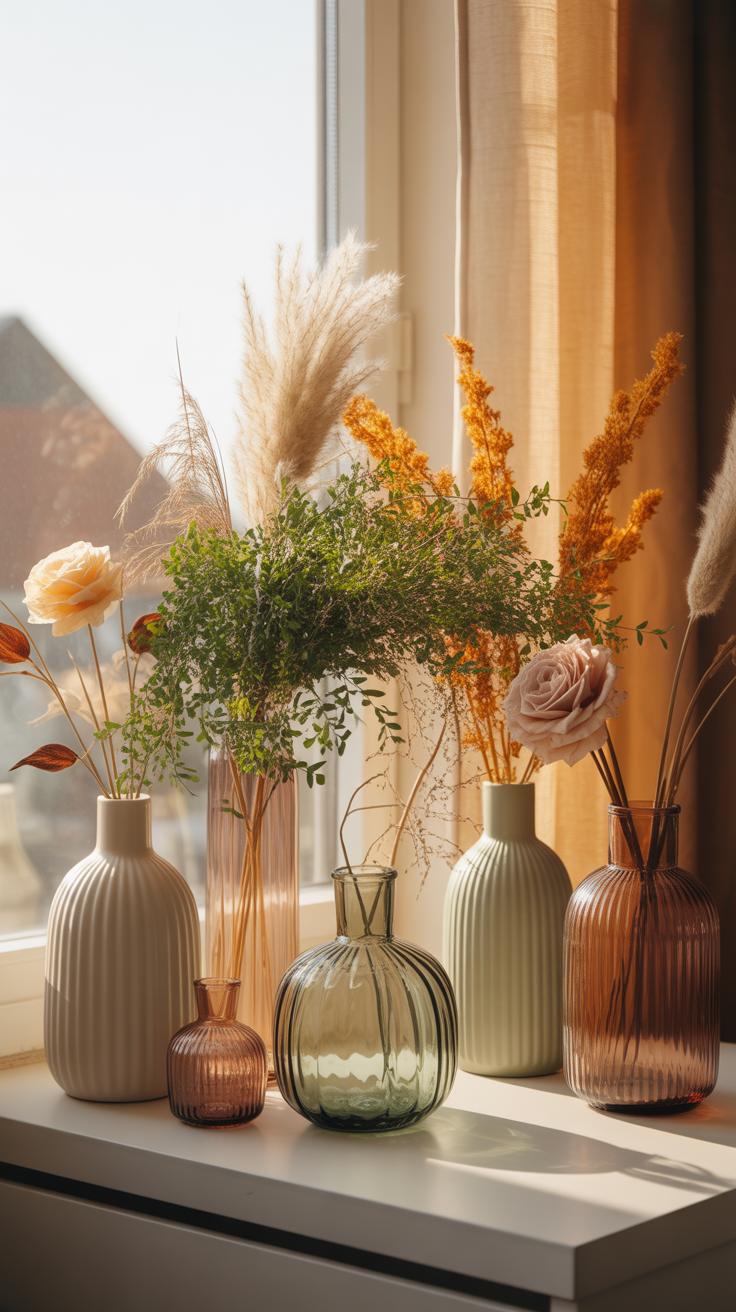
Fresh Botanicals Vs. Dried Stems: Which Works Best On A Windowsill?
Direct sunlight dictates your choice between fresh and dried plants. Fresh botanicals provide vibrant color and natural scents. They require frequent water changes and maintenance to prevent rot. Intense heat through glass accelerates petal wilt and bacteria growth. Choose fresh stems for north-facing windows or shaded areas. This keeps the water cool and extends the life of the cut flowers significantly.
Dried stems offer a permanent solution for sunny window sills. They do not require water or daily care. Most dried varieties handle heat better than fresh plants. However, UV rays cause colors to fade over time. You must check for brittleness and dust accumulation. Use dried arrangements in south-facing windows where high temperatures kill fresh flowers. This choice ensures your window sill remains styled without constant work.
Best Dried Flower And Botanical Varieties For Long Lasting Windowsill Arrangements
Choose dried plants based on their structural integrity and UV resistance. Some species hold their form better when exposed to direct heat and light. Look for varieties with woody stems or thick fibers. These materials survive the harsh environment near glass panes. Proper selection prevents drooping and keeps your display sharp. Use these specific varieties to maintain a professional look for months.
- Dried Eucalyptus: These silver-blue leaves contain natural oils that preserve their shape. They provide a vertical element to your styling. The sturdy stems do not sag in high heat. They maintain a muted color that coordinates well with most interior palettes.
- Pampas Grass: This grass adds height and soft texture to window displays. It is highly durable and thrives in dry environments. You must spray it with light hairspray to prevent shedding. It fills large vases effectively without adding significant weight or bulk.
- Dried Lavender: These stems offer structural rigidity and a lingering scent. The purple hue stays visible even after some sun fading. Lavender works best in narrow-necked vases to keep the stems upright. It provides a clean and traditional aesthetic for kitchen or bedroom windows.
- Craspedia Globosa: Often called Billy Buttons, these yellow spheres retain their color exceptionally well. They provide a geometric contrast to organic shapes. The stiff stems make them easy to arrange in clusters. They do not drop petals or create debris on your sill.
- Banksia: These large Australian native pods are nearly indestructible. They represent a bold, architectural choice for modern styling. Their thick, woody structure is immune to heat damage. One or two stems create a focal point in a heavy ceramic or glass vessel.

Rotate your vases every two weeks to ensure even sun exposure. This prevents one side of the arrangement from fading faster than the other. Keep dried stems away from moisture or condensation on the glass. Water causes dried plants to mold and collapse. Tactical placement ensures your botanical investment lasts through the seasons. Stick to these durable varieties for the most reliable results.
Windowsill Decoration Ideas Mixing Vase Heights Shapes And Textures
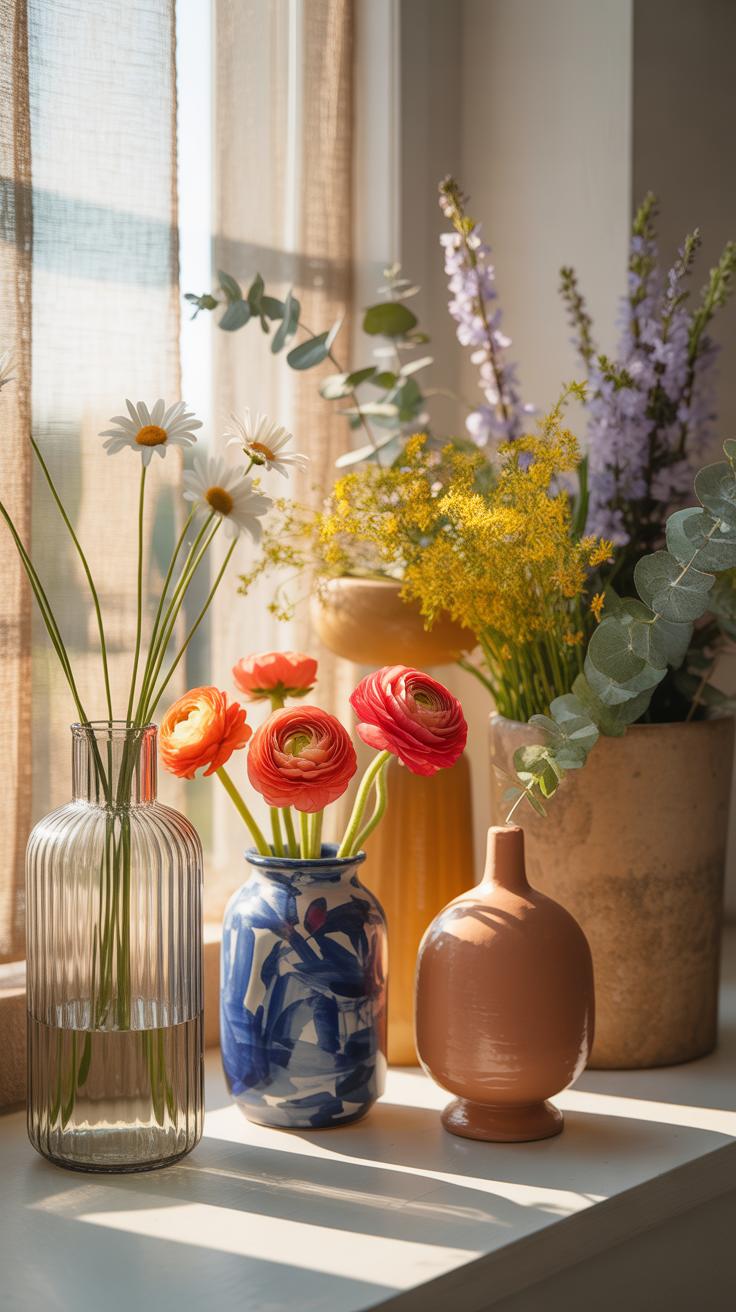
The Design Principle Of Varying Heights For A Balanced Windowsill Display
Effective windowsill styling relies on the rule of three to create visual movement. Use a tall vessel as the primary anchor. Place a medium vase next to it to bridge the gap. Finish with a small bud vase to ground the arrangement. This staggered approach prevents the eye from stopping at one point. It forces the viewer to scan the entire window frame.
Standard windows offer limited depth but ample horizontal space. Uniform heights create a flat and boring horizon line. You must break this line to improve the composition. Tall vases work best near the window frame edges. Shorter vessels should sit toward the middle to allow light penetration. This configuration follows basic architectural principles. It balances the heavy frame with the delicate interior glass surface.
Combining Ceramic, Stone, And Glass Vases For Textural Contrast
Material selection dictates how light interacts with your display. Transparent glass vases allow sunlight to pass through and illuminate the water. Opaque ceramic or stone vessels block light and provide solid visual weight. Mixing these finishes creates a professional look. Use smooth glaze next to rough terracotta to add depth. Harder surfaces like granite offer a brutalist contrast to delicate hand-blown glass.
The interplay of textures mimics natural landscapes. Place a matte stone vase beside a high-shine porcelain piece to create tension. This contrast draws attention to the unique craftsmanship of each item. In modern design, these variations replace the need for bright colors. Stick to a neutral palette but vary the surface feel. This strategy ensures the display remains sophisticated. It avoids the cluttered look of mismatched decorative objects.
Apartment Inspiration Small Space Window Sill Styling That Makes A Big Statement
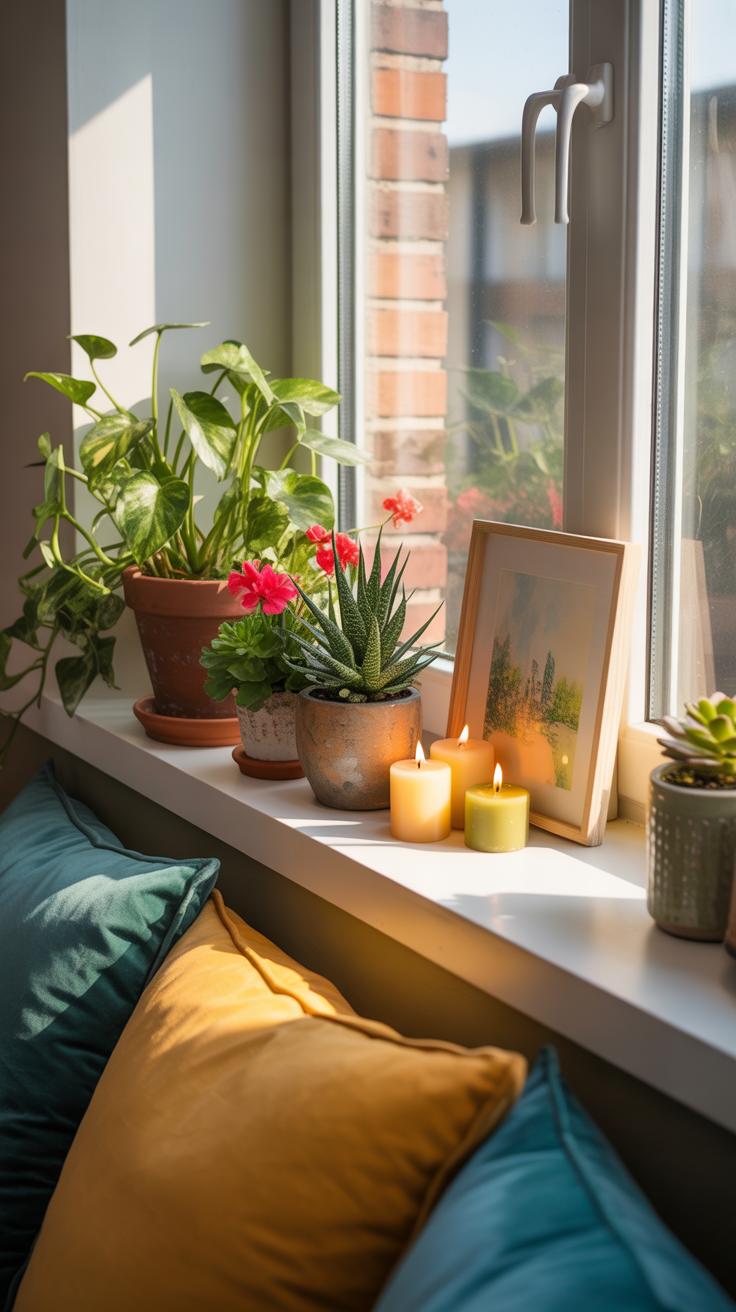
How City Apartment Dwellers Are Reinventing Windowsill Decor With Vases
Urban residents face limited square footage. They use window sills as primary display surfaces to save floor space. This practice stems from the Scandinavian design movement. That movement focuses on maximizing natural light and functional simplicity. Modern apartment dwellers choose glass vases to allow sunlight to pass through the vessel. This prevents the window area from looking crowded or heavy.
Strategic placement involves grouping vases in odd numbers to create visual balance. Tall, thin vases draw the eye upward and emphasize ceiling height. This tactic makes small rooms feel larger. Owners often use dried botanicals like eucalyptus or pampas grass. These require no water and do not spill on expensive electronics or furniture nearby. This approach treats the window as a curated gallery space.
Space Smart Tips For Styling Vases On Narrow Or Short Window Sills
Narrow sills require specific vessel shapes to ensure stability and safety. Standard round vases often overhang the edge and risk falling. Expert decorators select rectangular or oval silhouettes that sit flush against the glass. This maximizes the contact surface between the vase base and the sill. Using weighted materials like heavy ceramic or solid glass prevents movement from wind or curtains.
- Bud Vases: Use small vessels with narrow openings to hold single stems. Their small footprint fits sills less than three inches wide. They provide a high visual impact without taking up much physical depth or blocking the view.
- Uniform Sets: Align identical vases in a straight row to create a clean horizon line. This repetition looks intentional and organized. It works better than mixing different shapes which can look cluttered in a very small urban apartment setting.
- Adhesive Museum Wax: Apply a small amount of clear museum wax to the bottom of each vase. This anchors the vessel firmly to the sill. It protects fragile items from vibrations caused by street traffic or opening and closing the window.
- Transparent Materials: Select clear or tinted glass instead of opaque stoneware. Light moves through glass and keeps the window area feeling open. Opaque items create dark blocks that shrink the perceived size of the window and the entire room.
- Staggered Heights: Use vases of varying heights to create depth on a thin ledge. Place the tallest items at the corners to frame the window. This technique draws attention to the architecture of the building while keeping the center clear for light.

Verticality is the most important factor for short sills. Choose height over width to utilize the empty space in the window frame. Avoid wide bowls or flared rims that occupy too much horizontal room. Stick to sleek columns or bottle shapes. These forms provide a professional look and leave space for other functional items like keys or chargers. Purposeful selection ensures the styling looks sharp.
Windowsill Decor By Season Refreshing Your Vase Styling Year Round
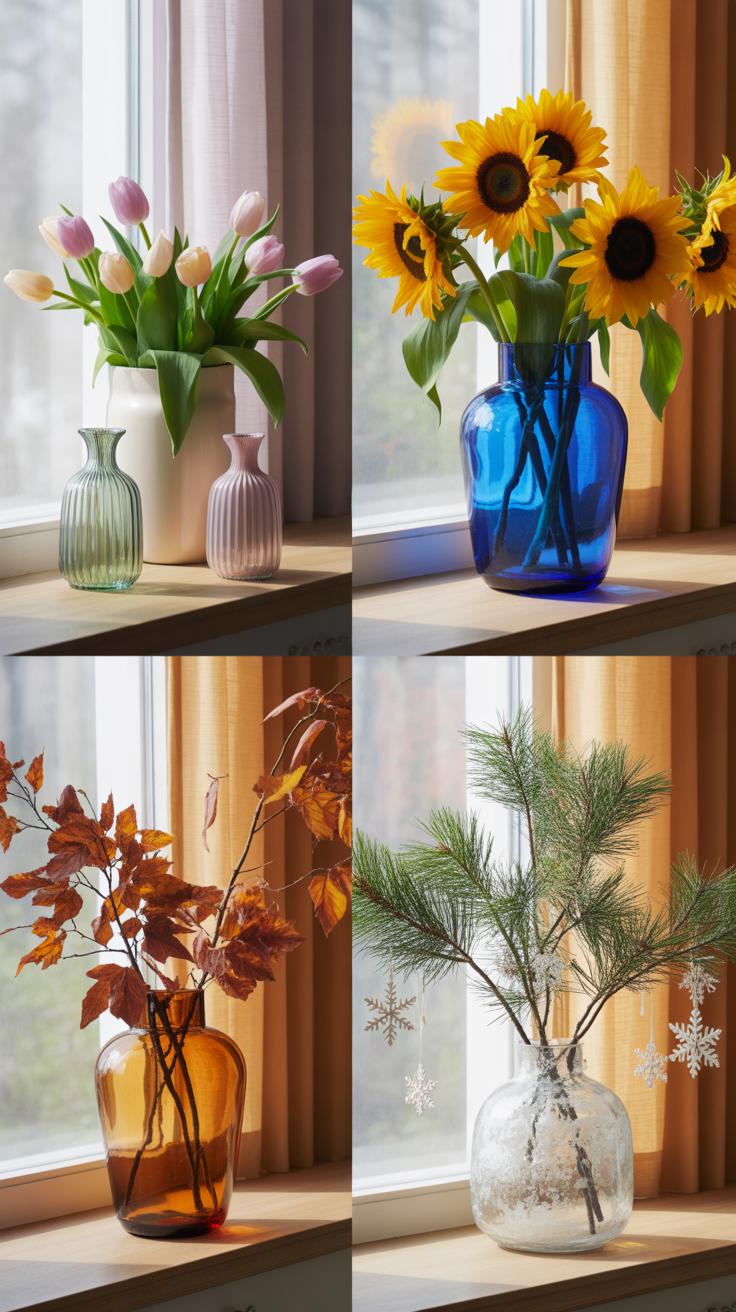
How To Transition Your Window Sill Vase Arrangements Across The Four Seasons
Vase styling requires a rotation schedule based on light levels and temperature. Direct sunlight increases water evaporation and bacterial growth in glass vessels during summer months. You must switch to opaque ceramic or stoneware vases to protect root systems and water quality. Narrow apertures work best for holding rigid winter branches. Wider mouths accommodate the lush density of spring growth and heavy summer blooms.
Clean all vessels thoroughly between seasonal shifts to prevent cross contamination of organic matter. Adjust the placement of vases based on the angle of the sun. Winter sun sits lower and hits the glass directly. This causes rapid fading of dried specimens and overheating of water. Move heavy stone pieces to the center for stability against drafts. Use lighter glass for spring to maximize the increasing natural light.
To plant a garden in a window sill is to believe in tomorrow. Let the light catch every glass vase as a reminder of the beauty we gather by hand.
Color Palettes And Botanicals That Suit Each Season On The Windowsill
Winter styling relies on structural forms and neutral tones. Use evergreen branches, birch sticks, or dried stalks in heavy matte vessels. These materials withstand the dry air from interior heating systems. Deep browns, charcoals, and muted creams mimic the natural landscape. This approach focuses on silhouette rather than color. It creates a bold visual impact against the stark light of the cold months.
Spring and summer demand high saturation and varied textures. Use clear glass to highlight fresh green stems and clean water. Incorporate pastel tones in March to reflect the early bloom cycle. Shift to vibrant yellows and deep greens by July. Use locally sourced wildflowers or sturdy perennials like zinnia and hydrangea. These plants handle the heat of a glass window better than delicate hothouse varieties.
Home Decor Harmony Matching Your Window Sill Vase Style To Your Interior Aesthetic
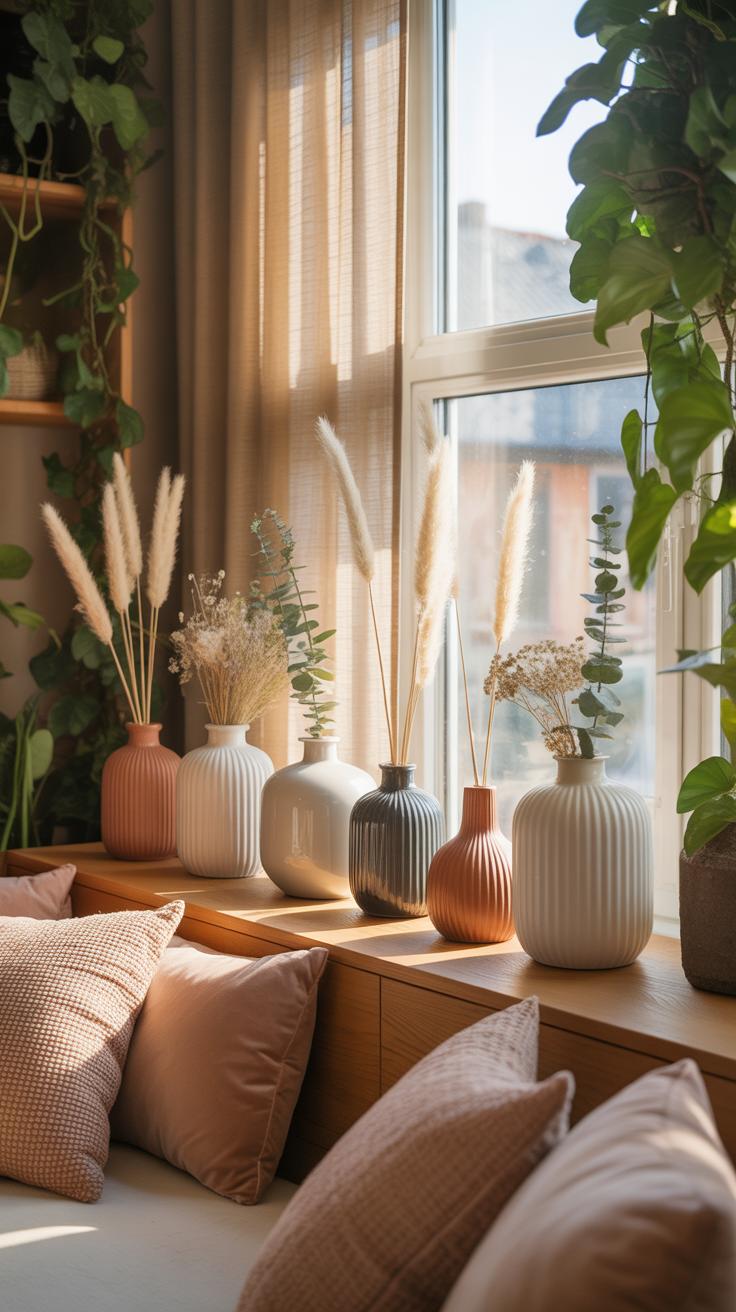
Pairing Vase Styles With Popular Interior Design Aesthetics: Minimalist, Boho, And Scandinavian
Minimalist design requires vases with clean lines and zero ornamentation. Select geometric shapes like cylinders or cubes in matte finishes. Use a single branch or a solitary flower to maintain the negative space. The goal is to reduce visual noise on the window sill. Stick to neutral tones like charcoal, off-white, or black. This approach focuses on form over surface decoration.
Scandinavian style emphasizes functionalism and natural light. Choose translucent glass vases to allow sunlight to pass through the vessel. This prevents the vase from blocking the view or casting heavy shadows. Use wood or ceramic materials that reflect organic textures. Bohemian styles differ by using varied heights and mismatched materials. Combine terra cotta with glazed pottery to create a collected look that feels casual.
How To Use Color Coordination Between Your Vases And Room Palette For A Cohesive Look
Effective color coordination relies on the 60-30-10 design rule. Identify the accent color of your room and apply it to your window sill vases. If your walls are neutral, use the vase to pull colors from rugs or artwork. This creates a visual bridge between the window and the interior. Monochromatic schemes work best when you vary the saturation of the vase colors.

Contrast offers an alternative strategy for bold interiors. Place a dark navy vase against a white window frame to draw the eye immediately. Use clear glass if you want the colors of the outdoor landscape to integrate with your room. Ensure the vase color does not clash with the natural light temperature. Cool morning light shifts blue tones, while warm sunset light enhances reds and oranges.
Frequently Asked Questions

What are the best types of vases to use for beginners starting with window sill decor?
If you are new to window sill vase styling, start with clear glass or lightweight ceramic vessels. Clear glass allows natural light to pass through, keeping your space feeling airy and bright. Opt for “bud vases” or narrow bottles that fit securely on the ledge without overhanging. This approach ensures your display looks intentional and sophisticated while remaining safe and stable in a high-traffic area like a window.
How can I style multiple vases on a narrow window sill without it looking cluttered?
To master window sill vase styling on narrow ledges, embrace the “rule of three” and vary your heights. Grouping three vessels of different sizes creates a dynamic visual flow that prevents the arrangement from looking messy. Stick to a cohesive color palette or material to unify the look. Using odd numbers and leaving a little “breathing room” between each piece ensures your display feels curated, balanced, and professionally styled.
Can I achieve a high-end window sill look on a limited budget?
Absolutely! You can create stunning displays by upcycling unique glass jars from the kitchen or sourcing vintage finds from local thrift stores. Simply removing labels from amber medicine bottles or spray-painting mismatched ceramic containers in a matte finish can produce a high-end aesthetic for pennies. Pair these affordable vessels with foraged greenery or dried wildflowers to create a trendy, designer-inspired look that fits perfectly within any home decor budget.