
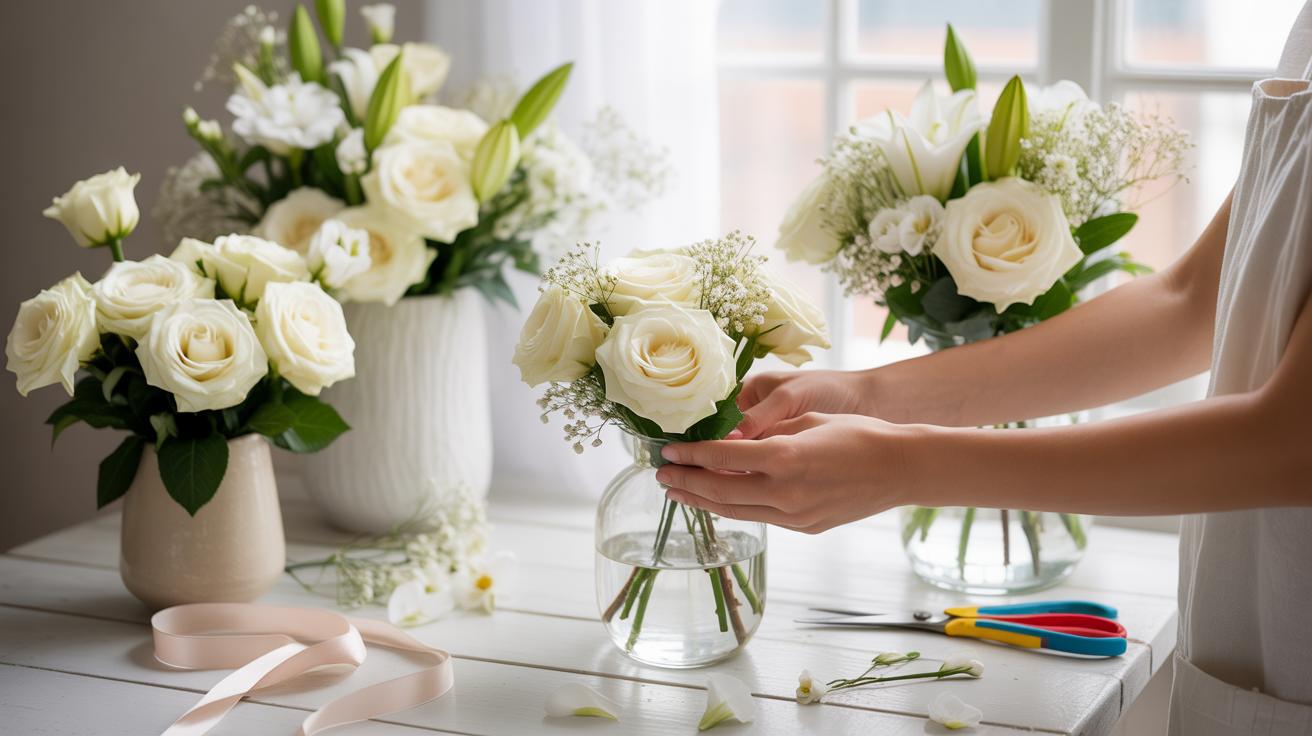
The Timeless Appeal Of All White Floral Arrangements
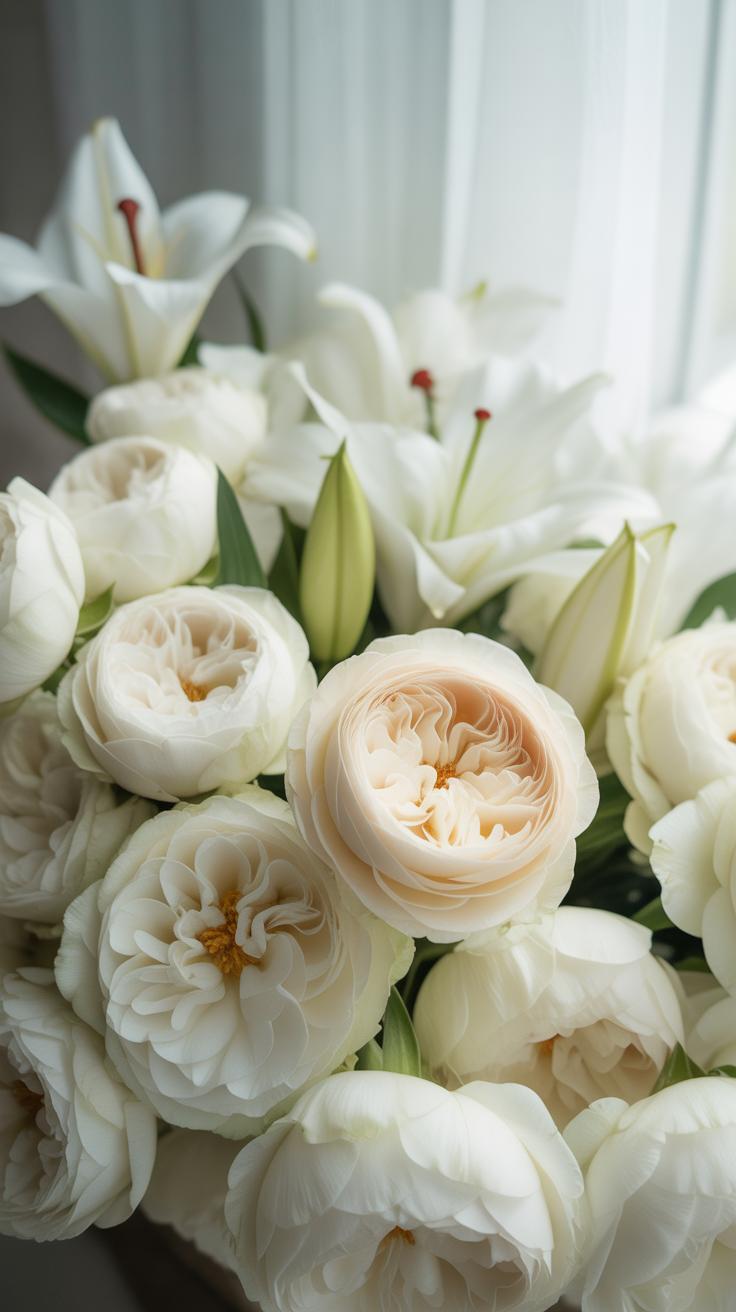
Why White Flowers Have Symbolized Purity And Elegance Across Cultures
White flowers carry deep historical weight across global traditions. In Victorian England, white blooms signaled innocence and high social standing. Shinto traditions in Japan use white petals to represent divinity and spiritual cleanliness. These associations are not accidental. Light reflects off white petals more effectively than darker colors. This creates a visual sense of light and space that humans naturally associate with cleanliness.
Ancient Romans used white lilies in ceremonies to honor Juno, the queen of gods. This reinforced the connection between white florals and high status. During the Renaissance, painters used white flowers to denote virtue. Today, these historical cues still influence modern design. When you choose a monochromatic white palette, you tap into centuries of established cultural shorthand. This makes your floral work feel instantly professional and intentional.
How An All White Palette Makes Floral Design Easier For Beginners
Color theory often overwhelms new designers. Managing clashing hues requires deep knowledge of the color wheel. An all-white palette removes this barrier immediately. You do not have to worry about vibrating colors or muddy transitions. Instead, you focus entirely on the mechanics of the arrangement. This allows you to master stem placement and balance without the distraction of complex color matching and high contrast.
Designing with one color forces you to look at texture and form. You learn to pair the ruffled petals of a carnation against the sharp lines of a calla lily. Using various shades of cream, ivory, and stark white creates depth through shadow rather than pigment. This technical focus builds a stronger foundation for your skills. You move from picking pretty colors to understanding the structural engineering of a successful floral display.
Best White Florals To Use In Beginner Friendly Arrangements
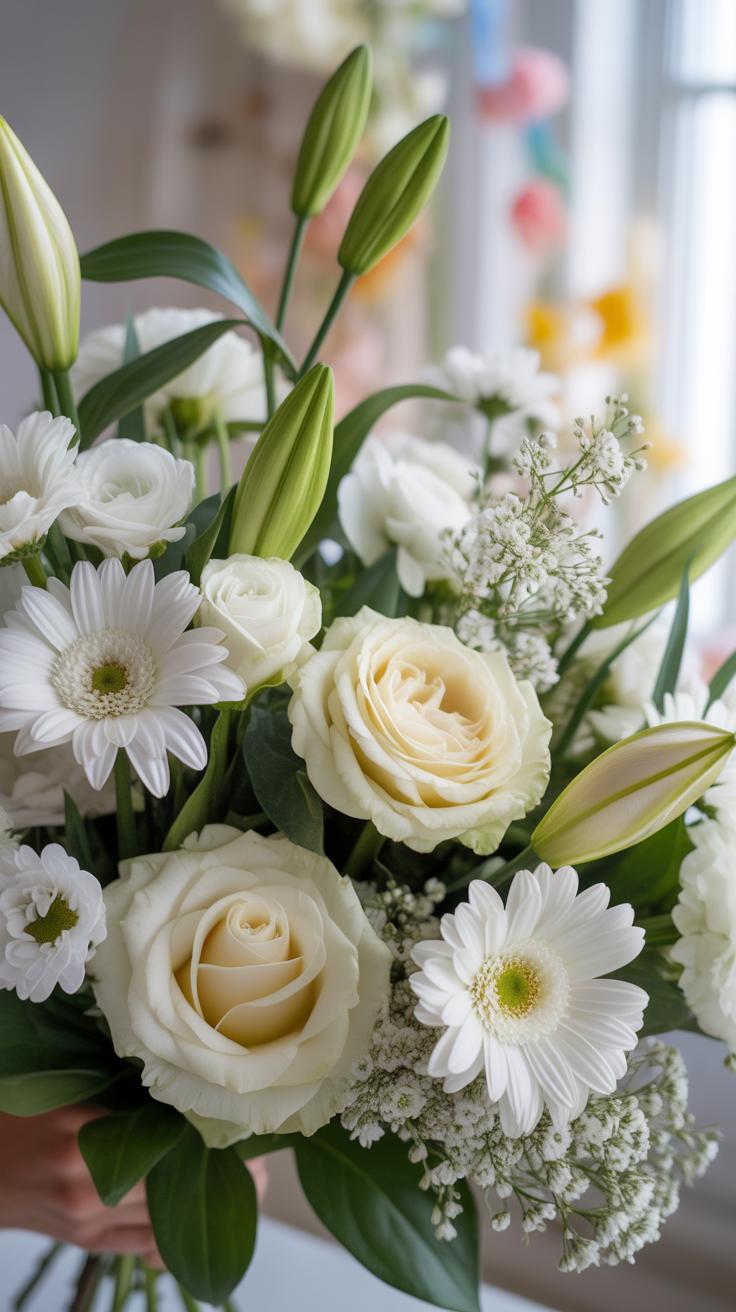
Popular White Flowers That Are Widely Available And Easy To Work With
Beginners need hardy flowers with thick stems. These varieties tolerate handling and remain upright without complex wiring. Select blooms that occupy different spatial roles. You need focal flowers for impact and filler flowers to close gaps. Choosing stems available at local grocery stores reduces cost and ensures freshness. Focus on structural integrity to keep the final arrangement stable and professional.
- Hydrangeas: These large mophead blooms provide massive volume instantly. One stem can fill a significant portion of a vase. They act as a natural grid to support smaller, more delicate flowers. Keep stems hydrated to prevent wilting.
- Roses: The standard white rose offers a classic shape and strong stem. They are available year-round and have a long vase life. Remove outer guard petals to reveal a clean look. They serve as the primary focal point in most designs.
- Carnations: These flowers are highly durable and inexpensive. Their ruffled texture adds depth to all white arrangements without clashing. They last up to two weeks with proper water changes. Use them to mass together for a dense, high-end appearance.
- Lisianthus: These stems mimic the look of peonies but are available more often. They feature multiple bells on a single branch. This variety adds a high-end feel to simple glass vase designs. They provide a soft, ruffled aesthetic that balances sharper greens.
- Tulips: White tulips offer clean lines and a modern look. Their stems continue to grow toward light after cutting. This movement adds a dynamic element to static arrangements. They work best in tall, narrow vessels that support their flexible stems.
White lilies and snapdragons also provide necessary height. Use lilies sparingly because their pollen stains petals and fabric. Snapdragons offer a linear shape that draws the eye upward. Mix these textures to avoid a flat appearance. A monochromatic palette relies on varied shapes to create visual interest. Always trim stems at a forty-five degree angle before placing them in cool water.
Seasonal Considerations Choosing White Florals That Are Fresh And Affordable
Buy flowers when they are in their natural growing season. This lowers the price and increases the quality of the blooms. Winter months favor amaryllis and paperwhites. Spring offers ranunculus and tulips at their lowest cost. Summer provides local hydrangeas and zinnias. Fall remains a transition period where roses and lilies are the most reliable options for beginners.
Shipping flowers across long distances degrades their lifespan. Local seasonal blooms stay fresh longer because they spend less time in transit. Check the stems for firmness and the petals for browning before purchase. Avoid flowers with soft or translucent spots. Sticking to seasonal availability ensures your all white arrangement looks vibrant. Fresh flowers require less mechanical support and look better in clear glass.

Essential Tools And Supplies For Creating White Floral Arrangements
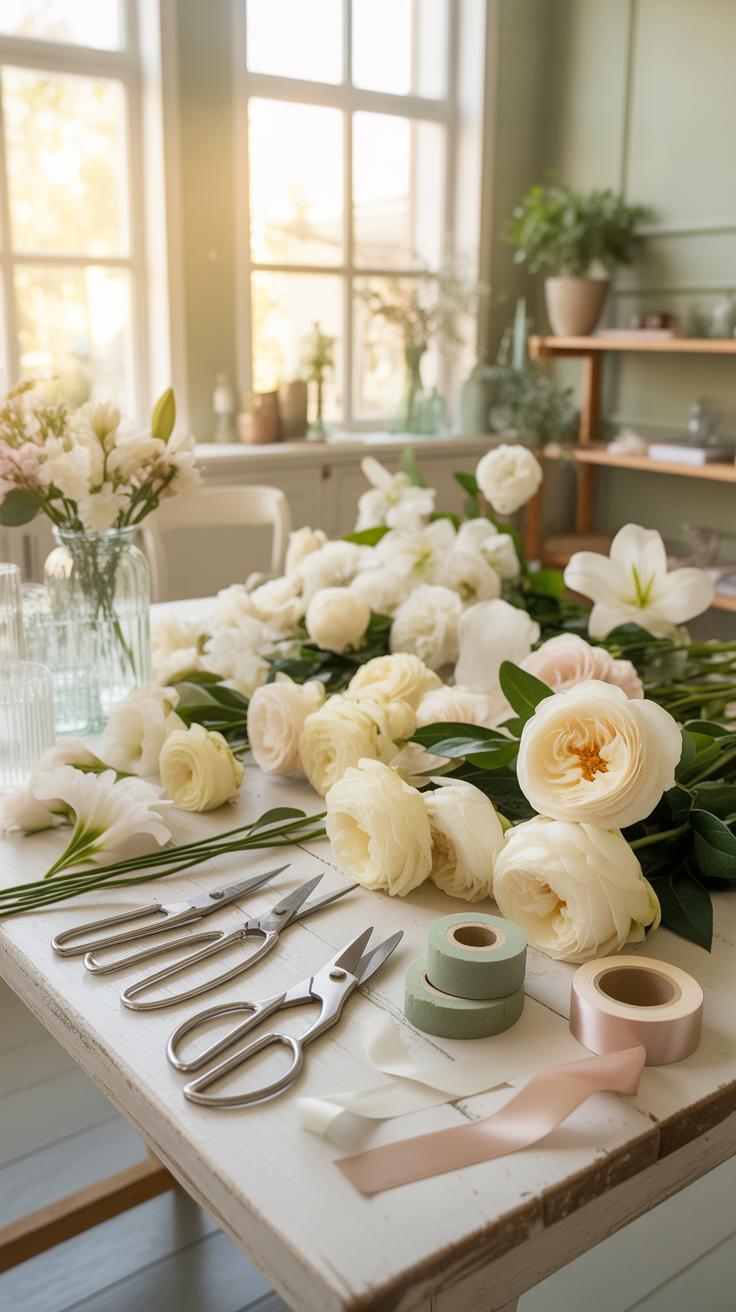
Basic Equipment Every Beginner Needs Before Starting An Arrangement
Success in floral design depends on clean cuts and proper hydration. You cannot use standard kitchen scissors for this work. Dull blades crush the stems and block water intake. Professional tools ensure that white blooms stay crisp and avoid premature browning. You must gather all necessary hardware before you buy your flowers. Preparation prevents the stems from wilting while you search for supplies.
- Floral Snips: These sharp hand tools provide clean bypass cuts on soft stems. Use them to remove lower leaves and trim ends at an angle. Clean blades prevent the spread of bacteria into the water.
- Pruning Shears: Heavy duty shears handle woody stems like hydrangea or lilac. These stems require extra force that small snips cannot provide. Precise cuts allow these thirsty plants to draw maximum moisture from the vase.
- Floral Tape: Waterproof tape creates a grid across the mouth of the vessel. This grid holds heavy white flowers in place. It prevents the stems from shifting or falling to the sides of the container during the build.
- Floral Foam: This dense material holds water and supports stems at specific angles. Modern designers use it for complex shapes. You must soak the foam completely in water before you begin inserting any flower stems into the block.
- Thorn Stripper: This tool removes thorns and excess foliage from rose stems quickly. Eliminating leaves below the water line is critical for white arrangements. Rotting leaves create bacteria that turn clear water cloudy and kill the clean aesthetic.
Organize your workspace to maintain efficiency during the process. Keep a bucket of room temperature water nearby for immediate hydration. Use a clean surface to avoid staining delicate white petals. Proper tools allow you to focus on the structure and balance of the design. High quality equipment reduces physical hand fatigue and improves the final look of your work. Professional results require professional standards.
Choosing The Right Vase Or Vessel To Complement Your White Blooms
The vessel dictates the final shape and mood of your arrangement. Clear glass is the most common choice for a modern and clean look. It highlights the green stems which provide a sharp contrast to the white petals. You must keep the water perfectly clear when using glass. Any debris or discoloration will ruin the visual impact of the all white theme.

Opaque ceramic or stone vessels offer a different design strategy. These materials hide the internal mechanics like tape or foam. They work well for classic or rustic styles found in traditional European floral movements. Choose a neutral color like cream or grey to support the flowers. Avoid bright colored vases that distract the eye from the white blooms. The vessel should stabilize the weight of the flowers safely.
How To Create Minimalist White Wedding Florals On A Budget
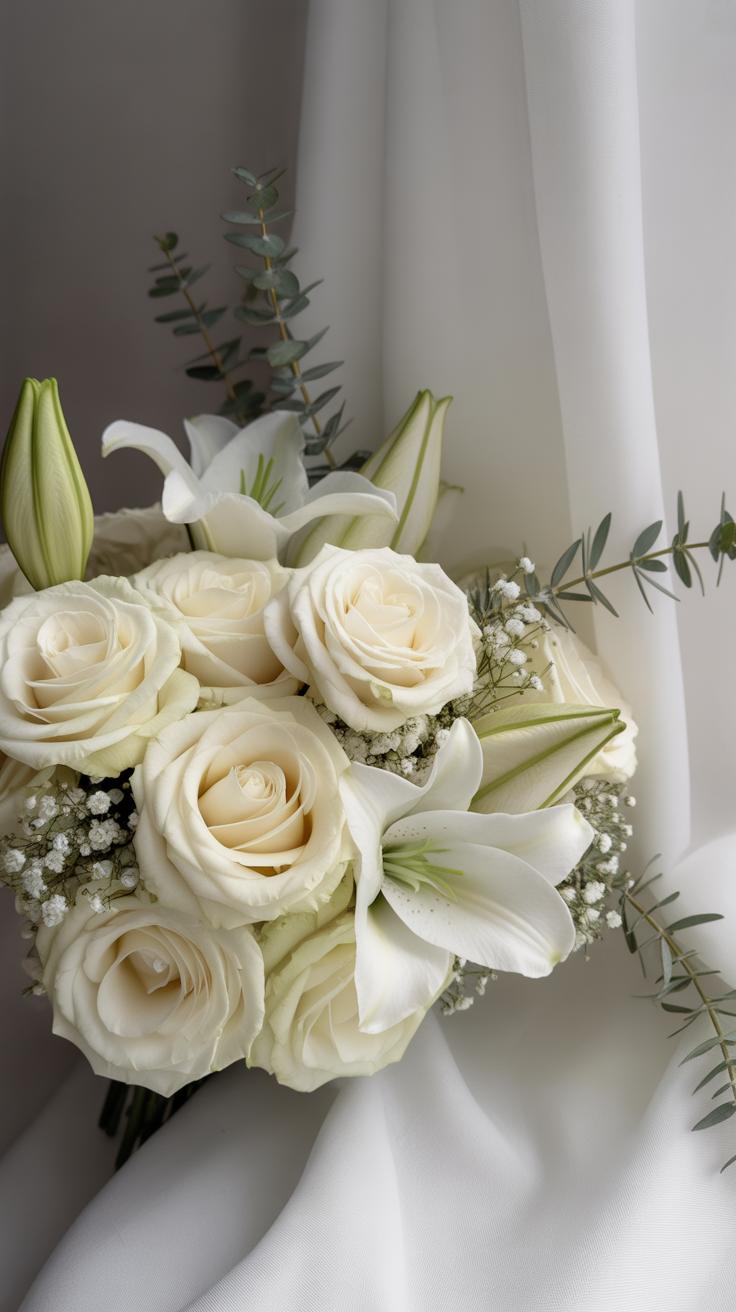
Design Principles Behind Minimalist White Wedding Florals That Look Expensive
Luxury minimalist design relies on negative space rather than sheer volume. High-end arrangements use a limited number of high-quality stems to create a clean silhouette. This approach pulls from the Modernist movement where form follows function. You save money by buying fewer flowers but choosing premium varieties like Hydrangeas or Phalaenopsis orchids. Focus on one dominant shape to create a clear visual impact without visual clutter.
Texture depth prevents a monochrome design from looking flat or cheap. Mix different finishes like the matte petals of a rose against the glossy leaves of Italian Ruscus. Use varying heights to draw the eye across the table. Repetition of a single flower type creates a modern gallery feel. This strategy ensures the arrangement looks intentional and sophisticated. Avoid mixing too many species as this dilutes the high-end aesthetic.
Simplicity is the ultimate sophistication, and a cluster of white blooms can evoke the timeless elegance of a country garden. There is a peaceful joy in gathering what is pure and simple to brighten a quiet corner of the home.
Step By Step Tips For Assembling A Simple Yet Stunning Bridal Table Centerpiece
Begin with a low glass compote or a ceramic bowl to keep sightlines clear for guests. Place a small piece of chicken wire or a floral frog at the bottom to secure the stems. Fill the vessel with clean water and floral preservative. Start by placing three large focal flowers at different angles. These flowers act as your anchor point and define the size of your centerpiece.

Add secondary filler flowers to bridge the gaps between your focal points. Keep the stems short so the blooms sit near the rim of the vase. This hides the mechanical parts of the arrangement without using extra foliage. Check the arrangement from every side to ensure there are no holes. Finish by adding a few sprigs of greenery to provide contrast. Simple designs work best when you keep the execution tight.
Brides Bouquet Ideas Using An All White Color Palette
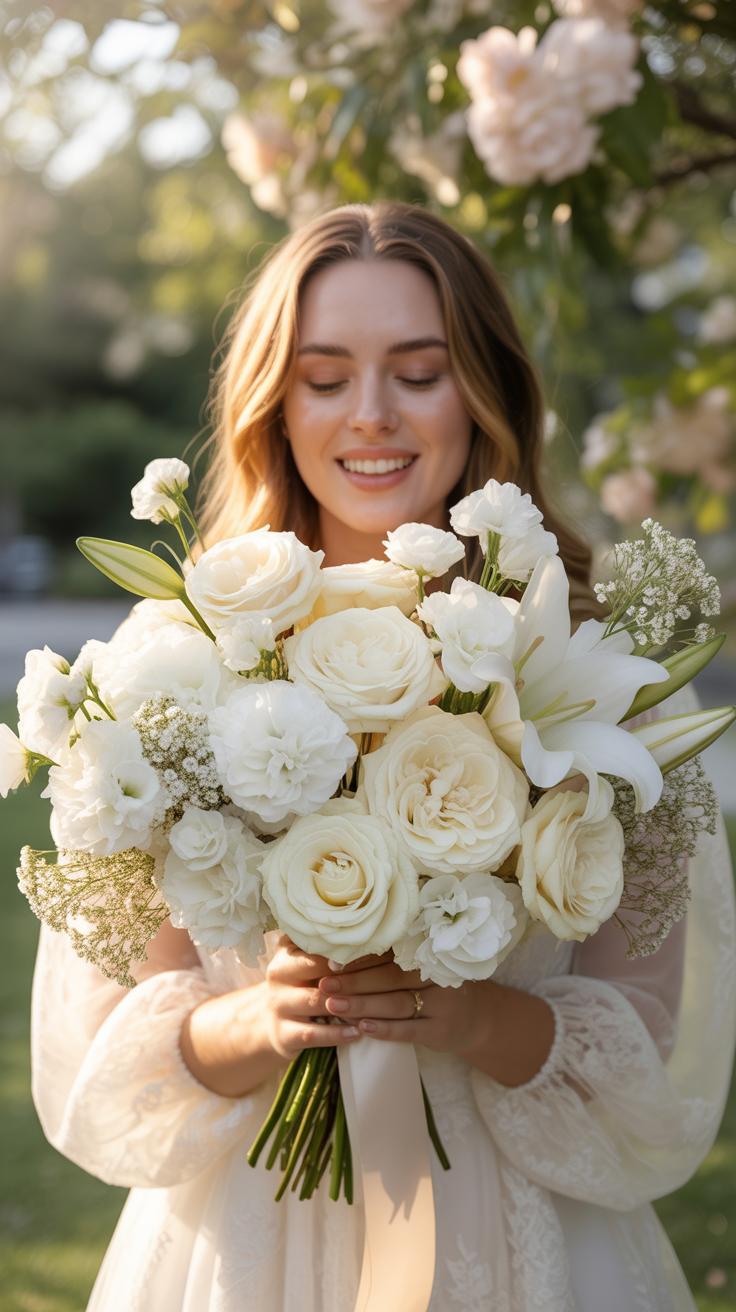
Classic Bridal Bouquet Styles That Work Beautifully With White Flowers
The Biedermeier style offers a formal and structured look for white bouquets. This pattern places different flower types in tight concentric circles. It works best with high-density blooms like roses, ranunculus, or carnations. This design emphasizes geometric precision rather than loose movement. It creates a clean visual impact that suits traditional ceremonies. Use this style to showcase variations in flower shapes within a fixed boundary.
The cascade bouquet provides a dramatic vertical line for bridal arrangements. This style originated in the early 20th century and gained massive popularity in the 1980s. Use orchids or jasmine vines to create a fluid downward flow. This shape draws the eye along the bride’s gown. It works well with large-scale flowers like lilies. Choose this style when you want to emphasize movement and a sense of luxury.
How To Add Texture And Depth To An All White Brides Bouquet Without Color
Texture replaces color as the primary design tool in monochromatic arrangements. Mix different petal types to create visual layers. Combine the smooth surface of a calla lily with the ruffled edges of a parrot tulip. Use negative space to define individual shapes. Incorporate non-floral elements like dusty miller or seeded eucalyptus for a matte finish. These diverse surfaces prevent the bouquet from looking like a flat white mass.
Vary the maturity of the blooms to introduce natural depth. Use tight buds alongside fully opened flowers to provide structural contrast. The shadows created by deep crevices in a garden rose offer essential dark tones. These shadows act as a natural contour for the arrangement. Select flowers with different heights to create a three-dimensional effect. This technique ensures the camera captures every detail during professional photography sessions.
Large Floral Arrangements For Church Ceremonies Using White Blooms
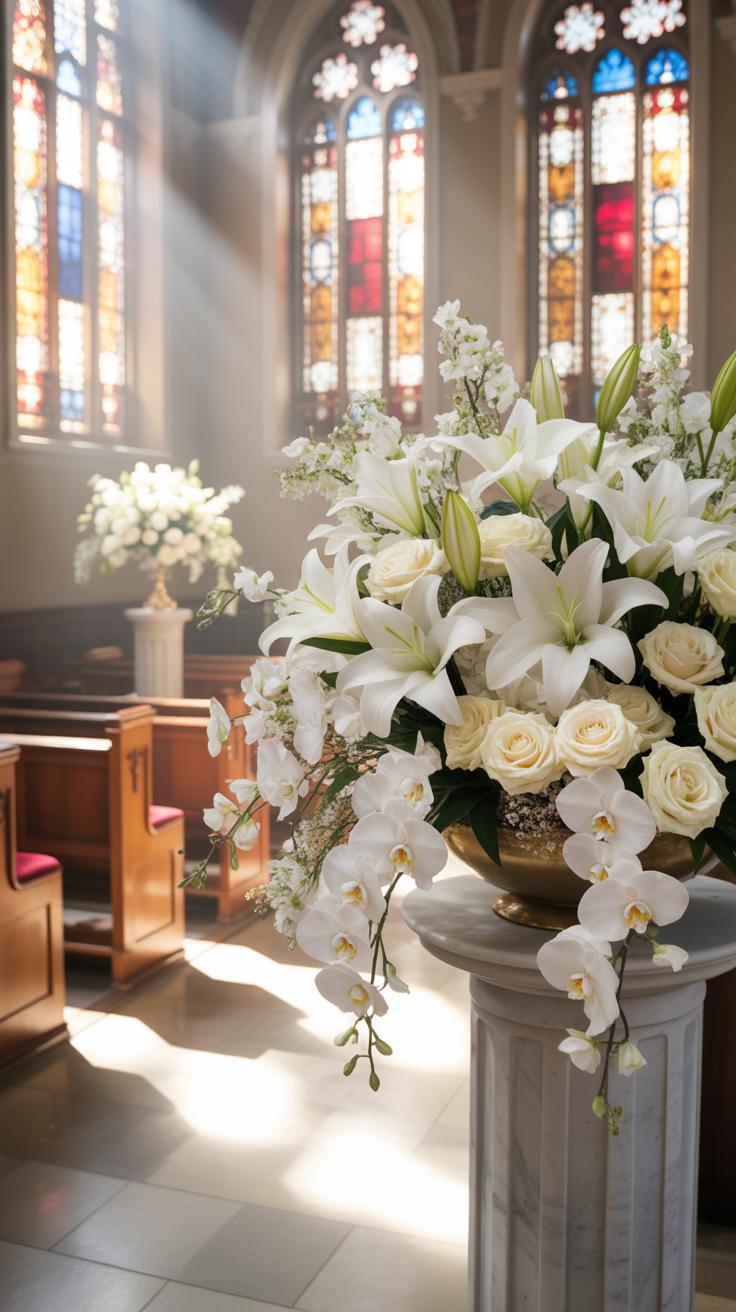
How To Scale Up Your White Arrangements To Fill A Church Space Gracefully
Church interiors possess high ceilings and vast floor plans. Small bouquets disappear in these environments. You must increase the volume of your work to bridge the gap between human scale and architecture. Use tall branches like dogwood or blooming cherry to establish height. These structural elements provide a frame for white lilies or hydrangeas. Proper scaling ensures the flowers visible from the back row.

Massing blooms is more effective than mixing many varieties. Use large clusters of white carnations or chrysanthemums to create solid blocks of color. This technique builds visual weight. Greenery provides necessary contrast against white stone or wood. Select dark foliage like ruscus or lemon leaf to make the white petals pop. Solid shapes and clear lines prevent the arrangements from looking messy in large halls.
Flowers For Church Altars And Pews: Placement Tips That Make An Impact
Altar arrangements require a focal point that does not block the officiant. Use low, wide containers for the main table. Place taller pedestals on the floor to the left and right. This creates a frame for the ceremony. Symmetrical designs work best in traditional church settings. Keep the tallest flowers at the center and taper them down toward the sides for a classic triangular silhouette.
Pew markers guide the eye toward the front of the room. Attach small bundles of white roses or spray orchids to the end of every row. Use heavy duty clips or ribbons to secure them safely to the wood. Avoid blocking the aisle so guests can walk freely. Consistent spacing creates a clean line of sight. This rhythm leads the guests focus directly to the altar space.
White Floral Arrangements Wedding Couples Will Love For Any Style
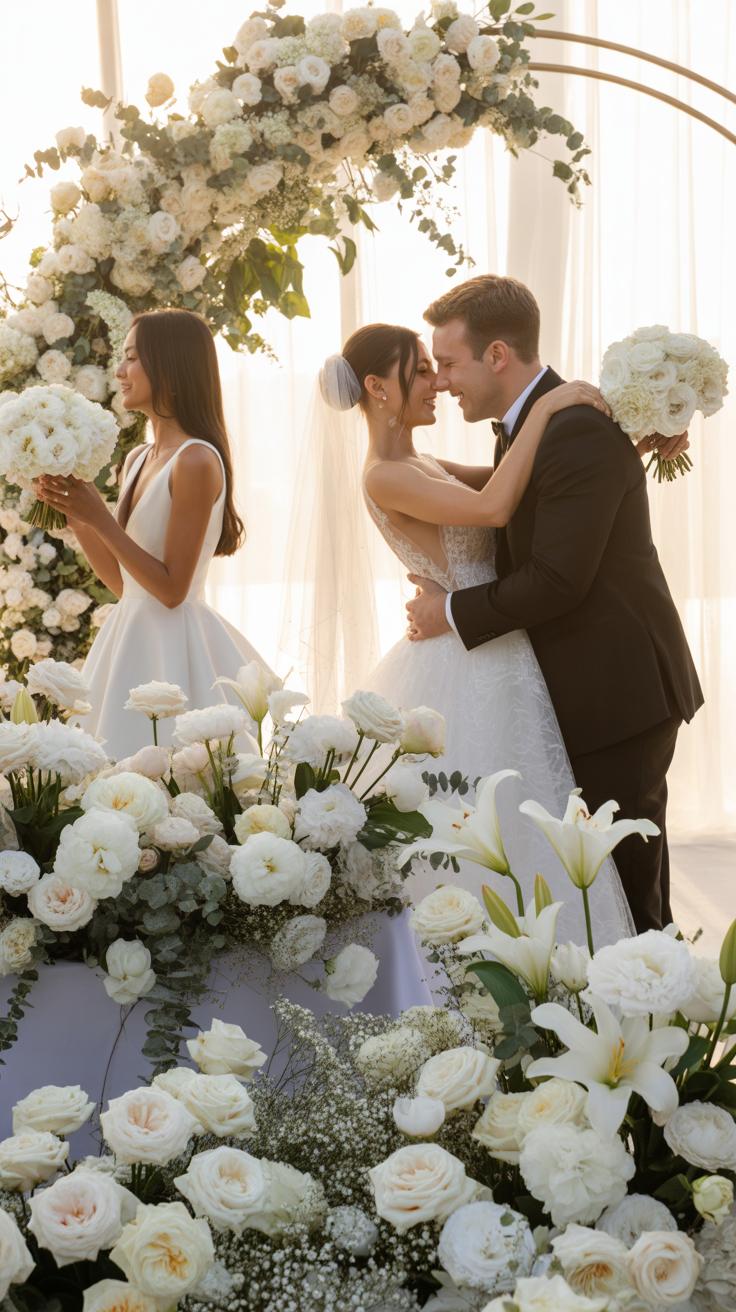
Matching Your White Wedding Floral Arrangements To Your Venue Aesthetic
Your venue dictates the structural needs of your flowers. Grand ballrooms require height and volume to fill the air. Use tall glass trumpets with white hydrangea and snapdragons to command attention in large rooms. These flowers provide the mass needed to compete with high ceilings. Scale is your primary tool for visual balance. Do not let your flowers get lost in the space.
Industrial or modern venues demand clean lines and sharp contrast. Use calla lilies or single stem orchids in geometric vases for these spaces. Minimalism works best when the architecture is busy. For rustic outdoor settings, use wooden crates or ceramic pitchers. Group white ranunculus and spray roses for a textured look. Match the container material to the room finish to ensure a cohesive design.
DIY Wedding Floral Arrangements: What Beginners Can Realistically Achieve
Beginners should focus on low centerpieces and bud vases. Low arrangements sit in floral foam or chicken wire. This keeps stems secure and prevents toppling. Use roses and carnations because they have sturdy stems. These flowers survive handling better than delicate varieties. Avoid complex hanging installations for your first project. Such pieces require advanced engineering and heavy hardware that beginners often lack.
Stick to the grid method with clear waterproof tape. This technique organizes your stems into a stable pattern. Create a base layer of white greenery like seeded eucalyptus or dusty miller. Then add your focal flowers in the center holes. Keep your stems the same length for a uniform look. Test your designs two days before the event. This timeline ensures the flowers open fully without wilting from excessive heat or stress.
Sympathy Flowers Arrangements In White A Gentle Guide For Beginners
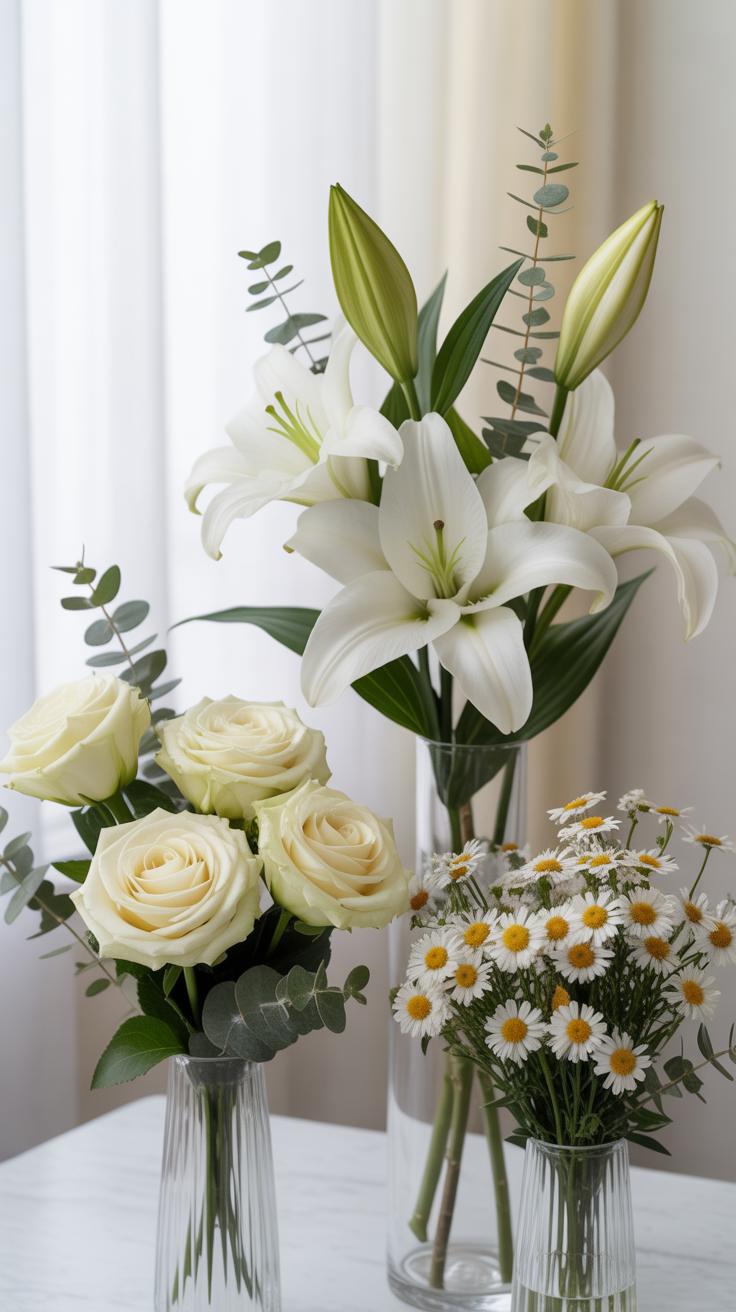
Understanding The Role Of White Flowers In Sympathy And Memorial Arrangements
White flowers represent peace and purity in funeral traditions. This color choice conveys respect without being distracting. Historically, cultures have used white blooms to signal hope during mourning. In Western design, white lilies and roses are the standard for memorial services. They provide a calm visual focus for grieving families. Using a single color simplifies the message of the arrangement for the viewer.
Beginners should understand that white flowers act as a neutral background for reflection. They fit any formal or informal setting easily. Most religious traditions accept white as an appropriate tribute color. These arrangements do not clash with venue decor or clothing. You should choose white flowers to show professionalism and empathy. This color palette ensures your work remains timeless and avoids any potential cultural color faux pas.
How To Arrange Sympathy Flowers With Sensitivity, Simplicity, And Care
Focus on structural integrity when building sympathy displays. These arrangements often need to stay upright in high-traffic areas. Use floral foam to keep stems hydrated and secure. Start with a strong base of greenery to provide contrast. Deep green leaves make white petals look brighter and cleaner. Group your primary flowers together to create a clear focal point. This method prevents the design from looking messy.
Keep your design simple to avoid overwhelming the space. Avoid using too many different flower types in one piece. Three varieties are usually enough for a balanced look. Use tall stems like snapdragons or gladiolus to add height and dignity. Lower blooms like carnations or hydrangeas fill the gaps efficiently. Always check every stem for freshness before placing it. Wilted flowers are disrespectful in a memorial setting. Use clean water to extend life.
Care Tips To Keep Your All White Floral Arrangements Looking Fresh Longer
How To Properly Condition White Cut Flowers Before Arranging Them
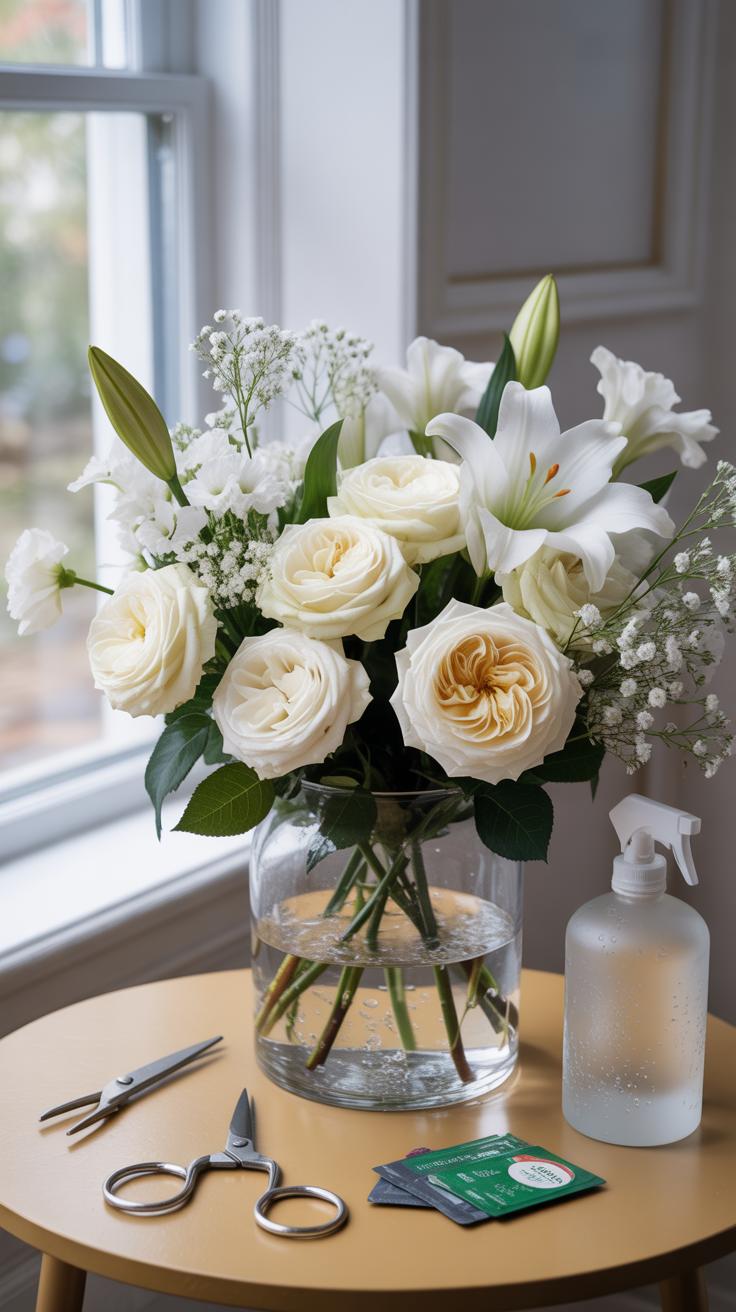
Conditioning starts with immediate hydration and stem preparation. Cut stems at a sharp angle to increase the surface area for water intake. Use clean shears to avoid crushing the vascular system. Remove all foliage that falls below the water line to prevent bacterial growth. Bacteria clog stems and cause white petals to brown prematurely. Professionals call this process stripping the stems.
Place prepared flowers in lukewarm water mixed with floral preservative. Warm water moves faster through the stem than cold water. Let the flowers rest in a cool, dark place for several hours before you begin the design process. This step ensures the stems are fully turgid. Hydrated cells provide the structural support needed for a crisp, upright white floral display.
Daily Maintenance Habits That Extend The Life Of Your White Floral Display
Change the water every day to keep the arrangement healthy. Clear glass vases reveal cloudiness, which indicates high bacterial levels. Rinse the vase thoroughly and refill it with fresh, treated water. Bacteria are the primary enemy of white flowers because they cause visible staining on pale petals. Consistent hygiene prevents the premature wilting often seen in delicate varieties like lilies or roses.
Trim the stems by a half-inch every two days. Fresh cuts reopen the pathways for water to reach the flower heads. Keep the arrangement away from direct sunlight, heating vents, and ripening fruit. Ethylene gas from fruit causes white flowers to drop their petals rapidly. Place the display in a cool spot at night to slow the metabolic rate of the blooms.
Frequently Asked Questions

Why are all white floral arrangements a good choice for beginners?
Designing all white floral arrangements is the perfect starting point for novices because it removes the complexity of color theory. Without worrying about clashing hues, you can focus entirely on mastering fundamental techniques like stem placement, depth, and proportion. This monochromatic approach naturally looks sophisticated and cohesive, allowing you to create a professional-looking centerpiece that complements any room in your home while you build your floral design confidence.
How do I add visual interest to a monochromatic white bouquet?
The secret to stunning all white floral arrangements lies in varying textures and heights. Since you aren’t using color for contrast, combine flowers with different petal shapes—like ruffled peonies, sleek tulips, and delicate baby’s breath. Incorporating various shades of green foliage also helps the white blooms pop. By mixing textures and layering your stems at different levels, you create a dynamic, high-end look that feels lush rather than flat.
Can I create a beautiful white arrangement on a tight budget?
Absolutely! You don’t need expensive lilies or orchids to achieve an elegant look. Grocery store staples like white carnations, hydrangeas, and daisies are affordable and long-lasting. To save even more, use “found” greenery from your own backyard, such as ivy or fern fronds, to fill out the base. Choosing seasonal white blooms and focusing on a few focal flowers surrounded by inexpensive fillers ensures a luxurious aesthetic without a high price tag.