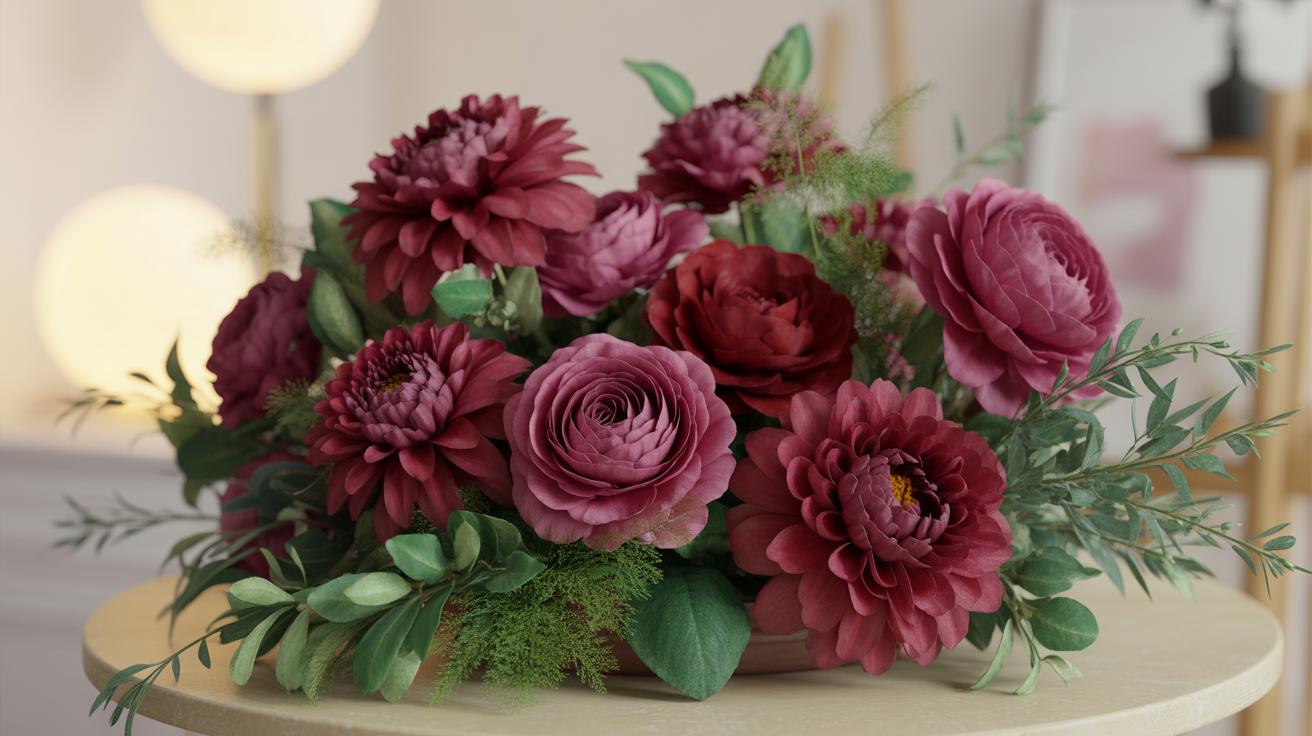
Understanding The Beauty And Appeal Of Burgundy Flowers
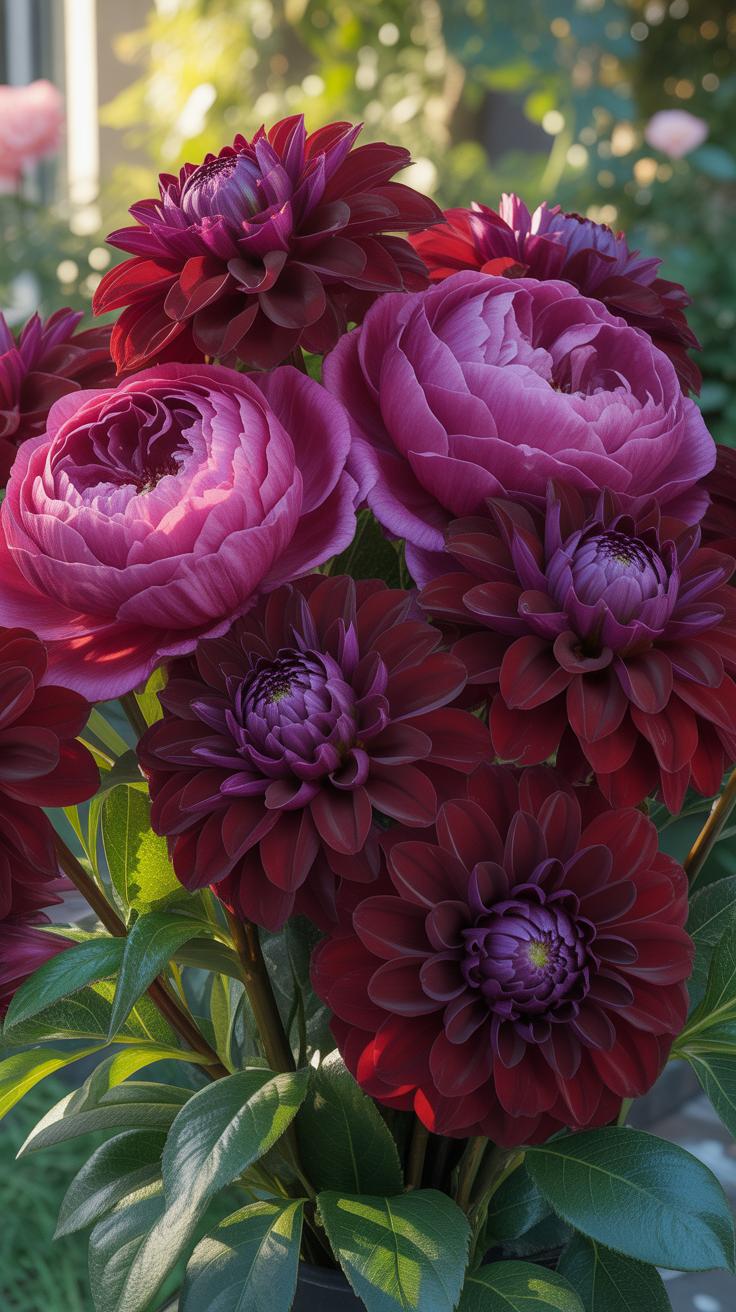
What Makes Burgundy Such A Powerful Color In Floral Design
Burgundy functions as a structural anchor in floral design. It possesses a low light reflectance value. This physical property allows it to create immediate visual depth. It draws the eye into the center of an arrangement. Designers use these dark tones to define the shape and boundaries of a piece. Burgundy creates a clear contrast against lighter foliage and pastel blooms.
Technically, burgundy acts as a sophisticated neutral in high-end floral work. It balances bright primary colors without clashing. Its saturation levels provide a sense of weight and permanence. This color grounds airy or whimsical designs. It offers a professional finish that bright reds cannot achieve. Professionals rely on burgundy to transition between seasonal palettes. It maintains a consistent visual impact across various lighting conditions.
The Emotional And Symbolic Meaning Behind Deep Red And Wine Tones
Deep red and wine tones communicate authority and maturity. Historically, these pigments were expensive to produce and reserved for those with high status. In modern psychology, these shades represent grounded passion and long-term commitment. They lack the aggression of bright scarlet. Instead, they offer a sense of stability and refinement. Clients select these colors for events requiring a serious or formal atmosphere.
Cultural history links dark red flowers to ideas of sacrifice and deep respect. Many European traditions use these hues to honor heritage and lineage. In contemporary design, they signal luxury and high value. The color suggests a richness that evokes quality and craftsmanship. Floral strategists use these tones to build trust and prestige. They create a mood that feels established rather than temporary or trendy.
The Best Burgundy Wedding Flowers To Work With
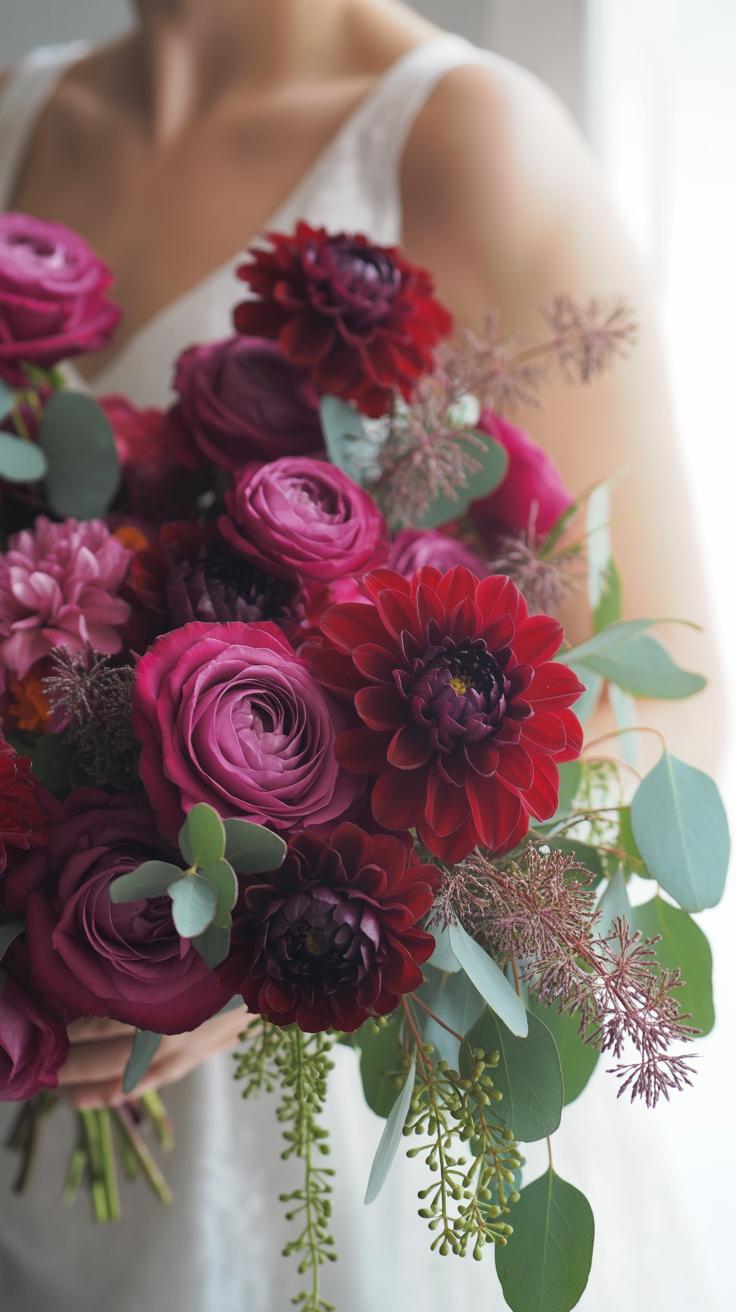
Top Flower Varieties That Naturally Bloom In Rich Burgundy Shades
Standard floral design requires specific cultivars to achieve a true burgundy palette. You must distinguish between deep reds and actual wine tones to maintain visual depth. Professional florists rely on species with high anthocyanin content for these dark pigments. Using the right species ensures the color remains consistent from the farm to the event venue without fading or shifting toward bright red.
- Black Baccara Rose: This hybrid tea rose offers the darkest burgundy shade available in the market today. Its thick petals have a velvety texture that absorbs light and prevents color washout. It serves as a primary focal flower due to its high petal count and structural integrity.
- Burgundy Dahlia: Varieties like Arabian Night or Karma Choc provide essential geometric contrast in arrangements. These flowers feature decorative petal patterns and deep chocolate-maroon centers. They offer high impact but require immediate hydration to prevent wilting shortly after the stems are cut for the day.
- Chocolate Cosmos: These delicate flowers provide a unique brownish-burgundy hue and a distinct scent. They act as movement flowers that break up the density of larger blooms. Their thin stems allow them to float above the main arrangement layers for a more natural and dynamic visual appearance.
- Ranunculus: The Cloni Pon-Pon or Hanchette varieties produce tightly layered petals in saturated wine colors. They work well for boutonnieres and bridal bouquets because they are hardy and last many days. Their stems are often hollow, so you must handle them with care during the wiring process.
- Cymbidium Orchid: Deep maroon orchids provide a tropical or modern edge to burgundy designs. They are extremely durable and can withstand temperature changes better than most soft-stemmed flowers. Use them when you need a luxurious texture and flowers that can survive several hours without a direct water source.
Select your focal flowers based on the required scale and desired texture. Roses provide mass while cosmos and scabiosa add necessary airiness to the composition. Mixing different shapes prevents the arrangement from looking like a solid dark blob. Contrast these deep shades with muted foliage to ensure the burgundy tones stand out rather than disappearing into the background.
How To Choose The Right Blooms Based On Season And Availability
Seasonality dictates the price and quality of burgundy plant materials. Dahlias thrive in late summer and autumn but disappear during the winter months. If you plan a winter event, rely on imported roses and ranunculus to maintain the dark color palette. Hellebores offer excellent burgundy options in early spring. Always check local availability before finalizing a specific floral recipe for your design.
Climate impact affects how these dark pigments develop in the field. Intense heat can cause burgundy flowers to scorch or lighten in color. Cooler temperatures often produce deeper and more saturated tones in the petals. Use hardy varieties like carnations or calla lilies if the event occurs in a high-heat environment. These flowers hold their moisture better and keep the deep wine color throughout the entire wedding.
Essential Tools And Materials For Building Burgundy Floral Arrangements
Floral Design Supplies Every Arranger Should Have On Hand
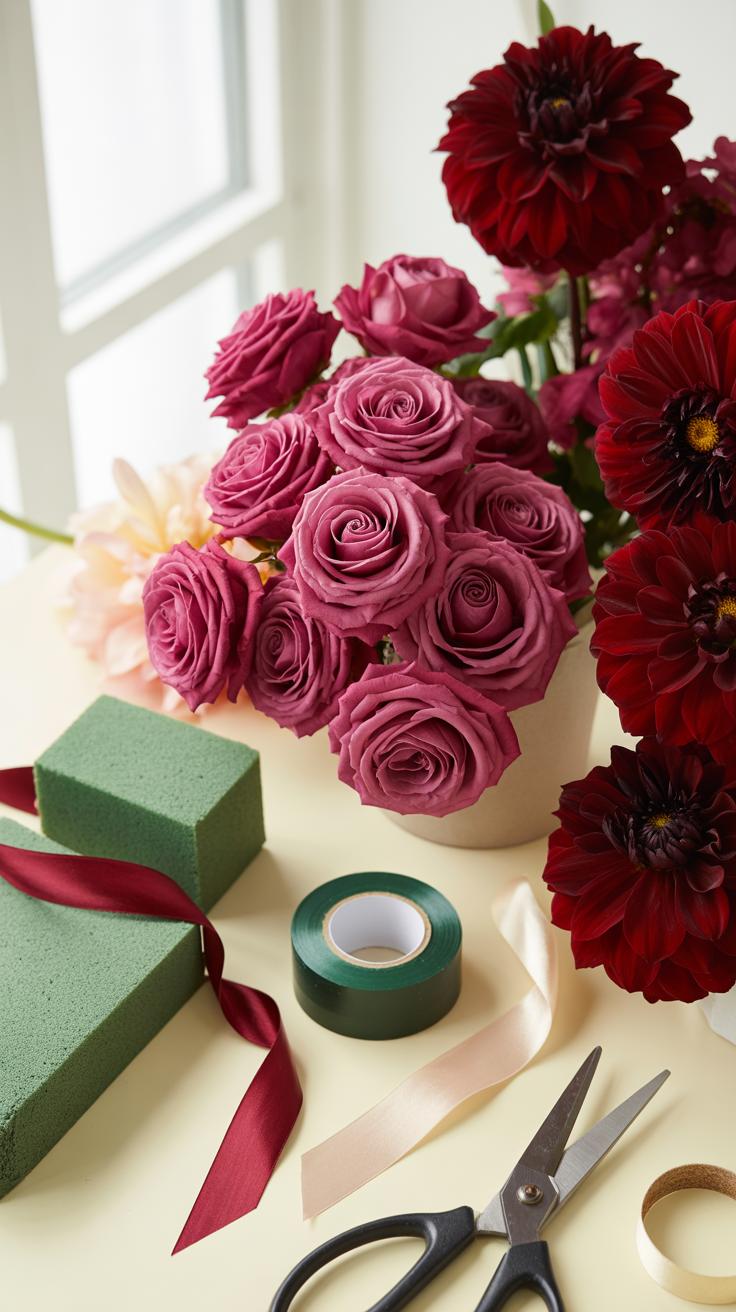
Professional floral design requires specific mechanical tools to secure heavy stems and maintain hydration. Burgundy arrangements often feature dense, saturated blooms like dahlias or peonies that carry significant weight. You must use sharp bypass pruners to ensure clean vascular cuts. Dull blades crush the stem tissue and block water uptake. This leads to premature wilting in dark-colored flowers.
- Bypass Pruners: Use these for thick woody stems common in burgundy shrubbery or heavy branches. They provide a scissor-like cut that prevents stem crushing. Clean blades regularly to stop the spread of bacteria between different plant batches.
- Floral Mesh: Wire netting provides a flexible structure for arranging stems at various angles. It works better than foam for delicate organic styles. Secure the mesh to the vessel rim using waterproof floral tape to ensure the entire arrangement remains stable.
- Waterproof Floral Tape: This adhesive maintains its grip even when damp or submerged. Use it to create grids across the mouth of wide vessels. The tape anchors the mechanics so heavy burgundy blooms do not shift or fall out of the container.
- Floral Snips: These smaller pointed blades allow for precision trimming of soft green stems and delicate filler foliage. They are essential for cleaning up the neck of the arrangement. Use them to remove any leaves that would sit below the water line.
- Stem Strippers: This tool quickly removes thorns and excess foliage from rose stems without damaging the outer bark. Removing lower leaves prevents bacterial growth in the water. Clean water is vital for maintaining the deep pigment levels in burgundy floral varieties.
Cleanliness dictates the lifespan of your arrangement. Always sanitize your buckets and tools with a bleach solution before starting. Bacteria clogs the stems and causes dark petals to turn brown quickly. Use high-quality floral food to provide the necessary carbohydrates and pH balancers. This technical step ensures your deep red and plum tones remain vibrant for several days.
To create something beautiful with flowers, you must listen to the deep, velvet heart of the bloom and let its richness tell a story of the seasons. Like a fine vintage, a well-placed burgundy petal captures the warmth of a memory that never fades.
Choosing The Right Vases Vessels And Bases For A Polished Look
The vessel choice determines the stability and visual weight of the final piece. Burgundy flowers possess high visual density and require containers that can balance their intensity. Historically, Flemish still-life painters showcased deep red tones in metallic or dark ceramic urns. These heavy bases provide the physical counterweight needed for asymmetrical designs. Ensure the vessel neck width matches your intended stem count.

Select materials that complement the moody undertones of the burgundy palette. Aged brass and matte black stoneware enhance the richness of the petals without competing for attention. Clear glass works for modern styles but requires pristine water management. Use opaque containers to hide mechanical aids like chicken wire or tape grids. A solid base allows the focus to remain entirely on the complex color gradients.
Color Pairing Guide For A Wine Color Flower Arrangement
Complementary Colors That Enhance Deep Burgundy Tones
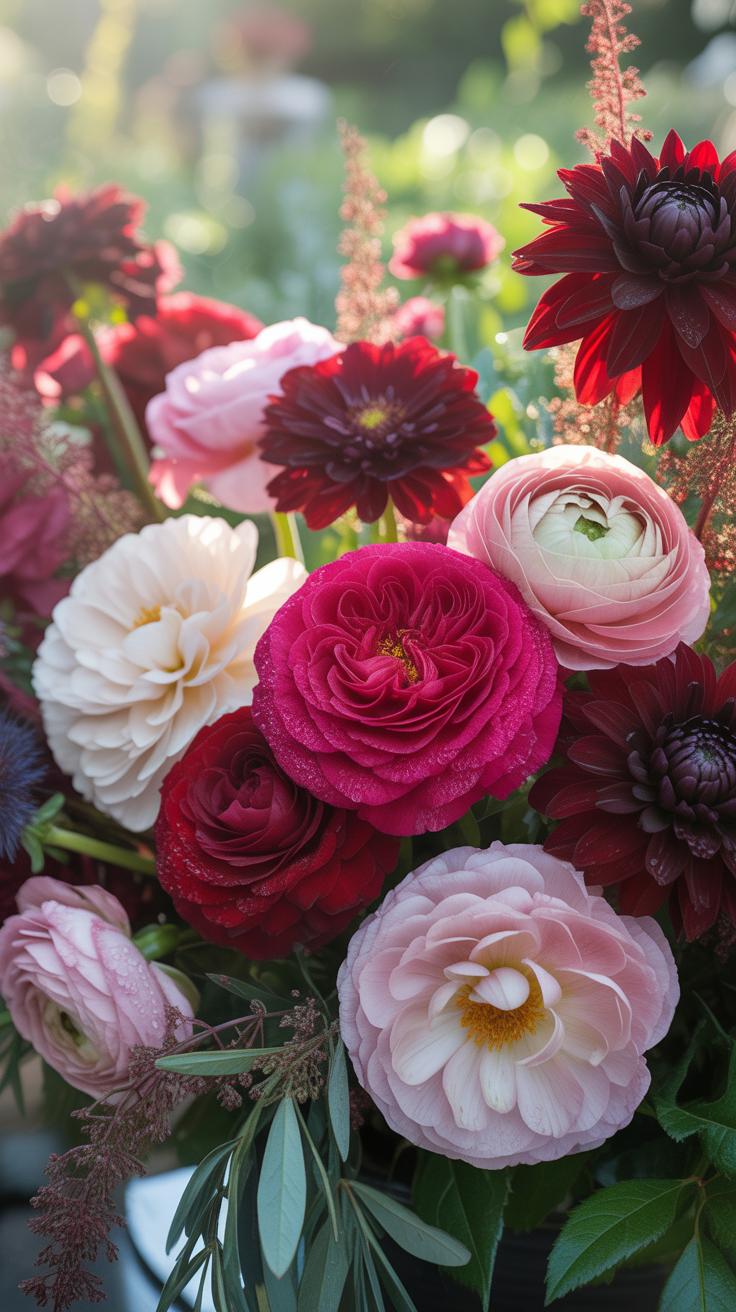
Burgundy sits between red and violet on the color wheel. Use gold and brass accents to pull out the warm undertones of the wine hues. These metallic tones create a classic look rooted in the Baroque period. Contrast happens when you place deep reds against cream or sand colors. This prevents the arrangement from looking like a dark mass. Light colors provide a visual landing spot for the eye.
Peach and apricot tones soften the visual weight of heavy burgundy blooms. These colors sit near each other on the color wheel. Use them to create a smooth transition between light and dark shades. Avoid pairing burgundy with bright primary blue or yellow. These colors clash and create a visual vibration that looks cheap. Stick to muted tones to maintain a sophisticated and high-end aesthetic.
Using Greenery, Texture, And Fillers To Add Depth And Contrast
Greenery acts as the foundation for any burgundy arrangement. Use dark green foliage like Ruscus or Privet berries to maintain a moody palette. Silvery greens like Eucalyptus or Dusty Miller provide a high-contrast backdrop. These cool tones make the warm burgundy petals pop. Choose foliage with a matte finish to absorb light. This makes the satin or velvet texture of the flowers stand out more prominently.
Texture defines the professional quality of your work. Incorporate dried elements like Scabiosa pods or copper beech leaves to add physical grit. Use dark fillers like chocolate cosmos or black calla lilies to create negative space. This depth makes the main burgundy flowers appear more three-dimensional. Structure your fillers at different height levels. This technique forces the viewer to look into the arrangement rather than just at it.
How To Design Moody Wedding Centerpieces With A Dramatic Edge
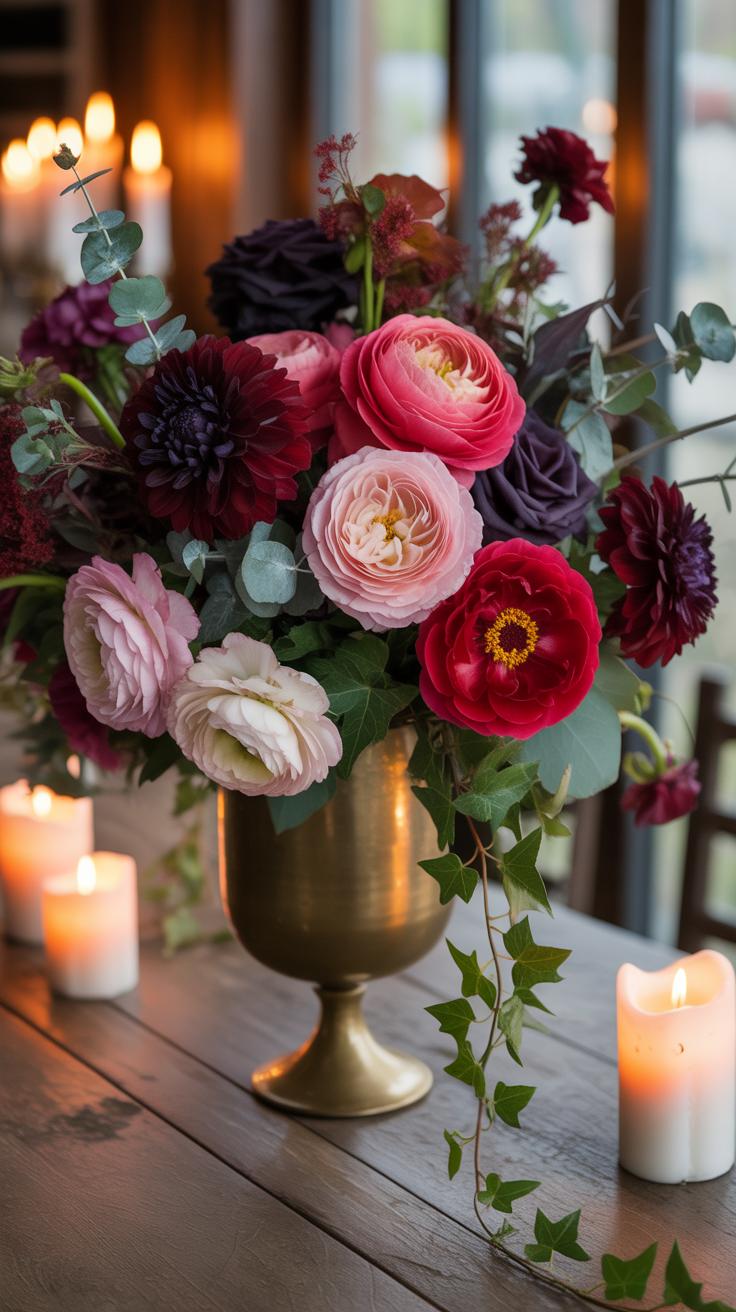
Structural Techniques For Building Full, Layered Floral Centerpieces
Successful burgundy arrangements require a stable foundation to handle heavy stems. Use waterproof floral tape to create a grid over the container mouth. This grid holds stems at specific angles. Start with woody branches like smokebush to establish the outer frame. These provide the strength needed for dense flower placement. Layering begins from the outside and moves toward the center.
Insert primary focal flowers such as Black Baccara roses or dark dahlias at varying depths. Deep placement creates shadows. This technique mimics the chiaroscuro style found in Dutch Golden Age paintings. Use smaller filler flowers and textured foliage to plug gaps. Do not pack the stems too tightly. Airflow between layers prevents the arrangement from looking like a solid block of color.
Balancing Scale And Proportion For A Cohesive Moody Wedding Aesthetic
Proportion determines if an arrangement feels intentional or messy. Use the rule of thirds to guide the height of the centerpiece. The floral component should be one and a half times the height of the container. In moody designs, a high volume of dark tones can feel heavy. Offset this weight by extending airy textures outward. This movement breaks the visual perimeter.
Consider the table size when scaling the arrangement. A centerpiece that is too wide blocks guest sightlines and destroys the dining experience. A centerpiece that is too small loses its dramatic impact in a large room. Use dark glass or matte ceramic vessels to ground the burgundy palette. Proper scale ensures the arrangement commands attention without overwhelming the surrounding design elements.
Creating Fall Burgundy Floral Arrangements That Capture The Season
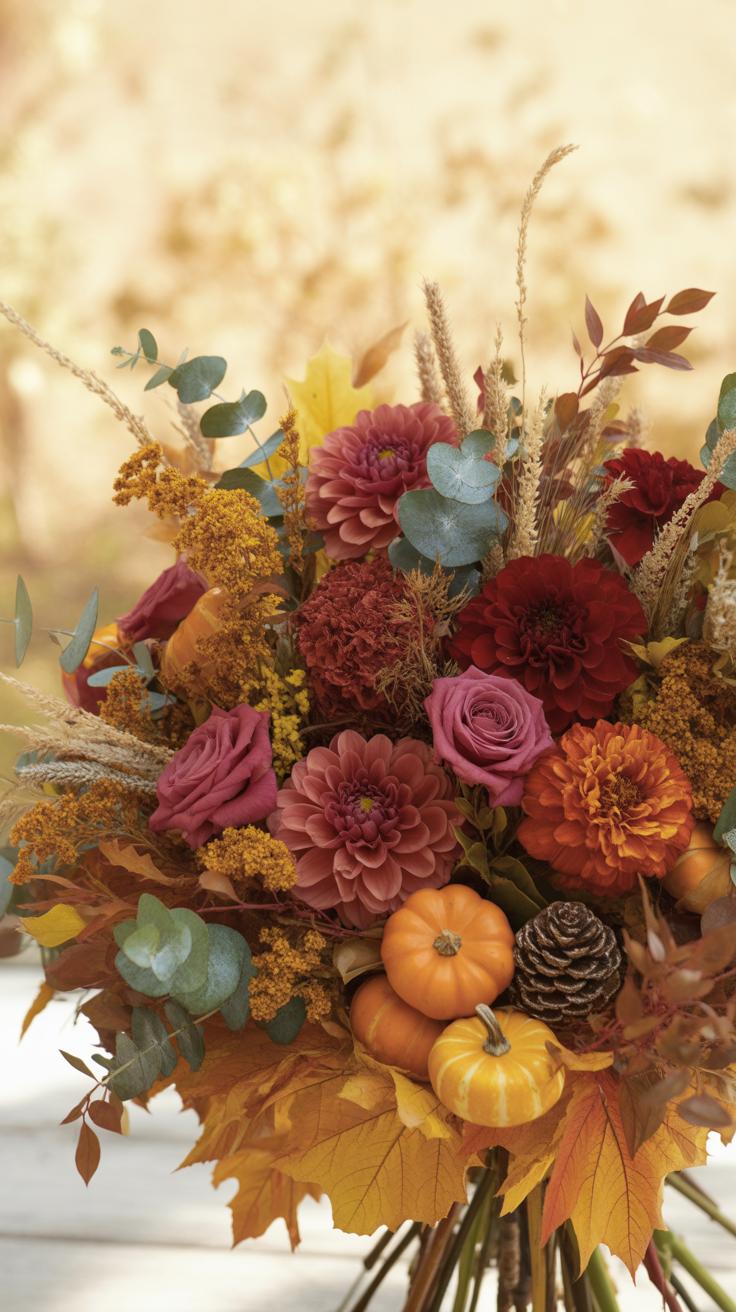
Seasonal Flowers Foliage And Botanicals Perfect For Autumn Displays
Autumn demands heavy textures and deep saturation. Select Black Magic roses or Black Baccara varieties for a stable dark red base. These hybrid tea roses provide thick petals that withstand temperature shifts. Integrate dark dahlias like the Karma Choc or Arabian Night. These flowers offer structural depth and geometric interest. They hold their color under low light which makes them ideal for fall events.
Focus on foliage that mirrors the harvest shift. Use Ninebark or Cotinus Coggygria to add dark purple and bronze tones. These woody stems provide necessary structural support for larger displays. Use agonis for a weeping effect and dark silhouette. This creates a bridge between the bright summer tones and the muted winter palette. These materials are durable and stay fresh longer in cooler room temperatures.
How To Incorporate Fall Elements Like Berries Branches And Dried Blooms
Berries add specific visual weight and texture. Hypericum and Ilex berries provide glossy surfaces that reflect candlelight. These elements break up the matte texture of petals. Use tallow berries for white contrast or viburnum for deep blue depth. These stems are firm and easy to position. They stay secure in floral foam or chicken wire armatures. Secure them deep in the arrangement base.
Dried components extend the life of your display. Incorporate preserved eucalyptus or dried hydrangea heads to add volume without extra water weight. These materials introduce a rigid architectural element. Use pampas grass or wheat stalks to pull the eye upward. These items require no maintenance and resist wilting. They ground the burgundy tones in a realistic seasonal context. This technique reduces overall costs and waste.
Styling Burgundy Floral Arrangements Wedding DCor From Altar To Reception
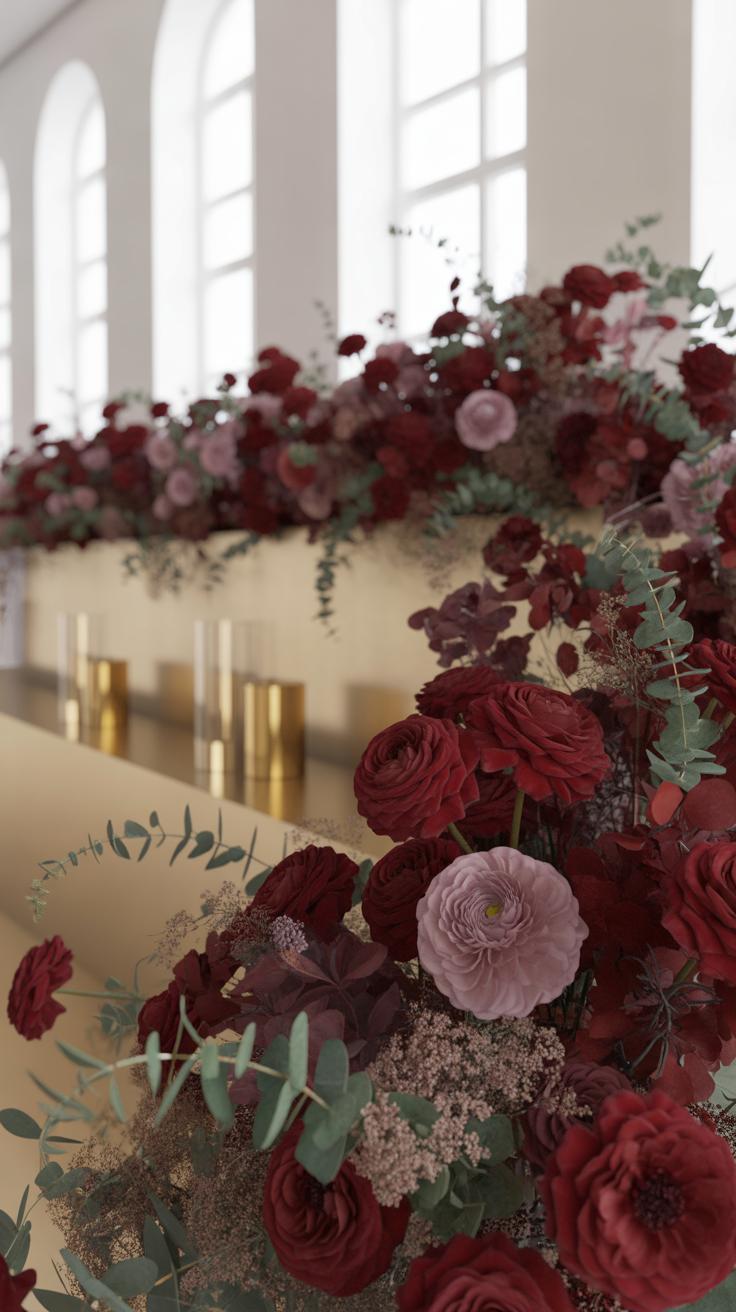
Planning Cohesive Floral DéCor Across Every Area Of Your Wedding Venue
Maintaining visual flow requires a consistent ratio of burgundy tones from the ceremony entrance to the dinner tables. Use deep reds like Black Baccara roses to anchor the altar space. These focal points establish the color story immediately. Link these large installations to the reception by repeating the same flower varieties. This ensures the design feels like a single unit rather than separate parts.
Strategic placement dictates how guests experience the venue. Use heavy burgundy clusters at eye level in high traffic areas like the guest book table and bar. Carry this weight through to the reception centerpieces using similar greenery textures. Consistency in foliage prevents the burgundy from looking isolated or disconnected. High contrast placement against neutral walls maximizes the visual impact of the dark petals without increasing your total flower count.
Dream Wedding Decorations: Combining Burgundy Florals With Candles, Drapery, And Linens
Burgundy flowers require specific lighting to remain visible in dim reception halls. Pair dark floral arrangements with clear glass cylinders and white pillar candles. The flame reflects off the deep petal surfaces to prevent the flowers from looking black. Use brass or gold accents to bring out the warm undertones of the burgundy pigment. Metallic hardware provides a structural base that supports the heavy visual weight of the blooms.
Select linens that provide a clean backdrop for your burgundy centerpieces. Neutral fabrics like stone or oatmeal highlight the saturation of the flowers. For a formal aesthetic, use velvet ribbons in a matching wine shade to tie bouquets or napkin treatments. This repetition of texture adds depth to the table setting. Avoid dark tablecloths that swallow the color of the flowers. Contrast is the most important factor for visibility.
Care Longevity And Pro Tips For Keeping Your Burgundy Floral Arrangements Fresh
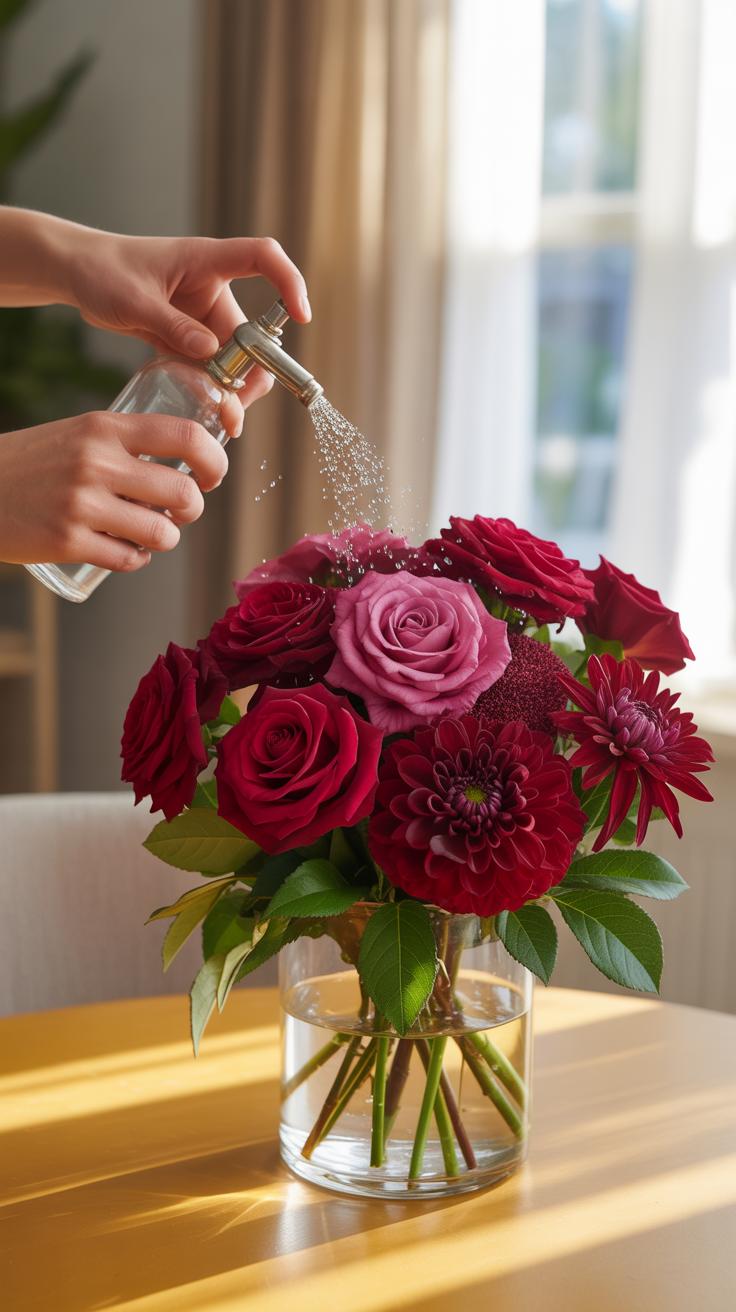
How To Condition And Hydrate Cut Flowers Before Arranging
Preparation starts with a clean cut. Use sharp shears to slice stems at a forty-five-degree angle. This increases the surface area for water intake. Remove all leaves that sit below the water line. Decaying foliage creates bacteria that kill flowers fast. Place stems in lukewarm water immediately after cutting. This temperature moves through the vascular system faster than cold water.
Allow the flowers to hydrate in a cool dark space for at least four hours. Professional florists often wait twenty-four hours for complete saturation. Use clean buckets sanitized with bleach to prevent microbial growth. Add floral food to provide sugar for energy and acidifiers to balance pH levels. Solid hydration prevents wilting in heavy-headed blooms like burgundy peonies or ranunculus during the design process.
Storage And Display Best Practices To Extend The Life Of Your Arrangement
Keep the finished arrangement away from direct sunlight and heat sources. High temperatures cause rapid transpiration and wilting. Deep red and burgundy pigments fade quickly under UV exposure. Place the vase in a cool spot with stable airflow. Avoid placing flowers near ripening fruit. Fruit releases ethylene gas which triggers early aging and petal drop in many varieties.
Maintenance requires daily attention to water quality. Change the water every two days to stop bacterial buildup. Use room temperature water for top-offs. Re-trim the stems by half an inch during every water change to open blocked vessels. Mist the petals lightly if the air is dry but do not soak them. Consistent care doubles the lifespan of burgundy roses and lilies in professional settings.
Frequently Asked Questions

What are the best flowers to use for burgundy floral arrangements?
To create captivating burgundy floral arrangements, look for blooms with deep, velvety textures. Popular choices include Black Baccara roses, wine-colored dahlias, and burgundy ranunculus. For a more dramatic flair, consider adding chocolate cosmos or dark calla lilies. These rich tones provide a sophisticated foundation that works beautifully for weddings or seasonal home decor, especially when paired with muted greenery or metallic accents to make the deep reds truly pop.
How do I balance deep burgundy tones with other colors in a bouquet?
Balancing burgundy floral arrangements requires playing with contrast to avoid a look that feels too heavy or dark. Pair your deep wine hues with “bridge” colors like blush pink, dusty rose, or cream to soften the palette. Adding textured foliage, such as silver eucalyptus or sage-colored lamb’s ear, provides a natural backdrop that allows the intense burgundy shades to stand out as the focal point without overwhelming the entire design.
Can I create a high-end burgundy look on a limited budget?
Absolutely! You can achieve a luxurious look by using affordable “filler” flowers in dark shades, such as carnations or scabiosa, which offer great volume for a lower price point. Additionally, incorporating foraged elements like dark autumnal berries or dried oak leaves can add texture and depth for free. Focus your budget on a few “hero” stems, like a couple of premium roses, to anchor your arrangement and give it a high-end feel.