
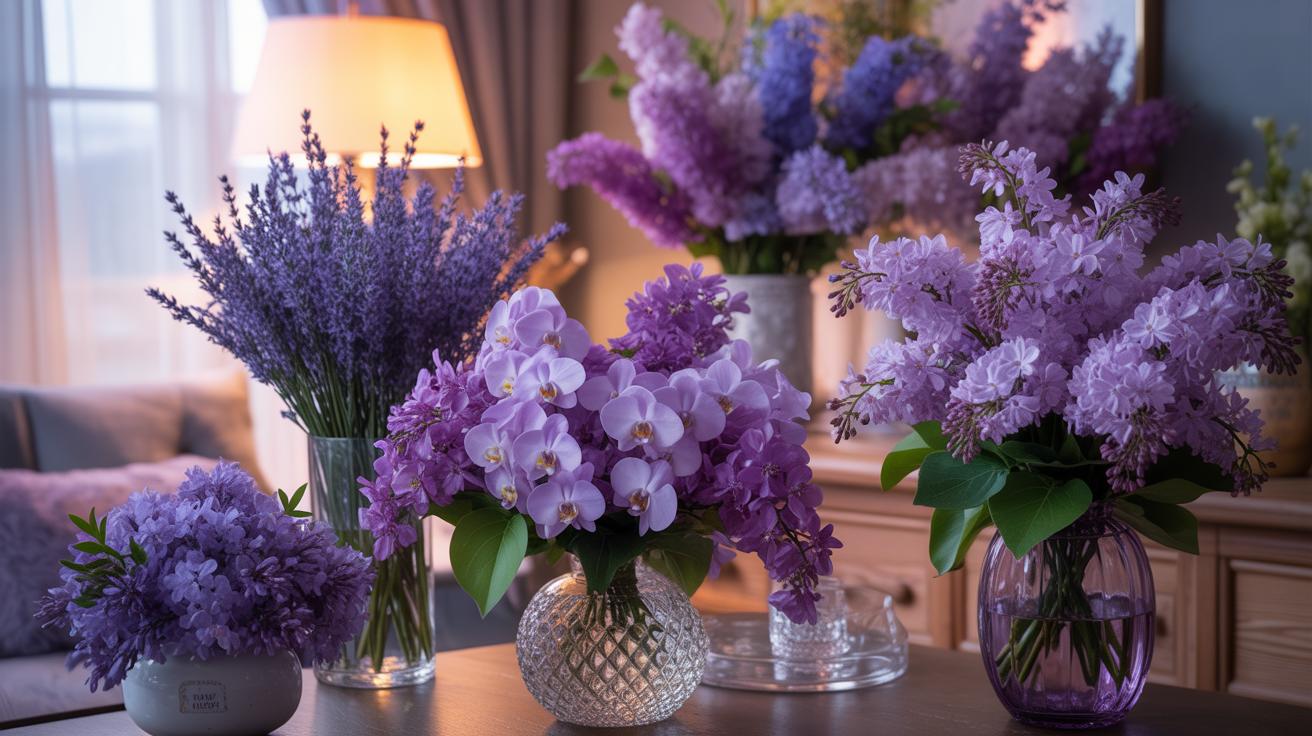
The Meaning Behind Purple Floral Arrangements And Why They Captivate Us
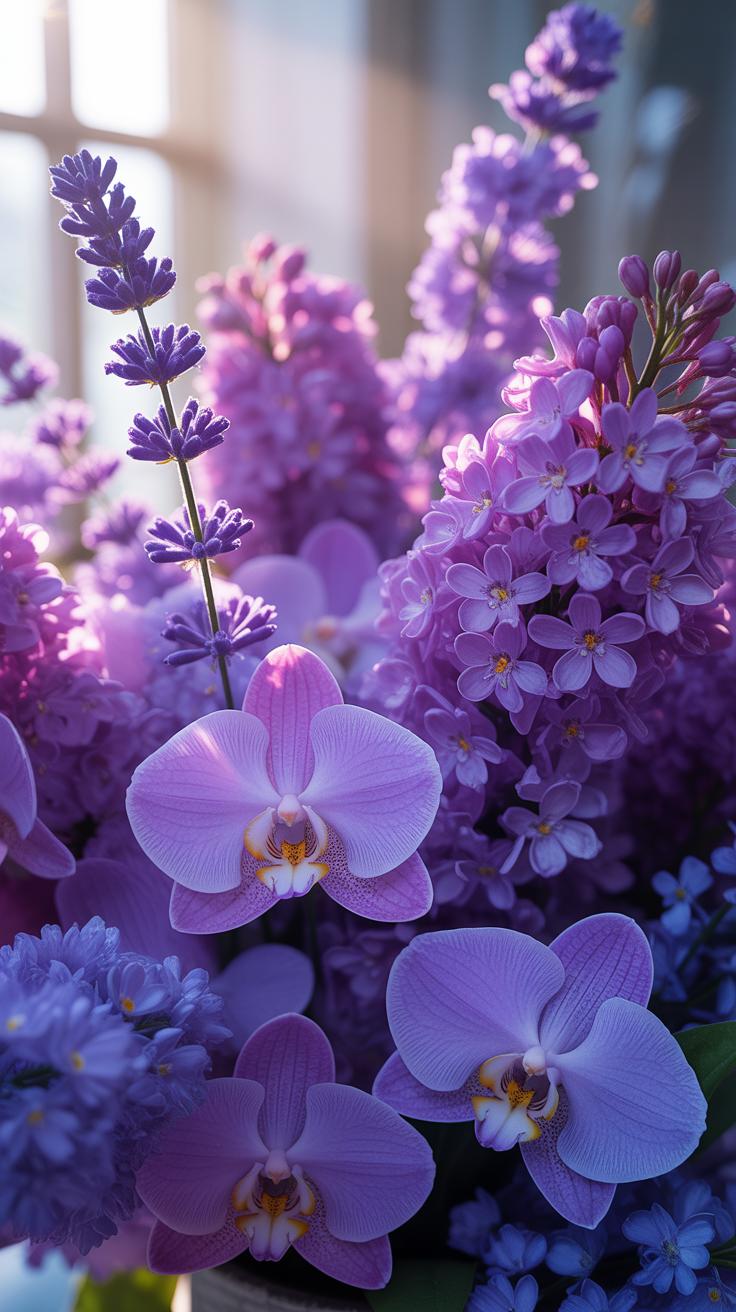
The Symbolism Of Purple In Flowers Across History And Culture
Purple signals authority and rarity. Historically, purple dye came from expensive sea snails. Only royalty and high officials could afford this color. This association remained strong through the Roman and Byzantine Empires. In flowers, this translates to a sense of distinction. Using purple blooms sends a message of importance. It moves beyond standard floral choices to indicate a refined taste level.
Different cultures assign specific values to purple stems. In certain Eastern traditions, purple represents wealth and high status. In Western history, it often connects to mourning and transitions. This historical weight makes purple floral arrangements more than simple decor. They function as markers of weight and significance. Choosing this palette ensures the viewer perceives the space as intentional and curated rather than accidental or cheap.
Why Purple Conveys Luxury, Spirituality, And Calm In Home DéCor
Modern design uses purple to create psychological depth. Unlike red which excites or blue which cools, purple balances both. This balance creates a sense of calm and mystery. High-end interior designers use dark violets to ground a room. Lighter shades like lavender soften the visual environment. These colors work well in spaces intended for meditation or deep focus. They reduce mental noise effectively.
Purple flowers also imply a high level of maintenance and luxury. Many purple species require specific soil acidity or light levels to maintain their hue. This difficulty adds to their perceived value. When placed in a home, these arrangements act as focal points. They draw the eye because the color is less common in nature than yellow or white. This rarity forces the brain to pause and observe.
Best Purple Flower Varieties To Use In Purple Flower Arrangements
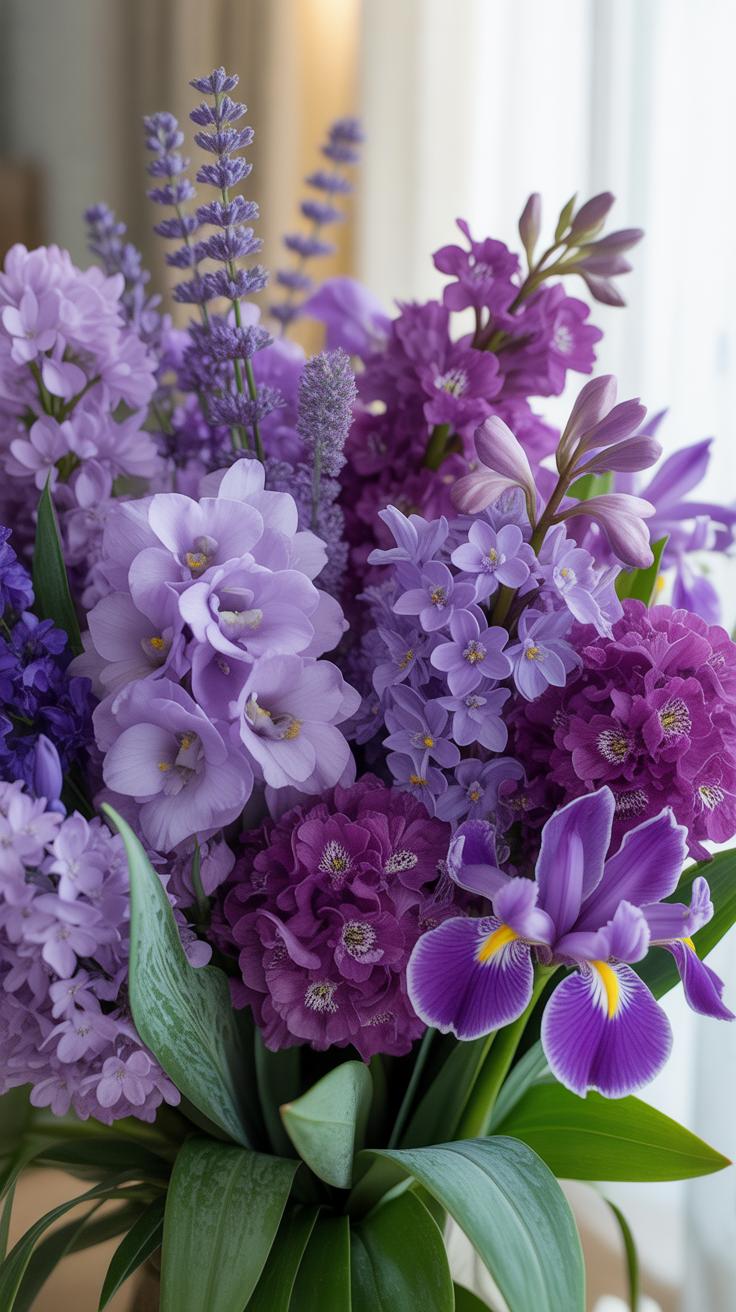
Top Purple Blooms From Lavender And Wisteria To Irises And Alliums
Selecting the right species determines the structural integrity and visual impact of your design. You must choose flowers based on their stem strength and petal density. Darker purple hues like those found in deep lisianthus provide visual weight. Lighter shades like lilac add necessary highlights. Mixing different textures prevents the arrangement from looking flat. Focus on a primary focal flower and support it with secondary fillers.
- Lavender: This hardy herb provides a strong vertical line and a distinct scent. It works best in rustic or minimalist designs. Use dried or fresh bunches to add texture to the edges of your arrangement.
- Wisteria: These cascading blooms create dramatic movement in large scale installations. They drape naturally over the sides of tall containers. Ensure you hydrate them immediately after cutting because they wilt fast without water.
- Dutch Iris: These flowers feature a unique three petal structure that adds architectural interest. They stand tall and work well as centerpieces. Their deep violet color contrasts sharply with their yellow throat markings for a bold look.
- Allium: These globe shaped flowers come in various sizes from small spheres to large decorative heads. They provide a geometric element that breaks up traditional floral shapes. Their thick stems support the heavy weight of the round flower head.
- Lisianthus: These blooms resemble roses but offer a more modern feel. They have multiple buds on a single stem which helps fill gaps. Their petals hold color well and stay vibrant for over a week in a vase.
Strategic layering involves placing larger heads like alliums at the center. Use slender stems like lavender to create height and width. This technique ensures the arrangement looks balanced from every angle. High quality blooms last longer when you cut them at a forty five degree angle. This increases surface area for water intake. Consistent pruning and fresh water extend the life of these specific purple varieties.
Purple is the color of the shadows at twilight, bringing the quiet comfort of an old country garden into the heart of every home. A simple bouquet of violets or lavender reminds us that elegance is found in the softest shades of our memories.
Seasonal Availability Of Purple Flowers And What To Expect Year Round
You must plan your arrangements according to the natural blooming cycles to ensure quality. Spring offers the widest variety of purple options including anemones, hyacinths, and sweet peas. These flowers typically have softer stems and require frequent water changes. Cool weather crops provide the most vibrant and saturated purple pigments. Buying in season reduces costs and guarantees the freshest product for your home displays.
Summer and autumn shift the availability toward hardier species like gladiolus and dahlias. These varieties handle heat better and have sturdier stalks for large vases. Winter relies heavily on greenhouse grown stock such as orchids and statice. These options offer longevity and withstand dry indoor air. Always verify local availability before starting a project. Constant access to certain purple flowers depends entirely on your geographic location and climate.
How To Design A Stunning Purple Floral Arrangement For Your Living Room
Choosing The Right Vase Shape, Size, And Material For A Purple Centerpiece
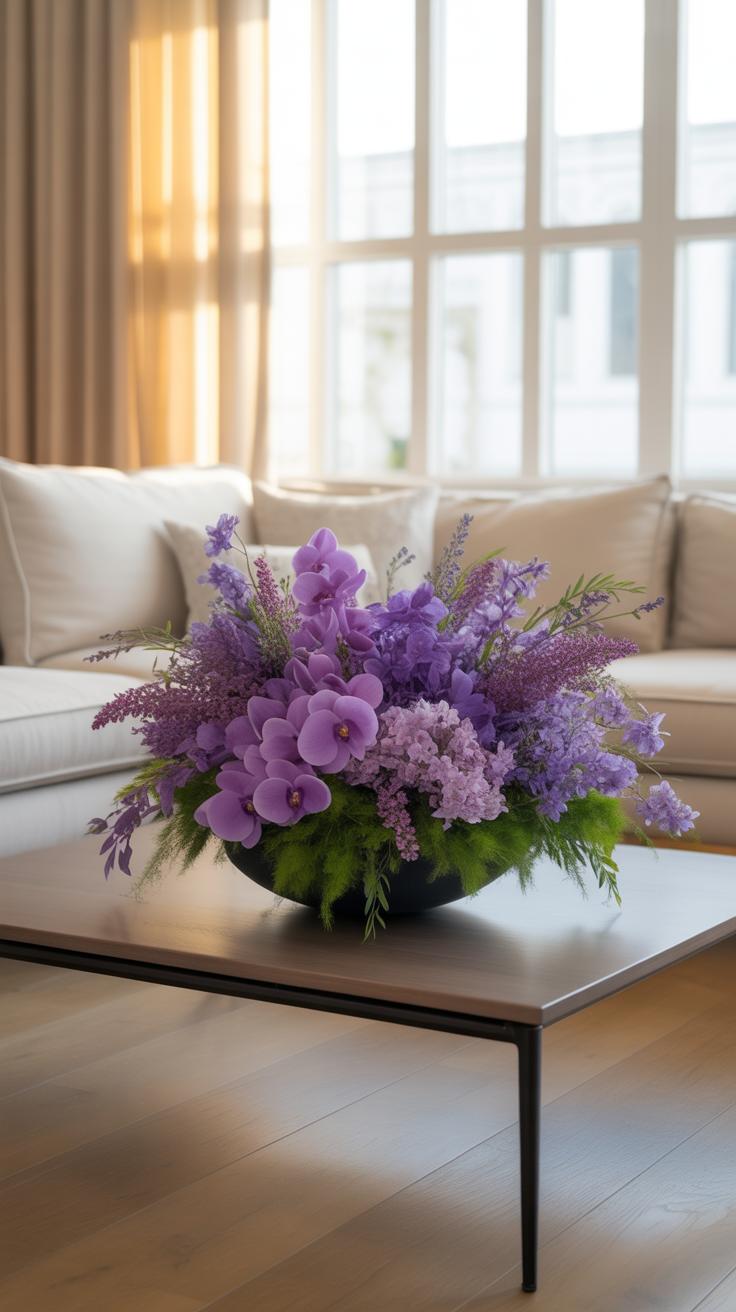
Heavy glass or ceramic vessels provide the necessary structure for dense purple stems. Select a cylinder vase for tall flowers like delphiniums or gladiolus to maintain vertical stability. Use a low bowl for mound-shaped designs featuring carnations or chrysanthemums. The container height must remain at one-third of the total arrangement height. This ratio ensures the visual weight of the purple pigments does not overwhelm the room.
Clear glass showcases clean stems and emphasizes the clarity of light purple water. Opaque metallic finishes like hammered silver or brass create a high-contrast look against dark plum tones. Avoid colored glass that competes with the natural floral shades. Porous terracotta draws moisture away from the stems too quickly. Stick to glazed stoneware or non-porous metals to keep the deep violet petals hydrated and firm for longer periods.
Balancing Focal Flowers, Filler Blooms, And Greenery In Your Purple Design
Focal flowers like hydrangeas or roses establish the primary visual path. Place these large blooms at different heights to create depth within the monochromatic palette. Use an odd number of these main elements to prevent forced symmetry. Keep the largest, darkest purple heads near the center of the base. This technique grounds the arrangement. It provides a solid foundation for the lighter, more delicate stems to rise from.
Filler blooms like statice or waxflower bridge the gaps between larger heads. These smaller textures add surface area and catch the light differently than smooth petals. Limit greenery to structural support or subtle accents. Too much green dilutes the impact of an all-purple theme. Use dark, waxy leaves to hide floral foam or stems. This maintains the intensity of the purple color block while ensuring the structural integrity of the design.
Elegant Purple Flower Bouquet Styles That Suit Every Interior Aesthetic
Romantic And Classic Bouquet Styles Featuring Deep Violets And Soft Lavenders
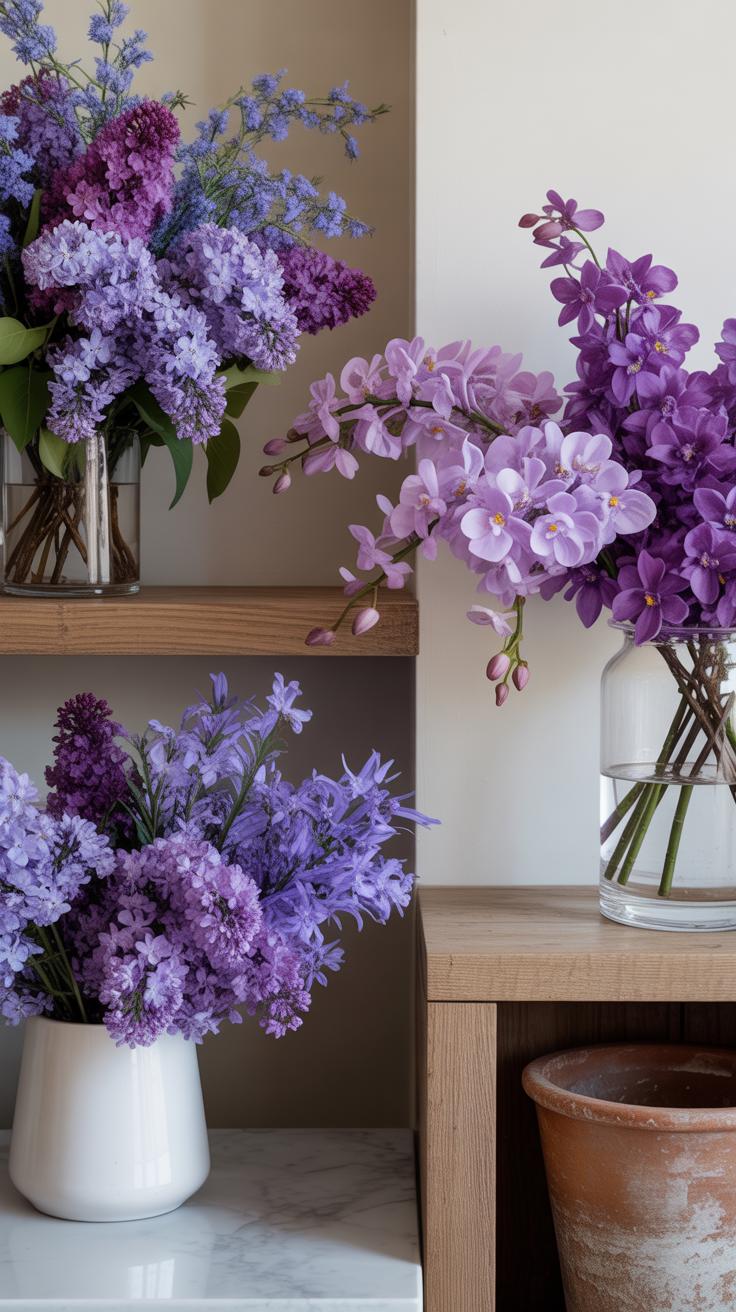
Classical floral design relies on the Biedermeier and English Garden styles. These styles prioritize dense, symmetrical clusters of blooms. Use deep violet Lisianthus and soft lavender Roses to create depth. These flowers have high petal counts. They provide the necessary volume for traditional interiors. Focus on a rounded shape. This structure ensures the arrangement looks balanced from every angle in a room.
The color transition is the most critical tactical element here. Place dark purple Anemones or Sweet Peas in the center. Surround them with lighter Lilacs or Stocks. This gradient technique mimics historical Victorian aesthetics. It draws the eye inward. Use heavy glass or silver vases. These materials ground the heavy visual weight of the blooms. This approach works best in formal dining rooms and traditional entryways.
Modern Minimalist And Boho Inspired Purple Bouquet Designs For Contemporary Homes
Modern purple arrangements focus on line and negative space. Use structural stems like purple Allium or Vanda Orchids. These flowers have clear geometric shapes. Place a single type of flower in a monochromatic vessel. This removes visual clutter. It highlights the architectural form of the plant. This style suits industrial or high-tech spaces. It relies on tension rather than traditional symmetry or mass.
Boho styles use texture to create a relaxed look. Mix dried Sea Holly with fresh purple Scabiosa. Use different heights to mimic a meadow. This style ignores strict rules of balance. It focuses on the raw state of the plants. Use ceramic or stoneware pots with matte finishes. These textures complement the organic feel of the petals. This method adds life to neutral or eclectic living areas without feeling stiff.
Beautiful Flower Arrangements Using Shades Of Purple For Every Room
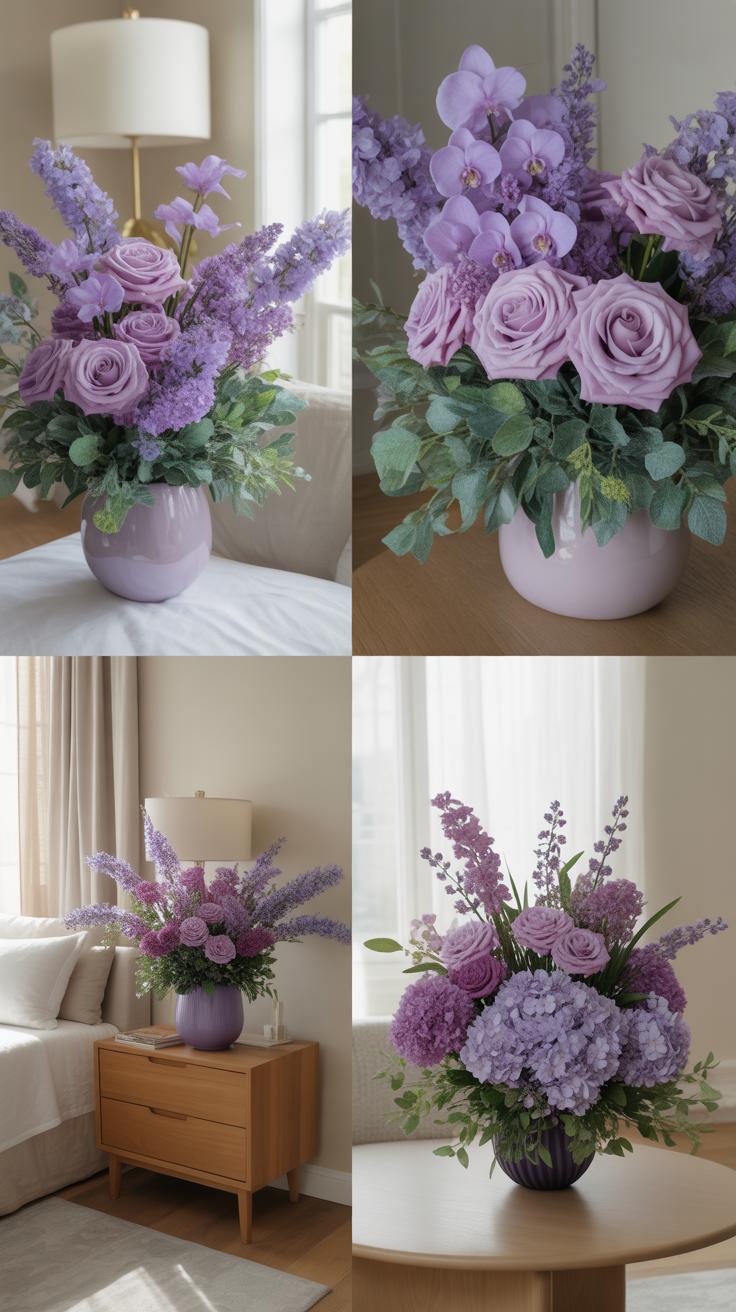
Bedroom And Bathroom Purple Floral Ideas That Promote Calm And Relaxation
Select lavender and sea thistle for these private spaces. Lavender contains linalool which reduces physiological stress levels. Place these stems in short ceramic vessels on nightstands. Keep the stems trimmed to six inches to maintain a low profile. This prevents the arrangement from tipping. Use cool purple tones to match the low light typical of sleeping quarters.
Bathrooms require moisture resistant plants like purple orchids or lisianthus. These flowers handle high humidity without wilting or molding. Place them near mirrors to double the visual impact of the color. Avoid strong scents in small bathrooms to prevent sensory overload. Use clear glass vases to keep the space looking clean and open. Stick to monochromatic schemes for a unified look.
Dining Table And Entryway Purple Arrangements That Make A Lasting First Impression
Entryways demand height and structure to command attention. Use tall purple gladiolus or delphiniums to create a vertical focal point. These flowers symbolize strength and provide a formal greeting. Stand them in heavy stone or metal containers to ensure stability. Large scale arrangements fill empty corners and set a sophisticated tone for the entire home immediately upon entry.
Dining tables require lower arrangements to allow for clear sightlines during conversation. Use dark purple hydrangeas or anemones in shallow bowls. These flowers provide dense color saturation without blocking the view across the table. Incorporate different textures like ruffled kale or smooth tulips to add visual depth. Keep the water clear and change it daily to maintain a professional appearance.
Floral Arrangements Purple Tones Mixing Light And Dark Shades With Confidence
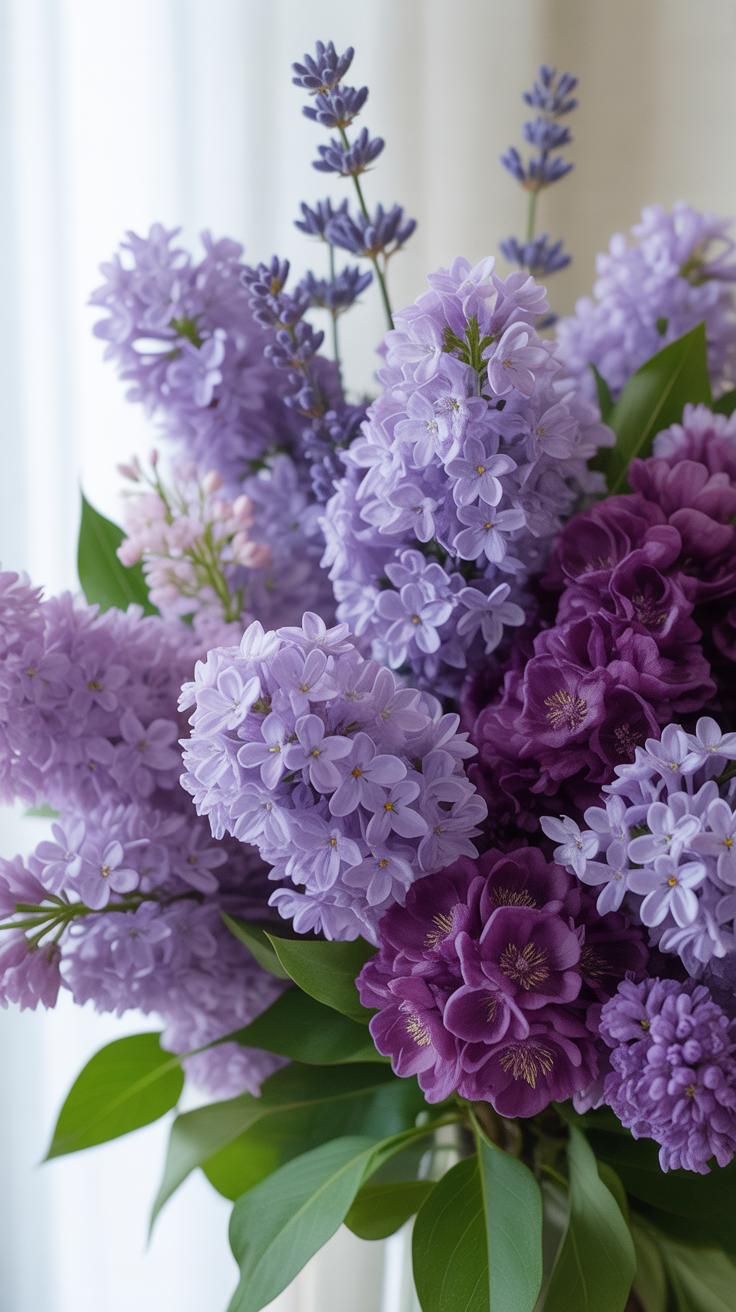
Creating Depth And Drama By Layering Lilac, Mauve, Plum, And Violet Together
Depth in monochrome design requires high contrast between light and dark values. Place dark plum and deep violet flowers at the base and center of the arrangement. These heavy tones create a visual anchor. They ground the piece and draw the eye inward. Use species like dark calla lilies or deep purple carnations. Their dense color absorbs light and provides a solid foundation for lighter tones.
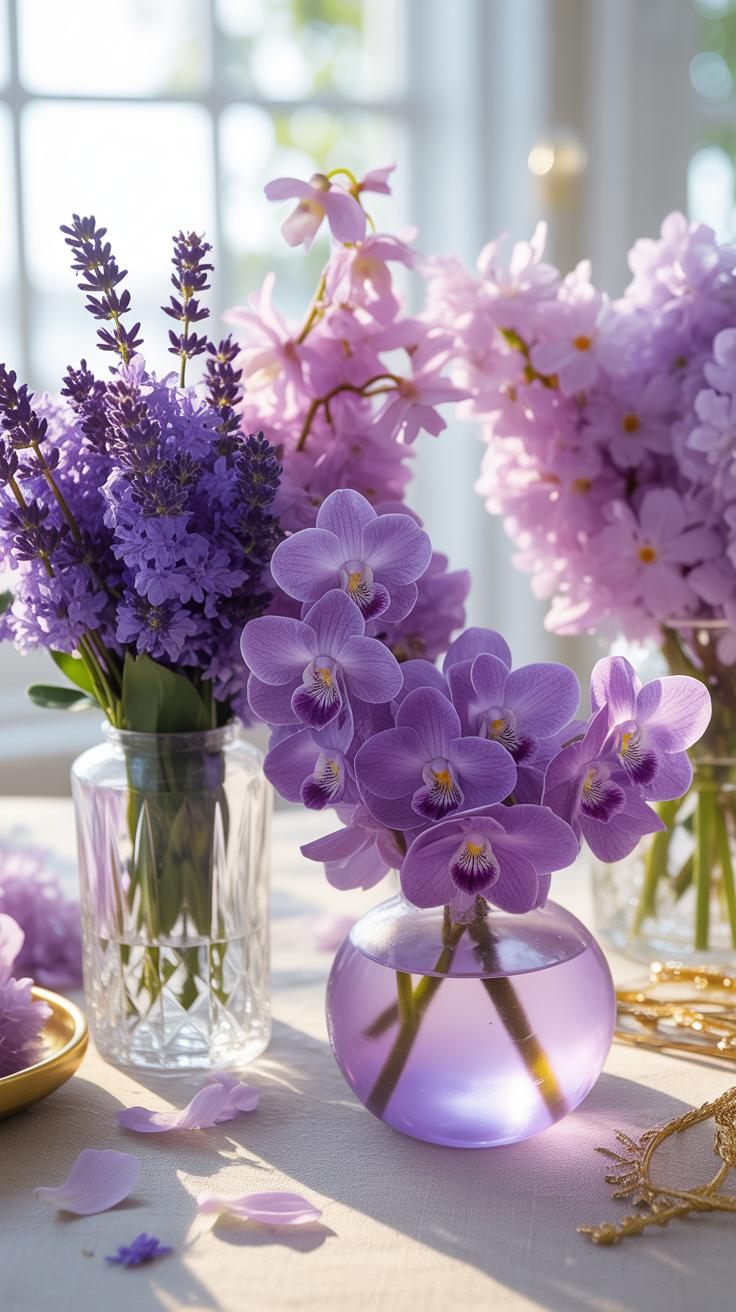
Layer lighter shades like lilac and mauve toward the outer edges and top. Use airy stems like lavender or light sweet peas to break the silhouette. This technique prevents the arrangement from looking like a solid block of color. It creates movement and reveals the texture of each petal. The contrast between pale tints and saturated shades adds dimension. This approach ensures the design looks sophisticated and deliberate.
Using White, Silver, And Green Accents To Let Purple Flowers Truly Shine
Pure purple flowers often disappear into shadows without proper highlights. Small white blooms like baby’s breath or white ranunculus provide necessary brightness. These white elements act as light reflectors within the bouquet. They define the shape of darker purple petals. Without these breaks, the various purple shades blend together too much. Strategic placement of white keeps the distinction between different flower types clear and sharp.
Incorporate silver foliage like dusty miller or eucalyptus to cool the palette. Silver tones complement the blue undertones found in violet and lavender. Use dark green leaves to provide a natural backdrop that makes the purple pop. Green is the direct complement to red-purple on the color wheel. This contrast makes the floral colors appear more vivid. Use these accents sparingly to maintain the primary focus on the purple theme.
Flower Arrangement Purple Ideas For Special Occasions And Everyday Styling
Purple Floral Arrangements For Celebrations, Anniversaries, And Thoughtful Gifting
Select high-impact species for formal events. Purple Vanda orchids and Calla lilies provide a structural look. These flowers represent luxury and high status in Victorian floral language. Use monochromatic layering to create depth. Combine deep plum carnations with lighter lavender roses. This technique adds visual mass without needing extra colors. Ensure the stems sit in clean water treated with flower food to maintain cell rigidity.
Strategic gifting requires understanding seasonal availability. Use Lisianthus for anniversaries because they mimic roses but last longer. Pair them with purple Statice to fill gaps. Statice acts as a natural structural support for heavier blooms. Cut stems at a forty-five degree angle before placing them in the vase. This increases the surface area for water intake. Secure the arrangement using waterproof grid tape for a professional finish.
Everyday Low Maintenance Purple Flower Displays That Stay Fresh Longer
Focus on woody-stemmed plants for daily home decor. Purple Alstroemeria and Chrysanthemums survive up to two weeks. These plants resist bacteria growth better than soft-stemmed varieties. Remove all leaves below the water line immediately. Decaying foliage creates ethylene gas which kills flowers faster. Place the vase away from direct sunlight and drafts. Heat causes rapid evaporation and wilting in thin petals.
Use dried lavender or Allium heads for zero-maintenance styling. These specimens keep their purple pigment after the moisture leaves the plant. You do not need water for these displays. This eliminates the risk of mold or spills on home furniture. If using fresh flowers, change the water every two days. Scrub the vase with soap during each change. This removes biofilm and extends the life of your purple display.
How To Care For Purple Arrangements And Extend The Life Of Your Blooms
Essential Water, Light, And Temperature Tips To Keep Purple Flowers Vibrant
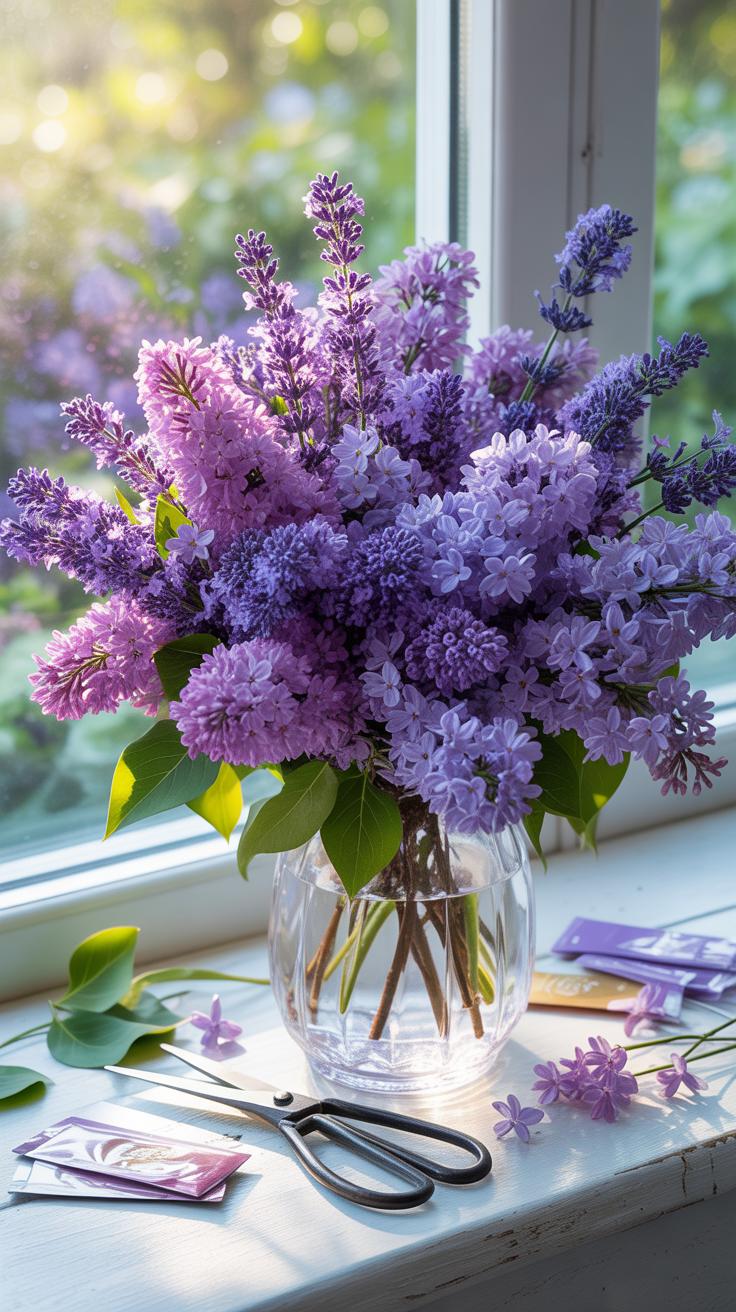
Proper hydration dictates the lifespan of purple flowers. Anthocyanins cause the purple pigment in petals. These pigments react poorly to high heat and direct sunlight. To maintain deep violet or lavender colors, place the vase in a cool spot. Avoid windowsills or drafty areas. Use lukewarm water for initial hydration. Change the water every two days to stop bacteria from clogging the stems and causing wilting.
- Stem Trimming: Cut stems at a forty-five degree angle using sharp shears. This increases the surface area for water intake. Re-cut the stems every time you change the water to remove air bubbles and blockages.
- Water Quality: Fill the vase with room temperature water mixed with floral preservative. The acidic nature of these mixtures helps the stems pull water faster. It also prevents the growth of mold and harmful microorganisms.
- Light Exposure: Keep the arrangement out of direct sunlight. UV rays break down the chemical bonds of purple pigments. Constant exposure causes deep purples to fade into dull grays or browns prematurely.
- Temperature Control: Maintain a room temperature between sixty-five and seventy-two degrees. Higher temperatures speed up the transpiration process. This causes the flowers to lose moisture faster than they can absorb it through the stems.
- Ethylene Avoidance: Place the floral arrangement away from ripening fruit. Fruit releases ethylene gas which accelerates the aging process. This gas causes purple petals to drop and flower heads to droop within hours of exposure.
Clean the vase with bleach before use to kill lingering fungi. Remove any leaves that sit below the water line. Decaying foliage creates a toxic environment for the stems. Use high quality floral foam if the design requires it but ensure it stays fully saturated. Spritzing the petals with a fine water mist helps delicate varieties like hydrangeas stay turgid in dry indoor air.
When To Refresh Your Arrangement And How To Compost Or Repurpose Spent Blooms
Identify the end of a bloom’s life by checking for petal transparency or brown edges. Speed is vital when refreshing a design. Pull out dying stems immediately to prevent they from contaminating healthy flowers. Individual stems in a mixed purple arrangement age at different rates. Removing debris keeps the water clear and nitrogen levels balanced. This allows the remaining buds to open fully without competing for resources.
Convert dead organic material into garden fuel through composting. Purple flowers provide nitrogen-rich green matter for your soil. Remove any plastic tape, wire, or foam before adding stems to the bin. For permanent decor, air-dry sturdy varieties like statice or lavender by hanging them upside down in a dark room. This preserves the structural integrity and some of the color for long-term use in dried displays or sachets.
Where To Source Beautiful Purple Flowers Arrangements For Your Home
Shopping Local Florists Vs. Online Flower Delivery Services For Purple Blooms
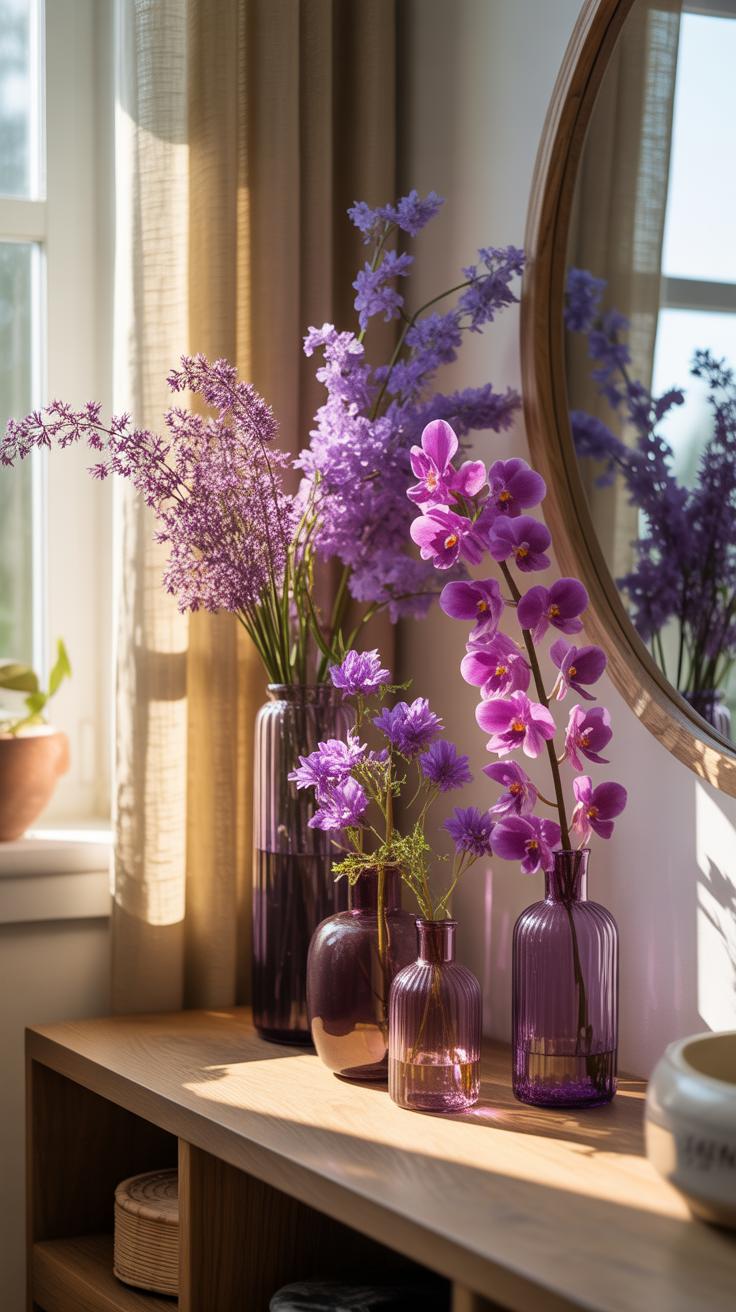
Local florists offer the best access to high-quality, seasonal purple stems. They source premium flowers like Dutch hydrangeas and French lavender that survive shipping poorly. You can inspect the pigment saturation in person to ensure the shades match your interior design. Local shops also handle delicate textures with more care than large warehouses. Choose them when you need custom precision for specific floral displays.
Online delivery services offer speed and lower costs for bulk orders. These companies use massive supply chains to provide purple roses and carnations year-round. They work well for basic arrangements but often substitute species based on stock levels. You lose control over the exact shade of violet or plum. Use these services for convenience rather than high-end design accuracy or specific botanical rarity.
Growing Your Own Purple Garden Flowers To Create Fresh Arrangements At Home
Growing your own flowers provides the freshest material for home arrangements. Focus on perennials like Salvia, Iris, and Lavender for consistent seasonal returns. These plants offer a range of heights and textures for professional-looking bouquets. You control the use of pesticides and fertilizers. Homegrown stems often outlast store-bought flowers because you cut them at the peak of their health and immediately hydrate them.
Success requires matching plant species to your specific climate and soil type. Use well-draining soil for Mediterranean herbs like lavender. Plant spring bulbs like dark purple tulips in the fall for early season color. Prune your plants regularly to encourage more blooms throughout the summer. This method requires time and physical effort. However, it yields unique varieties that commercial florists rarely stock due to short shelf lives.
Frequently Asked Questions

What are the best flower varieties to use for a monochromatic purple display?
Creating stunning all purple floral arrangements starts with selecting a diverse mix of textures and shades. For deep, regal tones, look for Lisianthus, dark Calla Lilies, or jewel-toned Gladiolus. If you prefer softer, ethereal hues, consider using Lavender, Lilacs, or Hydrangeas. Combining different shapes, like the spikes of Delphinium with the round fullness of Peonies, adds visual interest and depth to your bouquet while maintaining a cohesive, sophisticated color palette.
How can I arrange different shades of purple to create more depth?
To master all purple floral arrangements, use the “gradient technique” by layering shades from darkest to lightest. Place deeper plum or eggplant blooms near the base or center of the vase to establish a strong focal point. Then, work outward with medium violet tones, finishing with airy sprigs of lilac or light mauve at the edges. This natural progression prevents the bouquet from looking flat and gives it a professional, multidimensional appearance.
Can I create a high-end purple floral look on a tight budget?
Absolutely! You can achieve a luxurious look without spending a fortune by using affordable “filler” flowers in vast quantities. Seek out purple Carnations, Statice, or Aster at your local grocery store. When bunched tightly together, these budget-friendly stems create a lush, high-impact aesthetic. Supplement your store-bought finds with foraged greenery or seasonal wildflowers like Vetch to give your display an expensive, organic feel for just a few dollars.