
Understanding Glass Bowl Decor Ideas And Why They Work So Well
The Timeless Appeal Of Glass As A Decorative Medium
Glass functions as a premier design medium because of its unique physical properties. It offers structural containment without creating visual bulk. This transparency allows light to pass through the object rather than being absorbed or blocked. Designers use glass to maintain an open feel in small spaces. Glass is chemically inert and non-porous. It does not react with water or organic materials like wood or metal do.
The history of glass vessels dates back to ancient Mesopotamia and Egypt. Early artisans valued glass for its ability to mimic precious stones. Modern glass bowl centerpieces use soda-lime or borosilicate glass for durability. These materials resist temperature changes and physical impact better than historic versions. Glass creates a clean focal point that draws the eye. Its reflective surface adds brightness to any room by bouncing natural and artificial light.
How Glass Bowls Complement Every Interior Style From Minimalist To Maximalist
Glass bowls fit into any decor style due to their versatility. In minimalist settings, a clear bowl emphasizes form and negative space. It provides a crisp look without adding unnecessary color or texture. The glass acts as a subtle boundary for a few select items. This helps maintain the clean lines required for modern aesthetics. It provides a functional container that essentially disappears into the surrounding environment when empty.
Maximalist designs use glass bowls to layer textures and colors. A glass container can hold vibrant fruits, polished stones, or seasonal ornaments. It keeps these items organized while allowing the viewer to see every detail. In traditional settings, cut glass or crystal adds a sense of formality and weight. It catches light from chandeliers and candles to create a classic atmosphere. Glass remains the most adaptable tool for any professional interior designer today.

What To Put In A Decorative Glass Bowl Choosing The Right Fillers
Natural Fillers That Bring Organic Beauty Into Your Home
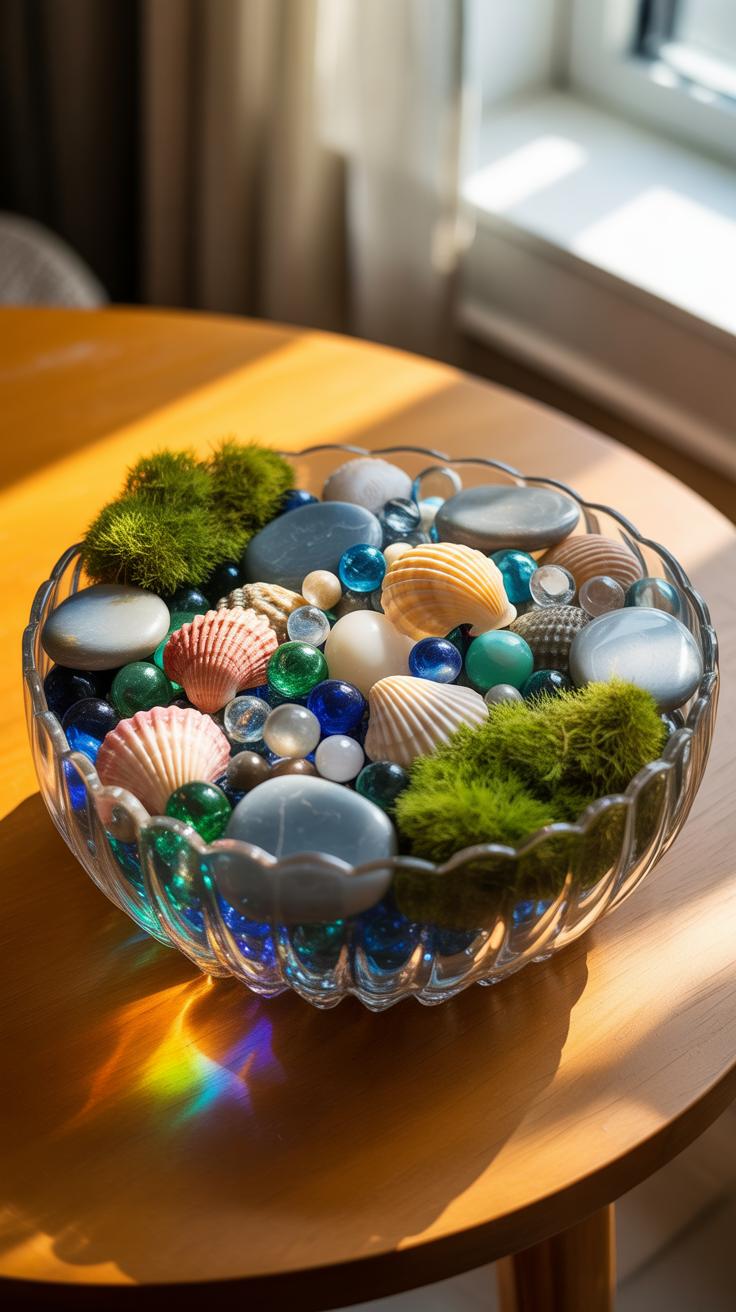
Natural fillers provide texture and grounded appeal to glass bowl centerpieces. Designers prioritize materials that do not decay quickly. Use smooth river stones or polished pebbles to add weight and stability. These materials work well in minimalist or Zen design styles. Ensure all organic items are clean and dry before placement. Moisture trapped inside a sealed glass bowl will cause mold growth and ruin the display.
Strategic selection of wood elements offers a rustic aesthetic. Driftwood pieces provide architectural interest due to their unique shapes. Use dried moss to fill gaps and add color without the maintenance of live plants. Pinecones and acorns serve as effective fillers for larger vessels. These items reflect environmental changes and bring outdoor elements inside. Always inspect natural materials for insects or debris before putting them in your glass bowl.
Glass Bowl Filler Ideas Using Seasonal And Themed Materials
Seasonal fillers allow you to update your decor without buying new glass vessels. Change the internal contents to reflect current holidays or weather patterns. Designers use these materials to create a focal point that matches the room color palette. Light reflective materials like metallic ornaments or glass beads increase brightness in dark spaces. Select items with varied sizes to create depth and visual weight within the bowl.
- Geometric Orbs: Metal or wood spheres provide modern lines and structured silhouettes. These items fill large volumes of space without making the bowl look cluttered. They work best in open glass containers where the shapes remain visible from all angles.
- Faux Fruit: High quality stone or resin fruit mimics the look of real produce without the risk of rotting. Lemons and limes provide bright color pops for summer themes. These fillers offer a classic look derived from traditional still life art movements.
- Sea Shells: Bleached shells and sea glass create a coastal aesthetic based on maritime history. Use sand as a base layer to hold the shells in specific positions. This technique prevents the glass from scratching and adds a textural foundation to the bowl.
- Silk Florals: Realistic fabric flower heads provide soft textures and permanent color. Use these when live flowers are impractical or too expensive to maintain. Cut the stems short so the blooms sit flush against the glass walls for a clean look.
- Art Glass Marbles: Solid glass marbles offer weight and light refraction. These materials come in various finishes like iridescent or matte. They are ideal for supporting artificial stems or candles because they provide a stable and non flammable base for the centerpiece.
Tactical placement ensures the themed fillers remain organized. Put larger items in the center first to establish a height hierarchy. Fill the perimeter with smaller objects to hide gaps and create a finished look. Check the arrangement from every side to ensure balance. Use clear acrylic spacers if you need to lift items without adding more filler. This method keeps the design lightweight and reduces pressure on the glass structure.
Flower Bowl Decoration Ideas Creating Floral Centerpieces With Glass Bowls
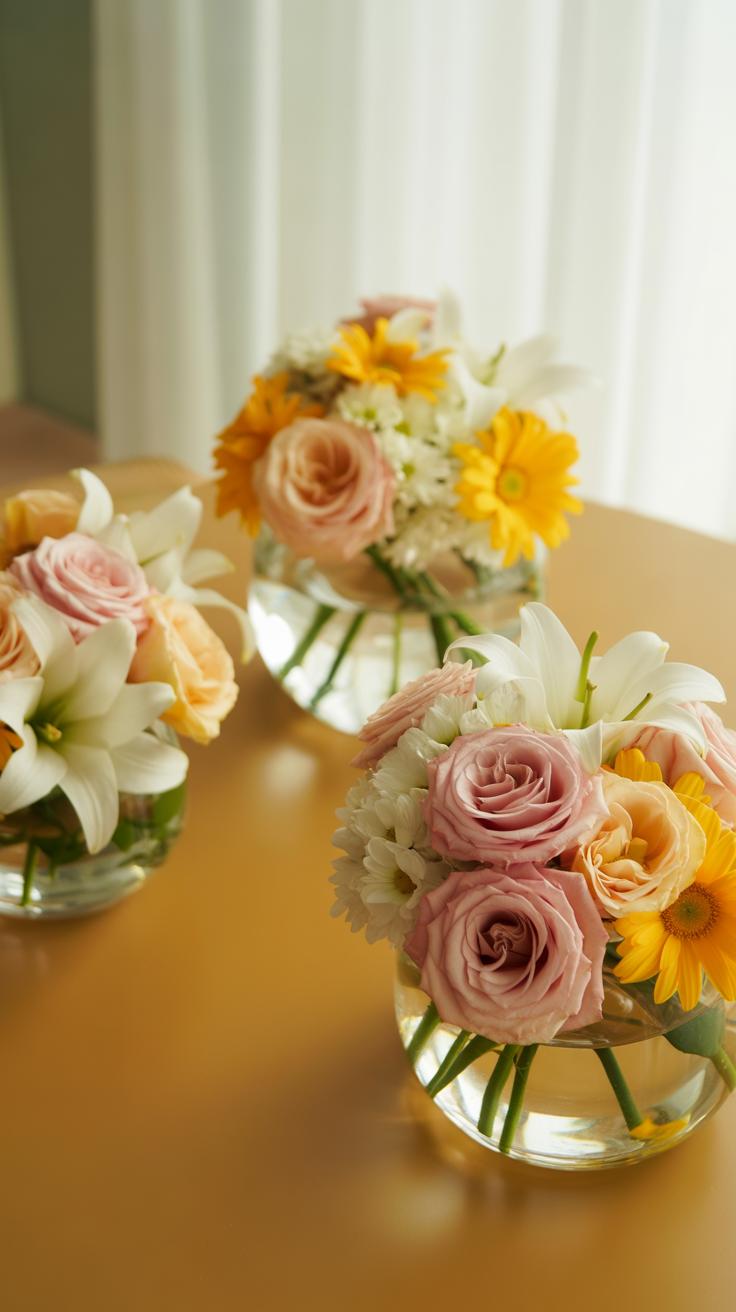
How To Arrange Fresh Flowers In A Glass Bowl For Maximum Visual Impact
Position flowers based on the bowl depth to ensure structural stability. In shallow vessels, use a pin frog or chicken wire to anchor stems. This technique stems from Japanese Ikebana traditions. It allows for intentional spacing and prevents heavy heads from drooping. Trim every stem at a forty-five degree angle before placing it in water. This increases the surface area for hydration.
Start with the largest blooms in the center to establish a focal point. Add secondary flowers and greenery around the edges to build volume. Keep water levels high and change the liquid every two days. Clear glass reveals any debris or murky water immediately. Removing submerged leaves prevents bacterial growth and extends the life of the display. Clean water maintains the modern aesthetic and keeps flowers fresh.
Using Dried And Artificial Flowers For Long Lasting Glass Bowl Floral Displays
Dried flowers require a dry environment to prevent mold. Use silica gel or air-drying methods to preserve the natural shapes of the petals. Place heavy stones or decorative sand at the bottom of the glass bowl. This adds weight to keep the arrangement from tipping. Avoid direct sunlight to prevent the colors from fading. These displays work well in low-maintenance commercial or residential spaces.
High-quality silk or polymer flowers offer a permanent solution for glass bowls. Clean the glass regularly to remove dust buildup on the interior surfaces. Use clear floral tape to create a grid across the mouth of the bowl. This grid holds faux stems in specific positions without shifting. Unlike fresh flowers, these materials do not require water. This keeps the glass clear and free from mineral deposits.
Small Glass Bowl Decor Ideas For Compact Spaces And Subtle Accents
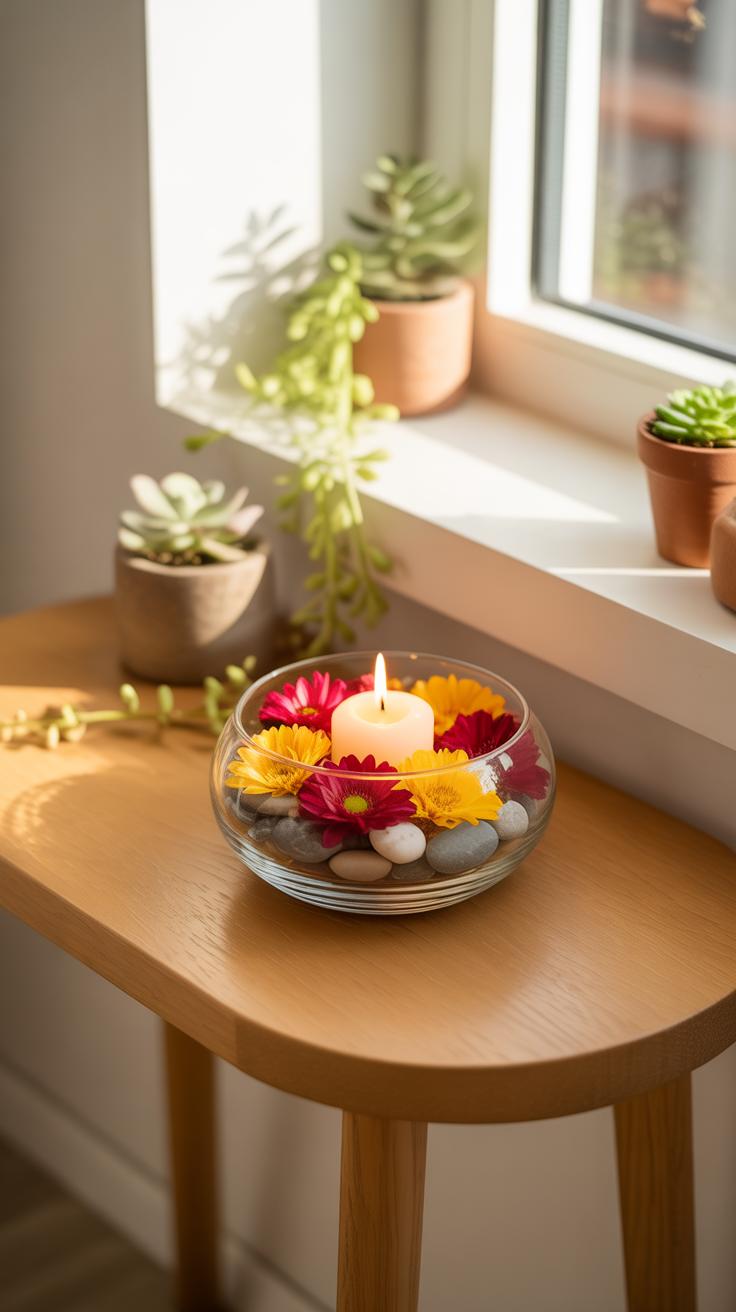
Making A Big Statement With Small Glass Bowl Arrangements On Shelves And Side Tables
Small glass bowls solve the problem of limited surface area. Use these vessels on narrow shelving or small end tables to add depth without adding bulk. Their transparency keeps the visual field open. This prevents the room from feeling crowded. Choose heavy lead crystal or thick hand-blown glass to ensure stability. These materials provide high light refraction. This brightens dark corners effectively and efficiently.
Place single, high-quality items inside the bowl to create a focal point. A single polished river stone or a lone air plant works best. This minimalist approach follows the principles of Modernist design. It emphasizes the form of the glass rather than the contents. Keep the fill level below the rim to maintain clean lines. Sharp silhouettes are necessary for small-scale decor. This strategy ensures the accent remains sophisticated and intentional.
Grouping Small Glass Bowls Together To Create Layered Visual Interest
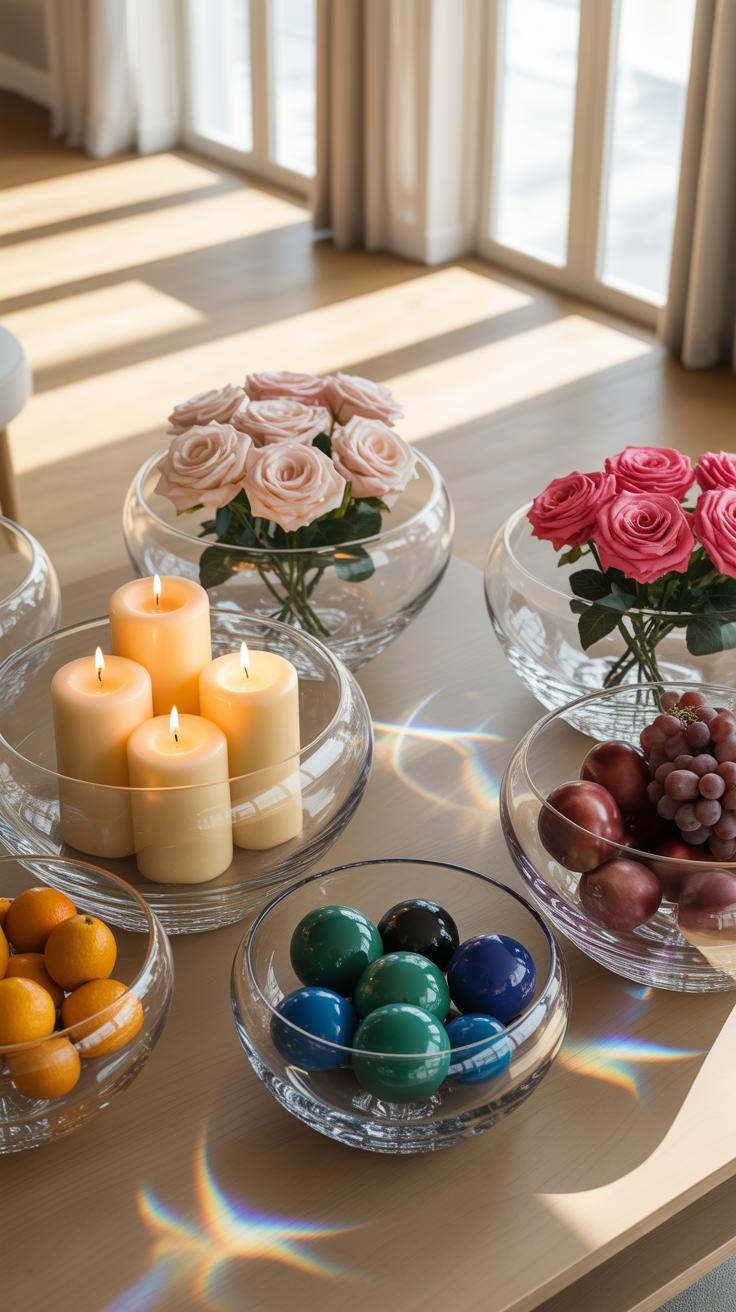
Grouping small bowls creates a larger presence through repetition. Use the rule of three to establish balance. Mix heights or shapes but keep the material consistent. This creates a unified look. It prevents the arrangement from looking like random clutter. Position the bowls in a triangular formation on a coffee table. This technique guides the eye across the display. It adds architectural weight to a small footprint.
Vary the contents slightly to build texture. Fill one bowl with dry moss and another with smooth glass beads. Keep the color palette tight to ensure harmony. This method mimics the curated style found in professional galleries. It uses negative space between the bowls to define the arrangement. Do not overfill the containers. Leave plenty of room for light to pass through the glass. This maintains the airy quality of the setup.
Unique Glass Bowl Decor Ideas That Go Beyond The Ordinary
Unexpected Materials And Objects That Turn A Glass Bowl Into A Conversation Piece
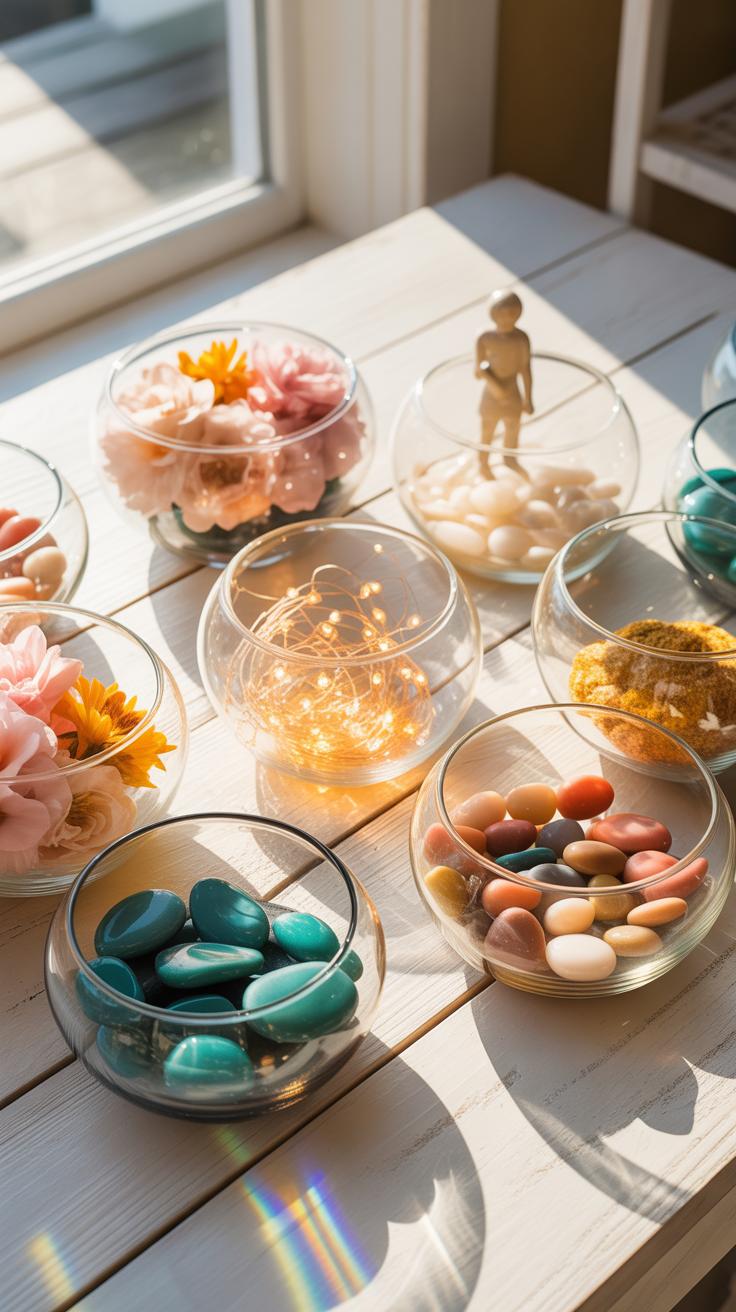
Standard bowl fillers fail to capture attention. Use architectural salvage like antique clock gears or brass fittings for a Brutalist aesthetic. Raw minerals or oversized sea salt crystals offer geological texture without the mess of organic decay. These materials provide weight and structural interest. They work best in thick hand-blown glass. Ensure the objects fill at least sixty percent of the container volume.
The Japanese concept of Wabi-sabi emphasizes beauty in imperfection. Place weathered wood or oxidized copper pieces inside low bowls. These materials contrast with the polished surface of the glass. Use a monochromatic color palette to keep the focus on form. Avoid mixing too many textures. Focus on one primary material to maintain a clean look. This strategy builds a sophisticated and intentional design.
Incorporating Lighting Elements Like Candles And Fairy Lights Into Glass Bowl Displays
Light placement dictates the mood of the vessel. Use submersible LED units for underwater displays to eliminate visible wiring. Position tea lights at varying heights by using glass pillars or sand mounds. This creates depth and enhances the natural refractive properties of the bowl. Be careful with heat. Thick glass can crack if a flame touches the surface directly. Use glass sleeves for protection.
Fairy lights offer a flexible way to add illumination. Choose copper wire strands for a technical look that remains stiff. Coil the wires tightly to create a concentrated glow. Place the battery pack at the bottom and cover it with heavy stones or moss. This hides the mechanical parts and focuses on the light. Use warm white bulbs for a classic look. Cool white works for modern settings.
Decorative Glass Bowl Uses Around The Home Room By Room Inspiration
Glass Bowl Centerpiece Ideas For Dining Tables, Coffee Tables, And Entryways
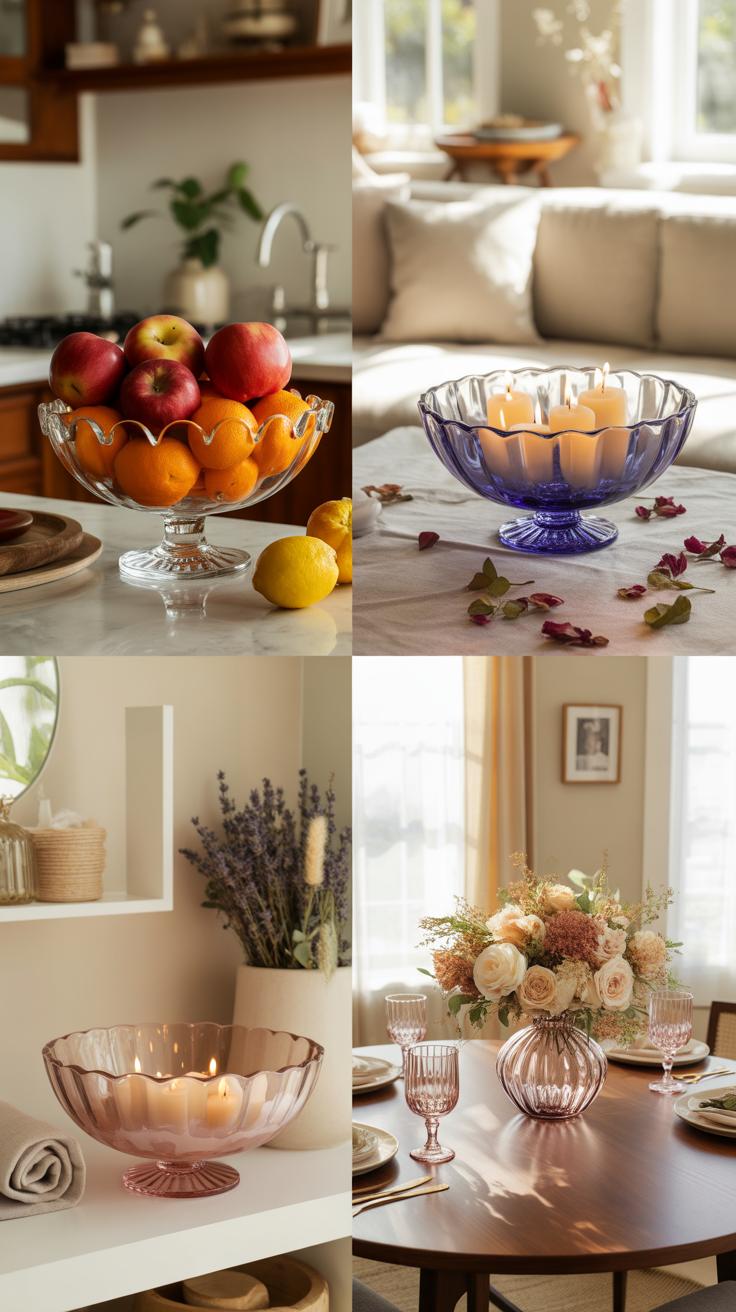
Dining tables require low-profile glass vessels to maintain clear sightlines across the surface. Use wide shallow bowls to hold seasonal fruit or polished river stones. This setup follows the principles of Mid-Century Modern design by emphasizing natural materials and functional form. Ensure the bowl diameter stays under one-third of the table width. This prevents the centerpiece from crowding place settings or disrupting the flow of conversation during formal meals.
Entryway tables benefit from heavy glass bowls placed near the door. These serve as drop zones for keys and daily essentials. Choose leaded glass or thick soda-lime glass for increased durability against metal objects. Coffee tables allow for deeper vessels filled with stacked architectural elements like wooden spheres or dried botanicals. Position the bowl off-center to create a dynamic visual balance. This tactic draws the eye without cluttering the entire surface area.
To create a beautiful centerpiece, find an object that catches the light and tells a story of your home. A simple glass bowl filled with seasonal treasures reflects the warmth of a life well lived.
Using Decorative Glass Bowls In Bathrooms, Bedrooms, And Outdoor Settings
Bathrooms utilize glass bowls for clean storage of essential items. Fill clear vessels with rolled towels or artisanal soaps to mimic high-end spa aesthetics. Glass resists humidity better than wood or metal. It does not rust or warp in high-moisture environments. Use frosted glass to hide the visual clutter of small toiletries while maintaining a uniform look. This keeps the vanity organized and ensures all daily items remain within easy reach.
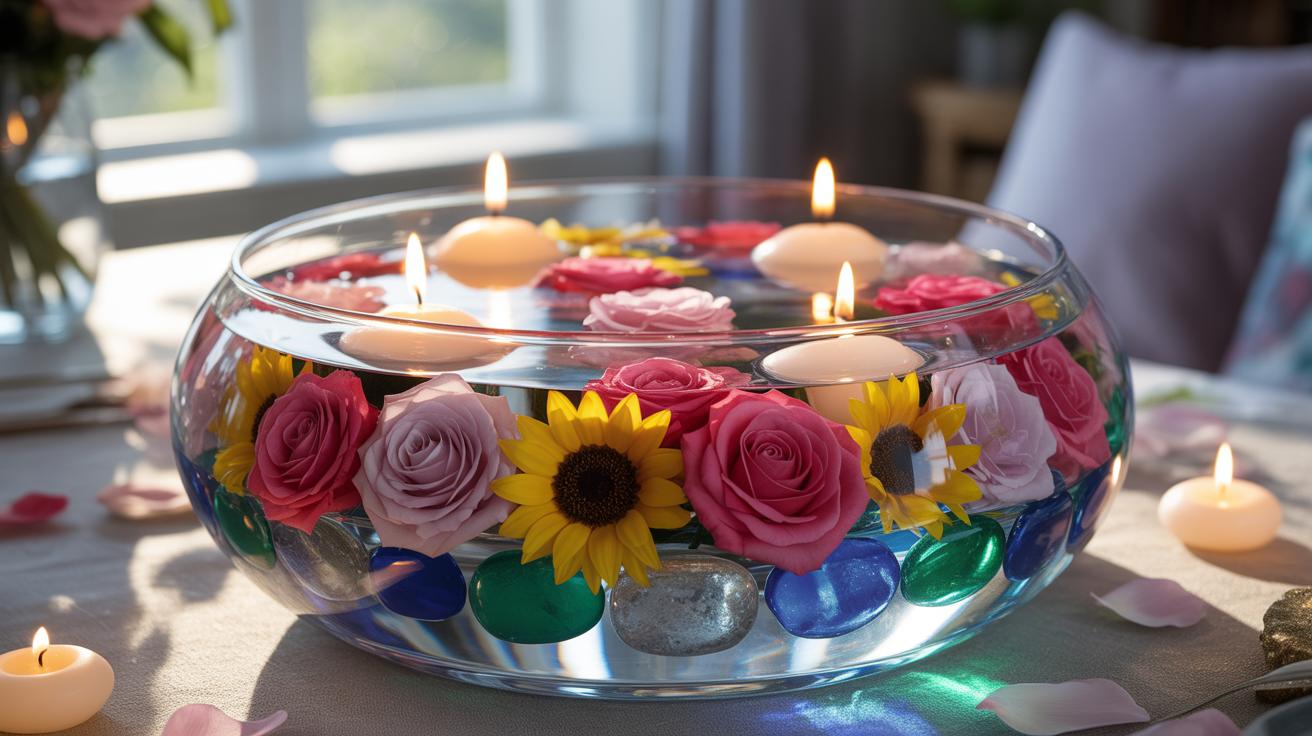
Bedrooms and outdoor areas require specific glass types for safety and style. Use tempered glass bowls on nightstands to hold jewelry or watches safely. For outdoor patios, choose thick-walled glass that can withstand wind and temperature shifts. Fill these outdoor bowls with water and floating candles to create a focused light source. This technique adds visibility to lounge areas at night. Always check for cracks before placing glass in direct sunlight or cold air.
Glass Bowls Decor Ideas For Special Occasions And Seasonal Celebrations
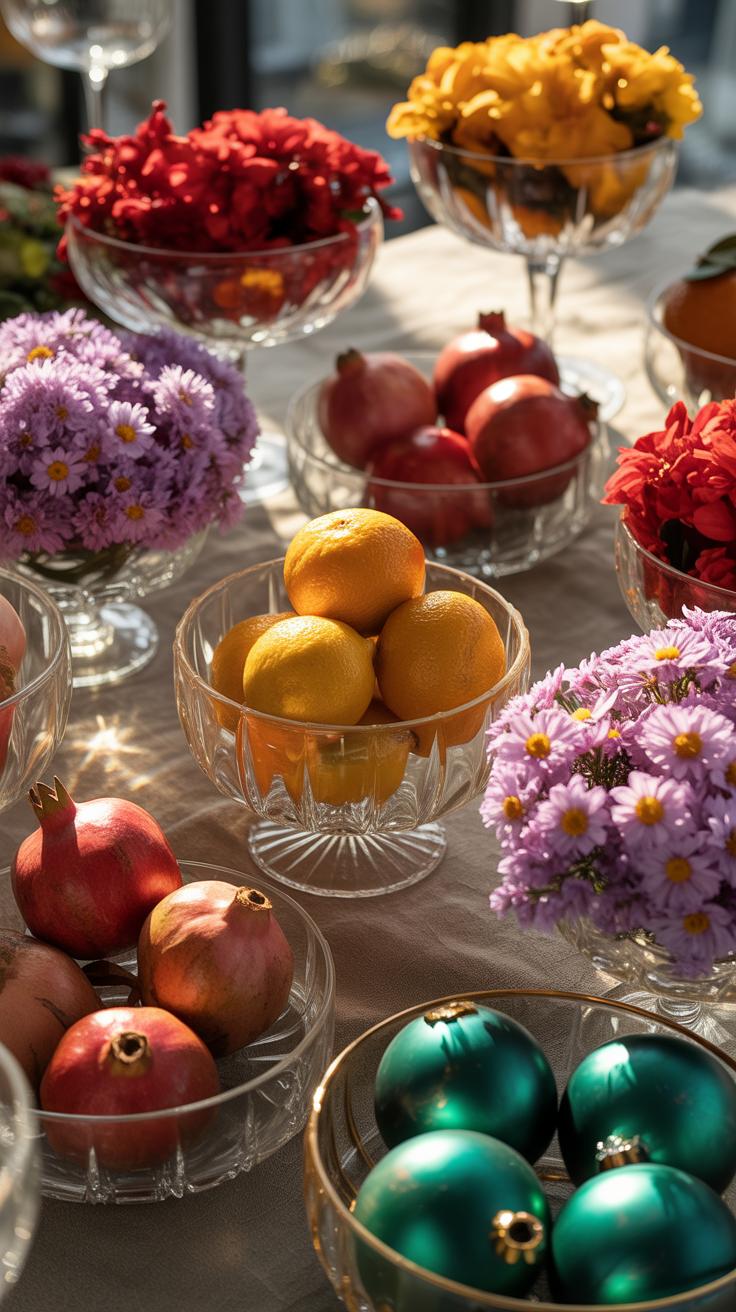
Styling Glass Bowl Centerpieces For Weddings, Dinner Parties, And Holidays
Weddings require glass bowls with high clarity to maximize light refraction. Use heavy lead crystal or thick potash glass for formal evening events. These materials handle weight better than thin soda-lime glass. Submerge floral heads in distilled water to prevent air bubbles on petals. Use waterproof LED discs at the base for illumination. This setup ensures the centerpiece remains stable and visible throughout the event duration.
Dinner parties demand low profiles to maintain clear lines of sight between guests. Choose shallow bowls or wide cylinders. Fill these with floating candles or smooth river stones to ground the design. For holidays, use dry components to prevent moisture damage to delicate linens. Incorporate metallic spheres or glass ornaments to reflect ambient room lighting. Proper weight distribution prevents the bowl from tipping if bumped by guests during service.
Transitioning Your Glass Bowl Display Across The Four Seasons
Seasonal transitions rely on changing the internal fill while keeping the glass vessel constant. This reduces storage needs and costs. Use thermal shock resistant glass if you plan to use ice or hot water. Clean the glass thoroughly between seasons with a vinegar solution to remove mineral deposits. This maintenance keeps the glass clear for different light levels found in winter and summer.
- Spring Botanicals: Place moss stones and forced bulbs like hyacinths inside the bowl. Use a small amount of water to keep the roots moist without flooding the vessel. This creates a living ecosystem look that fits the early growth phase of the year.
- Summer Hydration: Fill the bowl with citrus slices and cold water for a bright visual effect. Use distilled water to avoid the cloudy appearance caused by tap water minerals. This technique provides a cooling aesthetic during high temperature months and resists wilting better than flowers.
- Autumn Harvest: Use dry textured elements like acorns, dried corn husks, or small gourds. These materials do not require water and will not fog the glass in changing indoor temperatures. The weight of these items provides excellent stability for taller glass cylinders or wide pedestal bowls.
- Winter Speculars: Insert frosted glass ornaments or silver pinecones to reflect low winter light. Add a strand of battery operated copper wire lights to create internal glow. This setup works best in etched or cut glass bowls that break up the light into sharp patterns.
- Year Round Foundation: Keep a base layer of clear glass beads or white sand at the bottom of the bowl. This allows you to swap seasonal toppers quickly without starting from scratch. It also hides the stems of silk flowers or the bases of candle holders effectively.
Select fillers based on their durability and resistance to decay. Avoid items that produce gas or moisture if using a sealed or deep bowl. Organic materials like fruit require frequent replacement to prevent mold. Synthetic fillers offer the longest lifespan for high traffic areas. Match the scale of the filler to the diameter of the glass bowl to ensure a balanced visual weight.
Practical Glass Bowl Ideas Selecting The Right Bowl Shape Size And Style
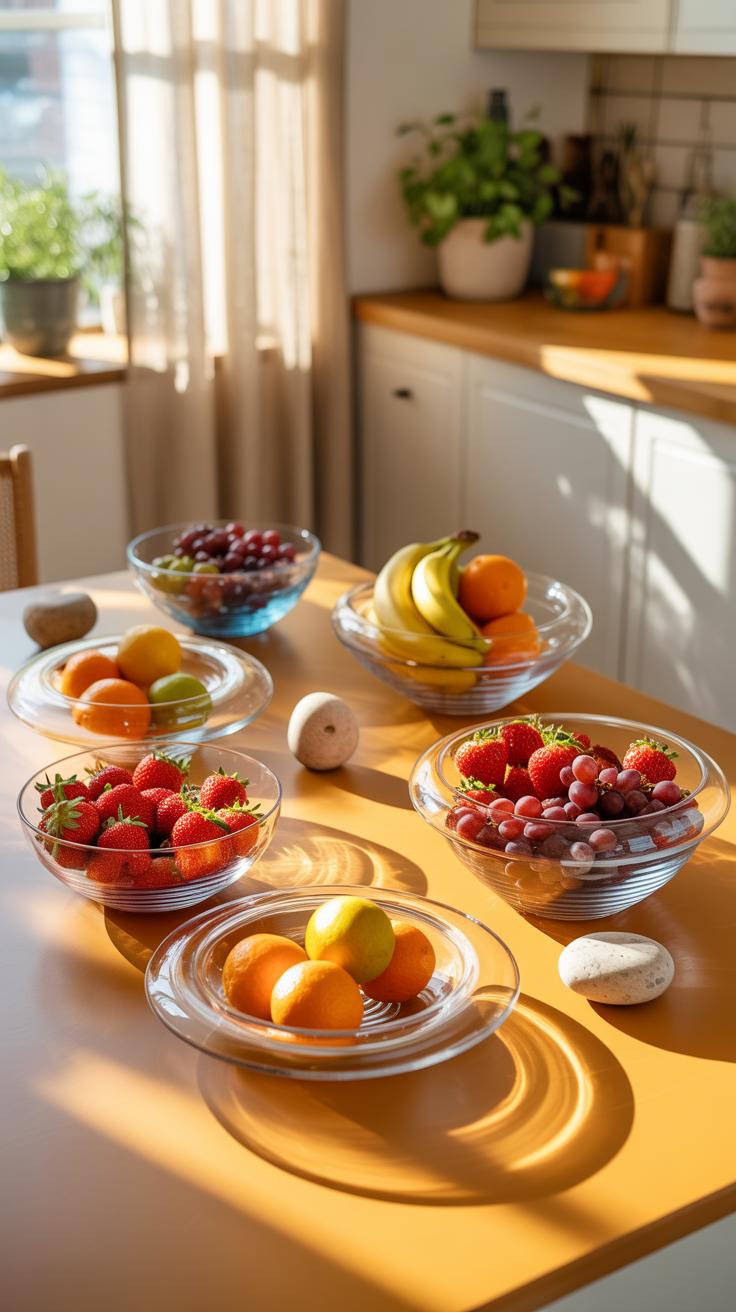
How Bowl Shape And Depth Influence The Overall Look Of Your Centerpiece
The physical dimensions of a glass bowl determine the visual weight and stability of your arrangement. Low, wide vessels like shallow terrariums or b bowls pull the eye downward. This creates a grounded and stable feel. These shapes work best for floating candles or short floral heads. Shallow bowls ensure that guests can see over the centerpiece during dinner. Depth changes the refractive properties of the water and glass.
Tall cylinders and deep bubble bowls provide more surface area for light to bend. Deep vessels allow for vertical layering of materials like river rocks or seaglass. This height creates drama without taking up excess table width. Deep bowls also protect delicate elements from air currents. Choosing a shape dictates whether your design focuses on horizontal spread or vertical impact. Match the depth to the stem length of your chosen flora.
Caring For And Maintaining Your Decorative Glass Bowls To Keep Them Looking Their Best
Glass requires specific upkeep to maintain its clarity and structural integrity. Dust and fingerprints cloud the surface and ruin the aesthetic. Clean your bowls with a mixture of distilled water and white vinegar to remove hard water deposits. Avoid abrasive sponges that create microscopic scratches in the glass. These scratches trap dirt and weaken the material over time. Dry the glass immediately with a lint free microfiber cloth.

Heat and cold can cause glass to crack through thermal shock. Keep glass centerpieces away from direct heat sources or air conditioning vents. If you use the bowls for floral displays, change the water every two days. Bacteria buildup creates a film that etches the glass surface permanently. Store your bowls in padded dividers to prevent chipping. Proper storage and cleaning ensure the glass remains a functional asset for years.
Frequently Asked Questions

What are the best items for a beginner to put in a glass bowl?
If you are new to decorating, start with simple, monochromatic fillers to create high-impact glass bowl centerpieces without much effort. Polished river stones, faux moss balls, or even seasonal citrus fruits like lemons and limes offer a clean, sophisticated look. These materials are forgiving to work with and allow you to practice layering textures and colors until you feel confident enough to experiment with more complex floral or water-based arrangements.
How do I keep my glass bowl centerpiece looking fresh and clean?
Maintenance is key to ensuring your glass bowl centerpieces remain a focal point. For water-based designs, change the water daily and use a drop of bleach to prevent algae growth. If you are using dry fillers like shells or sand, use a microfiber cloth to wipe the interior rim of the glass regularly. This prevents dust buildup and fingerprints from dulling the sparkle of the glass, keeping your display looking professional and crystalline.
Can I create a high-end centerpiece on a tight budget?
Absolutely! You can find affordable glassware at thrift stores or discount retailers that looks just as elegant as designer pieces. For budget-friendly fillers, consider using natural elements gathered from your own backyard, such as pinecones, interesting twigs, or dried eucalyptus. By focusing on a clear theme and mindful placement, you can design stunning glass bowl centerpieces that look incredibly expensive and luxurious without breaking your household decorating budget.