
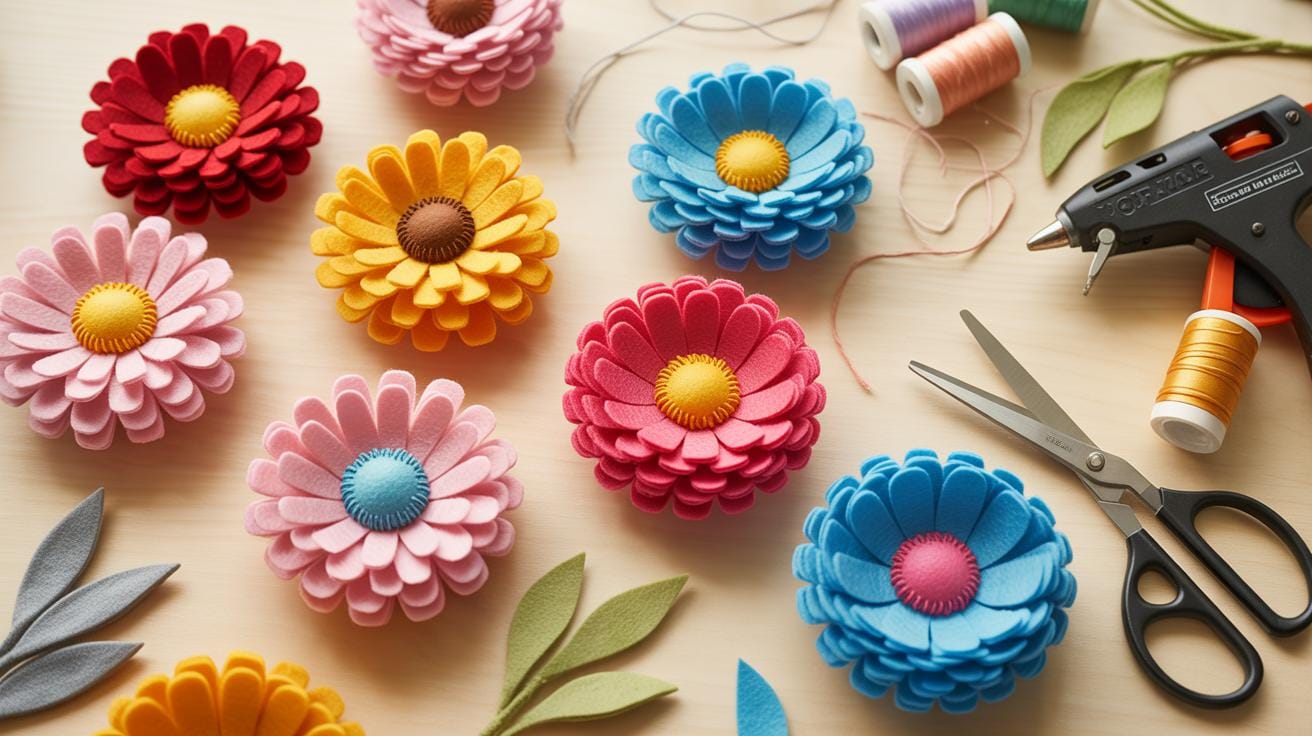
Why Felt Flower Crafts Are Experiencing A Major Creative Renaissance
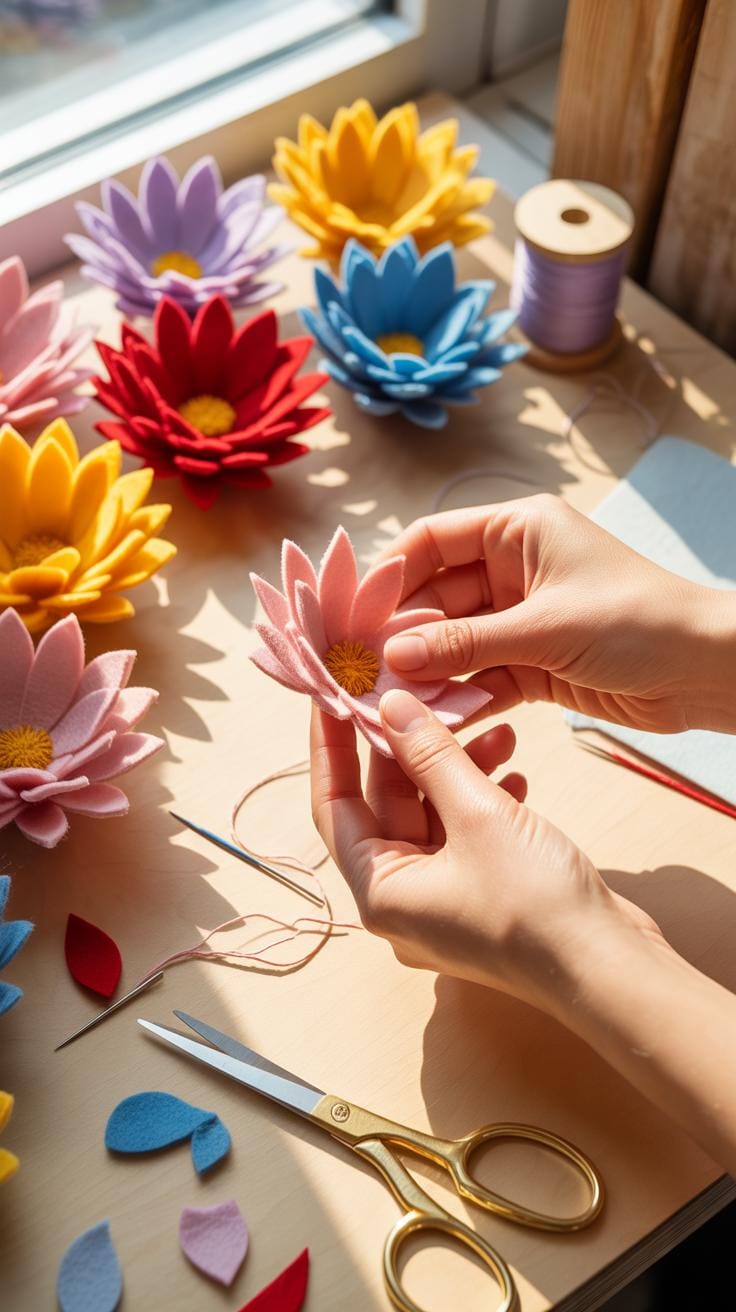
The Rise Of Handmade Culture And Its Impact On Felt Flower Popularity
Modern consumers are rejecting mass-produced plastic decor. They want items with personal value and long lifespans. Felt flower crafts fill this gap by offering a permanent botanical alternative that requires no maintenance. This shift aligns with the slow movement where people prioritize quality over quantity. Digital platforms have accelerated this trend. Crafters now share high-quality templates and video tutorials globally.
Technological shifts in tools have also fueled this growth. Precision cutting machines like the Cricut and Silhouette allow for intricate petal designs that were once impossible by hand. These machines save time and provide professional results for hobbyists. The accessibility of high-grade materials online means anyone can start a small business. Artisans now sell finished arrangements for weddings and home styling through direct social channels.
What Makes Felt The Ideal Fabric For Beginner And Advanced Crafters Alike
Felt is a non-woven textile. This means it does not fray when you cut it. Beginners can create clean edges without using a sewing machine or specialized finishing techniques. It holds its shape well under heat or when glued. Most crafters use wool blend felt for its durability and soft texture. It provides a realistic matte finish that mimics actual flower petals better than shiny synthetic fabrics.
Advanced makers prefer felt because it is highly versatile. You can dye it with inks or markers to create realistic gradients. It responds well to wire reinforcement for structural integrity. Makers can stack thin layers to build complex shapes like ranunculus or peonies. Because the material is forgiving, you can reshape it until the design is perfect. This flexibility keeps the medium relevant for professional floral designers.
How To Make Felt Flowers A Foundational Guide For Every Skill Level
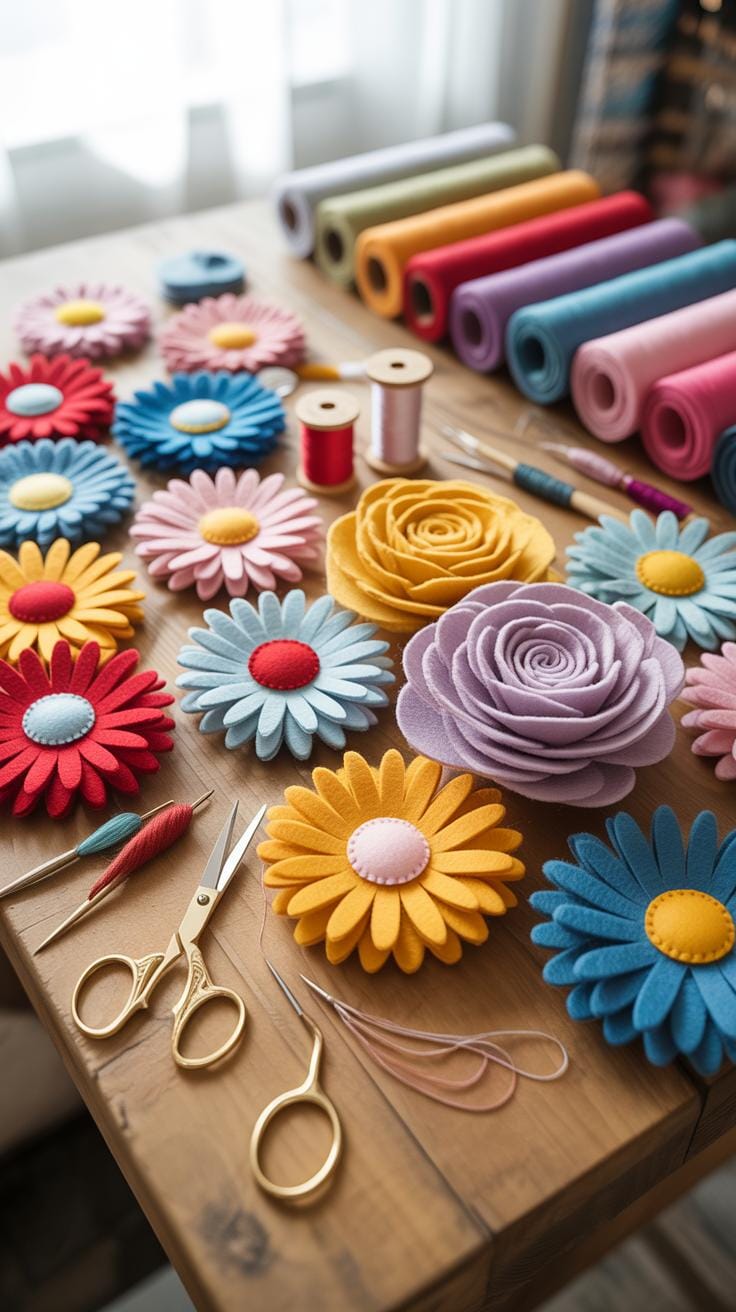
Core Techniques Behind Cutting Shaping And Assembling Felt Blooms
Precision cutting defines the final quality of felt flower crafts. You must use sharp fabric shears to prevent fraying and jagged edges. Trace templates directly onto the felt using a disappearing ink pen. Cut inside the lines to ensure consistent petal sizes. High-quality wool felt holds its shape better than synthetic blends. Proper cutting creates the clean lines necessary for professional results.
Shaping requires strategic heat or physical manipulation. Use hot glue to pinch the base of each petal. This creates a realistic 3D cup shape. Layer the petals in a spiral pattern around a central wire stem. Stagger the placement to mimic natural growth patterns. Overlapping ensures the flower looks full and covers the internal structural elements. Firm pressure during assembly guarantees a durable bond between the felt layers.
Essential Tools And Materials You Need Before You Start
Beginners must secure high-density materials to ensure structural integrity. Wool blend felt is the industry standard for durability and texture. It resists pilling better than cheap acrylic options. You also need a high-temperature glue gun for instant adhesion. Do not use liquid craft glue. It takes too long to dry and can saturate the fiber. Proper tools reduce assembly time significantly.
- Wool Blend Felt: Select a 20 to 35 percent wool blend for the best results. This material provides enough stiffness to hold petal shapes while remaining soft to the touch. It cuts cleanly and comes in a wide variety of accurate botanical colors.
- Fabric Shears: Invest in professional grade 8-inch stainless steel scissors. Keep these blades dedicated solely to fabric and felt. Paper dulls the edge quickly. Sharp tips are essential for cutting small notches and intricate leaf details without tearing the fibers.
- Floral Wire: Use 18-gauge or 20-gauge cloth-covered wire for stems. The gauge determines the weight the stem can support. Cloth-covered versions allow glue to bond more effectively than bare metal. Use wire cutters to adjust the length for different bouquet heights.
- High-Temp Glue Gun: A glue gun with a fine tip nozzle allows for precise application. High-temperature glue melts deeper into the felt fibers for a permanent bond. This is critical for complex blooms with many small parts. Lower temperatures often fail under tension.
- Precision Tweezers: Use long-handled tweezers to hold small petals during the gluing process. This keeps your fingers away from the hot adhesive. Transitioning small parts with tweezers ensures better placement accuracy. It also prevents messy glue strings from ruining the finish of the felt.

Organize your workspace before starting any project. Clear a flat surface to allow for heat-safe assembly. Keep a waste bin nearby to catch felt scraps immediately. Use a self-healing mat if you plan to use rotary cutters for straight strips. Good organization prevents errors and speeds up the production process. Reliable gear makes the difference between a hobby project and a professional product.
Felt Flower Patterns Free Where To Find And How To Use Them Effectively
Top Trusted Sources For Downloading Free Felt Flower Patterns Online
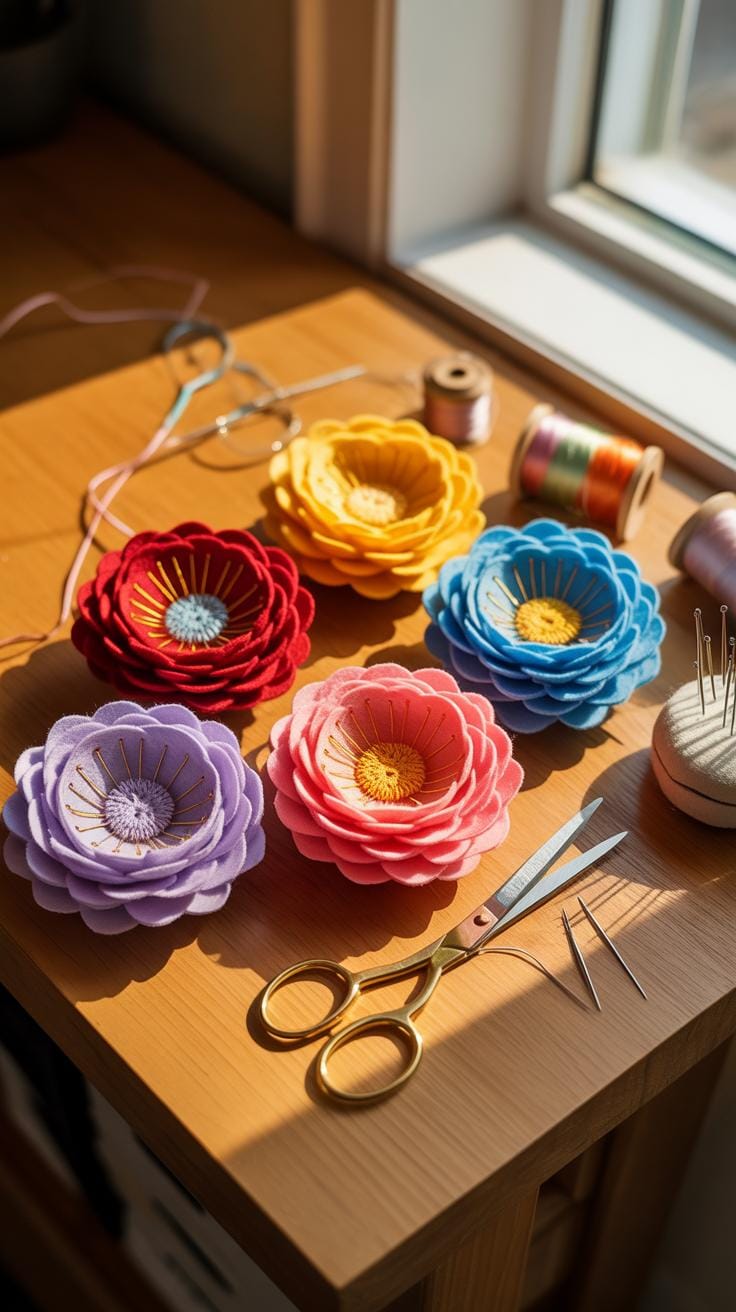
Serious makers source digital templates from established craft industry leaders. Lia Griffith remains the primary authority for botanical accuracy in felt design. Her site offers basic templates that establish foundational skills for assembly. Manufacturers like Benzie Design and The Felt Store provide free patterns specifically optimized for wool blend sheets. These corporate resources ensure the geometry of the petals matches the structural integrity of the material.
Library archives and public domain botanical illustrations offer historical accuracy for pattern makers. Use sites like Pinterest to aggregate links but verify the original source for scale markers. Avoid low resolution image files that distort when printed. Professional pattern designers often release free monthly samples to demonstrate their specific assembly methods. Stick to designers who provide clear cut lines and grain direction markers. These features ensure your flowers look realistic.
How To Resize And Adapt Free Patterns To Suit Your Project Needs
Standard patterns usually fit medium scale arrangements. You must adjust these dimensions to create variety in a bouquet. Use a photocopier or digital printer settings to scale the pattern up or down by specific percentages. Keep the proportions consistent across all petal layers. If you increase the size significantly, you must choose a thicker millimetre felt. This provides the necessary support for larger, heavier petals to stand upright.
Adapting a flat pattern for three dimensional depth requires physical manipulation. Use pinking shears to add texture to smooth edges of free templates. Modify the base of the petal by cutting a small slit and overlapping the edges. This creates a cupped shape. You can turn a simple daisy pattern into a different species by changing the center component. Use wool roving or felt strips to vary the internal texture while keeping the petal shapes.
Felt Flowers DIY Trending Project Styles Taking Over Craft Communities
Wreaths, Wall Art, And Home DéCor: DIY Felt Flower Projects Leading The Trend
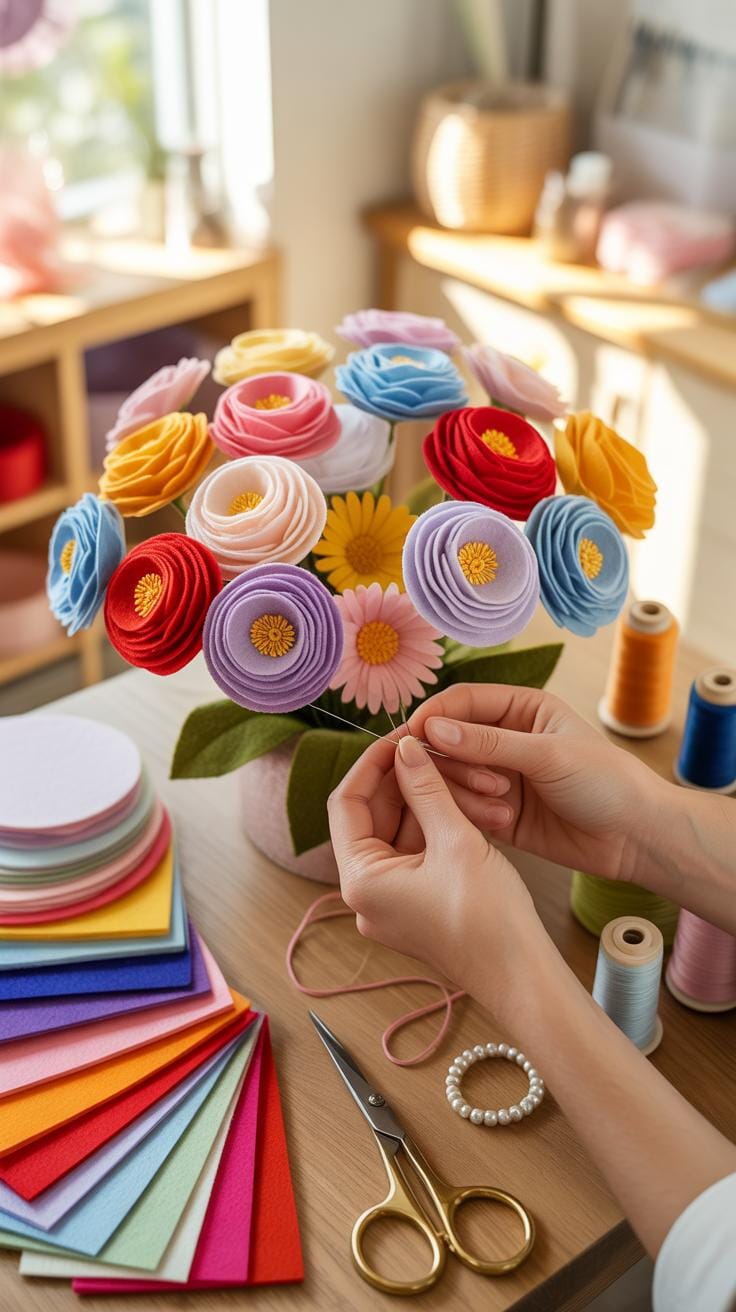
Modern home décor relies on flat-lay wreaths and botanical wall installations. Makers use wool blend felt for these projects because it holds its shape. Traditional round wreaths now feature asymmetrical designs with clusters of ranunclus and anemones. These flowers provide texture without the weight of real plants. Crafters use hot glue or wire to secure stems to metal hoops or wooden frames for a clean look.
Wall art has shifted toward 3D shadow boxes and hanging felt garlands. These items replace mass-produced plastic greenery in minimalist interior design. High-quality felt mimics the matte finish of organic petals. This material does not fray and stays vibrant for years. Designers use precision cutting machines or sharp shears to ensure clean edges. These durable pieces work well in nurseries and offices where maintenance-free botanical elements are high in demand.
Wearable Felt Flower DIY Accessories That Are Gaining Serious Momentum
Wearable felt art focuses on functional items like lapel pins and hair accessories. Small-scale designs like billy balls and lavender sprigs are popular for wedding boutonnieres. These pieces offer a permanent keepsake for guests. Makers prefer wool felt for wearables because it feels soft against the skin. It also handles moisture better than synthetic craft felt. Sharp steel needles and polyester thread ensure these small components stay attached during daily use.

Fashion trends now include felt flower embellishments on hats and handbags. This style draws inspiration from mid-century millinery techniques. Crafters attach life-sized roses or lilies to felt fedoras using discreet hand stitches. Layering different weights of felt creates a realistic depth that mimics expensive fabric flowers. This tactical approach turns basic accessories into custom statement pieces. The low cost of raw materials makes this a highly profitable niche for professional makers.
Felt Flower Template Trends From Simple Shapes To Botanical Realism
Classic Petal Templates Vs. Layered Botanical Designs: What Crafters Are Choosing
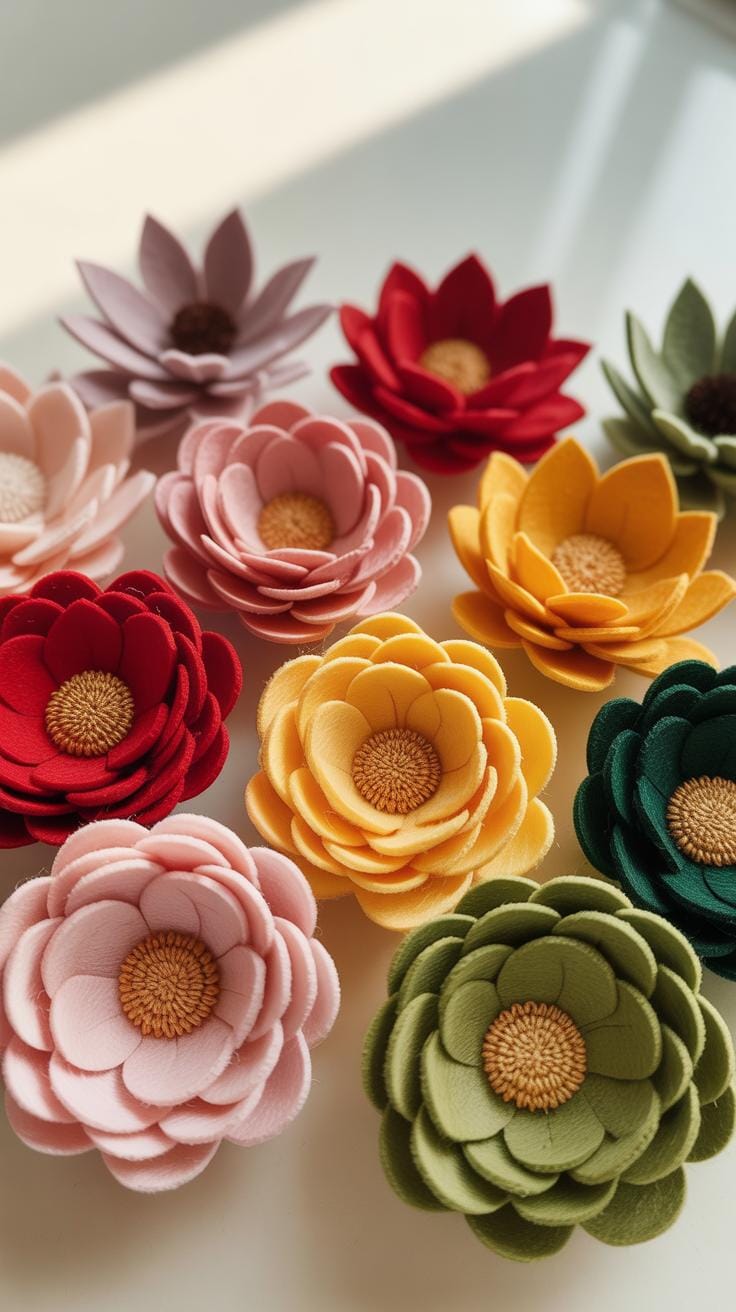
Standard petal templates satisfy beginners looking for speed. These designs use uniform circular or scalloped shapes. Crafters assemble them by rolling a single strip or gluing repeating units. Simple shapes work best with acrylic felt because the material lacks structural integrity. These designs prioritize the finished item over realistic detail. Hobbyists often use these for large volume projects like nursery mobiles or event decor.
Advanced crafters now pivot toward botanical realism. These templates mimic specific species like the Icelandic poppy or David Austin rose. This movement requires complex layering and anatomical precision. Realism demands high quality wool blend felt to hold thin shapes. Modern builders choose these templates to create heirloom quality decor. They focus on calyx shapes and varied petal sizes to achieve a lifelike aesthetic found in nature.
How A Well Designed Felt Flower Template Elevates The Quality Of Your Finished Bloom
A precise template eliminates waste and ensures consistency. Proper design accounts for the thickness of the wool. Poorly made templates result in bulky centers or unstable bases. Effective patterns include registration marks for alignment. Professionals use these blueprints to maintain scale across multiple batches. Accurate width and height ratios prevent the flower from looking distorted. This technical foundation allows for predictable results every time you cut.
Well designed templates also guide structural integrity through reinforcement points. They indicate where to add floral wire or glue for maximum hold. High quality patterns integrate the stem and foliage into the organic flow of the bloom. This prevents the flower head from drooping over time. When the template follows botanical logic, the final product looks intentional. You spend less time troubleshooting errors and more time refinement of the edges and colors.
Felt Flowers DIY Pattern Free Printable The Boom In Print And Craft Resources
Why Printable Patterns Have Transformed Accessibility In The Felt Crafting World
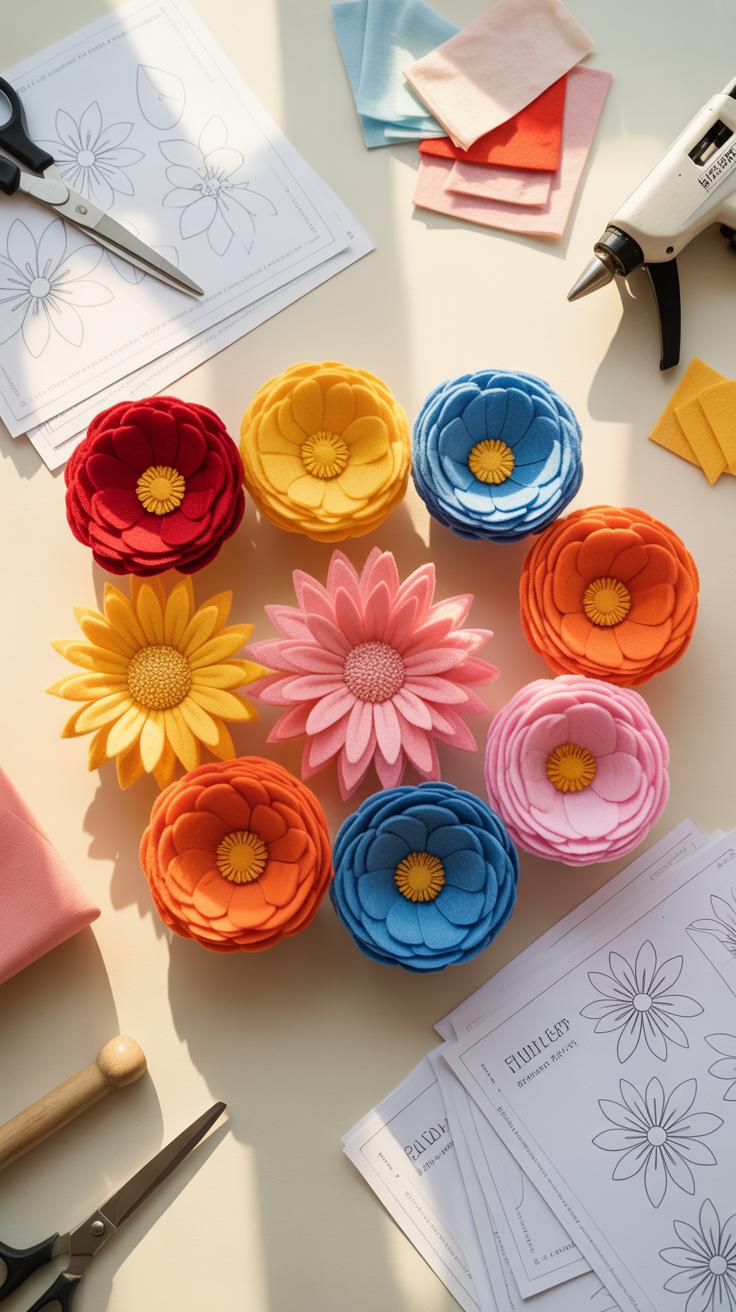
Digital accessibility removed traditional barriers to entry for felt flower enthusiasts. In the past, crafters relied on expensive physical books or trial and error. Free printables provide standardized shapes for petals, leaves, and sepals. This shift allows beginners to achieve professional results without advanced drawing skills. The instant availability of these resources drives the rapid growth of the global felt flower community.
Standardized patterns also ensure consistency across complex projects. Professional designers share exact templates for specific species like ranunculus or peonies. This technical accuracy prevents material waste and saves significant time. Crafters can now scale designs up or down using printer settings. This flexibility allows for the creation of diverse floral arrangements from a single source file. Digital patterns make high-level craft techniques available to everyone.
Like a sprig of felt pinned to a lapel, handmade flowers carry the warmth of our ancestors into today’s brightest trends. They are soft reminders that beauty never needs to wilt.
Step By Step Tips For Printing Tracing And Cutting Patterns With Precision
Precision starts with your printer settings and material choice. Always set your print scale to one hundred percent to keep the intended dimensions. Use heavy cardstock instead of standard paper for your templates. Cardstock provides a firm edge that resists wear during the tracing process. This ensures every petal you cut remains identical to the original design for a balanced final flower.
- Scale Verification: Check the scale key on the printed page with a ruler. If the one-inch marker does not match your ruler, the flower components will not fit together correctly. Adjust your print settings to actual size to fix this.
- Cardstock Templates: Transfer paper designs onto 110 pound cardstock for durability. Paper templates fray and warp after a few uses. Cardstock allows you to trace dozens of shapes without losing the crispness of the original pattern lines.
- Tracing Tools: Use a disappearing ink fabric pen or a fine tip chalk pencil. Avoid heavy ink markers that bleed into the felt fibers. Trace on the back side of the felt so no lines show on your finished flower petals.
- Scissor Selection: Use small, sharp detail scissors for intricate curves. Micro-tip blades allow for tighter turns than standard fabric shears. Keep these scissors dedicated to felt only to maintain their edge and prevent dulling from paper or wire.
- Material Stabilization: Pin the template to the felt if you prefer not to trace. Use freezer paper ironed onto the felt for the highest accuracy. The paper sticks temporarily and peels off without leaving residue or damaging the wool fibers.

Cutting technique determines the realism of your felt flora. Keep your scissors steady and move the felt, not the blades, to achieve smooth curves. Avoid choppy motions that create jagged edges on the wool. If you use freezer paper, cut directly through both the paper and the felt. This method eliminates tracing errors and produces the cleanest edges possible for complex botanical shapes.
Felt Spring Crafts Seasonal Flower Projects That Bloom All Year Round
Popular Felt Spring Flower Varieties Crafters Are Recreating Right Now
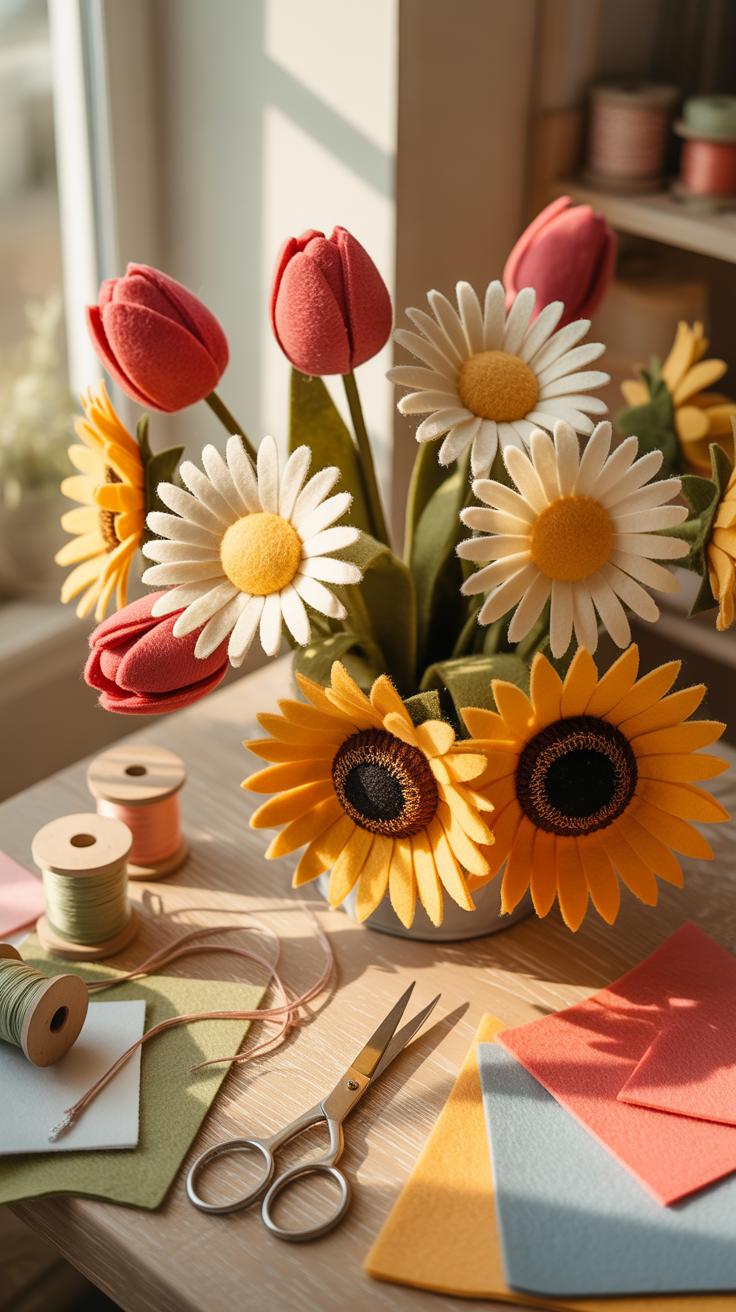
Current market demand focuses on high-fidelity recreations of early season bulbs. Crafters prioritize tulips and daffodils due to their structural simplicity and recognizable silhouettes. These builds require 2mm wool-blend felt to maintain petal rigidity without wire support. Using pinking shears on petal edges mimics the organic texture of parrot tulips. This approach reduces assembly time while increasing the visual value of the final product.
Modern patterns emphasize the ranunculus and anemone for their dense layering. These varieties allow makers to use up scrap felt for inner petal layers. The center of an anemone requires dark wool roving or felt balls to achieve botanical accuracy. High-quality wool felt accepts textile markers well. This allows crafters to add realistic veins and gradients to the petals. Sharp precision scissors are essential for these detailed cuts.
How To Incorporate Felt Spring Crafts Into Seasonal Home DéCor And Gifting
Strategically place felt stems in ceramic bud vases to create permanent tablescapes. Unlike fresh flowers, felt arrangements do not require water or light. They work well in dark entryways or office spaces. Use floral wire wrapped in green florist tape to give stems life-like movement. This allows you to bend the flowers into natural positions. Felt flowers also perform well as festive wreath accents for front doors.
Gifting felt flowers provides a sustainable alternative to perishable bouquets. Secure individual stems to gift boxes using twine for a premium presentation. Many crafters turn these flowers into wearable accessories like lapel pins or hair clips. This increases the utility of the craft beyond simple decoration. For long-term maintenance, use a lint roller or canned air to remove dust. This keeps the wool fibers looking fresh for years.
Make Felt Flowers With Confidence Pro Tips And Trend Forward Inspiration
Common Mistakes To Avoid When You Make Felt Flowers For The First Time
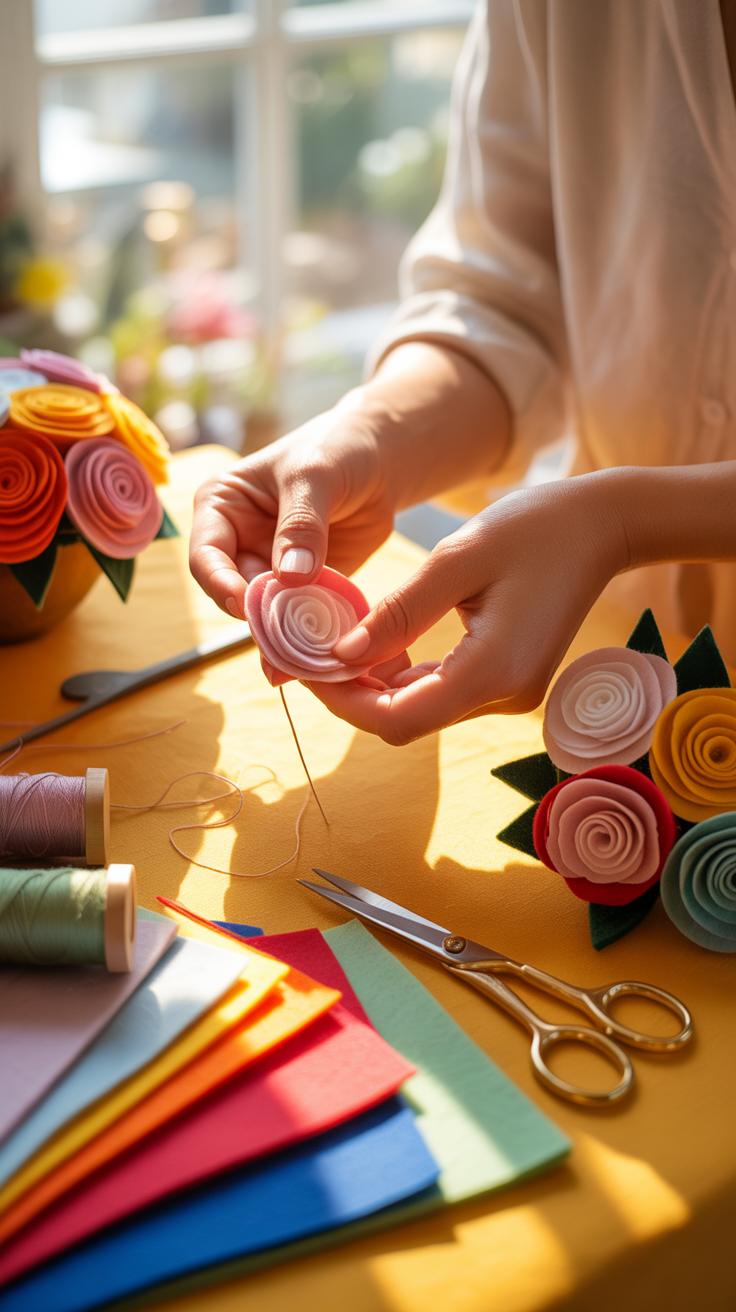
New makers often choose thin craft store acrylic felt. This material lacks the structural integrity needed for realistic petals. It peters out under heat and stretches poorly. Professionals use wool blend or 100 percent wool felt instead. These materials hold their shape and resist fraying during assembly. Investing in high quality material prevents your project from looking like a cheap school craft.
Many beginners overlook the importance of sharp shears. Dull blades chew the fabric edges and create jagged lines. You must also manage glue volume carefully. Excessive hot glue creates visible lumps and prevents the flower from sitting flush against its base. Apply small dots of adhesive to the bottom edge only. This technique allows the petals to move and look fluid rather than stiff.
Trending Color Palettes And Styles Inspiring The Next Generation Of Felt Flower Makers
Modern felt floral design moves away from neon colors. High end makers now use muted earth tones influenced by the Scandinavian design movement. These include sage green, dusty rose, and mustard yellow. This shift mirrors interior design trends that prioritize calm and organic aesthetics. Makers are dying their own felt with tea or botanical extracts to achieve subtle color gradients that look natural.
Texture plays a massive role in current felt flower trends. Designers combine wool felt with different materials like metallic wire or dried grass. Realism is the primary goal for the next generation of artists. They study botanical illustrations to mimic exact petal counts and leaf placements. This focus on accuracy elevates felt flowers from simple decorations to fine art pieces suitable for upscale home staging.
Frequently Asked Questions

What are the best supplies for beginners starting with felt flower crafts?
Getting started with felt flower crafts is incredibly simple. You only need high-quality wool-blend felt, sharp fabric scissors, and a reliable hot glue gun. Unlike real plants, these blossoms require no special skills to maintain. Beginners often find that starting with simple shapes like circles or scalloped strips allows them to master basic assembly techniques before moving on to more complex, multi-layered botanical designs and realistic textures.
How do you keep felt flowers from fraying or losing their shape over time?
One of the biggest advantages of working with felt is that it does not fray like woven fabrics. However, to ensure your felt flower crafts maintain their structural integrity, it is helpful to use a stiffening spray or a white glue and water mixture on the petals. Choosing a wool-blend felt instead of acrylic also helps the flowers hold their shape better, ensuring your beautiful handcrafted arrangements look fresh for years.
Is making felt flowers an expensive hobby for home decorators?
Absolutely not! Felt is one of the most budget-friendly materials available for DIY enthusiasts. You can purchase small “scrap” bundles or large sheets for just a few dollars, allowing you to create an entire everlasting bouquet for a fraction of the cost of silk or fresh alternatives. Because the tools are basic household items, you can achieve a high-end, boutique aesthetic in your home decor without a significant financial investment.