What Is A Boutonniere And Why Do Boutonniere Ideas Still Matter Today
The History And Meaning Behind The Boutonniere
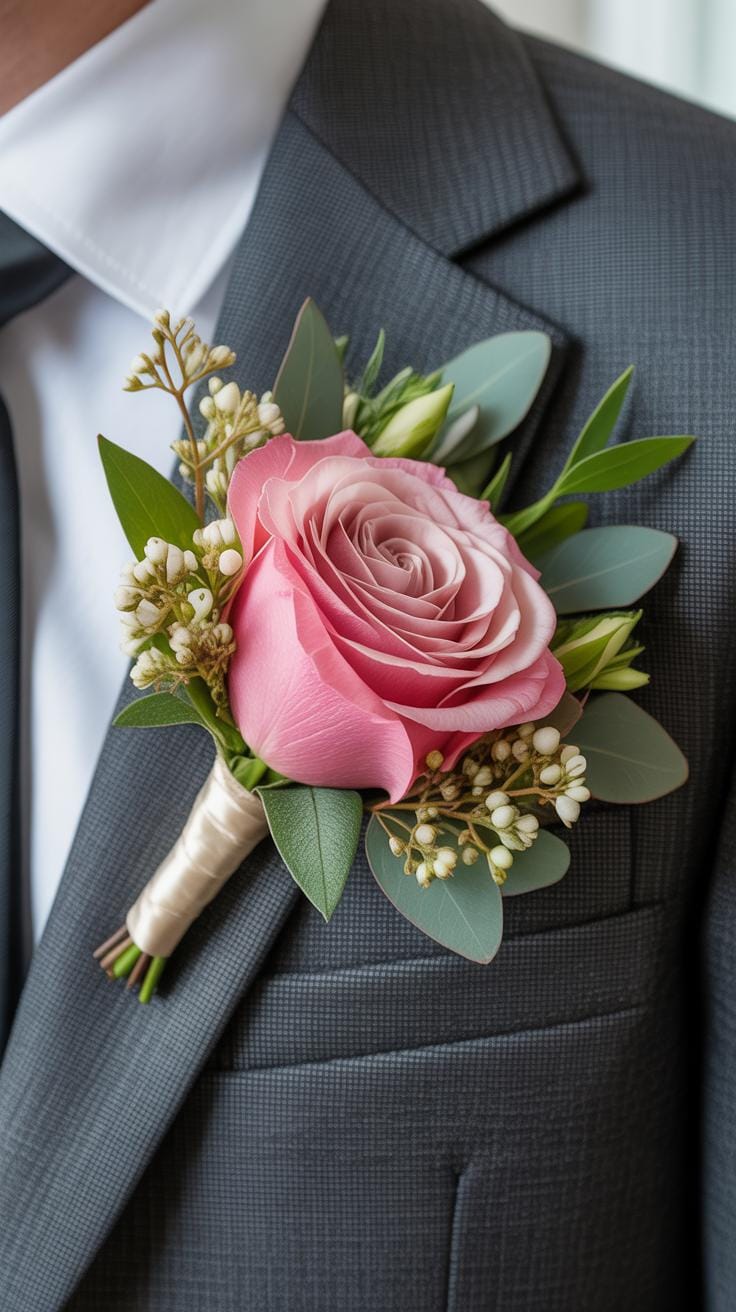
The boutonniere originated as a practical accessory in 16th-century Europe. Men wore small bunches of flowers or herbs in buttonholes to mask unpleasant odors and ward off disease. By the 19th century, the practice shifted toward romantic and social signaling. High-society men used specific flower types to convey secret messages to lovers or to show their status within a specific political or social group.
Modern boutonnieres follow the rules of the Edwardian era. During this time, the left lapel became the standard placement for floral accents. Tailors began adding a reinforced loop behind the lapel to hold the flower stems firmly. This period solidified the boutonniere as a mark of formal distinction. It moved from a daily habit to a specific requirement for weddings, funerals, and high-level galas.
Why Boutonnieres Remain A Timeless Floral Tradition
Modern men use boutonnieres to create visual cohesion during formal events. The floral piece serves as a bridge between the suit and the overall event theme. It breaks the monotony of a heavy jacket and directs the eye toward the face. Proper boutonniere ideas ensure that the groom and his party stand out from the guests. It remains the most effective way to signal seniority.
The tradition persists because it requires zero structural changes to the garment. Magnet clips and pins allow any novice to attach a flower without damaging expensive wool or silk. In a world of digital interactions, the boutonniere provides a tactile sense of occasion. It forces the wearer to pay attention to detail. This small investment in style pays off by elevating the entire formal look instantly.
Essential Supplies You Need Before Trying Any Boutineer Ideas At Home
The Core Tools And Materials Every Beginner Should Have Ready
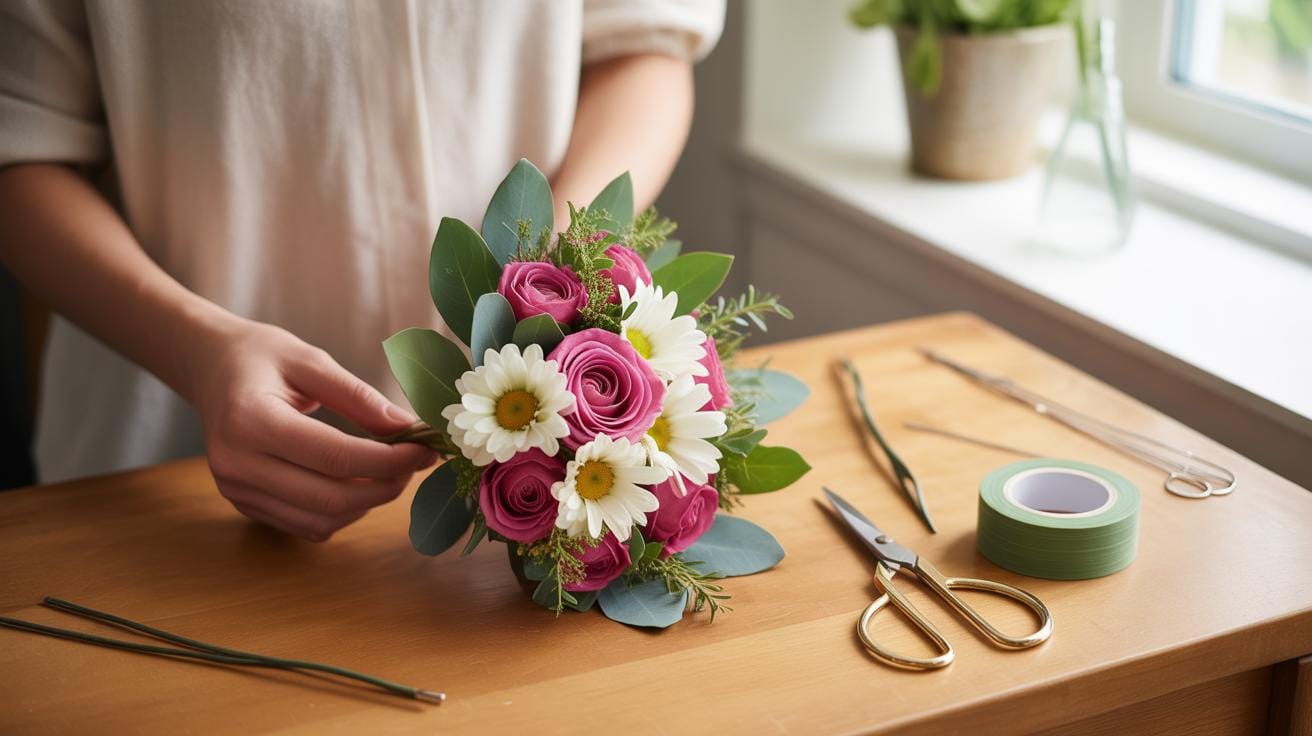
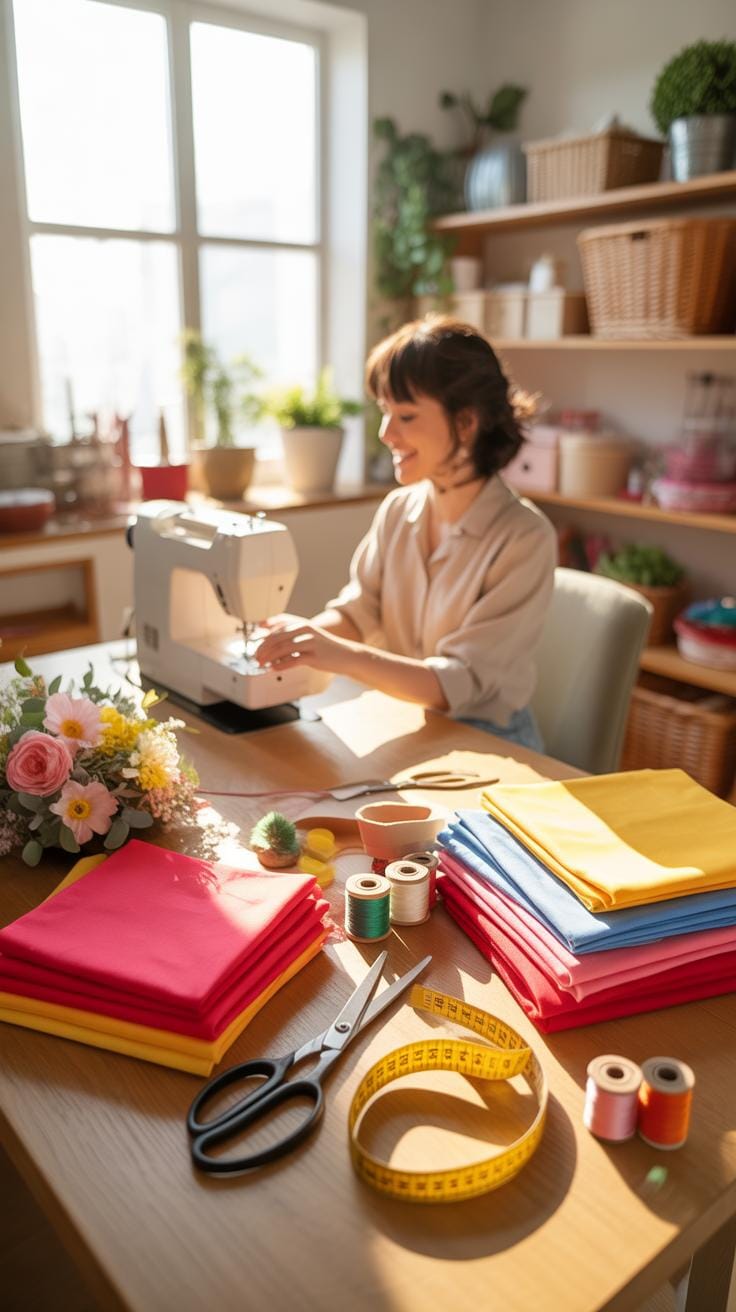
Professional floral design requires specific mechanical tools to ensure structural integrity. You cannot rely on standard household scissors or weak adhesives for these projects. Proper supplies allow you to secure heavy stems and delicate petals without causing damage. Having these items organized before you begin prevents a messy workspace and keeps the organic materials from wilting while you search for gear.
- Floral Shears: Use high carbon steel blades to make clean cuts on woody and soft stems. Dull blades crush the vascular system of the flower and cause rapid wilting. Sharp shears ensure the bloom stays hydrated for the duration of your event.
- Floral Wire: Select 22 or 24 gauge wire to reinforce weak stems or create artificial ones. This wire provides the internal structure needed to hold the flower head upright against a lapel. It allows for precise positioning that natural stems cannot maintain.
- Stem Wrap Tape: This wax coated paper tape sticks to itself when stretched and warmed by your fingers. It seals moisture inside the stem and hides the structural wire. Use green or brown to blend with the foliage for a professional look.
- Boutonniere Pins: Opt for teardrop or round head pins at least two inches long. These must be sturdy enough to pierce through heavy suit wool and the floral stem without bending. Black or pearl heads are standard choices for traditional formal wear.
- Wire Cutters: Do not use your floral shears to cut metal wire as it ruins the blade edge. Dedicated wire cutters provide a flush cut that prevents sharp ends from snagging clothing. Safety is the priority when handling thin gauge metals near expensive formal fabrics.
Adhesives play a secondary but vital role in modern construction. Cold floral glue serves better than hot glue because heat destroys plant tissue instantly. Use these tools to attach small accents or succulent leaves that lack traditional stems. Proper mechanics are the foundation of any successful design. Master these tools before attempting complex floral arrangements to ensure your work remains intact and looks professional throughout the day.
Where To Source Fresh Or Artificial Flowers For Your Boutonniere
Sourcing determines the longevity and visual impact of your final product. Local wholesalers offer the highest quality fresh stems but often require a business license. Local florists are a reliable alternative for beginners needing small quantities of specific blooms. Grocery stores provide affordable options for practice work. Always check the firmness of the flower head and the health of the leaves before purchasing any live material.

Artificial options offer a permanent solution for events in extreme heat. High quality silk or real touch latex flowers mimic the texture and color of live plants. Specialized online craft retailers stock these items year round regardless of growing seasons. This allows you to prepare your designs weeks in advance. Evaluate the stem flexibility and color realism of artificial stems to avoid a cheap or dated appearance on the lapel.
Classic Wedding Boutonniere Ideas That Never Go Out Of Style
Traditional Rose And Greenery Combinations For A Formal Wedding Look
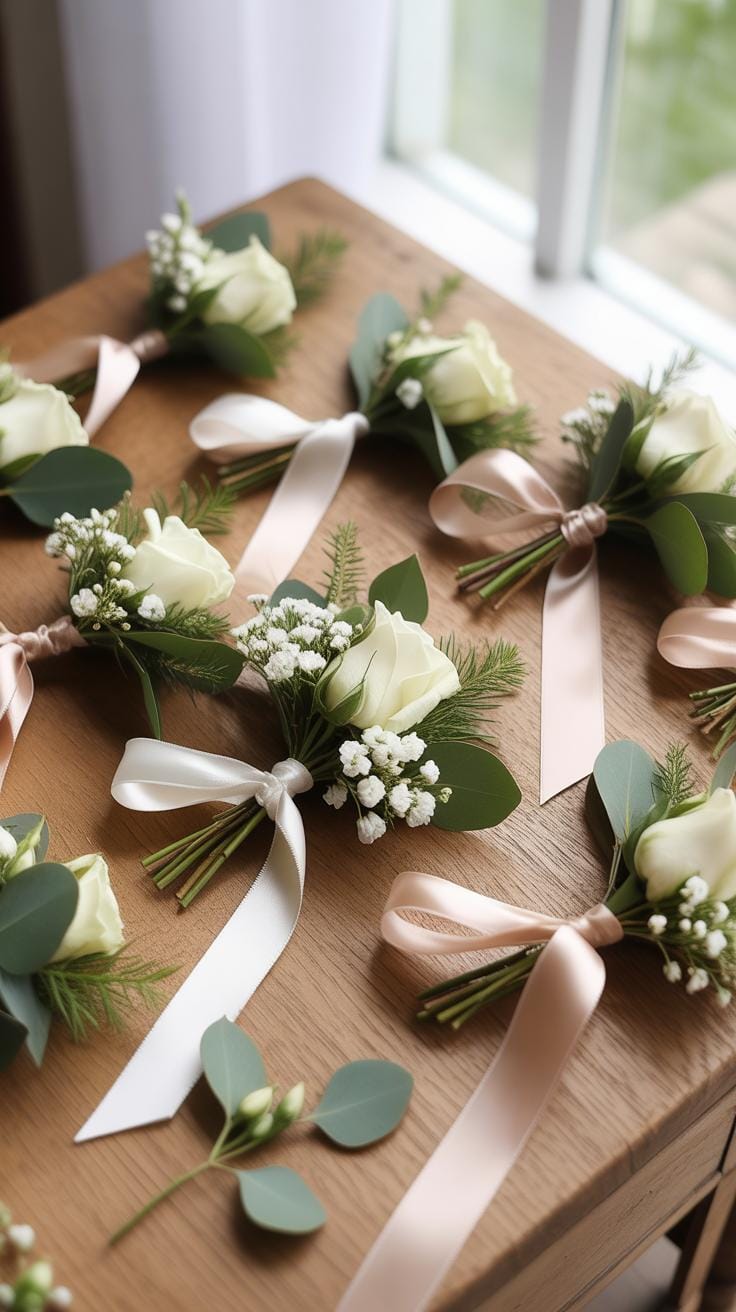
The single rose bud remains the standard for formal events. Florists prefer the spray rose or a small tea rose for size control. A proper formal boutonniere uses a dark, waxy leaf like Ruscus or Salal to provide structure. This backing prevents the bloom from drooping against the lapel. You must trim the stem to approximately two inches for a clean appearance.
Select colors based on traditional color theory to ensure high contrast. White roses on black wool provide the highest level of formality. Use floral wire to reinforce the stem before wrapping it in green floral tape. This technique keeps the heavy flower head upright throughout the ceremony. Secure the finished piece with a single pin pushed through the back of the lapel fabric.
How To Match Your Wedding Boutonniere To The Bridal Bouquet
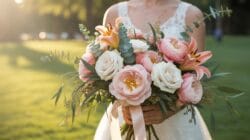
To achieve visual unity, pull secondary flowers directly from the bridal bouquet. If the bouquet uses large peonies, use a smaller bud from the same color family for the boutonniere. Matching the exact genus of the flower is not always required. You should focus on color saturation and texture instead. This creates a cohesive look without the groom’s accessory appearing too large or bulky.
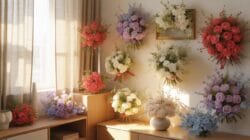
Ribbon choice plays a critical role in synchronization. Use the same material to wrap both the bouquet handle and the boutonniere stem. If the bride uses silk or velvet, apply that specific fabric to the lapel piece. This small detail ties the two arrangements together scientifically. Consistency in greenery also helps. If the bouquet features eucalyptus, use a small sprig of the same variety in the boutonniere.
Step By Step Guide To DIY Wedding Boutonnieres For Complete Beginners
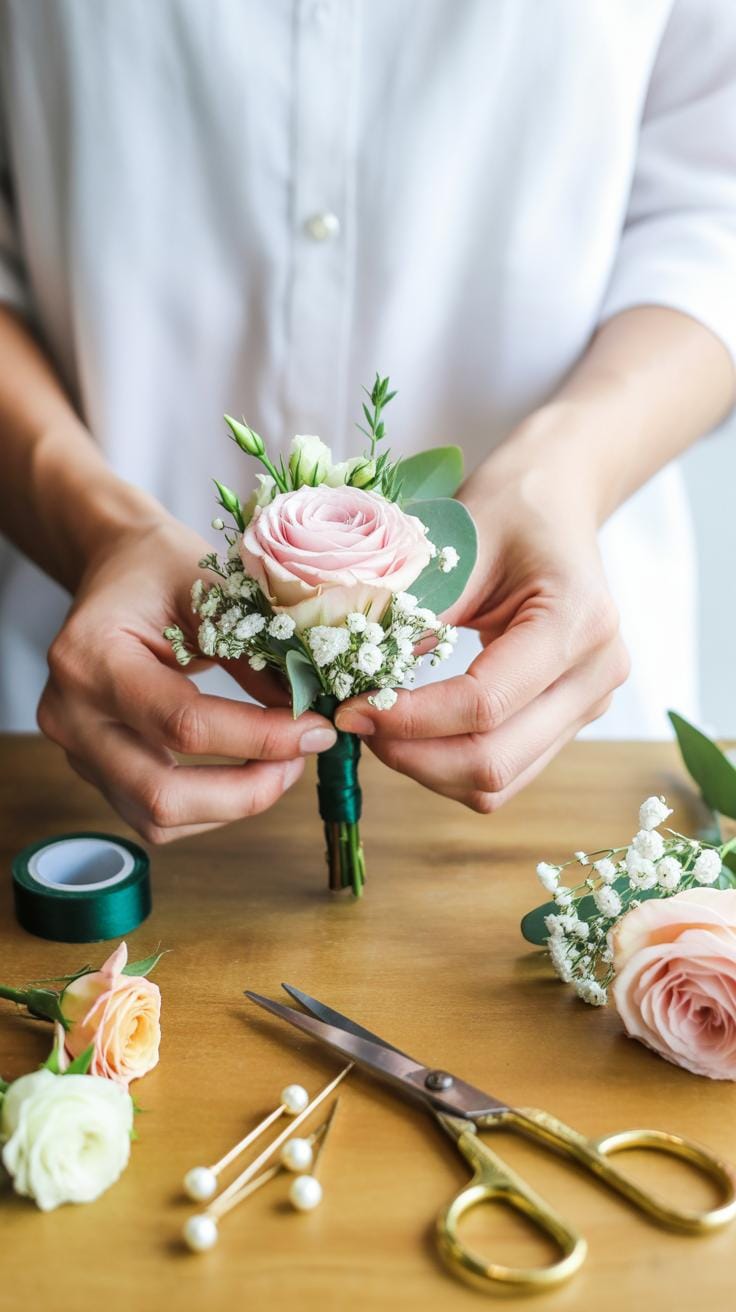
How To Wire, Tape, And Assemble A Boutonniere From Scratch
Start by trimming the flower stem to two inches. Take a twenty-four gauge floral wire and pierce the calyx at the base of the bloom. Push the wire through until half remains on each side. Fold both ends down parallel to the stem. This technique provides structural integrity. It allows you to bend the flower head into the correct position without snapping the natural stem.
Wrap the stem and wire using green floral tape. Stretch the tape slightly as you wrap to activate the wax adhesive. Start high at the base of the bloom and spiral downward. Overlap each layer to ensure a tight seal. Add a small piece of greenery behind the main flower. Secure the entire bundle with more tape. Trim the final stem to exactly two inches.
Common DIY Mistakes To Avoid When Making Your First Boutonniere
Beginners often ignore the hydration needs of the flower. You must hydrate your stems in cool water for at least four hours before assembly. If you skip this step, the flower will wilt before the ceremony ends. Avoid using heavy flowers with weak stems like large lilies. These will sag under their own weight. Stick to hardy varieties like spray roses or carnations for your first project.
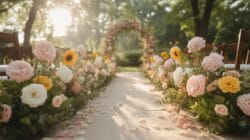
Do not use too much tape or create a bulky stem. A thick stem looks unprofessional and is difficult to pin. Keep your tape wraps tight and thin. Another common error is placing the pin through the front of the lapel. Always pin from the back of the jacket lapel. This hides the metal and secures the flower against the fabric. Ensure the boutonniere sits flat and upright.
Simple Boutonniere Designs That Are Perfect For Low Key Celebrations
Single Stem Boutonniere Ideas That Look Elegant With Minimal Effort
Choose one high-impact flower to eliminate complex arrangement steps. Use a Ranunculus or a standard Rose for structural reliability. These flowers have sturdy stems that support their own weight without drooping. Cut the stem to three inches. Strip all foliage below the bloom. Secure the flower to the lapel with a single pearl-headed pin. Position it precisely on the left side of the jacket.
A single Calla Lily offers a modern aesthetic for formal events. Its sleek shape requires no additional filler or greenery. You must wrap the stem in floral tape to seal moisture and prevent staining the garment. Cover the tape with a dark silk ribbon for a clean finish. This design stays fresh for hours without a water source. It provides a sharp look for beginners.
Using Wildflowers And Herbs To Create A Simple Boutonniere With Charm
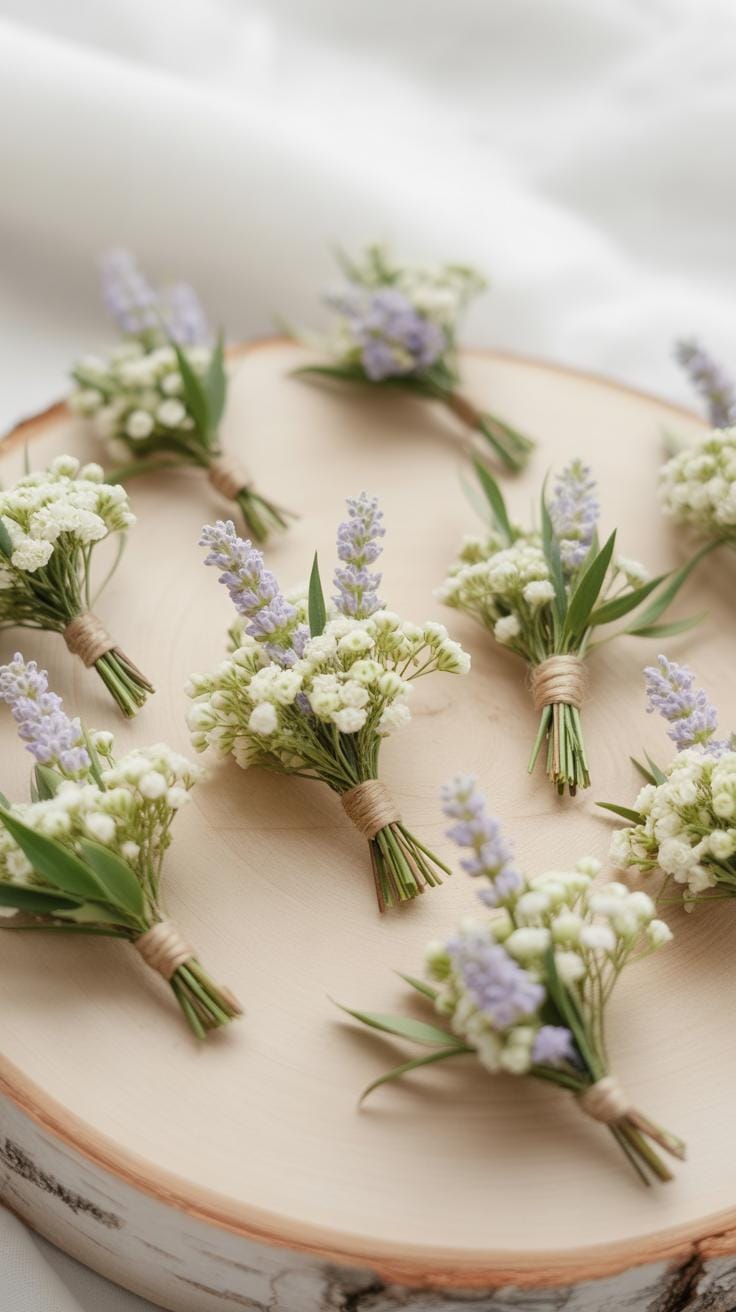
Herbs like Rosemary and Lavender provide scent and structural integrity. These hardy plants do not wilt quickly in heat. Combine two sprigs of Rosemary with a single dried flower. This approach uses materials often found in home gardens. It reduces costs and logistics. Bind the stems with twine to match the organic texture. Ensure the heights are slightly staggered for visual depth.
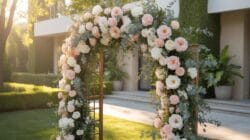
Wildflowers require immediate hydration before assembly. Use Feverfew or Chamomile for a rustic appearance. These small blooms mimic the Look of professional designs with less bulk. Avoid fragile stems like Sweet Peas that collapse without water tubes. Stick to woody stems for durability. Wrap the base tightly to prevent individual pieces from sliding out. This technique ensures the boutonniere remains intact during movement.
Stylish MenS Boutonnieres That Complement Any Wedding Suit Or Tuxedo
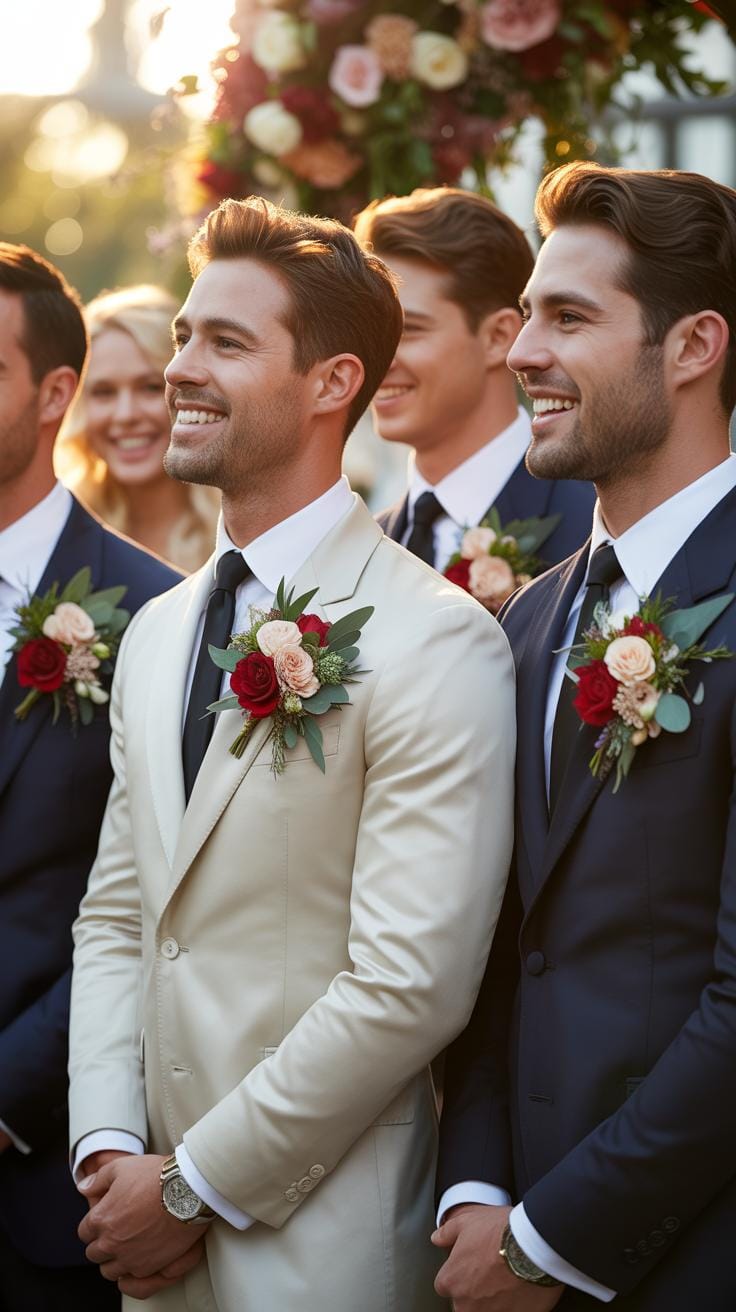
Choosing The Right Flower Size And Color For Men’S Boutonnieres
Scale determines the success of a boutonniere. A bloom that is too large will collapse the lapel. It covers the buttonhole and ruins the jacket lines. Select a primary flower no wider than two inches. This size maintains the balance of a standard suit lapel. Small focal flowers like spray roses or ranunculus work best. They provide impact without adding excessive weight or bulk.
Color must coordinate with the suit fabric rather than just the wedding theme. High contrast creates a bold look. A white carnation on a black tuxedo follows strict formal tradition. Use muted tones like dusty blue or sage for grey suits. These colors blend well and look professional. Always check the flower against the actual suit fabric in natural light. This ensures the colors do not clash or wash out.
Non Floral Boutonniere Options That Work Well For Modern Grooms
Floral alternatives offer durability and a modern aesthetic. Succulents provide a sturdy green option that will not wilt in heat. Dried elements like wheat or lavender provide a rustic feel. These materials stay intact for the entire event. They suit outdoor weddings or long days. Metal pins or geometric shapes offer a sleek look for contemporary events. These choices remove the risk of pollen stains on expensive tuxedo wool.
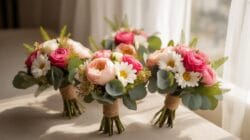
Herbs and feathers serve as tactile substitutes for traditional petals. Rosemary and thyme add a subtle scent and structured shape. Textural elements like feathers or small pods create visual interest without the feminine look of a flower. Secure these items with floral wire and tape just like a standard bloom. They pair well with heavy fabrics like tweed or flannel. Modern styles favor these unique materials for their distinctive and masculine edge.
Creative Boutineer Ideas For Wedding Parties On A Budget
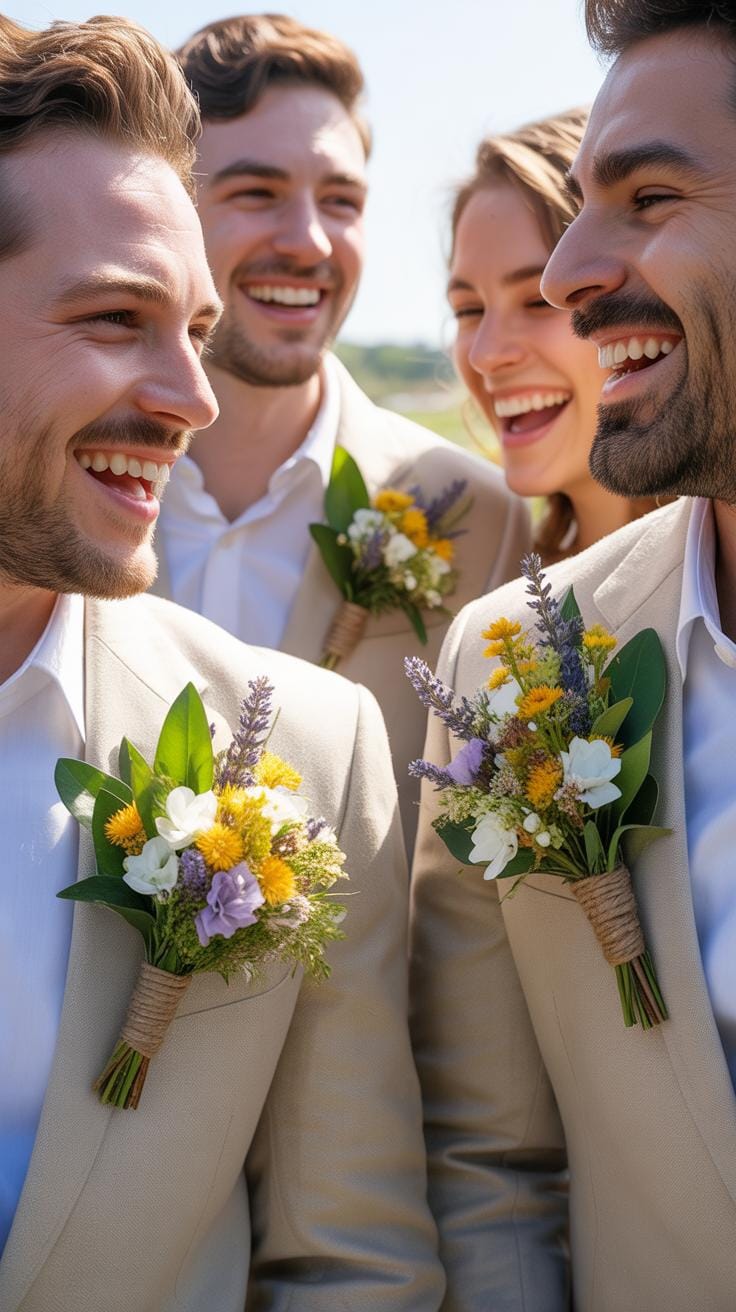
Affordable Flower Varieties That Still Make A Beautiful Boutonniere
Carnations and baby’s breath offer the best value for limited budgets. Carnations have high petal counts and sturdy stems. They resist wilting in heat and direct sunlight. These flowers cost significantly less than roses or orchids. You can find them in many colors to match your theme. Their structural integrity makes them ideal for beginners who are learning basic wrapping techniques.
Greenery-heavy designs reduce costs even further. Use eucalyptus, ruscus, or fern leaves as the primary focal point instead of expensive blooms. These foliage options provide a clean and modern look. They last longer than most flowers without a water source. Pairing a single sprig of herbs like rosemary or sage adds fragrance and visual interest. This strategy keeps your material costs low while maintaining a professional appearance.
How To Use Faux Or Dried Flowers To Cut Costs Without Sacrificing Style
High-quality silk or foam flowers offer a one-time investment. These materials do not wilt or brown during the event. You can assemble these boutonnieres weeks in advance to save time on the wedding day. Look for “real touch” varieties that mimic the texture of live petals. These options eliminate the need for refrigeration and delicate handling. They work well for outdoor summer weddings.
Dried elements like lavender, wheat, or strawflowers provide a permanent solution. This method draws from traditional folk styles and late nineteenth-century aesthetics. These materials are lightweight and easy to secure with floral tape. You can buy dried bundles in bulk to serve large wedding parties. Unlike fresh flowers, these pieces become keepsakes for the guests. Store them in a cool and dry place to prevent color fading before the event.
Seasonal Bouteniers Wedding Men Can Wear From Spring Through Winter
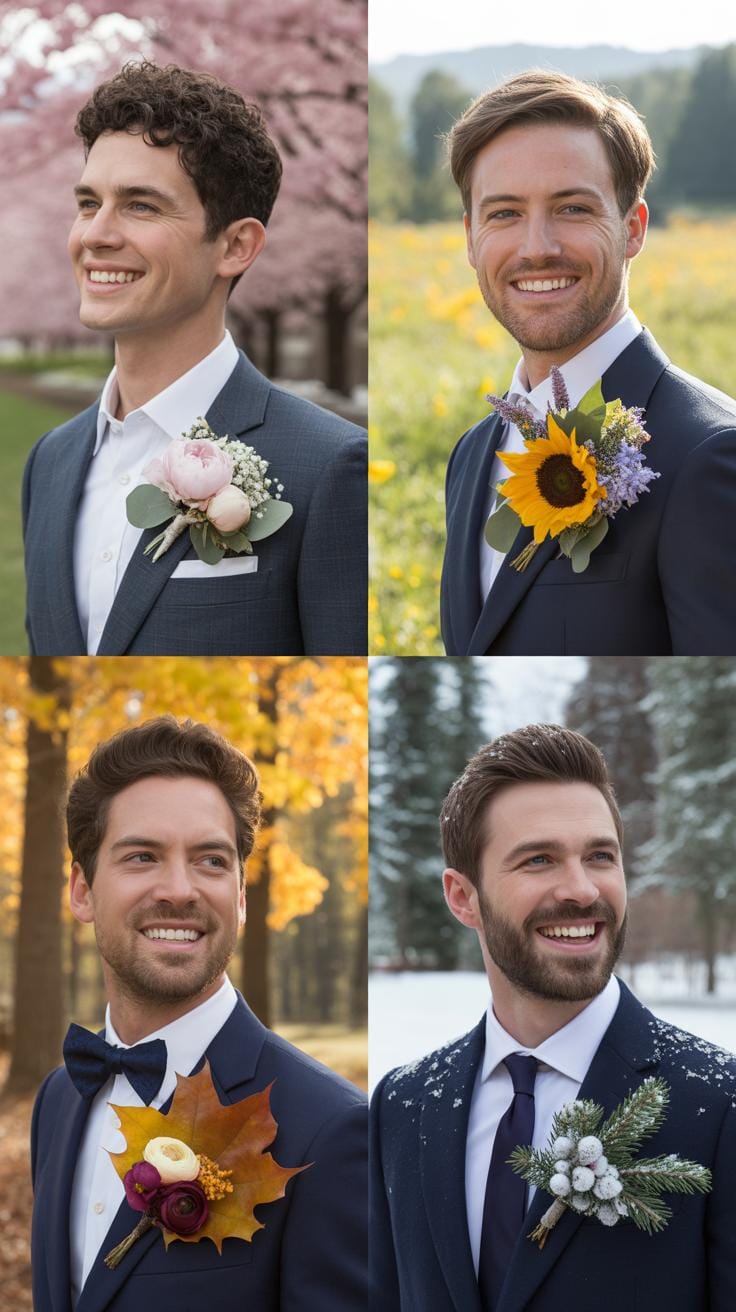
Best Flower Choices For Spring And Summer Wedding Boutonnieres
Spring and summer require flowers that withstand heat and represent the growth cycle. Soft petals wilt fast in direct sun. You must select hardy species with thick stems to maintain structure. Lighter colors reflect heat and match the high light levels of these seasons. Focus on local blooms to ensure freshness and longevity during outdoor ceremonies and long photo sessions.
- Ranunculus: These flowers offer a high petal count and sturdy stems. They come in many bright colors suitable for spring. Their structure holds up well without water for several hours. This makes them ideal for long wedding days.
- Lavender: This herb provides a distinct scent and rigid form. It does not wilt in extreme summer heat. Use dried or fresh sprigs to add texture. It works well for outdoor or rustic themes because it remains stable in wind.
- Spray Roses: These are smaller versions of standard roses. They offer a classic look with better scale for a lapel. They have tough outer petals that protect the bloom. These flowers handle handling and pinning better than larger, heavier varieties.
- Succulents: These plants store water in their leaves. They are nearly impossible to wilt during a hot summer day. They provide a modern look and extreme durability. You can even replant them after the wedding event concludes.
- Craspedia: Also known as Billy Balls, these yellow spheres add a pop of color. They are actually dried flowers that look fresh. They do not require water and maintain their shape perfectly. Use them to add a geometric element to the design.
Proper hydration before assembly is critical for warm weather success. Cut stems at an angle and let them soak for two hours. Use floral sealant spray to close the pores on the petals. This prevents moisture loss through evaporation. Secure the blooms with professional floral tape to lock in remaining water. These steps ensure the boutonniere looks sharp from the first photo to the last dance.
Love is the master key that opens the gates of happiness, and even the simplest bloom pinned to a lapel carries that joy. Creating a boutonniere is a gentle way to weave nature’s beauty into the memories of those we hold dear.
Fall And Winter Boutonnieres Using Berries Pinecones And Rich Tones
Cold weather designs shift from delicate petals to hardy textures. Use organic elements that survive freezing temperatures without turning black. Fall designs benefit from dried wheat, oak leaves, and deep red tones. Winter styles focus on evergreen foliage and woody accents. These materials provide a masculine aesthetic and superior structural integrity. They handle the weight of heavy wool suit jackets better than soft spring flowers.
Incorporate non-floral elements like hypericum berries or small hemlock cones for visual interest. These items do not wilt and require zero water. Use copper or gold wire to wrap stems for a polished finish. Deep burgundy, navy, and forest green palettes dominate these months. Always secure heavy items with two pins to prevent the boutonniere from sagging or flipping. This creates a stable and professional look that lasts all night.
How To Pin And Preserve A Boutonniere Wedding Guests Will Remember
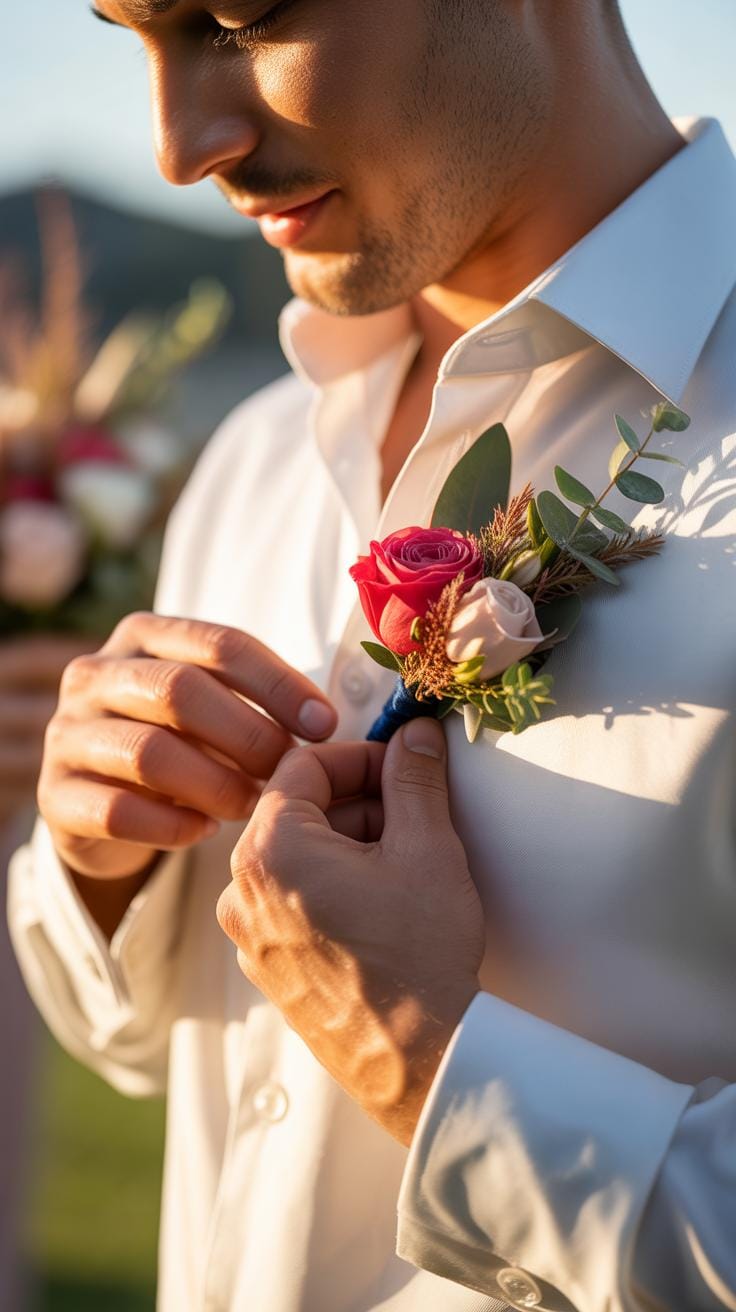
The Correct Way To Pin A Boutonniere So It Stays Secure All Day
Position the boutonniere on the left lapel. Place it over the buttonhole but do not push the stem through it. Center the floral head just below the widest part of the lapel. Hold the flower firmly against the fabric. You must keep the stem parallel to the lapel edge. Proper placement ensures the arrangement looks balanced and remains upright during movement.
Flip the lapel over to work from the back. Insert a sturdy pin through the fabric and into the thickest part of the stem. Push the pin downward at a slight angle. The pin must catch the stem and re-enter the fabric on the other side. This creates a secure anchor. Use two pins in a cross pattern for heavy or large floral arrangements.
Simple Tips For Keeping Your Boutonniere Fresh From Morning To Reception
Keep the boutonniere in a refrigerator until the last possible moment. Extreme temperatures kill live petals quickly. Avoid placing the flowers near fruits like apples or bananas. These fruits release ethylene gas which accelerates wilting. Mist the arrangement lightly with cool water before pinning it to the suit. Hydration is the most effective way to prevent browning and sagging.
Avoid touching the petals once the boutonniere is in place. Skin oils damage delicate tissues and cause dark spots. If the event is outdoors in high heat choose hardy varieties like succulents or ranunculus. These survive longer without a water source than soft roses or hydrangeas. Prepare a backup boutonniere for the evening if the first one begins to fail during the ceremony.
Frequently Asked Questions

What are the best flowers for someone making a boutonniere for the first time?
If you are new to floral design, stick with hardy blooms that can withstand handling and lack of water. Roses, carnations, and ranunculus are excellent starting points because they have sturdy stems and resilient petals. These classic choices provide a great foundation for various boutonniere ideas, allowing you to practice your taping technique without worrying about the delicate blossoms wilting before the event even begins.
How do I properly secure a boutonniere so it stays upright all day?
To keep your creation secure, use the “cross-pinning” method. Insert one pin through the thickest part of the stem and the lapel fabric, angling it downward. Insert a second pin across the first in an “X” shape. This technique is essential for most boutonniere ideas because it prevents the floral arrangement from flopping forward or rotating, ensuring the greenery stays perfectly aligned with the wearer’s shoulder throughout the celebration.
Can I create professional-looking boutonnieres on a tight budget?
Absolutely. You can save money by using focal flowers from a grocery store bouquet and supplementing them with foraged greenery from your own backyard, like ivy or eucalyptus. Using affordable materials like twine or simple floral tape can still result in high-end designs. Creativity is key when scouting for budget-friendly boutonniere ideas; even a single sprig of dried lavender or a lonely herb can look incredibly sophisticated and intentional.