The Role Of Wedding Aisle Flowers In Setting The Tone For Your Ceremony
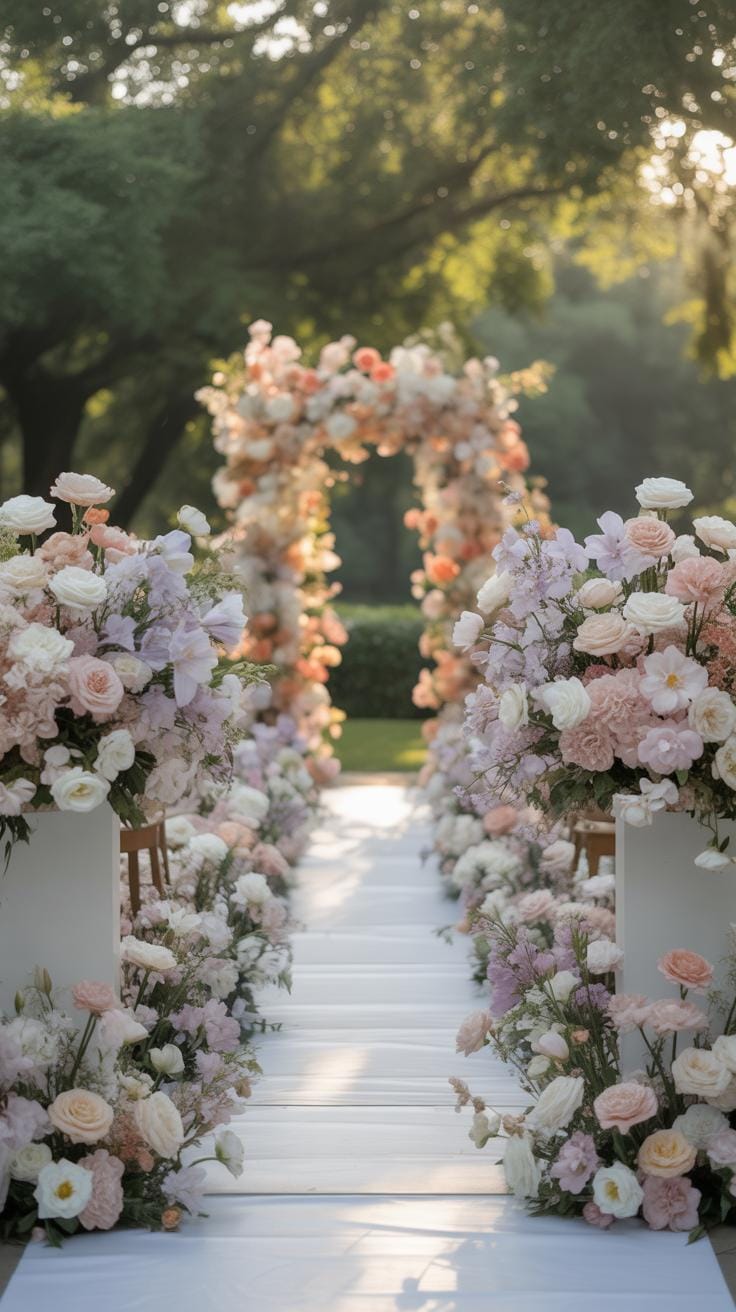
Why Floral Aisle Arrangements Are The First Impression Guests Will Remember
The aisle serves as the primary visual path for every guest. It represents the first high-impact design element they encounter upon entering the ceremony space. Strategic placement of Wedding Aisle Flowers guides the eye toward the altar. This creates an immediate psychological shift from the outside world to the formal event. Design choices here establish the expected level of formality and atmosphere instantly.
Planners use these arrangements to define the physical boundaries of the ceremony. Flowers sit at eye level for seated guests and remain in their line of sight for the duration of the service. This placement ensures the floral investment receives maximum visibility and engagement. Clear sightlines and consistent spacing signal professional execution. These details ground the space and prepare the audience for the arrival of the wedding party.
How Flower Choices Reflect The Couple’S Personality And Wedding Theme
Flower selection acts as a visual shorthand for the overall design narrative. Choosing architectural blooms like calla lilies suggests a modern or minimalist preference. In contrast, using loose English garden roses points toward a classic or romantic aesthetic. Precise color palettes reinforce the branding of the event. Designers use these materials to translate abstract personal styles into a tangible physical environment for the guests.
Modern floral design often incorporates non-traditional elements to signal specific themes. Incorporating dried pampas grass or succulents moves the event toward a bohemian or desert aesthetic. Using strictly monochrome white blooms references historical high-society standards and formal etiquette. These choices allow the couple to communicate their values without words. The textures and shapes selected for the aisle must align with the broader reception decor to ensure a cohesive experience.

Popular Wedding Aisle Design Styles And The Flowers That Define Them
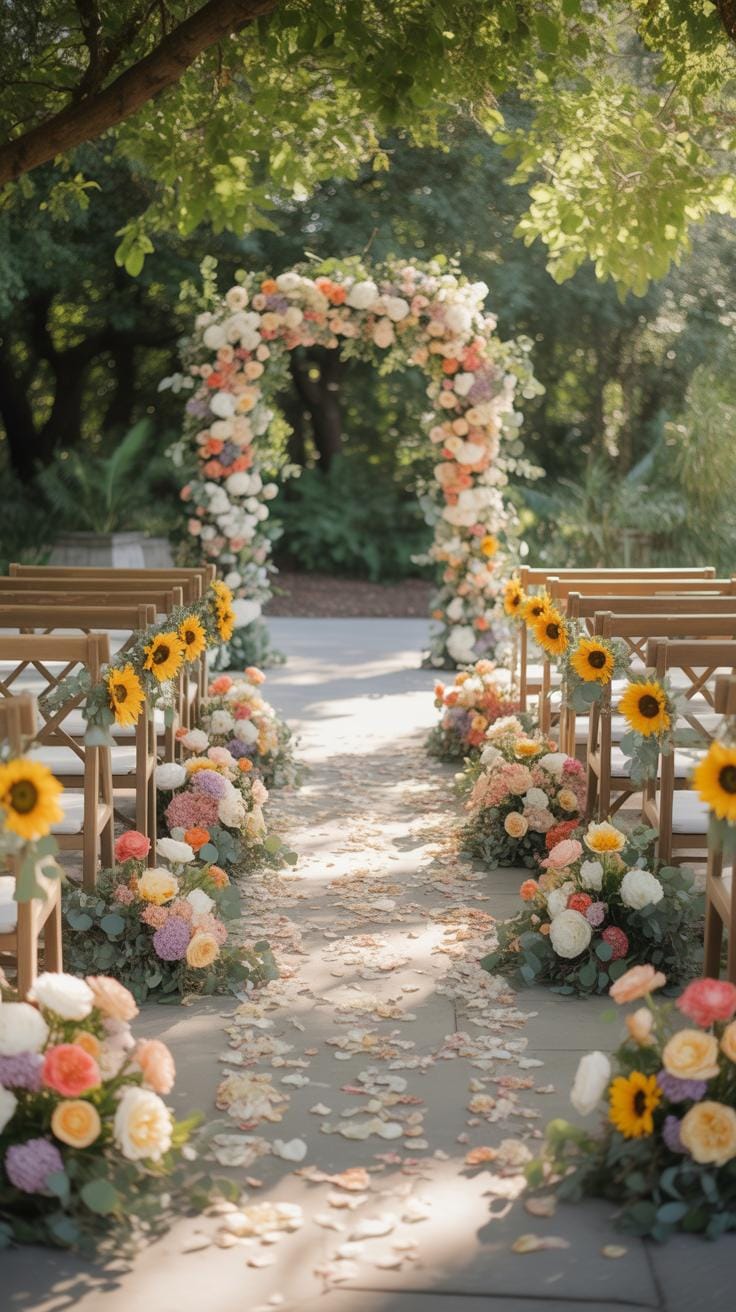
Romantic And Classic Aisle Design Wedding Looks Featuring Roses And Peonies
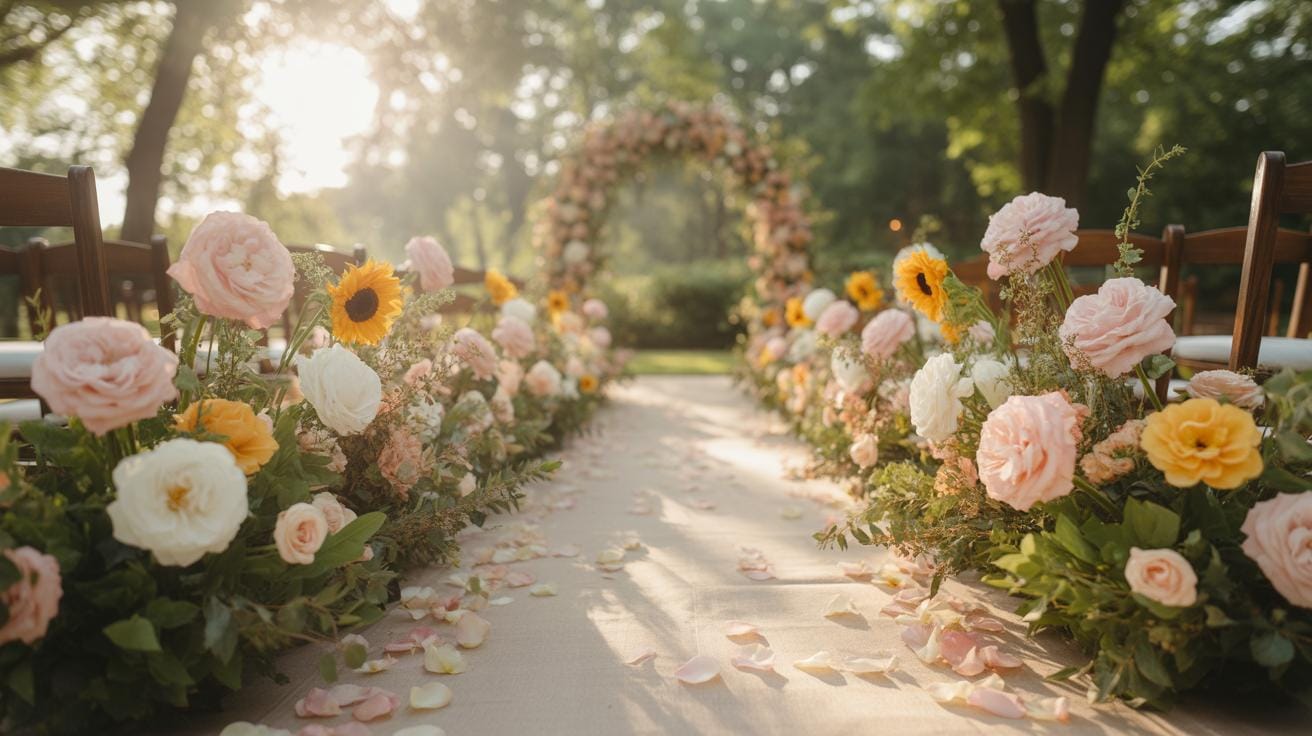
Romantic aisle designs rely on dense floral mass to create a sense of abundance. This style utilizes the high petal count of garden roses and peonies to soften the lines of the ceremony space. Designers often place these blooms in low, mounded arrangements along the inner edge of the chairs. This technique hides the mechanics of the floral foam and creates a seamless flow.
The selection of specific flower varieties dictates the longevity of the installation. Hybrid tea roses offer structural stability while Sarah Bernhardt peonies provide wide visual coverage. Use white and cream tones to maintain a traditional aesthetic. Strategic placement at the start and end of the aisle maximizes the visual impact for photography. These flowers symbolize prosperity and have grounded wedding traditions for centuries.
Modern And Minimalist Wedding Aisle Design With Sculptural Blooms And Greenery
Modern minimalist aisles prioritize negative space and architectural form over bulk. This style uses monobotanical groupings to create clean lines and high visual contrast. Designers often choose calla lilies, anthuriums, or monstera leaves for their rigid shapes. Instead of traditional ground clusters, flowers may stand in thin glass cylinders or sleek ceramic vessels. This approach reduces clutter and focuses the eye on the couple.
Greenery plays a functional role in defining the boundary of the path. Ruscus and eucalyptus provide a low-maintenance base that stays fresh without frequent misting. Minimalist setups require fewer stems but demand higher quality specimens because every flower is visible. Use asymmetrical placement to add interest without overwhelming the venue architecture. This movement draws heavily from mid-century design principles where less material creates more significant impact.
Seasonal Wedding Floral Aisle Ideas To Keep Arrangements Fresh And Budget Friendly
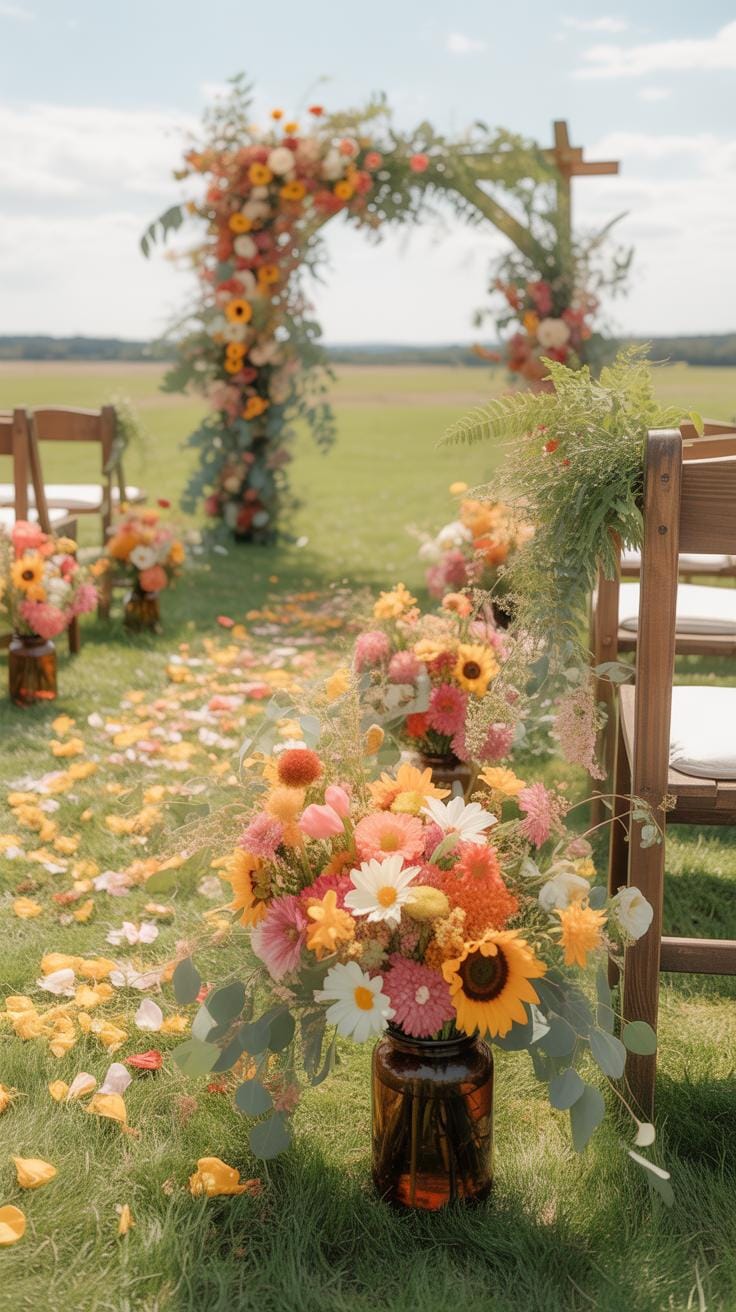
Spring And Summer Wedding Floral Aisle Picks: Poppies, Dahlias, And Wildflowers
Spring and summer offer the highest variety of Wedding Aisle Flowers at lower costs. Grounded meadows use local blooms to mimic natural growth along the ceremony path. Poppies provide bold colors but require searing the stems to prevent wilting. Designers use floral foam or water tubes hidden in low containers to keep these delicate stems hydrated during outdoor ceremonies in high heat.
Dahlias peak in late summer and offer mass and structure for larger aisle markers. Their thick stems make them sturdy for upright arrangements. Wildflowers work best in bundles tied to chairs or placed in jars. This approach reduces the need for expensive florist labor. Selecting flowers that are currently in bloom locally cuts shipping costs and ensures the petals stay firm throughout the event.
Autumn And Winter Floral Aisle Arrangements Using Dried Botanicals And Deep Tones
Autumn Wedding Aisle Flowers focus on texture and durability. Designers mix dried lunaria and pampas grass with fresh blooms to create depth. These dried elements withstand cooler temperatures and wind better than soft petals. Using deep tones like burgundy and rust provides high contrast against traditional white rugs. Strategic use of preserved foliage allows couples to prepare aisle decor days in advance without risk of browning.
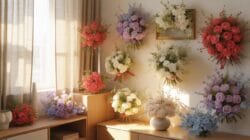
Winter arrangements shift toward hardy greenery and woody textures to survive low humidity and indoor heating. Cedar, pine, and ilex berries serve as resilient bases for aisle runners. Dried hydrangeas offer significant volume for a low price point during the off-season. Velvet ribbons and dark metal lanterns replace fragile glass to ground the design. These materials remain stable for hours, ensuring the aisle looks crisp for every guest.
Creative Isle Wedding Decor Techniques That Go Beyond The Traditional Petal Row
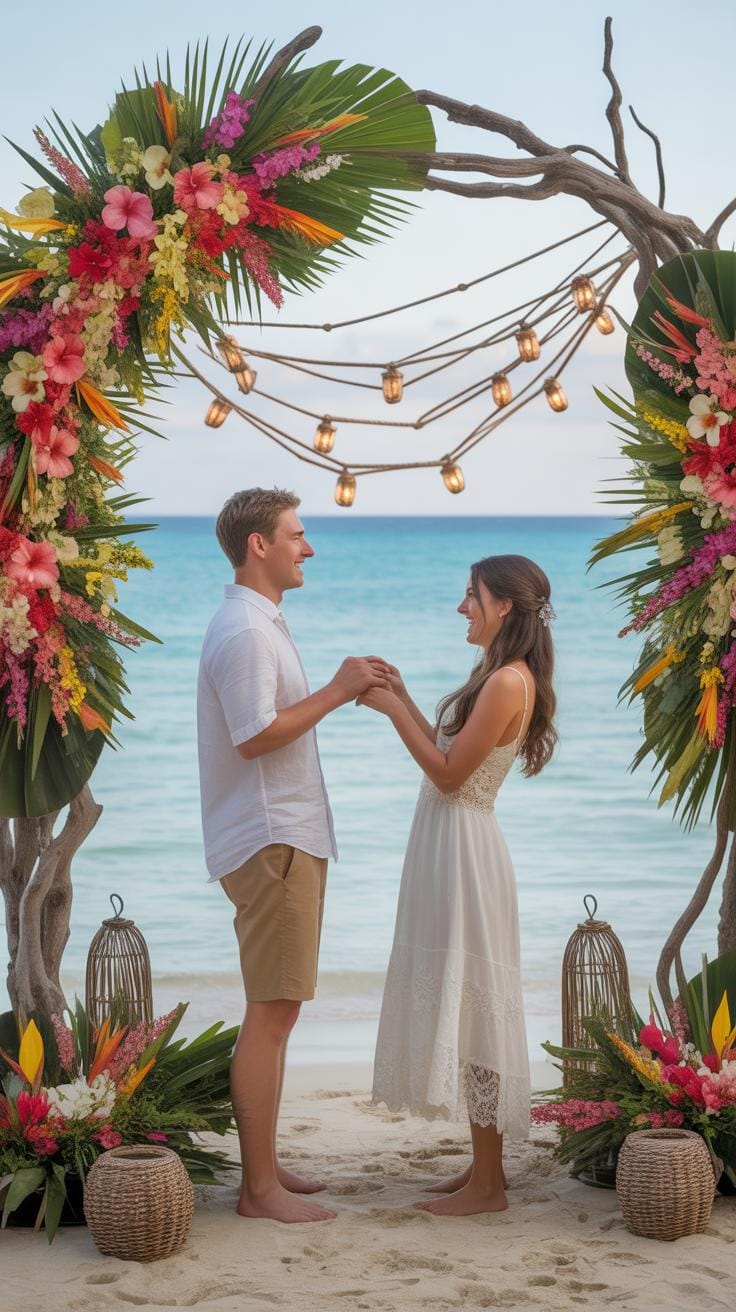
Hanging Floral Installations And Overhead Arches As Part Of Isle Wedding Decor
Overhead floral installations shift the visual focus from the floor to the vertical plane. Designers use steel armatures or heavy-duty monofilament to suspend Wedding Aisle Flowers above the seating area. This technique maximizes ground space in narrow venues. It creates a defined corridor without obstructing the walking path. Modern florists utilize soaked floral foam cages or water tubes to maintain hydration for suspended blooms.
Arches placed at intervals along the aisle create a tunnel effect. This structural approach draws from classical garden design and formal estate layouts. Planners select rigid materials like wrought iron or treated timber for the base. They then layer greenery and focal flowers to soften the frame. These structures must be freestanding and weighted for stability. They provide a high-impact visual that works well in high-ceiling industrial spaces.
Ground Level Lanterns, Candles, And Blooms Combined For A Layered Aisle Effect
Combining Wedding Aisle Flowers with non-floral elements creates depth and texture. Designers place glass lanterns or pillar candles at the base of floral clusters. This layering technique builds a tiered visual landscape. Professionals often use staggered heights to lead the eye toward the altar. You must secure these items away from the hem of the bride’s dress to prevent tripping or fire hazards.

Safety and stability dictate the choice of materials in this layered approach. Use LED candles in high-traffic or outdoor areas to avoid wind disruption. Surround the light sources with sturdy floral foam arrangements or potted plants. This prevents the decor from shifting if guests brush against it. Grouping these items in clusters rather than a single line provides a more structured and architectural look for the ceremony aisle.
Wedding Aisle Decor With Flowers For Outdoor And Garden Ceremonies
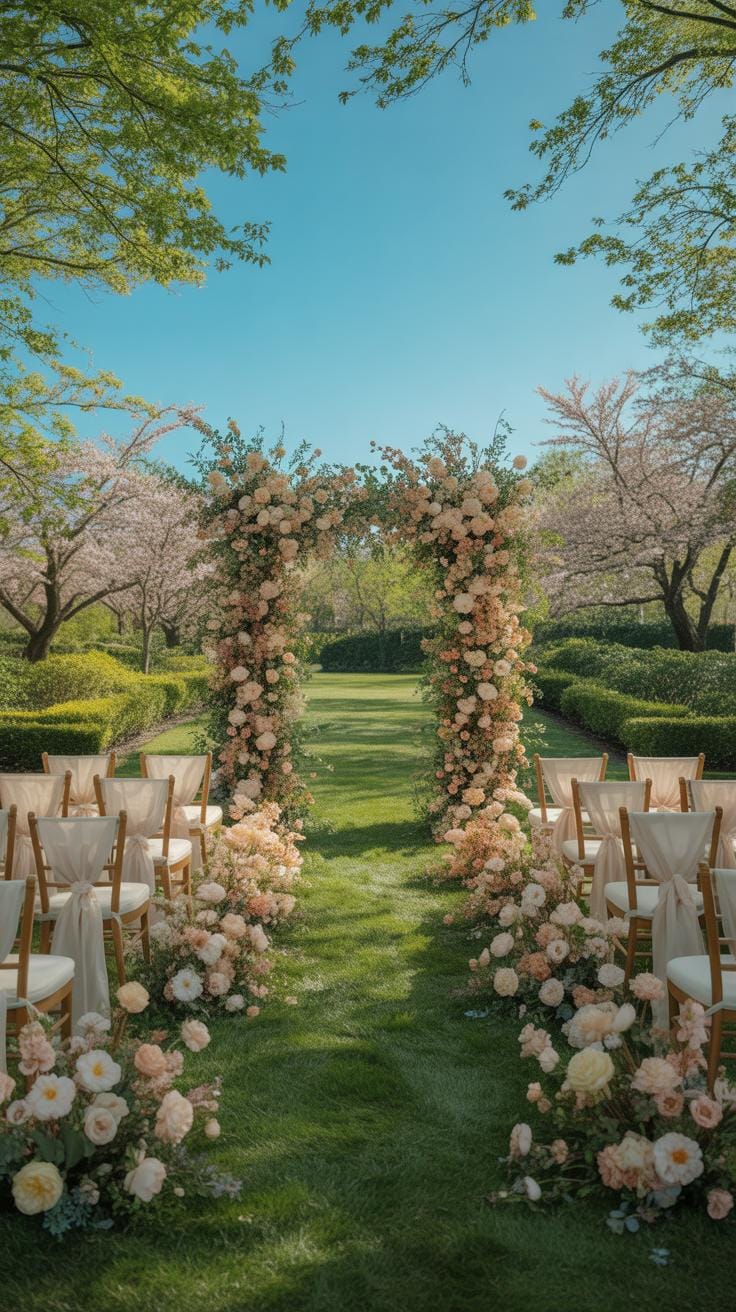
Choosing Hardy Blooms That Withstand Outdoor Conditions For Wedding Aisle Decor
Outdoor environments subject flowers to heat, wind, and low humidity. Without a direct water source, many species wilt within two hours of installation. You must select stems with high turgidity and thick cell walls. These varieties maintain their structural integrity throughout the ceremony. Avoid delicate petals like hydrangeas or gardenias for aisle placement. Focus on cultivars proven to endure direct sunlight and dry air.
- Chrysanthemums: These flowers possess extremely durable stems and thick petals. They resist wilting in high heat better than most garden varieties. Use them for low aisle arrangements where guests might accidentally brush against the displays.
- Protea: These prehistoric blooms evolved to survive harsh dry climates. Their woody structure prevents drooping even after hours of exposure. They provide a strong architectural element that defines the aisle edges clearly without requiring constant misting.
- Orchids: Varieties like Cymbidiums or Dendrobiums have a waxy coating on their petals. This layer locks in moisture and prevents browning in windy conditions. They maintain a fresh appearance longer than soft-petaled flowers like sweet peas or ranunculus.
- Carnations: Modern floriculture provides long-lasting carnations with high petal counts. They are biologically resilient and easy to hydrate before the event. Use these for dense floral runners that need to stay vibrant from the processional through the formal portraits.
- Zinnias: These blooms thrive in summer temperatures and direct sun exposure. They have sturdy necks that prevent the heads from snapping in moderate wind. They work well for meadow-style aisle markers planted in heavy weighted containers for stability.
Logistics dictate flower choice for garden settings. Use heavy floral foam or weighted vessels to prevent the wind from toppling your displays. Pre-treat all stems with a professional hydrating solution to seal in water. Design the arrangements for maximum density to minimize surface area exposure. Cold-treated flowers from a wholesaler provide the best baseline for outdoor endurance. Test your chosen species in similar weather conditions before the event day.
Every bloom lining the aisle is a living memory, weaving the beauty of your past into the promise of your future. Let your flowers tell the story of a love that is uniquely yours.
How Natural Surroundings Complement Rather Than Compete With Your Floral Aisle
Garden ceremonies provide a pre-existing visual baseline. Do not try to outshine the natural landscape with excessive floral volume. Instead, use your aisle flowers to bridge the gap between human-made seating and the organic background. Direct the eye toward the altar using color gradients that mimic the surrounding foliage. Lean into the existing color palette of the venue to create a unified visual experience for guests.
Select floral heights that maintain visibility of the horizon line. Avoid tall, opaque arrangements that block the view of the lawn or trees. Low-profile ground installations work best in open fields to preserve the sense of scale. Use textures that mirror the local flora, such as incorporating wild grasses or local greenery into your aisle markers. This strategy ensures your decor feels integrated rather than an artificial addition to the land.
Wedding Decor In Church Incorporating Aisle Flowers Into Sacred Spaces Respectfully
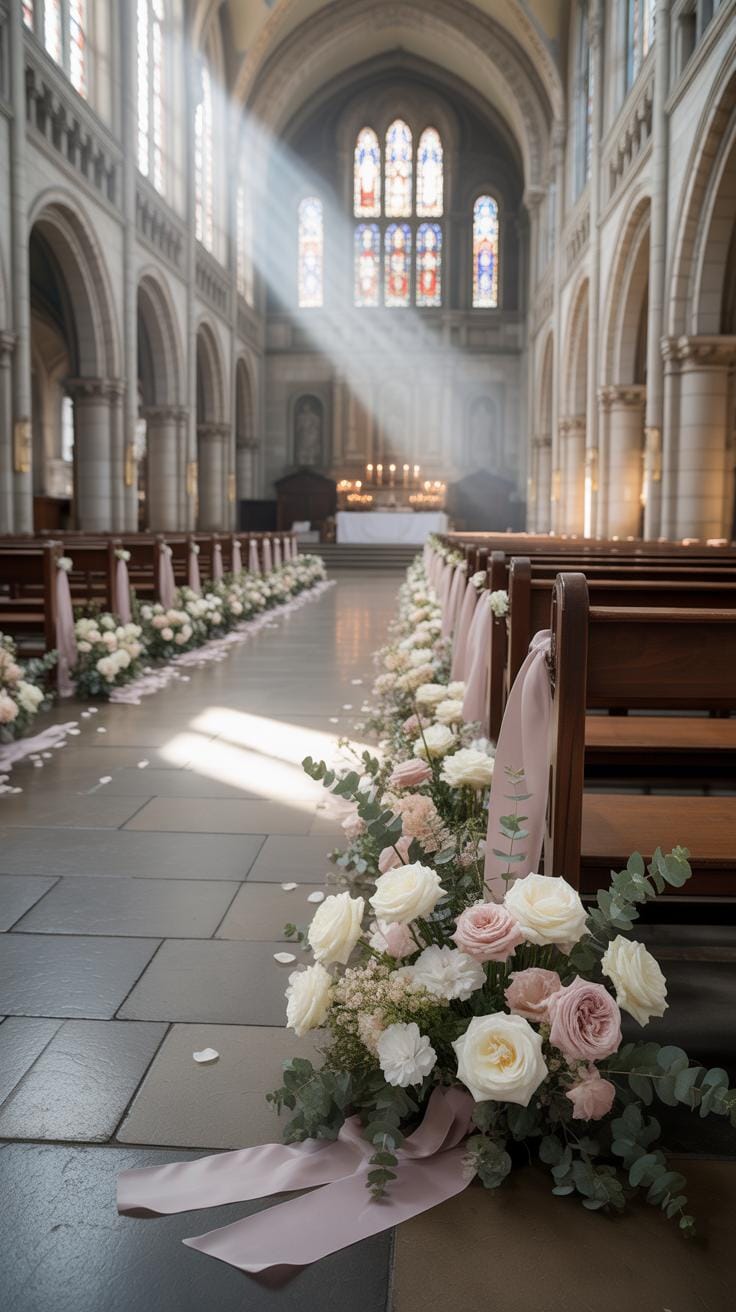
Understanding Church Guidelines And Restrictions For Wedding Decor In Church Settings
Church venues often enforce strict rules regarding flower placement to protect historical architecture. Many masonry floors or wooden pews react poorly to moisture and metal scrapes. You must verify if the church permits floral adhesive or nails. Most traditional parishes ban any permanent attachment. Use felt padding under all pedestals or heavy pots. This prevents scratches on stone and prevents stains on antique wood finishes.
Safety regulations also dictate the width of the walking path in a house of worship. Fire codes require clear exit routes at all times. You cannot block the path with oversized containers or trailing vines. Secure all floor-level arrangements to prevent tripping hazards during the processional. Confirm if the church allows real water or requires dry foam. Water spills damage porous stone and create slip risks for guests.
Pew End Arrangements And Altar Blooms That Complement The Wedding Aisle Flowers
Pew-end flowers must remain compact to keep the aisle clear for the bridal party. Floral designers use pew clips or silk ribbons to hang small bundles. These ties prevent damage to the varnish of the pews. Ensure the scale of the flowers matches the height of the seating. Tall arrangements can obstruct the view of guests in the back. Simple greenery or single stems often work best in tight spaces.
Altar blooms serve as the focal point for the ceremony. These arrangements must mirror the color and style of the ground-level aisle flowers. Coordinate the heights to lead the eye from the entrance toward the front. Use larger, more formal displays at the altar to mark the sacred zone. Ensure these flowers do not block the view of the priest or the couple. Positioning is critical for both photography and religious protocol.
Budget Conscious Wedding Decor Aisle Ideas Without Compromising On Beauty
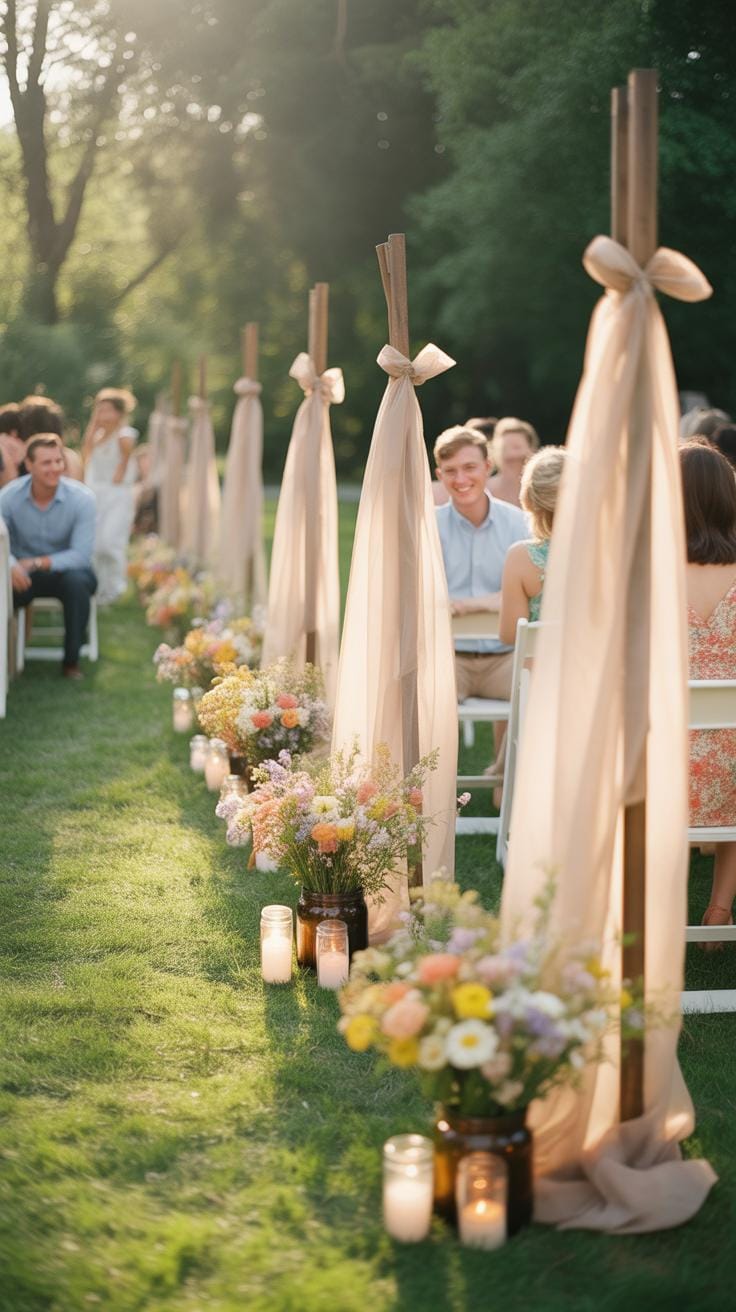
Tips For Reducing Floral Costs While Still Achieving A Stunning Wedding Decor Aisle
High impact aisle design requires strategic placement rather than total coverage. Floral costs rise based on variety, seasonality, and freight. Minimize expenses by selecting hardy plants that fill space quickly. Focus on the entrance and the altar area where guests look longest. Use greenery to create bulk. This reduces the total stem count needed to make the aisle look finished and professional.
- Repurpose Ceremony Arrangements: Move aisle markers to the reception guest tables immediately after the vows. This strategy halves your floral buy. Florists use heavy bases to ensure these arrangements survive the transition without wilting or losing structural integrity.
- Utilize Seasonal Local Stems: Buy flowers currently in bloom within your geographical region to eliminate high shipping fees. Imported stems carry a premium price due to fuel and refrigeration costs. Local flowers also arrive fresher and last longer during the ceremony.
- Leverage Potted Plants: Use living shrubs or flowering potted plants instead of cut stems. Potted hydrangeas or ferns provide immediate height and volume at a lower cost per square inch. You can sell these plants or gift them to guests after the event.
- Focus On Floor Clusters: Concentrate flowers in clusters on the floor rather than hanging them on every chair. Floor meadows use mechanics like chicken wire or floral foam to create density. This method uses fewer flowers to achieve a lush, grounded aesthetic for photos.
- Incorporate Dried Elements: Mix dried grasses or bleached foliage with fresh blooms to add texture and volume. Dried materials do not require water and survive high heat environments. They are often cheaper than premium fresh focal flowers like peonies or garden roses.
Labor represents a major portion of your floral invoice. Reduce setup time by choosing ground-level arrangements that do not require complex rigging or hardware. Simple designs allow for faster installation and breakdown. This efficiency lowers the hourly rate charged by production teams. Choose high-volume flowers like carnations or hydrangeas to cover more surface area with fewer units. This keeps the visual impact high.
Mixing Faux And Fresh Blooms Strategically For A Full And Luxurious Aisle Look
The hybrid floral method combines silk and real flowers to manage budgets. Place high-quality silk flowers at the base of the arrangement or in the back. Use fresh, fragrant blooms at the top where guests can see and smell them. This layering technique tricks the eye. It creates a sense of luxury without the cost of a hundred percent fresh installation.
Proper material selection is vital for a realistic look. Choose real-touch or high-end polyester silks that mimic the petal structure of live plants. Avoid shiny or plastic-looking stems that reflect camera flashes. Strategic lighting also hides the texture differences between the two materials. This tactical approach allows for massive, overflowing aisle displays that would be financially impossible using only fresh premium flowers.
Working With A Florist To Bring Your Wedding Aisle Vision To Life
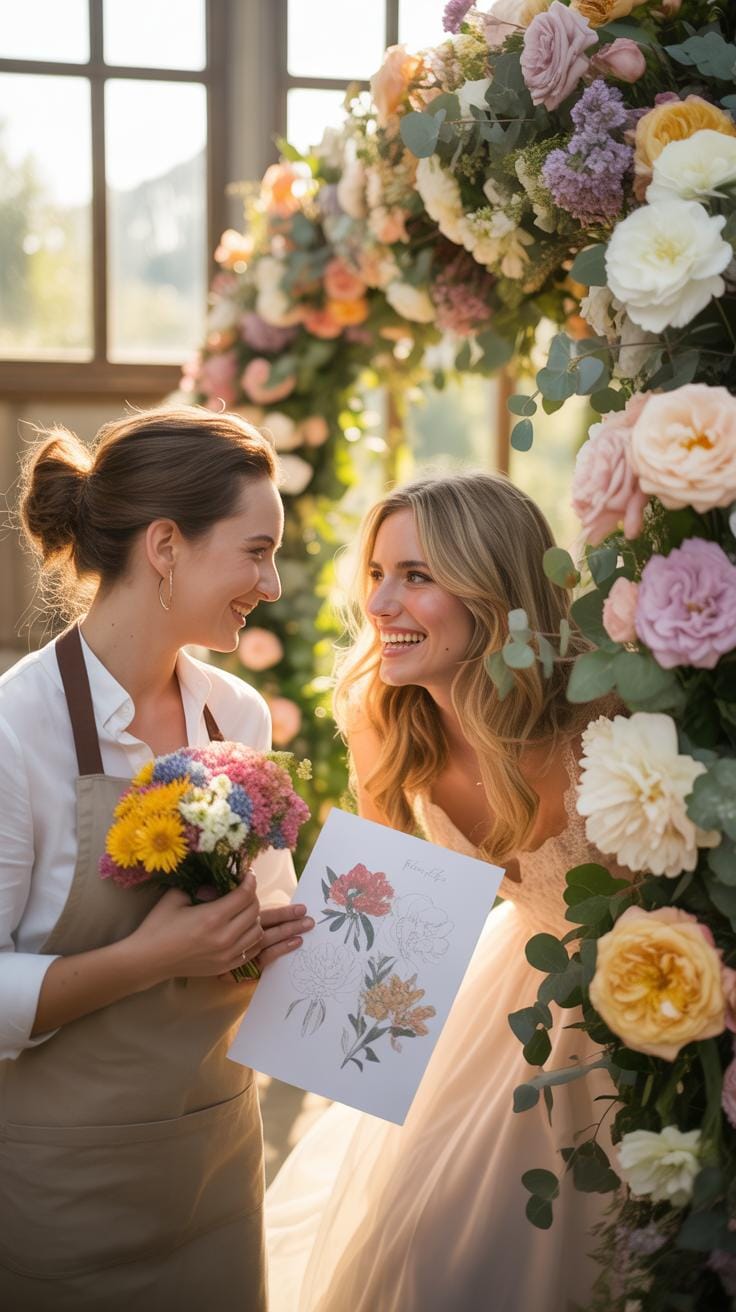
What To Discuss With Your Florist Before Finalizing Your Wedding Aisle Flowers Plan
You must clarify the mechanical requirements of your venue. Ask about floor surface materials and wind conditions for outdoor setups. Florists need to know if they can use heavy stone weighted bases or if they must use temporary adhesives. Discuss the strike time and teardown schedule. Many venues require immediate removal after the ceremony ends. These logistics dictate which floral structures are feasible.
Address the water source and hydration needs for your Wedding Aisle Flowers. Ask how the florist intends to keep ground arrangements fresh in direct heat. Inquire about the reuse of aisle pieces for the reception. Moving large installations requires specific labor and transport equipment. Confirm the florist has the staff to transition these items quickly. Get a firm quote on labor costs for this specific movement.
How To Use Mood Boards And Inspiration Images To Communicate Your Floral Aisle Style
Use mood boards to show scale and density rather than specific flower species. Many clients pick images that do not match their actual budget. Point to the specific parts of an image you like. You might like the height of a pillar but hate the color. Clear labels help the florist understand your priorities. This prevents wasted time on designs that do not fit your functional needs.

Balance your inspiration images with photos of your actual venue. Show the florist the ceremony chairs and the aisle width. Florists use these photos to calculate how many arrangements you need. They also use them to ensure the flowers do not block the view of your guests. High-quality visual aids reduce errors during the setup phase. Good communication ensures the final result matches your technical expectations.
Frequently Asked Questions

What are the most popular styles for wedding aisle flowers today?
Modern couples are moving away from traditional pew bows in favor of more organic, garden-inspired arrangements. Popular styles include “grounded” floral meadows that look as if they are growing directly from the floor, minimalist monochromatic clusters, and sculptural dried grass installations. These creative wedding aisle flowers help define the ceremony space and provide a breathtaking frame for the couple as they make their way toward the altar and exchange their vows.
How can I secure floral arrangements along the aisle to prevent them from tipping?
Ensuring your wedding aisle flowers stay upright is essential for a seamless ceremony. For indoor events, use heavy weighted vessels or hidden floral bricks to anchor your displays. If you are hosting an outdoor garden wedding, consider using shepherd hooks or metal stakes tucked discreetly into the greenery. Always test the stability of your arrangements against wind and foot traffic to ensure the path remains beautiful and safe for the entire bridal party.
Are there ways to include beautiful aisle florals on a limited budget?
Absolutely! To save money, focus on high-impact greenery like eucalyptus or ferns and accent them with a few large-headed blooms like hydrangeas. Another savvy tip is to choose “repurposeable” arrangements. Design your aisle decor so it can be easily moved and used as centerpieces or stage decor during the reception. This strategy maximizes your floral investment while maintaining a cohesive, lush aesthetic across both your ceremony and celebration spaces.