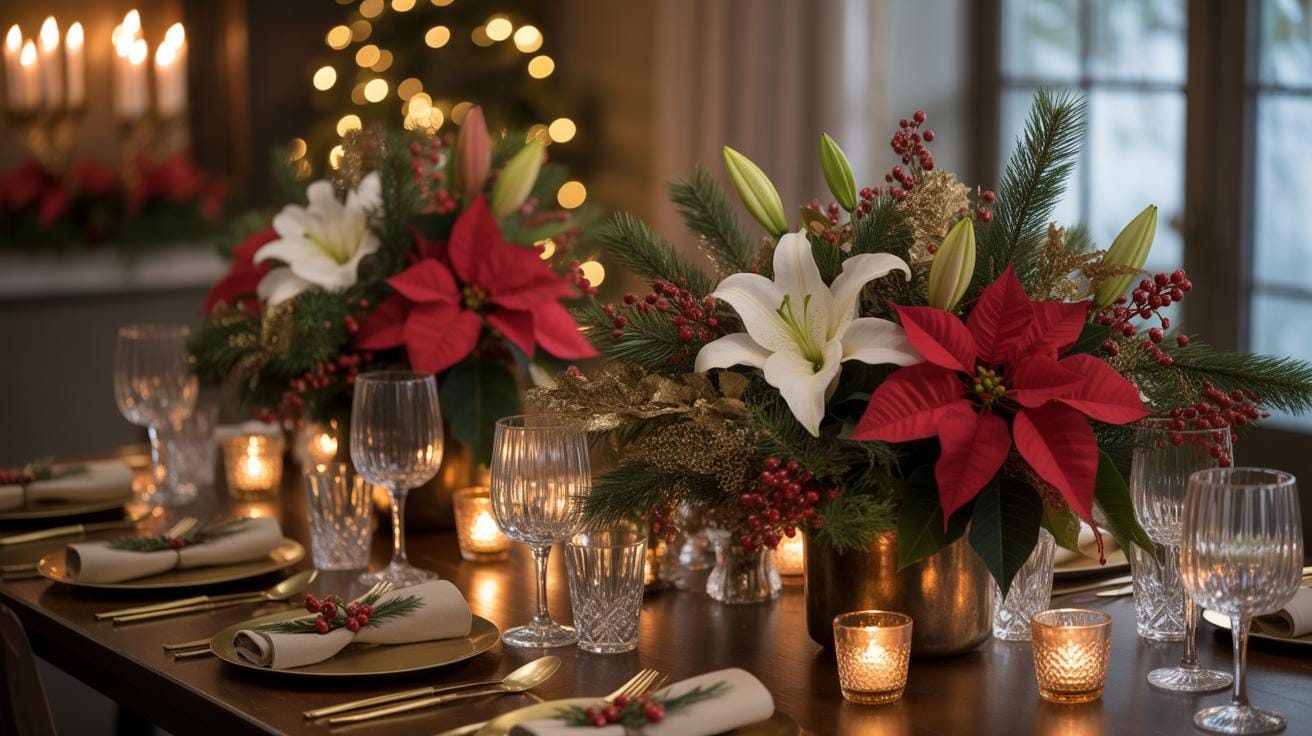
A Brief History Of Christmas Flower Arrangements And Holiday Decorating Traditions
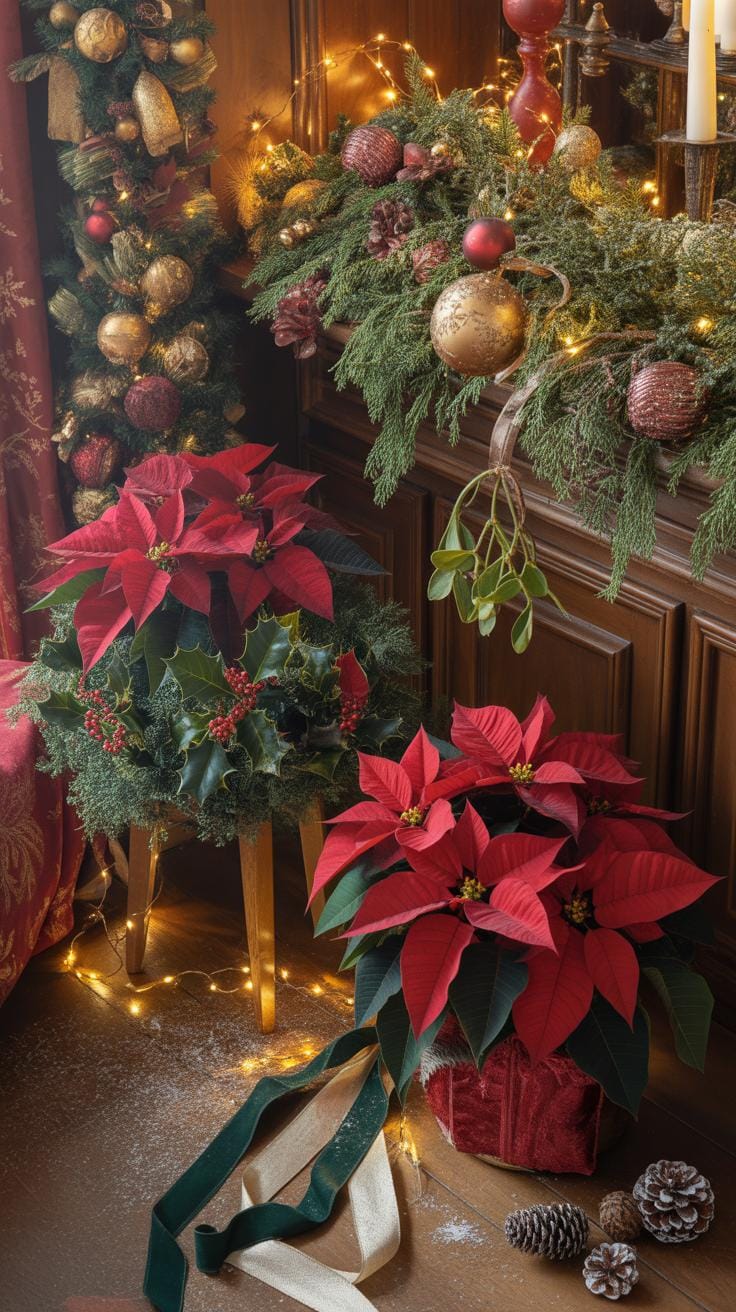
How Floral Traditions Became Part Of The Christmas Holiday Season
Floral traditions merged with Christmas through a mix of religious symbolism and colonial trade. Early European settlers used local evergreen boughs to represent eternal life during the winter. In the 1800s, the Victorian era shifted these traditions into formal home decor. Families began using structured arrangements to show status. This period introduced specific flowers like the poinsettia from Mexico to the United States market.
The rise of the floral industry in the 20th century standardized these looks. Commercial greenhouses allowed people to buy fresh blooms even in freezing weather. Advances in transportation made it possible to ship exotic flowers across the country. Modern holiday floral centerpieces now combine historical greenery with high-end imported flowers. This evolution turned a simple folk custom into a major global retail event every December.
The Cultural Roots Behind Bringing Greenery And Blooms Indoors In Winter
Ancient cultures brought greenery inside to celebrate the winter solstice. Romans used laurel and grain for Saturnalia to signal the return of the sun. Germanic and Celtic tribes viewed evergreens as a sign of survival against the harsh cold. They believed these plants held power because they did not die in winter. These practical observations formed the foundation for modern festive botanical displays.
Medieval traditions added fruit and nuts to these green displays. People used apples and roses to tell religious stories in churches and homes. Over time, the focus shifted from survival to aesthetics and hospitality. Bringing nature inside created a sense of warmth during the darkest days of the year. Today, designers use these same principles to make spaces feel inviting and alive during the winter months.
Choosing The Right Flowers For Your Winter Arrangements Floral Design
Which Flowers Thrive In Cold Weather Seasons And Hold Up Indoors
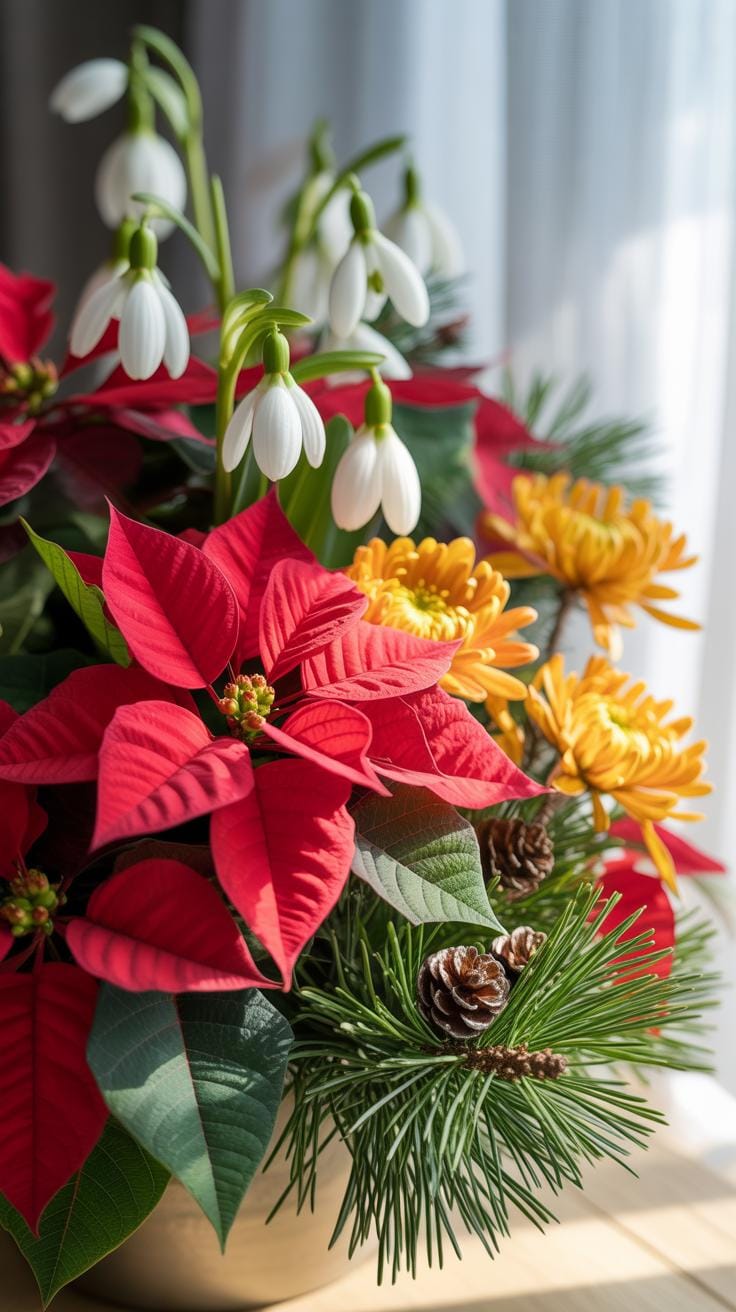
Holiday floral centerpieces require hardy botanical choices to survive dry indoor heating. Amaryllis and Hellebores are prime candidates because they have thick stems and high moisture retention. These flowers do not wilt quickly when temperatures fluctuate between cold transport and warm rooms. Professional florists prioritize these varieties because they maintain structural integrity for ten days or more. Choosing these sturdy plants reduces the need for constant maintenance.
Woody stems like Ilex berries and cut evergreens provide the necessary framework for long lasting displays. Unlike soft petal flowers, these materials do not drop foliage immediately upon cutting. They act as a natural water reservoir for the arrangement. You must select flowers with waxy petals or bulbous bases to ensure longevity. These specific traits allow the plant to withstand the low humidity found inside many modern homes during winter months.
How To Select Blooms That Complement A Holiday Color Palette
Traditional holiday color palettes rely on high contrast to create visual impact. You should pair deep crimson Ranunculus with stark white Anemones to anchor the design. This strategy uses color theory to draw the eye toward the center of the table. Avoid muddy tones that disappear under artificial evening light. Focus on saturated reds and crisp whites. These colors reflect light well and remain visible during low light dinner settings.

Incorporate metallic accents and deep greens to balance the primary floral colors. Use the natural dark green of Magnolia leaves to provide a matte background for bright blooms. This technique follows the principles of the Dutch Golden Age style which emphasizes light against dark. Select flowers that maintain their hue as they age. This ensures the arrangement looks consistent from the first day to the last. Clear color boundaries prevent the design from looking messy.
Essential Design Principles Behind Beautiful Christmas Flower Centerpieces
Understanding Scale, Proportion, And Balance In A Centerpiece Arrangement
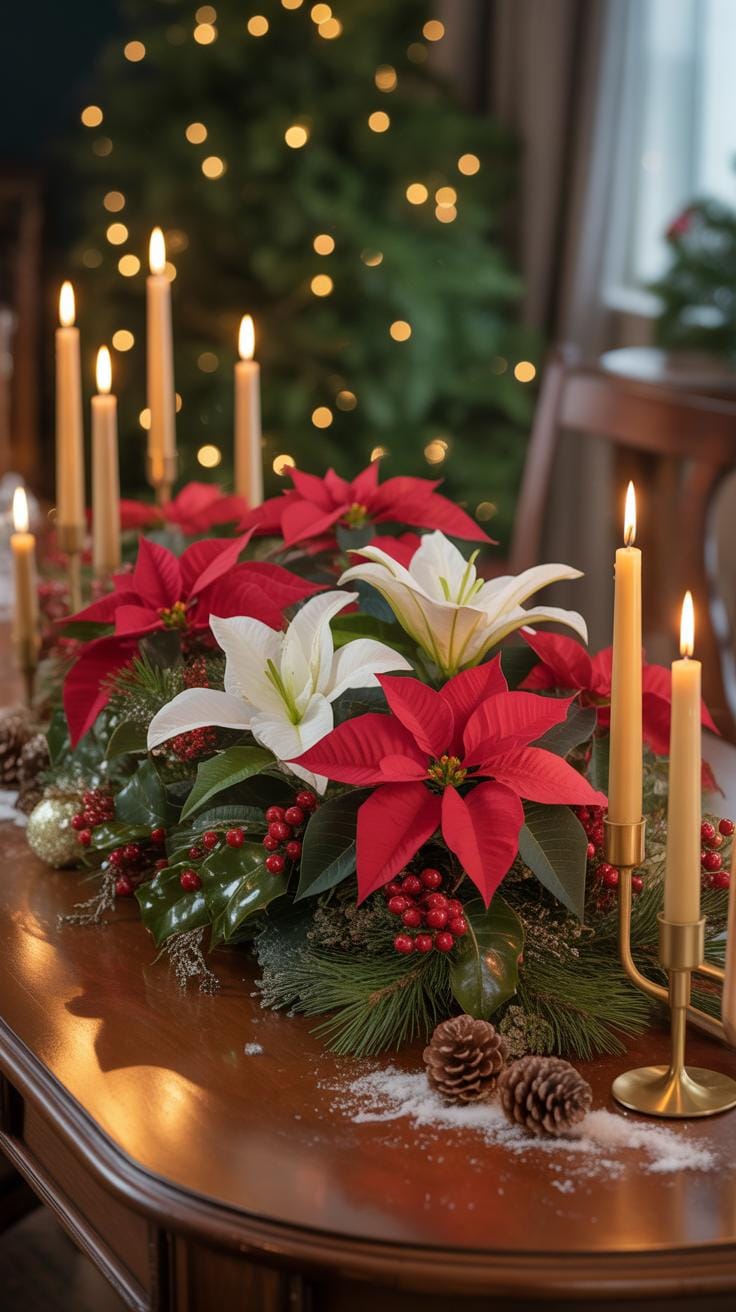
Scale dictates the relationship between the arrangement and the table size. A centerpiece should never obstruct guest sightlines. Maintain a height below twelve inches for conversation or go above twenty-four inches with narrow stands to clear the field of vision. Use the Golden Ratio of one to one point five. The floral height should be at least one and a half times the container height.
Physical balance prevents the arrangement from tipping over. Use heavy containers for tall designs to lower the center of gravity. Visual balance requires an even distribution of perceived weight. Darker colors and larger blooms look heavier and belong near the base. Symmetrical balance provides a formal look common in traditional holiday decor. Asymmetrical balance creates movement and suits modern, organic floral styles used today.
Using Focal Flowers, Filler Blooms, And Greenery To Build Visual Depth
Depth comes from placing stems at different levels. Start with a foundation of greenery like noble fir or cedar. These greens hide the mechanics and provide a dark backdrop for the flowers. Focal flowers occupy the prime visual real estate. Large blooms like amaryllis or roses draw the eye first. Place these at varying depths within the foliage to create a three dimensional look.

Filler blooms and textures bridge the gaps between focal points. Use spray roses or hypericum berries to add secondary interest. These elements should sit slightly lower or higher than focal flowers to avoid a flat surface. Layering different needle types and leaf shapes adds tactile variety. This technique mimics natural forest floors. Proper layering ensures the centerpiece looks complete from every angle around the dining table.
Top Christmas Flower Arrangements Ideas For Every Style And Budget
Creative Centerpiece Concepts From Simple Minimalist To Lavishly Layered
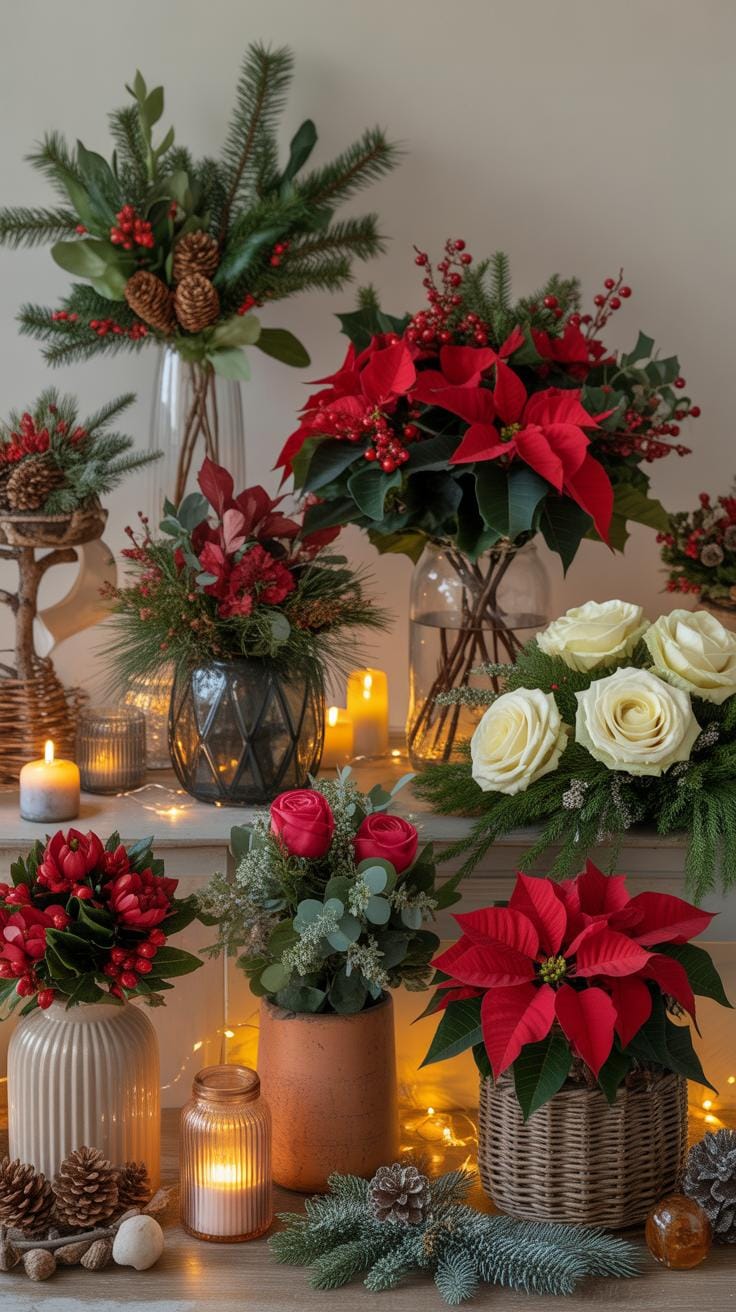
Modern minimalism relies on negative space and architectural lines. You achieve this by selecting a single flower type, such as Hellebores or amaryllis, and placing them in clear glass vessels. This style draws from the Japanese art of Ikebana. It emphasizes the natural shape of the stem rather than bulk. Clear lines create a focal point without cluttering the table. This approach works best in contemporary interior settings.
Lavish designs use the Flemish Baroque style of layering different textures. You mix heavy evergreens like noble fir with delicate blooms like ranunculus. Use height variations to create visual depth across the table. Incorporate non-floral elements like dried pomegranate or cinnamon sticks for a sensory experience. This technique requires a sturdy base, such as floral foam or a pin frog. It results in a dense, professional, and high-impact visual display.
Budget Friendly Tips For Stunning Holiday Arrangements Without Overspending
Professional florists save money by using high-quality greenery as the primary structural component. Foraged items like pinecones, cedar branches, or holly provide bulk at zero cost. You should purchase expensive focal flowers in small quantities to act as accents rather than fillers. Seasonal sourcing reduces shipping costs and ensures longer vase life. Focus your spending on three impact blooms rather than a dozen mediocre stems.
- Foraged Greenery: Gather branches from your backyard or local woods to build a base. Cedar, pine, and spruce hold moisture well and provide a professional texture. This eliminates the need for expensive imported filler greens from traditional wholesalers.
- Monochromatic Schemes: Use different shades of one color to create an expensive look with cheap flowers. Carnations or chrysanthemums look high-end when grouped tightly in a single hue. This strategy masks the lower price point of the individual stems.
- Proprietary Vessel Use: Reuse household items like pitchers, wooden crates, or mason jars instead of buying new vases. Cleaning these items thoroughly prevents bacterial growth that kills flowers. This redirecting of funds allows you to spend more on premium focal blooms.
- Wholesale Bulk Buying: Purchase flowers from warehouse clubs or local farms rather than high-end boutiques. Buying in bulk reduces the price per stem significantly. Focus on hearty varieties like roses or lilies that survive well during the transport and arranging process.
- Strategic Focal Points: Place one large, expensive flower like a Protea or Hydrangea in the center of the arrangement. Use cheaper greens and dried elements to surround it. This tricks the eye into seeing the entire piece as a luxury item.
Extend the life of your budget arrangements by changing the water every two days. Trimming stems at a forty five degree angle increases the surface area for water intake. Keep the arrangement away from direct heat sources like fireplaces or radiators. Use a sharp knife instead of dull scissors to avoid crushing the vascular system of the plant. These simple maintenance steps protect your financial investment and keep the display fresh.
How To Build Your Own Christmas Floral Centerpieces Step By Step
The Tools And Materials You Need Before You Start Arranging
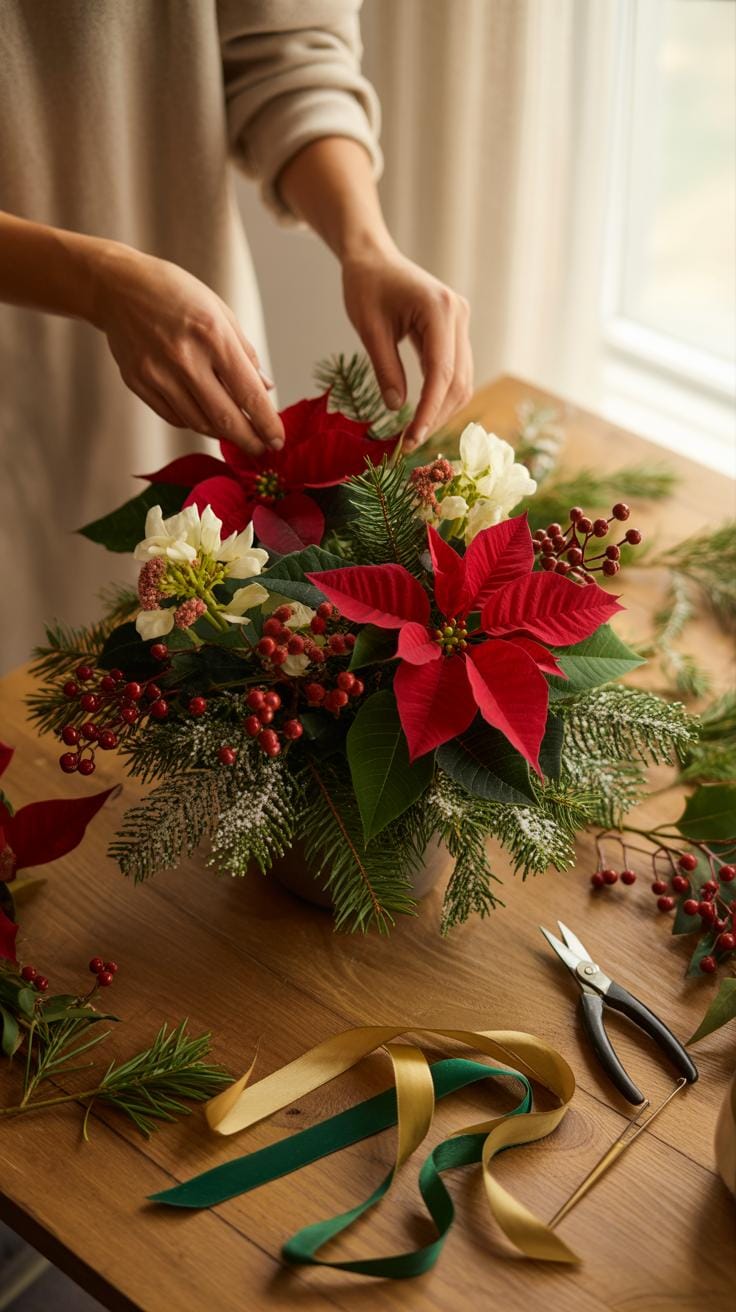
Preparation determines the structural integrity of your floral design. You must gather technical supplies that support heavy winter greenery and woody stems. Professionals use specialized cutting tools to ensure clean vascular tissue exposure for maximum hydration. Selecting the right vessel and mechanics prevents the arrangement from shifting during transport or dining. Ensure all hardware is clean to avoid bacterial growth.
- Floral Shears: Use high carbon steel blades for clean cuts through soft stems. Avoid standard household scissors as they crush the stem and block water intake. Sharp blades extend the lifespan of your evergreen branches and flowers.
- Floral Foam or Frog: Secure a block of soaked floral foam or a lead pin frog to the base. This provides the necessary architecture to hold heavy branches at specific angles. Ensure the foam sits one inch above the container rim.
- Waterproof Floral Tape: Use quarter inch green tape to create a grid or secure foam to the vessel. This adhesive remains functional even when exposed to moisture. It prevents the entire arrangement from tipping out of the container when handled.
- Pruning Shears: Heavy duty pruners are essential for cutting thick woody stems like pine, cedar, and fir. These branches are too tough for standard floral shears. Clean cuts allow the wood to draw enough water to stay green for weeks.
- Low Profile Vessel: Choose a shallow bowl or long rectangular tray to keep the centerpiece below eye level. A height of three to five inches is standard for dining tables. This ensures guests can see each other without moving the arrangement.
Sourcing fresh greens remains the most important step for longevity. Traditional Christmas designs rely on balsam fir, boxwood, and seeded eucalyptus for texture and scent. Use floral preservative in the water to prevent needle drop and maintain color. Check your inventory before you begin because stopping to find tools mid-process allows stems to seal over. Proper kits save time and reduce waste.
A Practical Walkthrough For Assembling A Holiday Centerpiece At Home
Begin by soaking your floral foam for at least thirty minutes until it sinks naturally. Wedge the foam into your vessel and secure it with a crosshatch of waterproof tape. Insert your heaviest evergreen branches first around the base to establish the perimeter and hide the container edge. Angle these stems downward to touch the table surface for a seamless look.

Next, add your focal flowers and accents into the top and sides. Move the vessel as you work to ensure the design looks balanced from every angle. Push stems at least two inches deep into the foam for stability and hydration. Add smaller filler elements like berries or pinecones to bridge gaps between large blooms and the green base layer.
Exploring Color Schemes And Textures In Winter Floral Arrangements
Classic Red And Green Versus Modern White, Gold, And Blush Palettes
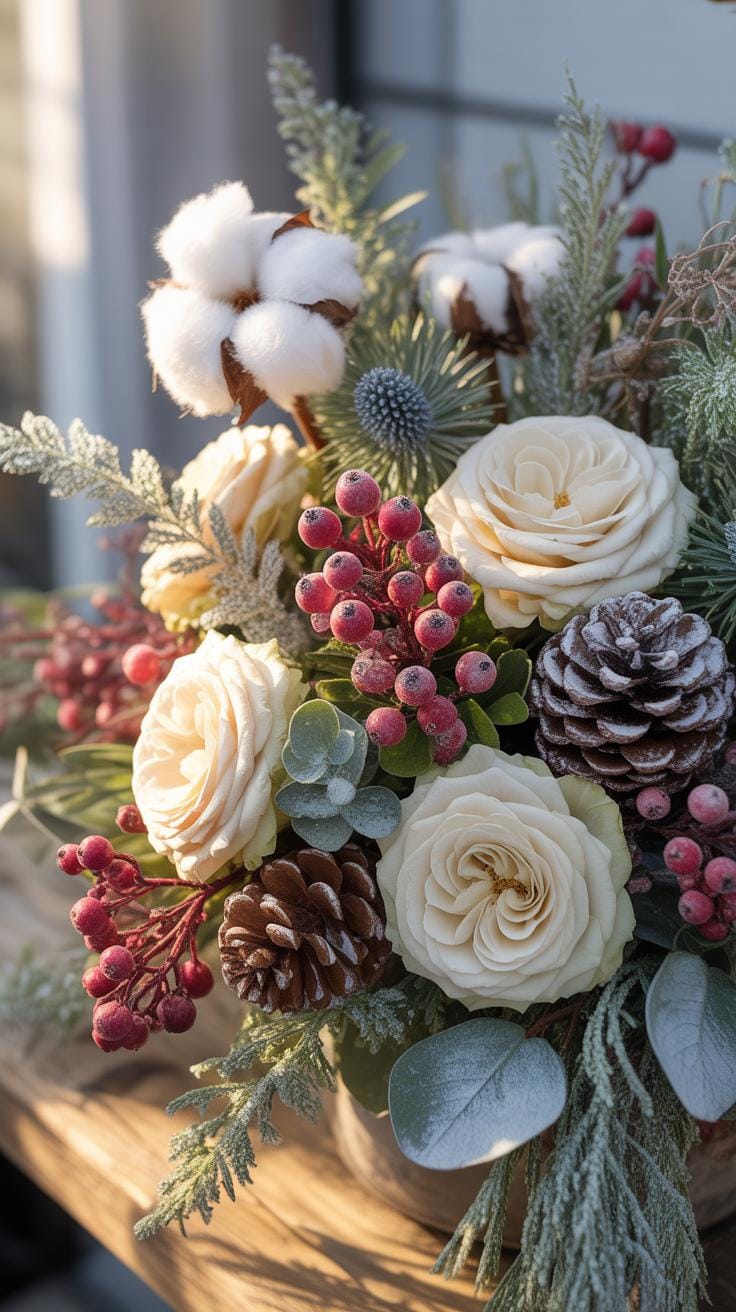
Classic red and green palettes rely on historical associations with holly and evergreens. This scheme uses saturated tones like deep crimson roses alongside dark cedar or balsam branches. The high contrast between these secondary and primary colors creates a focal point that signals tradition. Florists use this combination to ground large spaces. It provides a sense of stability and historical continuity in formal settings.
Modern palettes shift toward neutral tones to match contemporary interior design. White flowers like anemones or ranunculus provide a clean base. Gold accents add metallic weight without using heavy pigments. Designers now integrate blush tones to soften the clinical look of pure white. This approach works well in well-lit, minimalist environments. These colors do not compete with modern furniture. They enhance the light within a room.
How To Layer Textures Using Pinecones, Berries, Ribbons, And Branches
Texture layering builds visual depth in an arrangement without adding more color. Pinecones and wooden branches provide rough, matte surfaces that absorb light. These elements create a structural skeleton for the centerpiece. Berries add small, glossy points of interest that break up the flat needles of evergreens. Strategic placement of these hard materials ensures the arrangement looks full from every angle. It prevents the design from looking two-dimensional.
Ribbons add a soft, textile element that contrasts with the rigid branches. Use velvet or grosgrain materials to introduce a Different tactile quality. Layering these items requires a specific order of operations. Place heavy, coarse items like pinecones near the base for stability. Use fine, thin branches or ribbons to create movement at the top. This technique guides the eye through the arrangement. It makes the final product look professional and intentional.
Incorporating Seasonal Greenery Into Your Christmas Floral Ideas
The Role Of Evergreens Like Pine Cedar And Eucalyptus In Holiday Design
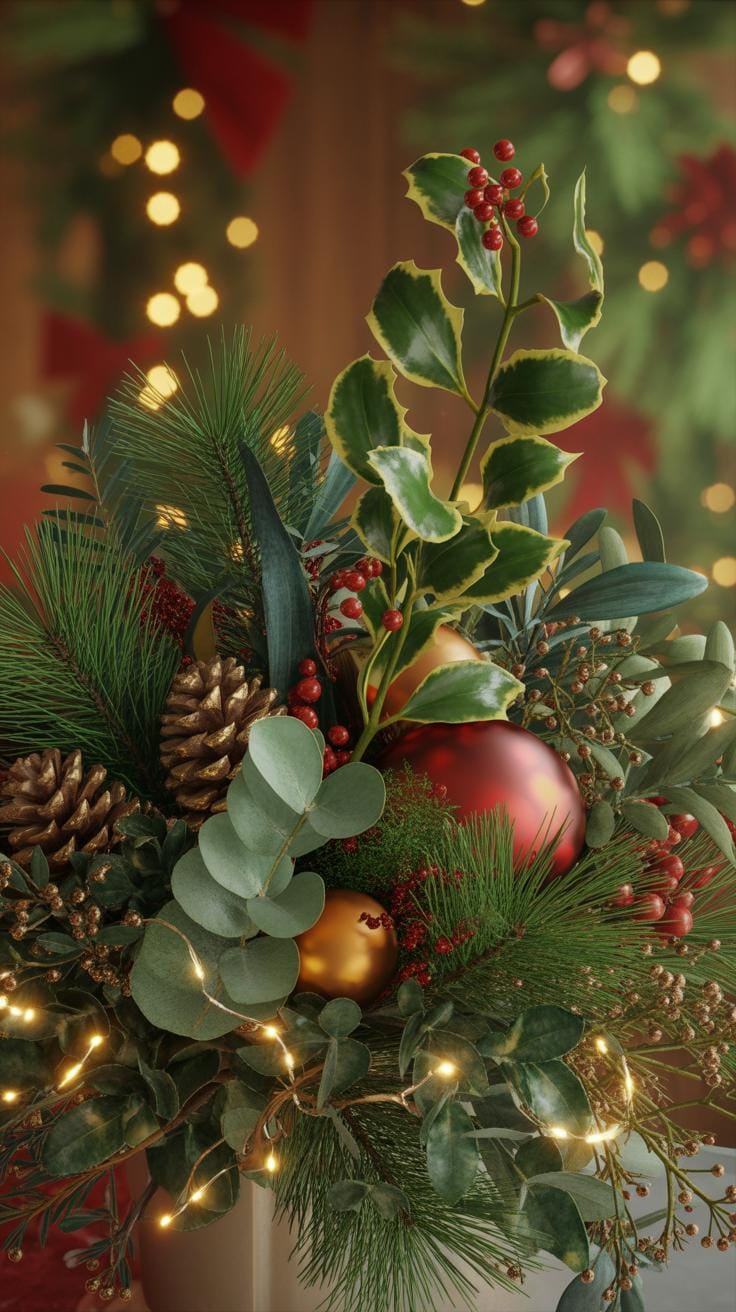
Evergreens provide the structural foundation for holiday floral centerpieces. Pine offers long needles that fill empty gaps and add visual volume. Cedar provides a draping effect that softens the edges of heavy containers. Eucalyptus introduces a different texture and a silvery color palette. These materials stay fresh longer than standard cut flowers. They create a sturdy base that supports heavier decorative elements.
Strategic designers use these greens to establish the shape of the arrangement first. Firm branches like noble fir hold the weight of ornaments or large lilies. Scented greens like balsam enhance the sensory experience of the table. You must prune the lower stems of these branches to prevent water rot. Clean stems ensure the water stays clear for the flowers. Proper mechanical prep increases the longevity of the entire design.
How To Combine Fresh And Faux Greenery For Longer Lasting Arrangements
Combining fresh and faux greenery extends the life of your display. Use high quality silk or plastic stems for the core structure. These rigid pieces maintain the desired height and width throughout the month. Add fresh sprigs of cedar or pine around the edges for a natural look. This method reduces the amount of water needed in the foam. It also hides the artificial stems from close view.

Strategic blending allows for designs that look lush but require less maintenance. Replace wilting fresh stems without disturbing the permanent frame. Spray the fresh portions with an anti-transpirant to seal in moisture. Keep faux elements away from direct contact with water to prevent wire rusting. This hybrid approach saves money on bulk greenery every year. It ensures your centerpiece looks professional from the first week of December through New Year.
Elegant Christmas Flower Arrangements For Formal Dining And Entertaining
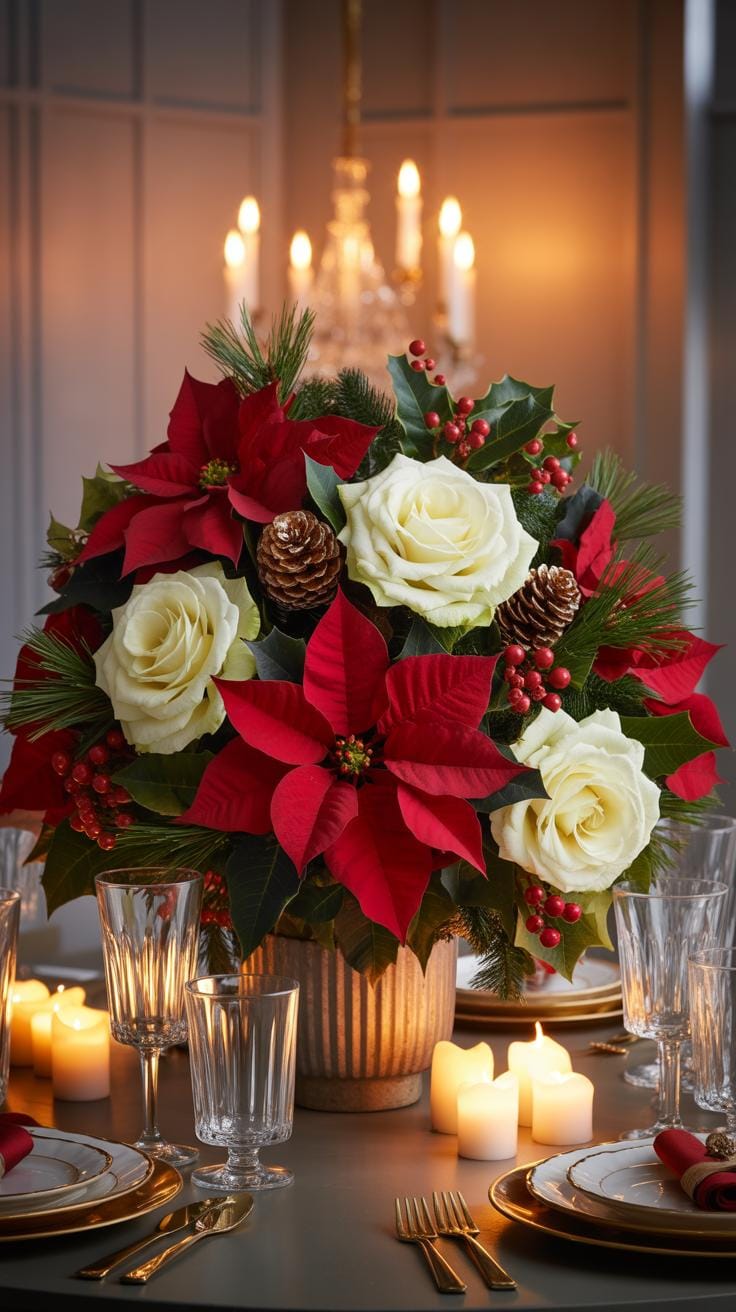
Designing Sophisticated Low Centerpieces That Allow Dinner Guests To Converse
Formal dining requires clear sightlines across the table. Keep your holiday floral centerpieces below twelve inches in height. This height limit ensures guests maintain eye contact without leaning or straining. Use heavy glass or ceramic vessels to provide stability. These low containers hold enough water to keep blooms fresh throughout long multi-course meals. Proper mechanics prevent the arrangement from obstructing the social flow.
Select premium blooms like amaryllis or garden roses for the focal point. Use floral foam or a pin frog to secure stems at a horizontal angle. This technique creates a lush look while maintaining a low profile. Incorporate seasonal greenery like cedar or eucalyptus to fill gaps. Strategic placement of foliage hides the mechanics of the design. A compact and dense structure looks more intentional in a formal setting.
Where flowers bloom so does hope, and a festive centerpiece is the heart that gathers us home for the holidays.
Pairing Candles, Lanterns, And Metallic Accents With Formal Floral Designs
Lighting defines the mood of a formal holiday table. Position unscented taper candles in silver or brass holders between floral clusters. Unscented wax prevents floral aromas from clashing with the food. Metallic accents reflect the candlelight and add visual depth to the greenery. Place these elements in a rhythmic pattern down the center of the table. This repetition creates a cohesive and disciplined design aesthetic.

Incorporate lanterns for a traditional touch in larger displays. Match the metal finish of the lanterns to your flatware or chargers. Gold and silver accents create a high-contrast look against dark green conifers. Use mercury glass votives to scatter light softly across the linen. Avoid overcrowding the table by leaving space for glassware and service. Balanced proportions between light sources and flowers ensure a professional and polished finish.
Caring For And Extending The Life Of Winter Flower Arrangements Centerpieces
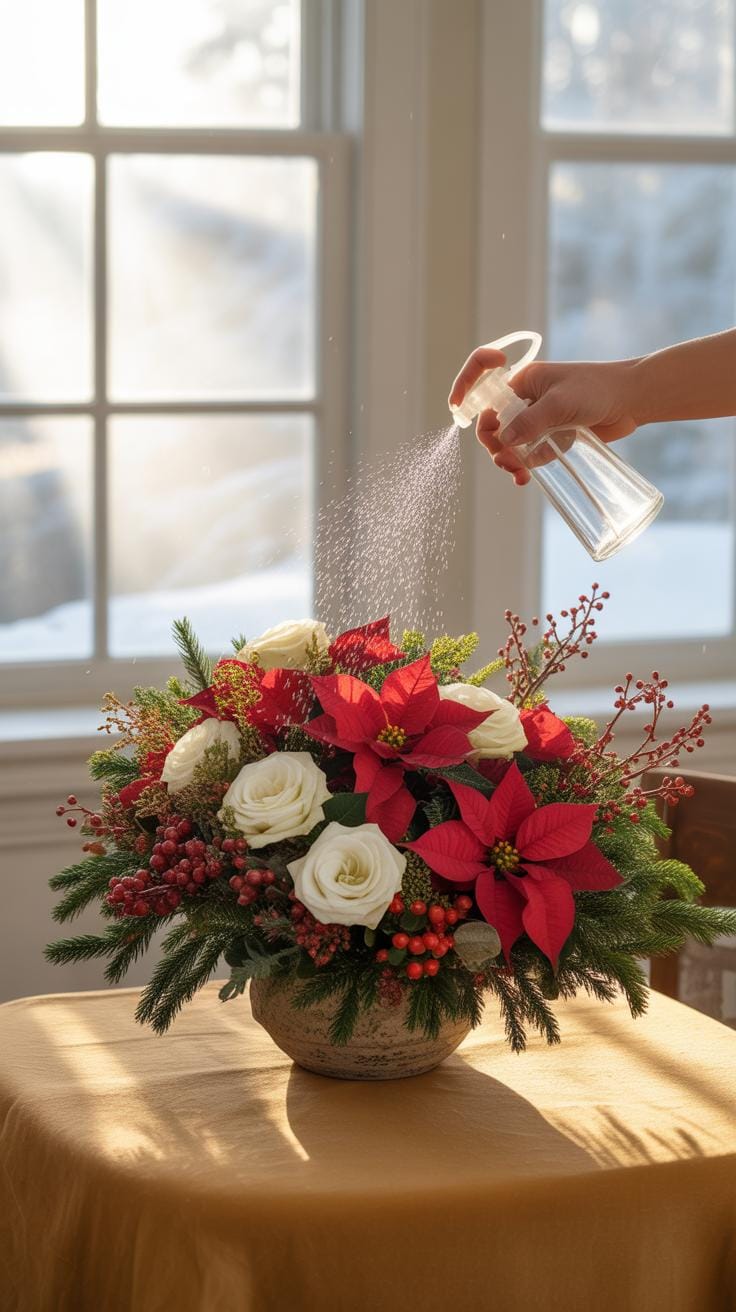
How To Condition Fresh Cut Flowers So They Last Through The Holiday Season
Conditioning begins the moment you bring stems home. Remove all foliage that will sit below the water line. Leaves in water rot and create bacteria. This bacteria clogs the stems and kills the flowers fast. Use sharp shears to cut stems at a forty five degree angle. This creates more surface area for the plant to drink. Do this under warm water.
Hydrate the stems in a clean bucket for several hours before arranging. Use lukewarm water around one hundred degrees Fahrenheit. This temperature moves through the vascular system better than cold water. Keep the flowers in a cool, dark room during this period. This hardening process ensures the cell walls remain firm. Strong cell walls prevent the premature wilting common in heavy holiday blooms.
Storage And Maintenance Tips For Keeping Your Centerpiece Looking Fresh Longer
Placement dictates the lifespan of your centerpiece. Keep the arrangement away from direct heat sources like fireplaces or radiators. Heat causes rapid evaporation and speeds up the aging process. Avoid placing flowers near ripening fruit. Fruit releases ethylene gas which triggers flowers to wilt and drop petals. Professional florists use coolers to stall growth. You can mimic this by moving arrangements to a cold garage overnight.
Change the water every two days to maintain clarity. Do not just top it off. Empty the vase and scrub it to remove biofilm. Refill with fresh water and floral preservative. The preservative contains sugar for food and bleach to kill bacteria. Trim a half inch off the stems during each water change. This opens fresh tissue for hydration. Consistent maintenance can double the life of your winter centerpiece.
Where To Source Flowers And Inspiration For Your Holiday Floral Centerpieces
Finding Quality Fresh Blooms Through Local Florists, Markets, And Wholesalers
Local florists offer the highest grade of curated inventory for holiday floral centerpieces. These professionals source directly from auctions and specific growers. They verify the cellular health of every stem before selling it to you. You pay a premium for their sorting process and cold chain management. This ensures your centerpiece remains turgid and vibrant throughout the entire holiday hosting window.
Wholesale markets provide bulk quantities at lower price points for large scale designs. You must possess a tax ID or business license to access most trade only hubs. Check for firm stems and hydrated leaves when selecting product. Avoid buckets with cloudy water as this indicates high bacterial counts. Professional grade floral foam and preservatives are also available at these locations to extend the life of your work.
Trusted Online Platforms And Design Resources For Holiday Floral Inspiration
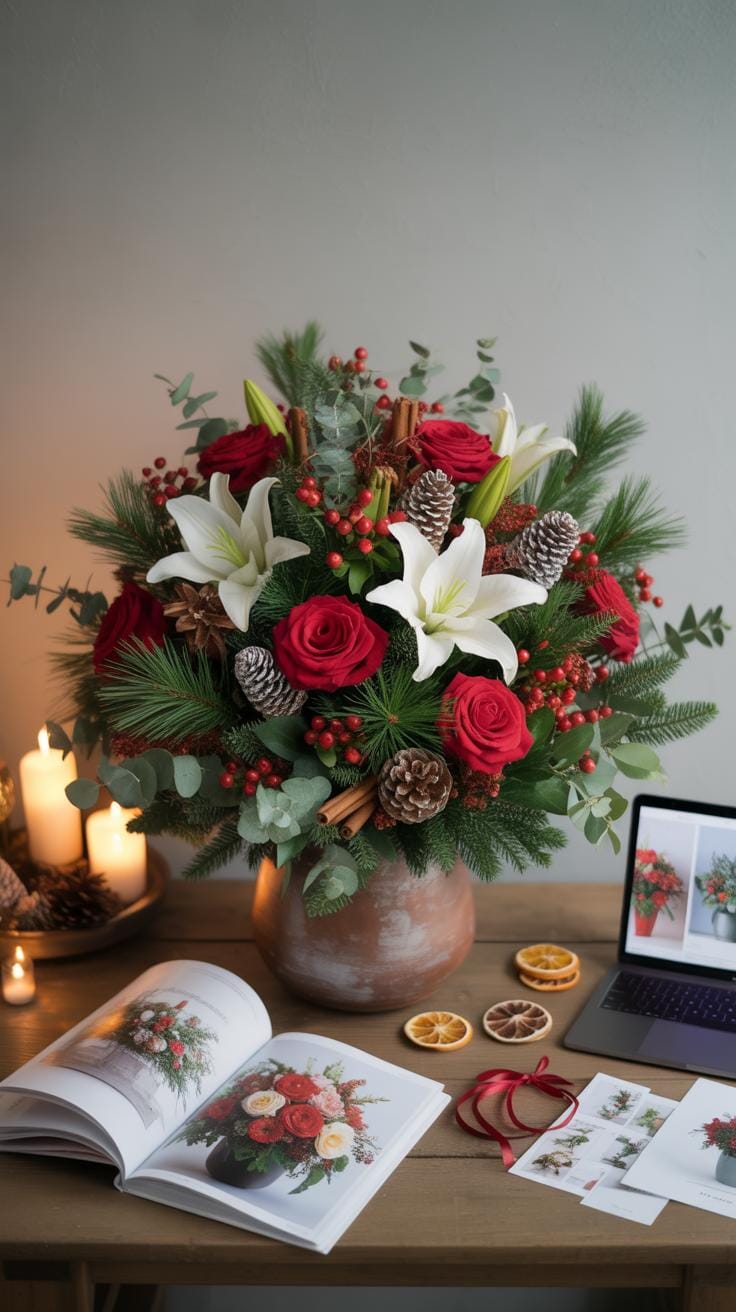
Professional design resources offer technical data for holiday floral centerpieces. Industry journals like Florists Review provide historical context on Dutch Masters styles and Modernist movements. These sources explain how to balance color and form using geometric principles. You can find accurate botanical names and seasonal availability charts on these sites. Use these technical guides to plan your structural requirements before buying any perishable materials.
Digital platforms like Pinterest and Instagram serve as visual archives for current market trends. Look for accounts run by certified floral designers to see realistic construction techniques. Study the transition from traditional Victorian overflowing styles to minimal Ikebana influenced shapes. Examine how these artists use negative space and texture to create visual interest. Reliable platforms show how to integrate non floral elements like fruits or metals without damaging the live stems.
Frequently Asked Questions

What are the most popular flowers and foliage for holiday floral centerpieces?
Traditional holiday floral centerpieces often feature classic red Amaryllis, velvety Poinsettias, and crisp white paperwhites. To create a professional look, experts recommend layering different textures by adding seasonal greenery like cedar, eucalyptus, and fragrant pine branches. Mixing these long-lasting botanical elements with colorful berries or pinecones ensures your arrangement feels festive and stays vibrant throughout the entire season, providing a stunning focal point for your celebratory dining table.
How can I keep my holiday arrangement fresh for the entire season?
To extend the life of your holiday floral centerpieces, start with a clean vase and trim flower stems at a sharp angle. Check the water levels daily, as evergreen branches can be quite thirsty. Keep your arrangement away from direct heat sources, like fireplaces or radiators, and bright sunlight. Adding a drop of floral preservative to the water will help nourish the blooms and keep the foliage looking lush for your gatherings.
Can I create a beautiful centerpiece on a tight budget?
Absolutely! You can design breathtaking arrangements without spending a fortune by foraging for natural elements like dried seed pods, holly, or evergreen trimmings from your own backyard. Supplement these free finds with affordable grocery store carnations or sprigs of baby’s breath. Using a simple glass bowl or festive ribbon can elevate these modest materials, proving that elegant holiday decor is more about creative styling than a high price tag.