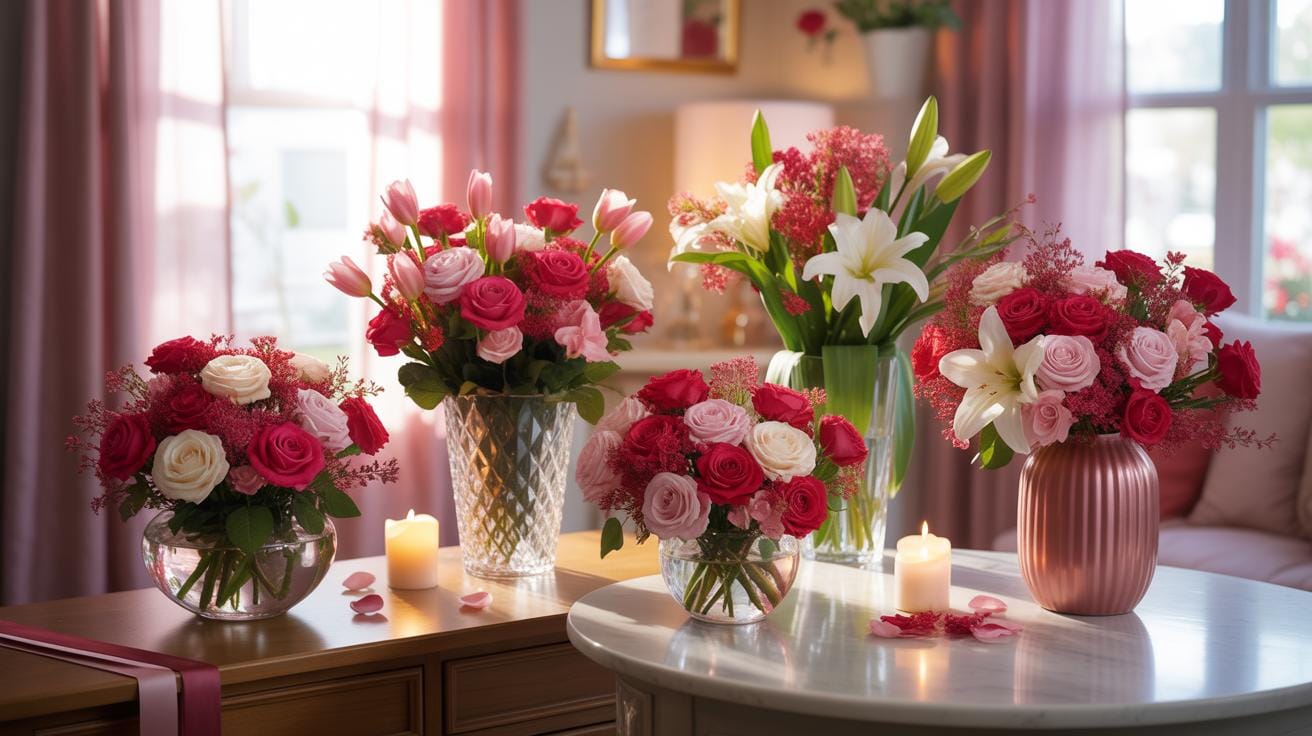
The Timeless Tradition Behind Valentines Day Floral Arrangements
A Brief History Of Flowers As Symbols Of Love And Romance
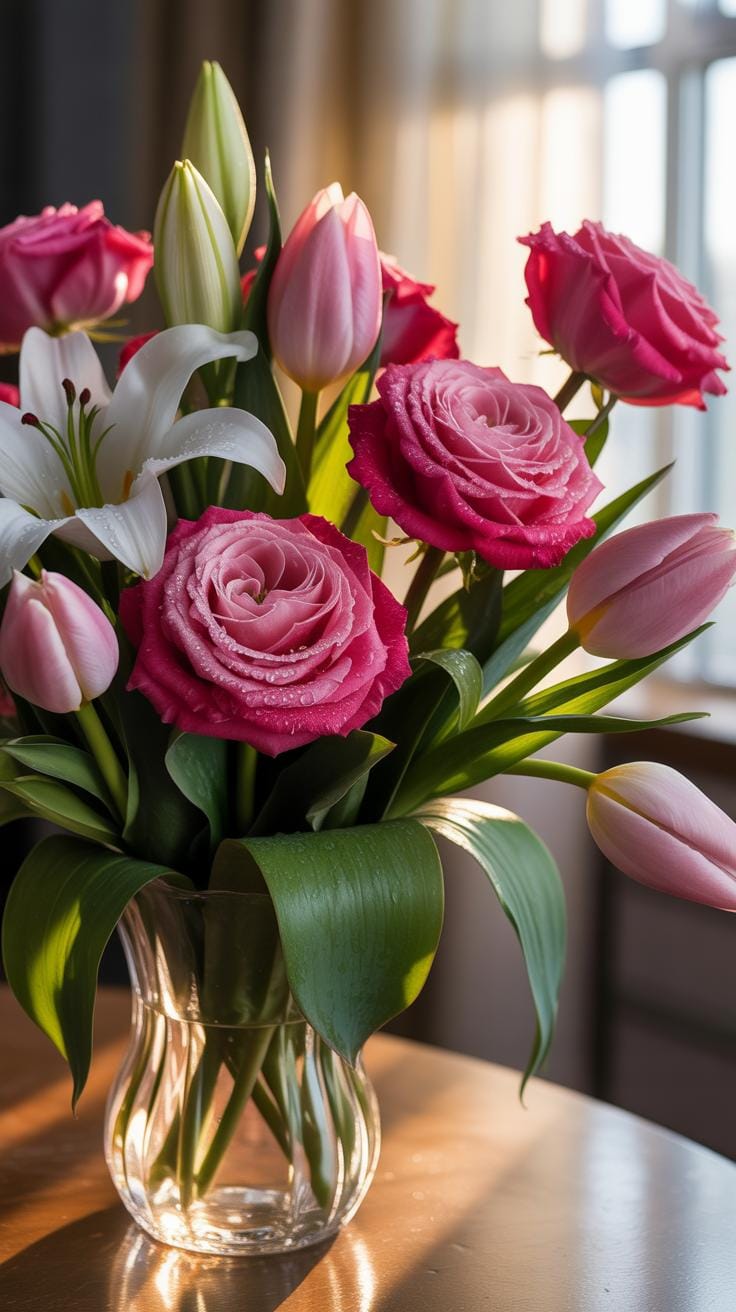
Humans used flowers to communicate emotions for centuries. Ancient Greeks and Romans linked roses to goddesses of love like Aphrodite and Venus. This early association established flowers as tools for romantic expression. During the Victorian era, people used floriography to send secret messages. This floral code allowed lovers to share feelings that society forbade them from speaking aloud or writing down.
The formalization of Valentine’s Day floral arrangements solidified in the nineteenth century. Florists began creating specific bouquets to meet the rising demand for holiday gifts. Red roses became the standard because of their deep color and availability. This historic shift turned simple plants into a global trade focused on romantic intent. Today, those same traditions influence how professional florists design and sell their seasonal inventory.
Why Flowers Remain The Most Popular Valentine’S Day Gift Today
Flowers stay at the top because they offer immediate visual and olfactory impact. They provide a sensory experience that digital gifts cannot match. Scientific studies show that receiving flowers triggers a dopamine release in the brain. This chemical reaction creates a positive association with the sender. Florists capitalize on this by using color theory and scent to drive high consumer satisfaction.
The logistics of the modern floral industry also keep flowers dominant. Global supply chains allow fresh blooms to travel from South America to local shops in days. This ensures high-quality products are available even in cold winter climates. The industry has standardized the gift-giving process through easy online ordering and reliable delivery networks. These systems make flowers the most efficient choice for expressing affection on a specific date.

Stunning ValentineS Day Floral Arrangements For A Romantic Atmosphere
Choosing The Right Color Palette For A Valentine’S Day Floral Display
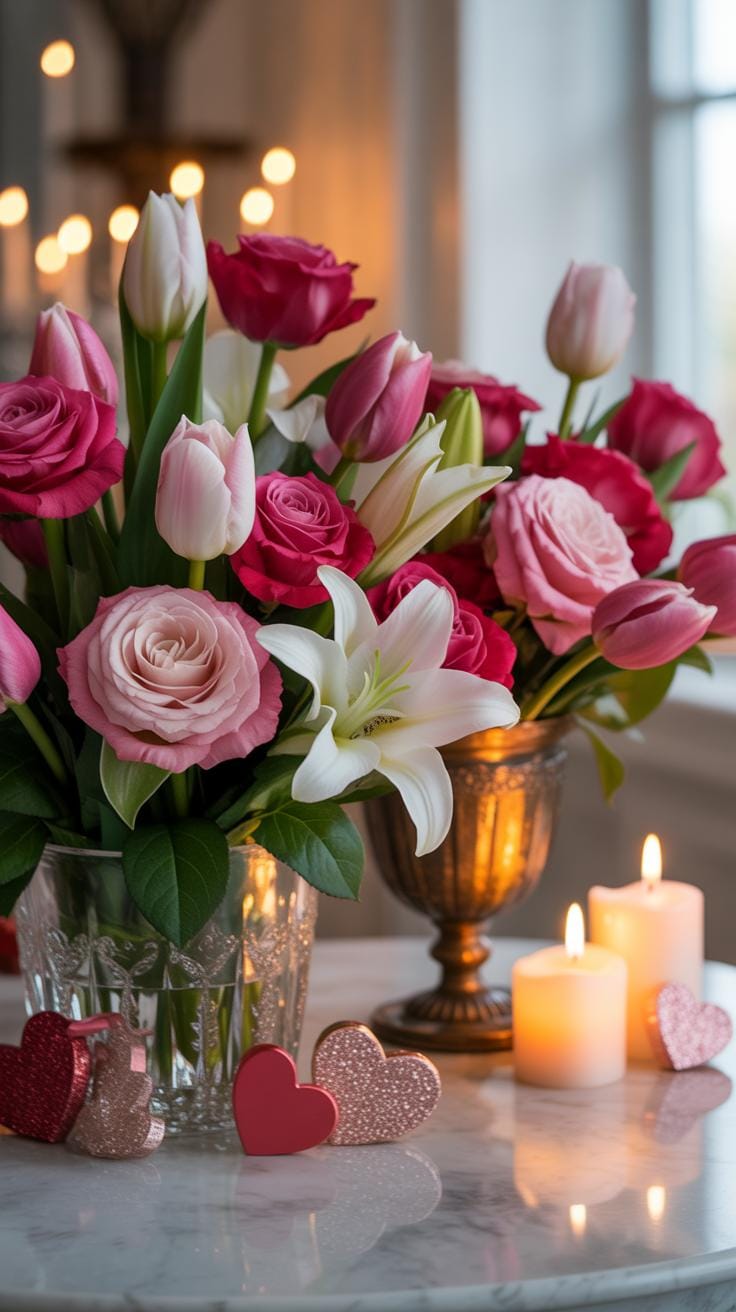
Color selection dictates the mood of the room. Red remains the standard because it has the longest wavelength on the visible spectrum. This makes it physically grab a viewer’s attention. To create a modern look, move away from monochromatic schemes. Mix deep burgundy with pale blush. This contrast creates visual depth. It prevents the arrangement from looking like a flat mass of one color.
Traditional palettes rely on the Victorian Language of Flowers. This historical system assigned specific meanings to different hues. Deep crimson symbolized intense passion while white represented purity or new beginnings. If you want a sophisticated display, use a monochromatic gradient. Shift from dark purple to light lavender. This technique mimics natural growth patterns. It keeps the viewer’s eyes moving across the entire floral display without stopping.
How To Layer Textures And Blooms For A Fuller, More Luxurious Look
Professional florists build arrangements in three distinct layers. Start with a structural foundation of greenery like eucalyptus or ruscus. This framework holds the heavy flowers in place. Next, add focal flowers. These are usually roses or peonies with large surface areas. Place them at varying heights to mimic how they grow in nature. This method creates a three dimensional shape rather than a flat front.

Texture adds perceived value to your floral design. Combine smooth petals with jagged leaves or fuzzy stems. Use filler flowers like waxflower or feverfew to plug small gaps. These small blooms add detail without overwhelming the main flowers. Ensure you strip all foliage below the water line. This prevents bacterial growth and keeps the stems healthy. Proper layering ensures the arrangement looks dense and professional from every angle.
Classic Red Rose Floral Arrangements That Never Go Out Of Style
The Symbolism Of Red Roses And Why They Dominate Valentine’S Day
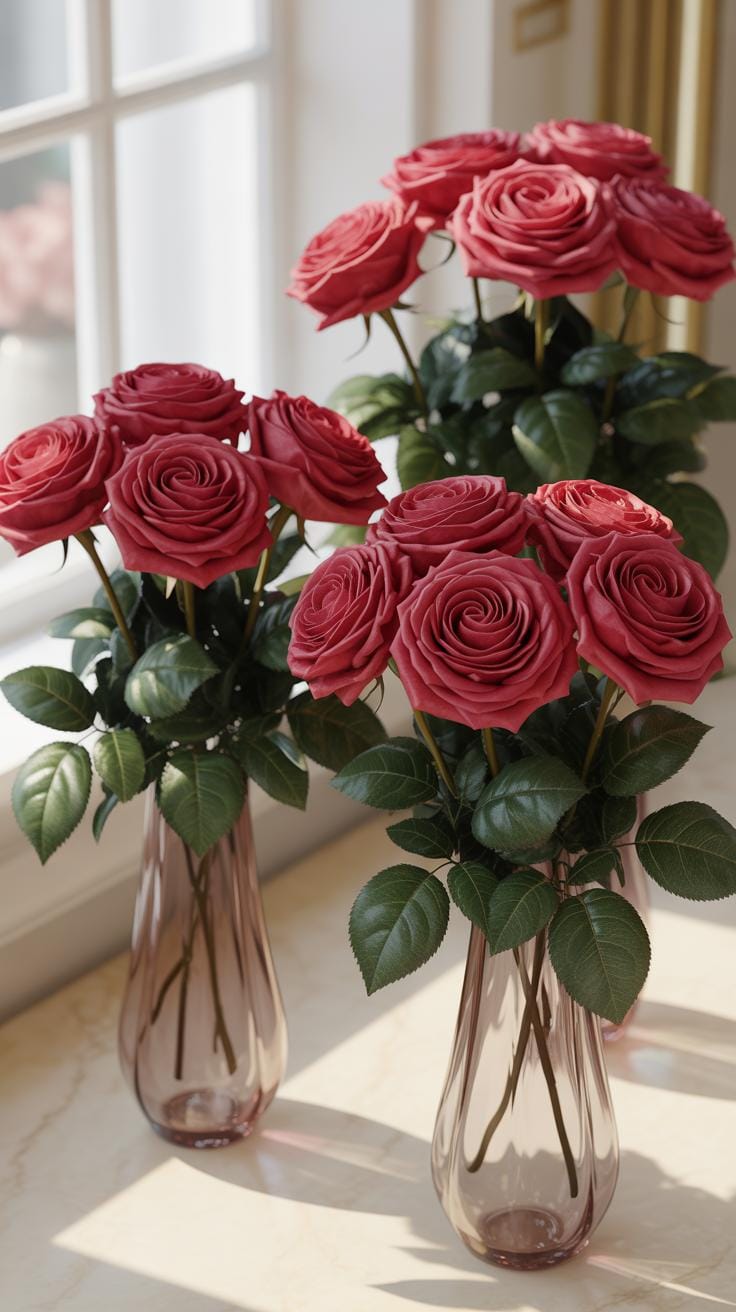
Red roses dominate the floral market because of historical links to Greek and Roman mythology. Ancient cultures associated the red rose with Aphrodite and Venus, the goddesses of love. This connection solidified the bloom as the primary symbol of passion and devotion. Commercial growers prioritize red varieties for February harvests because they meet the massive global demand for this specific cultural icon.
The red rose maintains its market lead through longevity and structural integrity. Breeders develop hybrid tea roses specifically for the floral trade. These varieties offer thick stems and high petal counts. These physical traits ensure the flowers survive transport and last longer in home environments. Consumers choose red roses because they communicate a clear, universally recognized message that requires no further explanation or card.
Creative Ways To Display Red Roses Beyond The Traditional Vase
European floral design offers tactical alternatives to standard glass vases. Modern techniques use low profile stone troughs or concrete vessels to create a weighted aesthetic. These containers shift the focus from the stems to the flower heads. Low arrangements work better for dining tables because they do not block lines of sight. This placement maximizes the utility of the floral footprint in a home.
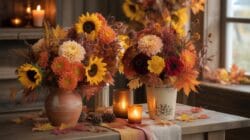
Architectural styling involves grouping roses in tight, monochromatic clusters. Use a grid of clear tape across the top of a wide bowl to hold stems in place. This creates a dome effect that looks intentional and high end. For a minimalist approach, place single stems in a series of identical bud vases. Space them evenly along a mantle to create a repetitive visual pattern that fills a large room.
Charming Small Valentines Flower Arrangements For Cozy Spaces
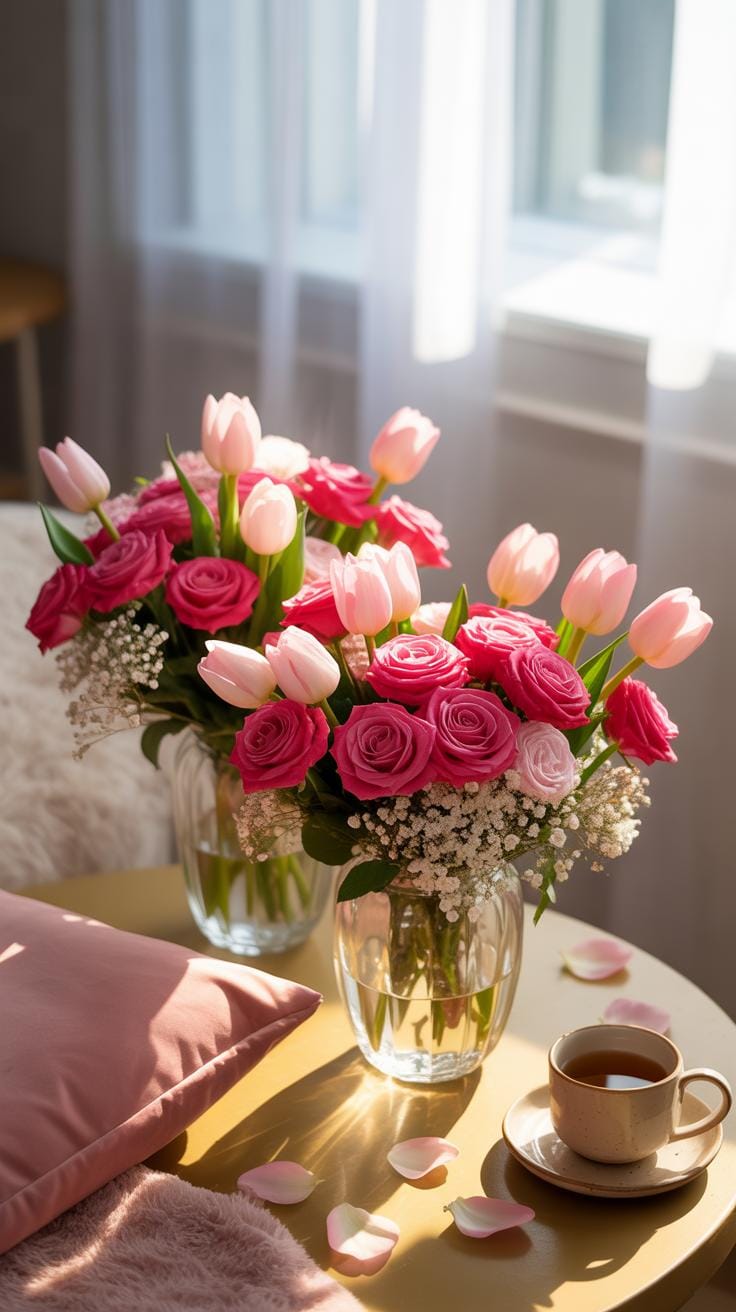
Best Flower Varieties For Petite And Compact Valentine Displays
Select high petal count flowers to maximize visual impact in small vases. Ranunculus and anemones offer dense structures that command attention without requiring excessive vertical space. Use Sweet Peas if you need fragrance in a tight footprint. These species carry strong historical ties to Victorian era tussie mussies. They provide a high ratio of color to stem mass which is vital for narrow surfaces.
Avoid large headed lilies or long stem Dutch roses that tip over light vessels. Opt for spray roses or miniature carnations instead. These varieties feature multiple blooms on a single sturdy stem. They allow you to build volume at the base of the arrangement. Use silver leaf dusty miller or waxflower as fillers. These plants remain stiff and do not wilt quickly in low water volumes.
Styling Tips For Placing Small Arrangements Around Your Home
Small arrangements require strategic placement to avoid looking cluttered or lost. Focus on elevated surfaces at eye level near entryways or bedside tables. Use heavy glass or ceramic vessels to prevent tipping. Group three small vases of varying heights to create a unified focal point. This technique draws the eye across the space and creates a professional tiered appearance without using bulk.
- Tiered Grouping: Place three vases of different heights together to create depth. This method mimics the look of a larger display while using fewer stems. It works best on dining tables or fireplace mantels.
- Reflective Surfaces: Position small arrangements in front of mirrors or on glass trays. Reflection doubles the visual volume of the flowers. It makes a few blooms look like a lush garden without taking up extra square inches.
- Scale Alignment: Match the vase size to the table surface. A small bud vase looks proportional on a nightstand but vanishes on a large kitchen island. Always ensure the arrangement height does not exceed one third of the table width.
- Color Blocking: Use a single flower species in a monochromatic palette for small containers. Mixed colors in a tiny vase often look messy and disorganized. Solid red or white displays look more deliberate and expensive in compact settings.
- Scent Placement: Move fragrant arrangements to areas with still air like hallways or bathrooms. Small displays have limited reach compared to large bouquets. Placing them in enclosed spaces ensures the scent remains noticeable and effective for several days.

Utilize the architectural lines of your home to frame these displays. Shelf corners and windowsills provide natural borders that emphasize the arrangement. Keep stems short to maintain a low center of gravity. This practice ensures stability on narrow ledges. Replace the water every two days because small vessels dry out fast. Fresh water keeps the vascular system of the flower open and prevents early wilting.
Beautiful Valentine Flower Arrangements For Every Room In Your Home
Living Room Floral Ideas That Make A Bold And Welcoming Statement
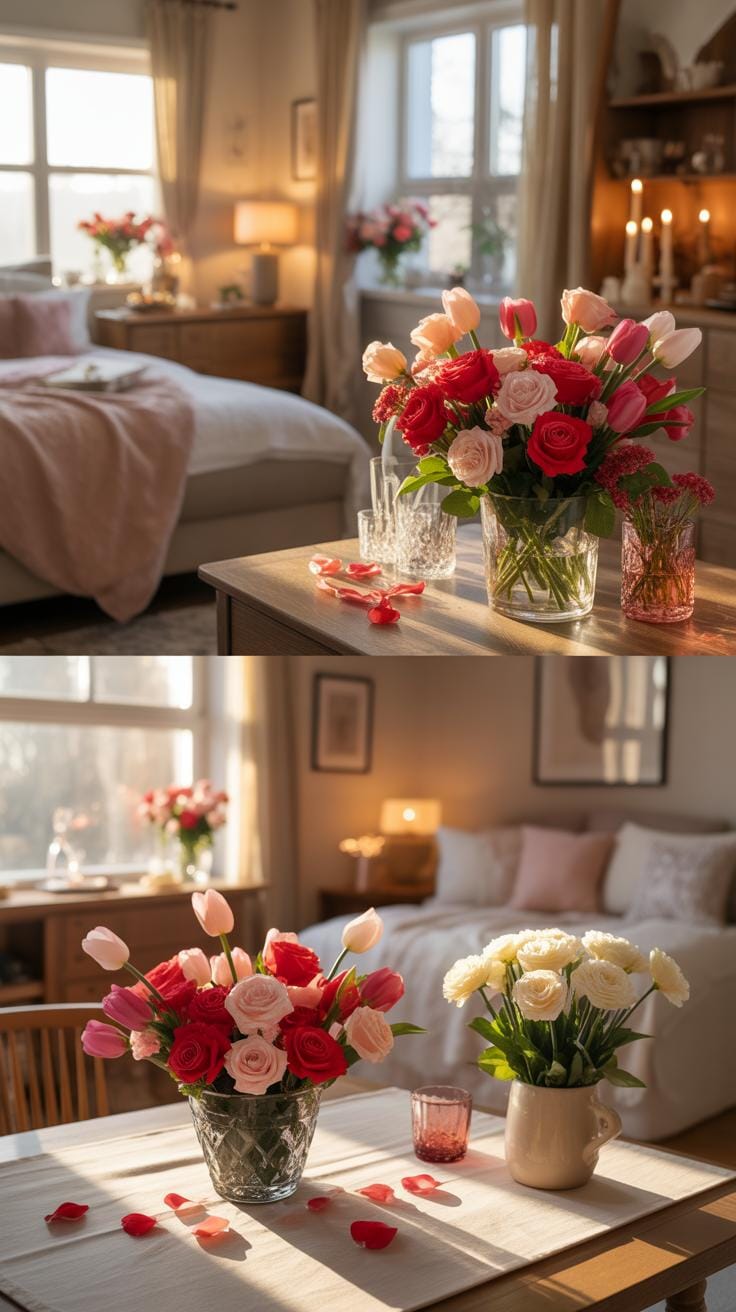
The living room serves as the primary zone for guests. Use large scale arrangements to fill vertical space. Massing single varieties creates a high impact look. Choose sturdy stems like hydrangeas or long stem roses. These flowers hold their shape in heavy glass or ceramic vases. Place them on coffee tables or mantels where they act as a central visual anchor for the room.
Select vessels based on the existing decor style. Minimalist spaces benefit from structural branches or monochromatic blooms. Traditional rooms require balanced proportions and classic shapes. Use the rule of thirds to guide the height of the arrangement. Ensure the container height equals one third of the total display. This ratio maintains stability and prevents the flowers from tipping over during social gatherings.
Bedroom Flower Arrangements That Set A Soft And Intimate Mood
The bedroom requires a different tactical approach. Focus on scent and scale. Fragrant flowers like lilies or freesia work well here. Keep the arrangements small to avoid crowding nightstands. Use low profile bowls or bud vases to maintain clear lines of sight. This strategy ensures the flowers enhance the space without obstructing movement or daily function in a private area.
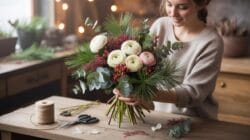
Opt for colors that promote relaxation and calm. Soft pinks and whites are standard choices for this environment. Change the water daily to prevent bacterial growth and maintain a fresh scent. Remove any pollen heavy parts like lily anthers to prevent stains on linens. Proper maintenance keeps the air clean and extends the life of the blooms throughout the entire holiday week.
Elegant Valentine Arrangements Using Mixed Blooms And Greenery
Popular Flowers To Pair With Roses For A Balanced Arrangement
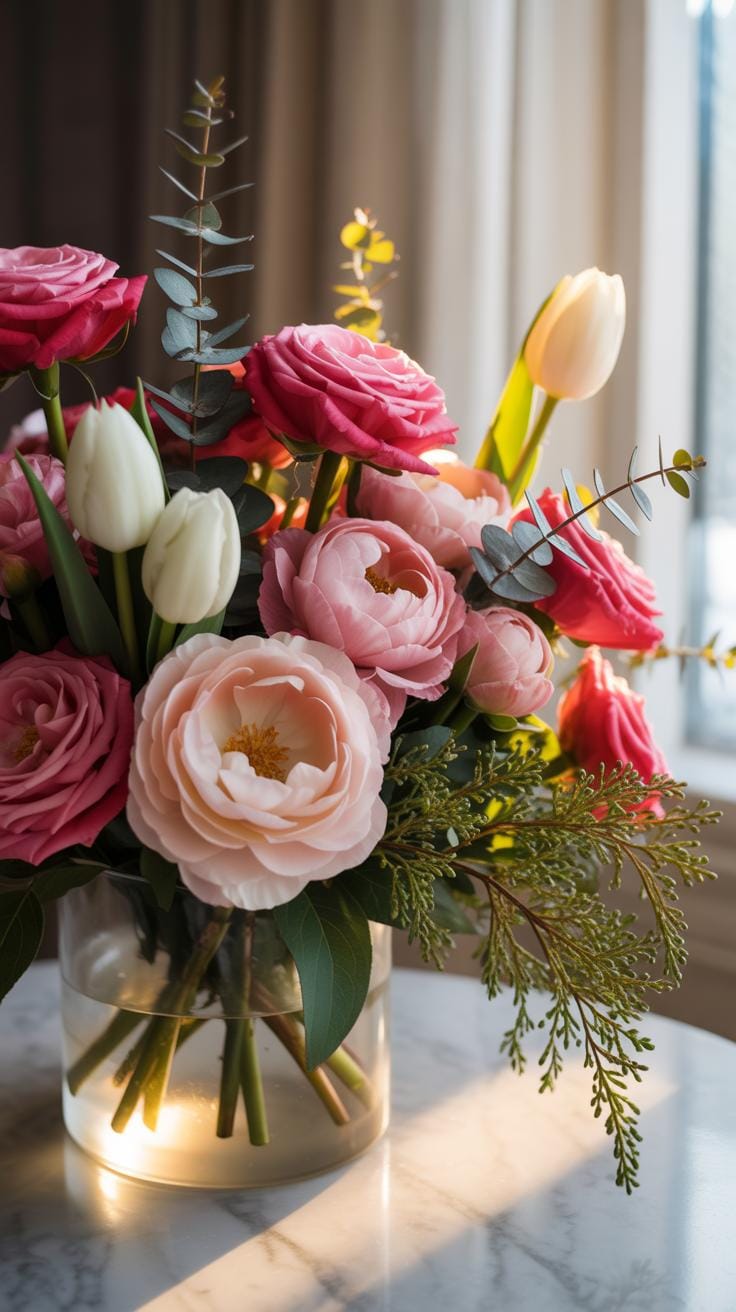
Standard roses lack vertical variation and texture. Wise designers pair them with secondary focal flowers like lilies or ranunculus to build visual layers. These additions change the silhouette from a tight sphere to a more natural shape. You must choose stems with different head sizes to prevent a flat appearance. This strategy ensures the eye moves through the entire piece instead of stopping at one flower.
Hydrangeas serve as an excellent structural base for heavy rose heads. Their dense clusters provide immediate volume and hold smaller stems in place. Snapdragons or stock add necessary height and a pleasant scent to the display. These linear flowers break the round monotony of a basic Valentines Day Flower Arrangement. Select colors that sit near each other on the color wheel to maintain a high-end look.
How Foliage And Greenery Enhance The Beauty Of Valentine Bouquets
Greenery defines the boundaries of your floral design. It creates a frame that makes the colorful blooms pop against a neutral backdrop. Without foliage, the stems look exposed and the arrangement lacks professional polish. Use leather leaf or salal for a classic look. Use eucalyptus for a modern feel. The green tones provide a rest for the eyes and make the reds and pinks appear more vibrant.
Texture comes primarily from your choice of leaves. Silver dollar eucalyptus adds a dusty blue hue and a matte finish. Ruscus provides a glossy shine and stiff structure that supports weaker flower necks. Greenery also fills the gaps between expensive blooms. This reduces the total cost of the project while increasing the physical size. Proper foliage placement makes a small set of flowers look like a massive luxury display.
Gorgeous Valentine Table Centerpieces To Impress At Any Dinner
How To Design A Show Stopping Floral Centerpiece For A Valentine’S Dinner Table
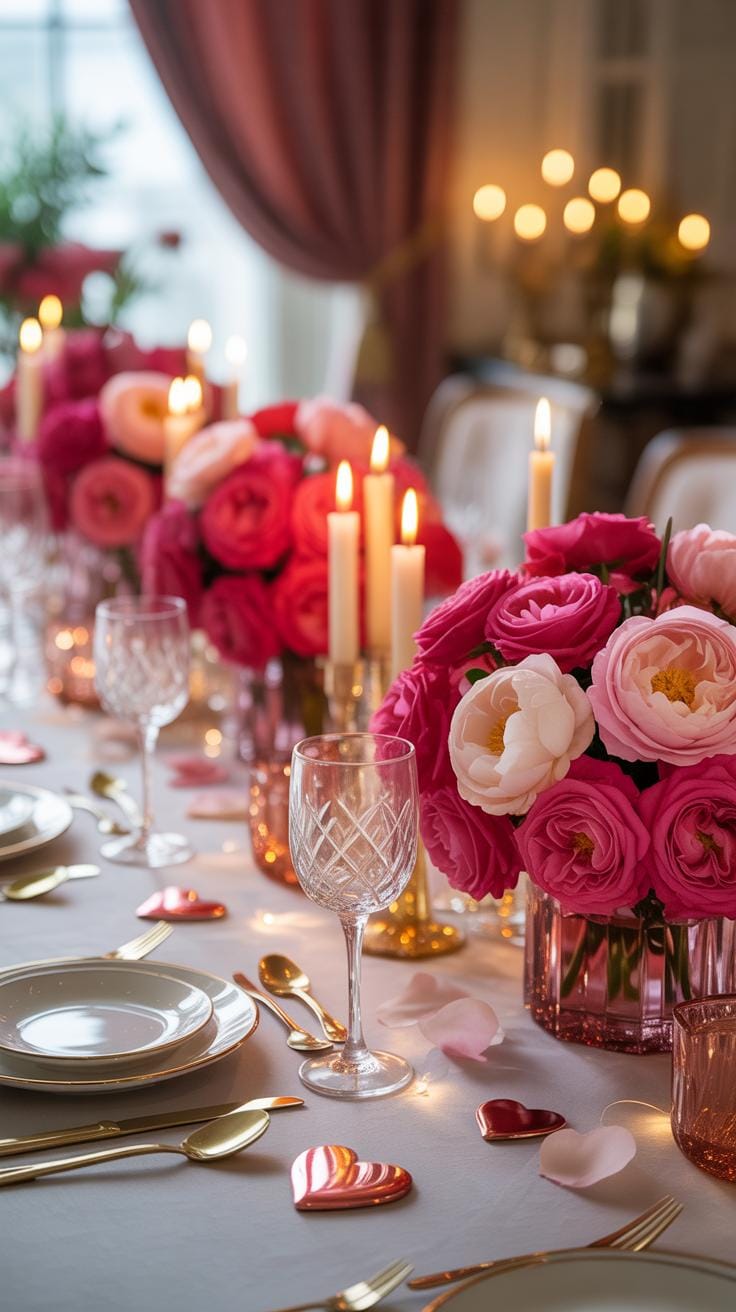
Select a low-profile vessel to ensure guests maintain eye contact across the table. Use the grid technique with waterproof floral tape to provide structural integrity for the stems. Start by placing foundational greenery like eucalyptus or ruscus to define the shape. Position focal flowers such as O’Hara roses or ranunculus at varied heights. Ensure the arrangement looks balanced from every angle for 360-degree viewing.
Hydrate all stems in room temperature water with floral preservative before arranging. Remove any foliage that will sit below the water line to prevent bacterial growth. Use sharp shears to cut stems at a forty-five-degree angle for maximum water intake. Incorporate texture with spray roses or hypericum berries to add visual depth. Keep the arrangement under twelve inches tall to avoid obstructing conversation during the meal.
Pairing Candles And Decorative Accents With Your Valentine Table Centerpiece
Balance your floral arrangement by placing taper candles in glass or brass holders. Use unscented wax to ensure the candle smell does not interfere with the food or flower fragrance. Space the candles at least six inches away from the petals to prevent heat damage. Place the tallest candles near the center and shorter ones toward the ends of the table to create a visual rhythm.

Incorporate cloth napkins and metallic chargers to complement the floral textures. Use a neutral silk or linen runner to ground the centerpiece and protect the table surface. Add small polished stones or velvet ribbon accents to tie the color palette together. Ensure all decorative elements remain within the central third of the table width. This strategy leaves ample room for place settings and serving platters.
Creative Valentines Day Centerpieces DIY Ideas You Can Make At Home
Essential Materials And Tools You Need For A DIY Valentine Centerpiece
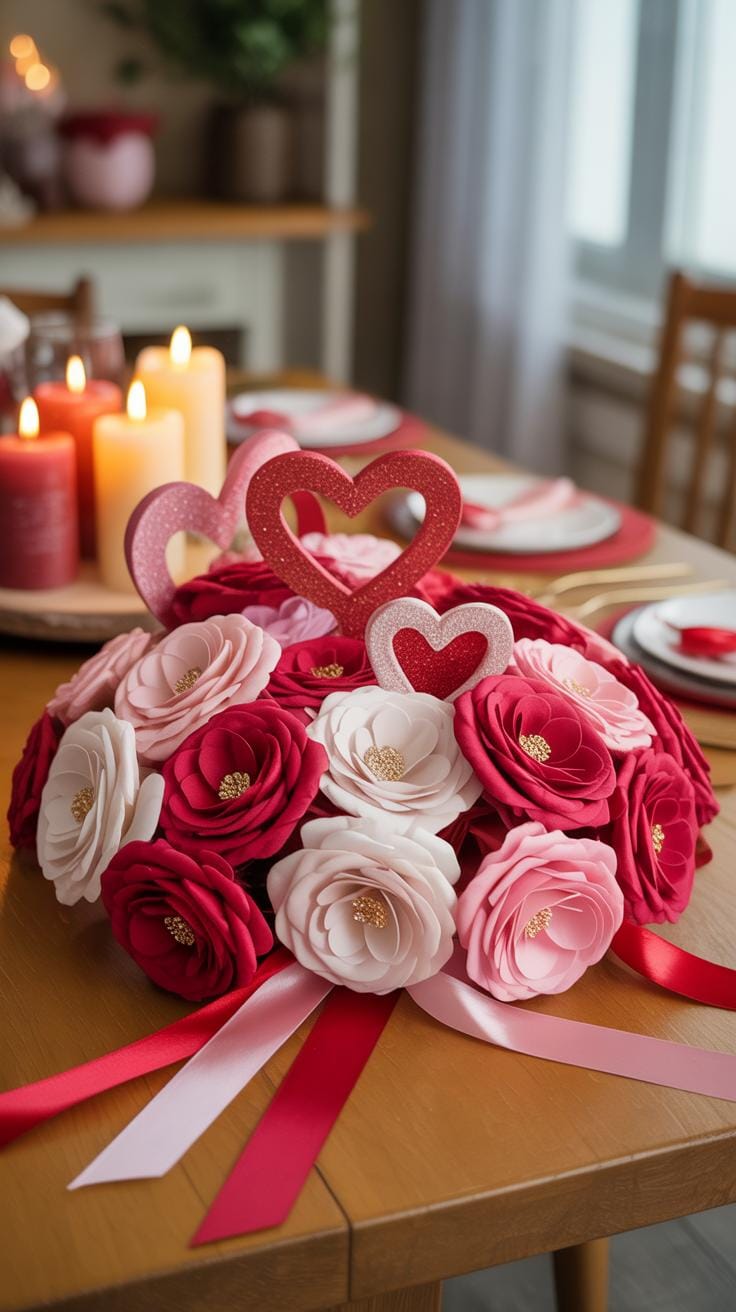
Building professional Valentines Day Flower Arrangements requires specific hardware to ensure structural integrity. You must prioritize mechanics over aesthetics during the preparation phase. Standard kitchen scissors will crush delicate stems and block water intake. Invest in dedicated bypass pruners or floral snips for clean cuts. Using the right vessel and support system prevents the arrangement from collapsing under its own weight.
- Floral Foam or Frog: These tools anchor stems in place. Foam holds water for steady hydration while heavy metal pin frogs provide stability for minimalist styles. Choose based on your intended design density and weight.
- Bypass Pruners: Clean cuts are vital for flower longevity. Dull blades tear the vascular tissue of the stem which leads to premature wilting. Use sharpened carbon steel tools to ensure a precise forty-five degree angle cut.
- Floral Tape: Clear waterproof tape creates a grid across the top of wide containers. This grid supports stems and maintains the desired spacing. It remains invisible once you finish adding the greenery and primary focal flowers.
- Flower Food: Commercial packets contain sugar for energy and acidifiers to balance water pH levels. They also include biocides to kill bacteria growth in the vase. This additive significantly extends the life of your fresh holiday display.
- Clean Glass Vessel: Bacteria is the primary enemy of cut flowers. Use a sterilized vase to prevent stem rot. Scour the container with a weak bleach solution before you start the assembly process to ensure a sterile environment.
Proper hydration depends on these foundational items. Many beginners skip the structural phase and end up with lopsided displays. You must secure your base before the first stem enters the water. Strategic planning with these tools separates amateur work from high-end design. Efficient workflow starts with a clean station and organized materials. Fix your mechanics first to guarantee a professional result every time.
The earth laughs in flowers, bringing a piece of nature’s heart into every home to tell a story of love.
Step By Step Guide To Assembling A Budget Friendly DIY Floral Display
Start by creating a greenery foundation to hide your mechanics. Use inexpensive foliage like leather leaf fern or eucalyptus to establish the shape. This green base provides a physical framework that holds the larger blooms in place. Cut your stems at various lengths to create depth and movement within the piece. Ensure no leaves sit below the water line to prevent bacterial growth and foul odors.
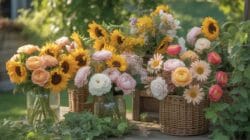
Position your primary focal flowers next by using the rule of threes. Place large roses or lilies in a triangular pattern to guide the eye across the arrangement. Fill the remaining gaps with smaller secondary flowers like carnations or waxflowers. Keep your tallest stems in the center and shorter ones near the rim for a balanced look. Rotate the vase constantly during assembly to check for empty spots.
How To Choose The Perfect ValentineS Day Centerpiece For Your Home Style
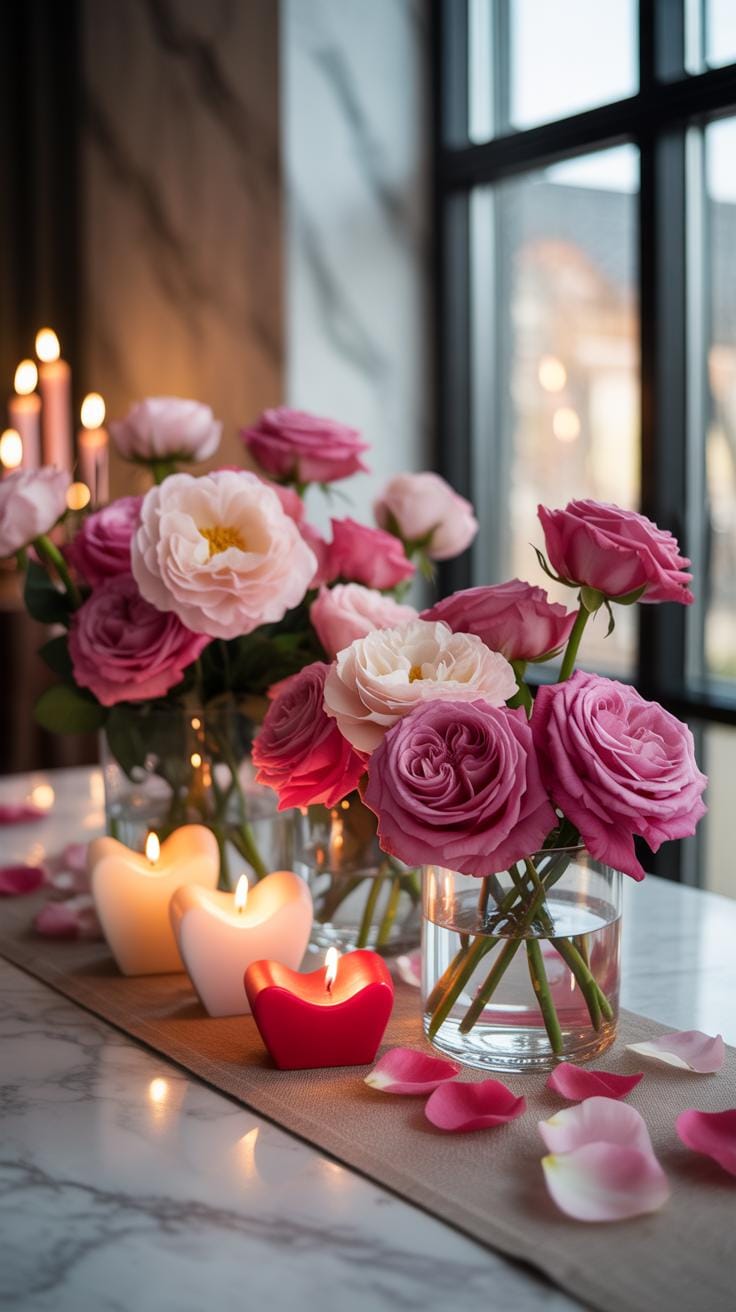
Matching Your Floral Centerpiece To Modern, Rustic, Or Minimalist Interiors
Modern interiors require sharp lines and bold contrasts. Select flowers with structural integrity like calla lilies or proteas to match this aesthetic. These blooms hold their form and align with the geometric focus of contemporary architecture. Use monochromatic color schemes to maintain a clean visual profile. Avoid overcrowding the vessel. Focus on negative space to ensure the arrangement integrates with the surrounding furniture and decor.
Rustic homes benefit from loose textures and varied heights. Incorporate garden roses and eucalyptus to reflect a natural environment. These elements provide a relaxed feel that complements wood and stone surfaces. Minimalist spaces demand a single focal point. Choose one high-quality stem or a uniform cluster of the same species. This approach prevents visual clutter. It reinforces the primary design principle of simplicity while still marking the holiday.
How Vase Shape, Size, And Material Affect The Overall Look Of Your Arrangement
Vase material dictates the formality of your Valentine’s Day display. Clear glass offers a literal transparency that suits modern and minimalist styles. It highlights the stems and water clarity as part of the design. Ceramic and stoneware provide visual weight. These opaque options hide floral foam and messy stems. Metal containers like brass or copper offer a vintage feel. They reflect light and add warmth to the dining table.
Size and shape control the physical footprint of the flowers. Low, rectangular troughs allow for conversation across a table without obstruction. Tall, cylindrical vases create vertical drama for entryways but can tip easily if top heavy. Trumpet vases flare at the top to encourage a wider spread of blooms. Always match the weight of the base to the volume of the flowers. A heavy base prevents accidents during busy holiday dinners.
Expert Tips For Keeping Your Valentines Day Flower Arrangements Fresh Longer
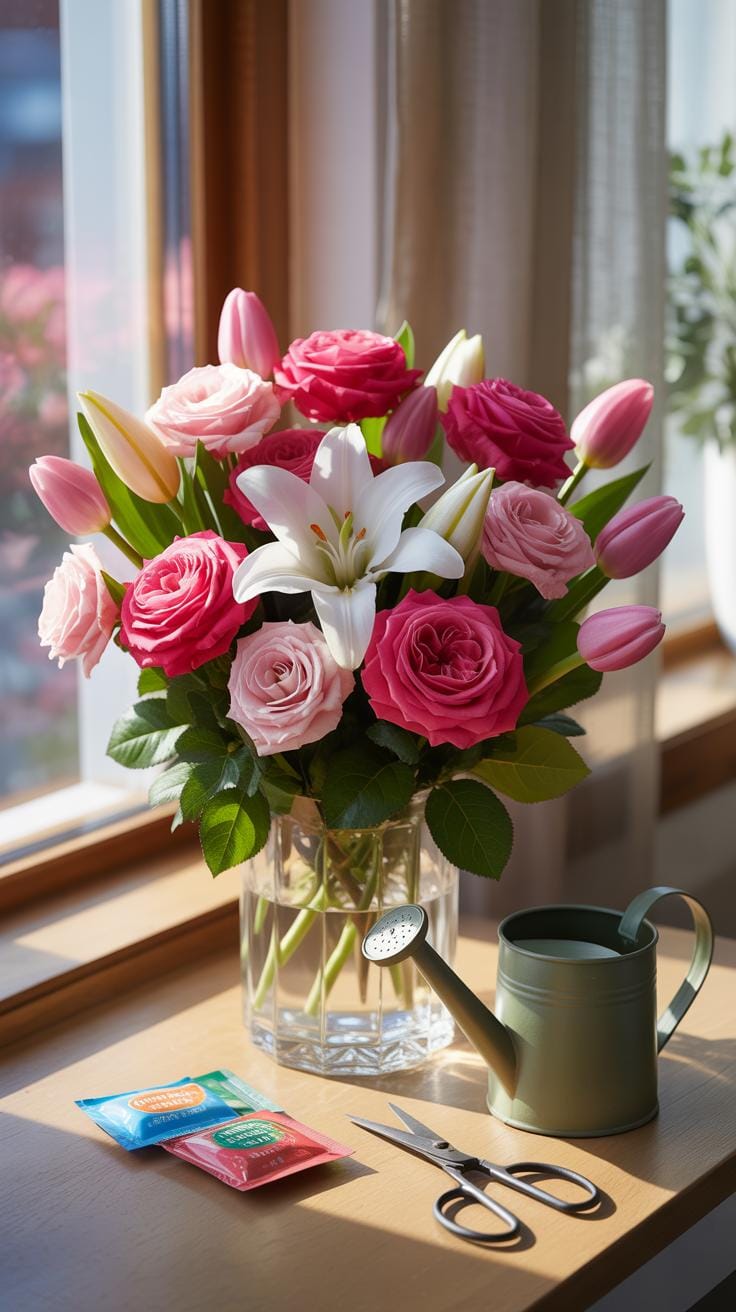
How To Properly Prepare And Condition Fresh Flowers Before Arranging
Preparation begins with clean tools and vessels. Bacteria kill flowers by clogging their stems. Wash your vase with bleach to remove all microbes. Strip any leaves that will sit below the water line. Decaying foliage creates ethylene gas and feeds bacteria. This process prevents premature wilting. Use lukewarm water to help stems take up moisture quickly. These steps ensure a healthy foundation.
Cut stems at a forty-five-degree angle using sharp shears. A slanted cut increases the surface area for water absorption. Do not use kitchen scissors because they crush the vascular system of the plant. Submerge stems in water immediately after cutting to prevent air bubbles from blocking the veins. For woody stems like roses, remove the guard petals. These external petals protect the bud during shipping.
Daily Care Routines That Extend The Life Of Your Valentine’S Day Blooms
Daily maintenance determines how long your arrangement survives. Change the water every twenty-four hours to keep it clear. Bacteria multiply fast in standing water. Add floral preservative to the fresh water each time. These packets contain sugar for food, acid to balance pH, and bleach to kill pathogens. Keep the arrangement away from direct sunlight, heating vents, and ripening fruit. Heat and ethylene gas accelerate aging.
Re-trim the stems by half an inch every two days. This opens new channels for hydration. If a rose head droops, it likely has an air pocket. Submerge the entire stem in warm water to clear the blockage. Remove any dying flowers immediately. Decomposing blooms release gases that harm the healthy ones. Consistent monitoring prevents a single failing flower from destroying the entire display. Good care extends vase life significantly.
Frequently Asked Questions

What are the best flowers to choose for a beginner DIY arrangement?
If you are new to creating Valentines Day Flower Arrangements, start with hardy blooms like roses, carnations, or tulips. These flowers have sturdy stems that are easy to trim and manipulate in a vase. Focus on a monochromatic color palette to ensure a cohesive look. Adding simple greenery like eucalyptus or baby’s breath can help fill gaps effortlessly, making your first floral design look professional and lush with very little experience.
How can I make my Valentine’s Day floral display last longer at home?
To extend the life of your Valentines Day Flower Arrangements, always start with a sterilized vase and fresh, lukewarm water mixed with flower food. Trim the stems at a 45-degree angle before placing them in the water to maximize hydration. Ensure no leaves are submerged below the waterline to prevent bacterial growth. Change the water every two days and keep the display away from direct sunlight, drafts, and ripening fruit to maintain freshness.
Is it possible to create a stunning Valentine’s floral display on a tight budget?
Absolutely! You can create a high-end look without a high price tag by using “filler” flowers like alstroemeria or waxflowers, which are affordable and voluminous. Another great trick is to use a smaller, opaque vase so you need fewer stems to create a full appearance. Shopping at local farmers’ markets or grocery stores and arranging the blooms yourself is a cost-effective way to enjoy beautiful seasonal decor on a budget.