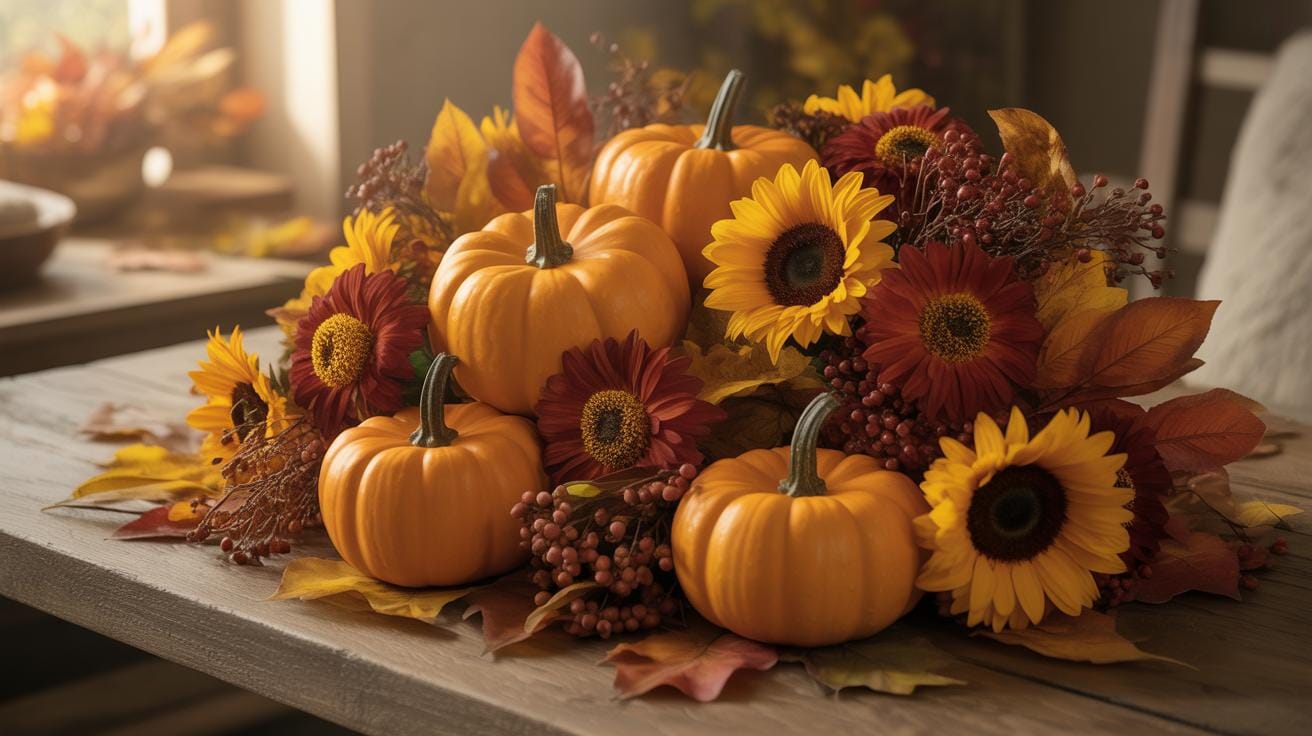
What Makes Fall Floral Centerpieces So Uniquely Beautiful
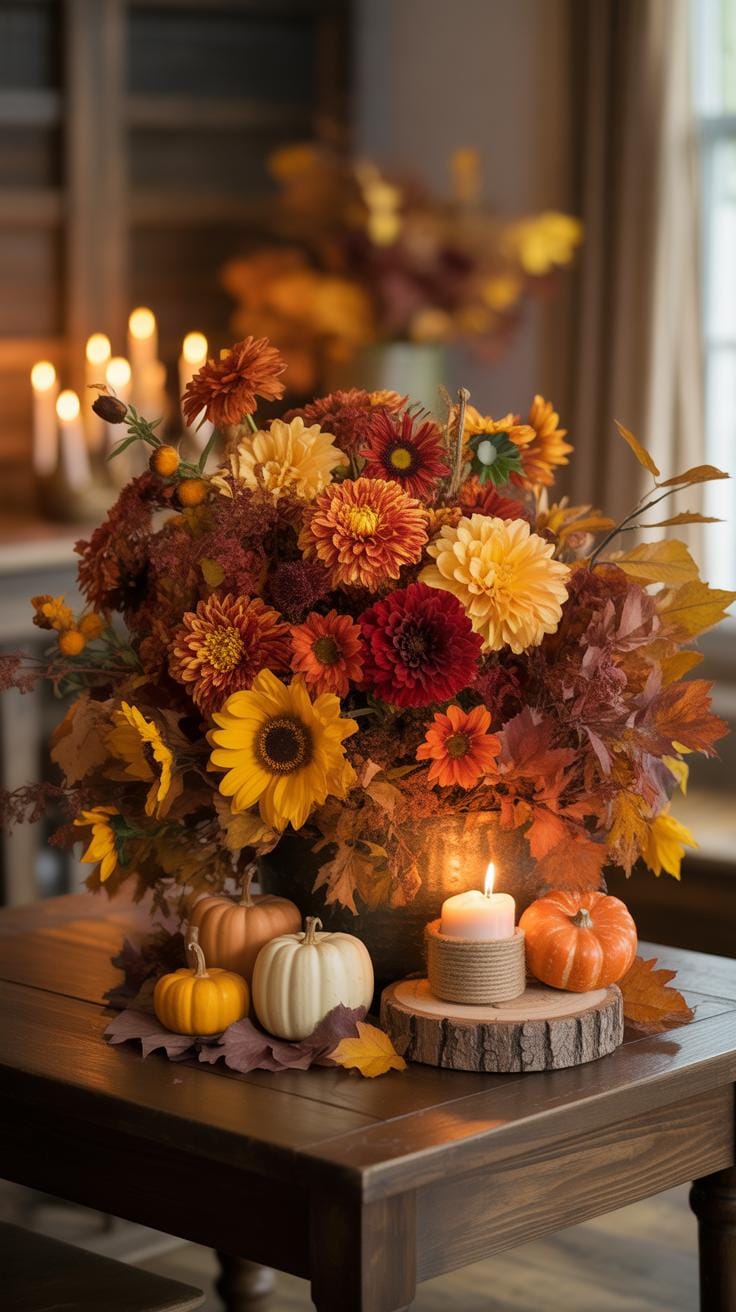
The Rich Color Palette That Defines Autumn Floral Design
Fall design relies on the transition of chlorophyll in plants. This process reveals carotenoids and anthocyanins. These pigments create the deep reds, burnt oranges, and golden yellows found in seasonal blooms. Designers use these warm tones to create visual weight. Darker shades like burgundy and plum ground the arrangement. They offer a heavy contrast to the bright colors of summer floral work.
Tactical color selection follows the natural landscape. Modern designers use monochromatic or analogous color schemes to ensure harmony. You must balance high-saturation hues with neutral browns or muted tans. This prevents the arrangement from looking cluttered. Proper use of amber and ochre mimics the shifting light of the season. These colors absorb light differently than bright spring petals. This choice creates a sophisticated and moody aesthetic.
How Seasonal Texture And Foliage Elevate A Fall Arrangement
Texture defines autumn work more than any other season. Florists move away from soft silkiness. They prioritize rugged and tactile elements. Dried seed pods, wheat stalks, and woody branches provide structural integrity. These items create a physical layers. They force the eye to move through the centerpiece. Rough surfaces contrast with the smooth petals of late-season dahlias. This contrast adds immediate professional depth.
Successful arrangements use foliage as more than a filler. You must treat turning leaves as a primary focal point. Oak, maple, and liquidambar leaves offer distinct geometric shapes. These shapes break up the rounded silhouettes of traditional flowers. Incorporating berries like hypericum or bittersweet adds small-scale detail. This variety in scale builds a complex visual story. It replaces the need for excessive flower counts while maintaining high impact.
Best Flowers To Use In Autumn Wedding Flowers Centerpieces
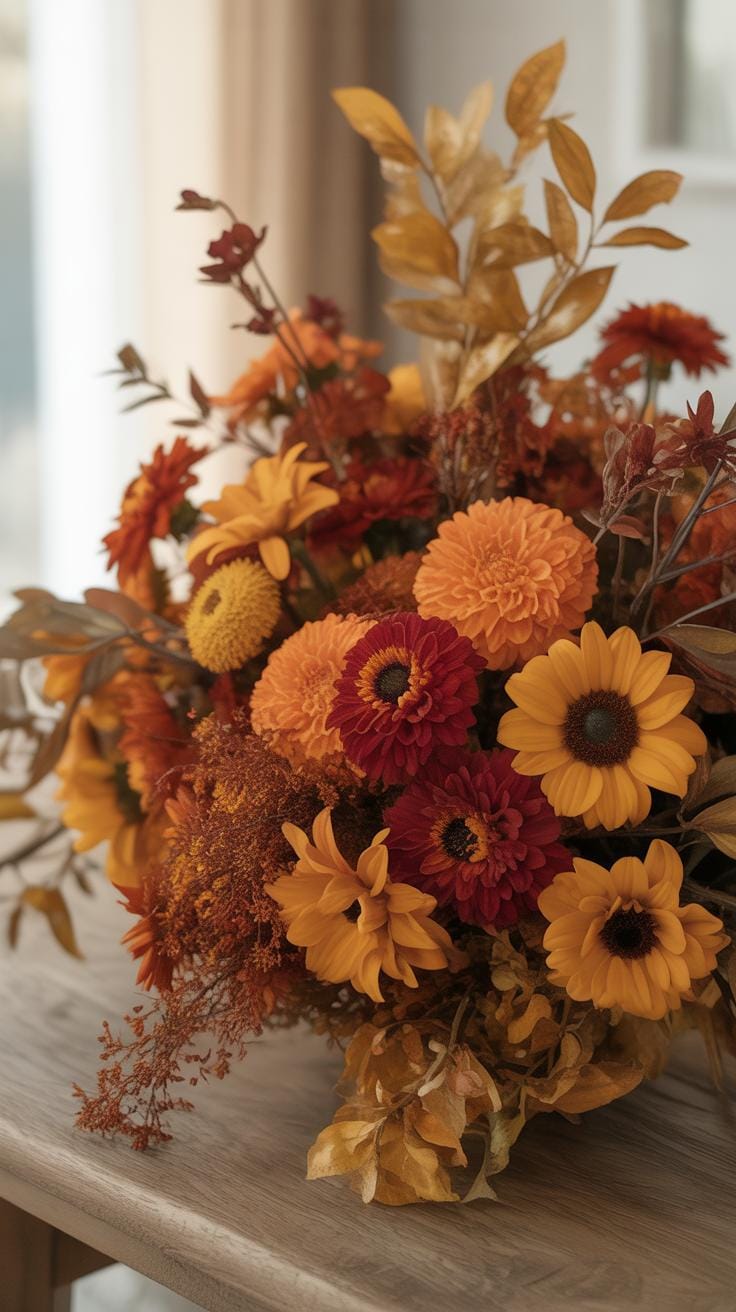
Top Blooms That Thrive And Look Their Best In The Fall Season
Fall floral design relies on structural integrity and pigment depth. You must select flowers that survive temperature fluctuations and low humidity. Specific varieties offer the saturated tones and durable petals required for long events. These selections ensure your centerpiece maintains its form without wilting. Choosing locally grown options reduces transport stress on the plants. This approach guarantees the highest quality for your wedding arrangements.
- Dahlias: These flowers serve as the primary focal point in most autumn designs. They bloom late into the season and offer a massive range of geometric shapes. Their thick stems support heavy heads in large table arrangements.
- Chrysanthemums: Unlike grocery store varieties, heirloom chrysanthemums provide complex textures and rich bronze tones. They are exceptionally hardy and stay fresh for days without specialized care. These flowers define the traditional fall aesthetic.
- Ranunculus: These cool-season mirrors of the rose offer high petal counts and flexible stems. They thrive in the crisper air of late autumn. Use them to add delicate detail and movement to the lower layers of your centerpiece.
- Anemones: Dark-centered anemones provide a sharp visual contrast to warm fall palettes. Their striking black centers draw the eye toward the middle of the arrangement. They work best in controlled indoor environments where stems can remain upright.
- Cymbidium Orchids: These orchids offer structural durability and come in deep burgundy and earthy green shades. They tolerate dry indoor heating better than most tropical flowers. Their waxy petals resist bruising during the assembly and transport process.
Balance your focal blooms with textural elements like dried wheat or copper beech leaves. This layering technique mimics natural autumn landscapes. Use woody stems to create a stable internal grid for softer flowers. Proper stem prep involves removing all foliage below the water line to prevent bacterial growth. Clean water and sharp cuts extend the life of these specific fall varieties significantly.
How To Source Fresh Seasonal Flowers For Your Centerpiece
Smart sourcing starts with local flower auctions and wholesale markets. Regional growers harvest plants at their peak maturity during the autumn months. Buying locally reduces the carbon footprint and prevents petal damage from long-distance shipping. Visit your local floral wholesaler early in the morning for the best selection of high-grade stems. Building relationships with these suppliers ensures you get first access to premium seasonal inventory.

Compare prices between different vendors to maximize your budget efficiency. Look for clear eyes on dahlias and firm stems on roses to verify freshness. Avoid any flowers with yellowing leaves or slimy stems as these indicate age. Consider ordering in bulk to secure lower per-stem costs for large wedding events. Logistics matter just as much as aesthetics when you procure fresh materials for your professional floral projects.
Essential Tools And Materials For Building Fall Floral Centerpieces
Floral Mechanics And Vessels That Support A Sturdy Arrangement
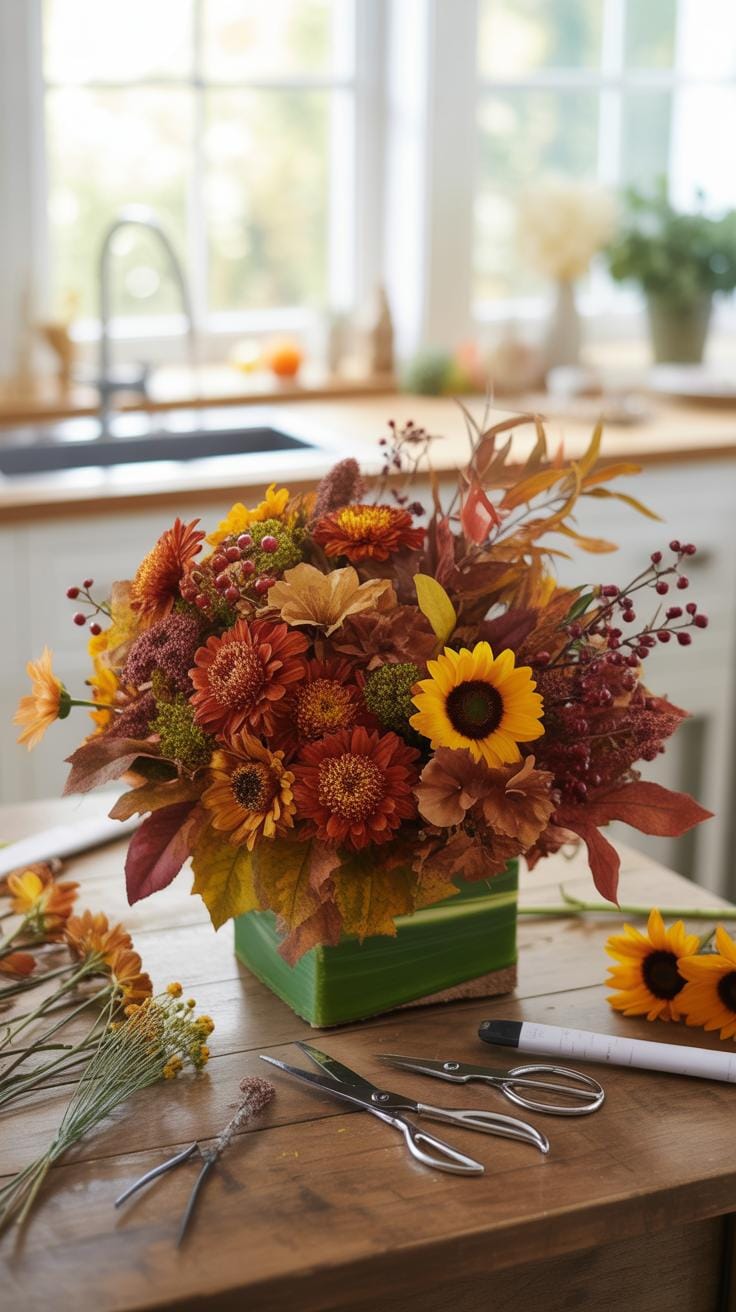
Vessels define the structural limits of your design. For fall arrangements, use heavy materials like glazed stoneware, antiqued brass, or thick wood boxes to balance the weight of seasonal branches. Ensure the container is watertight or use a plastic liner. Mechanics provide the skeleton that holds stems in specific angles. Without proper support, heavy autumn blooms will shift and ruin the visual lines of your work.
- Chicken Wire: Pliable metal mesh allows for natural stem placement and superior grip compared to foam. Fold it into a ball and secure it to the rim with waterproof tape. It supports thick woody stems easily.
- Floral Frog: These heavy lead or plastic spiked plates sit at the bottom of a shallow bowl. They are ideal for Ikebana style designs. Press stems directly onto the pins to lock them in place permanently.
- Waterproof Floral Tape: Use quarter inch tape to create a grid across the mouth of the vessel. This grid stabilizes stems and keeps them upright. It resists moisture and stays stuck to glass, ceramic, and metal surfaces during the build.
- Floral Shears: High carbon steel blades make clean cuts through soft stems and tough branches. Clean cuts allow for maximum water uptake. Dull scissors crush the vascular system of the plant and cause premature wilting of the flowers.
- Branch Cutters: Heavy duty bypass loppers are necessary for thick autumn branches like oak or bittersweet. These tools provide the leverage needed to cut through hardwood without splintering the stem. Precise cuts ensure the branch sits flush against the container.
Select your mechanics based on the desired density of the arrangement. Chicken wire and tape grids allow for airy, loose designs that mimic natural growth. Floral foam holds more water but restricts natural movement and can be toxic. Professionals now favor sustainable methods like wire and frogs to reduce waste. Always test the stability of your vessel before adding water to prevent spills or tipping during the event.
Autumn is a second spring when every leaf is a flower. Bring the glowing colors of the harvest indoors to create a masterpiece that celebrates the season’s fleeting beauty.
Foliage, Filler Plants, And Natural Accents That Complete The Look
Foliage creates the shape and volume of the centerpiece before any flowers are added. Use leather leaf fern, eucalyptus, or rust colored beech leaves to establish the perimeter. These elements hide the mechanics and give the arrangement a professional finish. Hardy greens provide a cooling contrast to the warm tones of autumn blooms. Focus on varying the leaf shapes to create visual depth and interest.

Incorporate non floral accents like dried wheat, lotus pods, and hypericum berries to add texture. These materials represent the harvest theme and require less water than fresh stems. Group these items in clusters of three to create focal points within the greenery. Natural elements like twisted grapevine or small pumpkins can sit at the base to ground the design. These sturdy additions ensure the centerpiece looks full and complete.
How To Design Fall Wedding Centerpieces With Candles For A Warm Ambiance
Choosing The Right Candle Styles To Complement Your Floral Arrangement
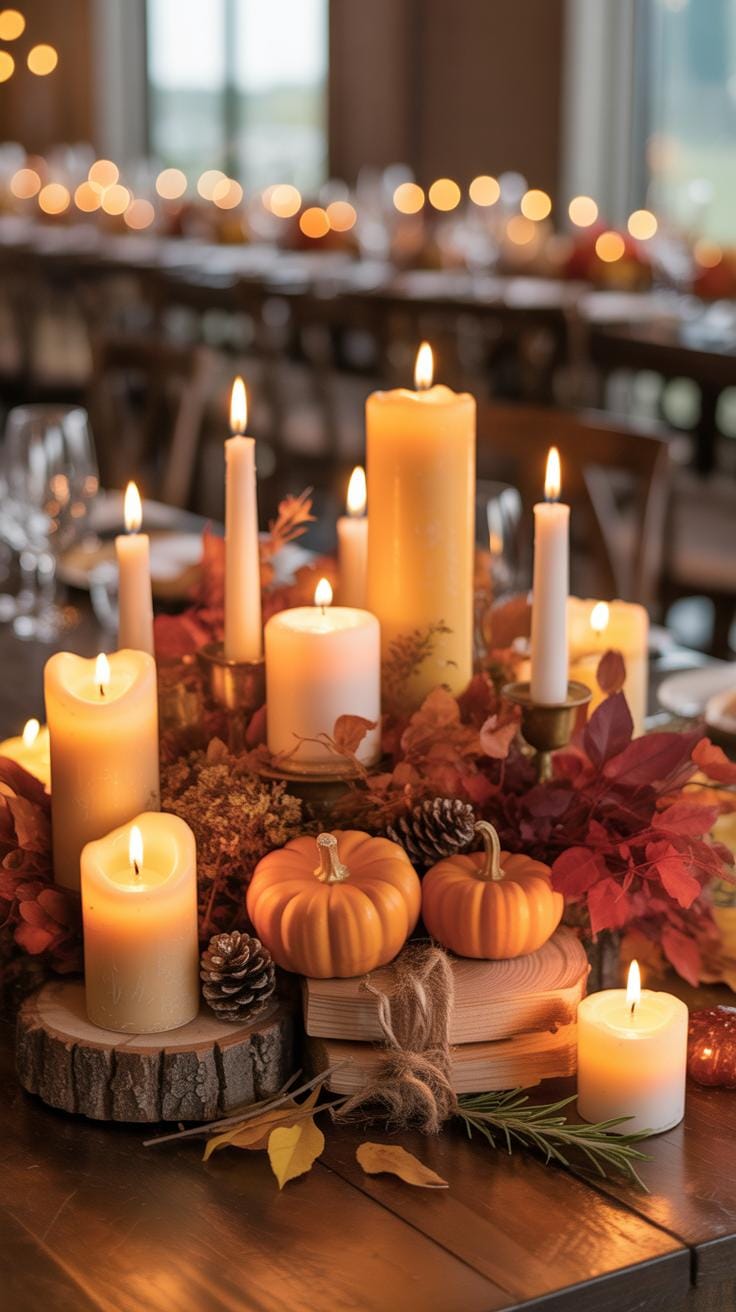
Select candle types based on the height and density of your floral structure. Taper candles provide a vertical counterpoint to low, sprawling arrangements of dahlias or garden roses. Use traditional beeswax or paraffin tapers in copper or brass holders to align with the warm tones of autumn. Pillars work best for large-scale table runners where they can sit directly on the surface or inside glass hurricanes.
Match the candle color to the specific floral palette to maintain visual unity. Use ivory or cream candles to soften bright orange and red blooms. Select deep burgundy or charcoal candles to create a moody, Dutch Masters aesthetic. Avoid scented candles near food service areas to prevent clashing with the meal. Stick to unscented varieties that allow the natural fragrance of the seasonal greenery to remain prominent.
Safe And Elegant Ways To Integrate Candles Into Your Fall Centerpiece
Safety dictates the placement of every flame within a floral design. Keep dry autumn leaves and preserved branches away from open wicks. Use glass hurricane chimneys to shield flames from drafts and nearby foliage. These glass enclosures prevent wax drips from damaging linens and lower the fire risk. Ensure every candle sits on a stable base or inside a secure holder to prevent tipping during the event.
Incorporate LED candles when using highly flammable materials like dried grasses or pampas plumes. Modern flameless options mimic the flicker of real wax without the heat. If using real fire, trim wicks to one quarter inch before lighting to minimize smoke and soot. Monitor the burn rate throughout the evening. Replace thin tapers before they burn down to the level of the flowers to ensure the centerpiece stays safe.
Step By Step Guide To Assembling Fall Floral Wedding Centerpieces
Preparing Your Flowers And Workspace Before You Begin
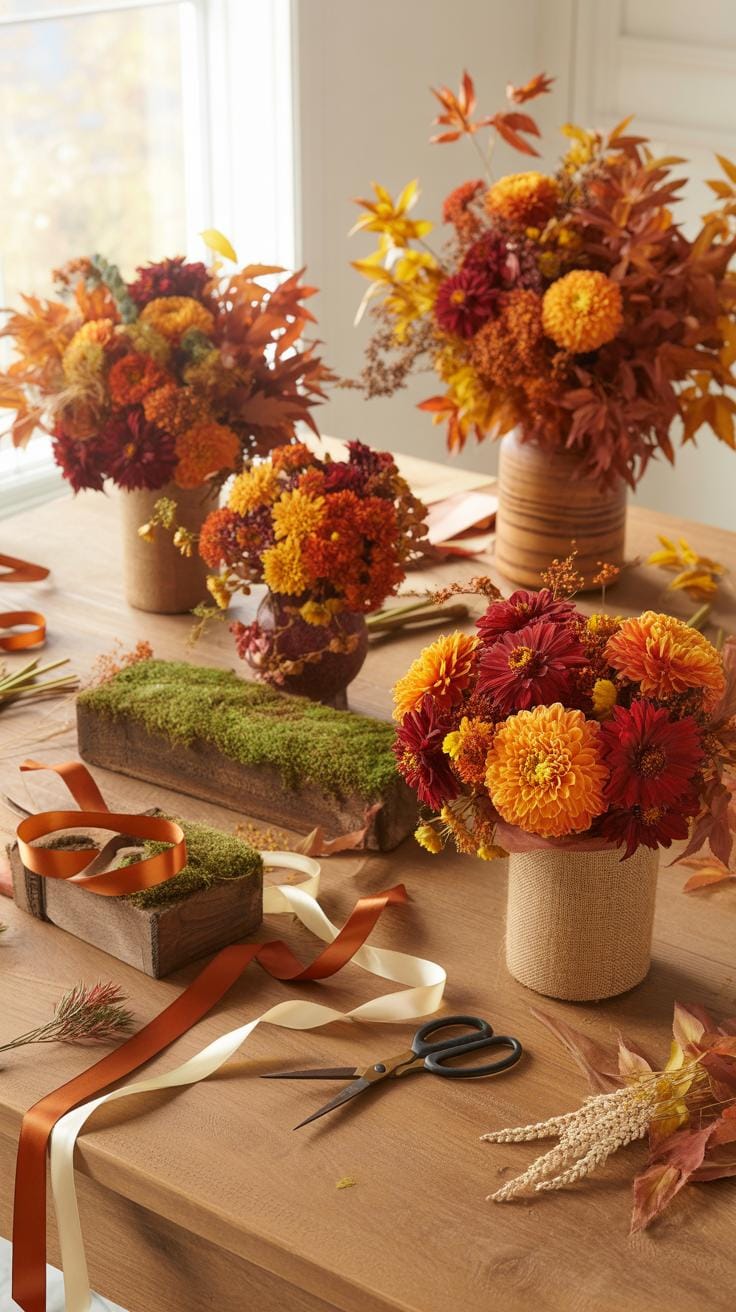
Clean your workspace with a bleach solution to kill bacteria. This step prevents premature wilting and stem rot. Gather sharp bypass shears and floral tape. Remove all foliage that will sit below the water line in your vessel. Stripping these leaves stops microbial growth. Re-cut every stem at a forty-five degree angle. This maximizes surface area for water intake and hydration.
Place your prepared stems in clean buckets of room temperature water. Let them hydrate for at least two hours before styling. This conditioning phase hardens the petals and stabilizes the blooms. Organize your materials by category. Separate the greenery, focal flowers, and secondary accents. Clear access to your tools reduces assembly time. Keep a trash bin nearby to manage floral debris and stem offcuts.
Building Your Arrangement From Base Layer To Finishing Blooms
Start with a structural base of greenery or branches. This foundation creates the shape and holds the weight of your flowers. Use the radial design technique to establish the perimeter. Secure your mechanics with waterproof tape or chicken wire inside the vessel. These materials provide more stability than traditional floral foam. Ensure the frame is sturdy enough to support heavy autumn blooms like dahlias.

Insert your largest focal flowers after the greenery layer is set. Place them at varying heights to create depth and visual interest. Add secondary flowers to fill gaps and soften transitions. Finish the design with delicate textural elements like dried grasses or berries. Check the arrangement from every angle to identify holes. Ensure no mechanics show through the stems. Keep the centerpiece balanced for transport and guest visibility.
Autumnal Wedding Centerpieces Styles From Rustic To Refined
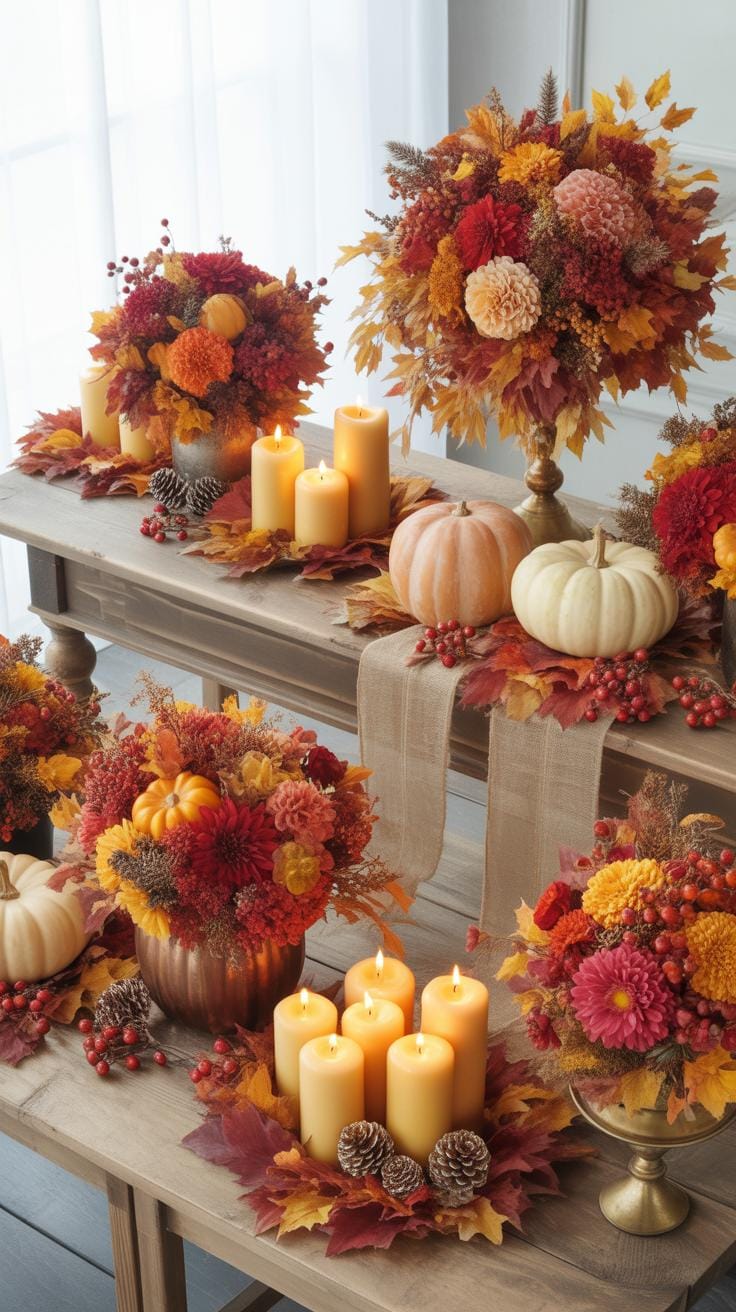
Rustic And Woodland Inspired Autumn Centerpiece Aesthetics
Rustic autumnal designs focus on raw textures and organic shapes found in nature. Use weathered wood crates or hollowed birch logs as primary vessels. Incorporate foraged elements like dried seed pods, acorns, and moss to add depth. These materials anchor the arrangement in a specific landscape. Select sturdy blooms such as zinnias or sunflowers that withstand movement and temperature changes during outdoor events.
Layering different shapes creates the signature woodland look. Professionals use a sprawl technique to mimic forest growth. Place heavy focal flowers low in the container. Surround them with wild grasses and copper-toned foliage for movement. Avoid symmetrical patterns or modern structured foam. Instead, use chicken wire supports to allow stems to sit at natural angles. This method ensures the centerpiece feels unforced and authentic.
Elegant And Formal Autumnal Styles For Upscale Wedding Receptions
Formal autumn centerpieces utilize clean lines and high-contrast color palettes. These designs often feature deep burgundy calla lilies, dark roses, and orchids. Use polished metallic or heavy glass containers to elevate the visual weight of the arrangement. Focus on the Dutch Masters style by grouping colors in dense clusters. This technique creates a sense of luxury and Victorian era sophistication for evening receptions.
Precision determines the success of refined styles. Strip all lower leaves from stems to keep the water clear and the look sharp. Balance dark floral tones with gold-painted foliage or velvet ribbons. Maintain a consistent height across tables to establish a cohesive visual plane throughout the venue. Avoid loose fillers. Every element must serve a purpose. High-end designs rely on negative space and expensive focal blooms.
Fall Flower Arrangements Wedding Autumn Centerpiece Ideas For Every Table Size
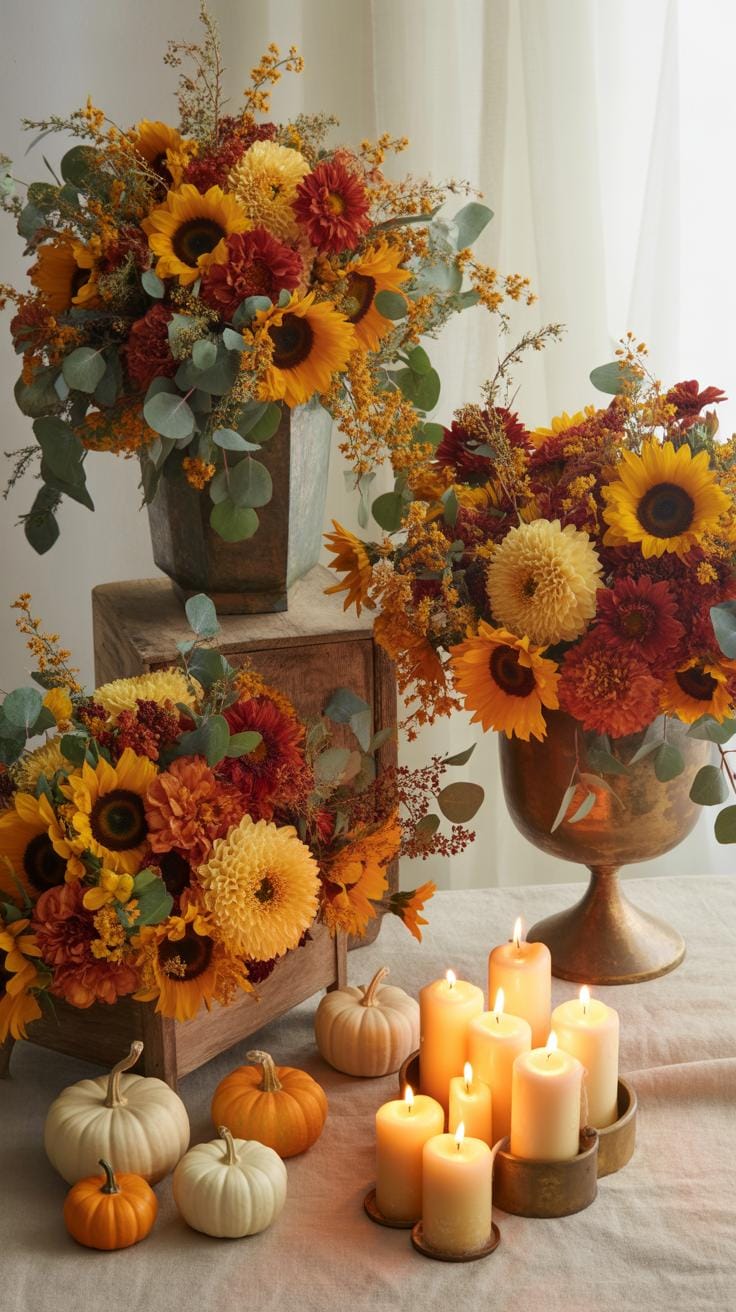
Low And Lush Centerpiece Designs That Encourage Table Conversation
Low centerpieces stay under twelve inches tall. This height allows guests to see across the table easily. Practical designers use floral foam or chicken wire to secure stems in shallow bowls. These mechanics keep heavy fall blooms like dahlias and garden roses in place. Use horizontal lines to fill the table width without blocking sight lines.
Select dense foliage like seeded eucalyptus or ruscus to create a base. Pack primary flowers tightly to hide the mechanics and provide visual weight. This style works best for circular tables where intimacy is the goal. Use stone or wooden vessels to match the seasonal tone. Avoid tall tapers or high branches that split the vision of your seated guests.
Tall And Dramatic Arrangements That Make A Grand Statement
Tall arrangements draw the eye upward and fill large rooms with high ceilings. Use slender glass trumpets or metal stands to lift the bulk of the flowers. Ensure the base and the neck of the stand remain narrow. This creates a clear window at eye level for guests to communicate. Secure the structure with heavy weighted bases to prevent tipping.
Incorporate vertical elements like amaranthus or willow branches for height. These materials provide a architectural frame for the flowers. Use focal blooms like hydrangeas or chrysanthemums at the top for maximum impact. This design movement mimics the look of autumn trees. It works effectively in large ballrooms or open outdoor spaces where small arrangements would disappear into the background.
Creating Thanksgiving Flower Bouquets And Centerpieces For The Holiday Table
How Thanksgiving Bouquet Fall Flowers Differ From Wedding Arrangements
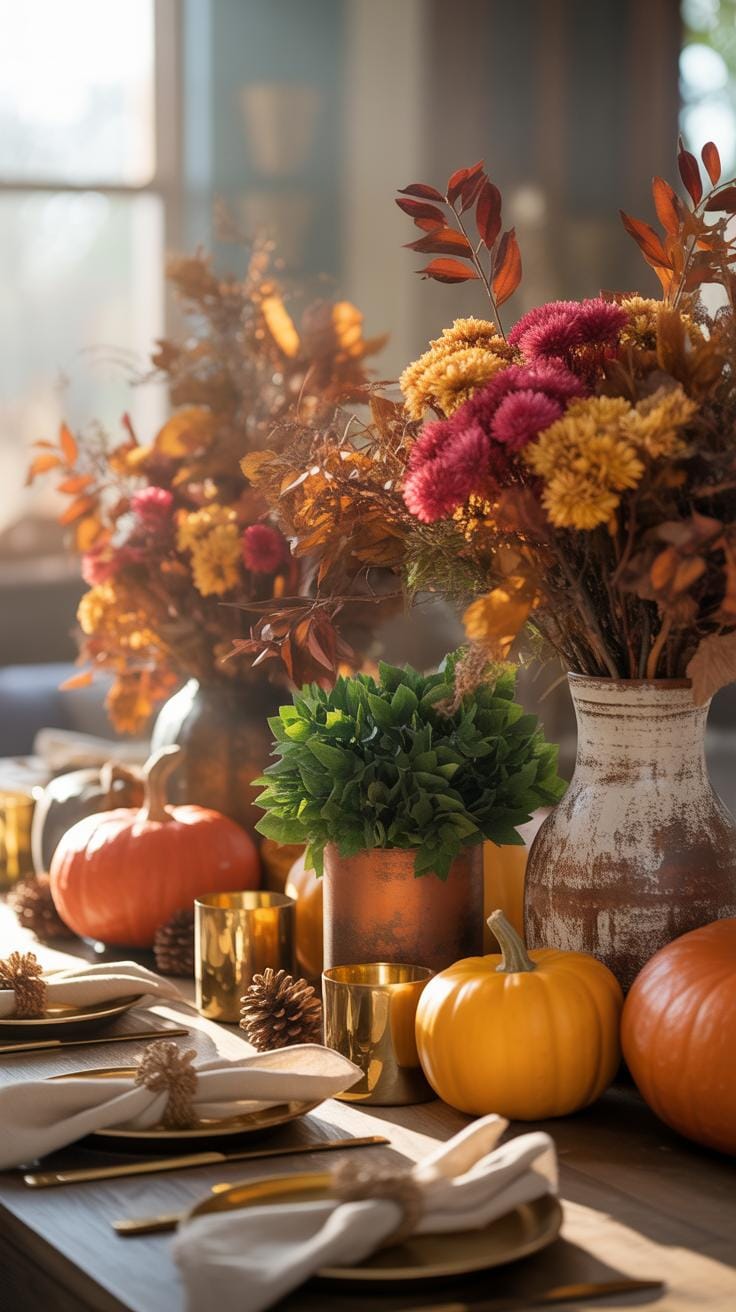
Wedding arrangements focus on visual themes and color palettes that match a specific ceremony style. Thanksgiving centerpieces prioritize functionality and the guest experience. Tables for the holiday are crowded with food platters and dinnerware. These arrangements must remain low to allow for clear sightlines across the table. Designers use heavy, stable vessels to prevent tipping during the frequent passing of heavy serving dishes and glass carafes.
The scent profile also changes significantly between these two types of floral work. Wedding flowers often feature highly fragrant blooms like lilies or garden roses. Thanksgiving designs avoid strong scents that clash with the aroma of roasted meat and savory sides. Professionals select low-scent varieties like mums and ranunculus. This choice ensures the floral display does not overwhelm the olfactory experience of the meal itself.
Incorporating Seasonal Harvest Elements Like Gourds, Wheat, And Berries
Harvest elements add necessary texture and structural support to Thanksgiving arrangements. Dried wheat stalks provide vertical lines and a rustic finish that mirrors historical harvest symbols. Hard-skinned gourds and mini pumpkins act as weighted focal points at the base of the design. These items anchor the visual weight and fill large gaps without the high cost of fresh blooms. They also last much longer than cut flowers.

Berries create movement and contrast within the arrangement. Hypericum and bitter sweet branches offer pops of color and organic shapes. These woody stems provide a physical framework that helps hold softer flower stems in place. Using harvest goods also connects the display to the literal meaning of the holiday. It creates a bridge between traditional agriculture and modern floral design. Select firm, blemish-free produce to ensure the centerpiece stays fresh.
Tips For Keeping Your Fall Floral Centerpieces Fresh And Long Lasting
How To Properly Condition And Hydrate Flowers Before Arranging
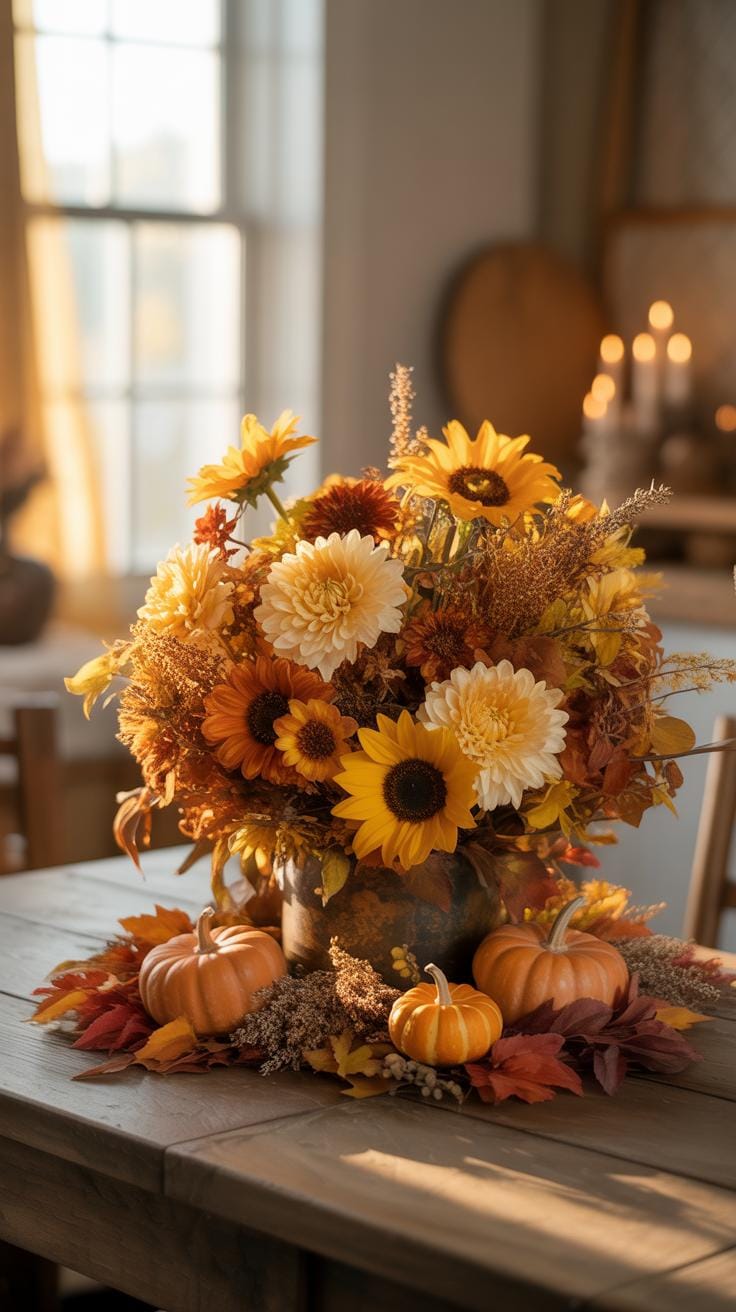
Conditioning begins with a clean cut at a forty-five-degree angle. This maximizes the surface area for water intake. Use sharp, sterilized shears to prevent crushing the vascular system of the stem. Remove all foliage that falls below the water line. Decaying leaves create bacteria that clog stems and kill flowers quickly. Professional florists call this stripping the stems to maintain water purity.
Place processed stems into lukewarm water immediately after cutting. Warm water molecules move faster and enter the plant tissue more efficiently than cold water. Let the flowers rest in a cool, dark room for at least four hours before you start styling. This hardening process ensures the blooms are fully turgid. Properly hydrated stems support the weight of heavy fall focal flowers like dahlias and chrysanthemums.
Day Of Care Practices To Keep Your Centerpieces Looking Their Best
Check water levels every morning because woody fall stems drink heavily. Top off the vase with fresh water and floral preservative. Preservatives contain sugar for energy and acidifiers to balance pH levels. They also include bleach or silver nitrate to suppress bacterial growth. If the water looks cloudy, replace it entirely. Bacteria will block the straw-like tubes in the stems and cause premature wilting.
Keep finished arrangements away from direct sunlight and heat sources. High temperatures speed up transpiration and cause the flowers to lose moisture faster than they can absorb it. Avoid placing centerpieces near ripening fruit like apples or pears. These fruits release ethylene gas which acts as a ripening hormone. Ethylene causes petals to drop and buds to shrivel. Proper placement extends the life of your display significantly.
Frequently Asked Questions

What are the best flowers to use for a beginner-friendly autumn arrangement?
If you are new to designing fall floral centerpieces, start with hardy blooms that offer great volume and rich color. Sunflowers, mums, and marigolds are excellent choices because they are sturdy and embody the season’s warmth. Combine these with focal elements like orange roses or deep red carnations. These varieties are forgiving for beginners and provide a professional, lush look with very little effort or technical floral skill.
How do I keep my tabletop floral arrangement fresh for as long as possible?
To extend the life of your fall floral centerpieces, always start with a clean vase and trim stems at a sharp angle under running water. Change the water every two days and add a drop of bleach or floral food to prevent bacteria growth. Keep your arrangement away from direct sunlight and ripening fruit, which releases ethylene gas that causes petals to wilt prematurely, ensuring your display stays vibrant all week.
Can I create a high-end seasonal look on a limited budget?
Absolutely! You can design stunning fall floral centerpieces without spending a fortune by foraging in your own backyard. Incorporate inexpensive grocery store carnations and elevate them with “found” elements like colorful maple leaves, dried wheat stalks, or interesting branches. Using a hollowed-out pumpkin as a natural vase is another cost-effective way to add rustic charm and seasonal flair while keeping your decor expenses low and your style high.