What Is The Lisianthus Flower A Complete Flower Identification Guide
The Botanical Origins And Natural Habitat Of Lisianthus
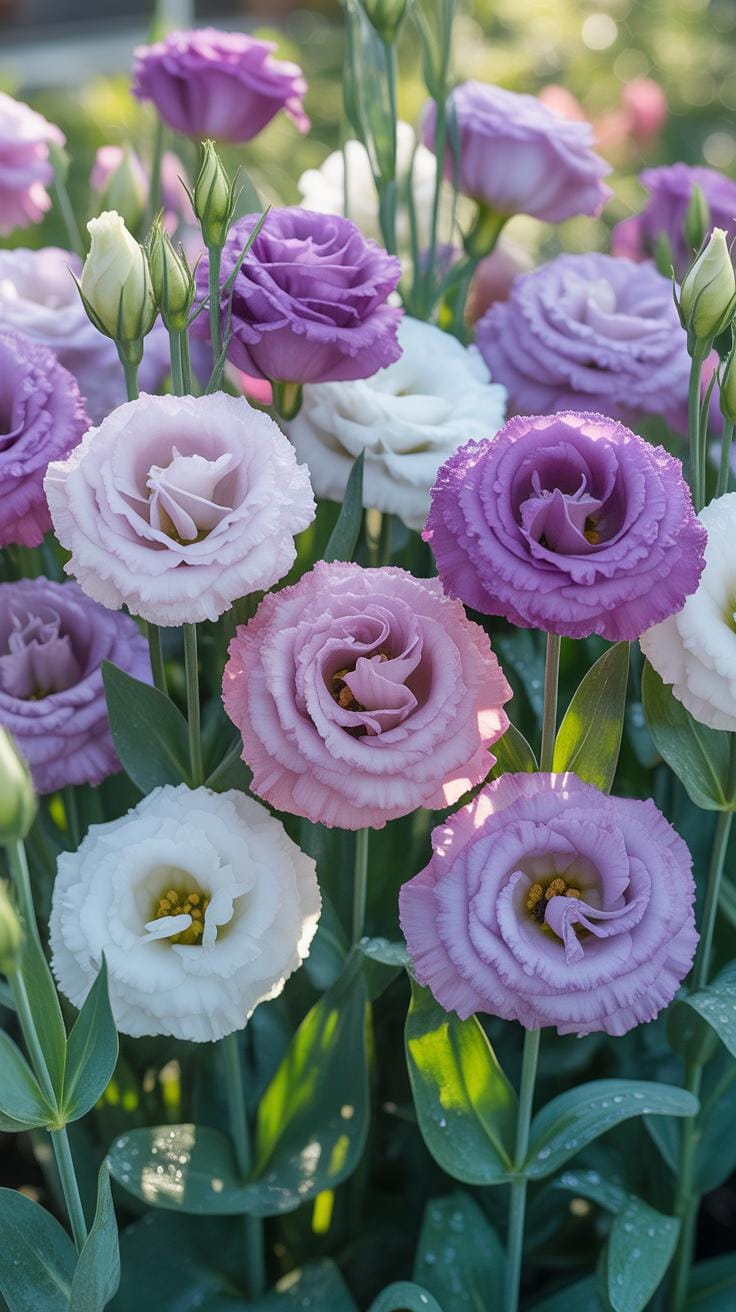
The botanical name for this plant is Eustoma russellianum. It belongs to the Gentianaceae family. Scientists first found it in the Great Plains of North America. It grew naturally in prairies from Nebraska to Texas. Local people called it the Texas Bluebell or Prairie Gentian. It thrived in moist soils along riverbeds and low-lying fields. The wild species produced simple blue or purple flowers.
Japanese horticulturists changed the flower in the 1930s. They took the wild North American seeds and began intensive breeding programs. This work transformed the plant from a hardy wildflower into a high-end floral staple. These breeders developed the double-petaled varieties and color range we see today. Most modern commercial varieties now come from these Japanese lineages. The flower requires specific temperature controls to bloom properly.
How To Identify A Lisianthus: Shape, Color, And Distinctive Features
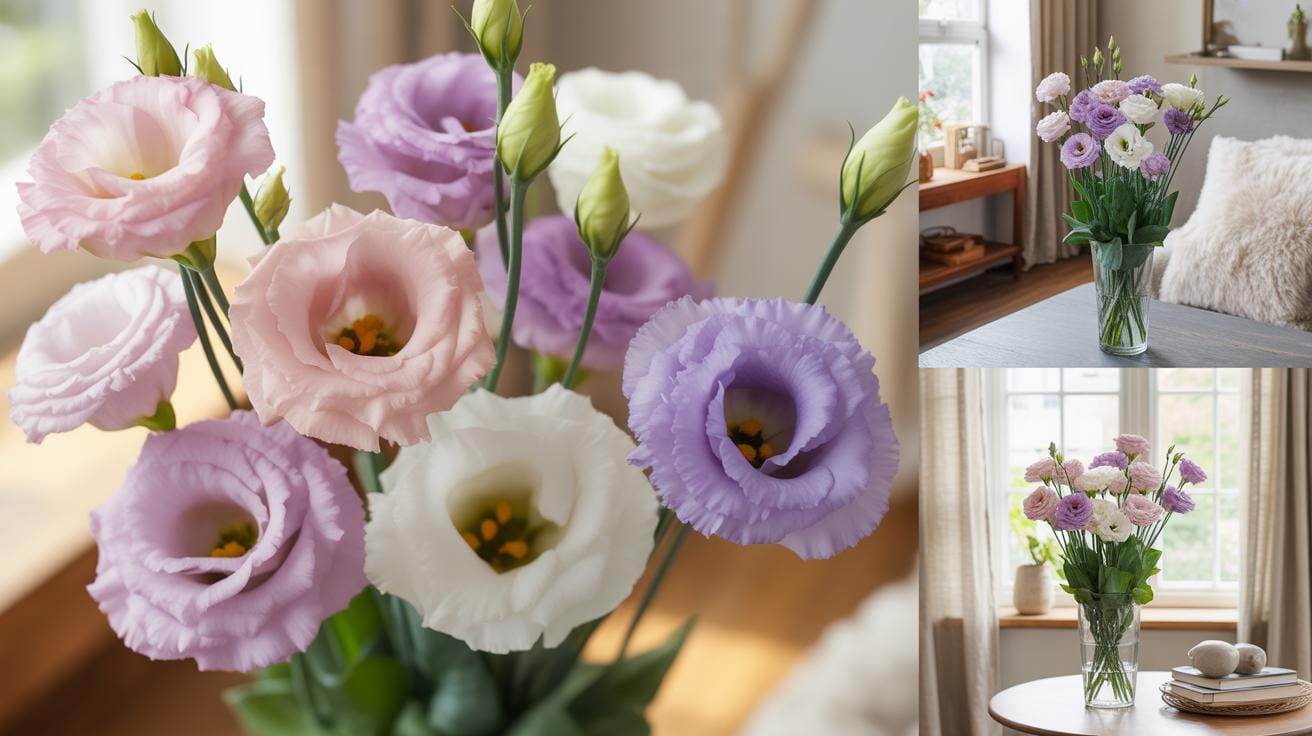
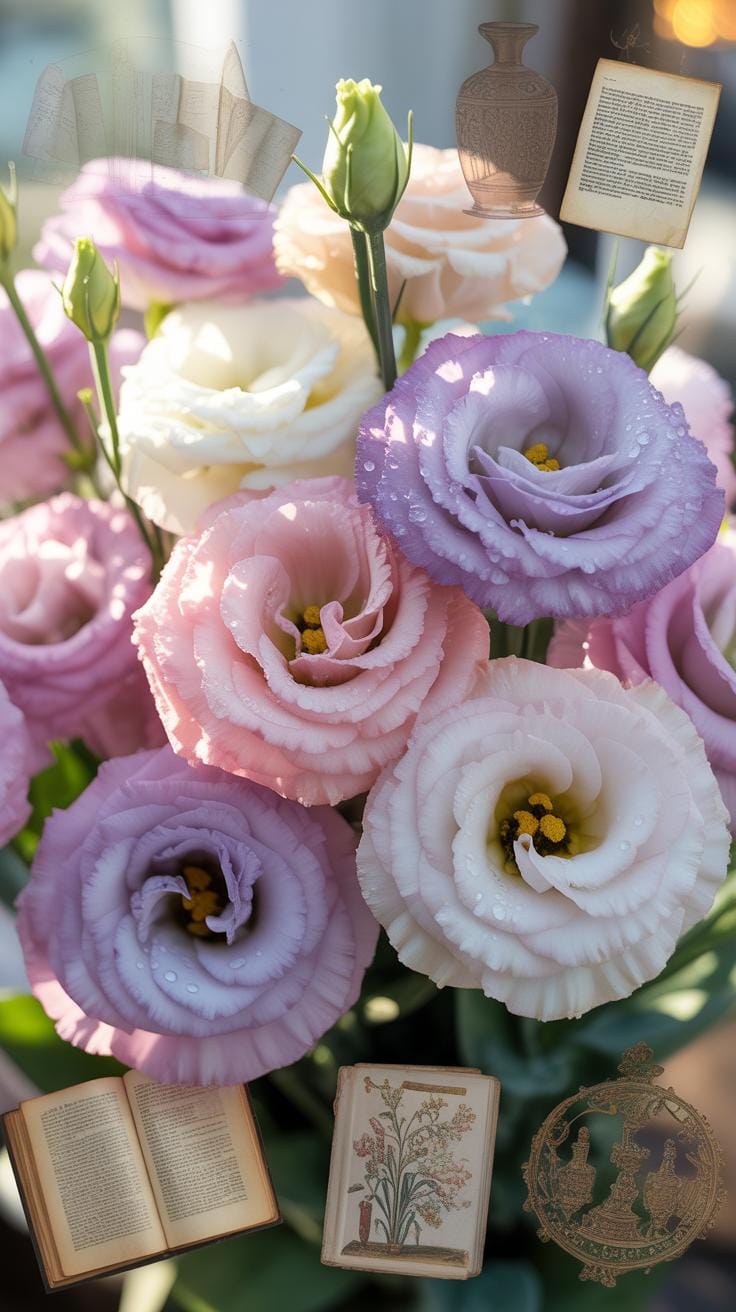
Identification starts with the petals and stems. Lisianthus flowers look like a hybrid between a rose and a poppy. Their stems are long, lime-green, and slightly waxy. The leaves are oval and have a bluish-green tint. Each main stem usually carries multiple buds and open blooms. Buds are long and twisted into a tight spiral. This spiral shape is a primary indicator for accurate botanical identification.
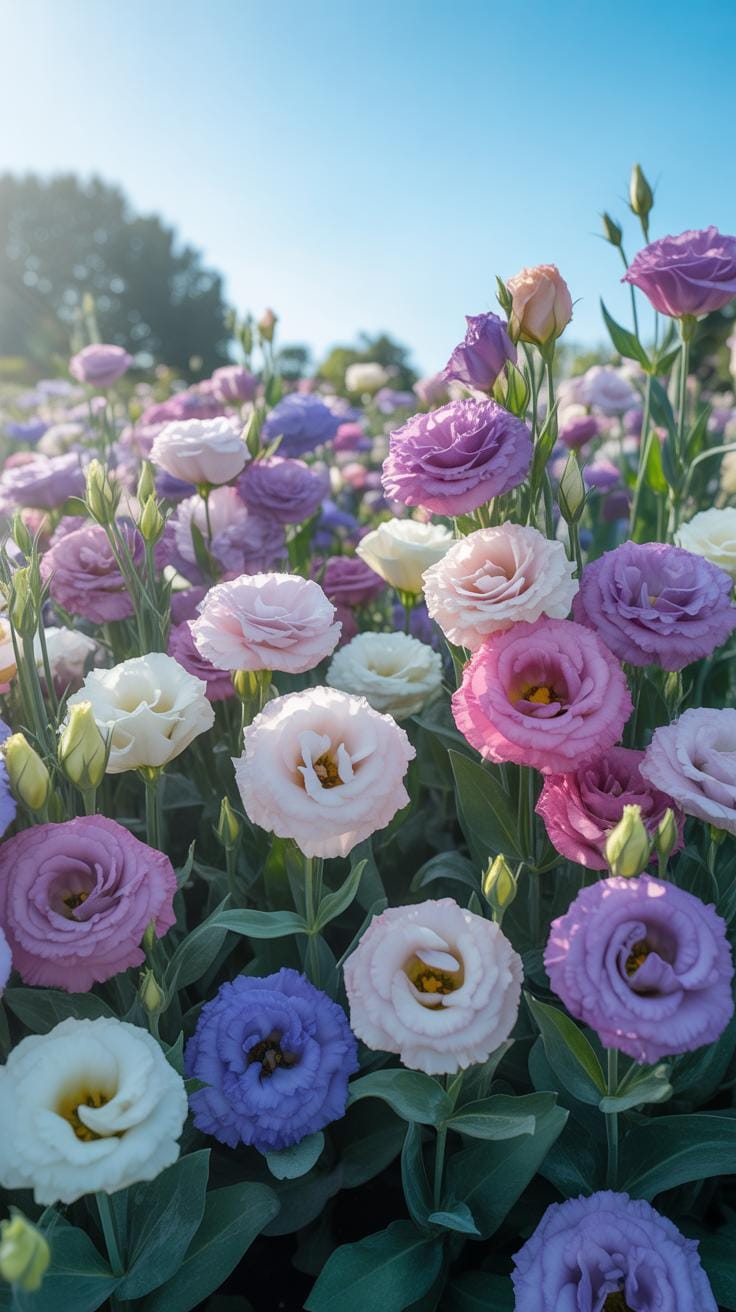
Look at the petal layers to determine the specific variety. Single-flowered types have five petals. Double-flowered types have many more layers, creating a dense look. Common colors include deep purple, white, cream, and pink. Some modern types feature picotee edges where the petal rim is a different color. The petals feel soft but have a thick texture. This thickness helps the flower last up to two weeks in water.
The Rich History And Cultural Significance Of Lisianthus Flowers
Where Lisianthus Flowers Come From: From The Americas To Global Gardens
Lisianthus originates from the prairies of North America. It grows naturally in the Southern United States and Mexico. Explorers found the plant in the nineteenth century. Botanists first classified the flower as Eustoma russellianum. It thrived in dry creek beds and grasslands. The wild version was a simple purple flower. It had limited commercial value until plant breeders saw its potential for growth.
Japanese growers revolutionized the plant in the 1930s. They turned the wild prairie weed into a global floral staple. These researchers developed the ruffled petals and diverse colors seen today. Now the global market depends on these cultivars. Greenhouses in the Netherlands and South America produce millions of stems annually. The flower transitioned from a rugged wildflower to a high value cut crop for professional decorators.
What Lisianthus Flowers Symbolize Across Different Cultures
This flower carries specific meanings in the floral industry. Modern western culture associates the bloom with appreciation and charisma. It serves as a popular choice for weddings and anniversaries. People gift these flowers to show gratitude to mentors or partners. The long stems and sturdy petals represent a strong and lasting bond. This makes them a strategic choice for high end event planning and floral arrangements.
In Victorian times the plant symbolized a social personality. It suggested a person who was outgoing and friendly. Different colors shift the message of the arrangement. Purple stems signal royalty and beauty. White stems represent purity and peace. Pink flowers suggest romance and affection. Florists use these specific color meanings to tailor bouquets for clients. This precision allows for clear communication through floral design in formal and casual settings.
Popular Varieties Of Lisianthus Flowers To Know And Grow
Single Petal Vs. Double Petal Lisianthus: Understanding The Key Differences
Single-petal varieties resemble wild poppies or tulips. They feature a single row of petals around a central eye. This open structure provides high visibility for the reproductive parts of the flower. Growers choose single-petal types for their clean lines and simplicity. These varieties often have stronger stems and better heat tolerance. They work well in modern, minimalist arrangements where floral geometry matters most.
Double-petal varieties look like roses or peonies. They contain extra layers of petals that hide the center of the bloom. This density makes the flower head heavier and more visually substantial. Florists prefer double-petaled types for weddings and formal events because of their luxury appearance. These plants require more support due to the weight of the heads. Select these when you need maximum volume in a display.
Top Lisianthus Color Varieties And What Makes Each One Special
The purple and blue varieties are the original colors of the species. These deep tones offer high contrast in floral design. Breeders developed white and cream versions to meet demand in the bridal industry. These neutral tones provide a base for more complex color palettes. Green varieties, like the Chartreuse types, stay fresh for a long time. They give a contemporary look to any indoor space.
Bi-color varieties feature petals with different colored edges. This “picotee” effect adds depth without requiring extra filler plants. Common combinations include white petals with purple or pink rims. These flowers change appearance as the buds open. Pink and apricot varieties offer warm tones for seasonal transition designs. Yellow lisianthus is rare but provides a sharp pop of brightness. Choose colors based on the desired mood and lighting.
How To Grow Lisianthus Flowers Successfully At Home
Soil, Sunlight, And Watering: The Essential Growing Conditions For Lisianthus
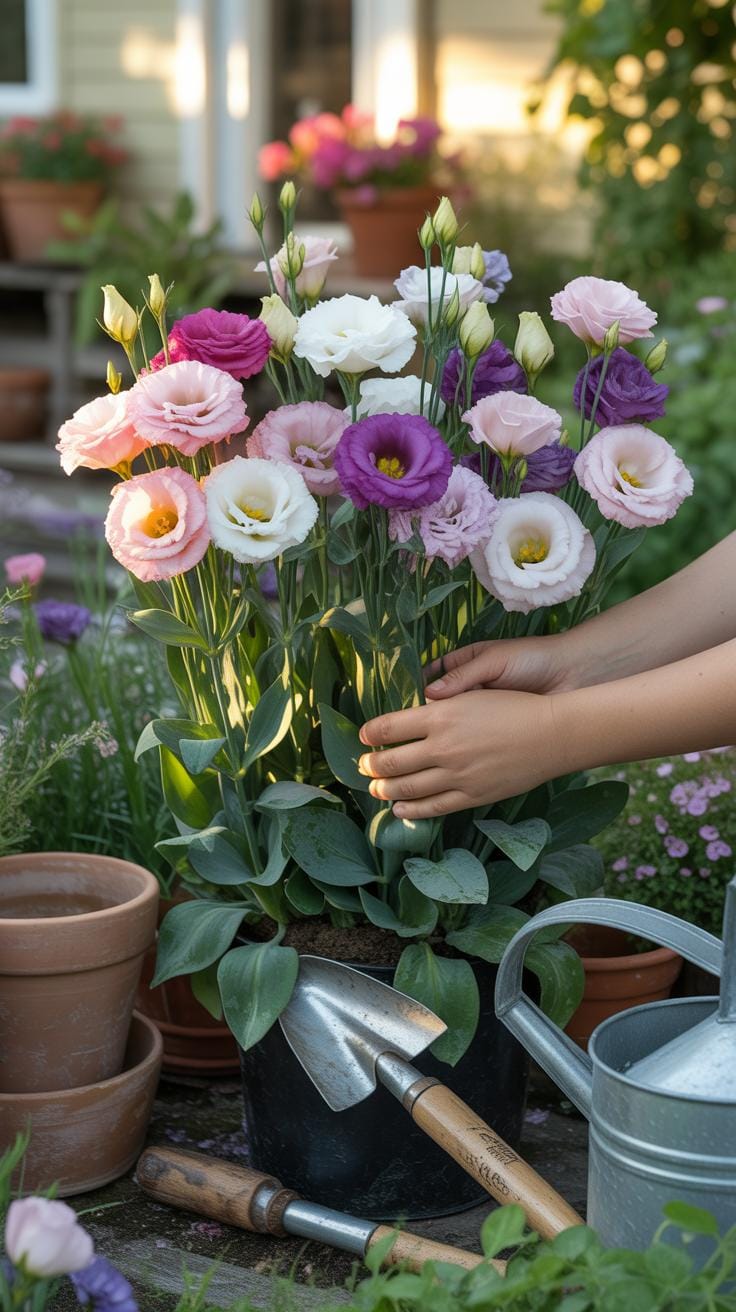
Lisianthus requires neutral to slightly alkaline soil with a pH between 6.5 and 7.0. Acidic soil stunts growth and causes nutrient deficiencies. Ensure the planting site offers excellent drainage to prevent root rot. These plants demand full sun for at least six to eight hours daily. High light intensity strengthens stems and improves flower production. Avoid shaded areas where air circulation stays low.
Keep the soil consistently moist but never waterlogged during the early growth stages. Use drip irrigation to keep water off the foliage. Wet leaves invite fungal diseases like botrytis. Reduce watering frequency once the plants establish their root systems. High humidity and heat can stress the plants. Apply a potassium-rich fertilizer every two weeks to support the long blooming season and maintain flower color.
The lisianthus is a gentle reminder that elegance belongs in every home, blooming with the quiet grace of a paper-silk dream. Like memories of a summer garden, these blossoms transform a simple room into a sanctuary of timeless beauty.
Beginner Tips For Starting Lisianthus From Seed Indoors
Starting Lisianthus from seed requires extreme patience because they grow very slowly. You must start seeds indoors five to six months before the last frost. Use a high-quality seed starting mix and do not cover the seeds with soil. They need light to germinate. Maintain a consistent temperature of around 70 degrees Fahrenheit during this initial stage to ensure success.
- Light Exposure: Place seed trays under bright grow lights for sixteen hours a day. Put the lights just a few inches above the soil surface. This prevents the seedlings from becoming leggy and weak.
- Moisture Control: Use a plastic dome to maintain high humidity during germination. Mist the surface lightly to keep it damp but avoid heavy spraying. Remove the dome once you see the first tiny green leaves appear.
- Pelleted Seeds: Buy pelleted seeds to make handling easier. These tiny seeds are coated in a white clay substance. The coating helps you see where you place them and often contains helpful fungicides for the early growth phase.
- Bottom Watering: Add water to the tray underneath the pots instead of pouring it on top. This keeps the soil moist without disturbing the delicate seeds. It also prevents damping off, a common fungal disease that kills young seedlings.
- Temperature Drop: Move the seedlings to a cooler area once they develop their first true leaves. Lowering the temperature to 60 degrees Fahrenheit helps the plant develop a strong root system. This prevents the plant from bolting early in the season.
Avoid transplanting the seedlings into the garden until the soil stays warm. Lisianthus roots are sensitive and do not like disturbance. Use peat pots or soil blocks to minimize root shock during the move. Space the plants six to eight inches apart to allow for proper air flow. This spacing reduces the risk of pests and keeps the plants healthy throughout the summer.
Stunning Floral Arrangement Ideas Using Lisianthus Flowers
How To Style Lisianthus In Modern Home Floral Displays
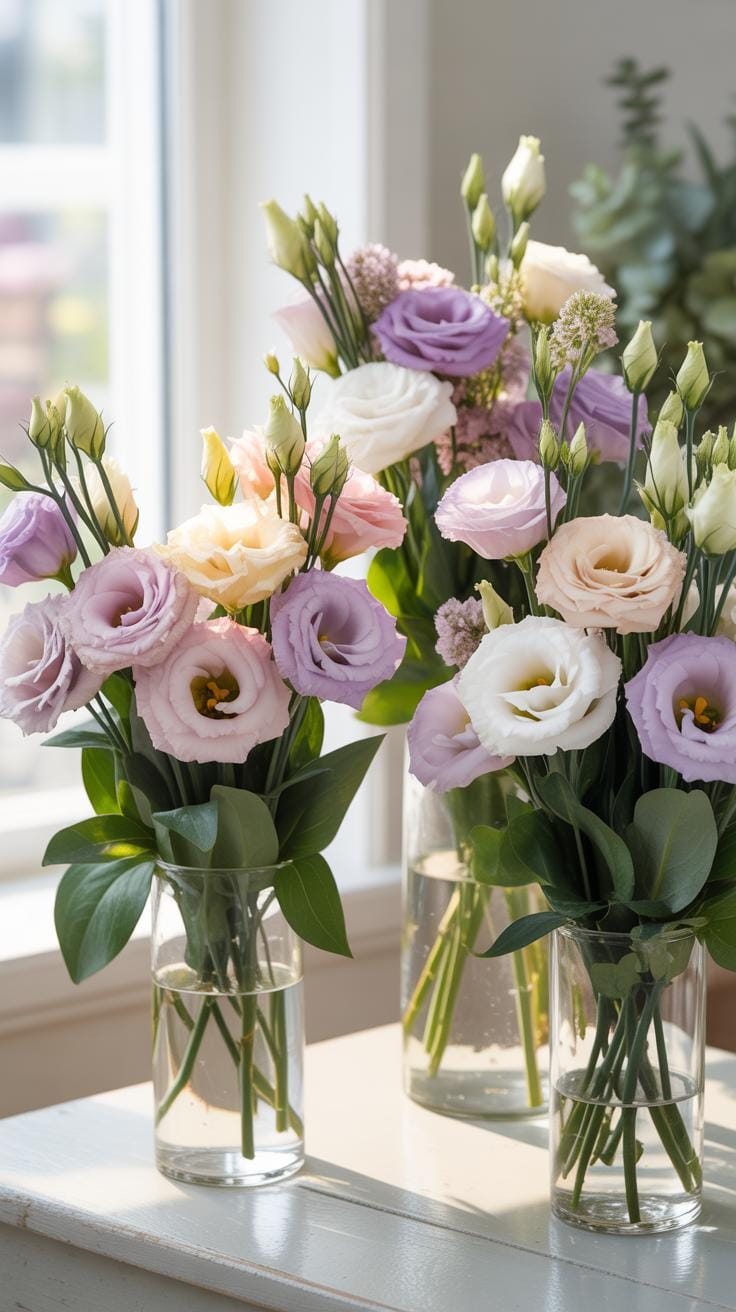
Modern styling requires clean lines and structural focus. Use monochromatic bunches of Lisianthus Flowers in geometric ceramic or frosted glass vessels. This approach highlights the rose-like bloom without adding visual clutter. Strip all foliage below the water line to maintain a sterile aesthetic. Place these arrangements on low profile surfaces like coffee tables or minimalist sideboards to maximize their architectural impact.
Select a single color palette to emphasize the natural ruffles of the petals. High contrast designs work best in contemporary spaces. Pair white Lisianthus with matte black vases for a stark look. Ensure the stems sit at varying heights to create Depth within the container. This technique mimics natural growth patterns while maintaining a controlled silhouette. Change the water daily to prevent bacterial growth and preserve the clean finish.
Pairing Lisianthus With Other Flowers For A Balanced, Bonito Arrangement
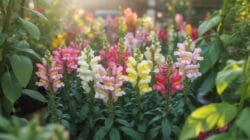
Standard floral design relies on three components: focal flowers, fillers, and greenery. Lisianthus Flowers function as primary focal points due to their dense petal count. Balance them with linear elements like Snapdragons or Eucalyptus to create vertical movement. These additions break up the rounded shape of the Lisianthus. Use woody stems as a base structure to support the heavy heads of the double-flowered varieties.
Color theory dictates a successful mix. Combine purple Lisianthus with yellow Craspedia for a complementary color scheme. This creates immediate visual tension and interest. For a subtle look, use peach Lisianthus with dusty miller foliage. The silver leaves provide a neutral backdrop that makes the flower color pop. Always trim stems at a forty-five degree angle before placing them into the final arrangement to ensure maximum hydration.
The Perfect Lisianthus Bouquet Design Ideas For Every Occasion
How To Build A Lisianthus Bouquet That Looks Professionally Arranged
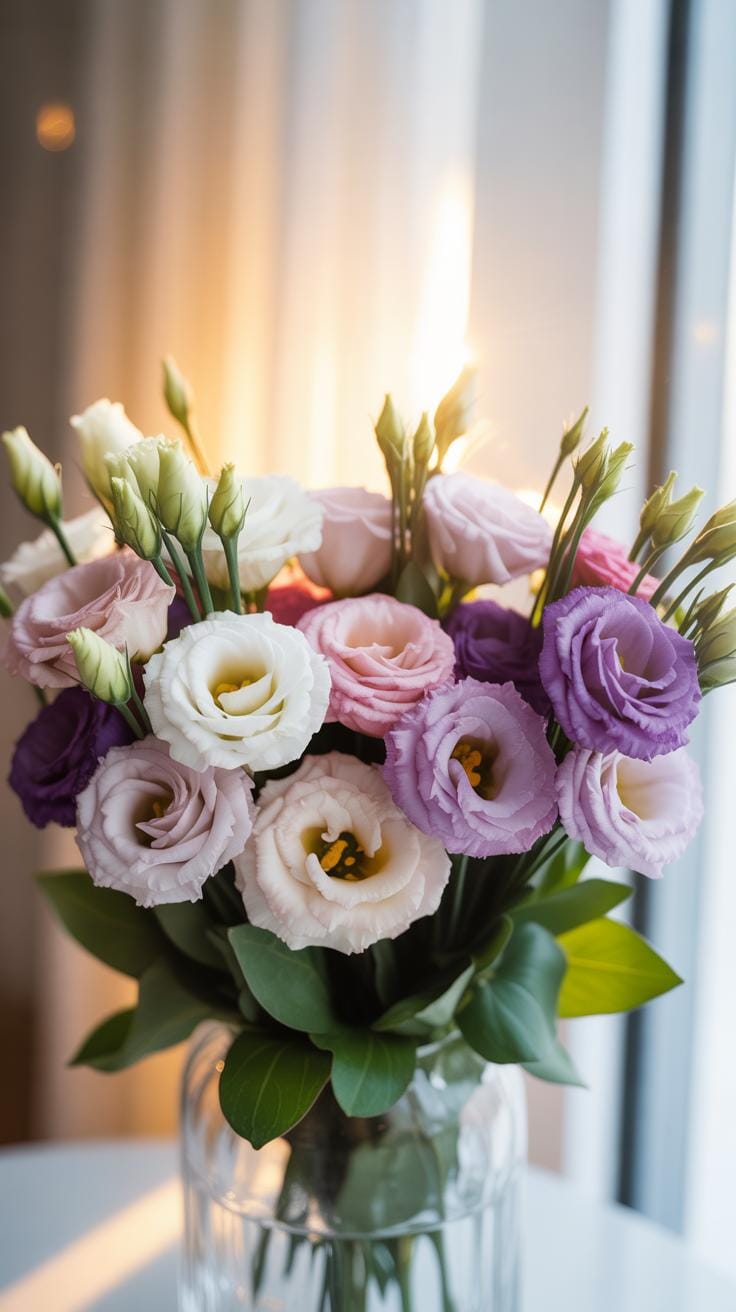
Professional florist stems rely on structural integrity. Strip all foliage that falls below the water line to prevent bacterial growth. Cut stems at a sharp 45 degree angle using sterile shears. This maximizes surface area for hydration. Lisianthus stems have multiple heads at varying heights. Group these stems to create focal mass. Use the spiral binding technique to ensure the bouquet stands alone.
Position the largest blooms in the center and slightly lower. Place tighter green buds toward the outer edges to create height and movement. Use a grid of clear floral tape or chicken wire for stability in a vase. This prevents stems from clumping or leaning. Balance the heavy flower heads with woody stems like eucalyptus. This keeps the soft petals from bruising against each other.
Best Color Combinations For A Lisianthus Bouquet By Season
Seasonal color theory dictates the visual impact of your floral work. Lisianthus offers a wide spectrum of shades from deep purple to soft cream. For spring, use high contrast pastels. Summer requires saturated tones to withstand bright natural light. Fall and winter benefit from the darker, velvety cultivars. Selecting colors based on current light conditions ensures the bouquet looks vivid and deliberate in any setting.
- Spring Pastels: Pair cream and pale pink lisianthus with light green foliage. This combination creates a fresh and clean look. Adding white varieties emphasizes the delicate ruffles of the petals. High key lighting in spring months makes these colors pop in any interior space.
- Summer Vibrance: Combine deep purple and bright white blooms. This high contrast pairing mimics the sharp shadows of mid-day sun. These colors hold their visual weight against lush summer greenery. Use these for outdoor events where visibility from a distance is a primary design requirement.
- Autumn Warmth: Match champagne and apricot lisianthus with burgundy accents. These warm tones reflect the changing leaf colors of the season. Use these shades to create a sense of depth and weight. This palette works best in low light or evening settings for a dramatic effect.
- Winter Elegance: Focus on pure white and deep navy or dark violet shades. This cool palette aligns with the minimalist aesthetic of the winter months. These colors provide a crisp look that feels sophisticated. It highlights the structural form of the lisianthus without relying on bright colors.
- Monochromatic Sophistication: Use varying shades of a single color like purple. Mix light lavender with deep prune to create visual texture. This technique simplifies the design while appearing high-end and curated. Monochromatic arrangements are a staple in modern European floral design movements today.
Balance these selections with the appropriate greenery to define the silhouette. Darker leaves like ruscus enhance the brightness of white petals. Lighter greens like silver dollar eucalyptus soften the intensity of deep purple blooms. Always choose one dominant color and two supporting shades. This ratio keeps the arrangement from looking cluttered. Proper color blocking makes a simple bunch of flowers look like a planned design.
Lisianthus Wedding Flowers Elegant Choices For Your Special Day
Why Lisianthus Is A Beloved Choice For Floral Wedding DéCor
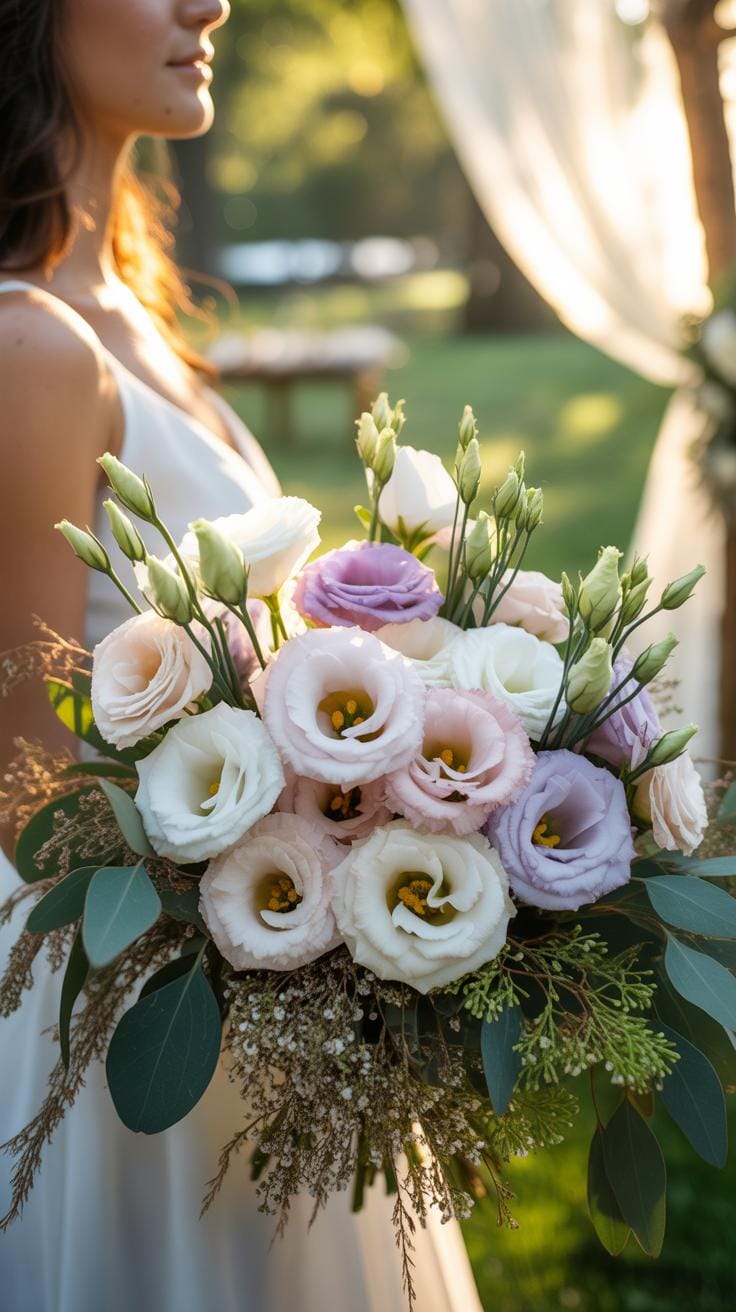
Lisianthus offers high structural integrity for long event days. These blooms mimic the look of high-end roses or peonies at a lower cost per stem. They handle heat better than many soft-petaled varieties. This makes them a reliable choice for outdoor summer ceremonies. Florists value the long stems for height in large arrangements. The diverse color palette suits most wedding themes.
The flower symbolizes a lifelong bond and gratitude in traditional floral meanings. This historical association makes it an appropriate selection for marriage rituals. Each stem features multiple buds at different stages of opening. This adds natural texture and visual interest to every design. The waxy coating on the petals prevents premature wilting. You get a high-end aesthetic without the fragility of more expensive specialty flowers.
Creative Ways To Use Lisianthus In Bridal Bouquets And Ceremony Florals
Lisianthus serves as an ideal focal flower or a filler. Its flexible stems allow for easy placement in hand-tied bridal bouquets. Designers use the double-flowered varieties to create dense mass. The single-flowered types provide a clean and modern look. Both styles work well in boutonnieres because they stay fresh without a constant water source. They bridge the gap between greenery and larger blooms.
Ceremony setups benefit from the cascading nature of lisianthus buds. Use them in elevated floral pillars to create a dripping effect. They work well in foam-based installations for altars and arches. The stems are strong enough to hold their position in heavy wind. You can mix them with eucalyptus or ruscus for a classic look. Their versatility allows them to adapt to both formal and rustic wedding environments.
Caring For Cut Lisianthus Flowers To Make Them Last Longer
How To Properly Condition And Trim Cut Lisianthus Stems
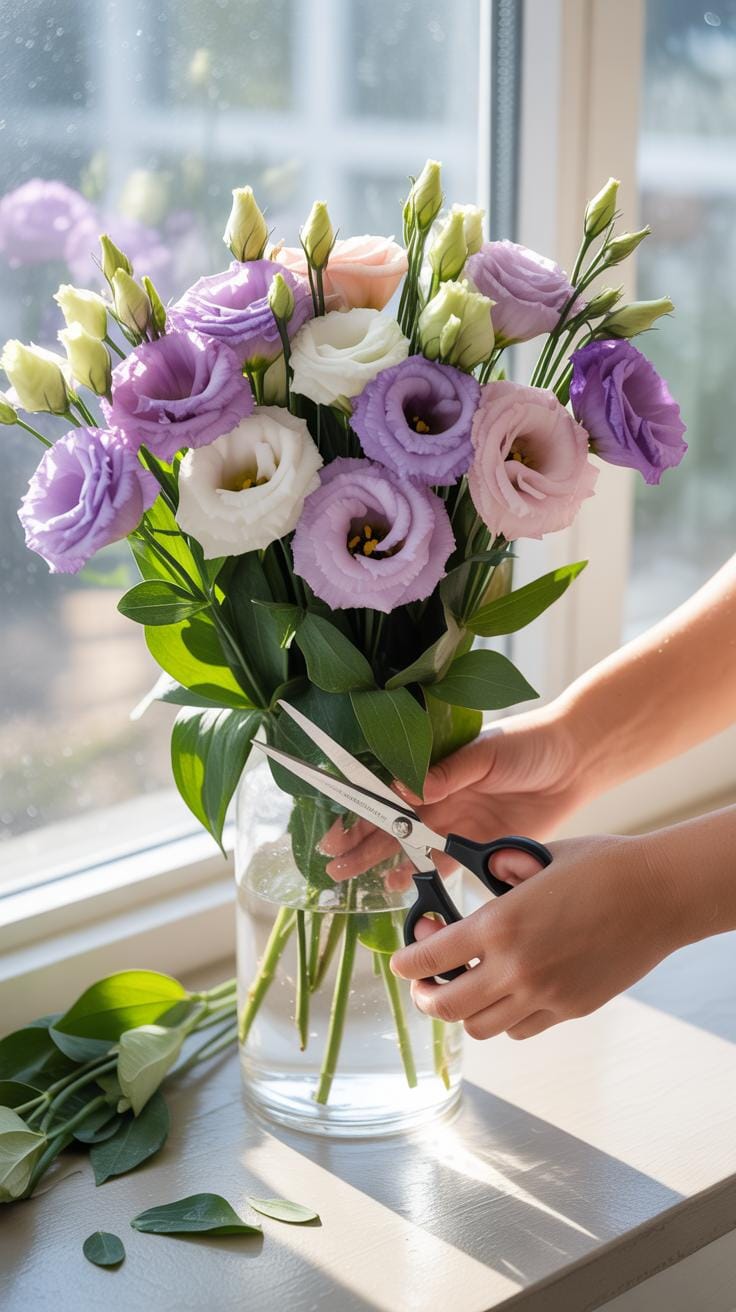
Stems require a clean cut to absorb water effectively. Use sharp floral shears or a knife to prevent crushing the vascular tissue. Make a diagonal cut at a 45-degree angle. This increases the surface area for water intake. Perform this task under lukewarm water or immediately before placing the stem into the vase. Rapid hydration prevents air bubbles from blocking the internal transport system.
Remove all foliage that sits below the water line. Leaves left in water decay quickly and breed bacteria. This bacteria clogs the stems and shortens the lifespan of the bloom. Professional florists call this conditioning. Hardening off the flowers in a cool, dark room for several hours after cutting allows the stems to stabilize. This tactical preparation ensures the flowers remain turgid and upright.
Water, Temperature, And Vase Tips To Extend The Life Of Your Lisianthus
Water quality directly impacts the longevity of Lisianthus. Use filtered water at room temperature to reduce chemical stress. Change the water every two days to eliminate microbial growth. Add a standard floral preservative to provide sugar for energy and acidifiers to stabilize the pH. Clean the vase with bleach before use to kill any lingering spores or bacteria from previous floral arrangements.
Placement determines how fast the flowers dehydrate. Keep the vase away from direct sunlight and heating vents. Heat accelerates the transpiration process and causes the petals to wilt prematurely. Avoid placing the flowers near ripening fruit. Fruit emits ethylene gas which acts as a ripening hormone. This gas triggers the flowers to drop their petals and die. Proper climate control keeps blooms fresh for two weeks.
Where To Buy Lisianthus Flowers And What To Look For When Choosing Them
Finding Fresh, High Quality Lisianthus At Florists And Farmers Markets
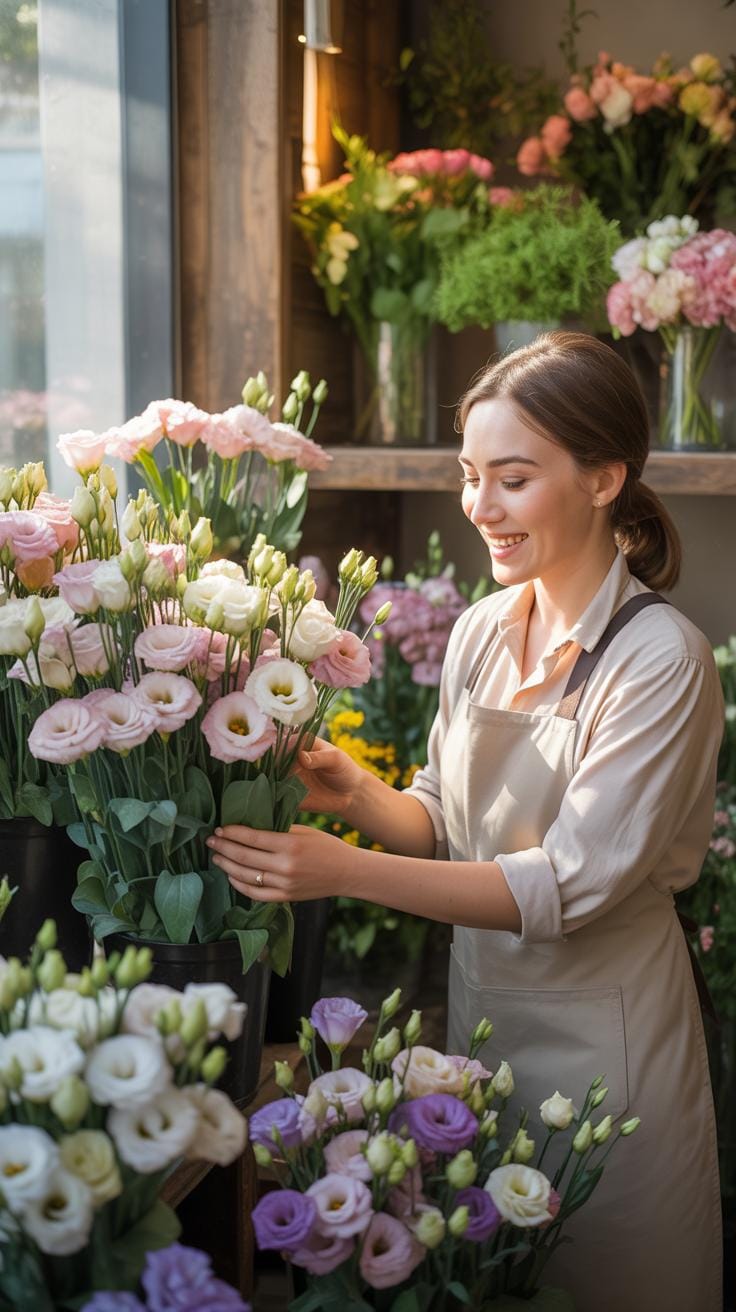
Professional florists offer the most consistent supply of Lisianthus Flowers throughout the year. These sellers access commercial wholesalers who source from specialized greenhouses. Look for shops that store stems in temperature-controlled coolers. This cold chain management slows the aging process. High-end florists often carry premium double-petal varieties. These stems provide better structural integrity for home arrangements than budget options found in grocery stores.
Farmers markets provide the best source for locally grown Lisianthus during the summer months. Local growers often harvest stems the same morning they sell them. This proximity reduces transit stress on the plant. Seek out vendors who keep the stems in deep, clean water buckets. Local crops often feature unique colors and longer stems. These flowers usually last longer because they do not endure long-distance shipping in dry boxes.
How To Inspect Lisianthus For Freshness Before You Buy
Examine the stems and foliage to determine the age of the flower. Healthy Lisianthus Flowers must have firm, upright stems. Avoid any bunches with yellowing leaves or slimy stems. These signs indicate bacterial growth in the water. Check the bottom of the stems for a fresh cut. Clean, green tissue at the base means the plant is still drawing water effectively. Firmness is the primary indicator of cellular health.
Inspect the buds and open blooms for physical damage or disease. Choose bunches with one or two open flowers and several tight, colorful buds. The buds must feel firm to the touch. Avoid petals with translucent spots or brown edges. These marks suggest Botrytis or age. Look closely at the center of the bloom for pollen shed. Clear centers without loose dust signify a younger, longer-lasting flower for your vase.
Frequently Asked Questions

What are Lisianthus flowers and why are they popular for home decor?
Often mistaken for roses or peonies, Lisianthus flowers are elegant, multi-petaled blooms known for their exceptional vase life and ruffled edges. They are a favorite for home styling because they offer a high-end, romantic aesthetic that lasts up to two weeks indoors. Available in shades ranging from deep purple to soft champagne, these versatile flowers effortlessly elevate any room with their sophisticated, garden-fresh appearance.
How can I make my Lisianthus arrangement last longer in a vase?
To keep your Lisianthus flowers looking vibrant, start by cutting the stems at a 45-degree angle under lukewarm water. Remove any foliage that sits below the waterline to prevent bacterial growth, which can shorten their lifespan. Use a clean vase with floral preservative and change the water every two days. Placing the arrangement in a cool spot away from direct sunlight will ensure the delicate petals remain crisp and colorful.
Are Lisianthus flowers an affordable option for everyday home styling?
While they may have a slightly higher upfront cost than carnations, Lisianthus are actually quite budget-friendly due to their longevity and high petal count. A single stem often features multiple buds, providing a full, lush look without needing many bunches. Because they stay fresh for nearly fourteen days, you spend less over time replacing wilted blooms, making them a smart investment for consistent, beautiful home floral displays.