
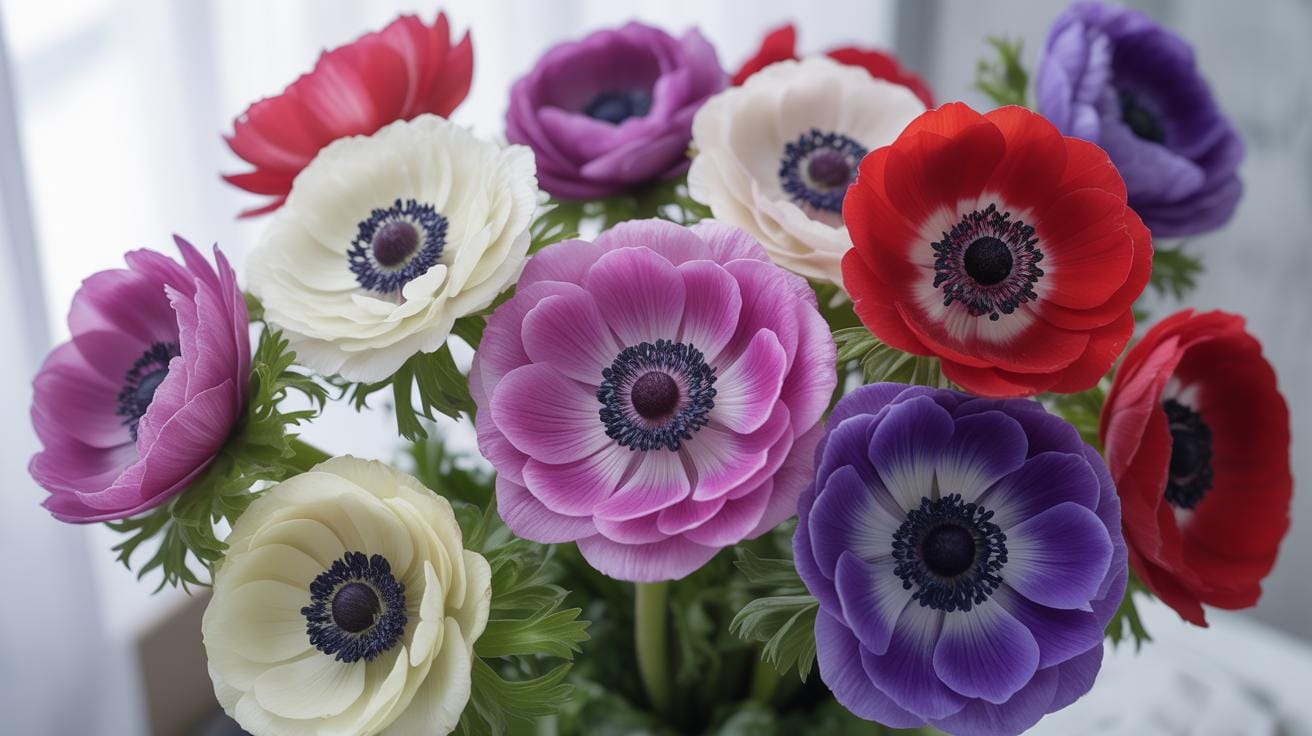
Understanding The Anemone Flower Origins Meaning And Symbolism
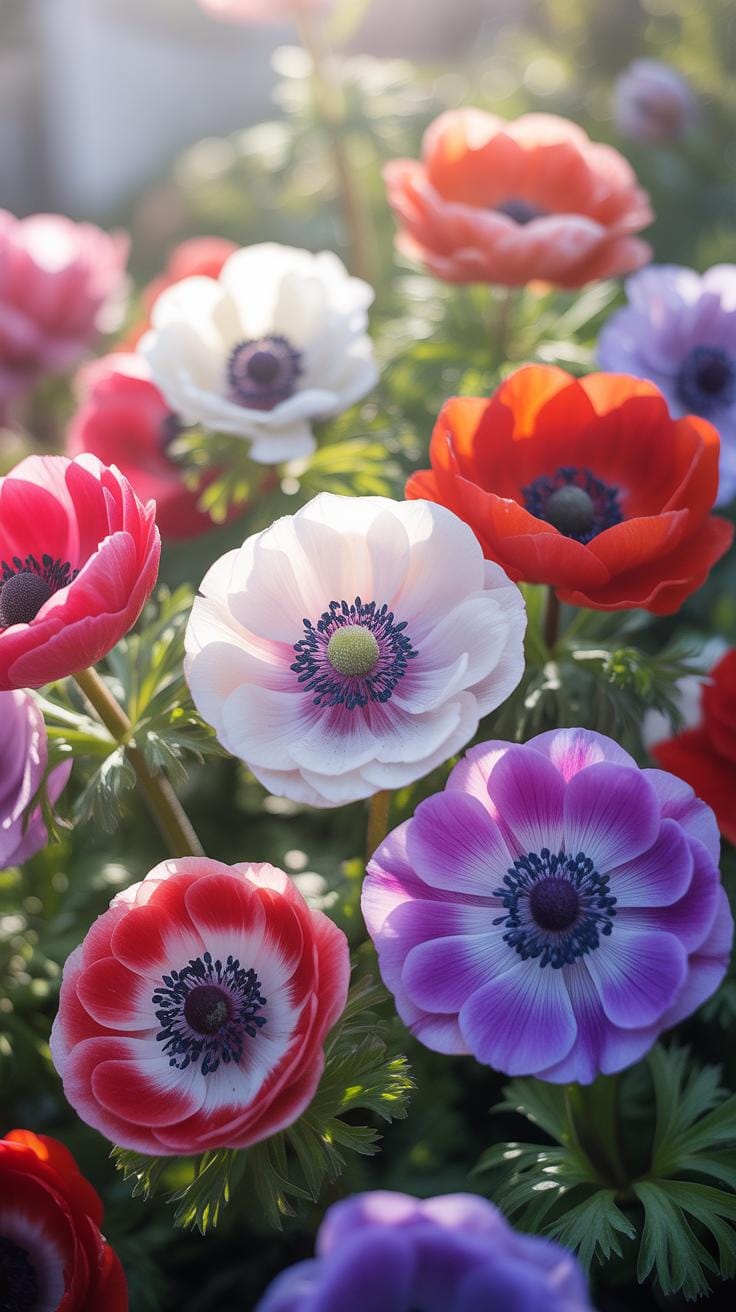
The Botanical Background Of The Anemone Flower
Anemones belong to the Ranunculaceae family. This genus contains about 200 species of perennial plants. They grow natively across temperate regions in the Northern Hemisphere. These plants thrive in deciduous woodlands and open meadows. Most species feature a basal cluster of leaves. The flowers have no true petals. Instead, they possess colorful sepals that protect the reproductive organs of the plant.
Florists primarily use the Anemone coronaria species for events. These poppy anemones grow from tubers. They produce vibrant colors like deep blue, red, and white with dark centers. The plants require well drained soil and cool temperatures to bloom properly. Their stems are hollow and fragile. This physical trait requires careful handling during transport and arrangement. They reach peak availability during late winter and early spring months.
What The Anemone Flower Symbolizes Across Different Cultures
Ancient Greeks linked the anemone to the myth of Adonis and Aphrodite. The name comes from the Greek word for wind. Many people call them windflowers because wind opens the petals. In Western history, painters often used these flowers in religious art. The red anemone frequently symbolized the blood of martyrs. These historical associations make the flower a bold choice for storytelling in floral design.
In Eastern cultures, the flower carries different meanings. Some traditions view white anemones as symbols of bad luck or death. Conversely, modern floral designers use them to represent anticipation and protection against evil. The black center provides a sharp visual contrast. This contrast signals sincerity and focus in high end arrangements. Understanding these cultural shifts helps professional planners select the right colors for specific client backgrounds and venues.

Exploring Anemone Flower Colors And What They Represent
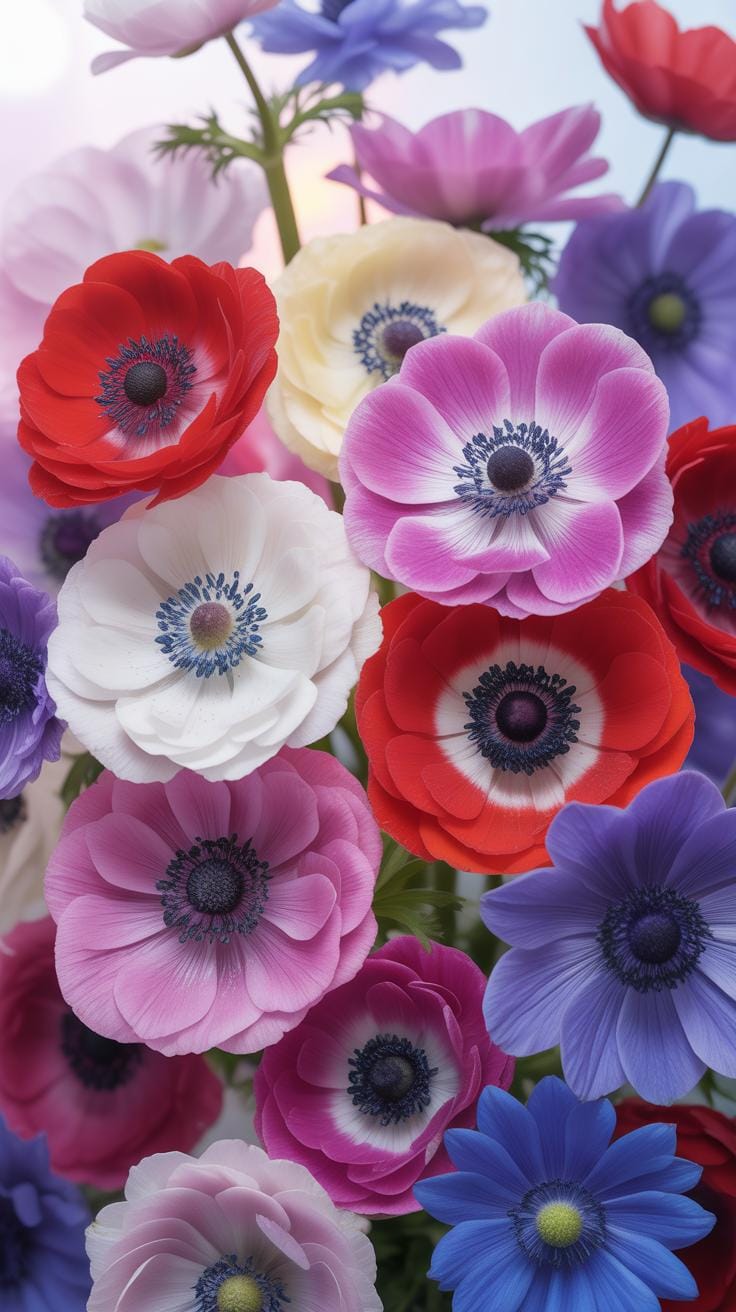
A Guide To The Most Popular Anemone Flower Colors And Their Meanings
Anemone flowers carry specific historical meanings rooted in Greek mythology and Victorian floral dictionaries. The white anemone represents sincerity and purity. It often appears in memorials and funerals due to its association with the death of Adonis. Red anemones signify forsaken love or a warning of impending misfortune. These bold hues demand attention in any arrangement. They provide a sharp contrast against green foliage and neutral backdrops.
Blue and purple anemones represent protection and anticipation. Gardeners and historians often link these shades to the arrival of spring rains. In European folklore, people believed closing petals predicted a storm. Modern designers use these cool tones to create a sense of calm. Each color choice communicates a silent message to the observer. You must select colors based on the specific emotional intent of your event.
How To Choose The Right Anemone Color Palette For Your Special Event
Select your anemone palette by analyzing the venue lighting and existing décor. White anemones with dark centers work best for formal black-tie events. They provide a high-contrast look that mimics a tuxedo. Red anemones suit high-energy gatherings or dramatic evening galas. The deep crimson petals absorb light differently than lighter variants. Use them sparingly to create focal points within larger installations or centerpieces.

Coordinate your flower choice with the season to ensure color accuracy. Spring events benefit from pastel pinks and soft purples. These lighter shades reflect natural light and open up small spaces. Winter events require deep blues or stark whites to match the seasonal mood. Avoid mixing too many contrasting anemone colors in one arrangement. Stick to two primary shades to maintain a clean and professional aesthetic.
The Anemone Flower Aesthetic Why It Captivates Designers And Florists
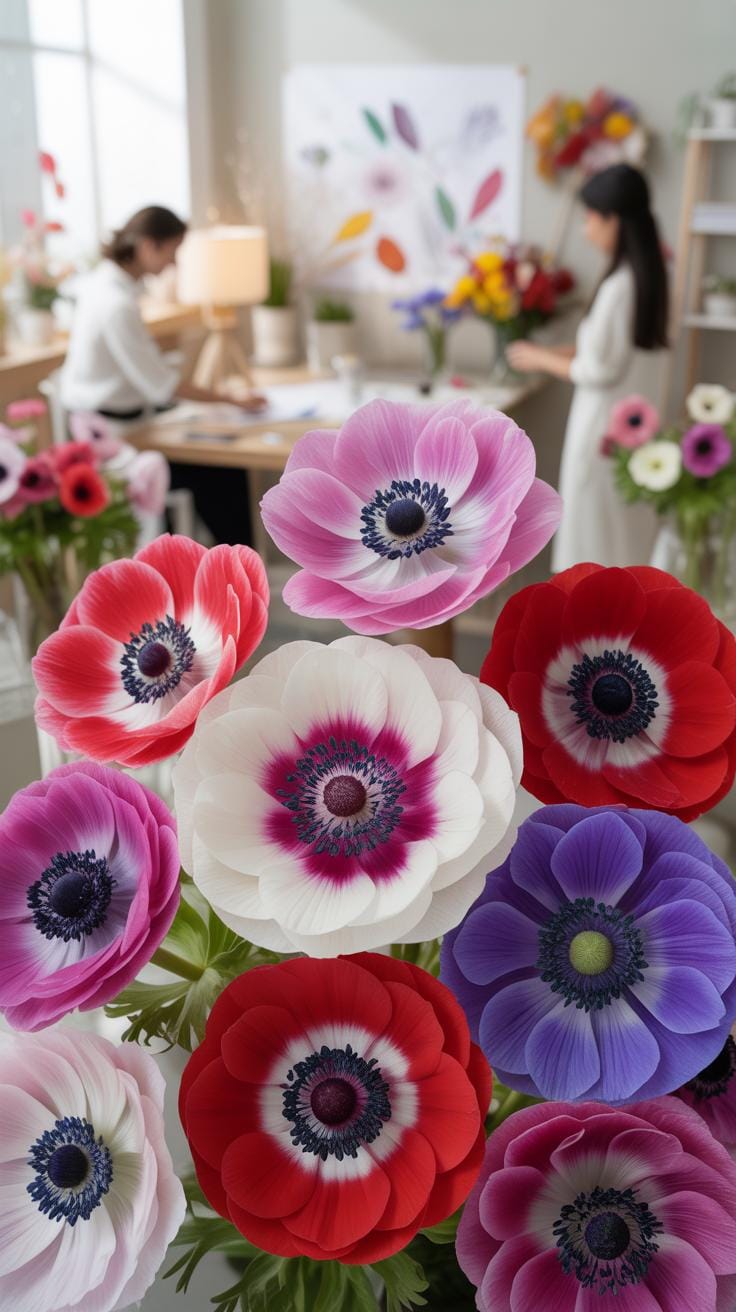
What Makes The Anemone Flower Aesthetic Unique In Floral Design
Anemone flowers offer a high contrast look that few other species provide. The dark central disc creates a focal point that draws the eye immediately. This botanical structure acts as a natural anchor in complex arrangements. Designers use the black or dark blue centers to balance bright palettes or ground pastel tones. The thin stems allow for natural movement and flow within a vase.
The petals possess a delicate texture that reacts to light in a specific way. Most varieties feature a matte finish that absorbs light rather than reflecting it. This creates a soft visual depth in professional photography. Florists value the flower for its ability to mimic high-end silk fabrics. The simple geometry of the bloom makes it a staple for minimalist and modern graphic compositions.
How The Anemone Flower Aesthetic Translates Into Modern Event Styling
Modern event styling relies on these flowers to bridge the gap between classic and edgy designs. The monochrome look of the white anemone fits the current trend of clean and bold aesthetics. Planners use them to create a contemporary mood in high-end city venues. The visual weight of the center makes the flower look expensive and intentional. It works well with industrial materials like steel and glass.
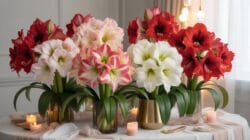
Event designers use these blooms to transition from traditional romance to a more modern style. They pair them with geometric shapes and bold typography. The flower stays open in room temperature conditions which ensures visual consistency throughout an event. This reliability makes them a top choice for high-stakes corporate galas and fashion shows. Their distinct silhouette remains visible even in large rooms with complex lighting setups.
Crafting The Perfect Anemone Flower Bouquet For Special Occasions
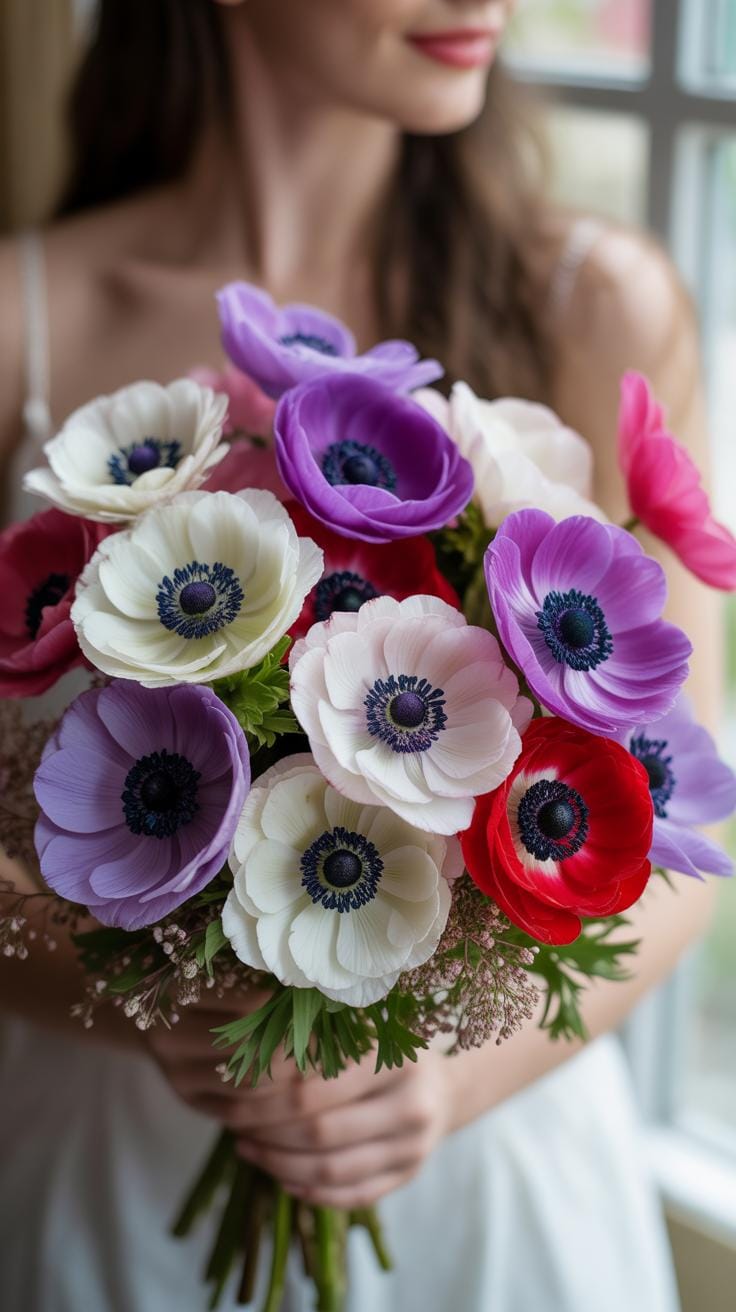
Key Elements To Consider When Designing An Anemone Flower Bouquet
Structural integrity dictates the success of an Anemone bouquet. These flowers possess hollow, fragile stems that require careful handling. You must choose a vessel that offers neck support to prevent drooping. Secure the stems early in the design process using floral wire if you need precise positioning. Always cut the stems at a sharp angle to maximize water intake for these thirsty blooms.
Color contrast serves as the primary visual driver for this species. The dark central disc, or actinomorphic center, creates a natural focal point. You should leverage this black or navy center to anchor your color palette. Use lighter surrounding petals to draw the eye toward the middle. Balance the visual weight by grouping Anemones in odd numbers. This technique ensures the arrangement remains dynamic and modern.
Like the delicate blush of an anemone, the most creative celebrations are those that unfurl with the grace of a cherished memory. True elegance is found in the fleeting beauty of a flower that speaks to the heart on its most meaningful days.
Best Flower Pairings To Complement An Anemone Flower Bouquet
Professional florists pair Anemones with specific textures to offset their delicate petals. You need companions that provide structural contrast without overshadowing the focal flower. Select secondary blooms with various shapes to create depth. Focus on species that thrive in similar cool temperatures. This ensures the entire arrangement stays fresh for the same duration during your special event.
- Ranunculus: These flowers offer a high petal count and dense structure. They provide a sturdy visual counterpoint to the flat, open face of the Anemone. The circular form creates a consistent geometry throughout the bridal or event bouquet.
- Eucalyptus: This foliage provides a muted green backdrop that highlights the white petals. The silver tones in the leaves complement the cool undertones of the flower. Its woody stems add necessary structural support to the softer flower stems.
- Sweet Peas: These climbing flowers add a ruffled texture and light scent to the mix. Their delicate vines create movement and a sense of airiness. They work well to soften the bold, dark centers of the primary Anemone blooms.
- Garden Roses: Use these for a classic, high-end aesthetic in formal arrangements. Their large size and complex petal layers create a sense of luxury. They fill large gaps in the bouquet while allowing the Anemones to remain the central feature.
- Astilbe: This vertical filler adds a feathery, spire-like shape to the arrangement. It breaks up the rounded forms of the other flowers. The matte texture contrasts sharply with the silky finish of the Anemone petals for better visual interest.
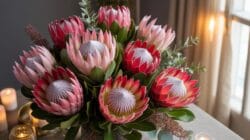
Timing is the final tactical consideration for successful pairings. Anemones continue to grow toward light sources even after you cut them. This phototropic movement can shift your entire design overnight. Pair them with stable stems like roses or woody greens to maintain the original shape. Proper pairing prevents the arrangement from looking messy as the flowers settle into their environment.
The Blue Anemone Flower A Rare And Elegant Choice For Celebrations
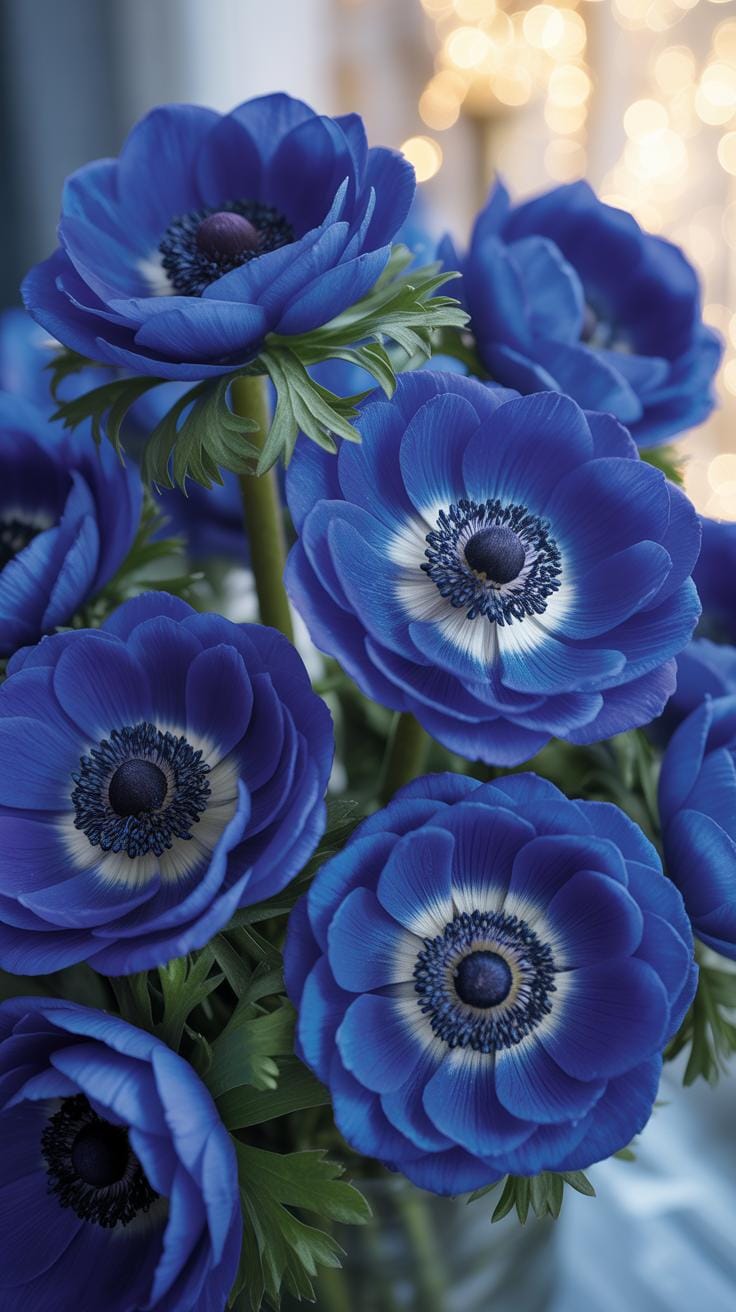
Why The Blue Anemone Flower Stands Out Among Other Floral Options
Blue Anemone Flowers provide a rare natural pigment in the floral world. Most blue flowers require chemical dyes or tinting to achieve deep shades. These flowers grow naturally in hues from pale violet to deep indigo. The dark central disc creates a sharp visual contrast. This contrast draws the eye immediately. It offers a sophisticated alternative to common pastel options.
Florists value the blue variety for its structural integrity and seasonal availability. These plants bloom primarily in early spring and winter. They represent a premium choice for high-end events. The absence of a scent makes them ideal for dinner settings. They do not compete with food aromas. Their thin stems allow for movement in arrangements. This flexibility helps designers create naturalistic and modern styles.
Creative Ways To Incorporate The Blue Anemone Flower Into Event DéCor
Designers use blue anemones to anchor minimalist centerpieces. Place three to five stems in clear glass bud vases. This technique highlights the individual shape of each petal. Group these vases at different heights to create depth on a long table. Combine them with white ranunculus for a clean look. Use black stones at the base to match the dark flower centers.

The blue petals work well in monochromatic installations. Use different shades of blue delphinium and hydrangea as a backdrop. This layering creates a textured and expensive appearance. For wearable items, stabilize the stems with floral wire. Use them in boutonnieres for a bold pop of color against dark suits. The blue hue remains stable under bright event lighting. It looks consistent in professional photography and video.
Anemone Flower Photography Capturing Their Beauty For Lasting Memories
What Makes Anemone Flower Photography So Visually Compelling
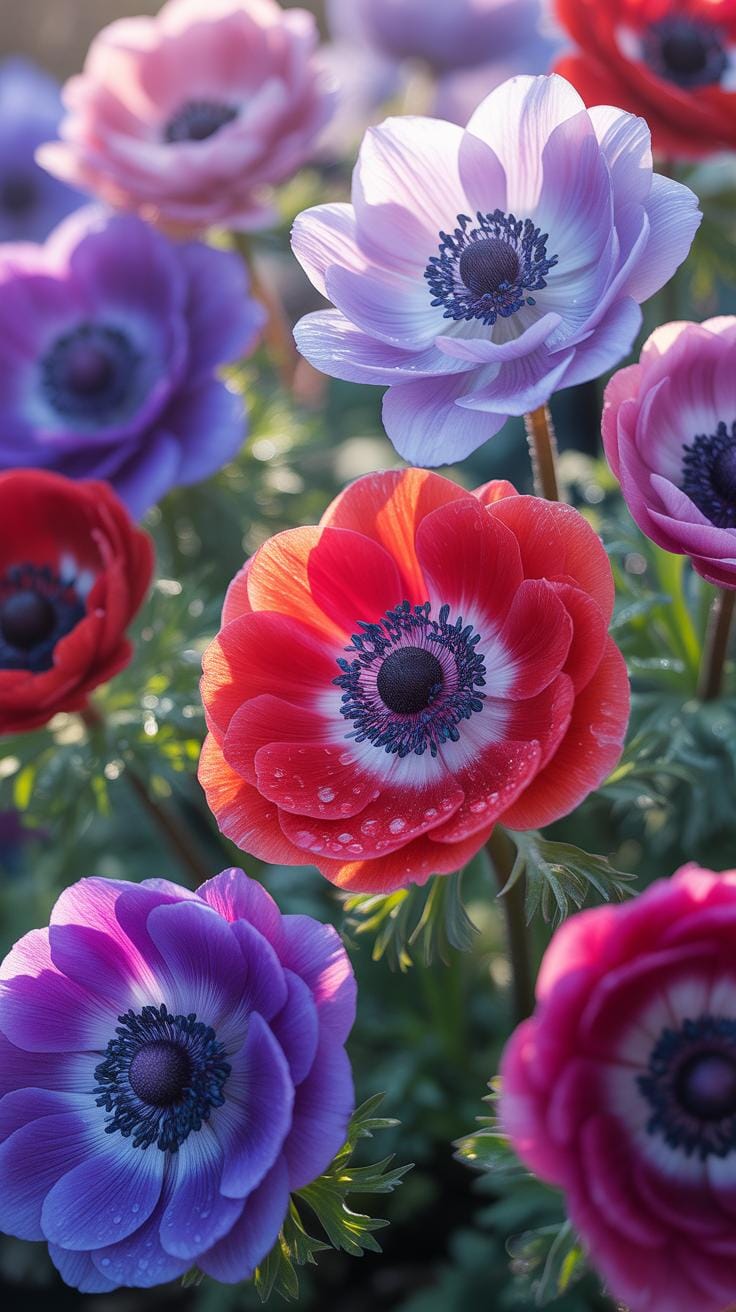
Anemone flowers offer high visual contrast that suits modern photography. The dark central disc acts as a natural focal point for the lens. This void anchors the composition against bright or pastel petals. Photographers use this stark geometry to create minimalist images. The thin stems allow for movement and dynamic positioning within a frame. These physical traits help professionals produce clean and impactful shots.
The paper-thin texture of the petals reacts uniquely to light. Backlighting reveals the delicate vein structures and subtle color shifts. Anemones lack the heavy volume of roses, making them easier to layer in shallow depth of field shots. This transparency provides a soft aesthetic without losing structural detail. The flower represents a balance of heavy center weight and airy perimeter. This combination simplifies the task of achieving a balanced photographic layout.
Practical Anemone Photography Tips To Elevate Your Event Shots
Successful anemone photography requires managing light and focus to handle the dark centers. These flowers can easily look like black holes in a photo if exposure settings are wrong. You must balance the highlights of the petals with the shadows of the core. Use a macro lens to capture the fine details of the stamens. This approach ensures the flower remains the clear subject of the image.
- Manual Focus Control: Set your focus point directly on the edge of the central disc. This technique ensures the sharpest detail where the dark center meets the colored petals. Small shifts in focus can ruin the clarity of the thin petal edges.
- Diffused Natural Light: Use soft light to avoid harsh shadows on the delicate petals. Direct sunlight creates blown-out highlights on white anemones. A diffuser or overcast conditions help preserve the velvet texture of the flower centers and the subtle petal veins.
- Side Lighting Depth: Position your light source at a forty-five-degree angle to the bloom. This direction highlights the 3D shape of the center and the curve of the petals. Flat lighting makes the anemone look like a two-dimensional sticker in your final shot.
- Low Angle Perspectives: Shoot from slightly below the flower head to emphasize the stem and height. This angle makes the bloom appear more prominent and architectural. It also helps isolate the flower against a clean background, removing distracting ground-level clutter or foliage.
- Shallow Depth Of Field: Use a wide aperture like f/2.8 to blur the background. This setting isolates the anemone and creates a professional look. It turns a busy bouquet into a soft wash of color while keeping the primary flower sharp and distinct.
Post-processing should focus on shadow recovery within the central eye of the flower. Lift the shadows slightly to reveal the texture of the stamens without graying the blacks. Use a small amount of sharpening on the petal edges to enhance the crisp silhouette. Avoid over-saturating the colors, as this can hide the natural gradients. Clean edits preserve the raw and sophisticated look that makes anemone flowers desirable.
Creative Ways To Use Anemones Flower Arrangements Across Different Occasions
Using Anemones Flower Displays To Elevate Wedding And Anniversary Celebrations
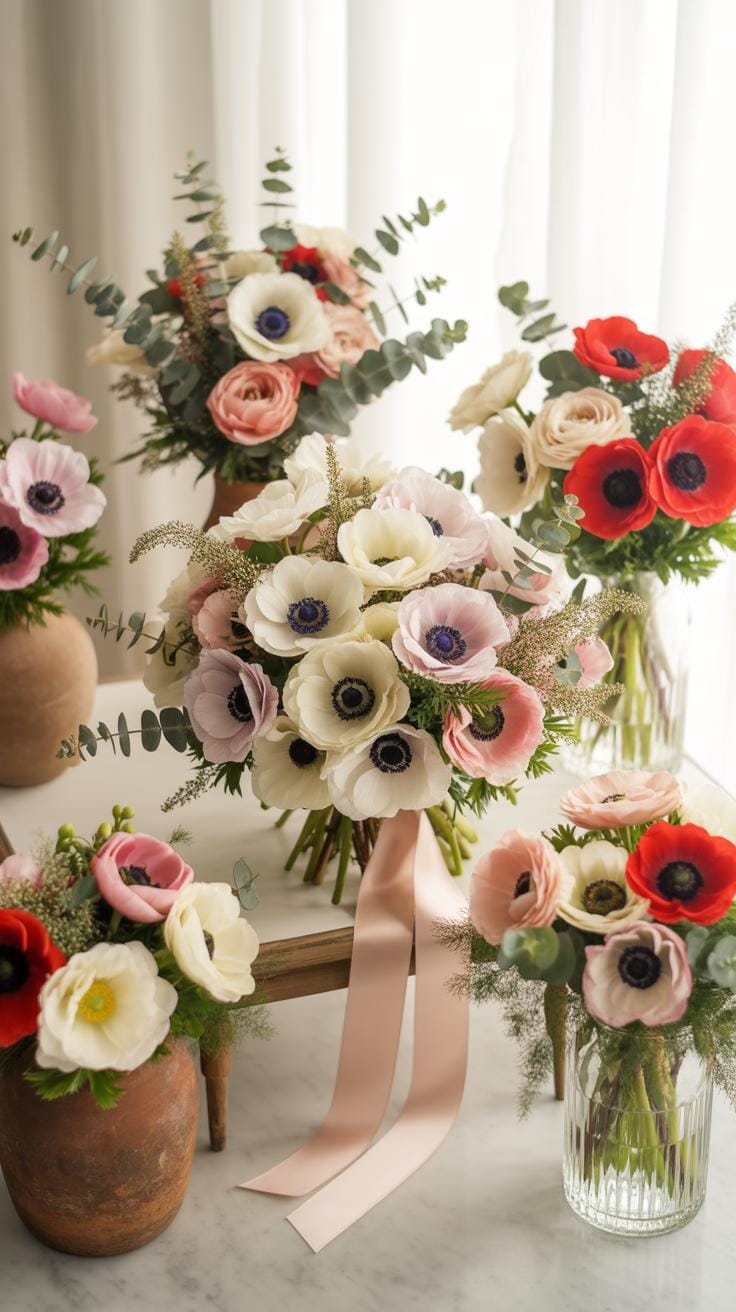
Modern florists use Anemone coronaria to create high-contrast focal points in bridal bouquets. The dark central disc, known as the “eye,” provides a natural anchor for monochrome color palettes. This flower lacks true petals. What you see are colorful sepals that protect the reproductive parts. Designers pair them with ranunculus or roses to add depth. These flowers thrive in cooler temperatures common at spring ceremonies.
Strategic placement of anemones in centerpieces requires support. Their stems are hollow and fragile. Professionals use internal wiring or floral tape to maintain upright positions. In anniversary decor, the white variety signifies sincerity while red tones represent deep passion. Because they are sensitive to ethylene gas, keep them away from ripening fruit at reception sites. This ensures the bloom stays open and firm throughout the entire event.
How Anemones Flower Arrangements Add Elegance To Seasonal And Themed Events
Anemones fit perfectly into Art Deco and Mid-Century Modern themed events. Their clean lines and sharp color shifts mirror the geometric focus of these design eras. Use them in low, shallow glass vessels to highlight their unique shape. For winter events, the white “Panda” variety mimics a snowy landscape. In spring, use purple or blue hues to signal the change in season.

Event planners choose anemones for corporate galas because they lack a heavy scent. This prevents olfactory fatigue or allergic reactions among large crowds. Use the “De Caen” group for vibrant colors and the “St. Brigid” group for double-petaled texture. Cut the stems at a forty-five degree angle every two days to maximize water uptake. Keeping the water level low prevents the soft stems from rotting in the vase.
Caring For Anemone Flowers To Ensure They Last Through Your Special Day
Understanding The Growing Season And Freshness Of The Anemone Flower
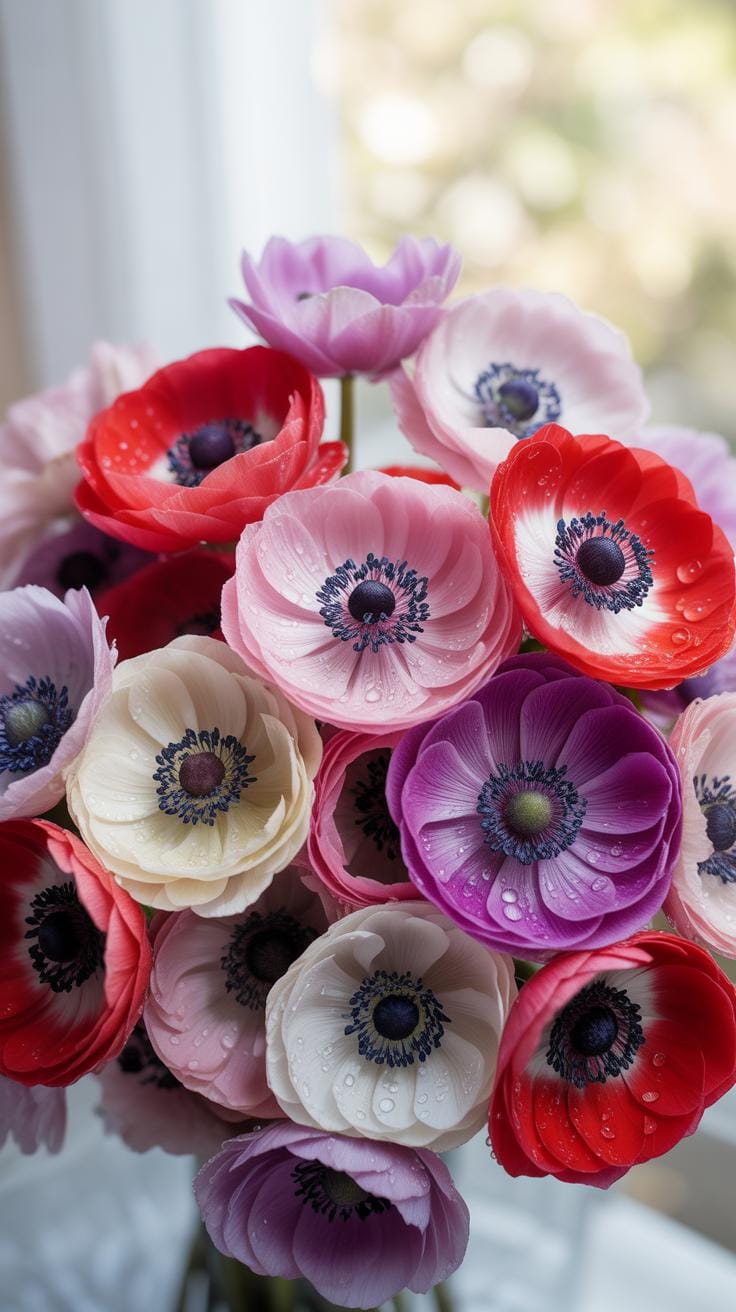
Anemones peak during the cool months of spring and fall. These plants thrive in temperatures between 40 and 60 degrees Fahrenheit. Buying them out of season increases the risk of receiving weak stems and small blooms. Focus your event planning on the spring window for the highest quality. Freshness shows in the center of the bloom. A tight green or black center indicates a young flower with longevity.
Check the petals for transparency or bruising before purchase. High-quality anemones have thick, turgid stems that support the weight of the head. Avoid stems that feel soft or slimy at the base. These signs indicate bacterial growth and poor water uptake. Professional florists prioritize Japanese Anemones for autumn and Anemone Coronaria for spring. Selecting the right species for the current season ensures your flowers remain upright and beautiful.
How To Keep Your Anemone Flowers Vibrant From Preparation To Final Display
Anemones are heavy drinkers and require immediate hydration. Cut the stems at a 45-degree angle under lukewarm water. This increase in surface area allows the flower to pull more moisture. Use clean buckets to prevent bacteria from clogging the vascular system. Replace the water every twenty-four hours to maintain clarity. Keep these flowers away from direct sunlight and heat drafts. High temperatures cause the petals to drop prematurely.
Tactical placement is essential for event success. Keep anemones in a cool, dark room until the event begins. Use floral food to provide the necessary nutrients for the opening process. These flowers continue to grow toward light sources after cutting. This movement can change the shape of your arrangement overnight. Monitor the stem length and trim as needed. Consistent temperature control and clean water are your primary tools for preserving visual impact.
Frequently Asked Questions

What are anemone flowers and why are they popular for special events?
Anemone flowers are whimsical, poppy-like blooms known for their striking dark centers and delicate, paper-thin petals. Often called “windflowers,” they have become a favorite for weddings and gala events because they offer a sophisticated, modern aesthetic. Their unique high-contrast look allows them to stand out in a bouquet or centerpiece, providing a touch of effortless elegance that complements both rustic bohemian themes and classic, high-end celebrations.
How can I keep my anemones looking fresh throughout a long occasion?
To ensure your anemone flowers stay vibrant, start by giving the stems a sharp diagonal cut under lukewarm water. Since they are thirsty blooms with hollow stems, place them in a clean vase with flower food immediately. Keep them in a cool, dark spot away from direct sunlight until the event begins. Their stems are delicate and prone to drooping, so using internal floral wire can help maintain their upright, creative shape.
Are anemones an affordable choice for DIY floral arrangements?
While they are incredibly stylish, these blooms are considered a premium choice rather than a budget filler. To save money while still featuring them, use them as focal points in your arrangements rather than the primary bulk. Pairing a few high-impact stems with more affordable greenery or carnations allows you to enjoy the beauty of these flowers without overspending. They are generally most accessible and affordable during their peak spring season.