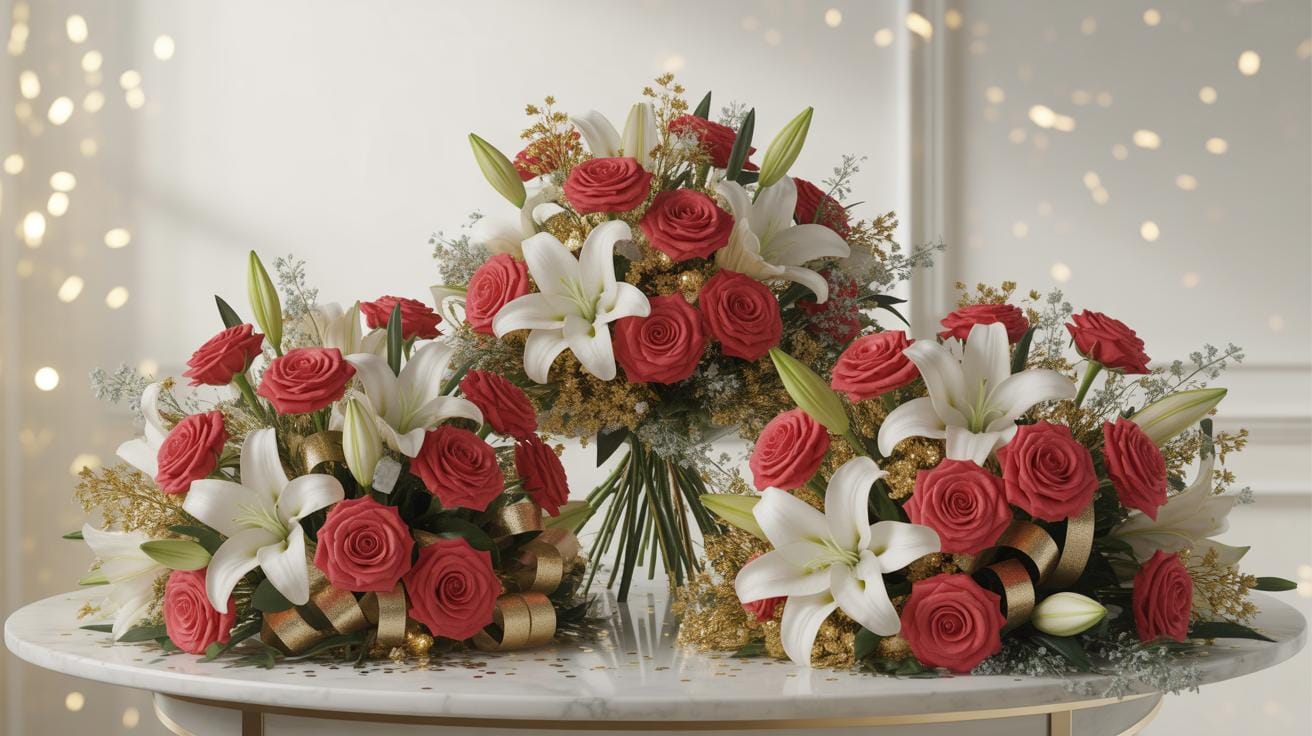
Why New Year Floral Arrangement Traditions Matter Across Cultures
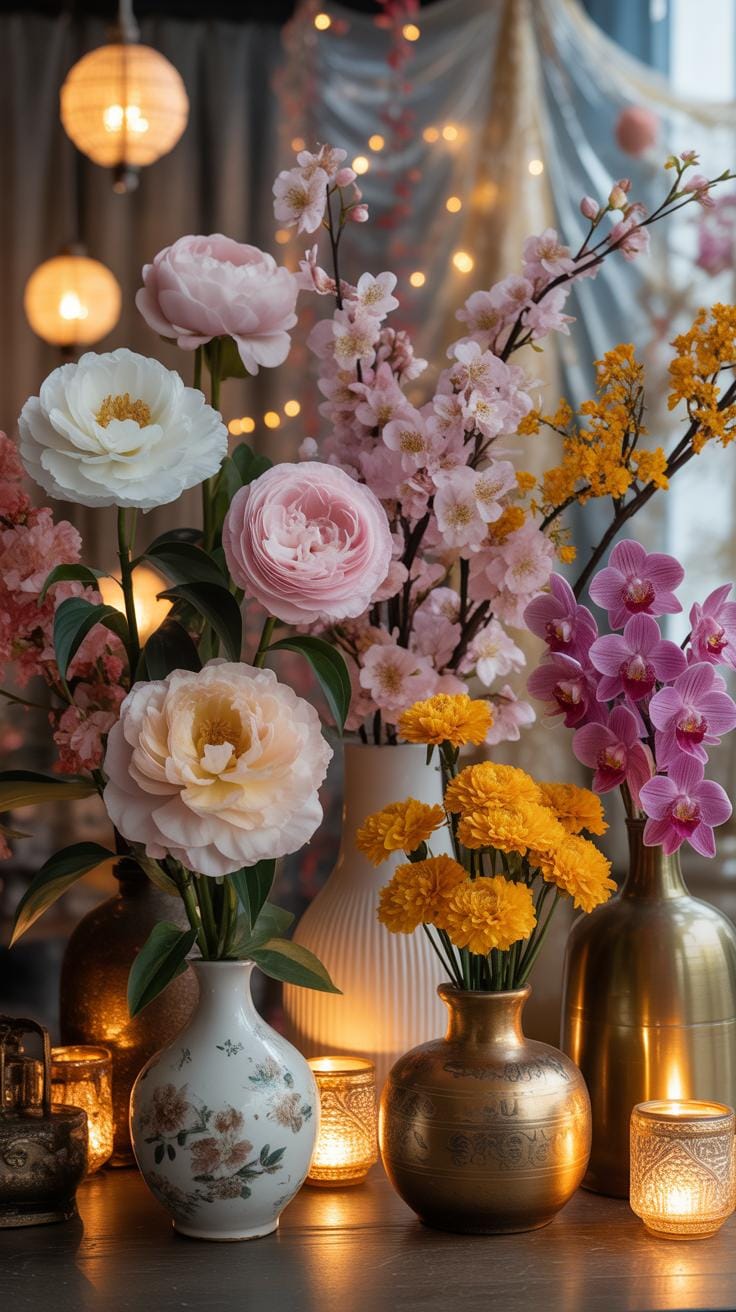
The Symbolic Role Of Flowers In New Year Celebrations Worldwide
Floral traditions act as visual anchors for cultural values during transition periods. In East Asia, practitioners use specific blooms to signal the arrival of spring and luck. Narcissus and peonies serve as primary tools for inviting wealth. These plants do not just decorate a space. They function as intentional mechanical components in a larger ritual designed to secure a prosperous future.
European traditions often lean toward evergreen materials during the winter New Year. Holly and ivy provide structural longevity and represent endurance through harsh conditions. These selections prioritize durability and survival. Designers use these woody stems to create a physical link between the ending year and the new one. The choice of material dictates the message of resilience sent to every guest.
How Floral Arrangements Set The Tone For Renewal And Prosperity
Strategic flower placement influences the psychological state of a household or business. An arrangement at an entrance dictates the first impression of the coming year. Bright colors like red and gold dominate many New Year palettes. These hues trigger specific cultural cues associated with energy and financial success. Professional designers use these color theories to align a physical environment with personal goals.
Traditional techniques focus on verticality and growth. Designers arrange stems to reach upward to mimic natural development. This upward movement symbolizes progress and ambition. Incorporating fruit or buds signals potential and upcoming harvests. Use these elements to create a sense of readiness and momentum. A well-constructed arrangement serves as a tactical reminder that the new cycle requires action and preparation for growth.
Chinese New Year Arrangement Flower Choices That Bring Good Fortune
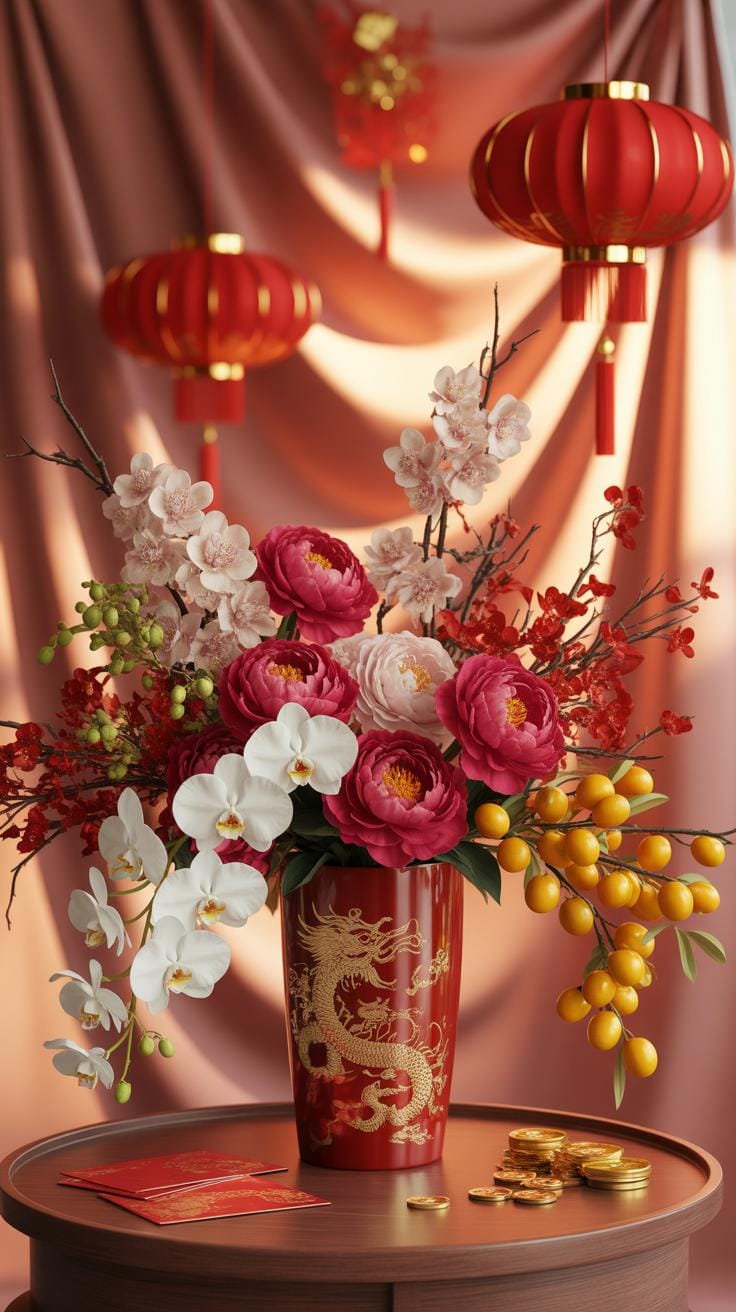
Top Flowers Used In Chinese New Year Arrangements And Their Meanings
Chinese New Year flower arrangements require specific species to signify prosperity and luck. Designers select these blooms based on linguistic puns and historical associations with wealth. You must choose plants that withstand indoor conditions for the fifteen day celebration period. High quality stems ensure the arrangement remains vibrant throughout the festivities. Using these specific flowers aligns with lunar traditions and local customs.
- Peonies: These flowers represent peace and wealth in Chinese culture. They often appear in high end arrangements as a focal point. Their large bloom size signals opulence and social status during the holiday season.
- Phalaenopsis Orchids: Designers use these for their longevity and elegant shape. They symbolize fertility and refinement. Using purple or yellow varieties increases the perceived value of the gift and ensures the display lasts through February.
- Chrysanthemums: These yellow or gold flowers symbolize longevity and a life of ease. They provide excellent structural support in dense floral designs. The bright color mimics gold coins which appeals to those seeking financial success in the new year.
- Peach Blossoms: These branches represent growth and romance. Many people place them in large vases to encourage luck in personal relationships. They add height and a natural woody texture to traditional lunar floral displays.
- Pussy Willows: These tall stalks signify the start of spring and the arrival of fortune. The silver buds look like silk and provide vertical lines for the arrangement. They are durable and do not require frequent water changes to look good.
Market demand for these specific flowers peaks during the first lunar month. Sourcing starts weeks in advance to secure the best quality. You should combine different textures to create a balanced look. Proper hydration and stem cutting extend the life of these symbolic blooms. Focus on these heavy hitters to meet client expectations for traditional and prosperous New Year flower arrangements.
Color Symbolism In Chinese New Year Flower Arrangements
Red is the dominant color for lunar celebrations because it represents joy and protection. It drives away bad luck according to ancient folklore. You must use red as the primary hue in your floral designs to stay culturally relevant. It creates a bold visual impact and signals energy. Combine red flowers with gold accents to maximize the theme of wealth and success.
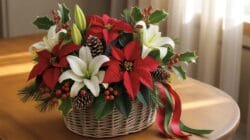
Yellow and gold are the secondary colors used to symbolize the earth and imperial power. These colors represent money and high rank in historical contexts. Avoid using white or blue flowers as primary colors because they often signal mourning. Stick to warm tones to maintain a positive atmosphere. Proper color selection ensures the arrangement conveys the correct message of hope and future prosperity.
Chinese New Year Flower Arrangement Floral Design Styles To Know
Classic Versus Contemporary Chinese New Year Floral Design Approaches
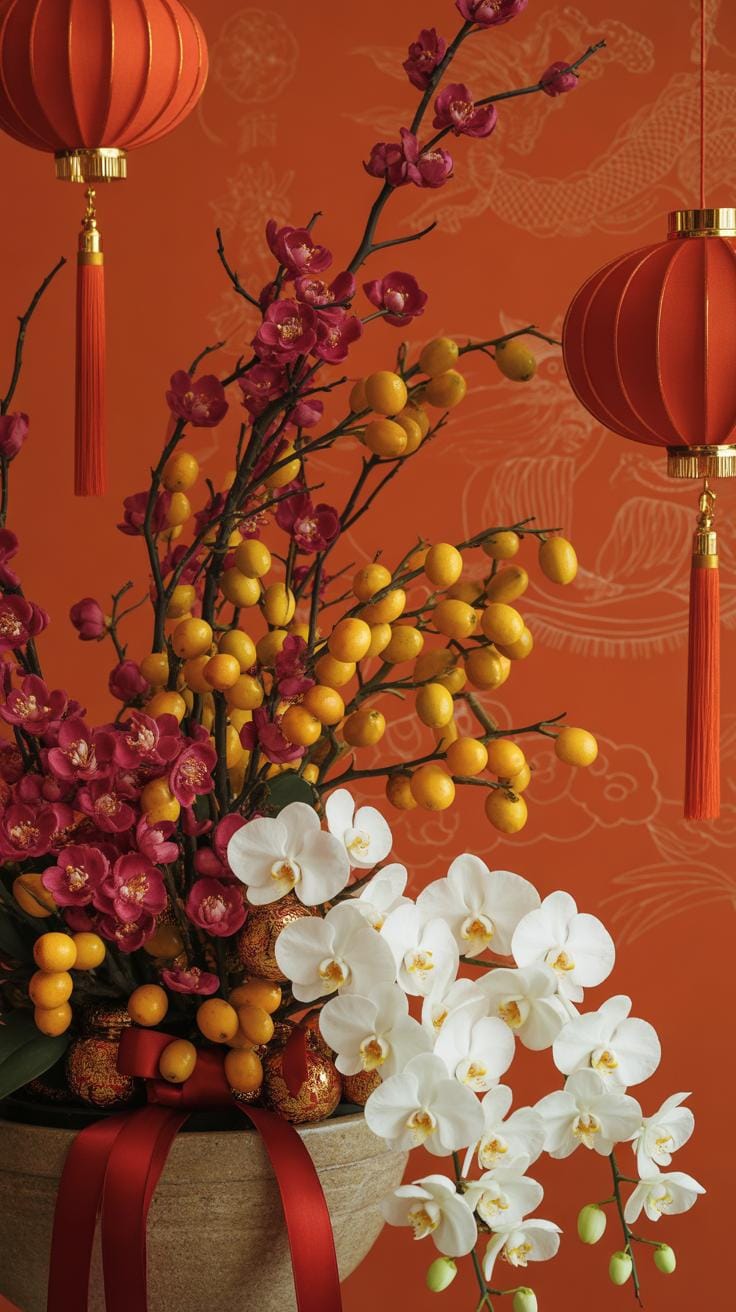
Classic designs prioritize symmetry and specific symbolic meanings. Traditionalists use tall, upright structures to represent growth and strength. They lean heavily on red and gold color palettes. Vases are often ceramic or cloisonne. These arrangements focus on the cultural significance of each branch and bloom. Every element must point toward prosperity and longevity. This style remains the standard for formal family gatherings and ancestral altars.
Contemporary styles break from rigid symmetry to embrace negative space. Modern designers use the Japanese concept of Ikebana to create minimalist looks. They replace traditional pots with glass or stone containers. New designs mix native blooms with imported flowers like ranunculus or orchids. This approach appeals to younger city dwellers who want style over tradition. It maintains the red color theme but adds neutral tones to soften the visual impact.
Just as flowers bloom anew each season, let these fresh floral trends remind us that every new year is an opportunity to bring beauty and hope into our homes.
How To Incorporate Plum Blossoms And Peonies Into Your Floral Design
Plum blossoms represent resilience because they bloom in the cold winter. When using them, keep the branches long and jagged. Do not over trim the wood. The goal is to show the natural struggle of the tree. Place these branches early in the arrangement to create a structural frame. They provide the necessary height for large table centerpieces. Ensure the buds are tight so they open during the festivities.

Peonies serve as the focal point because they signify wealth and honor. These large heads require strong stems for support. Position them at the base or center of your design. Do not crowd them with small filler flowers. They need space to expand as they drink water. Use an odd number of blooms to follow traditional aesthetic rules. Their heavy weight helps anchor the arrangement in shallow water containers or floral foam.
Lunar New Year Flower Arrangement Ideas Rooted In Cultural Heritage
Regional Differences In Lunar New Year Floral Traditions Across Asia
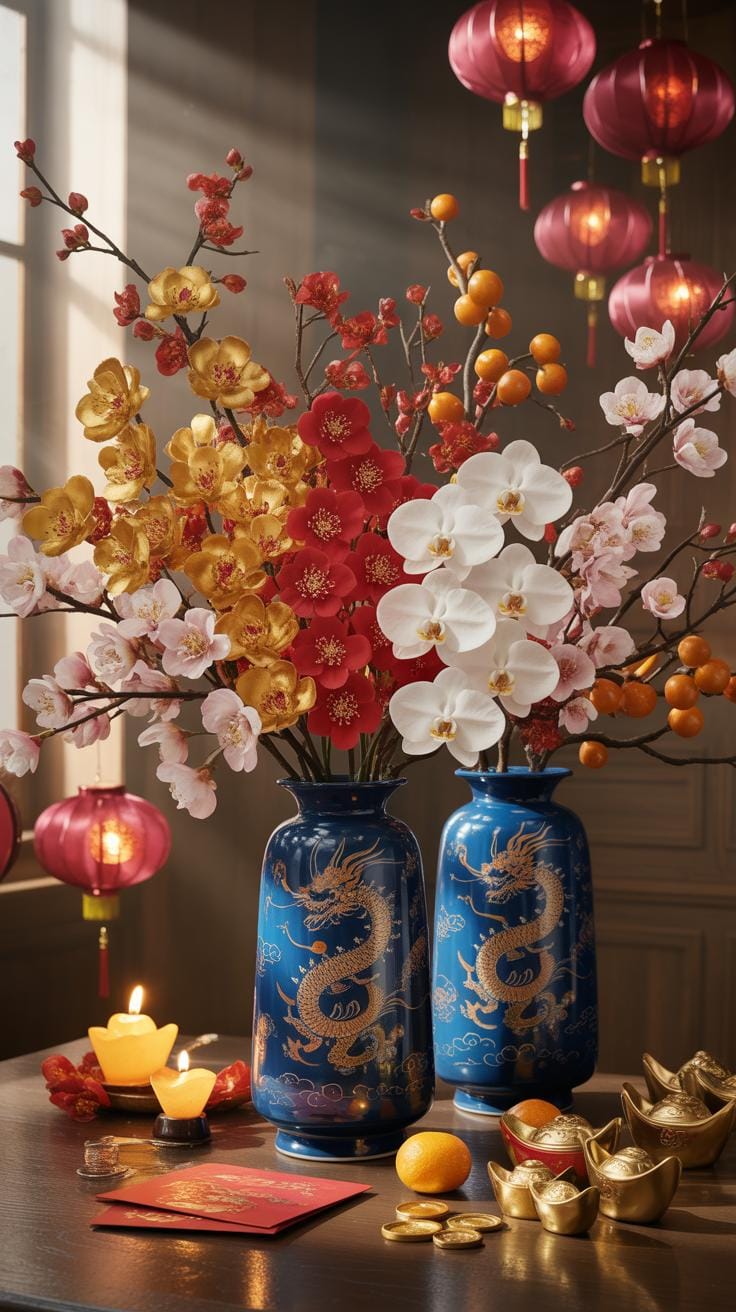
Floral choices for New Year Flower Arrangements depend on local climate and symbolic language. In Southern China, designers prioritize tropical and subtropical species like kumquat trees and narcissus. These plants signal wealth and purity. Northern regions rely more on hardy branches like pussy willow. Its silver buds represent growth and the arrival of spring. Red peonies remain a universal choice across the mainland to signify royalty.
Logistics and trade routes influence these regional styles. Hong Kong and Guangzhou markets demand high-volume, massive displays for public spaces. These often feature citrus trees shaped like pagodas. In contrast, Japanese New Year displays use pine and bamboo for long life. This style uses fewer stems but requires precise placement. Each region picks plants that survive their specific winter conditions while conveying a message of future prosperity.
How Vietnamese TếT And Korean Seollal Inspire Unique Floral Displays
Vietnamese Tết arrangements focus on the Hoa Mai and Hoa Đào blossoms. The yellow Ochna integerrima is essential in the south. Its five petals represent the five blessings. Designers often hang red envelopes from the branches to invite luck. The northern tradition favors peach blossoms for their ability to ward off evil. Both styles emphasize airy, natural branch shapes over tight, rounded bouquets seen in Western florist shops.
Korean Seollal traditions value minimalism and naturalism more than bold color. While red is prominent in Chinese designs, Seollal florals focus on white, yellow, and deep green tones. Designers use pine branches to show strength during cold months. Dried fruits or berries often accompany these arrangements. This look is sculptural and clean. It fits modern minimalist interiors. The focus stays on the structural integrity of the wood and the seasonal timing of the buds.
Traditional Japanese New Year Flower Arrangement The Art Of Ikebana
Understanding Ikebana And Its Role In Japanese New Year Celebrations
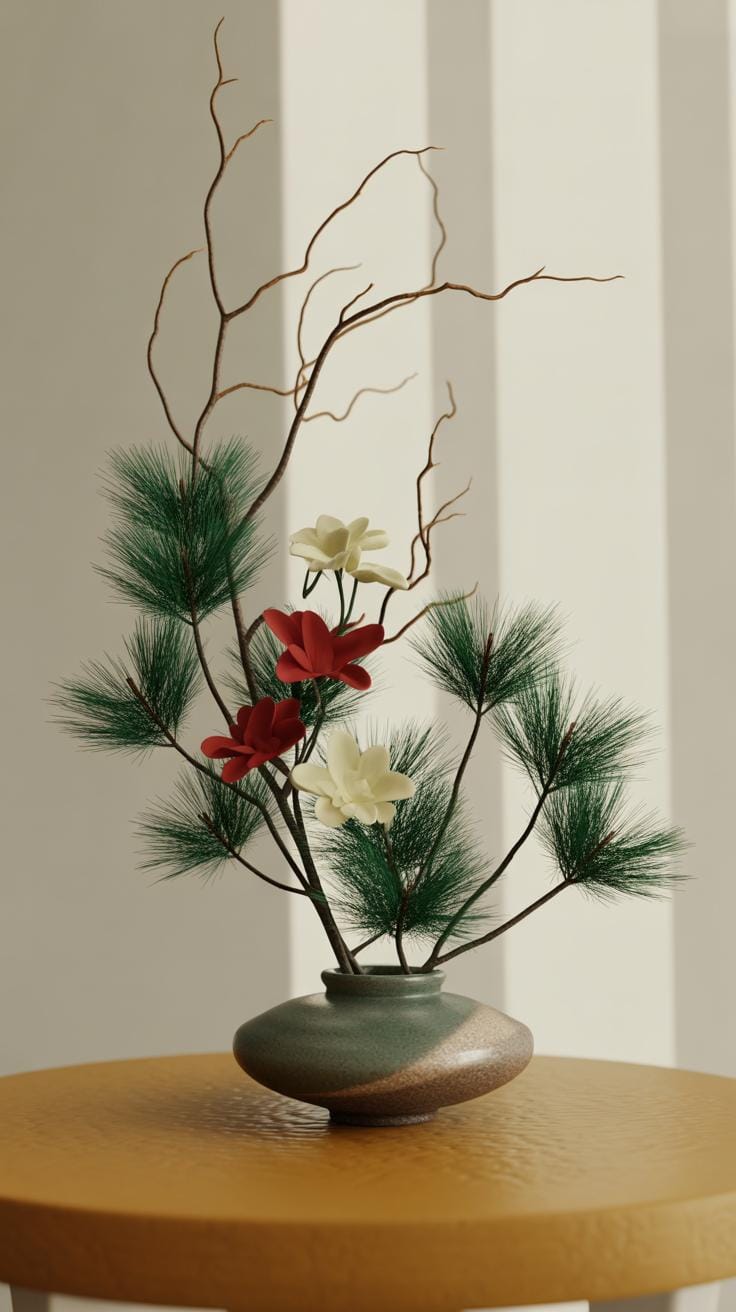
Ikebana is the disciplined Japanese art of floral arrangement. It translates to making flowers come alive. For New Year celebrations, this practice serves a spiritual purpose. Families create these displays to welcome the Toshigami. This deity brings luck and a good harvest. Every placement of a stem or branch follows strict rules. You do not just put flowers in a vase.
The timing of these arrangements coincides with Oshogatsu. This is the most important holiday in Japan. Artisans focus on the relationship between the plant and its container. Space matters as much as the flowers. You use minimalism to highlight the natural shape of the materials. This practice reflects the Shinto belief in spirits residing in nature. It sets a formal tone for the year.
Key Elements Of A Traditional Japanese New Year Ikebana Display
Traditional arrangements require specific symbolic plants. You must use pine, bamboo, and plum branches. Pine represents longevity and endurance because it stays green in winter. Bamboo signifies strength and flexibility. Plum blossoms stand for hope and new beginnings. These three materials form the Kadomatsu style seen at entrances. They guard the home and invite positive energy during the cold months.
Strategic height and angles define the structure. You arrange stems to represent heaven, man, and earth. The tallest branch reaches upward toward the sky. The middle branch signifies human life. The lowest branch points toward the ground. This tri-level system creates balance and harmony. You use a Kenzan or spiked frog to hold stems firmly in place. Proper execution requires clear intent and steady hands.
Chinese New Year Floral Arrangement Trends Blending Old And New
Modern Minimalist Takes On The Chinese New Year Floral Arrangement
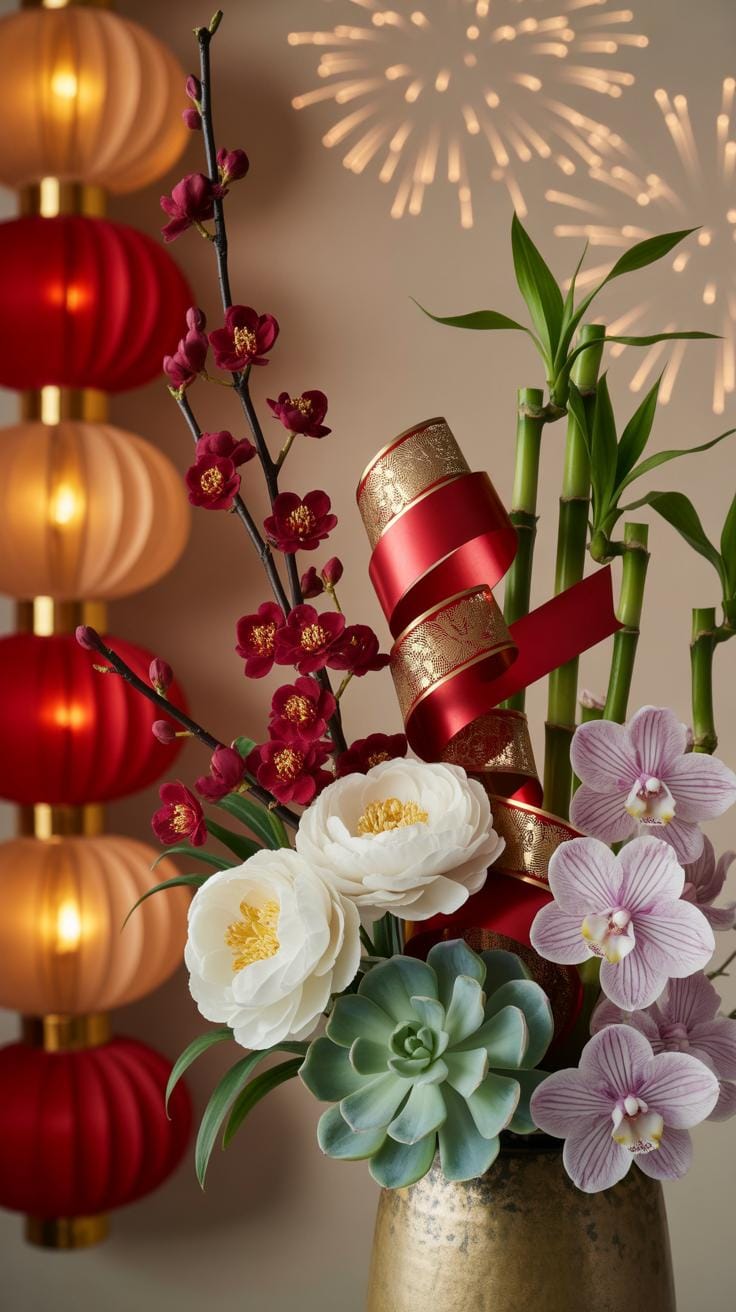
Modern designers now reject the cluttered look of traditional festive displays. They apply Zen and Ikebana principles to Chinese New Year New Year Flower Arrangements. These creators focus on negative space and strong structural lines. They use a single branch of pussy willow or a lone peony to make a statement. This approach shifts the focus from quantity to the quality of the individual bloom.
Tactical subtraction is the primary technique in this movement. Designers remove excess foliage to highlight the natural curve of the stem. They replace heavy porcelain pots with clear glass or raw concrete containers. This creates a sharp contrast between the organic flower and the industrial vessel. The goal is a clean aesthetic that fits into contemporary urban homes while still honoring the symbolic red color palette.
Incorporating Sustainable And Locally Sourced Blooms Into Festive Displays
The shift toward sustainability changes how professionals source materials for these arrangements. Florists now prioritize local seasonal crops over imported luxury flowers. In many regions, this means using native winter berries or locally grown orchids. This reduces the carbon footprint associated with air freight. It also ensures the flowers stay fresh longer because they do not endure long transit times across different climates.
Practitioners also eliminate floral foam. This non biodegradable plastic was once a staple in holiday centerpieces. Now, experts use reusable metal frogs or chicken wire structures to hold stems in place. They choose natural materials like dried moss or stones to hide the mechanics of the display. These choices turn the arrangement into a zero waste product. This strategy prioritizes long term environmental health over temporary decorative convenience.
New Year Flower Arrangement Tips For Decorating Your Home Or Event
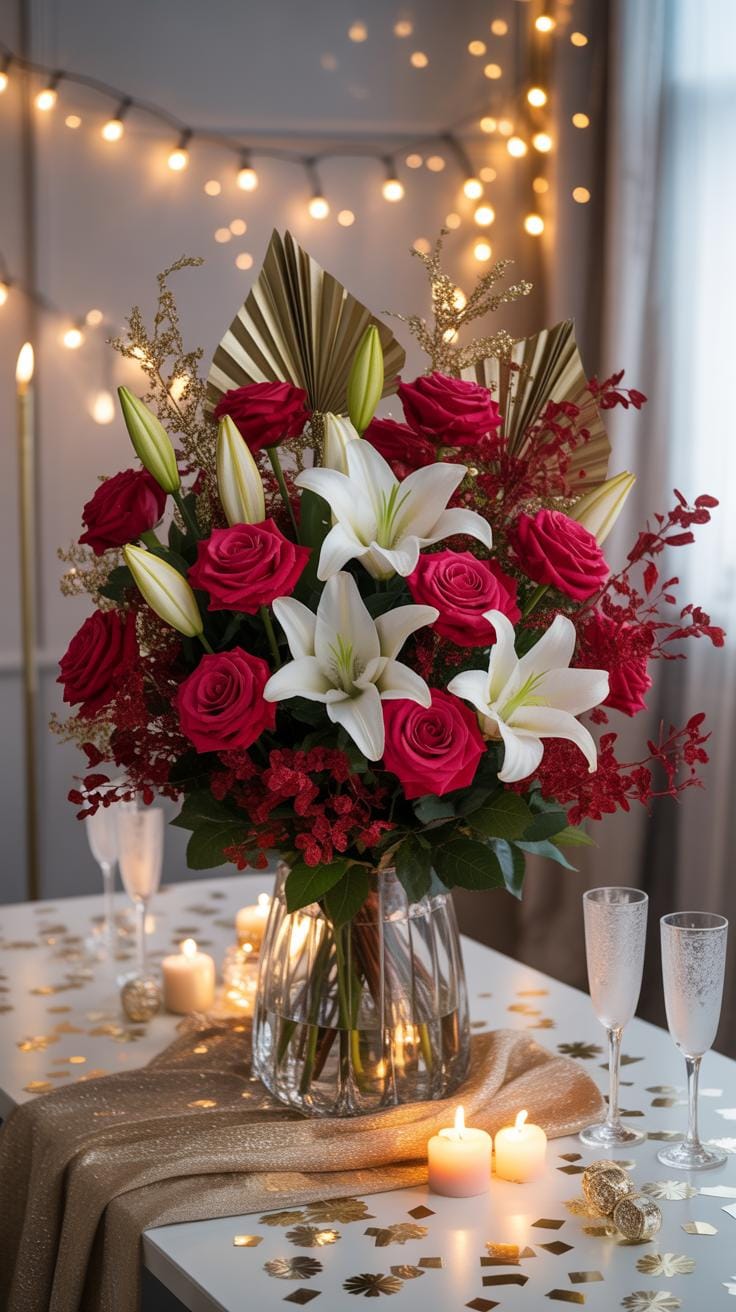
Choosing The Right Vessels And Props To Complement Your New Year Blooms
Vessel selection dictates the stability and scale of your New Year Flower Arrangements. Use heavy glass or ceramic containers for top-heavy blooms like lilies and hydrangeas. Metal containers in gold or silver finishes provide structural support and reflect holiday lighting. Choose a base that holds enough water to sustain high-metabolism winter flowers. Ensure the vessel height equals roughly one-third of the total arrangement height for visual balance.
Incorporate props to anchor the design in the New Year theme. Use geometric wire frames or acrylic risers to add height without adding bulk. Use waterproof LED lights or metallic ornaments to fill gaps in the greenery. Natural elements like pinecones or birch branches provide a rustic contrast to polished metal surfaces. Avoid using wooden containers without plastic liners because moisture will warp the material and promote bacterial growth.
Practical Tips For Keeping Your New Year Floral Arrangements Fresh Longer
Temperature control and water hygiene are the primary factors in extending floral life. Bacteria block the stems and stop water intake. Extreme heat from fireplaces or cold drafts from windows will cause petals to wilt or drop prematurely. You must manage the environment to protect your investment. Follow these specific steps to keep your New Year Flower Arrangements looking sharp for the entire celebration.
- Stem Recutting: Cut stems at a forty-five degree angle using sharp shears. This increases the surface area for water absorption. Do this underwater or under a running tap to prevent air bubbles from entering the vascular system.
- Water Replacement: Change the water every two days. Use lukewarm water for most flowers to encourage movement. Cold water can shock certain tropical species used in modern New Year designs. Always scrub the vase during water changes.
- Foliage Removal: Strip all leaves that fall below the water line. Decaying organic matter in the water creates gases and bacteria. These toxins kill flowers quickly. Keep the water clear to ensure the stems remain open and functional.
- Floral Food: Use the nutrient packets provided by florists. These contain sugar for energy and acidifiers to balance the pH level. They also include bleach to kill bacteria. This chemical balance is essential for maintaining bloom turgidity.
- Strategic Placement: Keep arrangements away from ripening fruit. Fruit releases ethylene gas which acts as a ripening hormone for flowers. This gas causes buds to drop and petals to turn brown. Place flowers in a cool, dark spot overnight.
Observe the water level daily. Large arrangements with many stems consume water faster than you expect. If a single flower wilts, remove it immediately to prevent it from affecting the rest of the display. Targeted misting helps orchids and hydrangeas which can absorb some moisture through their petals. Consistent maintenance ensures your New Year Flower Arrangements survive well into the first week of January.
Lunar New Year Arrangement Inspirations For 2025 And Beyond
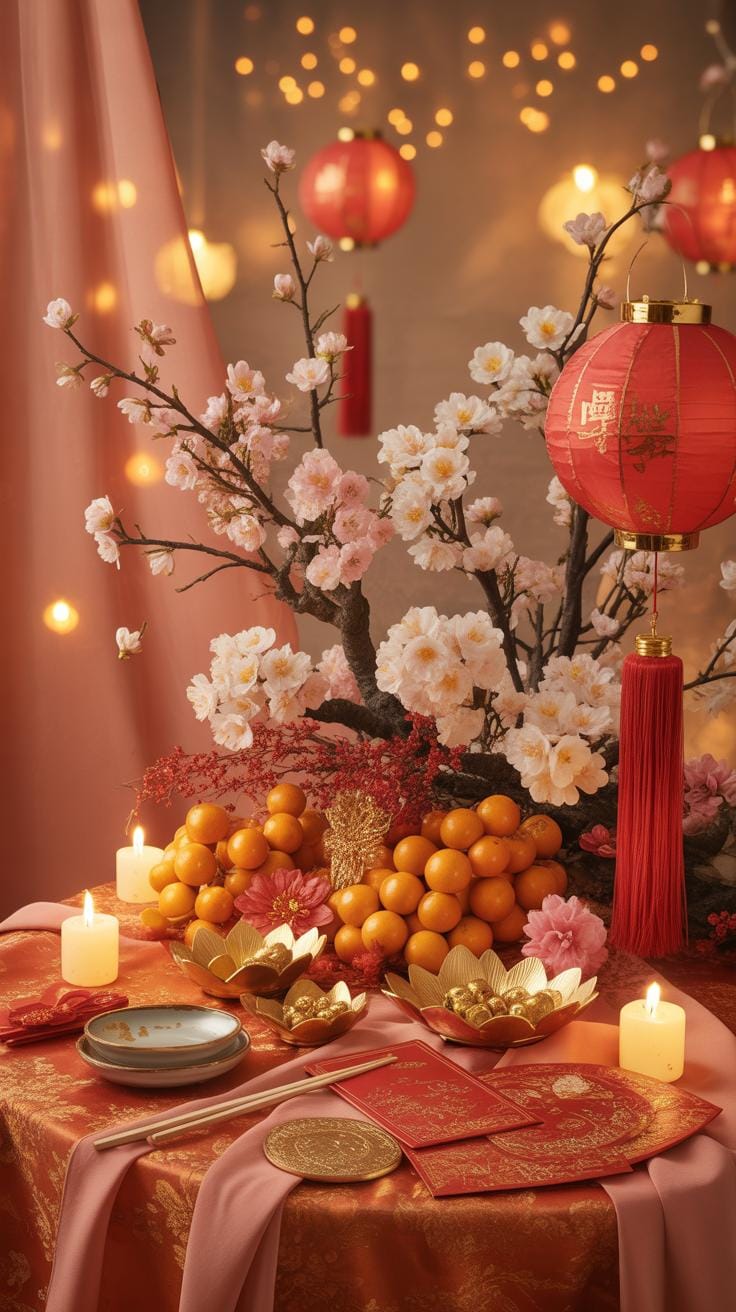
Trending Color Palettes And Flower Pairings For The Lunar New Year Arrangement
Modern Lunar New Year arrangements prioritize high-contrast palettes over traditional monochrome red. Designers now mix deep crimson with champagne gold and matte black accents. This shift reflects a move toward sophisticated interior design. Use red amaryllis or premium ranunculus to provide the base color. Pair these with gilded eucalyptus or dried fan palms to create height and texture. This approach balances luck with modern style.
Technique drives the visual impact of these arrangements. Incorporate yellow orchids or golden chrysanthemums to signify wealth and prosperity. These flowers provide a structural focal point. Use flexible willow branches to guide the eye and add organic shapes. Avoid overstuffing the vase. Leave negative space to highlight the individual shapes of the blooms. Proper spacing ensures the arrangement looks intentional and expensive rather than cluttered or dated.
How Social Media And Global Florists Are Reshaping New Year Floral Trends
Social media platforms now dictate the speed of floral trends. Instagram and Pinterest favor bold architectural shapes and asymmetrical balances. Global florists see these images and quickly adopt new materials. This cycle forces local shops to innovate faster. Designers now use non-traditional elements like preserved moss or tinted pampas grass. These materials stay fresh longer and provide a unique look that performs well on digital screens.
Global trade allows florists to source seasonal blooms from different hemispheres. This accessibility changes what people expect in a New Year arrangement. You are no longer restricted to local hothouse flowers. Dutch tulips and Japanese sweet peas often appear in high-end designs. Contemporary florists focus on sustainable mechanics like floral frogs instead of plastic foam. This move matches the growing consumer demand for eco-friendly and transparent sourcing practices.
Frequently Asked Questions

What are the most popular flower types for a New Year’s celebration?
Selecting the right blooms is the first step in creating stunning New Year flower arrangements. This season, designers are favoring a mix of classic elegance and modern flair. White lilies, cream roses, and orchids remain top choices for a sophisticated look. For a more festive vibe, incorporate metallic-sprayed greenery or deep jewel-toned blooms like burgundy anemones. These selections perfectly capture the celebratory spirit that defines the transition into a brand-new year.
How can I make my New Year floral display last through the holiday weekend?
To ensure your New Year flower arrangements stay fresh, start with a clean vase and lukewarm water mixed with flower food. Trim the stems at a sharp angle before placing them in the vessel to maximize water uptake. Keep the display away from direct sunlight, heating vents, or drafty entryways. Changing the water every two days will prevent bacterial growth, keeping your festive centerpieces looking vibrant and professional for your entire countdown party.
Is it possible to create a high-end New Year look on a limited budget?
Absolutely! You can achieve a luxurious aesthetic without overspending by focusing on greenery and monochromatic themes. Use affordable filler flowers like carnations or babies’ breath in large clusters to create a lush, cloud-like effect. Adding a few gold-painted branches or shimmering ribbons can elevate the design instantly. By using creative styling techniques, you can design impressive floral displays that look expensive while remaining very accessible for any home decorator.