

How To Transport Flowers Safely Without Damaging Delicate Petals
Understanding Why Proper Handling Matters For Flower Longevity
Cut flowers are highly susceptible to mechanical damage and physiological stress. Physical contact with petals causes bruising and triggers ethylene production. This gas accelerates the aging process and wilting. Transport conditions dictate the remaining vase life of the product. Secure placement prevents stem breakage and vascular blockage. Maintaining stable moisture and temperature levels stops rapid cellular breakdown in the bloom.
Safe handling minimizes the risk of microbial growth and moisture loss. Friction during transit strips the protective wax layer from leaves and stems. This damage leaves the plant open to bacteria that clog water intake channels. Strategic placement ensures the flower continues to hydrate during the move. Professional transporters prioritize structural integrity to keep the flower heads from drooping or snapping under pressure.
Common Mistakes Beginners Make When Handling Fresh Flowers
Beginners often leave flowers in hot vehicles for too long. Heat causes rapid transpiration and permanent dehydration. This mistake kills the bloom before it reaches the final destination. Another error involves placing bouquets horizontally on flat seats. Petals crush under their own weight when they roll during stops. Gravity forces water out of the stems if they stay tilted for extended periods.
Novices frequently ignore the impact of fluctuating air currents. Placing flowers near open windows or air conditioning vents dries out the delicate tissue. Forced air strips moisture from the petals faster than the stem can replace it. Beginners also fail to secure the base of the container. Unsecured buckets tip over during sharp turns or sudden braking. This creates a mess and destroys the flower arrangement.

Essential Supplies You Need Before Transporting Flower Arrangements
Must Have Materials For Keeping Arrangements Secure And Hydrated
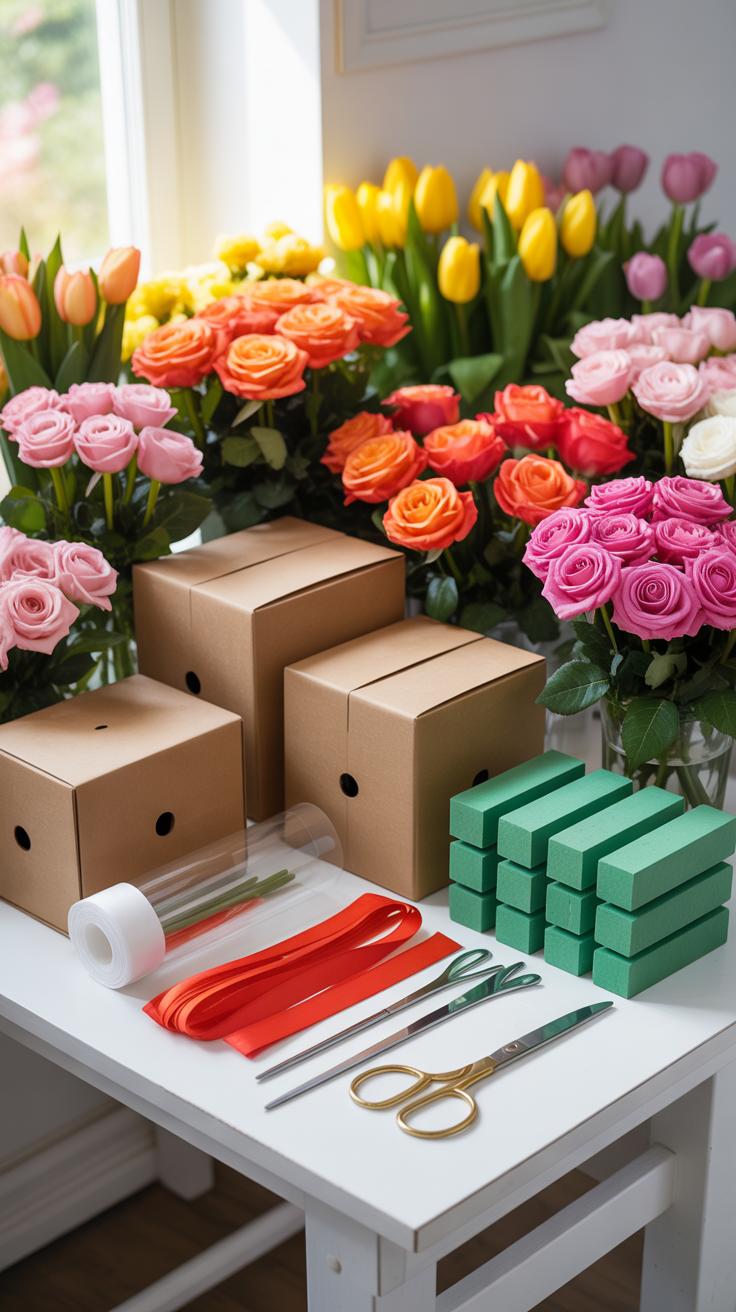
Successful flower transport requires specific tools to prevent spills and dehydration. You must stabilize the base of each vessel to stop movement during transit. Water is heavy and shifts quickly when a vehicle turns or brakes. Use high friction materials to grip the floor of your trunk. These supplies ensure your stems stay submerged and your containers remain upright throughout the journey.
- Non Slip Drawer Liners: Use these rubberized mesh sheets under every box or container. They provide immediate grip on flat surfaces like trunk floors or seats. This prevents the cargo from sliding during sudden stops or sharp turns.
- Packing Paper Or Newspaper: Crumpled paper fills the gaps between individual vases within a larger transport box. This creates a cushion that absorbs vibrations and holds the vessels in a vertical position. Avoid using fabric which can soak up spilled water.
- Corrugated Cardboard Boxes: Heavy duty boxes with low sides work best for floral transit. They provide a rigid perimeter that contains any minor leaks. Ensure the boxes are thick enough to support the weight of multiple water filled glass vases without buckling.
- Floral Tape: Waterproof tape secures the stems into a grid at the mouth of the vase. This mechanical fix prevents flowers from falling out if the vehicle hits a bump. It keeps the design intact even when the water levels fluctuate during the drive.
- Clean Five Gallon Buckets: These provide a secondary containment system for tall arrangements or loose stems. They have a wide base and high walls that offer superior stability compared to small decorative vases. Use them to move bulk product before final staging.
Hydration is the most critical factor for flower longevity. Stems cut off from water for even thirty minutes will begin to wilt. Use floral foam or water tubes for individual blooms that cannot sit in a full vase. Check water levels inside every container before you leave. Add more water once the vehicle is parked at the final destination to replace any liquid lost during the drive.
The beauty of a bloom is a fragile gift, so cradle your flowers with the same gentleness you would a precious memory. A little care in the journey ensures their story unfolds perfectly when they reach their new home.
How To Choose The Right Container Size For Your Arrangement
Choose a container that offers a low center of gravity. Tall and narrow vases tip over easily in a moving car. Select vessels with wide bases that distribute weight evenly across the floor. The height of the container should be at least half the height of the floral stems. This ratio provides enough leverage to hold the flowers upright against the force of gravity.

Heavy containers like ceramic or thick glass stay in place better than light plastic. If you must use lightweight pots, add stones or marbles to the bottom to increase the weight. Ensure the opening is not too wide for the number of stems. A tight fit prevents the flowers from shifting and becoming top heavy. Proper sizing reduces the risk of the arrangement collapsing during the transport process.
How To Transport Floral Arrangements Without Spilling Or Tipping
How To Secure Floral Arrangements Inside A Vehicle With Minimal Movement
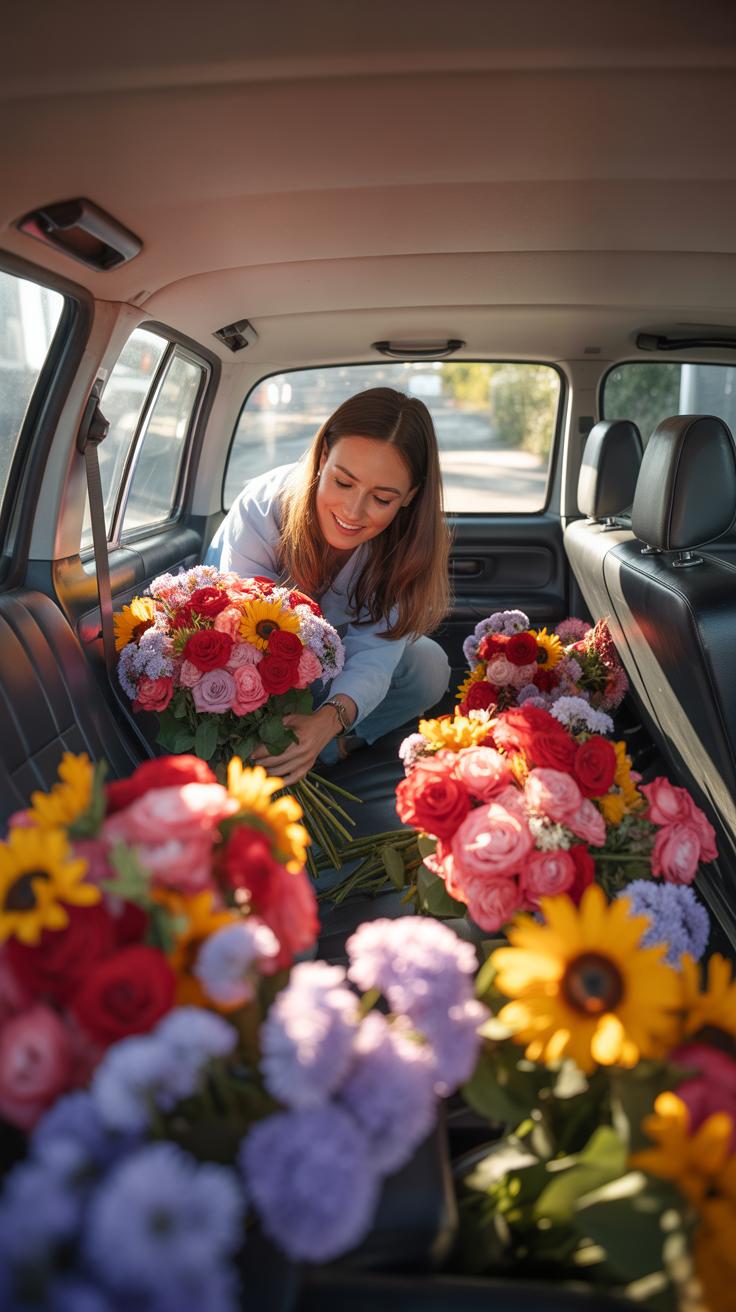
Center gravity is your primary concern during transport. Place arrangements on the floor of the vehicle rather than on seats. Seats slant backward and create uneven surfaces that cause tipping. The floor behind the driver or passenger seat provides a flat and stable foundation. Use the seat adjustment to pin the arrangements in place. This creates a tight friction fit that limits shifting.
Do not allow arrangements to touch the vehicle walls or other cargo. Vibrations from the road transfer through hard surfaces and bruise delicate petals. Reserve the trunk only for large flat-bottomed containers that you can anchor with sandbags. Maintain a cool cabin temperature to keep the stems turgid. Stiff stems resist mechanical damage from movement better than wilted ones. High humidity also helps prevent water loss.
Using Non Slip Mats And Boxes To Stabilize Arrangements During Transit
Non-slip shelf liners provide the best grip for glass and ceramic vases. Cut these mats to fit the bottom of a heavy-duty cardboard box. The rubberized texture creates high friction against the container base. This prevents the vase from sliding when you turn corners or brake suddenly. Professional florists have used this method for decades to ensure safe delivery. It is cheap and highly effective.

Packing foam or crumpled paper fills the gaps between the vase and the box walls. This bracing technique absorbs kinetic energy from bumps. Use a low-profile box to keep the center of mass near the floor. Taller boxes often tip over because they are top-heavy. If the arrangement is exceptionally tall, add weights like clean gravel to the bottom of the box. This lowers the balance point and increases stability.
Transporting Flowers In Hot Or Cold Weather Conditions
How Temperature Extremes Affect Fresh Cut Flowers During Transit
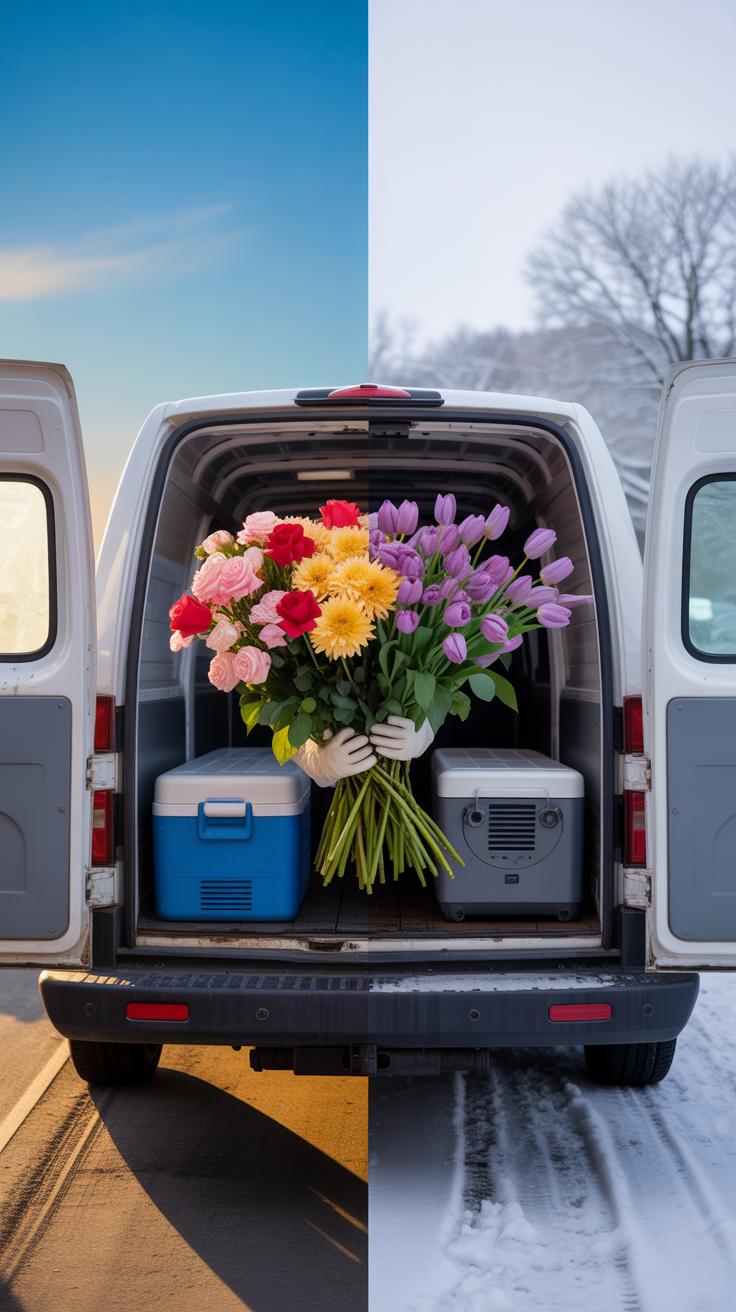
Extreme heat forces flowers to breathe faster and consume stored energy quickly. This process causes rapid wilting and shortens the life of the bloom. Heat also triggers bacteria growth in the water supply. These bacteria clog the stems and prevent the flower from drinking. You must keep the environment cool to slow down the natural aging process during your trip.
Freezing temperatures are equally dangerous for fresh cut flowers. Water inside the plant cells expands when it freezes and ruptures the cell walls. This damage causes stems to turn black or mushy once they thaw out. Tropical varieties suffer even in mildly cold air. You must shield the plants from direct exposure to cold wind or frost to maintain their structural integrity.
Practical Ways To Regulate Temperature When Transporting Flowers
Use a vehicle with high quality air conditioning to maintain a steady climate. Pre-cool the car before loading the flowers into the trunk or back seat. Do not place floral containers directly in front of air vents. The forceful air dries out the petals and causes bruising. Keep the temperature between thirty-four and thirty-eight degrees Fahrenheit for the best results during transit.

Insulate the containers during winter moves using thick paper or bubble wrap. This layer traps warm air around the blooms and prevents frostbite. Use a heavy blanket to cover the boxes if the outdoor air is below freezing. Park in shaded areas during summer trips to avoid greenhouse heat buildup inside the cabin. Never leave flowers in a parked car without the engine running on hot days.
How To Transport Flower Arrangements For Events And Special Occasions

Timing Your Flower Transport To Preserve Freshness For The Event
Timing determines the success of your floral display. You must move flowers during the coolest parts of the day to prevent wilting. Early morning transport is the industry standard for tactical reasons. Lower temperatures reduce the respiration rate of the blooms. This saves their energy for the actual event. High heat during midday shifts will cause immediate petal stress and permanent damage.
Plan your arrival for exactly two hours before the event starts. This window allows for temperature acclimation and final positioning. Flowers stored in cold professional vans need time to adjust to room temperature. Do not move them too early or they will peak before guests arrive. Coordination with the venue ensures you have immediate access to the setup space. Proper timing minimizes the time stems spend out of water.
How To Set Up And Revive Arrangements Quickly After Arrival
Check every container for water levels immediately upon arrival. Transport vibration often causes spills or shifts in the foam. Refill vases with room temperature water treated with floral preservative. This simple act restores hydration and replaces lost nutrients. Look for crushed petals or broken stems caused by vehicle movement. Remove any damaged material to prevent the spread of ethylene gas among healthy flowers.
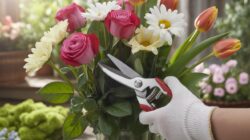
Give stubborn or wilted blooms a fresh angled cut if they are not in foam. Use sharp, clean shears to avoid crushing the vascular system of the stem. This allows the flower to draw water more efficiently. Mist the petals lightly with a finishing spray to seal in moisture. This technique is common in professional event design to combat dry indoor air. Proper onsite maintenance ensures the arrangements remain vibrant through the entire occasion.
Transporting Floral Arrangements By Car For Short And Long Distances

Best Practices For Loading And Positioning Flowers In Your Car
Place arrangements on the floor of the vehicle rather than on seats. Seats slant backward and cause containers to tip or leak water. The floor provides a flat and stable surface for the base. Push the front seat back to pin the container against the rear footwell. This prevents the arrangement from sliding during sudden stops or turns.
Maintain a cool temperature inside the cabin to stop wilting. Blast the air conditioner before loading the plants to remove trapped heat. Turn off the floor vents if they blow hot air near the stems. Avoid the trunk because it lacks airflow and reaches dangerous temperatures quickly. Keep arrangements out of direct sunlight coming through the windows to prevent petal burn.
How To Keep Flowers Upright And Secure On Longer Road Trips
Use heavy plastic crates or cardboard boxes to create a stable perimeter. Place the vase inside a box that fits its base closely. Fill the gaps between the vase and the box walls with rolled towels or bubble wrap. This prevents the vase from shifting when the car vibrates. Low centers of gravity are essential for keeping top-heavy blossoms upright.

Check your water levels every two hours during the trip. Modern roads cause splashing which empties shallow containers and starves the blooms. Carry a gallon of fresh water to refill vases as needed. Secure tall arrangements with bungee cords attached to seat hardware if they seem wobbly. Stability ensures the stems do not snap or rub against each other during the drive.
How To Transport Wedding Bouquets Without Wilting Or Crushing
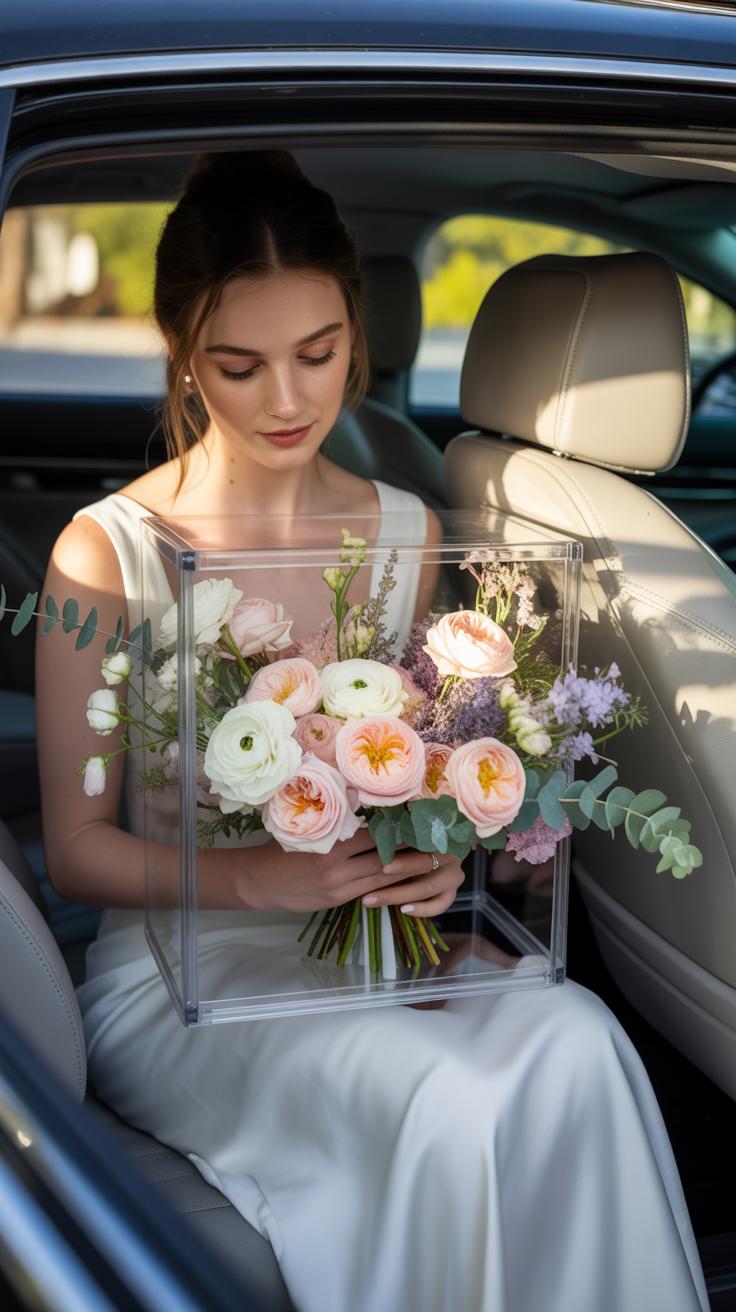
Wrapping And Packaging Techniques For Delicate Bridal Bouquets
Secure each bouquet in a heavy cardboard box with tall sides. Use professional floral dividers or create a grid using waterproof tape to keep stems upright. This prevents the flower heads from touching the box walls or each other. Pack tissue paper around the base of the stems to stop shifting during transit. Stability is the only way to prevent petal bruising and broken stems.
Protect the delicate ribbon wraps by keeping them dry and clean. Do not crowd the transport container because air circulation prevents mold and petal rot. Use a non-slip mat under the boxes in the vehicle. Position the boxes on a flat surface like the trunk floor or floorboards. Avoid leather seats as they are often slanted. Flat surfaces keep the center of gravity low and prevent tipping.
How To Keep Wedding Bouquets Hydrated And Fresh On The Big Day
Apply a floral hydrate spray to the petals before packing. This seals the moisture inside the plant tissue and slows down transpiration. Keep the transport vehicle cool by running the air conditioner ten minutes before loading the flowers. Direct sunlight through windows will cook the blooms quickly. Use window shades or towels to block the sun. Heat is the primary enemy of wedding floral stability.

Transport the stems in two inches of clean water if the bouquet design allows. Use specialized plastic transport vases that fit snugly inside the outer boxes. If the stems must stay dry to protect silk ribbons, wrap the ends in wet paper towels and plastic wrap. Remove these hydration packs only minutes before the ceremony starts. Consistent moisture management ensures the flowers look crisp in photos and throughout the event.
How To Transport Flowers In A Car Safely On Warm Or Sunny Days
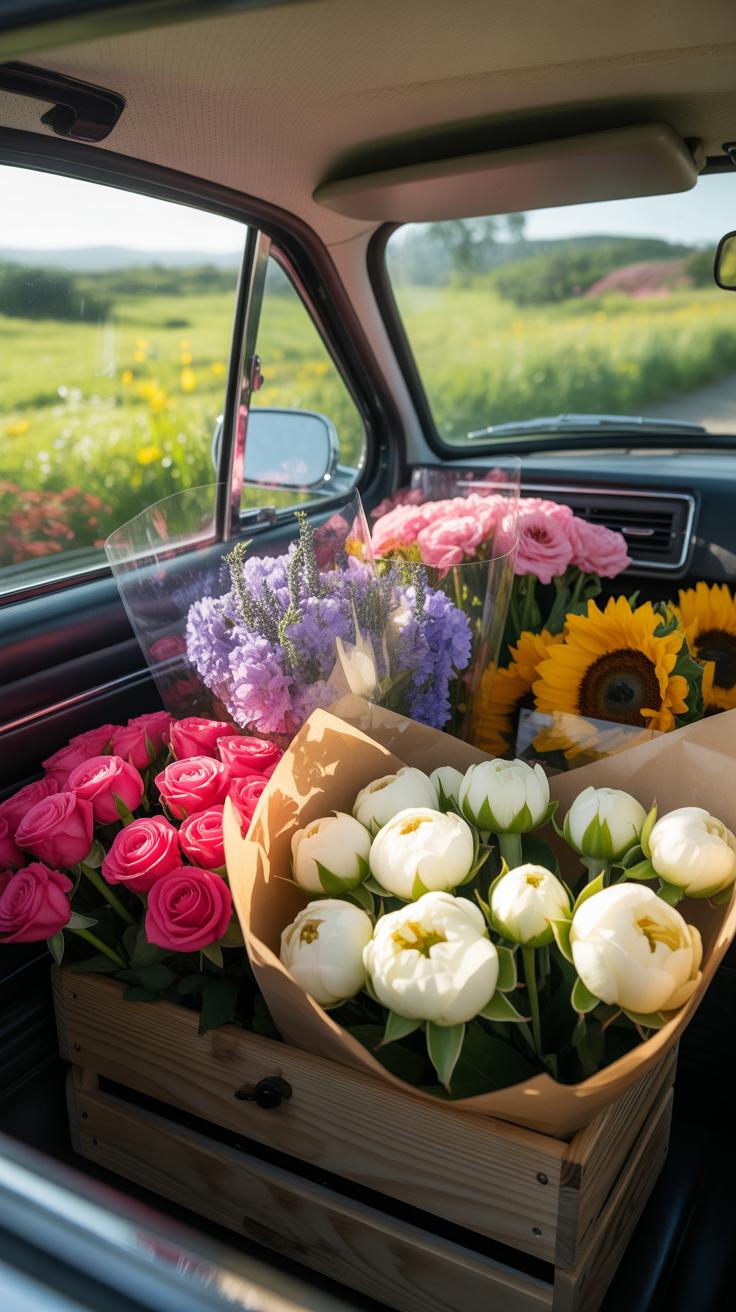
Why Direct Sunlight And Heat Build Up Are A Flower’S Biggest Enemy In A Car
Heat accelerates the biological clock of a cut flower. High temperatures increase the rate of transpiration, causing the bloom to lose moisture faster than its stem can absorb it. A car acts like a greenhouse, trapping solar radiation and raising internal temperatures rapidly. When flowers get too hot, their cells break down and stems lose structural integrity. This leads to permanent wilting.
Direct sunlight causes localized tissue damage through UV exposure and heat. Even if your car feels cool, light hitting the petals can scorch them within minutes. Sunlight also warms the water in your transport containers. Warm water holds less dissolved oxygen and encourages rapid bacterial growth. Bacteria block the vascular tissues of the stem. This prevents the flower from drinking and causes the head to droop.
Simple Steps To Keep Your Car Cool And Your Flowers Fresh During The Ride
Preparation is the only way to ensure survival during transport on hot days. You must manage the internal climate of your vehicle before loading any perishables. Lowering the temperature of the cabin prevents the initial heat shock that kills delicate blooms. Use the air conditioning system to create a stable environment. Focus on blocking light and maintaining air circulation without hitting the flowers directly.
- Pre-Cool The Vehicle: Run your air conditioner for at least ten minutes before loading. A hot interior will wilt flowers instantly upon contact. Aim for a cabin temperature between sixty and sixty-five degrees Fahrenheit. This mimics a professional floral cooler environment and stabilizes the plant tissue.
- Use Window Shades: Place reflective sunshades on windows to block direct rays. Even tinted glass allows enough solar energy through to damage petals. Physical barriers prevent the greenhouse effect from raising the water temperature in your buckets. Always prioritize shade over aesthetic placement inside the car.
- Avoid The Trunk: Never place flowers in a car trunk during summer. Trunks lack air circulation and trap extreme heat from the exhaust and road. Use the floor of the back seat instead. This area stays coolest because it is away from glass and receives better flow from floor vents.
- Monitor Air Flow: Keep air conditioning vents pointed away from the blooms. Direct cold air strips moisture from the petals and causes dehydration. You want the ambient air to stay cold without a harsh breeze hitting the flowers. Set the system to recirculate to maintain the low temperature efficiently.
- Hydration Maintenance: Add ice cubes to the transport water to keep it chilled. Cold water slows down the metabolic rate of the flower and inhibits bacterial blooms. Check water levels if the trip exceeds thirty minutes. Keeping the stems deeply submerged in cold liquid offsets the moisture loss caused by the warm cabin air.

Constant temperature management is your primary goal for a successful delivery. Small changes in heat can ruin hours of work in a matter of miles. Treat your car like a mobile refrigerator to protect your investment. If you must stop, never leave flowers in a parked car without the engine running. Heat levels spike to dangerous levels within five minutes of turning off the cooling system.
How To Ship Flower Arrangements Safely Through Courier Or Mail Services
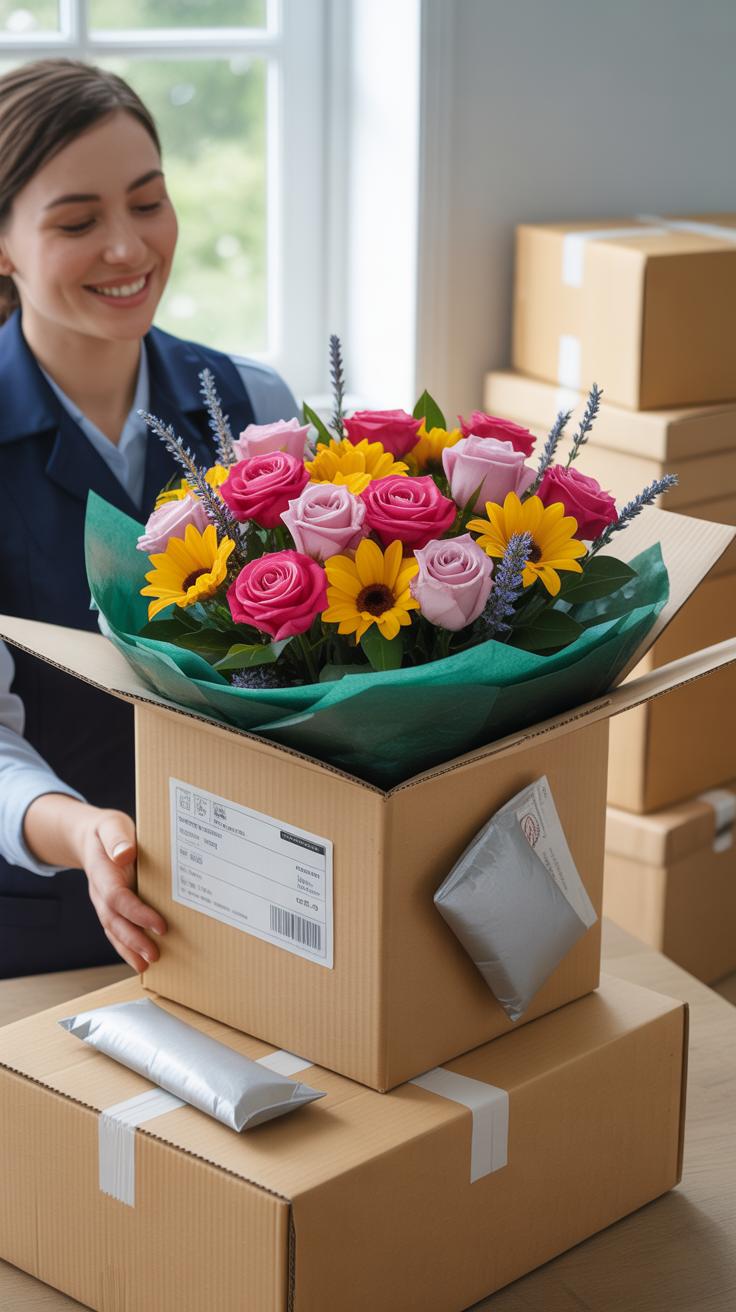
Choosing The Right Shipping Method And Packaging For Cut Flowers
Shipping flowers requires overnight or next-day delivery services. Standard ground shipping takes too long and causes total product loss. Choose a carrier with a proven refrigerated logistics chain for large orders. For small batches, use heavy-duty corrugated cardboard boxes. These boxes must resist internal moisture and external crushing. Corrugated fiberboard provides the necessary structural integrity to protect delicate blooms during transit.
Secure your flowers inside the box using cable ties or specialized anchor points. Movement is the primary cause of petal bruising and broken stems. Place the arrangements in a central position to avoid contact with the box walls. Use insulated liners to maintain a stable internal temperature. These liners shield the flowers from extreme heat or cold. Professional shippers use wax-coated boxes to prevent the cardboard from softening.
How To Prepare Flowers For Shipping To Minimize Damage And Dehydration
Hydrate all flowers for at least twelve hours before packing. Stems must be fully turgid to survive the stress of travel. Use hydration seals or water-soaked floral foam to provide a continuous water source. Wrap the base of the stems in plastic bags to prevent leaks. Leaking water destroys the shipping container and compromises the structural integrity of the box. Secure the bags with rubber bands.
Apply a transit spray to the foliage to reduce moisture loss through transpiration. This wax-based coating seals the stomata and keeps the plant hydrated longer. Pack the flowers tightly enough to prevent shifting but loosely enough to allow airflow. Use glassine paper to wrap individual bloom heads. This prevents friction and protects the delicate petals from tearing. Professional shippers avoid using plastic wrap because it traps heat and causes rot.
Frequently Asked Questions

Why do flowers often wilt so quickly during a short car ride?
Flowers are incredibly sensitive to temperature changes and dehydration. Even a short trip can lead to drooping if the stems lose access to moisture or are exposed to direct sunlight through a window. Utilizing professional flower transport tips, such as keeping the vehicle cool and shielding blooms from the sun, ensures your bouquet arrives looking fresh and vibrant rather than stressed and dehydrated before you even reach your destination.
What’s the best way to keep flowers hydrated during a long-distance move?
For trips longer than a few hours, wrap the stem ends in a damp paper towel and cover them with a small plastic bag secured with a rubber band, similar to how florists ship flowers. This keeps the stems from drying out even without a vase of water. Keep the bundle upright in a box or sturdy container so the blooms aren’t crushed during transport.
Should I trim flower stems again after they arrive at their destination?
Yes, re-cutting the stems at an angle once you arrive helps flowers rehydrate faster, since travel time can cause the cut ends to seal over and reduce water uptake. Trim about half an inch off each stem under running water if possible, then place them in fresh water right away. This simple step noticeably extends how long the arrangement stays fresh after transport.