What Is A Floral Design Certification And Why It Matters For Your Home
Understanding The Purpose And Value Of Floral Design Certification
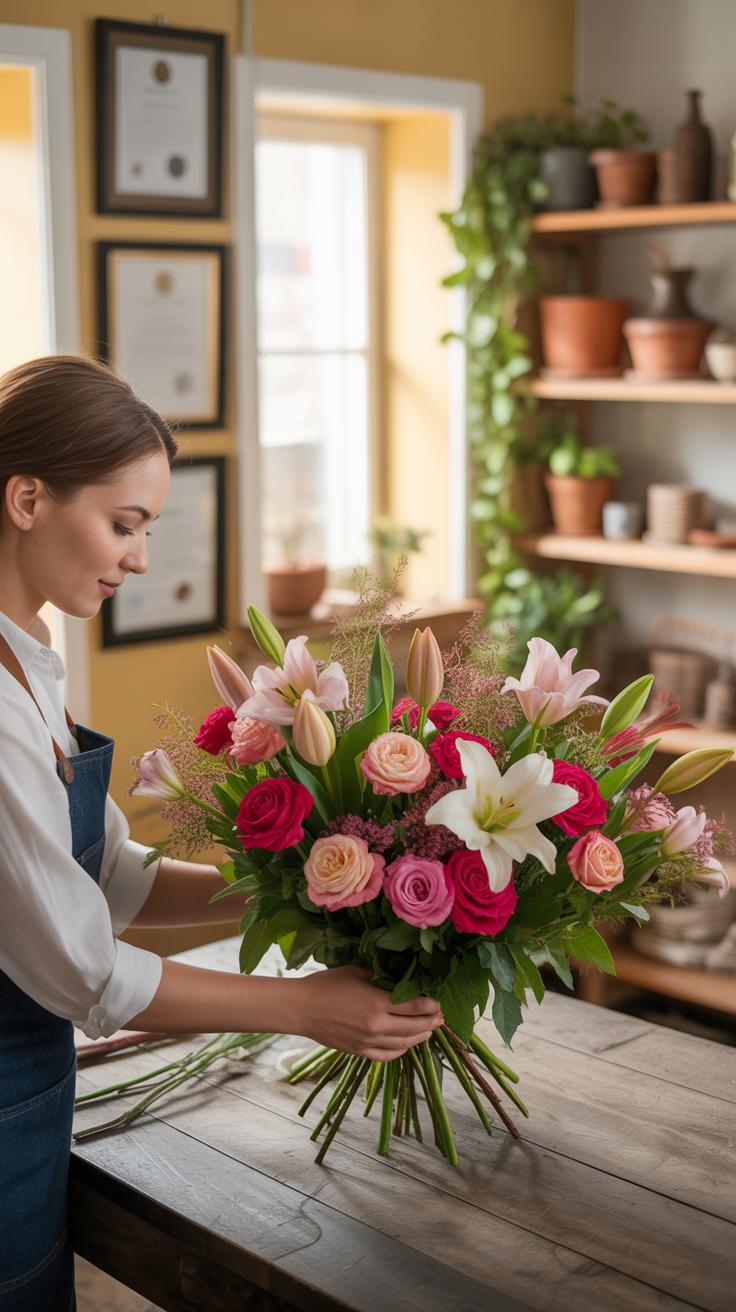
A floral design certification proves a person understands botanical science and structural mechanics. Organizations like the American Institute of Floral Designers set these standards. They require mastery of processing, hydration, and tool safety. This training moves beyond hobbyist arranging. It focuses on the physics of keeping plants alive and stable. You learn to handle delicate stems without causing premature wilting or structural collapse.
The certification process validates your knowledge of color theory and botanical taxonomy. It ensures you understand how different species interact in a single vessel. Professionals use these skills to create arrangements that last longer and look balanced. For a homeowner, this knowledge prevents wasted money on dying flowers. It provides the technical foundation needed to execute complex designs seen in high-end galleries and luxury residences.
How Certification Elevates Your Home Aesthetic Beyond Basic Decorating
Certified techniques apply formal principles like the Golden Ratio to interior spaces. This creates visual harmony that simple grocery store bouquets lack. You learn to use negative space and focal points to direct the eye. Proper mechanics allow for architectural shapes that defy gravity. These methods turn plants into intentional art pieces. Your home gains a polished look that feels curated rather than accidental or cluttered.
Technique-driven design respects historical movements like Ikebana or English Garden styles accurately. Certification teaches you to select materials based on texture and line rather than just color. This results in sophisticated arrangements that complement your furniture and architecture. You stop following fleeting trends and start using proven design pillars. Expert knowledge allows you to manipulate proportions to fit specific rooms. This scales your decor to the actual size of your living space.

Core Principles Of Floral Design Every Aspiring Decorator Should Know
The Seven Foundational Design Principles: Balance, Proportion, Rhythm, And More
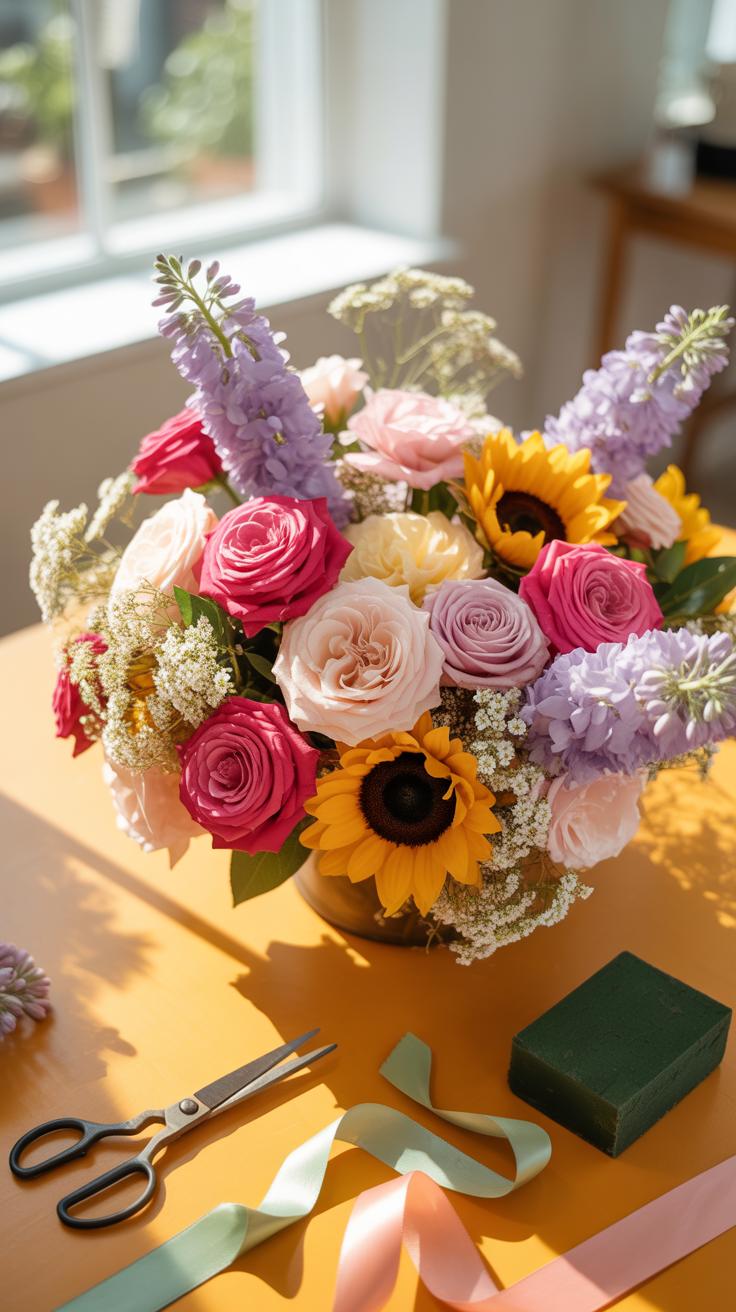
Professional floral design relies on seven core pillars. Balance ensures the arrangement does not tip visually or physically. Symmetrical balance offers formality while asymmetrical balance creates modern tension. Proportion dictates the relationship between the flowers and the container. Scale compares the total arrangement size to the surrounding room environment. These physical rules prevent structural failure and ensure the design looks intentional.
Dominance establishes a clear focal point to capture the eye immediately. Rhythm uses repetition or graduation to move the viewer through the entire piece. Contrast prevents monotony by placing different textures or colors near one another. Harmony binds every element into a single cohesive unit. Understanding these mechanical laws allows a decorator to replicate high-end floral styles without relying on guesswork or luck.
How Design Principles Directly Influence The Mood And Style Of A Room
Floral arrangements act as architectural tools within a home. A tall arrangement with strong vertical lines increases the perceived height of a low ceiling. Using light colors and airy textures creates a sense of openness in small spaces. Conversely, dense and low arrangements ground a large room. The physical structure of the flowers dictates how guests interact with the furniture and the layout.
Symmetry reflects classical and traditional design movements. It signals order and stability. Radical asymmetry aligns with minimalist or industrial styles. It suggests movement and energy. By choosing specific design principles, you control the emotional tone of the living space. Proper execution of these techniques turns simple plants into deliberate decor. This intentionality is the mark of a certified floral professional.
Building Your Floral Design Study Guide From Scratch
Key Topics And Subject Areas Your Personal Study Guide Should Cover
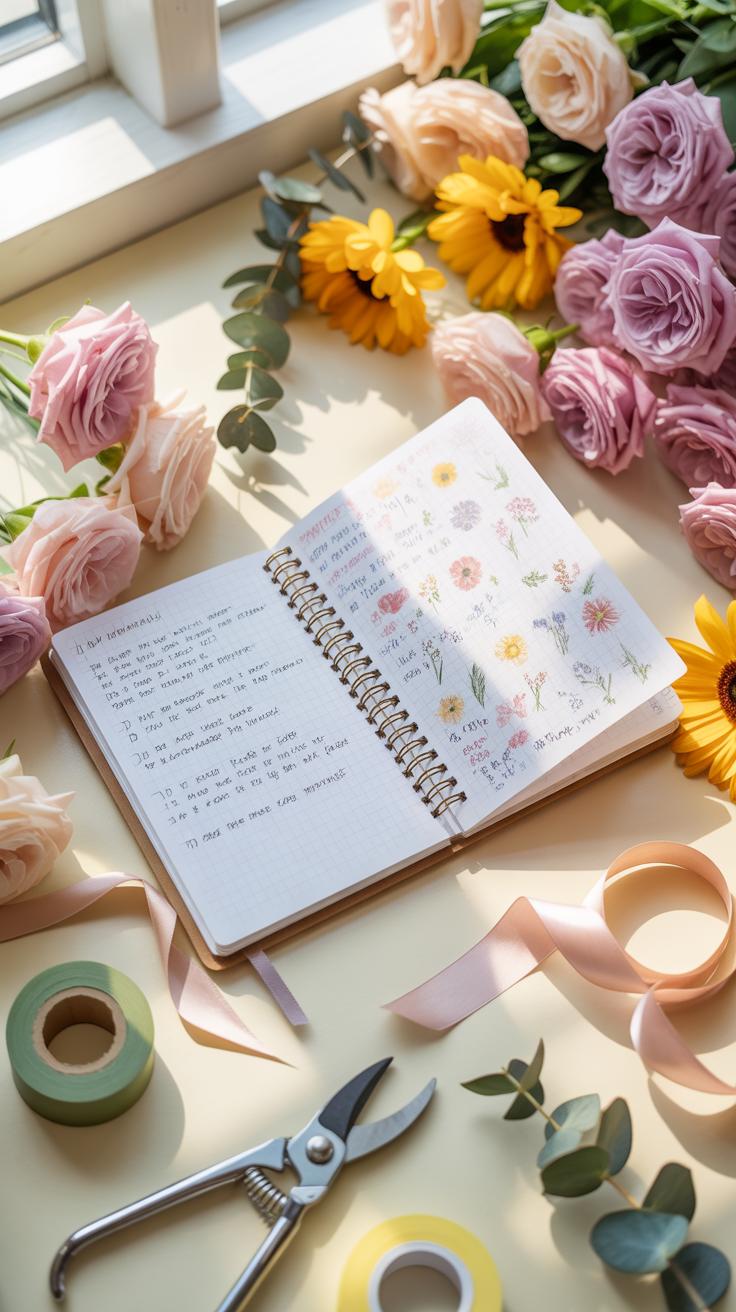
Mastering floral design requires a firm grasp of botanical science and artistic theory. Your guide must prioritize plant physiology and post-harvest care to ensure longevity. You need to understand how water uptake works and why specific pH levels matter for different species. Without this technical foundation, your arrangements will fail quickly. Professional certification depends on your ability to keep product alive and marketable.
Focus your study on the elements and principles of design. These include balance, proportion, rhythm, and dominance. You must also learn the mechanics of construction using foam, wire, and tape. Study historical styles from the Baroque period to modern minimalism to build a versatile skill set. Accurate identification of at least one hundred common floral varieties is mandatory for any serious professional exam.
Flowers always make people better, happier, and more helpful; they are sunshine, food and medicine for the soul.
Recommended Textbooks, Workbooks, And Online Resources For Self Study
The American Institute of Floral Designers publishes the most authoritative manual in the industry. This book serves as the primary reference for terminology and high-level techniques. You should also source textbooks used in collegiate horticulture programs. These books provide the chemical and biological facts behind plant health. Reliable data prevents expensive mistakes when handling rare or sensitive tropical flowers and woody stems.

Supplement your reading with digital resources from accredited floral schools. Look for video demonstrations that show mechanical assembly in real time. Pay close attention to European masters who specialize in sustainable techniques without floral foam. These modern methods are becoming standard requirements for global certification. Use workbooks that offer practice tests on color theory and geometry to prepare for the rigorous written portions of professional exams.
How To Learn Floral Design Paths From Beginner To Certified Designer
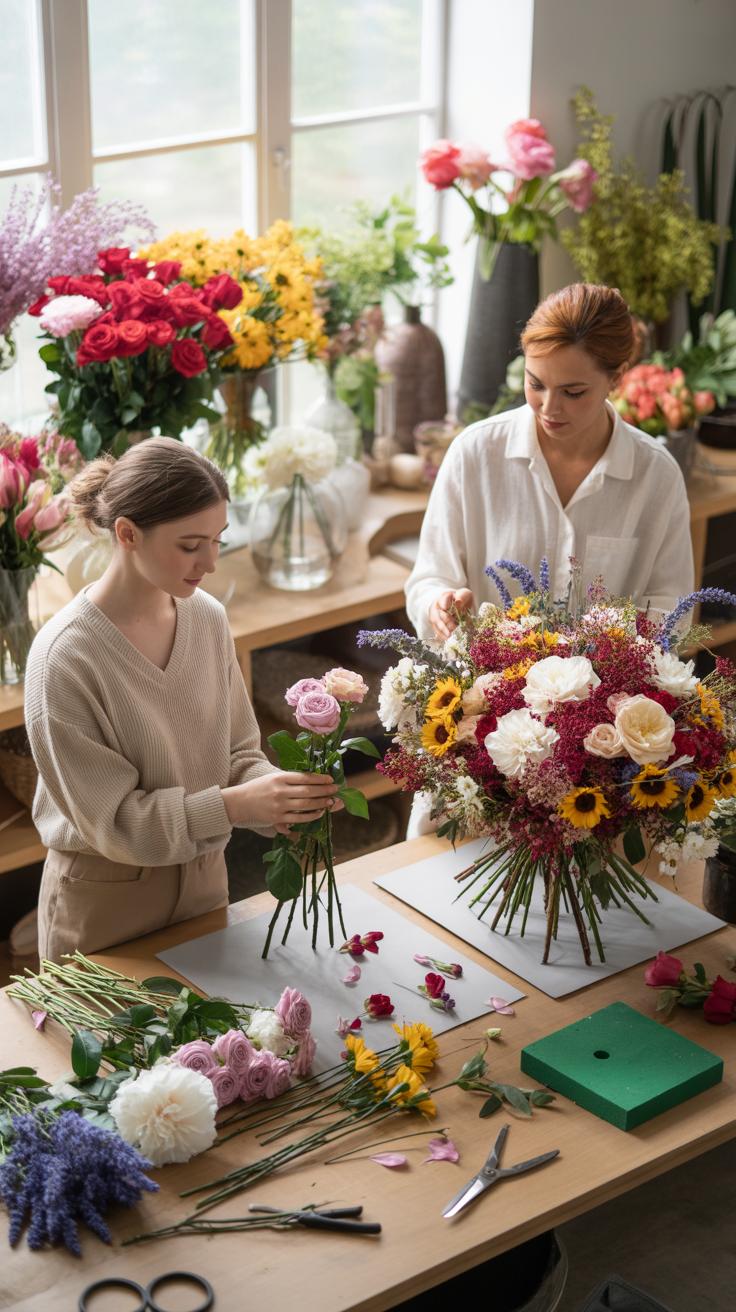
Comparing Self Taught Learning Community Classes And Accredited Programs
Self-taught learning utilizes books and online videos to master basics. This path offers flexibility and low initial costs. You control the pace and focus on specific styles like Ikebana or English Garden. However, this method lacks professional feedback. You might develop poor habits in stem placement or hydration. Researching botanical names and seasonal availability remains a solo task without expert guidance.
Community classes provide hands-on experience in a social setting. Local florists often teach these sessions to share practical shop skills. You learn to handle tools and prepare standard inventory correctly. Modern accredited programs offer a rigorous curriculum for serious careers. Organizations like the American Institute of Floral Designers set high standards. These programs lead to recognized credentials through structured testing and refined theory.
What To Expect During Hands On Practice Sessions And Skill Assessments
Hands-on sessions focus on technical mechanics and speed. You begin by stripping foliage and cutting stems at sharp angles. Instructors watch your use of floral foam, wire, and tape. You must secure heavy blooms without visible mechanics. Accuracy in proportions ensures the arrangement stays balanced and stable. Physical repetition builds the muscle memory required for high-volume production in retail environments.
Skill assessments require you to create specific designs under time pressure. Judges evaluate your work based on balance, focal points, and color harmony. You must follow strict guidelines for bridal bouquets or funeral sprays. Evaluators look for clean work areas and minimal waste. Success depends on your ability to apply geometric principles to organic materials. Proper execution demonstrates your readiness for professional certification and advanced design work.
A Quick Floral Art Guide To Essential Tools And Materials
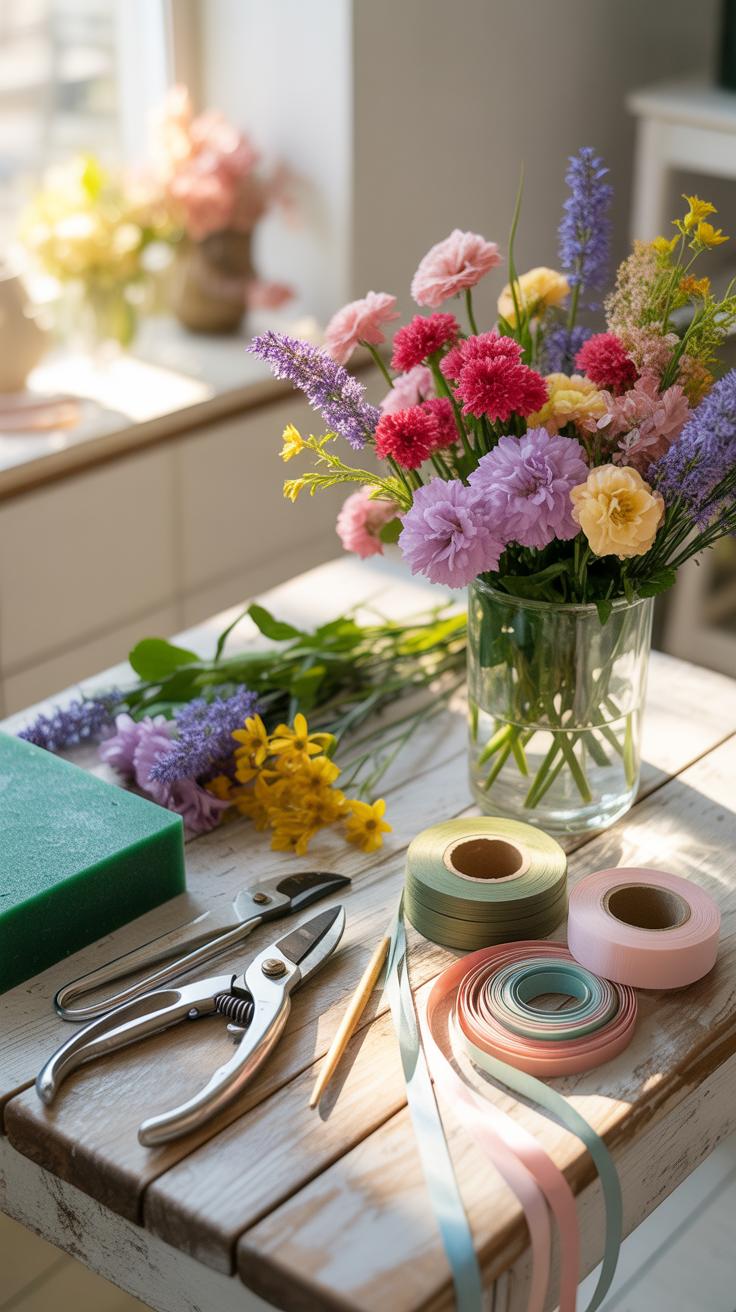
Must Have Tools Every Home Floral Designer Needs In Their Kit
Professional floral design requires specific hardware to ensure stem health and structural integrity. You cannot use standard household scissors because they crush the vascular system of the flower. This prevents water uptake and kills the bloom prematurely. Invest in high carbon steel blades that provide a clean bypass cut. These tools form the backbone of your technical kit for any home arrangement.
- Bypass Pruners: Use these for thick woody stems and heavy branches. The sharp blade passes by a thick base to create a clean slice without bruising the plant tissue. This tool is essential for structural shrubbery and winter boughs.
- Floral Snips: These lightweight pointed scissors handle delicate soft stems and fine precision work. They allow you to reach deep into an arrangement to remove dead leaves or spent blooms without disturbing the entire design. Keep them sharp and rust-free.
- Floral Tape: This wax-coated paper tape becomes sticky when stretched. Use it to create grids over vase openings or to bind stems together for corsage work. It provides mechanical support that remains hidden under foliage or inside the container.
- Stem Stripper: This tool removes thorns and excess foliage from rose stems quickly. Eliminating leaves below the water line prevents bacterial growth and extends vase life. Use a metal or plastic version depending on the fragility of the flower variety.
- Chicken Wire: Modern designers prefer coated poultry netting over green foam for environmental reasons. Crumple the wire into a ball and place it inside your vessel. It creates a flexible internal skeleton that holds stems at specific angles reliably.
Organization of your workspace determines the speed and quality of your floral assembly. Keep a sharp floral knife nearby for paring stems at a forty-five-degree angle. This maximizes the surface area for hydration. Hygiene is equally important so maintain a dedicated bucket for waste. Clean your tools with isopropyl alcohol after every project to prevent the spread of pathogens between different plant batches.
Choosing The Right Flowers, Foliage, And Filler Blooms For Home Arrangements
Successful home arrangements rely on a balance of three distinct plant categories. Mass flowers provide the primary focal point and define the color palette of the piece. Use sturdy varieties like hydrangeas or garden roses for these central roles. Line flowers like snapdragons or gladiolus establish height and determine the overall silhouette. Select healthy stems with firm petals and no visible bruising or spotting.

Foliage and filler blooms complete the design by hiding mechanics and adding texture. Greenery creates a lush backdrop that makes colors pop. Use eucalyptus or ferns to provide various shades of green and different leaf shapes. Filler flowers like baby’s breath or waxflower occupy the negative space between larger blooms. This layering technique mimics natural growth patterns found in high-end European floral styles and classic Victorian arrangements.
Mastering Floral Design Basics For Beautiful Everyday Home Arrangements
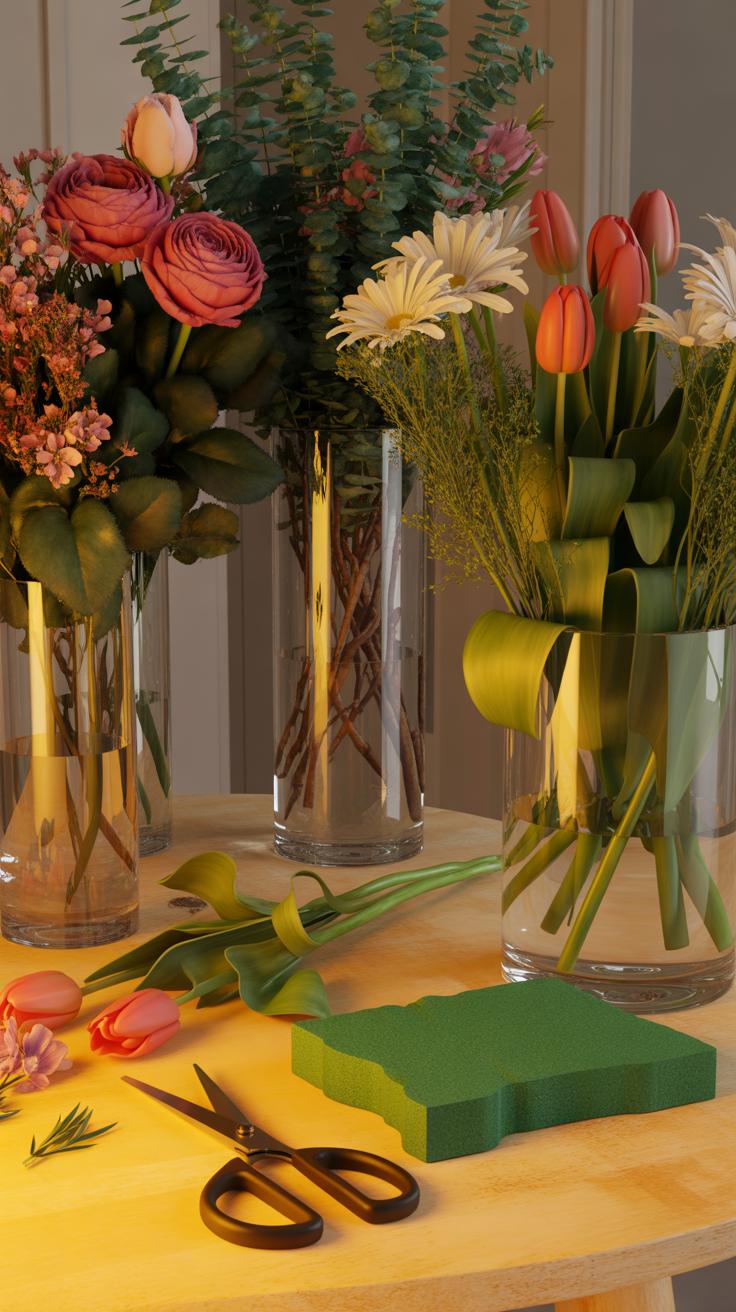
Understanding Color Theory And Seasonal Palettes In Home Floral Design
Color theory dictates the mood of a room. Use the color wheel to select flowers. Complementary colors sit opposite each other and create high contrast. Analogous colors sit next to each other and provide a calm look. Monochromatic schemes use different shades of one single color for a clean appearance. Professional designers use these rules to ensure home arrangements look intentional and organized.
Seasonal palettes rely on local flower availability. Spring arrangements often feature cool pastels like lavender and soft pink. Summer designs use bright, high-energy tones like yellow and orange. Fall shifts toward deep jewel tones and earthy browns. Winter focuses on whites, dark greens, and deep reds. Matching colors to the current season mimics nature. This approach makes your home decor feel current and grounded in time.
Working With Scale, Texture, And Focal Flowers To Create Visual Impact
Scale determines how an arrangement fits its environment. A massive bouquet overwhelms a small side table. A tiny vase looks lost on a large dining surface. Your arrangement should usually stand one and a half times the height of its container. Balance the volume of the blooms with the size of the room. Proper scale ensures the floral design improves the space without crowding the inhabitants.

Texture adds depth and keeps the eye moving. Combine smooth petals with rough berries or feathery greens. Focal flowers act as the center of attention. These are usually large or unique blooms like peonies or lilies. Place them low and central to create a landing spot for the viewer. Surround them with smaller filler flowers and foliage. This hierarchy creates a professional look and prevents the design from appearing flat.
Flower Arrangement Instructions And Rules For A Polished Interior Look
Step By Step Flower Arrangement Instructions For Common Home Settings
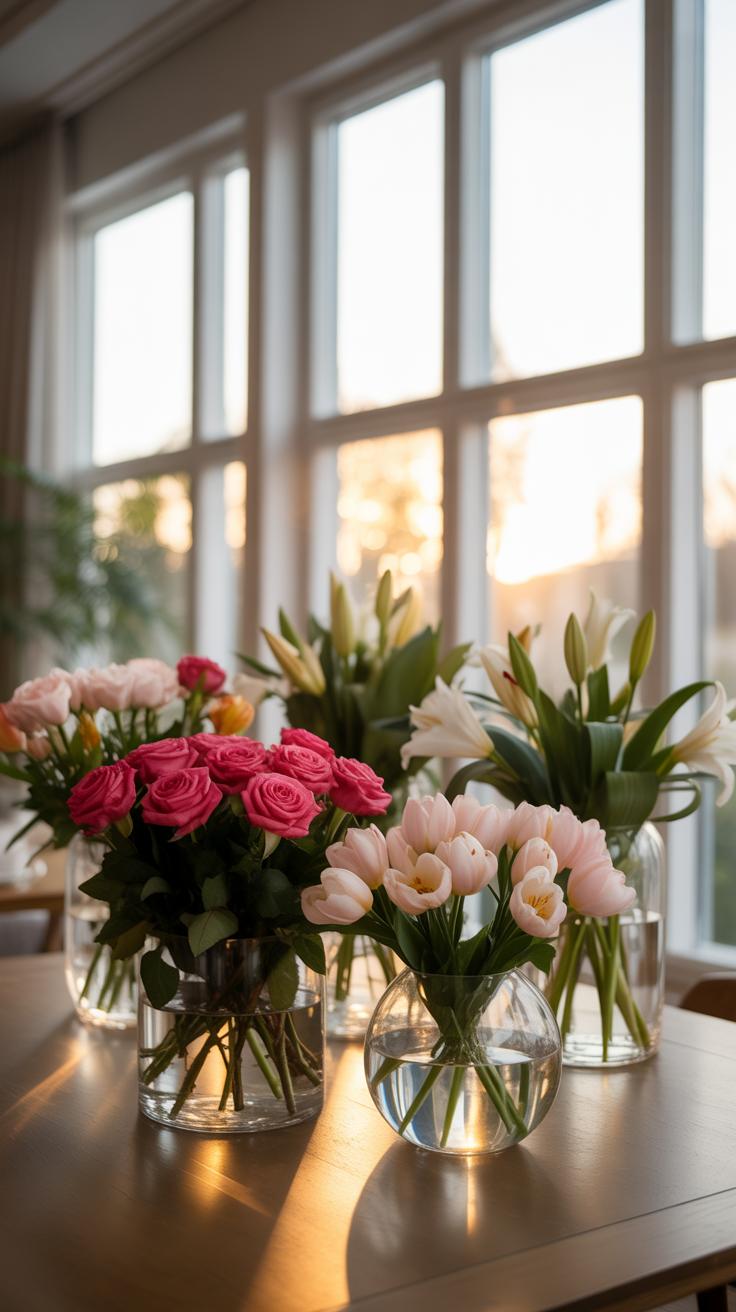
Interior floral design requires a systematic approach to ensure stability and visual balance. You must prepare your vessel by cleaning it with bleach to kill bacteria. Use floral foam or a chicken wire grid for structural integrity. Always cut stems at a forty five degree angle under water. This prevents air bubbles from blocking hydration. Proper preparation ensures your home arrangements last longer and maintain their intended shape.
- Establish The Skeleton: Position your primary foliage or line flowers first to define the height and width of the arrangement. These branches or tall stems create the outer boundaries and set the overall scale for the specific room location.
- Add Focal Flowers: Place the largest or most vibrant blooms near the rim of the vase. This creates a center of gravity and draws the eye toward the heart of the design. Use odd numbers for a more natural appearance.
- Integrate Secondary Blooms: Fill the gaps between the focal flowers and the skeleton with medium sized blossoms. These Flowers provide texture and color transitions. Ensure they sit at different heights to create depth and interest within the display.
- Insert Filler Material: Use smaller sprigs like baby’s breath or waxflower to hide mechanics like foam or tape. This step removes empty spaces and makes the arrangement look dense and professional. Do not overstuff the container or you will lose the form.
- Final Inspection: Rotate the arrangement to check for holes or exposed wires. Add water to the vessel immediately and place it away from direct sunlight or ripening fruit. Check water levels daily to keep the flowers turgid and fresh.
Balance the arrangement against its surroundings. A dining table requires low profiles so guests can see each other. Entryway pieces should have more verticality to match the scale of the architecture. Use monochromatic schemes for modern rooms and varied palettes for traditional spaces. Adjusting the scale based on the room prevents the flowers from looking too small or overwhelming the furniture.
The Unwritten Flower Arrangement Rules That Professional Designers Always Follow
Professional designers use the golden ratio to create pleasing proportions. The flowers should be roughly one and a half times the height of the container. This rule prevents the arrangement from looking top heavy or stunted. If the vase is tall, the flowers must extend upward. If the bowl is low, the horizontal spread must provide the necessary visual weight to balance the base.
Color theory dictates the mood of a room. Use complementary colors like blue and orange for high energy spaces. Use analogous colors like red and pink for a calm effect. Professionals always remove any leaves that fall below the water line. Decaying foliage creates bacteria that kills the blooms prematurely. Following these technical standards ensures your home arrangements mirror the quality found in high end floral studios.
Understanding Flower Mechanics And Floral Mechanics In Design Work
How Flower Mechanics Control Stem Placement, Support Structures, And Water Flow
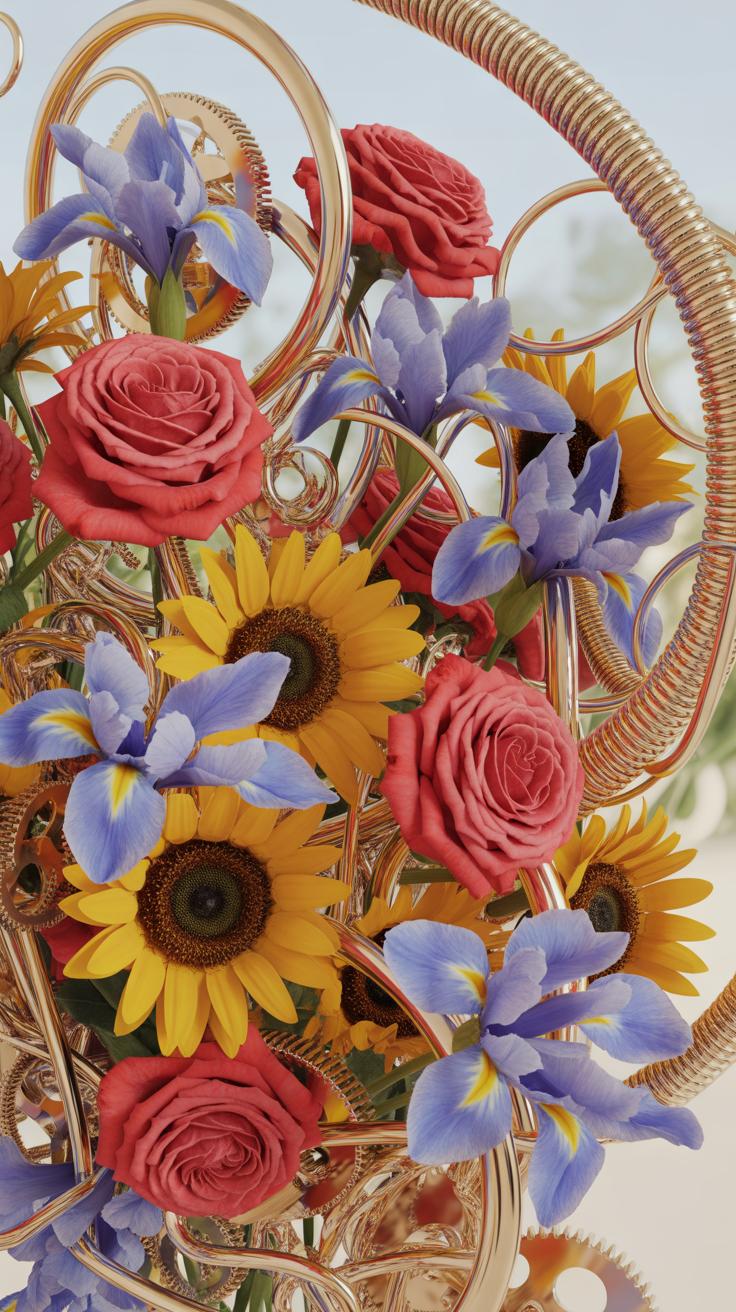
Flower mechanics dictate how a designer manages the physical weight and hydration of a plant. Proper support structures prevent stems from collapsing under their own mass. These internal systems ensure every bloom reaches its designated focal point while maintaining access to water. You must understand gravity and stem tension to build a stable arrangement. Faulty mechanics lead to wilted flowers and structural failure.
Hydration depends on clear pathways within the stem. Blocking these channels with poor foam placement or crushed stems kills the design. Strategic mechanics allow for maximum water flow even in complex shapes. You use these tools to manipulate the angle of a flower without snapping its neck. Control the foundation first to ensure the longevity of the installation. A stable base is the only way to achieve professional results.
Practical Floral Mechanics Techniques Including Foam, Wire, And Tape Methods
Modern designers use specific tools like floral foam, wire, and waterproof tape to secure stems. Foam provides a water reservoir and holds stems at precise angles. You must soak it correctly to avoid dry pockets that starve the plants. Wire reinforces weak stems and allows you to create curves that do not occur in nature. Use different gauges based on the flower weight and stem thickness.

Tape creates a grid across the mouth of a vase for structural integrity. This prevents stems from shifting or falling to the sides of the container. It is a vital technique for heavy blooms like hydrangeas or lillies. Professional certification requires mastery of these physical bonds. You cannot rely on luck for high-end events. These mechanics ensure the arrangement stays exactly where you placed it during transport.
Choosing The Right Floral Design Certification Program For Your Goals
Top Accredited Floral Design Certification Bodies And What Their Programs Offer
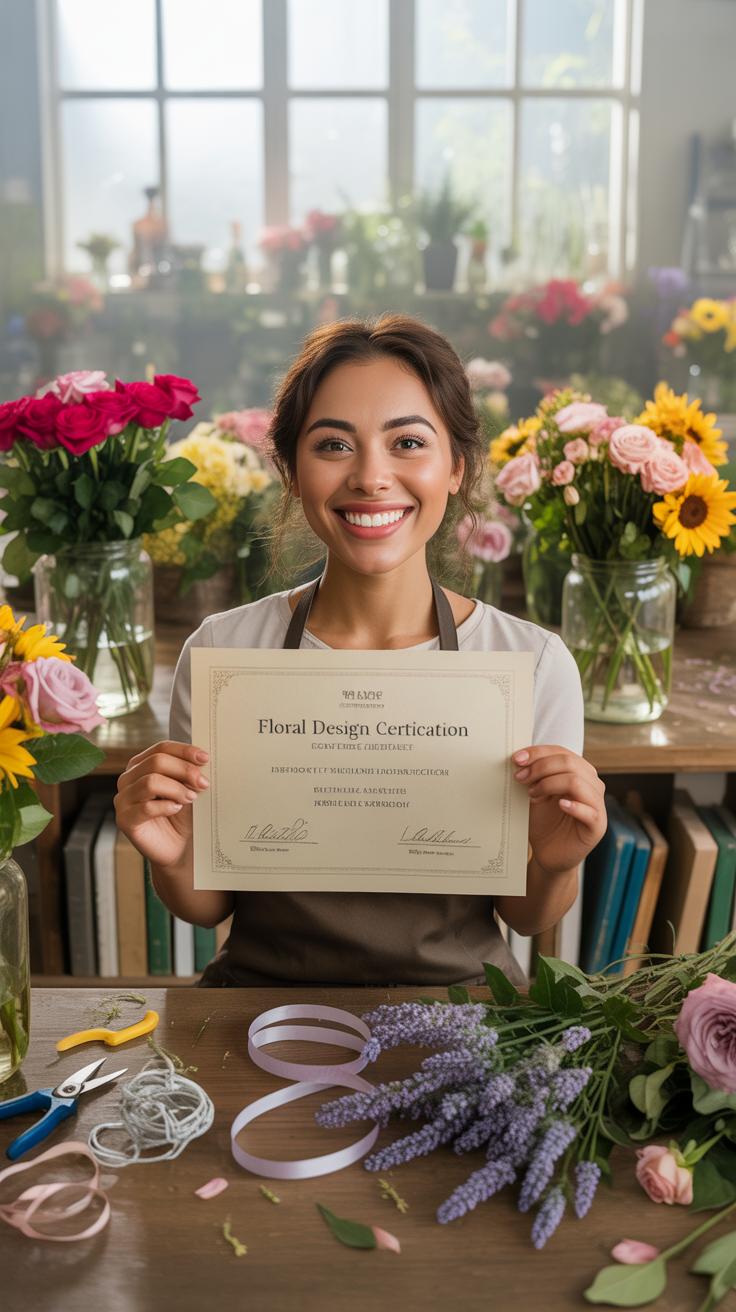
The American Institute of Floral Designers sets the highest industry standard. Their CFD credential requires passing a rigorous peer evaluation process and a written exam. This program focuses on advanced mechanics and color theory. It ensures you understand the geometry of design. AIFD certification carries global weight because it proves technical mastery. It moves beyond basic hobbyist skills into professional level execution.
The European Master Certification program offers a different tactical approach. It emphasizes European design philosophy and the deeper reasons behind creative choices. This program uses a three phase system to build expertise in classical and modern styles. Students learn to manipulate organic materials with precision. These certifications provide a structured framework for learning. They eliminate guesswork by teaching proven botanical principles and proper structural engineering.
How To Apply Your Certification Skills To Consistently Style Your Home With Confidence
Certification training teaches you to analyze your home like a gallery space. Use the elements and principles of design to choose the right vessel for each room. Acknowledge the scale of your furniture before selecting your stems. Professional training helps you understand focal points and rhythm. You will stop buying random flowers and start selecting materials with a specific architectural purpose for your interior.
Mastering mechanics ensures your home arrangements last longer and look stable. Use grid techniques or floral foam substitutes to keep stems in place. This prevents the messy look of sagging flowers. Apply your knowledge of ethylene gas and water pH to extend the life of your displays. You now have the tools to create professional grade centerpieces. Clear technical skills allow you to maintain a high design standard every day.
Frequently Asked Questions

Is a floral design certification necessary for decorating my home?
While not legally required for hobbyists, obtaining a credential provides the technical foundation needed to create professional-grade arrangements. This Floral Design Certification Guide highlights how structured learning teaches you about color theory, stem placement, and flower longevity. Mastering these skills allows you to transition from simple grocery store bouquets to sophisticated, high-end installations that elevate your home’s interior aesthetic with confidence and artistic precision.
How do I choose the right program for my personal style?
To find the perfect fit, look for courses that emphasize the specific aesthetic you admire, such as Ikebana or modern European styles. Use a comprehensive Floral Design Certification Guide to compare curriculums, ensuring they cover both mechanics and artistry. Check if the instructors offer hands-on feedback and updated design trends. Selecting a program that aligns with your personal taste ensures your home decor remains stylish and uniquely yours.
Are there affordable ways to get certified in floral design?
Absolutely! Many reputable organizations offer tiered learning options to fit various budgets. You can start with affordable online introductory modules before investing in advanced workshops or full masterclasses. Many digital programs provide the same level of expertise as in-person schooling at a fraction of the cost. This accessibility allows you to gain expert skills and beautify your living space without a massive upfront financial commitment.