
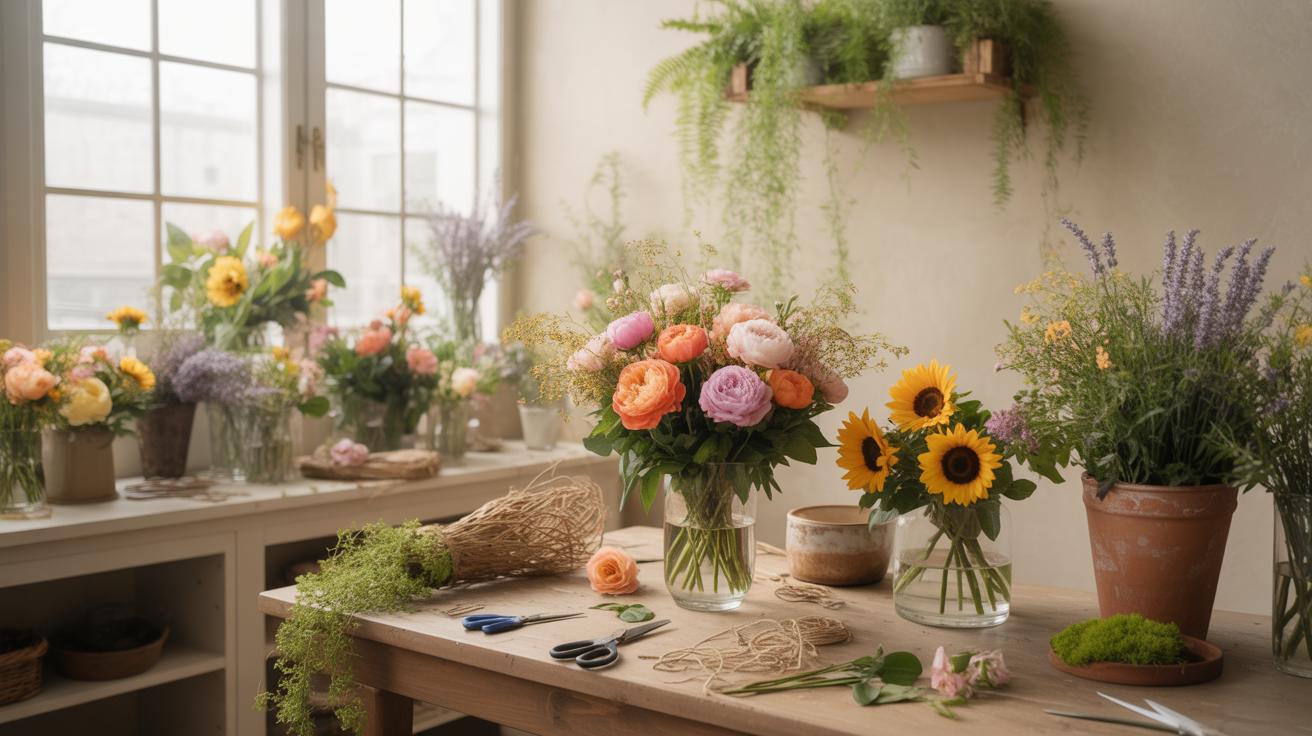
Understanding The Foundation Of Great Floral Studio Setup Ideas
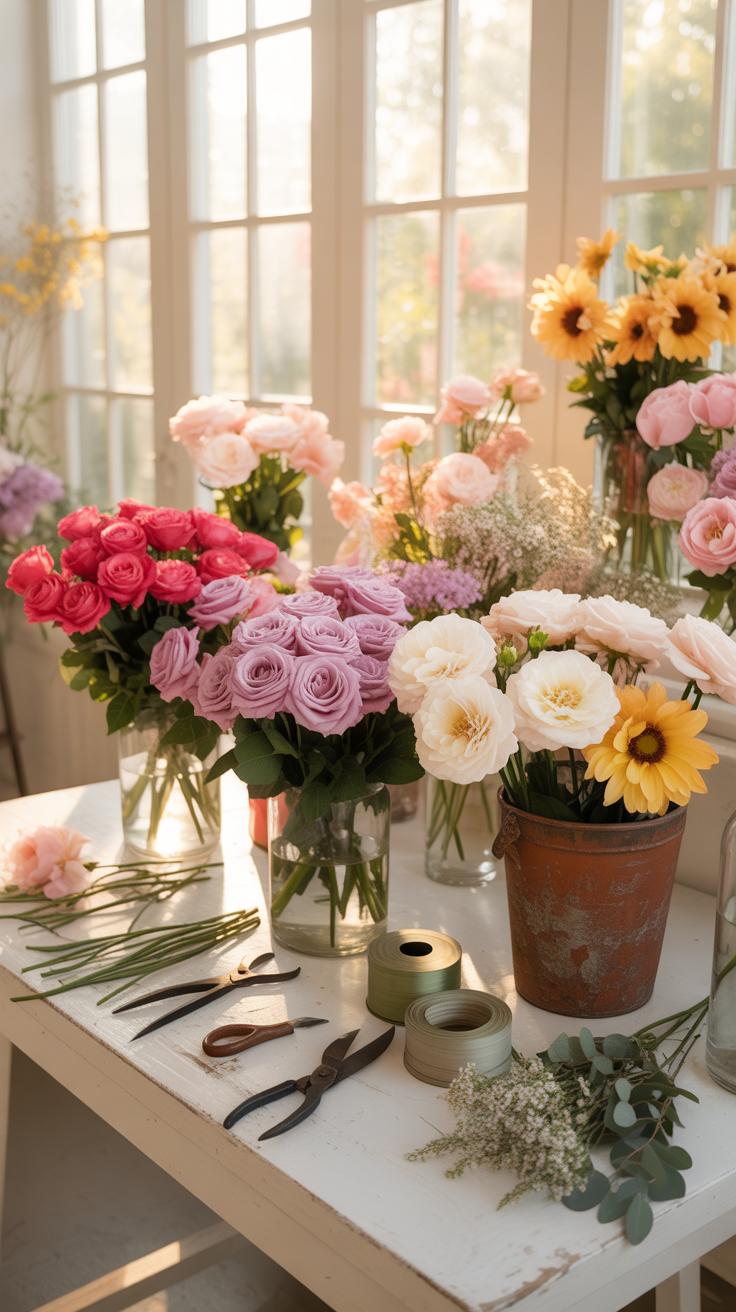
Why A Thoughtful Studio Layout Sets The Tone For Your Entire Floral Brand
Your studio layout functions as the physical manifestation of your brand identity. Clients judge your professional standards based on the organization of your workspace. A clean and intentional design communicates reliability and high value. Messy environments suggest poor management and lack of care. You must treat the floor plan as a marketing tool that reinforces your market position to every visitor.
Strategic positioning of workbenches and storage units influences your creative output. A well planned space allows you to showcase specific design movements like Mid-Century Modern or Minimalism. These choices tell customers exactly what style of floral art you provide. You build trust by showing that you respect the medium and the process. Every square foot should reflect the precision you bring to your arrangements.
How Workflow Efficiency And Aesthetic Vision Work Together In A Floral Workspace
Efficiency is the pillar of a profitable floral business. You cannot separate the look of your studio from how it functions during a rush. A smart layout places the cold storage near the processing station to reduce movement. This saves time and keeps product fresh during assembly. You must align your aesthetic goals with the physical realities of moving water and heavy buckets.
Industrial design principles focus on removing friction from the production line. High quality studios use materials like stainless steel or sealed concrete for durability and quick cleaning. These surfaces look professional while meeting the strict demands of floral work. You create a visual sense of calm by hiding necessary clutter behind clean lines. Good design ensures that your beauty does not come at the cost of your speed.

Florist Studio Workspace Home Designing A Productive Space At Home
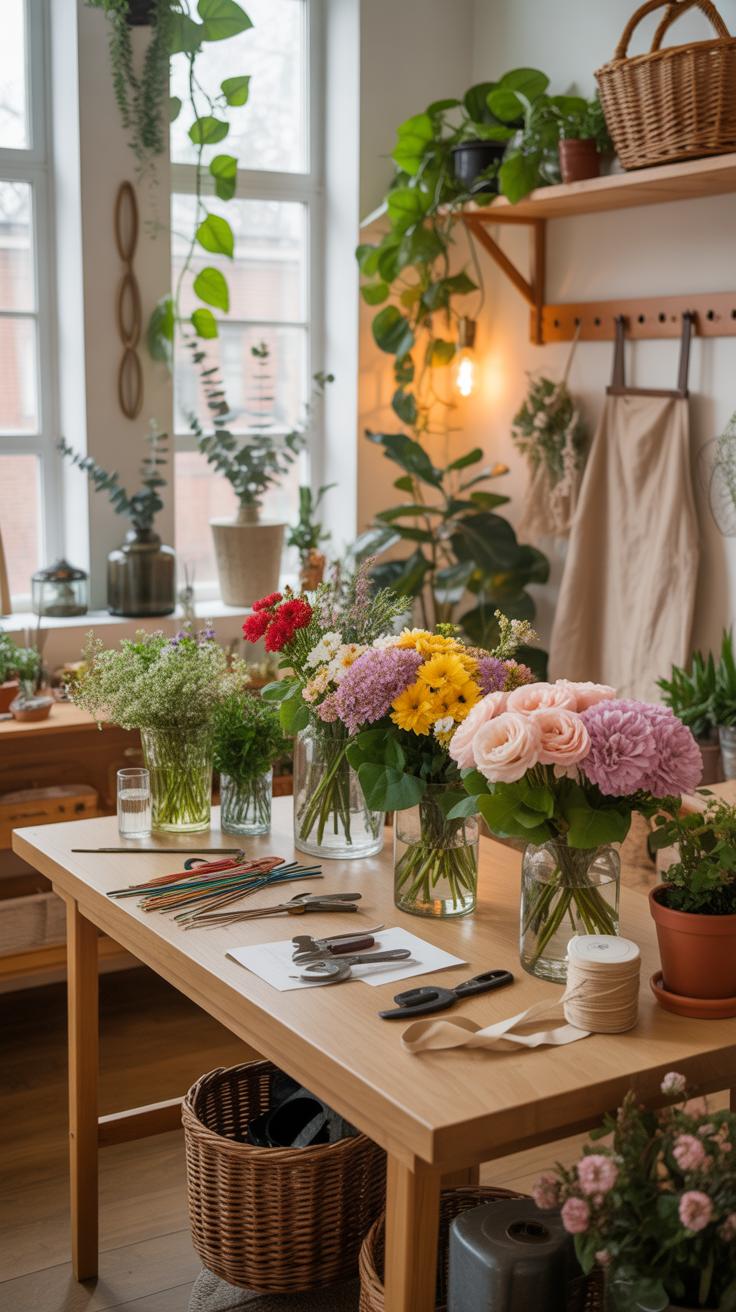
Choosing The Right Room Or Dedicated Area For Your Home Floral Studio
Select a room with northern light exposure if possible. Northern light stays consistent throughout the day. This prevents harsh shadows and keeps your flowers from wilting under direct sun heat. You need a space with non porous flooring like tile or polished concrete. Floral work involves constant water spills and organic debris. Carpet or unfinished wood will rot or stain quickly in this environment.
Prioritize areas with easy access to a deep utility sink. Carrying heavy buckets of water across a house wastes time and increases spill risks. Ensure the room has proper ventilation to manage humidity and scent. High moisture levels lead to mold growth on petals and equipment. A garage or a converted walk out basement often provides the best thermal mass to keep flowers cool during summer months.
Balancing Personal Style With Professional Functionality In A Home Florist Workspace
Apply the principles of the Industrial Design movement to your home studio. Use stainless steel work benches for durability and hygiene. These surfaces resist bacteria and clean up faster than wood. Match your personal aesthetic through wall colors or shelving units. Keep the work zone strictly functional while using vertical space for decorative storage. This setup maintains a professional look for client consultations or social media content.

Invest in modular storage that fits your home interior. Use rolling carts to move projects out of the way when the workday ends. This physical separation prevents work from bleeding into your personal life. Choose neutral tones for your main work surfaces. Vivid colors can distort how you perceive the actual hues of the petals. A clean and organized space reflects a high level of technical skill and professional discipline.
Flower Shop Interior Creating An Inviting And Functional Retail Space
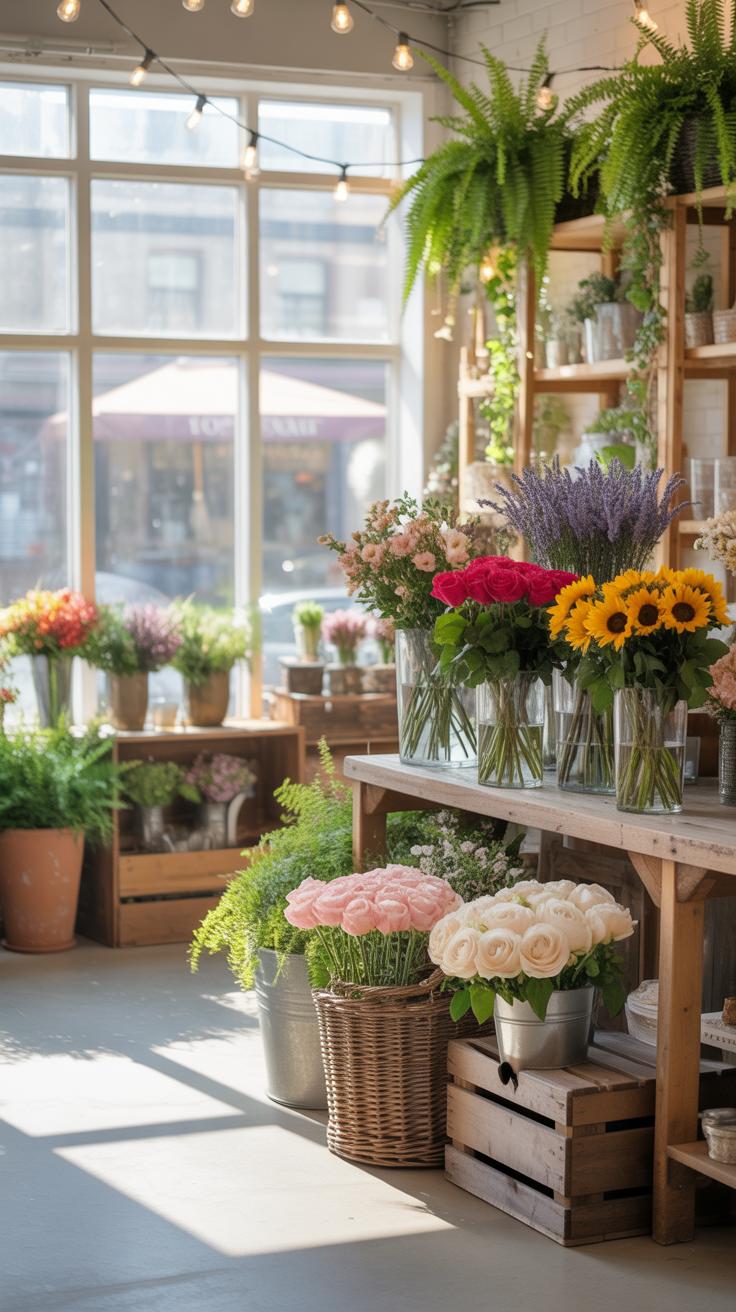
How To Use Colour, Lighting, And Natural Elements To Elevate Your Flower Shop Interior
Standard retail design requires neutral backdrops to make floral colors pop. Use white, charcoal, or soft olive on walls. These tones do not compete with the natural pigments of the petals. Avoid loud patterns that distract the eye. Professional studios use industrial concrete or reclaimed wood flooring for durability. These materials withstand water spills and heavy foot traffic while providing a grounded, organic feel to the space.
Lighting must mimic natural sunlight to maintain plant health and color accuracy. Use LED bulbs with a Color Rendering Index over ninety. Full spectrum bulbs prevent flowers from looking dull under yellow artificial light. Position track lighting to highlight specific work zones and retail displays. Keep humidity high and temperatures low. Incorporate stone or brick elements to regulate the thermal mass of the room and keep the air cool.
Display Strategies That Showcase Your Blooms And Encourage Customer Engagement
Place high margin products at eye level to drive sales. Use tiered shelving to maximize vertical space and create visual depth. This method allows customers to see every variety without stooping or reaching. Group flowers by color or occasion to simplify the selection process. Clear signage must state prices and care instructions. This transparency builds trust and reduces the time staff spends answering basic questions.

The center of the shop should remain open for movement. A central heavy duty wooden table serves as a focal point. Use this surface for live demonstrations or custom bouquet assembly. Large glass windows maximize street visibility and draw in pedestrians. Keep the window display simple and rotate it weekly to reflect seasonal inventory. Functional layout prevents bottlenecking at the register and ensures a smooth path for shoppers to browse comfortably.
Flower Shop Design Interiors Ideas Decor Styling With Purpose And Personality
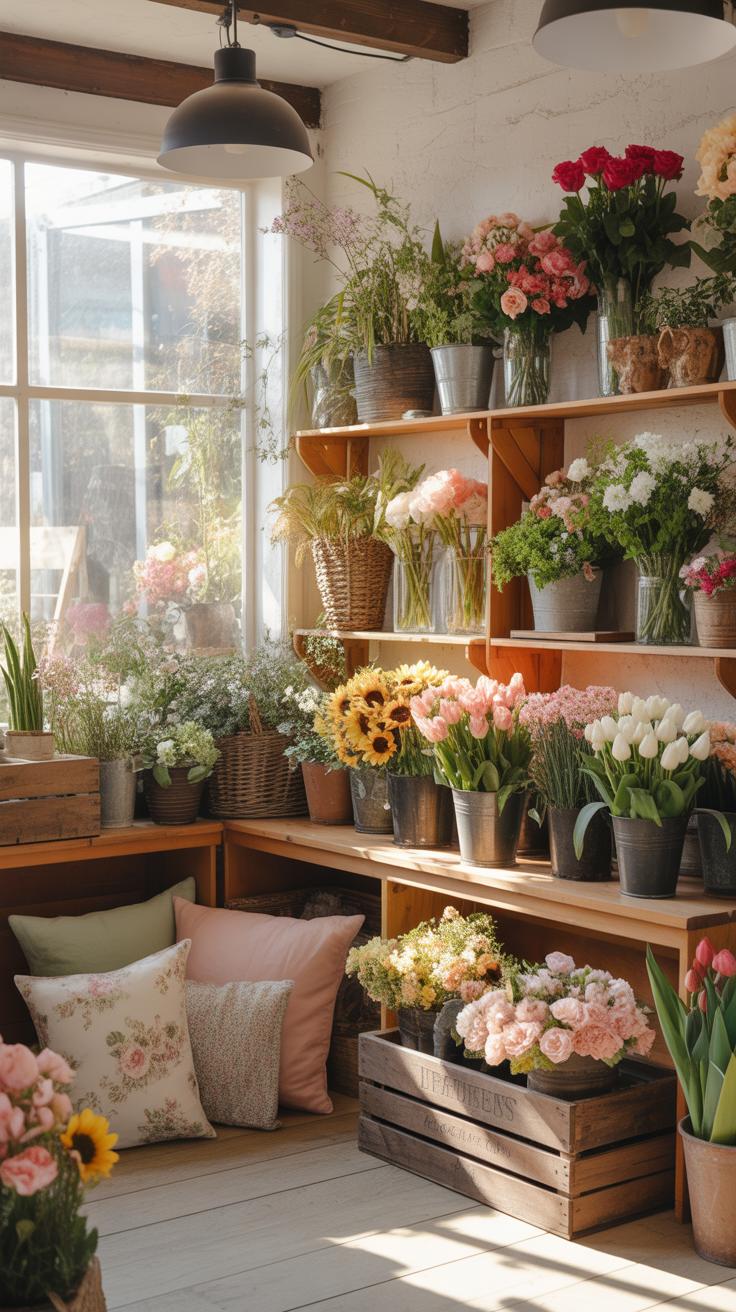
Popular Interior Design Styles That Work Beautifully In Floral Studio Environments
Industrial design remains a standard for modern floral studios. This style uses raw materials like concrete, steel, and exposed brick. These neutral textures allow the natural colors of the flowers to stand out. Concrete floors handle water spills and heavy equipment better than wood or carpet. Large windows and high ceilings provide the necessary light and air circulation for plant health.
Minimalism offers a clean aesthetic that focuses on the product. It uses a monochromatic color palette and simple geometric lines. This approach reduces visual clutter and makes individual arrangements the focal point. Low-key backgrounds prevent the eye from becoming overwhelmed. Designers use white walls and sleek shelving to create a gallery feel. This environment appeals to high-end clients seeking modern and sophisticated floral work.
How To Incorporate Decorative Accents That Reinforce Your Floral Brand Identity
Strategic lighting serves as a critical decorative element. Use warm-toned LEDs to highlight specific displays without generating heat that wilts the inventory. Pendant lights over workbenches define the space as a craft area. Adjustable track lighting allows you to change the focus as seasonal stock rotates. Proper lighting levels ensure customers see the true colors of the petals and foliage accurately.

Signage and hardware must match your chosen design era. Use vintage brass fixtures for a classical look or matte black hardware for a modern feel. Mirrors expand the visual size of the room and reflect the floral inventory. Choose display vessels that reflect your specific brand voice. Consistent textures across your shelving and containers create a professional image. Details like these build trust with customers quickly.
Florist Shop Interior Smart Storage And Organisation Solutions
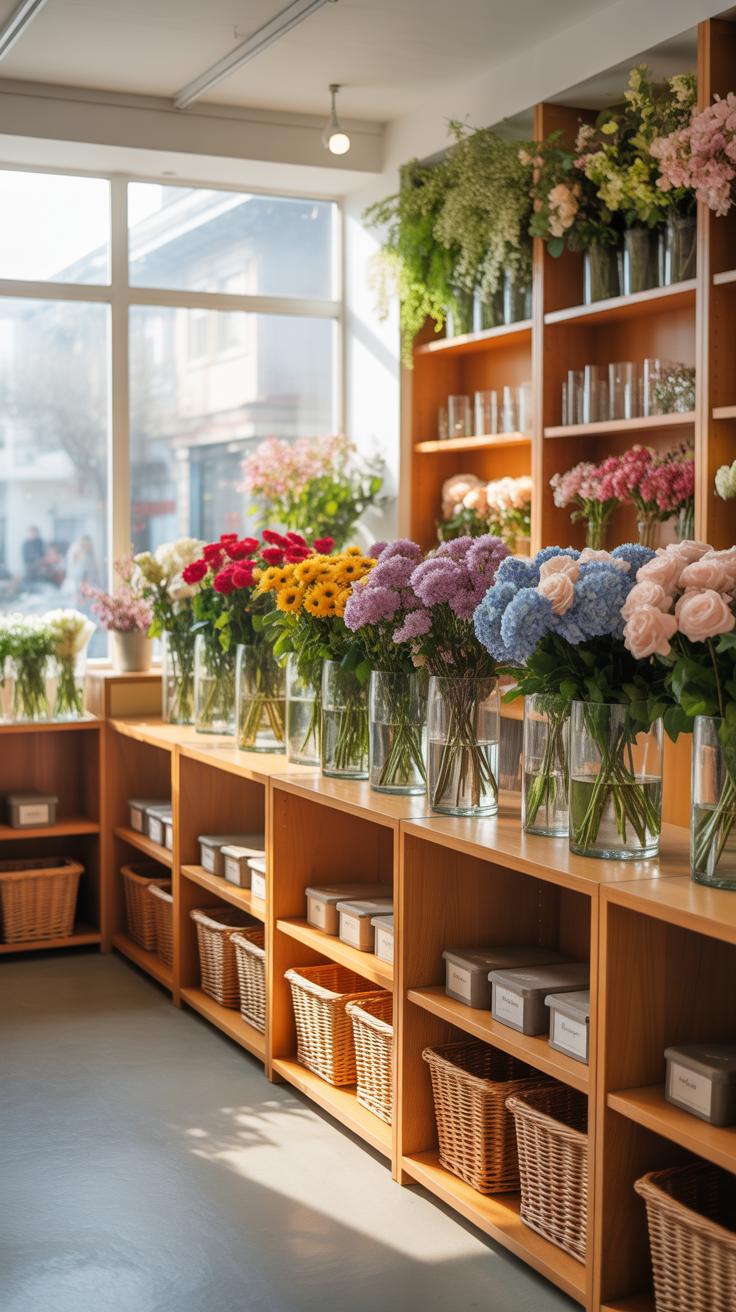
Essential Storage Systems That Keep Floral Supplies Accessible And Well Organised
Efficient floral studio setup ideas rely on vertical space and clear visibility. You must separate hard goods from perishable inventory to prevent cross-contamination and clutter. Use industrial shelving units with adjustable heights to accommodate various vase sizes. High-frequency tools like snips and wire cutters need wall-mounted magnetic strips or pegboards. Physical order reduces search time and increases your hourly output during busy holiday rushes.
- Heavy Duty Wire Shelving: Zinc-plated wire racks prevent dust buildup and allow air circulation around glass vessels. These units support significant weight and offer easy height adjustments for seasonal inventory changes.
- Wall-Mounted Pegboards: Metal pegboards hold tape dispensers, ribbon spools, and hand tools at eye level. This system keeps the primary work surface clear while ensuring every tool has a fixed, visible home.
- Clear Polycarbonate Bins: Stackable transparent bins house small items like floral foam, frogs, and waterproof tape. Visibility allows for instant inventory checks so you never run out of critical supplies during a large commission.
- Industrial Ribbon Racks: Mounted dowel systems prevent satin and grosgrain rolls from tangling or fraying. Organising by color and width speeds up the finishing process and protects expensive fabrics from dirt and water.
- Under-Counter Pull-Outs: Sliding drawers beneath worktables maximize unused space for bulky items like chicken wire and moss. These systems keep the floor clear of tripping hazards and maintain a professional shop appearance.
Standardize your storage containers to create a cohesive look and simplify stacking. Use labeled bins for specific mechanics like kenzans or floral adhesive. Mobile carts provide flexibility for large event prep and allow you to move supplies between hydration stations and design tables. Proper organization prevents over-ordering by making your current stock levels obvious at a glance.
A flower is a soul blossoming in nature, and within the light of your studio, you capture its quiet grace for eternity.
How Proper Floral Refrigeration And Stem Care Stations Support A Professional Interior
Refrigeration is the most expensive and vital component of your studio interior. Commercial floral coolers maintain high humidity and specific temperatures between thirty-four and thirty-eight degrees Fahrenheit. This environment slows the respiration of cut stems and extends their shelf life significantly. Place the cooler away from direct sunlight and heat-venting equipment to ensure steady internal temperatures and lower utility costs.

Designate a specific wet zone for stem processing and hydration. This station requires stainless steel surfaces that resist rust and are easy to sanitize. Install a high-arc faucet and a commercial floor drain to manage large volumes of water efficiently. Proper bucket storage under the sink ensures quick access during flower delivery. A dedicated cleaning area prevents bacteria growth which protects your inventory and keeps the shop smelling fresh.
Studio Photoshoot Decor Ideas Setting The Scene For Stunning Floral Photography
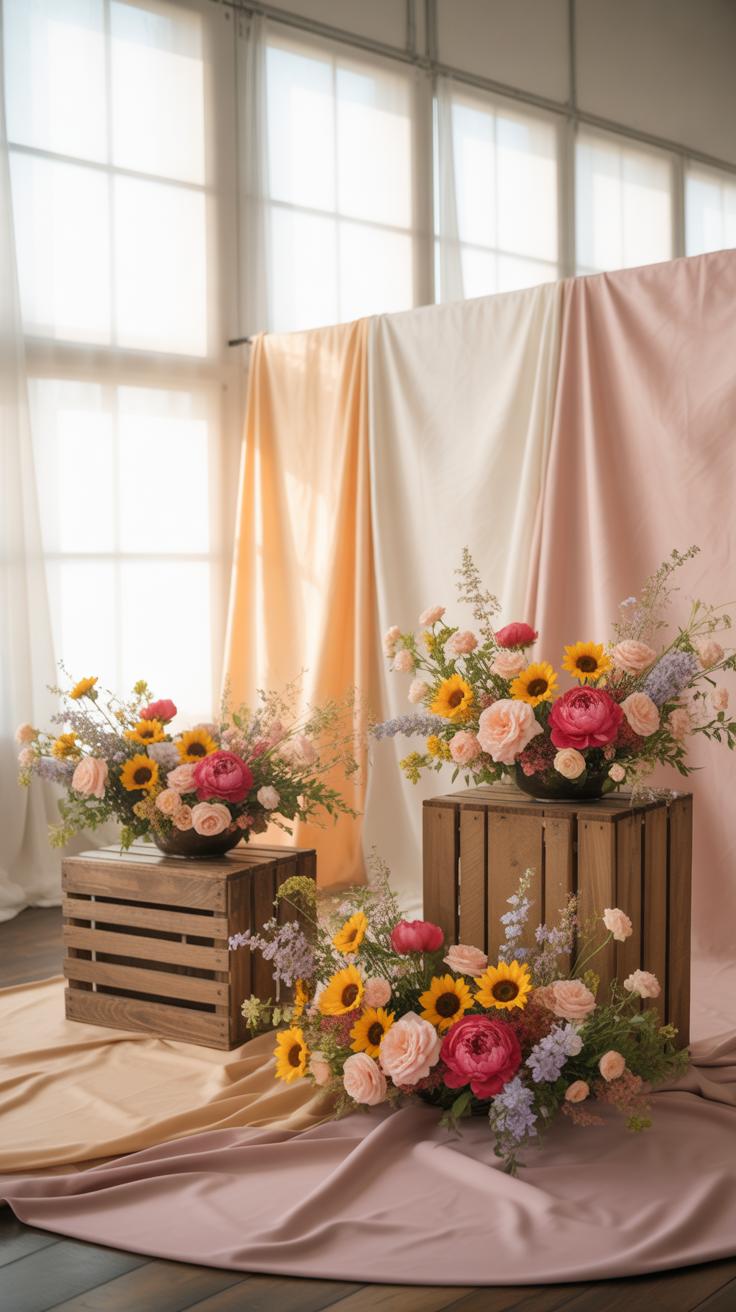
How To Design A Dedicated Photoshoot Corner Within Your Floral Studio
Position your photoshoot corner near a north-facing window for consistent light throughout the day. Direct sunlight creates harsh shadows that ruin the delicate details of flower petals. North-facing light provides a soft, even glow that requires minimal editing. Clear a four by four foot area to ensure enough space for tripods and light stands. Keep this area neutral to avoid color spill on your flowers.
Install a permanent overhead track or wall mount for backdrop rolls. This saves time and keeps the floor clear of tripping hazards. Use a sturdy work table with locking wheels to move arrangements into the light path easily. A dedicated station ensures you document your work before it leaves the shop. Consistent photography increases your brand value and creates a professional portfolio for future high-end clients.
Decor For Photoshoot: Choosing Backdrops Props And Surfaces That Make Flowers Shine
Select matte surfaces to prevent distracting glares and hot spots in your images. Use materials like honed marble, dark slate, or reclaimed wood to provide texture without competing with the floral designs. Neutral gray or off-white backdrops work best for color accuracy. These tones allow the natural vibrancy of the blooms to stand out. Avoid bright or busy patterns that draw the eye away from the centerpiece.
Incorporate props that serve a structural purpose like heavy ceramic frogs or minimalist glass vases. Use risers to create different heights and add depth to your compositions. Keep a kit of florist wire and clear tape nearby for last-minute adjustments. High-quality tools and professional surfaces turn a simple bouquet into a piece of art. Successful floral photography relies on clean lines and a clear focus on the botanical subject.
Flower Shop Ideas Interior Bringing Nature Indoors With Living Decor Elements
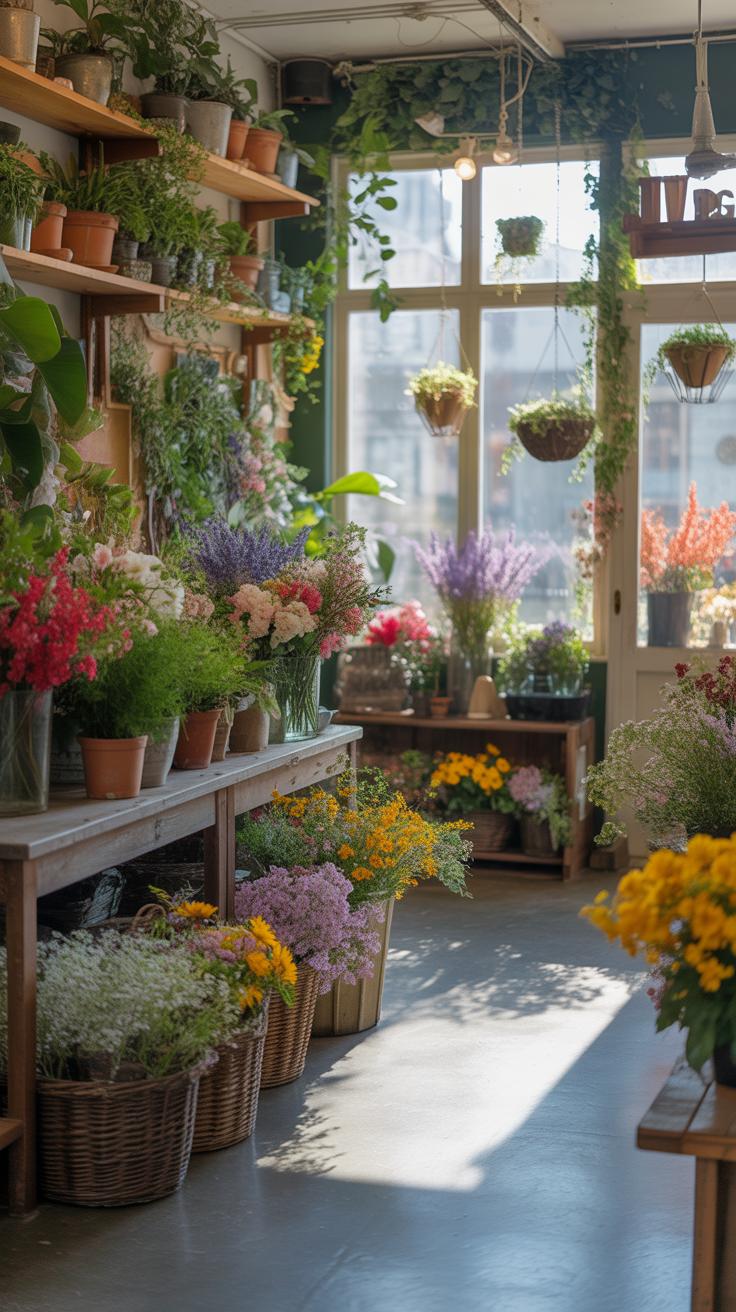
Using Potted Plants, Moss Walls, And Hanging Greenery To Enhance Your Studio Atmosphere
Living decor serves a functional purpose beyond simple aesthetics. Potted plants regulate humidity levels which helps preserve cut flower inventory. Large floor specimens like Ficus lyrata or Monstera deliciosa create natural partitions without blocking light. These plants act as structural anchors in an open floor plan. They show customers that you understand plant health and longevity. Healthy greenery builds immediate trust with your buyers.
Vertical installations maximize floor space in small studios. Preserved moss walls offer a low-maintenance solution for branding and texture. They require zero irrigation or sunlight once installed. Hanging greenery like Pediantus or trailing ivies draws the eye upward. This technique makes tight spaces feel larger and more immersive. Use sturdy ceiling hooks and lightweight containers to ensure safety. Strategic placement keeps the work area clear for daily operations.
Seasonal Floral Installations That Keep Your Shop Interior Fresh And Visually Dynamic
Seasonal installations prove your design range to every visitor. You must update these displays every four to six weeks to match the local growing cycle. Use local branches and dried elements to manage costs while maintaining scale. High-impact installations serve as marketing tools for social media. They show potential event clients what you can achieve on a larger scale. Focus on form and structural integrity first.
- Suspended Branch Structures: Secure large dried branches to ceiling joists using aircraft cable. These frameworks allow you to tuck in fresh water tubes or dried stems. This creates a floating canopy effect that changes with the seasons.
- Monochromatic Flower Walls: Select one dominant color for a high-density wall display. Use inexpensive filler flowers like carnations or chrysanthemums for mass. This technique creates a bold visual impact that defines the room.
- Floor-to-Ceiling Birch Poles: Install vertical birch or bamboo poles to mimic a natural forest. These structures provide support for climbing vines or seasonal garlands. They add height and organic texture to flat walls or empty corners.
- Entryway Floral Arches: Build a reusable metal or wood armature around your front door. Swap out the materials to reflect current stock or upcoming holidays. This draws street traffic and sets a professional tone immediately.
- Custom Window Meadow: Use shallow zinc trays filled with floral foam or kenzans. Arrange seasonal blooms at varying heights to simulate a wild field. This display attracts passersby and utilizes natural sunlight for visibility.

Rotate your installation themes to prevent visual fatigue. Use durable mechanics like chicken wire and heavy-gauge florist wire to secure large pieces. Safety is the priority in high-traffic areas. Always test the weight of overhead displays before opening to the public. Strategic lighting makes these installations pop after dark. Well-executed displays justify your pricing by showcasing your technical skill and creative vision.
Flower Shop Design Interiors Lighting Signage And The Finishing Touches That Matter
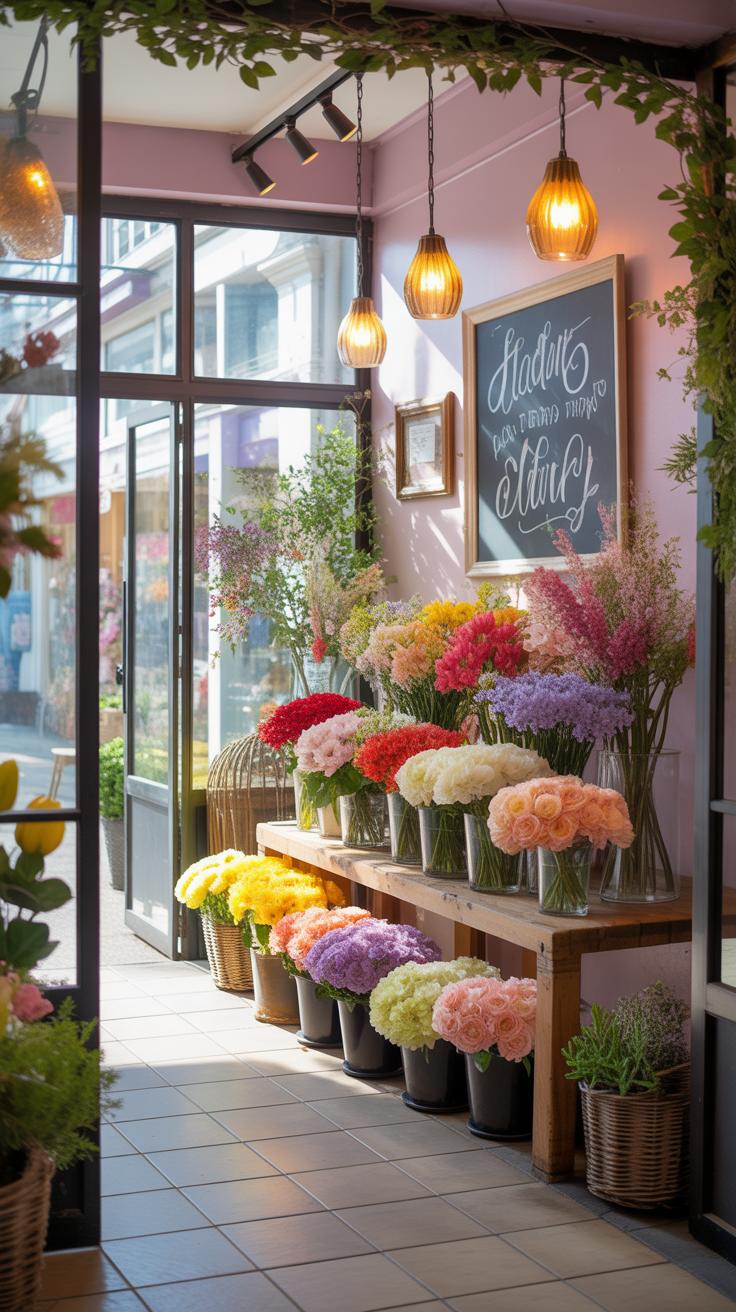
How Natural And Artificial Lighting Choices Dramatically Impact Your Floral Studio Ambience
Natural light provides the most accurate color rendering for floral work. Large windows or skylights allow you to see true petal pigments. Avoid direct sunlight in work zones because UV rays and heat accelerate flower wilting. North-facing light remains the most stable throughout the day. This setup prevents shadows and keeps your inventory cool. High ceilings facilitate better heat dispersion from any light source you choose.
Artificial lighting must achieve a high Color Rendering Index of 90 or above. Use LED bulbs with a color temperature between 4000K and 5000K to mimic daylight. This range ensures that blue and red flowers do not look washed out. Install dimmable track lighting to highlight specific retail displays. Avoid incandescent bulbs because they generate excessive heat. Keep light fixtures away from refrigerated units to maintain energy efficiency.
Signage, Branding Elements, And Final Decor Details That Complete Your Floral Studio Design
Clear signage directs customer flow and reinforces brand identity. Use high-contrast materials like metal or wood for exterior signs to ensure durability. Interior signs should label flower varieties and pricing clearly. Use a consistent font and color palette across all physical touchpoints. This strategy builds trust and helps customers navigate your space quickly. Position your main logo at eye level behind the service counter for maximum visibility.

Final decor details must serve a functional purpose to avoid clutter. Choose flooring materials like polished concrete or slip-resistant tile for easy cleanup. Install stainless steel or zinc countertops to resist rust and bacteria. Add mirrors to small studios to create an illusion of more space and double the visual impact of your arrangements. Keep secondary decor minimal to ensure the flowers remain the primary focus of the environment.
Frequently Asked Questions

What are the most essential elements for a beginner to consider when designing a floral studio?
When starting out, focus on lighting, workflow, and proper storage. Natural light is your best friend for capturing photos, so position your main workbench near a window. You also need a durable, counter-height table to prevent back strain and a nearby water source for hydration. Incorporating these foundational floral studio setup ideas ensures your workspace is not only beautiful but also highly functional for daily creative tasks.
How can I optimize my floral studio layout to handle high-volume event orders?
Effectiveness lies in creating a “flow” from processing to assembly. Dedicate a specific zone for stripping stems and hydrating blooms, and keep your finished arrangements in a separate, cool staging area. Using mobile potting carts and adjustable shelving helps you reconfigure the space as projects grow. Innovative floral studio setup ideas often include wall-mounted tool racks, which keep your shears and tape within reach while keeping your primary surfaces clear.
Is it possible to create a stunning floral workspace if I have a very limited budget?
Absolutely! You can achieve a professional look without a major investment by upcycling sturdy furniture and using open shelving for a chic, industrial vibe. Painting your walls a neutral white will instantly brighten the room and make your flowers pop. Focus on inexpensive organization like glass jars or vintage crates for ribbons. Even in small, affordable spaces, thoughtful floral studio setup ideas can turn a spare corner into a luxury atelier.