A BeginnerS Guide To Edible Flowers And What Makes Them Safe To Eat
Understanding Which Edible Flowers Are Safe For Consumption
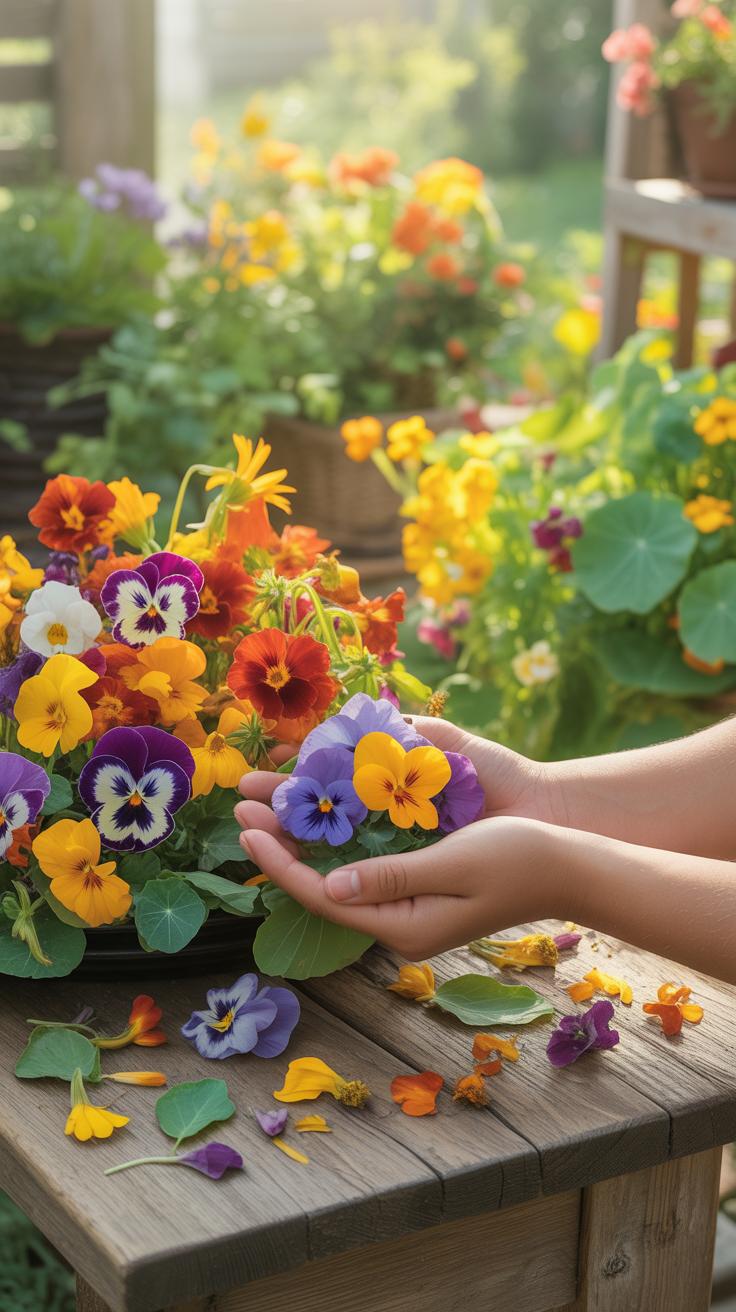
Botanical accuracy is the only way to ensure safety. Misidentifying a plant can lead to severe poisoning. You must use the Latin name to verify a species. Many common garden flowers like foxglove and lily of the valley are toxic. Only eat flowers specifically grown for food. Pansies, violas, and calendula are standard choices because they have a documented history of safe use in culinary traditions.
Focus on the petals of the flower. Remove the bitter green sepals and the pollen-heavy stamens before eating. Some people have allergic reactions to pollen. If you have asthma or hay fever, test a small amount first. Avoid any flowers treated with systemic pesticides or herbicides. Commercial florists sell decorative plants that are not food grade. Stick to organic sources or flowers grown specifically for human consumption.
How To Source, Clean, And Store Edible Flowers Before Cooking
Harvest flowers in the cool morning hours. This timing ensures the petals contain the most moisture and flavor. Look for flowers that are fully open but not wilted. Avoid picking plants near busy roads or industrial areas. These locations often have soil heavy in lead and chemical runoff. Inspect every bloom for insects and eggs. Shake them gently to remove loose debris without damaging the delicate structure.
Clean the flowers by dipping them in a bowl of cold water. Do not blast them under a faucet. This pressure bruises the tissue and ruins the texture. Drain the water and place the flowers on a clean paper towel to air dry. Store the dry flowers in an airtight container lined with damp paper. Keep them in the refrigerator crisper drawer. Use them within two days for the best culinary results.
How To Use An Edible Flower Chart To Identify Flavors And Pairings
Reading An Edible Flower Chart: Flavor Profiles From Peppery To Sweet
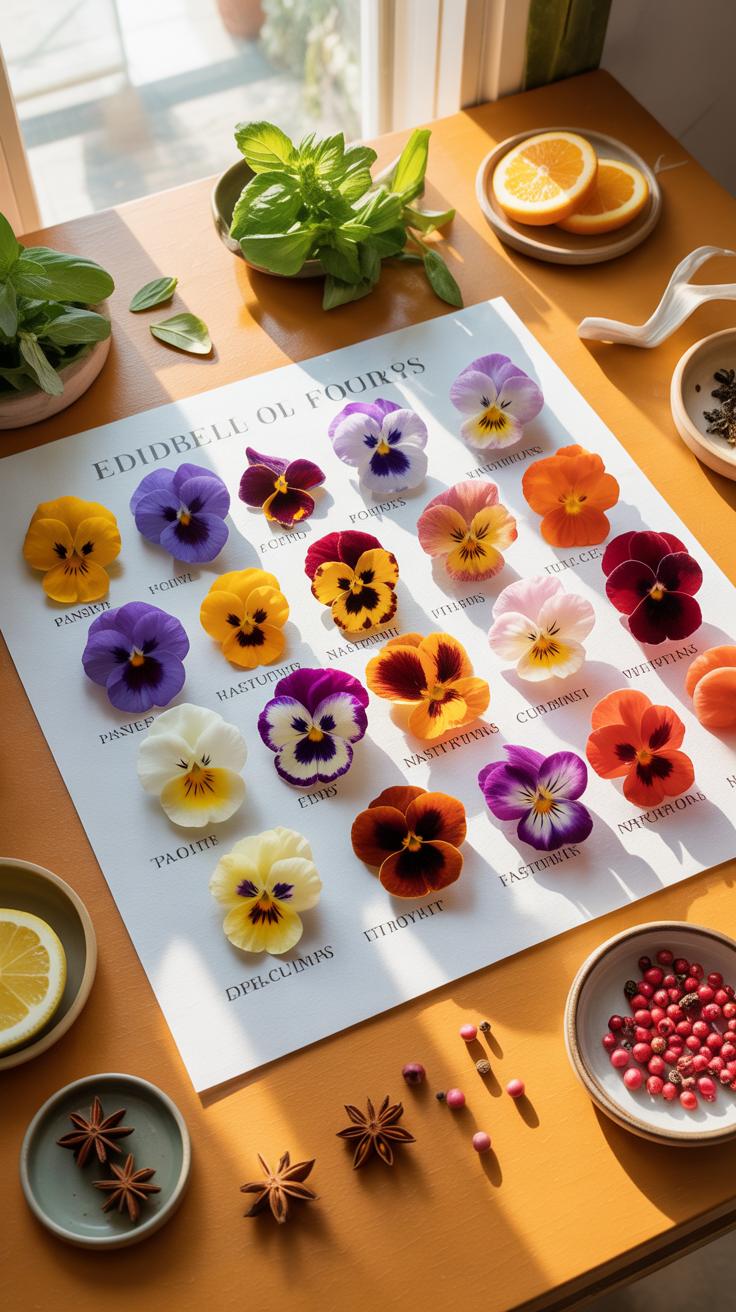
Standard edible flower charts categorize species by chemical composition and taste markers. Use these charts to identify the base flavor of a petal. Alliums like chive blossoms provide sharp onion notes. Nasturtiums contain glucotropaeolin which creates a distinct peppery heat similar to watercress. Contrast these against sweet flowers like violets or rose petals. Understanding these categories prevents flavor clashes in a dish.
Charts also reveal the intensity of the flavor. Some flowers serve as primary seasonings while others provide subtle aromatic finishes. Marigolds offer a citrus or bitter profile often compared to poor man’s saffron. Lavender carries high concentrations of linalool which provides a potent floral and soapy punch. Always taste a single petal before mass application. These charts act as a technical map for balancing acidity and sugar.
Matching Edible Flowers To Cuisines And Seasonal Ingredients
A flower chart aligns specific blooms with regional culinary traditions. Use zucchini blossoms for Mediterranean stuffings or pansies for light French pastries. Hibiscus works in Mexican and North African savory sauces due to its high cranberry-like acidity. Matching the flower to the traditional origin of the dish ensures flavor harmony. Use the chart to identify which blooms share a common geographic heritage with your main ingredients.
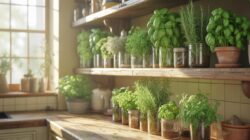
Timing is critical for freshness and nutrient density. Charts often list the peak blooming months for each species. Spring charts focus on primrose and lilac for light dairy dishes. Summer charts highlight borage and sunflowers for heavy proteins or chilled soups. Aligning your menu with these natural cycles guarantees better color and stronger flavor. Use the seasonal data to plan menu rotations several months in advance.
Top Edible Flowers Recipes Taking Over Home Kitchens In 2024
Crowd Pleasing Edible Flower Recipes For Drinks Desserts And Mains
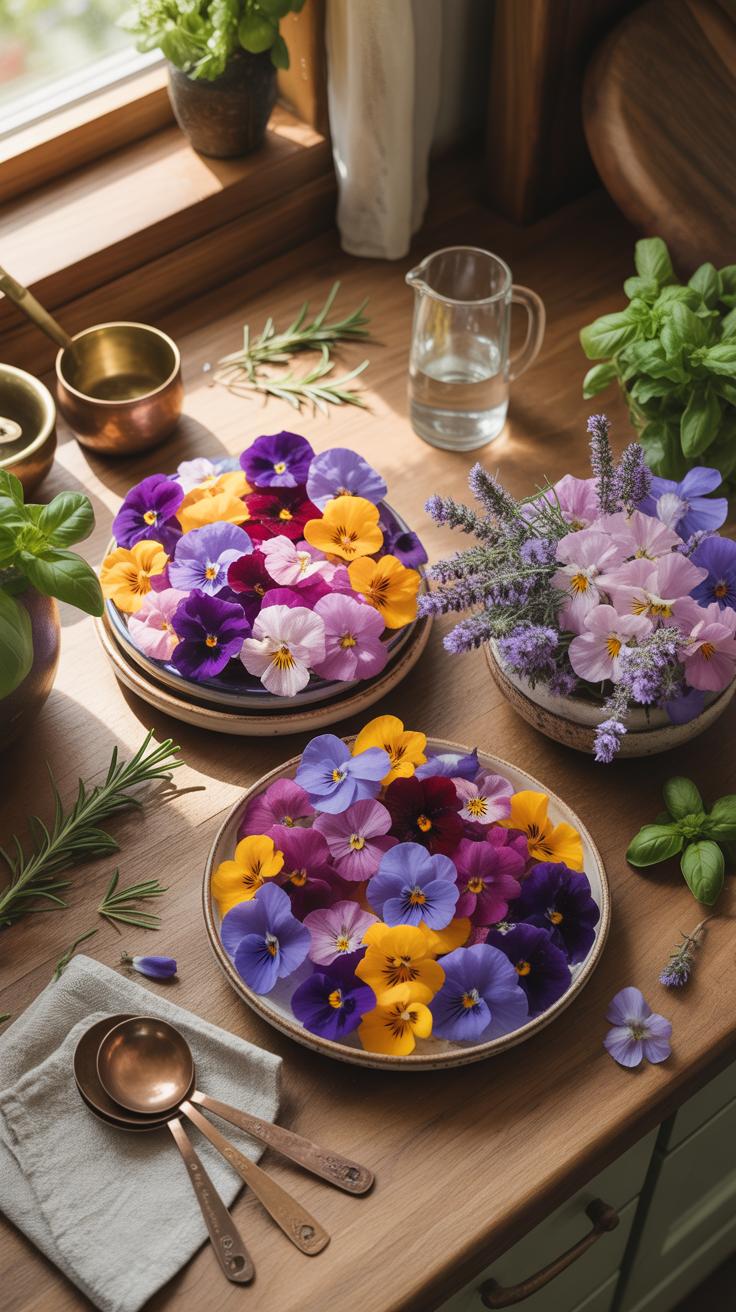
Modern home cooks use pansies and violas in fresh spring salads to add mild nutty flavors. Chefs combine these petals with citrus vinaigrettes to balance bitter greens. For main courses, squash blossoms remain a functional staple. Cooks stuff them with ricotta cheese and lightly fry them to create a texture contrast. This technique relies on the durable structure of the flower to hold heat and moisture.
For drinks and desserts, hibiscus and lavender dominate the market. Hibiscus petals infuse deep red color and tart acidity into cold beverages without using synthetic dyes. Lavender provides a floral scent to shortbread cookies and heavy creams. You must use culinary grade lavender to avoid a soapy taste. These ingredients serve as natural flavor enhancers. They provide visual appeal while fulfilling a specific taste profile in the recipe.
Earth laughs in flowers, and now our tables do too, inviting the sweet nostalgia of a summer garden into every modern bite.
How Classic Recipes Are Being Elevated With Edible Flower Ingredients
Classic pastry recipes now utilize pressed flowers to replace traditional icing decorations. Bakers apply edible glue or egg whites to attach dried petals to butter cakes. This method reduces the need for refined sugar decorations. It introduces botanical textures that complement standard vanilla or almond bases. Marigolds and nasturtiums provide a peppery kick that replaces or enhances black pepper in savory biscuits and breads.
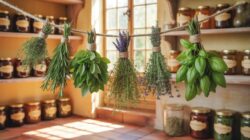
Technique focused kitchens use flower infusions to update traditional sauces and syrups. Elderflower blossoms frequently transform basic simple syrups used in fruit tarts. Rose water distillation remains a primary method for flavoring Middle Eastern rice dishes and custards. These methods focus on extracting essential oils from the petals. The result is a layered flavor profile that builds on the foundation of the original historical recipe.
Edible Flower Salad Decor The Art Of Making Salads Visually Stunning
Best Edible Flowers For Salad Decoration And Complementary Flavors
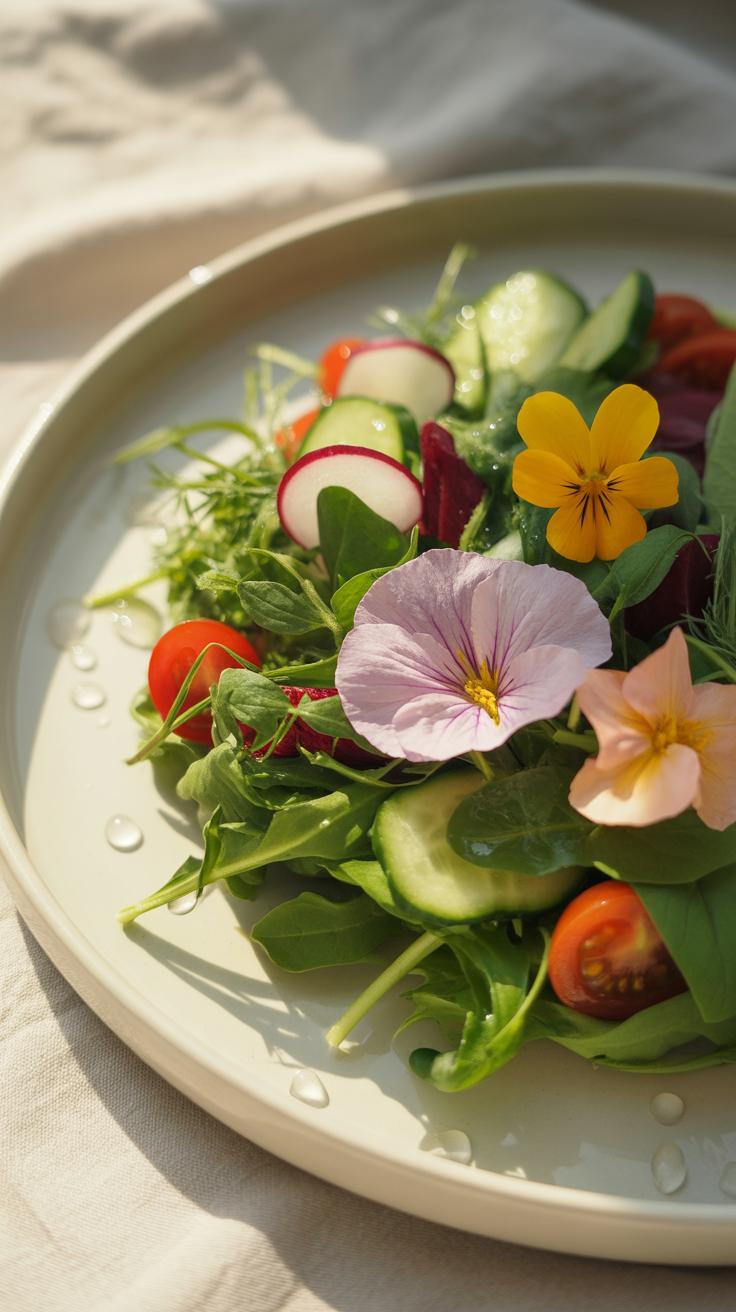
Select flowers based on their chemical flavor profiles. Nasturtiums provide a peppery kick similar to watercress. Use them to balance fatty dressings or mild greens. Pansies offer a neutral, slightly grassy taste that works with almost any vegetable. Violas contribute a mild wintergreen note. Borage flowers taste like cucumber and cool down spicy greens. Always remove bitter green calyxes and stamens before serving.
Match flower density to the greens in the bowl. Delicate petals like hibiscus or cornflower suit light lettuces. Heavier blooms like whole marigolds require sturdy bases like kale or cabbage. Consider the moisture content of the bloom. Thick petals hold their shape longer against acidic vinaigrettes. Use chive blossoms to add a sharp onion aroma without the bulk of whole chives.
Composing A Visually Balanced Salad Using Color, Texture, And Blooms
Visual balance requires strategic placement rather than random scattering. Use the color wheel to create high contrast or monochromatic harmony. Complementary colors like orange marigolds against green spinach create immediate impact. Place larger blooms off-center to direct the eye. Mix different shapes to create depth. Use tiny florets to fill gaps between large leaves. This method ensures the salad looks intentional.
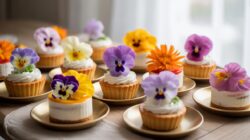
Texture dictates the eating experience. Do not let flowers wilt under heavy ingredients. Add blooms last to ensure they remain crisp. Use contrasting textures to keep the palate engaged. Soft rose petals provide a counterpoint to crunchy radishes or nuts. Maintain a ratio where flowers enhance the greens rather than hide them. Scale the bloom size to the cut of the vegetables for a professional finish.
How To Use Edible Flowers In Baking For Flavor And Visual Impact
Incorporating Edible Flowers Into Cakes, Breads, And Pastry Doughs
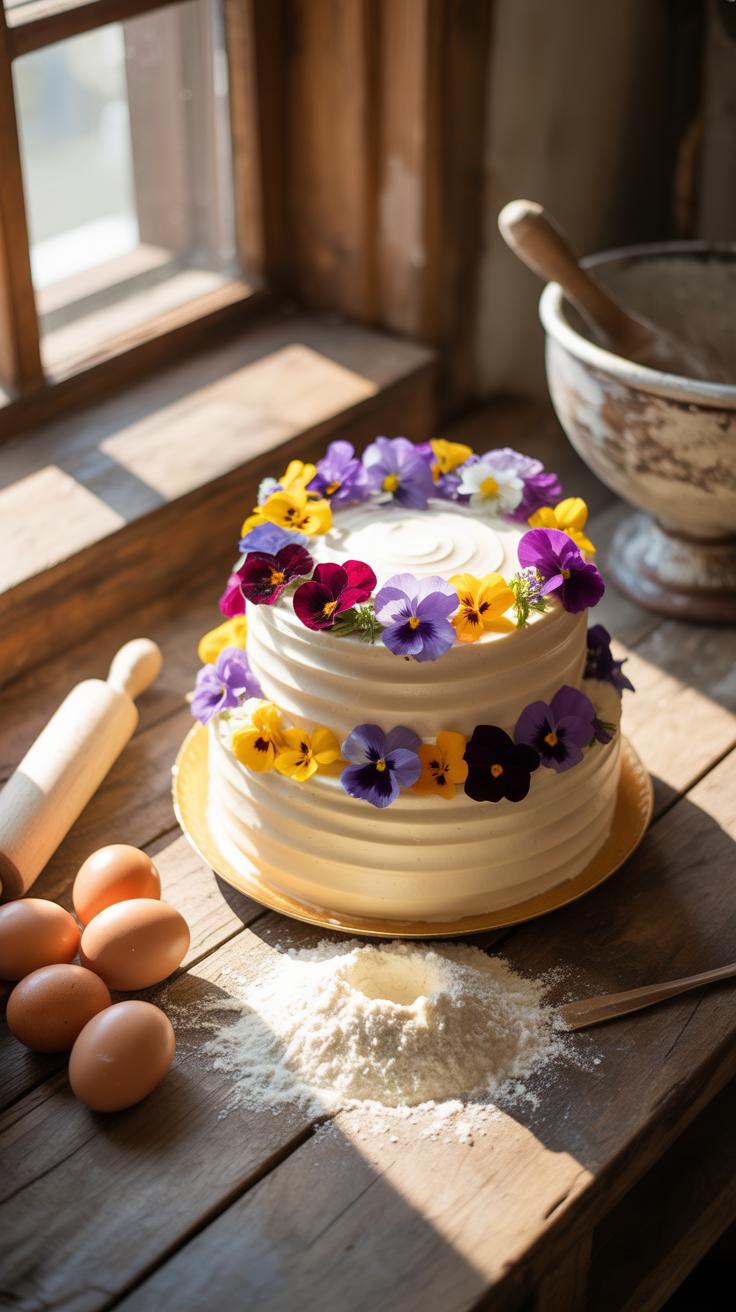
Bakers integrate flowers into doughs using two primary methods: infusion and direct mixing. High-fat components like butter or milk absorb floral aromatics during a slow heat steeped process. Lavender and rose petals provide potent essential oils that survive high oven temperatures. You must remove stems and bitter green bases before use. This prevents off-flavors from ruining the taste profile of the final baked product.
Directly folding petals into batter adds texture and visual flecks. Use sturdy flowers like calendula or cornflower for this technique. Delicate blooms like hibiscus bleed color into the dough when hydrated. Control moisture levels because fresh petals contain water. Dehydrated flowers offer more concentrated flavor and do not affect the chemistry of the bread or pastry. Always source organic flowers to avoid ingesting pesticides or chemical fertilizers.
Pressing And Crystallizing Flowers As Decorative Edible Garnishes
Surface application requires specific stabilization techniques to keep flowers looking fresh. Crystallization is a preservation method that uses egg whites and superfine sugar. It creates a shell that prevents the flower from wilting or oxidizing. This technique dates back several centuries as a way to store seasonal blooms for year-round use. Pressing flowers into hot surfaces requires speed to prevent the petals from scorching.
- Crystallization: Brush clean petals with a thin layer of egg white or aquafaba. Sprinkle superfine sugar over the surface and let it dry for twenty-four hours. This creates a crunchy texture and preserves the flower shape for weeks.
- Pressure Application: Place fresh pansies or violas directly onto cookie dough before baking. Use a flat heavy object to press them into the surface. The natural sugars in the dough act as an adhesive during the heat cycle.
- Syrup Glazing: Dip hardy flowers into a hot sugar syrup to create a glass-like coating. This seals the flower and prevents oxygen from turning the petals brown. Use this for garnishing dense cakes or tarts with a high shine.
- Dehydration: Use a low-temperature oven or a food dehydrator to remove moisture from petals without losing color. This makes the flowers brittle but shelf-stable. Dehydrated flowers work best when lightly pressed into soft frostings or royal icing.
- Cold Pressing: Place blooms between parchment paper and apply heavy weight for several days. This flattens the flower into a paper-thin garnish. These are ideal for sticking to the sides of tiered cakes using a light touch of corn syrup.
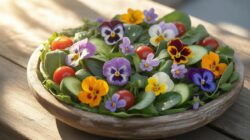
Timing is the most critical factor when using fresh garnishes. Apply uncrystallized flowers moments before serving to ensure the best appearance. Most fresh flowers wilt within thirty minutes when exposed to dry air or heat. If you use the crystallization method, you can prepare the garnishes days in advance. Store all prepared floral garnishes in airtight containers away from direct sunlight to maintain their vibrant natural pigments.
Flower Food Trends Using Blooms In Savory Dishes And Sauces
Edible Flowers That Work Brilliantly In Savory Cooking And Sauces
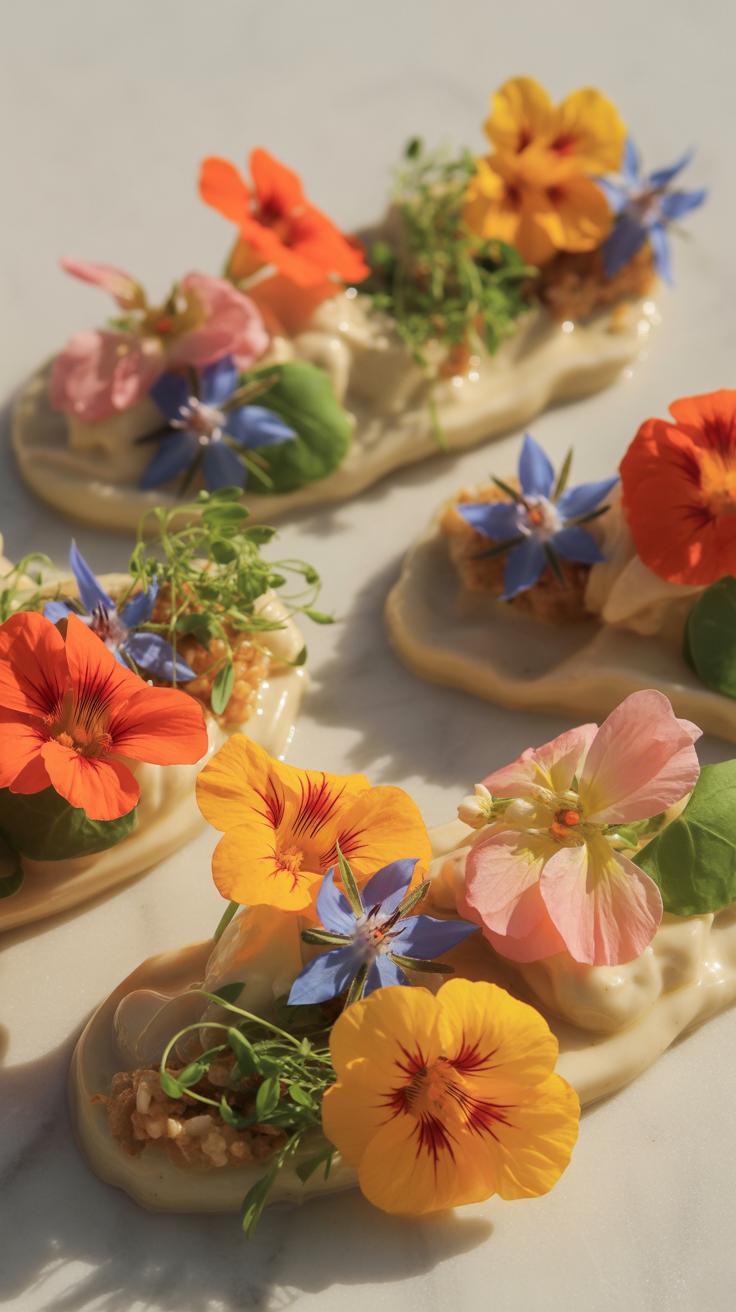
Savory dishes require flowers with pepper, spice, or onion profiles. Nasturtiums provide a sharp heat similar to watercress or radishes. Borage offers a cooling cucumber flavor that balances heavy fats in seafood. Chive blossoms deliver a concentrated onion punch without the fibrous texture of the bulb. Use these varieties to add functional flavor rather than just visual appeal to your main courses.
Chefs integrate squash blossoms into Mediterranean and Mexican cuisines through stuffing and frying techniques. These large flowers hold ricotta or meat fillings effectively. Lavender works in small doses for poultry rubs but demands caution. Too much lavender makes food taste like soap. Always remove the bitter green calyx from the base of the petals. High heat destroys delicate floral oils so add them at the end.
Infusing Oils, Butters, And Vinegars With Edible Flower Varieties
Infusions pull essential oils from plant tissues into fat or acid carriers. Use marigold petals to give butter a yellow tint and a citrus taste. Calendula serves as a budget saffron substitute in oils and rice dishes. For vinegars, choose rose petals or violets to create acidic bases for vinaigrettes. These infusions preserve the chemical compounds of the flower for long term kitchen use.
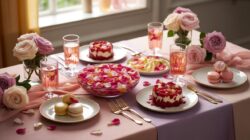
Technique determines the quality of the final infusion. Avoid high heat because it scorches the delicate petals and ruins the flavor profile. Cold infusion takes longer but maintains the true botanical essence. Blanching flowers briefly before adding them to oil prevents bacterial growth. Strain the solids out after 48 hours to stop the mixture from becoming bitter. Store these finished products in dark glass to prevent light spoilage.
Food Presentation Secrets Plating With Edible Flowers Like A Pro Chef
Professional Plating Techniques That Feature Edible Flowers As A Focal Point
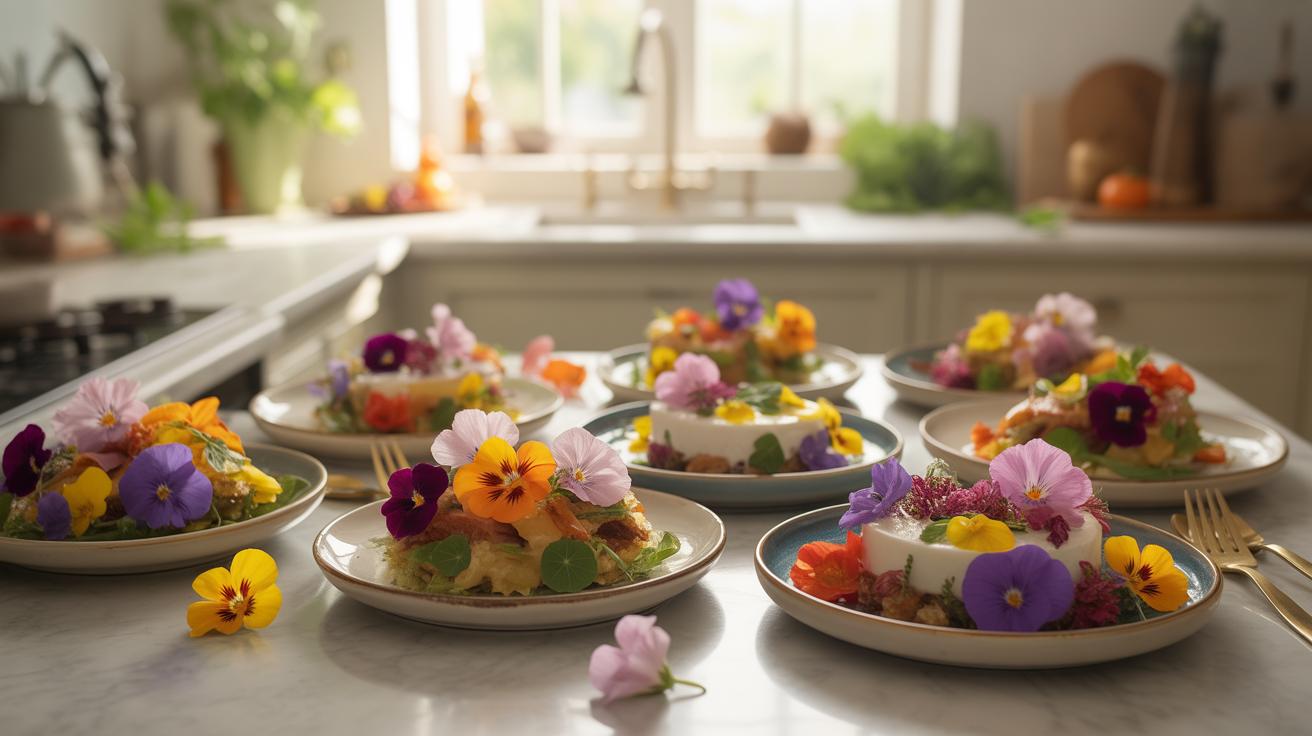
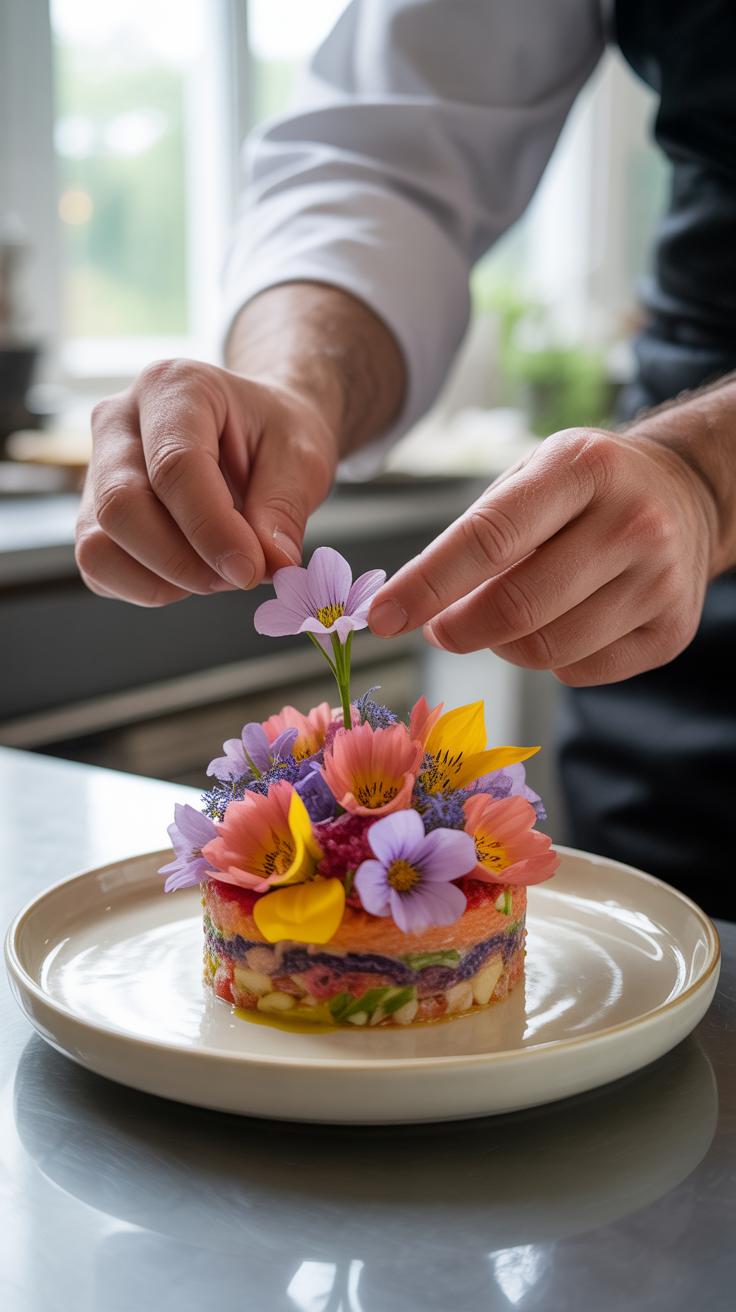
Professional chefs use edible flowers to guide the eye across the plate. Place larger blooms like nasturtiums or hibiscus off-center to create a strong visual anchor. This technique breaks the symmetry of standard plating. Use kitchen tweezers for exact placement. Do not scatter petals randomly. Intentional placement ensures the flower complements the main protein or starch rather than hiding the food.
Texture also dictates how you plate these elements. Firm flowers like pansies sit well on top of stable surfaces like meats or thick purees. Delicate petals require a moist base to stay in place. Use small dots of gel or sauce as an adhesive. This prevents the flowers from sliding when the server moves the plate. Secure placement maintains the intended design from the kitchen to the guest.
Color Theory And Seasonal Blooms That Elevate Your Food Presentation
Applying color theory improves the visual impact of any dish. Use complementary colors to create high contrast. Blue borage flowers pop against orange squash purees. Use monochromatic schemes for a modern look. Light pink chive blossoms enhance the appearance of red beet dishes. Choose colors that signal specific flavors to the diner. Bright yellows often suggest citrus notes while deep purples imply earthy tones.
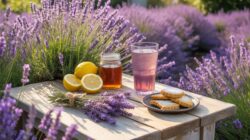
Seasonality ensures the freshest appearance and the best structural integrity. Spring brings delicate violets and pea blossoms for light salads. Summer offers bold sunflowers and squash blossoms for heavy entrees. Fall provides marigolds that survive cooler temperatures on the plate. Match the flower to the harvest cycle of your main ingredients. This creates a logical narrative for the diner and ensures the flowers do not wilt prematurely.
DIY Edible Flower Ideas For Home Cooks On A Budget
Growing Your Own Edible Flowers At Home For A Fresh, Cost Effective Supply
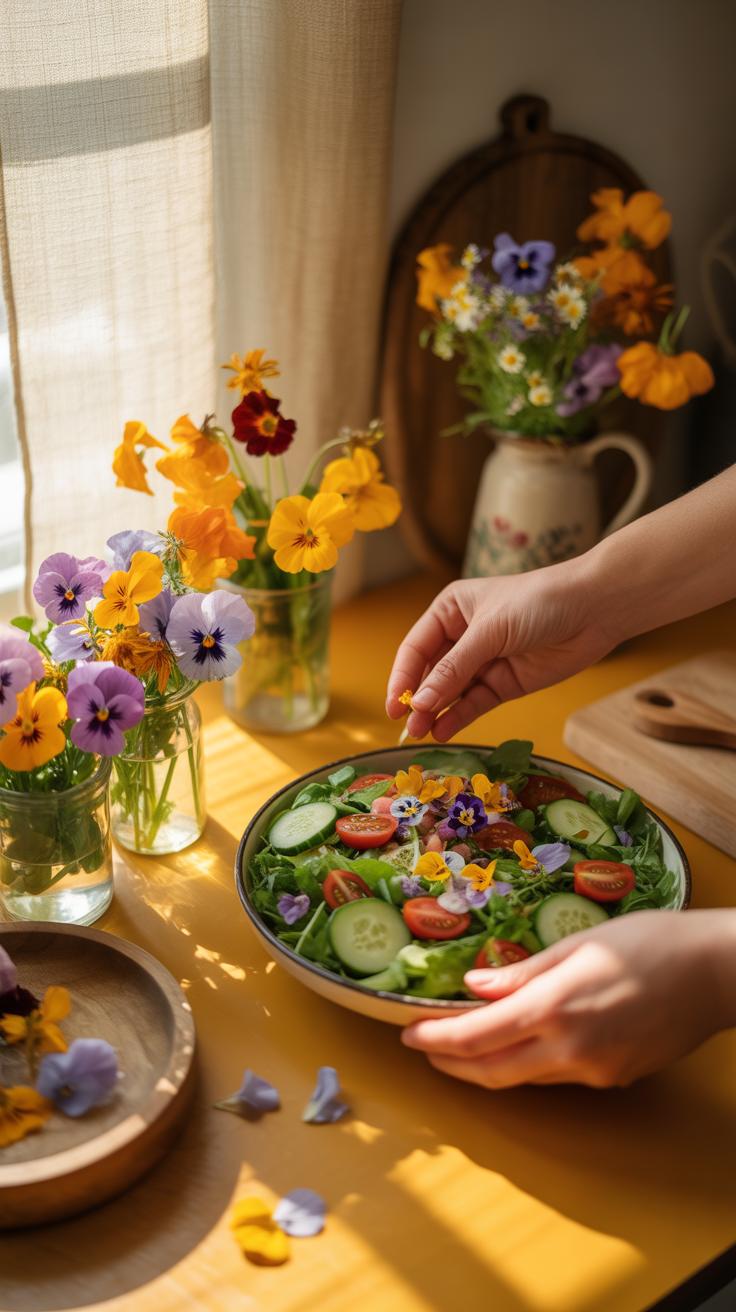
Growing flowers at home eliminates high retail markups and ensures a chemical-free harvest. Nasturtiums and marigolds thrive in poor soil and require little maintenance. These species grow fast and provide a high yield per square foot. Use clean pots and organic potting mix to avoid soil contaminants. Place containers on a sunny windowsill or balcony to maximize bloom production throughout the growing season.
Harvest blooms in the early morning when moisture content is highest. This timing preserves the texture and flavor of the petals. Avoid using any synthetic pesticides or fertilizers on plants intended for consumption. Regular deadheading encourages the plant to produce more flowers instead of setting seed. This practice extends your supply and keeps the cost per serving near zero. Home cultivation provides total control over food safety.
Easy DIY Edible Flower Projects Including Floral Ice Cubes And Infused Syrups
Simple preservation techniques expand the utility of a fresh harvest and prevent waste. You can freeze whole blossoms in water or simmer them with sugar to create concentrated flavors. These methods require only basic kitchen staples like water and granulated sugar. Proper preparation ensures the colors remain vibrant and the scents stay potent. Use distilled water for ice cubes to achieve maximum clarity.
- Floral Ice Cubes: Boil and cool distilled water before freezing to ensure the ice stays transparent. Place a single pansy or borage flower in each tray cell. Fill the tray halfway first and freeze to anchor the bloom. Add the remaining water later to center the flower perfectly.
- Simple Syrup Infusions: Combine equal parts sugar and water in a small saucepan. Bring the mixture to a simmer until the sugar dissolves completely. Remove from heat and add clean lavender or rose petals. Let the mixture steep for thirty minutes before straining into a glass jar.
- Pressed Flower Garnishes: Place flat flowers like violas between sheets of parchment paper inside a heavy book. Apply even pressure for one week to remove all moisture. These dried specimens work well for decorating shortbread cookies or cakes. They store indefinitely in a cool and dark environment.
- Herb and Flower Butter: Soften unsalted butter to room temperature in a mixing bowl. Fold in finely chopped chive blossoms or calendula petals until evenly distributed. Roll the mixture into a log using plastic wrap. Refridgerate until firm to create a visually striking topping for grilled meats or bread.
- Floral Finishing Sugar: Pulse dried edible petals with granulated sugar in a clean spice grinder. Use a light touch to keep the sugar granules intact while breaking down the flowers. Store the scented sugar in an airtight container for up to six months. Use it to coat the rims of cocktail glasses.
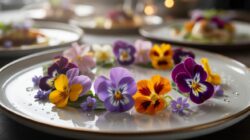
Sterilize all storage containers before use to prevent mold growth in syrups and butters. Label every jar with the date and the specific flower species used. High sugar content acts as a natural preservative for syrups kept in the refrigerator. Use these DIY floral accents to elevate basic meals without purchasing expensive specialty ingredients. Tactical preparation turns a basic garden harvest into a versatile culinary toolkit.
Recipes With Edible Flowers For Drinks Cocktails And Mocktails
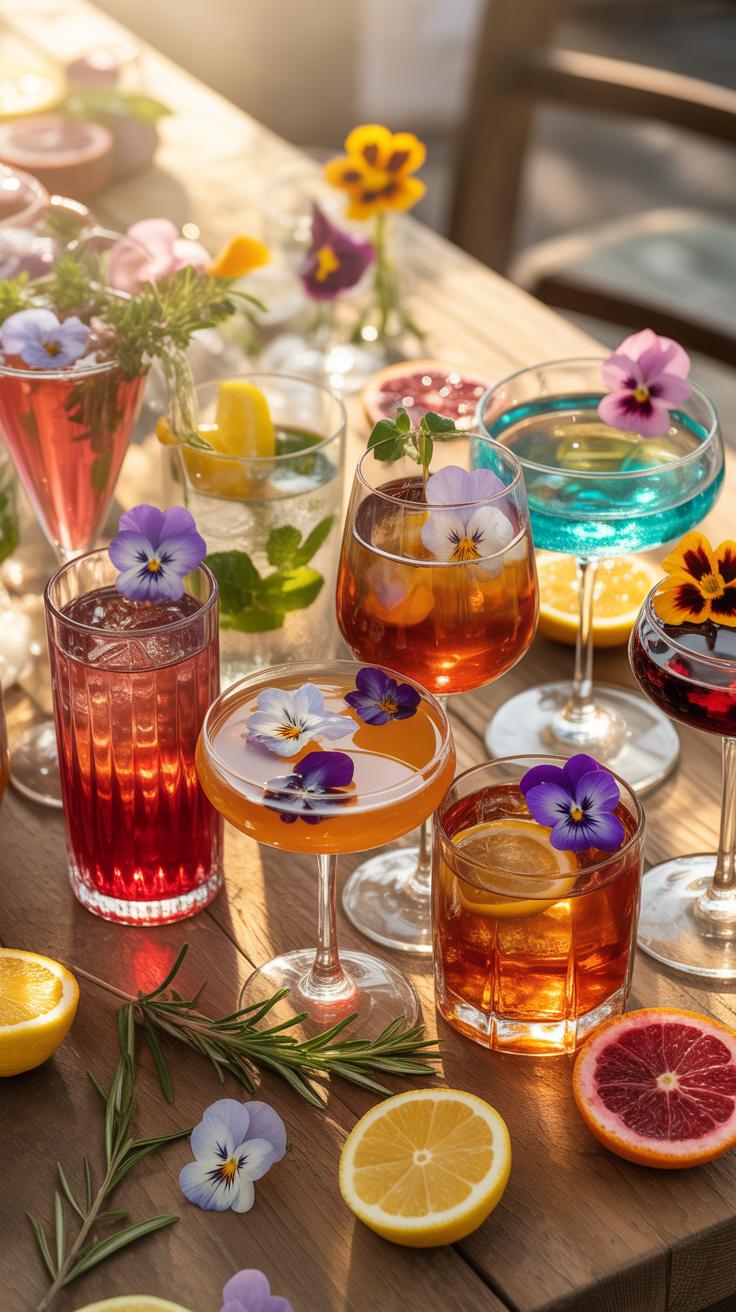
Floral Cocktails And Mocktails That Use Edible Flowers For Flavor And Beauty
Floral components add complex aromatic profiles to modern drinks. Mixologists use lavender and hibiscus to provide tannic structure and acidity. These plants change the chemical balance of a cocktail. Use fresh violets or pansies for visual impact without altering the base spirit flavor. Large blooms like hibiscus serve as functional garnishes. They release natural pigments that create vibrant red gradients in clear carbonated liquids.
Temperature control is critical when working with fresh petals in drinks. High heat wilts delicate flowers like borage or chamomile. Add these near the end of the building process for mocktails. For cocktails, chilled glassware preserves the structural integrity of the bloom. This technique keeps the drink looking crisp for the consumer. Use neutral spirits like vodka or gin to allow the natural floral notes to remain the primary sensory focus.
Edible Flower Simple Syrups And Infusions To Elevate Your Drink Recipes
Simple syrups provide a stable medium for floral extraction. Combine equal parts sugar and water with dried rose buds or lavender. Simmer the mixture to dissolve the solids and pull oils from the petals. Strain the liquid immediately to prevent bitter tannins from ruining the profile. This syrup replaces standard sweeteners in classic recipes like the Gimlet or the French 75. It ensures consistent flavor distribution throughout the drink.
Infusing direct spirits requires a cold maceration process. Place elderflowers or jasmine in high proof alcohol for forty eight hours. This prevents the delicate aromatics from burning off under heat. Use glass containers to avoid chemical reactions with acidic floral compounds. Store the finished infusion in a dark cool place to maintain color stability. This method allows for a concentrated floral punch that does not dilute the final beverage during the mixing phase.
The Cultural History Behind Cooking With Edible Flowers Around The World
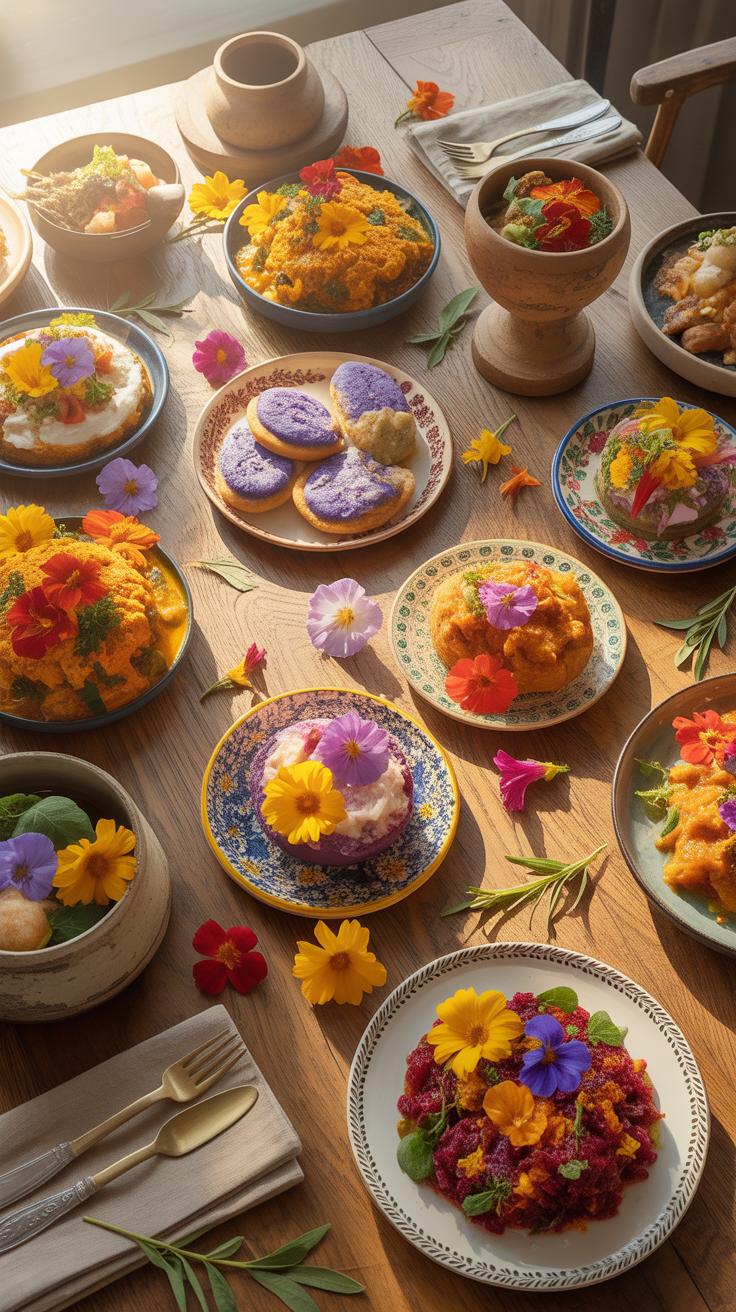
How Ancient Civilizations Used Edible Flowers In Food And Medicine
Ancient Romans utilized roses and violets in many recipes. They added these blooms to purees and sauces for flavor. Roses represented status and luxury at banquets. Gladiators often consumed specific petals to boost their strength. Physicians used these flowers to treat stomach issues and inflammation. They valued the medicinal properties as much as the taste. Flora was a tool for health.
The Aztecs and Mayans focused on the squash blossom. They cooked these bright yellow flowers in stews and soups. This practice provided essential vitamins to their diet. In ancient China, people consumed lilies and chrysanthemums. They believed these plants promoted a long life and liver health. Culinary use of flowers was a strategic choice for survival and longevity across these diverse early societies.
Modern Global Cuisines That Continue To Champion Edible Flowers In Cooking
Middle Eastern cuisine relies heavily on orange blossoms and roses today. Chefs distill these flowers into waters for desserts and syrups. This technique preserves the intense flavor oils for long periods. Baklava and Turkish delight require these floral notes for authenticity. The region views these ingredients as tactical flavor enhancers. They provide a specific profile that spices alone cannot match in traditional baking.
Japanese chefs use cherry blossoms and chrysanthemums in seasonal dishes. They salt and pickle these flowers to extend their shelf life. This adds a salty and floral punch to rice and vinegar preparations. In Thailand, blue pea flowers color drinks and rice naturally. These cultures treat flowers as functional food dyes and seasoning agents. They prioritize natural ingredients over synthetic alternatives to achieve vibrant colors and unique tastes.
Frequently Asked Questions

Which flowers are safest for beginners to use in the kitchen?
If you are new to cooking with edible flowers, start with easily identifiable varieties like pansies, nasturtiums, or violas. Pansies offer a mild, grassy flavor and beautiful colors, while nasturtiums provide a delightful peppery kick similar to watercress. Always ensure your blooms are organic and free from pesticides. Starting with these versatile, common petals makes it simple to experiment with floral infusions in your favorite everyday salads and desserts.
How do I properly prepare and clean flowers before adding them to dishes?
To master cooking with edible flowers, gentle handling is essential. Carefully wash your blooms by dipping them in a bowl of cold water to remove any lingering dust or small insects. Pat them dry very gently with a soft paper towel. Most chefs recommend removing the stamens and pistils, as well as the bitter white base of the petals, to ensure your finished dish has the best texture and most delicate flavor profile.
Can I use flowers from a local florist, or is there a more affordable way to source them?
Never use blooms from a standard florist or garden center, as these are often treated with chemicals not safe for consumption. For a budget-friendly approach, consider growing your own from seed in a small windowsill herb garden. Alternatively, look for culinary-grade dried flowers in the spice aisle or visit local farmers’ markets. These sources provide affordable, high-quality options for anyone interested in exploring the vibrant world of cooking with edible flowers safely.