
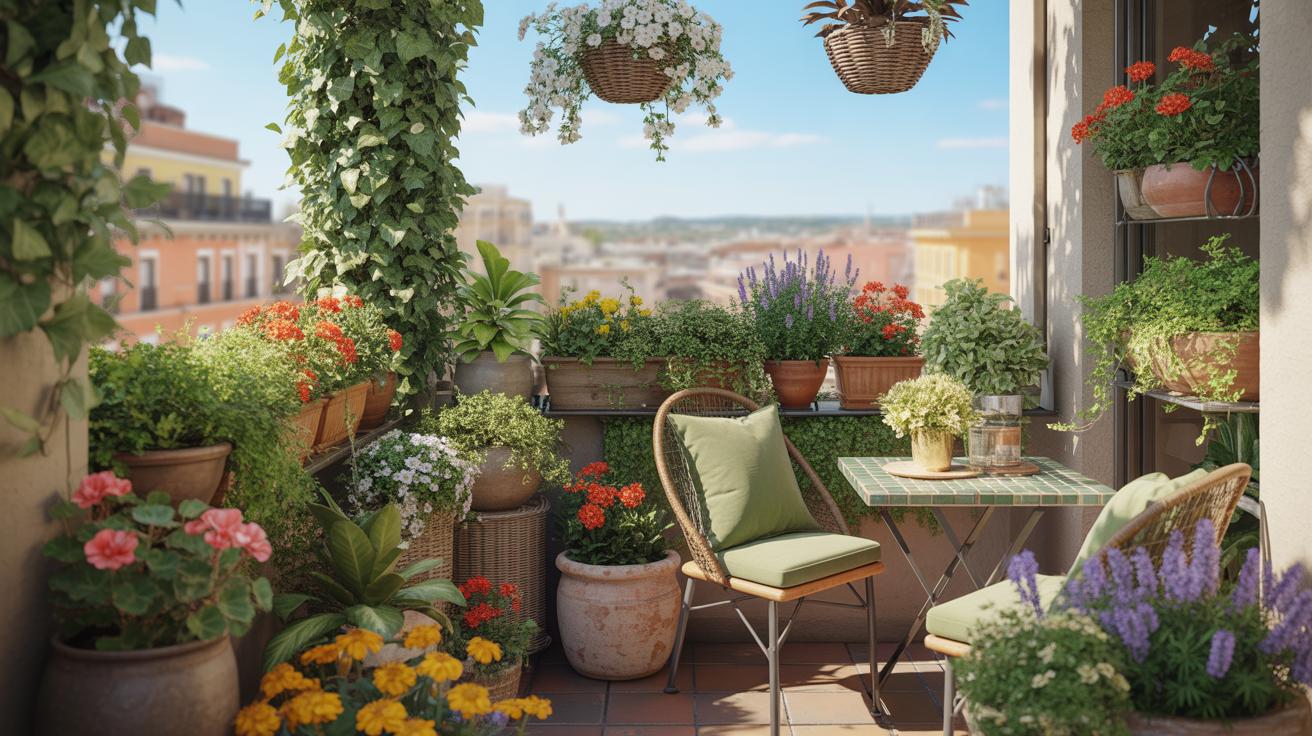
What Is Balcony Container Gardening And Why ItS Perfect For Small Space Gardening
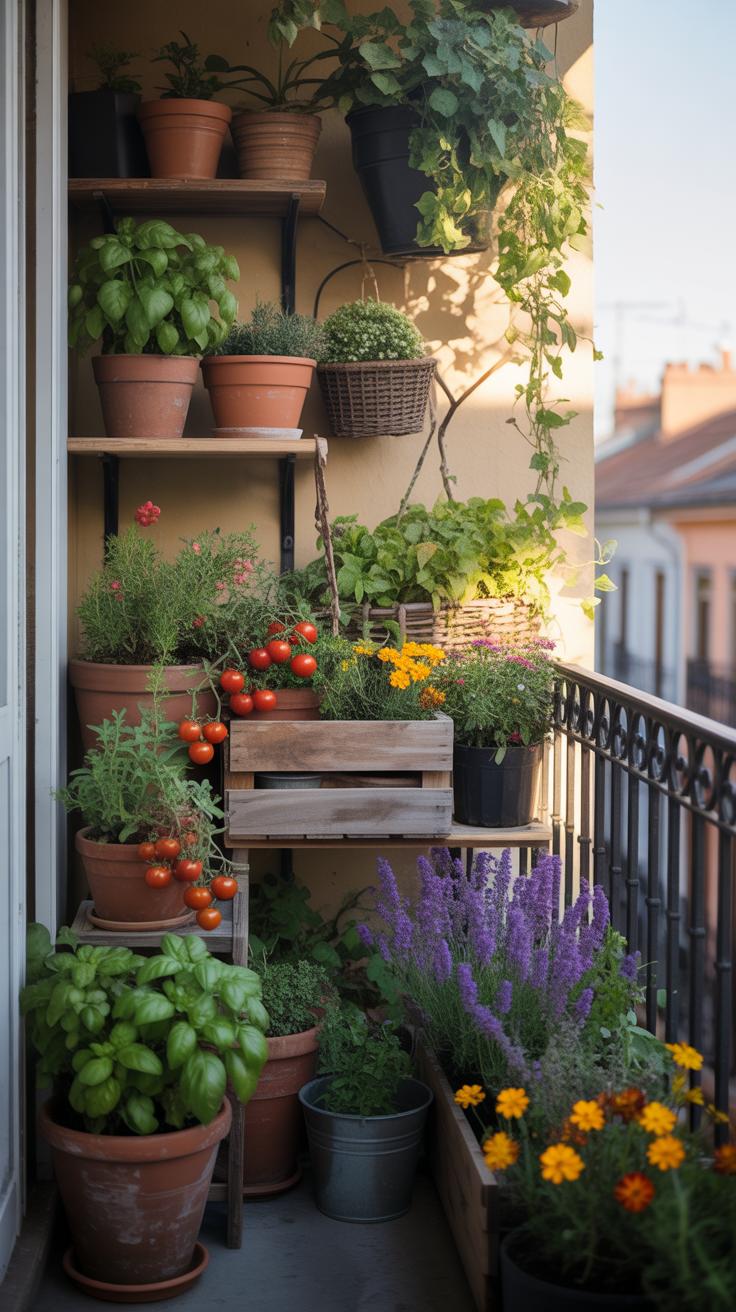
Understanding The Basics Of Container Gardening On A Balcony
Balcony container gardening involves growing plants in portable vessels rather than in the ground. You must account for specific variables like weight limits and wind exposure. Every pot needs drainage holes to prevents root rot. You control the soil quality entirely. This method bypasses poor local earth conditions. Success depends on matching plant species to the daily sun hours your balcony receives.
Weight management is a critical technical factor for balcony setups. Heavy ceramic pots and wet soil can exceed structural load limits. Use lightweight materials like fiberglass or resin for large displays. Positioning containers near load bearing walls or over floor joists increases safety. Automatic drip systems can manage irrigation without manual labor. Proper drainage trays protect the balcony floor from water damage and staining.
Why Small Space Gardening On A Balcony Is More Rewarding Than You Think
Small space gardening offers total control over the growing environment. You eliminate typical backyard problems like burrowing pests or invasive weeds. Vertical space allows you to grow more food per square foot than traditional rows. High rise locations often have fewer ground level insects. You can move pots to follow the sun across different seasons. This flexibility ensures maximum yield in minimal space.
The proximity of a balcony garden creates a direct feedback loop. You notice problems like wilting or pests immediately because the garden is steps away. This leads to faster interventions and healthier plants. Microclimates on balconies often stay warmer than the ground. This heat retention can extend your growing season into the early winter. Strategic placement creates a private windbreak and reduces ambient street noise.
How To Plan Your Small Balcony Garden From Scratch
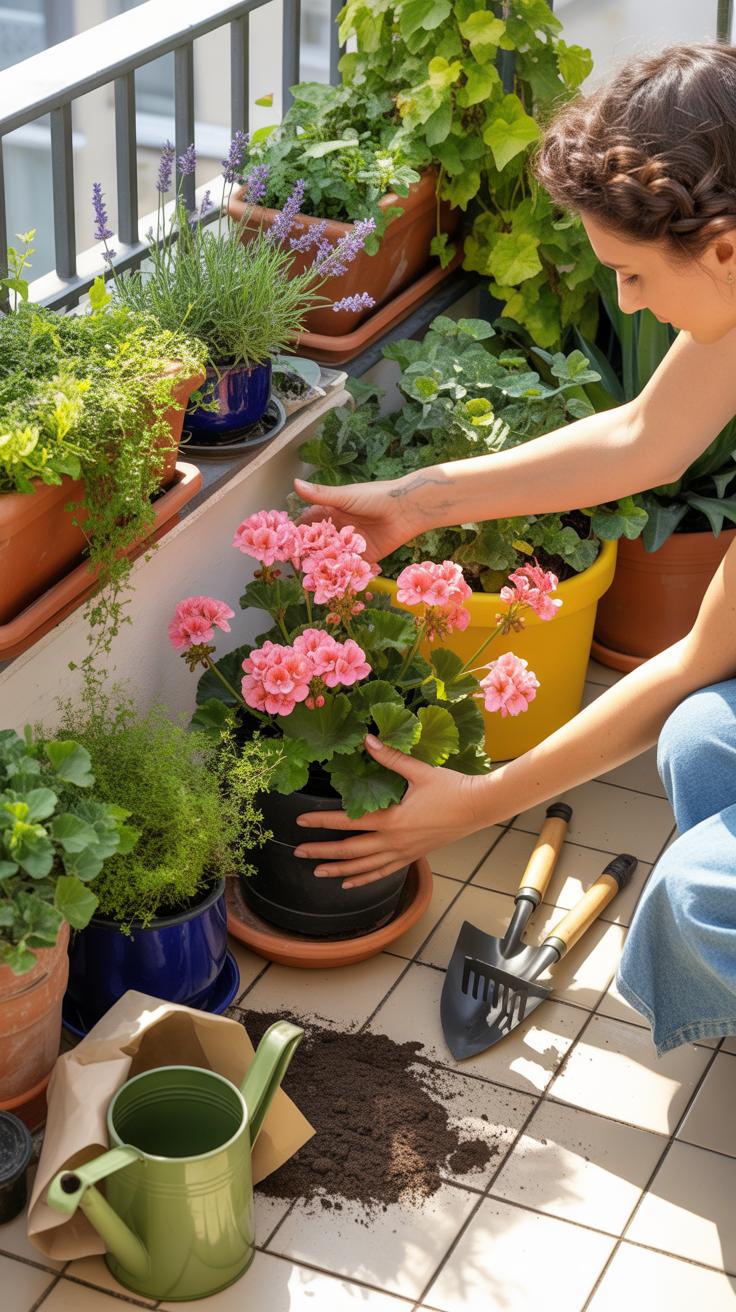
Assessing Your Balcony Space, Sunlight, And Weight Capacity Before You Begin
Measure your floor area and vertical height accurately. Check the building code for weight limits per square foot. Balconies typically support sixty to one hundred pounds per square foot. Use a light mix of peat or coco coir to keep weight low. Saturated soil and heavy ceramic pots can compromise structural integrity. Evaluate drainage holes carefully to prevent water damage to the floor.
Track direct sun exposure for six hours daily. South facing balconies get intense heat and need drought tolerant plants. North facing spots stay in the shade and require ferns or hostas. Wind speed increases on higher floors. Strong gusts dry out soil and tip over tall plants. Secure your pots to the railing for safety. Map out your utility access like water taps and power outlets now.
Choosing The Right Container Sizes And Materials For Your Small Balcony Garden
Select materials based on durability and weight. Plastic and resin pots stay light and hold moisture well. Terra cotta is classic but heavy and porous. It breathes well but dries out soil fast in summer. Metal containers look modern but can cook plant roots in direct sun. Choose fiberglass for a premium look without the heavy weight of stone. Match the material to your local climate.
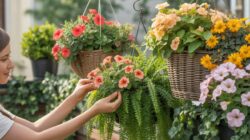
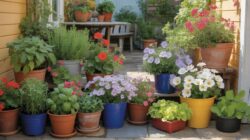
Root volume determines the size of your pot. Small herbs need six inches of depth. Large tomatoes or shrubs require twelve to eighteen inches. Deep pots provide a buffer against temperature swings. Ensure every container has clear drainage paths. Use saucers or pot feet to prevent wood rot on the deck. Grouping different sizes creates a better look and helps maintain a humid microclimate for your plants.
Top Balcony Gardening Ideas To Maximize Beauty And Functionality
Creative Container Arrangements That Add Color And Texture To Any Balcony
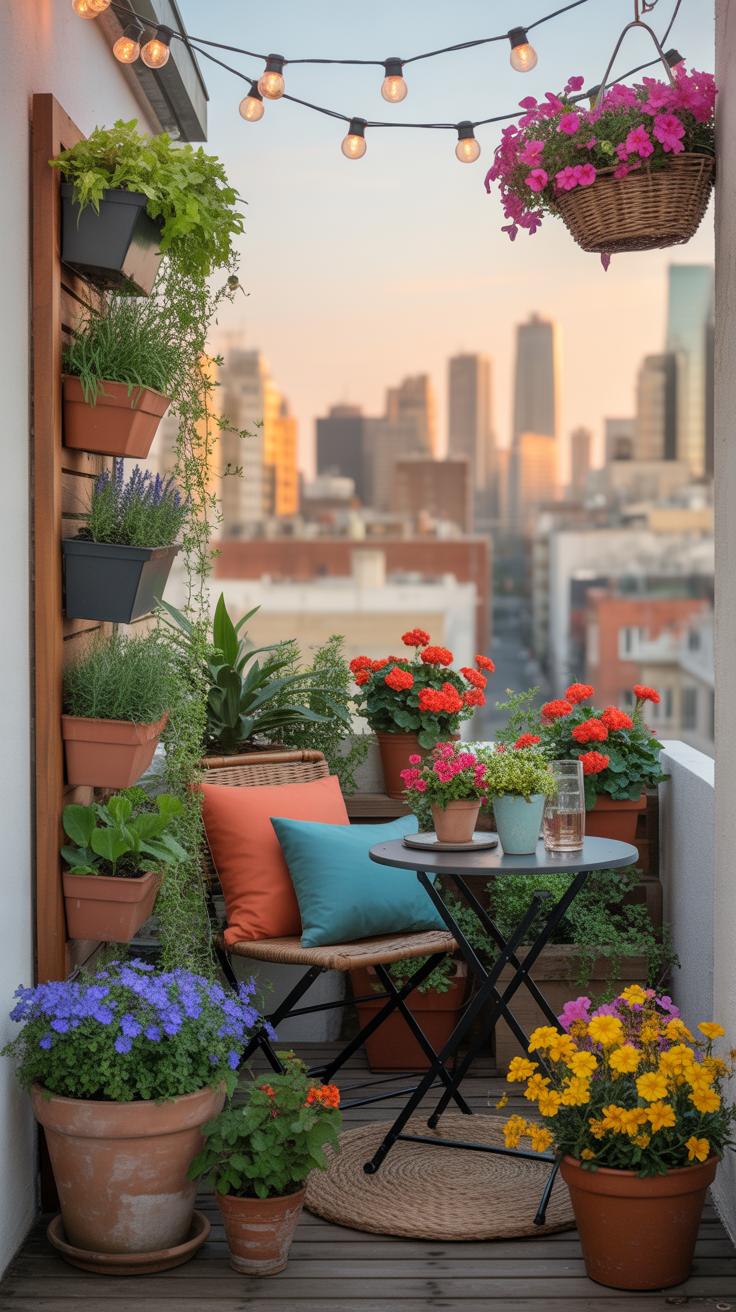
Effective balcony design uses vertical space to maximize visual impact. Place large, heavy pots at the base to anchor the arrangement. Use tiered shelving or wall-mounted planters to draw the eye upward. Grouping containers in odd numbers creates a natural look. Select materials like terracotta for breathability or fiberglass for weight reduction on high floors. Ensure every container has drainage holes to prevent root rot.
Contrast leaf shapes and colors to build depth without overcrowding space. Pair fine-textured grasses with broad-leafed hostas or caladiums. Use the thriller, filler, and spiller method for individual pots. Place a tall focal plant in the center. Surround it with mid-sized mounds. Add trailing vines to soften the edges of the container. This tactical layer approach ensures the balcony looks full and intentional from every angle.
To plant a garden in small pots on your balcony is to believe in a beautiful tomorrow. Even the tiniest porch can cradle the soul of a home.
Seasonal Planting Ideas To Keep Your Balcony Garden Thriving Year Round
Strategic planting requires matching species to the current sunlight and temperature. Plant cold-hardy pansies or kale in early spring to handle frost. Transition to heat-tolerant species like petunias or zinnias during peak summer months. Monitor soil moisture daily as wind and heat dry out containers faster than ground beds. Use self-watering pots to maintain consistent hydration levels during high-stress weather periods.

Prepare for autumn by introducing chrysanthemums and ornamental peppers for continued color. Shift to evergreens or winter-hardy shrubs when the growth cycle slows. These plants provide structural interest even in dormant months. Remove dead annuals immediately to prevent pests from nesting in the debris. Protect perennial roots by wrapping pots in burlap or moving them against the building wall for warmth during freezing temperatures.
Exploring A Vertical Hydroponic Garden On Balcony For Space Saving Growth
What Is A Vertical Hydroponic System And How Does It Work On A Balcony
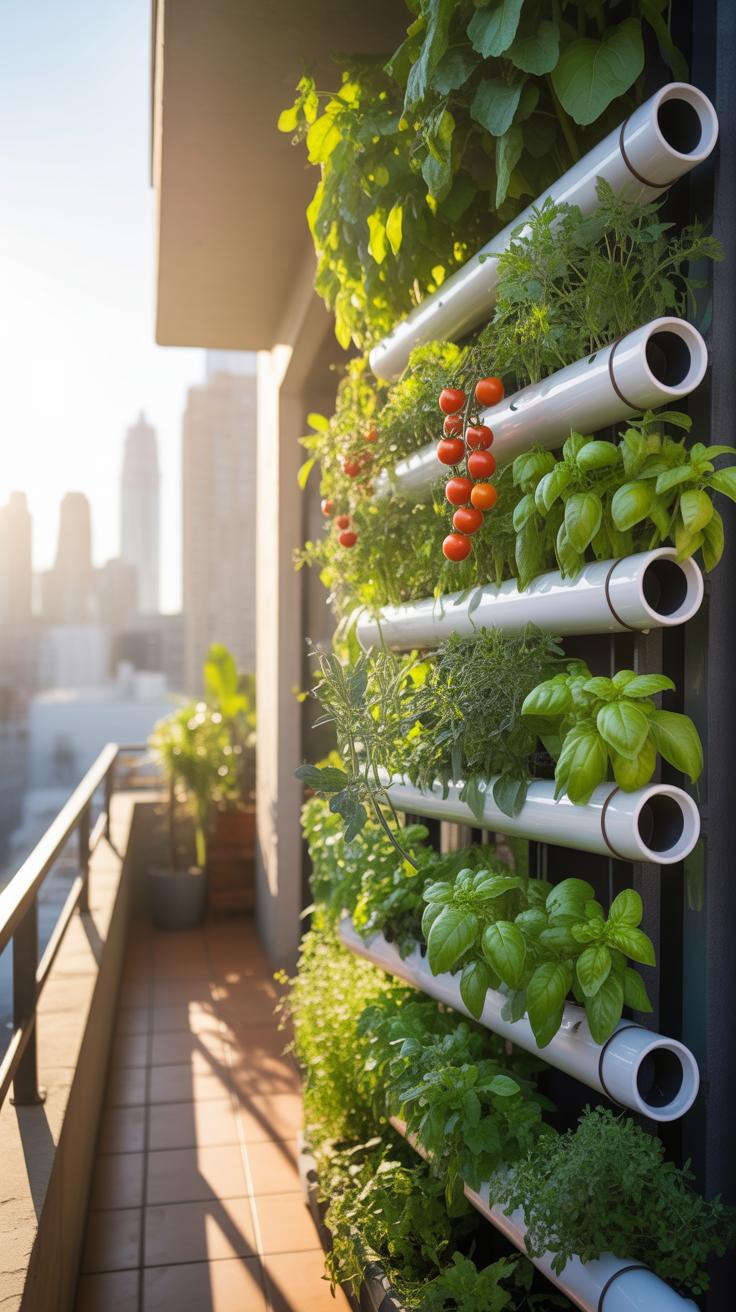
Vertical hydroponics uses a stacked structure to grow plants without soil. Water mixed with mineral nutrients flows through the system to feed plant roots directly. On a balcony, this setup saves floor space by utilizing vertical height. A pump moves the nutrient solution from a bottom reservoir to the top of the tower. Gravity then pulls the water down over each plant.
Passive systems like the Kratky method or active systems like Nutrient Film Technique work well in small spaces. You need a nearby power outlet for the pump and a stable level surface. These systems weigh less than soil-filled pots when fully loaded. This reduces the structural load on your balcony. You must monitor pH levels and water temperature daily to ensure the system remains stable and productive.
Best Plants To Grow In A Vertical Hydroponic Garden On Your Balcony
Leafy greens and small herbs perform best in vertical balcony systems. Lettuce, spinach, and kale thrive because they have shallow root systems. These plants mature quickly and do not require heavy support structures. You can harvest individual leaves to keep the system balanced. Avoiding large root vegetables is critical. Those crops require deep substrate and will clog the narrow internal plumbing of a vertical tower.
Strawberries and bush beans also adapt well to vertical hydroponics. These plants benefit from the increased airflow found at higher balcony levels. Better airflow reduces the risk of fungal diseases. You must select compact or determinate varieties to prevent the foliage from blocking light to lower tiers. High-yield crops like basil and cilantro provide constant harvests from a very small footprint. Proper light exposure ensures these plants maintain high nutrient density.
Building A Small Balcony Vegetable Garden In Containers
Which Vegetables Grow Best In Containers On A Small Balcony
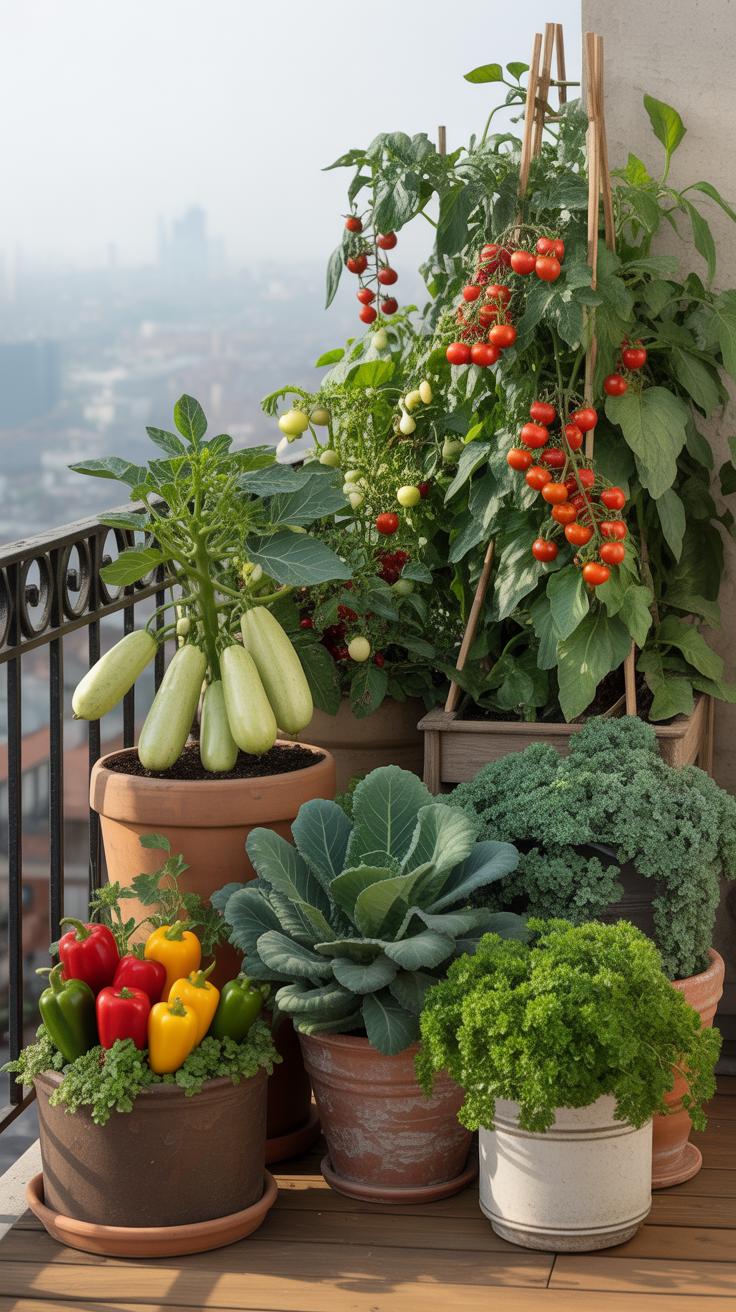
Small balcony vegetable gardening relies on selecting compact cultivars with high yields. High-rise environments often face intense wind and heat. You must choose plants that do not require deep root systems or massive horizontal space. Bush varieties and determinate crops perform better than sprawling vining types. Successful Balcony Container Gardening starts with matching your plant selection to the specific light hours your space receives daily.
- Leafy Greens: Lettuce and spinach thrive in shallow containers. These crops grow quickly and tolerate partial shade better than most vegetables. Plant them in wide boxes to maximize your harvest surface area throughout the spring and fall seasons.
- Cherry Tomatoes: Select determinate or patio varieties for restricted spaces. These plants grow to a fixed height and do not require tall wooden structures for support. They produce heavy fruit loads in five gallon buckets if they receive full sun.
- Bush Beans: Unlike pole beans, bush varieties stay low and compact. They do not need extensive trellising to produce a high volume of pods. These plants fix nitrogen in the soil and grow well in standard rectangular window boxes or round pots.
- Radishes: These root vegetables mature in as little as twenty five days. They require very little soil depth, making them perfect for shallow balcony troughs. You can sow seeds every two weeks to maintain a constant supply of fresh food.
- Bell Peppers: Compact pepper plants adapt well to the heat found on concrete balconies. They require consistent moisture but take up very little square footage. Use sturdy stakes to support the branches once the heavy fruit begins to develop and ripen.
Vertical space utilization is the next tactical move for a small balcony. Use railing planters for herbs and greens to keep the floor clear for larger pots. If your balcony gets more than six hours of sun, focus on fruiting crops like peppers. For north facing balconies with less light, stick to kale or Swiss chard. Proper variety selection ensures your limited space produces a measurable caloric return.
Soil, Drainage, And Fertilizer Tips For A Thriving Small Balcony Vegetable Garden
Never use standard garden soil in balcony containers. It is too heavy and lacks the necessary air pockets for root health. It also often carries pathogens and pests that will thrive in a confined space. High quality potting mix uses peat moss or coconut coir to hold moisture while perlite provides essential drainage. This specific blend prevents the soil from compacting into a hard brick during the summer.

Drainage holes are non negotiable for container success. Drill extra holes if your pots do not have enough exit points for water. Use water soluble organic fertilizers every two weeks because frequent watering leaches nutrients from the soil quickly. Controlled release granules provide a steady base of nutrition, but liquid feeds offer immediate support during the peak growing phase. Keep the soil moist but never allow the roots to sit in stagnant water.
Designing A Productive Vegetable Garden Balcony Layout That Works
Understanding Balcony Vegetable Garden Layout Principles For Maximum Yield
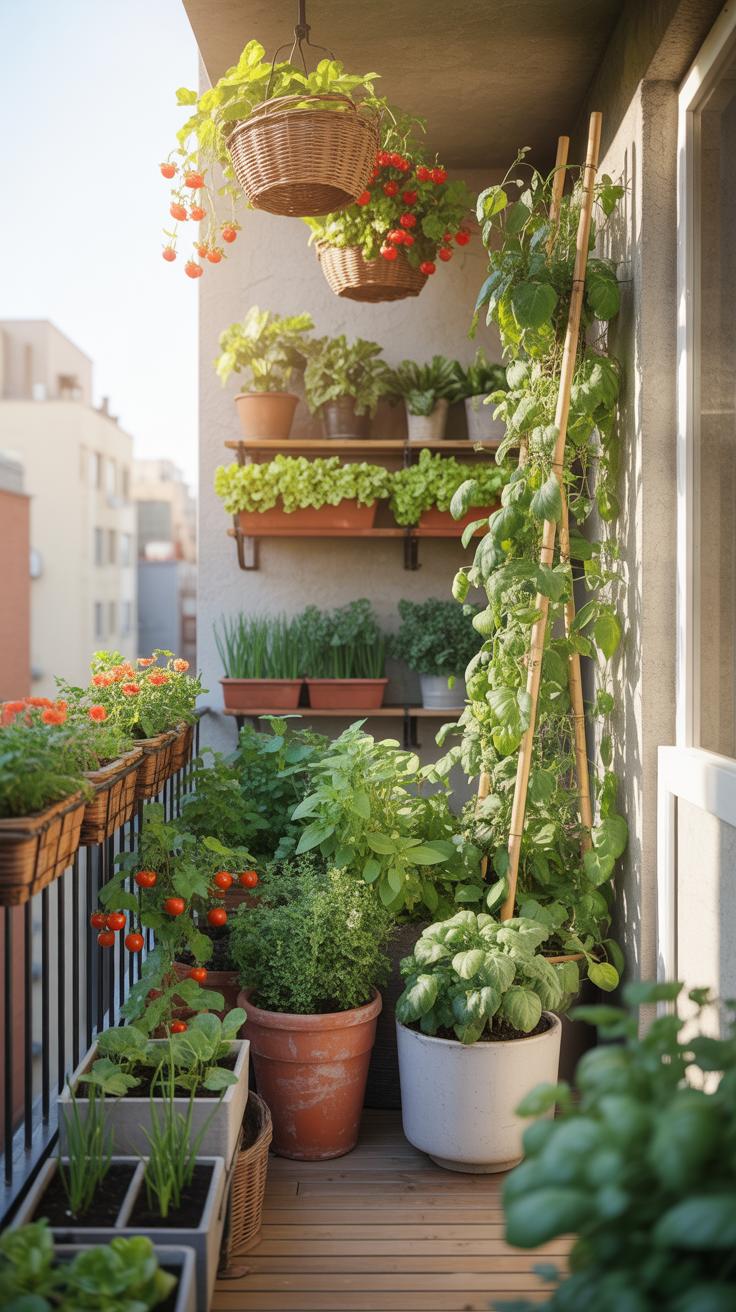
Layout efficiency starts with structural weight limits. Standard apartment balconies usually support forty to sixty pounds per square foot. Use lightweight potting soil and plastic or fabric containers to stay within these limits. Arrange the heaviest pots near load-bearing walls or over support beams. This keeps your building safe. Strategic placement ensures your balcony holds more plants without risking structural failure or costly repairs.
Yield depends on vertical space utilization. Use the French Intensive gardening method by planting in high-density patterns. Grow tall crops like pole beans or cucumbers on trellises against the back wall. Place smaller leafy greens at the base of these taller plants. This layering technique maximizes every square inch of space. Proper planning creates a microclimate that protects small plants from wind while increasing your total food harvest.
How To Arrange Containers For Airflow Sunlight And Easy Maintenance
Sunlight determines your layout. Most vegetables require six to eight hours of direct sun daily. Track the sun path across your balcony before placing pots. Put heat-loving plants like peppers in the brightest spots. Move leafy greens to shaded corners. Leave at least four inches of space between pots. This gap allows air to circulate. Proper airflow prevents fungal diseases and keeps pests from spreading between plants.
Daily maintenance requires a clear path. Leave enough room to walk and reach every container without moving others. Group plants with similar water needs together to save time. Place a heavy-duty saucer under every pot to catch drainage. Standing water damages balcony floors and upsets neighbors below. A smart layout keeps your workspace clean and organized. It makes watering and harvesting fast and simple for any busy gardener.
Growing A Balcony Vegetable Garden From Seed To Harvest
Starting Seeds Versus Buying Transplants For Your Balcony Vegetable Garden
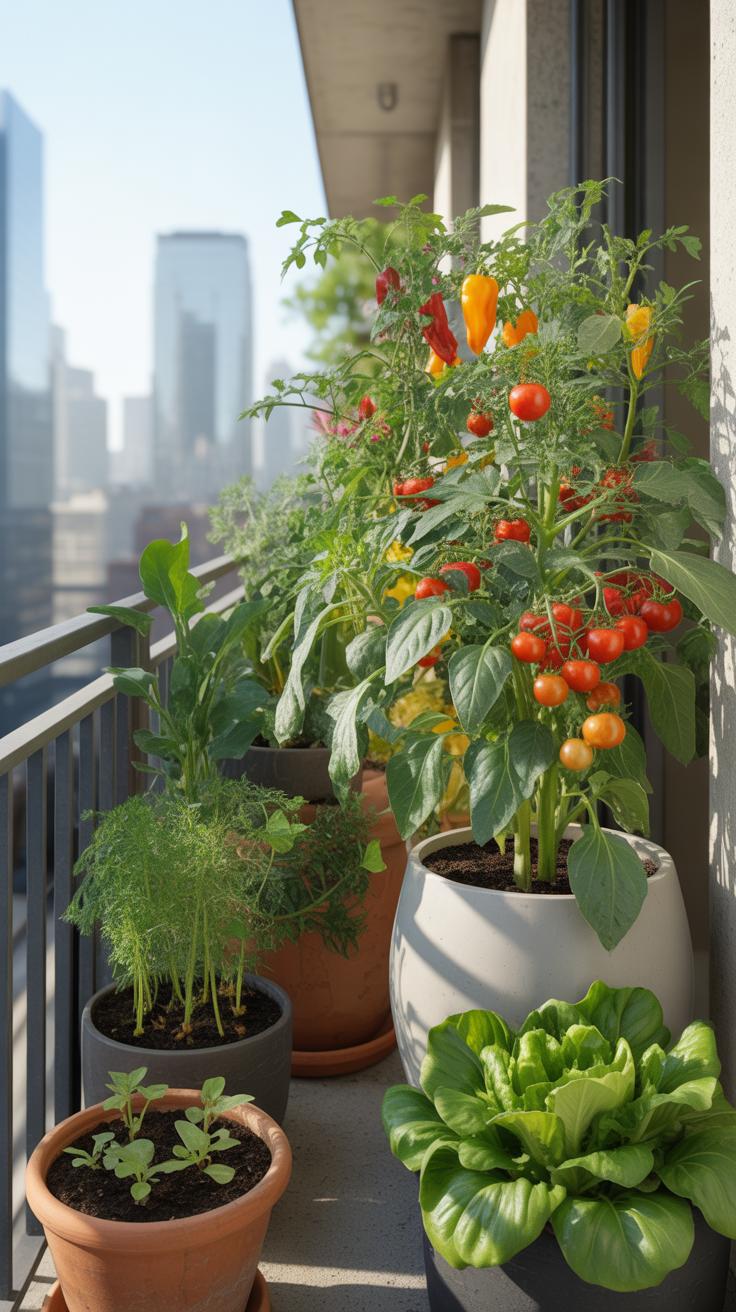
Starting seeds gives you access to rare heirloom varieties that big retail stores do not stock. You control the timing and ensure the plants are organic from day one. This method saves money if you plan to fill many containers at once. However, seeds require dedicated space indoors and consistent warmth to germinate. Use a seed starting mix rather than heavy potting soil to prevent fungal diseases.
Buying transplants saves time and reduces risk for beginners. Local nurseries sell established plants that already have strong root systems. These plants can withstand the wind and temperature shifts of a balcony immediately. You bypass the fragile seedling stage where most crops fail. Choose transplants if your growing season is short or if you lack indoor light. Inspect every plant for pests before bringing it home.
Watering Schedules And Care Routines To Sustain A Healthy Balcony Vegetable Garden
Containers lose moisture faster than ground soil because of increased airflow and solar heat. Check your soil daily by sticking a finger one inch deep. If it feels dry, water until the liquid drains from the bottom holes. High floors with heavy wind require more frequent watering than sheltered lower units. Use large pots to hold more water and keep root temperatures stable during the summer heat.

Fertilize your vegetables every two weeks with a water soluble solution. Frequent watering leaches nutrients out of the potting mix quickly. Prune dead leaves to stop the spread of disease in tight quarters. Rotate your pots once a week so every side of the plant gets even sunlight. Harvest your crops as soon as they ripen to encourage the plant to produce more food for you.
Apartment Patio Vegetable Garden Container Gardening For Renters And Urban Dwellers
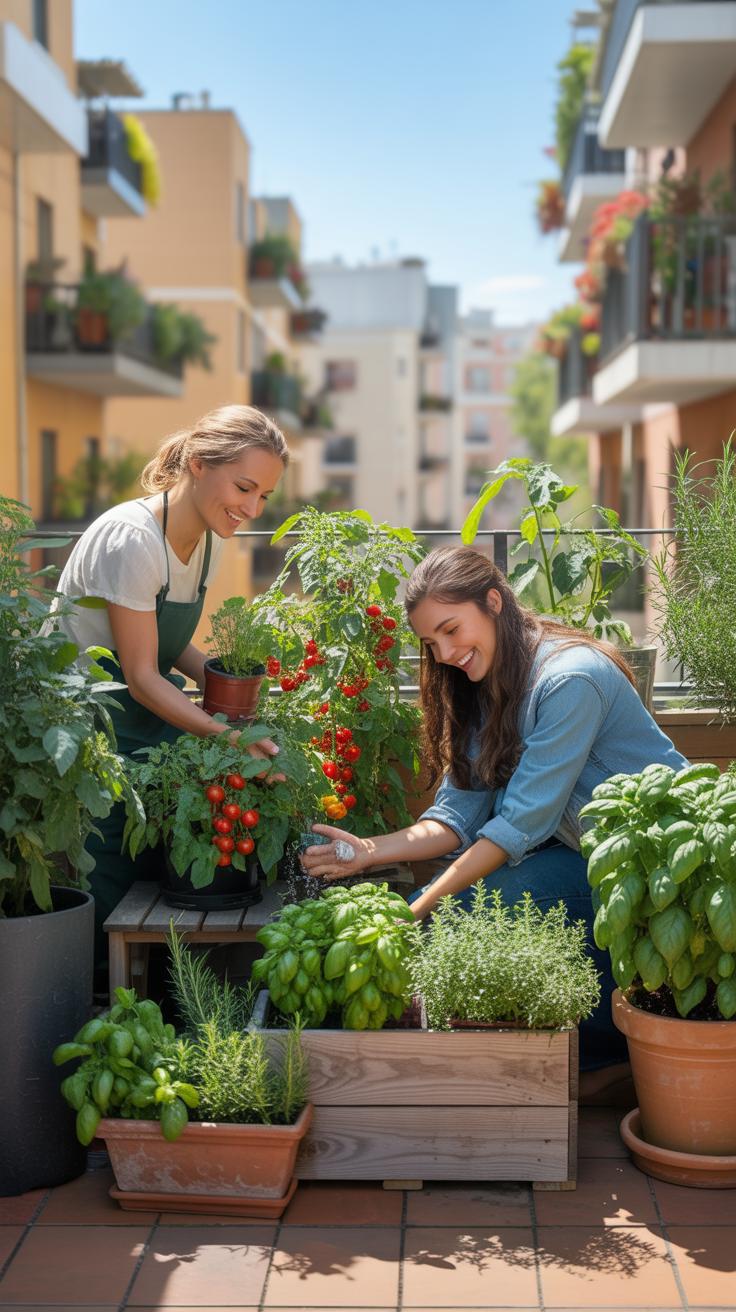
Renter Friendly Container Garden Solutions For An Apartment Patio Vegetable Garden
Renters must prioritize mobility and structural safety when building a garden. Heavy ceramic pots pose weight risks to cantilevered balconies and are difficult to move during a lease end. Use lightweight resin or fabric aeration bags instead. These materials reduce the load on the building and fold down for easy transport. Focus on modular systems that do not require drilling into walls or floor surfaces.
Vertical space efficiency is critical for small urban footprints. Use free-standing metal racking or tension poles to hold small pots. Avoid permanent attachments to siding or railings that could violate lease terms. Self-watering inserts or reservoirs help manage drainage without staining the patio floor. Always place saucers or plastic trays under every container to prevent water damage to the property owner’s deck or concrete.
How To Deal With Wind Heat And Limited Water Access On An Apartment Patio
High-rise environments create harsh growing conditions including wind tunnels and intense reflected heat. Wind dries out soil rapidly and can snap thin stems. Use heavy-duty zip ties to secure taller plants to railings without causing permanent damage. Group containers together to create a humid microclimate. This strategy reduces evaporation and protects smaller plants from the direct force of the wind on exposed edges.
- Fabric Pots: Use felt grow bags to prevent root circling and allow air pruned roots to stay cool. The porous material lets excess heat escape the soil better than plastic or metal. This keeps plant temperatures stable during peak summer afternoon sun.
- Large Reservoirs: Choose containers with bottom-fill water reservoirs to reduce the frequency of manual watering. These units draw water up through capillary action. This method ensures consistent moisture levels even when you cannot haul heavy watering cans through your living room every single day.
- Mulching Layers: Apply a thick layer of straw or cedar chips to the top of every vegetable container. This barrier blocks direct sunlight from hitting the soil surface. It prevents moisture from evaporating and keeps the root zone significantly cooler during heat waves or dry spells.
- Windbreaks: Install sturdy lattice panels or privacy screens to deflect high-velocity air. These structures slow down the wind before it hits fragile vegetable leaves. Secure these panels with removable clamps or heavy duty ties to keep the installation renter-friendly and temporary.
- Drip Systems: Connect a battery-powered timer to a portable water tank or a kitchen sink adapter. This setup automates the watering process for those without an outdoor hose bib. Consistent hydration is the only way to ensure vegetable survival on a south-facing urban patio.

Logistics matter when you lack a garden hose. Invest in a collapsible five-gallon bucket or a long-reach watering can to minimize trips to the sink. Keep a dedicated workspace for potting and pruning to contain soil messes. Use a shop vacuum to clean up debris quickly. Managing your space with these tactical tools ensures the garden remains a benefit rather than a maintenance burden for busy urban dwellers.
Beautiful Flowering Plants And Herbs To Complement Your Balcony Container Garden
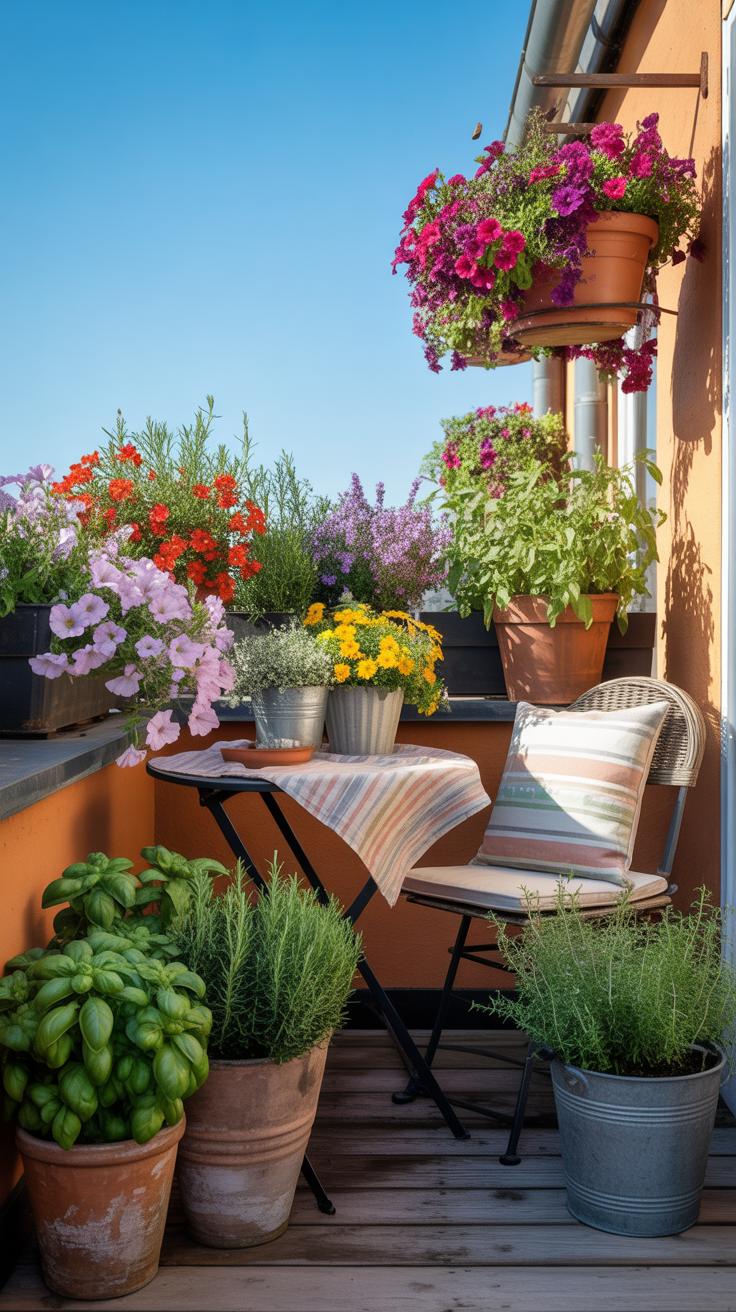
Best Flowering Plants For Containers That Thrive In Balcony Conditions
Balcony environments create microclimates that demand heat-tolerant species. Geraniums and petunias excel here because they handle intense solar radiation and wind. Use non-porous glazed ceramic or plastic pots to retain moisture. Wind at higher elevations dries out soil quickly. Select compact cultivars to prevent the wind from snapping stems. Secure heavy pots to the floor to prevent accidents during storms.
Proper drainage remains the most critical factor for container success. Drill extra holes if the pot lacks them. Use a high-quality potting mix instead of garden soil to ensure oxygen reaches roots. Deadhead spent blooms once a week to force the plant to produce more flowers. Apply a balanced liquid fertilizer every two weeks. This replenishes nutrients washed out by frequent watering in small containers.
Growing Culinary Herbs Alongside Vegetables For A Functional And Fragrant Balcony Garden
Interplanting herbs with vegetables maximizes vertical space and deters pests. Rosemary and thyme possess woody stems that withstand strong balcony breezes. Place these herbs at the edge of containers to spill over the sides. This creates a living mulch that cools the soil for adjacent vegetable roots. Use terracotta pots for Mediterranean herbs. The porous clay allows roots to breathe and prevents rot.
Basil and mint require more water than lavender or sage. Group plants with similar moisture needs in the same container to simplify maintenance. Harvest the top leaves regularly to encourage bushy growth. This prevents the herbs from becoming leggy and unattractive. Position sun-loving herbs like oregano in the brightest spots of the balcony. Use organic Neem oil if aphids appear on soft herb stems.
Common Balcony Container Gardening Mistakes And How To Avoid Them
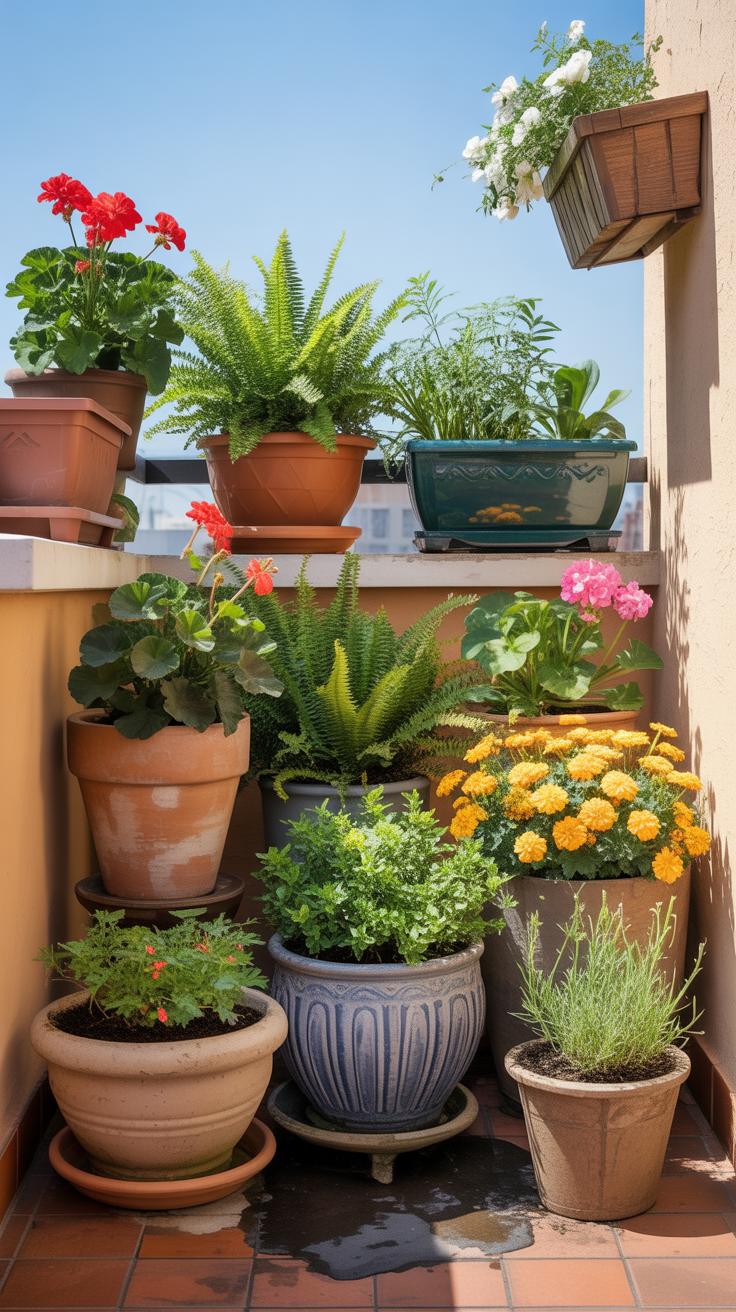
Overwatering, Poor Drainage, And Other Container Gardening Pitfalls To Watch For
Overwatering kills more balcony plants than drought. Most beginners water on a schedule rather than checking soil moisture. Containers lack the natural drainage of open ground. Without drainage holes, water sits at the bottom and rots roots. You must use high-quality potting mix instead of garden soil. Garden soil is too heavy for pots. It compacts quickly and suffocates the root systems of your plants.
Wind exposure is a major factor in high-rise gardening. Strong winds dry out soil and snap stems. You should choose heavy pots like terracotta or stone to prevent tipping. Light plastic pots often fly away in storms. Grouping pots together creates a humid microclimate. This protection helps plants survive extreme weather. Placing pots directly on the balcony floor can also trap moisture and damage the building surface.
How To Troubleshoot Poor Plant Growth And Revive A Struggling Balcony Garden
Yellow leaves often signal a nutrient deficiency or poor light. Balcony plants deplete soil nutrients every few weeks. You must apply water-soluble fertilizer throughout the growing season. Check the specific light requirements for each species. Many balconies get less sun than you think. Moving a pot just two feet can drastically change its health. Observe how shadows move across your space during the afternoon hours.
Identify pests early to stop an infestation. Spider mites and aphids thrive in the dry air of balconies. Blast them off with a firm stream of water. If a plant looks spindly, it likely needs more light. Pruning leggy stems encourages bushier growth. Clean your tools with alcohol after each use. This prevents the spread of disease between your pots. Consistency is the only way to maintain a garden.
Frequently Asked Questions

What are the best plants for someone new to balcony container gardening?
If you are just starting out, prioritize hardy plants that tolerate varied conditions. Succulents, herbs like mint or basil, and leafy greens are excellent choices for beginners. These varieties allow you to practice balcony container gardening without the pressure of complex maintenance. Focus on resilient plants that signal when they need water, such as peace lilies or marigolds, to help you develop a green thumb while beautifying your outdoor space.
How do I ensure proper drainage when planting in small containers?
Proper drainage is the secret to a thriving garden. Always choose pots with pre-drilled holes to prevent root rot. If you find a beautiful decorative pot without drainage, use it as a “cachepot” by placing a plain plastic nursery liner inside it. For successful balcony container gardening, avoid adding rocks to the bottom, as this can actually raise the water table; instead, use high-quality, porous potting mix to keep roots healthy.
Can I create a beautiful balcony garden on a tight budget?
Absolutely! You can build a stunning oasis without spending a fortune by upcycling items like old wooden crates, tin cans, or plastic buckets as unique planters. Look for seed packets instead of mature plants to save money, and try propagating cuttings from friends. Many community groups offer free compost or tool swaps, making it easy to enjoy the rewards of gardening regardless of your monthly decorating budget or available space.