What Are Flower Garnish Ideas And Why They Matter In Food Presentation
The Role Of Food Garnish In Elevating Everyday Meals
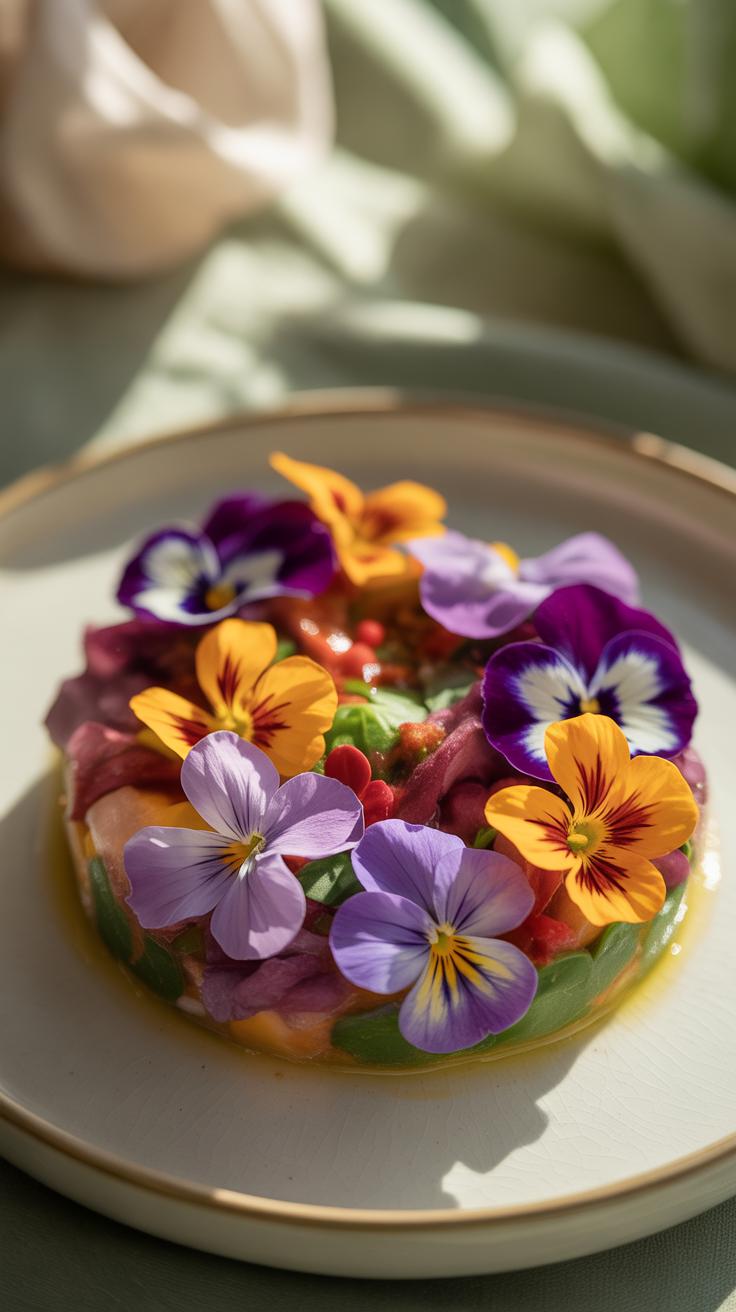
Food garnishes serve a functional purpose beyond simple decoration. They create immediate visual appeal and signal quality to the diner. A well placed flower provides a focal point on the plate. This contrast in color helps break up monochromatic dishes. It suggests the chef pays attention to detail. Professional presentation increases the perceived value of any meal. High value leads to better customer satisfaction.
Garnishing builds a sensory bridge between the eye and the palate. Specific flowers add subtle flavor profiles like citrus, pepper, or honey. These additions enhance the existing ingredients without overwhelming them. You can use textures to provide contrast against soft or liquid components. Proper garnish selection shows technical skill. It transforms a standard recipe into a premium experience. Use fresh blooms to ensure the best results every time.
A Brief History Of Edible Flower Garnishing Across World Cuisines
The use of flowers in cooking dates back thousands of years across multiple continents. Ancient Romans used roses and violets to season their food and scent their wine. Traditional Chinese medicine utilized lilies and chrysanthemums for both flavor and health benefits. In the Middle Ages, European cooks added marigolds to salads and stews. These cultures viewed flowers as both a food source and a necessary aesthetic component.
During the Victorian era, edible flowers became a standard feature in formal dining. Hostesses used candied violets and primroses to decorate elaborate desserts. This period emphasized intricate design and botanical knowledge. Modern culinary movements revived these techniques in the late twentieth century. Chefs now focus on sustainable sourcing and organic varieties. Ancient traditions provide the foundation for today’s high end plating methods. Use historical context to inform your modern garnish choices.
Essential Tools You Need To Get Started With Vegetable Carving Ideas Creative Techniques
Carving Knives, Peelers, And Specialty Tools For Flower Garnish Crafting
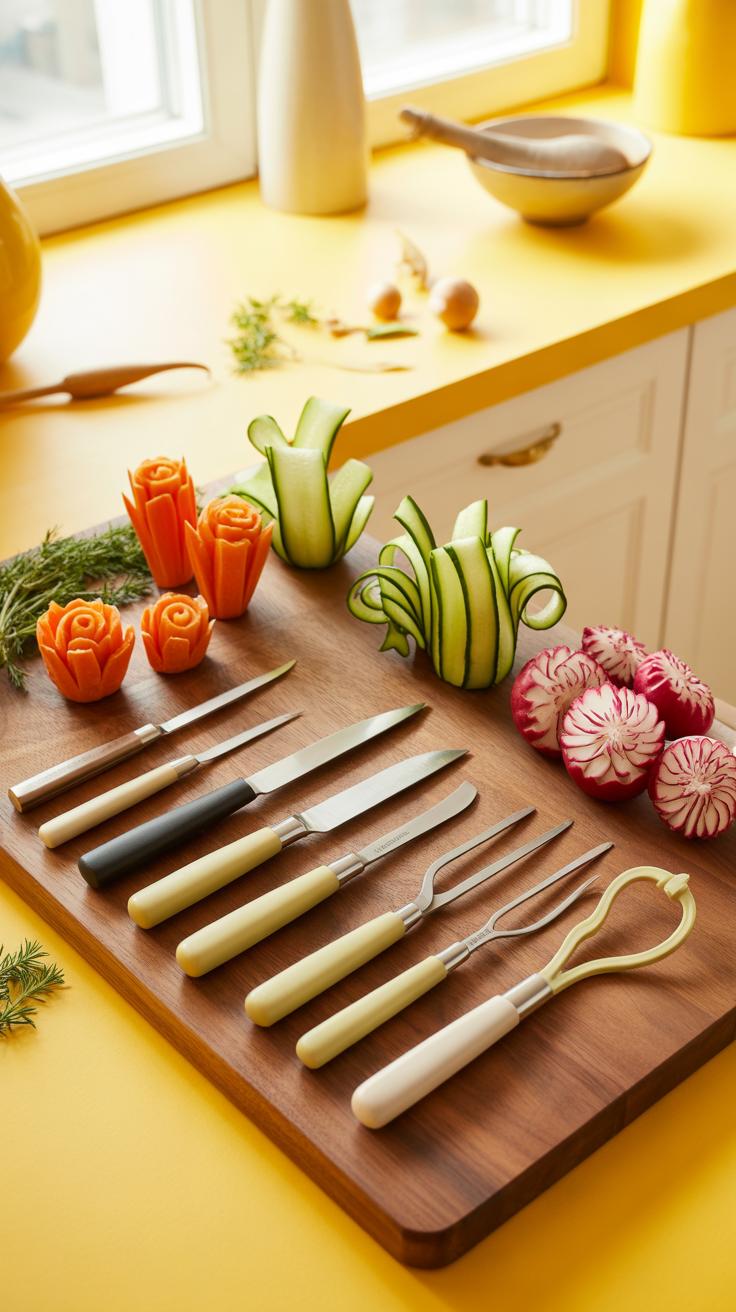
Professional vegetable carving requires specific steel implements to achieve precision. You cannot use standard kitchen knives for intricate petal work. Most traditional techniques originate from Thailand and Japan, where specialized blades allow for fluid movement through dense produce. High-carbon steel is the industry standard because it maintains a razor edge under constant use. You need tools that feel like an extension of your fingers.
- Thai Carving Knife: This tool features a short, flexible, and curved blade. It allows you to make circular cuts and deep grooves in firm vegetables like pumpkins or radishes. The pointed tip is essential for delicate petal details.
- U-Shaped Garnish Tool: These blades create rounded ridges and deep channels in one stroke. Use them to mimic natural leaf textures or to hollow out flower centers quickly. They come in various widths for different scale designs.
- V-Shaped Garnish Tool: Also known as a flute or bird-beak knife, this tool produces sharp angles. It is the primary instrument for creating jagged edges on melon rinds or carrot lilies. The fixed angle ensures consistent depth across your work.
- Small Ceramic Peeler: A sharp peeler is necessary for creating thin ribbons that you can roll into rose shapes. Ceramic blades do not brown the edges of the produce as quickly as metal ones. Speed and thinness are the goals here.
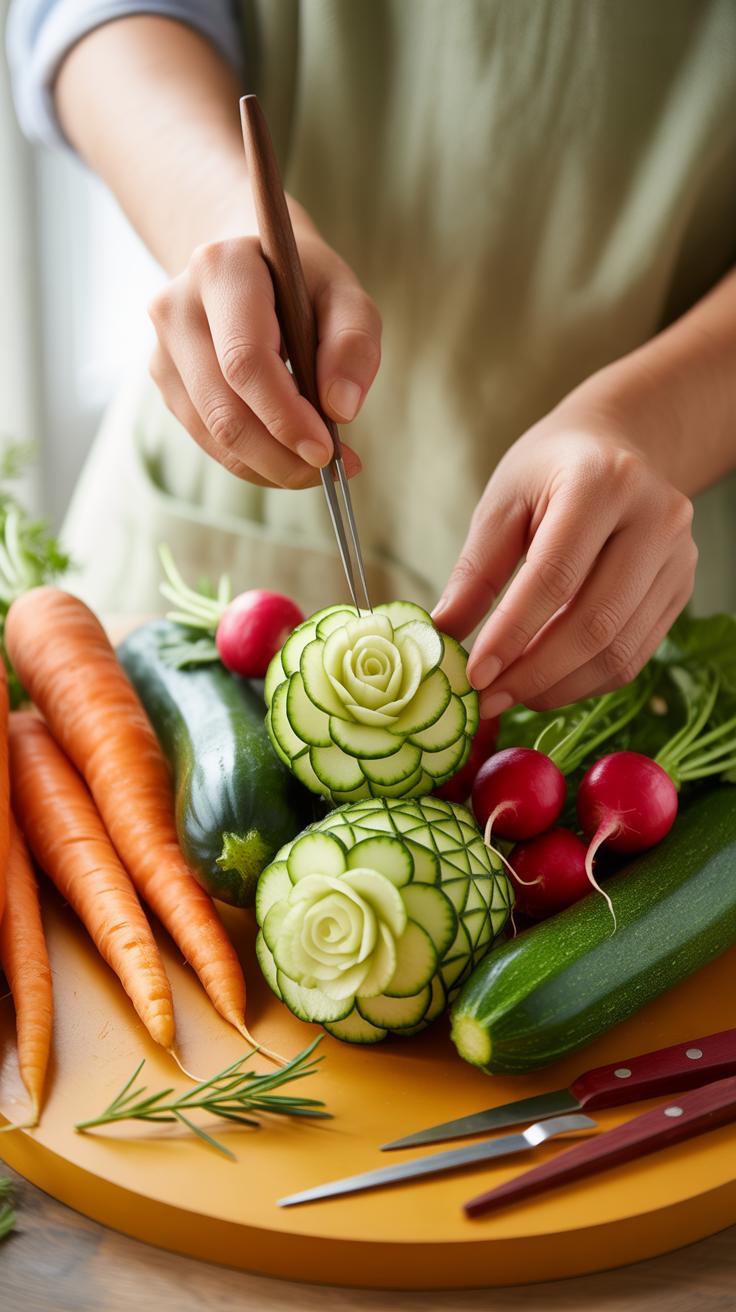
- Precision Tweezers: Forceps or culinary tweezers allow you to place small petals or seeds without damaging the structure. Human fingers are often too bulky for high-end plating. These provide the control needed for final assembly of complex garnishes.
Specialty tools reduce waste and increase production speed. While a single paring knife can perform basic tasks, it lacks the agility of a dedicated carving kit. Maintain your tools by honing them daily. Dull blades require more pressure, which leads to slips and ruined vegetables. Invest in a dedicated storage roll to protect the thin tips from chipping or bending against other hardware.
How To Set Up Your Workspace For Safe And Efficient Garnish Carving
A professional carving station must prioritize stability and hygiene. Start with a heavy, non-slip cutting board made of high-density plastic. Wooden boards can trap bacteria and harbor moisture, which softens your produce. Keep a large bowl of ice water within reach at all times. Cold temperatures keep the vegetables crisp and help the carved petals open up through a process called turgor pressure.
Proper lighting is a tactical requirement for detailed carving work. Position your light source to eliminate shadows on your cutting surface. Keep a clean damp cloth nearby to wipe your blades after every few cuts. This prevents organic acids from dulling the steel and keeps the workspace clear of debris. Organize your tools by size so you can grab what you need without looking away from the produce.
How To Create Stunning Flower Garnishes Using Decorative Fruit And Vegetables
Turning Radishes, Carrots, And Beets Into Beautiful Floral Shapes
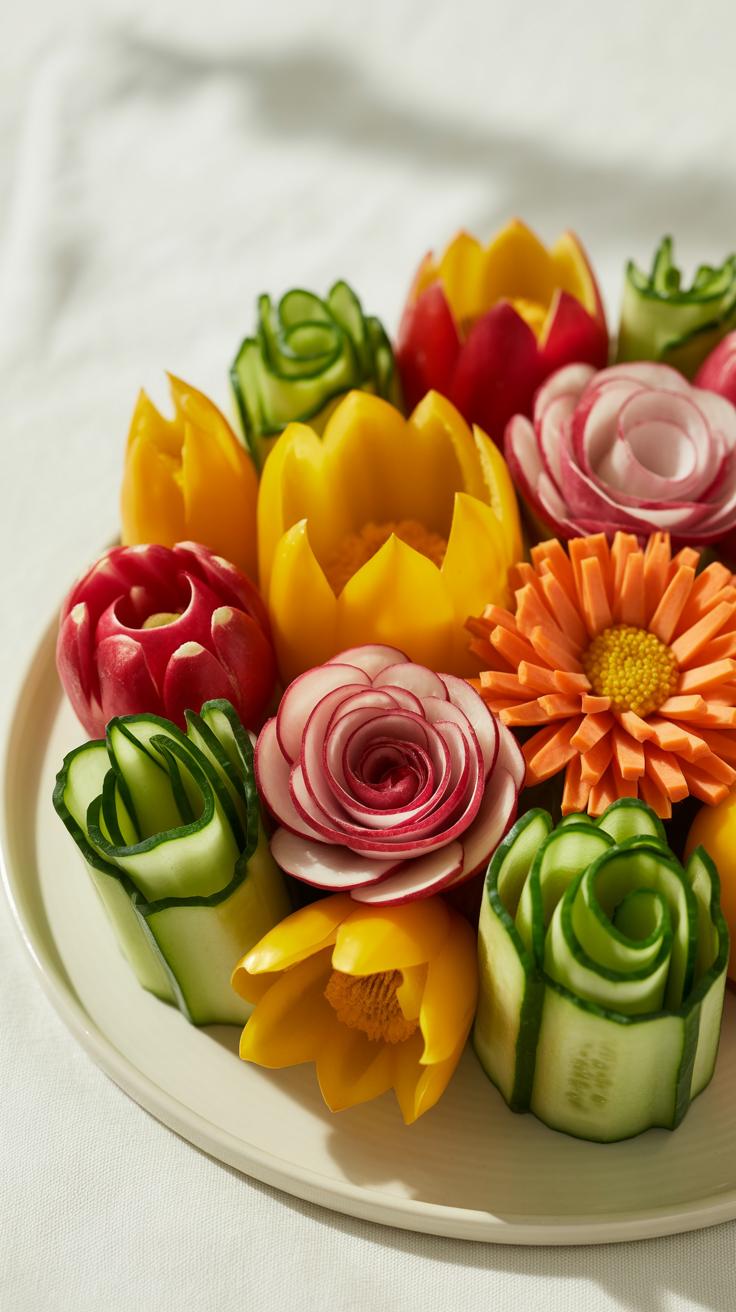
Firm root vegetables provide the best structure for carved flower garnishes. Use a sharp paring knife or a Thai carving tool to ensure clean cuts. Radishes work well for small blossoms because their red skin contrasts with white flesh. Soak carved radishes in ice water for thirty minutes. This step forces the vegetable layers to open like natural petals and firms the structure.
Carrots and beets require thin slicing for flexibility. Use a mandoline to create translucent rounds. Soften these slices in a salt brine to make them pliable. Roll the slices tightly to form a central bud and wrap additional layers around the base. Secure the bottom with a toothpick. This technique mimics the appearance of a rose. These garnishes remain stable for hours.
Fruit Based Flower Garnishes Using Citrus, Strawberries, And Melons
Citrus fruits offer durable skins for rose shapes. Peel a lemon or orange in one continuous strip using a vegetable peeler. Roll the zest strip tightly into a coil. The natural oils in the skin help the shape hold its form without fasteners. Use these for high-acid cocktails or seafood plates. The aroma improves the guest experience while providing a professional visual element.
Strawberries and melons allow for detailed petal work. Cut vertical slits into a whole strawberry to create a fan effect. Press down gently to spread the sections into a bloom. For melons, use a small U-shaped garnishing tool to scoop the flesh. Work from the center outward to create tiered layers of petals. Apply lemon juice to light-colored fruit to prevent browning and maintain fresh color.
Step By Step Guide To Carved Vegetables Food Decorations For Beginners
How To Carve A Simple Rose From A Tomato Using Basic Knife Skills
Select a firm tomato with thick skin for this task. Use a sharp paring knife to cut a small circle at the base. Do not remove this piece yet. Continue cutting a thin strip of skin in a continuous spiral toward the stem. Keep the strip about half an inch wide. Ensure the blade stays close to the flesh without cutting deep.
Gently roll the long strip of skin starting from the stem end. Keep the roll tight at first to form the center of the bud. Place the finished coil onto the base circle you cut earlier. This base acts as a platform to keep the flower stable. Adjust the outer layers of skin to mimic open petals. Serve immediately to maintain the shape.
Creating Lotus Flowers From Onions And Bell Peppers For A Striking Table Display
Peel a medium red onion and trim both ends flat. Use a sharp knife to make deep vertical cuts halfway through the onion. Space these cuts one inch apart around the circumference. Place the onion in cold water for two hours. The layers will pull apart naturally as the vegetable absorbs liquid. This creates the appearance of a blooming lotus flower petal arrangement.
Bell peppers require a different approach for lotus shapes. Cut the top off a bell pepper and remove the seeds. Use a knife to cut large V-shaped notches into the rim of the vegetable. Continue these cuts halfway down the body to create pointed petals. Soak the pepper in ice water to harden the edges. This technique produces a durable garnish for large platters.
Flower Garnish Ideas For Party Food Decoration Ideas That Impress Every Guest
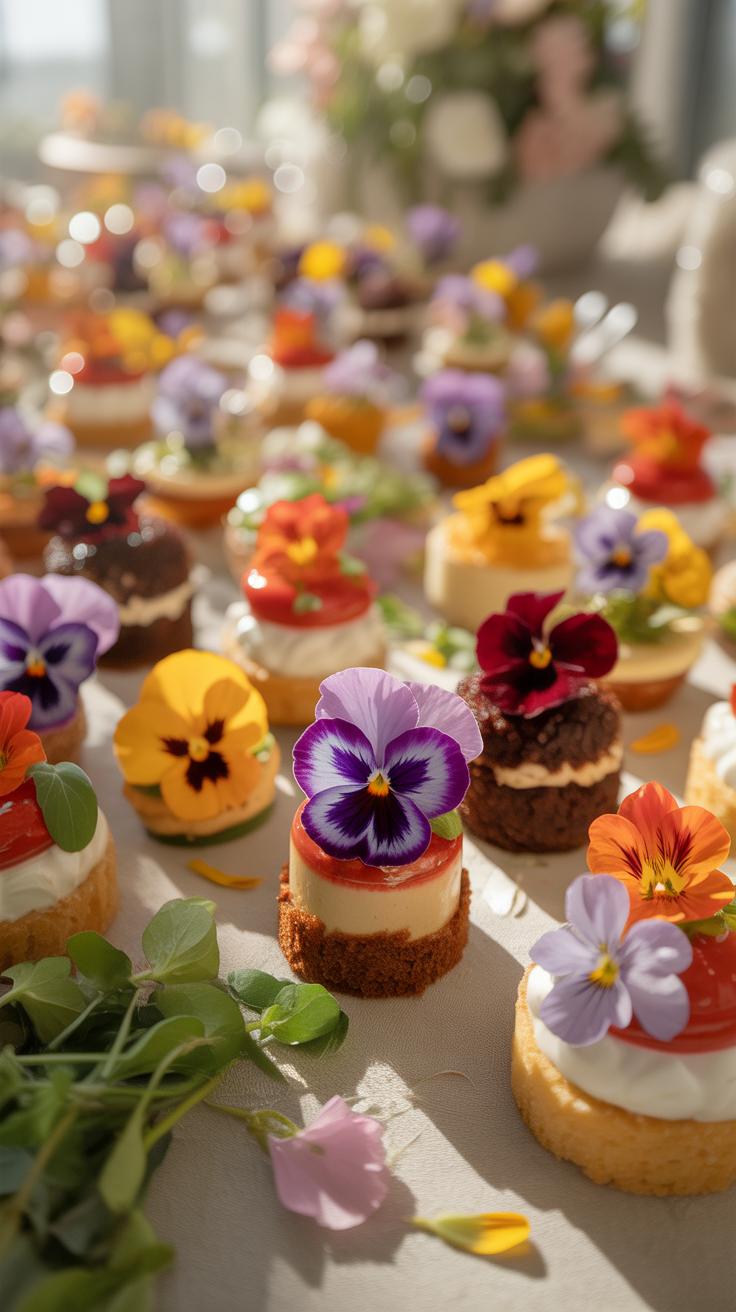
Edible Flower Centerpieces For Buffet Tables And Appetizer Platters
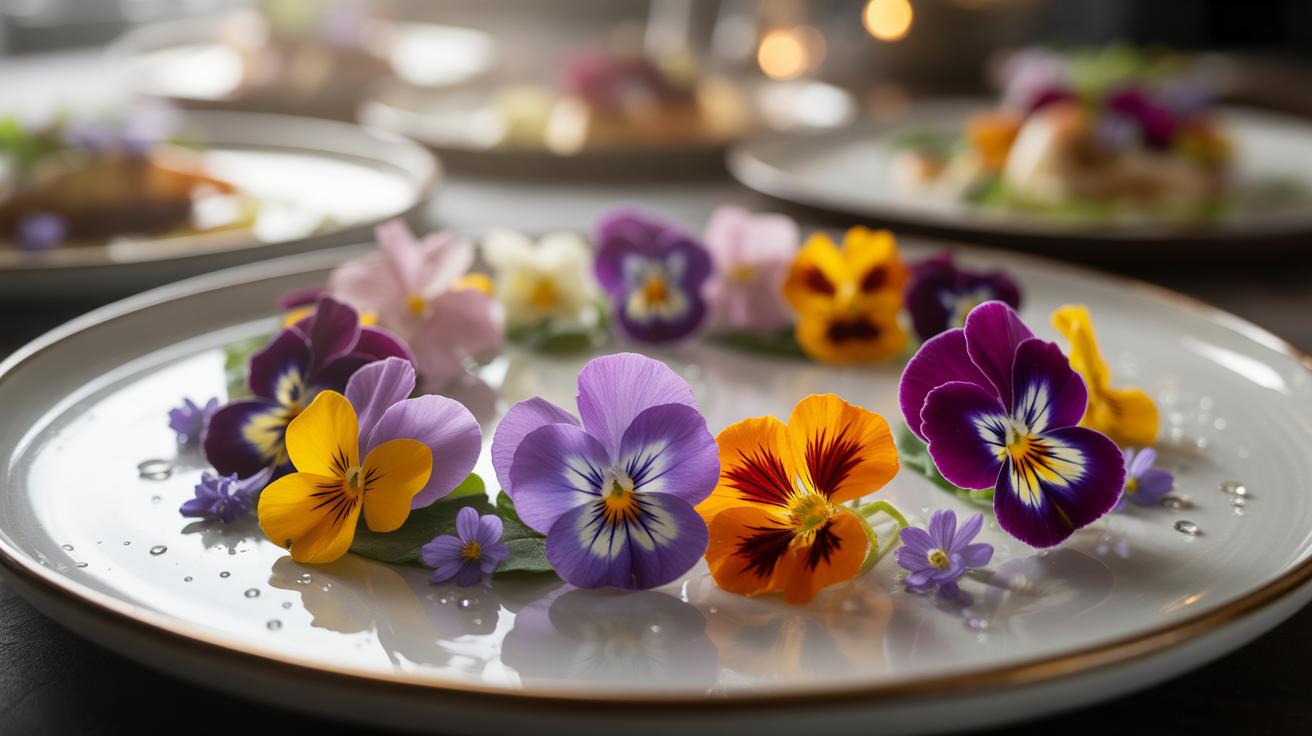
Edible flower centerpieces demand structural integrity and food safety. Use large blossoms like nasturtiums or pansies to create focal points on platters. These flowers provide vibrant colors without wilting quickly under buffet lights. Place flowers in small florist vials hidden under greens to maintain freshness for hours. Ensure every plant used is organic and free from synthetic pesticides to protect your guests from chemical ingestion.
Strategic placement of flowers enhances the visual flow of a buffet table. Group darker flowers near light colored cheeses or crackers to create high contrast. This technique directs the eye to specific areas of the spread. Avoid using high fragrance varieties like lavender in large quantities near delicate foods. Strong floral scents can overwhelm the smell of the dish and ruin the taste experience for diners.
To plant a garden is to believe in tomorrow, and bringing those blossoms to the table turns a simple meal into a memory. Every petal added to a dish is a small piece of poetry from the earth itself.
Quick Flower Garnish Techniques For Catering, Birthdays, And Holiday Gatherings
Speed is essential when plating for large groups. Use pre-washed, chilled flowers to reduce preparation time during the event. Focus on flowers that offer high coverage with minimal effort. Marigolds and bachelor buttons work well because they keep leur shape during transport and handling. Select colors that match the specific holiday or event theme to create a cohesive look across all food stations.
- Petal Dusting: Pull petals from dried calendula or cornflowers and scatter them across multiple plates at once. This method covers large surface areas quickly and adds color without requiring precise placement or individual flower handling.
- Fresh Pressing: Place flat flowers like violas between parchment paper and apply light pressure for ten minutes before serving. This technique allows you to stack flowers neatly on top of sliders or tartlets without them sliding off during service.
- Herb Flower Pairing: Use the blossoms from culinary herbs like chive or rosemary to signal the flavor profile of the dish. This creates an immediate visual link between the garnish and the ingredients while using parts of the plant often discarded.
- Ice Chilling: Submerge whole flowers in an ice bath before plating to firm up the cell walls. This thermal shock prevents wilting on hot appetizer trays and keeps the colors bright for the first hour of the party or gathering.
- Stem Anchoring: Tuck the stems of sturdier flowers into soft bases like hummus, cream cheese, or pate. This anchor keeps the garnish from moving when guests pick up the food or when servers carry trays through a crowded venue.
Efficient garnishing relies on repetition and scale. Prepare your floral elements before the rush starts to ensure consistency. Use tweezers for delicate placement if the dish is small, but rely on hand scattering for larger platters. Always keep a backup supply of fresh flowers in a sealed container with a damp paper towel. This allows for quick refreshes of the buffet table as the event progresses.
Elegant Peach Garnish Ideas That Double As Stunning Floral Accents
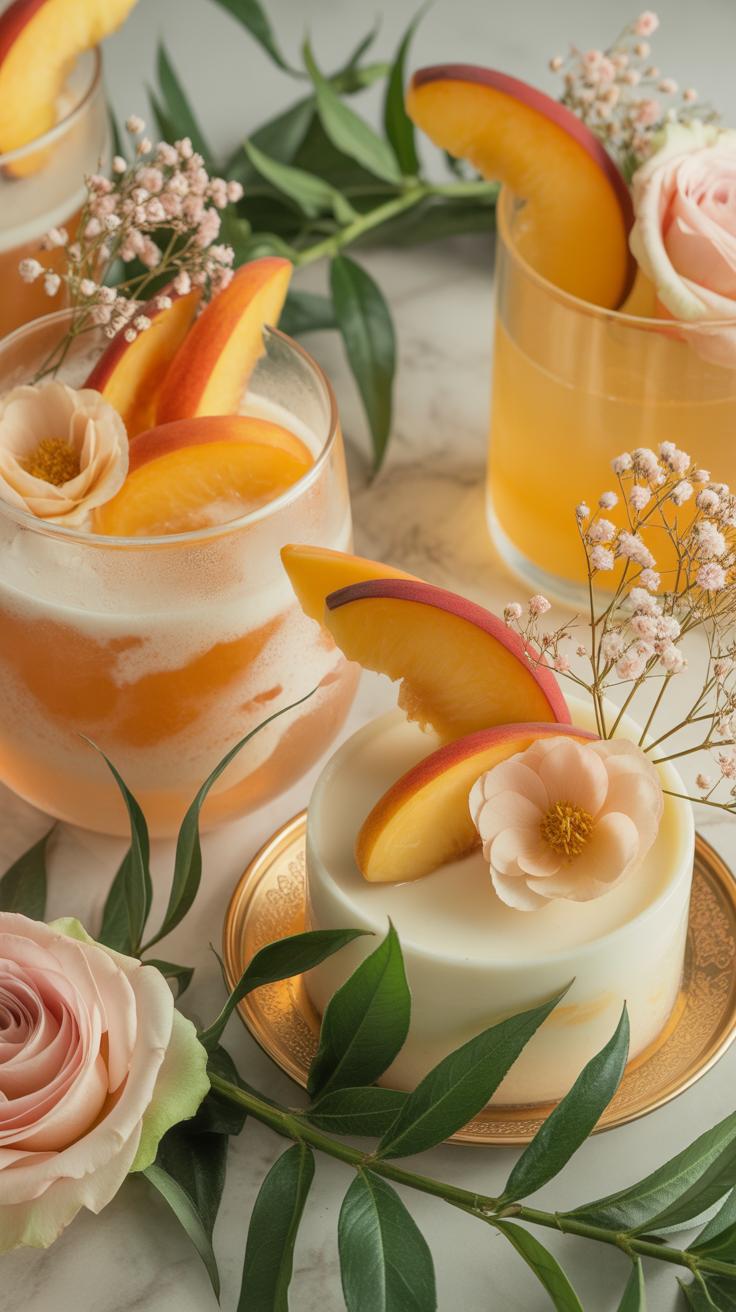
How To Slice And Fan Peaches Into Decorative Flower Like Arrangements
Select firm freestone peaches for clean extraction. Use a sharp paring knife to slice the fruit into uniform thin segments. Lay the slices on a flat surface in a straight line with each piece overlapping the previous one by half. This alignment ensures the garnish holds its shape. Start from one end and roll the line inward to create a tight rose center.
Continue adding layers of segments around the central core to expand the diameter. Press the base of the peach slices firmly against the plate to prevent the structure from collapsing. Use a small amount of lemon juice on the flesh to stop oxidation. This technique creates a visual focal point that mimics a blooming peony or rose. The natural curve of the fruit adds realism.
Pairing Peach Garnishes With Cheeses Desserts And Charcuterie Boards
Place peach floral garnishes next to soft white cheeses like brie or camembert. The high acidity and natural sugars in the fruit balance the heavy fat content of the dairy. Position the garnish in the center of the board to draw the eye. Use rosemary sprigs or mint leaves around the base. These greens provide structural support and create a realistic botanical aesthetic.
Integrate these fruit flowers into dessert presentations by placing them atop tarts or cheesecakes. The peach serves as both decoration and a functional component of the flavor profile. Ensure the peach rose sits on a stable, flat surface to maintain its form during service. Combine the orange tones of the peach with dark wood boards for maximum visual contrast. This strategy elevates standard food displays.
InspiraO De DecoraEs Com Comidas Floral Garnish Trends From Around The World
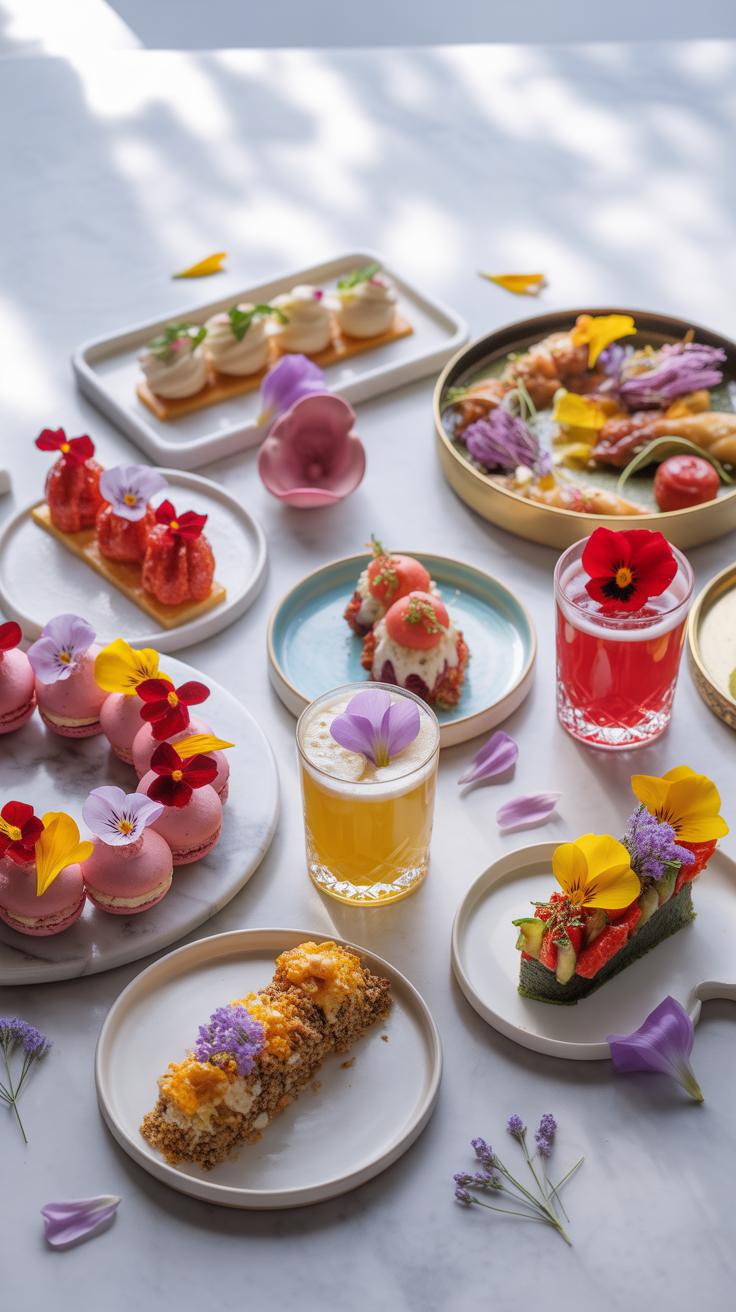
How Brazilian And Portuguese Food Culture Uses Edible Flowers In Presentation
Brazilian culinary tradition integrates flowers through a functional lens. Chefs in the Amazon region utilize the jambu flower for its numbing effect on the palate. This choice serves a sensory purpose beyond simple aesthetics. Modern Brazilian fine dining adapts these indigenous practices to create innovative garnishes. They focus on native flora like hibiscus and nasturtiums to reflect the biodiverse landscape of South America.
Portuguese food culture emphasizes Mediterranean influences and garden fresh ingredients. Traditional recipes often feature dried lavender or rosemary flowers to scent oils and vinegars. Modern Portuguese chefs use borage flowers to provide a subtle cucumber flavor to seafood dishes. This technique balances the saltiness of Atlantic fish with fresh floral notes. The focus remains on heritage and the natural connection between the garden and the local kitchen.
Asian And European Floral Garnish Traditions That Inspire Modern Plating
Asian culinary traditions use flowers as essential flavor components rather than mere decorations. Japanese plating utilizes cherry blossoms preserved in salt to provide a balanced taste profile. This method adds a seasonal element to rice dishes and sweets. In Southeast Asian cooking, chefs extract blue pigment from butterfly pea flowers. They use this natural dye to color rice and beverages without altering the fundamental texture of the food.
European traditions favor structured elegance and classical botanical uses. French cuisine historically employs crystallized violets and rose petals in high end pastry work. These elements provide a specific texture and concentrated sugar content to the final product. Modern European plating often adopts a minimalist approach. Chefs select micro flowers like pansies or cornflowers to add precise pops of color. This method keeps the focus on the main ingredient while adding visual depth.
Drink Garnishing With Flowers How To Make Every Beverage Look Extraordinary
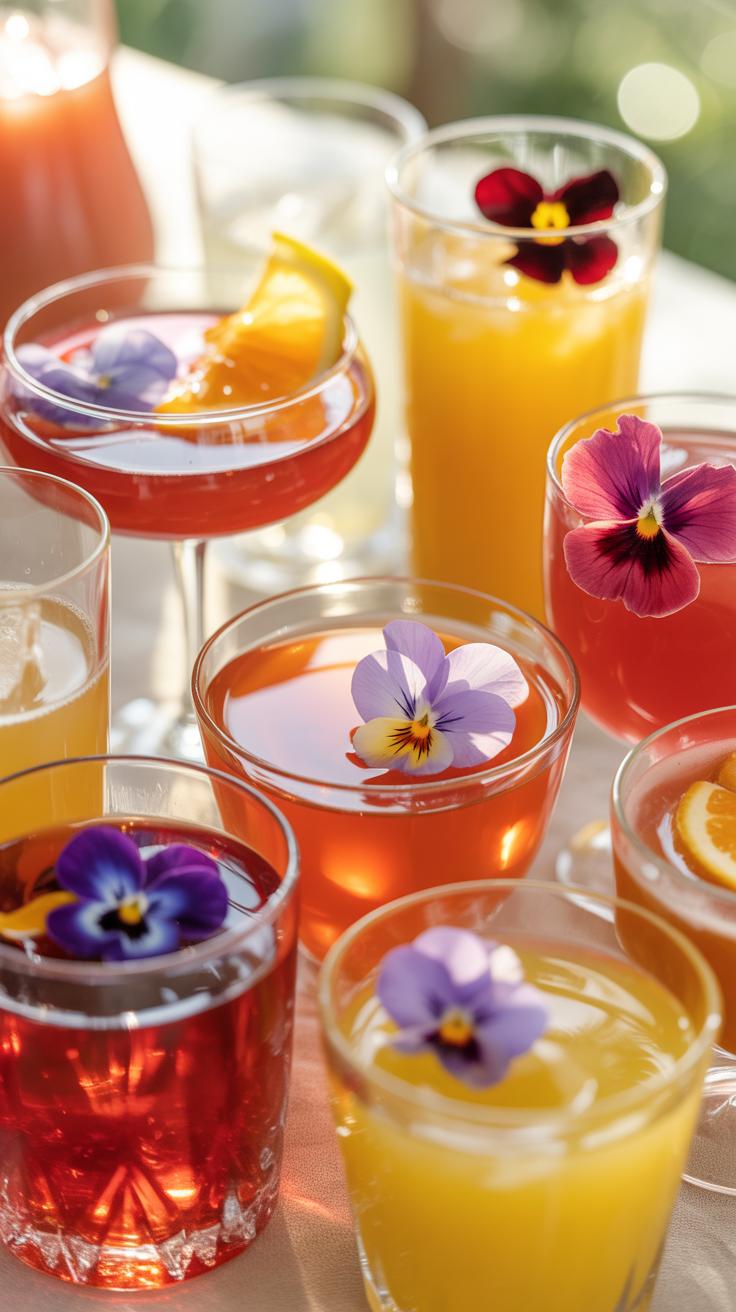
Edible Flowers Commonly Used For Drink Garnishing Including Lavender And Hibiscus
Bartenders use lavender and hibiscus for specific functional reasons beyond aesthetics. Lavender adds a potent floral aroma that alters the scent profile of gin and vodka drinks. You must use it sparingly because the essential oils are highly concentrated. Hibiscus provides a deep red color and a tart flavor similar to cranberries. This flower works well in syrups or as a dried botanical garnish.
Marigolds and pansies offer neutral flavors but high visual impact. Marigolds resist wilting in humid environments and stay fresh longer than delicate blooms. Pansies provide a wide range of colors and sit flat on foam surfaces. Choose flowers based on their structural durability. Ensure all blossoms are free from pesticides. Only use flowers grown specifically for human consumption to avoid chemical toxicity.
How To Float, Freeze, And Skewer Flowers As Stunning Beverage Garnishes
Floating flowers requires a stable surface to prevent the bloom from sinking. Use dense foam from egg whites or aquafaba to support the weight of the flower. This technique works best with lightweight blossoms like violas or individual petals. Place the flower gently in the center of the glass just before serving. This ensures the garnish remains dry and vibrant for the guest.
Freezing flowers into ice cubes preserves their appearance and prevents wilting. Fill ice molds halfway with distilled water and freeze. Place the flower on the frozen layer and add a small amount of water to anchor it. Finish filling the mold once the flower is secure. Skewer larger flowers like orchids or roses using bamboo picks. Rest the skewer across the glass rim for stability.
Creative Cocktail Garnish Ideas Using Real And Vegetable Carved Flowers
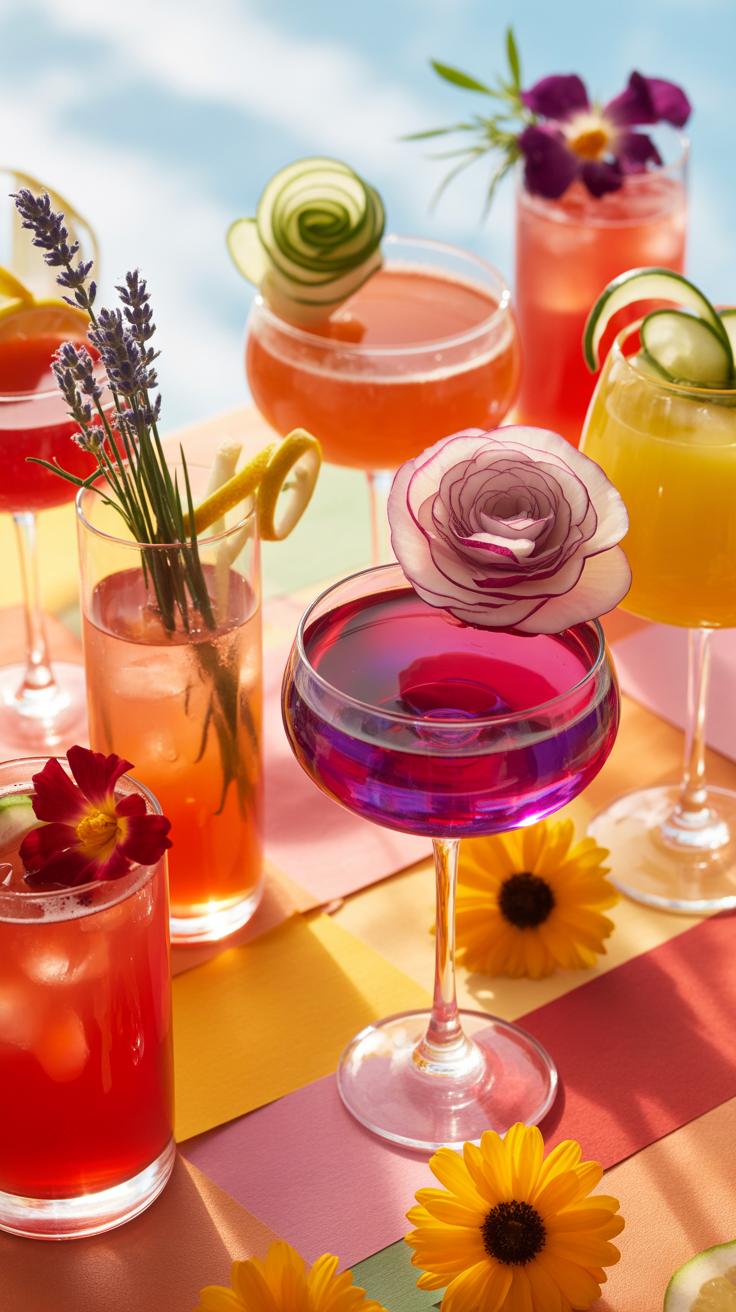
Classic Cocktail Garnish Flowers Like Orchids, Roses, And Citrus Blossoms
Bartenders select flowers based on durability and scent. Dendrobium orchids are the industry standard for tropical drinks. These flowers lack a strong flavor but survive cold temperatures and high humidity. They stay fresh for hours on a glass rim. This makes them ideal for high volume service. Use them to provide visual height without affecting the drink flavor profile.
Roses and citrus blossoms serve a different tactical purpose. These flowers provide a strong scent that hits the nose before the first sip. Small rosebuds add a classic look to gin drinks. Citrus blossoms emphasize orange or lemon notes in a cocktail. Always strip the stems of any thorns or leaves. This keeps the glass clean and prevents injury to the guest.
How Bartenders Use Carved Vegetable Flowers To Add Drama To Signature Drinks
Vegetable carving mimics the look of real flowers using sturdy produce. Bartenders use radishes, carrots, and cucumbers for this technique. These materials hold their shape better than delicate petals. Sharp Thai carving knives allow for precise cuts. This method traces back to Royal Thai cuisine traditions. It adds a sophisticated layer to savory cocktails like the Bloody Mary or Gibson.
Texture and stability are the primary goals of carved garnishes. A radish rose will not wilt in a room temperature environment. You can prepare these garnishes hours before a shift begins. Store them in ice water to maintain crispness and color. Use toothpicks or skewers to secure the carved pieces to the glass. This ensures the garnish remains stable while the patron drinks.
Tips For Preserving And Displaying Your Flower Garnish Ideas For Longer Freshness
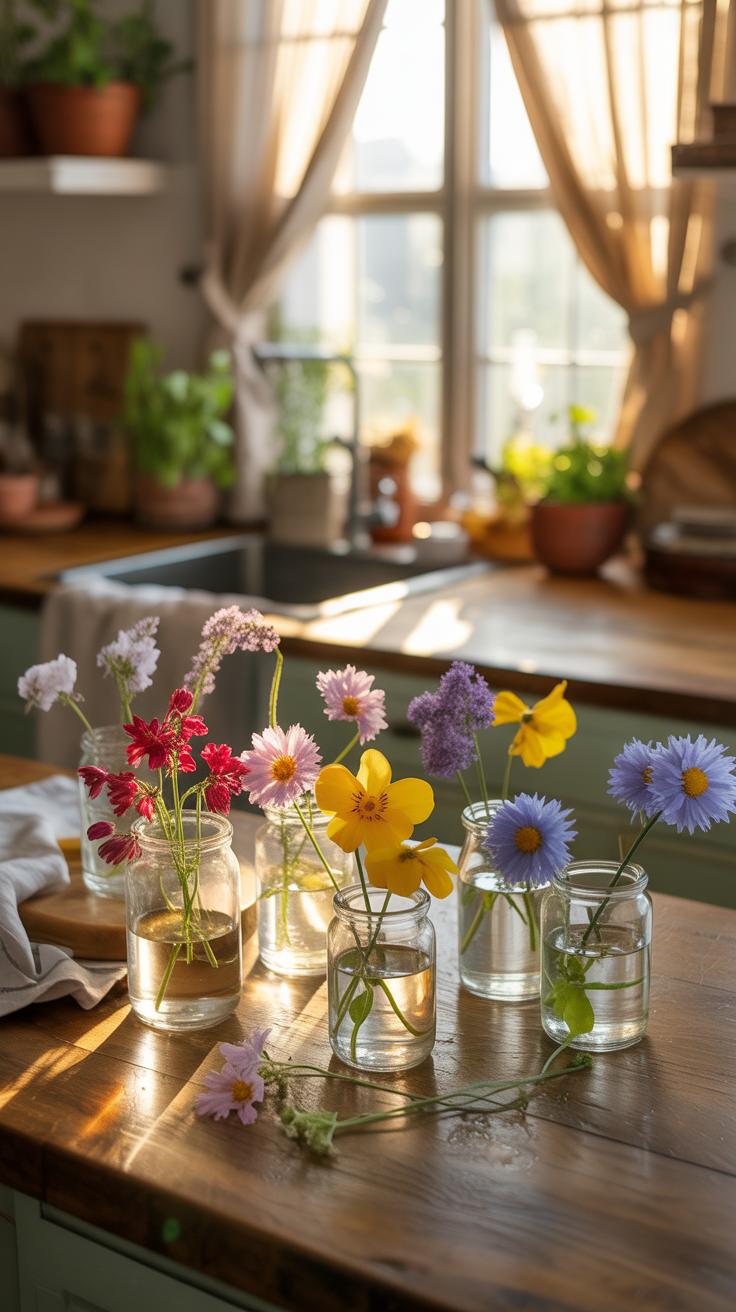
Guidance On How To Store Carved And Fresh Flower Garnishes Without Losing Their Shape Or Color
Temperature control is your most critical factor for storage. Fresh edible flowers and carved vegetable garnishes require high humidity and cool environments. Store them between thirty-four and thirty-eight degrees Fahrenheit. This range slows respiration and prevents wilting. Place garnishes on damp paper towels inside airtight containers. This method maintains cell turgor pressure. This pressure keeps the petals and carved edges firm and upright.
Avoid storing garnishes near ethylene-producing fruits like apples or tomatoes. Ethylene gas accelerates aging and causes petals to drop or discolor. For carved vegetable flowers, use an ice water bath before storage. This cold shock sets the shape and crispness. Change the water daily if you store them for more than twenty-four hours. This prevents bacterial growth from ruining the visual quality of your garnish work.
Presentation Techniques For Plating Flower Garnishes On Dishes And Serving Boards
Strategic placement ensures your garnish enhances the dish without obstructing the diner. Use the rule of thirds to position flowers off-center. This creates a more dynamic visual balance. Secure small blossoms using a dot of honey or thick reduction sauce. This prevented movement during service. Always place garnishes just before the dish leaves the kitchen. Heat from the food will wilt delicate petals within minutes.
Contrast the color of your garnish with the plate and the food. Use dark purple pansies on white porcelain or bright marigolds against dark sauces. For serving boards, group flowers near heavy items like cheeses or meats. This mimics traditional French garde manger styles. Ensure the size of the flower matches the scale of the portion. Large blooms overwhelm small appetizers. Tiny petals get lost on large platters.
Frequently Asked Questions

Which flowers are safe to use for decorating food and drinks?
When exploring flower garnish ideas, safety is your top priority. Always choose food-grade, organic blooms like pansies, violas, nasturtiums, and marigolds. Ensure they haven’t been treated with pesticides or chemicals found in florist bouquets. If you are unsure about a flower’s toxicity, it is best to skip it. Stick to well-known edible varieties to ensure your stunning culinary creations remain both beautiful and perfectly safe for your guests to enjoy.
How do I prepare and store fresh flower garnishes so they don’t wilt?
To keep your flower garnish ideas looking fresh, gently wash blooms in a bowl of cold water and pat them dry with a paper towel. Once cleaned, place the flowers in an airtight container lined with a damp cloth and refrigerate them. Most edible petals will stay vibrant for up to two days. For the best visual impact, wait until the very last moment before serving to place the delicate garnishes on your dishes.
Can I create beautiful floral garnishes on a tight budget?
Absolutely! You don’t need expensive specialty shops to find Great options. Many common herbs you might already grow, like chive blossoms, basil flowers, or sprigs of lavender, make sophisticated accents. You can also dry seasonal petals to use year-round, which is much more cost-effective than buying fresh. Foraging from your own pesticide-free garden is the ultimate way to elevate your presentation without spending a dime on professional floral supplies.