Why Floral Wall Art Ideas Are Dominating Home DCor Trends
The Timeless Appeal Of Floral Styles In Interior Design
Floral patterns have anchored interior design since the Egyptian and Roman eras. These cultures used lotus and acanthus motifs to signify life and order. In the Middle Ages, tapestries showcased millefleur patterns to bring outdoor botanical details into cold stone rooms. Modern designers use these same principles. They select floral wall art because it provides a reliable link to historical craftsmanship and organic geometry.
The Victorian era solidified the role of florals through complex wallpaper designs. Figures like William Morris transformed botanical realism into repeatable patterns. These designs balanced industrial production with natural forms. Today, homeowners choose floral wall art because it creates a sense of legacy. These pieces bypass temporary fads. They offer a stable aesthetic that works across traditional, transitional, and minimalist architectural styles.
How Floral Wall Art Ideas Influence Mood And Atmosphere In A Room
Biophilic design principles prove that nature imagery reduces human stress. Large scale floral wall art acts as a focal point that lowers heart rates. It creates a psychological connection to the outdoors. This effect is not about decoration. It is about biology. People feel more secure in environments that mimic natural habitats. Experts call this the Savannah Hypothesis. It drives high sales in residential markets.
Color theory determines how these pieces change a room. Soft blue and white florals create calm in bedrooms. Bright yellow or red botanical prints stimulate energy in dining areas. The size of the floral art also dictates the room volume. Over sized prints make large rooms feel more intimate. Small, repetitive botanical sketches add structure to narrow hallways. Proper placement ensures the art maximizes the intended psychological impact.
Exploring Floral Wall Covering Options For Every Home Style
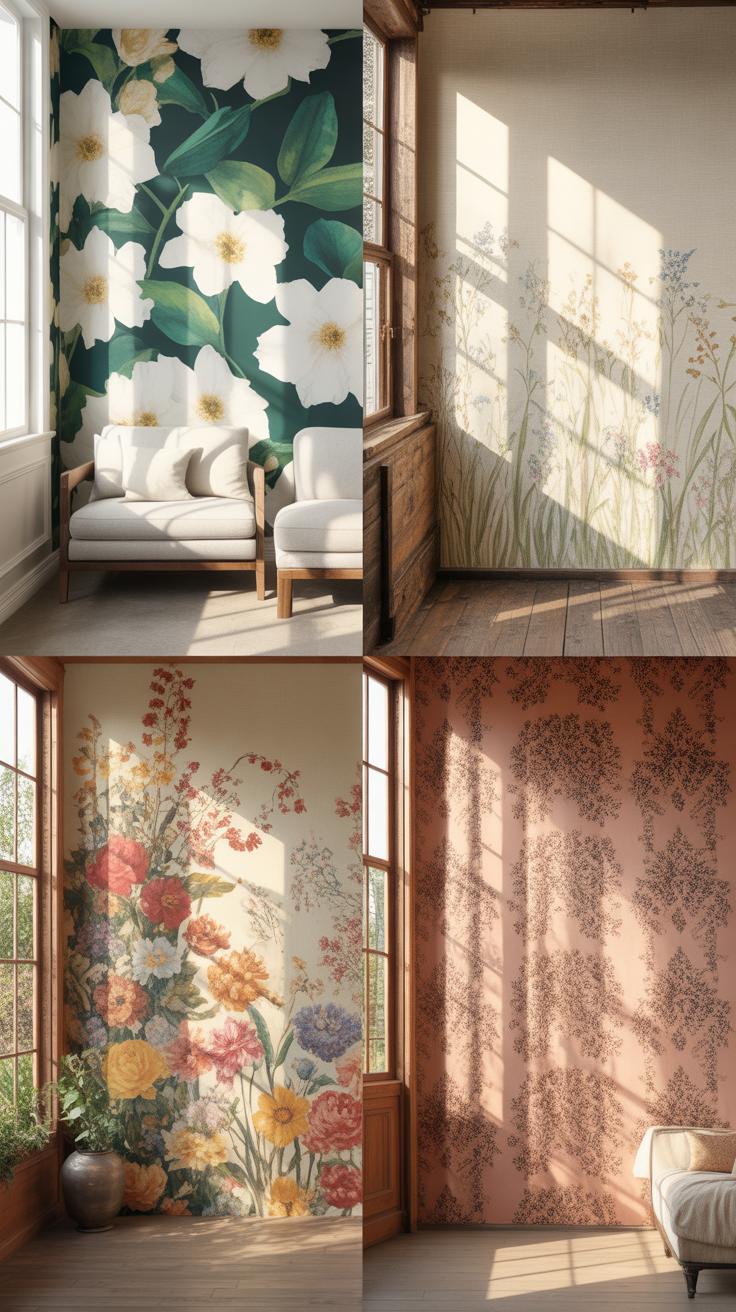
Wallpaper Vs. Fabric Floral Wall Covering: Choosing The Right Fit
Traditional floral wallpaper offers a permanent solution for high-traffic areas. Most modern rolls use non-woven fibers or vinyl coatings. These materials resist moisture and allow for easy cleaning. Wallpaper provides a crisp finish and precise pattern alignment. Use it if you want long-term durability and a classic look. It works best in dining rooms or entrance halls where visitors see it often.
Fabric wall coverings provide a distinct tactile quality that paper cannot match. Decorators use liquid starch or tacks to apply natural textiles like linen or cotton to the surface. This method improves room acoustics by absorbing sound waves. It also hides wall imperfections better than thin paper. Choose fabric for bedrooms or offices where you need warmth. It allows for easy removal if you change your style frequently.
How To Apply Floral Wall Covering Without Damaging Your Walls
Peel and stick floral murals use a low-tack adhesive for temporary placement. This polyester-based material works on smooth, painted surfaces without leaving a sticky residue. You must clean the wall with isopropyl alcohol first to ensure a strong magnetic bond. Avoid applying these products to freshly painted walls. Wait at least three weeks for the paint to outgas. This prevents the adhesive from stripping the topcoat later.
Renters should use the liquid starch method for fabric floral prints. You soak the fabric in heavy-duty starch and press it directly onto the drywall. The starch dries clear and holds the textile firmly in place for years. When you are ready to move, spray the surface with warm water. The starch dissolves quickly and releases the fabric. Wipe the wall with a damp cloth to remove any remaining film.
Creative Wall Art Decor DIY Projects Using Floral Themes
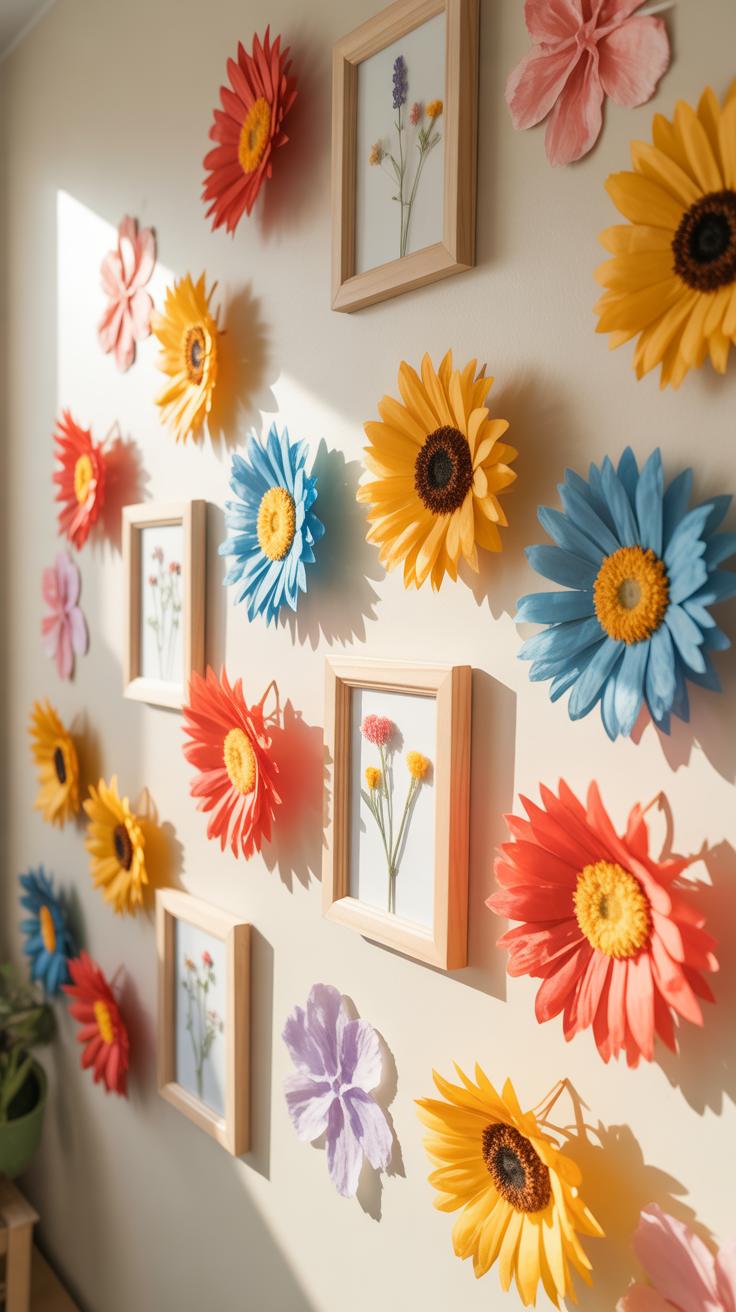
Easy Creative Wall Art Decor DIY Ideas For Beginners
Pressed flower framing offers the simplest entry point for beginners. You collect fresh blooms and flatten them between heavy weights for three weeks. This technique dates back to the Victorian era when botanists documented species. Once moisture leaves the plant, you mount the specimen on acid-free paper. Place the paper inside a glass frame to prevent oxidation and maintain the organic colors.
Floral wall hanging installations provide a modern alternative to traditional framing. You tie silk or dried flowers to a sturdy wooden dowel using clear nylon thread. Vary the lengths of the strings to create a vertical garden effect. This project requires no power tools or complex adhesives. It relies on basic knots and balance to transform a blank wall into a dimensional floral display.
Materials You Need To Start Your Creative Wall Art Decor DIY Floral Project
Successful floral DIY projects require specific tools to ensure longevity and professional results. Using the wrong materials leads to mold growth or structural failure. You must select items based on whether you use fresh, dried, or synthetic flora. High-quality adhesives and preservation tools form the foundation of any lasting piece. Invest in these primary components to avoid common construction errors.
- Acid-Free Cardstock: Use this as the backing for pressed flower projects. Standard paper contains lignins that turn yellow over time and damage delicate plant fibers. Acid-free materials preserve the original pigment of the petals for years.
- UV-Resistant Glass: Install this in your frames to block sunlight. Ultraviolet rays bleach organic pigments quickly. This glass ensures your floral art maintains its vibrant hues by filtering out the most damaging light spectrums.
- Florist Wire and Tape: These tools allow you to manipulate stems and secure heavy blooms. The wire provides internal structure for hanging installations. Tape covers the wire and creates a natural look while providing a tacky surface for better grip.
- Silica Gel Desiccant: Speed up the drying process for thick flowers like roses or peonies. This sand-like substance pulls moisture out of the petals while maintaining their three-dimensional shape. It prevents the browning that often happens during slow air-drying methods.
- Quick-Dry Clear Adhesive: Select a professional-grade glue that does not contain harsh solvents. You need a formula that dries clear and bond to porous surfaces. This ensures your floral elements stay attached to the frame without visible residue.
Organization of these materials prevents waste and speeds up your workflow. Keep your cutting tools sharp to prevent crushing delicate stems. Store your botanicals in a cool and dry environment until you are ready to mount them. Proper preparation ensures your final wall art looks intentional rather than cluttered. Follow these steps to produce a durable and visually striking piece of decor.
Hanging Flower Wall Decor DIY Step By Step Inspiration
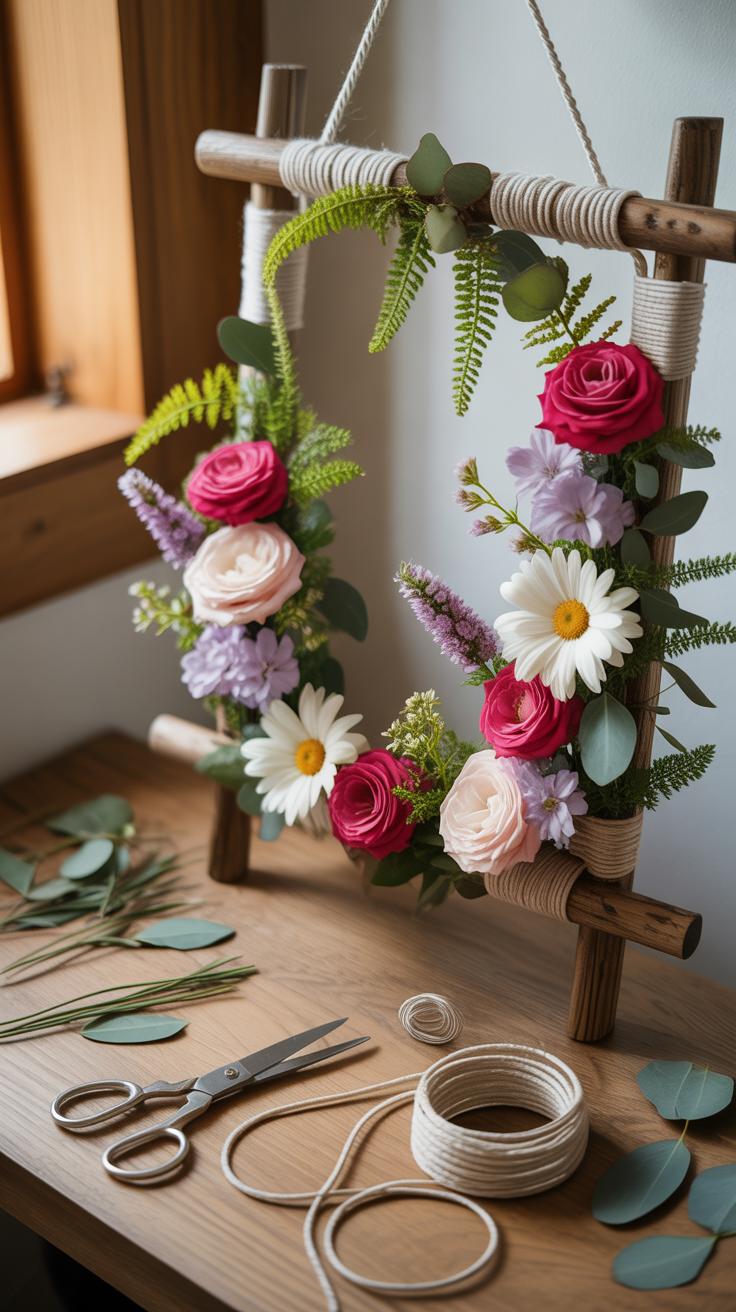
How To Build A Stunning Hanging Flower Wall Decor DIY Display At Home
Select a sturdy horizontal support like a wooden dowel or natural birch branch. Use nylon fishing line or jute twine for the vertical drops. Measure the height of your wall space before cutting the lines. Secure the lines to the rod using tight lark’s head knots. This creates a clean look and prevents the strings from sliding across the wood surface.
Choose high-quality silk or dried flowers to ensure longevity and prevent wilting. Attach the flower heads or stems to the lines using a hot glue gun or small floral wire loops. Space the blooms evenly for a structured grid or vary the heights for a natural appearance. Weight the bottom of each line with a small bead to keep the strands hanging straight.
How To Hang A Backdrop On A Wall For Floral Event And Room Displays
Secure backdrops using methods that protect the wall surface and support the total weight. Use heavy-duty command hooks for lightweight fabric or mesh panels. For denser floral installations, use a telescoping backdrop stand or attach a plywood frame directly to wall studs. Ensure the base material provides enough tension to prevent sagging when you add the floral elements after mounting.
- Tension Rods: Use these in recessed wall areas or doorways to hold fabric backdrops without drilling holes. They rely on outward pressure and work best for temporary event setups where you cannot damage the paint or drywall.
- French Cleats: Install these interlocking wooden or metal strips for permanent, heavy floral panels. One piece attaches to the wall stud and the other to the back of the art. This method supports maximum weight with perfect leveling.
- Adhesive Strips: Apply large picture-hanging strips for lightweight foam board floral grids. These allow for easy removal without leaving residue. You must clean the wall with isopropyl alcohol first to ensure the adhesive bonds correctly to the surface.
- Grid Wire Wall Mounts: Screw metal mesh panels into wall anchors to create a permanent vertical garden base. This allows you to zip-tie floral stems or foam blocks directly to the wire. It provides a highly flexible and breathable structure.
- Concrete Nails: Use these specialized steel nails if you are mounting floral displays on brick or masonry walls. They provide the necessary grip for porous surfaces. Pilot holes may be required to prevent the masonry from cracking during the installation process.
Test the stability of the mount before applying the final layer of flowers. Vertical displays shift the center of gravity away from the wall. Real-time adjustments prevent the entire structure from pulling forward. Balance the weight distribution by placing heavier focal flowers at the bottom and lighter greenery at the top. This technique keeps the display secure and visually grounded.
Flowers To Crochet Adding Handcrafted Floral Art To Your Walls
Popular Flowers To Crochet That Make Beautiful Wall DéCor Accents
Crocheted roses and sunflowers dominate modern wall displays due to their structural depth. Roses utilize a layered petal technique that creates a realistic three dimensional effect. This depth adds texture to flat surfaces. Sunflowers offer a strong focal point with large brown centers and bright yellow petals. These distinct shapes allow the eye to move across a wall without getting lost in visual clutter.
Daisies and poppies provide a cleaner silhouette for minimalist rooms. You can crochet these flowers quickly using cotton yarn for better stitch definition. High quality cotton prevents sagging over time. Use mercerized yarn to ensure the colors remain vibrant and do not fade. These specific species allow you to control the scale of your art. Consistent sizing helps maintain a professional look throughout your installation.
How To Arrange Crocheted Flowers Into A Cohesive Wall Art Display
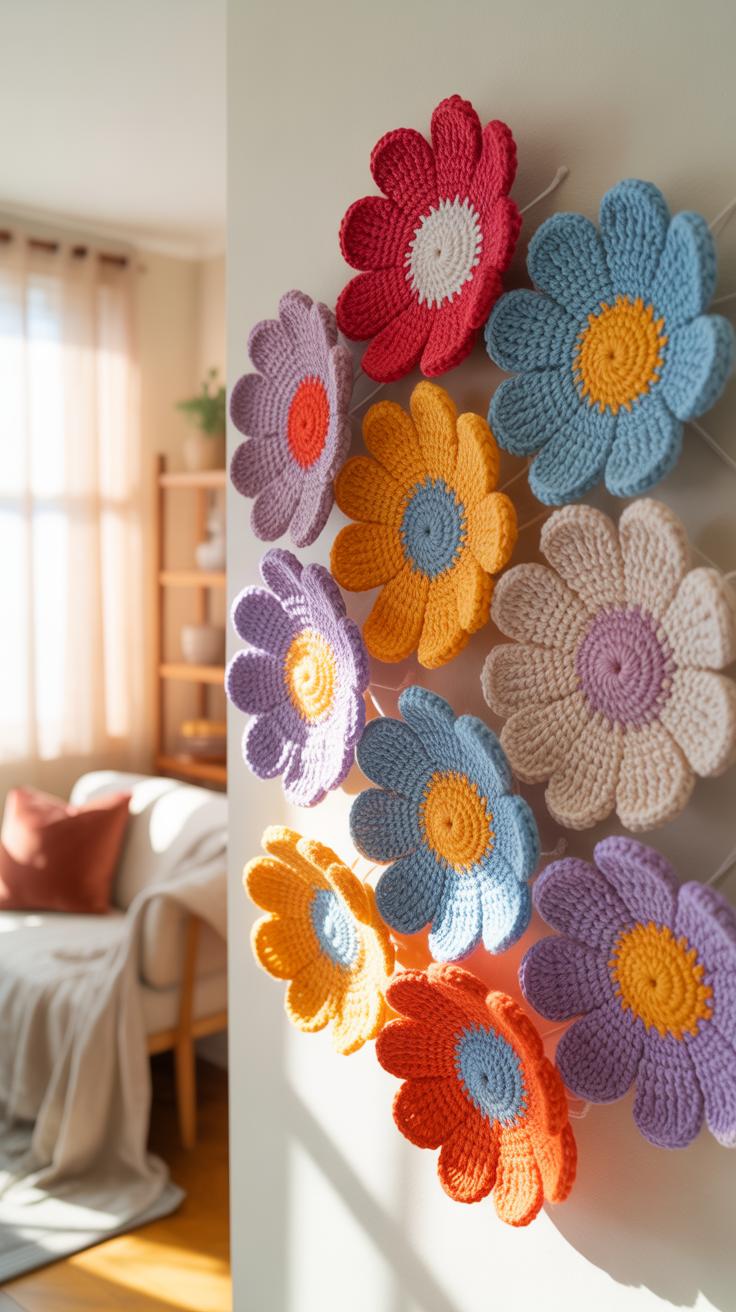
Framework is the most critical element of a crochet flower display. You must mount individual pieces onto a rigid backing like a wooden hoop or a canvas frame. Secure each flower using a hot glue gun or heavy duty thread. This prevents the yarn from shifting or losing its shape. A structured base transforms loose craft items into a deliberate piece of art.
Vary the size and height of your flowers to create visual balance. Place larger blooms near the bottom or center to ground the composition. Fill gaps with smaller buds or crocheted leaves to mimic natural growth patterns. Keep the color palette limited to three main shades for a sophisticated look. Strategic spacing prevents the wall from looking crowded. Proper mounting ensures your handcrafted art stays aligned for years.
Fresh Spring Wall Decor Ideas Featuring Floral Wall Art
Seasonal Spring Wall Decor Ideas That Brighten Any Living Space
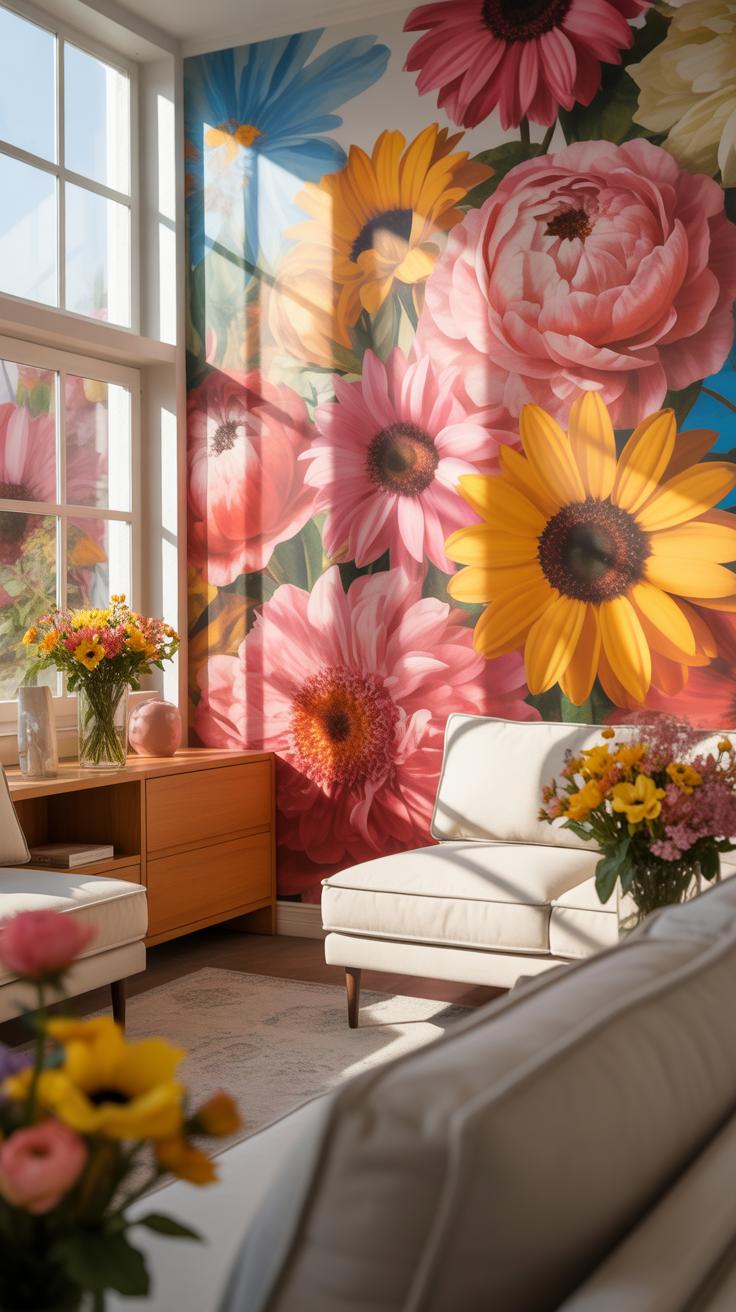
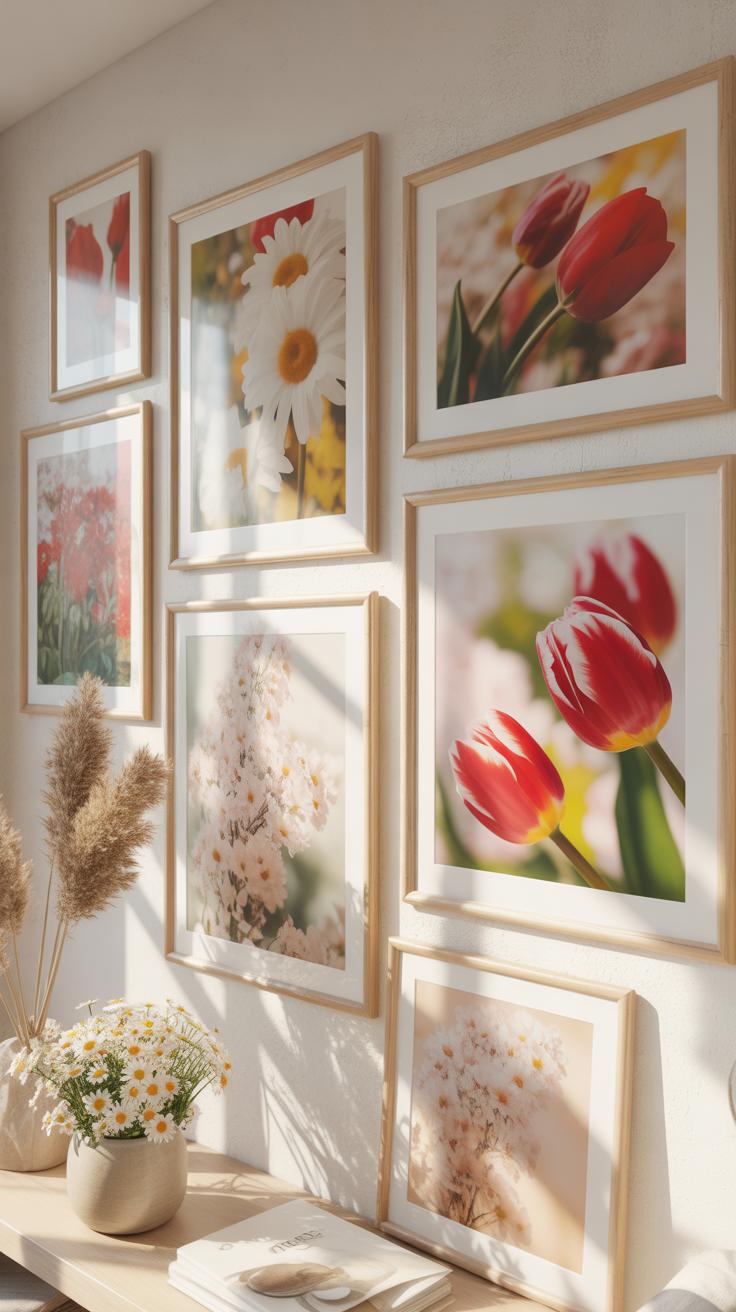
Spring decor requires high light reflectivity to maximize increasing natural daylight. Use thin-frame botanical prints or unframed canvas to reduce visual weight on your walls. Select depictions of early bloomers like tulips, daffodils, or cherry blossoms to align with the season. Large scale floral murals work best on focal walls to create an immersive environment without adding physical clutter to small rooms.
Position floral art near windows to capture sunlight and emphasize the organic shapes of the petals. Choose matte finishes for prints to prevent glare from harsh afternoon sun. Use symmetrical grids for a formal look or staggered layouts for a casual feel. Replace heavy winter tapestries with lightweight pressed flower frames. This change improves air circulation and light distribution while updating the aesthetic for the new season.
To have a garden is to have a future, and a floral-filled room keeps the spirit of spring alive in our hearts forever.
Pairing Wall Decor Flower Pieces With Seasonal Color Palettes
Effective spring palettes rely on high-value colors with low saturation. Match your floral wall art to pastel tones like mint green, pale lavender, and soft yellow. These colors mimic the actual pigments found in spring flora. Use neutral backgrounds like off-white or light gray to make the floral subjects stand out. This strategy creates a cohesive look that feels intentional and professionally designed.
Contrast your floral art with structural elements like natural wood or soft metals. Light oak frames complement green foliage details in the art. Brushed brass accents highlight yellow and gold tones within the flower petals. Avoid dark, heavy finishes that absorb light and conflict with the airy spring theme. Consistent color management between your wall art and room textiles creates a balanced and visually quiet space.
Inspiration Wall Ideas Curating A Gallery With Floral Art
How To Plan An Inspiration Wall Using Floral Prints And Botanicals
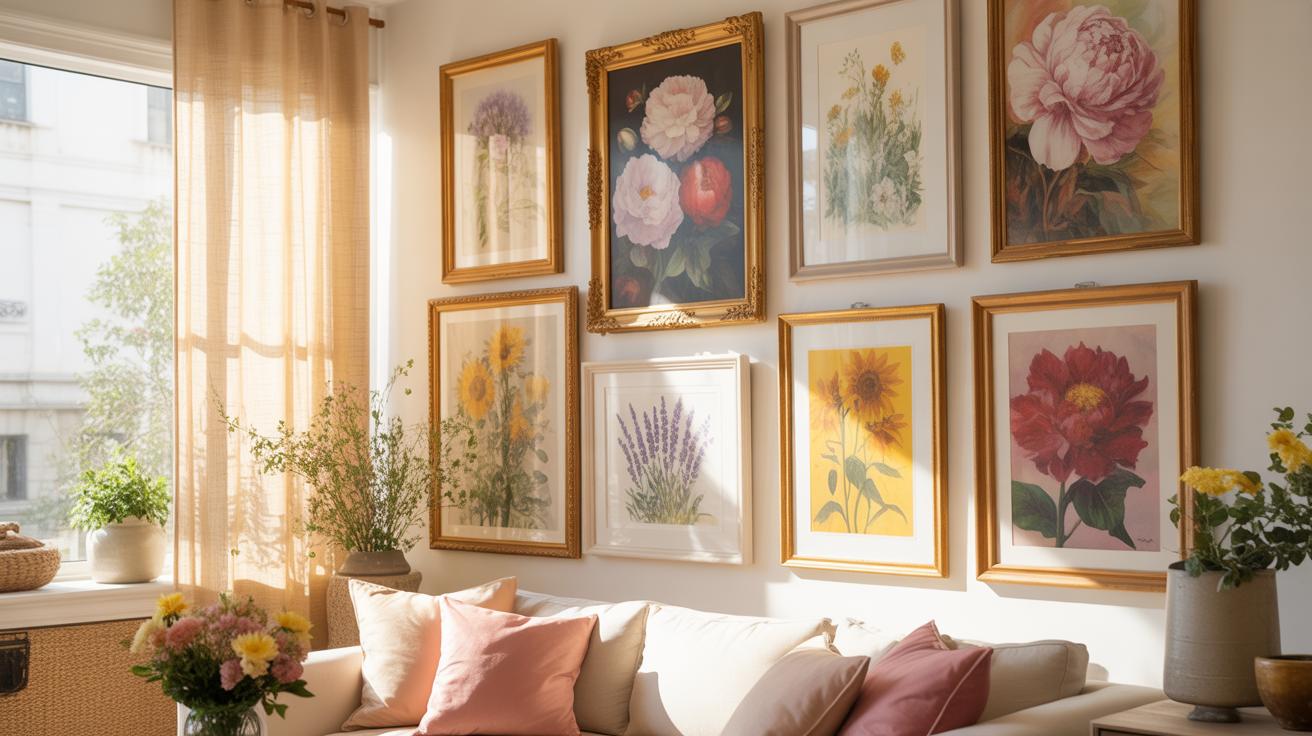
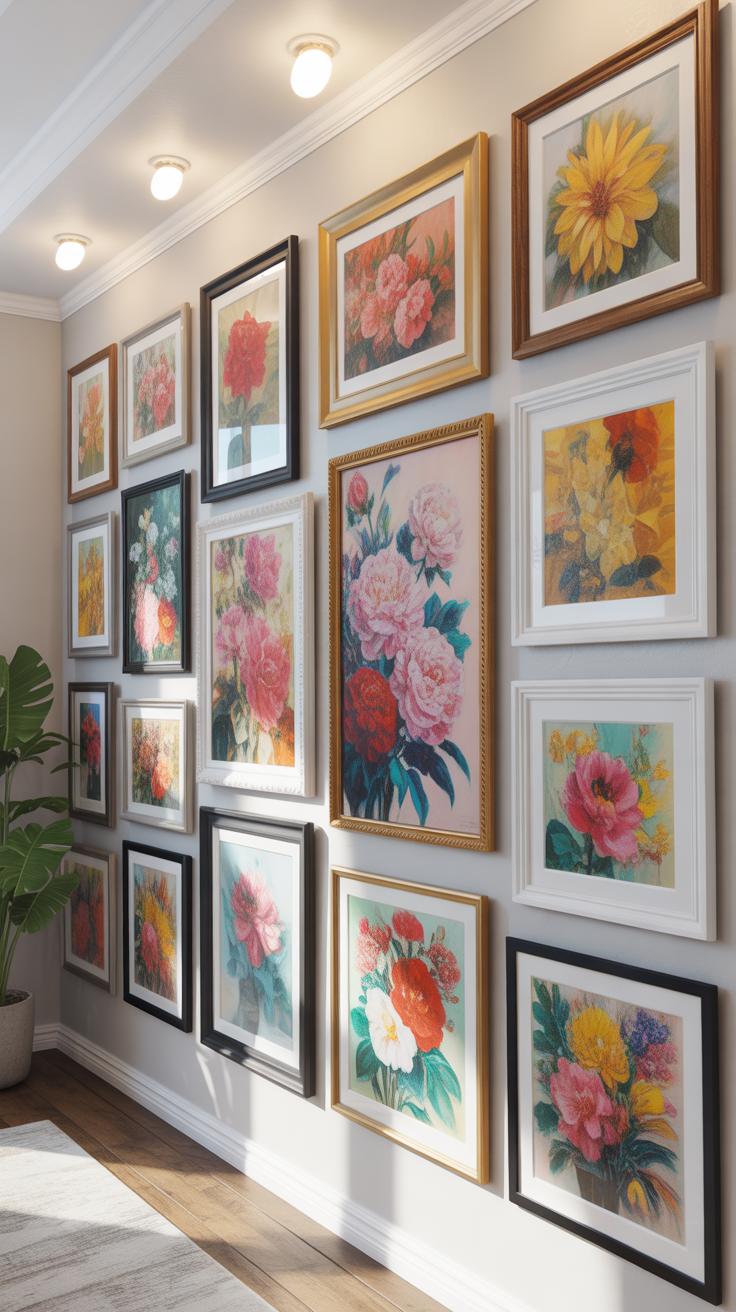
Start by selecting a primary focal point print. This central piece dictates the scale for all surrounding frames. Measure your wall space accurately before buying any hardware. Map the layout on the floor using painter’s tape to mimic frame sizes. This prevents unnecessary holes in the drywall. Use a leveled string line to ensure your horizontal axis remains straight across the entire arrangement.
Identify the lighting source in the room to avoid glare on glass surfaces. Use non-reflective museum glass for pieces placed opposite windows. Group prints by botanical family or color palette to maintain order. High-contrast black frames provide a modern edge. Natural wood frames lean toward a traditional aesthetic. Maintain a consistent two-inch gap between all frames. This spacing creates a professional and organized appearance.
Mixing Floral Styles Within A Gallery Wall For A Cohesive Look
Combine different artistic mediums to add depth. Pair 19th-century scientific herbarium plates with modern minimalist line drawings. The contrast between detailed Victorian etchings and simple shapes creates visual interest. Stick to a unified color story to prevent the wall from looking cluttered. Use white mats of equal width to bind various art styles together. This repetition provides a necessary visual anchor for the eye.
Integrate physical textures like pressed flowers or wooden relief carvings. These 3D elements break the flatness of standard paper prints. Mix macro photography with abstract watercolors to vary the level of detail. Ensure the heaviest visual weights stay at the bottom of the layout. This grounding technique follows classic design principles. A successful gallery wall relies on balance rather than perfect symmetry. Focus on the total visual mass.
Wall Decor Flower Arrangements From Dried Botanicals To 3D Art
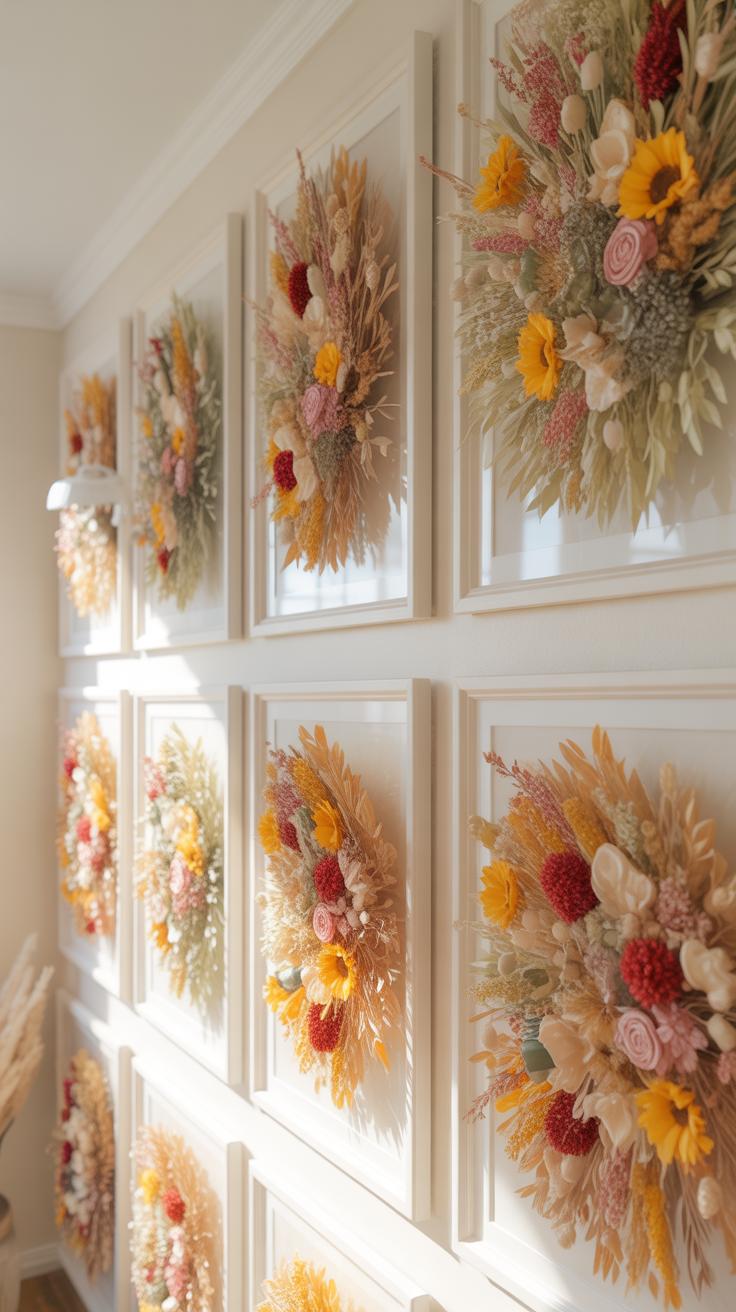
Using Dried And Preserved Flowers As Lasting Wall Decor Flower Features
Dried botanicals offer a permanent alternative to fresh stems. This method relies on dehydration to stop decay. Modern preservation uses glycerol to replace water in plant cells. This process keeps the petals flexible and colors stable. Professionals mount these specimens in shadow boxes or on wooden panels. This technique prevents physical damage and limits dust buildup on the delicate organic structures.
Proper placement determines the lifespan of dried Floral Wall Art Ideas. UV light bleaches natural pigments quickly. You must install these pieces away from direct sunlight and high humidity. Moisture causes mold growth on organic matter. Use archival glue or floral wire to secure stems to your backing material. These tools ensure the arrangement stays intact for years without needing water or maintenance.
3D Floral Wall Art Ideas That Add Depth And Texture To Any Space
3D floral art breaks the flat plane of traditional wall decor. Artists use ceramic, resin, or cold-pressed paper to create these sculptural pieces. These materials mimic the complex geometry of real flowers. High-relief designs cast shadows that change throughout the day. This physical depth creates a focal point that flat prints cannot match. You use these pieces to add architectural interest to plain walls.
Installation requires careful planning of weight and hardware. Heavy ceramic blossoms need wall anchors to prevent surface damage. Lightweight paper or foam options work well with simple adhesive strips. Grouping several small 3D elements creates a sense of motion across a room. This strategy works best in hallways or above seating areas. Choose matte finishes to emphasize the shape of the petals over shiny reflections.
Frequently Asked Questions

What are the best ways to incorporate floral wall art into a modern home?
To bring a modern touch to your space, look for oversized botanical prints or minimalist line art drawings of blooms. These floral wall art ideas work beautifully in contemporary settings because they balance organic shapes with clean lines. Consider a large-scale triptych over your sofa or a monochromatic floral canvas to add sophisticated visual interest without overwhelming your current color palette or minimalist aesthetic.
How do I choose the right size and placement for floral wall decor?
When arranging your botanical pieces, aim for the center of the artwork to be at eye level, roughly 57 to 60 inches from the floor. If you are placing floral wall art ideas above furniture, ensure the piece spans about two-thirds the width of the sofa or headboard. This creates a balanced look that feels intentional and anchored, preventing the artwork from looking too small or disconnected from the room.
Are there affordable ways to get the high-end floral art look on a budget?
Absolutely! You can achieve a luxury look without the high price tag by using digital downloads or framing pressed wildflowers from your own garden. Thrift stores are also gold mines for vintage botanical illustrations that look stunning in modern frames. These budget-friendly floral wall art ideas allow you to customize your gallery wall frequently, keeping your home decor feeling fresh and vibrant throughout every season of the year.