

What Are Cosmos Flowers And Why Every Gardener Should Grow Them

The Origins And Botanical Background Of Cosmos Flowers
Cosmos bipinnatus and Cosmos sulphureus represent the two primary species in home gardens. These plants belong to the Asteraceae family and originated in Mexico. Spanish explorers brought them to Europe during the 1700s. They thrive in dry regions with poor soil quality. This history explains their natural resistance to heat and drought. Knowledge of their native habitat dictates how you should manage them today.
Botanically, these annuals feature symmetrical rays around a central disc. They produce feathery foliage that allows air to circulate through the garden bed. This open structure prevents many common fungal diseases. Most varieties reach heights between two and five feet. They complete their entire life cycle in a single growing season. Understanding these physiological traits helps you plan your garden layout and spacing requirements effectively.
Why Cosmos Flowers Are One Of The Best Choices For Beginner Gardeners
Cosmos require minimal intervention to produce high yields. They tolerate neglect and thrive in soil where other flowers fail. You do not need expensive fertilizers or complex irrigation systems. In fact, rich soil often results in more foliage and fewer blooms. This makes them ideal for gardeners working with untreated or poor ground. They provide a high return on investment for very little physical effort.
These plants act as a strategic tool for pest management and pollination. Their open flower shape allows bees and butterflies to access nectar easily. They also attract predatory insects that kill garden pests naturally. This reduces your need for chemical pesticides. Because they bloom from midsummer until the first frost, they provide a consistent visual impact. Beginners gain immediate confidence through their rapid growth rate and resilience.

Understanding The Different Varieties Of Growing Cosmos For Your Garden

Cosmos Sulphureus Vs Cosmos Bipinnatus: Knowing The Key Differences
Cosmos bipinnatus is the most common variety found in home gardens. It originates from Mexico and features fine, fern-like foliage. These plants produce daisy-like flowers in shades of white, pink, and deep red. They prefer cooler summer temperatures compared to other types. You must manage their height because they often reach five feet tall. Staking is usually necessary for these taller plants.
Cosmos sulphureus thrives in intense heat and humidity. These plants have broader, more rugged leaves that look like marigolds. The flower colors stay strictly in the yellow, orange, and red spectrum. They generally stay shorter and more compact than bipinnatus varieties. This species resists drought better and handles poor soil with ease. Choose this variety if you live in a hot, southern climate with harsh sun.
Popular Cosmos Flower Varieties To Consider For Your Garden Beds
The Sensation series is the standard for beginners. It won the All-America Selections award in 1936 and remains a top choice today. These plants offer large blooms in a mix of rose, white, and crimson. They reach maturity quickly and tolerate neglect. For tight spaces, look at the Sonata series. It provides the same flower shape but stays under two feet tall without needing any support.

Double Click varieties offer a different texture with tiered petals. These flowers look like pom-pons or carnations and add bulk to floral arrangements. If you want unique colors, plant the Versailles series which has dark centers. For orange and gold tones, the Bright Lights mix is the industry standard for sulphureus types. Select your variety based on your garden height limits and your local wind conditions to prevent stem breakage.
How To Grow Cosmos From Seed The Complete Beginner Breakdown

When And Where To Sow Cosmos Seeds For The Best Germination Results
Soil temperature dictates your success rate with these seeds. You must wait until the soil reaches a consistent temperature of sixty-five degrees Fahrenheit. Sowing too early in cold ground leads to seed rot. Most gardeners start seeds outdoors after the final spring frost passes. Direct sowing is the most effective method because cosmos roots do not like being moved.
Select a site that receives at least six to eight hours of direct sunlight. Cosmos plants originate from the scrub and meadows of Mexico. They require open areas and intense light to prevent leggy growth. Do not add fertilizer to the soil before planting. Rich soil produces excess foliage but very few flowers. Poor or average soil quality creates the best blooms.
Step By Step Guide On How To Sow And Germinate Cosmos Seeds Successfully
Consistency in depth and moisture determines your germination speed. Clear the planting area of all weeds and large rocks. Lightly rake the surface to loosen the top inch of dirt. You must place seeds at the correct depth to ensure they receive enough darkness to sprout. Spacing prevents powdery mildew later in the season by allowing air to flow between mature stems.
- Seed Depth: Press seeds into the soil exactly one-quarter inch deep. This depth provides enough coverage to keep the seed moist while allowing the sprout to reach the surface quickly. Deep planting prevents germination.
- Spacing Protocol: Space your seeds twelve to eighteen inches apart in every direction. Proper spacing reduces competition for water and nutrients. It also stops the spread of fungal diseases once the plants develop dense foliage later.
- Moisture Control: Use a spray bottle or a light mist setting to water the area. Heavy streams of water will wash the seeds away or bury them too deep. Keep the soil damp until the first green hooks appear.
- Thinning Process: Remove the weakest seedlings once they reach three inches in height. This leaves only the strongest plants to reach maturity. Pulling the extras by hand ensures the remaining roots have plenty of room to expand and thrive.
- Temperature Management: Monitor the local weather forecast for sudden nighttime temperature drops. If a late frost threatens your new seedlings, cover the area with a light frost blanket or an old bedsheet. Remove the cover as soon as the sun rises.

Germination typically occurs within seven to twenty-one days depending on the moisture levels. Do not overwater the area once the plants are established. Cosmos plants are drought-tolerant and prefer to dry out between watering sessions. Monitor the seedlings for pests like aphids during the first two weeks of growth. Healthy seedlings will develop thin, feathery leaves that signal a successful establishment in your garden.
Choosing The Right Soil And Sunlight Conditions For How To Grow Cosmos Plants
Why Cosmos Plants Actually Prefer Poor To Moderately Fertile Soil
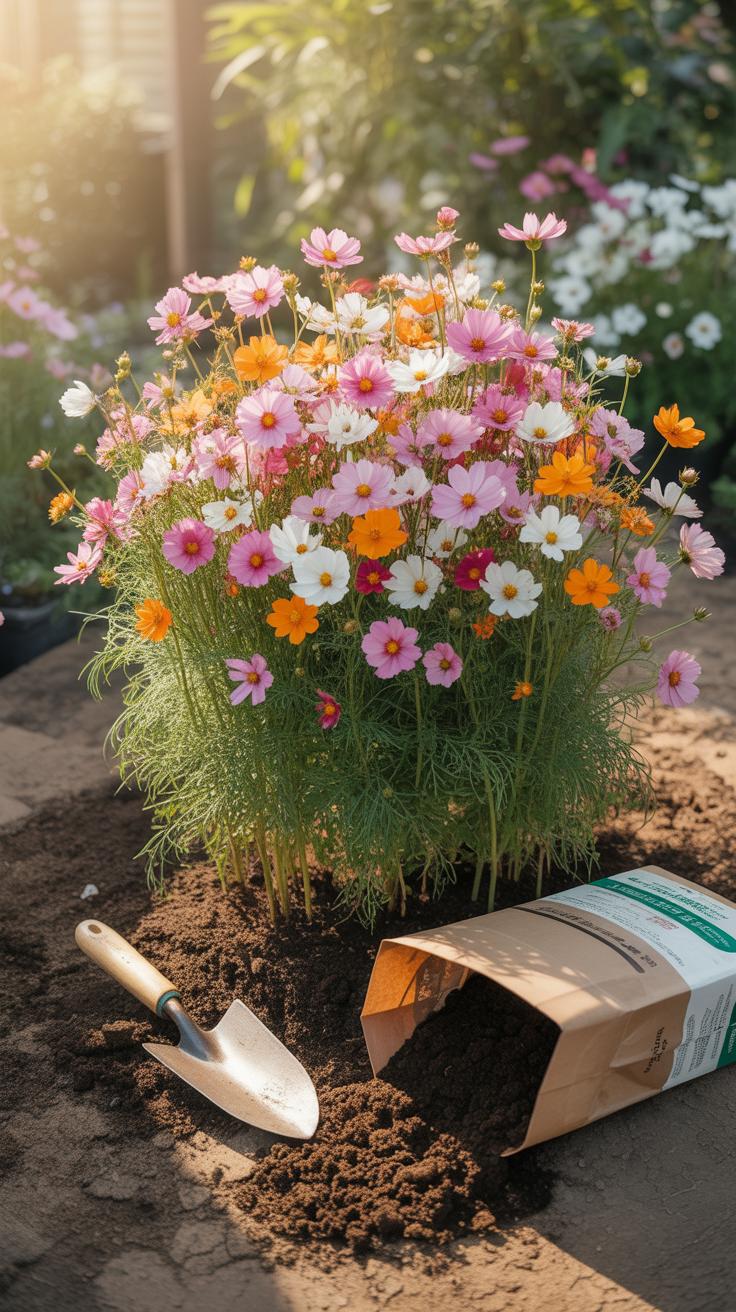
Cosmos bipinnatus originates from the scrublands of Mexico where soil nutrients are scarce. High levels of nitrogen force the plant to focus all energy on foliage production. This results in tall weak stems that collapse under their own weight. To get flowers you must limit fertilizer intake. Rich soil discourages the plant from reproductive phases. Stick to sandy or loamy textures for success.
Poor soil conditions trigger a survival response in these plants. They produce more blooms to ensure seed production before the season ends. You avoid the need for staking when plants stay compact in lean soil. Do not add compost or manure to the planting site. Ensure the ground drains quickly. Standing water rots the root system and kills the plant faster than any nutrient deficiency.
How Much Sunlight Do Cosmos Plants Need To Thrive And Bloom Freely
Maximum flower production requires at least six to eight hours of direct sunlight daily. Cosmos plants are photoperiodic and rely on light intensity to drive photosynthesis. Sunlight provides the thermal energy necessary for the rapid growth of these annuals. Shady locations result in leggy plants with few buds. Full sun ensures the stems remain sturdy and the colors stay vivid throughout the summer.

Partial shade increases the risk of powdery mildew on the lacy foliage. Air must circulate freely while the sun dries moisture from the leaves. If you plant in a low light area the stems will stretch toward the light source. This makes them prone to breaking during wind or rain. Choose an open south facing spot to maximize light exposure. Consistent light leads to steady blooming until the first frost.
Cosmos Plant Care Watering Feeding And Keeping Your Plants Healthy
How Often To Water Cosmos Plants Without Causing Root Rot Or Overwatering
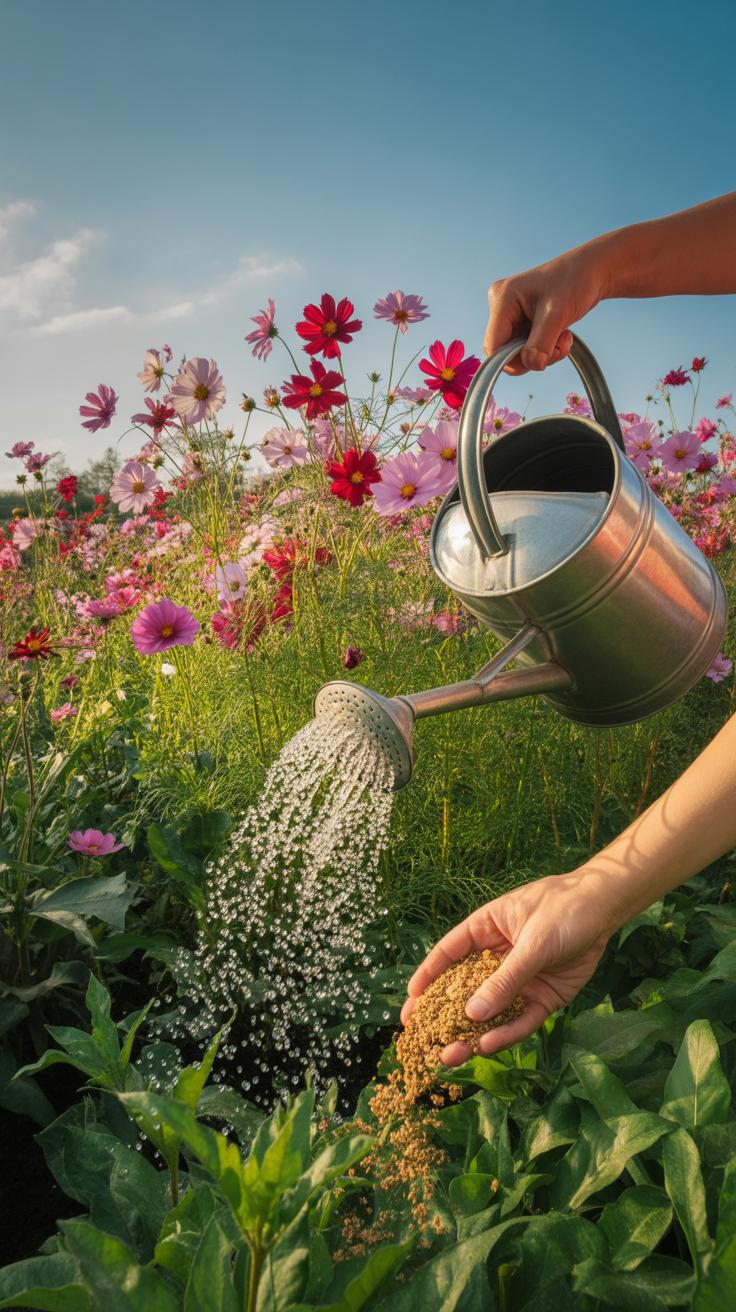
Establish a deep watering routine only during the initial growth phase. Young seedlings require consistent moisture to build strong root systems. Check the top inch of soil daily. If it feels dry, apply water directly to the base of the plant. Avoid wetting the foliage to prevent fungal diseases. Once established, these plants tolerate drought well and require significantly less intervention.
Overwatering is the primary cause of plant failure. Excessive moisture leads to root rot and weak stems. Mature cosmos only need deep watering during prolonged dry spells or extreme heat. Test the soil before adding water. If the soil remains damp, stop watering immediately. Good drainage is mandatory. Saturated ground suffocates roots and kills the plant. Monitor weather patterns to avoid unnecessary manual irrigation.
Do Cosmos Plants Need Fertilizer And How To Feed Them The Right Way
Cosmos plants thrive in poor soil and rarely need supplemental feeding. High nitrogen fertilizers are a mistake for this species. Excess nitrogen forces the plant to produce thick green stalks and lush leaves at the expense of flowers. You will end up with tall, weak plants that collapse under their own weight. Stick to natural soil nutrients to ensure the best bloom production.

Skip the chemical fertilizers entirely if your soil is average quality. Adding compost at the time of planting provides sufficient nutrients for the entire season. If you must use a fertilizer, choose a balanced, low-strength formula. Apply it only once during the early spring. Most growers find that total neglect regarding feeding leads to more flowers. Focus on sunlight and drainage instead of nutrients.
Cosmos Flower Care Tips Deadheading Pinching And Encouraging More Blooms

How And When To Deadhead Cosmos Flowers To Extend The Blooming Season
Deadheading is the tactical removal of faded flowers. This process prevents the plant from diverting energy into seed production. Use sharp shears or your fingernails to cut the stem back to the first set of true leaves below the flower head. Execute this task as soon as the petals wilt or lose color. Regular removal forces the plant to generate new buds.
Consistency is the primary driver of a long blooming season. Check your plants every two or three days during peak summer. If you leave spent blooms on the stalk, the plant receives a hormonal signal to stop flowering. It shifts its focus to survival through seed dispersal. Clean cuts prevent disease and keep the plant productive until the first heavy frost kills it.
Like the simple joys of childhood, cosmos ask for so little yet give so much color to the world. Just scatter the seeds in the sun and watch as nature weaves a tapestry of memories in your own backyard.
The Benefits Of Pinching Back Young Cosmos Plants For Fuller Growth
Pinching is a pruning technique used on young plants to increase structural density. Wait until the plant stands twelve inches tall. Locate the main center stem and remove the top two or three inches just above a leaf node. This action breaks apical dominance. It forces the plant to redirect growth hormones to the side buds. This creates a bushier shape.

A pinched plant produces more lateral branches. Every new branch is a potential site for several flower buds. Without this intervention, cosmos often grow tall and spindly. They become top heavy and fall over in high winds. Pinching creates a sturdy base that supports more weight. Do not fear the initial growth delay. The resulting increase in total flower volume justifies the early cut.
Planting Cosmos In Pots How To Grow Cosmos Successfully In Containers
Choosing The Right Pot Size And Drainage Setup For Container Cosmos
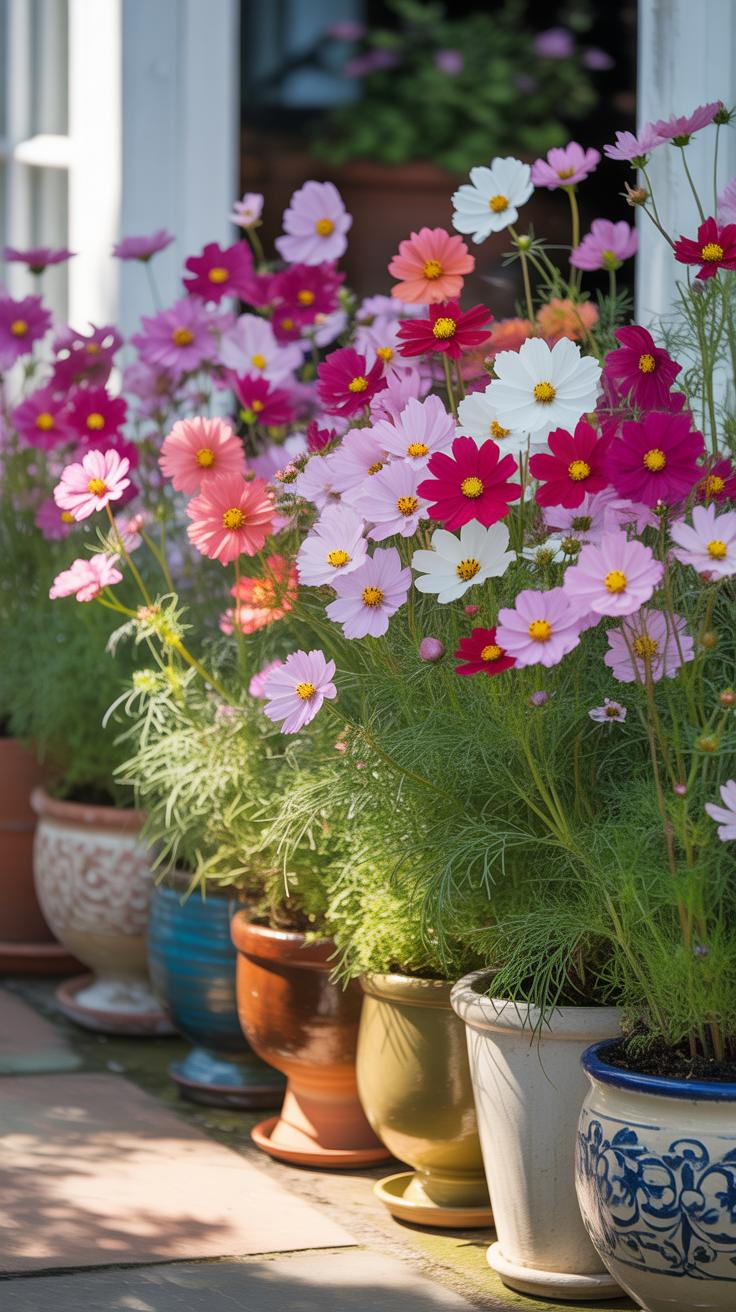
Container success starts with volume. Cosmos require a pot at least twelve inches deep to accommodate their rapid root development. Small pots restrict growth and lead to stunted plants that topple easily. Use heavy ceramic or terra cotta for tall varieties. These materials provide the weight needed to prevent the wind from blowing over top-heavy mature plants during summer storms.
Drainage is a hard requirement. Cosmos roots rot quickly in standing water. Choose a container with multiple large drainage holes at the base. Place a coffee filter or mesh screen over the holes to keep soil inside while letting water escape. Avoid using saucers that hold water. Elevate the pot on feet to ensure airflow underneath the container and prevent moisture buildup.
Essential Care Adjustments When Growing Cosmos In Pots Vs Garden Beds
Potting soil behaves differently than garden earth. You must use a high-quality potting mix rather than topsoil to ensure aeration. Containers dry out faster than the ground. Check the top inch of soil daily. If it feels dry, apply water until it runs out the bottom. Do not overwater. Saturated soil will kill cosmos faster than a temporary drought will.

Nutrient management requires precision in pots. Garden cosmos flourish in poor soil, but container nutrients leach out during watering. Use a low-nitrogen fertilizer every four weeks. High nitrogen creates weak stems and excessive leaves without flowers. Deadhead spent blooms immediately. This practice redirects energy from seed production back into flower development. Keep the plant focused on blooming to extend the decorative season.
Designing A Cosmos Flowers Garden Layout Ideas And Companion Planting

How To Arrange Cosmos In Your Garden For Maximum Visual Impact
Place taller cosmos varieties at the back of border beds. Their height often reaches four to five feet. These plants create a natural screen or backdrop for shorter perennials. Gardeners use this tiered method to ensure every plant receives adequate sunlight. High density planting helps thin stems support each other against wind. Strategic spacing prevents overcrowding and encourages better airflow across the foliage.
Group cosmos by color to create bold visual blocks. Most designers suggest using three to five plants of the same variety together. This technique mimics the drift planting style found in English cottage gardens. It draws the eye and makes a stronger impact than scattered individual plants. Use shorter dwarf varieties for edging paths or filling containers. Consistent deadheading keeps the display clean and productive throughout the entire summer.
Best Companion Plants To Pair With Cosmos In A Pollinator Friendly Garden
Pair cosmos with plants that share similar light and water needs. Cosmos thrive in full sun and poor soil. Select companions that do not require heavy fertilization. This prevents the cosmos from growing too much foliage at the expense of flowers. Diverse plantings attract a wider range of beneficial insects. This increases pollination rates and provides natural pest control for your entire garden space.
- Zinnias: These annuals share the same heat tolerance and sun requirements as cosmos. They provide a sturdy structure and various flower shapes. This combination creates a vibrant cutting garden that blooms until the first hard frost kills the plants.
- Cleome: Often called spider flowers, these tall plants match the height of standard cosmos varieties. They offer a different texture with their palmate leaves and spiky blooms. Both plants tolerate drought well once they establish their root systems in the soil.
- Dill: This herb serves as a host plant for swallowtail butterfly larvae. Its flat yellow flower clusters contrast with the open petals of cosmos. Growing dill nearby brings in predatory wasps that hunt common garden pests like aphids and caterpillars.
- Marigolds: These compact flowers work well at the base of tall cosmos stems. They help mask the leggy bottom growth of older cosmos plants. Marigolds specifically repel certain soil nematodes and provide a thick layer of ground cover to retain moisture.
- Salvia: The vertical spikes of salvia provide a sharp visual contrast to the airy cosmos. Many salvia species attract hummingbirds and bees with their deep blue or red colors. These plants are tough and require very little maintenance throughout the growing season.

Balance your garden layout by mixing heights and bloom times. Cosmos bloom late into the season. Mix them with early summer perennials to maintain constant color. Avoid planting cosmos near heavy feeders that require rich compost. High nitrogen levels in the soil will cause cosmos to stay green without producing any buds. Stick to rugged companions that prefer well drained soil and minimal chemical intervention for the best results.
Common Cosmos Garden Problems And How To Troubleshoot Them

Identifying And Managing Common Pests That Affect Cosmos Plants
Aphids and leafhoppers pose the primary threat to cosmos. These insects suck sap from stems and leaves. You will see curled foliage or sticky residue if they are present. Blast them off with a strong stream of water from your hose. This physical removal works for small infestations. Do not use heavy pesticides. These chemicals kill beneficial insects like ladybugs that eat pests.
Spider mites thrive in hot and dry conditions. Look for fine webbing on the undersides of leaves. Increase local humidity by misting the plants to deter them. Slugs can also attack young seedlings during wet spring weather. Set up physical barriers or use iron phosphate bait to protect new growth. Consistent scouting prevents minor issues from destroying your entire garden crop.
Why Your Cosmos Plants May Not Be Blooming And How To Fix It
Excessive nitrogen is the most common reason for a lack of flowers. High nitrogen levels force the plant to grow green leaves instead of buds. Stop applying lawn fertilizers near your cosmos beds. These plants prefer poor soil conditions to trigger their reproductive cycle. If your cosmos look like giant green bushes with no color, you must reduce your fertilizer use immediately.
The second major blooming issue involves light and deadheading. Cosmos require full sun for at least six to eight hours each day. Shady spots result in tall and leggy plants that rarely flower. You must also remove faded blooms to encourage more growth. This process is called deadheading. It stops the plant from making seeds. This tactic forces the plant to produce new flower buds instead.
Saving Cosmos Seeds And Planning For Next YearS Cosmos Garden

How To Harvest And Properly Store Cosmos Seeds After The Blooming Season
Harvesting seeds starts when the flower heads turn brown and brittle. You must wait for the petals to fall off completely. Look for long and dark needles at the center of the dried pod. These are the seeds. Pull them away from the base with your fingers. Ensure they are dry before you pull them. If they feel damp, the seeds will rot.
Store your dried seeds in a cool and dark place. Use paper envelopes instead of plastic bags to prevent moisture buildup. Label each envelope with the variety and the harvest date clearly. High temperatures and direct sunlight will kill the embryos inside. Keep the envelopes inside a sealed glass jar for extra protection. These seeds remain viable for several years if you keep them dry.
Tips For Letting Cosmos Self Seed Naturally And What To Expect Next Season
Cosmos plants are prolific self-seeders if you stop deadheading in late summer. Leave the last flush of flowers on the stalks to wither. The wind and birds will scatter the seeds across your garden bed. This method creates a natural look for your landscape. It saves you the work of manual planting. Simply let nature distribute the seeds across the soil surface.
Expect some variation in flower color and height next year. Most modern cosmos are hybrids. The second generation often reverts to original traits of parent plants. Seedlings will emerge on their own once the soil warms up in spring. You must identify these sprouts early so you do not pull them as weeds. Thin the crowded patches to maintain good airflow and prevent disease outbreaks.
Frequently Asked Questions

Are cosmos flowers easy for beginners to grow from scratch?
Absolutely! Cosmos are often considered the perfect entry point for new gardeners because they are incredibly resilient and low-maintenance. These Hardy annuals thrive even in poor soil conditions where other flowers might struggle. By following basic cosmos growing tips, such as providing plenty of sunlight and avoiding over-fertilization, you can enjoy a vibrant, pollinator-friendly garden all summer long without needing a green thumb or extensive botanical knowledge.
How do I properly plant cosmos seeds to ensure they bloom?
To get the best results, sow your seeds directly outdoors after the last frost has passed. Lightly press them into the soil, covering them with just a quarter-inch of earth, as they need a bit of warmth to germinate. One of the most essential cosmos growing tips is to space them about 12 to 18 inches apart to allow for airflow, which prevents disease and encourages sturdier, bushier stems.
Do I need expensive fertilizers or tools to grow beautiful cosmos?
Not at all! In fact, cosmos actually prefer “lean” soil and can produce fewer flowers if the ground is too rich or heavily fertilized. This makes them one of the most budget-friendly flowers for home decor. All you really need is a sunny patch of dirt, a packet of affordable seeds, and regular watering during dry spells. They provide a high-end floral aesthetic for the cost of just a few dollars.