What Are Cluster Vase Displays And Why Are They A Must Have Home DCor Trend

Understanding The Concept Of Cluster Vase Displays
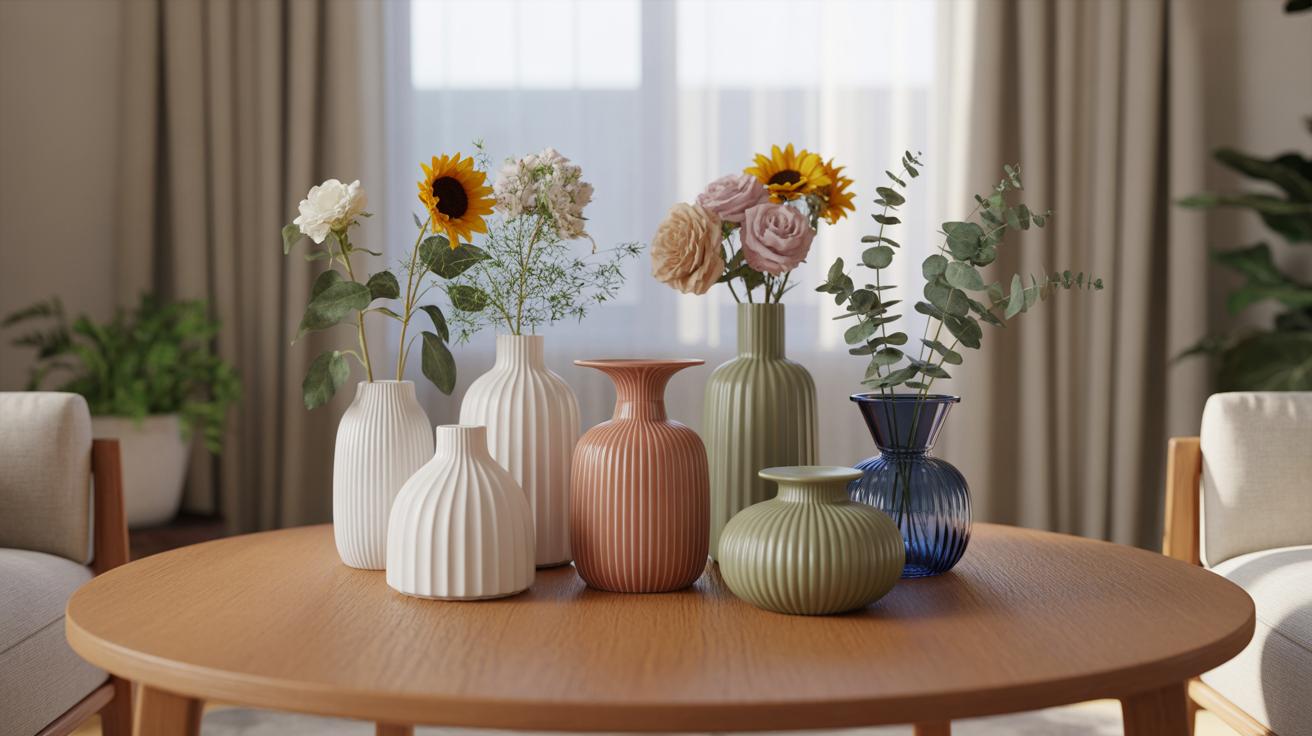
A cluster vase display involves grouping three or more vessels of varying heights, shapes, or materials into a single focal point. This technique relies on the rule of three to create visual balance and depth. Designers use this method to fill negative space on tables, mantels, or shelves. Unlike a single large centerpiece, a cluster creates a dynamic silhouette that guides the eye across different levels.
The core objective centers on intentional asymmetry. You select vases that share a common element like color or texture but differ in scale. Professionals often mix bud vases with larger pitchers to anchor the arrangement. This approach allows for versatile styling with or without floral elements. It transforms individual utilitarian objects into a cohesive art installation. Successful clusters focus on the physical relationship between each vessel.
Why Cluster Vase Displays Are Dominating Modern Interior Design
Modern design movements favor modularity and texture over rigid symmetry. Cluster vase displays fit this shift by offering a flexible way to add architectural interest to a room. They reflect the principles of Scandi-minimalism and Brutalism by highlighting raw materials like clay, stone, and glass. Homeowners choose them because they are scalable. You can easily adjust the size of the grouping to fit any surface area.
These displays dominate because they solve the problem of flat surfaces. Low-profile furniture often needs vertical height to look complete. Clustering provides this height without blocking sightlines. It also allows collectors to showcase multiple pieces at once. The trend persists because it works across various budget levels and design styles. It offers a high-impact visual result with minimal effort or permanent structural changes to a living space.
Choosing The Right Vases For Your Cluster Flower Arrangements
How To Mix Shapes, Heights, And Materials For A Cohesive Cluster Look
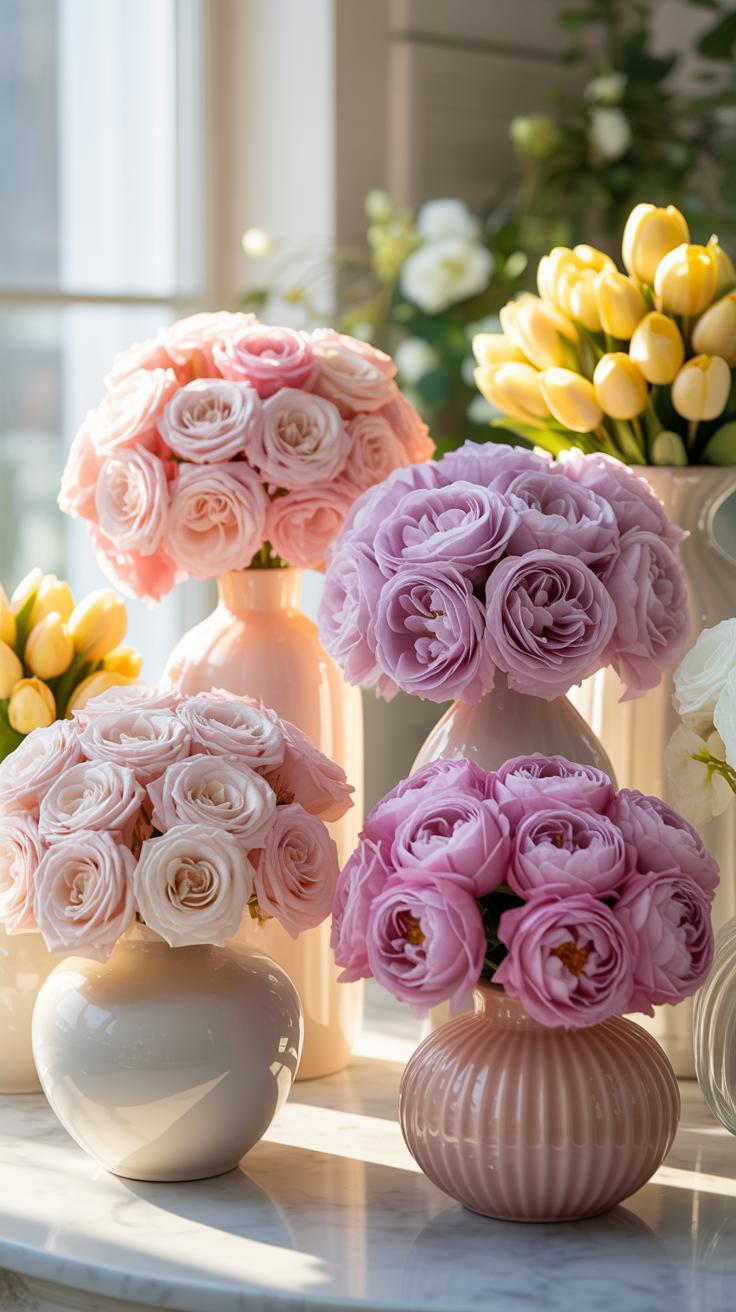
Success in cluster arrangements depends on height variation. You must select three distinct heights to create a visual triangle. This structure prevents the eye from stalling on a single plane. Use a tall cylindrical vessel as your primary anchor. Surround it with medium and small vessels to build depth. This tactical layering ensures every flower remains visible from multiple viewing angles.
Maintain cohesion through shared material properties. Use items with similar surface finishes even if their shapes differ. A matte ceramic base pairs well with textured stoneware. Mixing disparate materials like polished chrome and rustic wood requires a unifying color palette. Stick to a restricted color range when shapes are aggressive. This approach balances the display and prevents the arrangement from looking like random clutter.
A house is made of walls and beams, but a home is built with love and the small treasures we gather. There is a sweet nostalgia in the way a cluster of vases catches the light, reminding us that beauty is found in the simple harmony of things grouped together.
Best Vase Types To Use In Cluster Flower Arrangements: From Ceramic To Glass
Clear glass vessels provide a clean look that highlights stem architecture. This style works best for minimalist designs or botanical studies. Heavy glass structures or apothecary jars add weight to the base of your display. They provide stability for top-heavy blooms. Ensure the water remains pristine as glass offers no concealment for debris. Use these for high-traffic areas where light filtration is necessary.
Ceramic and stoneware offer superior structural support and hide messy stems. These opaque materials allow you to focus entirely on the floral heads. Matte finishes absorb light and provide a modern edge. Glazed ceramics reflect light and add a traditional feel. Choose these for dense clusters where stem management is difficult. Opaque vessels also hide floral foam or mechanics used to position difficult branches.
Creative Flower Arrangements Unique To Cluster Vase Styling
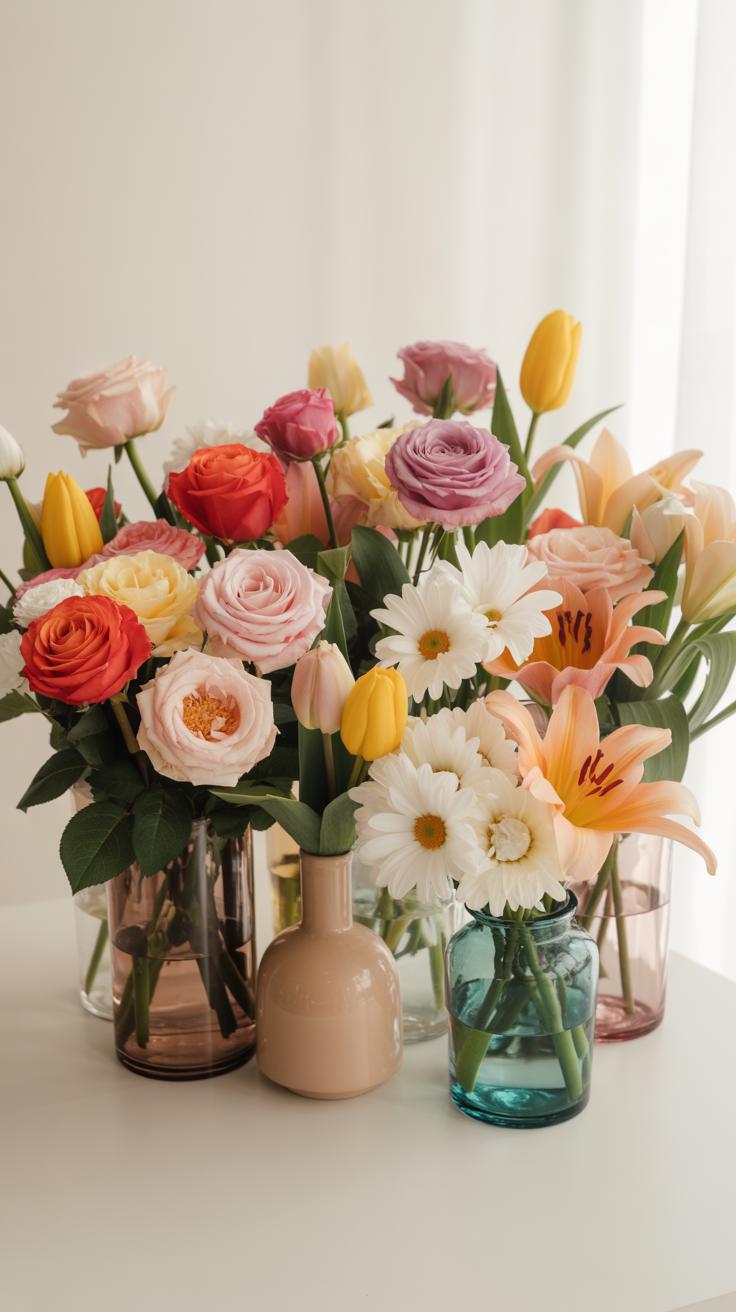
How To Layer Blooms And Foliage For A Naturally Effortless Cluster Display
Effective cluster displays require a clear hierarchy. Select one primary stem to act as the focal point within the tallest vase. Use secondary blooms of varying heights in the surrounding vessels. This creates a staggered visual path for the eye. Avoid perfect symmetry to mimic how plants grow in nature. Contrast stiff woody stems against soft flowing greenery to add structural depth.
Balance the density of your foliage across the entire group. Do not pack every vase tightly. Leave some vessels with a single architectural leaf or a bare branch. This negative space prevents the arrangement from looking cluttered. Use the Odd Number Rule to group your vases. Placing three or five containers together creates a dynamic profile. Ensure the base of each stem reaches the water level.
Essential Tips For Keeping Your Creative Flower Arrangements Looking Fresh Longer
Bacteria growth is the primary cause of flower decay in cluster displays. Small vases hold less water and warm up quickly. High temperatures accelerate rot and wilting. Change the water in every vessel every twenty-four hours. Use sharp shears to cut stems at a forty-five-degree angle. This increases the surface area for water intake. Remove all leaves below the waterline immediately.
- Scrub Containers: Wash every vase with soap and bleach before use. Residual bacteria from previous arrangements will kill new flowers fast. Clean surfaces ensure the water stays clear and life-supporting for the stems.
- Recut Stems: Trim five millimeters off the bottom of each stem daily. This removes the air-clogged end and opens fresh vascular tissue. Use a clean blade to avoid crushing the delicate water-transporting tubes inside the plant.
- Control Temperature: Place your cluster display away from direct sunlight and heater vents. Heat triggers rapid transpiration and causes petals to drop. Cool spots preserve the cellular structure of the blooms and extend their vibrant appearance.
- Remove Ethylene: Keep ripening fruit away from your floral arrangements. Fruit releases ethylene gas which signals flowers to wilt and drop seeds. This colorless gas acts as a ripening hormone that significantly shortens the lifespan of your display.
- Dose Food: Use commercial floral preservative in the correct ratio for each small vase. These packets contain sugar for energy and acidifiers to stabilize the pH level. Proper chemistry prevents the growth of microbes that block water transport.

Small vessels require more frequent monitoring than large centerpieces. Check water levels twice daily since small volumes vanish fast through evaporation. Use a narrow-spout watering can to top off vases without disturbing the delicate visual balance. Consistency is the key to longevity. Well-maintained stems can last twice as long as neglected ones. Monitor the health of individual stems and remove dying pieces.
Bud Vases Colorful Flowers Small Vessels With A Big Decorative Impact
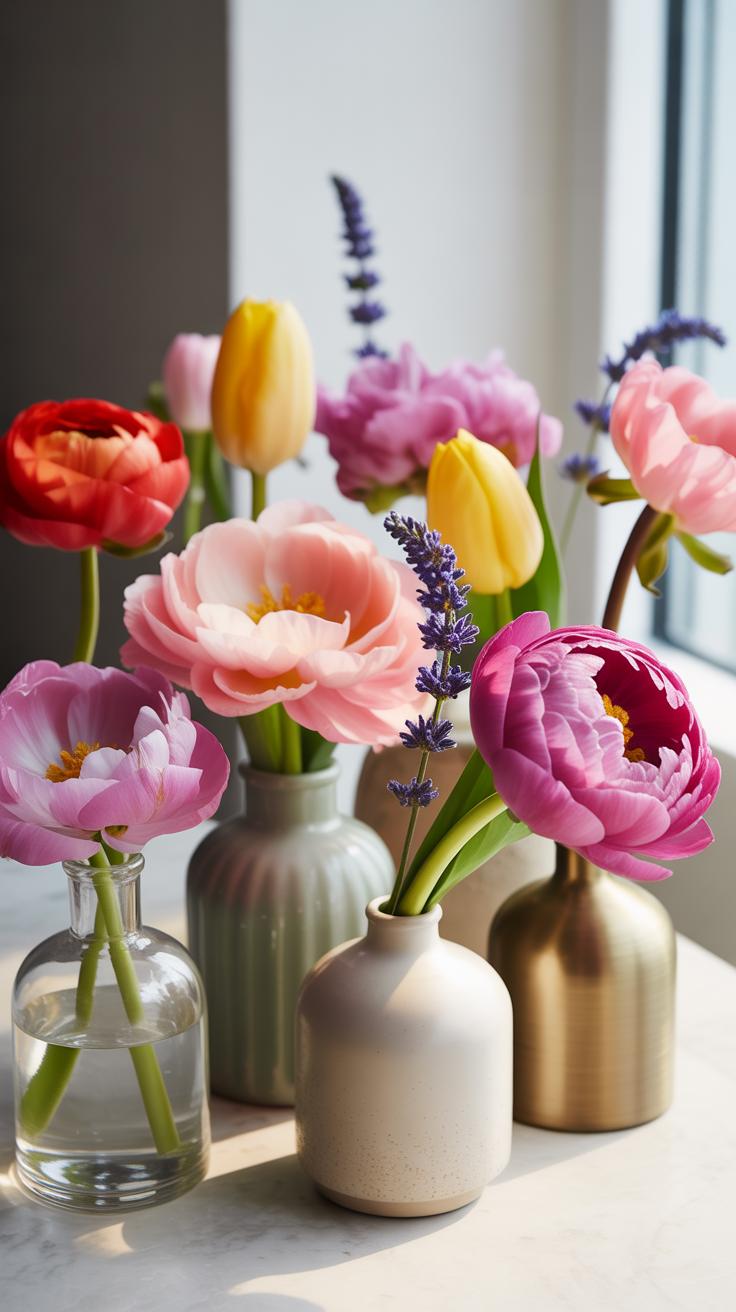
Why Bud Vases Are The Secret Weapon Of Stunning Cluster Vase Displays
Bud vases allow for precise control over a floral arrangement. Their narrow necks support single stems or small bunches. This structure prevents flowers from drooping or spreading too wide. You can position each bloom at a specific height or angle. This control creates a disciplined look. Designers use these vessels to build layers in a cluster display. Small vases fill gaps between larger containers easily.
Individual bud vases maximize a limited flower supply. You do not need large bouquets to create a significant visual impact. These vessels highlight the unique form of a single specimen. Arranging multiple bud vases together creates a modular system. You can move individual units to change the shape of the cluster. This flexibility makes them a core tool for dynamic home styling. They work in very tight spaces.
Best Colorful Flowers To Feature In Bud Vases For A Vibrant Cluster Effect
Saturated colors yield the best results in small vessels. Ranunculus and anemones offer high petal counts and intense hues. Their sturdy stems fit well into glass or ceramic necks. Use primary colors to create contrast against neutral walls. Grouping similar shades creates a gradient effect across the cluster. Sharp colors draw the eye to specific points in the room. This technique defines the focal point of a table.
Select seasonal blooms with unique silhouettes for added interest. Sweet peas and poppies provide movement with their curved stems. These shapes break up the rigid lines of the vases. Bright yellows and deep purples create a high-energy look. Minimal foliage ensures the color remains the main priority. Replace water daily to maintain the vibrancy of the petals. Fresh stems ensure the cluster display stays professional and sharp for several days.
Sunlit Window Sill Vase Displays Bringing Natural Light Into Your Floral DCor
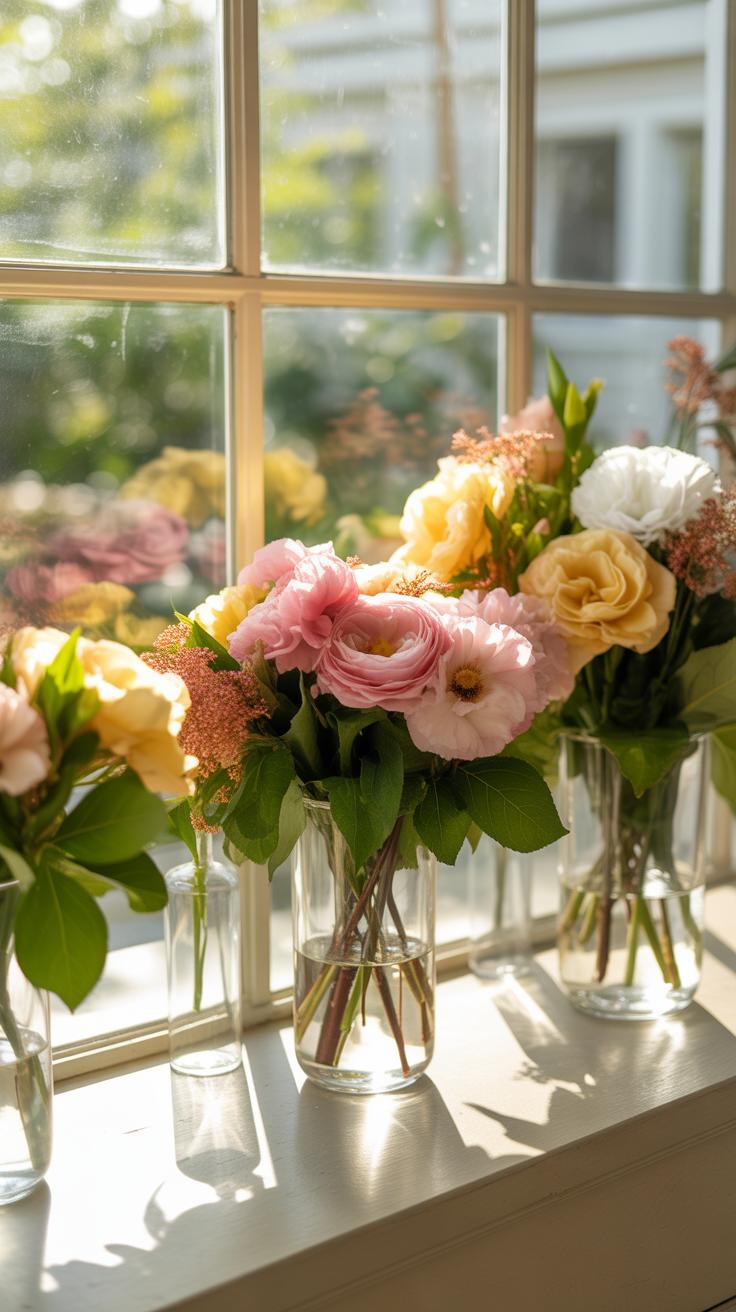
How To Style A Sunlit Window Sill Vase Cluster For Maximum Visual Impact
Position vases at varying heights to utilize the full vertical space of the window frame. Use transparent glass vessels to allow light to pass through the water and stems. This technique creates a luminous effect that emphasizes the clarity of the material. Place larger vases at the ends of the sill to anchor the arrangement. Ensure the cluster allows for natural light to enter the room.
Group vases in odd numbers to create a balanced but informal look. Mix different geometric shapes like cylinders and spheres to add structural variety. Keep the spacing tight to maintain a cohesive unit rather than scattered individual pieces. Choose colored glass in amber or smoke tones to filter light without blocking it. Avoid opaque ceramics if you want to maximize the glow from the sun.
Sunlit Window Sill Flowers That Thrive In Bright Indirect Light
Select plant species that tolerate high light levels without wilting or burning. Peace lilies and orchids perform well in these bright environments. These plants utilize the filtered sun to maintain strong cell structures in their stems. Use fresh water and change it daily to prevent bacterial growth accelerated by heat. Proper hydration is critical because window sills often experience temperature fluctuations throughout the day.
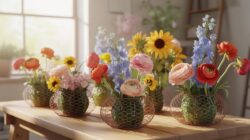
Incorporate foliage like eucalyptus or ruscus for long lasting green displays. These greens withstand UV exposure better than delicate soft petal flowers. Many tropical varieties thrive in the warmth provided by south facing windows. Position the vessels a few inches from the glass to prevent leaf scorch from heat magnification. Consistent monitoring of water levels ensures the cluster remains healthy and visually sharp in direct light.
Colorful Flowers In Vases By Window Designing A Springtime Window Scenery
How To Curate A Springtime Window Scenery With Clusters Of Seasonal Blooms
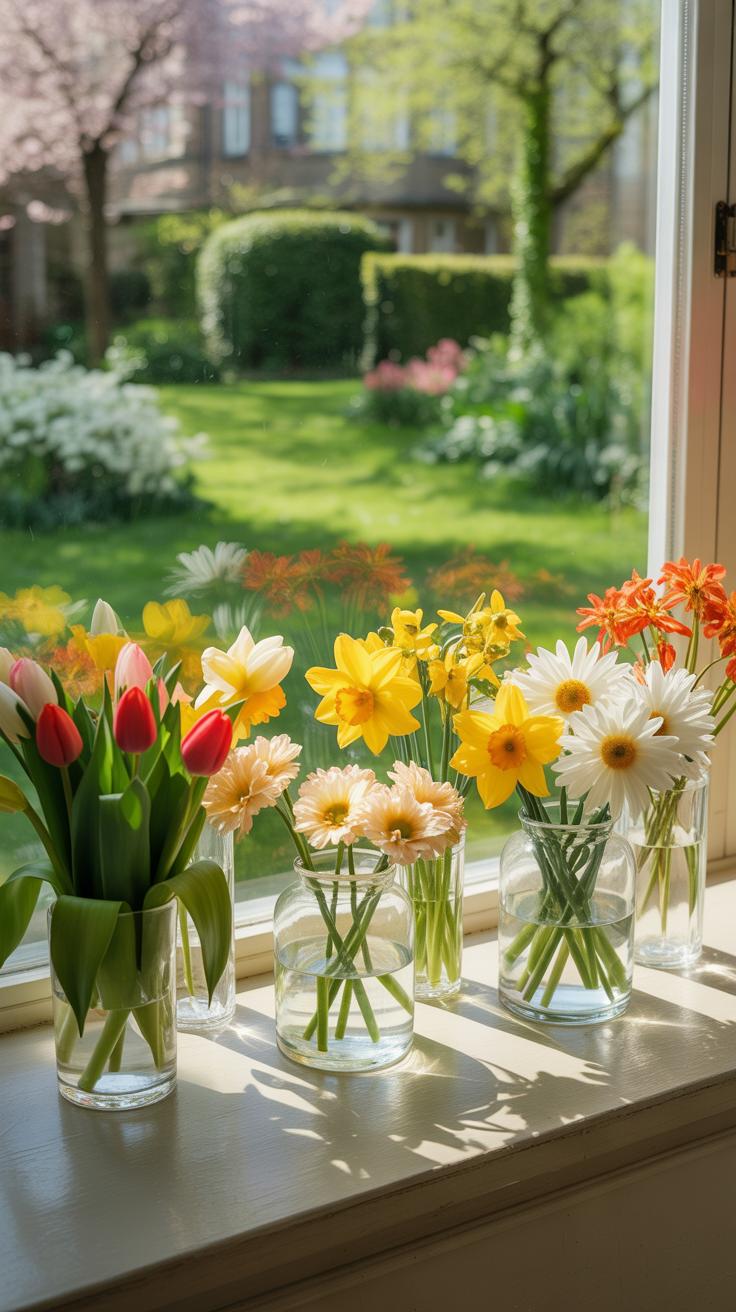
Position cluster vases on a window sill to maximize natural light. Backlighting makes thin petals glow and highlights glass textures. Select varying heights to mimic natural meadow growth. Use narrow-neck vases for heavy-headed flowers like tulips to prevent drooping. Clear glass maintains a clean look and lets light pass through to the room. Arrange vessels in odd numbers like three or five for better balance.
Group flowers by stem length to create depth. Place taller stems toward the window pane and shorter ones at the front. Use water-filled bud vases for delicate spring bulbs like hyacinths or anemones. Change water every two days to prevent algae growth from sun exposure. Keep displays away from direct heater vents to avoid wilting. Secure vases with museum wax if the window sill is narrow or high-traffic.
Best Color Palette Combinations For Colorful Flowers In Vases By Window
Spring window displays rely on the color wheel to direct visual energy. Complementary pairings create high contrast that catches the eye from the street. Analogous schemes offer a softer transition suitable for minimalist interiors. Light behaves differently through colored glass versus clear glass. Use saturated hues if the window receives intense afternoon sun. Pale shades work best in soft morning light or northern exposure.
- Complementary Yellow and Violet: Pair yellow daffodils with purple crocuses or iris. These opposite colors on the wheel create maximum visual vibration. They look crisp against white window frames and brighten rooms on overcast days.
- Monochromatic Pink Tones: Mix light pink cherry blossoms with deep magenta tulips. Using different shades of one color provides a sophisticated look. This strategy focuses on texture and shape rather than contrasting hues.
- Analogous Cool Tones: Combine blue hydrangeas with purple lilacs and green foliage. These neighbors on the color wheel create a calm atmosphere. This palette works well in bedrooms or areas meant for relaxation and quiet.
- Triadic Primary Mix: Use red tulips, yellow ranunculus, and blue cornflowers for high energy. This classic combination mimics traditional English gardens. It provides a bold statement and works best in kitchens or communal sunrooms.
- Pastel Rainbow Gradient: Arrange different colored vases in a spectrum from pale peach to soft lavender. This gradual shift creates a rhythmic movement across the window sill. It maximizes the variety of seasonal blooms available.
Select your palette based on the room’s existing wall color. Neutral walls allow for bright, saturated floral clusters. Darker rooms benefit from white and pale yellow flowers to bounce light inward. Avoid mixing too many patterns in the vases when using multi-colored bouquets. Stick to solid-colored glass or clear vessels to keep the focus on the blooms. Match the intensity of the flower colors to the light level.
Pink African Violets On Window Sill A Classic Choice For Cluster Vase Displays
The History And Enduring Appeal Of African Violets As A Window Sill Plant
Baron Walter von Saint Paul discovered these plants in Tanzania during the late nineteenth century. He sent seeds back to Germany. Commercial growers quickly realized their potential as indoor plants. Their compact size makes them ideal for small spaces. They bloom throughout the year when kept in stable conditions. This reliability established them as a staple in mid-century American kitchen windows.
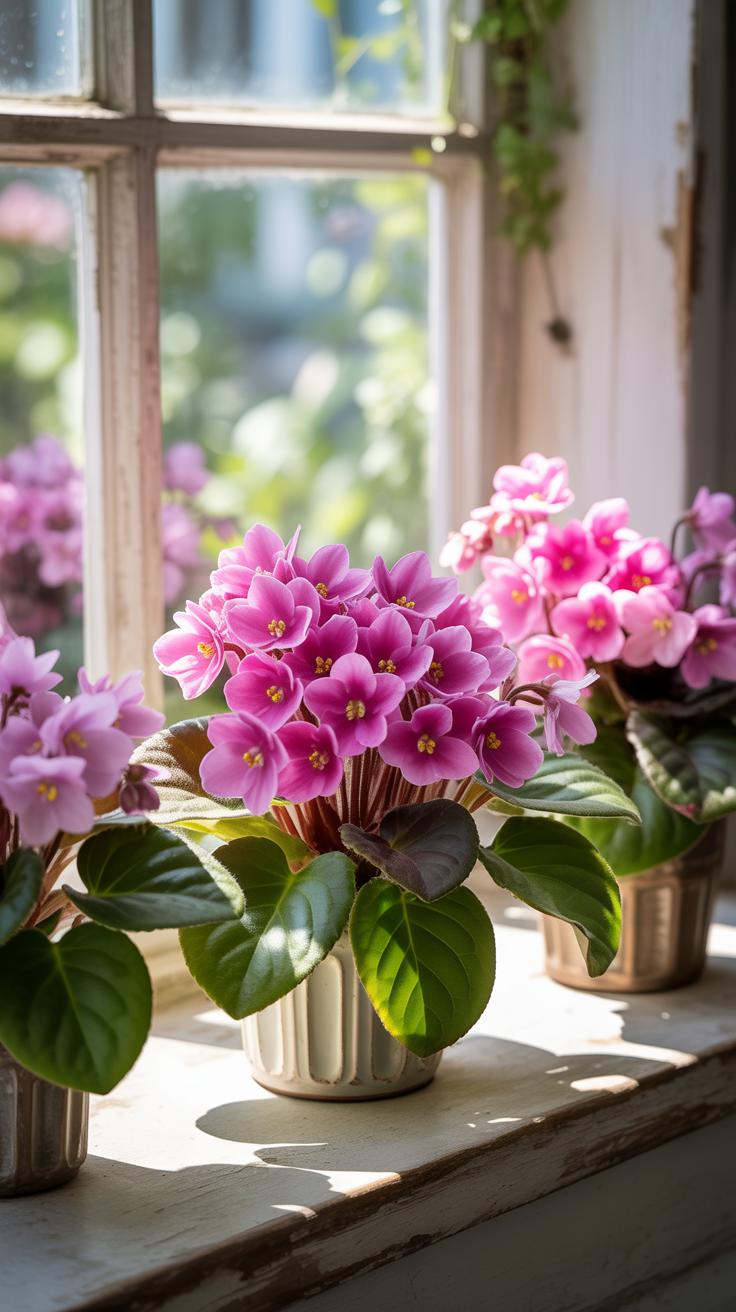
African violets thrive on north or east facing window sills. They need bright but indirect sunlight to produce flowers. Direct afternoon sun burns their delicate leaves. Their biological need for consistent light aligns perfectly with window sill placement. This practical requirement drove their popularity in home design. They provide a permanent pop of color without needing the space of larger houseplants.
How To Incorporate Pink African Violets Into A Cohesive Window Sill Cluster Display
Modern cluster displays use varying heights to create visual interest. You should place pink African violets in low, wide-mouthed vases. Group these with taller, slender glass vessels. The contrast between the leafy violet base and the vertical lines of empty or bud vases creates balance. Use neutral colors like white or gray for the pots. This keeps the focus on the vibrant pink petals.
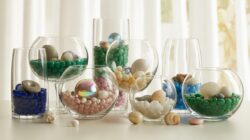
Successful window displays require strategic spacing. Do not crowd the plants. Air must circulate around the leaves to prevent rot. Place your largest violet off-center to break symmetry. Surround it with smaller glass elements to catch the light. This setup draws the eye across the entire window sill. It turns a simple plant collection into a curated design feature for your home.
Celebrating Daffodil Day With A Show Stopping Cluster Vase Display
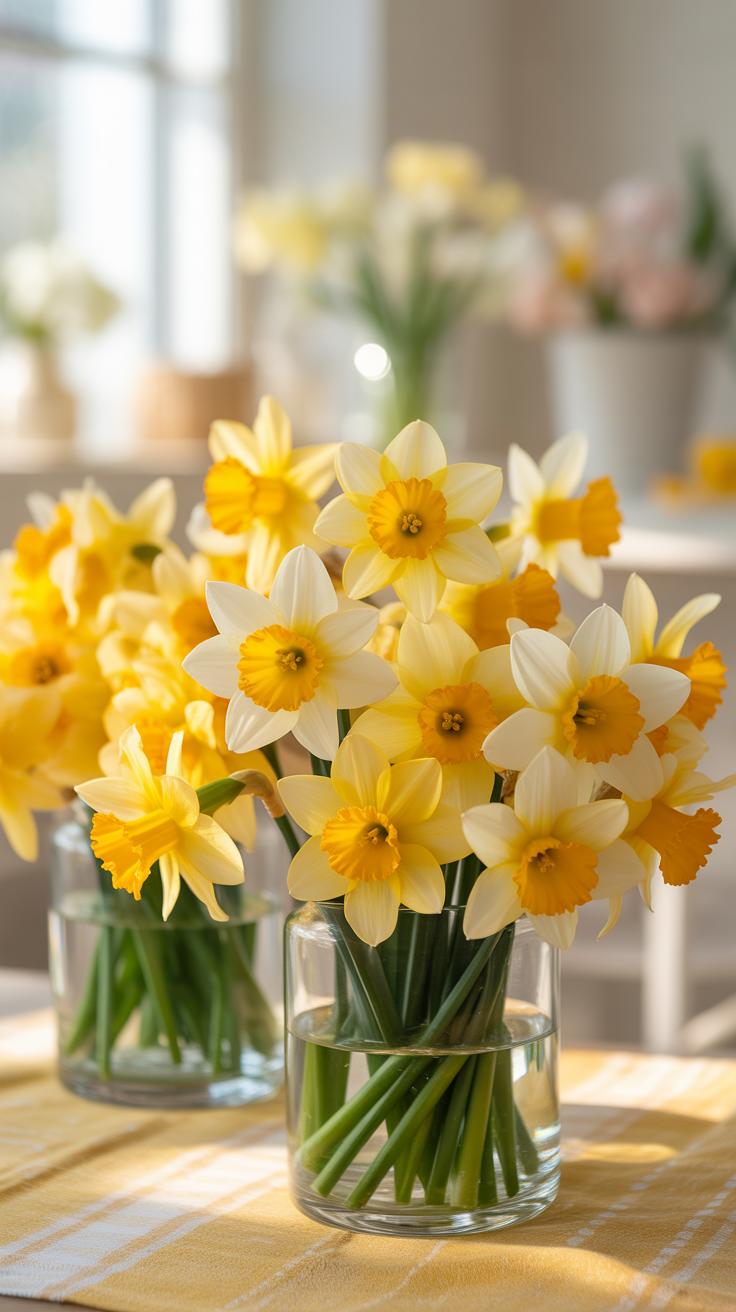
What Is Daffodil Day And Why Daffodils Are An Iconic Vase Flower
Daffodil Day is a major fundraising event for cancer research and support. It started in Canada in the 1950s and spread to Australia and Ireland. The flower symbolizes hope and rebirth due to its early spring blooming cycle. In design, the Narcissus genus offers a sturdy stem and distinct trumpet shape. These physical traits make them ideal for structural floral arrangements.
Professional florists use daffodils because they represent the end of winter. Their bright yellow or white petals provide high visual impact with minimal effort. The stems contain a toxic sap that affects other flowers. This makes them perfect for cluster vase displays where you can isolate them. Using separate vessels prevents the sap from killing more sensitive blooms in a mixed arrangement.
How To Build A Daffodil Centered Cluster Vase Display That Feels Festive And Fresh
Start by selecting vessels of varying heights to create a tiered look. Use clear glass or white ceramic to keep the focus on the yellow blooms. Cut the stems at different lengths to match each vase profile. Group three to five vases together in the center of a table. This creates a dense block of color that draws the eye immediately.

Place one or two stems in each small vessel to avoid overcrowding. Use different varieties like the classic King Alfred or the white Paperwhite for texture. Keep the water levels consistent across all vases for a clean visual line. Change the water every two days to prevent sap buildup and clouding. This tactical setup ensures the display stays vibrant throughout the entire event.
Styling Cluster Vase Displays For Different Rooms In Your Home
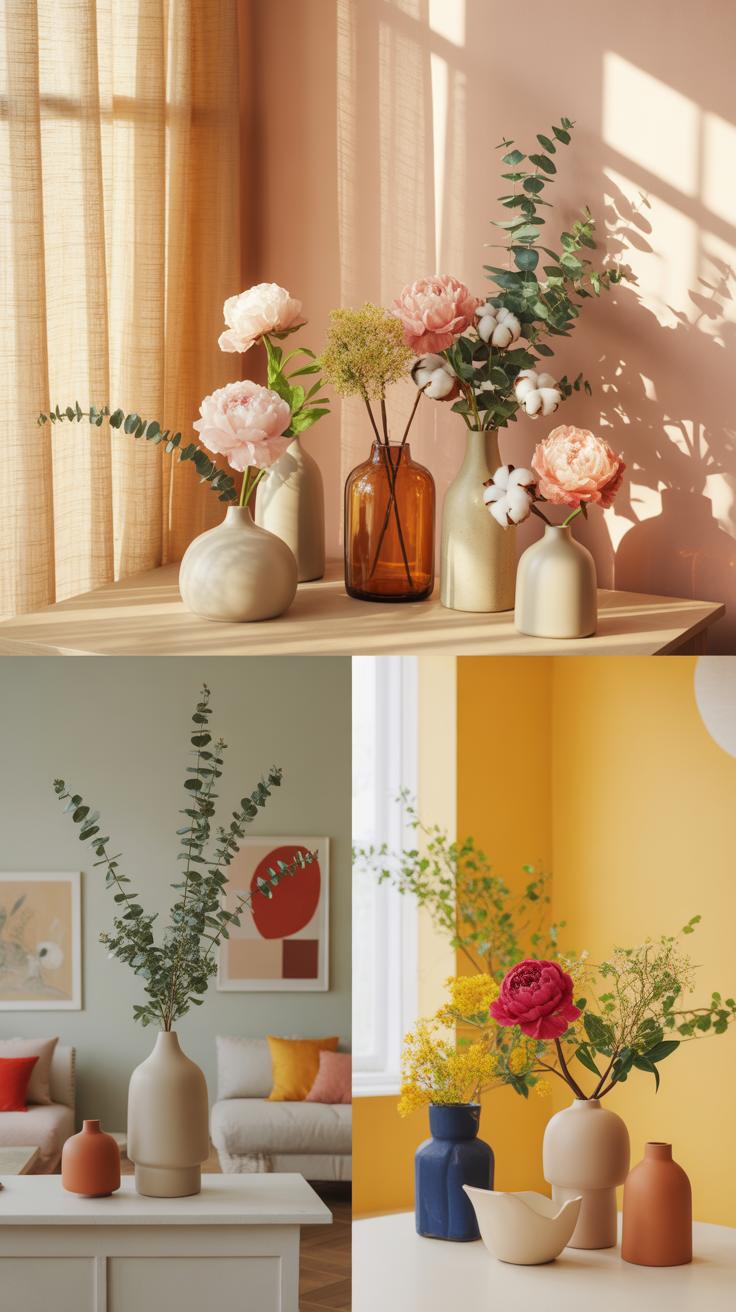
How To Adapt Cluster Vase Displays For Living Rooms, Dining Tables, And Entryways
Living room displays require scale to ground the space. Place larger clusters on coffee tables or mantels to create a focal point. Use heavy materials like stoneware or thick glass to ensure stability in high traffic areas. Arrange the vases in a triangular formation to guide the eye across the surface. This technique prevents the arrangement from looking cluttered while maintaining a structured visual impact.
Dining tables demand low profile arrangements to maintain sightlines between guests. Select a series of small, narrow neck vases to hold single stems. This approach provides decoration without obstructing conversation. For entryways, use tall, narrow clusters on console tables. These pieces utilize vertical space effectively. Choose durable materials that withstand the vibrations of closing doors. Scale the group to fit the narrow depth of the furniture.
Bedroom And Bathroom Cluster Vase Display Ideas That Add Calm And Character
Bedrooms benefit from clusters made of soft, matte textures. Use unglazed ceramic or frosted glass to diffuse light. Small groupings of three vases on a nightstand provide enough visual interest without overwhelming the limited space. Select vessels with rounded shapes to soften the hard lines of the furniture. Keep the heights varied by only a few inches to maintain a sense of balance and order.
Bathrooms require moisture resistant materials like glass or polished porcelain. Avoid metal or porous stone that reacts to humidity. Place a compact cluster on a vanity or a floating shelf to add texture to tile surfaces. Transparent glass vases work well in smaller bathrooms because they remain visually light. Choose shapes that are easy to clean. Focus on symmetry to create a clean and organized environment in these functional spaces.
Seasonal And Budget Friendly Cluster Vase Display Ideas For Every Home
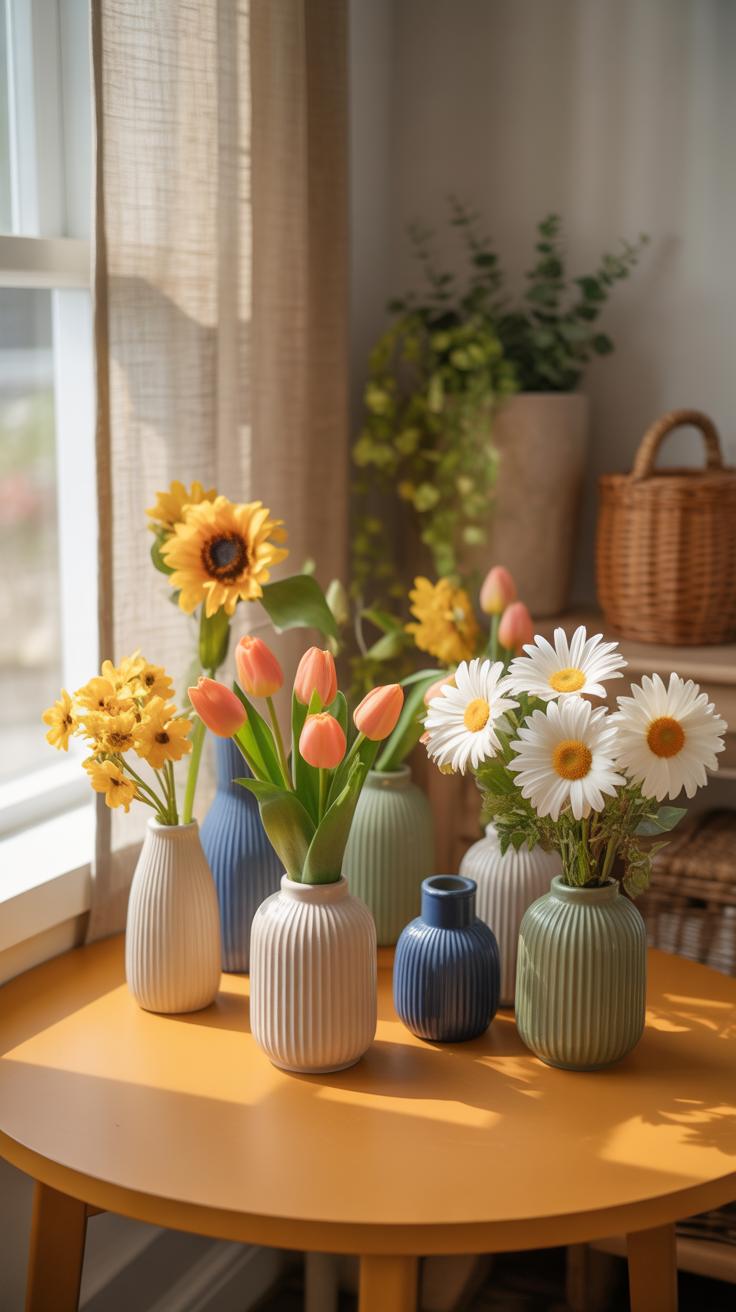
How To Rotate Your Cluster Vase Displays With The Seasons Without Breaking The Bank
Seasonal rotation focuses on the internal components rather than the vessels. Use evergreen branches or dried reeds during winter months to provide structural height without recurring costs. Transition into spring by utilizing forced bulbs or flowering fruit tree branches from your own garden. This strategy maintains the visual impact of your cluster while eliminating the need for weekly professional floral deliveries throughout the year.
Select a neutral base of glass or ceramic vases to ensure year-round compatibility. Use heavy, textured stoneware for fall and winter to ground the arrangement. Switch to clear glass or light porcelain during spring and summer to decrease visual weight. Swapping only one or two specific vases in a cluster of five changes the entire aesthetic. This modular approach keeps the display relevant to the current season.
Sourcing Affordable Vases And Blooms To Keep Your Cluster Displays Fresh Year Round
Strategic sourcing requires looking beyond traditional retail outlets. Visit thrift stores and estate sales to find unique silhouettes and vintage materials like mid-century milk glass or heavy ironstone. Look for varying heights to create the necessary vertical tension in your cluster. Mix these inexpensive finds with one high-quality statement piece. This allows you to scale your collection quickly while maintaining a professional and curated look.
Reduce recurring costs by utilizing dried elements and foraged greenery. Dried eucalyptus, pampas grass, and preserved seed pods offer longevity that fresh cut flowers cannot match. When buying fresh, stick to single-variety bunches from local markets to fill your clusters. This minimalist approach looks intentional and high-end. It also prevents the cluttered appearance common with mixed supermarket bouquets. Focus on texture and form rather than color alone.
Frequently Asked Questions

What are cluster vase displays and why are they popular in home decor?
Cluster vase displays are curated groupings of multiple vases varying in height, shape, or color, arranged together to create a focal point. They are incredibly popular because they add instant architectural interest and texture to any room. Unlike a single statement piece, these displays allow you to experiment with different silhouettes and floral arrangements, offering a dynamic way to showcase your personal style while filling empty mantel or tabletop spaces beautifully.
How do I arrange cluster vase displays to look professional?
To create professional-looking cluster vase displays, always work with an odd number of items, such as three or five. Start by placing the tallest vessel in the center or back and layer smaller ones around it to create depth. Focus on a cohesive element, like a shared color palette or material, to unify the look. Ensure you vary the heights to guide the eye through the arrangement for a balanced, intentional aesthetic.
Can I create an elegant cluster vase display on a limited budget?
Absolutely! You can find affordable pieces at thrift stores, flea markets, or discount home goods retailers. Look for interesting shapes regardless of their original color, as a simple coat of matte spray paint can unify mismatched finds into sophisticated cluster vase displays. Mixing inexpensive glass bottles with one or two high-quality ceramic pieces is another great way to achieve a high-end look without spending a fortune on your decor.