
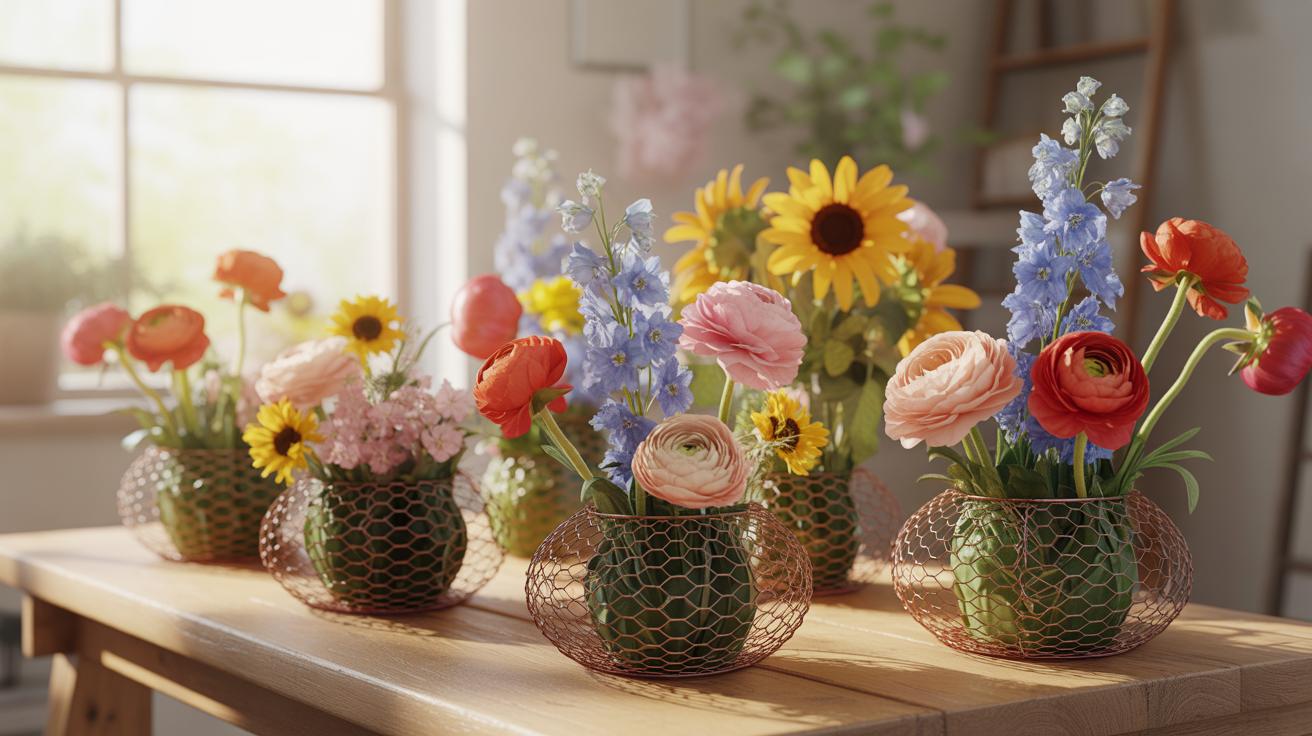
What Is A Wire Flower Frog And Why Every Arranger Needs One
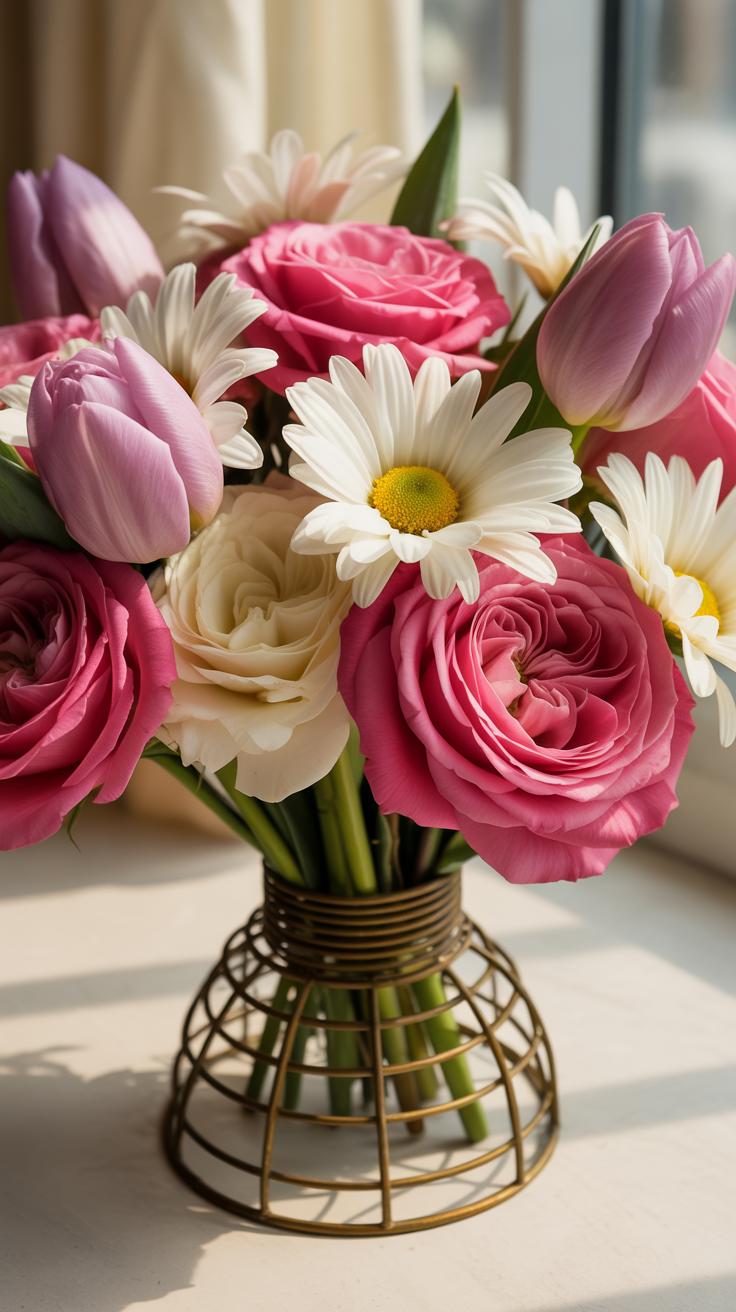
The Origins And Purpose Of The Flower Frog In Floral Design
Flower frogs emerged as essential tools for stabilizing stems in shallow containers. Early designs date back to the 16th century in Europe and Asia. Japanese Ikebana practitioners used heavy metal pins known as kenzan for centuries to manage minimalism. By the Victorian era, manufacturers produced glass and metal frogs for mass markets. These devices allow designers to place flowers at exact angles.
Western floral arrangements shifted from tight bundles toward airy and natural styles in the 20th century. Designers needed a tool that held heavy woody stems and thin wildflowers simultaneously. Chicken Wire Flower Frogs solved this by providing a multidimensional grid. This cage system supports stems at multiple points of contact. It ensures the design stays intact during transport or placement without relying on bulky fillers.
How A Wire Flower Frog Differs From Other Floral Mechanics
Modern florists often choose between wire frogs, floral foam, or plastic grids. Floral foam is a single-use plastic that releases microplastics into water systems. It restricts water intake for many types of flowers and needs constant hydration. Chicken Wire Flower Frogs provide a sustainable and reusable alternative. This material allows for maximum water circulation around the stems. It keeps the flowers fresher for longer periods.
Wire frogs offer superior structural integrity compared to tape grids or plastic inserts. You can mold and shape the wire to fit any vessel size or depth. Unlike pin frogs, wire cages support the entire length of the stem rather than just the base. This three-dimensional support prevents heavy blooms from tilting or falling out of the vase. It gives the designer complete control over the geometry of the entire arrangement.

The Enduring Appeal Of Chicken Wire In Floral Arranging
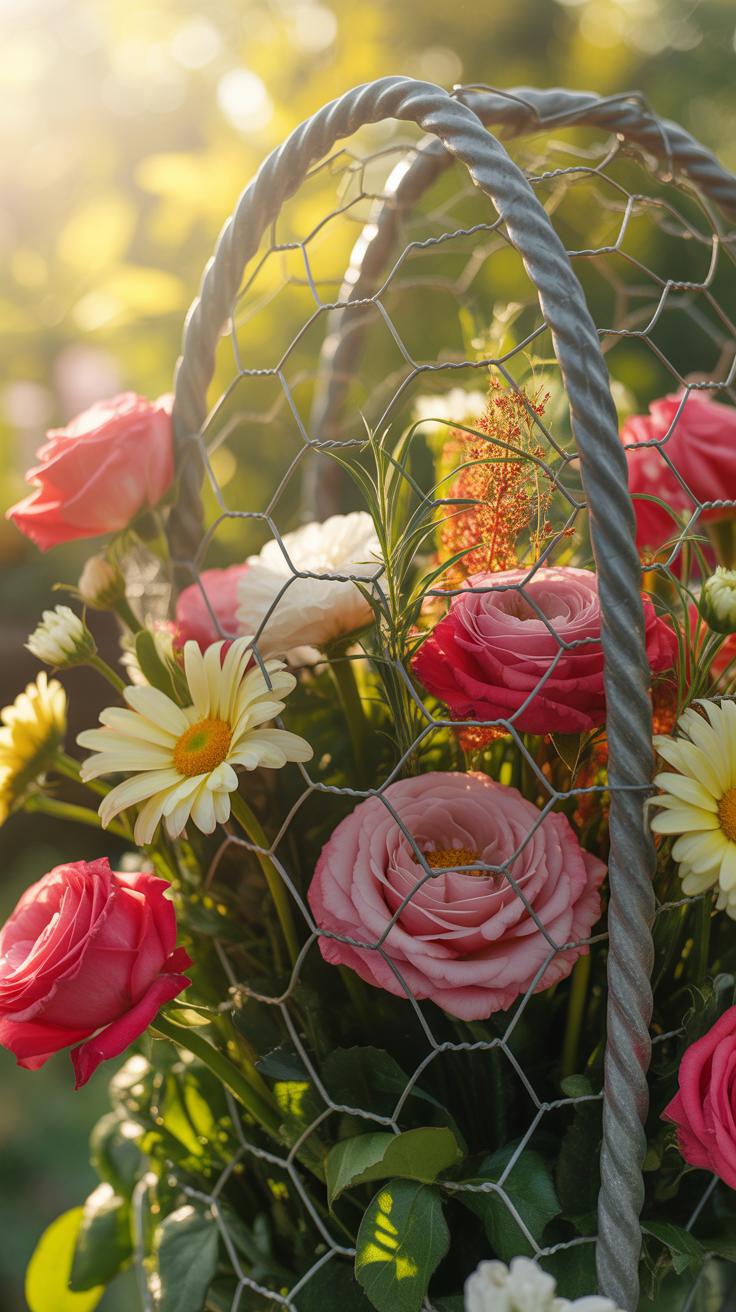
Why Chicken Wire Has Become A Staple Frog For Flower Arranging
Chicken wire emerged as a primary mechanic because it offers unmatched versatility for large scale designs. Florists transitioned away from rigid metal frogs to this flexible material to fit irregular containers. It allows for natural stem placement and creates a secure internal grid. This method supports the heavy weight of woody branches and large blooms without shifting. Experienced designers rely on it for its reliability.
Modern sustainability movements have pushed chicken wire back into the spotlight. Professionals want to reduce plastic waste and seek reusable tools. You can reshape and reuse this wire indefinitely across hundreds of different arrangements. It provides the necessary tension to hold stems at precise angles. This material bridges the gap between traditional techniques and modern environmental standards. Its utility makes it a permanent industry requirement.
The Structural Advantages Of Chicken Wire Over Foam And Tape
Chicken wire provides superior structural integrity compared to floral foam or grid tape. Foam blocks water flow and restricts stem movement once inserted. Wire allows stems direct access to water which extends the life of the flowers. It creates multiple layers of support throughout the entire vessel depth. You gain better control over the radial spread of the bouquet. This ensures a stable and professional result.

Grid tape only secures stems at the rim of the vase. This leaves the bottom of the stems loose and prone to sliding. Chicken wire creates a three dimensional matrix that locks every stem in place from top to bottom. It handles heavy gauge stems and delicate stalks with equal efficiency. You save time on mechanics and spend more time on the actual design. It is the most efficient choice today.
Vintage Wire Flower Frog Uses That Are Making A Modern Comeback
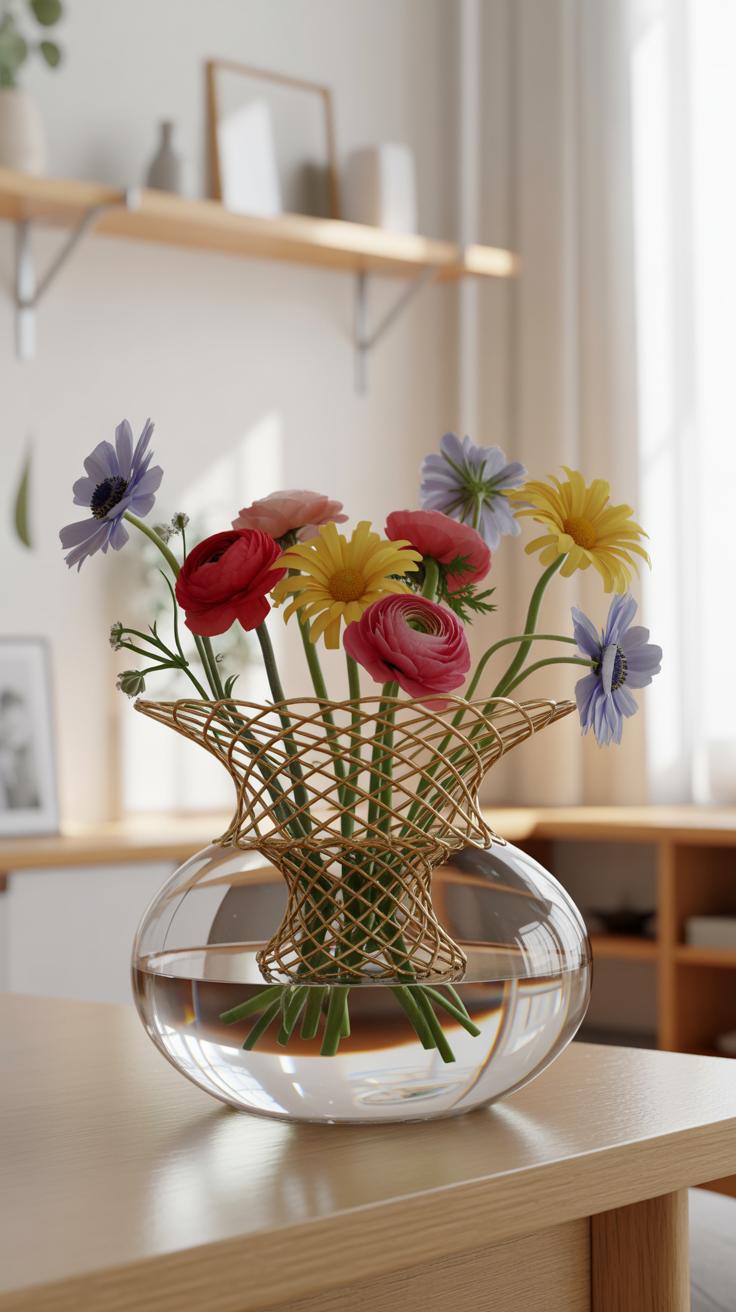
Classic Vintage Wire Flower Frog Uses Reimagined For Contemporary Interiors
Modern designers use vintage wire frogs to create airy, architectural floral displays. These tools allow for precise stem placement without the dense look of floral foam. You can achieve the “Ikebana” style or Dutch Master look by securing the wire inside low basins. This method supports heavy branches and delicate stems alike. It provides superior water circulation compared to synthetic materials.
The open structure of chicken wire frogs facilitates complex geometric designs. You can bend and shape the wire to fit any vessel opening. This flexibility allows for asymmetrical arrangements that remain stable over time. High-end florists now prioritize these reusable metal grids to reduce plastic waste. The technique ensures stems stay hydrated and upright. It maintains the integrity of the design throughout the event.
Collecting And Repurposing Antique Wire Flower Frogs As Decor Accents
Collectors value antique wire frogs for their heavy gauge metal and unique historical patinas. These items originated in the early 20th century as functional garden tools. Today, they serve as standalone decorative objects on shelves or desks. Their industrial aesthetic fits well with minimalist or rustic interior styles. Proper identification involves checking for lead-coated steel or galvanized zinc finishes used in older manufacturing.

Beyond floral work, these vintage pieces function as organizational tools. You can use them to hold pens, brushes, or mail on a tabletop. The weighted base of high-quality antique frogs prevents tipping. Many enthusiasts display them in glass cloches to highlight their structural form. This repurposing gives new life to durable objects that would otherwise be discarded. It preserves a piece of horticultural history within a modern home.
How To Make A Flower Frog With Chicken Wire At Home
Essential Materials You Need Before You Start
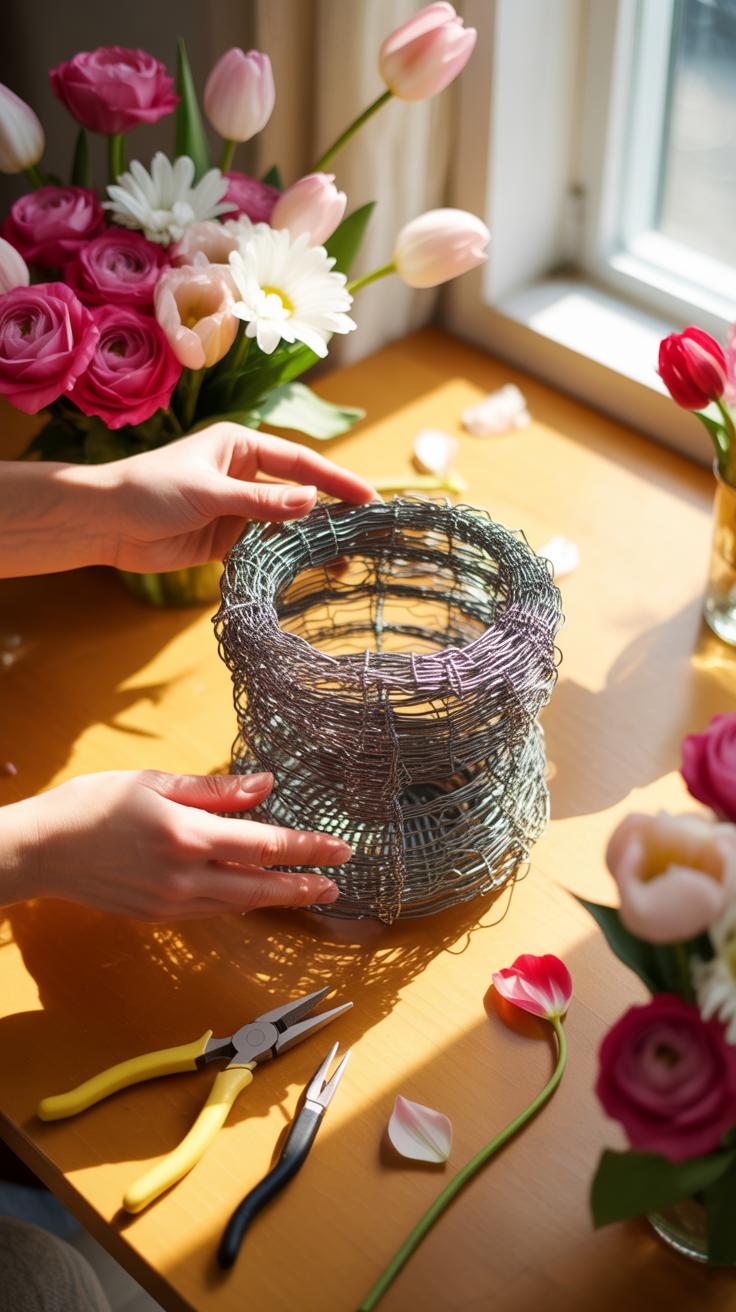
Building a functional flower frog requires specific hardware to ensure structural integrity and stem security. Standard floral foam has declined in popularity due to environmental concerns and chemical runoff. Professionals now return to traditional metal mesh techniques used in the early twentieth century. You must select the correct gauge of wire to prevent rusting and provide enough tension for heavy woody stems.
- Galvanized Chicken Wire: Use a mesh size of twelve millimeters or twenty-five millimeters. Galvanization prevents the steel from rusting when submerged in water for long periods. This maintains water clarity and avoids staining your ceramic or glass vessels during the design process.
- Wire Cutters: Heavy-duty diagonal pliers are necessary for clean cuts. Dull tools leave sharp burrs that can scratch the interior of expensive vases or cut your hands. Clean cuts allow the wire to tuck neatly into the container without creating bulk or obstruction.
- Pot Tape: This adhesive must be waterproof to secure the mesh to the rim. It provides the primary anchor point so the wire structure does not shift under the weight of large blooms. Choose clear or green tape based on the visibility of your vessel.
- Protective Gloves: Thin leather or coated garden gloves protect your skin from sharp wire ends. These ends are notoriously difficult to handle and can cause puncture wounds. Safety gear allows you to apply more pressure when shaping the wire into a dense support structure.
- Supportive Vessel: Select a container with a defined neck or a sturdy base. The physical shape of the vase helps hold the wire in place. The chicken wire frog works best when it can rest against the interior walls to create multiple tension points.
Gathering high-quality materials ensures your floral arrangement remains stable over several days. Inferior wire will sag and fail as it hydrates. Using the right tools also speeds up the fabrication process. Do not substitute materials like plastic mesh or flimsy craft wire. These lack the structural memory needed to hold thick branches. Proper preparation leads to a professional result that mimics high-end floral installations.
In the simplicity of chicken wire, we find the gentle hand of tradition guiding today’s most beautiful blooms. There is a timeless grace in letting nature’s wildness be held by something so humble and storied.
Step By Step Guide On How To Make A Flower Frog That Actually Works
Cut a square of chicken wire twice the width of your vase opening. Fold the rough edges inward to create a smooth perimeter and avoid scratching the container. Roll the wire into a loose sphere or pillow shape rather than a tight ball. A loose structure allows space for thick stems to pass through multiple layers of mesh. This layering provides the necessary tension to hold stems at various angles.

Place the wire ball into the vessel so it sits slightly above the rim. Secure the mesh by running two strips of waterproof tape across the top in a cross pattern. Press the tape firmly onto the dry edges of the vase to create a permanent bond. This cage prevents the weight of the flowers from pulling the frog into the water. Your structure is now ready for water and flowers.
DIY Flowers And Arrangements Elevated By Chicken Wire Flower Frogs
How DIY Flowers Arranged With Chicken Wire Achieve A Natural Loose Look
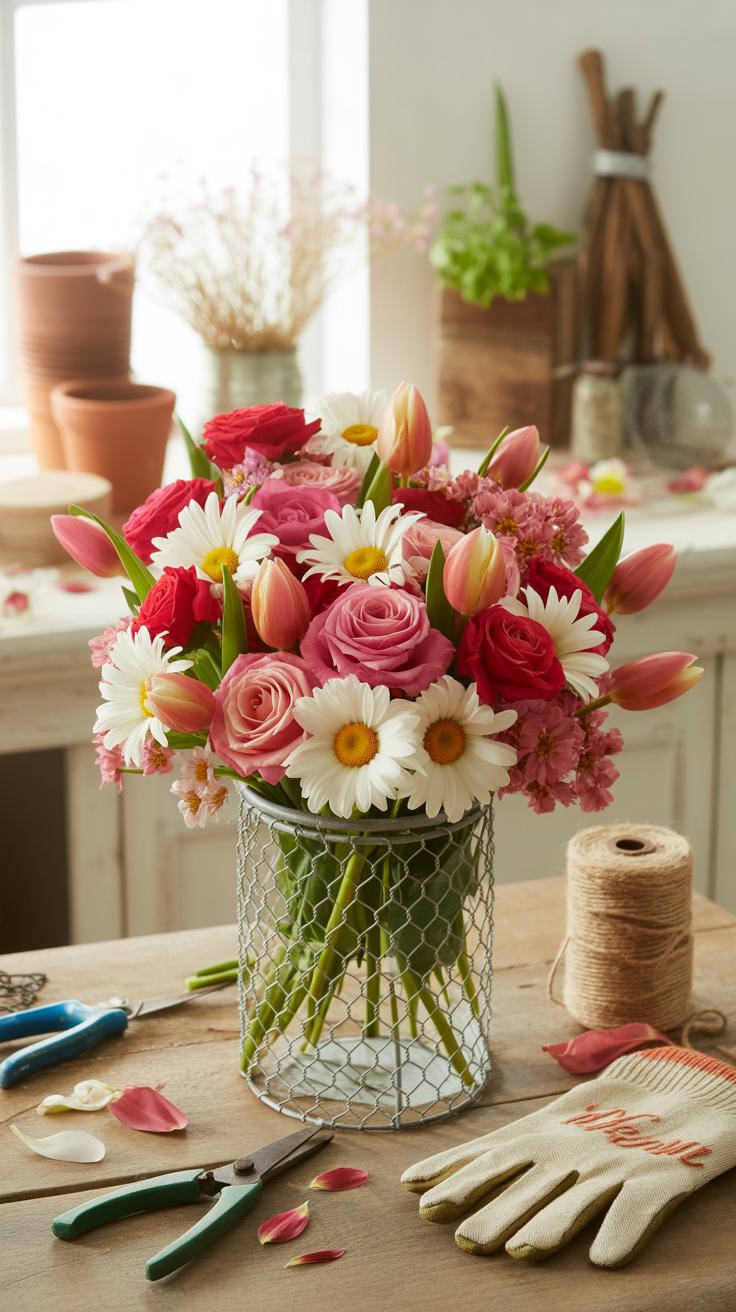
Chicken Wire Flower Frogs provide a flexible internal structure for floral design. Designers manipulate the mesh into a ball and wedge it into a vessel. This grid holds stems at precise angles. Rigid foam forces stems into a fixed position. Wire allows for movement and slight shifts. This capability mimics how plants grow in nature. It creates a wild and airy aesthetic.
Mechanics determine the final visual outcome of an arrangement. The open holes in the wire accommodate thick and thin stems simultaneously. You can thread delicate vines through the mesh to drape over the sides. This technique supports the Garden Style movement. It prioritizes the natural curve of the flower over artificial symmetry. Use coated wire to prevent rust and protect the health of the blooms.
Seasonal DIY Flower Arrangement Ideas That Work Best With Wire Frogs
Seasonal designs require adaptable mechanics to handle varying stem textures. Spring arrangements use soft-stemmed bulbs like tulips or ranunculus. Chicken wire supports these fragile stems without crushing them. In summer, you can use heavy woody branches or sunflowers. The wire grip prevents top-heavy stems from flipping out of the vase. This versatility makes it the primary choice for year-round floral work. It reduces waste in the studio.

Fall and winter designs often incorporate dried elements and heavy evergreens. You can lace pine branches through the wire loops to create a wide base. This structure holds water better than traditional floral foam. It ensures that fresh seasonal greenery stays hydrated for longer periods. You do not need plastic liners when using wire in ceramic or stone basins. Simply secure the wire with waterproof floral tape to maintain the foundation.
How To Make Chicken Wire Alliums For Stunning Faux Floral Displays
What Are Chicken Wire Alliums And Why They Are Trending
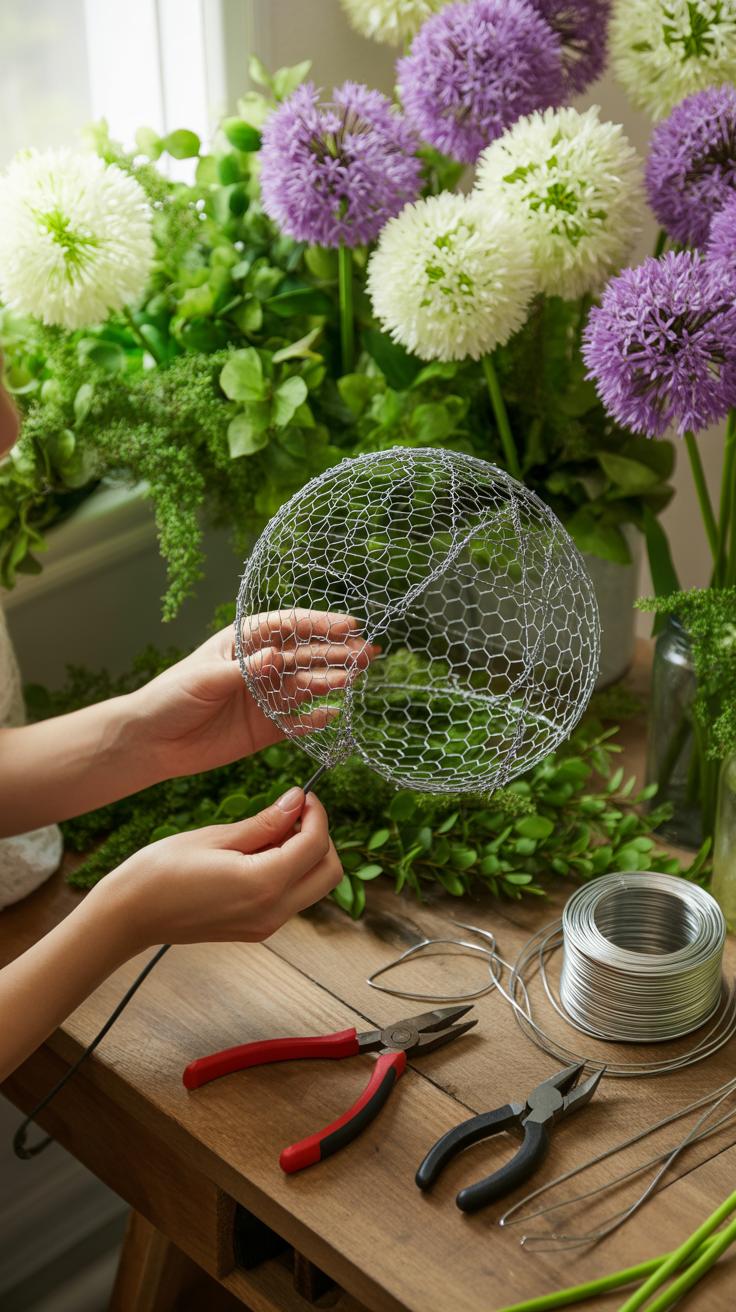
Chicken wire alliums are structural garden ornaments that mimic the spherical shape of the Allium flower. Designers use galvanized steel mesh to create these hollow orbs. This trend stems from the industrial rustic movement. It focuses on using utilitarian farm materials for high-end landscape design. Metal alliums provide year-round visual interest. They do not wilt like real flowers. They offer a permanent architectural element in any garden or indoor display.
Modern florists use these wire sculptures as oversized flower frogs for outdoor installations. The mesh allows stems to pass through at various angles. This creates a stable base for climbing plants or dried botanicals. Homeowners choose these because they are durable and weather-resistant. They bridge the gap between traditional sculpture and functional garden tools. This tactic adds height and texture to flower beds without the need for constant horticultural maintenance.
A Practical Walkthrough On How To Make Chicken Wire Alliums Step By Step
Building chicken wire alliums requires basic hand tools and raw steel mesh. You must select a gauge that is pliable but holds its shape under pressure. Start by cutting a square piece of wire from the roll. Use heavy-duty wire snips to avoid hand fatigue. Form this square into a cylinder and secure the edges. Hand strength is key during this initial shaping phase to ensure the frame remains tight.
- Cut the Mesh: Measure a 12-inch by 24-inch rectangle of chicken wire for a standard size bloom. This ratio ensures you have enough material to fold the ends inward without creating gaps. Always wear thick gloves to prevent cuts from the sharp raw edges of the steel.
- Form a Cylinder: Roll the cut wire into a tube shape. Overlap the edges by at least one inch to provide structural integrity. Use needle-nose pliers to twist the loose wire ends together along the entire seam so the cylinder does not pop open during the shaping process.
- Crimp the Ends: Use your hands to push the top and bottom openings of the cylinder toward the center. This creates a rough sphere. Work slowly around the perimeter to ensure the wire folds evenly. Avoid making sharp creases which weaken the metal and ruin the organic round look.
- Shape the Sphere: Massage the wire ball against a flat surface or between your palms to smooth out any flat spots. Tension is necessary to achieve a perfect globe. The mesh should be tight enough to support its own weight but open enough to act as a flower frog.
- Attach the Stem: Slide a sturdy copper pipe or thick gauge garden stake through the bottom of the wire sphere. Secure the stake to the mesh using thin floral wire or zip ties. Ensure the connection is rigid so the heavy wire head does not lean or wobble.

Finalize the sculpture by applying a protective coating or leaving the steel to oxidize naturally. A rusted finish fits a vintage aesthetic while spray paint offers a modern look. If you use these as functional flower frogs, ensure the stem attachment is deep. This prevents the sculpture from tipping when you add faux flowers. Proper anchoring makes these units effective tools for large-scale floral design and permanent garden accents.
Styling A Flower Frog With Flowers For Maximum Visual Impact
Color, Texture, And Height: Design Principles For A Flower Frog With Flowers
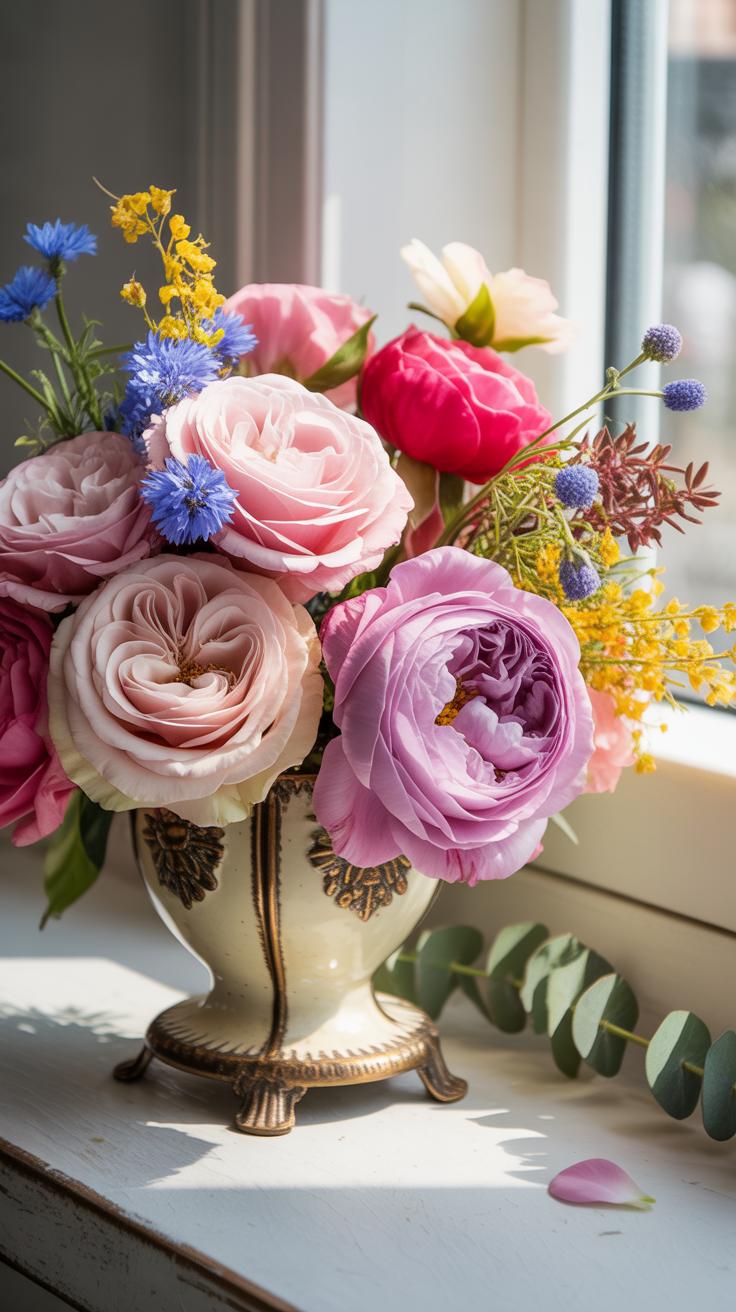
Strategic design requires a clear architectural plan. Use Chicken Wire Flower Frogs to establish three distinct levels of height. Place tall, heavy stems in the center cages first. This creates a structural anchor for the arrangement. Ensure your tallest stems do not exceed or double the height of the vessel. This ratio maintains physical balance and prevents the container from tipping over during construction.
Contrast creates visual tension. Pair smooth petals with rough foliage to highlight different surfaces. Use the wire gaps to position stems at sharp angles. This technique provides depth that flat foam cannot achieve. Place dark colors near the base of the wire to hide the mechanics. Use lighter shades and airy textures at the top. This approach mimics natural growth patterns while maintaining structural integrity.
Best Flower Varieties That Pair Beautifully With Chicken Wire Frogs
Woody stems and hollow stalks perform best with wire supports. Choose branches like forsythia or quince to build the initial frame. These thick stems lock into the hexagonal mesh and provide a secondary grid for softer flowers. Large headed blooms like hydrangeas also thrive here. The wire supports their heavy weight without snapping the necks. This setup allows for maximum water uptake compared to floral foam blockage.

Soft, flexible stems also benefit from this mechanic. Ranunculus and sweet peas require the gentle support of the wire to stay upright. Thread these delicate stems through multiple layers of the mesh for a secure hold. Avoid flowers with very thin, brittle stems that might crush against the metal edges. Stick to resilient varieties that can withstand the pressure of the galvanized wire. This ensures your design stays intact during transport.
Trending Vessel And Container Pairings For Chicken Wire Flower Frogs
From Mason Jars To Ceramic Bowls: Choosing The Right Vessel For Your Frog
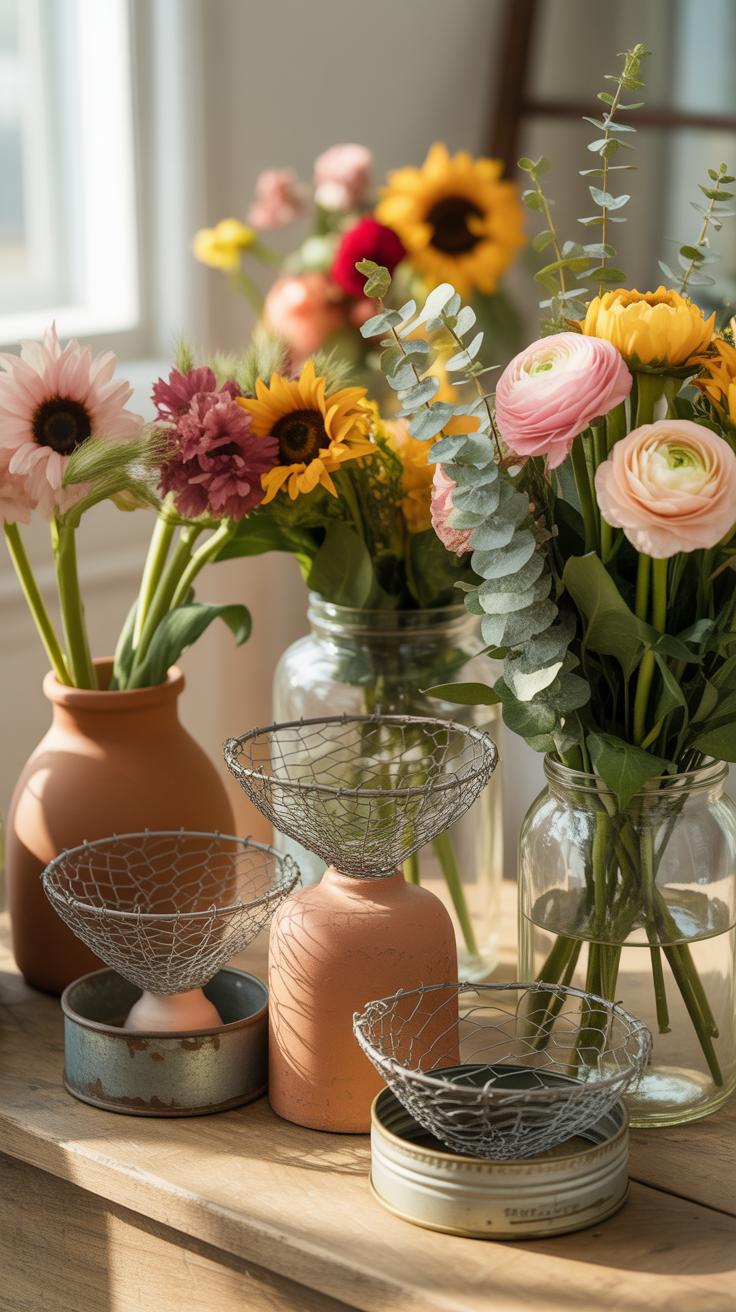
Mason jars represent the most practical entry point for chicken wire systems. The narrow neck provides a natural anchor point for the wire mesh. You can secure the wire easily with floral tape or the jar rim. This setup works best for vertical arrangements. It prevents the wire from shifting during transport. Use galvanized wire to avoid rust stains on the glass surface.
Ceramic bowls offer more design freedom but require different mechanics. Wide openings need a larger mass of crumpled chicken wire to create tension against the walls. Many designers now use heavy waterproof tape to create a grid over the wire. This secures the frog within shallow vessels. Low bowls paired with chicken wire mimic the classic Ikebana style. This allows for asymmetrical and sprawling stem placements.
How Container Shape And Depth Affect Your Chicken Wire Frog’S Performance
Vessel depth dictates how you form your chicken wire ball. Deep cylinders require a structural column of wire that reaches the bottom. This prevents tall stems from tipping over. In shallow containers, you must flatten the wire into a dome. A dome provides multiple layers of mesh for stem stability. Proper depth management ensures even the heaviest branches stay in their intended position.

Width affects the density of your wire grid. Wide containers need more wire volume to maintain structural integrity. If the wire is too loose, the stems will slide to the edges. Tapered vessels offer a mechanical advantage because the narrow base wedges the wire into place. Always match the mesh gauge to the container opening. Heavy containers support larger wire structures without the risk of the entire unit flipping.
Sustainability And The Rise Of Eco Friendly Frog For Flower Arranging
Why Chicken Wire Flower Frogs Are A Greener Alternative To Floral Foam
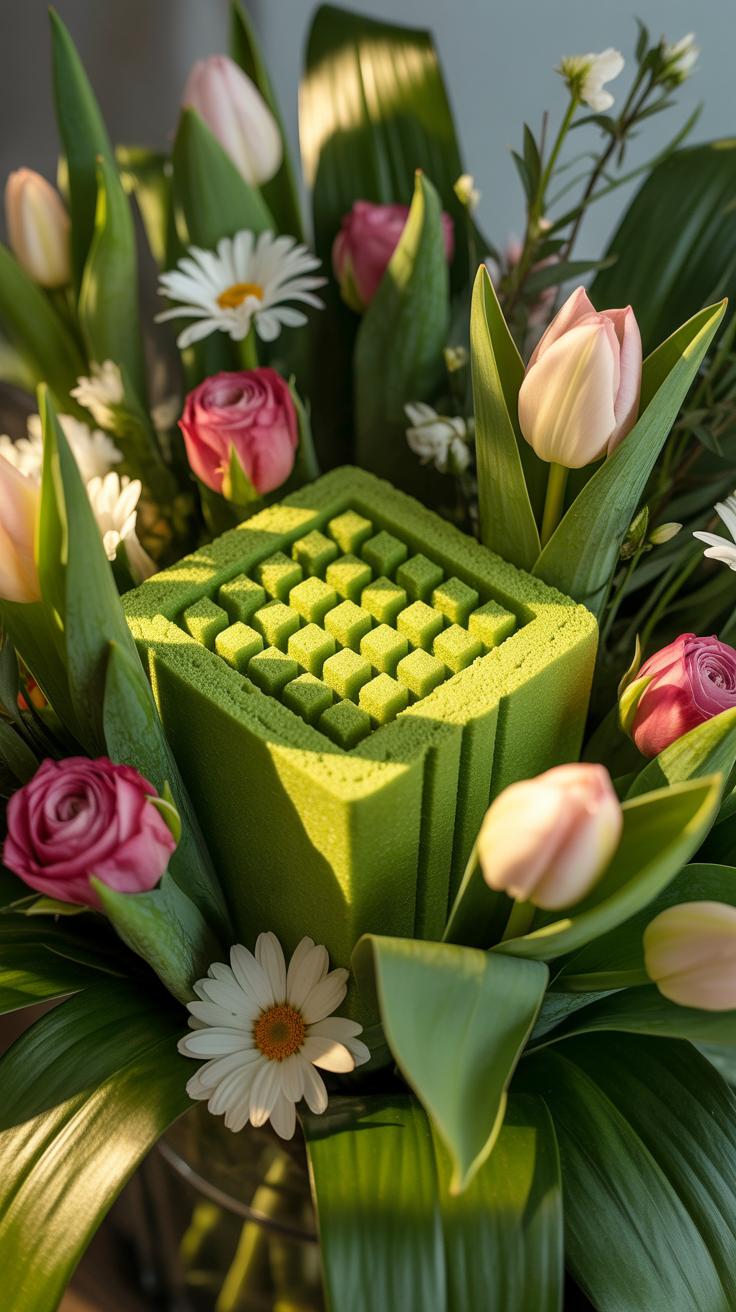
Floral foam contains microplastics and toxic chemicals like formaldehyde. It does not break down in landfills and harms aquatic life when rinsed down drains. Designers now recognize these hazards. Chicken wire offers a clean solution. It consists of coated or galvanized steel. This material is inert and does not leak toxins into the water supply. It provides a safe foundation for every arrangement.
Sustainability depends on reuse. Floral foam is a single-use plastic destined for the trash after one event. You can use chicken wire flower frogs for years without degradation. You simply wash, reshape, and store the wire for the next project. This reduces waste and lowers long-term overhead costs for florists. Choosing wire over foam eliminates constant disposal needs and supports a circular economy model.
How The Eco Conscious Movement Is Fueling The Frog For Flower Arranging Revival
The slow flowers movement prioritizes local sourcing and environmental health. This shift has brought traditional tools back into professional studios. Modern designers look to the past for reliable methods that do not rely on petroleum-based products. Chicken wire allows for loose and airy designs that foam cannot replicate. The demand for natural aesthetics drives the return to these metal mechanics and vintage techniques.
Industry leaders now push for foam-free certifications and standards. This pressure forces florists to master metal frogs and wire grids. High-end clients often request sustainable installations for weddings and corporate events. Using chicken wire flower frogs meets this demand while ensuring structural integrity. Educators now focus on these mechanical skills to prepare the next generation. The revival is a practical response to a changing global market.
Frequently Asked Questions

What are chicken wire flower frogs and why are they trending in floral design?
Chicken wire flower frogs are flexible mesh inserts used to hold flower stems securely in place within a vase. Unlike traditional green floral foam, which can be toxic and single-use, these wire alternatives are eco-friendly and reusable. They are trending because they allow for airy, organic arrangements that mimic how flowers grow in nature. They offer incredible stability for heavy stems while remaining virtually invisible inside your favorite decorative vessels.
How do I properly install chicken wire flower frogs into a vase for a stable arrangement?
To use chicken wire flower frogs, simply cut a small section of floral wire and gently crumble it into a loose ball that fits the size of your container. Press the wire into the opening, ensuring it wedges firmly against the sides so it doesn’t move. You can secure the edges with a bit of waterproof floral tape for extra stability. This structure creates multiple layers of grid-like holes to support every stem perfectly.
Can I make my own flower frogs on a budget using everyday materials?
Absolutely! One of the best things about this trend is how affordable it is to implement at home. You can purchase a small roll of galvanized poultry netting from any hardware store for just a few dollars, which will provide enough material for dozens of arrangements. This DIY approach makes professional-looking floral design accessible to everyone, allowing you to create stunning, sustainable centerpieces without investing in expensive specialty mechanics or plastic tools.