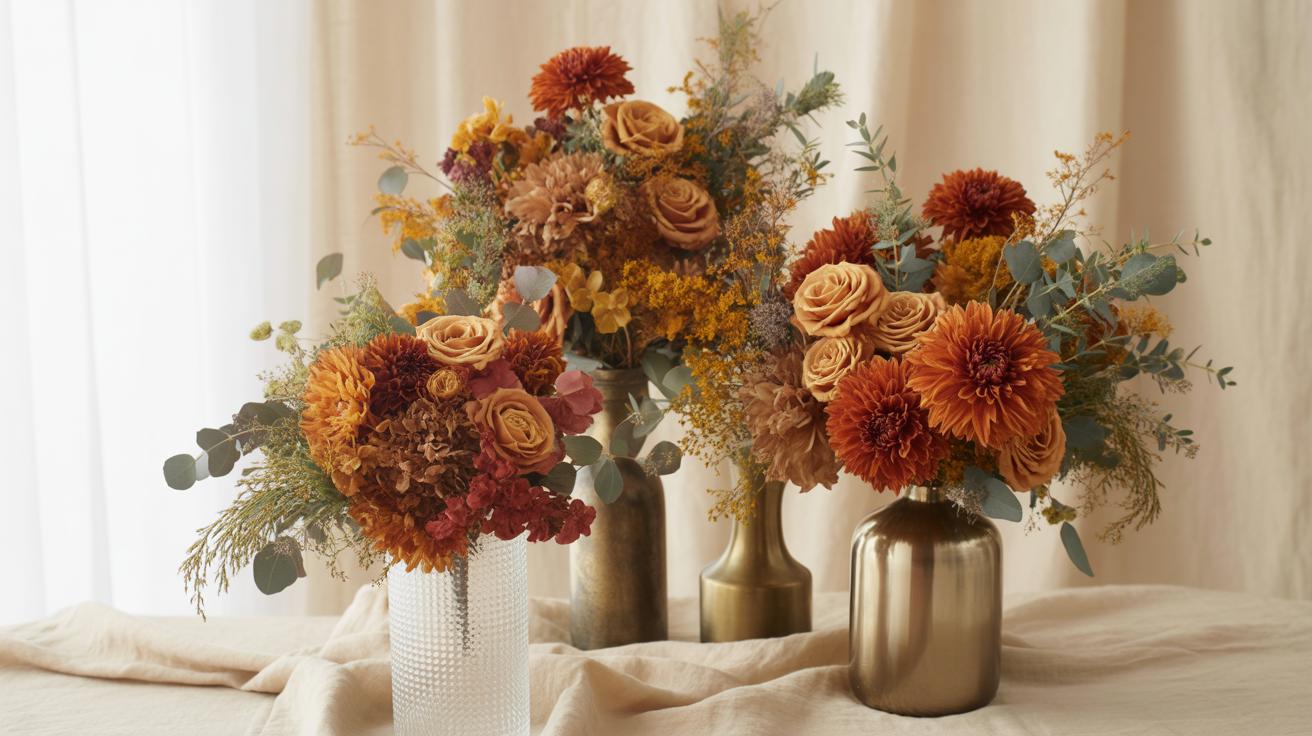
The Timeless Appeal Of Autumnal Floral Arrangements In Rust Tones
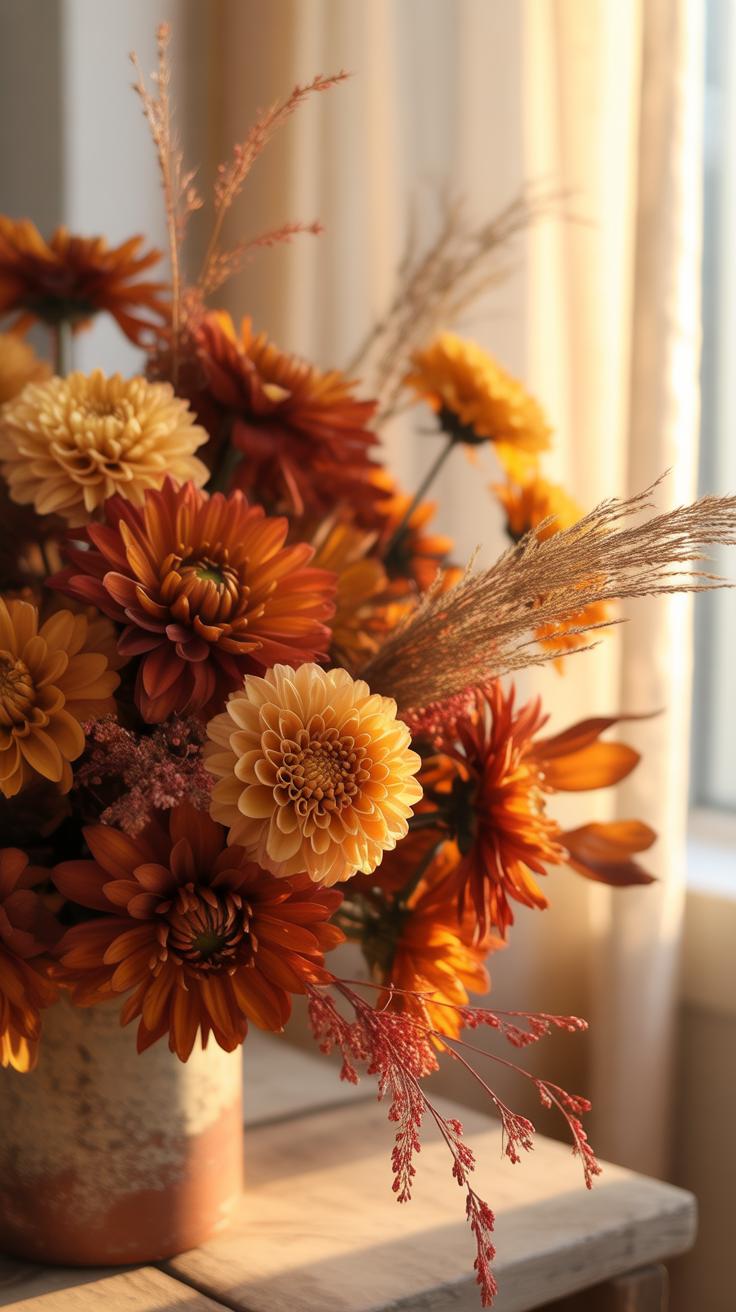
Why Rust And Warm Earth Tones Have Endured Through Floral Design History
Rust tones remain a staple in floral design because they mimic organic decay and renewal. Historically, these shades gained prominence during the Arts and Crafts movement. Designers rejected artificial dyes in favor of natural pigments found in soil and dried foliage. This shift focused on the physical integrity of materials. Earthy palettes provide a neutral but warm base that anchors complex floral structures.
Modern floral strategy relies on these tones to create visual depth without high contrast. Rust occupies a unique space between red and brown on the color wheel. This position allows it to bridge the gap between vibrant blooms and woody textures. Professional florists use these hues to simulate a sense of permanence. The color signals maturity and stability in a variety of formal botanical displays.
How Autumnal Color Palettes Set The Mood For Special Occasions
Autumnal palettes signal a specific emotional shift toward intimacy and comfort. Darker tones like rust and copper absorb light rather than reflecting it. This creates a focused atmosphere during evening events. High-end galas and weddings use these colors to reduce the visual noise of large venues. The palette forces the eye to settle on the details of the floral arrangement itself.
Tactical use of rust tones influences how guests perceive a physical space. Warm colors make large rooms feel smaller and more exclusive. Event planners deploy these shades to ground high ceilings and open layouts. This color strategy works because it mimics the natural transition of the seasons. It prepares the audience for a gathered and communal experience. The result is an environment that feels grounded and intentional.
Best Flowers To Use In A Rust Floral Arrangement
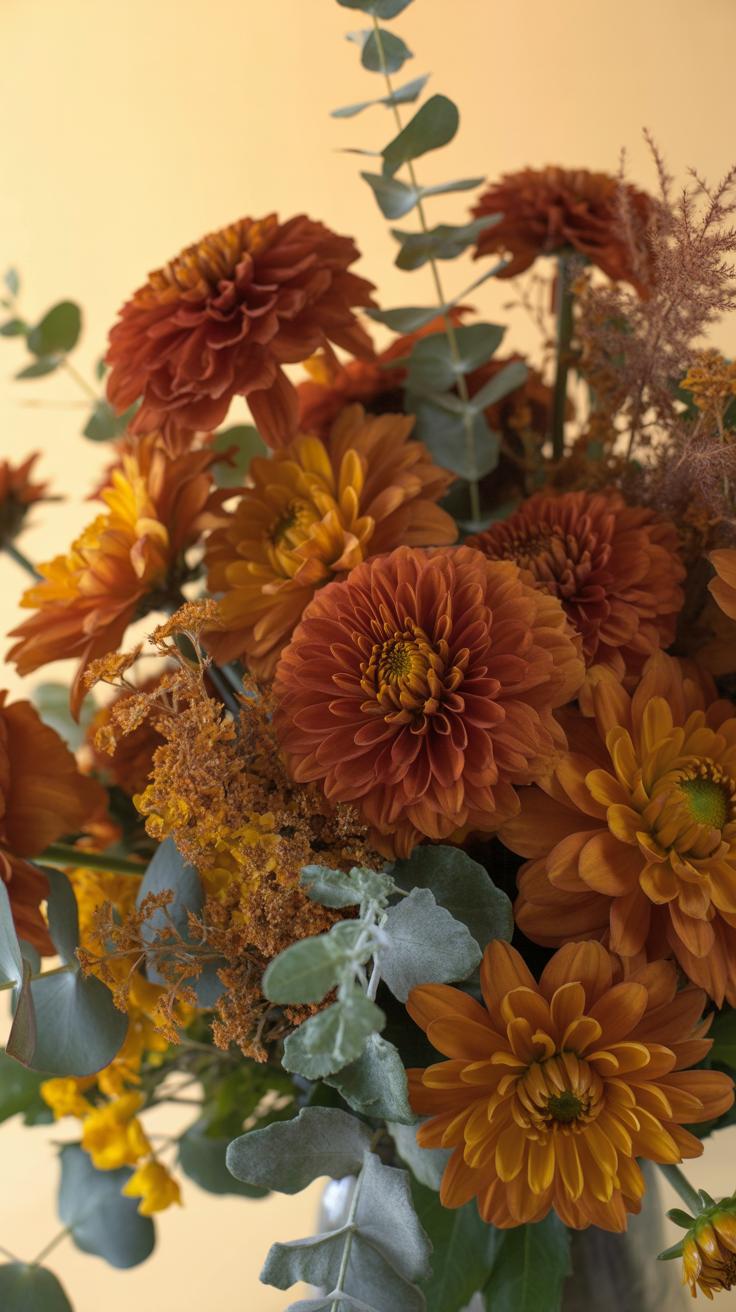
Top Bloom Varieties That Naturally Exhibit Rust And Copper Hues
Achieving a true rust palette requires selecting flowers with deep orange, brown, and burnt red pigments. These shades do not occur by accident. Growers specifically hybridize these varieties to meet the demand for earthy, autumnal tones. You must prioritize flowers that hold their color under various lighting conditions. Natural rust tones provide a grounded base for any high-end floral installation.
- Chrysanthemum: The bronze and copper varieties offer density and structural integrity. These blooms provide a heavy saturation of color that acts as a visual anchor. They remain stable in foam or water for long periods making them reliable for events.
- Cymbidium Orchid: Brown and terracotta orchids offer a sophisticated take on the rust theme. Their waxy petals reflect light differently than standard blooms. Use these to add a luxury element and high-contrast detail to your focal areas.
- Ranunculus: Look for the Woodstock or Caramel varieties to find genuine muddy orange tones. These flowers have high petal counts that create depth through natural shadowing. They work best as secondary focal flowers to bridge gaps between lighter and darker shades.
- Terracotta Roses: Varieties like Leonidas or Amnesia provide a muted, vintage look. These roses do not have the bright intensity of standard orange flowers. They offer the dusty, desaturated finish necessary for a professional rust-toned palette.
- Carnations: Antique or copper carnations provide a cost-effective way to add mass. Their ruffled texture holds color deeply in the folds of the petals. High-quality varieties offer a longevity that most other focal flowers cannot match during long installations.
Focus on the color transitions between these species. A successful arrangement uses various flower shapes to prevent the rust color from becoming a flat brown mass. Use the darker tones at the base to create a sense of weight. Place lighter copper shades near the top to draw the eye upward. This strategic placement ensures the arrangement looks intentional and professionally curated.
To paint with the rusted hues of petals is to capture the warmth of a thousand setting suns. Every arrangements is a lingering echo of a beautiful memory.
Combining Texture And Tone Foliage And Filler Flowers That Complement Rust Blooms
Foliage must support the rust theme without overpowering the focal blooms. Green leaves often clash with deep copper tones. Instead, choose preserved or naturally dried materials that offer brown, tan, or burgundy finishes. These elements provide the necessary contrast to make the rust tones pop. Texture is just as important as color when selecting your supporting greenery and filler items.
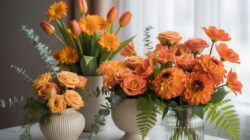
Dried Grevillea and copper beech leaves offer the best structural support for this color palette. Their rigid forms create clean lines and movement within the design. Use these materials to extend the visual reach of the arrangement. Integrating grasses like brown stipa or dried wheat adds a tactile quality. These fillers bridge the gap between organic nature and the industrial feel of rust tones.
Designing The Perfect Rust Bouquet For Weddings And Celebrations
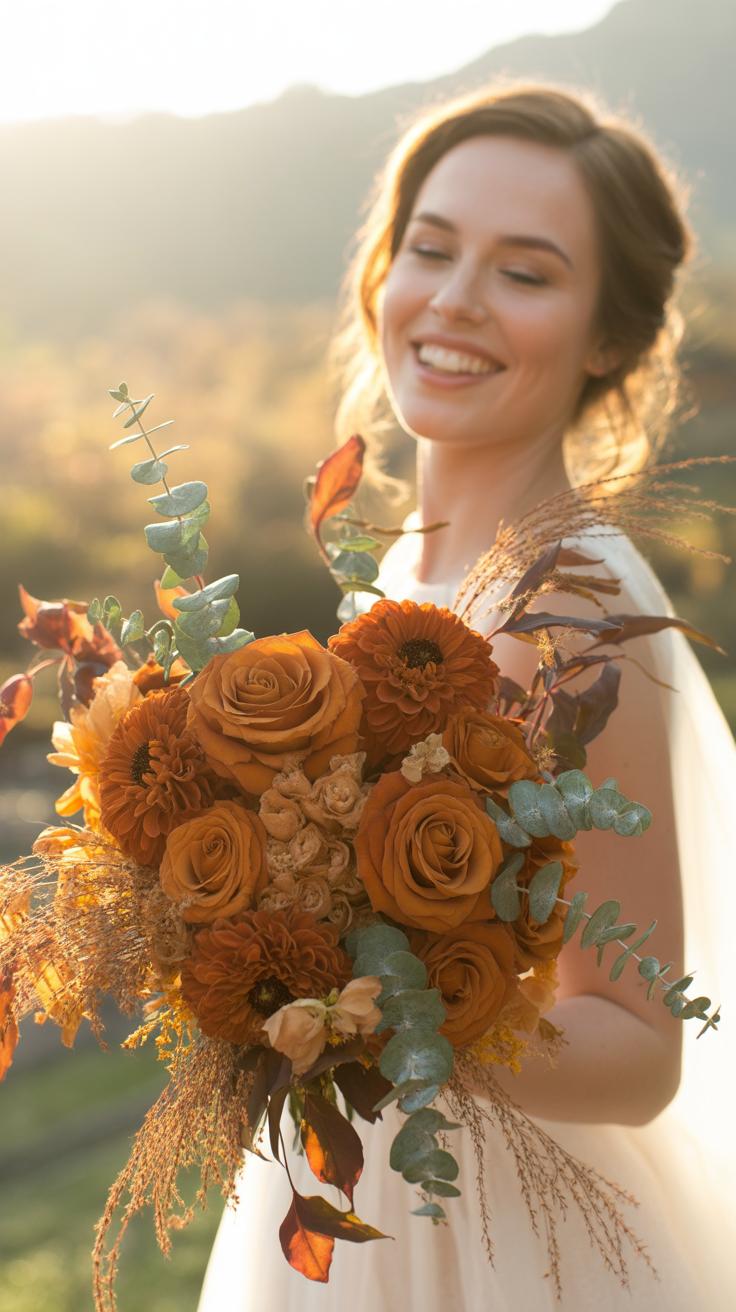
Structural Techniques For Building A Full And Balanced Rust Bouquet
Build a stable foundation using the spiral hand-tied technique. This method ensures stems cross at a single point. It prevents crushing and allows for easy adjustments. Use woody stems like eucalyptus or copper beech to create an armature. This structure supports heavy focal flowers like rust-colored cymbidium orchids or ranunculus. A firm grid keeps elements in place during transport and photography.
Distribute color intensity to manage visual weight. Place darker terracotta and deep sienna tones near the center of the arrangement. Use lighter peach or tan shades toward the edges to create depth. This layering mimics natural growth patterns found in Dutch Golden Age floral paintings. Balance the density by inserting airy textures like dried grasses. These fillers break up heavy blocks of solid rust color.
Choosing The Right Wrapping Ribbon And Binding Materials To Complement Rust Tones
Select binding materials based on shear strength and friction. Use waterproof floral tape to lock stems before adding decorative layers. This primary bind prevents the bouquet from shifting during the ceremony. Avoid clear plastic tapes that slip. Natural twine provides a high-grip secondary layer for rustic themes. It holds the structural shape while allowing the outer decorative ribbon to sit flat.
Finish the handle with materials that bridge the color gap. Raw silk and hand-dyed velvet in olive, slate, or champagne highlight the warmth of rust petals. These muted tones prevent the bouquet from looking monochromatic. Avoid bright whites or cool blues that clash with warm earth tones. Use copper or brass pins to secure the fabric. Metal accents reinforce the industrial or autumnal aesthetic of the design.
Fall Wedding Flowers Rust Color Floral Arrangements That Wow Guests
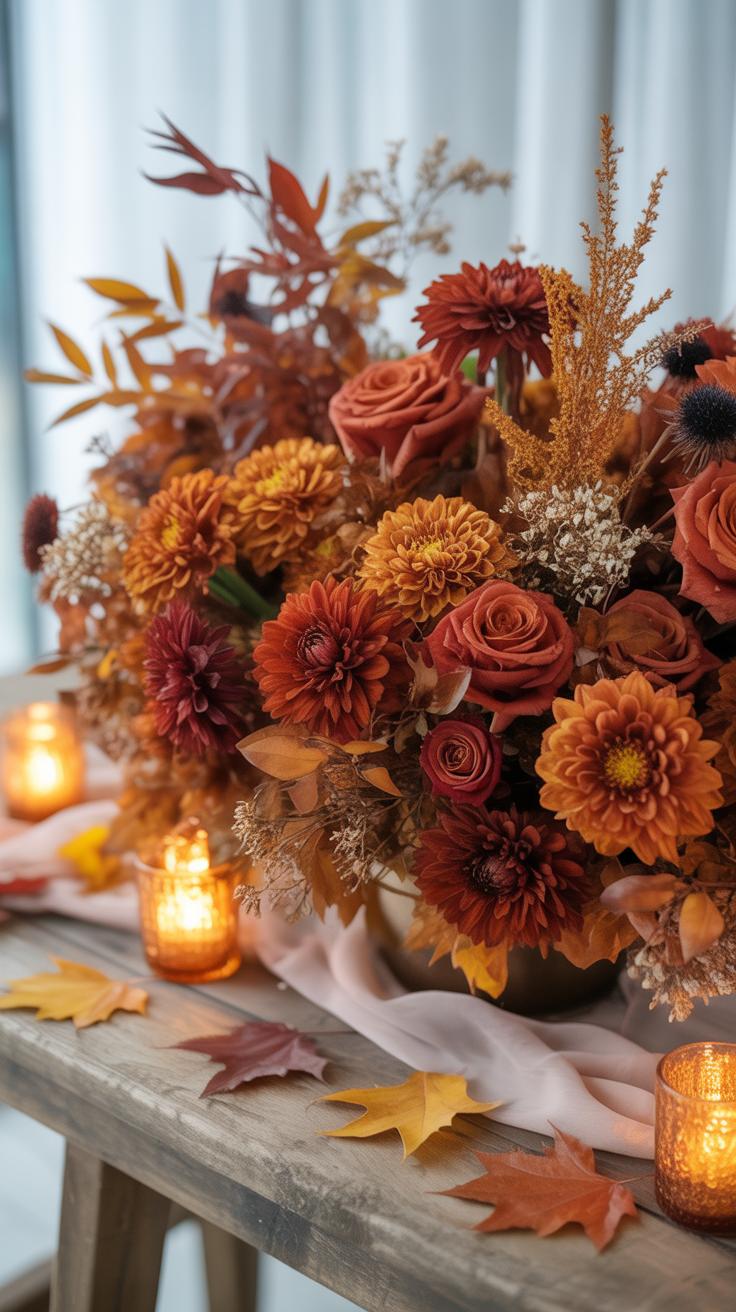
How To Match Rust Floral Arrangements To Your Overall Wedding Color Scheme
Rust functions as a strong neutral base in wedding design. You must identify the undertone of your chosen rust shade before selecting secondary colors. True rust contains heavy red and brown pigments. It pairs best with slate blue, sage green, or cream. These cool and neutral colors provide necessary contrast. Use warm metals like copper or brushed gold for containers to reinforce the metallic origins of the hue.
Avoid using too many bright secondary colors. High saturation conflicts with the earthy nature of rust. Stick to a 60-30-10 ratio for color distribution. Rust should occupy the 30 percent secondary slot or the 60 percent primary slot. If your venue has dark wood, use lighter rust tones to prevent the flowers from disappearing. Contrast is the only way to ensure the floral investments remain visible to guests.
Ceremony Backdrops, Archways, And Aisle DéCor Using Rust Color Floral Arrangements
Structure is the priority for ceremony backdrops. Use dried elements like bleached ruscus or fan palms to provide a structural frame for rust-colored blooms. These materials hold their shape and color in outdoor settings. Position your largest rust focal flowers at the eye level of seated guests. This placement creates a visual anchor for photos. Ensure the weight of the arrangement stays balanced to prevent the arch from tipping.

Aisle decor requires low-profile arrangements to ensure guest safety and visibility. Place rust-toned clusters at the base of every third chair row. This creates a rhythmic color flow without cluttering the walking path. Use terra cotta pots or wooden crates to house these arrangements. These materials match the rustic aesthetic and provide stability. Ground-level placements highlight the rich texture of the foliage and petals against the floor or grass.
Fall Wedding Flowers October Centerpiece Ideas With A Rust Toned Palette
Low Vs. Tall Centerpiece Designs: Which Works Best For Rust Toned Floral Arrangements
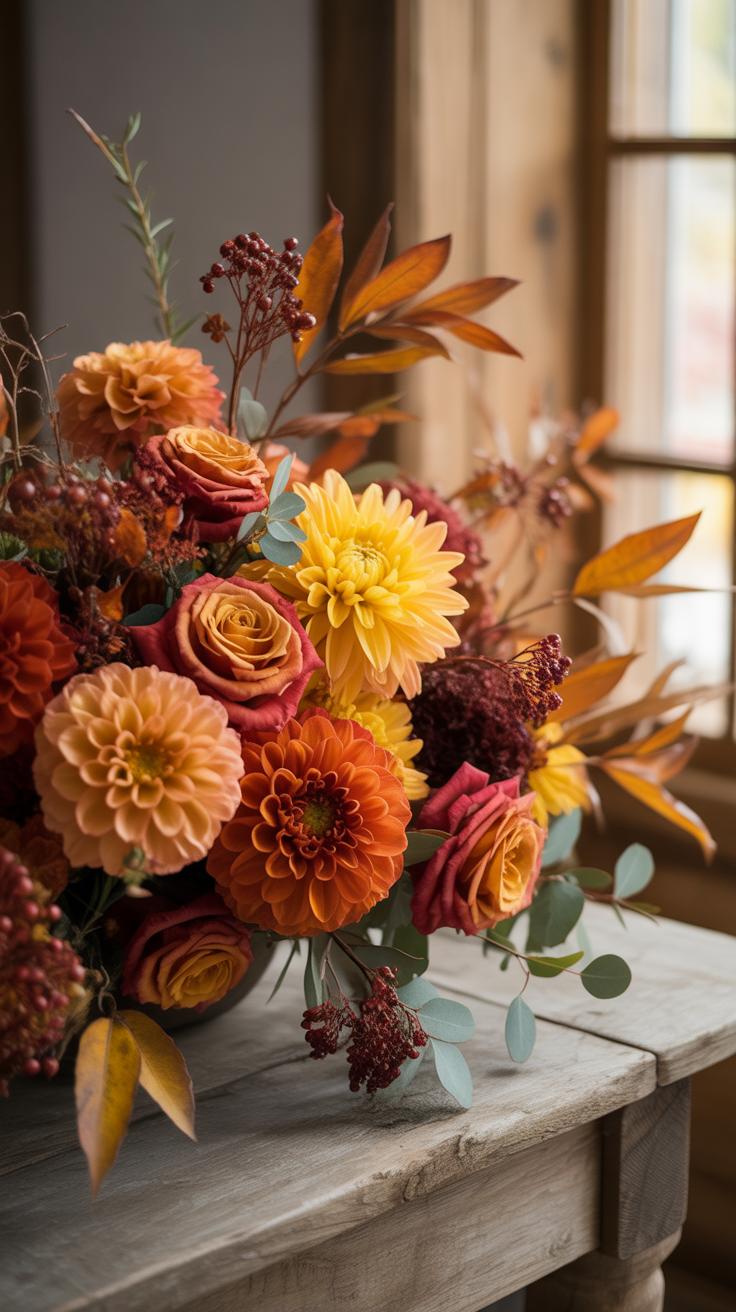
Low centerpieces facilitate direct conversation across guest tables. These arrangements prioritize visibility and intimacy during dinner service. Use heavy ceramic or stone vessels to anchor the warm color palette. This style works best for round tables where space is limited. It allows guests to see the textural details of dried bracken and terracotta roses at eye level.
Tall designs create visual impact in rooms with high ceilings. Use narrow metal stands to lift the floral mass above the guests. This prevents the large rust-toned elements from blocking sightlines. Incorporate hanging elements like amaranthus to draw the eye downward. High arrangements add architectural scale to large banquet halls. Balance the height with smaller accent clusters on the table surface.
Incorporating Pumpkins, Gourds, And Seasonal Props Into October Centerpiece Displays
Natural props ground the floral design in a specific season. Select heirloom pumpkin varieties like Musquee de Provence for their muted orange tones. These gourds complement the burnt sienna and copper hues of fall foliage. Place these elements directly on the table runner to create depth. Use varying sizes to build a visual hierarchy around the main floral vessel.
Avoid bright orange commercial pumpkins to maintain a sophisticated look. Choose matte skins and unique shapes to enhance the design texture. Secure small gourds using wooden picks if they must sit within the arrangement. Integrate dried corn husks or wheat stalks to add raw organic detail. These materials provide a structural contrast to soft petals. Proper placement ensures the props look intentional rather than cluttered.
Earth Tone Arrangements Pairing Rust With Burgundy Terracotta And Gold
Understanding Color Theory Behind Earth Tone Arrangement Combinations
Rust operates as a tertiary color that blends orange and brown. It shares a common red base with burgundy and terracotta. This shared foundation creates a monochromatic relationship. In design, this harmony prevents visual conflict. These colors sit close on the color wheel. This proximity creates a natural transition for the eye. Designers use this logic to build depth using related hues.
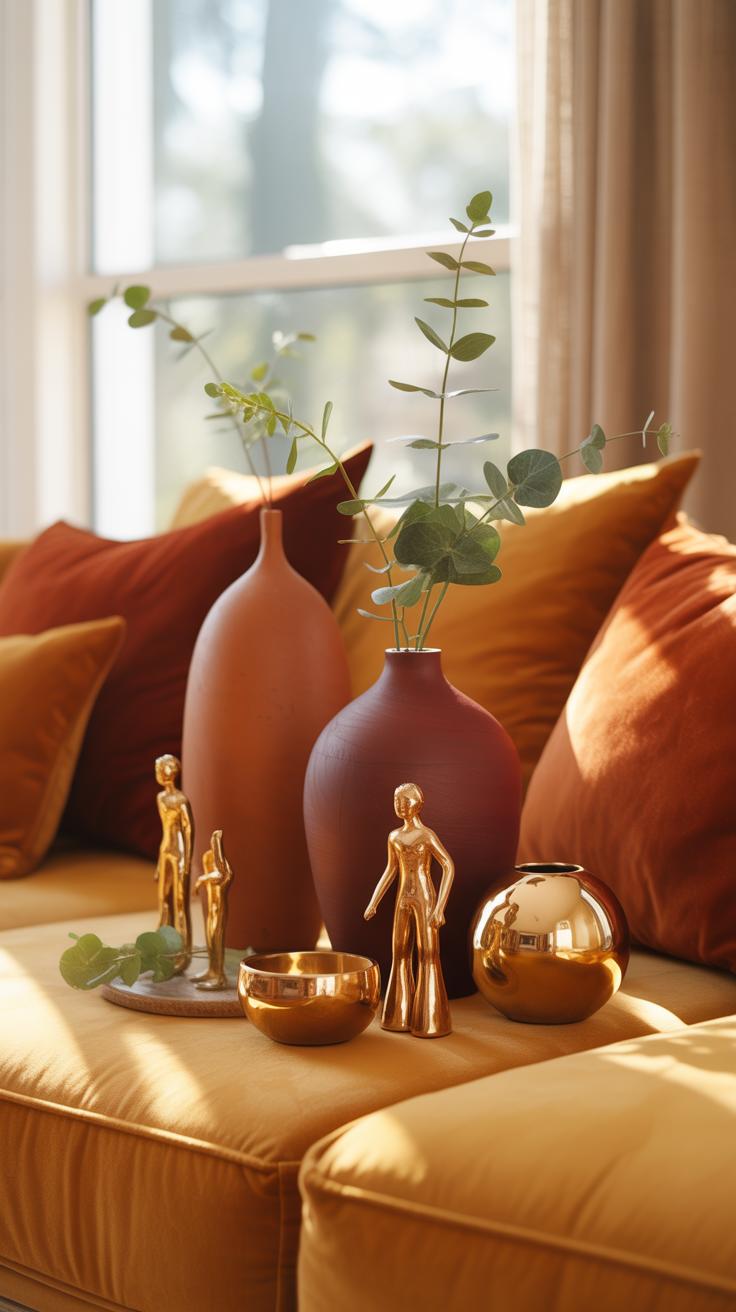
Gold serves as a metallic neutral that reflects light across these deep tones. It provides the necessary contrast to lift dark floral palettes. Without gold or light-reflecting elements, dark rust and burgundy absorb too much light. This can make an arrangement look like a black hole in photography. Gold accents break up the saturations. They highlight the texture of the petals and foliage effectively.
How To Layer Earth Tones Without Overwhelming The Eye Or The Space
Effective layering requires a strict hierarchy of color and texture. Start with burgundy as the anchor or base color. It provides weight and stability at the bottom of the vessel. Place rust-toned flowers at various heights to draw the eye upward. Use terracotta elements like dried palms or ceramics to bridge the gap between those two tones. This creates a logical flow from dark to light.
Balance the arrangement by following the sixty-thirty-ten rule. Use rust as the sixty percent primary color. Assign burgundy thirty percent for depth and shadow. Reserve gold for the final ten percent of the design. This ratio prevents the dark colors from making the space feel small. Maintain negative space between the heavy blooms. Airflow between stems allows each individual color to stand out clearly.
Orange Floral Arrangement Ideas That Transition Seamlessly Into Rust
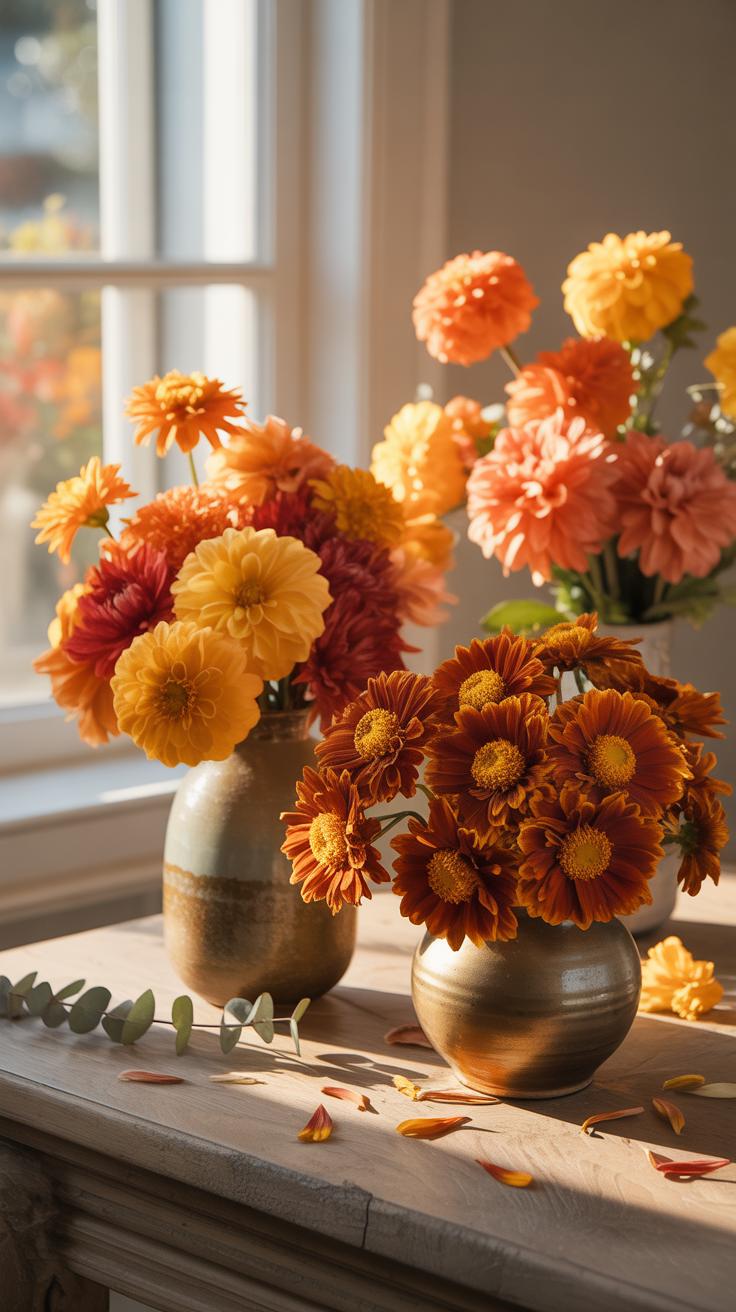
The Difference Between Bright Orange And Muted Rust In Floral Design
Primary oranges possess high saturation and reflect significant light. These tones often come from fresh marigolds or ranunculus. They signal energy and high visibility. In floral design, bright orange sits at the center of the color wheel. It demands immediate attention from the viewer. Designers use these pigments to create focal points. High saturation levels define this specific color category in any arrangement.
Rust occupies a different space on the color spectrum. It contains brown or gray undertones that reduce light reflection. This shift creates a desaturated look. Designers achieve this by using dried materials or specific rose varieties like Toffee or Leonidas. Rust represents oxidation and maturity rather than fresh growth. This color anchors a design. It adds visual weight and sophistication that bright orange cannot provide on its own.
Orange And Rust Gradient Arrangements For Sunset Themed Events And Celebrations
Successful sunset themes rely on a controlled color shift. Designers place vivid orange blooms at the top of the arrangement to mimic the sun. They then layer deeper rust tones toward the base. This technique creates a natural visual flow. It guides the eye from bright highlights to dark shadows. Use Bronze Upright Amaranthus or copper beech leaves to build this transition. This method ensures the palette remains cohesive.
Texture helps blend these two distinct colors effectively. Smooth petals of orange lilies contrast well against the rough textures of terracotta-colored dried elements. This layering prevents the colors from clashing. Professionals use these gradients for late afternoon events to match changing natural light. You must balance the ratios of light and dark. Too much bright orange ruins the mood. Too much rust makes the piece look dead.
Unique Fall Flowers That Elevate Every Rust Toned Floral Arrangement
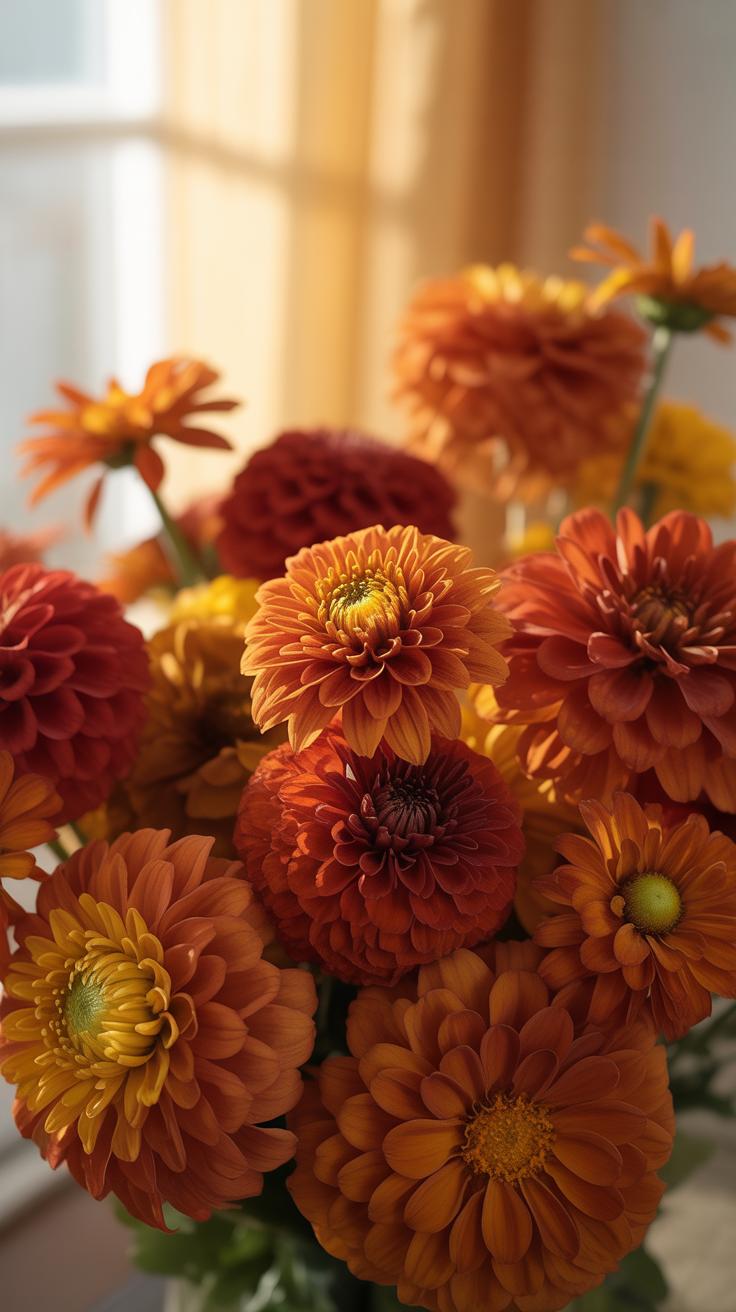
Lesser Known Autumn Blooms That Add Depth And Individuality To Rust Arrangements
Standard arrangements rely too heavily on roses and carnations. To dominate this color palette, you must use Bronze Chrysanthemums and Toffee Roses. These varieties provide the essential mid-tone base for any rust design. Their dense petal structures capture light differently than common flowers. This creates natural shadows and highlights. You need these variations to prevent the arrangement from looking flat or muddy during events.
Add texture with Brown Lisianthus and Terracotta Distant Drums roses. These specific cultivars offer muted tones that bridge the gap between orange and brown. They work best when you place them near darker foliage. This placement creates a high-contrast look that defines the shape of the bouquet. Always group these blooms in small clusters. This technique mimics how flowers grow in nature and draws the eye deeper into the work.
Dried And Preserved Unique Fall Flowers A Lasting Alternative To Fresh Blooms
Fresh flowers have a limited lifespan and color range. Preserved elements allow you to access deep copper and sienna tones that do not exist in living plants. These materials provide a structural skeleton for the arrangement. They do not wilt under hot event lights. Professional designers use these items to ensure the arrangement maintains its exact form from the setup until the event concludes.
- Dried Banksia: These sturdy Australian native flowers offer a massive scale and a distinct serrated texture. Their natural woody state holds deep rust tones perfectly. They act as a primary focal point in large structural installations or heavy tabletop centerpieces.
- Preserved Eucalyptus: Specially treated foliage maintains its flexibility while taking on rich copper dyes. This material provides the necessary movement and drape for cascading designs. It fills gaps without adding the bulk or the water requirements of fresh greenery.
- Bleached and Dyed Ferns: These delicate fronds provide a fine, airy texture that contrasts with heavy blooms. When dyed in rust tones, they create a halo effect around the perimeter of an arrangement. They soften harsh lines while reinforcing the overall color story.
- Dried Lotus Pods: These pods offer a geometric shape that breaks up the organic curves of flower petals. Their dark brown and rust surfaces add a masculine edge to the design. They are essential for creating visual weight at the base of your floral container.
- Sorghum Stalks: This grain adds height and a rugged, harvest-focused aesthetic to any autumnal display. The seed heads naturally transition into deep reds and browns. They provide a vertical element that draws the viewer’s eye upward in large-scale floor or entryway arrangements.
Integrating these dried components reduces your total waste and lowers labor costs. You can prep these elements weeks before the event date. This strategy allows you to focus solely on the delicate fresh blooms during the final assembly. Combine these textures to create a multi-dimensional look. A mix of matte dried surfaces and glossy fresh petals creates the most professional and expensive appearance for clients.
Rust Toned Floral Arrangements For Non Wedding Special Occasions
Thanksgiving Table Settings And Holiday Gatherings With Rust Floral Centerpieces
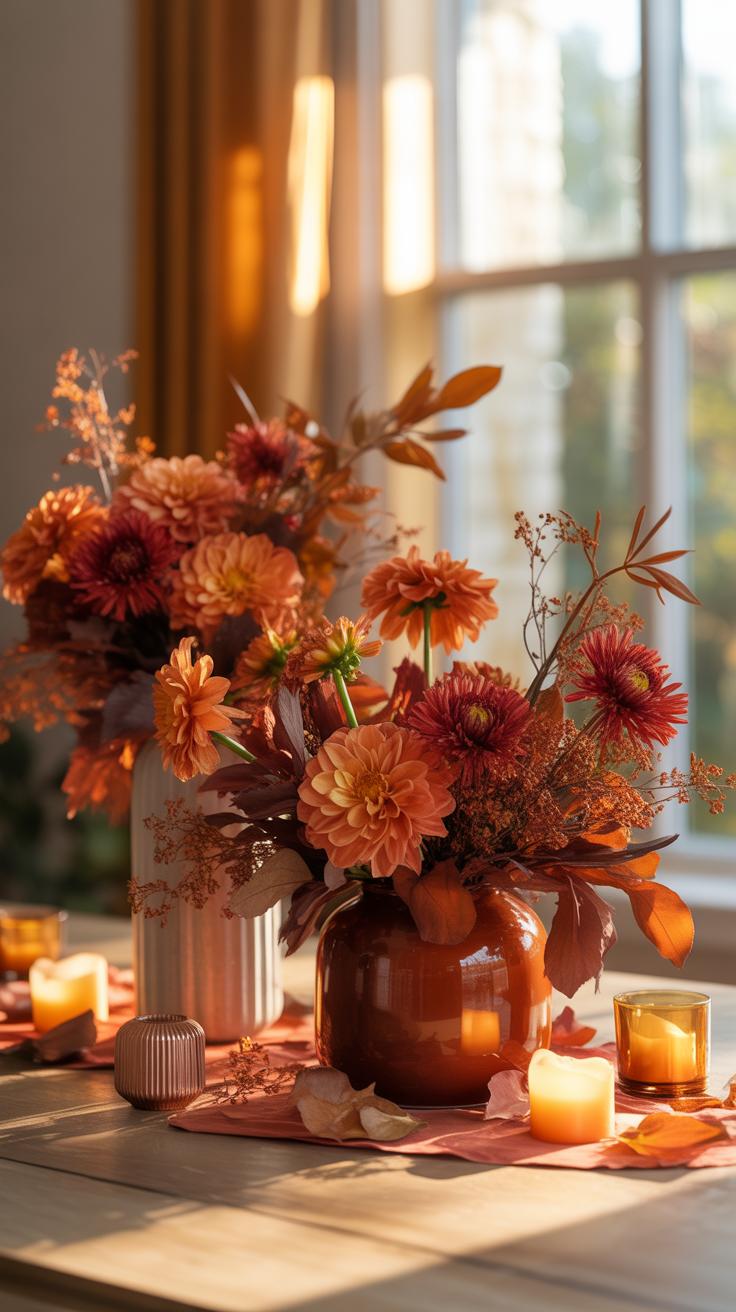
Thanksgiving decor relies on the transition from harvest to hibernation. Rust tones provide the visual weight needed to anchor a large dining table. Use terracotta pots or wooden troughs to hold these arrangements. Combine dried oak leaves with Copper Beech and deep orange Cymbidium orchids. The matte texture of dried foliage absorbs light while the orchids reflect it. This contrast keeps the table setting from looking flat.
Position low profile arrangements to ensure guests maintain eye contact across the table. Use heavy stems like Protea or Banksia to create structure without height. These species hold their color for weeks as they dry. Incorporate seasonal fruits like pomegranates or persimmons for added texture. Use dark bronze candles to complement the rust palette. This setup moves away from bright oranges toward a more sophisticated earth toned aesthetic.
Baby Showers Birthdays And Corporate Events Styled With Rust Color Arrangements
Rust tones work well for gender neutral baby showers and modern corporate settings. For showers, mix rust tones with cream bleached ruscus to soften the look. This avoids traditional pink or blue palettes. Use Ceramic vases in sandstone finishes to maintain a clean appearance. Use Toffee roses and dark Ranunculus to create depth. These flowers offer high petal counts that feel dense and expensive in professional environments.
Corporate events require bold shapes to fill large lobby or stage spaces. Use tall branches like Eucalyptus or Willow painted in copper tones. Pair these with massive rust colored Chrysanthemums for immediate visual impact. These flowers last long under harsh indoor lighting and air conditioning. Choose sleek black or gunmetal gray containers for a modern finish. This color strategy conveys stability and warmth without traditional floral sweetness.
DIY Tips For Crafting Your Own Rust Toned Floral Arrangements At Home
Sourcing Rust Toned Flowers Locally And Seasonally For Maximum Freshness
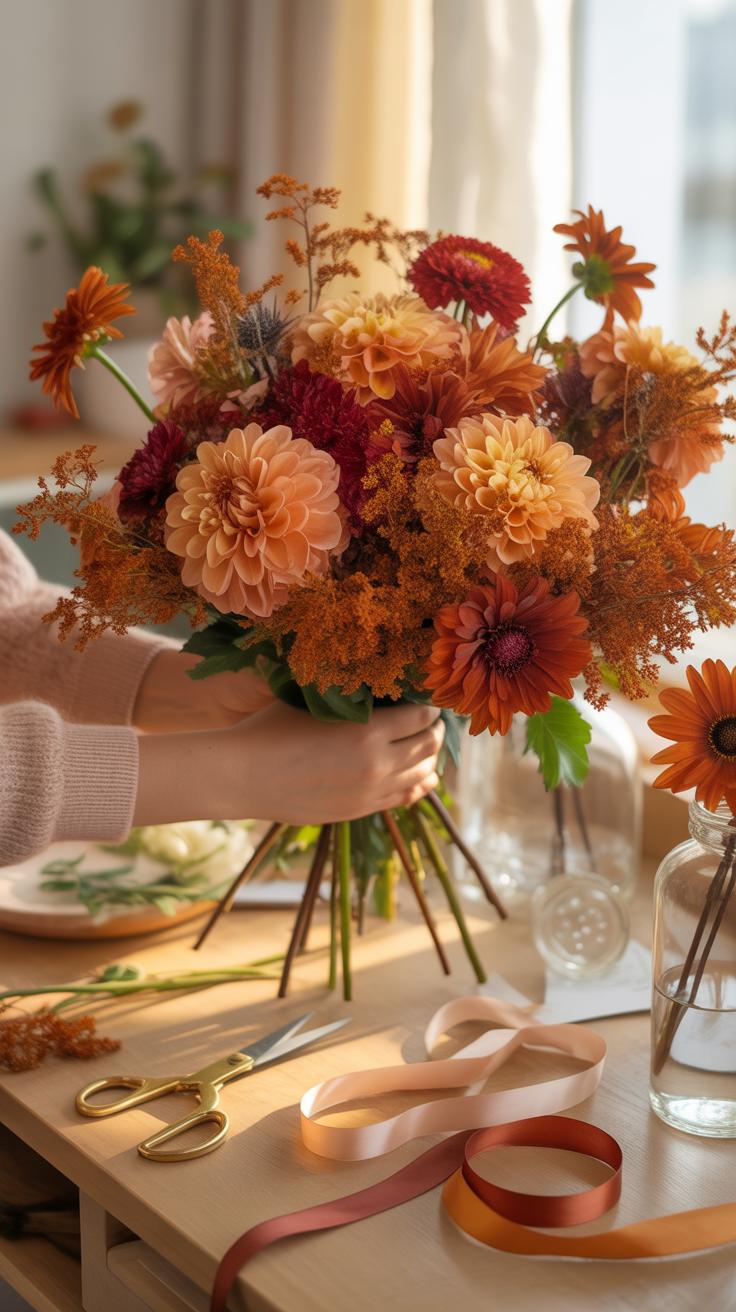
Timing determines the quality of your rust toned floral arrangements. In autumn, local flower farms provide the best terracotta and bronze hues through chrysanthemums and marigolds. These plants have high petal counts and hold color well after cutting. You must visit markets early to secure stems with firm necks. Check the base of the petals for browning to ensure the bloom is fresh.
During off-seasons, look for specialty roses like the Toffee or Leonidas varieties at wholesale hubs. These specific cultivars maintain a reliable brownish-orange tint year-round. Supplemental textures like dried bracken fern or copper-stained eucalyptus fill gaps when fresh burnt-orange flowers are scarce. Always recut stems at a forty-five-degree angle immediately after purchase. This practice maximizes water uptake and extends the life of the arrangement.
Tools, Vases, And Vessels That Best Showcase Rust Toned Floral Arrangements
The vessel material significantly impacts the visual weight of your design. Raw stoneware and matte ceramic pots complement the earthy quality of rust toned floral arrangements. These materials lack a reflective shine, which prevents the light from distracting the eye away from the blooms. Weathered terracotta provides a natural color match that reinforces the monochromatic look common in Brutalist and organic modernism.
Standard florist shears are necessary for clean cuts that do not crush the vascular system of the plant. Use coated floral wire or chicken mesh instead of green foam to secure heavy stems. Metal frogs or pins work best in shallow bowls for a minimalist Japanese-inspired aesthetic called Ikebana. Choose aged brass or copper containers if you want to highlight the metallic undertones often found in deeper bronze foliage.
Frequently Asked Questions

What are rust toned floral arrangements and why are they popular for events?
Rust toned floral arrangements feature a sophisticated palette of deep copper, burnt orange, and sienna hues. They have become immensely popular for special occasions because they offer a warm, earthy alternative to traditional brights. This trending aesthetic creates a cozy yet elevated atmosphere, making it perfect for couples and hosts who want a modern, nature-inspired look that feels both grounded and incredibly luxurious during any season of the year.
How can I incorporate different textures into my rust toned floral arrangements?
To create truly dynamic rust toned floral arrangements, try mixing velvety textures with dried organic elements. Start with focal flowers like terracotta roses or copper chrysanthemums, then layer in pampas grass, dried palm spears, or preserved eucalyptus for architectural interest. Adding hypericum berries or bronze amaranthus provides a beautiful drape and visual variety, ensuring your centerpiece looks professional and multi-dimensional from every angle on your guest tables.
Can I achieve a high-end rust look on a limited budget?
Absolutely! You can achieve a high-end look without overspending by blending a few premium fresh blooms with affordable foraged or dried elements. Focus your budget on “hero” flowers like ranunculus, then fill the gaps with spray-painted ruscus or dried bracken ferns. Using tinted foliage is a cost-effective way to maintain a cohesive color story while ensuring your displays look lush, abundant, and seasonally appropriate for your special event.