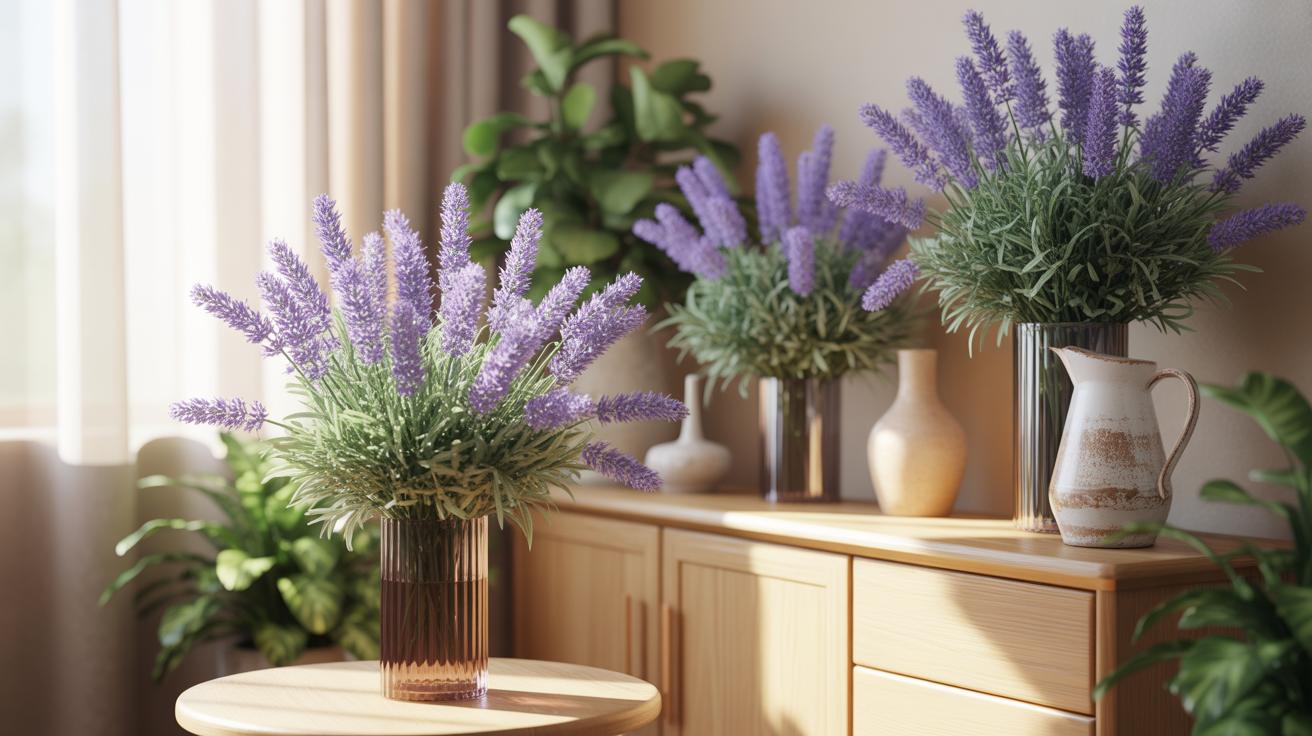
The Enduring Appeal Of Lavender Floral Arrangements In Home DCor
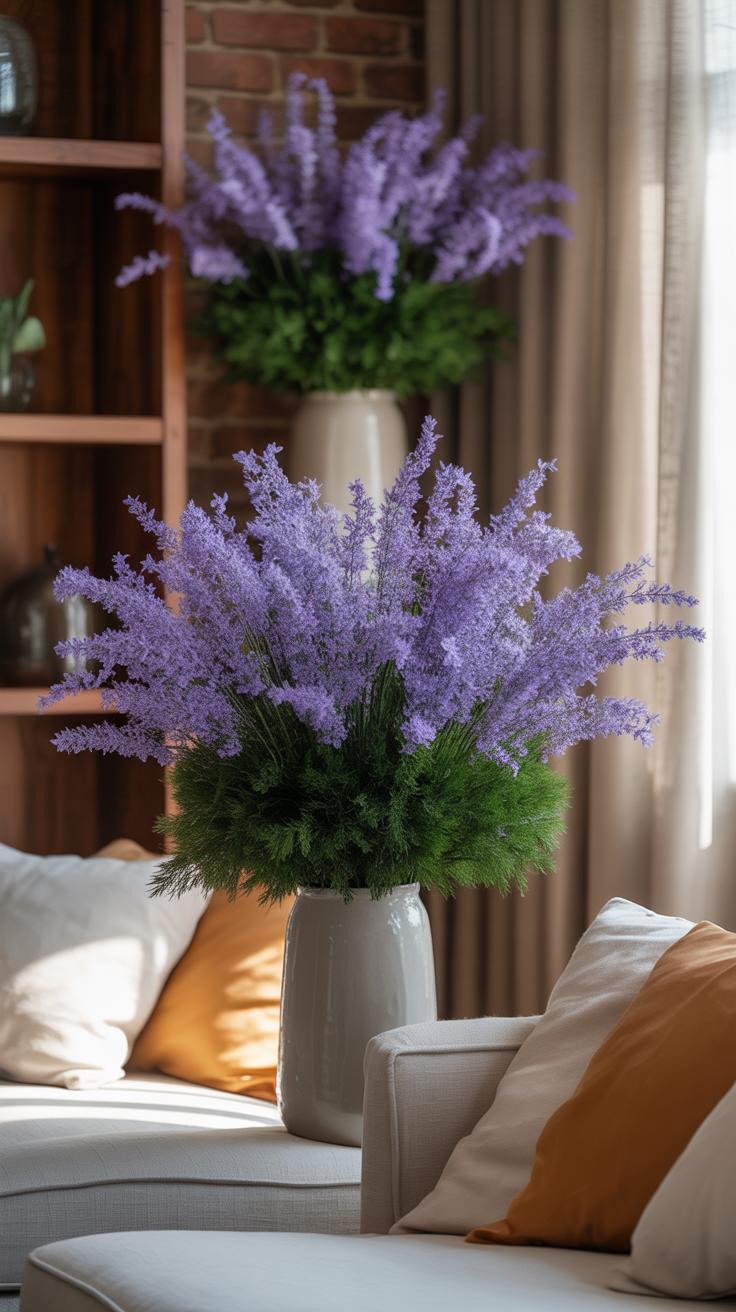
Why Lavender Has Been A Beloved Flower Across Cultures And Centuries
Lavender originates from the Mediterranean and Middle East. Ancient Egyptians utilized it for mummification and perfumes. The Greeks noted its medicinal value for throat infections and constipation. Roman soldiers carried lavender into battle for its antiseptic properties. They used it to wash clothes and scent communal baths. These practical applications built a foundation for its long-standing presence in domestic life and early agriculture.
During the Middle Ages and Renaissance, lavender moved into English and French gardens. People used it to mask odors and repel insects in large estates. Queen Victoria popularized its use in the nineteenth century for linens and personal fragrances. This royal endorsement solidified its status as a staple in classic floral design. Today, it remains essential because it bridges the gap between ancient utility and modern aesthetics.
How Lavender’S Color And Fragrance Elevate Any Living Space
Lavender offers a unique visual profile for interior design. Its cool purple hues sit between blue and red on the color wheel. This position allows it to harmonize with many palettes. Dried stems maintain their shape and pigment for several months. This durability makes them superior to many soft-stemmed flowers. Designers use these sprays to add vertical lines and texture to minimalist or traditional rooms.
The scent provides a functional benefit beyond simple decoration. Linalool and linalyl acetate are the primary chemical components in the plant. These compounds react with the nervous system to lower heart rates and blood pressure. Research shows that placing these arrangements in bedrooms improves sleep quality. The fragrance persists even after the plant dries. This longevity ensures that the arrangement performs a task long after the initial purchase.
Understanding The Lavender Flower Arrangement Varieties And Stem Types
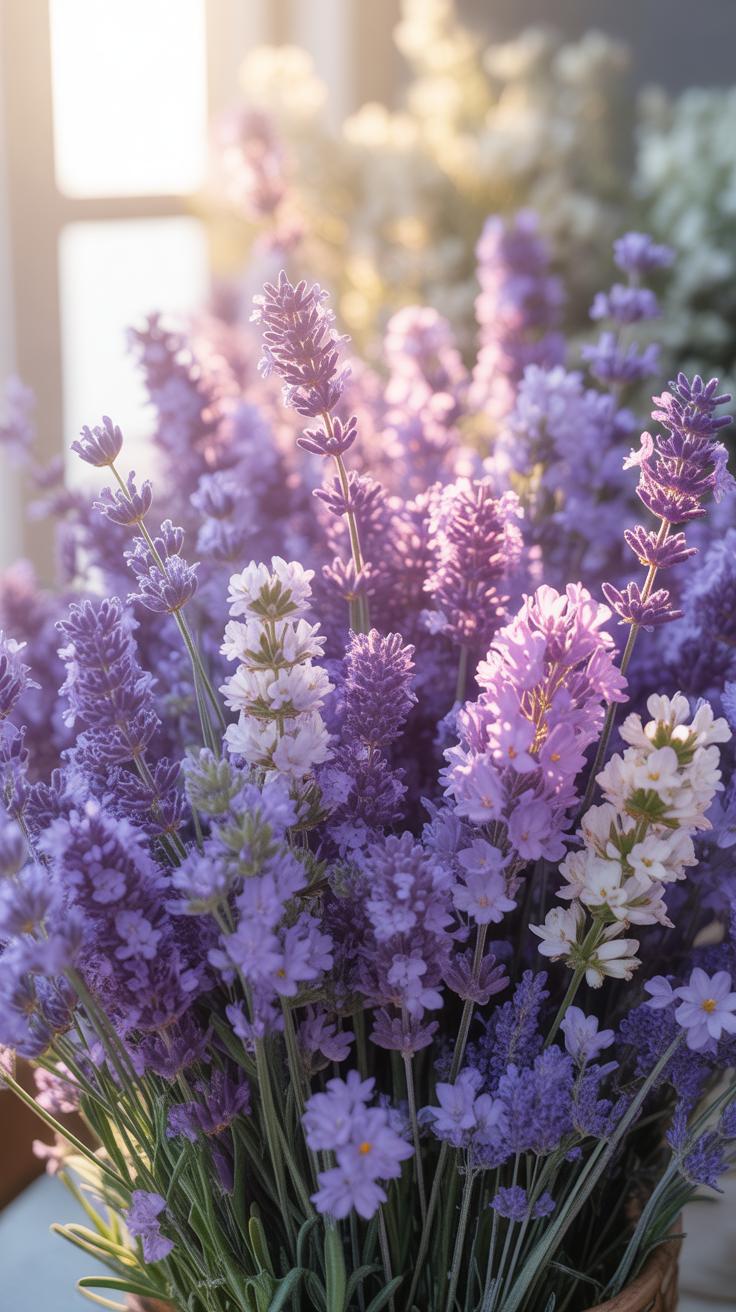
The Most Popular Lavender Species Used In Floral Design
Lavandula angustifolia serves as the primary choice for professional floral work. Designers call this English lavender. It features short stems and tight flower heads. This species provides the most potent scent and the cleanest purple hues. It works well in small table pieces or bridal bouquets. The stems are sturdy and do not snap easily during the assembly of dense arrangements.
Lavandula x intermedia is the second major variety used by florists. People commonly call this French or Dutch lavender. These plants produce much longer stems and larger flower spikes. The higher camphor content makes the scent sharper than English varieties. Professional decorators choose this species when they need height or drama in floor displays. It provides the structural backbone for large scale lavender floral arrangements.
Fresh Vs. Dried Lavender Stems: Choosing The Right Type For Your Arrangement
Fresh lavender stems provide flexibility and vibrant color for immediate display. You must place these in water to prevent wilting. Fresh stems work best for summer events and seasonal centerpieces. They offer a soft texture that blends well with roses or eucalyptus. Designers use fresh stems when movement and a living appearance are the priorities. The color will fade as the plant naturally dehydrates.
Dried lavender stems offer longevity and structural permanence. You do not need water for these arrangements. This makes them ideal for wall decor or long term home accents. Dried stems are brittle and require careful handling to avoid bud loss. They hold their scent for months but lose the bright purple tint of living plants. Choose dried stems for low maintenance designs that must last through multiple seasons.
Stunning Purple Floral Arrangements Pairing Lavender With Complementary Blooms
Best Flowers To Combine With Lavender For A Rich Purple Palette
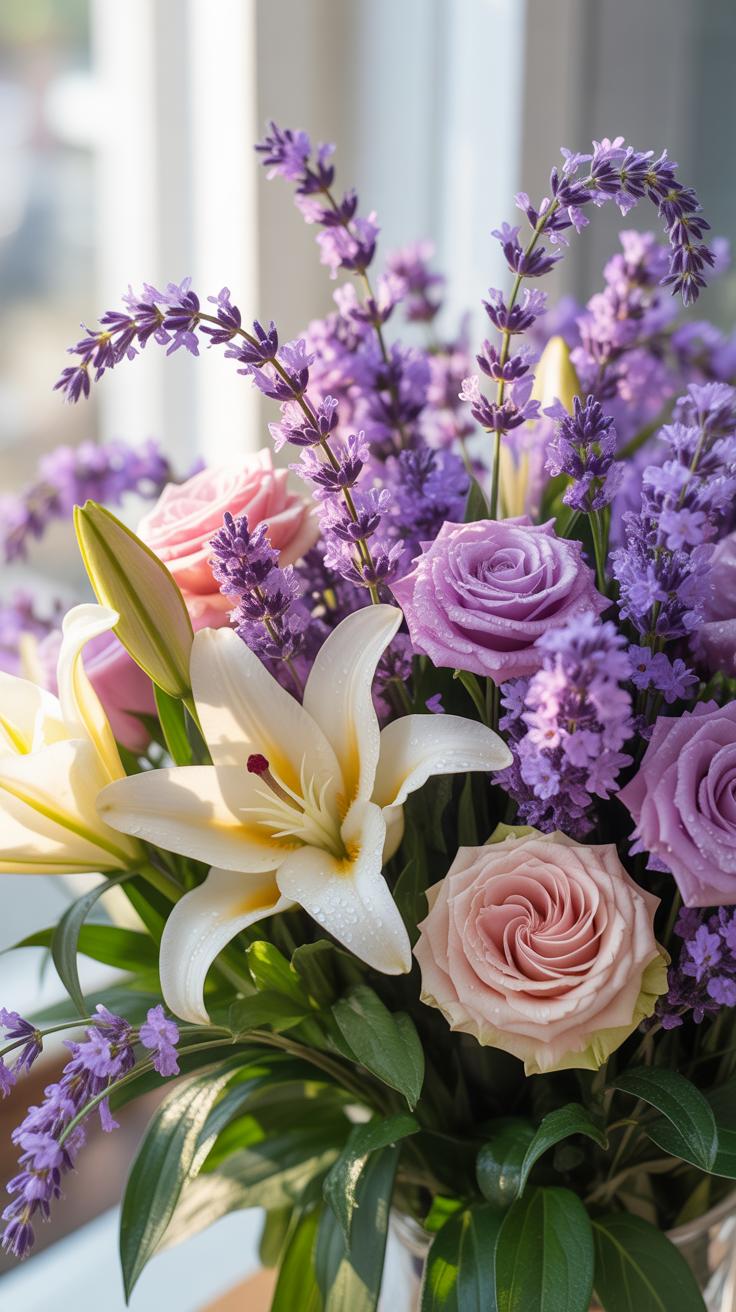
Select flowers that match the structural integrity of lavender. Allium and purple Lisianthus offer the best color saturation. Allium provides height and a spherical shape to contrast the vertical spikes of lavender. Lisianthus adds a soft texture that mimics roses without the heavy weight. These combinations create a monochromatic look. Using different shades of purple adds visual weight to the design.
Ensure the blooming cycles align for the best results. Lavender peaks in mid-summer. Match it with Scabiosa or purple Salvia during this window. Scabiosa provides a flat, pincushion top that breaks up the dense lavender bundles. Salvia extends the vertical line of the arrangement. Use darker hues at the base to ground the piece. Keep the lighter lavender stems at the top for balance.
How Foliage And Greenery Enhance The Depth Of Purple Floral Arrangements
Greenery provides the necessary contrast to make purple hues pop. Silver foliage works best with lavender due to shared Mediterranean origins. Dusty Miller and Eucalyptus offer a muted gray-green tone. This cool palette highlights the natural oils and color of the lavender buds. Darker greens like ruscus create a sharp backdrop. This makes the arrangement look fuller and more professional.
Foliage also acts as a structural foundation. Use woody stems like rosemary or bay laurel to support the thin lavender stalks. These herbs add a secondary scent profile without clashing. Texture is the primary goal when adding greenery. Use broad leaves to contrast the narrow lavender needles. This technique draws the eye to the center of the arrangement. Proper spacing prevents the purple color from looking muddy.
Flower Arrangements Lavender Style Matching Designs To Your Homes Aesthetic
Lavender Arrangements For Rustic, Farmhouse, And Cottage Style Interiors
Rustic and farmhouse designs rely on texture and utility. Use dried English lavender for these spaces. Its stiff stems and muted gray-purple hues match weathered wood and stone. Place bundles in vintage stoneware or galvanized metal pails. This creates a functional look that mirrors traditional French countryside storage methods. Avoid perfectly shaped bundles. Lean into the natural asymmetry of the plant for an authentic rural feel.
Cottage interiors require more volume and softness. Mix fresh lavender with common garden herbs like rosemary or mint. Use ceramic pitchers or wicker baskets to hold the stems. These materials ground the arrangement in a domestic setting. Keep the heights varied to mimic a wild garden. This technique emphasizes the connection between the outdoor landscape and the indoor living area. It remains a staple of historical English cottage decor.
Lavender is the soul of the garden, bringing a quiet grace and the soft scent of old memories into every corner of the home.
Minimalist And Modern Approaches To Lavender Flower Arrangements
Modern design demands precision and clean lines. Use French lavender for its long and elegant stems. Place a few singular stalks in a clear glass cylinder or a matte black ceramic vase. This focuses the eye on the architectural shape of the flower spikes. Strategic use of negative space is vital. One or two well-placed stems provide a splash of color without cluttering the clean aesthetic of a contemporary room.
Minimalist arrangements often utilize monochromatic palettes. Pair purple lavender with cool gray concrete or brushed steel containers. This contrast makes the floral color pop while maintaining an industrial edge. Ensure the water remains crystal clear in glass vessels to uphold the sterile look. Trim all lower leaves to expose the green stems fully. This method removes bulk and highlights the geometric structure of the plant within a modern living space.
Lavender Flower Arrangements For Every Room In The House
From The Kitchen To The Bedroom: Placement Ideas That Work With Lavender
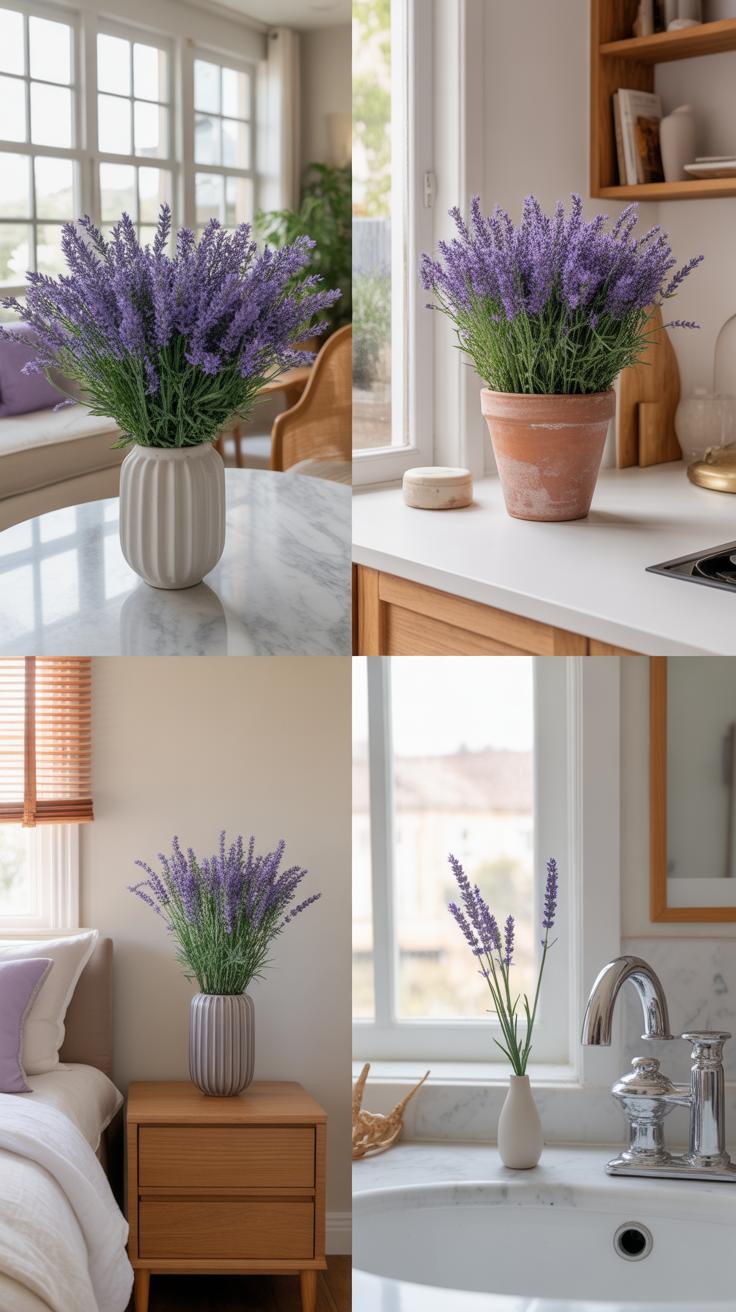
Kitchens require functional floral choices that do not interfere with food preparation. Place short stems of English lavender in heavy ceramic crocks. These varieties have less camphor and offer a cleaner scent profile for dining areas. Locate them near windows with high airflow to disperse the natural aroma. This placement prevents kitchen odors from lingering. Use stable bases to avoid spills on countertops.
Bedrooms focus on rest and recovery based on sleep science. Use French lavender varieties for their higher essential oil content and stronger fragrance. Position these arrangements on nightstands or dresser tops away from direct sunlight. Modern minimalist design suggests using clear glass vessels to highlight the purple hues. Keep the arrangement small to maintain an uncluttered space. This reduces visual noise and promotes a calm environment.
Creating A Relaxing Atmosphere With Lavender Arrangements In Bathrooms And Entryways
Bathrooms create a high-moisture environment that benefits specific plant types. Lavender stems work well in these spaces when dried or used in fresh floral displays. Place them on vanity counters or shelving units. The heat from showers helps release the aromatic oils from the flower buds. Use porcelain or stone containers to match traditional bathroom fixtures. This setup turns a standard washroom into a functional recovery zone.
Entryways serve as the first point of contact for guests and residents. Large scale arrangements work best in this high traffic area. Utilize tall glass cylinders or galvanized metal buckets for a rustic look. Position the flowers where people pass closely to catch the scent. Ensure the base is heavy enough to remain upright if bumped. This strategy builds an immediate sensory link between the outdoors and the home interior.
Purple And White Floral Arrangements Elegant Lavender And White Bloom Combinations
Why Purple And White Pairings Create A Classic, Timeless Look
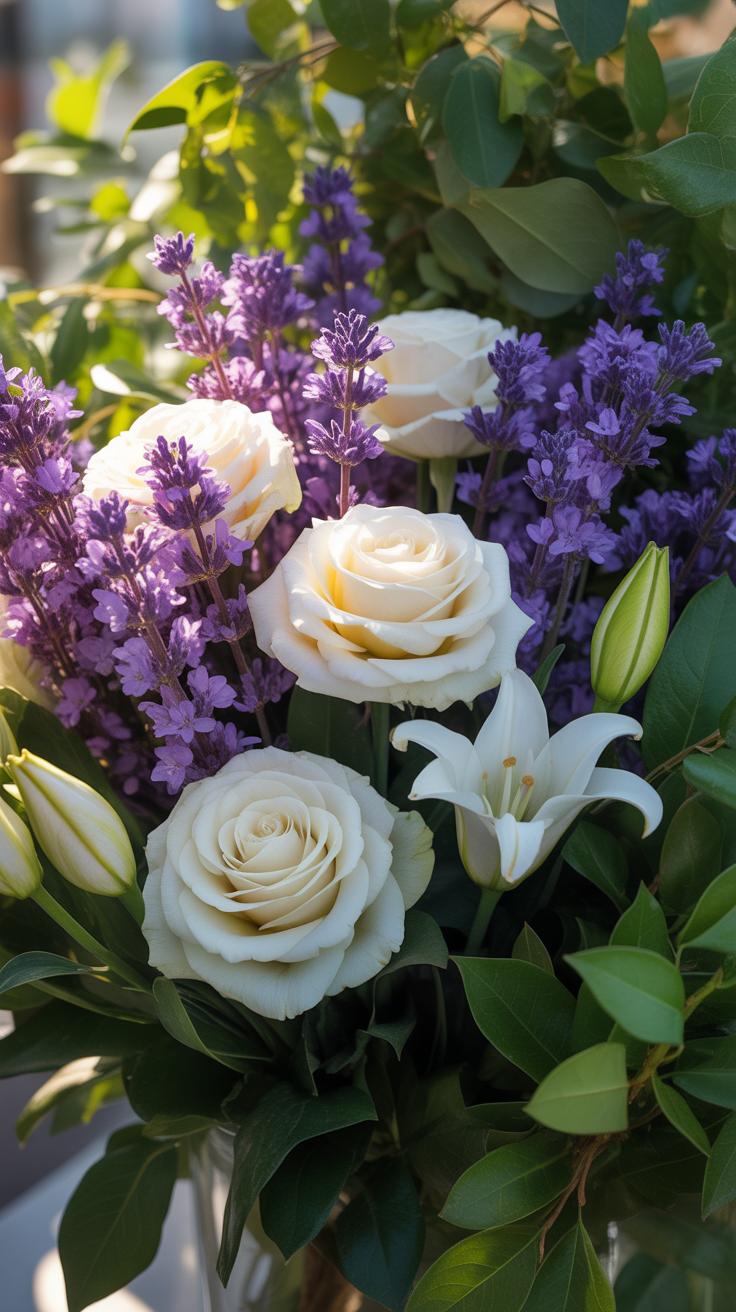
Purple and white pairings dominate high-end floral design because they provide immediate visual contrast. White blooms reflect light and act as a neutral canvas. Lavender tones possess a lower light value. This difference creates depth in the arrangement. Traditionally, this combination signals cleanliness and luxury. It mimics the aesthetic of formal English gardens. Professionals use this palette to ensure focus remains on texture rather than color clashing.
Strategic use of white reduces the visual weight of dense lavender stems. It prevents the arrangement from looking too dark or monochromatic. This color theory application ensures the display works in any lighting condition. Designers rely on this balance for weddings and corporate settings. It conveys a sense of calm and order. The combination avoids seasonal trends by sticking to established botanical principles. It remains a safe, high-impact choice for any interior.
Top White Flowers That Pair Beautifully With Lavender In Arrangements
Selecting the right white flowers depends on stem strength and bloom size. You must match the delicate nature of lavender with flowers that do not overwhelm its slender profile. White flowers with distinct shapes add structural variety to the mix. Focus on species that offer a clean white hue to maintain the high-contrast effect. Avoid off-white or cream tones that can look muddy next to cool purple.
- White Roses: These provide a sturdy base and a traditional focal point. Use standard roses for volume or spray roses to match the smaller scale of lavender spikes. They offer structural integrity and long vase life.
- Lily Of The Valley: These bell-shaped flowers add a delicate texture that complements the vertical lines of lavender. They bring a professional, refined detail to small bedside or desk arrangements. Use them for high-end boutique looks.
- White Lisianthus: These blooms offer a ruffled appearance similar to poppies but with much stronger stems. They provide multiple heads per branch. This helps fill gaps between lavender stalks while adding a soft, layered visual element.
- Ranunculus: Use these for their tight, circular petal structure. They create a hard geometric contrast against the loose and airy form of lavender. Their thick stems support heavy water intake and keep the arrangement looking fresh.
- White Hydrangeas: These act as a structural foam when placed at the rim of a vase. They hold lavender stems in place without the need for plastic grids. Their massive size creates an instant backdrop for the purple highlights.
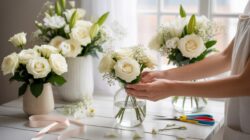
Balance the arrangement by placing larger white blooms at the bottom for stability. Position lavender stems at varying heights to break the horizon line of the white flowers. This technique creates movement and prevents the design from looking stagnant. Ensure you strip leaves from the lower stems to keep the water clear. Proper placement highlights the architectural differences between the round white heads and the upright lavender spikes.
Lavender Floral Arrangement Ideas For Seasonal And Holiday DCor
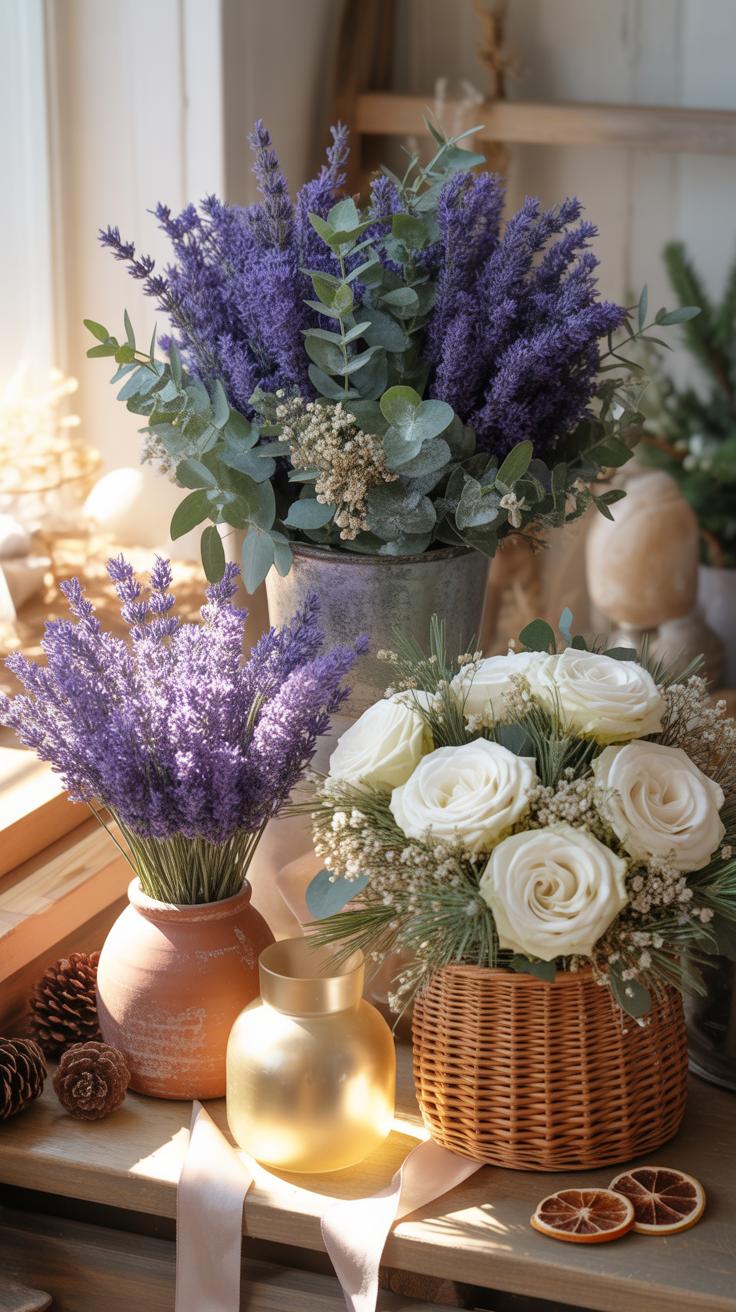
Spring And Summer Lavender Arrangement Ideas That Celebrate The Bloom Season
Spring demand requires English lavender varieties like Munstead or Hidcote. These types offer vibrant purple hues and soft stems. Pair them with seasonal bulbs like tulips or ranunculus for texture. Keep the water clean and change it daily to prevent bacterial growth. Use clear glass vessels to highlight the fresh green stems. This creates a clean look for high traffic areas.
Summer heat requires robust French lavender known for its long serrated leaves and high oil content. Use these in outdoor dining arrangements to act as a natural pest deterrent. Combine lavender with sunflowers or zinnias for a bold Mediterranean aesthetic. Trim the stems at a sharp angle to increase water uptake. Use heavy ceramic pitchers to protect the flowers from direct sunlight and wind.
Using Dried Lavender Arrangements To Bring Warmth To Autumn And Winter Spaces
Autumn shifts the focus toward preservation and desaturated color palettes. Use dried lavender bundles tied with twine or leather strips. Mix these with dried eucalyptus or wheat stalks to create tactile depth. This style fits the farmhouse design movement. It removes the need for water or light maintenance. Place these in heavy iron or weathered wood containers to ground the visual space during shorter days.
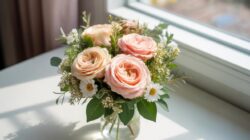
Winter arrangements use lavender as a neutral fragrance element. Integrate dried sprigs into evergreen wreaths using floral wire. The silver gray tones of dried lavender complement pine and cedar branches perfectly. Keep these away from direct heat sources like fireplaces to prevent the buds from dropping early. This approach provides a clean scent without using synthetic sprays. It offers a practical way to reuse summer harvests.
How To Build A Lavender Arrangement Key Tips For Beginners
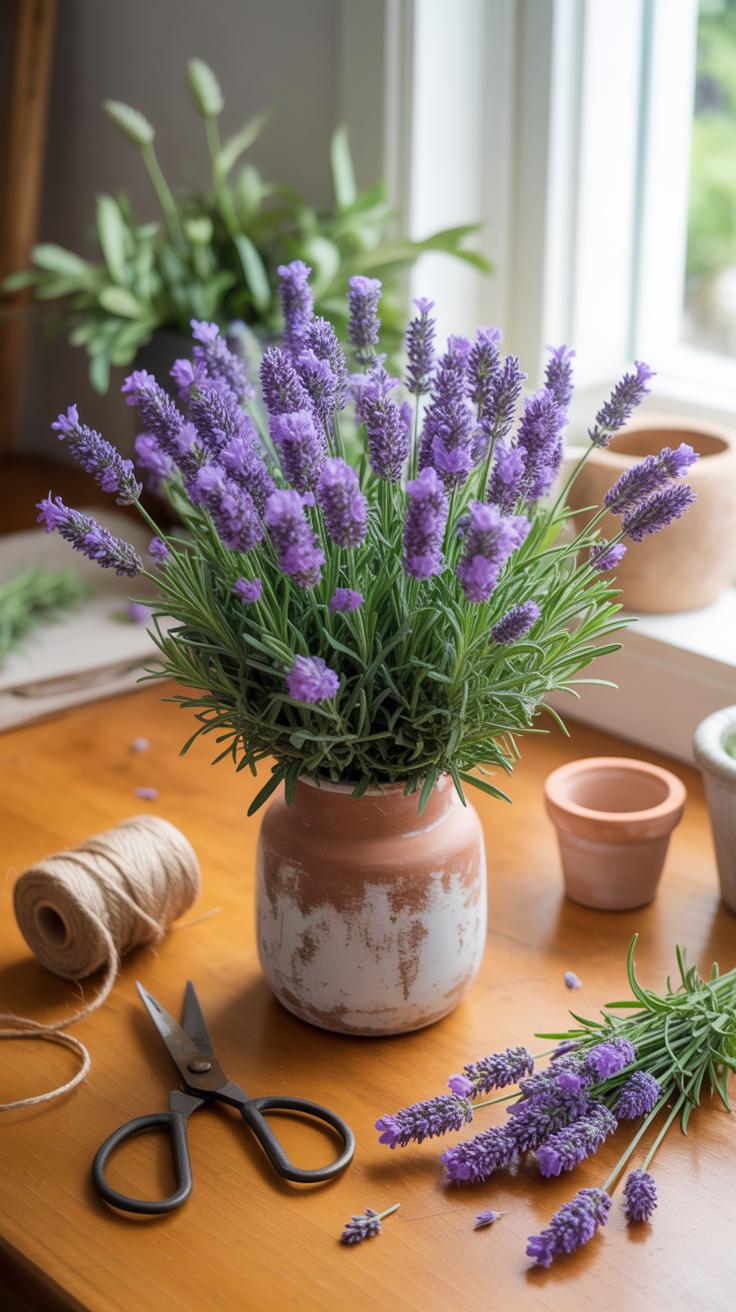
Essential Tools And Materials Needed Before You Begin
Proper preparation dictates the quality of your final design. Lavender stems are woody and brittle compared to soft-tissue flowers. You must use sharp bypass pruners to ensure clean cuts that do not crush the water-conducting vessels. Selecting the right vessel is equally critical for structural support. Heavy ceramic or glass containers prevent top-heavy dried arrangements from tipping over during the assembly process.
- Bypass Pruners: Use sharp blades to make precise diagonal cuts. Dull scissors crush the lavender stems and block water intake in fresh arrangements. This tool handles the tough, semi-woody stalks often found in mature English lavender varieties without fraying the ends.
- Floral Foam or Frog: These stabilizers hold stems at specific angles for professional layering. Use specialized dry foam for preserved lavender and wet foam for fresh-cut stems. This ensures your design stays upright and maintains its shape over time.
- Floral Tape: Wrap this around the rim of your vase to create a supportive grid. It helps beginners manage spacing and prevents stems from sliding to the sides. Use green or clear tape to remain invisible within the finished floral structure.
- Supportive Foliage: Incorporate secondary greens like eucalyptus or rosemary to provide a structural base. These stems act as a skeleton for the thinner lavender stalks. They add necessary volume and help hold the lavender upright without using excessive amounts of expensive material.
- Heavyweight Vessel: Choose a container with a wide enough base to offset the height of the lavender. Since lavender is often used in vertical designs, a stable bottom prevents the arrangement from falling. Use stoneware or thick glass for the best structural results.
Clean your workspace to avoid transferring debris or oils to the sensitive flower heads. Lavender buds fall off easily when handled roughly or exposed to moisture. Treat the materials with care to maintain the integrity of the spikes. Once you gather these tools, you can transition from basic bunching to intentional design. Organization at this stage prevents mid-process errors that ruin stem quality.
Simple Techniques For Grouping Layering And Balancing Your Lavender Design
Effective design relies on the principle of grouping stems to create visual impact. Lavender has thin profiles that disappear if placed individually. Cluster three to five stems at varying heights to form a focal point. Position the tallest stems in the center to establish a vertical axis. Work from the middle outward to maintain a balanced weight distribution across the vessel.
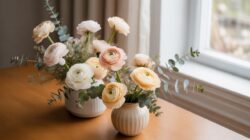
Layering adds depth to your arrangement and mimics natural growth patterns. Place shorter, denser stems at the base to hide the mechanics and provide structural support. Angle the outer stems slightly away from the center to create a fan shape. Check the arrangement from every angle to ensure no gaps exist. Maintaining a consistent height across different groups ensures a professional and intentional look.
Lavender Wedding Flower Arrangements Romantic Ideas For Your Special Day
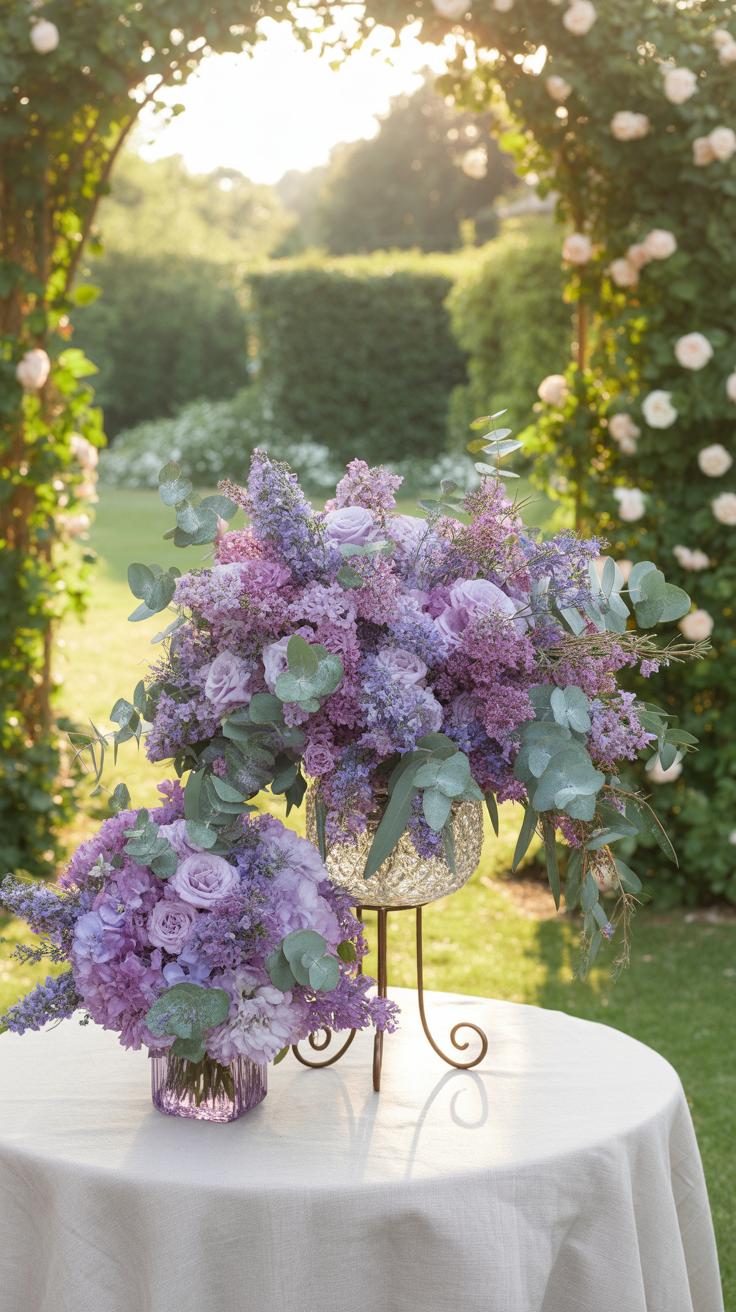
Why Lavender Is A Cherished Choice For Wedding Bouquets, Centerpieces, And Arches
Lavender offers high durability and visual consistency for long wedding days. Its stiff stems provide structural integrity in handheld bouquets. Unlike soft-stemmed flowers, lavender does not wilt quickly in heat. This makes it a reliable asset for outdoor ceremonies and summer weddings. Photographers value its matte texture because it does not reflect harsh camera flashes. It provides a stable color base that stays vibrant from the ceremony through the late reception.
The fragrance of lavender serves a functional purpose in high-stress wedding environments. Studies show the scent reduces heart rate and lowers anxiety levels. This offers a calming effect for the bridal party. From a historical perspective, lavender symbolized devotion and purity in European wedding traditions. Modern designers use it to bridge the gap between classic aesthetics and contemporary minimalist styles. Use dried stems to ensure the arrangement lasts as a permanent memento after the event.
Styling Lavender Wedding Flower Arrangements To Suit Different Wedding Themes
Match lavender with specific textures to define the wedding theme. For a rustic look, pair stems with raw twine and burlap. Use English lavender for its deep purple hue and dense flower heads. This variety stands out against neutral wood backdrops. For a modern industrial theme, place lavender in sleek glass or polished metal containers. The sharp lines of the lavender spikes complement the hard edges of metal and concrete venues.
Achieve a high-end formal look by mixing lavender with white roses or peonies. This combination leans into the Traditional design movement. It creates a classic color palette of purple, white, and green. For a bohemian style, use French lavender because it has longer, thinner stems. This allows for more movement in loose, hand-tied arrangements. Focus on the height of the lavender spikes to add vertical interest to flat table centerpieces or high floral arches.
Caring For And Preserving Your Lavender Floral Arrangements To Last Longer
How To Keep Fresh Lavender Arrangements Vibrant And Hydrated
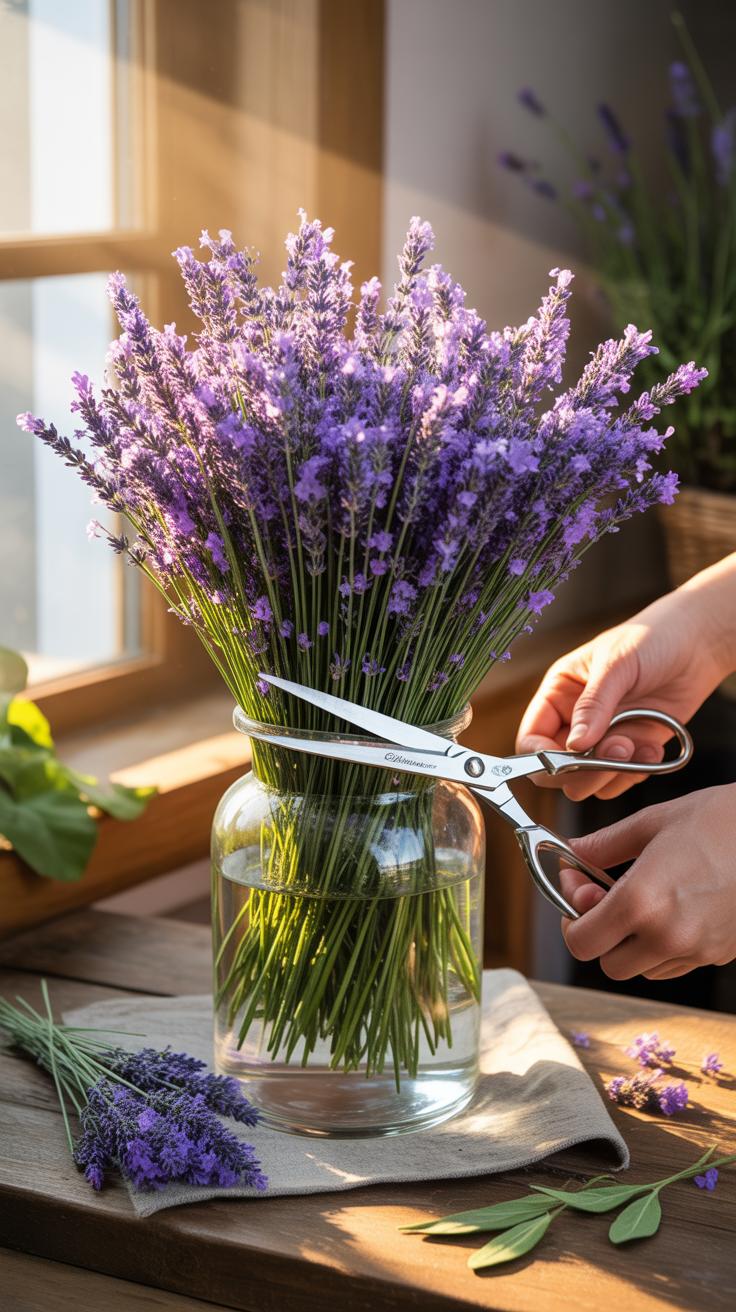
Fresh lavender requires immediate hydration to maintain its structural integrity. Cut stems at a forty-five-degree angle using sharp shears to prevent crushing the water-conducting vessels. Remove all foliage that sits below the water line. This action stops bacterial growth that rots stems and kills the bloom prematurely. Use cool water and change it every two days to ensure maximum freshness.
Placement determines the lifespan of your arrangement. Keep the flowers away from direct sunlight and heat sources like radiators. High temperatures cause the essential oils to evaporate too quickly and wilt the stems. Add a drop of bleach or a floral preservative to the water to limit microbes. These steps extend the display life of English and French varieties significantly during the peak season.
Drying And Preserving Lavender Blooms To Create Long Lasting Home Displays
Drying lavender preserves the color and scent for several years. Harvest the stems when the bottom third of the flowers just begin to open. Tie the lavender in small bundles using twine or rubber bands. Hang these bundles upside down in a dark and well-ventilated space. Air circulation prevents mold while darkness ensures the purple pigment does not fade from ultraviolet light exposure.
Traditional air-drying takes roughly two to four weeks depending on local humidity levels. Once the stems snap easily they are fully cured for permanent display. Store dried arrangements away from windows to prevent brittle stems and petal drop. You can also use silica gel for faster preservation if you need to maintain the exact shape of the flower heads for formal designs.
Frequently Asked Questions

What are the best types of lavender to use for home floral displays?
When choosing flowers for your lavender floral arrangements, English lavender is often the favorite for indoor use due to its sweet fragrance and vibrant purple hue. For a more dramatic, architectural look, French or Spanish lavender offers unique ruffled blooms. If you want something that lasts forever, dried Grosso lavender holds its scent and color beautifully, making it an ideal choice for low-maintenance year-round decor in any room.
How can I keep fresh lavender arrangements looking vibrant for longer?
To extend the life of your lavender floral arrangements, start by cutting the stems at a sharp angle and removing any leaves that would sit below the water line. Use lukewarm water mixed with a pinch of sugar or flower food. Unlike many other flowers, lavender prefers a bright spot but should be kept away from direct heat sources or harsh afternoon sun to prevent the delicate petals from wilting prematurely.
Can I create beautiful lavender decor on a small budget?
Absolutely! Lavender is an incredibly cost-effective flower because it is easy to grow in backyard pots or even a sunny windowsill. For an affordable display, gather small bundles of home-grown sprigs and tie them with simple twine or ribbon. You can repurpose old glass jars or vintage tin cans as rustic vases, creating stunning focal points that prove you don’t need a professional florist to enjoy this timeless aesthetic.