
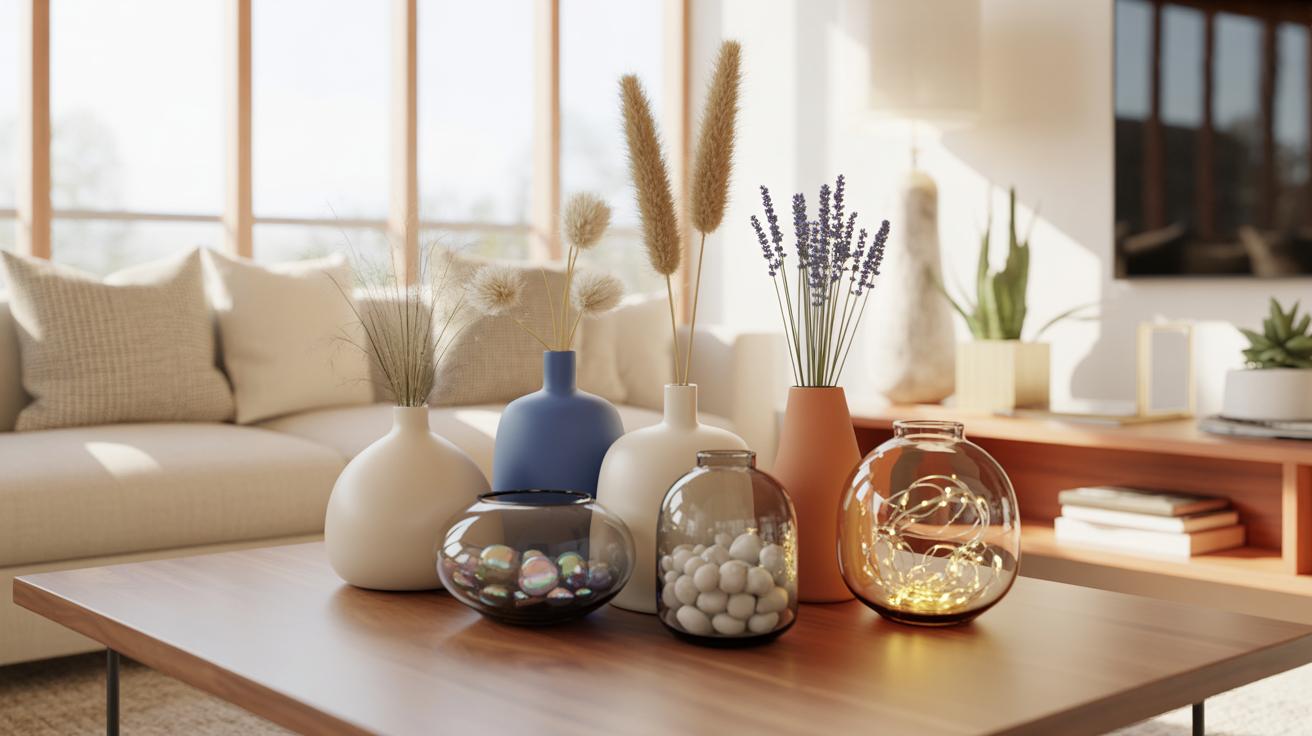
What Are Vase Filler Ideas And Why Do They Matter For Home Decor
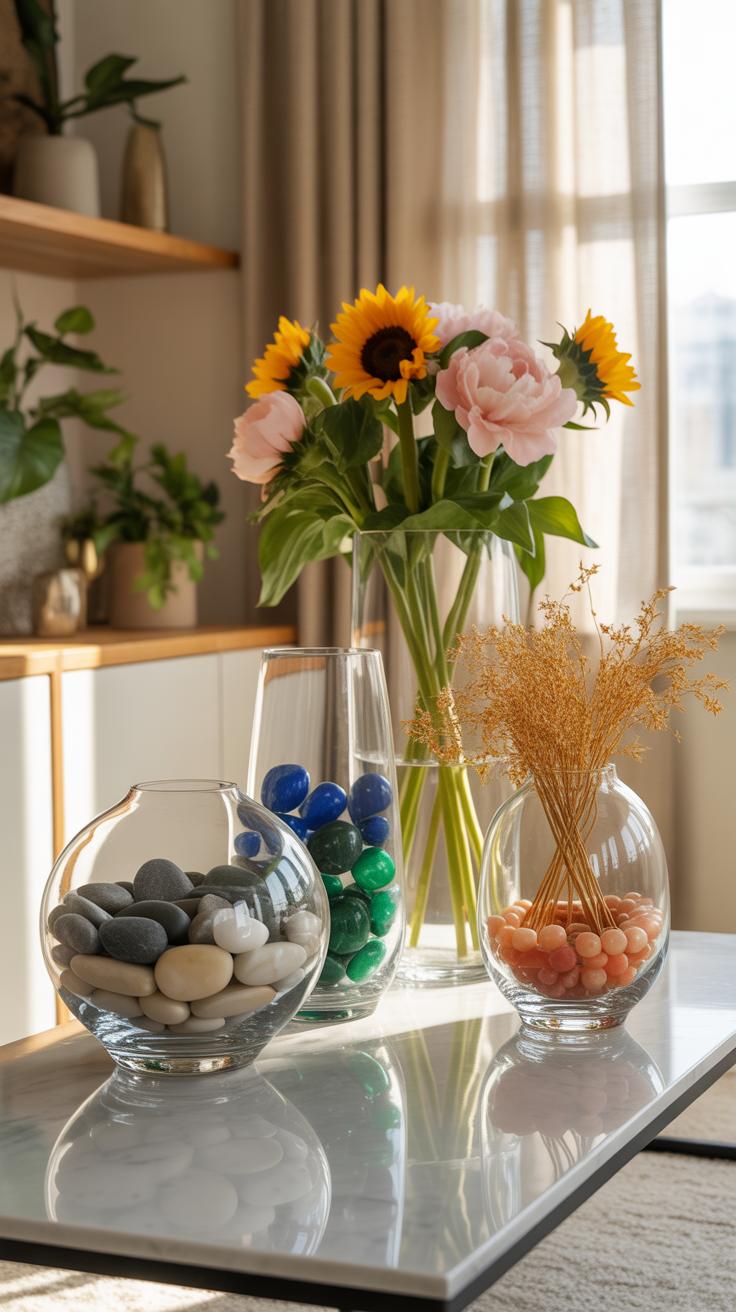
The Role Of Vase Fillers In Interior Styling
Vase fillers serve as structural and visual tools in professional interior design. They provide necessary weight to stabilize tall or top heavy vessels. This prevents damage to expensive furniture and glass containers. Fillers also obscure ugly floral stems or mechanics like floral foam and cages. Strategically choosing materials allows designers to bridge the gap between the vessel and the surrounding room architecture.
High end styling relies on fillers to establish texture and depth. Designers use these materials to move the eye across a room. A clear glass vase without a filler often looks empty and unfinished. Adding a material like polished river stones or architectural sand creates a solid base for the arrangement. This tactical choice defines the scale and presence of the decor piece within a lived environment.
How The Right Vase Filler Can Transform A Space
Selecting the correct filler material dictates the mood and historical context of a room. Natural elements like dried botanicals or weathered wood pieces align with Brutalist and organic modern styles. These materials soften hard lines in contemporary architecture. Conversely, glass beads or metallic spheres reflect light to brighten dark corners. This technique maximizes natural illumination in rooms with few windows or limited square footage.
Fillers change the perceived value of home accessories. Cheap mass produced glass looks like high quality crystal when filled with uniform architectural layers. Precise layering creates focal points that anchor large tables or mantels. Using different densities and colors allows for immediate seasonal updates without buying new furniture. This approach offers a cost effective way to maintain a modern and relevant aesthetic through simple material swaps.
Clear Vase Filler Ideas That Add Elegance To Any Room
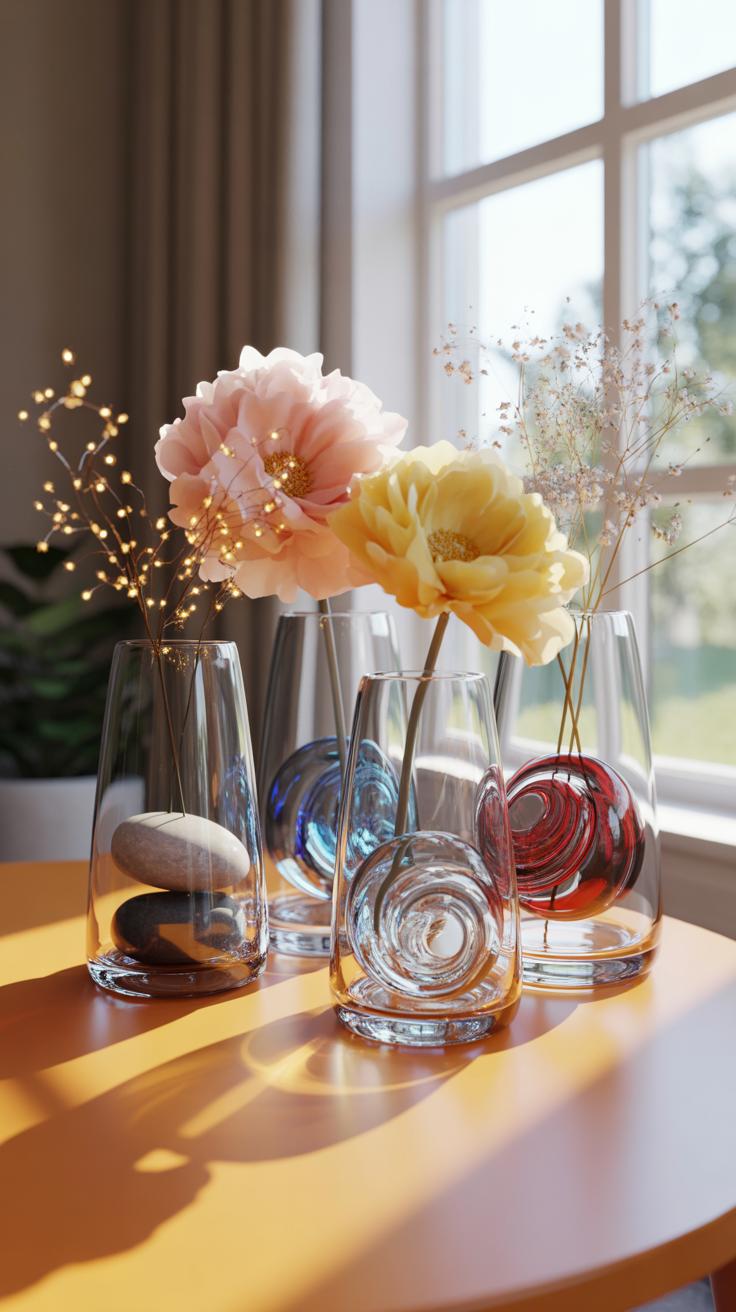
Why Clear Vases Work Best With Layered Natural Fillers
Clear glass provides total visibility and acts as a frame for the contents. This transparency allows you to display textures that opaque containers hide. Layering natural materials creates a structured foundation for floral stems. It secures the arrangement without using green floral foam. This technique dates back to early European flower arranging where rocks stabilized heavy branches. You maximize the visual impact by showing every detail.
Natural fillers like river stones or moss introduce organic shapes into a room. These materials contrast with the sharp lines of a modern glass cylinder. Layering different colors of sand or pebbles adds depth and architectural interest. This method works well in minimalist design because it utilizes raw materials. It eliminates the need for complex decor pieces. You achieve a high-end look using basic elements found in nature.
Best Materials To Use As Clear Vase Fillers For A Clean Modern Look
Modern design requires fillers that reflect light or maintain a neutral palette. Clear glass vessels often feature monochromatic elements to avoid visual clutter. Using glass beads or acrylic ice mimics the appearance of water while providing more stability. These materials support heavy stems and keep them perfectly upright. They work best in environments where clean lines and light-filled spaces are the primary design objectives.
- Polished River Stones: These stones offer a grounded and organic feel. Choose uniform gray or black pebbles to maintain a sophisticated color scheme. They provide weight to prevent tall vases from tipping over during use.
- Clear Acrylic Grains: This material looks like crushed ice or diamonds. It reflects light through the glass to brighten dark corners. Acrylic is lighter than glass beads and easier to clean for long-term displays.
- White Marble Chips: Sharp and jagged marble pieces create a bright white base. They provide a stark contrast against green stems or dark wood furniture. This look follows the principles of mid-century modern and minimalist aesthetics.
- Dried Decorative Sand: Fine sand allows for precise layering and keeps thin stems in place. Use high-contrast colors like white and slate gray for a geometric effect. It creates a stable base that does not shift easily over time.
- Recycled Glass Cullet: Tumbled glass provides a frosted and soft appearance. It hides the bottom of stems while still allowing light through. This material adds a sustainable element to home decor without sacrificing the high-end look of glass.

Select fillers that match the scale of the vase. Large smooth stones suit wide floor vases while fine beads work for thin bud vases. Keep the color palette limited to two tones for maximum impact. This approach ensures the filler complements the flowers rather than distracting from them. Proper material selection turns a standard glass container into a deliberate design choice. Clean the filler regularly to prevent dust buildup.
Ideas For Large Glass Vases That Make A Bold Statement
Choosing The Right Scale Of Filler For Large Glass Vases
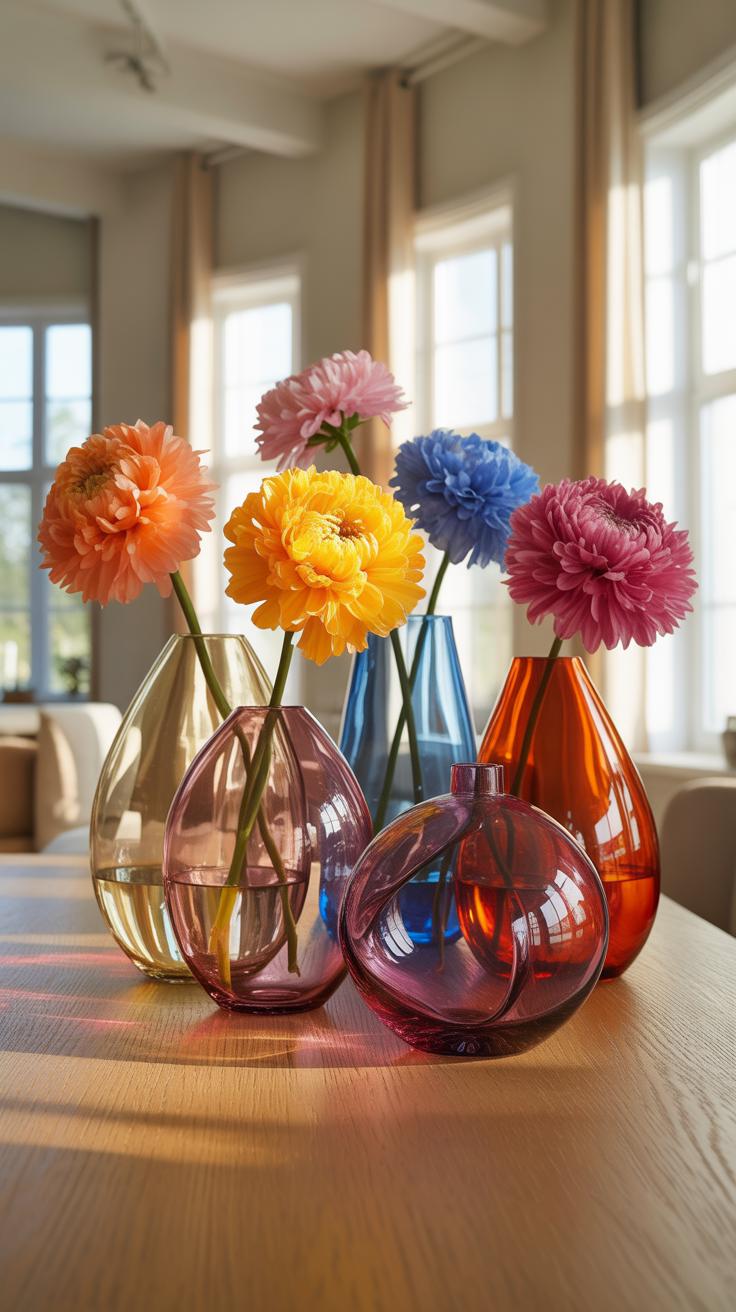
Large glass vases demand broad materials to maintain visual balance. Small fillers like sand or fine beads disappear in oversized vessels. Use items that occupy significant volume without adding excessive weight. Driftwood, large river stones, or hand-blown glass spheres work best. These choices prevent the base from looking cluttered. Proper scale ensures the filler supports the arrangement rather than distracting from it.
Weight distribution is a critical safety factor for floor vases. Heavy fillers like marble chunks stabilize tall glass units against tipping. However, filling a massive vase entirely with stone can crack the glass base. Use lightweight cores like floral foam or plastic inserts in the center. Surround these cores with your chosen decorative material. This tactic achieves a full look while keeping the total weight manageable and safe.
The details are not the details, they make the design. A simple vessel filled with memory and texture turns a house into a soulful sanctuary.
How To Layer Different Textures Inside A Large Glass Vase
Layering creates depth through contrast. Start with a fine-grained base like white sand or crushed quartz to provide a solid foundation. Place a coarser material like volcanic rock or smooth pebbles on top. This technique mimics natural sedimentary layers found in geological formations. The shift in grit size catches the light differently. Distinct boundaries between materials make the vase look intentional and professionally curated for the space.
Combine organic and inorganic textures to build complexity. Match smooth glass gems with rough architectural elements like birch bark or cork. Use dark materials at the bottom to ground the display visually. Transition to lighter or more translucent materials as you move upward. This vertical progression guides the eye and adds height. Ensure each layer is at least three inches thick. Visible layers under three inches often look messy or accidental.
Flower Vase Filler Ideas To Complement Fresh And Faux Arrangements
Natural Fillers That Support And Enhance Fresh Flower Displays
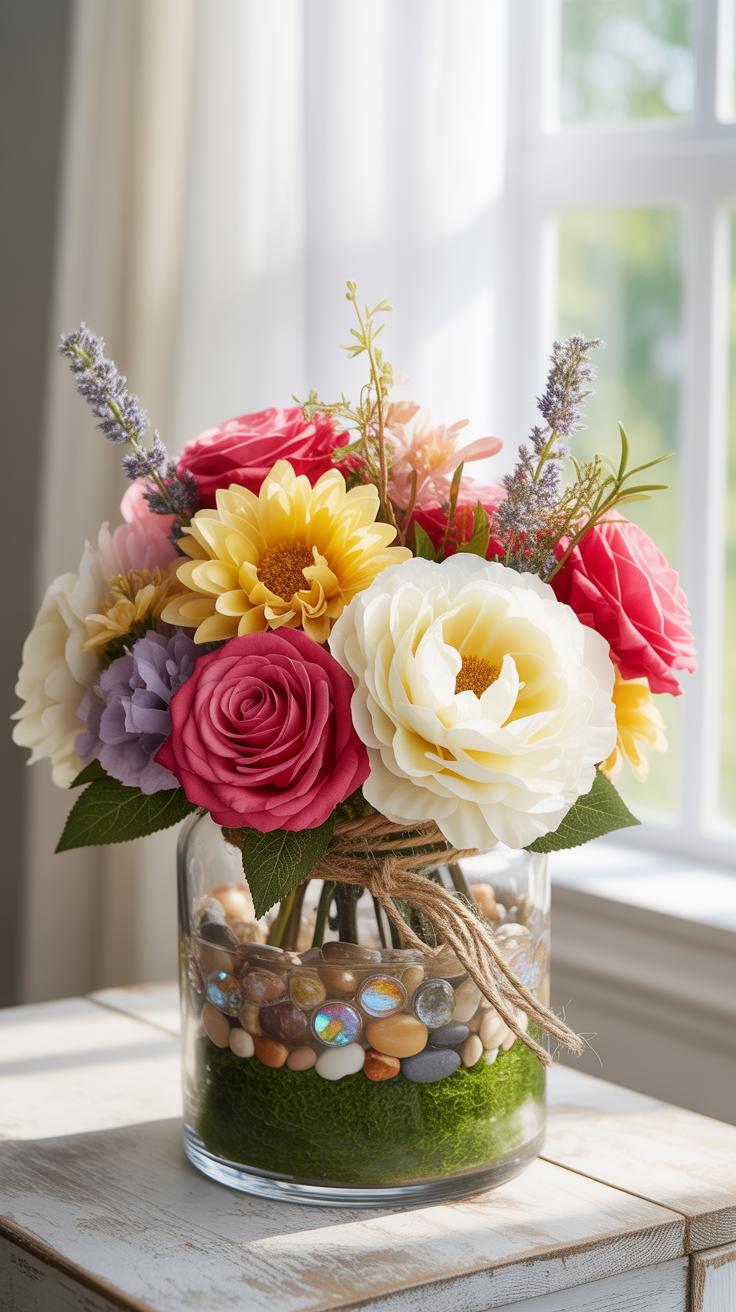
Fresh flowers require water and structural stability to maintain their shape. River rocks and smooth pebbles sink to the bottom of the vessel. This weight prevents top-heavy stems from tipping the vase. Use these materials to anchor the base while allowing water to circulate freely around the stems. This technique works best in clear glass where the stone texture is visible.
Fresh arrangements also benefit from organic fillers like citrus slices or cranberries. These items add color and interest to the water column. You must keep the water clean to prevent rot. Replace the water every two days when using organic material. This prevents bacterial growth that kills flowers. Proper placement ensures the stems stay hydrated while the fillers remain submerged for a clean look.
Creative Flower Vase Filler Ideas For Faux Floral Arrangements
Faux flowers do not need water, which expands your material choices. Use dry fillers like moss or sand to hide plastic stems. Dried moss provides a natural texture that mimics real soil. It fills the gaps between stems and holds them in place without glue. This keeps the arrangement stable and realistic. You can swap these materials easily when you change your decor.
Acrylic ice and glass beads offer a modern look for silk flowers. These materials catch the light and add weight to the arrangement. They simulate the appearance of water without the risk of leaks or mold. Layer different colors of sand or salt to create a custom base. This method allows for precise stem placement. It ensures your faux display looks professional and stays upright permanently.
Ideas For Glass Vases Using Everyday Household Items
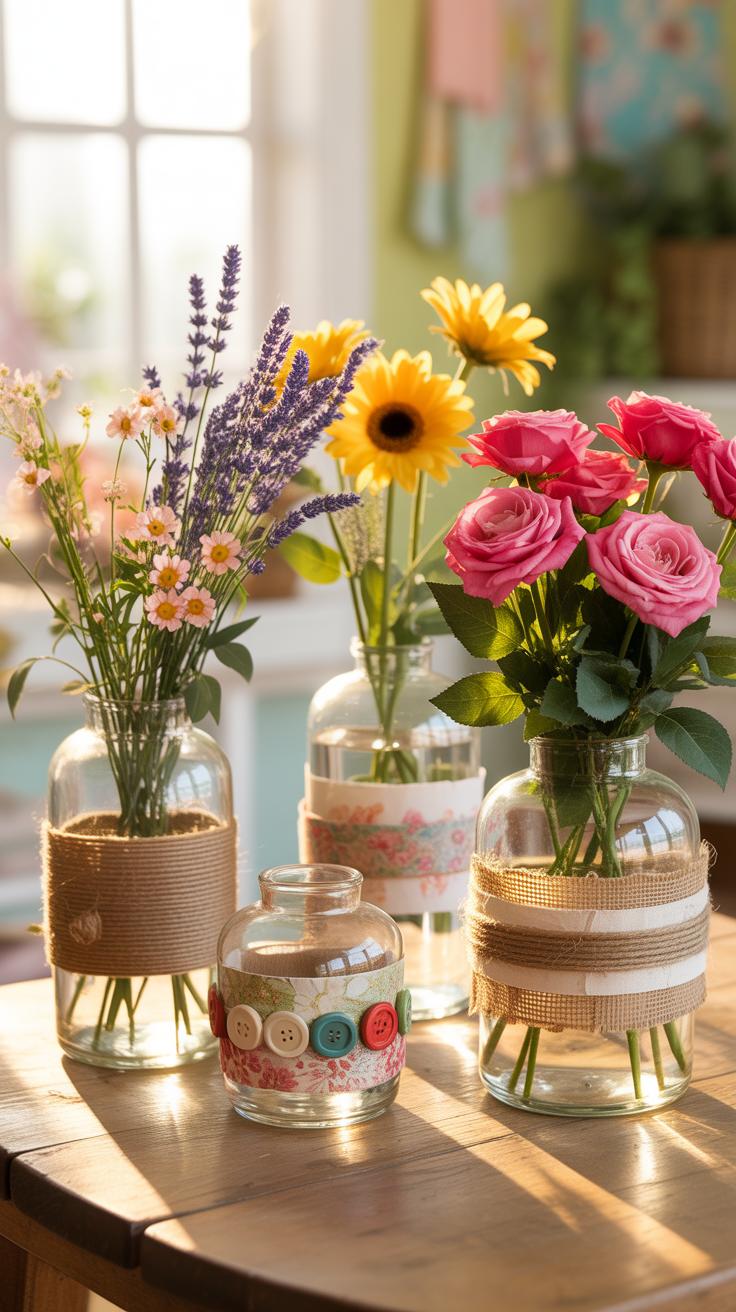
Budget Friendly Vase Fillers You Already Have At Home
Glass vases provide transparency that demands clean, structured fillers. Use common pantry staples like dried pasta or legumes to create visual weight. These items offer neutral tones that match minimalist and industrial design styles. Arrange different shapes like penne or bowtie pasta to mimic architectural textures. Ensure the items remain dry to prevent mold or swelling that could damage the glass interior.

Layering creates the best visual impact with household goods. Pour white rice at the base to stabilize stems and add a solid color foundation. Place darker lentils or coffee beans on top to build contrast. This method follows the design principle of grounding the arrangement with heavier textures. It eliminates the need for expensive decorative stones while maintaining a professional and intentional appearance in your home.
Seasonal Household Items That Work As Glass Vase Fillers Year Round
Strategic designers use inventory already present in the home to reflect changing light and color. Use clear glass marbles or smooth river stones gathered from outdoor landscaping to fill vessels. These materials reflect the Modernist focus on raw, honest elements. They provide excellent drainage for live plants and offer a steady base for heavy branches. Keep these items clean to maintain the clarity of the glass.
Utilize natural organic material like citrus fruits or unshelled nuts to fill large floor vases. These items reference the Dutch Golden Age of still life where abundance and texture served as primary decor. Whole walnuts or pecans provide a rustic feel that fits traditional aesthetics. Replace organic fillers every few weeks to avoid decay. This tactical approach keeps the decor fresh without requiring constant trips to specialty retail stores.
Sand And Shells In A Jar Ideas For A Coastal Inspired Look
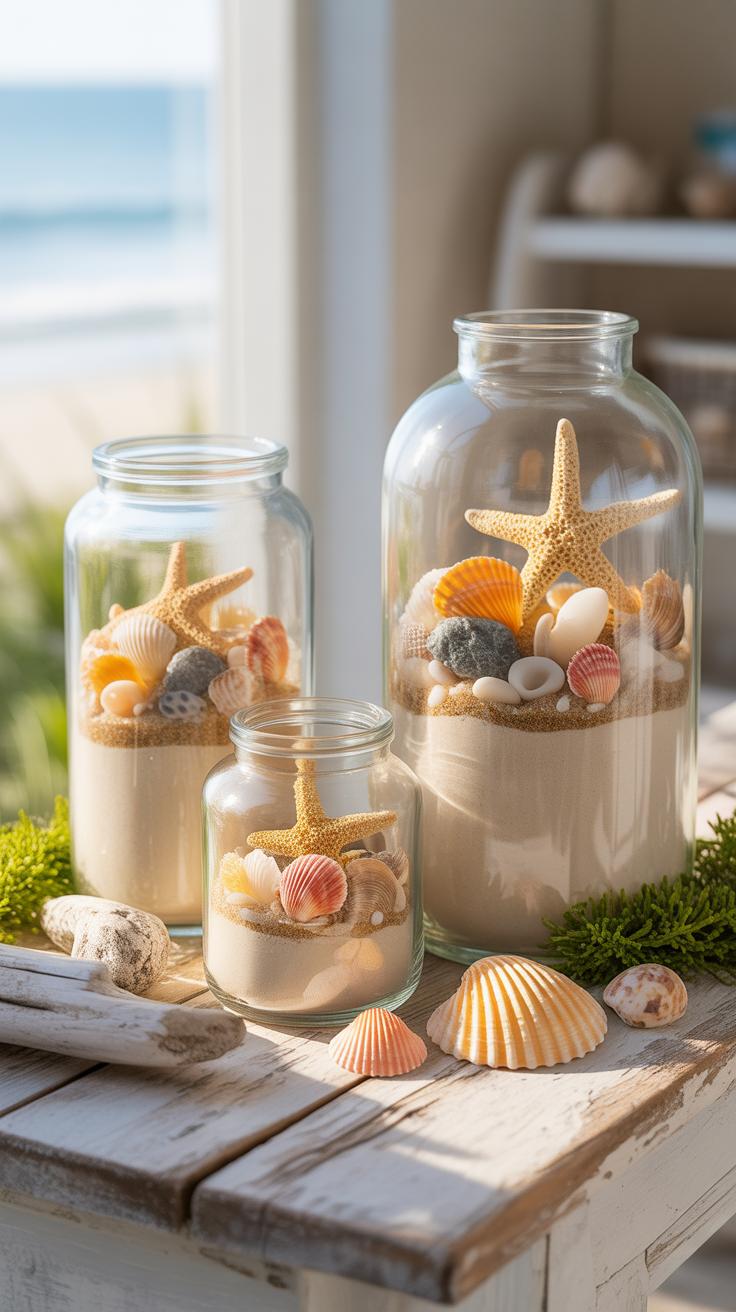
How To Style Sand And Shells In A Jar For A Beach Aesthetic
Layering creates the best visual impact for coastal displays. Start with a base of fine sand to provide stability. This layer should occupy the bottom third of the jar. Position larger shells against the glass so they remain visible. Avoid mixing the elements too much. Distinct layers mimic the natural shoreline and keep the design looking clean and professional.
Place the jar where light hits the glass to highlight natural textures. Use clear jars with wide mouths for better visibility. Do not overfill the container or the shells will look cluttered. Focus on a focal point shell like a murex or scallop. Keep the arrangement simple to match modern minimalist trends. A focused design looks more expensive than a jar packed with debris.
Sourcing And Preparing Natural Shells And Sand For Display Jars
Acquire sand and shells from reputable suppliers to ensure cleanliness. Natural beach finds often carry salt and microorganisms. These can cause odors or cloud the glass over time. If you collect items yourself, boil them in fresh water for ten minutes. This kills bacteria and removes salt deposits. Scrub the shells with a stiff brush to remove any lingering organic matter or grit.
Dry all materials completely before placing them in a sealed jar. Trapped moisture leads to mold growth and fogged glass. Spread sand on a baking sheet and heat it in a low oven to remove moisture. Use a soft cloth to buff shells for a subtle sheen. Proper preparation ensures your display remains clear and odor-free for years. Hard work during cleaning prevents maintenance issues later.
Rocks In Vase Decor For A Natural Earthy Home Aesthetic
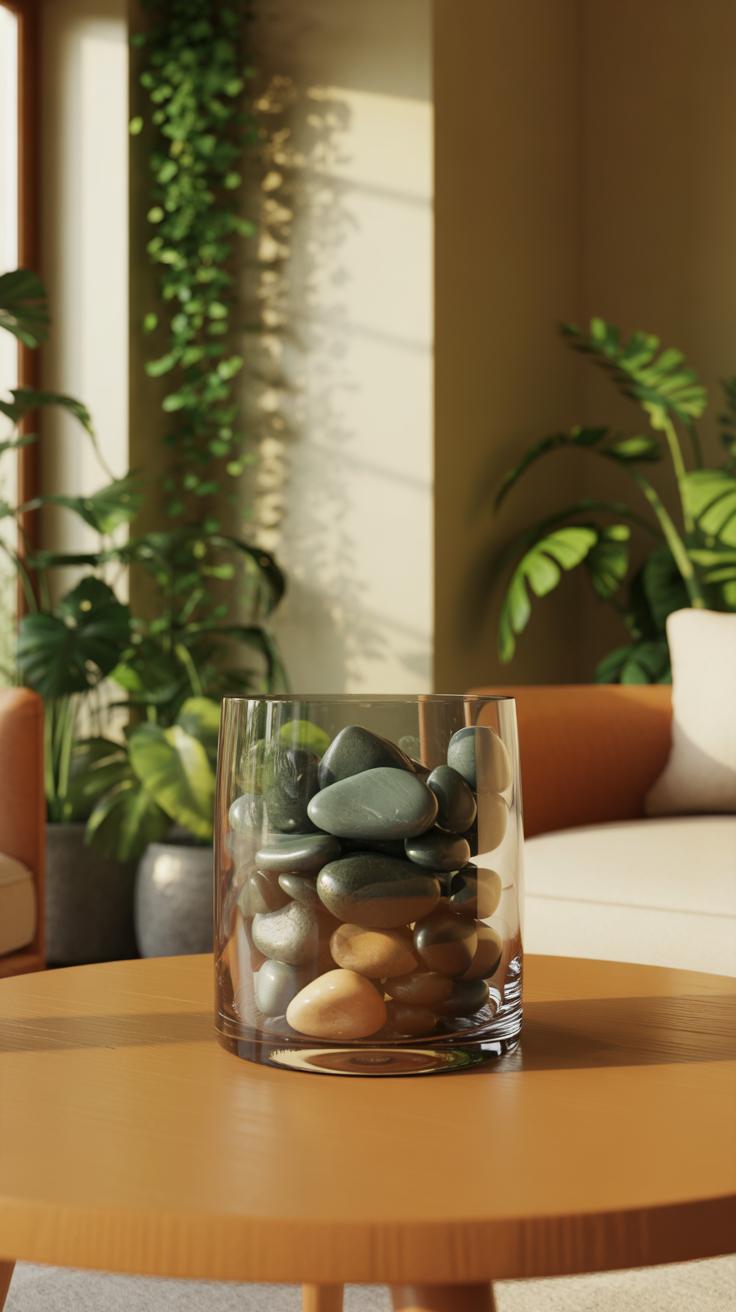
Types Of Rocks And Stones That Work Best In Vase DéCor
Stone selection dictates the architectural weight of your display. Natural textures provide a grounded contrast to glass and water. You must select stones based on porousness and mineral composition to avoid water clouding or chemical reactions with live stems. Polished stones offer a modern finish while raw, matte rocks suit rustic or wabi-sabi design schemes. Use specific stones to achieve color consistency.
- River Rocks: These smooth, water-worn stones feature rounded edges and muted organic tones. They provide a stable base for heavy branches and thick stems. Use them in clear glass cylinders for a classic minimalist look that emphasizes raw nature and durability.
- Lava Rocks: These porous volcanic rocks add deep texture and high contrast to neutral spaces. Their lightweight nature makes them ideal for large floor vases that require volume without excessive weight. They work well in dry arrangements or as drainage layers for succulents.
- Pea Gravel: Small and uniform, this material fills gaps between larger elements effectively. It provides excellent anchoring for thin-stemmed flowers or synthetic grasses. The consistent size creates a clean, organized appearance that mimics modern landscape design inside the home.
- Marble Chips: These sharp, angular white stones reflect light and brighten dark corners. They represent a more formal aesthetic compared to river stones. Use these to create a sterile, high-end look in bathrooms or modern entryways where cleanliness is the primary visual goal.
- Polished Pebbles: Coated stones offer a glossy finish that maintains a wet look even when dry. This finish enhances color saturation and prevents the dusty appearance common with raw materials. They are the best choice for high-traffic areas where you want a permanent, high-shine aesthetic.
Porous rocks like sandstone absorb water and can harbor bacteria if not cleaned. Non-porous options like quartz or granite remain sterile and are easier to maintain in aquatic environments. Always rinse stones before use to remove silt and debris. This step keeps the water clear and prevents sediment buildup at the bottom of the vessel. Proper stone choice ensures long-term visual clarity.
How To Arrange Rocks In A Vase For Maximum Visual Impact
Strategic layering creates depth and structural integrity. Start by placing the largest stones at the base to establish a firm foundation. This prevents the vase from becoming top-heavy and tipping over. Tilt the vase slightly while adding stones to prevent the glass from cracking under the weight. Build upward with smaller stones to lock the larger pieces into their final positions.
Vary the colors and sizes to mimic natural geological formations. Grouping similar tones together creates a sophisticated monochromatic look. For a more dynamic display, use the rule of thirds by placing the most interesting rocks at one-third of the total height. Ensure the rocks do not compress the flower stems too tightly. This allows for proper water flow and oxygen exchange in your floral arrangements.
Unique Vase Fillers That Go Beyond The Ordinary
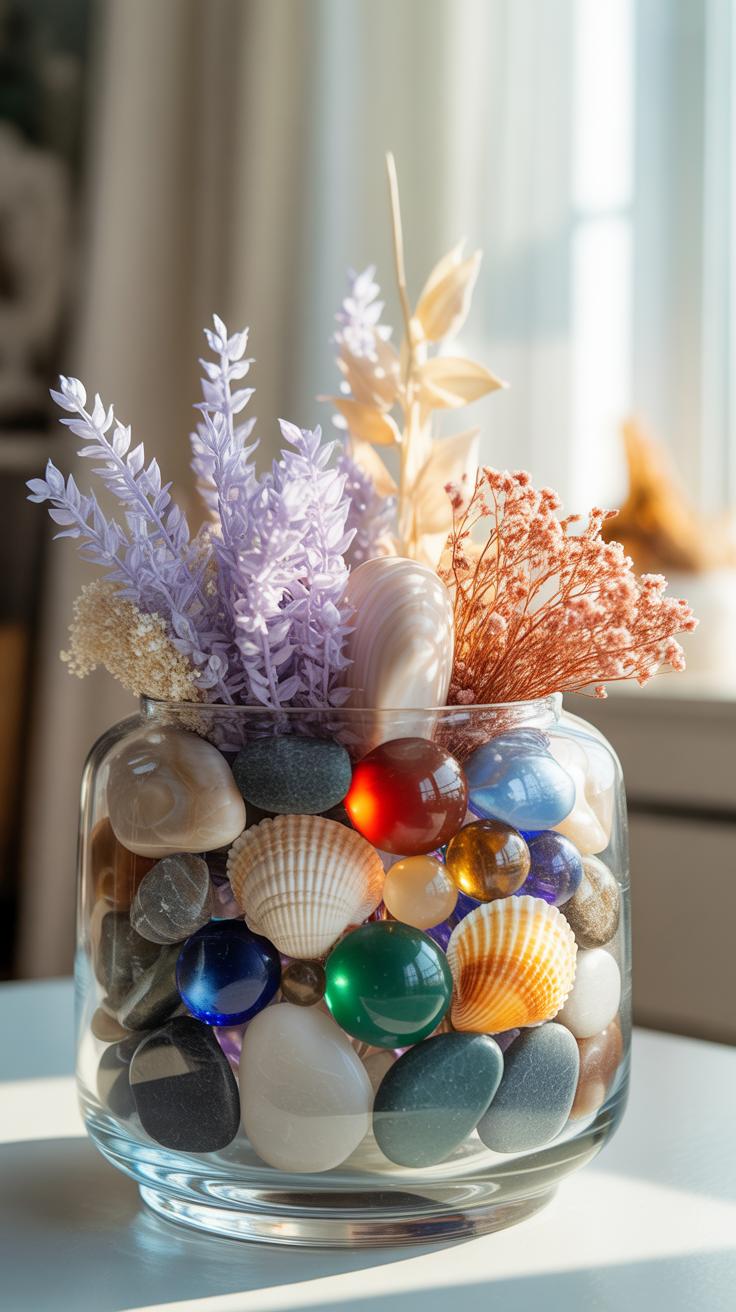
Unexpected Materials That Make Stunning And Unique Vase Fillers
Industrial materials offer a raw edge to home decor. Use copper hardware, steel ball bearings, or glass cullet to create visual weight. These items provide texture and reflect light in ways organic materials cannot. Mechanics and construction supply stores sell these items in bulk. They work best in clear glass vessels where the geometric shapes stay visible to the viewer.
Raw minerals and geological specimens serve as excellent high-end fillers. Use tumbled semi-precious stones like obsidian, jasper, or pyrite. These materials have historical ties to luxury decor and vary in color and density. Heavy stones stabilize tall vases against tipping. Ensure you wash all minerals before placement to remove dust. Natural variations in stone ensure that no two vase displays look exactly alike.
How To Match Unique Vase Fillers To Your Interior Design Style
Match filler materials to the specific eras of your furniture. Use smooth geometric shapes for Mid-Century Modern spaces. Polished river stones or wooden spheres suit this style well. Industrial lofts require harder textures like rusted iron bolts or recycled concrete fragments. These choices reinforce the architectural bones of the room. Always coordinate the material color with your existing hardware finishes for a cohesive look.
Minimalist designs work best with monochromatic fillers. Use white calcite or black lava rock to maintain a clean aesthetic. Traditional or maximalist rooms allow for more complex textures like vintage marbles or antique coins. These items add historical context and act as conversation pieces. Choose fillers that complement the scale of the room. Large rooms need bold materials, while small offices require finer, detailed textures.
Ideas For Filling Glass Jars To Decorate Every Corner Of Your Home
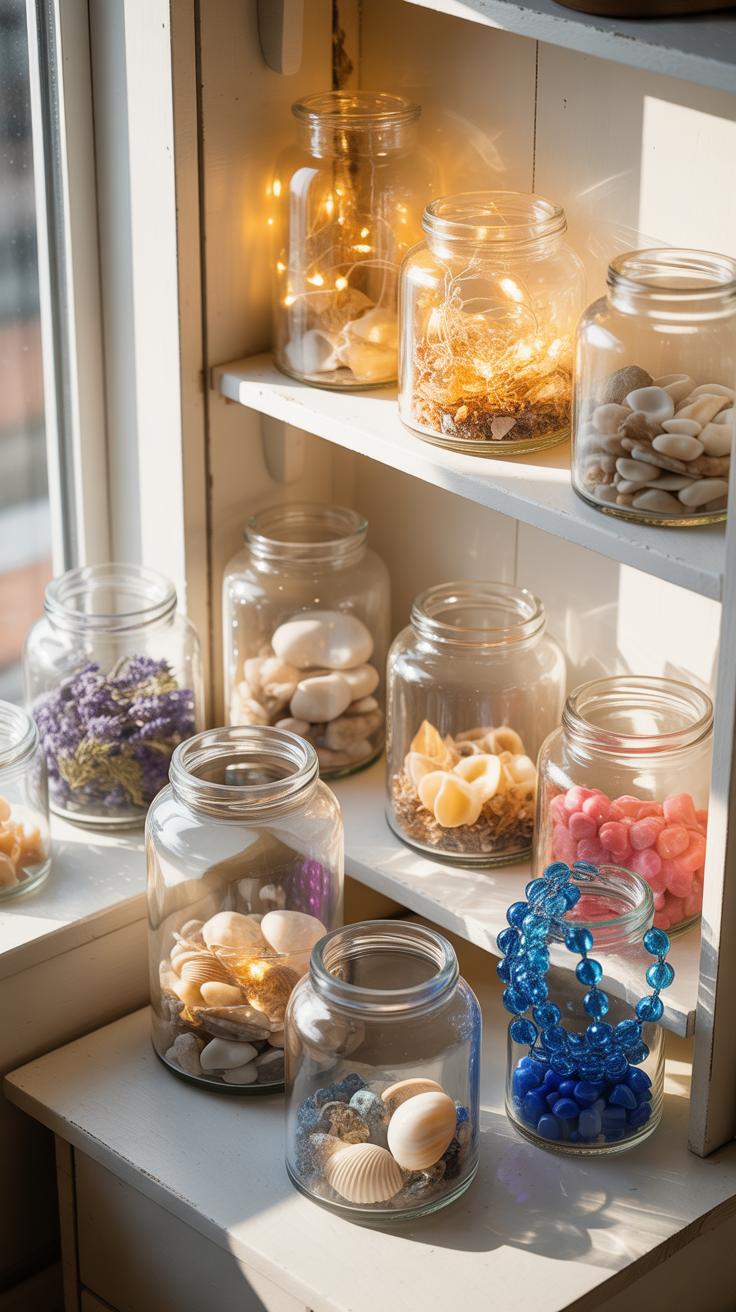
Room By Room Guide To Filling Glass Jars With Decorative Materials
Strategic placement of glass jar fillers depends on the specific function of the room. In high-moisture areas like bathrooms, use non-porous materials. Polished river stones or sea glass resist mold and offer a clean look. These materials draw from mid-century modern aesthetics where natural textures meet industrial glass. Select fillers that stabilize the jar while providing a visual anchor for the surrounding vanity space.
In the kitchen, prioritize utility and safety. Use dry goods like lentils, coffee beans, or peppercorns. This technique mirrors the early twentieth-century practice of displaying bulk pantry staples. It shows off the organic geometry of the food items. For living rooms, switch to textile-based fillers or wooden beads. These soften the acoustics of the space. Large floor jars require heavy bases like sand to prevent tipping.
How To Switch Up Glass Jar Fillers With The Changing Seasons
Seasonal rotation keeps your interior design relevant without requiring new furniture. In spring, utilize light-reflecting materials such as clear acrylic ice or pastel-colored sea glass. These choices maximize the increase in natural light. For summer, shift to coastal elements like shells or sand. This reflects the breezy, open-air style seen in traditional Cape Cod designs. Keep these materials dry to prevent any glass fogging or streaks.
Autumn demands a shift toward earthy tones and organic textures. Use dried acorns, pinecones, or preserved moss to ground the room. These materials reference the Arts and Crafts movement’s focus on nature. During winter, choose high-contrast fillers like white birch twigs or metallic ornaments. The goal is to create visual warmth through layering. Always clean the glass jar thoroughly between transitions to remove dust or organic residue.
Frequently Asked Questions

What are some simple vase filler ideas for beginners?
If you are just starting out, the best vase filler ideas involve using items with varied textures to create visual interest. Natural elements like smooth river stones, dried eucalyptus, or simple glass beads are excellent choices because they complement almost any decor style. These versatile materials are easy to arrange and provide a polished, intentional look to your glass vessels without requiring any advanced styling skills or expensive floral arrangements.
How do I layer different materials to create a professional look?
To achieve a designer aesthetic, start by choosing materials with contrasting colors or sizes. Pour your heaviest base layer first, such as decorative sand or fine gravel, then add a middle layer of sea glass or small pebbles. Finishing with organic elements like moss balls or faux citrus fruits creates a dynamic display. Using these layered vase filler ideas ensures your arrangement looks curated, textural, and perfectly balanced within your living space.
Can I create stylish vase displays using items found around my home?
Absolutely! You don’t need to spend a fortune to achieve a high-end look. Look through your pantry for budget-friendly options like dried coffee beans, colorful lentils, or unshelled walnuts. Even seasonal items from your backyard, such as pinecones, acorns, or interesting twigs, work beautifully. These accessible materials offer a rustic charm and prove that the most creative decorating solutions are often hiding right inside your own cupboards or garden.