What Are Greenery Garland Centerpieces And Why Are They Trending
The Rise Of Natural Botanical Decor In Modern Interior Styling
Modern interior design now prioritizes organic materials over synthetic decorations. This shift stems from the Biophilic Design movement. This movement integrates nature into built environments to improve occupant health. Designers use greenery to soften the hard lines of contemporary furniture. Natural elements provide a visual break from digital screens. Greenery serves as a permanent architectural feature rather than a temporary addition.
The trend grew as homeowners adopted minimalist aesthetics. People want decor that looks high end but remains functional. Greenery garlands fit this need perfectly. They replace bulky plastic ornaments with versatile plant life. Current styling uses these garlands to create a focal point on long tables. This approach mimics the look of high end estate weddings. It brings a sense of luxury into daily living spaces.
Key Characteristics That Define A Greenery Garland Centerpiece
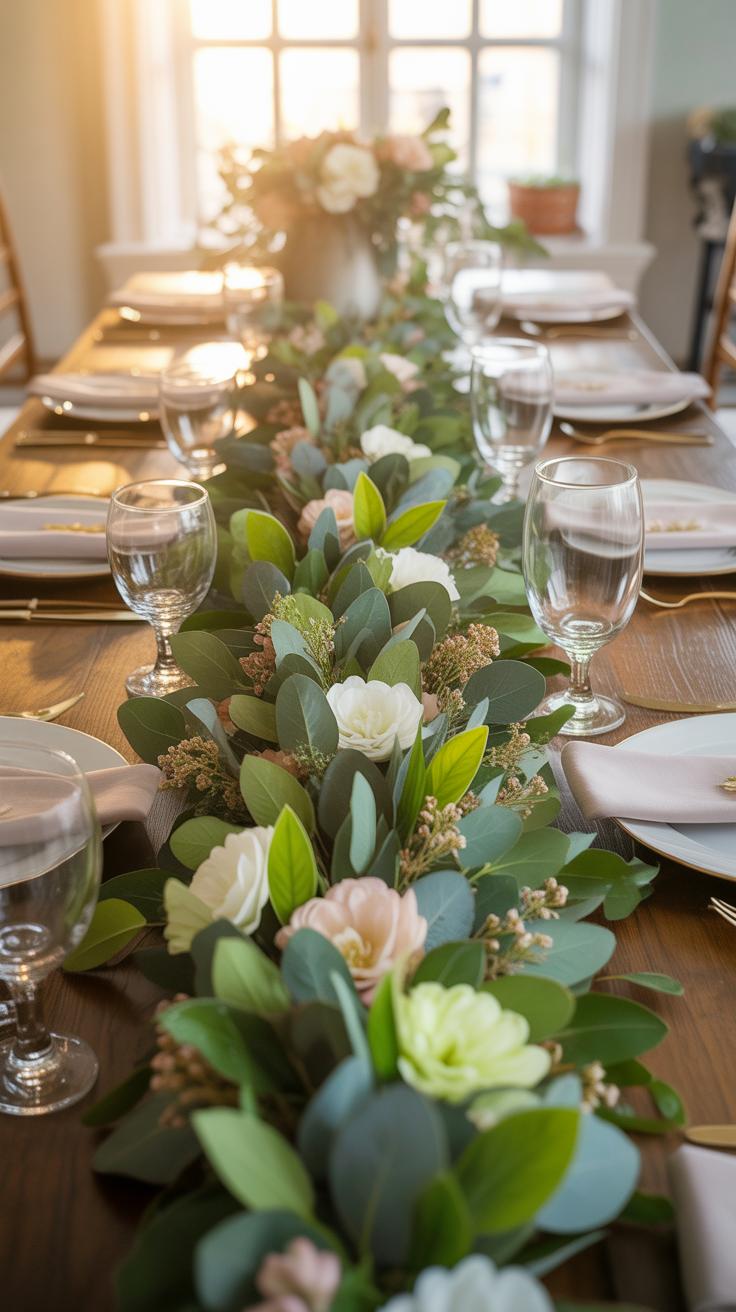
A greenery garland centerpiece is a linear arrangement of foliage. It differs from a standard floral bouquet because it lacks a central vase. Most designs use a flexible wire or twine base. This allows the user to drape the greenery across different surfaces. It maintains a low profile to facilitate eye contact across a table. These pieces often feature specific species like Eucalyptus or Ruscus.
Standard garlands use layering techniques to create visual depth. Practical designs use resilient foliage that resists wilting without a constant water source. High quality garlands often mix different textures to mimic wild growth. Makers secure the stems using floral tape or wire every few inches. This construction ensures the centerpiece maintains its shape during transport or use. It offers a structured yet organic look for any event.

Best Types Of Foliage To Use For Greenery Garland Centerpieces
Popular Green Foliage Wedding Varieties That Work Beautifully Indoors
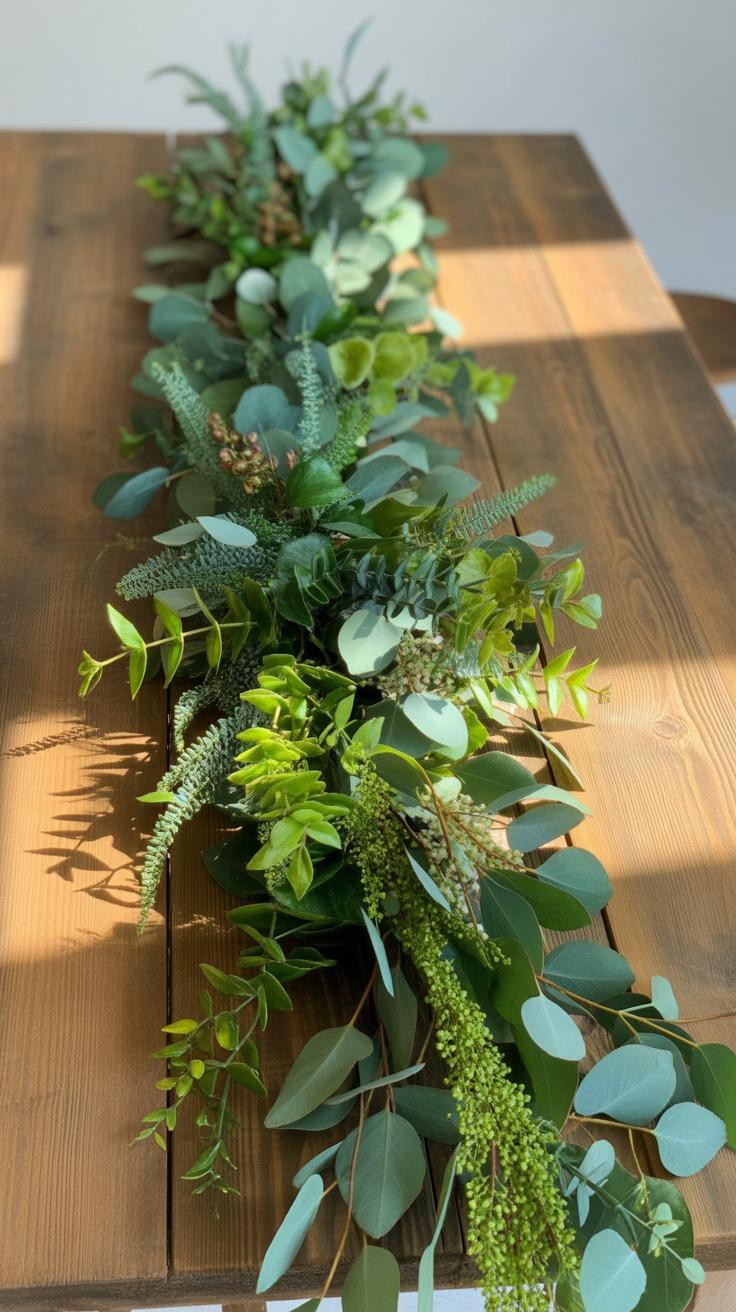
Eucalyptus is the industry standard for indoor event decor. Silver Dollar and Seeded varieties dominate because they resist wilting for long periods without water. The waxy coating on their leaves prevents moisture loss in climate-controlled rooms. These plants originated in Australia and became staple design elements due to their neutral blue-green color. They provide a sturdy base for any long table runner.
Ruscus is another essential choice for high-performance displays. Italian Ruscus offers a trailing vine look that drapes easily over table edges. Israeli Ruscus provides a stiffer structure with deep green oval leaves. Both varieties are incredibly durable and stay fresh for days after cutting. Professional decorators use these because they rarely drop needles or leaves. They handle heat and low humidity better than most soft ferns.
Mixing Textures And Leaf Shapes To Create Visual Depth In Your Garland
Effective design requires a mix of leaf scales to prevent a flat appearance. Combine large-leaf foliage like Magnolia with fine-textured stems like Asparagus Fern. The contrast in surface area creates natural shadows. This technique mimics the stratified layers found in natural forest floors. Using different shades of green also helps define the shape. Light green tips draw the eye toward the ends of the table.

Layering different shapes prevents the centerpiece from looking like a solid green mass. Mix round leaves with pointed or needle-like foliage to break the visual line. Use woody branches to provide a structural skeleton for the softer greens. This method ensures the garland maintains its height and does not collapse under its own weight. Professional florists use this layering tactic to hide floral wire and water tubes.
How To Style Greenery Garland Centerpieces For Wedding Table Decorations Greenery
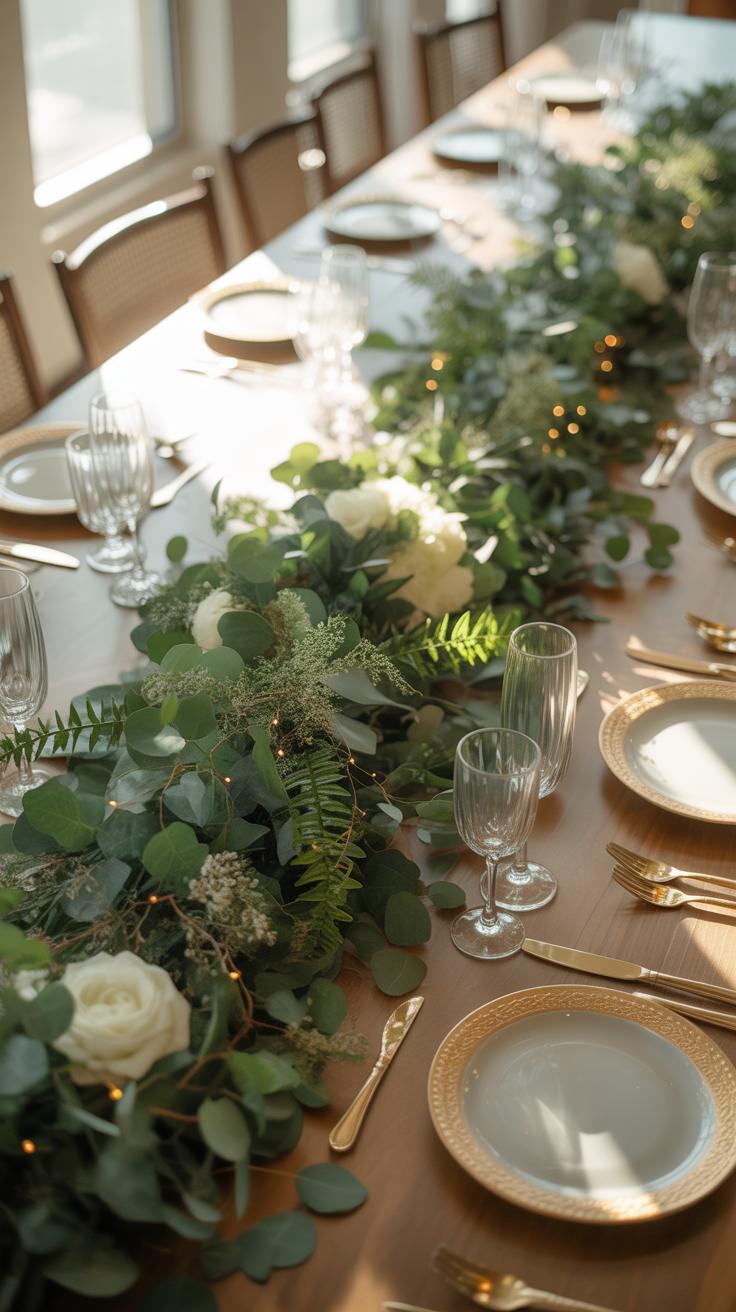
Laying A Wedding Table Greenery Runner As The Foundation Of Your Tablescape
Establish a clean baseline by clearing the table surface before placement. Lay the main greenery strand along the center axis of the table. Ensure the foliage drapes over the edges by at least six inches for a professional look. Overlap multiple garlands to hide the structural wire spines. Use zip ties or floral wire to join separate pieces into one continuous unit.
Strategic placement requires bulk at the center and thinning at the ends. Use flat-leaf eucalyptus or salal as a base layer for maximum coverage. These varieties provide a dense mat that hides the table surface effectively. Position the leaves to face outward away from the center spine. This technique creates a natural growth pattern. Check sightlines to ensure the height does not block guest views.
Bringing nature indoors is the finest way to weave life and memory into the heart of your house. A simple trail of greenery turns a table into a sanctuary where every meal feels like a homecoming.
Pairing Candles, Florals, And Vessels With Greenery On Wedding Tables
Integrate secondary elements by nestling them directly into the foliage gaps. Use glass hurricanes or metal pillars to prevent fire hazards near dry leaves. Place taller candles in the center and shorter votives toward the ends. This creates a rhythmic visual flow across the tablescape. Ensure all vessels sit on flat surfaces to avoid tipping. Stability is the priority when adding weight to your greenery.

Add floral accents by inserting individual stems into water picks before hiding them in the garland. This keeps the flowers fresh throughout the event duration. Match the flower colors to the wedding palette for a cohesive design. Use varying textures like waxflower or spray roses to add depth. Space these accents evenly to maintain balance. Constant repetition of elements ensures the long runner looks like a single intentional piece.
Inside Wedding Decor Ideas That Feature Lush Greenery Garland Centerpieces
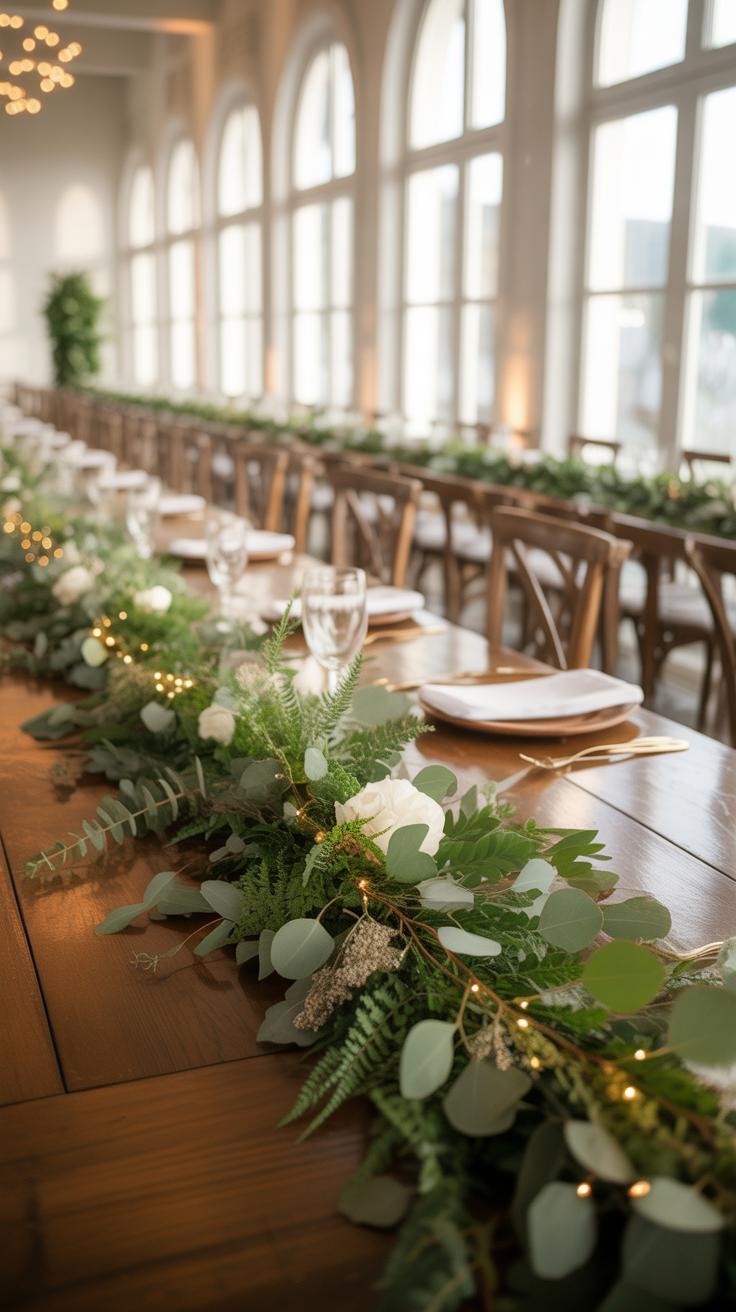
Draping Garlands From Ceilings And Chandeliers For A Grand Indoor Effect
Suspend greenery to use vertical space in high-ceiling venues. Heavy garlands require reinforced wire or zip ties to stay secure. Attach strands to existing light fixtures or support beams. Choose hardy species like Italian Ruscus or seeded Eucalyptus. These plants survive hours without water. Proper tension prevents sagging. Secure the ends tightly to maintain a clean line above guest tables and walkways.
Overhead installations draw the eye upward and expand the room. Use thin floral wire to wrap greenery around chandelier frames. Ensure no leaves touch hot light bulbs to prevent fire hazards. Balance the weight evenly so the fixture does not tilt. This technique creates a living canopy effect. It saves table space for place settings. Modern planners use this method to replace expensive floral chandeliers.
Framing Arches, Mantels, And Backdrops With Cascading Greenery Arrangements
Place greenery on mantels to Create a focal point in the room. Lay the thickest part of the garland in the center. Let the ends hang down the sides of the fireplace. Use Command hooks or floral putty to hold the vines in place. Mix textures like Silver Dollar Eucalyptus and flat-leaf ferns. This adds depth without bulk. Keep the arrangement away from open flames.

Frame wedding arches by wrapping greenery around the structural posts. Start from the top and work downward. This ensures the most lush parts remain at eye level. Use water tubes on the stem ends of sensitive foliage. This keeps the leaves crisp throughout the event. Fasten the garland every twelve inches with green wire. Stable mounting prevents the decor from shifting during the wedding ceremony.
Greenery Table Decor Arrangements That Suit Every Budget And Skill Level
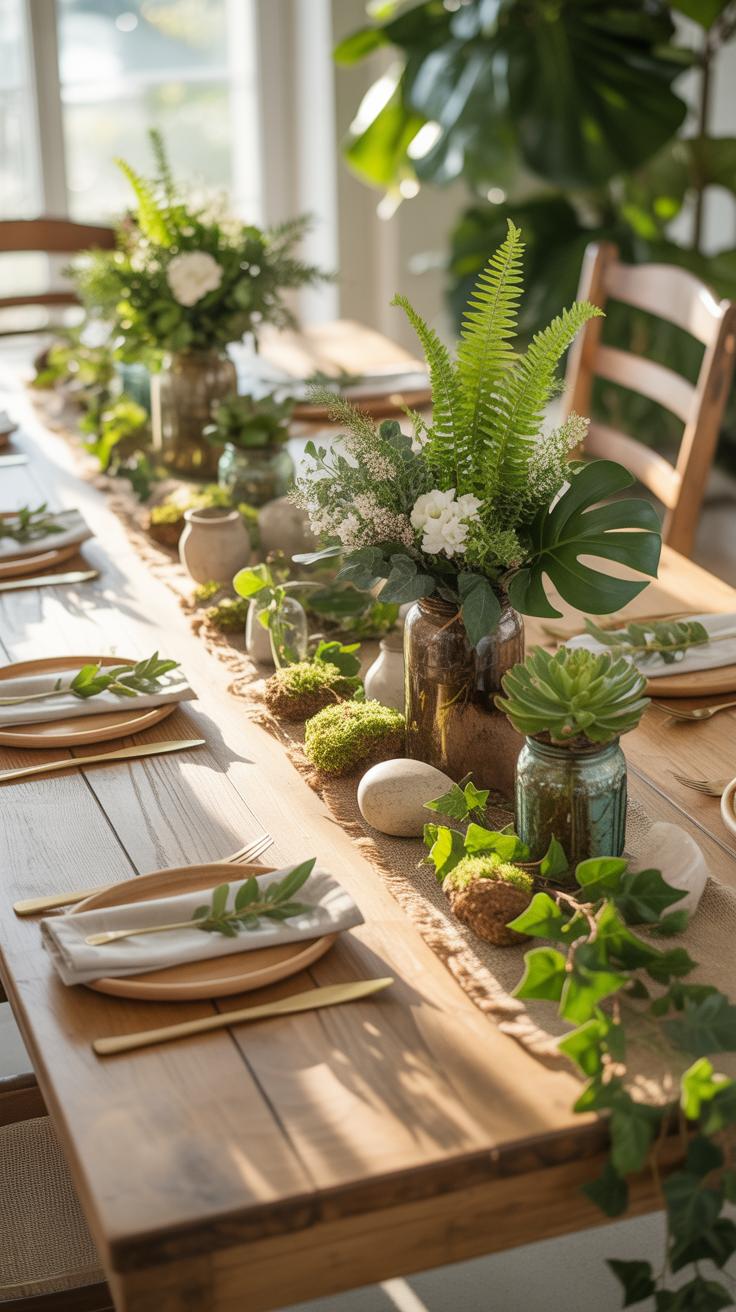
Essential Materials And Tools Needed To Build A Garland Centerpiece At Home
Building a professional grade centerpiece requires specific mechanical tools to ensure stability and longevity. You must select a base that supports the weight of your chosen foliage. Foraged or store bought greenery needs hydration or structural reinforcement to maintain its shape throughout an event. Using the wrong cutters will crush stems and prevent water uptake. Proper preparation prevents the garland from wilting or shifting during your dinner.
- Floral Shears: High quality shears provide clean cuts that do not crush the vascular system of the plant. This allows the greenery to absorb moisture more efficiently. Standard kitchen scissors are insufficient for thick woody stems commonly found in eucalyptus or ruscus garlands.
- Paddle Wire: This flexible 22 or 24 gauge wire secures individual stems to a central rope or vine base. It provides the tension necessary to keep the arrangement tight and prevents pieces from falling out. Choose green coated wire to hide the mechanics within the leaves.
- Floral Tape: Waterproof floral tape secures foam or water tubes to the table or base structure. It stretches and sticks to itself when pulled. This tool is essential for adding fresh floral accents into a dry greenery base without ruining the table surface.
- Water Tubes: These small plastic vials provide a dedicated water source for delicate foliage or flowers. You tuck them into the body of the garland. They allow you to use thirsty plants that would otherwise wilt within hours if left out of water.
- Twine or Rope: A sturdy natural jute or hemp rope serves as the spine for long table runners. It dictates the length and flexibility of the final piece. You wire the greenery directly onto this cord to create a cohesive and moveable strand of decor.
Organize your workspace before you begin assembly to maximize efficiency. Lay out all stems by size and type to allow for quick grabbing during the wiring process. Keep a spray bottle nearby to mist the foliage as you work. This simple step maintains cellular pressure in the leaves. Finished garlands should stay in a cool dark place until the event starts to preserve their visual impact.
How To Arrange Greenery Table Decor For A Polished, Professional Look
Professional decorators use the layering technique to create depth and eliminate flat spots in a centerpiece. Start with a foundational layer of hardy greens like lemon leaf or parvifolia eucalyptus. These provide the necessary bulk and hide the underlying wires or rope spine. You must overlap each bunch by at least three inches. This coverage ensures no gaps appear when the garland curves around table settings.

Vary the texture and height of your greenery to attract the eye. Incorporate secondary foliage with different leaf shapes or silvery tones to break up solid blocks of green. Place the largest leaves at the base and taper the ends for a natural growth appearance. Use floristry pins to secure the arrangement directly to the table runner. This prevents the decor from rolling or sliding when guests move their plates.
Sage Green And Brown Wedding Decor With Garland Centerpiece Styling
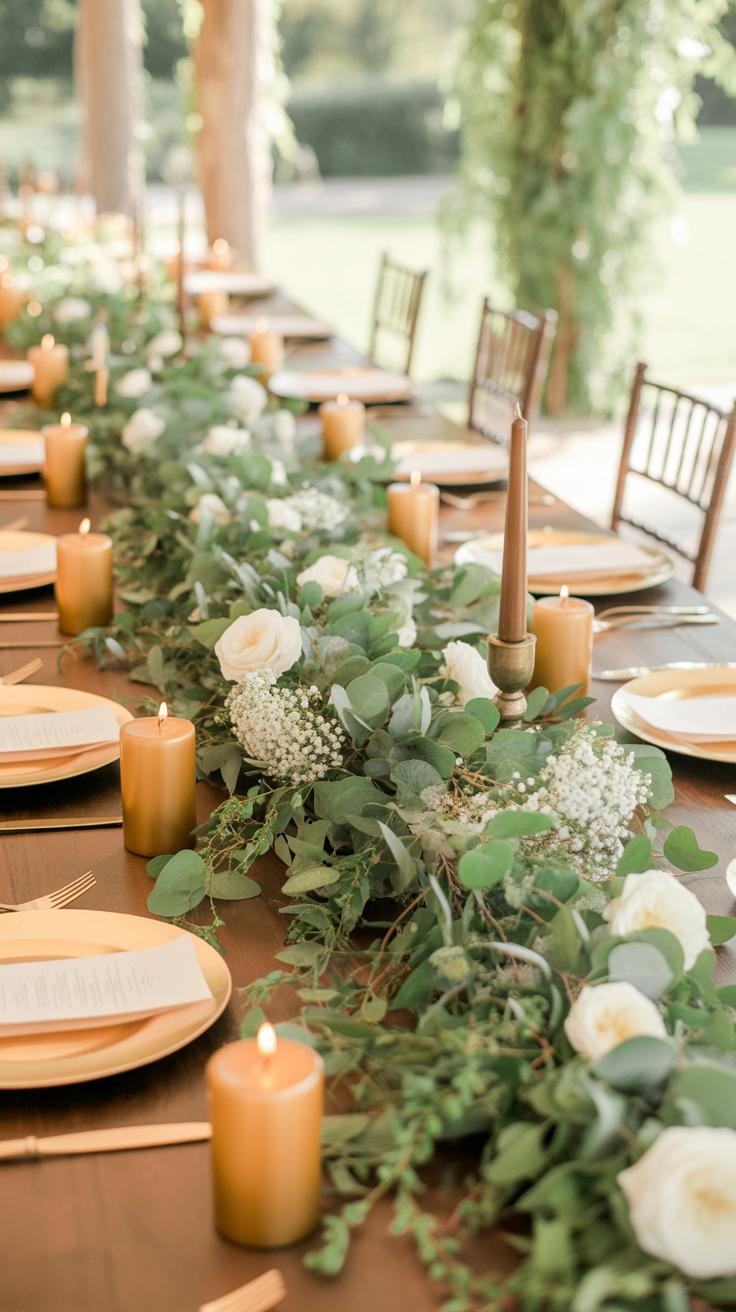
Why Sage Green And Brown Wedding Decor Creates A Warm, Earthy Atmosphere
Sage green and brown rely on low-chroma values to create visual stability. This color pairing mimics natural forest floors and Mediterranean landscapes. It works because it avoids the high-contrast harshness of white and black. The muted green acts as a neutral base. Brown provides a grounding weight that anchors the table. This combination creates a calm environment that encourages long conversations at dinner.
Psychologically, these tones signal safety and organic origin. Modern organic design uses these colors to bridge the gap between indoor and outdoor spaces. The brown tones often come from natural wood or dried materials. These elements add tactile depth to the visual experience. You achieve a warm atmosphere by balancing the coolness of sage with the warmth of timber. This prevents the room from feeling clinical or cold.
Combining Dried Elements, Neutral Tones, And Greenery For A Cohesive Palette
Tactical styling requires layering different textures to prevent a flat appearance. Start with a fresh greenery garland like eucalyptus or bay leaf for the base. Integrate dried elements like pampas grass, bleached fern, or lotus pods. These dried components introduce brown shades without using artificial dyes. The contrast between waxy live leaves and brittle dried stems creates structural interest. Use terracotta or wooden vessels to reinforce the palette.

Neutral tones like cream or beige act as a bridge between the green and brown. Use these for linens or candles to prevent the table from looking too dark. A cohesive palette depends on consistent saturation levels across all materials. Do not mix bright neon greens with muted sage. Keep all tones dusty and matte to maintain the sophisticated earthy aesthetic. This approach ensures every element looks intentional and fits the organic theme.
Forest Theme Wedding Table Decor Using Immersive Greenery Garland Centerpieces
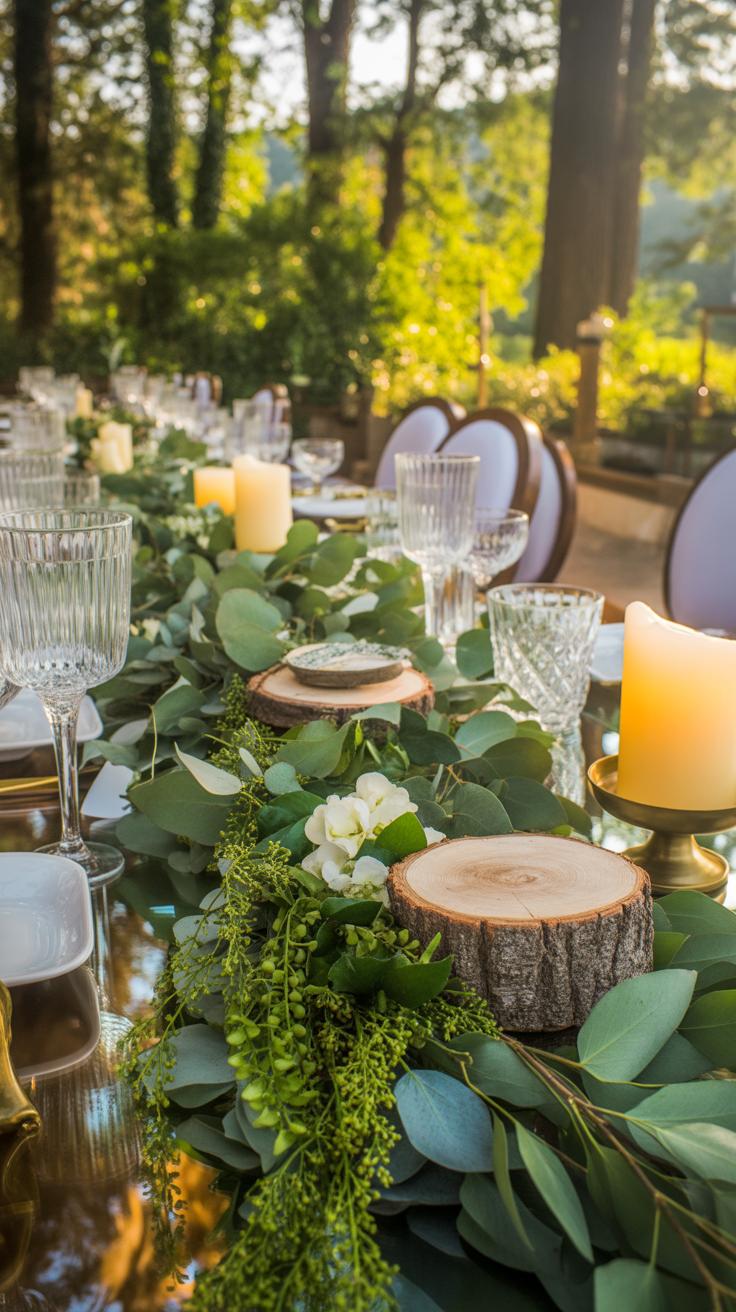
Recreating A Woodland Atmosphere With Moss, Ferns, And Branch Garlands
Achieving a forest aesthetic requires layering distinct textures to mimic the natural forest floor. Designers use preserved sheet moss as a base to provide a consistent green foundation across the table. They integrate leatherleaf or sword ferns into the garland to create height and volume. These species hold moisture well and resist wilting during long events. Firmly anchor the greenery using dark floral wire to ensure the structure remains stable.
Strategic placement of dried manzanita or birch branches adds necessary structural contrast. These woody elements break up the visual density of the foliage. Professional decorators often weave the branches through the center of the garland to provide a rigid spine. This technique allows for a more three-dimensional look that captures shadows. It transforms a flat runner into a sculptural centerpiece. This method ensures the table looks authentic from every viewing angle.
Incorporating Forest Theme Wedding Table Decor Elements Like Pinecones And Bark
Authentic woodland design relies on adding organic debris found in nature. Natural pinecones provide a repetitive geometric pattern that draws the eye along the table length. Use different sizes to keep the arrangement from looking symmetrical or artificial. Secure these items with brown florist wire to the main garland frame. This prevents movement when guests bump the table. It maintains the intended design throughout the wedding reception.
Textured bark provides a rugged contrast to soft leaves. Use thick pieces of cork bark or birch strips to hide plastic floral foam or water tubes. This masking technique keeps the focus on the natural theme. Designers often group these elements in clusters of three to mimic natural growth patterns. This tactical approach avoids a cluttered look. It creates a polished yet wild appearance that defines high-end forest theme wedding table decor.
Practical Tips For Table Placements Wedding Guests Will Remember
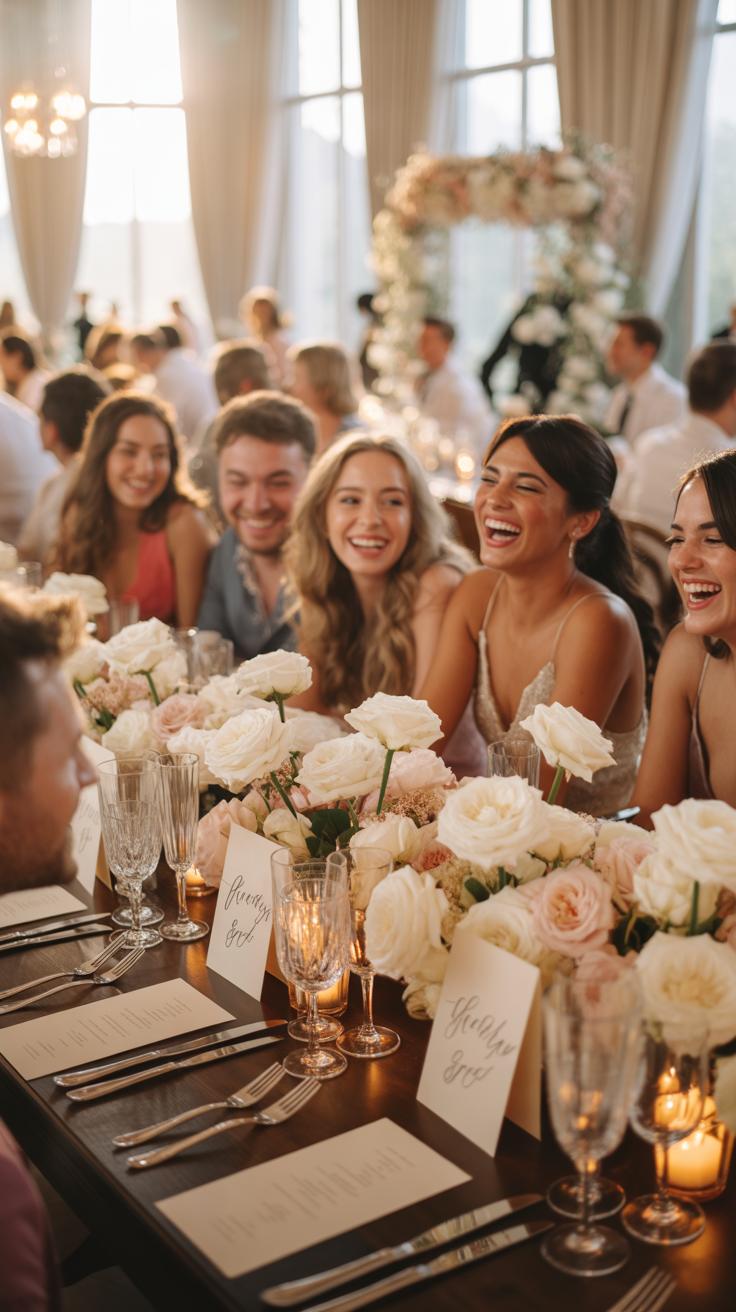
How Garland Placement Affects Guest Sightlines And Comfort At The Table
Greenery Garland Centerpieces must not obstruct the view across the table. Guests attend weddings to converse and connect. If a thick garland sits too high, it creates a physical wall. This forces people to lean uncomfortably to see the person sitting opposite them. Keep the bulk of the greenery below fourteen inches. This height ensures a clear line of sight for all seated guests.
Width is the second critical factor for comfort. A standard guest table offers limited space for plates, glassware, and silver. A sprawling garland can crowd these essential items. Measure your table width before selecting your greenery. Leave at least twelve inches of clear space on both sides of the garland. This allows guests to move their arms freely and prevents the foliage from dipping into food.
Smart Table Placements Wedding Strategies When Using Tall Versus Low Centerpieces
Tall centerpieces and low Greenery Garland Centerpieces serve different tactical functions. Tall arrangements create immediate visual impact when guests enter the room. They draw the eye upward and fill large vertical spaces. Low garlands facilitate better intimacy during the meal. Mixing these two styles provides a balanced aesthetic. Use tall stands to lift greenery above the eye level of seated guests to maintain clear views.
- Elevation Rods: Use thin metal stands to lift greenery twenty-four inches above the table surface. This placement keeps the table clear for shared platters and glassware while maintaining the lush look of a full venue.
- Low Profile Runners: Lay flat eucalyptus or ruscus directly on the table for a minimalist approach. This method works best for narrow rectangular tables where space is a premium and simple decoration is the primary goal.
- Staggered Heights: Alternate tall floral towers with low greenery garlands across different tables. This strategy breaks up the visual plane and prevents the room from looking flat. Change the height every three tables for maximum impact.
- Taper Candle Integration: Place tall candles within a low garland to add verticality without blocking faces. The thin profile of a candle allows for light and height while guests can still see around the wax cylinders easily.
- Suspended Greenery: Hang garlands from the ceiling or light fixtures instead of placing them on the table. This move frees up every inch of table real estate for guest comfort while still delivering a high-end botanical atmosphere.

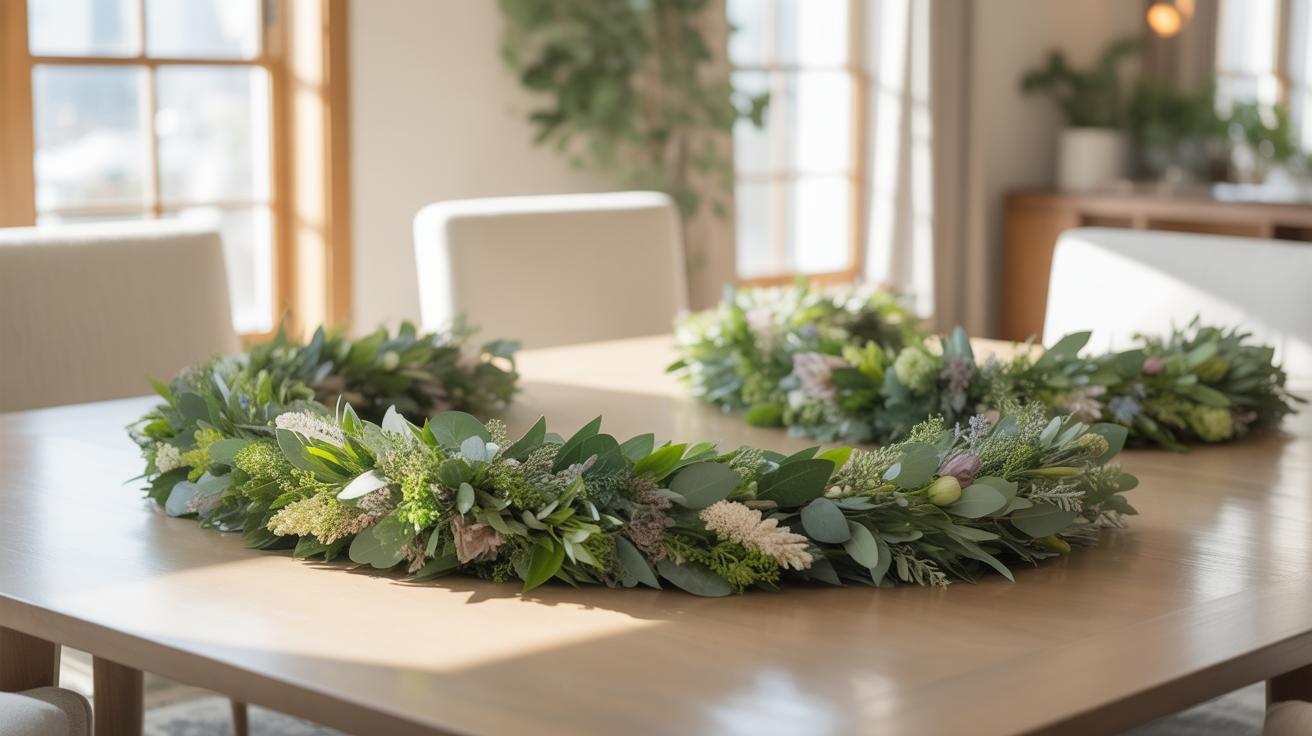
Strategic placement requires analyzing the specific dimensions of your venue furniture. Round tables often struggle with long garlands, so use circular wreaths instead. Long banquet tables are the ideal surface for continuous greenery runs. Always prioritize the functional needs of the guests over the density of the plants. A beautiful table is useless if guests cannot eat or talk comfortably throughout the entire evening event.
How To Maintain And Reuse Your Greenery Garland Centerpieces After The Event
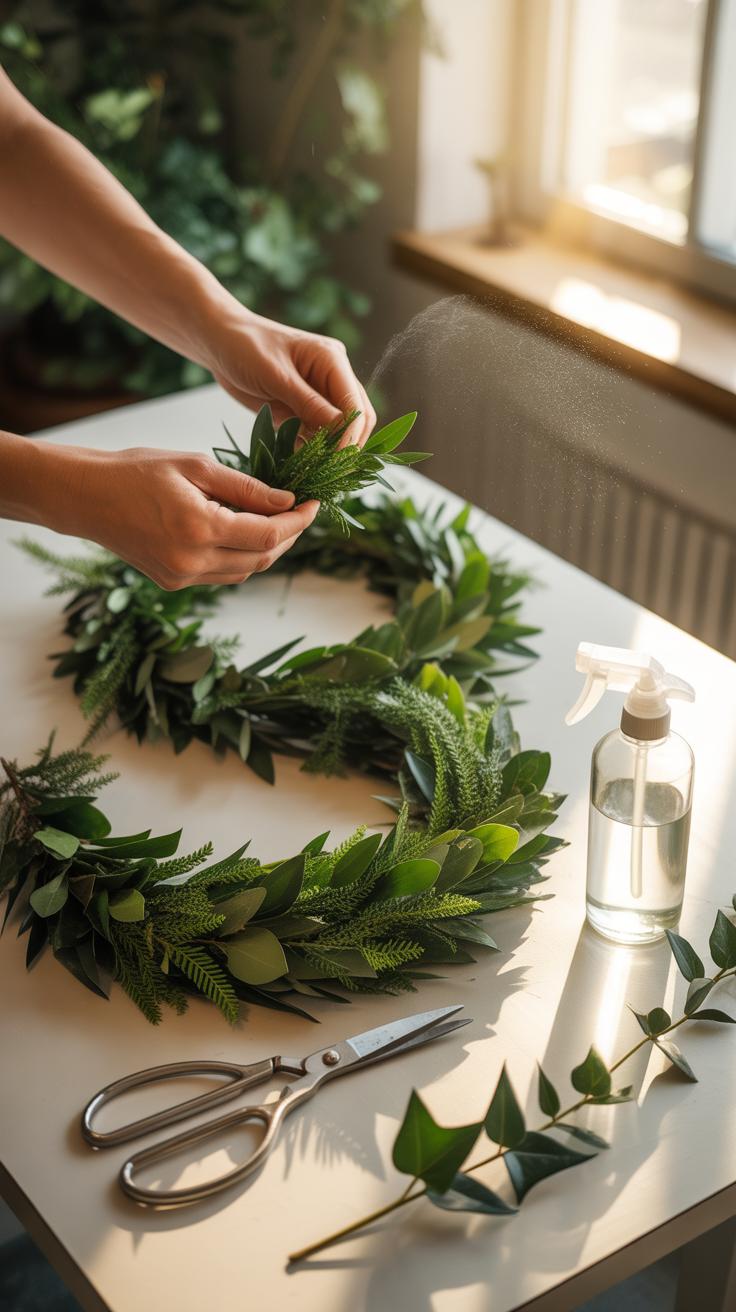
Caring For Fresh Foliage Garlands To Extend Their Lifespan Beyond One Day
Fresh greenery needs moisture to survive after cutting. You must mist the leaves daily with cool water to prevent browning. Keep the arrangement away from direct sunlight and heat vents. These sources dry out the stems quickly. If the garland uses floral foam, check the hydration levels every morning. Add water to the tray or foam to ensure the stems stay submerged.
Preserve the foliage by using an anti-transpirant spray. This coating seals the pores of the leaves to trap moisture inside. If you want to dry the garland, hang it upside down in a cool area. This method works well for eucalyptus or bay leaf varieties. Once dry, the greenery becomes brittle. Move it carefully to a mantle or shelf where it will remain undisturbed for weeks.
Repurposing And Storing Faux Greenery Garlands For Future Home Styling Moments
Faux greenery requires proper cleaning before storage. Dust settles in the crevices of silk and plastic leaves. Use a damp microfiber cloth to wipe down each section. Compressed air also removes debris from tight spots without damaging the wire frame. Ensure the material is completely dry before packing. Trapped moisture leads to mold or unpleasant odors during long periods of storage in dark boxes.
Store your garlands in long, shallow containers to prevent crushing the foliage. Do not fold or wrap them too tightly. Coiling the garland loosely maintains its natural shape for the next use. Place the containers in a climate-controlled room. Basements and attics often experience extreme temperature swings. Heat can melt the glue or warp the plastic components of high-end botanical replicas. Keep them flat for best results.
Frequently Asked Questions

What are the best types of plants to use for greenery garland centerpieces?
When choosing foliage for greenery garland centerpieces, eucalyptus is a top favorite due to its silvery hue and pleasant fragrance. For a classic look, Italian Ruscus provides a delicate, trailing effect that feels timelessly elegant. If you want something more robust, consider magnolia leaves or cedar sprigs. These varieties are popular because they hold their shape well, ensuring your dining table looks lush and professional throughout your entire dinner party.
How do I keep my greenery garland looking fresh on a dining table?
To keep your greenery garland centerpieces looking vibrant, start by misting the leaves with water every morning to maintain hydration. If you are using fresh-cut stems, consider tucking small floral water tubes into the base of the arrangement where they can be hidden by the foliage. Keeping the centerpiece away from direct sunlight and heat vents will also prevent the leaves from browning prematurely, ensuring your decor stays wedding-ready for days.
Can I create high-end greenery garland centerpieces on a limited budget?
Absolutely! You can achieve a luxury aesthetic without overspending by mixing affordable faux vines with a few sprigs of real greenery for texture and scent. Shopping for seasonal fillers at local grocery stores is a great way to save money while maintaining a high-end look. Additionally, repurposing glass jars and tea candles amongst the leaves adds a sophisticated glow that elevates the entire arrangement without requiring a massive financial investment.