
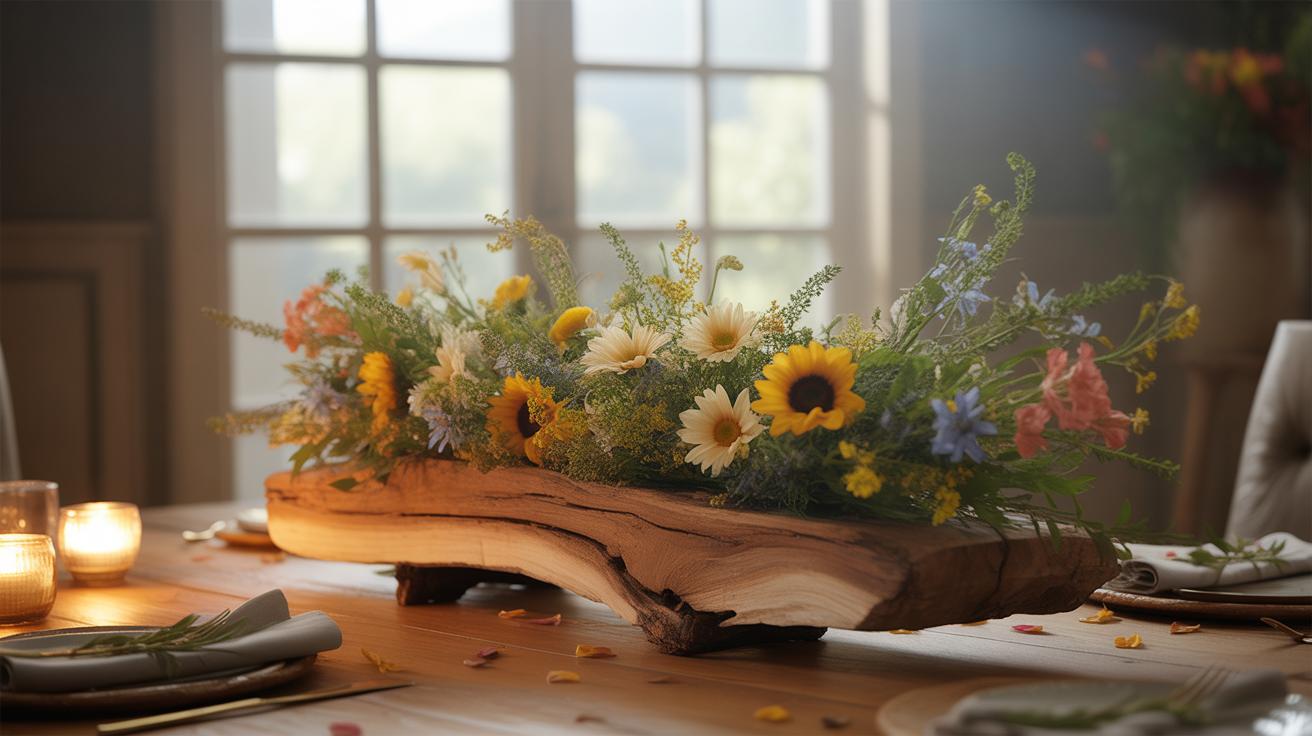
What Makes A Wood Centerpiece So Timeless And Versatile
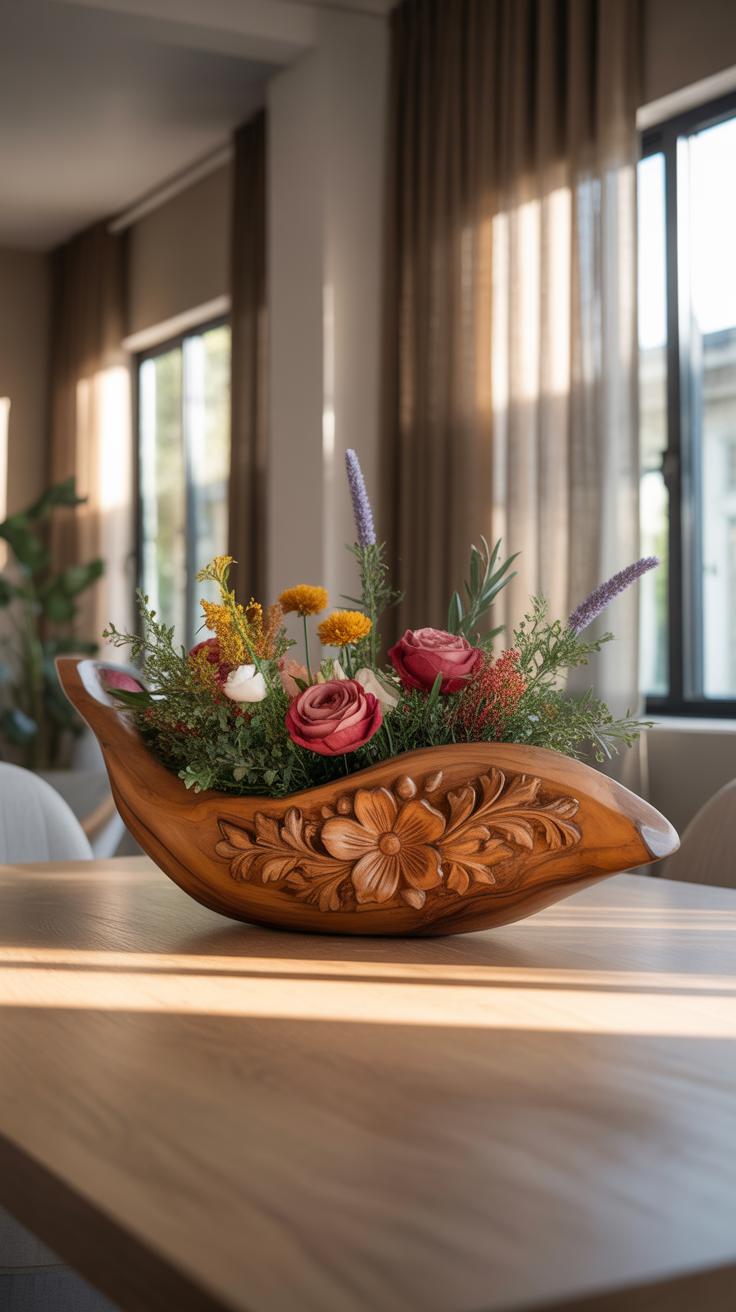
The Natural Appeal Of Wood Grain And Organic Texture In Home Decor
Wood grain provides a visual record of a tree’s life cycle. Each ring and knot represents years of growth and environmental changes. These marks create a pattern that humans find grounding. Because no two slabs are same, your decor remains unique. Organic textures break up the flat and cold surfaces common in modern homes. They add immediate depth without requiring complex patterns or colors.
Designers value raw edges for their tactile nature. Slabs with bark intact or sanded live edges connect indoor spaces to the outdoors. This connection follows biophilic design principles. These principles suggest that natural elements reduce stress and improve focus. Using wood means using a material that lasts for decades. It resists wear better than plastic or synthetic resin. Metal and glass feel sterile but wood feels alive.
How A Wood Centerpiece Complements Both Modern And Traditional Interiors
Rustic wood slab centerpieces bridge the gap between different design styles. In modern interiors, wood softens the harsh lines of steel and concrete. It creates a focal point in a minimalist room. The warm tones of the timber prevent a space from feeling clinical. You can pair a raw slab with glass vases for a high-contrast look. This mix makes a room feel curated rather than manufactured.
In traditional settings, wood slabs honor historical craftsmanship. They match the heavy timber furniture found in older homes. These pieces work well with antique metalware and heirloom linens. You do not need to replace your existing furniture to fit this trend. Wood acts as a neutral base that supports various aesthetics. It serves as a functional tool for organizing table space. Use it to layer heights and textures effectively.
Trending Styles In Wood Table Centerpieces For 2024 And Beyond
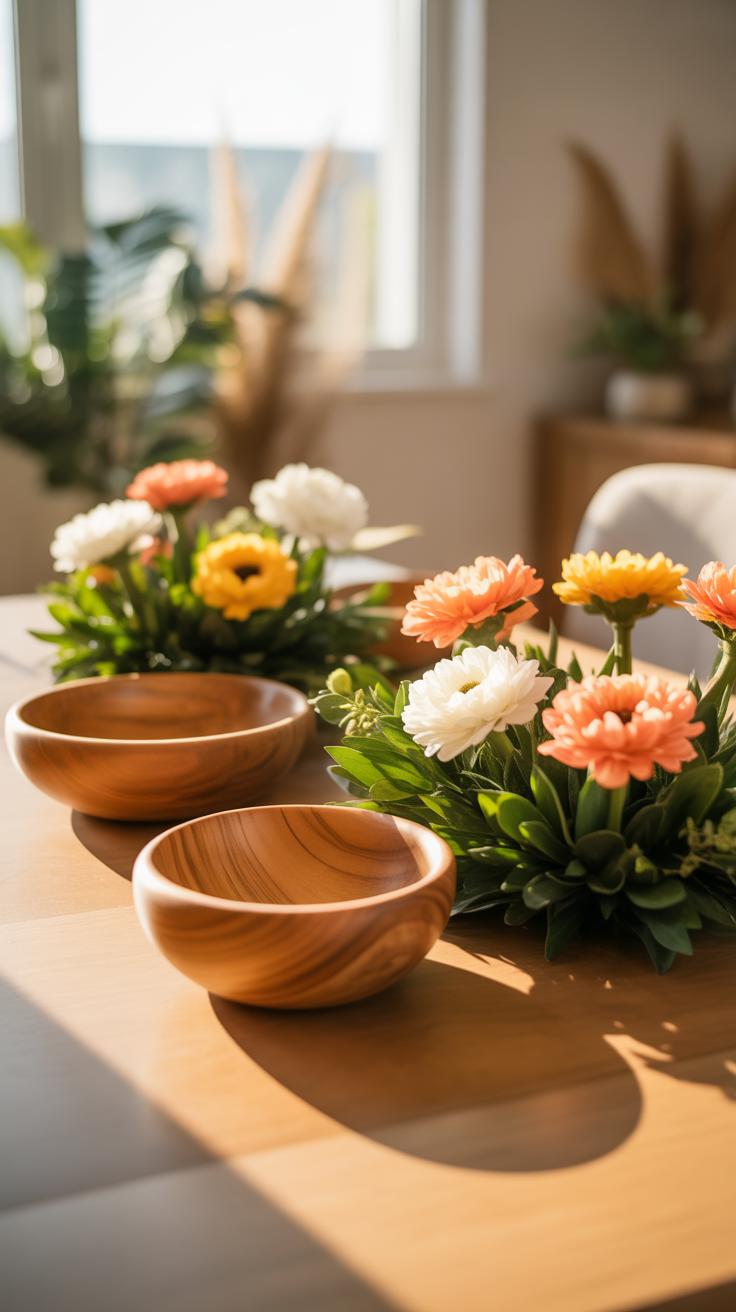
Live Edge Slabs As Statement Wood Table Centerpieces In Contemporary Spaces
Live-edge slabs retain the natural perimeter of the tree. This style removes the industrial look of machine-cut lumber. Modern designers use these pieces to break up the harsh lines of glass and steel. Most high-end slabs come from black walnut or white oak. These species offer high density and stable grain patterns. They resist warping under indoor climate control systems.
Strategic placement requires contrast. Put a dark walnut slab on a white stone table to create a focal point. Ensure the wood has a moisture content below twelve percent. This prevents cracking in dry environments. Apply a matte polyurethane or tung oil finish. These coatings protect the wood from water rings without adding a fake shine. The goal is raw texture with professional durability.
Minimalist And Maximalist Approaches To Styling Wood Table Centerpieces
Minimalist styling focuses on wood grain as the primary visual interest. Use a single large slab without extra decorations. This approach works best in Scandinavian or Japanese design themes. Keep the surrounding area clear to highlight the natural growth rings. Select slabs with unique features like burls or spalting. These natural defects provide enough detail to carry the design without help from accessories.
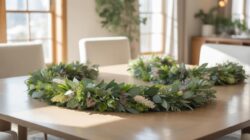
Maximalist styling layers the wood slab with high-contrast items. Place brass candle holders and ceramic vases directly on the wood surface. Use varying heights to create visual depth across the table. This method fits the eclectic and farmhouse design movements. Ensure the slab is large enough to handle the weight of multiple items. Do not hide the wood entirely. Leave the organic edges visible to anchor the diverse decor pieces.
How Log Centerpieces Add Rustic Warmth To Any Occasion
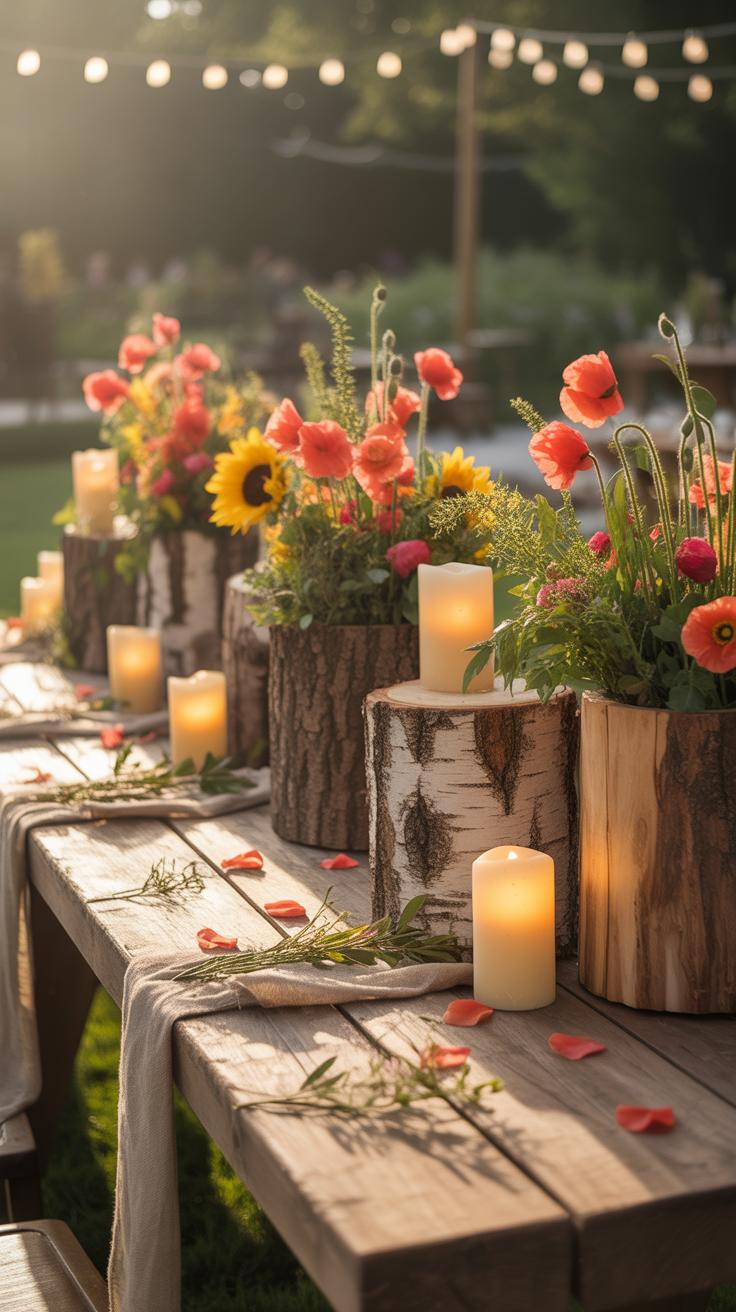
Using Whole And Split Log Centerpieces For Seasonal And Holiday Tables
Whole log rounds create immediate height on holiday tables. These thick sections work best for large dining surfaces. Use dense hardwoods like oak or maple to prevent splitting in dry indoor air. Seasonal decor requires stability for heavy glassware and plates. Large rounds provide a flat base that keeps decorative items level. This prevents spills and keeps the table layout secure during busy meals.
Split logs offer a different tactical advantage for narrow tables. Flat bases prevent the wood from rolling or shifting. Use birch for winter themes because the white bark reflects light well. For autumn, select darker bark types like walnut to ground the color palette. Ensure the wood is kiln dried to kill pests before placing it near food. This step protects your guests and your furniture.
Pairing Log Centerpieces With Candles, Greenery, And Wildflowers For Depth
Log centerpieces require contrast to look professional. Place white unscented candles directly on the wood surface to create light. The flame highlights the natural grain and texture of the bark. Use various heights to add visual interest across the table. This technique draws the eye to the center without blocking conversation. Always use glass holders to protect the wood from dripping wax or fire hazards.

Fresh greenery softens the hard edges of the wood slabs. Eucalyptus or ferns provide a clean look that lasts through long events. For a traditional feel, use local wildflowers in small glass jars. Cluster these around the base of the log to hide any gaps. This layering creates depth and makes the arrangement look intentional. Keep the plants low to ensure visibility across the dining area.
Why The Wood Slice Centerpiece Wedding Trend Continues To Grow
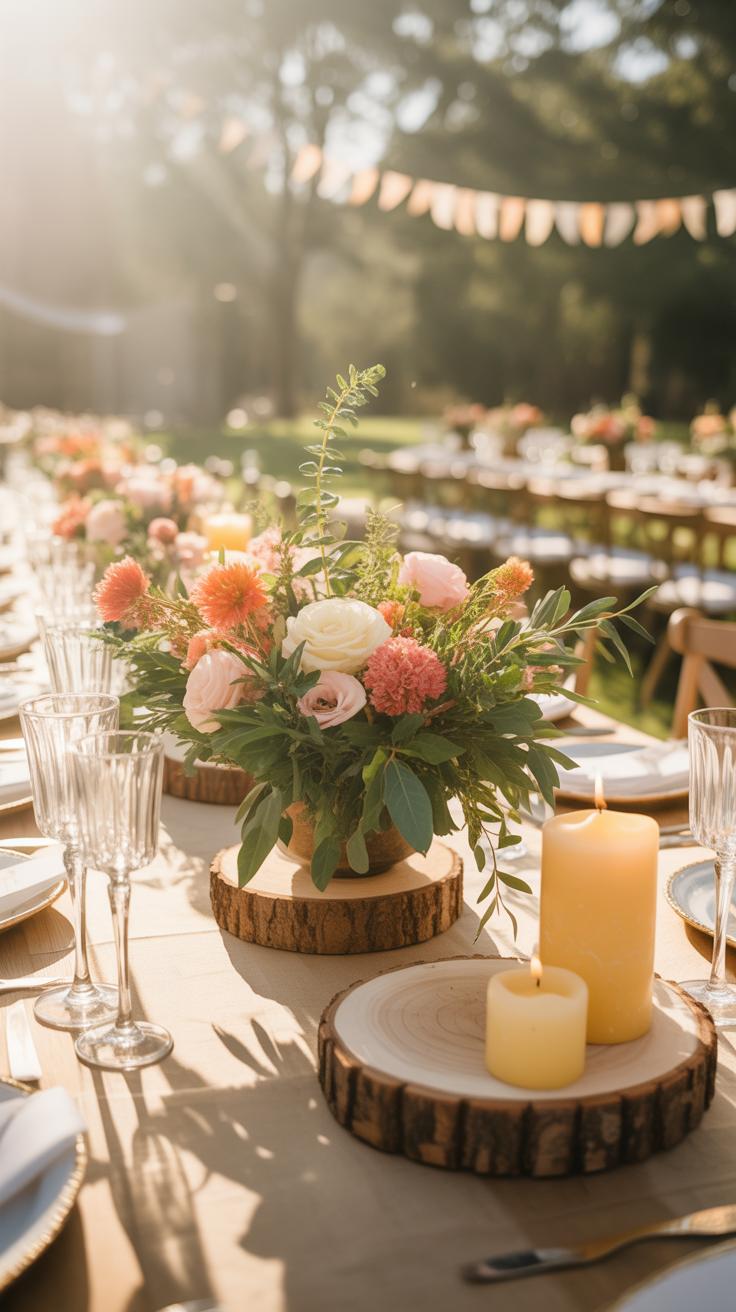
The History And Rise Of The Wood Slice Centerpiece Wedding Aesthetic
The rustic wedding movement gained significant traction in the late 2000s and early 2010s. This shift reacted against traditional, high gloss ballroom aesthetics. Couples sought organic materials to create a grounded atmosphere. Wood slices emerged as a core component because they offer immediate texture. Designers shifted toward the Farmhouse and Shabby Chic movements. These styles prioritize raw finishes over polished surfaces for a relaxed social environment.
Industrial logging techniques allow for thin, uniform cross cuts of timber. These pieces are often called cookies in the lumber industry. They provide a stable, flat base for floral arrangements and candles. This functionality keeps the trend relevant today. Natural wood brings warmth to a table without requiring expensive linens. It bridges the gap between outdoor settings and indoor venues. The look remains a staple for modern barn weddings across North America.
Personalizing Wood Slice Centerpieces With Laser Engraving And Paint
Precision technology changed how planners use wood slabs. CO2 laser engravers now etch complex designs directly into the grain. This method produces a permanent, charred mark that resists fading. Couples use this for table numbers, monograms, or event dates. It eliminates the need for paper signage. Engraving adds a high end feel to a low cost material. It turns a simple piece of timber into a customized asset.
Freehand painting offers another tactical layer to centerpiece design. Acrylic paints or paint pens work best on sanded wood surfaces. Artists often apply white or metallic gold to the edges or the bark. This technique highlights the growth rings of the tree. Applying a clear sealant after painting prevents moisture damage from floral vases. Proper preparation ensures the wood does not soak up the pigment. These methods allow for consistent branding across large events.
Creative Ways To Incorporate Wedding Decor With Wood Slices
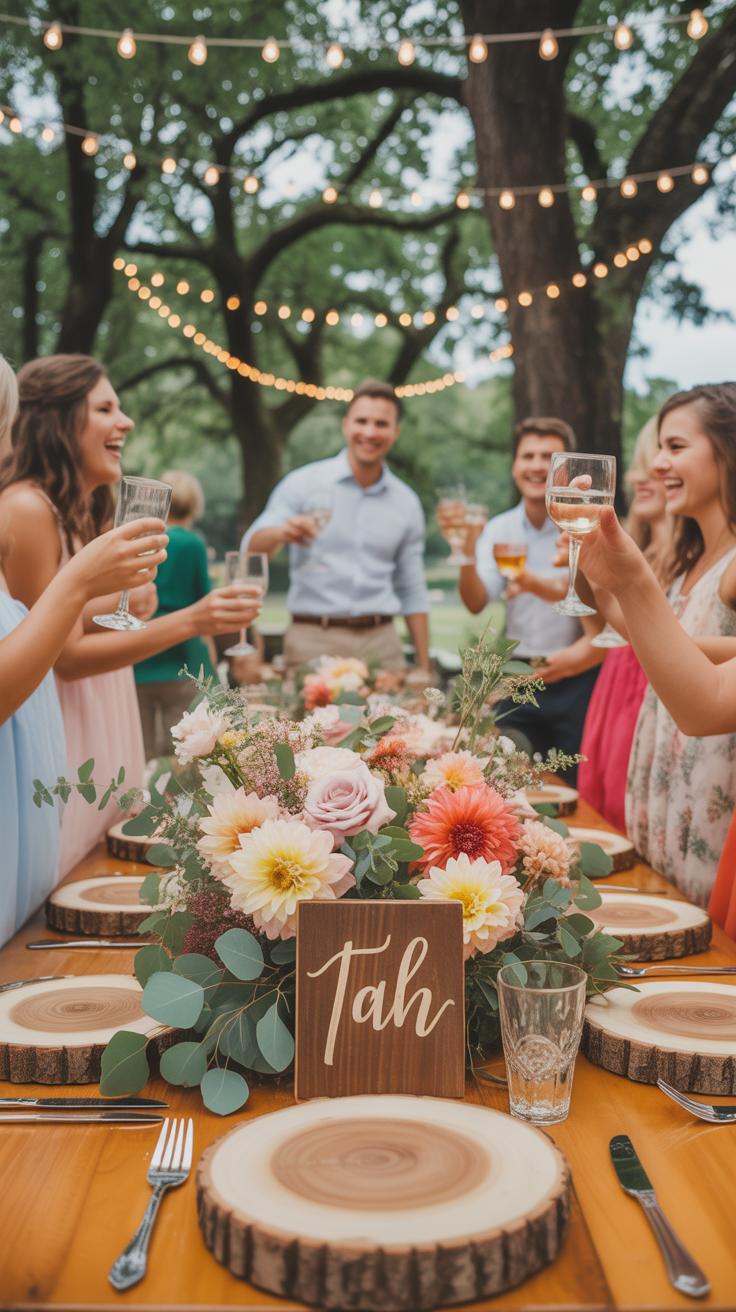
Layering Florals, Moss, And Candles Over Wedding Decor With Wood Slices
Layering materials creates depth on a flat wood surface. Start with a moisture barrier if using live moss or damp floral foam. Place the largest items like lanterns or heavy vases in the center for stability. Encircle the base with preserved sheet moss to hide mechanics and gaps. This technique mimics a natural forest floor and anchors the centerpiece to the table.
Position candles of varying heights to create vertical interest. Use glass chimneys for open flames to prevent scorched bark or fire hazards. Use floral vials for delicate blooms to keep them hydrated without soaking the wood slab. This method prevents the wood from warping or growing mold during the event. Strategic placement ensures the wood grain remains visible while supporting the decorative layers.
Top Materials And Accents That Pair Beautifully With Wedding Decor With Wood Slices
Pairing wood with high-contrast materials improves visual impact. Combine organic textures with industrial or refined elements to balance the aesthetic. Metal, glass, and textiles provide the necessary weight and light reflection to make the wood stand out. Use items that resist sliding on the smooth sanded surface of the slab to ensure guest safety and centerpiece longevity.
- Geometric Terrariums: These glass and metal structures offer a sharp contrast to the irregular edges of raw wood. They provide a modern touch that elevates the rustic feel of the slab. Use brass or copper frames to add warmth.
- Votive Candles: Small glass holders protect the wood from wax drips and heat. They scatter light across the bark texture and clarify the growth rings. Group them in odd numbers to create a balanced look for guests.
- Burlap Runners: Using jute or burlap provides a thematic foundation for the wood slice. This natural fiber prevents the wood from scratching delicate table linens or polished surfaces. It reinforces the farmhouse style through cohesive material choices.
- Eucalyptus Sprigs: The silver-green hue of these leaves complements the earthy tones of oak or pine. The leaves lay flat against the wood surface without adding excessive height. This allows for clear sightlines across the table during wedding receptions.
- Manzanita Branches: These branches add height and structural complexity to a flat wood base. They serve as a sturdy armature for hanging tea lights or crystals. Secure them to the wood slab using heavy-duty floral clay or screws.

Select accents based on the specific wood species and bark condition. Tight bark like birch pairs well with delicate lace and white ceramics. Rugged bark like walnut or elm requires heavier elements like cast iron or thick stoneware. Always check the stability of the slab before adding top-heavy items. Proper material selection ensures the centerpiece remains functional throughout the entire wedding timeline.
Designing The Perfect Rustic Wedding Round Table Decor Layout
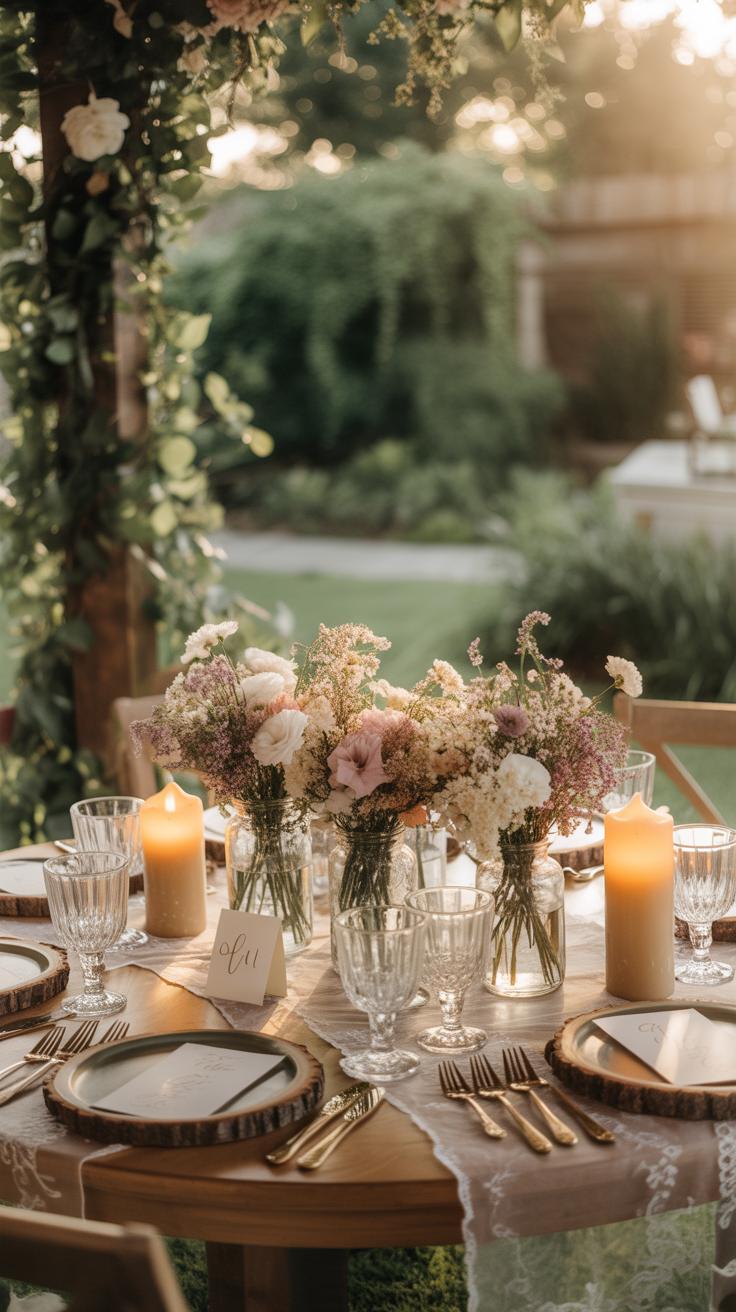
Balancing Heights And Proportions For Rustic Wedding Round Table Decor
Standard round tables measure sixty to seventy-two inches in diameter. You must center the wood slab to anchor the design. The slab diameter should reflect one-third of the table width. This leaves enough room for place settings and glassware. Use a slab thickness of two inches for stability. Thin slices often warp or crack when holding heavy glass vases or ceramic containers.
Vertical scale prevents the layout from looking flat. Place the tallest element in the center of the wood slab. Keep centerpieces below eye level or above the sightline. This ensures guests can see each other across the table. Use narrow vessels to maximize the usable surface area of the wood. Mixing different heights creates visual interest without cluttering the guest workspace or blocking conversation paths.
Color Palettes That Elevate Rustic Wedding Round Table Decor Arrangements
Natural wood slabs feature brown, tan, and grey tones. Use high-contrast colors to make the wood grain stand out. White or cream linens provide a clean base for dark walnut or oak. Avoid matching the wood color exactly to the table surface. This lack of contrast makes the centerpiece disappear. Sharp greens from moss or foliage highlight the organic texture of the bark.

Metal accents add a modern touch to the layout. Copper or brass candle holders contrast against the matte finish of raw wood. Use soft blues or deep burgundies to bring warmth to the arrangement. Stick to three primary colors to maintain a professional look. Overcomplicating the palette distracts from the wood slab. Neutral tones allow the natural imperfections of the timber to remain the focus.
Wood Slab Centerpieces Choosing The Right Wood Species For Your Vision
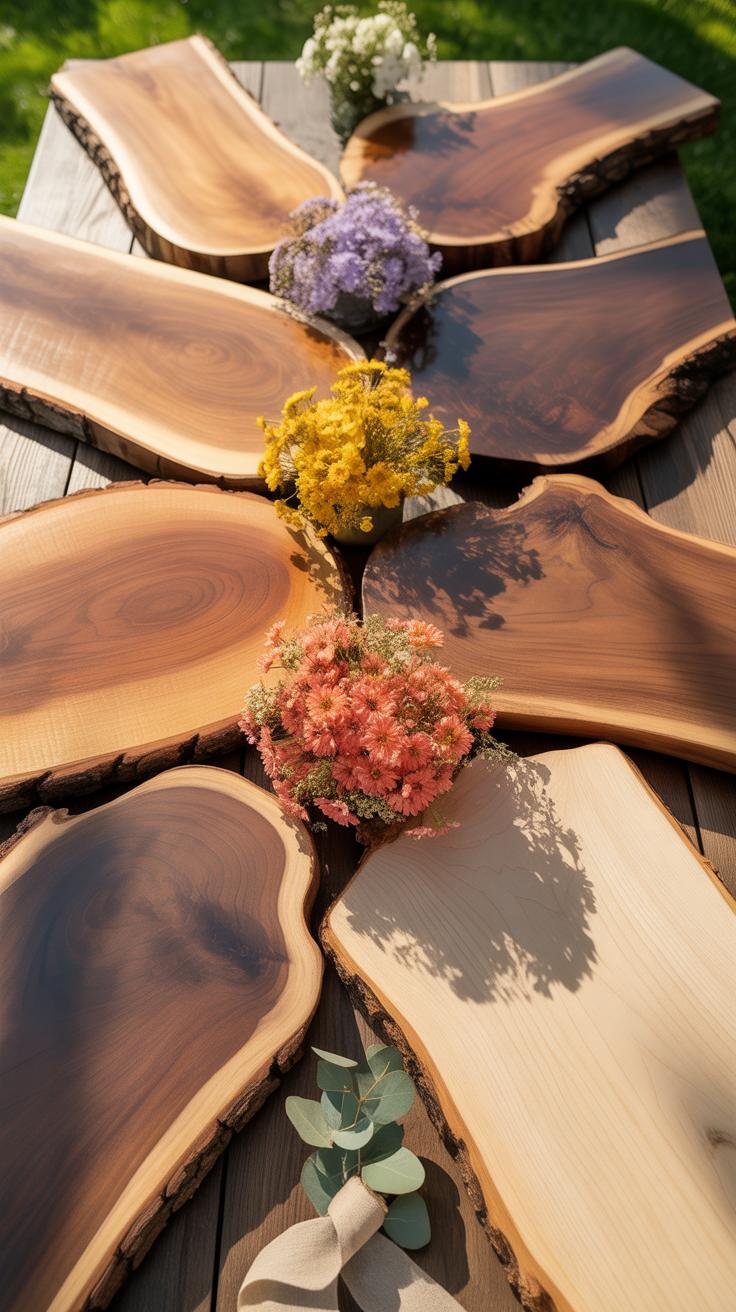
Popular Wood Species Used In Wood Slab Centerpieces And Their Characteristics
Selecting wood species determines the color palette and durability of your Rustic Wood Slab Centerpieces. Hardwoods offer dense grain patterns and resist denting during high-traffic events. Softwoods provide lighter weights and usually cost less for bulk orders. You must match the wood density to your intended use. Porous woods soak up oils and liquids quickly. Dense woods provide a stable base for heavy floral arrangements.
- Black Walnut: This premium hardwood features deep chocolate tones and high durability. It works best for formal rustic settings where contrast is necessary. The rich heartwood requires minimal staining to achieve a high-end look that stands out against white linens.
- White Pine: This softwood provides a light, cream-colored aesthetic for casual events. It is lightweight and easy to transport in large quantities. The wood is prone to denting, which adds a weathered, distressed character over time for those seeking a true primitive style.
- Red Cedar: Known for its distinct reddish hue and aromatic properties, cedar brings a sensory element to the table. It is naturally rot-resistant and works well for outdoor weddings. The vibrant grain contrast between the sapwood and heartwood creates a sharp visual impact.
- White Oak: Oak offers a traditional look with prominent ray flecks and heavy grain texture. It is extremely hard and heavy, providing a stable foundation for tall centerpieces. This wood reacts well to various stains, allowing for easy customization of the final color.
- Olive Wood: Exotic olive slabs feature dramatic, swirling grain patterns and high oil content. These pieces are often smaller but deliver intense visual interest. The dense structure makes them feel substantial despite their size, making them ideal for high-impact, compact table displays.
Regional availability dictates the historical use of wood species in rustic design. Early American furniture movements utilized local timber like maple and cherry for functional tabletop items. Modern trends prioritize reclaimed wood to ensure environmental sustainability and unique aging markers. Large-scale events benefit from sourcing domestic species to reduce shipping costs. Always verify that your chosen wood has been kiln-dried to prevent warping or cracking after arrival.
How Slab Thickness And Finish Affect The Look Of Wood Slab Centerpieces
Slab thickness dictates the visual weight of your centerpiece. Thin slabs measuring one inch or less appear modern and sleek. They suit smaller tables where space is limited. Thick slabs of two inches or more create a bold, architectural statement. These heavy pieces anchor large banquet tables and suggest a raw, natural origin. Consistent thickness is vital for keeping glassware and candles level across the surface.
The finish choice controls how the wood interacts with event lighting. Matte finishes like tung oil or beeswax preserve the natural touch and look of the lumber. They do not reflect light, which keeps the focus on the wood grain. High-gloss polyurethane finishes create a formal, reflective surface that protects against spills. Use a satin finish for a balanced look that offers protection without looking like plastic.
Bringing The Outdoors In With A Woods Centerpiece Inspired By Nature
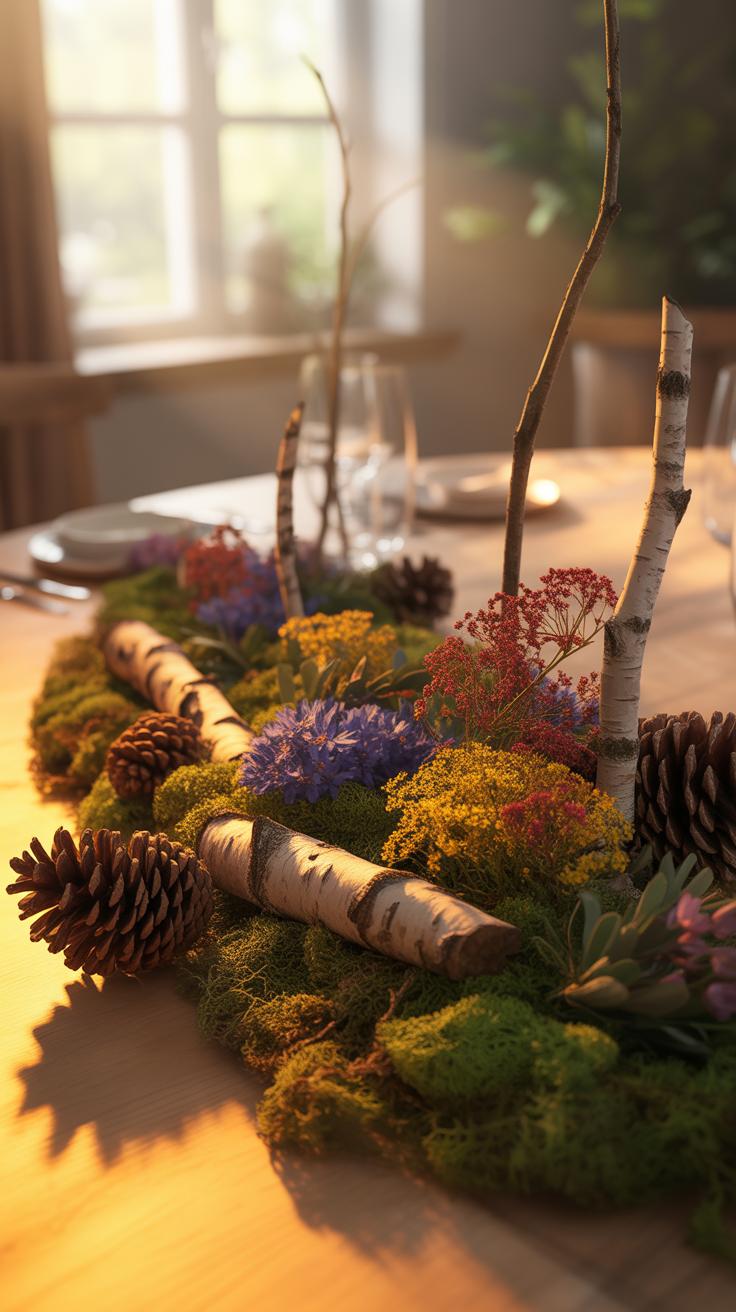
Incorporating Bark, Branches, And Stones Into A Woods Centerpiece Design
Raw wood slabs retain their visual impact when paired with unrefined materials. Use bark strips to add vertical texture to the flat surface of the slab. Select dried birch or cedar bark for stability. Position river stones around the base to ground the arrangement. Stones provide weight and prevent the centerpieces from shifting. This technique mirrors the natural forest floor and creates a stable foundation for the display.
Integrate hardwood branches like oak or manzanita for structural height. Secure these branches using small drilled holes in the slab or hidden floral pins. Avoid using fresh green wood because it shrinks as it dries. This shrinkage causes joints to loosen and decorations to fall. Stick to kiln-dried or weathered wood components. Proper material selection ensures the centerpiece lasts throughout the event without losing its shape or shedding debris.
There is a beauty in the grain of a wood slab that tells a story of time, bringing an ancient soul to the modern table. Incorporating these natural textures creates a sanctuary of warmth that honors the elegance of the earth.
Seasonal Woods Centerpiece Ideas From Spring Blooms To Winter Evergreens
Adapt the wood slab base for different seasons by changing the organic accents. Use bright mosses and small bulbs like snowdrops for spring displays. These elements highlight the renewal phase of the forest. Ensure the moss stays damp by placing a plastic barrier between the plant and the wood. This protects the slab from rot and water stains. Spring designs focus on light colors to contrast the dark grain.

Transition to winter by using coniferous boughs and dried berries. Pine and fir branches provide a heavy scent and dense texture. Place these directly on the slab for a traditional look. Use battery-operated LED candles instead of wax to prevent damage to the wood surface. Winter arrangements benefit from the heat resistance of the slab. The dense wood acts as a safe platform for heavy wintry decor and thick foliage.
Wooden Centerpieces Wedding Guests Will Remember Long After The Day
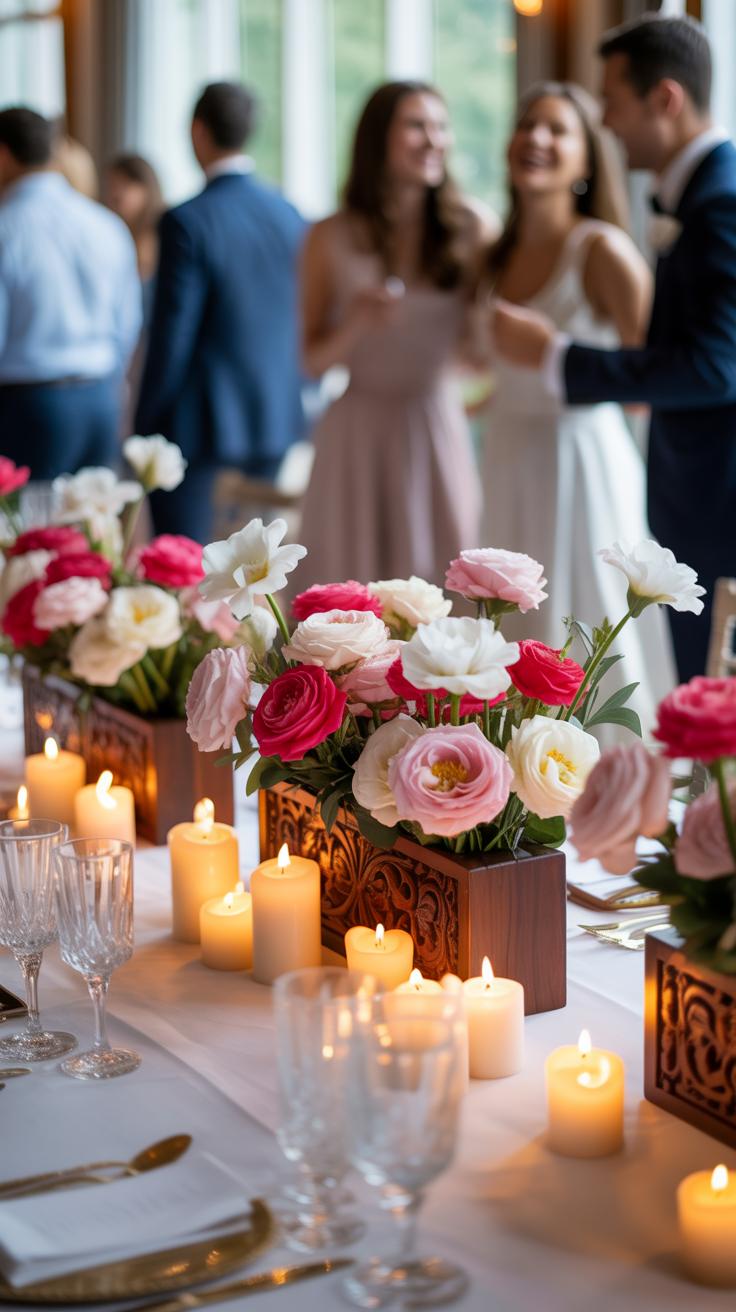
Doubling As Keepsakes: Gifting Wooden Centerpieces Wedding Guests Can Take Home
Wood slices create functional home decor for guests. Use hardwoods like oak or maple for durability. These species resist cracking better than softwoods. Sand each surface to 220 grit to prevent splinters. Apply a food-safe mineral oil finish. This makes the slab usable as a trivet or small cheese board later. Clear labels help guests know which items are gifts.
Strategic placement of these items reduces post-event cleanup costs. Guests remove the centerpieces for you. This eliminates your need for storage or disposal logistics. Choose slabs between eight and ten inches in diameter. This size fits easily into a standard tote bag. Smaller slabs are portable but still provide enough weight to feel high quality. Use wood burning tools to add dates discreetly on the bottom.
Sourcing And Budgeting For Wooden Centerpieces Wedding Without Overspending
Direct sourcing from local sawmills cuts costs by fifty percent compared to retail. Ask for kiln-dried “shorts” or offcuts. These pieces are too small for furniture but work for decor. Kiln drying is vital because it kills wood-boring insects. It also lowers the moisture content below twelve percent. Low moisture prevents the wood from warping or growing mold during storage.
Purchase slabs in bulk to secure wholesale pricing. Avoid exotic woods to keep the budget low. Pine and poplar are affordable but require more sanding. Cedar offers a natural scent and resists rot. If buying green wood, you must seal the end grain immediately. Use a wax-based sealer to slow the drying process. This prevents the wood from splitting as it loses water over time.
Caring For And Repurposing Your Rustic Wood Slab Centerpieces After The Event
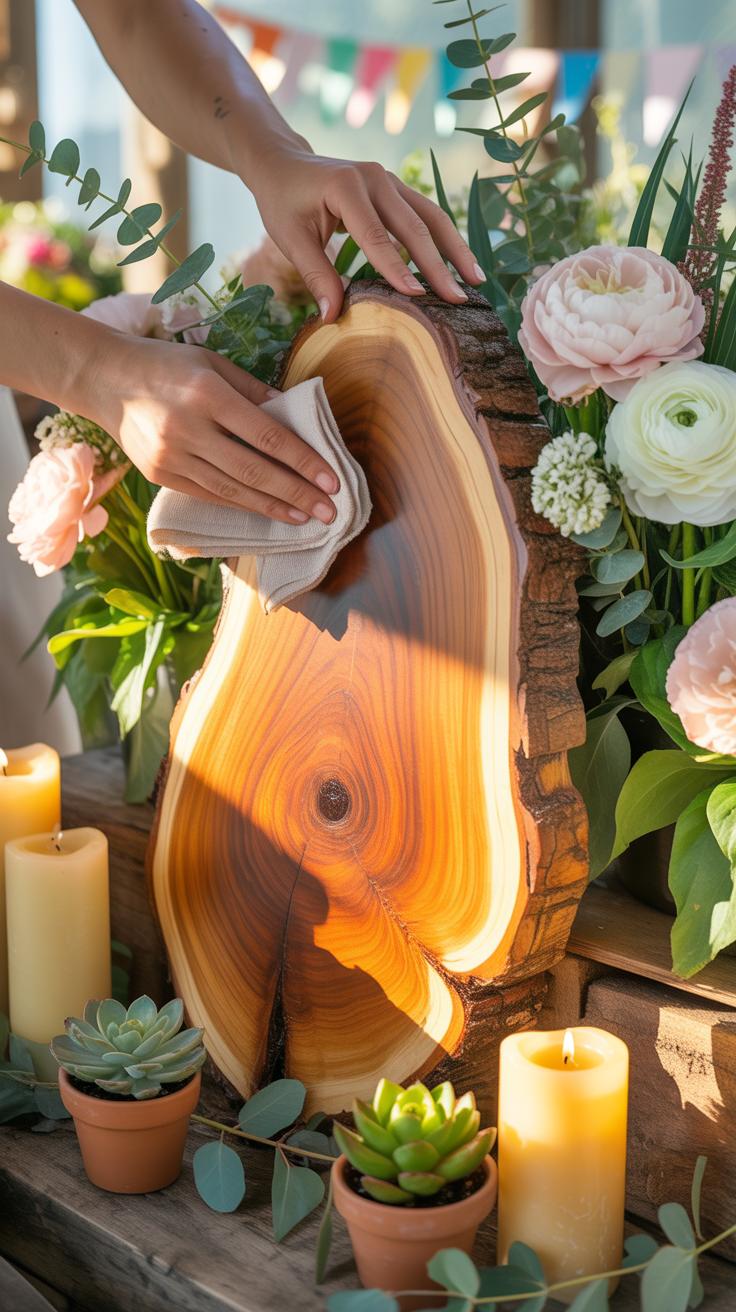
Cleaning, Sealing, And Storing Wood Slab Centerpieces To Extend Their Lifespan
Clean organic wood slabs immediately after your event to prevent mold and rot. Use a damp cloth with mild soap to remove biological debris. Avoid soaking the wood because excess water causes swelling and deep cracks. Dry the slabs completely in a cool area with high airflow. Rapid drying near heat sources leads to checking and catastrophic splitting along the radial grain.
Apply a food-grade mineral oil or beeswax finish to seal the surface. This creates a moisture barrier and preserves the natural color. Store the slabs flat in a climate-controlled room to prevent warping. Stack them with small wooden spacers between each layer to allow air circulation. Avoid plastic wrap or airtight containers. Trapped moisture inside plastic promotes fungal growth and ruins the raw timber.
Second Life Ideas: Turning Event Wood Slab Centerpieces Into Everyday Home Decor
Transform your event slabs into functional household furniture to maximize your investment. Large diameter rounds serve as stable bases for side tables or plant stands. Sand the surface with progressive grits to achieve a professional finish. Attach hairpin legs or simple wooden blocks to the underside for stability. This repurposing method keeps high-quality timber out of landfills while adding utility to your living space.
Smaller wood slices work effectively as permanent kitchen trivets or wall art. Apply a heavy-duty polyurethane coating if the wood will face heat or moisture. This chemical seal protects the fibers from staining and thermal damage. You can also use wood burning tools to add permanent markings or house numbers. These tactical conversions turn temporary event decor into durable assets that last for decades in any home.
Frequently Asked Questions

What are rustic wood slab centerpieces and why are they so popular in modern home decor?
Rustic wood slab centerpieces are decorative slices of natural timber, often showcasing the tree’s raw bark and unique ring patterns. They have surged in popularity because they bring an organic, earthy warmth to any dining space. These versatile decor pieces provide a sturdy foundation for candles or florals, bridging the gap between traditional farmhouse aesthetics and contemporary minimalist design to create a cozy, grounded atmosphere in the home.
How do I properly seal and maintain a raw wood slab to prevent cracking over time?
To keep your rustic wood slab centerpieces looking beautiful, it is essential to seal them with a clear polyurethane or a food-safe mineral oil. This protects the wood from moisture and pests while preventing the “checking” or cracking that occurs as wood dries. Keep your slabs away from direct sunlight or harsh heat sources, and simply wipe them with a damp cloth to maintain their natural luster and durability.
Can I create a high-end look with wood slab decor if I am on a tight budget?
Absolutely! You can achieve a luxury aesthetic without the designer price tag by sourcing “live edge” scraps from local lumber yards or searching for fallen branches in your own backyard. Sanding a found piece and applying a simple stain can transform a basic slice into a stunning focal point. Incorporating these DIY elements allows you to enjoy the trend of natural textures while keeping your home transformation affordable.