The History And Cultural Significance Of Flower Crowns Around The World
How Ancient Civilizations Used Flower Crowns In Ceremonies And Celebrations
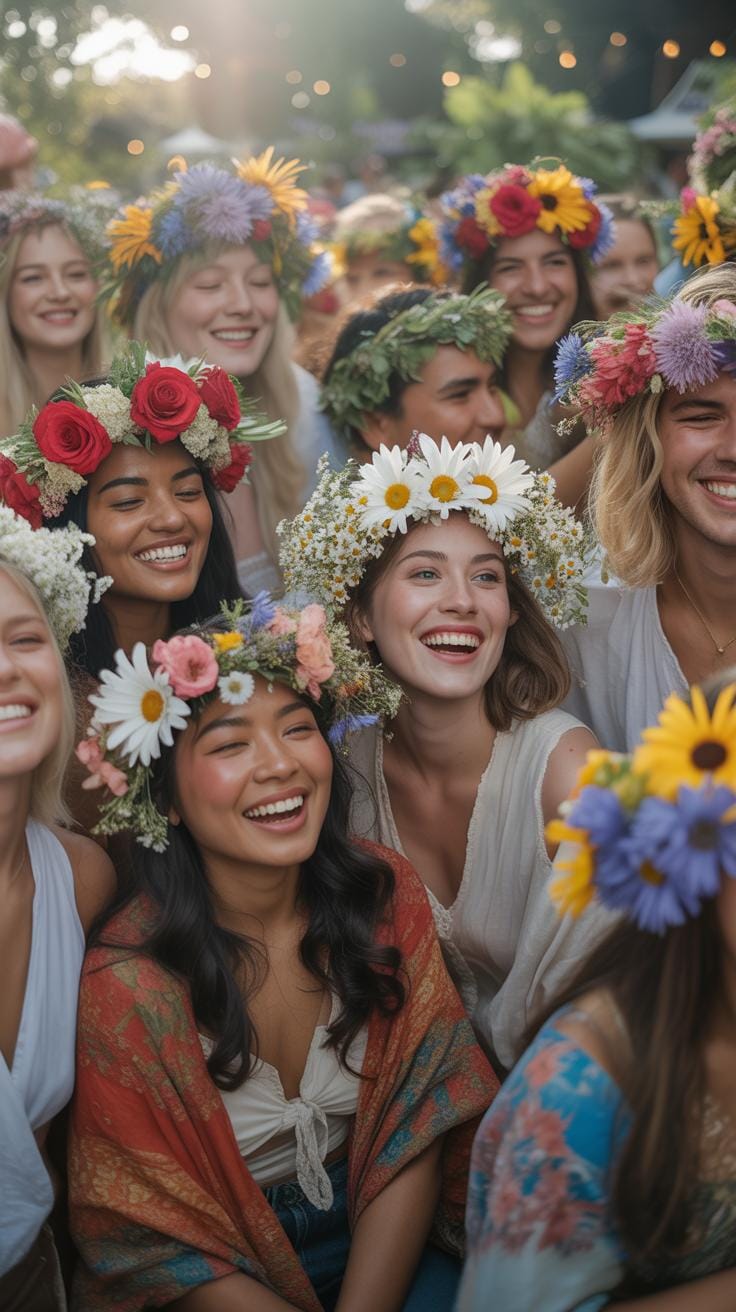
Ancient Greeks used flower crowns to honor winners and gods. Participants wore laurel wreaths during the Pythian Games to show high status. These crowns served as rewards for athletic and musical talent. Romans adopted this practice for military honors and civic triumphs. The materials signaled specific ranks and achievements. Every leaf choice had a clear meaning in these early public ceremonies.
In ancient China, women wore floral headpieces to mark seasonal changes and marital status. These crowns used jasmine and orange blossoms to represent purity and fertility. Cultures across pre-Christian Europe used wreaths during solstice festivals. People believed the circular shape represented the cycle of life and nature. These items were tactical tools for social standing and religious devotion rather than simple decorations.
How Flower Crowns Evolved From Royal Symbolism To Modern Fashion Statements
During the Victorian era, Queen Victoria wore orange blossoms for her wedding. This choice shifted the flower crown from a general symbol to a specific bridal tradition. It established a standard for formal events across the West. Florists began using stiff wire and silk ribbons to improve durability. These technical changes allowed for more complex designs. The crown became a mandatory item for elite ceremonies.
The 1960s transformed the flower crown into a symbol of peace and non-violence. Activists wore them to reject rigid social structures and corporate fashion. Today, technology and global festivals have made these crowns peak accessories. Modern tutorials focus on synthetic materials and floristry tape for long-lasting wear. Users now treat crowns as temporary art for digital platforms and large outdoor music events.
Essential Materials You Need To Know How To Make A Flower Crown
The Core Supplies Required Before You Make A Flower Crown At Home
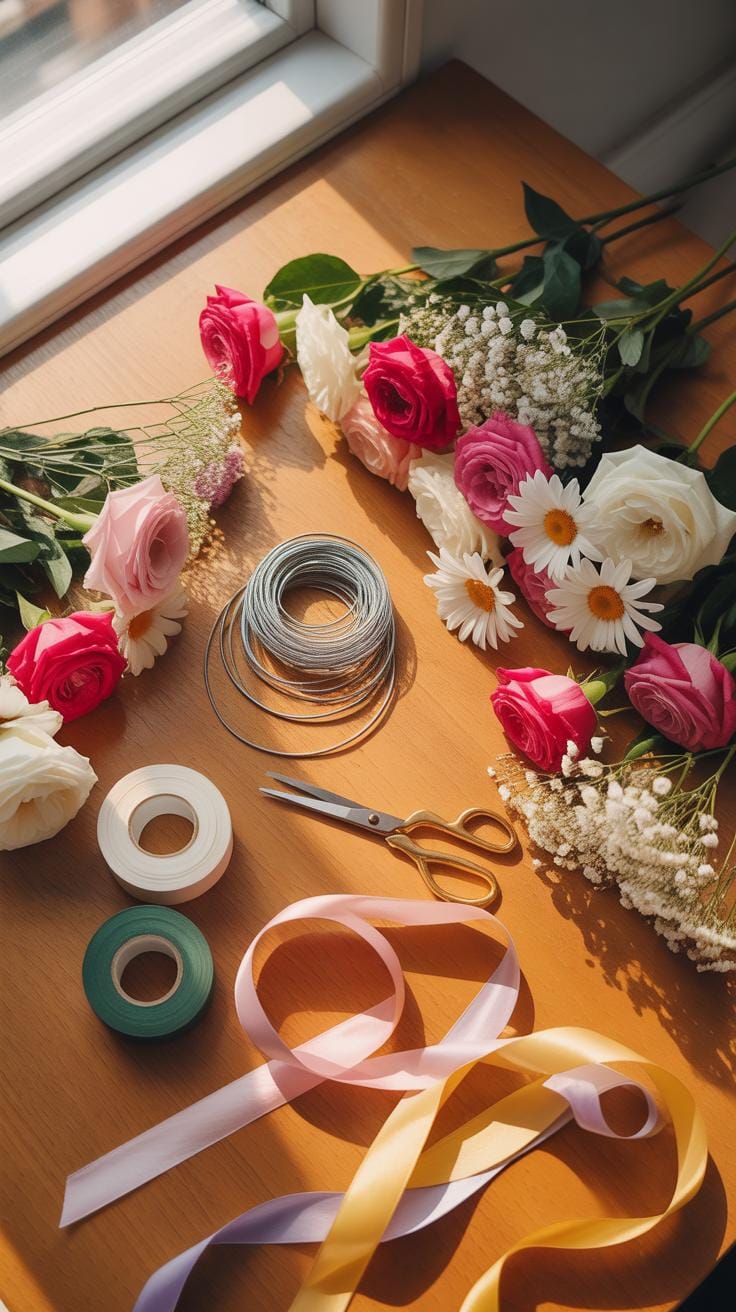
Preparation dictates the quality of the final product. You must assemble professional grade tools to ensure the crown stays intact during wear. Using substandard household items leads to structural failure. You need specific grip tools to manipulate metal and sharp blades for clean organic cuts. Organizing these supplies on a clean flat surface prevents damage to delicate flower petals during the assembly process.
- Floral Wire: Use this to create the circular frame and reinforce weak stems. Heavily coated wire prevents rusting against moisture. It provides the necessary tension to hold the weight of dense blooms without sagging or losing its shape during active use.
- Floral Tape: This wax based adhesive activates with heat from your fingers. It binds stems to the wire frame securely. The tape creates a water resistant seal that helps retain moisture in the greenery while providing a non slip surface for additional layers.
- Floral Shears: Precision blades are vital for making clean diagonal cuts on stems. Clean cuts maximize the surface area for water absorption. Standard kitchen scissors crush the vascular system of the plant which causes the flowers to wilt and die within a few hours.
- Wire Cutters: Do not use your floral shears on metal wire as it dulls the blades instantly. Dedicated wire cutters provide the leverage needed for thick gauges. Clean snips prevent jagged metal ends from poking the wearer or snagging hair during the fitting process.
- Fresh Greenery: Foliage acts as the mechanical foundation for your crown. Robust leaves like eucalyptus or ruscus hide the structural wire and tape. Durable greens provide a cushion between the blossoms and the head ensuring the crown remains comfortable for several hours of wear.
Select your flowers based on their ability to survive without a constant water source. Hardy varieties like spray roses or waxflowers perform better than soft stemmed lilies. Hardier blooms maintain their visual integrity even in warm environments. Always hydrate your materials in cool water for two hours before you begin construction. This ensures the cells are turgid and ready for the wiring process.
Choosing The Right Wire Gauge And Floral Tape For A Secure And Lasting Base
Wire gauge selection is a technical decision based on the weight of your materials. Standard floral wire ranges from 18 to 26 gauge. A lower number indicates a thicker and stronger wire. Use an 18 or 20 gauge wire for the main head loop to support the total load. Use a 24 or 26 gauge wire for individual stem reinforcements to maintain flexibility.

Floral tape relies on a paraffin wax coating to create a mechanical bond. You must stretch the tape as you wrap it to release the adhesive properties. Overlap each turn by half the width of the tape to create a smooth surface. This technique prevents the wire from showing and protects the scalp. Proper tension ensures the design remains stable and does not shift.
How To Choose The Best Flowers When You Make Flower Crown Designs
Fresh Versus Dried Flowers And How Each Affects The Longevity Of Your Crown
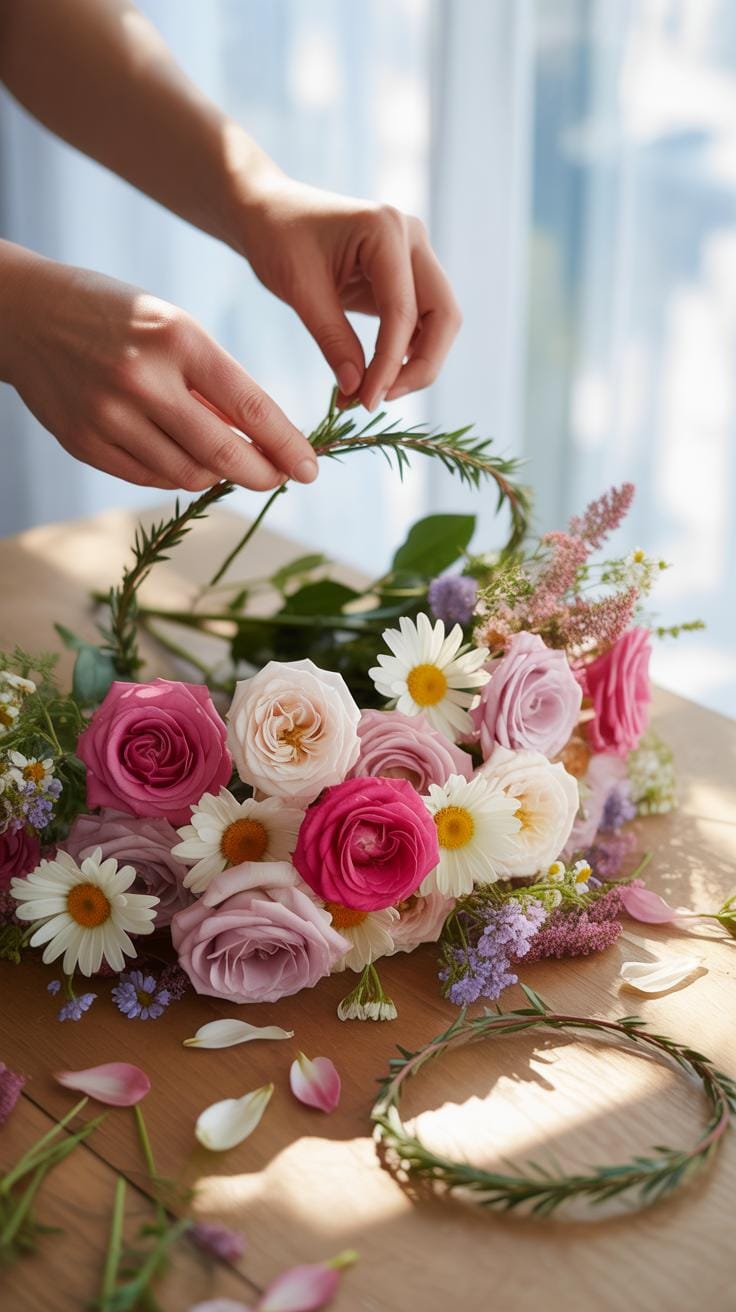
Fresh flowers offer maximum visual impact but face rapid dehydration. Once you cut a stem, the bloom begins to die. Using water picks or floral tape helps seal moisture in the stem. This keeps the cells turgid and prevents wilting during your event. Most fresh crowns last twelve to twenty-four hours if you mist them and keep them in a cold refrigerator.
Dried flowers provide a permanent solution for long events or reuse. These materials lack the flexibility of fresh stems and can snap under tension. You must use fine gauge wire to secure them without crushing the delicate fibers. Dried crowns work best for outdoor festivals where heat would kill fresh petals instantly. They do not require water and maintain their shape for several months.
Seasonal Flower Selections That Keep Your Crown Looking Vibrant All Day Long
Select flowers based on their natural blooming period to ensure structural integrity. Spring blooms like ranunculus and anemones have soft stems that require internal wiring for support. Summer heat demands hardy varieties like sunflowers, zinnias, or waxflowers. These plants have thick cuticles on their petals. This physical trait prevents water loss even when the sun is hot. You get more hours of wear.
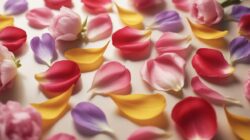
Cold weather options include hellebores and evergreen foliage during the winter months. These plants withstand low temperatures without turning black. Always pick flowers in their bud stage or just as they open. Fully open flowers drop petals when you move. Using local, seasonal flowers reduces the time from harvest to assembly. This ensures the plant tissues are at their peak strength for your wire work.
Step By Step Beginner Guide On How To Make Flower Crown Designs From Scratch
How To Measure And Shape Your Wire Base For A Perfect Comfortable Fit
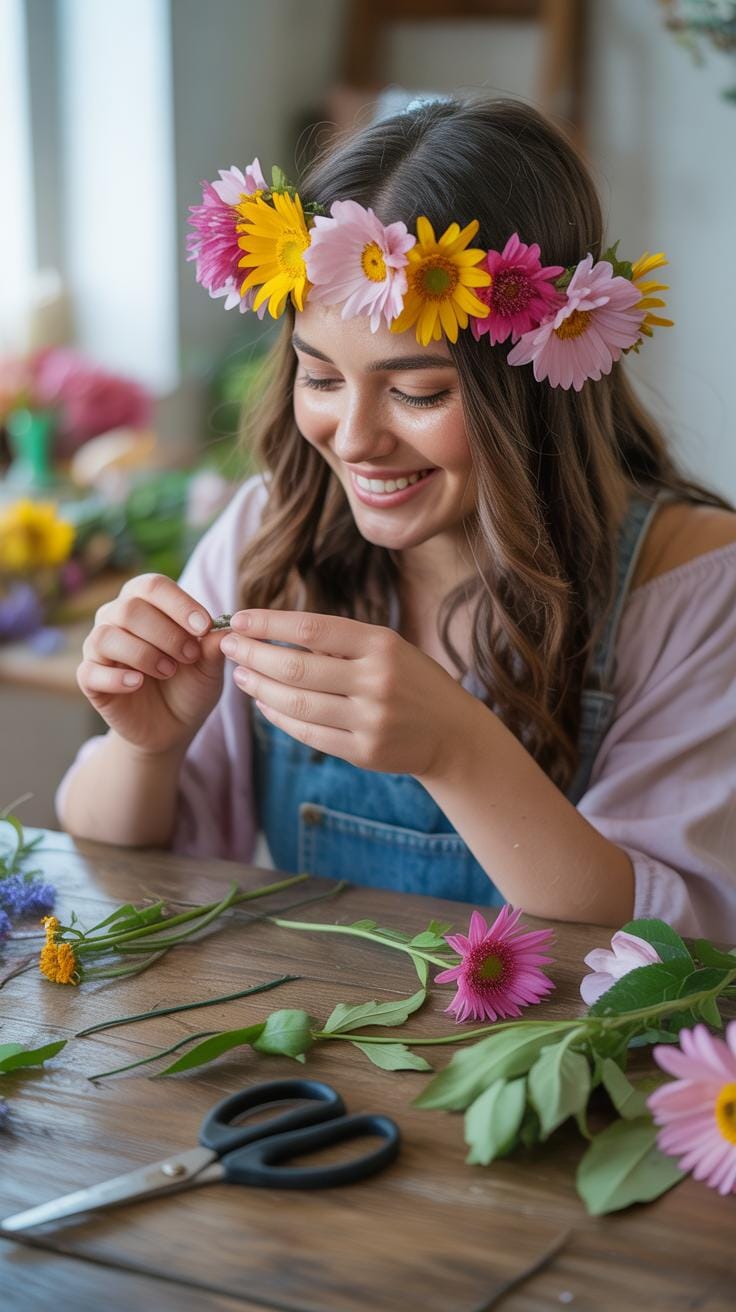
Select a heavy gauge florist wire for the foundation. Use 18 or 20 gauge wire to ensure the structure holds its shape under the weight of wet blooms. Measure the circumference of your head where you want the crown to sit. Add two inches to this measurement before cutting. These extra inches allow you to create secure interlocking loops at both ends of the wire frame.
Bend the wire into a circular shape. Smooth out any kinks to prevent pressure points on the scalp. Overlap the ends and twist them into small hooks. Test the fit now before adding any floral material. The base must feel snug but not tight. Once satisfied with the size, wrap the entire wire ring in green floral tape. This creates a high friction surface for later attachments.
How To Attach And Secure Blooms Onto Your Base Without Damaging The Stems
Begin by preparing small bundles of flowers and greenery. Consistent sizing ensures the crown looks balanced and professional. Place the first bundle against the wire base. Hold the stems parallel to the wire to minimize the risk of snapping them. Use thin 26 gauge paddle wire to bind the stems. Wrap the wire tightly around both the stems and the base three times to ensure stability.
- Stem Preparation: Trim all flower stems to a uniform length of two inches. Shorter stems are easier to secure and will not poke the wearer. Remove any excess foliage from the bottom inch of each stem to reduce bulk against the wire frame.
- Paddle Wire Tension: Pull the paddle wire firmly as you wrap. Constant tension keeps the blooms from sliding around the circular base. If the wire is loose, the heavy flower heads will rotate downward. Secure the wire after every three bundles to lock the progress.
- Layering Direction: Always work in one direction around the hoop. Place each new bundle so the blooms cover the exposed stems and wire of the previous section. This technique creates a seamless appearance. It mimics the natural growth patterns found in traditional Victorian era floral arrangements.
- Floral Tape Reinforcement: Apply floral tape over the wire wraps if the stems feel slippery. The wax in the tape activates with the warmth of your fingers. It creates a waterproof bond that keeps the design intact. This is critical for high moisture blooms like ranunculus.
- Final Locking Twist: Finish the design by tucking the last stems under the first bundle. Twist the remaining paddle wire several times around the base. Cut the wire and tuck the sharp end inward toward the flowers. This prevents the metal from scratching the wearer during use.

Position the next bundle directly below the flower heads of the first. This overlapping method hides the mechanics of your work. Continue this process until you reach the end of the wire. Check for gaps by looking at the crown from multiple angles. Add individual leaves or small filler flowers to any sparse areas. Secure these final pieces with small loops of wire to maintain a clean finish.
Flower Crown How To Make A Design That Suits Your Face Shape And Style
Understanding Crown Placement And Proportion For Different Head Sizes And Shapes
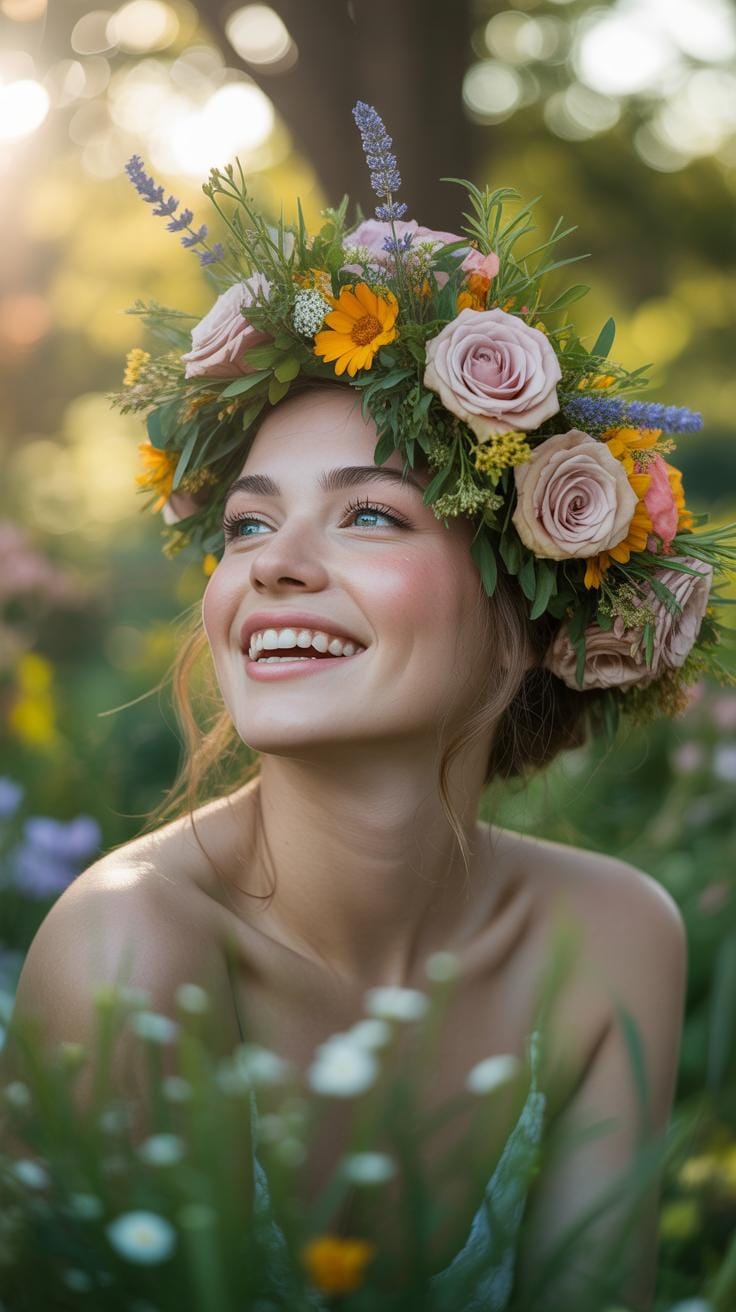
Correct crown placement balances your natural facial features. Round faces require height to create an elongated look. Place focal flowers at the top center of the wire frame. Square faces benefit from soft textures on the sides to break up a strong jawline. Use vine based bases for a more flexible fit. Measure the head circumference precisely before cutting your wire to prevent slipping.
Proportion dictates the visual weight of the accessory. Small heads require delicate blooms like waxflowers or spray roses. Large focal flowers will overwhelm a petite frame. Those with larger features should use substantial greenery and bigger blossoms like peonies. This creates a scaled look that appears intentional. Secure the crown with a silk ribbon at the back for adjustable tension and comfort.
How Color Theory Helps You Build A More Visually Balanced And Flattering Crown
Color choice affects how the crown interacts with your skin tone. Use the color wheel to select complementary or analogous schemes. Warm skin tones look best with corals, golds, and deep reds. Cool skin tones suit blues, purples, and crisp whites. Use dark foliage to create depth and contrast against bright petals. This technique ensures the crown looks vibrant rather than washed out or muddy.
Saturation and value play critical roles in design balance. High contrast combinations create a bold statement for editorial photography. Low contrast monochromatic schemes offer a subtle and classic aesthetic. Place darker, heavier colors near the base and lighter colors toward the tips of the greenery. This mimics natural growth patterns. Consistent color distribution prevents the crown from looking lopsided or distracting to the eye.
DIY Floral Crown Inspiration From Weddings To Music Festivals And Everyday Wear
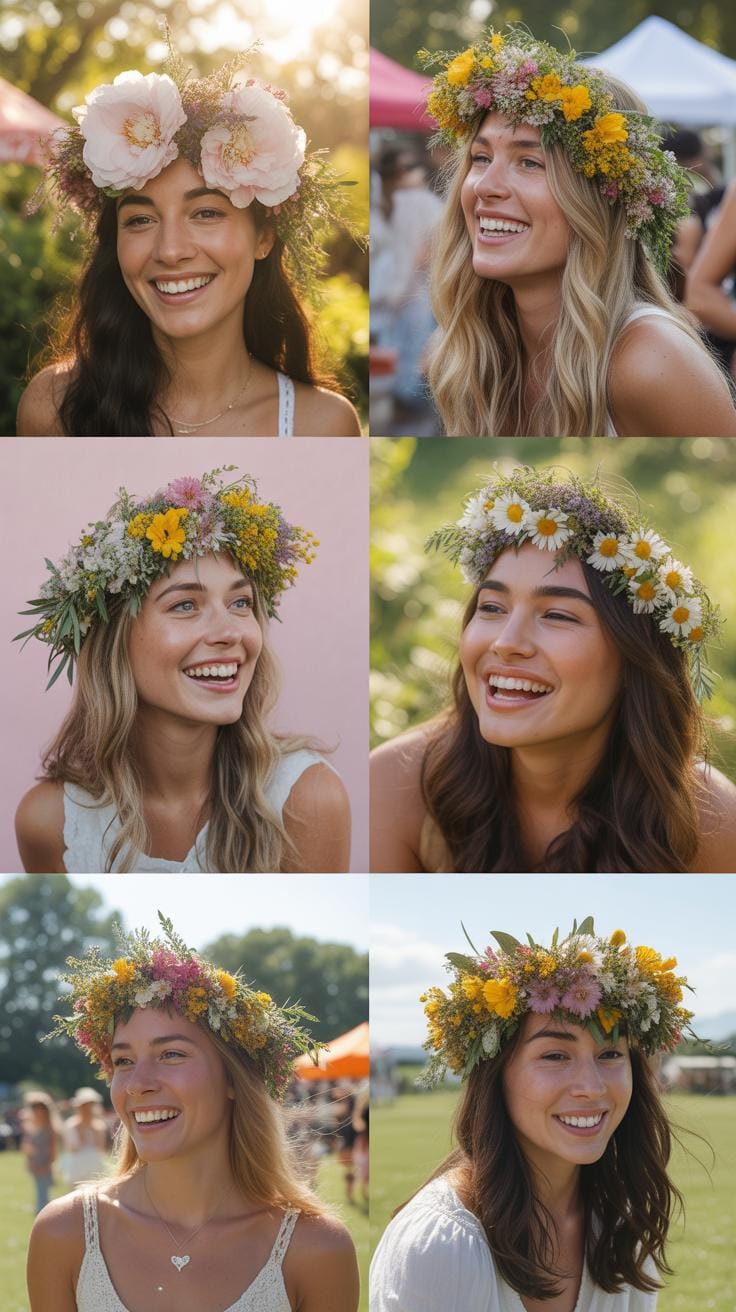
Romantic Bridal Flower Crown Styles That Complement Different Wedding Aesthetics
Modern bridal crowns prioritize structural cohesion with the wedding theme. Minimalist ceremonies require thin wire frames and greenery like eucalyptus or ruscus. This creates a clean profile. Traditional settings call for symmetrical arrangements of spray roses and ranunculus. You must match the floral weight to the hairstyle. Fine hair needs lightweight blooms. Thick hair can support heavy wired stems. Stability is the technical goal.
Vintage aesthetics draw from Edwardian and Victorian influences. These styles use wax flowers and orange blossoms. These materials offer durability and historical accuracy. Modern rustic weddings utilize dried elements like lavender and strawflower. These choices ensure the crown lasts through the entire event. Technicians must use 22-gauge floral wire for main frames. Use 26-gauge wire for delicate focal flowers. Proper wiring prevents drooping during the ceremony.
Boho And Festival Crown Ideas That Bring DIY Floral Crown Inspiration To Life
Festival crowns focus on high visibility and extreme durability. These environments feature heat and wind. Designers use hearty blooms like sunflowers and chrysanthemums. These flowers resist wilting without a water source. The construction uses a thick grapevine base for a sturdy platform. Bright colors and oversized textures define the boho look. This style allows for asymmetrical patterns. It prioritizes impact over traditional balance.

Practicality dictates material choice for all-day wear. Synthetic flowers offer the best longevity for multi-day events. If using fresh stems, select tropical varieties like orchids. These handle humidity well. Secure the crown with ribbon ties at the back. This allows for adjustable sizing. Do not use heavy water picks. They add unnecessary weight and cause neck fatigue. Choose foam-core wire for comfort. It grips the hair better than slick metal.
Flower Crowns DIY With Faux And Silk Flowers For Long Lasting Keepsake Pieces
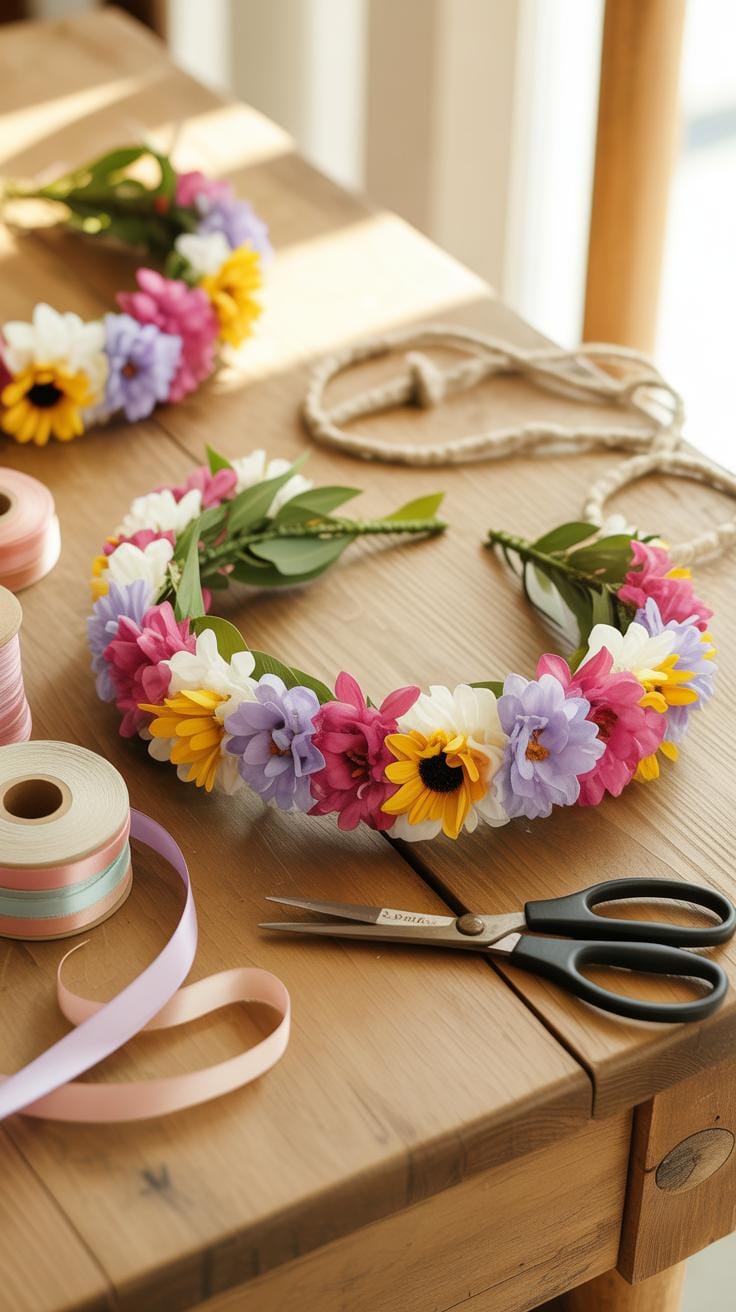
Why Silk And Artificial Blooms Are A Practical Choice For Flower Crowns DIY Projects
Faux flowers provide structural stability that fresh stems lack. Real plants wilt within hours due to moisture loss and heat exposure. High quality silk and polyester blends maintain their shape and color indefinitely. You can build your crown weeks before an event without worrying about decay. This reliability makes artificial materials the superior choice for weddings, festivals, and professional photography sessions.
Working with synthetic stems allows for advanced mechanical techniques. You can use hot glue and heavy gauge wire without damaging delicate organic tissues. Faux blooms also offer year round access to specific flower varieties. You do not have to wait for seasonal growth cycles to get peonies or lilies. These materials are lightweight and hypoallergenic. They prevent pollen stains on expensive clothing and eliminate allergic reactions for the wearer.
Where flowers bloom so does hope, and weaving them together allows us to wear our fondest memories like a crown.
How To Style And Store Your Faux Flower Crown So It Stays Beautiful Over Time
Proper storage prevents dust buildup and structural warping. Keep your headpiece in a sturdy box with a tight lid. Store the container in a cool and dry location away from direct sunlight. UV rays break down synthetic dyes and cause fabric colors to fade. Use acid free tissue paper to support the interior wire frame. This prevents the circle from flattening or losing its custom shape during the off season.
Clean your silk crown using a soft brush or a hairdryer on a cool setting. Do not use water or harsh chemicals on fabric petals. These liquids dissolve the stiffening agents that hold the flower shape. If a bloom becomes detached, use a high temp glue gun for a permanent repair. Check the wire ends for sharp edges before chaque use. Ensure the floral tape remains intact to prevent skin irritation or snagging hair.
DIY Flower Crown Ideas For Kids Birthday Parties And Creative Family Activities
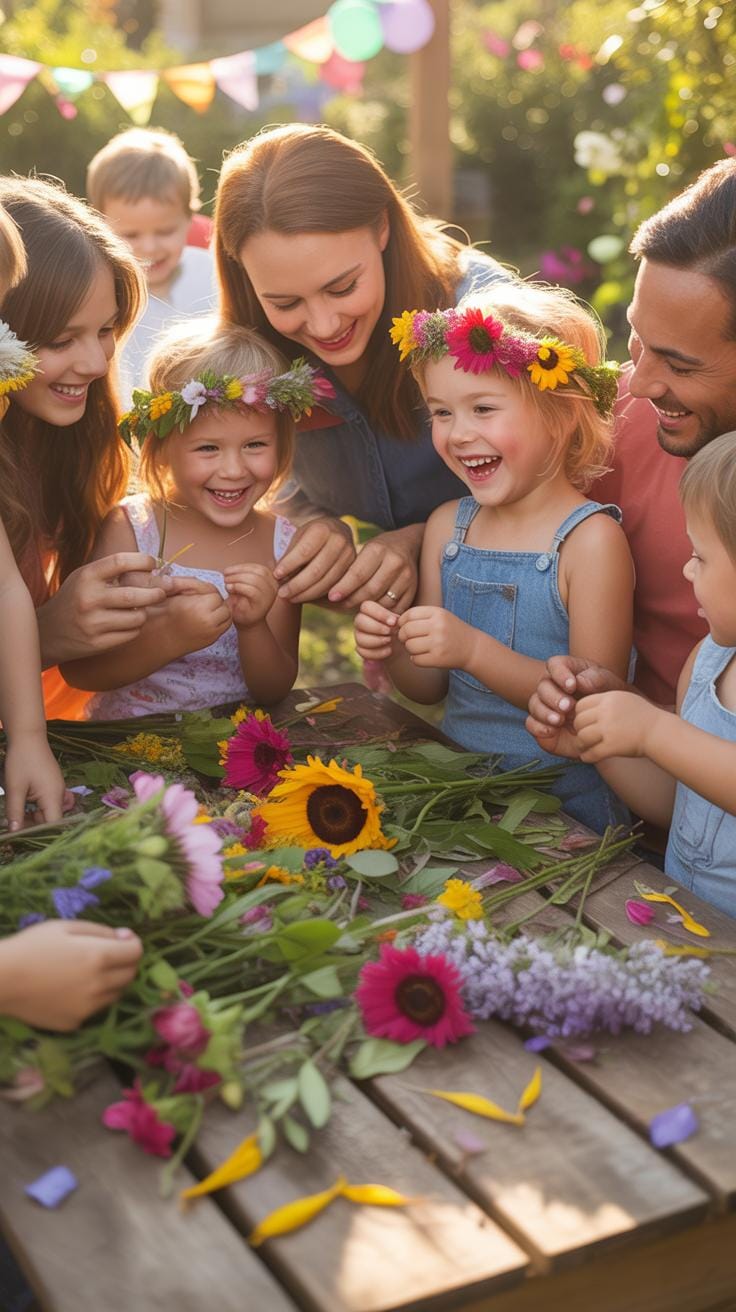
Safe And Simple DIY Flower Crown Techniques That Children Can Enjoy With Supervision
Safety defines the strategy for children. Use cloth-covered wire instead of bare metal to prevent scratches. Replace sharp floral shears with blunt safety scissors. Ensure children only handle pre-cut stems. This focus on safety reduces risks while maintaining the high quality of the final product. Supervisors must manage all wire-cutting tasks. Young children should focus on the placement and arrangement of the floral elements.
The braid method is the most reliable technique for beginners. Use three strands of twine or ribbon as a base. Direct children to tuck stems into the gaps as they braid. This mechanical lock keeps flowers in place without needing complex floral tape skills. This approach builds motor skills and teaches structural basics. It creates a durable crown that survives active play during a birthday party or family event.
Fun Themed Crown Designs That Make DIY Flower Crown Crafting A Memorable Experience
Themed designs focus on specific visual goals. A forest theme uses ferns and greenery to create a wilder look. This design mirrors traditional folk styles often found in European festivals. Use sturdy foliage like eucalyptus or ruscus for these crowns. These materials handle rough handling better than delicate petals. They provide a structural foundation that lasts through an entire day of celebration without wilting.
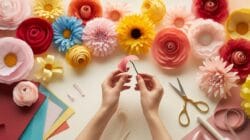
Color coordination drives the visual impact of party crowns. Select two or three dominant colors to maintain a professional look. Use bright primary colors for a superhero theme or soft pastels for a garden party. This limitation helps children make better design choices. Consistent color palettes ensure all participants produce a high-quality accessory. Proper planning turns a simple craft into a professional-grade group activity for all ages.
How To Make A Floral Crown With Foliage Greenery And Non Floral Accents
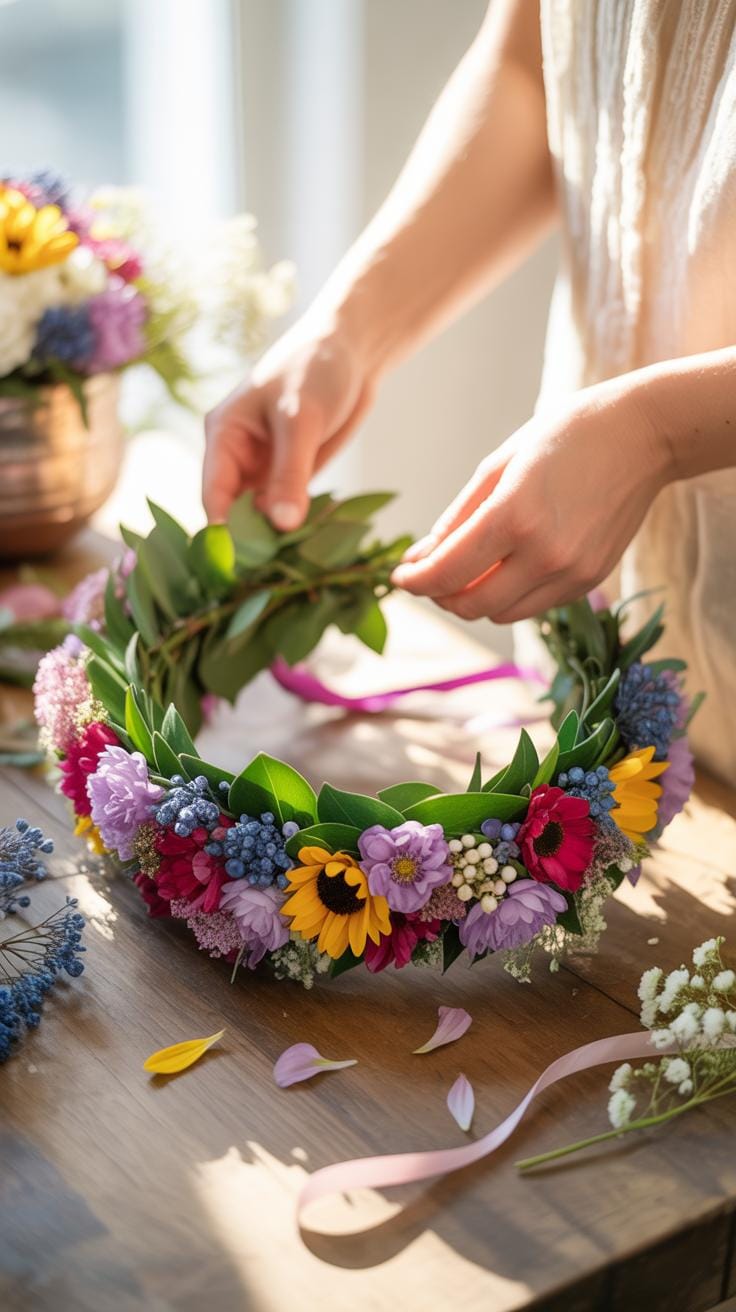
Using Eucalyptus Ferns And Ivy To Add Texture And Depth To Your Floral Crown
Foliage provides the structural foundation for any professional crown. Eucalyptus offers a sturdy stem and dusty blue tones that contrast with bright blooms. Ferns add fine detail and mimic the natural styles of the Victorian era. Ivy provides trailing length and flexibility. You must secure these elements to the wire base using green floral tape to ensure the frame remains hidden.
Layering greenery creates visual depth. Start with broad leaves like eucalyptus to establish the shape. Overlap the leaves to cover the wire completely. Add delicate ferns or ivy last to soften the edges. This technique creates a three dimensional look. Use staggered spacing to avoid a flat appearance. Firmly wrap the stems to prevent the foliage from shifting during wear.
How To Make A Floral Crown Stand Out By Incorporating Ribbons Berries And Feathers
Non-floral accents add unique visual interest. Berries provide pops of color and varied shapes. Hypericum berries are a standard choice because they do not crush easily. Feathers add movement and a rustic aesthetic. Secure these items using thin twenty-four gauge wire. Position them at natural focal points along the crown. This method ensures the accents stay in place throughout the day.
Ribbons offer a functional and decorative finish. Attach long ribbons to the back of the wire frame to hide the closure. Use silk or grosgrain for a high quality feel. Ribbons allow the wearer to adjust the fit. This practice dates back to classical Greek styles where streamers denoted status. Match the ribbon color to the primary foliage for a cohesive and professional design.
Expert Tips For Preserving Transporting And Wearing Your Flower Crown All Day
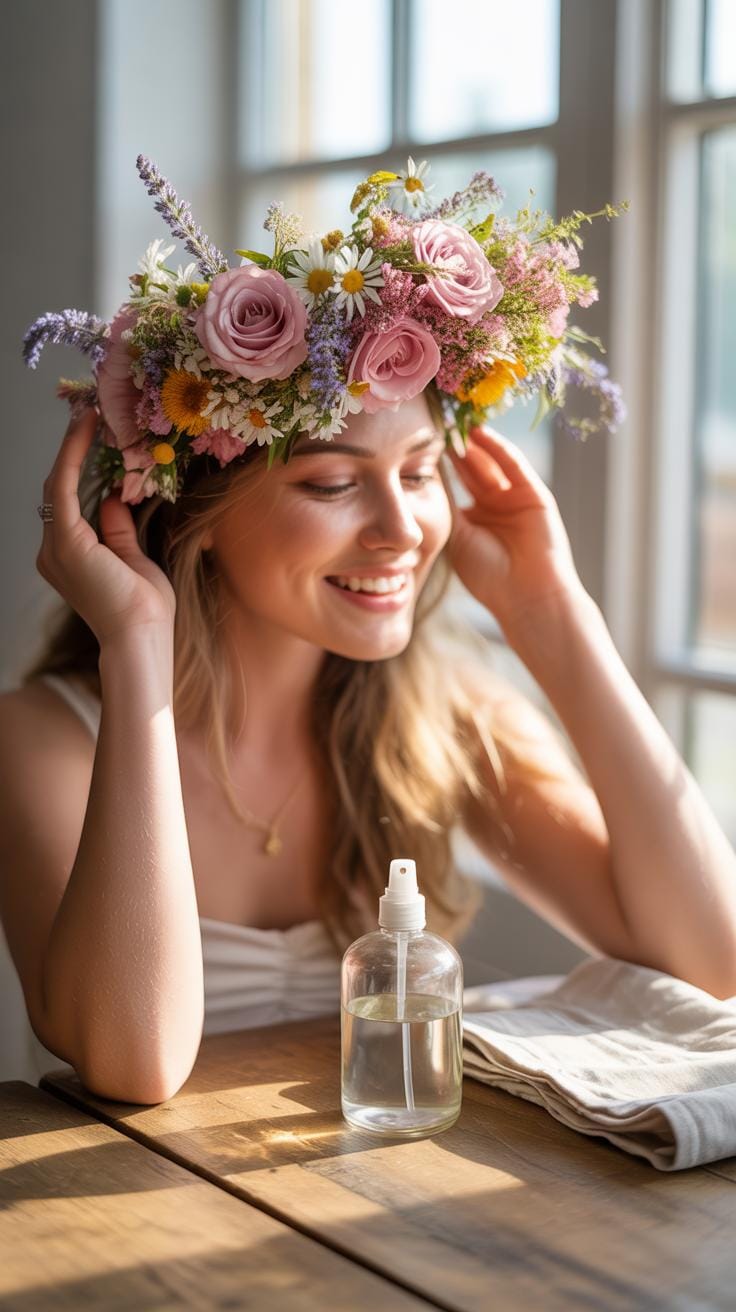
Hydration begins with cellular saturation. Cut stems at a forty five degree angle before assembly to increase water intake area. Submerge blooms in cool water for two hours. This step hardens the petals against wilting. Use a professional floral sealant spray once the crown is complete. This spray creates a clear film that prevents moisture from escaping the plant tissue through evaporation.
Store the finished crown in a sealed plastic bag or airtight container. Place a damp paper towel inside to maintain humidity levels without soaking the petals. Keep the container in a refrigerator set above freezing temperatures. Cold air slows the metabolic breakdown of the flowers. Transport the crown in a hard sided cooler to prevent bruising and maintain a consistent temperature during transit.
Stability depends on weight distribution and anchor points. Position the crown so it sits comfortably on the widest part of your head. Use bobby pins that match your hair color for a seamless look. Cross two pins in an X shape over the wire frame at the temples and the back. This locking technique prevents the crown from sliding forward or tilting during movement.
Balance the weight of the floral focal point against the back of the head. Add a ribbon tie to the rear of the wire base for an adjustable fit. Tighten the ribbon to ensure a snug grip against the skull. Avoid applying hairspray or perfume after putting the crown on. Chemicals in these products cause immediate browning of delicate petals and weaken the structural integrity of the blooms.
Frequently Asked Questions

Are flower crowns difficult for beginners to make at home?
Not at all! Most flower crown tutorials are designed to be beginner-friendly, focusing on simple techniques like wrapping floral wire and securing stems with florist tape. As long as you have a sturdy base and a pair of snips, you can create a beautiful accessory in under thirty minutes. Starting with larger blooms makes the process even easier for novices who are just learning the art of floral arrangement and design.
How do I keep my flower crown from wilting during an event?
To keep your creation looking fresh, choose hardy blooms like ranunculus, spray roses, or waxflowers. Many advanced flower crown tutorials recommend misting the finished piece with water and storing it in a sealed plastic bag in the refrigerator until you are ready to wear it. You can also use a floral finishing spray to seal in moisture, ensuring your petals remain vibrant and hydrated throughout your entire celebration.
Can I create a beautiful flower crown on a tight budget?
Absolutely. You can save money by foraging greenery from your backyard or using high-quality silk flowers that last forever. Many budget-friendly flower crown tutorials suggest using grocery store bouquets, which are much cheaper than professional floral stems. By focusing on inexpensive fillers like baby’s breath or eucalyptus, you can design a lush, professional-looking crown that looks expensive without breaking the bank or requiring a trip to a specialty florist.