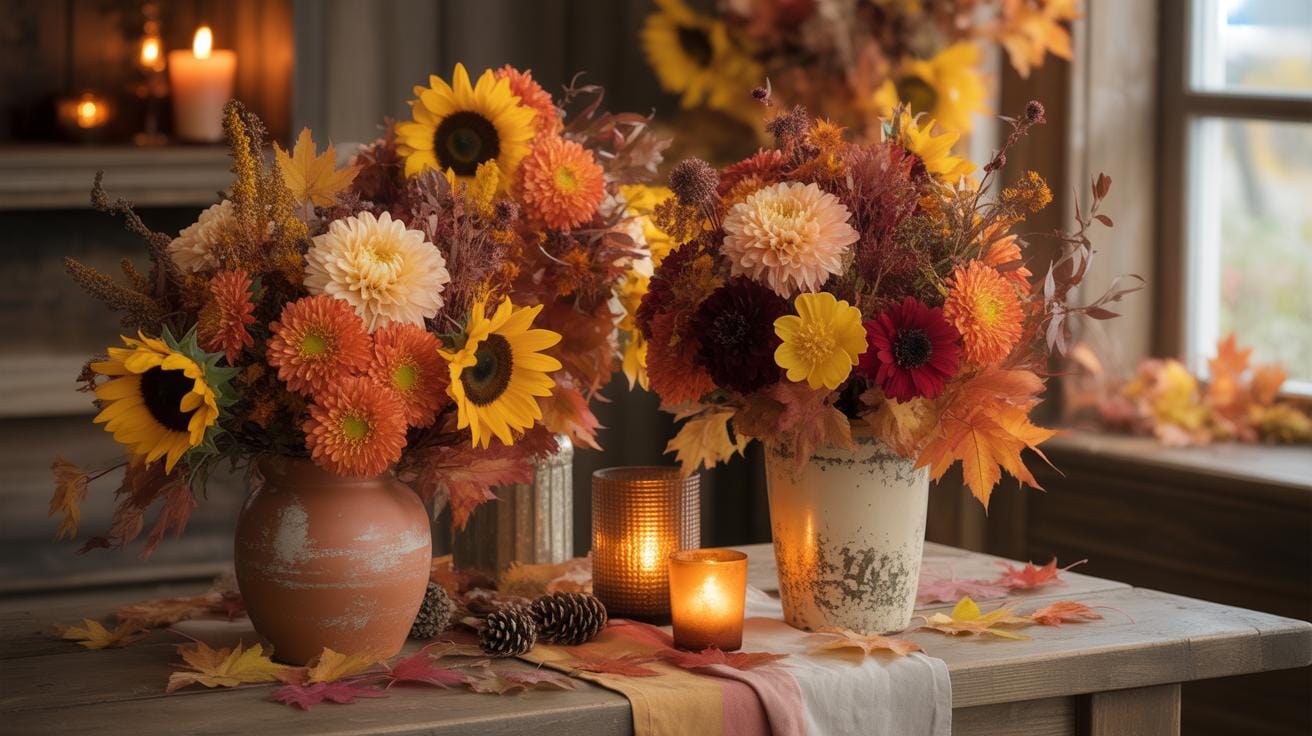
The Art Of Fall Flower Arrangements Embracing The SeasonS Natural Palette
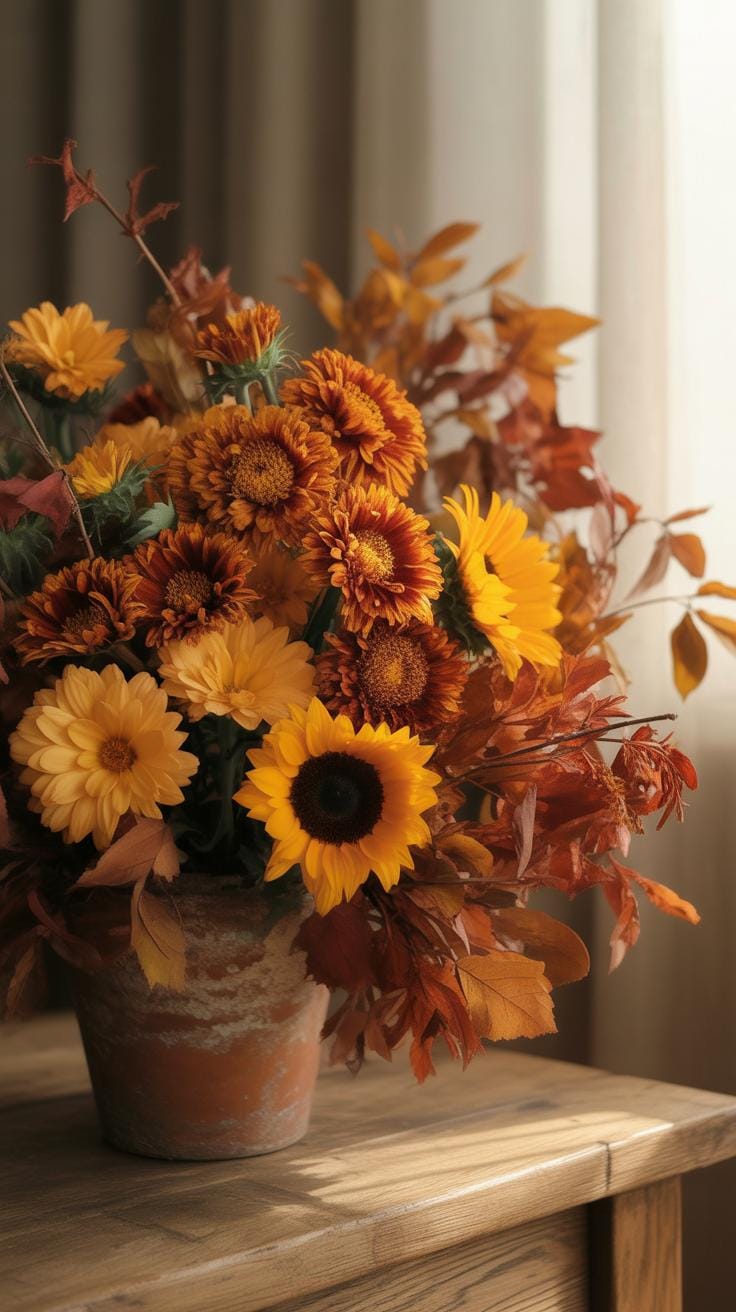
Understanding Autumn’S Signature Color Story In Floral Design
Effective autumn design relies on a specific pigment shift. Plants stop producing chlorophyll as temperatures drop. This reveals xanthophylls and carotenes. Designers use this biological change to select palettes. You must focus on high-saturation tones like deep ochre, burnt sienna, and cadmium orange. These colors provide visual weight and heat. They contrast sharply with the cool gray light of shorter fall days.
Do not rely solely on bright oranges. Professional arrangements require tonal depth. Use analogous color schemes to create harmony. Combine deep burgundy with plum and copper. This approach mimics the natural decay found in deciduous forests. It creates a sophisticated look rather than a generic seasonal display. Use dark foliage to ground your lighter blooms. This reinforces the structural integrity of the overall color story.
How Seasonal Blooms Define The Character Of A Fall Flower Arrangement
Selection of specific species dictates the texture of your work. Chrysanthemums and dahlias are the backbone of fall design. They offer dense petal counts and structural durability. These flowers survive lower temperatures better than soft summer varieties. Their rigid stems support large heads without drooping. This allows for taller and more aggressive vertical builds in your arrangements. Accurate selection ensures your design lasts longer.
Incorporate non-floral elements to finalize the seasonal character. Seed pods, dried grasses, and woody branches add necessary grit. These materials reflect the harvest cycle and the approach of winter. Use them to break up soft floral lines. This technique creates a rugged and natural aesthetic. Designers call this the gathered look. It provides a realistic representation of the changing environment outside the studio.
Best Flowers To Use In Autumn Floral Arrangements For Special Events
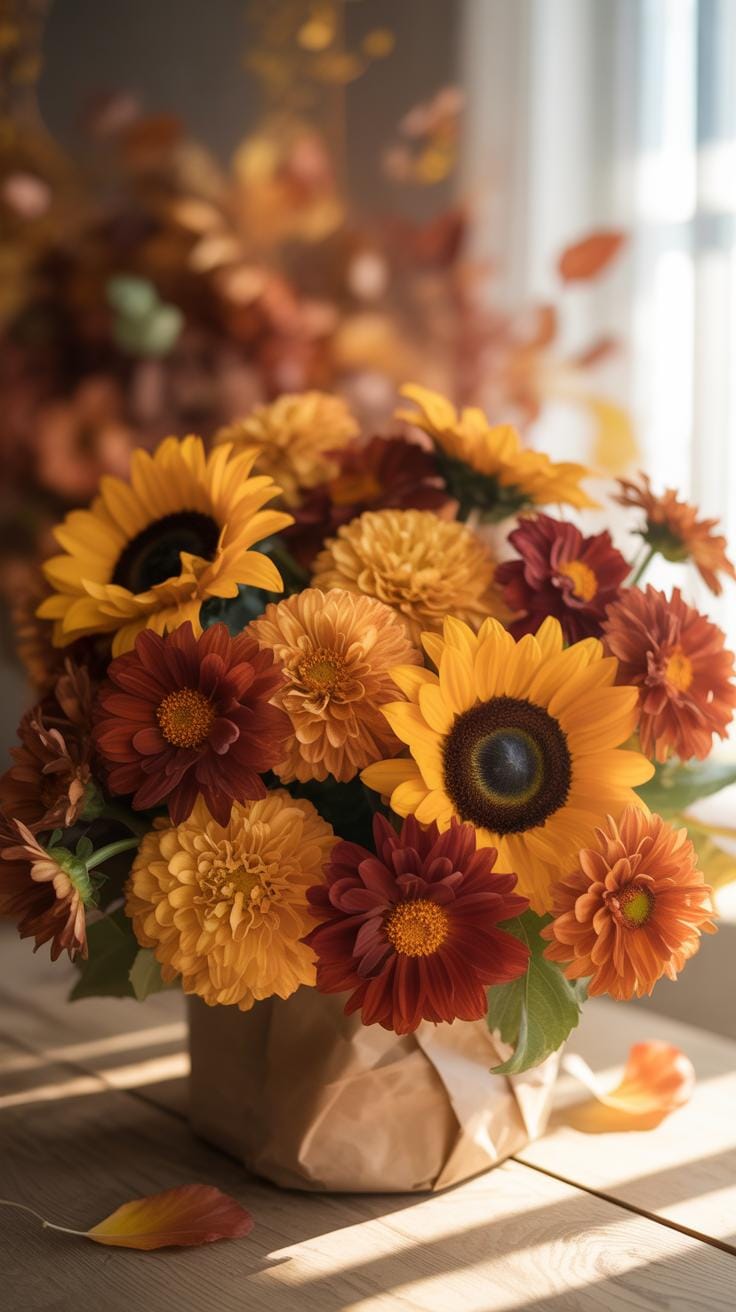
Top Seasonal Blooms That Thrive And Look Stunning In Fall
Autumn floral design relies on flowers that handle temperature shifts and provide saturated colors. Professional florists prioritize hardy species with dense petal structures. These blooms must withstand low humidity in heated indoor venues. Selecting flowers that peak naturally in September and October ensures the highest petal count and stem strength. You reduce waste and costs by sourcing flowers during their natural biological peak.
- Chrysanthemums: These staples offer unmatched durability and a vast color range. Large-headed football mums provide focal points while spray varieties add volume. They last up to three weeks in water making them ideal for long events.
- Dahlias: Known for geometric petal patterns and rich jewel tones. Dinnerplate varieties serve as the primary centerpiece attraction. They bridge the gap between late summer and the first frost with high impact visual weight.
- Ranunculus: These cool-season flowers provide a delicate look with extreme toughness. Their thick stems support heavy heads. The orange and burgundy varieties mimic the sunset tones essential for traditional autumn palettes and formal event aesthetics.
- Cymbidium Orchids: These orchids thrive in cooler temperatures unlike tropical varieties. They add a high-end architectural element to arrangements. Their thick waxy petals resist wilting in dry air and provide a sophisticated contrast to rustic fall textures.
- Celosia: This flower offers unique fuzzy textures resembling coral or velvet. The deep reds and oranges provide intense color saturation. It stays upright without drooping and transitions perfectly into dried arrangements once the primary event concludes.
Sourcing these varieties locally reduces transport stress on the plants. Freshness determines the lifespan of the arrangement during multi-day functions. Use clean shears to cut stems at a forty-five degree angle for maximum water intake. Place focal flowers like dahlias early in the design process to establish the visual weight. This strategic selection ensures your displays maintain structural integrity and color vibrancy from start to finish.
Autumn is a second spring where every leaf is a flower, offering a rich palette to weave memories into every centerpiece.
Combining Foliage, Berries, And Dried Elements For Textural Depth
Successful autumn arrangements use non-floral elements to create visual layering. Designers incorporate woody stems and seed pods to mimic the natural landscape transition. This technique creates a three-dimensional effect that flat bouquets lack. Use ilex berries or hypericum to add spots of bright color and stiff structural support. These components do not wilt and provide a reliable frame for softer petals.
Dried elements lend a permanent architectural quality to temporary floral displays. Preserved eucalyptus and bleached ferns introduce muted tones that make vibrant blooms pop. Incorporate wheat stalks or dried lotus pods to reference historical harvest motifs accurately. This contrast between living tissue and preserved material defines the modern autumnal style. These additions also lower overall costs by filling space without the high price of premium fresh stems.
Pumpkin Flower Arrangements A Charming And Creative Fall Centerpiece Idea
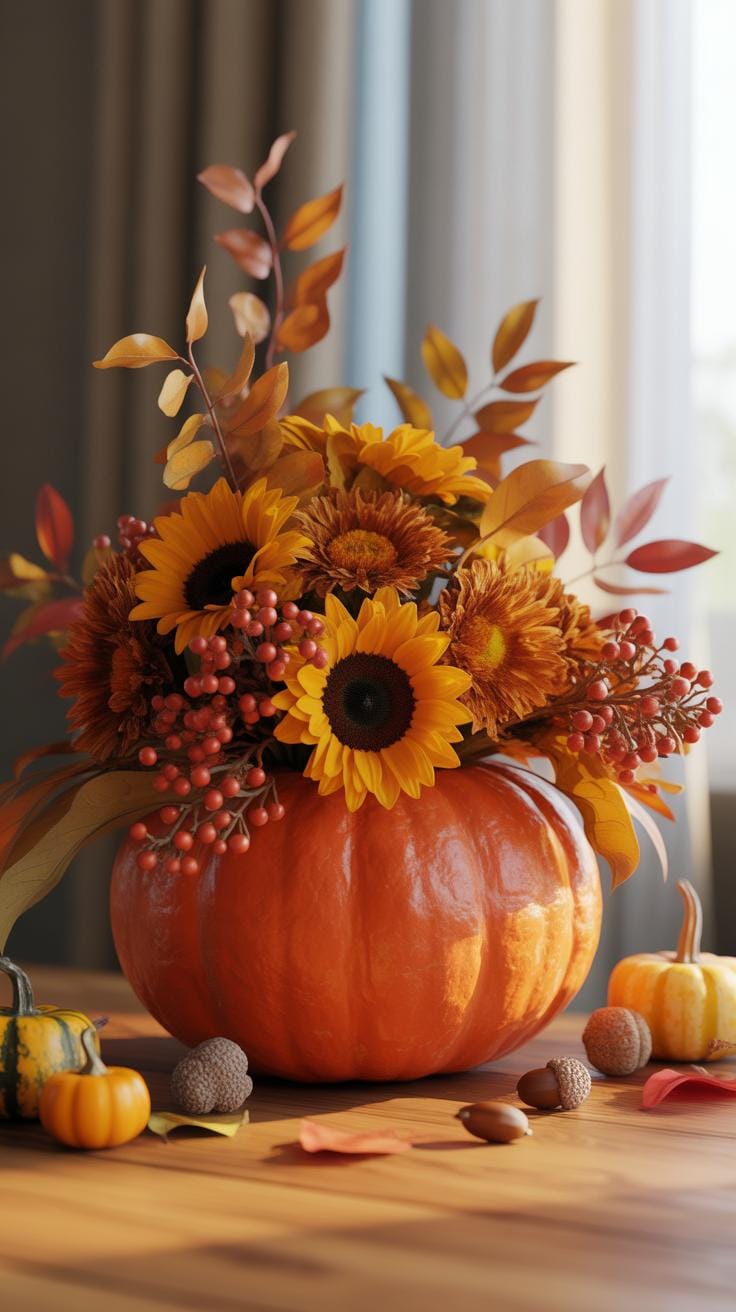
How To Use A Real Or Faux Pumpkin As A Floral Vessel
Select a stable pumpkin with a flat base. For real pumpkins, cut a hole around the stem and remove all interior pulp and seeds. Scrape the walls thin to prevent early rot. Treat the inside with a diluted bleach solution to kill bacteria. This step extends the life of the vessel. Real pumpkins fail within days if you do not manage moisture levels properly.
Faux pumpkins offer a permanent alternative for repeat displays. Use a sharp craft knife to cut the top. Place a plastic liner or a glass jar inside the cavity before adding water or floral foam. This prevents leaking and adds weight to the light foam shell. Always balance the arrangement to prevent tipping. Secure the structure with waterproof tape across the top opening for maximum stability.
Choosing The Right Blooms And Fillers For A Pumpkin Arrangement
Focus on hardy stems that tolerate different moisture levels. Chrysanthemums and dahlias provide the necessary bulk and color density for this style. Use sunflowers for a strong focal point near the rim. Incorporate woody stems like hypericum berries or bittersweet vines for structural integrity. These choices reflect the harvest season and withstand the heat generated by decaying organic vessels like real pumpkins.
Balance the round shape of the pumpkin with varied textures. Use eucalyptus or dusty miller to provide a muted color contrast against orange or white skins. Add dried wheat or ornamental grasses to increase the vertical height of the piece. Avoid delicate flowers like sweet peas that wilt quickly without high humidity. Stick to thick-stemmed varieties that can draw water efficiently from a shallow reservoir or soaked floral foam.
Fall Pumpkin Flower Arrangements For Weddings And Celebrations
Styling Fall Pumpkin Flower Arrangements For Rustic Wedding Tablescapes
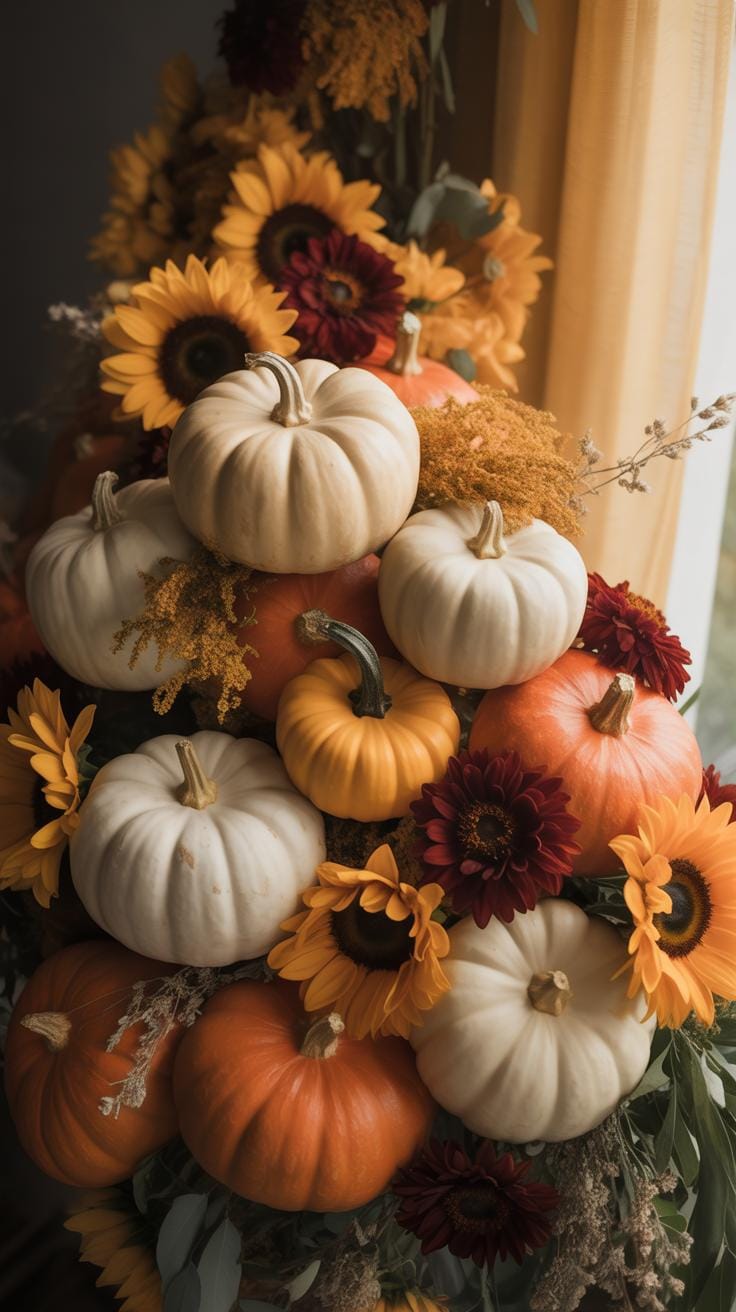
Designers use pumpkins as natural vessels to anchor rustic tablescapes. You must hollow out the gourd and insert a waterproof liner or floral foam. This prevents moisture from rotting the pumpkin shell and damaging the linens. Focus on structural integrity by choosing flat-bottomed varieties like Cinderella or Musquee de Provence. These heirloom types provide a stable base for heavy floral stems and cascading greenery.
Color coordination is critical for professional results. White Lumina pumpkins offer a neutral base for deep burgundy dahlias and dried wheat. Small Jack Be Little gourds function well as place card holders or accent pieces. Mix different heights and textures to create visual interest across long banquet tables. Use heavy-gauge wire to secure large blooms within the pumpkin. This ensures the arrangement remains stable during transport and guest interaction.
Incorporating Pumpkin Arrangements Into Ceremony Decor And Aisle Displays
Pumpkin arrangements define the ceremony space by framing the aisle and altar. Large heirloom pumpkins serve as heavy anchors for floor-level displays. Use varying sizes to create a graduated visual flow toward the focal point. Ensure all pumpkins are cleaned and treated with a preservative to prevent premature wilting. Professionals often apply a thin layer of wax to the exterior to maintain a crisp appearance under bright lights.
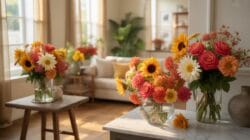
Position these arrangements at the end of each row to direct guest movement. Secure the internal floral foam with waterproof tape to handle outdoor wind or uneven terrain. Incorporate seasonal foliage like eucalyptus or oak leaves to mask the top edges of the gourd. This creates a seamless transition between the vessel and the flowers. Focus on durability by selecting long-lasting blooms like chrysanthemums or carnations for these high-traffic areas.
Pumpkin Flower Centerpiece Ideas That Wow At Dinner Parties And Gatherings
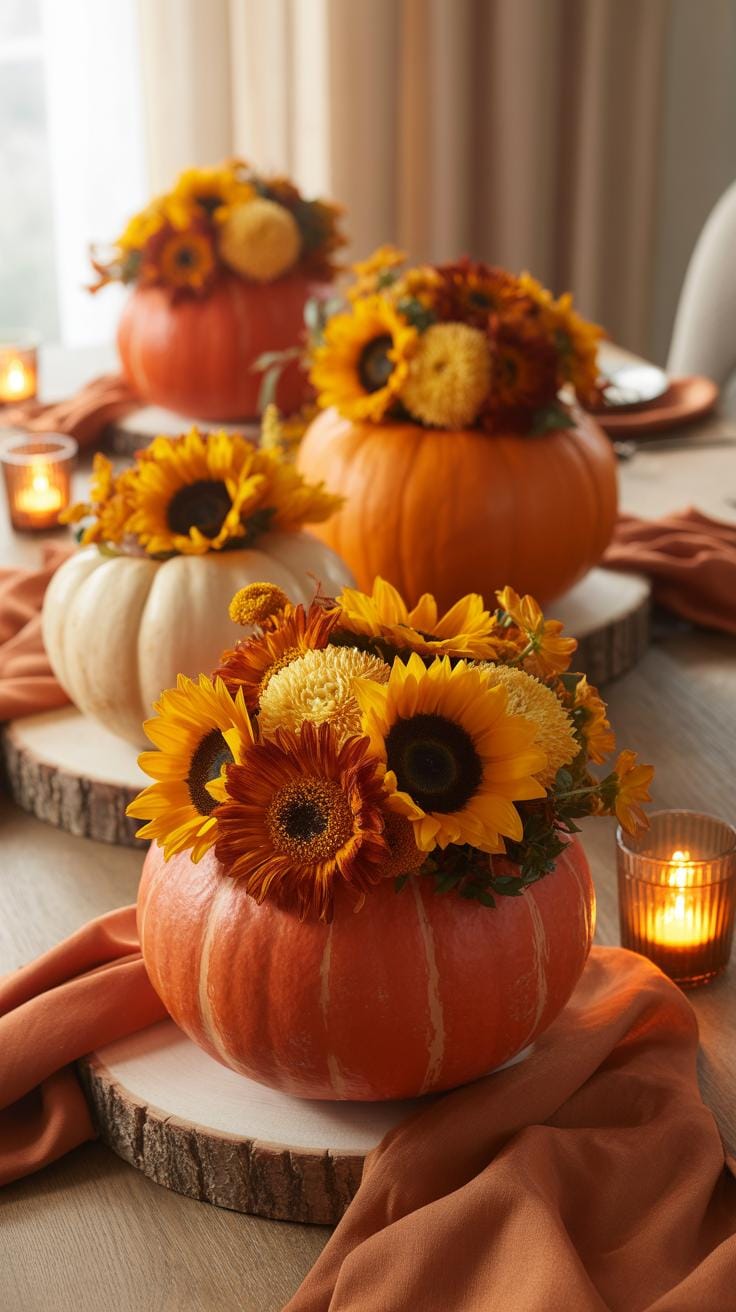
Designing
Flower Arrangements Fall Autumn Style Traditions And Inspirations Across Cultures
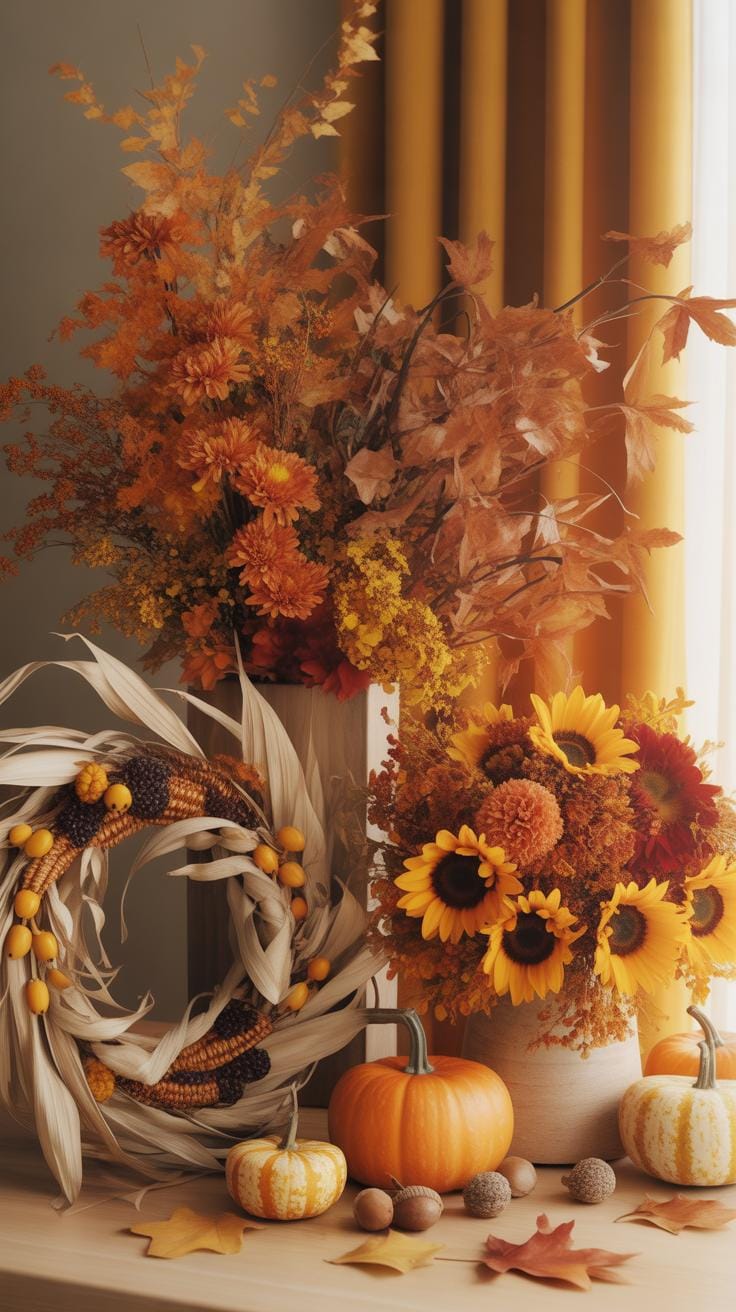
How Harvest Festivals Around The World Influence Autumn Floral Traditions
Harvest festivals dictate the materials used in local floral traditions. In Europe, the Harvest Home custom led to arrangements featuring grain sheaves and dried seed heads. These elements symbolize the end of the growing cycle and provide structural rigidity. Practitioners prioritize durability over delicate blooms. This ensures displays last through long community celebrations. Farmers traditionally utilized whatever crops remained in the fields after the final reaping.
Global traditions often incorporate specific color palettes tied to agricultural cycles. In North America, indigenous practices influenced the use of corn husks and dried squash blossoms in decor. These materials reflect late-season food sources and offer unique textures. Modern designers adopt these tactics to create high-contrast arrangements. They use hardy textures to withstand temperature drops during outdoor events. This practical approach ensures the floral design remains stable and visually impactful.
Drawing Inspiration From Ikebana And Other Seasonal Floral Art Forms
Ikebana provides a strategic framework for autumn arrangements through the concept of Kigo. This Japanese art form emphasizes the sparse beauty of decaying plant life. Designers select crooked branches and withered leaves to represent the passage of time. This technique creates negative space and draws the eye to specific focal points. It prioritizes the natural curve of the stem over the mass of the flower head.
Western floral movements often focus on the Dutch Golden Age style for autumn inspiration. This involves deep, moody colors and heavy use of fruit like grapes or pomegranates. These arrangements feel dense and luxurious because they mimic historical still-life paintings. Designers use these cues to build arrangements with visual weight and rich textures. Combining these structured European styles with minimalist Eastern techniques creates a balanced and modern autumn aesthetic.
Flower Arrangements Fall Collections Designing For Thanksgiving And Harvest Occasions
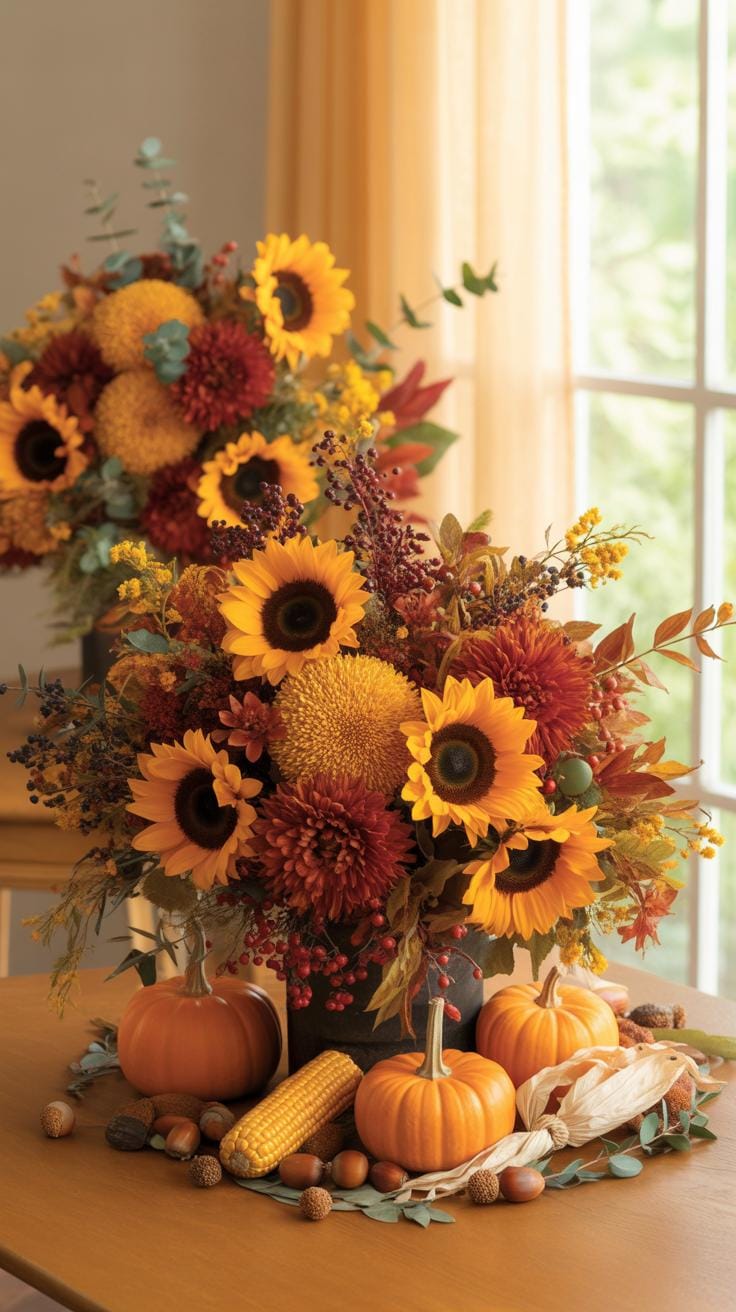
Creating Warm And Inviting Thanksgiving Table Arrangements With Fall Blooms
Thanksgiving centerpieces require a specific height strategy to allow conversation. Build your base with sturdy woody stems like oak or maple leaves. Use mass flowers such as chrysanthemums and dahlias to establish a heavy visual center. These blooms withstand the warm indoor temperatures of a kitchen or dining room. Select flowers in deep ochre and burgundy to mirror the seasonal transition.
Focus on the hydration needs of your specific flower choices. Zinnias and sunflowers drink water quickly and require daily refills. Use floral foam or a pin frog to secure heavy stems in shallow vessels. This technique prevents the arrangement from tipping over during the meal. Monitor the water level closely since the dry heat from ovens and heaters will wilt delicate petals within hours.
Using Cornucopias Gourds And Natural Props To Enhance Your Floral Display
The cornucopia represents a traditional symbol of abundance from Greek mythology. This curved basket requires a structural liner to hold damp floral foam. Place your largest gourds or pumpkins at the mouth of the horn first. Then tuck small flowers and trailing vines around the fruit. This method hides the mechanics of the design. Use stiff wired stems to keep heavy elements in place.
Incorporate natural materials like dried wheat and lotus pods for texture. These items do not need water and add a matte finish to your display. Intersperse different shapes of squash to break up the roundness of the flower heads. Position these props so they appear to spill out of the container onto the table. This movement gives your harvest display a professional and balanced look.
Fall Flower Arrangements For Sympathy Memorial And Remembrance Events
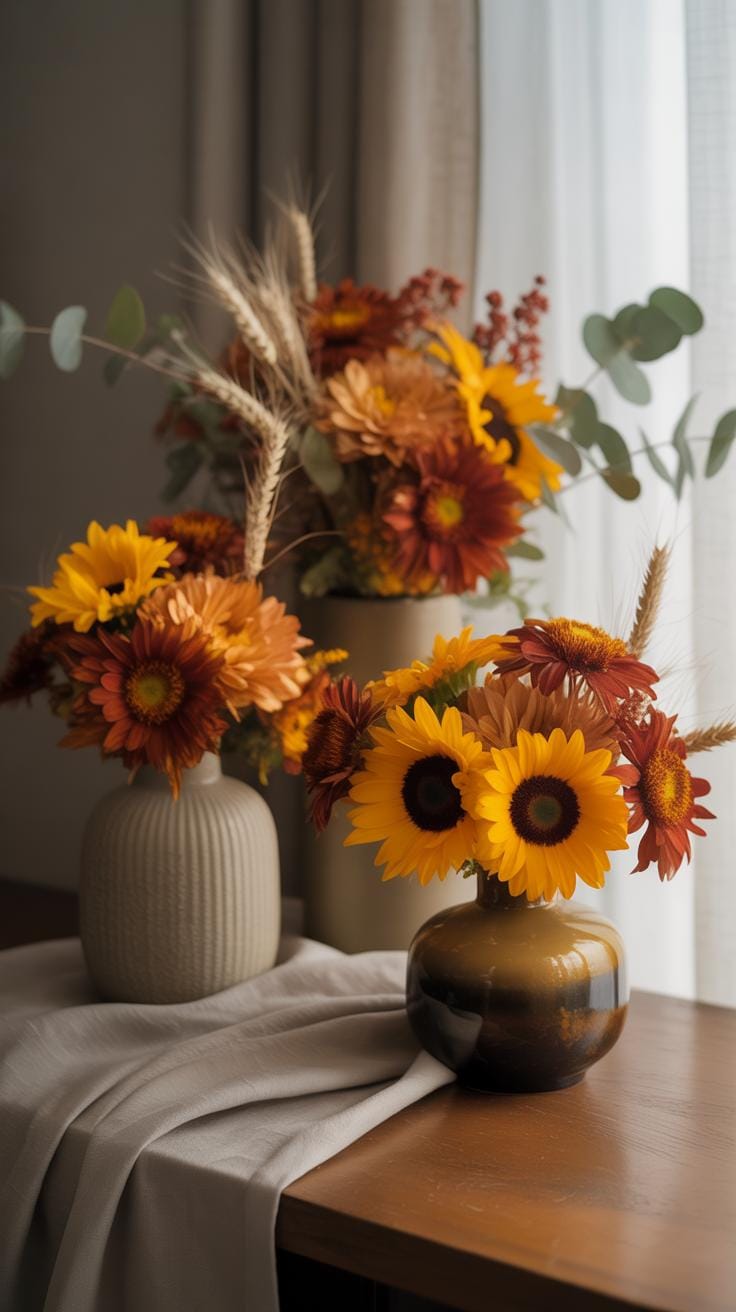
Choosing Respectful And Meaningful Blooms For Autumn Memorial Arrangements
Select blooms based on longevity and historical symbolism. Chrysanthemums serve as the primary memorial flower in many cultures. They represent grief and honor. Combine them with lilies for a traditional look. Use deeper tones like burgundy and plum to reflect the season. Avoid bright yellows or oranges that signal celebration. Focus on sturdy stems that withstand temperature shifts in outdoor cemeteries.
Structure the arrangement using the pyramid or fan shape. These geometric forms date back to early funeral traditions. They provide a clear focal point and stable base. Use gladiolus to provide height and structure. Incorporate eucalyptus or willow for texture. These greens stay fresh for several days. Ensure the flowers remain hydrated using floral foam. Clear water prevents bacterial growth and extends the life of the display.
Balancing Warmth And Solemnity In Sympathy Floral Designs During Fall
Balance the color palette to show empathy. Use muted tones like mauve, dusty rose, and cream. These colors provide comfort without appearing too casual. Avoid neon or high-contrast colors. Use natural elements like oak leaves or dried wheat to add seasonal context. These materials represent the cycle of life and harvest. Keep the design restrained to maintain a respectful tone for the bereaved family.
Incorporate wood or stone containers to ground the design. These materials offer weight and durability. Avoid plastic or glass which can look cheap in a formal setting. Use the Biedermeier style for a compact and organized look. This technique places flowers in concentric circles. It creates a sense of order and peace. Make sure the arrangement is easy to transport from the service to the home.
DIY Tips For Crafting Beautiful Fall Flower Arrangements At Home
Essential Tools And Supplies You Need To Arrange Fall Flowers Like A Pro
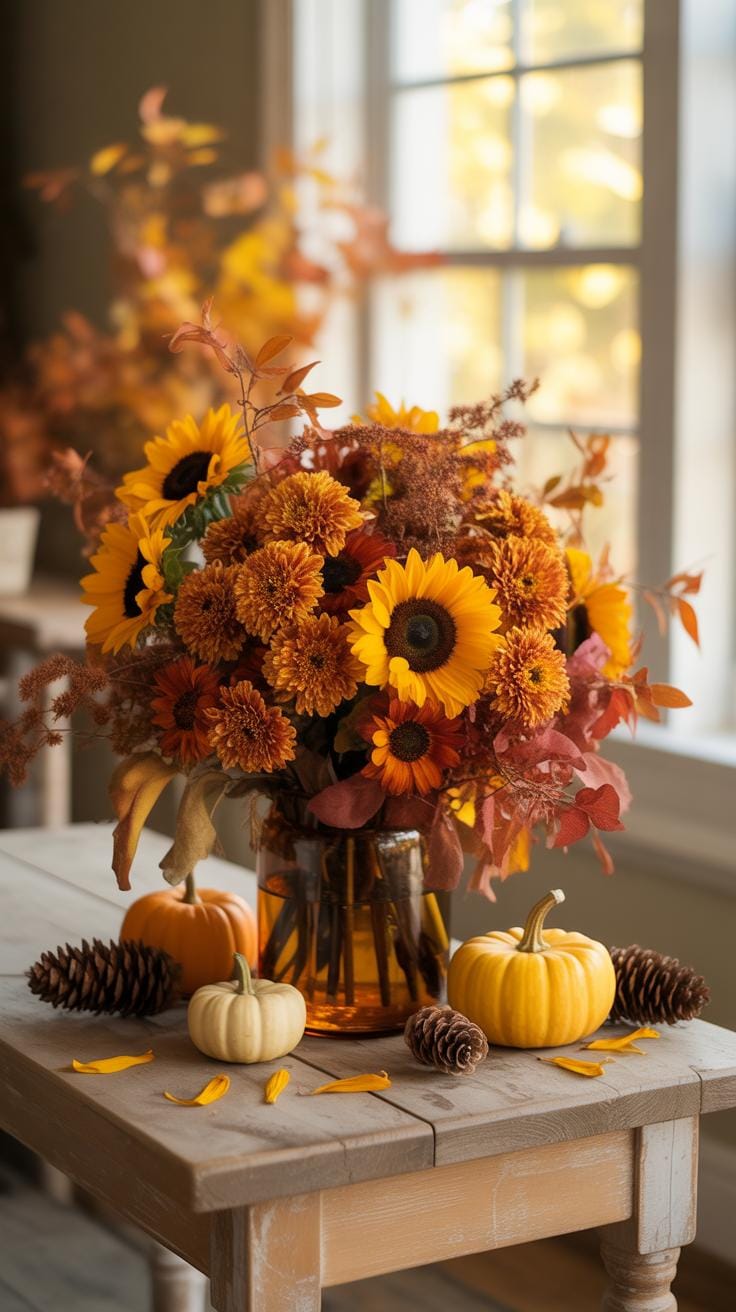
Professional floral design requires specific hardware to handle the heavy, woody stems common in autumn. You cannot use standard kitchen scissors for these materials. Clean cuts ensure the vascular system of the plant remains open for water intake. Utilizing the correct mechanics allows for structural integrity in larger arrangements. These tools provide the control necessary for precise placement and long-lasting stability in your vessels.
- Bypass Pruners: Use these for thick, woody stems like hydrangea or fruiting branches. They work like scissors and create clean cuts without crushing the delicate tissue. This prevents rot and allows the stem to drink water effectively throughout the display period.
- Floral Snips: These lightweight tools handle soft-stemmed flowers like dahlias or ranunculus. They offer high precision for fine detail work and deadheading. Keep the blades sharp to avoid tearing the stems, which can lead to bacterial growth in the water.
- Chicken Wire: This flexible mesh serves as a sustainable alternative to floral foam. Fold it into a ball and secure it inside your vase with waterproof tape. It provides multiple anchor points for stems and allows for more natural, airy movement in your designs.
- Waterproof Floral Tape: Use this to create a grid across the mouth of your container. It adds structural support and keeps stems in place as you build the arrangement. The adhesive remains strong even when wet, ensuring your design does not shift or collapse.
- Floral Thorn Stripper: This tool removes leaves and thorns from rose stems quickly. Eliminating foliage below the water line is critical for maintaining hygiene. Reducing surface debris prevents the rapid multiplication of bacteria that kills flowers and creates foul odors in the vase.
Select a vessel that complements the weight of your seasonal blooms. Heavy ceramic crocks or stone vases provide the necessary counterweight for top-heavy branches and large sunflowers. Always sanitize your containers with a bleach solution before use. Eliminating existing microbes creates a sterile environment that supports the health of your stems. Proper preparation of your workspace and equipment is the first step toward a successful design.
How To Condition And Extend The Life Of Your Autumn Floral Arrangements
Conditioning starts the moment you bring flowers inside. Cut stems at a forty-five degree angle under lukewarm water to prevent air bubbles from blocking the veins. Remove every leaf that sits below the water line to stop decay. For woody branches, smash the bottom inch of the stem with a mallet. This increases the surface area for water absorption and keeps the foliage hydrated.
Change the water every two days to maintain clarity and health. Use a floral preservative to provide sugar for energy and acid to balance the pH levels. Keep the arrangement away from direct sunlight, heat vents, and ripening fruit. Ethylene gas from fruit and high temperatures accelerate the aging process. Mist the blooms daily to maintain humidity levels and prevent the petals from drying out in artificial indoor heating.
Where To Source Fresh And Dried Blooms For Autumn Floral Arrangements
Local Farmers Markets, Florists, And Gardens As Seasonal Bloom Sources
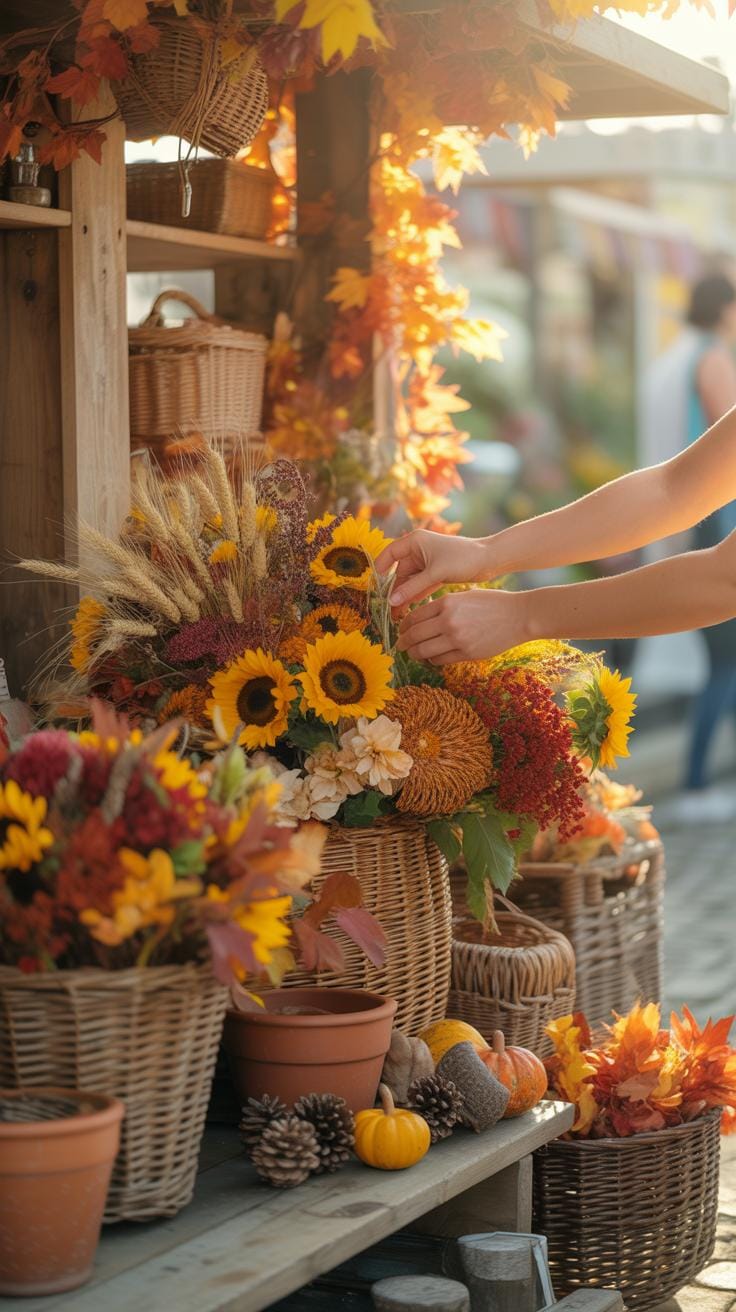
Local farmers markets provide the highest quality seasonal inventory for Autumn Flower Arrangements. Growers harvest these blooms at their peak sugar content. This timing ensures better hydration and longer vase life. Focus on purchasing woody stems like hydrangeas and sunflowers during September and October. These varieties hold their structure well in dense arrangements. Seek out vendors who specialize in field grown crops for authentic seasonal colors.
Professional florists offer access to climate controlled inventory that outlasts grocery store stock. They source specific cultivars like Heirloom Mums and Ranunculus that require expert handling. Use these sources for structural focal flowers that anchor your design. Your own garden serves as a secondary source for filler materials. Cut garden stems early in the morning when moisture levels are highest. This practice prevents immediate wilting after you place them in foam or water.
Foraging Responsibly For Natural Fall Elements To Complement Your Arrangements
Foraging adds unique textures that commercial growers rarely provide. Look for dried seed pods, interesting branches, and wild grasses on private land with permission. Collect materials like acorns, lotus pods, and grapevine to create visual weight. Ensure all foraged items are free of pests before bringing them indoors. Shake stems vigorously or use a light botanical insecticide. This prevents infestations from damaging your clean florist stock or home.
Focus on the structural integrity of foraged goods. Select branches with lignified stems that can support their own weight. Do not harvest protected species or take more than ten percent of any single plant. This follows the 19th century botanical conservation ethics used by professional naturalists. Use sharp bypass pruners to make clean cuts at a forty five degree angle. Clean cuts allow the plant to heal and maintain its health for the next season.
Frequently Asked Questions
What are the best long-lasting flowers to use for autumn flower arrangements?
When starting out, choose sturdy blooms that embrace the season’s rich color palette. Chrysanthemums, carnations, and alstroemeria are excellent beginner choices because they last up to two weeks. For a truly professional look, integrate textural elements like dried wheat, eucalyptus, or hypericum berries. These hardy selections ensure your autumn flower arrangements stay vibrant and fresh throughout your entire Thanksgiving celebration or fall dinner party.
How can I incorporate non-floral elements like pumpkins into my centerpieces?
Using a hollowed-out pumpkin or gourd as a natural vase is a brilliant way to elevate your autumn flower arrangements. To do this, simply carve a hole large enough to fit a glass jar or soaked floral foam inside. This protects the pumpkin from moisture and provides a stable base for your stems. Surround the edges with trailing ivy or bittersweet vines to create a seamless, professional transition between the vessel and the blooms.
Is it possible to create high-end looking fall displays on a limited budget?
Absolutely! You can achieve a luxury aesthetic by foraging for natural materials in your own backyard. Supplement a few focal florist blooms with colorful fallen leaves, interesting branches, or pinecones found outdoors. Mixing high-quality store-bought flowers with these free, organic textures adds incredible depth and character. This approach allows you to create stunning, bespoke displays for special occasions without overspending on expensive, out-of-season imported floral varieties.