

Effective Workout Routines Without a Gym
If you want to stay fit but don’t want to or can’t go to a gym, there are many ways to work out without gym equipment. Effective Workout Routines For Workout Without Gym Success help you build strength, improve endurance, and stay healthy without spending money on a gym membership.
This article covers the benefits of working out at home or outside, essential exercises you can do anytime, and how to create a routine that fits your lifestyle. You will find advice on how to keep motivated and make progress without needing machines or weights usually found in gyms.
Workout Without Gym Benefits

Working out without a gym brings some clear perks you might not immediately think about. For one, convenience plays a big role—you can exercise whenever you want without worrying about gym hours or crowded spaces. If you’re pressed for time, skipping the commute alone saves you significant minutes that add up day after day. And money? It’s hard to ignore the cost savings when you don’t need a monthly membership, travel expenses, or fancy workout clothes tailored for the gym.
But it’s not just about convenience or saving cash. You can still gain real health benefits at home or outdoors. Muscles can get stronger and more toned through bodyweight exercises or simple tools like resistance bands. Heart health gets a boost from things like jogging, jumping, or circuit training that mimic cardio machines perfectly well. People often think you need complex equipment for results, but your body responds just fine to less complicated routines.
Why Workout At Home Works
The idea that home workouts can’t match gym sessions doesn’t hold up when you think about it. You get to tailor everything—pace, duration, type of exercise—to what fits your current mood or goals. Maybe you feel like yoga one day and HIIT the next. Also, working out at home means you avoid distractions and wait times for machines. Privacy is another bonus; you don’t have to feel self-conscious if you’re still learning a move or just want to focus without an audience.

Cutting out travel makes a modest but meaningful difference. Less prep time and fewer excuses to skip the workout. This ease means you’re probably more consistent, even when life gets hectic. There’s no need to plan around gym closures or drop-in class schedules. You build a routine that belongs to you, and that can be surprisingly motivating.
Common Myths About Workout Without Gym
There are quite a few myths floating around about working out without gym gear. One big one claims you need heavy weights to build muscle. That’s not exactly true. Muscle growth responds more to progressive challenge. Bodyweight exercises combined with creative movements can push your muscles enough to grow, especially if you vary intensity or add pauses.
Another myth suggests cardio without machines isn’t effective. Not really. Running stairs, jump rope, or sprint intervals can raise your heart rate just as well, sometimes better, than any treadmill or bike. Machines help track metrics precisely, but they aren’t a requirement for cardiovascular fitness. It’s more about effort and consistency than the tool itself.
Key Exercises To Boost Fitness At Home
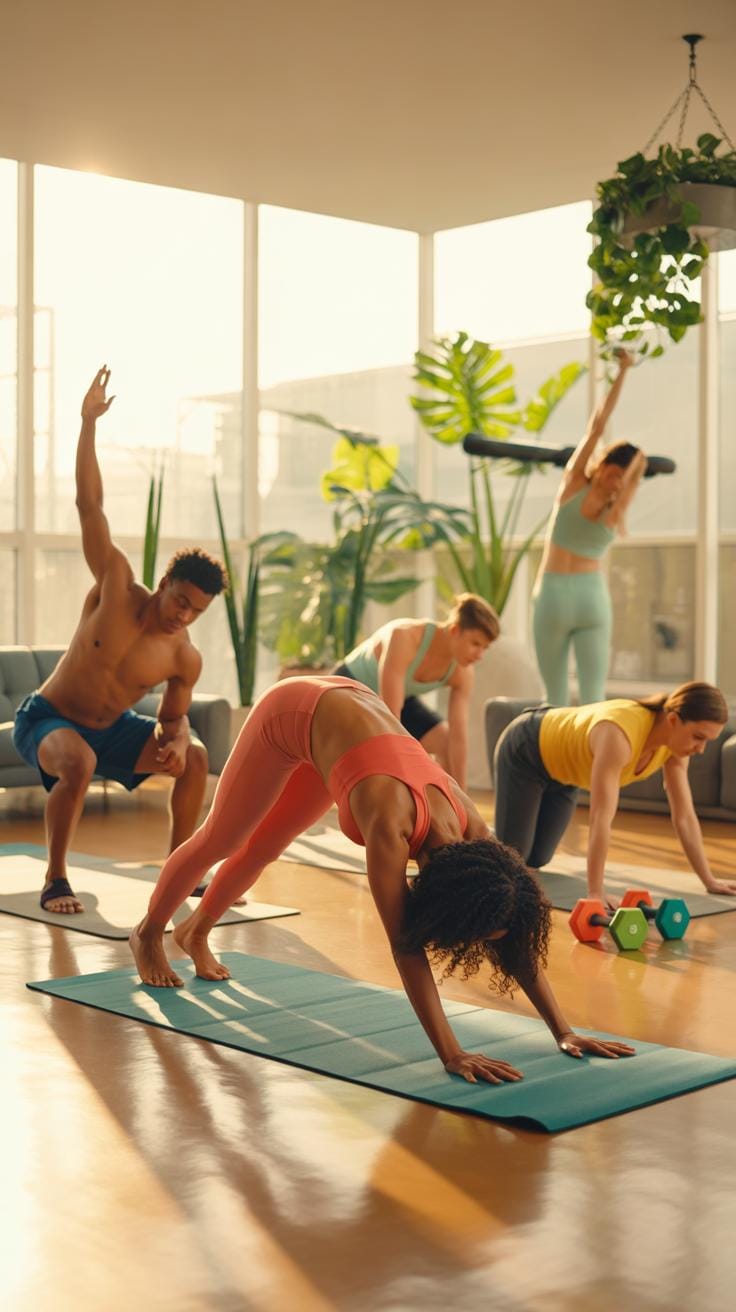
When you skip the gym, bodyweight exercises become your best friends. They’re simple, effective, and—you might be surprised—really challenging if done right.

Take push-ups, for instance. Keep your hands shoulder-width apart, lower your chest until it nearly touches the floor, then press back up. It sounds basic, but it builds strength in your chest, arms, and shoulders. You can tweak the difficulty by changing hand placement or elevating your feet.
Squats mimic sitting and standing. Stand with feet hip-width apart, bend knees, push hips back, and keep your chest up. Don’t rush through them; slow, controlled reps help build endurance and activate muscles better. Aim for 10-15 reps.
Lunges work one leg at a time. Step forward, lower your back knee toward the floor, then push back up. This also improves balance, though it may feel awkward at first. Start with six to eight reps per leg.
Planks toughen your core without movement: hold a straight-line position on forearms and toes. Try to keep your hips from sagging or rising. Hold for 20-30 seconds, then build up as you get stronger.
For cardio and full-body work, burpees and jumping jacks raise your heart rate while engaging multiple muscles. Burpees require jumping, squatting, and a push-up—so they’re intense but brief. Try sets of 8-12. Jumping jacks, on the other hand, are a little gentler; aim for 30 seconds to a minute.

These exercises cover strength and endurance without equipment. But I wonder—have you felt your progress slow after repeating the same moves?
Upper Body Exercises Without Equipment
Push-ups cover a lot, but what about dips? You can use sturdy furniture—like a chair or low table. Place your hands behind you on the edge, extend your legs forward, then lower and press up to work triceps and shoulders. Try 10-15 reps, keeping your elbows close to your body.
For shoulders, you can do pike push-ups. Get into a downward dog pose with hips high, then lower your head toward the floor, pressing back up. This shifts weight onto your shoulders, which might feel unfamiliar, but it’s quite effective.
If you want to add variety, arm circles or isometric holds (like holding yourself halfway through a push-up) might help. They’re subtle but build endurance over time.
Lower Body Workouts You Can Do Anywhere
Squats and lunges are staples, but glute bridges deserve a mention. Lie on your back with knees bent, feet flat on the floor, then lift your hips as high as possible, squeezing your glutes at the top. It targets your rear chain well—something squats sometimes miss.

Calf raises are easy but often neglected. Stand on flat ground, rise onto the balls of your feet, and slowly lower down. This small movement helps with balance and ankle strength. Try 20-30 reps slowly.
Keep an eye on your form. For lunges and squats, knees shouldn’t push past toes. Small adjustments really change how muscles engage and whether you avoid strain.
Maybe the biggest challenge is sticking with these moves without external motivation. Yet, they can be surprisingly tough—and rewarding—once you get into the rhythm.
How To Structure A Daily Routine
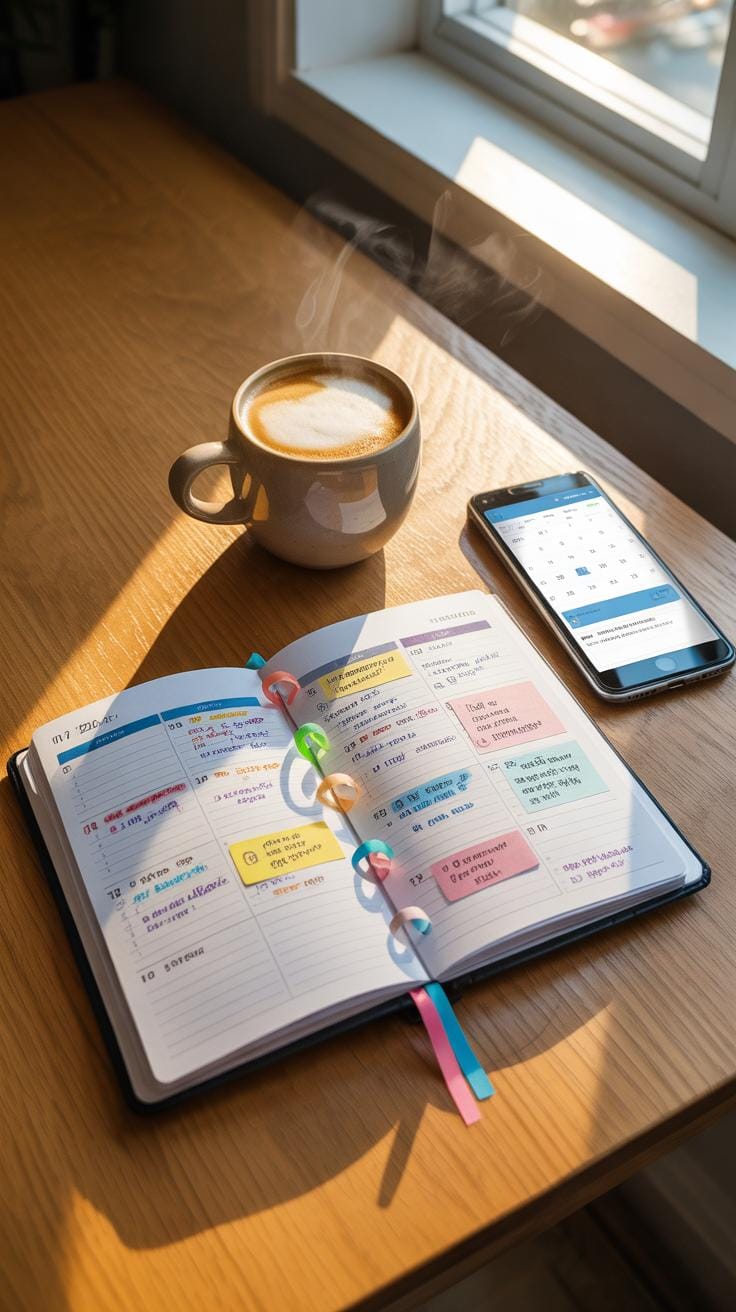
Planning a workout routine without gym access might feel tricky at first, but it just takes a clear structure. Think of your session in three parts: warm-up, workout, and cool-down. For beginners, start with a 5-minute warm-up to gently raise your heart rate. Something simple like marching in place or arm circles works well. Then, aim for 10 minutes of focused exercises targeting various muscle groups. Finish with a 5-minute cool-down, focusing on stretching and deep breathing to lower your pulse and prevent stiffness.

Intermediate exercisers can extend each segment a bit: 7 to 10 minutes warming up, 15 to 20 minutes of targeted movements, and 5 minutes cooling down. The key is balance—don’t rush through any part or skip stretches because you feel pressed for time. It’s all about steady progress, even if some days you only manage a fraction of the plan.
Sample 20 Minute Workout Plan
Here’s how you might break it down:
- Warm-up (5 minutes): Jog in place or do jumping jacks; add arm circles and gentle lunges to wake up your body.
- Workout (12 minutes):
- Bodyweight squats – 2 minutes
- Push-ups (modify on knees if needed) – 2 minutes
- Plank hold – 1 minute
- Glute bridges – 2 minutes
- Dumbbell rows or water bottle rows (if you have weights) – 2 minutes
- Mountain climbers – 3 minutes
- Cool-down (3 minutes): Stretch your hamstrings, shoulders, and chest; hold each stretch for about 30 seconds.
Don’t worry if you need to pause or modify moves. Listen to how your body feels. Some days, less is more.
Tips To Stay Consistent
Sticking to daily workouts isn’t simple for most people. I’ve found a few tricks that help, even when motivation dips. First, set a reminder on your phone or calendar. It’s easy to forget when life gets busy. Tracking progress works too—whether it’s a quick note or an app—because seeing tiny improvements feels encouraging.
Also, be flexible. Some days, you might want a lighter routine; other times, push harder. It’s okay to change your plan based on your energy or mood. Lastly, try to make workouts a non-negotiable part of your day, like brushing your teeth. That mindset shift makes a surprising difference.
Tools To Enhance Home Workouts


Working out at home doesn’t mean you have to stick to just bodyweight exercises. A few simple tools can really change things up and keep your routine from feeling stale. For instance, resistance bands are affordable and take up almost no space, yet they offer a surprising amount of challenge. They let you target muscles in different ways compared to weights—or your own bodyweight alone. Plus, they’re easy to adjust in tension depending on your strength or progress.
Jump ropes might seem basic, but they bring a burst of cardio that’s hard to beat. A quick session with a jump rope can elevate your heart rate fast and improve coordination. They’re great for short bursts of high-intensity work, and I find that mixing jump rope intervals breaks the monotony of slower-paced workouts.
Stability balls also deserve a mention. Sitting or balancing on one engages your core in subtle but effective ways. You can use them for stretching, strengthening, or as a bench substitute. It might feel awkward at first, but that’s kind of the point—you recruit stabilizer muscles you might neglect otherwise.
Trying just one or two of these can add variety without much fuss. Have you thought about which tool might fit your space or goals best?
Using Resistance Bands Safely
Resistance bands are more than just stretchy loops—they provide constant tension that challenges your muscles differently than free weights. One good thing about them is the low risk of injury compared to heavier equipment, especially when you control your movements carefully.

To use them safely, start slow. Check the band for any tears before each session. Anchor it securely—whether around a sturdy chair or a door post—and focus on smooth, controlled motions.
Exercises like banded squats, rows, or chest presses are simple but effective. I remember when I added resistance bands to my routine; the soreness after banded rows made me realize how neglected my back muscles were. It’s easy to feel the difference without overdoing it.
And don’t forget to vary your grips and angles. That keeps your muscles guessing and reduces the risk of overuse injuries. Does your workout mix include resistance bands yet?
Jump Rope For Cardio Fitness
Jump ropes seem almost too simple, but their impact on cardiovascular fitness is pretty impressive. Skipping elevates your heart rate quickly, making it a handy tool for warming up or interval training. You can squeeze in five minutes of jump rope to get your pulse up—ideal when pressed for time.
Besides cardio, jumping rope builds coordination and foot speed. It’s a full-body movement engaging your shoulders, calves, and even your core. Sometimes I use it in circuits, alternating between jump rope and bodyweight moves, which keeps workouts lively.

For beginners, start with short bursts—maybe 30 seconds—and gradually build up. You might find it tricky at first or even tiring in a different way, but that’s part of why it works. Have you tried incorporating jump rope into your routine before? It could be worth a shot if you want to boost endurance without extra equipment fuss.
Common Mistakes To Avoid Workout Without Gym
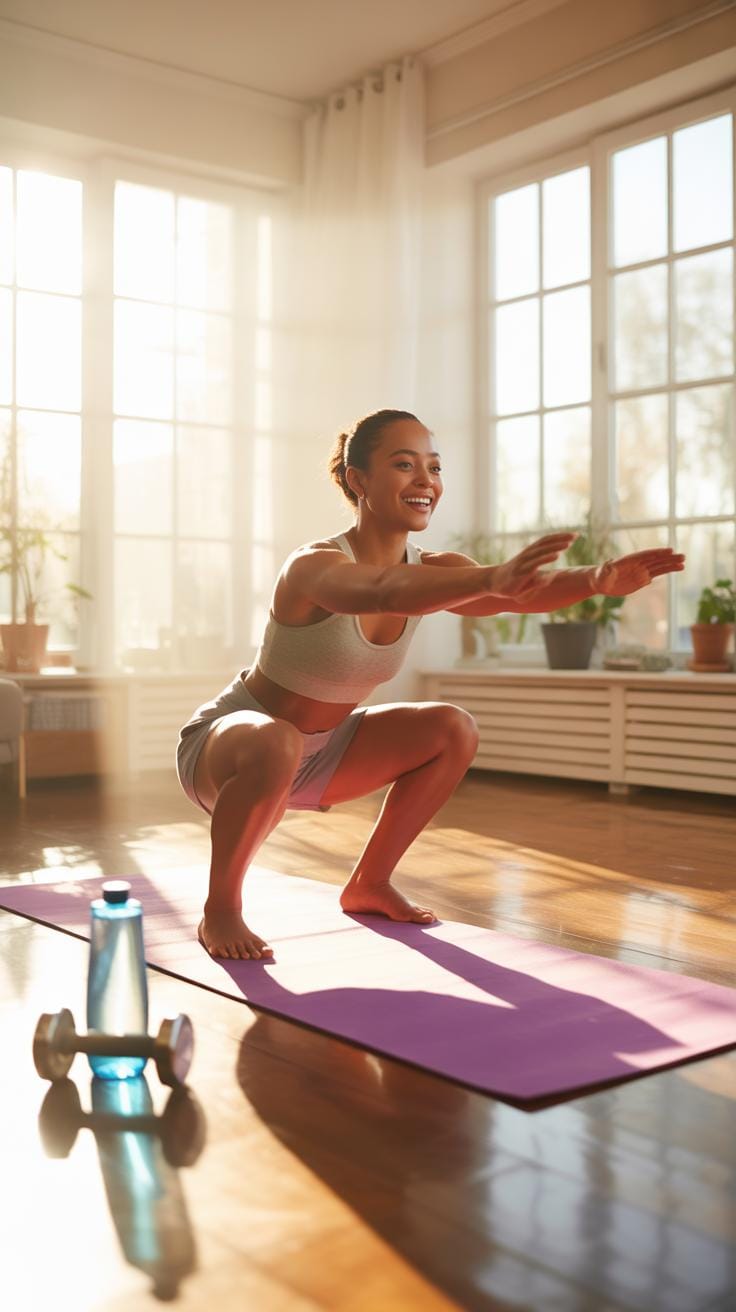
When working out without a gym, some mistakes seem to happen frequently, and they can really slow your progress or even cause setbacks. Overtraining is one of those tricky pitfalls. Without the usual gym routine to structure your workouts, it’s easy to push too hard every day, thinking more means better results. But it doesn’t. Your body needs time to repair. Skipping rest days or ignoring signs of fatigue can lead to burnout or injury.
Poor form pops up a lot, too. You might not realize you’re doing a movement incorrectly because there’s no trainer watching. It’s tempting to rush reps or use momentum, but this just risks injury. Taking time to learn the right way—even if it means fewer reps—pays off.
Some also forget to vary their exercises. Repeating the same routine can cause imbalance or plateaus. Mixing things up helps different muscle groups and keeps motivation alive.
- Schedule regular rest days, even if you feel fine.
- Record yourself or use apps to check your form.
- Change your workouts weekly to target all areas.
Have you ever pushed through a workout only to regret it later? That’s often because of these avoidable errors. Maybe slowing down could actually speed you up in the long run.
Preventing Injury At Home Workouts
Starting your workout with a proper warm-up is something many skip—myself included sometimes. But it really sets the tone. Warming up increases blood flow and loosens joints, which reduces injury risk. Even five minutes of dynamic stretches or light cardio can make a difference.
Form matters here, too. Without gym mirrors or coaches, it helps to focus on controlled, deliberate movements. If you feel any sharp pain, stop. Your body is signaling something’s off. Learning to listen—really listen—to those signals can prevent minor aches from turning into something serious.
Some people think staying tough means ignoring discomfort. That’s not true. Preventing injuries isn’t just about the exercises you do, but how you approach them. Does your workout routine include a warm-up? And do you take breaks when needed? These small habits can protect you better than any gear.
Avoiding Workout Burnout
Balancing workout intensity with rest days might sound simple, but it’s often the hardest part. Some days, you’ll feel super motivated and push through long sessions. Other days, energy dips, and motivation lags. This up-and-down pattern can lead to burnout if you ignore your body’s needs.
One way to avoid this is by planning varied intensity during the week. Mix harder sessions with lighter ones or active recovery, like walking or stretching. Consistency is key, but it doesn’t mean doing the same work every day.
Rest days aren’t a sign of weakness; they’re part of the process. Sometimes just sitting out an intense day helps you come back stronger. How often do you give yourself permission to pause? That might be just as important as the workout itself.
Tracking Progress Without Gym Equipment

Keeping track of your fitness progress without access to machines or gym gadgets can feel a bit tricky at first. Still, it’s more straightforward than you might think. You don’t need fancy devices to see if you’re getting stronger or fitter. Simple tools like a notebook or your phone can do the job well enough—and sometimes better, because they’re always with you.
One effective way is to jot down your workouts in a journal. Write down exercises, how many reps you did, how many sets, and maybe how hard it felt. Over time, seeing how much you’ve increased reps or improved form can be motivating. You could also take photos weekly or monthly to see changes visually—sometimes the mirror doesn’t lie but seems to hide progress.
Setting realistic goals can be a bit slippery. Maybe you want to hold a plank longer, or do more push-ups, or run a little further. Breaking these into smaller milestones helps—you might think increasing plank time by ten seconds is small, but it’s progress. Tracking with numbers instead of vague “getting better” notions can keep you honest.
Phone apps can help too—many are free or cheap and let you log workouts, set reminders, or even connect with others doing bodyweight routines. Pushing through some days feels easier when you know others share similar challenges. But don’t lean too hard on apps. Sometimes trust your feelings more than numbers. They don’t always tell the full story.
Nutrition To Support Workout Without Gym

When working out at home, your nutrition plays a big role in how well you perform and recover. You might think that without fancy equipment or a gym, your diet is less important—but actually, it’s just as crucial. Getting enough protein is a good starting point. Protein helps repair muscle fibers stressed during exercise. Aim for foods like lean meats, eggs, dairy, beans, or plant-based proteins if you prefer. I’ve noticed that when I don’t eat enough protein, my muscles feel sore for longer, and progress slows. It’s subtle but real.
Hydration is another piece that sometimes gets overlooked. Drinking water before a workout keeps you alert and ready, during helps keep your strength up, and after, it supports recovery. You don’t need fancy electrolyte drinks all the time. Plain water usually does the trick—though that might depend on your workout’s duration and intensity.
Timing meals matters too, maybe more than I expected at first. Eating something light, rich in carbs and protein, about 30 to 60 minutes before exercising can give your muscles fuel without feeling heavy. Then, within an hour after your workout, try to eat again with a balance that includes protein to help your muscles bounce back. You might find certain foods or timings work better for you—don’t hesitate to experiment a bit.
Outdoor Workout Ideas For Variety
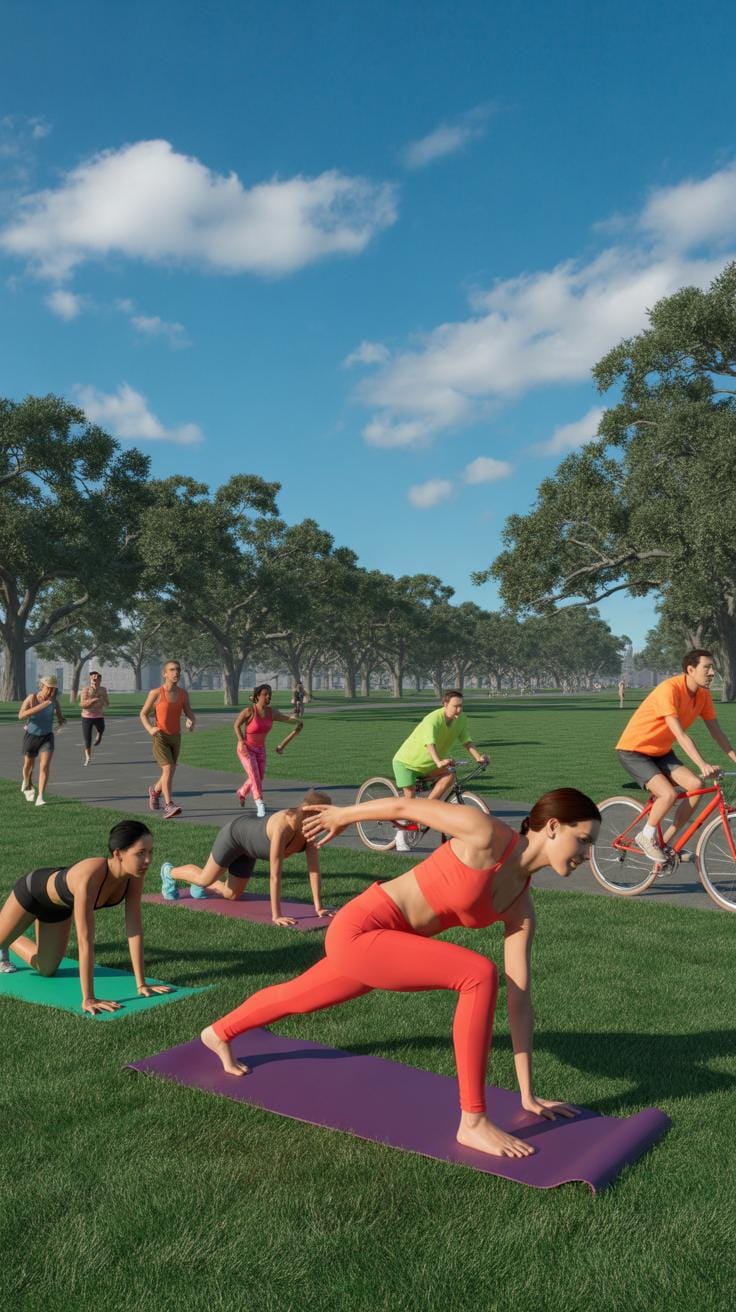
When you think about working out outdoors without equipment, there’s actually quite a range of options to keep your routine fresh. Running is an obvious choice, but maybe you’ve tried that and want something less repetitive. Cycling can be a great way to cover more ground and takes a bit of pressure off your joints. Hiking, too, offers a combo of cardio and strength, especially if you’re navigating uneven trails or inclines. I remember one weekend when I swapped a usual jog for a hike—it felt completely different but still left me wiped out in a good way.
Bodyweight circuits work really well in parks. You can combine push-ups, squats, lunges, and planks without needing anything but space. It’s convenient and, honestly, I think it can be hard to get bored if you mix exercises and adjust the pace. The fresh air and green surroundings just add to the experience—you’re moving more naturally than in a closed gym.
Creating A Park Workout Circuit
Setting up a workout circuit in a park can be surprisingly simple. Start by picking a spot with benches and stairs, plus some open space for bodyweight moves. For example, use a bench for step-ups or tricep dips. Stairs are perfect for quick sprints or stair climbs, which really spike your heart rate. A small open area nearby lets you do jumping jacks, lunges, or even bear crawls.
Structure your session by rotating through these stations, spending 30 to 45 seconds on each exercise with short rests. This keeps your heart rate up and maximizes efficiency. I’ve found that alternating between upper body moves on the bench and lower body work on the stairs creates a balanced challenge, but you might prefer focusing more on strength or cardio depending on your goals.
Safety Tips For Outdoor Exercise
Exercising outside is rewarding but comes with its own set of considerations. Weather is a big one—you say you’ll go for a run and suddenly the sky opens up. I tend to check the forecast but then still keep flexible plans, like switching to indoor exercises if needed. Sun protection matters too. Hats, sunscreen, and sunglasses go a long way to avoid discomfort or burns.
Terrain should not be overlooked either. Uneven ground can cause twisted ankles or falls. Choose your routes thoughtfully, and if you’re tackling stairs or trails, make sure they aren’t too slippery or loose. Finally, stay visible if you’re out early or late; reflective gear or a light might make you feel a bit noticeable, but it’s worth it. Listening to your body is key here—pushing too hard in unpredictable environments can backfire quickly.
How To Stay Motivated At Home

Finding motivation for home workouts can be tricky. When you don’t have the usual gym buzz pushing you along, it’s easy to lose steam. But there are ways to keep yourself moving—even on those days when you just don’t feel like it.
Motivation Through Goal Setting
Setting clear and achievable goals is a solid place to start. Instead of vague ideas like “get fit,” try something specific: “do 15 push-ups three times a week” or “walk for 20 minutes every morning.” Having a target gives you a reason to get off the couch. It’s not just about big milestones either; small, realistic goals matter. They give you quick wins, which can surprise you with how rewarding they are.
Sometimes, goals shift. If you miss a day, don’t give up. Think of it as a chance to adjust and keep going. This flexibility helps you stay consistent without beating yourself up.
Building A Support Network
Getting others involved can make a difference, even if it feels awkward at first. Invite a friend or family member to join your routines or check in with you. You don’t need a full workout crew; even one buddy can boost your accountability. Sharing your progress or struggles with someone who cares creates a bit of social pressure—and a sense of shared purpose.
Sometimes, a text message or a quick call before a workout is enough to push you out the door—or, well, onto the yoga mat. If you’re really stuck, consider online groups or fitness communities where people cheer each other on. The point is, you don’t have to do this alone, even at home.
Example Workout Weekly Schedule
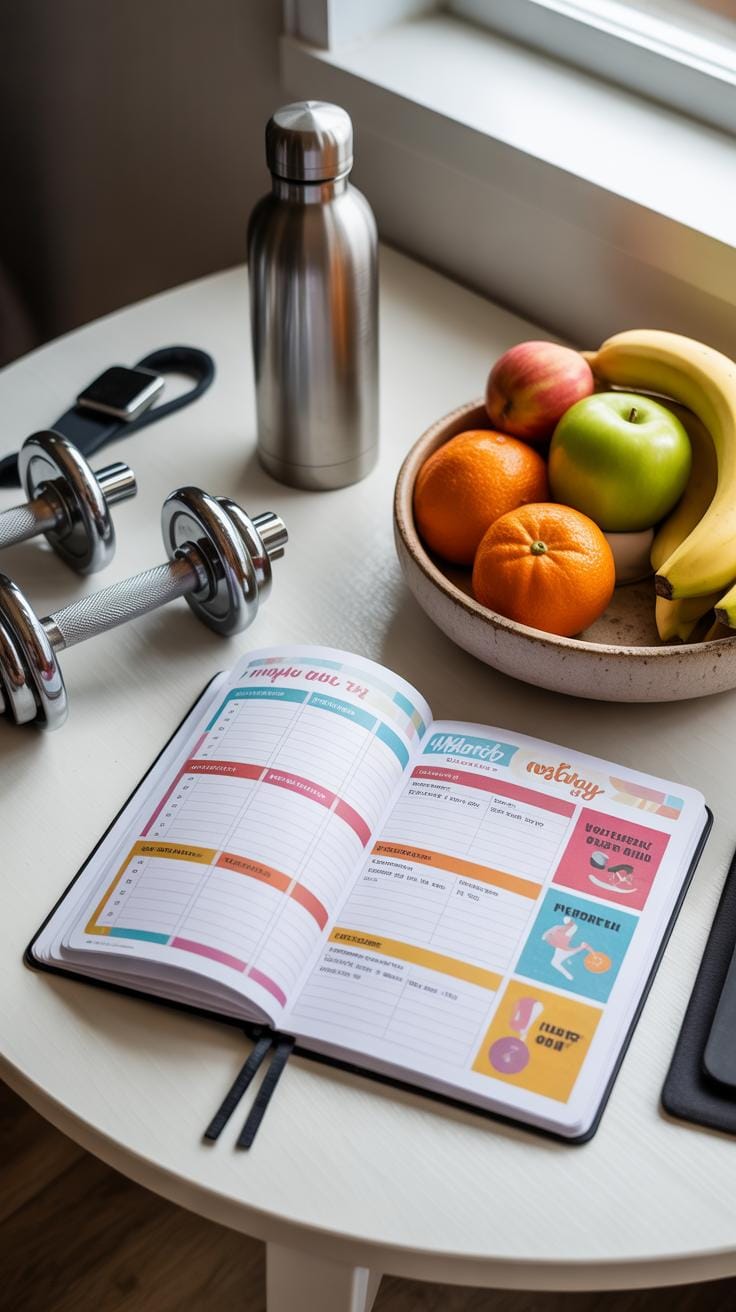
Designing a weekly plan without the gym can feel tricky at first. But blending strength, cardio, and rest days in a way that lets your body recover is doable, even if you only have a small space or basic equipment. Here’s a simple schedule you might try:
- Monday: Bodyweight strength training focusing on legs and core—think squats, lunges, planks.
- Tuesday: Cardio session, such as brisk walking, jogging, or a simple HIIT routine using stairs or intervals in your neighborhood.
- Wednesday: Upper body strength workouts—push-ups variations, chair dips, and resistance band pulls if you have them.
- Thursday: Active recovery day, like yoga or stretching, to improve mobility without heavy strain.
- Friday: Circuit training combining both cardio and strength moves, maybe a mix of burpees, mountain climbers, and bodyweight squats.
- Saturday: A longer cardio session, possibly cycling or a hike if accessible, to build endurance.
- Sunday: Full rest or light mobility work focused on relaxation.
Notice how rest and active recovery aren’t neglected—your muscles need that to grow and repair. Skipping rest often backfires, even if it feels like you’re not doing enough.
Daily Workout Breakdown
Each day has a clear focus, but you get to listen to your body. Monday’s leg work might leave you a bit sore, which means Tuesday’s cardio should maybe stay on the gentler side. For example, on Wednesday, aim to ease into upper body movements rather than pushing too hard after two active days.
On rest or recovery days, pay attention to how your muscles feel. Gentle stretches or breathing exercises can actually speed up recovery. It’s tempting to stay active all the time, but sometimes stepping back is more beneficial than pushing through tiredness.
Try to avoid making every workout intense. It’s okay to take it easy. Maybe on Friday’s circuits, you reduce reps if you’re feeling drained. Remember, consistency matters more than raw effort in any single session.
Adjusting The Plan As You Progress
As you get stronger or more comfortable, you’ll want to amp up the challenge—right? But don’t rush it. You might start by adding a few reps or extra rounds to your circuits slowly. Or increase your cardio time by five minutes here, ten there.
Switching up exercises can help—try different push-up variations or add light household weights. Or simply decrease rest between sets for more intensity. But—here’s the catch—if you feel too fatigued for a couple days, pulling back is okay.
Progress isn’t always linear. Sometimes holding steady or even taking a step back is part of moving forward. You might find some days harder, some easier, and that’s where personal adjustment comes in.
Conclusions
Working out without a gym is practical and effective. You can use your body weight and simple tools to perform exercises that strengthen muscles and improve fitness. It saves time and money while allowing you to exercise anywhere.
By following a clear routine, focusing on key exercises, and staying consistent, you can reach your fitness goals without the need for a gym. Keep your routine varied, listen to your body, and make your workout enjoyable. That’s the path to Workout Without Gym Success.