Understanding The Basics Of Glass Vase Decor
Why Glass Vases Have Remained A Timeless Decorating Choice
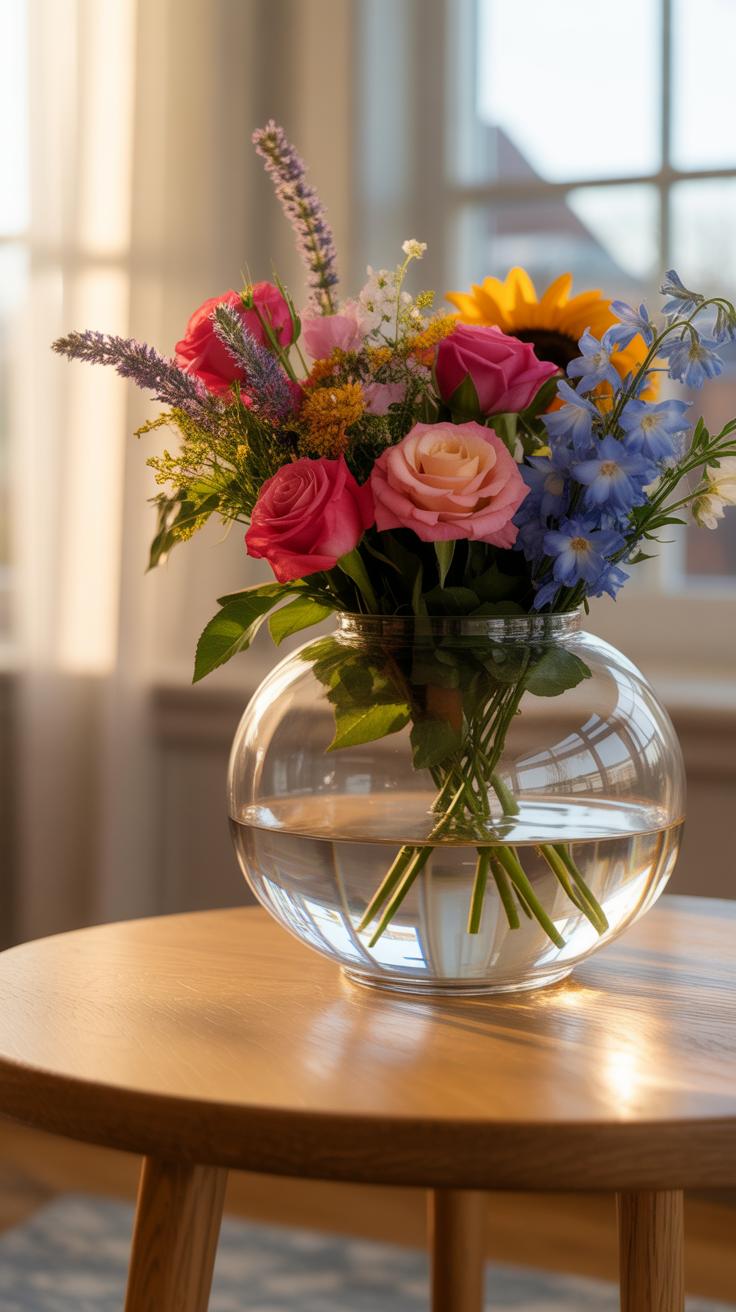
Glass vases persist as a design staple due to their functional transparency. This material allows light to pass through without creating visual bulk in a room. Modernists used glass to emphasize clean lines and industrial purity. Today, these vessels serve a tactical purpose by showcasing both the organic stems and the water. This creates a layered look that solid materials cannot provide.
Historically, glass production shifted from luxury hand-blown items to accessible factory pieces during the industrial era. This change made sophisticated styling available to all social classes. Designers use glass because it complements every color palette and architectural style. It does not compete with other decor elements. Instead, it reflects the surrounding environment. Glass provides a neutral foundation for high-impact floral arrangements or minimalist solo branches.
How To Choose The Right Glass Vase Shape And Size For Your Space
Selecting a vase requires an understanding of scale and volume. A small bud vase fails on a large dining table because it lacks presence. Conversely, a heavy floor vase overwhelms a delicate side table. You must match the height of the vase to the length of your flowers. Standard rules suggest the stems should be one and a half to two times the vase height.
Cylindrical shapes provide structural support for tall, straight stems like lilies. Fluted or flared vases work best for voluminous bouquets that need room to spread. Consider the opening diameter carefully. A wide mouth requires more filler to look full. A narrow neck supports a single striking bloom with precision. Always evaluate the weight of the base. Bottom-heavy glass prevents tipping when holding top-heavy floral arrangements.
Creative Clear Vase Filler Ideas To Transform Any Room
Natural Filler Options: Branches, Pebbles, Sand, And Dried Botanicals
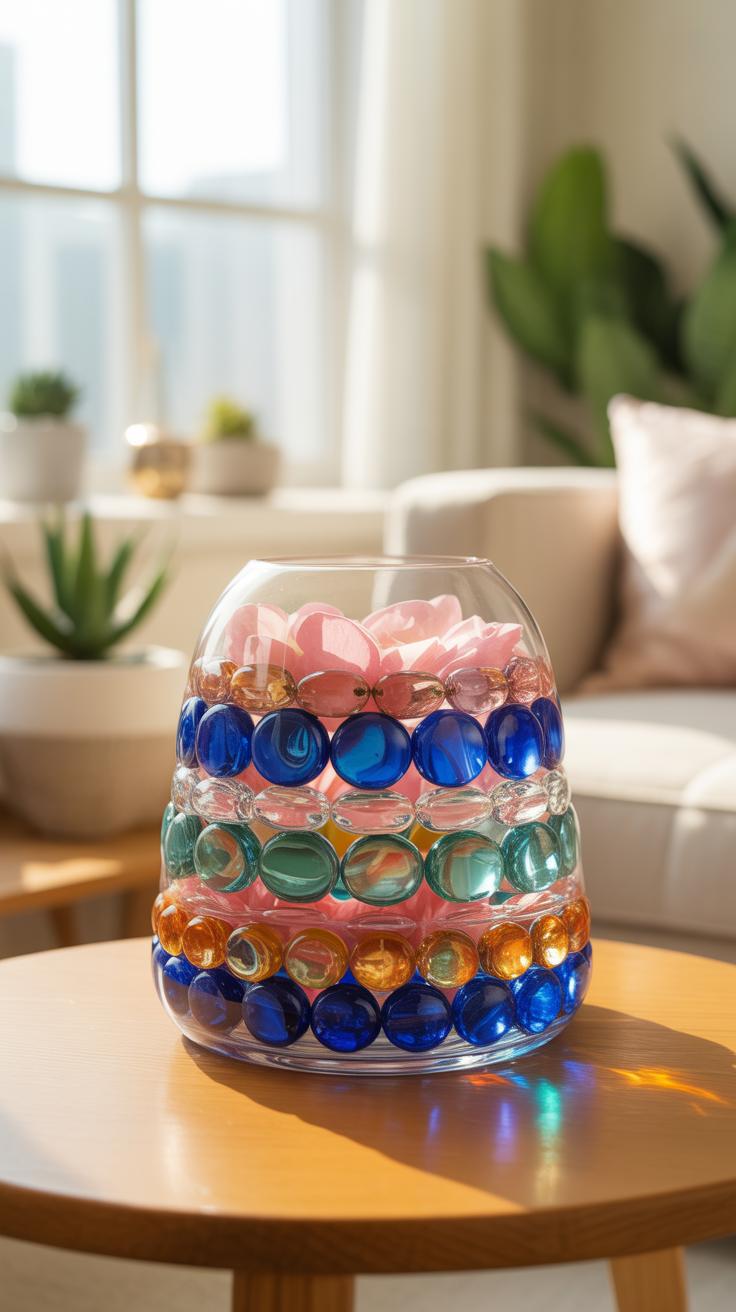
Natural materials provide weight and stability for tall stems. Use heavy aggregates like river stones at the base to prevent top-heavy arrangements from tipping. Sand creates a firm foundation for thin dried stems. These materials anchor your design while adding visual texture. Select fillers that complement the diameter of your vase. Proper volume ensures the filler supports the structural integrity of the display.
- River Pebbles: Polished stones provide high density and weight. They secure thick wooden branches in large floor vases. This prevents the glass from cracking under uneven pressure. Use dark stones for contrast or white stones for a clean look.
- Silica Sand: Fine sand offers the best grip for delicate, thin stalks. It occupies every void in the base. This material works well for minimalist designs requiring precise stem placement. Layer different colors to create distinct horizontal lines.
- Dried Moss: Preserved moss adds organic green tones without the need for water. It hides unsightly flower foam or internal mechanics. This filler is lightweight and easy to remove. It mimics a forest floor aesthetic in terrarium-style glass vessels.
- Birch Branches: Vertical branches add height and structural interest. Stripped birch bark provides a neutral, pale palette. These work as both the filler and the main feature. They create a framework for smaller floral inserts or decorative lights.
- Dried Seed Pods: Large pods like lotus or poppy add architectural shapes. They fill volume quickly in wide-mouth jars. These botanicals last indefinitely if kept dry. They offer a matte finish that contrasts against the smooth surface of clear glass.
Layering these elements creates depth within the glass vessel. Put heavier materials like pebbles at the bottom. Place lighter materials such as dried petals or moss on top. Always wash natural stones before use to prevent cloudy residue on the glass walls. Dry all botanicals thoroughly to avoid mold growth. Correct layering protects the glass and improves the longevity of the entire decorative arrangement.
Seasonal Filler Swaps That Keep Your Clear Vase Looking Fresh Year Round
Rotate fillers every three months to match the local climate and seasonal light. Use pinecones or evergreen sprigs during colder months to add density. These materials handle the low humidity of heated indoor air. Transition to lighter elements like citrus slices or sea glass in warmer months. Such swaps ensure your decor remains relevant without the need to purchase new expensive glass hardware.
Strategic timing for filler changes prevents visual stagnation in high-traffic rooms. Cold weather favors heavy, opaque fillers that feel substantial. Warm weather requires translucent or airy fillers that allow light to pass through the glass. Clean the vase thoroughly between every filler swap to remove dust and mineral deposits. Fresh fillers reset the room focus and maintain a high standard of professional interior styling.
Styling With A Clear Vase Minimalist Approaches That Work
The Power Of Negative Space When Displaying A Clear Vase
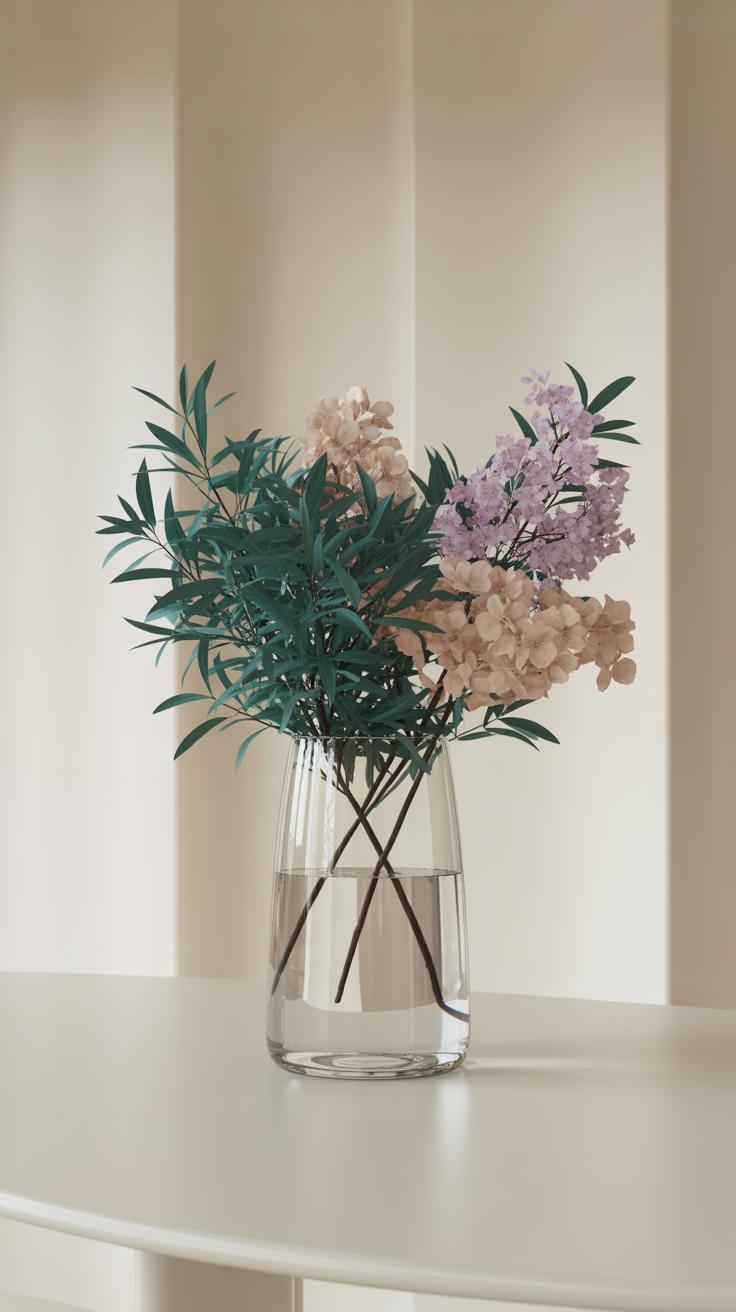
Negative space defines minimalist design. In clear glass styling, the empty area inside and around the vessel carries weight. You must not crowd the vase with too many stems. A single branch or a few stalks allow the eye to rest. This technique highlights the architectural lines of the plant. It creates a focal point without adding visual clutter to the room.
Clear glass reveals everything. Use clean water and remove submerged leaves to maintain transparency. The light must pass through the glass unobstructed. Strategic placement near a window uses natural light to fill the negative space. This makes the arrangement feel light and airy. Crowding the glass destroys this effect. Maintain a ratio of two parts empty space to one part organic material.
Pairing A Clear Vase With Neutral Tones For A Clean Modern Look
Modern aesthetics rely on a restricted color palette. Use white, beige, or grey elements near your clear vase. These shades do not compete with the glass for attention. Neutral backgrounds allow the texture of the vase and the green of the stems to pop. This creates a cohesive look that feels intentional. It mimics the functionalist approach found in Bauhaus design principles.

Layer different textures to prevent the scene from looking flat. Place a smooth clear vase on a rough stone coaster or a wooden plinth. The contrast between the transparent glass and the matte neutral surface adds depth. Keep the surroundings simple. Avoid busy patterns on nearby textiles. This focus on tonal harmony ensures the glass remains the primary design feature. Simple colors suggest high-end sophistication.
How To Display A Glass Flower Vase For Maximum Visual Impact
Choosing Fresh Versus Dried Flowers For Your Glass Flower Vase Arrangement
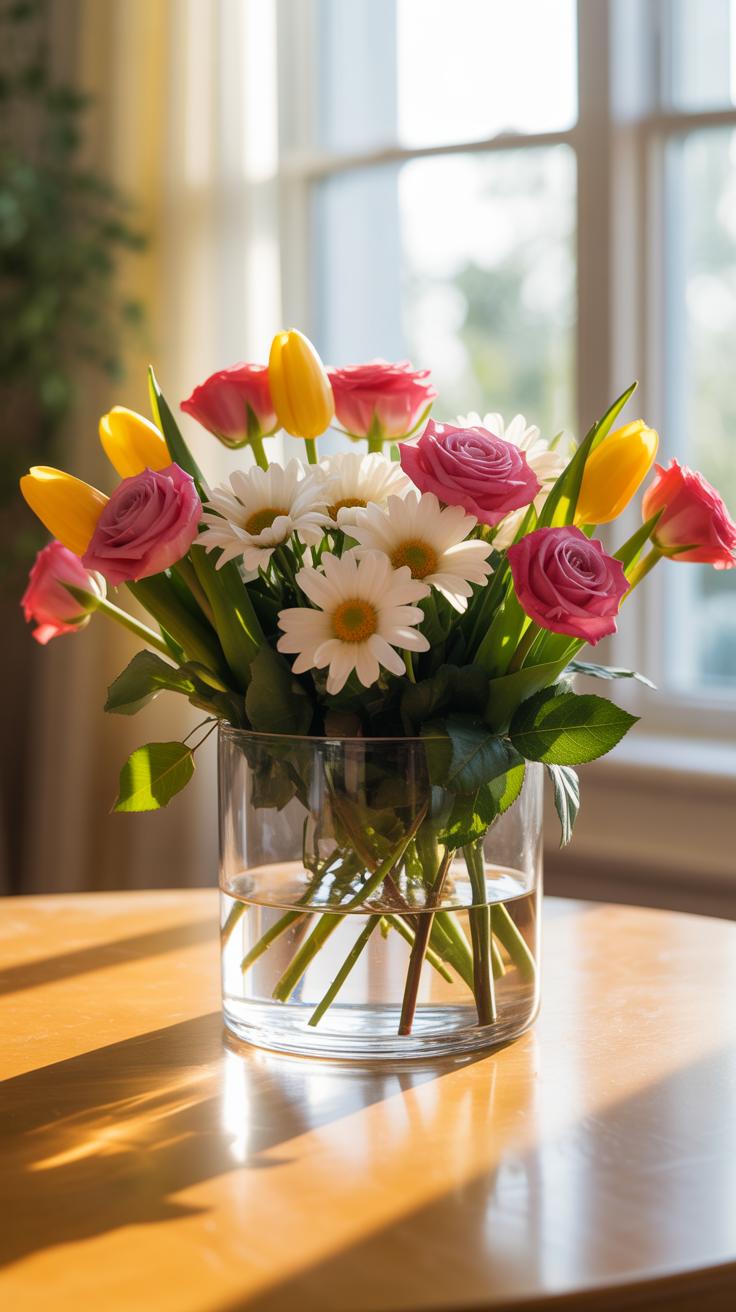
Fresh flowers offer high color saturation and organic movement. They require clean water and stem maintenance. Transparent glass makes water quality part of the design. You must change the water daily to prevent bacteria growth and cloudy glass. Fresh stems suit minimalist or modern styles. Use them when you want to signal life and vitality in a space. They provide a crisp look that dried options cannot match.
Dried flowers provide texture and structural longevity. They work best in environments with low light where fresh plants fail. You do not need water for these arrangements. This keeps the glass interior dry and spot-free. Use dried stems for a rustic or vintage aesthetic. They handle heat and drafty areas well. Select high-quality preserved stems to avoid shedding. These materials offer a permanent solutions for high shelves or hard-to-reach niches.
Placement Strategies: Where To Position A Glass Flower Vase In Your Home
Position glass vases where they can interact with light. Natural light passes through the material and creates shadows. Do not place them in high-traffic walkways where they might tip. Use them on solid surfaces like oak tables or stone mantels. A heavy base prevents accidents on polished wood. Scale the vase to the furniture size. A tiny vase disappears on a large dining table. Center it for formal balance.

Use height to guide the eye through a room. Place tall glass vases in empty corners or entryways. This adds vertical interest without blocking sight lines. Short vases belong on coffee tables or desks. You must keep view across the table clear for conversation. Group multiple vases of different heights to create a cluster. This draws attention to a specific focal point. Ensure the glass color complements the existing room palette.
Glass Vases Decor Ideas For Every Interior Design Style
Incorporating Vases Glass Pieces Into Bohemian, Modern, And Coastal Interiors
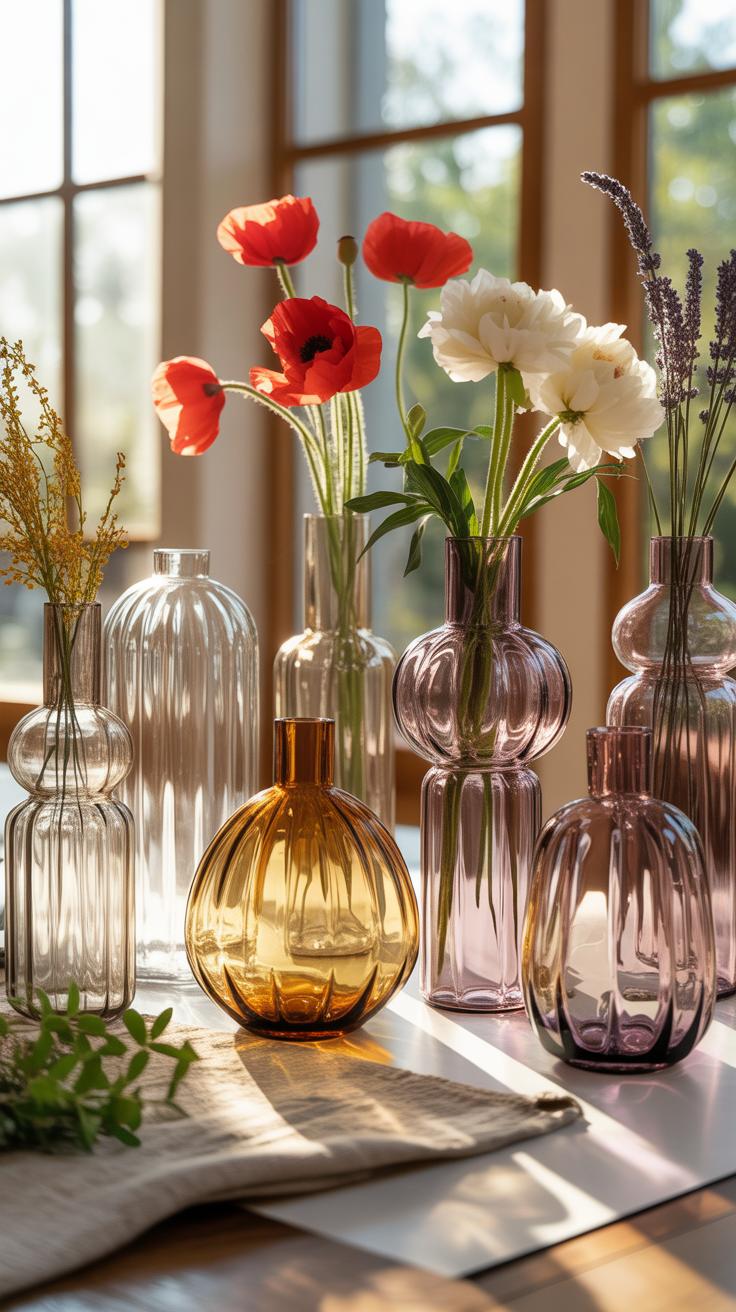
Bohemian interiors require tinted or recycled glass to match the layered aesthetic. Use amber or forest green glass to add warmth to the space. Mix different shapes and heights to create visual interest. Pair these vases with dried pampas grass or eucalyptus. The natural imperfections in hand-blown glass complement the organic feel of the room. This approach maintains a relaxed yet intentional look.
Modern interiors demand clean lines and transparency. Choose heavy borosilicate glass or geometric shapes with sharp edges. Keep the contents simple. A single monstera leaf or a few calla lilies work best. Clear glass emphasizes the architectural form of the vessel itself. Place these pieces on marble or metal surfaces to highlight the contrast. Avoid cluttering the area to keep the focus on the silhouette.
Grouping Multiple Glass Vases Together To Create A Cohesive Vignette
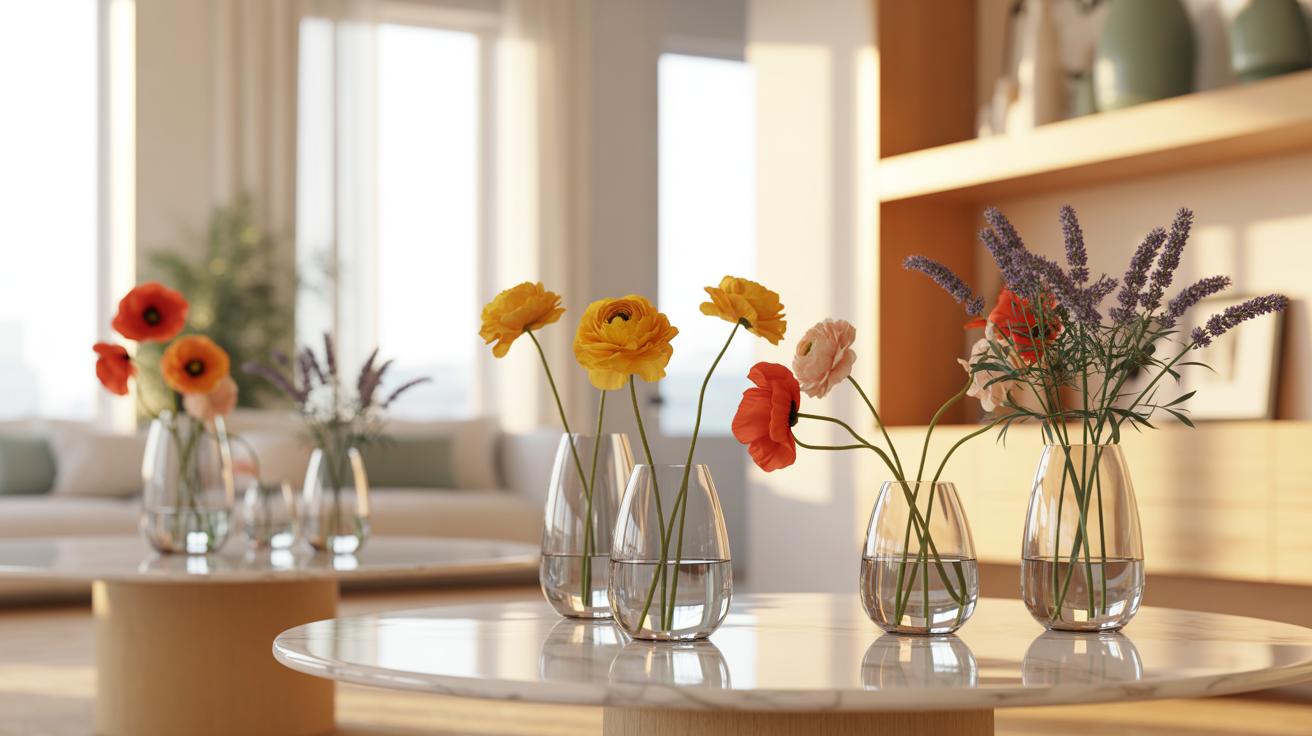
Create a vignette by following the rule of three. Use vases of varying heights to lead the eye across the arrangement. Position the tallest piece in the back or center as the anchor. Keep the color palette consistent to ensure the group looks like a set. You can mix textures if the hues remain the same. This strategy creates a balanced look without overwhelming the surface.
Vary the volume of the glass pieces to add depth. Pair a wide cylinder vase with a narrow bud vase and a medium round bowl. Overlap the edges slightly to connect the components visually. Use clear water levels to create a horizontal line that ties the group together. Place the arrangement on a tray to define the boundaries. This technique prevents the vases from looking scattered or accidental.
Blue Glass Vase Scandinavian Style Simplicity Meets Sophistication
The Origins Of Scandinavian Design And Why Blue Glass Fits The Aesthetic
Scandinavian design emerged in the early twentieth century across Nordic countries. It prioritizes function, minimalism, and affordable production. The movement gained global traction during the 1950s. Designers focus on natural light and raw materials to combat long northern winters. This style rejects heavy ornamentation. It favors clean lines and organic shapes. The aesthetic balance relies on mixing neutral tones with specific color accents.
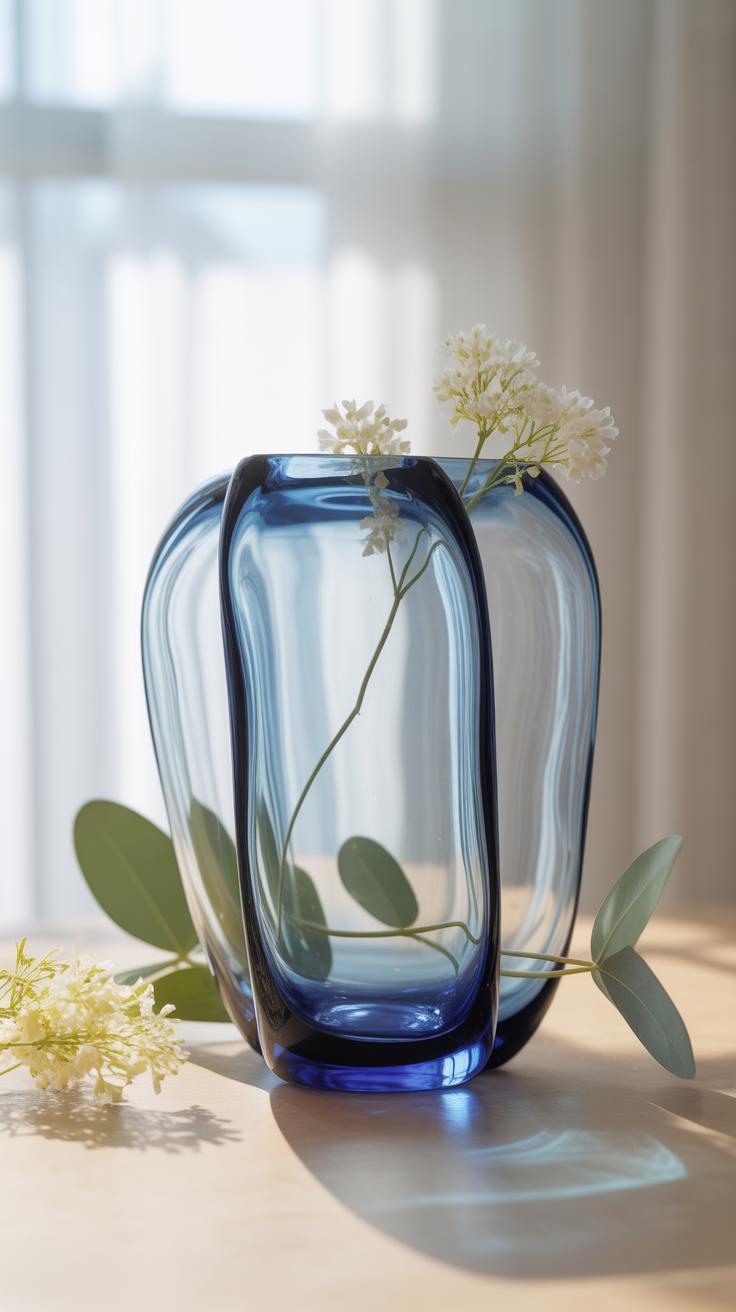
Blue glass fits this movement because it mimics natural elements like water and ice. Artisans in Sweden and Finland have a long history of glassmaking. They often use shades of cobalt or light blue to add depth without clutter. The transparency of the glass allows light to pass through the vessel. This prevents the room from feeling cramped. Blue glass provides a cold but calming focal point.
A flower falls as common as a leaf unless it is held in the clarity of a beautiful glass. The right styling turns a simple vessel into a window where light and memory bloom together.
How To Style A Blue Glass Vase The Scandinavian Way In Modern Homes
Modern Scandinavian styling requires restraint. Do not crowd the vase with other objects. Place one blue glass vase on a wooden surface to create contrast between cool and warm textures. This creates a visual anchor for the room. Choose vases with geometric or tapered silhouettes. Keep the surrounding area clear of tiny trinkets. The goal is to let the blue glass stand alone.
Vegetation should remain sparse and structural. Use a single branch or a few stems of eucalyptus. Greenery complements the blue hue while maintaining a clean look. Avoid large, colorful bouquets that compete with the glass color. If the vase has a deep tint, use white flowers to draw the eye. Position the vase near a window. Natural light highlights the clarity and color of the glass material.
Working With Clear Glass Vases Versatility Across Every Room
Using Clear Glass Vases On Dining Tables, Mantels, And Bathroom Shelves
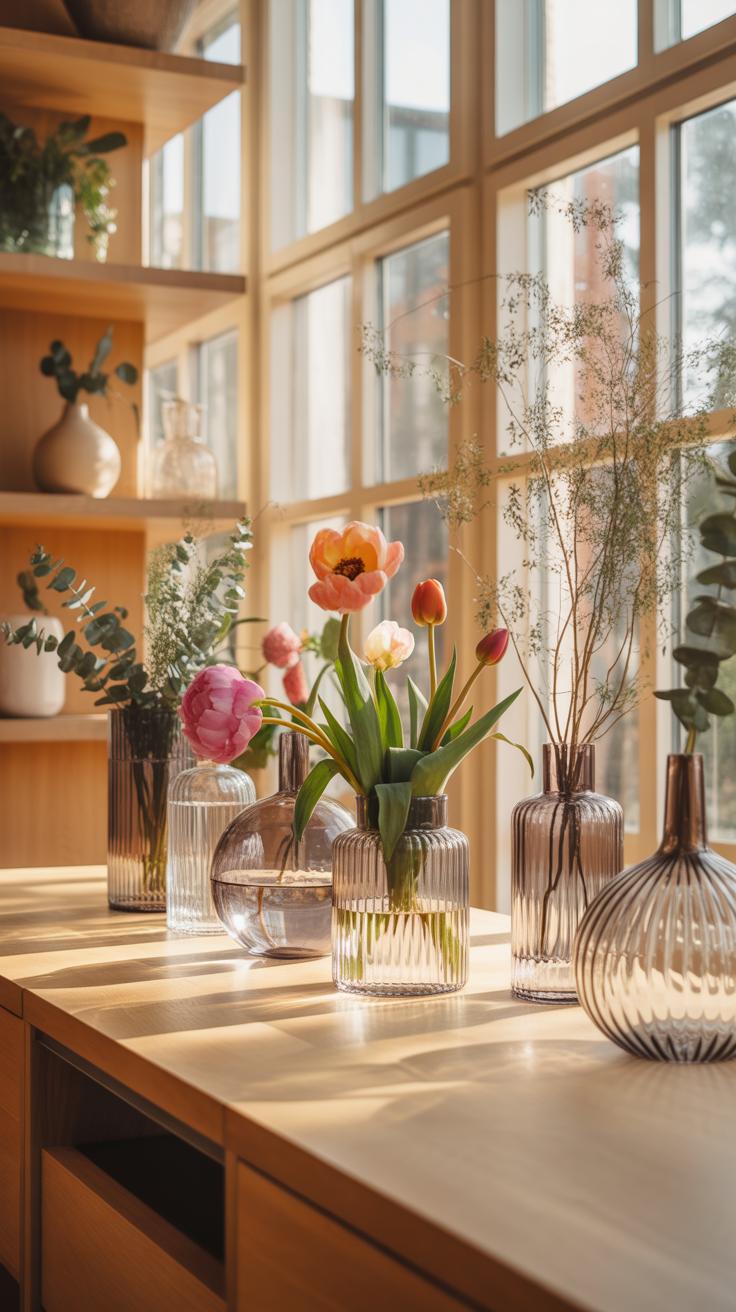
Clear glass vases function as invisible infrastructure for floral arrangements. On a dining table, use low-profile vessels to maintain sightlines between guests. High-clarity soda-lime glass or lead-free crystal ensures the water remains a visual element of the design. Clean lines prevent visual clutter in communal eating spaces. Always match the scale of the vase to the surface area of the table to maintain balance.
Mantels and bathroom shelves require a focus on verticality and humidity resistance. Taller cylinder vases draw the eye upward toward the ceiling on narrow fireplace ledges. Use borosilicate glass in bathrooms because it resists thermal shock from steam and temperature changes. These transparent containers make small shelves feel larger by allowing light to pass through the object. Position them near mirrors to double the reflected light.
Layering Textures And Colors Around Clear Glass Vases For Depth And Interest
Clear glass lacks inherent color, so you must build interest through surrounding materials. Place smooth glass vessels on tactile surfaces like unfinished wood, slate, or linen runners. This contrast highlights the industrial precision of the glass against organic textures. Use the transparency to showcase submerged elements like river stones or citrus slices. These additions provide internal structure while hiding messy stems from direct view.

Incorporate the color palette of the room by placing the vase against a high-contrast backdrop. A clear vessel disappears against a white wall but pops against dark navy or charcoal paint. Use nearby objects like brass candlesticks or matte ceramic trays to frame the glass. This technique uses the glass as a neutral anchor within a complex vignette. It allows the natural colors of the botanicals to become the focal point.
Growing Plants In Glass Jars Where Function Meets Style
Best Plant Varieties That Thrive When Grown In Glass Jars And Vessels
Glass vessels without drainage holes require specific plant choices to avoid root rot. Hydroponic growing and moisture-tolerant species work best in these closed or semi-closed environments. You must select plants that adapt to high humidity or constant water submersion. This method relies on visual cues through the glass to monitor health. Clear glass allows you to check root development and water levels instantly.
- Pothos: This resilient vine thrives in plain water indefinitely. It handles low light and grows long trailers that look excellent in tall glass cylinders. You only need to change the water every two weeks to maintain oxygen levels for the roots.
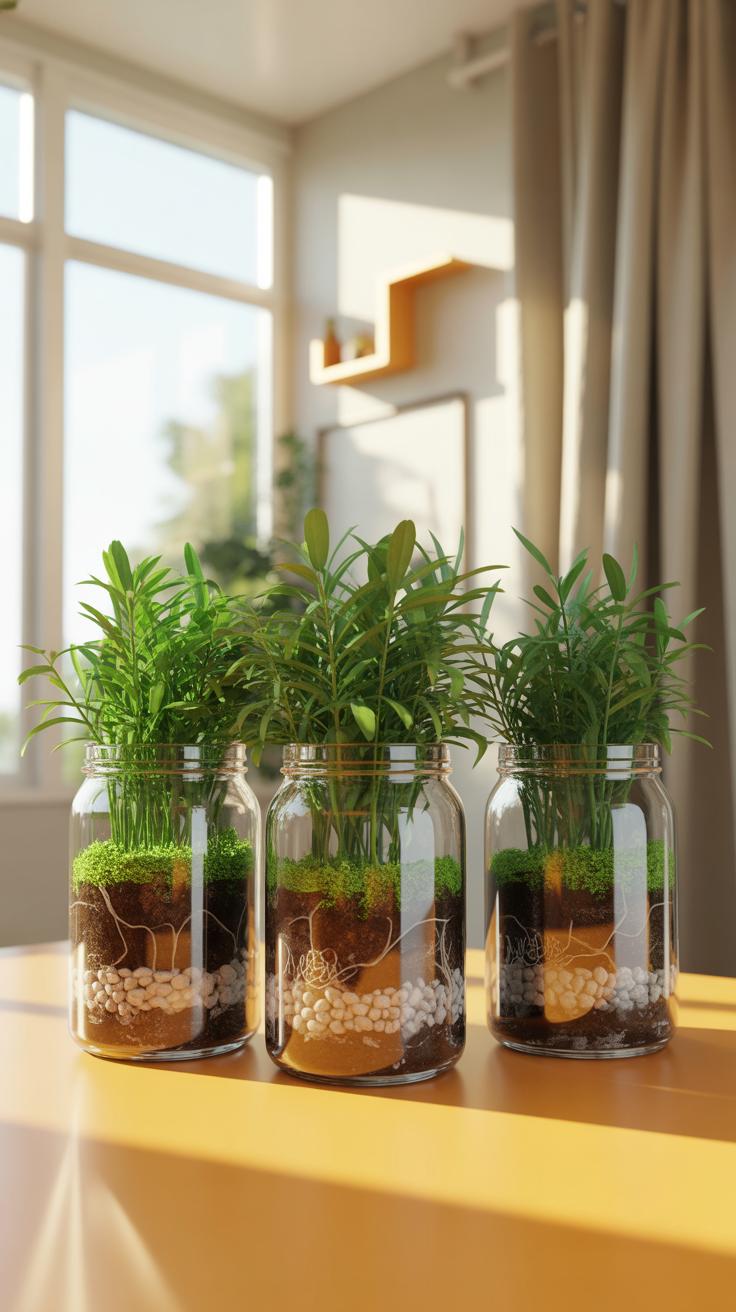
- Lucky Bamboo: Usually sold in glass containers, this plant requires very little light. It sits in decorative stones to stay upright. Use filtered water to prevent leaf yellowing. It provides a clean, vertical aesthetic for modern interior design schemes.
- Spider Plants: Small plantlets grow roots quickly when placed in water-filled glass jars. They transition well to long-term water culture. The white and green striped leaves offer a sharp contrast against clear glass. They help purify air while serving as a focal point.
- English Ivy: This classic climber adapts well to liquid medium. It prefers cooler room temperatures and consistent moisture. Its structured leaf shape creates a sophisticated look in vintage pharmacy jars. Regular pruning keeps the growth habit compact and manageable for small shelves.
- Philodendron: Similar to Pothos, these plants are nearly indestructible in water. They feature heart-shaped leaves and deep green colors. They tolerate the lack of soil nutrients for long periods. Use them in wide-mouth jars to allow for bushy growth and easy cleaning.
Success depends on water quality and light exposure. Algae grows fast when glass jars sit in direct sunlight. Place these vessels in bright, indirect light to keep the water clear. Use charcoal at the bottom of the glass to keep the environment fresh. Clean the glass inside and out to maintain a professional appearance. This setup eliminates messy soil and simplifies your indoor gardening routine.
How To Style Plants In Glass Jars As Living Decor Around Your Home
Strategic placement of glass jars turns simple greenery into a design statement. Group jars in odd numbers to create visual balance on mantels or dining tables. Vary the heights of the glass vessels to lead the eye across the space. Use jars with different shapes but similar glass clarity to maintain a cohesive look. This technique highlights the architectural lines of the stems and roots.
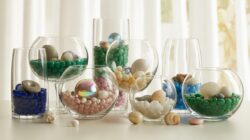
Submerge the entire root system for a clean, laboratory-style aesthetic. This look fits mid-century modern and minimalist decor styles perfectly. Ensure the water remains crystal clear to avoid a neglected appearance. Line up identical jars on a windowsill to create a living privacy screen. This practical application uses light to emphasize the green pigments in the foliage. Use the transparency of the glass to brighten dark corners.
Common Glass Vase Styling Mistakes And How To Avoid Them
Why Overcrowding Your Arrangement Undermines The Beauty Of Glass Vase Decor
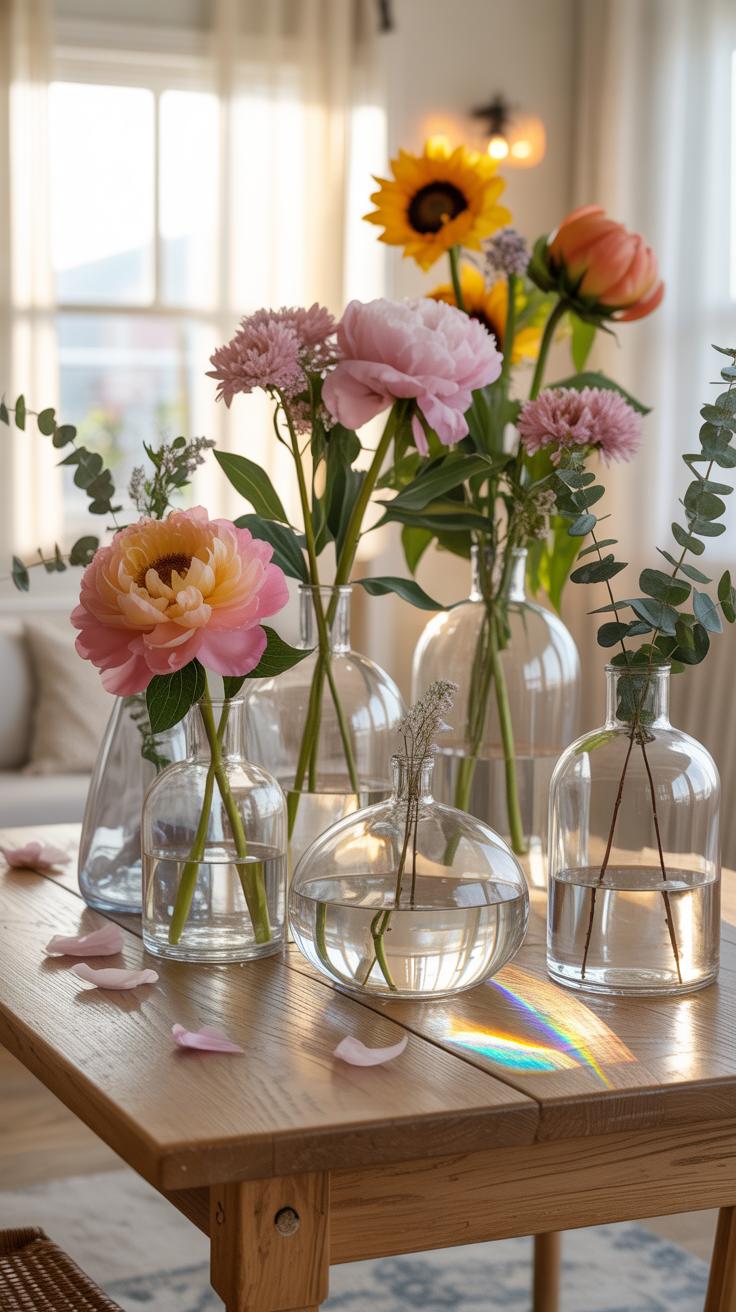
Glass is a transparent medium. It shows every stem, leaf, and air bubble. Overcrowding stems creates a cluttered look that hides the light. It ruins the clean lines of modern glass design. Too many plants block the view through the vessel. This makes the arrangement look heavy and dark. You lose the unique visual lightness that glass provides to a room.
Focus on negative space to highlight each branch. Use fewer stems to show off the water and the glass texture. This technique follows the principles of Japanese Ikebana. It creates a focal point rather than a mess. Clean water and clear stems look professional and organized. Avoid cramming flowers. Give them room to breathe. This approach maintains the integrity of the design and the vase material.
Proportion Height And Balance Getting The Scale Right Every Time
Scale determines if a vase looks purposeful or accidental. A common mistake is using stems that are too short for the vessel. Use the rule of thirds for better balance. The arrangement should be one and a half times the height of the vase. This creates a vertical line that draws the eye upward. Large vases on small tables disrupt the flow of the living space.
Weight also affects the visual balance of your glass decor. Heavy ceramic or stone pieces need wider bases. Thin glass vases require delicate, airy fillers to prevent tipping. Check the center of gravity before finishing your work. Low, wide bowls need horizontal volume to work well. Match the height of your stems to the diameter of your vase opening. This ensures stability and a professional look.
Frequently Asked Questions

What are the most important things to consider when first decorating with glass vases?
When starting your glass vase styling journey, focus on the relationship between scale and transparency. Because glass is see-through, the items inside—whether stems, stones, or water—become part of the aesthetic. Choose a vase that complements your room’s color palette and ensure the height is proportional to your furniture. A single, high-quality glass vessel can act as a sophisticated focal point, instantly elevating the overall mood of any shelf or tabletop.
How can I keep my glass vases looking professional and clean while on display?
For flawless glass vase styling, clarity is key. Always use filtered water to prevent cloudy mineral buildup and trim your flower stems at an angle to keep the water clear for longer. To add a professional touch, try the “grid method” by placing clear florist tape across the rim; this allows you to position individual blooms precisely, creating a lush, high-end floral arrangement that looks like it was designed by a pro.
Can I achieve an expensive, curated look with glass vases on a tight budget?
Absolutely! You don’t need designer price tags to achieve a high-end look. Scour local thrift stores for unique silhouettes, then group them in odd numbers to create a stylish vignette. You can customize affordable finds by adding textured filler like sand or sea glass. Mixing different heights and shapes of budget-friendly glassware creates visual interest and a sophisticated, layered atmosphere that makes your entire home feel more intentionally curated and expensive.