
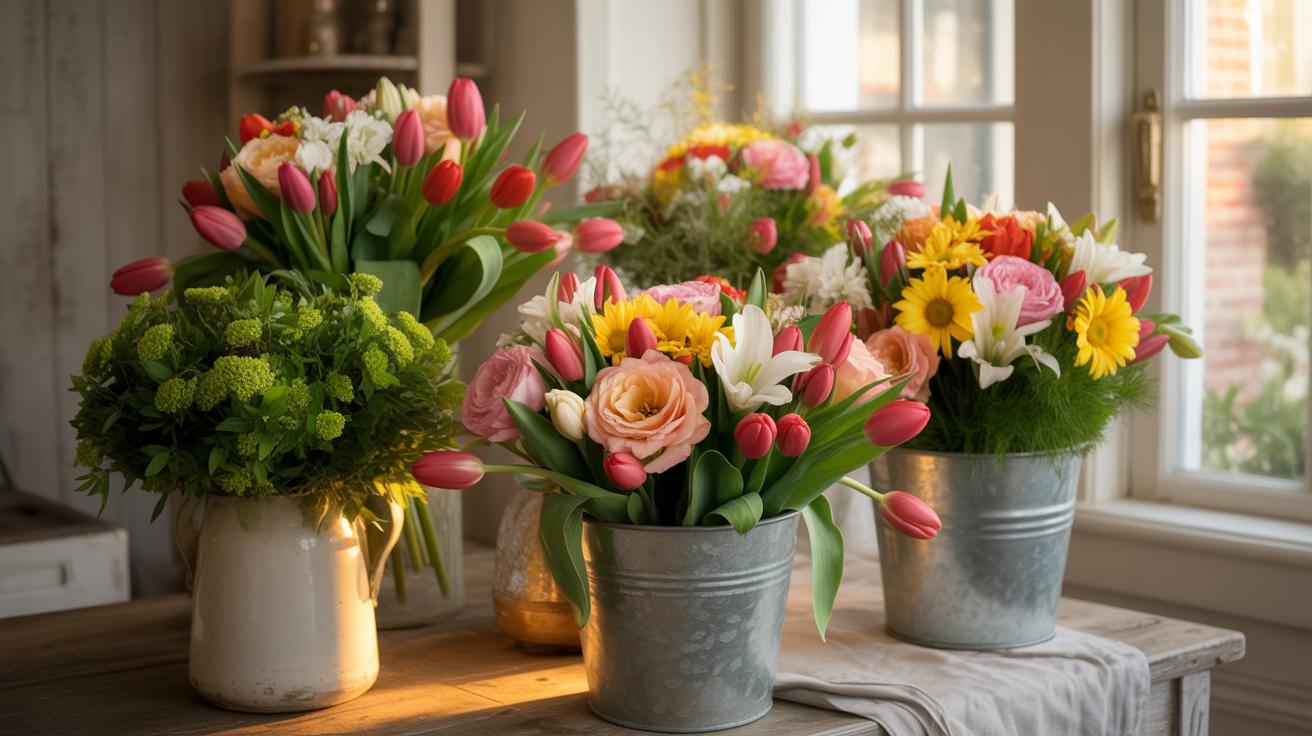
What Are Dutch Bucket Bouquets And Why Are They So Popular
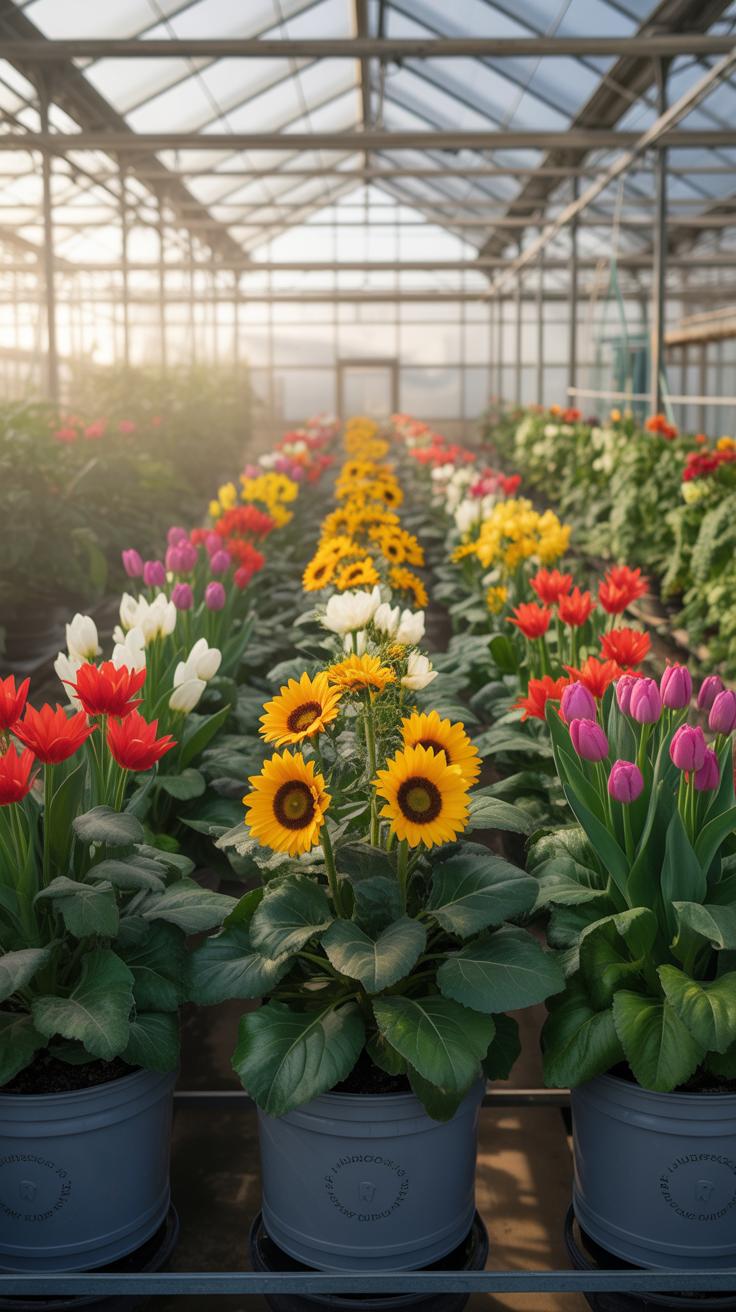
The Origins And Meaning Behind The Dutch Bucket Flower Tradition
Dutch bucket bouquets originated in the flower markets of the Netherlands. Growers used heavy galvanized metal pails to transport fresh blooms from greenhouses to auction floors. These buckets provided stability and easy hydration for large quantities of stems. This utilitarian approach ensured top flower quality during transit. Over time, retailers realized that selling the entire bucket created a rustic and ready-to-display product for the consumer.
The tradition reflects the Dutch focus on efficiency and abundance. It emphasizes the flower itself rather than complex floral foam arrangements. People associate these bouquets with the Bloemenmarkt and the historical Dutch Golden Age of horticulture. The bucket symbolizes a direct link between the farmer and the home. Today, this style represents a shift toward sustainable and reusable packaging in the high-end floral industry.
What Sets A Bucket Flower Bouquet Apart From A Traditional Wrapped Bouquet
A bucket bouquet uses a rigid vessel instead of paper or plastic wrap. Traditional wrapped bouquets focus on flat presentation and artistic layering. Bucket bouquets prioritize a three-dimensional display that is stable on any flat surface. The bucket holds a large volume of water. This water supply keeps the stems hydrated and extends the life of the flowers. Wrapped bouquets require the recipient to find a separate vase immediately.
The structural design of the bucket allows for heavier, taller stems. Designers can use woody branches or large sunflowers that would collapse in a standard wrap. This format also reduces waste because the bucket is permanent and reusable. Most wrapped bouquets generate single-use plastic waste that goes into landfills. The bucket offers a tactical advantage for gift-giving because the flowers arrive in their own self-sustaining environment with no extra setup.

Best Flowers To Use In A Dutch Bucket Bouquet For A Stunning Display
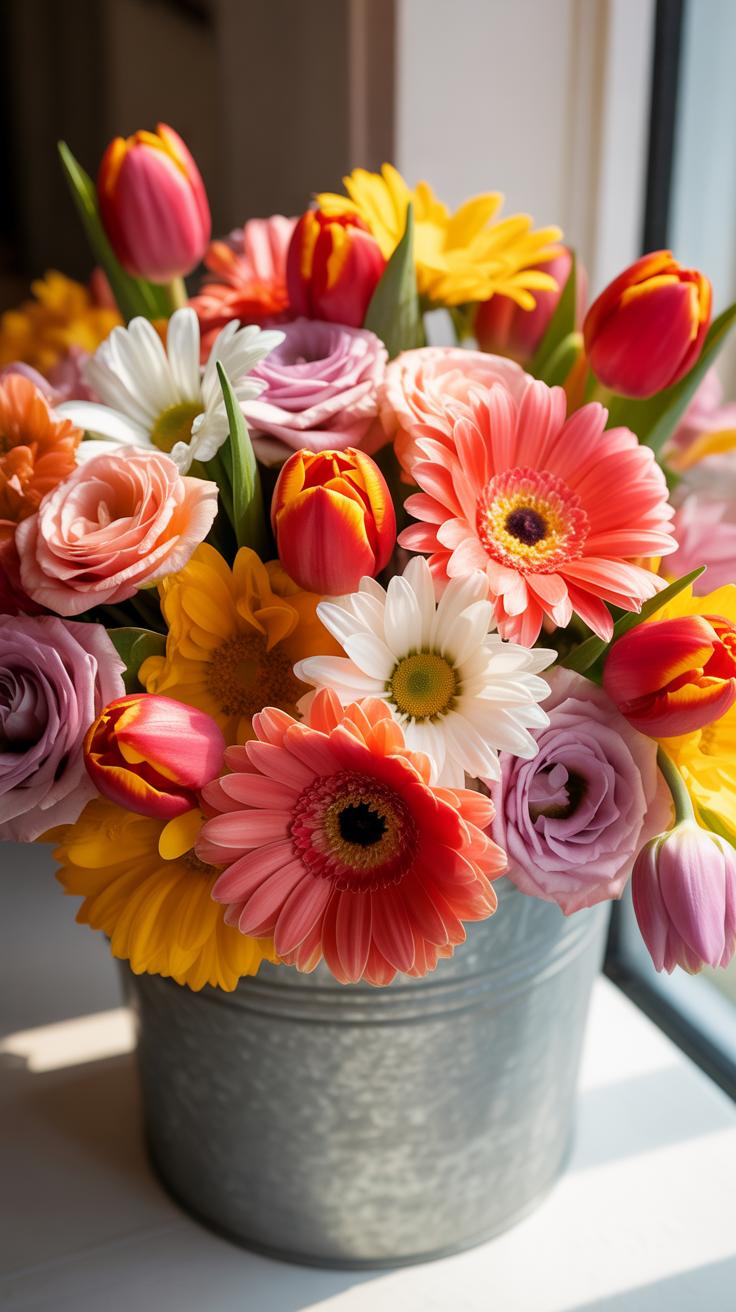
Top Seasonal Flowers That Thrive Beautifully In A Bucket Flower Arrangement
Seasonal flowers dictate the structural integrity and lifespan of a Dutch Bucket Bouquet. You must select species with rigid stems to survive the depth of the container. Professional florists group flowers by their bloom cycle to ensure freshness. High-moisture environments require varieties that resist fungal growth on their lower foliage. Your choice of flower determines the overall weight and balance of the bucket.
- Peonies: These spring perennials offer heavy blooms that fill space quickly. Their thick stems support the large flower heads in deep buckets. Use them for mass and focal points in early season arrangements.
- Hydrangeas: These woody shrubs provide massive volume with a single stem. They require high water intake which makes deep buckets an ideal vessel. Their diverse colors Allow for varied monochromatic or high-contrast designs.
- Dahlias: Available in late summer and autumn, these flowers offer geometric precision. They have hollow stems that require careful handling to maintain water pressure. They provide the necessary structure for complex seasonal displays.
- Ranunculus: These cool-season flowers provide intricate petal layers and flexible stems. They work well for adding movement to the edges of a bucket. Their long vase life makes them a cost-effective choice for residential decor.
- Chrysanthemums: These hardy autumn flowers offer exceptional durability and various shapes. They withstand temperature shifts and low-light conditions found in many homes. Their dense petal structures provide a solid texture to any bucket base.
Select seasonal varieties to reduce logistics costs and increase arrangement longevity. Locally grown flowers often have higher turgor pressure than imported options. This pressure keeps the blooms upright without additional wire support. Always strip the bottom leaves before placing stems in the bucket. This prevents water contamination and bacterial bloom. Proper stem preparation ensures your seasonal arrangement remains vibrant for ten days or more.
To have a garden is to believe in tomorrow, and a simple Dutch bucket filled with blooms brings that hope right into the heart of your home.
Why Roses, Tulips, And Sunflowers Remain The Most Beloved Flowers For Bucket Bouquets
Roses and tulips anchor the Dutch tradition of floral design through historical and physical reliability. The Dutch Golden Age established these flowers as symbols of wealth and botanical mastery. Roses provide a firm central axis for symmetrical designs. Tulips offer a unique phototropic quality where they continue to grow toward the light. This movement adds a dynamic element to stationary bucket displays throughout the week.

Sunflowers offer scale and impact that few other species can match. Their thick, fibrous stems easily support heavy heads in deep water reservoirs. These flowers act as natural focal points and define the color palette of the entire arrangement. Their sturdy nature allows them to stay upright without internal floral foam. Using these three flowers guarantees a professional look because they occupy different visual planes and structural roles.
How To Create A Gorgeous Flower Bouquet DIY Dutch Bucket Style At Home
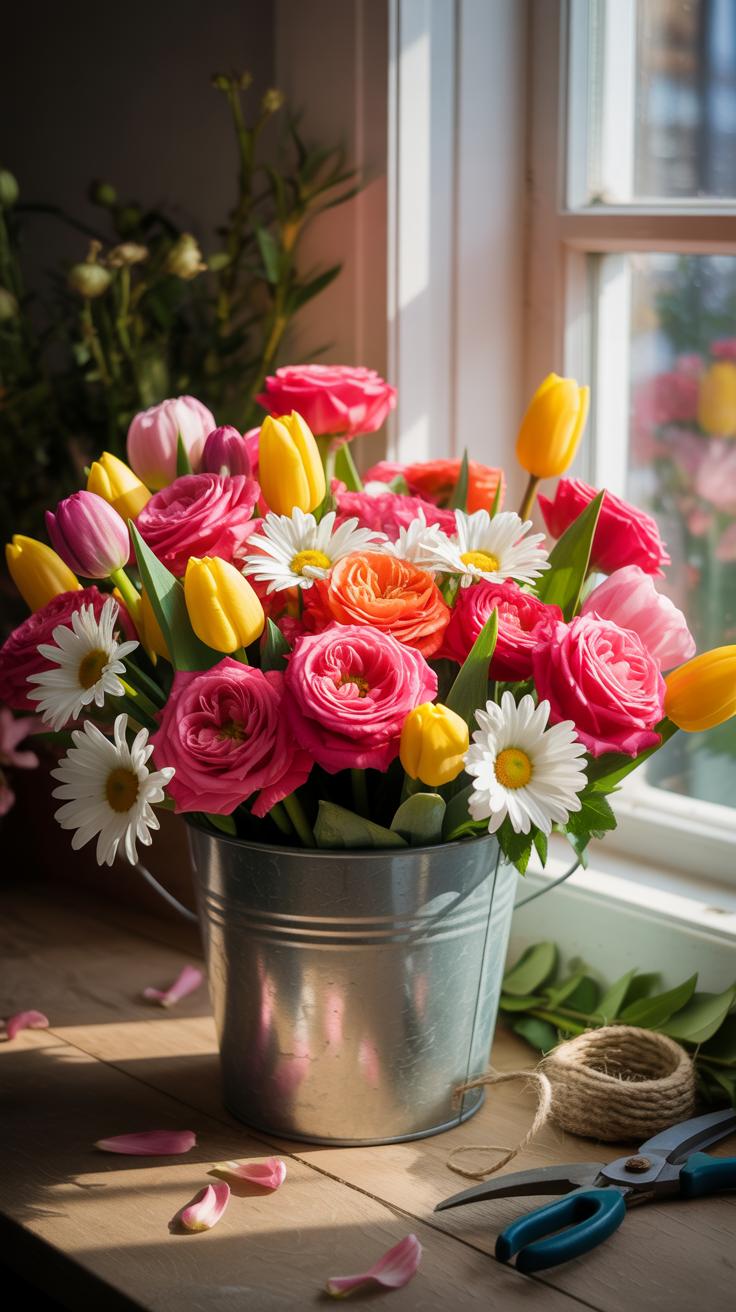
Essential Materials And Tools You Need Before Starting Your Flower Bouquet DIY Project
Building a Dutch bucket bouquet requires hardware designed for massed floral displays. Traditional Dutch styles prioritize abundance and clean lines. You must select containers that offer weight and stability. Standard plastic buckets fail to provide the structural support or aesthetic finish required for professional results. Gather your equipment before cutting stems to ensure flower longevity and design consistency.
- Zinc or Galvanized Steel Buckets: These metal containers provide the industrial foundation for the Dutch aesthetic. They resist rust and offer the necessary weight to prevent tall arrangements from tipping over. Use buckets with handles for authentic portability.
- Floral Frogs or Chicken Wire: Use these tools to create a grid inside the bucket. This structure holds stems at specific angles. Without a grid, flowers will slump to the sides and lose the characteristic upright Dutch profile.
- Professional Floral Shears: Sharp blades prevent crushing the vascular systems of the stems. Clean cuts allow for maximum water uptake. Dull scissors will cause premature wilting in high-volume arrangements.
- Floral Preservative Solution: Mix this with water to inhibit bacterial growth. Dutch bucket arrangements often feature many stems in a single vessel. High stem density increases the risk of water rot without proper chemical treatment.
- Waterproof Floral Tape: Secure your structural grid to the rim of the bucket with this tape. It ensures the internal support stays fixed while you move the arrangement. Use clear or green tape to keep the mechanics hidden from view.
Select premium blooms with straight, sturdy stems to maintain the vertical height. Dutch arrangements often feature lilies, tulips, or hydrangeas. Ensure all foliage below the water line is removed. Submerged leaves rot quickly and kill the flowers. Organize your workspace with all tools within reach. Speed is critical to keep the flowers hydrated during the assembly process.
Step By Step Guidance On Assembling A Balanced And Eye Catching Dutch Bucket Bouquet
Start by filling your bucket halfway with treated water. Build the outer frame of the bouquet using sturdy greenery or secondary flowers. This creates a collar that defines the width of the arrangement. Place your largest focal flowers in the center of the bucket. Work in a circular pattern to ensure the bouquet looks balanced from every single angle.

Adjust the height of each stem to create a rounded or conical shape. Dutch styles often feature grouped colors for a bold visual impact. Push stems through your grid until they touch the bottom of the container. Check for gaps and fill them with smaller accent flowers. Finish by misting the petals to maintain moisture. Replace the water every two days for maximum life.
Bouquet Of Flowers Colorful Ideas That Work For Any Room In Your Home
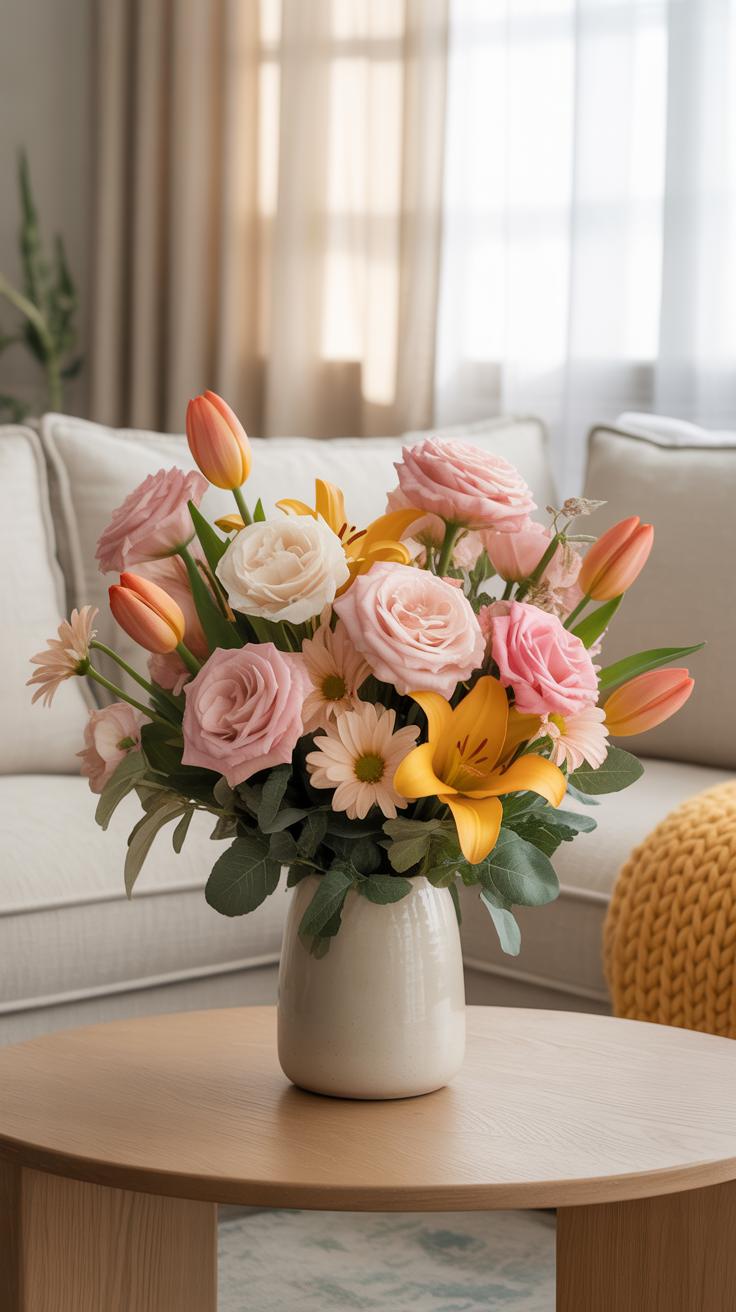
How To Choose A Colorful Dutch Bucket Bouquet That Complements Your Interior Style
Interior design style dictates the vessel material and flower selection. Modern minimalist spaces require structural blooms like anthuriums or calla lilies in monochromatic buckets. These clean lines match steel or polished concrete surfaces. Traditional homes benefit from galvanized steel buckets filled with English roses or peonies. This look references 17th-century Dutch floral paintings. Match the bucket finish to your existing hardware to ensure visual consistency throughout the space.
Contrast and color theory determine the success of your display. Use complementary colors to create high energy in active living areas. Place orange tulips in a blue bucket to trigger visual interest. Neutral rooms need a single bold primary color to act as a focal point. Always consider the scale of the bucket relative to your furniture. Large floor buckets work for tall stems. Small tabletop versions suit dense, low clusters.
Room By Room Placement Ideas For A Bouquet Of Flowers Colorful Dutch Bucket Display
Entryways require high-impact arrangements to set the tone for the home. Place a large Dutch bucket on a console table or the floor near the door. Use resilient flowers like sunflowers or hydrangeas that handle temperature shifts from opening doors. These hardy stems maintain their structure in high-traffic areas. Bright yellow or orange hues create an immediate sense of warmth. Tactical placement ensures the bouquet does not obstruct walking paths.

Kitchens and dining areas need functional floral placement. Use smaller buckets on kitchen islands or breakfast nooks to avoid crowding work surfaces. Herbs mixed with colorful ranunculus provide fragrance and utility. Select buckets with handles for easy movement during meal preparation. In the bedroom, choose calming lavender or white lilies in soft-toned buckets. Avoid highly fragrant flowers in small sleeping quarters. Proper placement improves room utility and aesthetic balance.
The Rise Of The Korean Bouquet Style And How It Blends With Dutch Bucket Arrangements
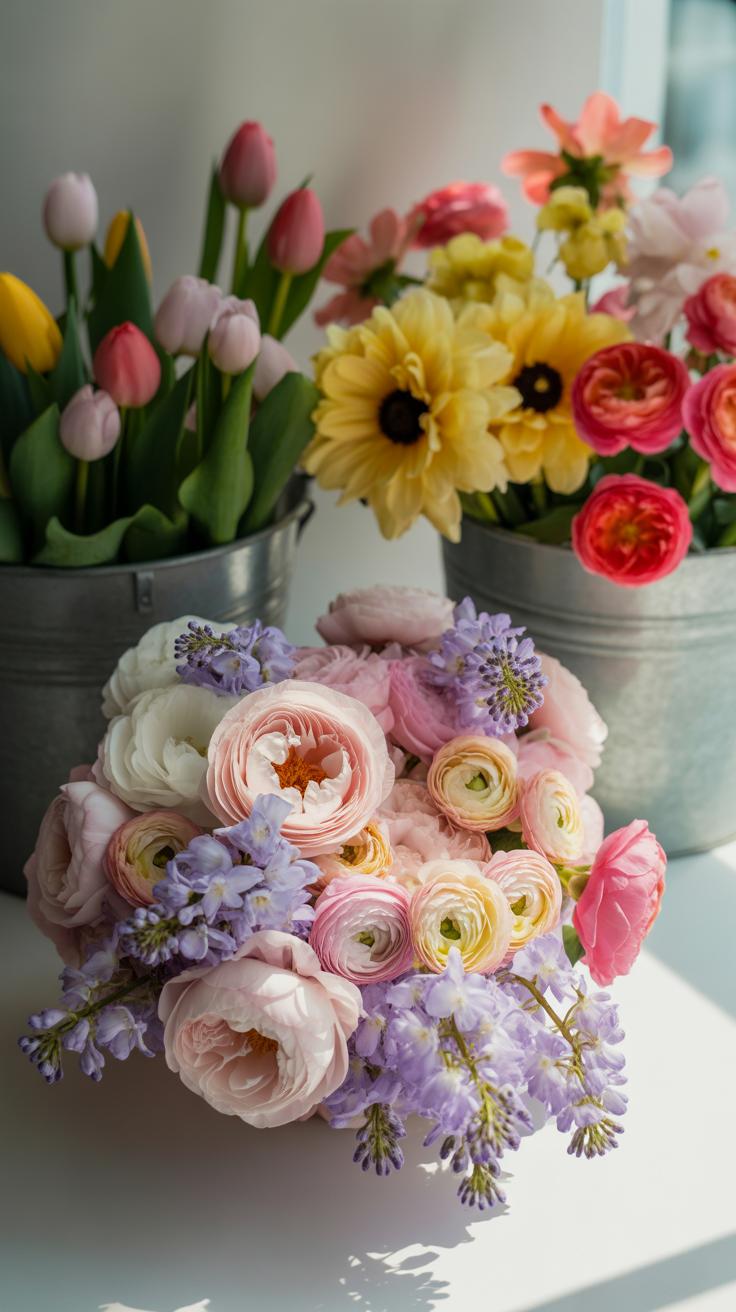
What Defines The Korean Bouquet Aesthetic And Its Signature Wrapping Techniques
The Korean bouquet style focuses on volume and negative space. It rejects tight and symmetrical bundles. Designers use varied stem lengths to create a front facing focal point. This method mimics a natural garden growth pattern. It relies on multiple layers of matte waterproof paper and translucent tissues. These materials add bulk without increasing the actual flower count. This creates a high value look for consumers.
Traditional wrapping involves folding paper in specific pleats and waves. You secure these layers with thin ribbons or twine to hold the structure. The paper acts as an extension of the bloom colors. It enhances the visual weight of the arrangement. This technique protects delicate stems during transport. It serves both a functional and a decorative purpose. Florists use this style to make a few stems look expensive and large.
How To Combine Korean Bouquet Styling With A Dutch Bucket Bouquet For A Modern Look
Dutch bucket bouquets traditionally focus on mass and abundance. You can modernize this by applying Korean layering techniques to the bucket perimeter. Use the bucket as a rigid base to support heavy stem counts. Wrap the exterior of the bucket in neutral toned Korean paper. This hides the industrial plastic or metal surface. It merges the Dutch European density with the soft Asian paper textures and layers.
Position taller flowers at the back of the bucket to create height. Use shorter filler greens in the front to build depth. Use the Korean wrapping paper to extend several inches above the bucket rim. This softens the transition between the container and the living plants. It makes the entire arrangement look like a hand tied gift. This hybrid approach works for high end retail and home decor. It balances structure with fluidity.
Colourful Flower Bouquet Themes Perfect For Gifting And Special Occasions
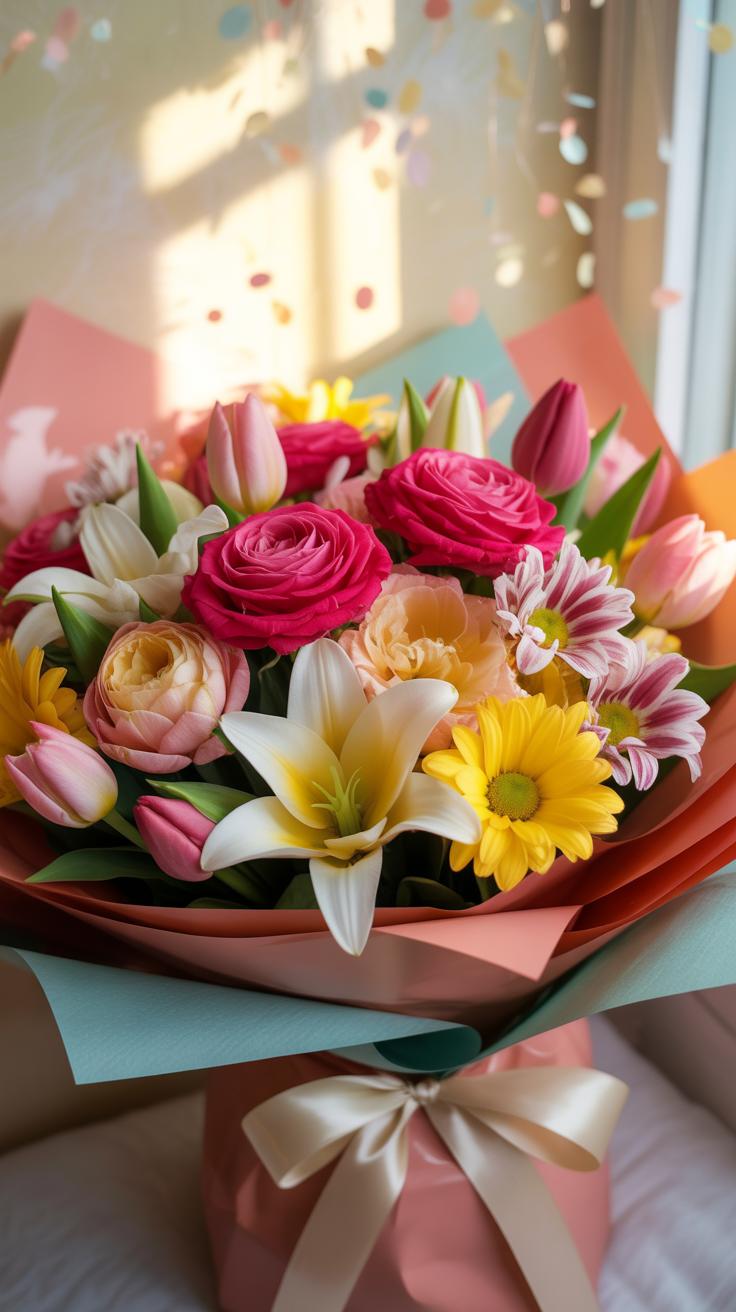
Why A Colourful Flower Bouquet In A Dutch Bucket Makes The Ideal Gift For Any Celebration
Dutch buckets provide a stable base for heavy floral arrangements. This container style originated in commercial hydroponic farming but now serves as a robust vessel for gifting. Its deep structure allows for long stems and large water reservoirs. This keeps flowers fresh for extended periods compared to standard glass vases. The utility of the bucket ensures the recipient receives a durable and reusable item.
The design prevents tipping and spills during transport. This makes it a practical choice for hospital visits or outdoor events. You can easily apply custom paint or branding to the plastic or metal exterior. This flexibility allows you to match the gift to specific event themes or corporate identities. The bucket acts as a self-contained ecosystem for the bouquet. It simplifies maintenance for the person receiving the gift.
Seasonal Colour Themes To Consider When Designing A Dutch Bucket Bouquet As A Gift
Seasonal palettes dictate the visual impact of your Dutch bucket bouquet. Spring themes rely on high-contrast primary colours or soft pastels like yellow and lavender. Summer designs prioritize saturated tones like hot pink and bright orange to reflect high light levels. Selecting colours based on the current season ensures you use local flowers at their peak quality. This reduces costs and improves the overall lifespan of the arrangement.

Fall arrangements move toward earth tones such as deep red, copper, and mustard. These mirror the natural transition of foliage and create a warm aesthetic. Winter themes often use stark contrasts like white flowers against dark evergreen branches. You must match the bucket colour to these seasonal shifts for a cohesive look. A neutral black or grey bucket highlights the floral colours. A galvanized metal bucket adds a rustic touch to any seasonal theme.
Thumbelina Flower Bouquet Inspiration And Small Scale Dutch Bucket Ideas
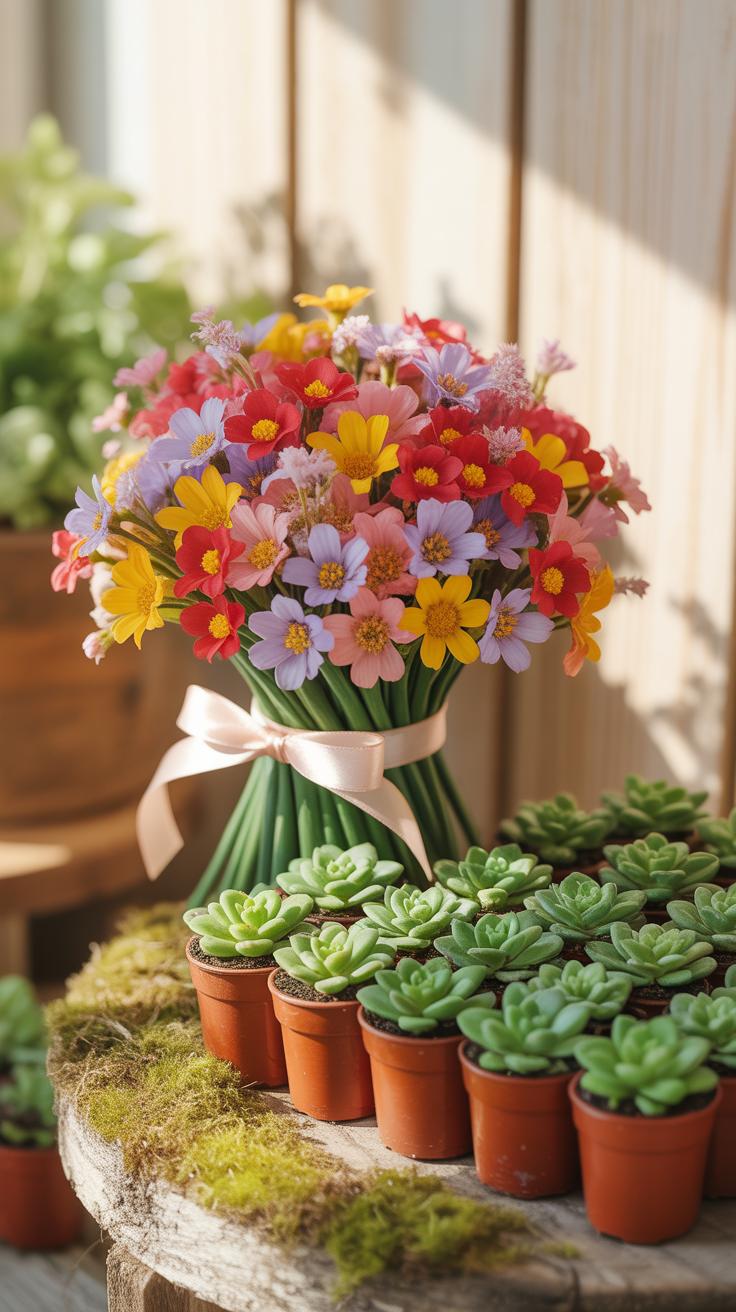
What Is A Thumbelina Flower Bouquet And How It Translates Into A Petite Dutch Bucket Style
A Thumbelina flower bouquet focuses on extreme scale reduction. It utilizes dwarf plant varieties and micro blooms to create a dense visual impact. This style mirrors the miniature floral arrangements popular in 17th-century Dutch dollhouses. Those historical displays used small vessels to show off rare botanical specimens. In modern Dutch Bucket Bouquets, this means choosing containers with a volume of one liter or less.
Translating this style requires precise plant selection. You must choose species that maintain a low profile and small leaf size. Forget large hydrangeas or long-stemmed roses. Instead, use miniature daisies or violets. The Dutch Bucket system supports this by providing consistent nutrients to root systems in confined spaces. This technical setup allows small plants to thrive without outgrowing the aesthetic limits of the petite design.
Miniature Dutch Bucket Bouquet Ideas That Pack Maximum Charm Into Small Spaces
Maximized charm in small spaces depends on vertical layering and color contrast. Use tiered shelving to display multiple mini Dutch buckets. This creates a wall of color without taking up floor space. Strategic placement of white and blue flowers mimics traditional Delftware patterns. This connection to Dutch heritage adds depth to the design. Use inert media like perlite to keep the small buckets lightweight and easy to move.

Compact setups work best on windowsills or kitchen counters. You should group three to five small buckets together for the best visual result. Ensure each bucket has an individual drainage line to prevent water saturation. This technical precision keeps the plants healthy in small volumes of substrate. Small-scale Dutch Bucket Bouquets prove that you do not need a large garden to produce professional floral results. Focus on high-density planting for the best effect.
Bunga Bouquet Influences And Global Flower Traditions That Shape Dutch Bucket Designs
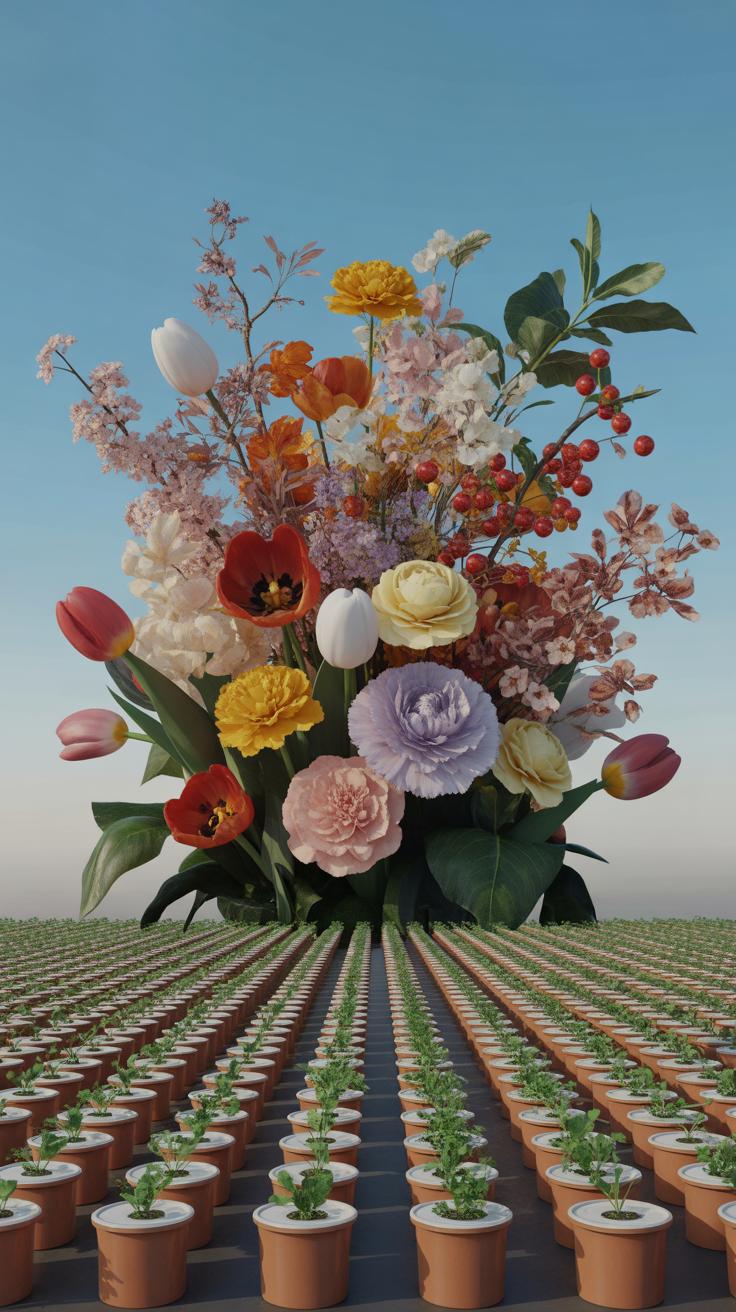
Understanding The Bunga Bouquet Tradition And Its Cultural Significance In Floral Gifting
The Bunga Bouquet tradition originates from Southeast Asian gift-giving customs. Culturally, the term Bunga simply means flower. These arrangements focus on symbolic meanings rather than just visual appeal. In Malaysia and Indonesia, people use Bunga designs to mark specific life milestones. Every stem selected serves a concrete purpose in communication. This tradition prioritizes the emotional weight of the gift through specific color choices and local botanical varieties.
Modern floral strategy incorporates these traditional elements into commercial designs. Designers categorize Bunga styles by their structural density and height. High-contrast colors often define these arrangements to signify respect and prosperity. Understanding this cultural background allows florists to create meaningful work. You must recognize that the Bunga tradition values the act of giving over the complexity of the vessel. It emphasizes the direct relationship between the sender and the recipient.
How Global Floral Influences Like Bunga Bouquet Are Inspiring Fresh Dutch Bucket Bouquet Styles
Dutch Bucket Bouquets now integrate the vibrant aesthetics of the Bunga tradition. This shift moves away from strictly European pastoral styles. Strategists see a rise in using tropical stems within the standard black or metal Dutch bucket. This fusion creates a high-impact look that works for modern interior design. By combining sturdy Dutch hardware with bold Asian floral patterns, you achieve a durable and visually striking product for high-end markets.

Technique plays a major role in this style evolution. Professionals use the deep reservoir of the Dutch bucket to support heavy tropical blooms required for Bunga-inspired looks. This setup ensures longer hydration for exotic stems that typically wilt fast. You can scale these designs easily for large event spaces. The result is a practical marriage of Dutch logistics and global artistic flair. This approach maximizes visual volume while maintaining the structural integrity of the arrangement.
How To Keep Your Dutch Bucket Bouquet Fresh And Long Lasting At Home
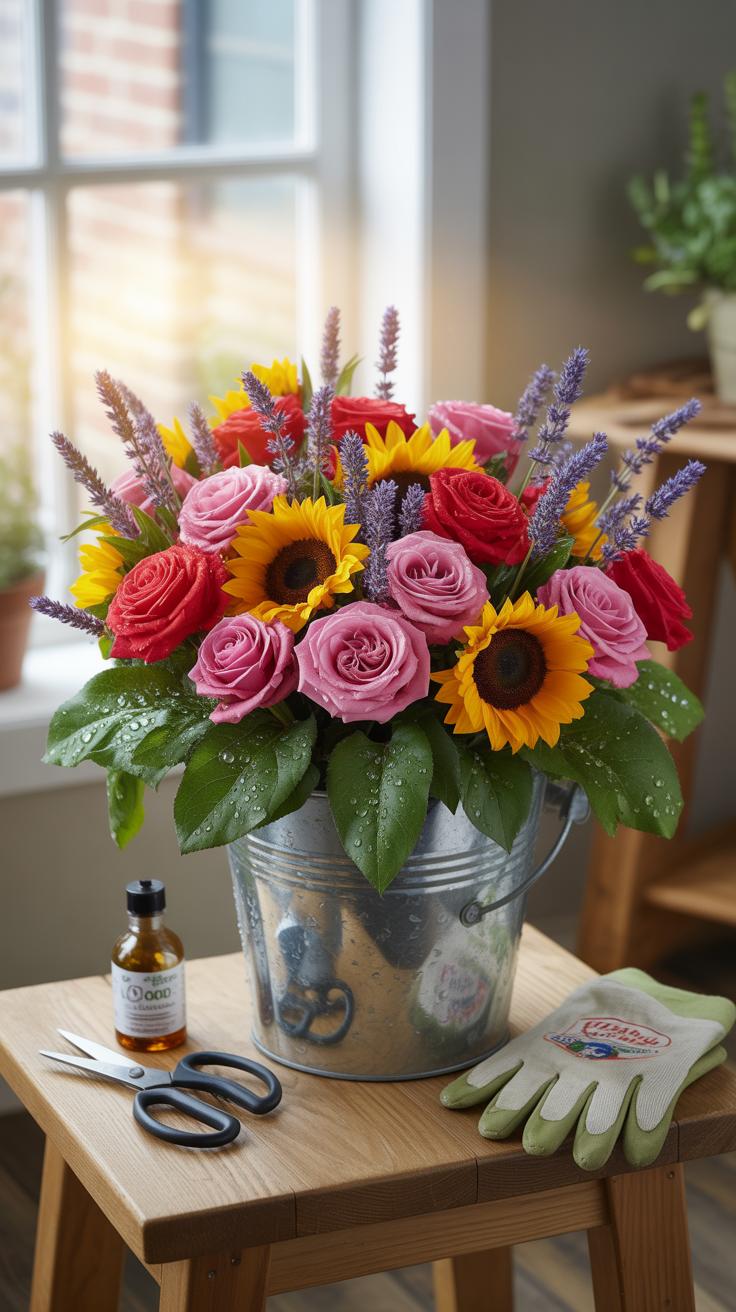
Proven Care Tips To Extend The Life Of Your Bucket Flower Bouquet After Purchase Or Assembly
Temperature control and hydration determine the lifespan of your Dutch bucket arrangement. Cut stems at a forty five degree angle under running water. This prevents air bubbles from blocking water intake. Use cold water for spring bulbs and lukewarm water for woody stems. Change the water every two days to stop bacteria growth. Bacteria clog the stem channels and cause premature wilting.
Remove all leaves below the water line immediately. Decaying foliage releases gases that kill fresh flowers quickly. Place the bucket in a cool spot away from direct sunlight or drafts. Heat accelerates the respiration process and drains the energy of the blooms. Use the provided floral preservative packets to lower the pH of the water. This acidity helps the stems drink more efficiently.
Common Mistakes To Avoid When Maintaining Fresh Flowers In A Dutch Bucket Arrangement
Never place your Dutch bucket bouquet near ripening fruit. Ripening apples and bananas release ethylene gas. This hormone causes flowers to age and drop petals rapidly. Avoid using dull scissors to trim your stems. Dull blades crush the vascular system of the plant. This damage prevents the flower from absorbing nutrients and water. Use sharp bypass pruners or a floral knife.
Do not ignore the water level in deep buckets. Large arrangements drink significant amounts of water in the first twenty four hours. Check levels daily to ensure all stems remain submerged. Never use softened water because the salt content is toxic to most cut flowers. Avoid misting the flower heads directly. Trapped moisture on petals encourages fungal growth and gray mold in dense bucket displays.
Frequently Asked Questions

What are Dutch Bucket Bouquets and why are they popular in home decor?
Dutch Bucket Bouquets are a charming floral arrangement style inspired by traditional European flower markets. Unlike structured, formal centerpieces, these bouquets prioritize a lush, “just-picked” aesthetic that emphasizes volume and variety. They are incredibly popular in home decor because they offer a relaxed, rustic elegance that brightens any room. Whether you use fresh garden blooms or high-quality silk stems, these arrangements bring a cozy, lived-in feel to your living space.
How can I arrange Dutch Bucket Bouquets to look professional at home?
To create stunning Dutch Bucket Bouquets, start by selecting a sturdy vessel like a galvanized metal pail or a ceramic crock. Build a foundational layer of greenery to act as a support structure for your blooms. Add “thriller” flowers for height, followed by “filler” flowers for volume. Ensure you vary the stem lengths and let some flowers spill over the edges. This layered approach creates an effortless, professional look that captures European charm.
Can I create beautiful Dutch Bucket Bouquets on a limited budget?
Absolutely! You can achieve a high-end look without spending a fortune by sourcing seasonal flowers from local farmers’ markets or even your own backyard. Inexpensive fillers like baby’s breath, eucalyptus, or dried wheat can bulk up the arrangement beautifully. Additionally, repurposing old wooden crates or vintage tins as your “bucket” adds character for pennies. With a little creativity, gorgeous floral displays can be affordable and accessible for every homeowner.