The History And Timeless Appeal Of Waterfall Bouquet Wedding Cascading Flowers
How The Cascading Bouquet Became A Bridal Tradition
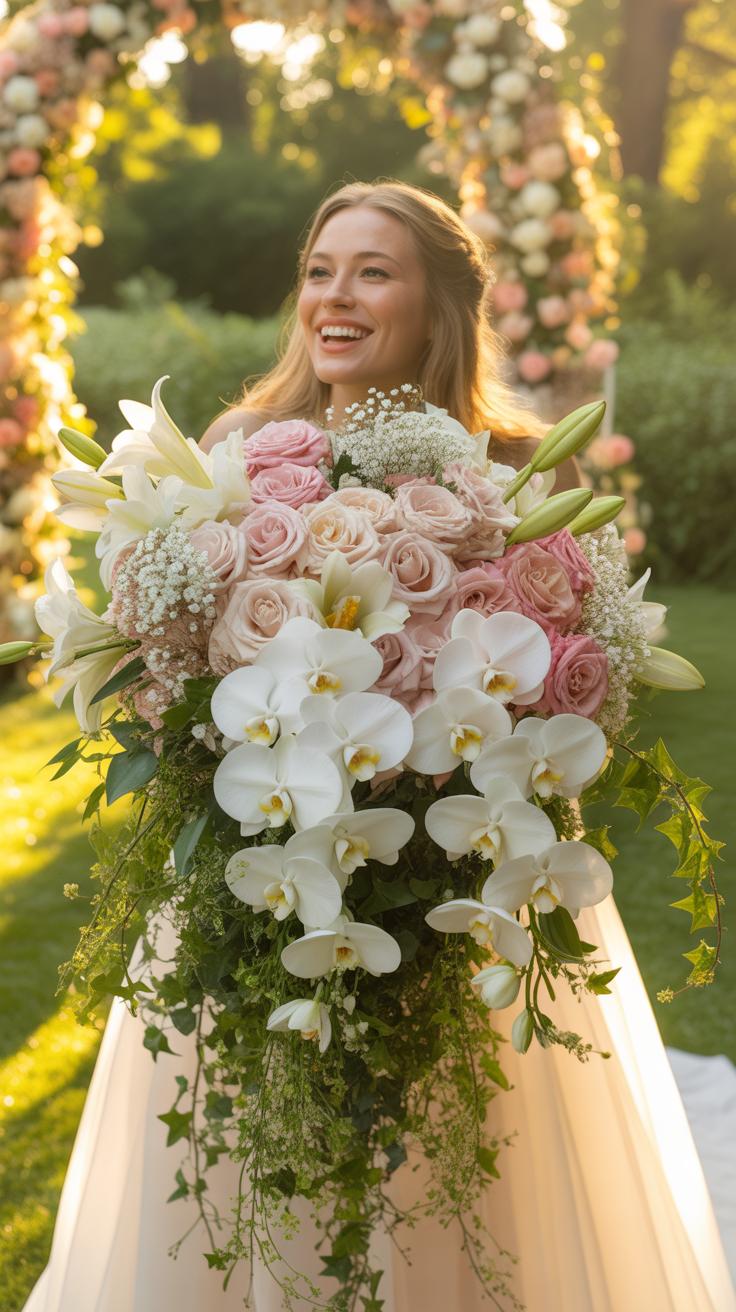
Cascading bouquets emerged as a formal design style in initial decades of the twentieth century. This period saw a shift from tight, round nosegays to more elaborate and vertical flower arrangements. The trend gained traction because it complemented the long, flowing lines of Edwardian wedding gowns. Designers used wire and tape to secure heavy blooms. These techniques allowed flowers to drape safely toward the floor without breaking.
By the 1920s and 1930s, the shower bouquet became a status symbol for wealthy brides. Large-scale arrangements signaled access to exotic hothouse flowers and skilled labor. These bouquets often featured orchids and lilies of the valley trailing down many feet. The weight required brides to use two hands for support. This physical presence made the bouquet a central tactical element of the wedding ceremony and formal photography.
Why Waterfall Style Arrangements Have Endured Across Wedding Eras
The waterfall style remains relevant because it balances human scale with architectural design. Modern florists use foam cages and specialized holders to create these shapes. This engineering prevents the arrangement from losing its form during long events. The style creates a strong vertical line that draws the eye downward. This visual trick elongates the torso of the person holding it. Function dictates the form in these professional floral compositions.
Strategic use of foliage ensures the style stays current. In the 1980s, large blooms like roses and gardenias dominated the cascading look. Today, designers use eucalyptus and trailing vines to achieve a more natural downward flow. This versatility allows the bouquet to match various themes, from formal church weddings to outdoor events. Florists prefer this style because it allows for high-impact visual results using fewer expensive focal flowers.

Understanding The Structure Of A Bride Flower Bouquet Cascade
The Anatomy Of A Cascading Bouquet: Shape, Flow, And Balance
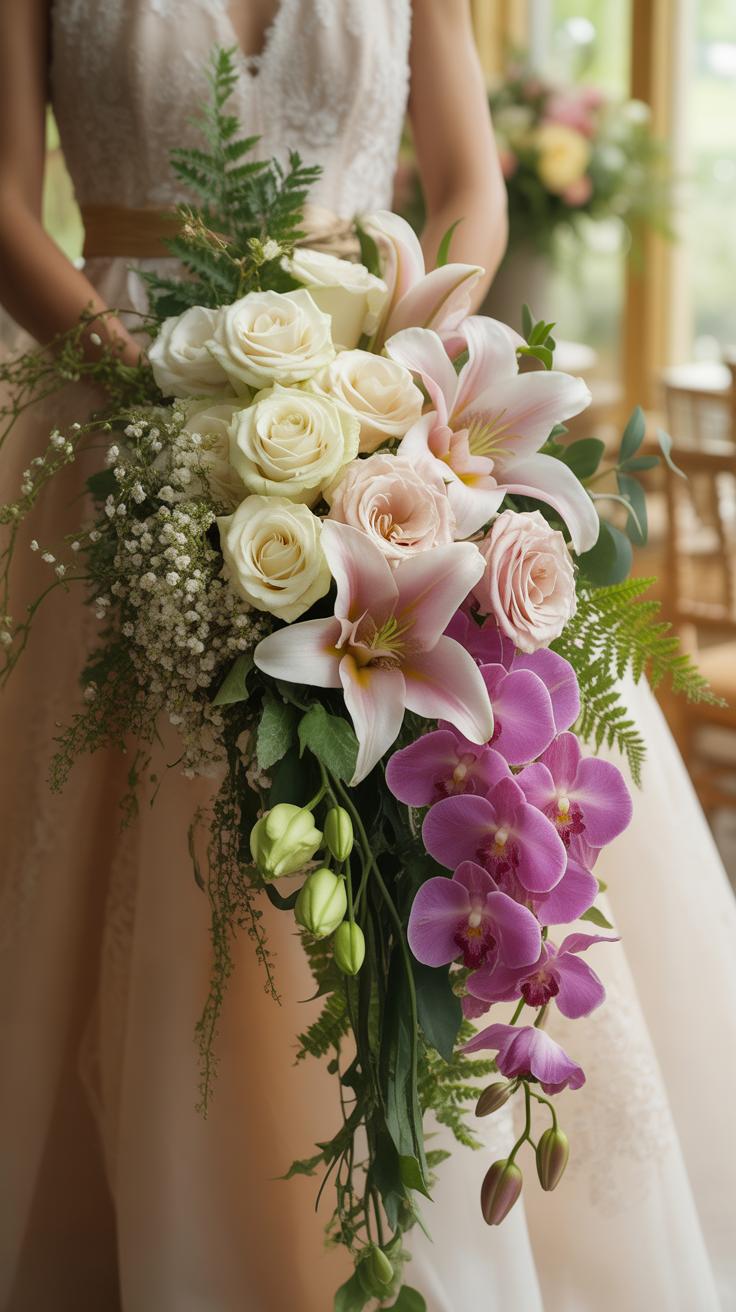
A cascading bouquet relies on a clear focal point and a strong downward axis. This style originated in the late 19th century and gained massive popularity during the 1980s. The structure requires a weighted center where the largest blooms sit. This central hub anchors the design. Designers then extend foliage and smaller flowers downward to create the signature teardrop or shower silhouette.
Balance is the primary technical challenge in these arrangements. Physical weight must stay centered in the hand or the holder to prevent wrist strain. Visual balance requires the trail to taper naturally toward the floor. You must align the flow with the bride’s height and dress lines. A successful design maintains a sharp vertical line without appearing bottom-heavy. Use trailing vines to soften edges and guide the eye smoothly.
Flowers are a proud assertion that a ray of beauty outvalues all the utilities of the world. Like a waterfall of petals, a cascading bouquet carries the grace of every memory we hold dear.
How Florists Build Volume And Depth In A Cascade Design
Modern florists use a rigid foam holder or a hand-tied wire frame to build depth. Layering is the essential technique for creating a 3D effect. You start with a base of greenery to hide the mechanical structure. Next, you insert primary focal flowers at varying stem lengths. This creates a recess and projection effect. Shorter stems sit deep in the foam while longer stems provide the outer shell.

Creating volume without excessive bulk requires strategic material selection. Experts use “filler” flowers and airy greens like plumosis or ivy to bridge gaps. These materials add texture without adding significant weight. You must place darker colors deeper into the arrangement to create shadows. Lighter colors sit on the surface to catch light. This contrast gives the bouquet a high-end, professional finish that looks full from every camera angle.
Most Popular Flowers Used In Cascading Bridal Bouquets
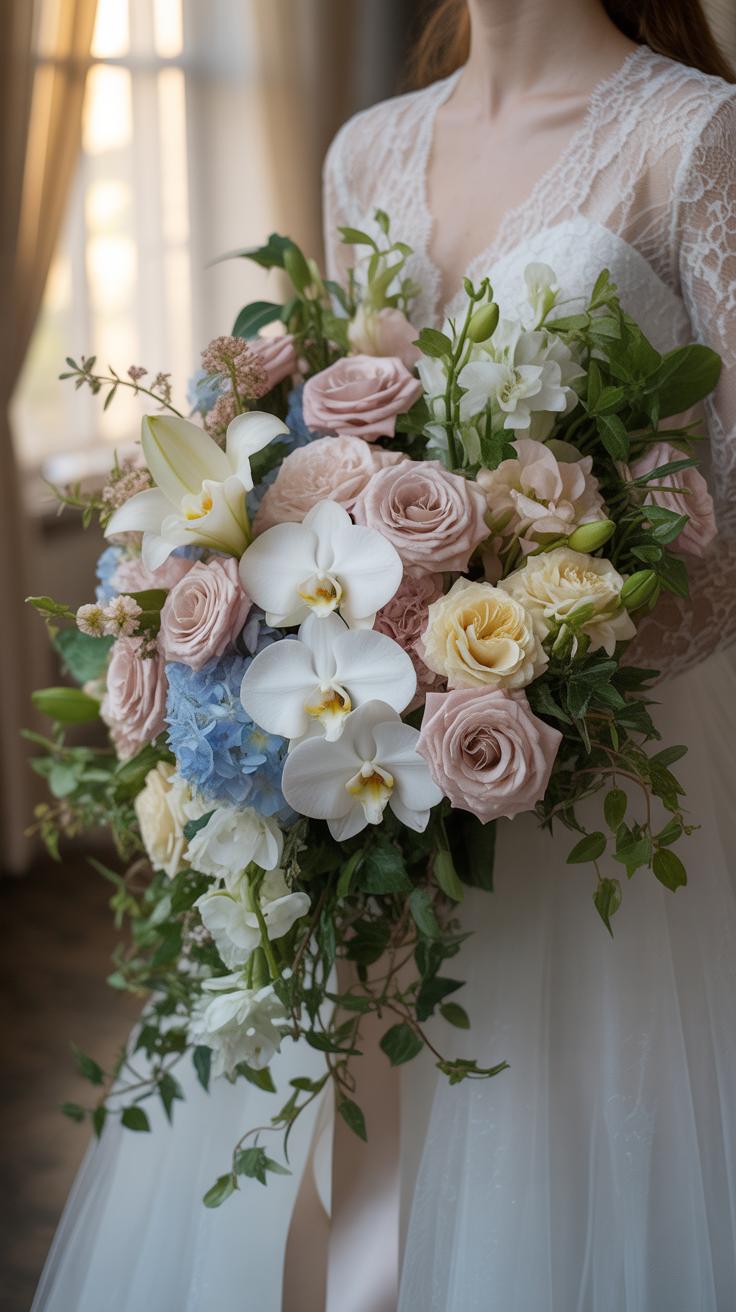
Classic Blooms That Define The Cascading Bridal Look
Orchids and lilies remain the primary structural choices for high-end cascading designs. Phalaenopsis orchids provide a natural downward growth pattern that requires minimal wiring. Designers select these blooms for their flat faces and architectural presence. They anchor the center of the bouquet while creating a continuous line of color. These flowers withstand long events without wilting, making them highly reliable for complex floral builds.
Roses and carnations function as the mass flowers within the arrangement. They fill the upper portion of the handle and bridge the gap to the dangling tail. Traditional Edwardian and Art Deco styles relied on these dense blooms to create a sense of abundance. Florists use specific wiring techniques to tilt the heads downward. This ensures the viewer sees the flower face rather than the stem during photos.
Best Trailing Greenery And Filler Flowers For A Natural Cascade Effect
Greenery provides the necessary skeleton for any trailing arrangement. It supports the weight of heavier blooms and masks the underlying wire or foam structure. Modern designers choose foliage based on how it moves and hangs. You must select vines that do not snap when coiled or manipulated. Proper greenery selection reduces the total flower count needed while increasing the overall visual impact and length.
- Ivy: This classic vine offers superior flexibility and durability. Its small, waxy leaves resist wilting and provide a consistent deep green backdrop. Designers use it to define the outer edges and the very tip of the cascade tail.
- Eucalyptus: Varieties like silver dollar or willow seeded eucalyptus add a dusty blue tone and unique texture. Their long, drooping stems create a relaxed, organic feel. This foliage helps break up the rigid lines of heavy traditional blooms.
- Jasmine Vine: This delicate plant adds fine detail and a light scent to the arrangement. Its thin, wiry stems allow for intricate draping and movement. Designers use it to create a wild, unpolished look that mimics a garden growth.
- Ruscus: Italian and Israeli ruscus provide incredible longevity and structural strength. The shiny, pointed leaves stay vibrant for days without water. It serves as a reliable base for attaching smaller filler flowers like waxflower or baby breath.
- Stephanotis: These small, star-shaped white flowers are often wired onto the trailing vines. They add a bright contrast against dark greenery without adding much weight. They are a staple of traditional royal bouquets due to their clean, formal appearance.

Filler flowers like limonium or queen anne lace bridge the gaps between large stems. These airy additions soften the transition from the dense top to the thin bottom. They add volume without adding bulk. Use these materials to hide plastic holders or floral tape. Strategic placement of filler flowers ensures the bouquet looks complete from every angle, including the sides and the back.
Seasonal Bridal Bouquet Cascade Ideas For Every Time Of Year
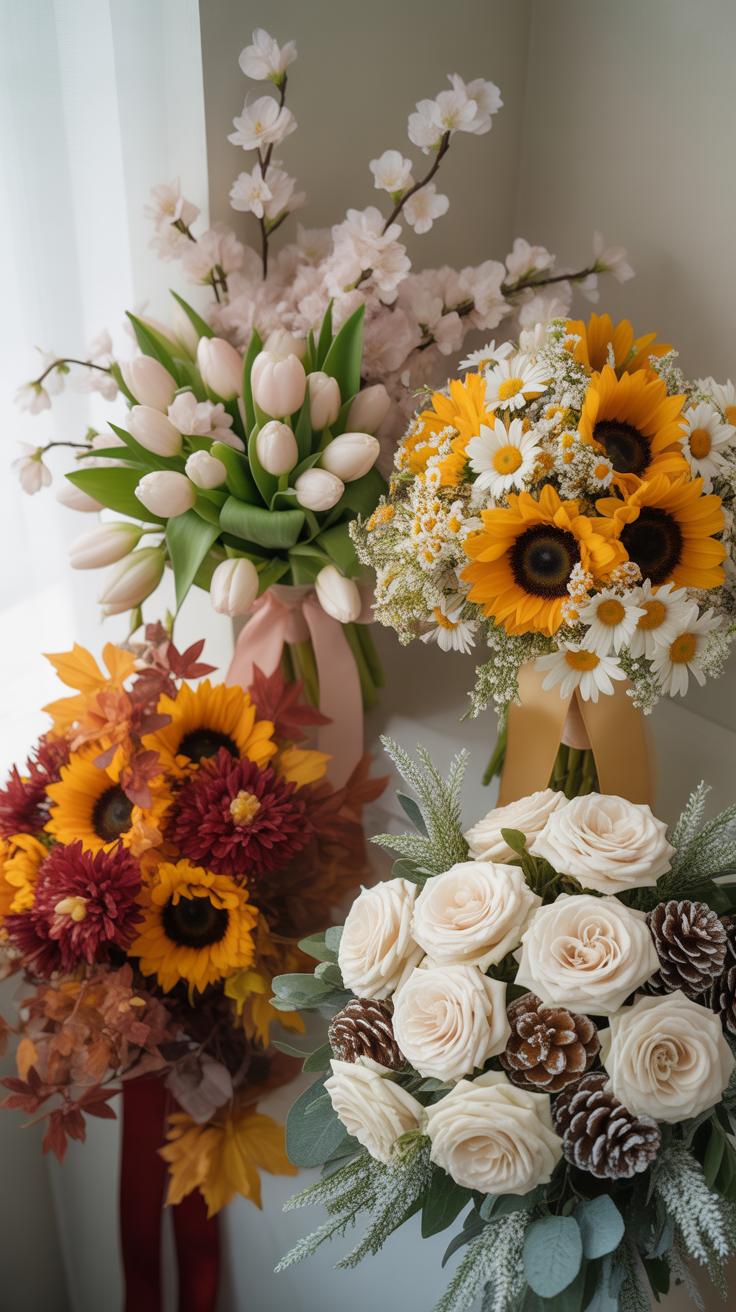
Spring And Summer Cascade Bouquets: Fresh, Vibrant, And Full Of Life
Spring cascades prioritize high water content flowers like tulips and sweet peas. These stems require specific wiring techniques to maintain their structure in a trailing drop. Designers use cold glue or fine gauge wire to secure delicate petals into the greenery base. This prevents wilting during outdoor events. Use jasmine vine or ivy to create the downward movement. These materials provide a natural frame for the focal blooms.
Summer designs must withstand high temperatures and direct sunlight. Professionals choose hardy focal flowers like orchids or lilies. These varieties hold moisture better than field flowers. Support the arrangement by using a wet floral foam handle. This keeps the stems hydrated throughout the ceremony. Combine these with ruscus or eucalyptus for a durable green foundation. Ensure the weight remains balanced to prevent the bouquet from tipping forward during use.
Autumn And Winter Bridal Bouquet Cascades: Rich Tones And Textured Layers
Autumn cascades focus on structural depth and heavy textures. Use dried elements like wheat or preserved ferns to add visual weight. Incorporate dahlias and calla lilies to anchor the top of the arrangement. These flowers provide the necessary density for a formal teardrop shape. Use brown floral tape to blend stems with woody accents. This creates a cohesive look that matches the shifting colors of the season.

Winter designs utilize evergreen foliage and berries to build the cascade. Use cedar or pine branches as the primary trailing material. These hardy greens withstand freezing temperatures without turning black. Secure heavy items like pinecones or seed pods with thicker gauge wire. Focus on high contrast colors like deep reds and stark whites. This palette ensures the bouquet stands out against neutral backdrops. Tight construction prevents wind damage during winter photos.
Color Palettes That Elevate Bridal Bouquet Cascading Designs
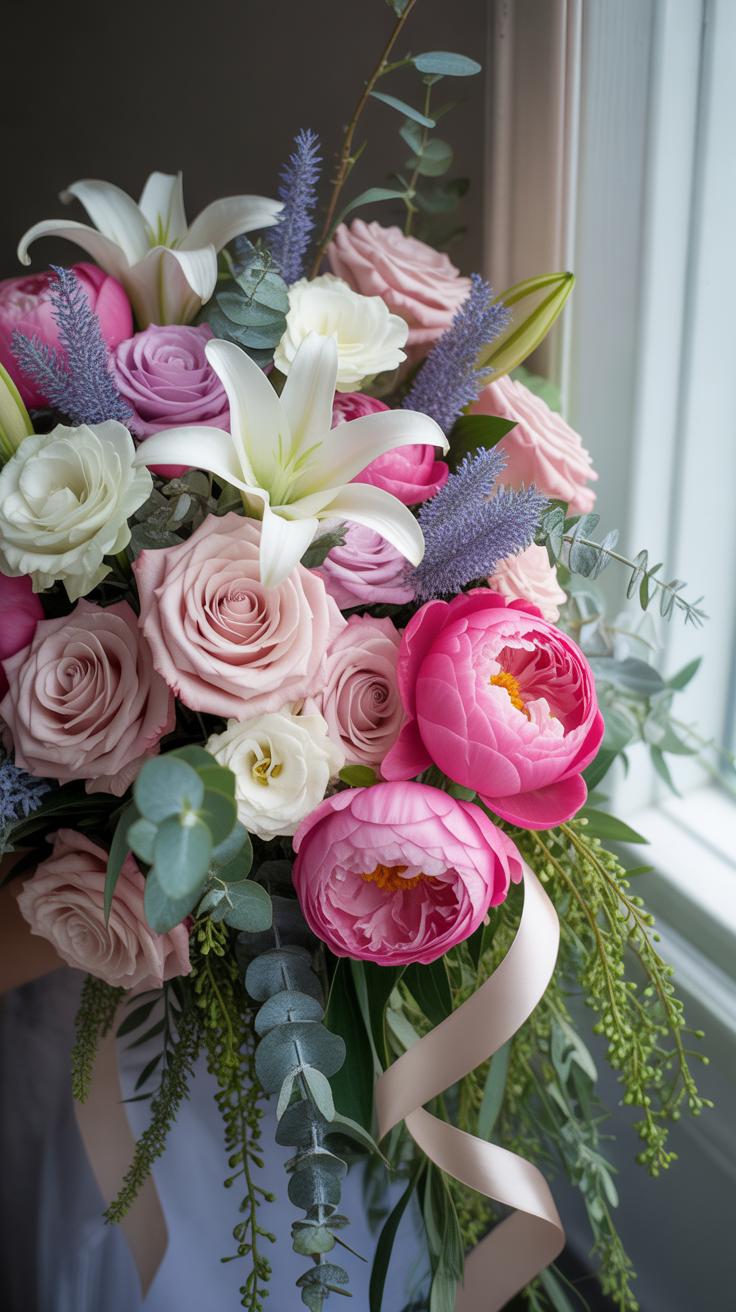
Soft Pastels And Blush Tones For Romantic Cascading Arrangements
Soft pastels rely on low-saturation hues to create visual continuity. This palette uses creams, pale pinks, and dusty blues to soften the sharp lines of a long cascade. Designers often select focal flowers like garden roses or peonies for their dense petal counts. These blooms provide the necessary bulk at the handle. Use silver-toned greenery like eucalyptus to bridge the gap between light petals and dark stems.
Low-contrast colors hide structural mechanics better than dark tones. Transitioning from a light center to slightly darker edges creates depth without breaking the vertical flow. Use white jasmine vines or stephanotis to extend the visual tail of the arrangement. These delicate materials maintain a light weight. This prevents the bouquet from looking bottom-heavy. Stick to a monochromatic base to ensure the cascading shape remains the primary focus.
Bold And Jewel Toned Cascade Bouquets For A Dramatic Bridal Statement
Jewel tones demand careful placement to avoid a muddy appearance. Deep magentas, emeralds, and navy blues create high contrast against traditional bridal attire. Use saturated colors to define the outer edges of the teardrop shape. Designers often use orchids or calla lilies for their structural integrity. These flowers hold their shape under the weight of a long trail. Darker tones draw the eye downward along the floral path.

High-saturation palettes require intentional spacing to maintain clarity. Mix deep purples with bright gold or copper accents to add metallic highlights. This technique reflects light and prevents the bouquet from appearing like a solid dark mass. Use trailing ivy or ruscus to provide a dark green backdrop. This foundation makes the vibrant flower colors pop. Strategic color blocking ensures each individual bloom contributes to the overall downward movement.
Creative Bridal Bouquet Ideas Cascade Styles For Non Traditional Brides
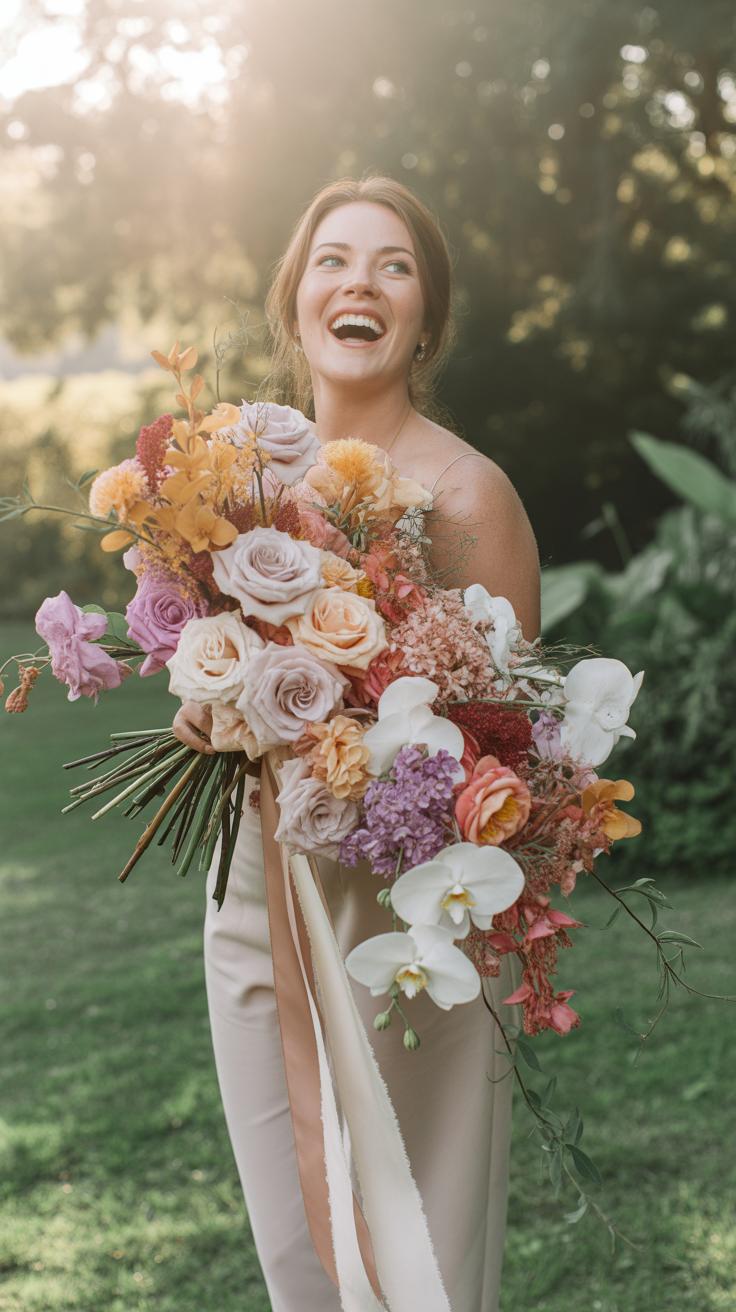
Bohemian And Wildflower Cascade Bouquets For Free Spirited Celebrations
Bohemian cascade bouquets prioritize movement and texture over tight structure. Designers use long stems of eucalyptus and pampas grass to create a loose teardrop shape. Unlike formal English styles, these arrangements focus on asymmetry and negative space. You must use varying heights to achieve a field-gathered look. This technique highlights raw materials like dried seed pods and thistle for more visual impact.
Technical execution requires a hand-tied base or a cold-glue mechanic. Traditional foam often restricts the natural lean of wildflower stems. Use leather or twine wraps instead of satin ribbon to maintain the aesthetic. Incorporate seasonal blooms like dahlias or cosmos to provide focal weight at the top. This approach ensures the bouquet remains light enough for the bride to carry during outdoor ceremonies.
Tropical And Exotic Cascading Bouquet Styles For Destination Weddings
Tropical cascade designs use stiff, architectural flora to build length and drama. Orchids and ginger lilies serve as primary cascading elements due to their natural downward growth. You should avoid heavy water-dependent flowers that wilt in high humidity. Instead, choose waxy surfaces found in anthuriums and monsteras. These materials hold their shape and color in extreme heat without additional hydration sources.

Designers use aluminum wire or floral tape to secure heavy tropical stems. Traditional wiring techniques allow you to manipulate the direction of orchid sprays. Gravity helps pull the arrangement into a sharp vertical line. This style works well for destination events where local foliage provides the bulk. Ensure the handle remains balanced so the forward weight of the exotic leaves does not tip the bouquet.
The Elegant White Bridal Bouquet A Cascading Classic Reimagined
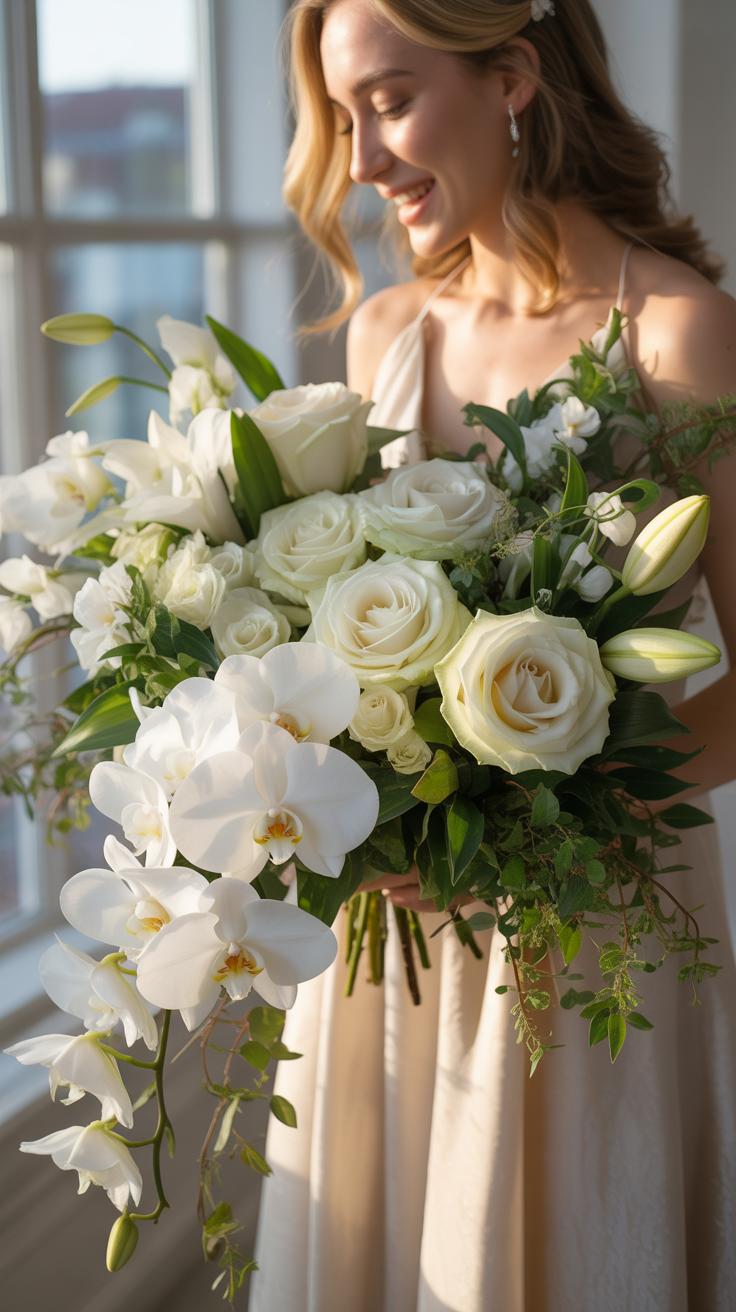
Why All White Cascades Remain A Symbol Of Elegance And Grace
All-white cascading bouquets dominate formal ceremonies because they emphasize form over color. This design movement traces back to the early 20th century. Princess Diana later solidified this style in the 1980s. The lack of color shifts the focus to texture and silhouette. Florists use white to create a clean visual line. This helps the bouquet complement the dress rather than compete with it for attention.
Structure defines this style. Designers use specific flowers like lilies and orchids to create weight at the top. The floral trail draws the eye downward. This creates a slimming effect for the person carrying it. Professionals select white blooms because they work in any lighting. The monochromatic palette ensures the arrangement looks timeless in photos. It remains the most requested style for high-end traditional events today.
Modern Twists On The Traditional Elegant White Cascading Bouquet
Modern designers update the traditional white cascade by mixing different shades of white. They combine cool-toned whites with warm ivory tones. This adds depth without using color. Florists now move away from the rigid teardrop shape. They use a looser hand-tied technique. This creates a more organic look. Designers also incorporate architectural greens to frame the white flowers. This contrast makes the white petals look brighter and sharper.

New techniques focus on movement and negative space. Florists use hidden skeletal structures made of wire. These wires allow stems to hang naturally. This prevents the bouquet from looking like a solid block of flowers. Modern weddings often feature local and seasonal white blooms. Using varied textures like matte petals and glossy leaves adds visual interest. This strategic approach ensures the all-white bouquet feels fresh and contemporary rather than dated or old.
Choosing The Right Bridal Bouquet For Your Gown And Venue
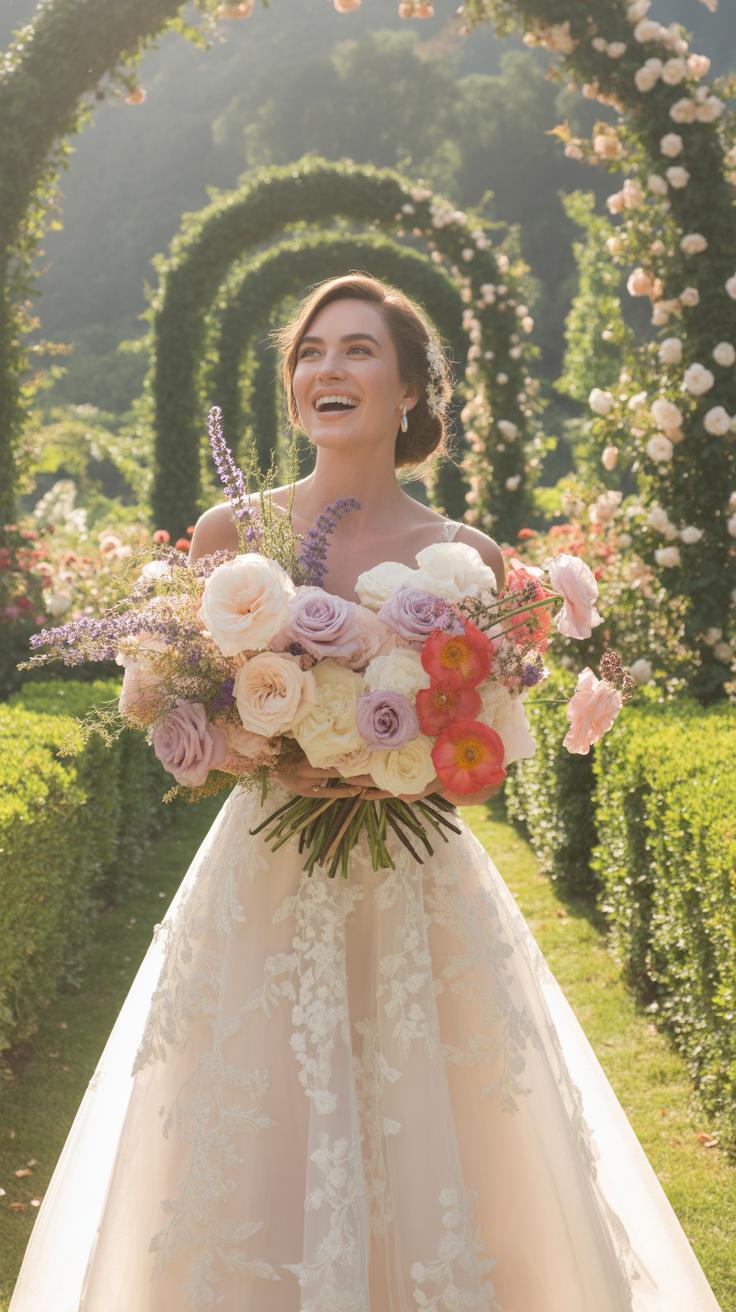
How Your Wedding Dress Silhouette Influences Your Bouquet Cascade Choice
The volume of your dress dictates the necessary scale of your floral arrangement. Large ball gowns require wide and long cascades to maintain visual balance. A small bouquet disappears against heavy layers of tulle or silk. Conversely, sheath dresses demand narrow and vertical teardrop shapes. These sleek lines prevent the flowers from overwhelming your frame. You must align the bouquet width with your waistline.
Ornate dresses with heavy lace or beading require simple greenery and clean lines. Busy patterns clash with complex floral textures. Minimalist gowns allow for wilder and more texture-heavy cascades. Ensure the handle placement does not hide key design details like belt work or bodice embroidery. Florists must anchor the bouquet low enough to show your natural waist. This creates a flattering line for photographs.
Tips For Matching A Cascading Bouquet To Your Wedding Venue Style
Venue architecture and lighting determine the appropriate density of your floral cascade. Formal indoor settings like cathedrals or ballrooms call for structured and symmetrical arrangements. These environments have high ceilings that dwarf small floral pieces. You need a bouquet with a clear architectural shape to stand out against grand stone or wood backgrounds. Outdoor settings allow for more movement and air in the design.
- Cathedral Settings: Use long and formal cascades with traditional flowers like lilies or roses. The grand scale of the church requires a dramatic length to ensure the bouquet remains visible from the back of the long aisle.
- Industrial Lofts: Choose structured cascades with architectural foliage like eucalyptus or monstera. High ceilings and exposed brick demand bold shapes and clean lines rather than soft or wispy garden styles. This maintains a modern aesthetic.
- Outdoor Gardens: Select airy and loose cascades with varied vine lengths. Use seasonal blooms to mimic the surrounding natural landscape. This creates a cohesive look that feels integrated into the environment rather than separate from it.
- Beach Fronts: Opt for wind-resistant greenery and sturdy tropical blooms. Salt air and high winds can damage delicate petals quickly. Use succulents or orchids that hold their moisture and shape in direct sun and sea breezes.
- Rustic Barns: Focus on textured cascades using wildflowers and herbs. These venues suit a more relaxed shape that looks gathered rather than manufactured. Use burlap or twine wraps to match the raw wood and natural finishings.

Color temperature at your venue also affects how the bouquet appears. Dark wooden halls absorb light and make dark red or purple flowers vanish. You should use high-contrast whites or bright greens in these spaces. Bright outdoor light washes out pale pastels and makes them look white in photos. Choose saturated tones for midday sun to maintain the visual impact of your chosen cascading style.
Bouquet Cascade Styles Adapted For Bridesmaids And Special Occasions Beyond Weddings
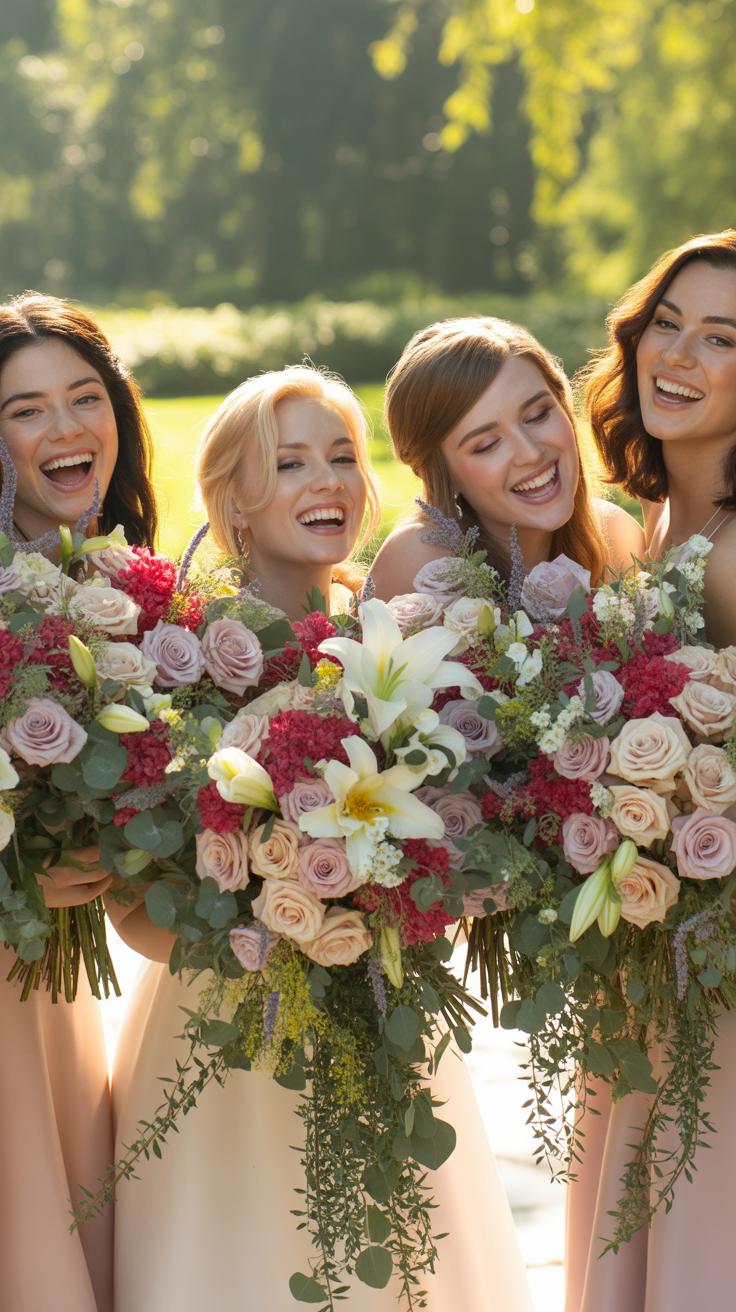
Scaled Down Cascade Bouquets For Bridesmaids And Flower Girls
Bridesmaid bouquets must not compete with the bridal arrangement. High-level florists reduce the overall diameter and length by thirty percent to ensure visual hierarchy. Use fewer focal flowers like roses or lilies. Increase the ratio of trailing greenery such as ivy or ruscus. This shift maintains the cascading silhouette without adding excessive weight or cost to the wedding party floral budget.
Handheld comfort is vital for attendants during long ceremonies. Designers use lightweight foam holders or slender hand-tied stems to reduce bulk. For flower girls, the cascade should mirror the adult version but at a mini scale. Use delicate sprigs of jasmine or baby’s breath to create the downward flow. This keeps the design proportional to their smaller frames and prevents the bouquet from dragging on the floor.
Cascading Floral Arrangements For Proms Galas And Formal Celebrations
Formal events require high-impact floral accessories that allow for free movement. The modern cascading corsage replaces the traditional round style for proms and galas. Florists wire small orchids or spray roses into a focused downward trail. This creates a vertical line that elongates the wearer’s arm. Use cold glue techniques to attach these slender arrangements to metal cuffs or elastic bands for a secure and professional fit.
Galas often feature cascading hand bouquets as sleek fashion statements. These designs use exotic tropicals or structured calla lilies to fit a sophisticated atmosphere. Avoid bulky greenery in these settings to maintain a clean aesthetic. Designers focus on the “sheaf” style where stems extend downward in a deliberate waterfall effect. This technique ensures the floral piece functions as a high-end accessory rather than a standard wedding bouquet.
Working With A Florist To Bring Your Cascading Bridal Bouquet Vision To Life
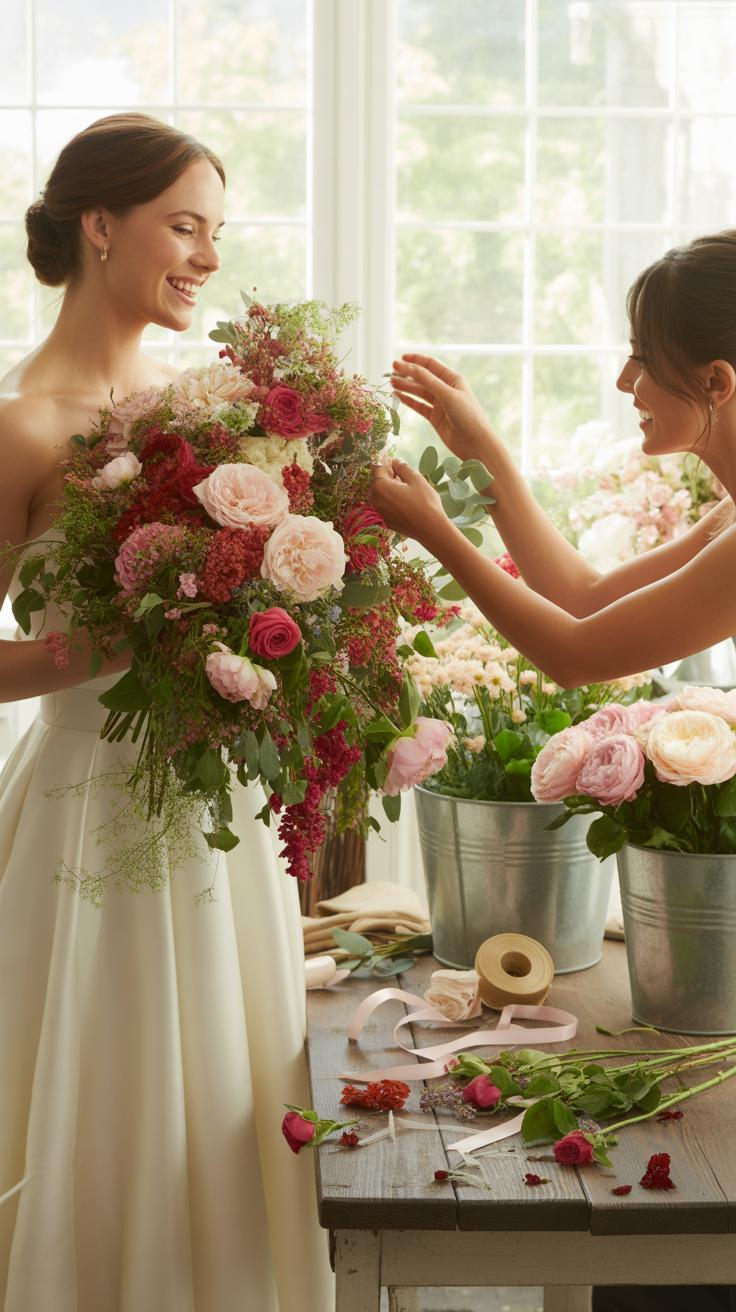
What To Discuss With Your Florist Before Designing A Cascading Bouquet
Explain your gown silhouette and fabric choice immediately. Cascading arrangements carry significant visual weight and physical mass. They can easily overwhelm a slim sheath dress or snag on delicate lace. Your florist needs to know the height of your heels and your torso length. These measurements determine the correct proportions for the floral trail. Proper scaling ensures the bouquet enhances your frame rather than hiding it.
Discuss the structural mechanics required for your specific design. Traditional cascades often use a plastic holder with floral foam to provide constant hydration. Modern hand-tied versions rely on natural stem placement and wire reinforcement. Ask about the weight of the completed piece. Heavy bouquets cause arm fatigue during long ceremonies. Confirm which specific blooms will provide the primary shape and which trailing vines will create the downward movement.
How To Budget Wisely For An Elaborate Bridal Bouquet Cascade Without Compromise
Control costs by using premium blooms only in the focal area. Place expensive orchids or garden roses where the eye rests. Use hardy, less expensive greenery to build the length of the trail. Italian Ruscus and Smilax provide excellent coverage and durability at a lower price point. This strategy maintains the luxury look while reducing the total stem count of high-cost flowers. You get the desired impact without overspending.
Align your flower choices with the current season to avoid high import fees. Out-of-season blooms require expensive shipping and often arrive in poor condition. Use seasonal foliage to add volume and texture. Mass-produced greenery fills space efficiently and lowers labor costs. Labor is a major portion of the budget for complex cascades. Choosing sturdier plants reduces the time a florist spends wiring individual stems. Efficiency saves money.
Frequently Asked Questions

What exactly is a cascading bouquet and why is it popular for weddings?
A cascading bouquet is a dramatic floral arrangement designed to spill forward and taper downward, resembling a floral waterfall. This style gained immense popularity for its romantic, high-fashion aesthetic that adds movement to a bridal ensemble. Modern cascading bouquet styles often blend traditional elegance with bohemian flair, using a mix of long greenery and focal blooms to create a flattering silhouette that elongates the frame and highlights the intricate details of a gown.
How do you choose the right flowers to maintain the shape of a cascading bouquet?
To achieve the perfect teardrop shape, florists use a combination of sturdy focal flowers and trailing elements. Incorporating various cascading bouquet styles requires flexible greenery like eucalyptus or jasmine vine to provide the downward flow. You should pair these with hardy blooms such as orchids or lilies that can withstand being wired or angled. Ensuring a secure base with a floral foam holder or reinforced wire stems is essential for keeping the arrangement structurally sound.
Are cascading bouquets more expensive than traditional round hand-tied arrangements?
Generally, cascading styles tend to be more expensive because they require more stems and intensive labor to construct. However, you can manage costs by using “filler” greenery to create the length while focusing premium blooms at the center. Opting for seasonal greenery and larger focal flowers can help you achieve the luxury look of cascading bouquet styles without exceeding your budget, making this sophisticated vintage aesthetic accessible for a variety of different price points.