What Are Pressed Flower Candles And Why Are They So Popular
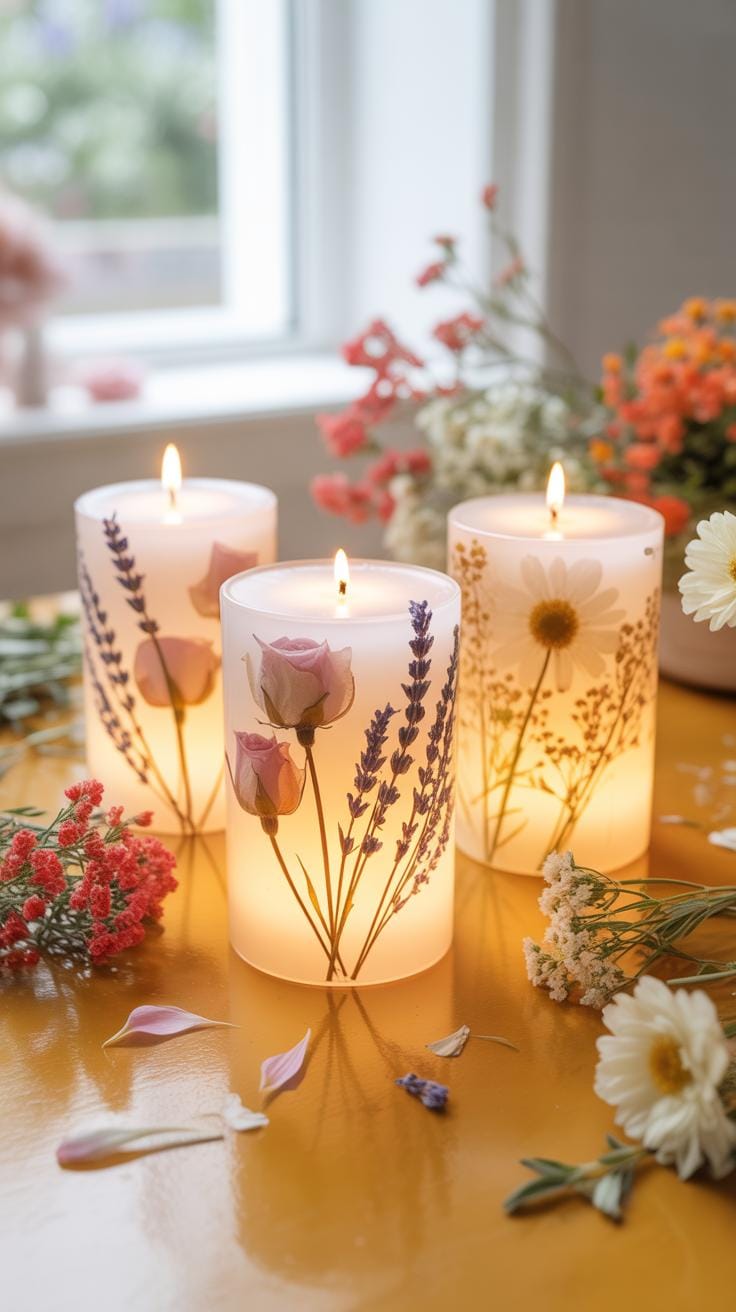
The Art And Origin Of Embedding Botanicals Into Candles
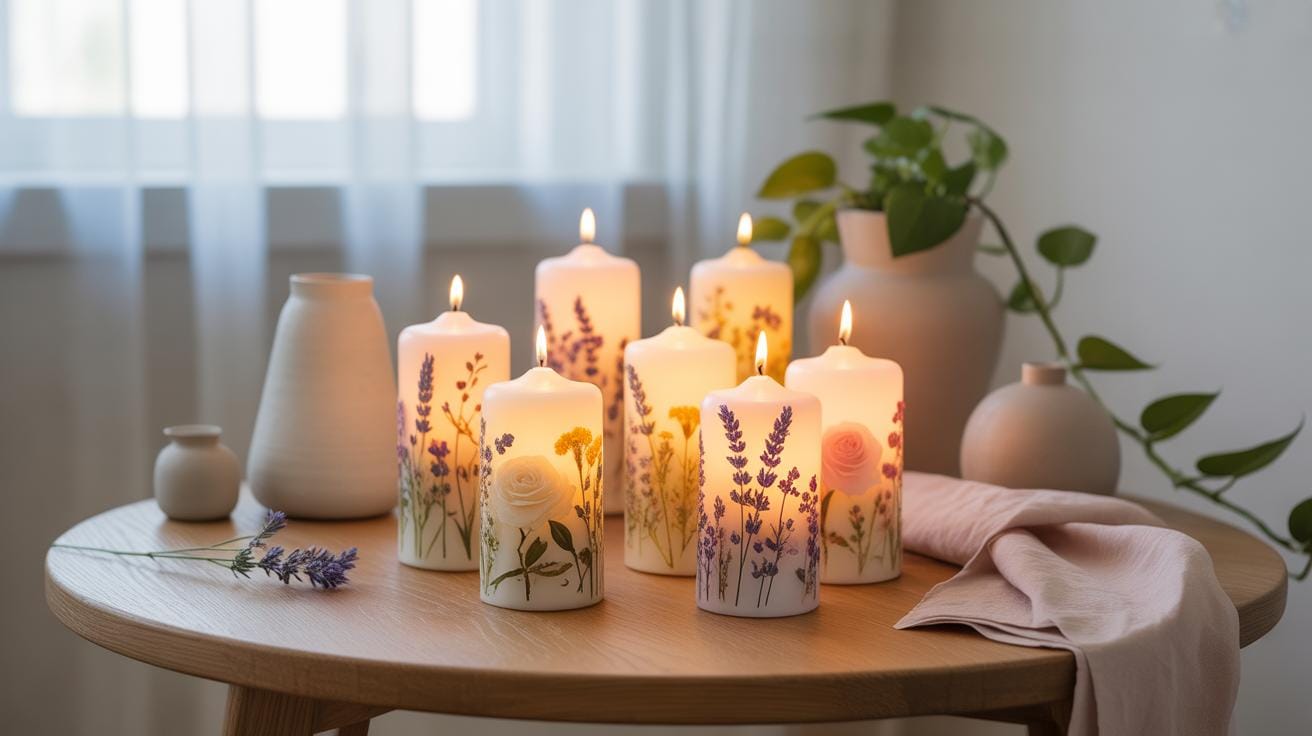
Pressed flower candles combine ancient preservation methods with functional lighting. People began pressing plants in the 1500s for scientific study. Modern makers use these same techniques to flatten blooms before applying them to wax surfaces. This process involves extracting moisture from the plant to prevent mold or rot. It creates a thin, stable material that adheres to the outer wall of the candle.
The method requires applying the plants between the candle core and a thin outer layer of wax. Artisans often use a heat gun or a double dip technique to seal the flowers. This ensures the organic material stays in place as the candle burns. Historically, these items appeared in folk art traditions. Today, they represent a high level of craftsmanship in the boutique home goods market.
Why Pressed Flower Candles Have Become A Leading Home DéCor Trend
These candles dominate the market because they align with the biophilic design movement. This movement focuses on bringing natural elements into indoor living spaces. Consumers want products that look raw and organic rather than mass produced. The visual texture of a real flower provides a premium feel that printed labels cannot match. It serves as a functional piece of art for the home.
The rise of social media also fuels this trend. The clear aesthetic of botanicals trapped in wax creates high visual engagement online. Buyers seek unique items that show individuality in their decor choices. Additionally, the shift toward clean burning soy and beeswax makes these candles more attractive. They offer a sustainable way to bring the outdoors inside without using synthetic fragrances or plastic decorations.
Types Of Pressed Flowers Best Suited For Candle Pressed Flowers Designs
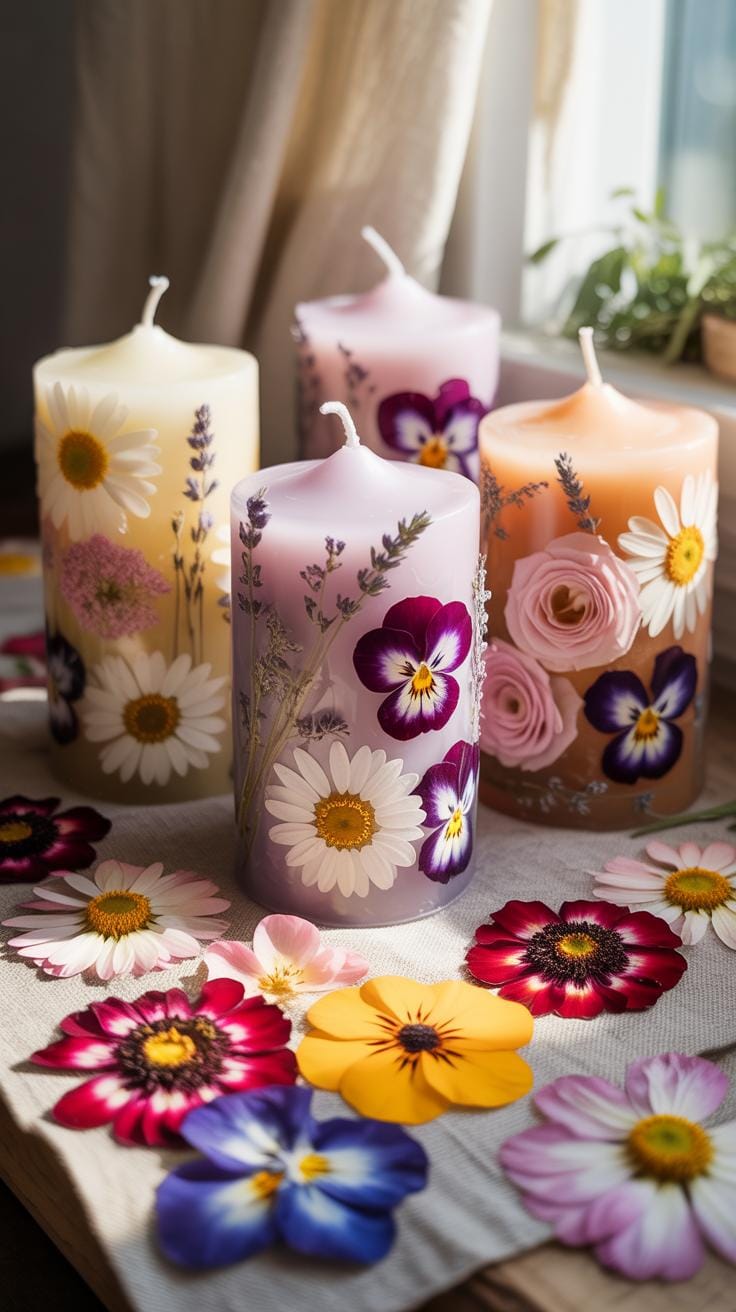
Choosing The Right Flower Varieties For Long Lasting Pressed Flower Candle Displays
Select botanical species with high structural integrity and low moisture content to ensure longevity. Hardier varieties like pansies, violas, and larkspur retain their form during the pressing process. These flowers feature flat petal structures that bond easily to wax surfaces. Avoid succulents or thick bulbs that trap water. Residual moisture causes mold growth or browning within the candle wax.
Professional makers prioritize flowers from the Ranunculaceae and Violaceae families. These plants offer consistent results across different wax types. They withstand the heat of the dipping process without curling or losing cellular definition. Choose specimens at their peak bloom for maximum durability. Proper selection prevents the organic material from degrading when exposed to the essential oils found in scented candle blends.
How Flower Size Colour And Thickness Affect The Final Candle Aesthetic
Physical dimensions dictate the success of the candle design. Thin petals allow light to pass through the wax for a translucent effect. Thick botanicals create lumps and uneven surfaces on the pillar. Use flowers with a depth of less than one millimeter to maintain a smooth finish. This ensures the outer layer of wax encapsulates the plant material completely and prevents oxygen exposure.
Color stability is a critical factor for long term visual impact. Pigments in yellow and orange flowers resist fading better than blues or purples. High heat from the pouring process can turn delicate white petals transparent or brown. Use deep red or vibrant green foliage to create strong contrast against white paraffin or soy bases. Vivid hues remain visible even after the wax cools and opacifies.
Top Materials You Need To Know About From Beeswax Candles To Soy Wax
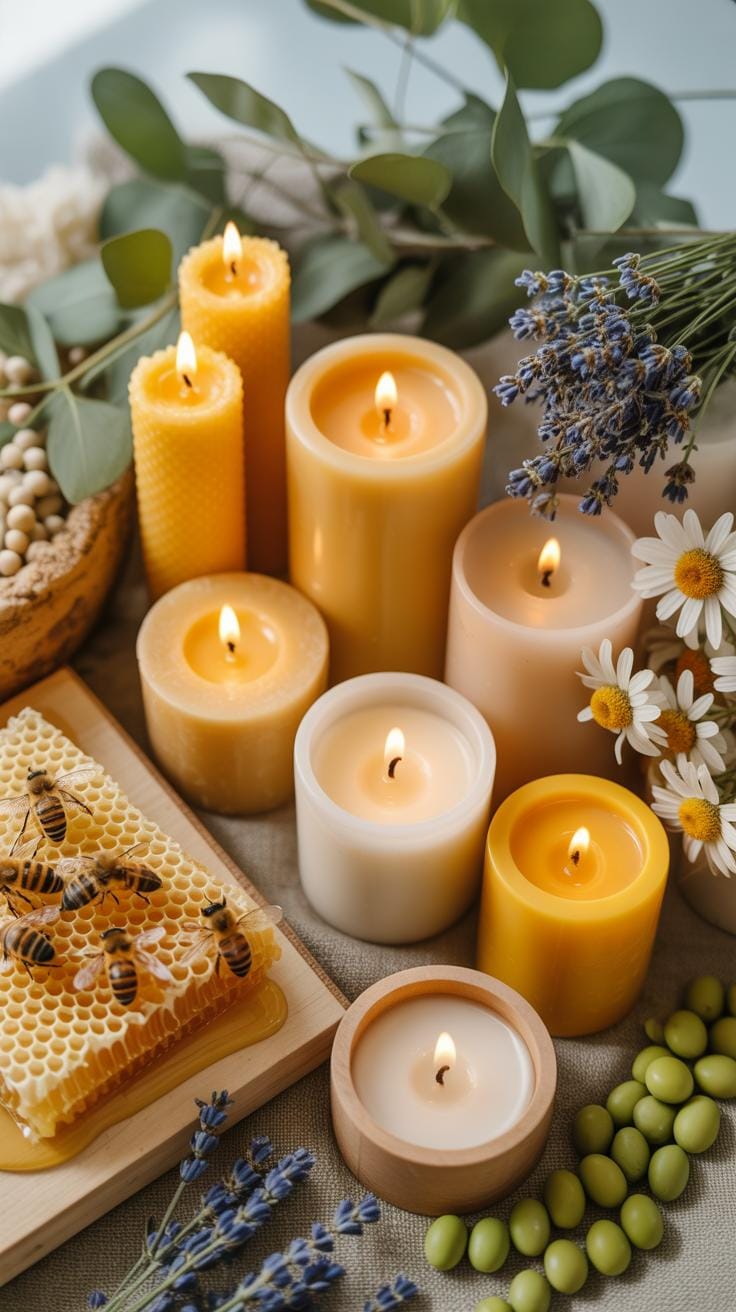
Why Beeswax Candles Are A Premium Choice For Pressed Flower Designs
Beeswax offers the highest structural integrity for pressed flower candles. This natural byproduct of honey production possesses a high melting point. It stays firm in warm rooms better than softer waxes. This rigidity prevents delicate flowers from shifting or sinking during the curing process. The dense molecular structure also provides a natural amber hue that complements vintage botanical aesthetics perfectly.
Choose beeswax for its clean burning properties and long life. It emits negative ions that help purify the air while you burn it. The wax creates a powerful bond with dried cellulose fibers in flowers. This ensures the botanicals stay flush against the container or pillar surface. It provides a luxury finish that mass-produced paraffin Cannot match. Use it for high-end, artisanal floral candle projects.
The best pressed flower candles are a way of preserving the grace of a garden long after the season has passed. They bring the warmth of summer light and the timeless beauty of nature into the heart of a stylish home.
Soy Wax Vs. Paraffin Wax: Which Burns Best With Embedded Botanicals?
Soy wax currently dominates the eco-friendly market due to its hydrogenated soybean oil base. It burns at a lower temperature than traditional paraffin. This low heat protects the pigments in your pressed flowers from scorching or fading quickly. Soy wax is biodegradable and cleans up easily with soap and water. It provides a matte finish that highlights the intricate textures of thin petals and leaves.
Paraffin wax is a petroleum byproduct with a crystal clear appearance when molten. Manufacturers use it because it is cheap and holds scent well. However, paraffin burns hotter and faster than soy. This high heat often causes dried flowers to brown or curl prematurely. Soy wax remains the superior choice for botanical safety and soot reduction. Choose soy to maintain the original color and shape of your floral inclusions.
How To Make Pressed Flower Candles A Complete Step By Step Breakdown
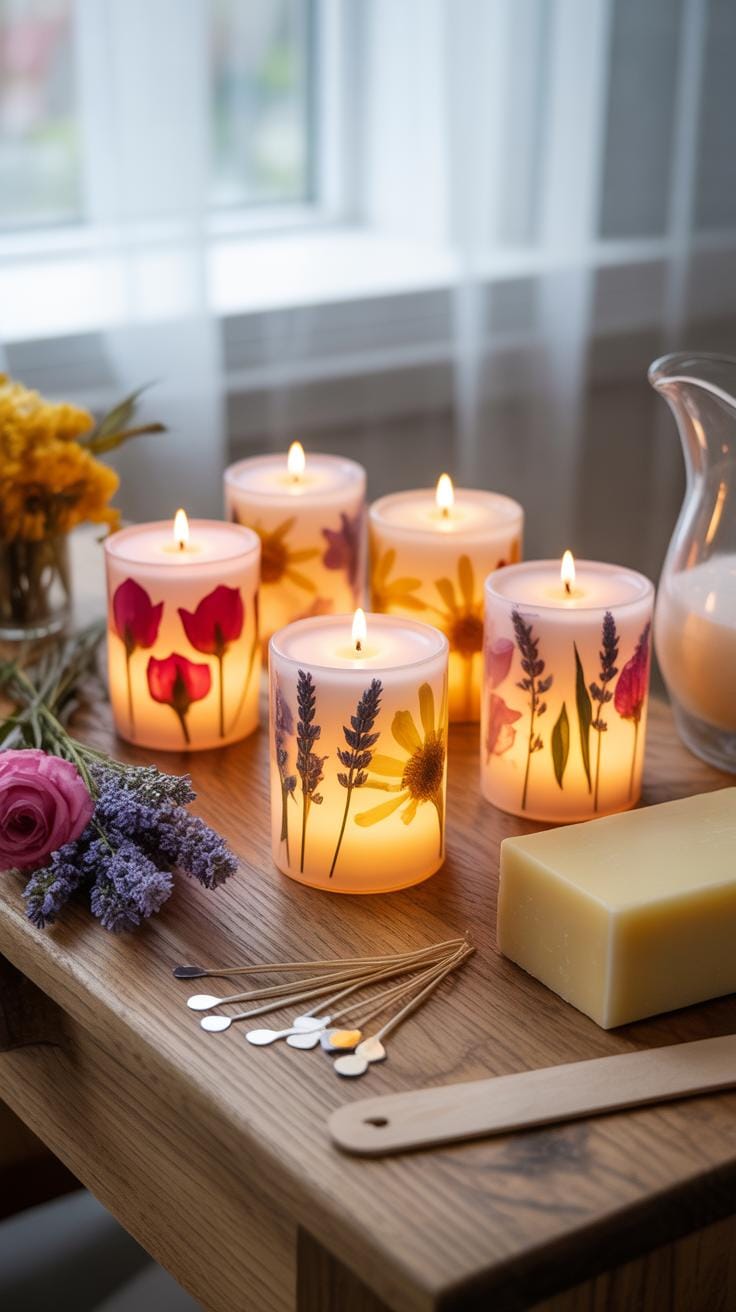
Essential Supplies Checklist For Your DIY Pressed Flower Candles Project
Successful production requires specific tools to ensure heat safety and aesthetic quality. You cannot rely on standard craft glue or wet flowers. High-quality materials prevent fire hazards and ensure the botanical elements remain vibrant. Use a dedicated heat source for the wax to maintain temperature control throughout the bonding process. This method ensures the flowers adhere flat against the wax surface.
- Pillar Candles: Choose high-quality paraffin or soy pillar candles with a smooth surface. Light colors work best to make the flower colors pop. Ensure the candle is thick enough to withstand external heat without melting the core structure during the decoration phase.
- Pressed Flowers: Use completely dehydrated botanical specimens. Any moisture trapped in the petals will cause rot or prevent a clean seal. Buy pre-pressed flowers or use a professional press to achieve the thinness required for a flush fit against the wax.
- Paraffin Or Soy Wax: You need a small amount of molten wax to act as a natural adhesive. Matching the wax type of the base candle ensures a seamless finish. This extra wax creates a protective layer over the delicate petals to prevent peeling.
- Heat Tool Or Small Torch: Use a precision heat gun or a metal spoon heated by a flame. This tool melts the surface of the pillar candle just enough to tack down the flowers. Avoid open flames directly on the petals to prevent scorching the organic material.
- Flat Paintbrush: Dedicated brushes help apply the molten wax over the applied flowers. Use natural fiber bristles that can withstand high temperatures without melting. This tool allows for a thin, even coat that seals the design against air and moisture.
Organize your workspace before starting the heating process. Wax cools quickly and requires fast movements to secure the flowers. Keep your botanical elements nearby and sorted by size. Layout prevents mistakes during the high-speed application phase. Proper preparation reduces the risk of ruinous heat damage to the base candle. Tactical planning leads to a professional finish that mimics high-end retail products.
Preparing And Pressing Your Flowers Before Attaching Them To The Candle
You must remove all moisture from the plants before they touch the wax. Traditional pressing takes two to three weeks using heavy books or wooden presses. This timeline is non-negotiable for organic stability. Select thin flowers like pansies, hydrangeas, or Queen Annes Lace for the best results. Thick stems or centers create air pockets that cause the outer wax layer to crack or peel.

Trim away any bulky parts of the flower before pressing. Use sharp shears to flatten the profile of the bloom. Place the specimens between sheets of parchment paper to prevent sticking and staining. If you need speed, use a microwave flower press to finish the cycle in minutes. Once flat and dry, handle the flowers with tweezers. Skin oils can degrade the petals and interfere with wax adhesion.
Pressed Flower Candle Tutorial Applying Flowers Onto The Candle Surface
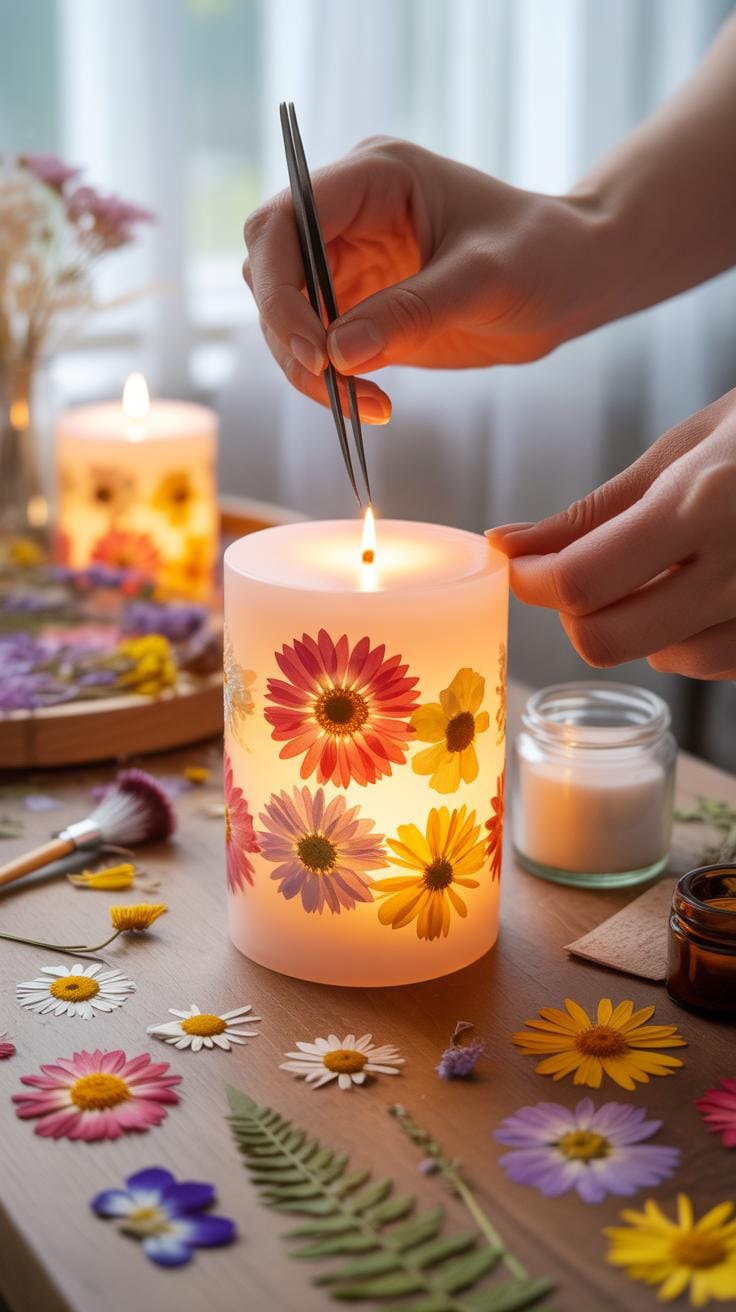
The Heat Transfer Method: How To Safely Bond Pressed Flowers On Candles
The heat-transfer method uses a heat gun or hair dryer to melt the candle surface. You apply direct heat until the outer wax layer develops a slight sheen. This indicates the wax is soft enough to accept the botanicals. Speed is critical during this phase to prevent the wax from dripping or losing its cylindrical shape. You must work in small sections.
Place the dried flower against the softened wax immediately. Use a metal spoon or tweezers to press the edges of the bloom into the surface. If the wax cools too quickly, the flower will peel off. Apply a second, quick burst of heat over the flower to lock it into place. This technique creates a secure bond without damaging the delicate organic material.
Sealing And Finishing Your Candle For A Polished Professional Look
Sealing the candle prevents the flowers from catching fire when the wick burns down. You must apply a final layer of wax over the entire design. The most effective method is a quick dip into a wax bath heated to 180 degrees Fahrenheit. This temperature ensures a thin, clear coating that does not obscure the flower details. A thick coat looks messy and unprofessional.
If dipping is not an option, use a soft brush to paint molten paraffin over the botanicals. Wax choice matters because high oil content can cause cloudiness. Use a hard pillar wax for the outer seal to ensure durability and clarity. Once the wax sets, use a heat tool to smooth any visible brush strokes. This creates a flat finish that protects the design from oxygen.
Best Pressed Flower Candle Styles To Elevate Your Botanical Decor
Minimalist Single Bloom Designs Versus Full Floral Wrap Arrangements
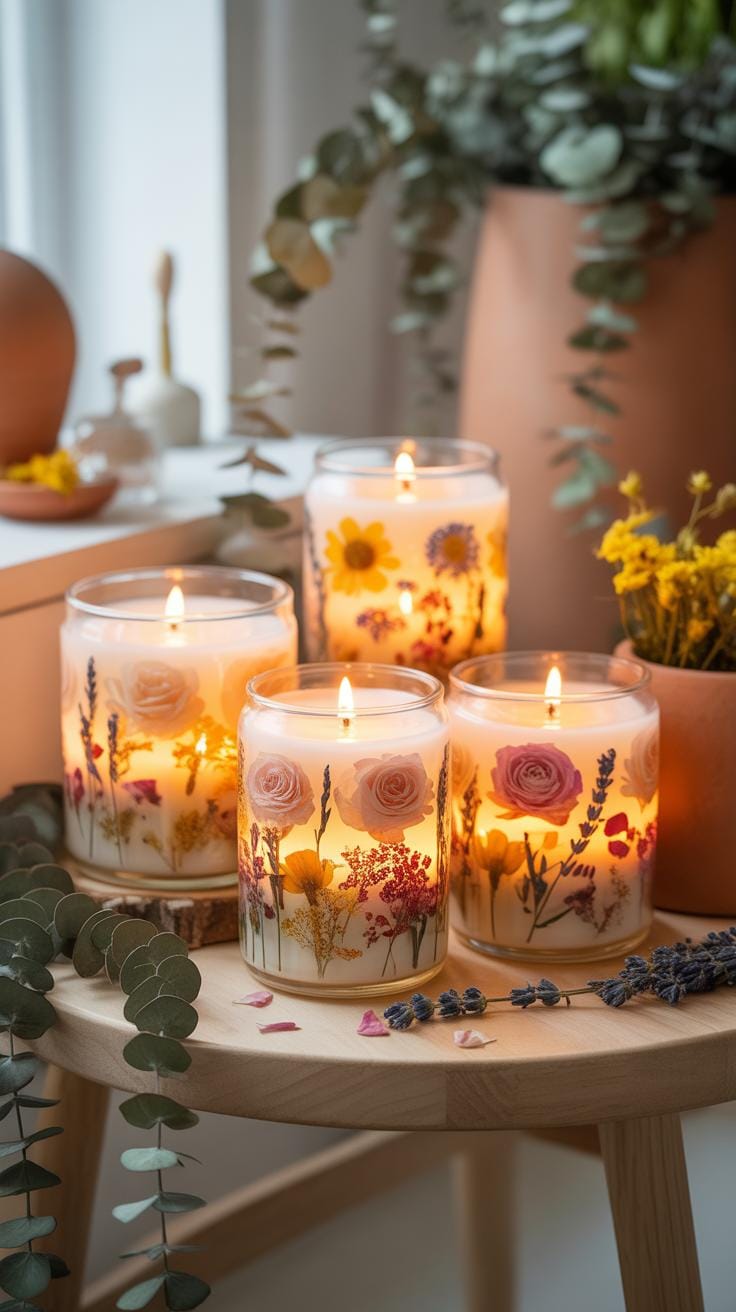
Minimalist designs focus on one central flower or a small cluster. This style uses negative space to highlight the plant anatomy. Makers often choose specimen-style placements that mimic botanical illustrations from the Victorian era. These candles fit modern and industrial interiors. They offer a clean look that does not overwhelm a room. Use these for subtle accents on small tables or shelves.
Full floral wraps cover the entire surface of the wax. This technique requires multiple layers of thin petals and leaves. It creates a dense garden effect around the candle core. These candles serve as bold centerpieces for dining tables. The design hides the white space and maximizes color output. Choose this style for maximum visual impact in larger rooms or during festive events.
Seasonal Botanical Decor Themes Spring Blooms Autumn Leaves And More
Seasonal themes align candle aesthetics with natural growth cycles. Spring candles utilize early bloomers like pansies, violets, and primroses. These flowers have high moisture content and require careful pressing to maintain color. They reflect the renewal of the garden and suit bright, airy spaces. Use light-colored wax to keep the focus on the delicate pastel shades of the spring petals.

Autumn candles pivot to woody stems, dried ferns, and maple leaves. These materials are thicker and require more heat during the embedding process. Darker tones like burgundy, gold, and ochre dominate this style. This mirrors the natural decay and transition of the fall season. These candles add texture and warmth to a home. They work well in rustic or traditional interior design settings.
Top Brands Selling The Best Pressed Flower Candles For Your Home
What To Look For When Buying A Pressed Flower Candle From An Artisan Maker
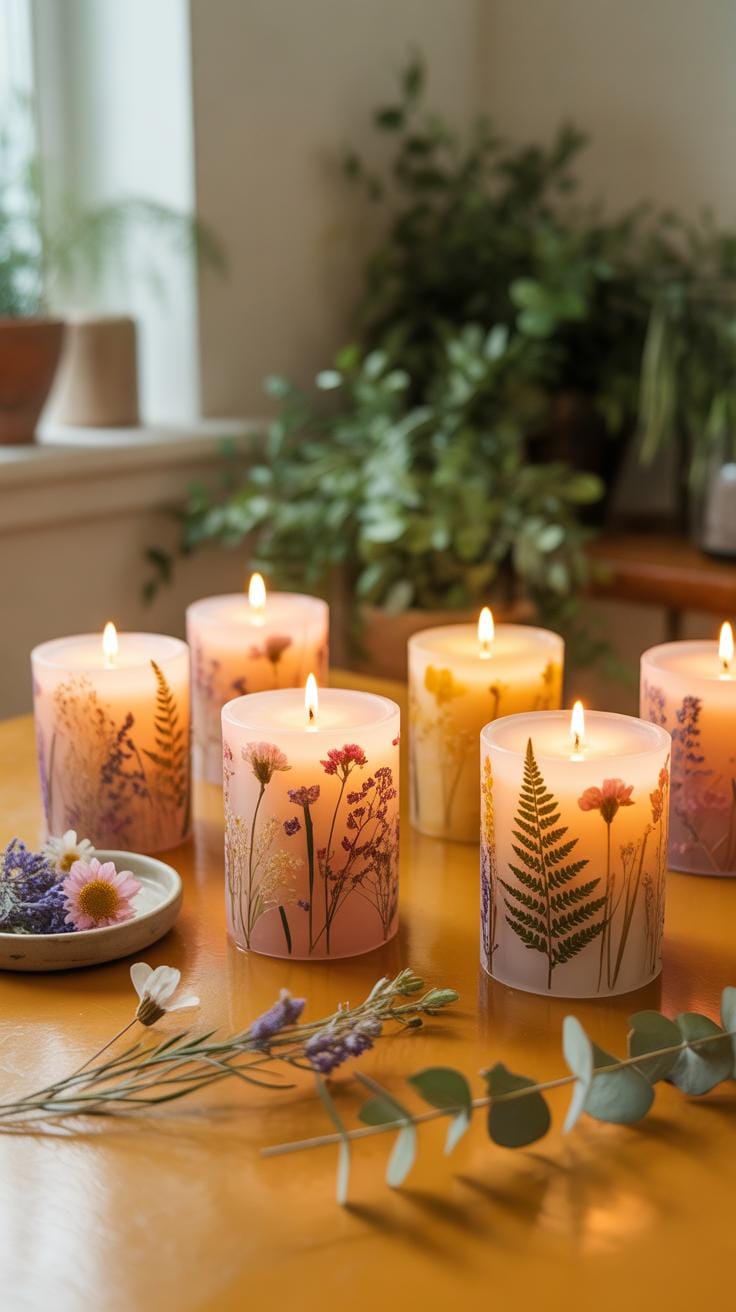
Check the wax type before you buy. Artisan makers use soy, beeswax, or coconut wax blends. These waxes burn cleaner than paraffin. Look for flowers placed near the outer edge of the container. Proper placement ensures the botanicals stay visible without catching fire. Safety is a priority for high-quality makers. They often use a double-walled glass design to protect the dried flora.
Examine the clarity of the pressed flowers. High-quality artisans dry flowers quickly to preserve their natural colors. Brown or brittle petals indicate poor drying techniques or old inventory. Inspect the wick material to ensure it is lead-free cotton or wood. You should also verify if the maker uses phthalate-free oils. These technical details separate true professional artisans from hobbyists who cut corners on raw materials.
Handmade Versus Mass Produced Pressed Flower Candles: Quality Comparison
Mass-produced candles often use cheap synthetic scents and paraffin wax. These factory versions prioritize speed and low cost over safety. The flowers in mass-market candles are frequently printed decals rather than real botanicals. This loses the texture and depth of a genuine pressed flower. Large companies also use chemical preservatives that can cause yellowing in the wax over time. No two handmade candles look exactly alike.
Handmade candles offer superior heat management through small-batch testing. Artisan makers select specific flower species that maintain structural integrity when warm. They apply the flowers by hand using a secondary pour of wax. This technique creates a three-dimensional effect that machines cannot replicate. You get a denser fragrance load and a longer burn time from handmade options. Investing in handmade quality ensures the candle functions as both art and light.
Safety Tips Every DIY Pressed Flower Candles Maker Must Follow
Fire Safety Considerations When Using Dried Botanicals On Candle Surfaces
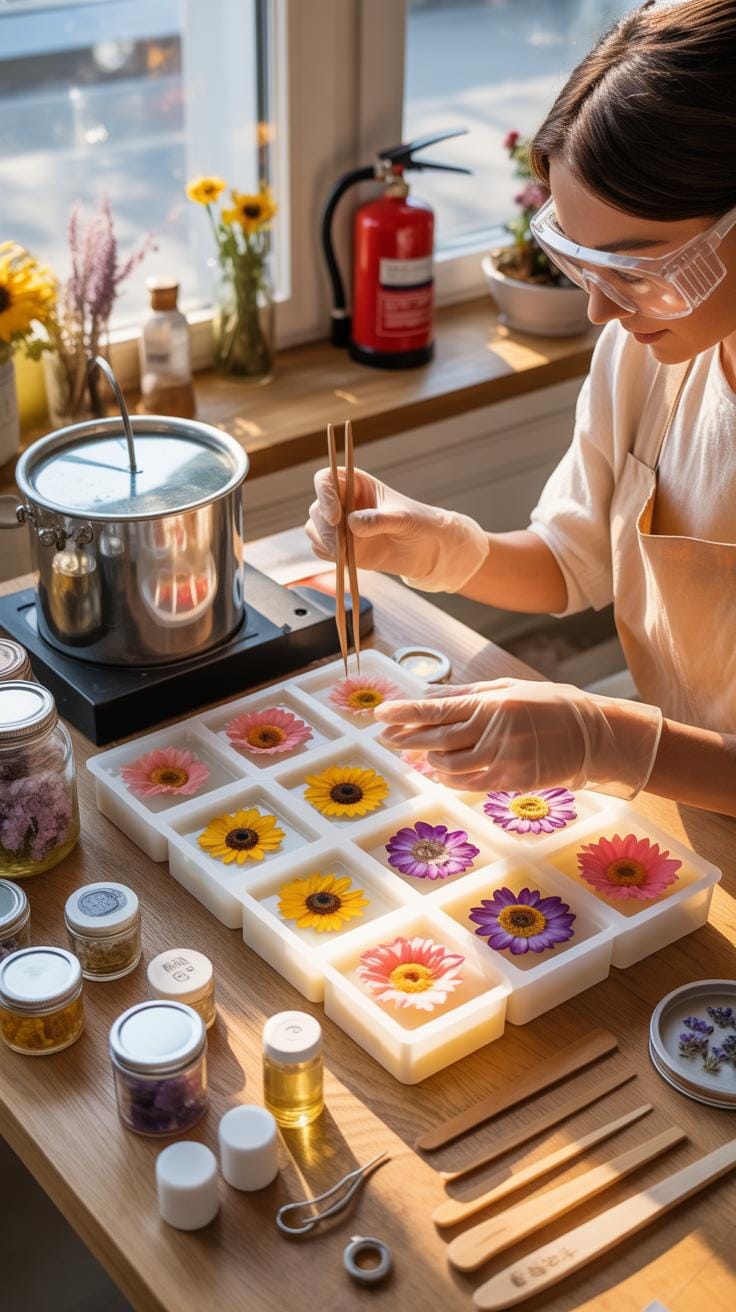
Dried flowers act as secondary wicks if they contact the flame. This causes dangerous flare ups and unpredictable fire behavior. You must position all pressed botanical elements on the outer perimeter of the candle. Ensure the wax layer completely seals the flowers against the container wall. Exposed petals will ignite quickly once the melt pool reaches the edge of the glass or tin.
Correct placement prevents the debris from drifting into the center of the candle. Use a heat gun or dipping technique to create a thick barrier between the wick and the organic material. This technical step ensures the flame consumes only the fuel and not the decor. Professional makers prioritize structural integrity over visual density. Always maintain a clear safety zone around the central burning area.
Best Practices For Burning And Storing Your Pressed Flower Candle Safely
Standard candle maintenance becomes even more critical when working with flammable organic embeds. You must treat these candles as high maintenance items to avoid wax fires or surface damage. Monitor the wick height and the melt pool during every burn session. If any botanical debris breaks loose and floats toward the flame, extinguish the candle immediately. Proper storage also preserves the color and life of the flowers.
- Trim the Wick: Maintain a one quarter inch wick at all times to control flame height. A large flame creates excessive heat that can melt the protective wax layers covering your pressed flowers.
- Monitor Burn Time: Limit each burn session to four hours maximum to prevent the entire wax body from overheating. Excessive heat allows dried petals to shift positions and move toward the center flame.
- Remove Loose Debris: Inspect the melt pool for any charred flower fragments or carbon buildup before lighting. Use a metal tool to fish out any organic matter that has detached from the candle walls.
- Avoid Direct Sunlight: Store your candles in a cool, dark place to prevent the natural pigments in the pressed flowers from fading. UV rays degrade the botanical structure and can soften the outer wax surface.
- Place on Heat Resistant Surfaces: Use a coaster or tray to protect furniture from high temperatures. Pressed flower candles often dissipate heat differently than plain candles due to the uneven density of the botanical layers.

Never leave a burning candle unattended especially with decorative elements inside. Keep the candle away from drafts that cause the flame to flicker and reach the outer edges. If the flowers begin to smoke or brown, stop using the candle. Your primary goal is to isolate the heat from the fuel source. Following these strict protocols keeps your home safe and your decor intact for longer periods.
How To Style Pressed Flowers On Candles As Part Of Your Home DCor
Pairing Pressed Flower Candles With Complementary Home DéCor Accents
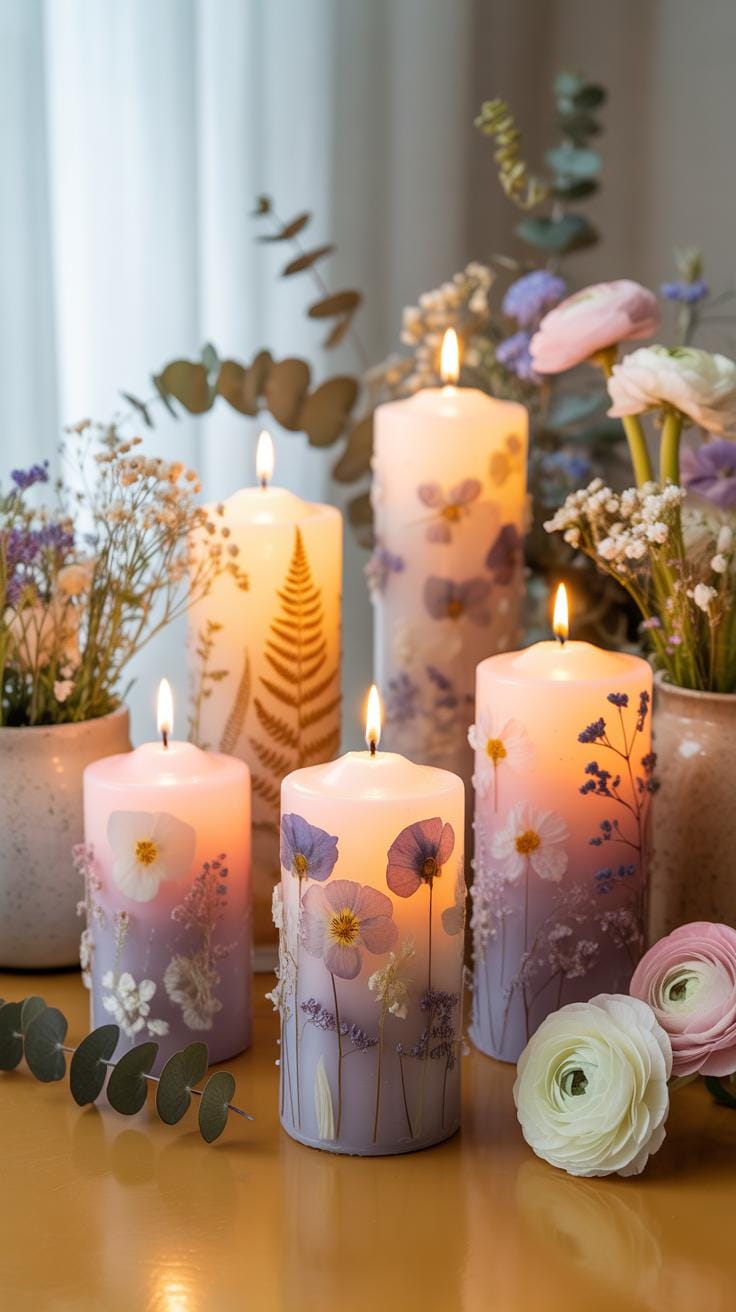
Contrast is the primary tool for styling botanical candles. Pair the organic shapes of pressed petals with hard materials like brass, stone, or glass. Geometric metallic trays provide a structured base that offsets the soft visual texture of the wax. This technique prevents the arrangement from appearing too rustic. Use minimalist holders to keep the focus on the embedded floral specimens within the candle.
Match the botanical variety in the candle to your existing room palette. Select candles with green foliage to complement mid-century modern wood tones. Use bright floral pressed designs to add color to neutral Scandinavian interiors. Avoid clashing patterns in nearby fabrics or wallpapers. Simple linen runners or ceramic vases stabilize the visual field. This creates a cohesive look that highlights the craftsmanship of the petal placement.
Using Pressed Flower Candles As Centrepieces For Dining Tables And Shelves
Effective shelf styling requires a hierarchy of height and depth. Place pressed flower candles on stacked art books to create vertical interest. Ensure the botanical designs remain visible at eye level. Group three candles of varying heights to form a classic triangular composition. This arrangement draws the eye through the display. Positioning them near natural light sources helps illuminate the transparency of the dried flower petals.
Dining table setups require low profiles for unobstructed conversation. Use pillar candles with pressed flowers as the main focal point on a wooden board. Surround the base with dried moss or river rocks to reinforce the natural theme. Keep additional decorations minimal to avoid visual clutter. This strategy works well for seasonal events or daily dining. High-quality pressed flower candles serve as functional art pieces when they are not lit.
Gifting And Personalising A Pressed Flower Candle For Special Occasions
Why Pressed Flower Candles Make Thoughtful And Unique Handmade Gifts
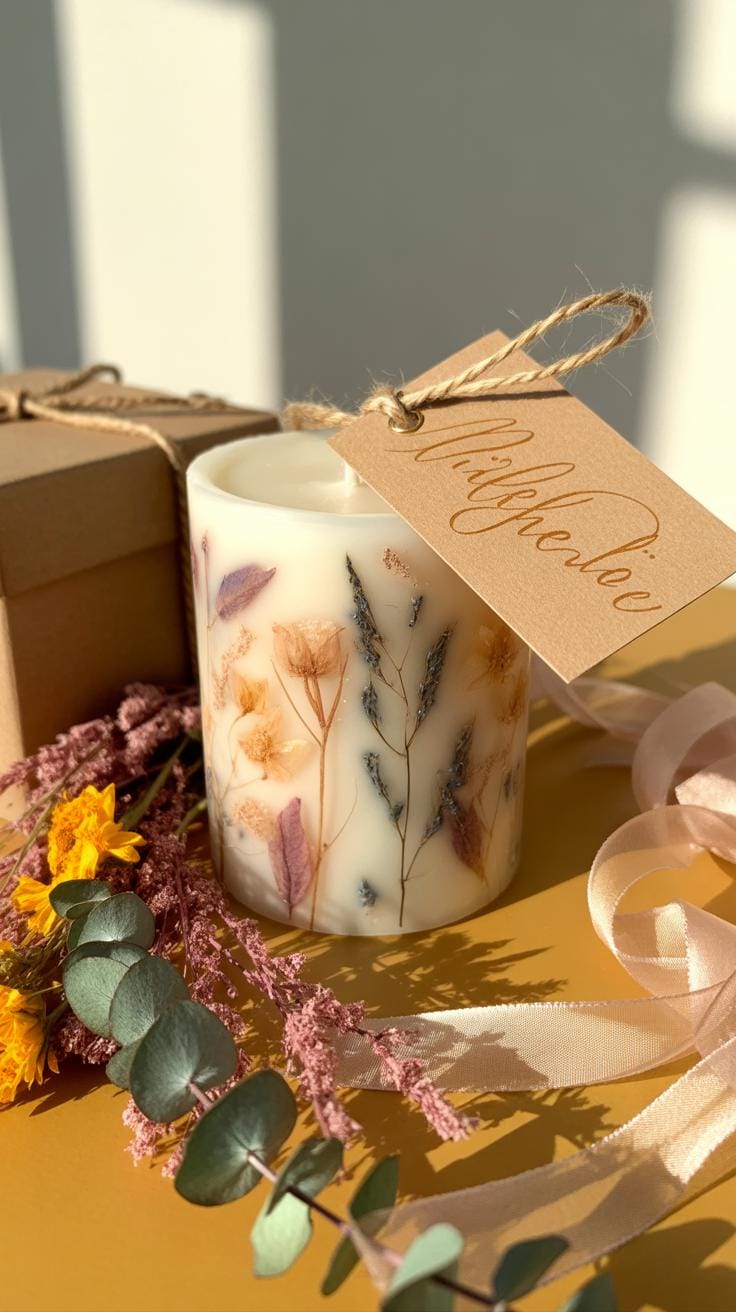
Pressed flower candles combine botanical preservation with functional home decor. These items stand out because they utilize real organic materials rather than synthetic scents or plastic decorations. Buyers value the labor-intensive process of pressing and drying flora perfectly. This technique ensures the candle remains a one-of-a-kind piece. No two petals grow or dry in the exact same pattern or color.
Modern consumers prefer artisanal goods over mass-produced alternatives. A candle featuring embedded botanicals serves as a permanent display piece even when unlit. It represents a high level of craftsmanship and attention to detail. This makes it an ideal choice for high-end gifting. The recipient receives a functional item that also functions as a botanical specimen. It elevates the standard gift candle into a premium collectible.
Customisation Ideas: Choosing Meaningful Blooms For Personalised Candle Pressed Flowers
Strategic flower selection allows you to tailor a candle to specific events. Use birth month flowers to add a layer of relevance for birthdays. For example, use dried violets for February or daisies for April. This demonstrates a deep level of research and intent. Avoid choosing flowers based only on color. Focus on the biological significance of the plant species to create a stronger connection with the recipient.
Incorporate flowers from specific locations or occasions to increase sentimental value. Use dried petals from a wedding bouquet to create a commemorative piece. Ensure the flowers are completely moisture-free before embedding them in wax. Excess moisture causes rot and ruins the candle. Selecting flat-faced blooms like pansies or laceflowers ensures a smooth finish against the glass or wax surface. Proper selection preserves the visual integrity of the design long-term.
Frequently Asked Questions

What exactly are pressed flower candles and why are they so popular right now?
Pressed flower candles are artisanal decorative pieces featuring real, dehydrated botanical elements embedded into the wax. They have gained immense popularity because they blend the therapeutic benefits of aromatherapy with the timeless beauty of nature. These candles serve as functional art, offering a sophisticated, cottagecore aesthetic that elevates any room’s decor while providing a unique, organic focal point that celebrates the delicate details of the natural world.
How do you safely burn pressed flower candles without damaging the floral designs?
To maintain the beauty of your pressed flower candles, always trim the wick to a quarter inch before lighting. This prevents high flames from reaching the petals embedded near the edges. Most high-quality candles use a “pillar within a pillar” technique, ensuring the flowers remain encased in a thin layer of outer wax while the center burns down safely, creating a stunning glowing lantern effect that highlights the botanical silhouettes.
Are pressed flower candles affordable, and where is the best place to find them?
You can find beautiful options at various price points, ranging from budget-friendly finds at major retailers to premium, hand-poured luxury versions on artisan marketplaces. If you are on a tight budget, consider DIY-ing your own by adhering dried blooms to a plain pillar candle with melted wax. This allows you to achieve the high-end look of designer botanical candles while customizing the floral variety to match your specific home color palette.