
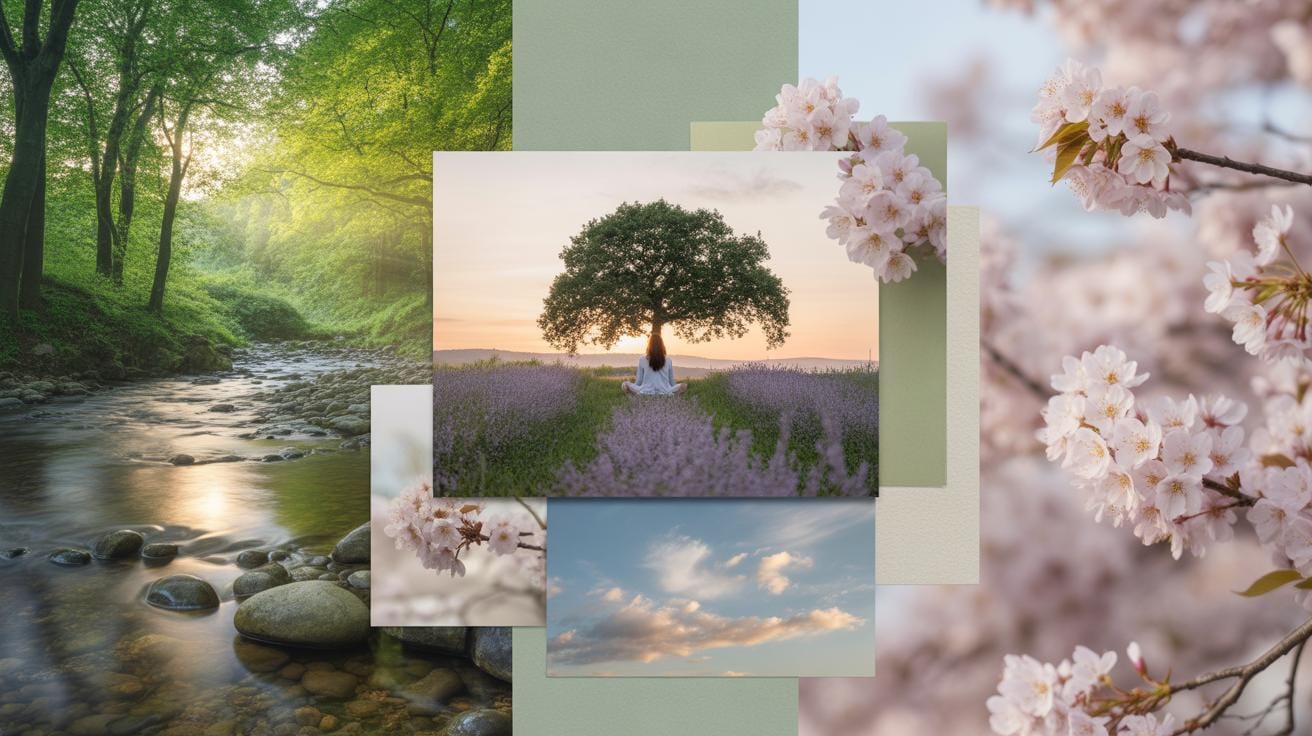
An Inner Peace and Calm Vision Board for a Peaceful Mind
Inner Peace And Calm Vision Board For A Peaceful Mind is about combining two powerful tools to foster a serene mental state. Inner peace means having a calm psychological state despite stress. A calm vision board is a visual tool you create to remind and inspire you to stay peaceful and focused.
This article shows you how to make a calm vision board that promotes inner peace, why seeking inner peace matters for your health, and examples of vision board elements that support a peaceful mind. You will learn practical ways to maintain calm and improve your life.
Steps To Create A Calm Vision Board
Gather Materials And Choose Your Theme
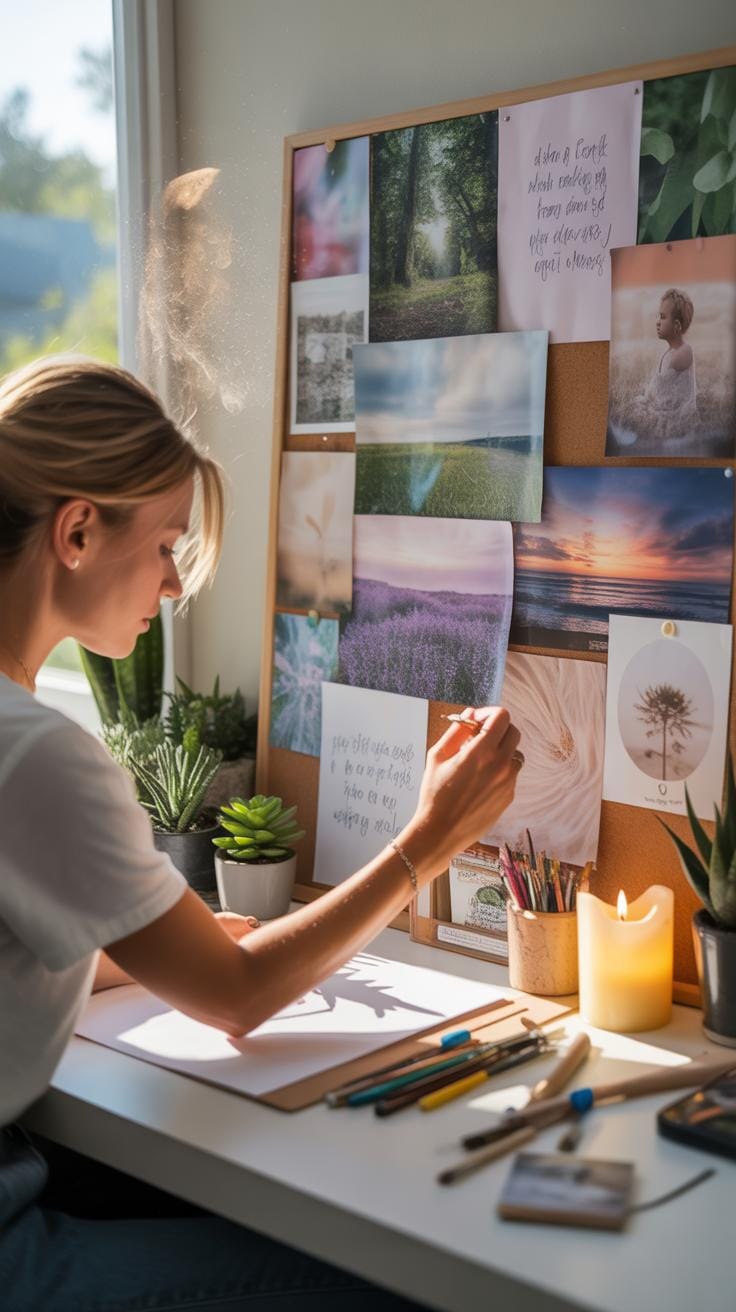
Start by gathering the basics: a sturdy board, scissors, glue or pins, and a stack of magazines or printouts. Maybe add some calming colored paper if you like. You want something tactile, something you can interact with—that’s part of the experience. For a calm vision board, think about minimalist themes or nature-inspired palettes. Soft blues, gentle greens, muted earth tones—these colors tend to evoke peace.
Decide on a theme that resonates with you personally. It could be “stillness,” “serenity,” or even something more specific like “quiet mornings.” A theme is your anchor; it guides you when selecting images and words, helping to avoid distractions or chaotic visuals.
Arrange Images And Words To Inspire You
Once you have your images and words, start laying them out before attaching. Observe how they make you feel: Does an image invite calm or disrupt it? Place larger, serene images near the center or top, where your eyes fall first. Surround them with gentle affirmations or words like “breathe,” “let go,” “peace,” or “present moment.”

Sometimes, it’s helpful to leave enough empty space around images. This breathing room on the board can mirror the calm you want in your mind. Don’t fret about symmetry; asymmetry can feel more organic and less forced. You might find a spontaneous balance in random placements that ends up feeling surprisingly soothing.
Also, mix textures if possible—soft fabric swatches or delicate leaves—anything tactile that triggers calm when glanced at or touched. This adds another sensory layer and makes your vision board more than just a visual tool. A board assembled with intention can become a quiet reminder to return to calm whenever your mind drifts away.
Why Inner Peace Is Important For Your Wellbeing
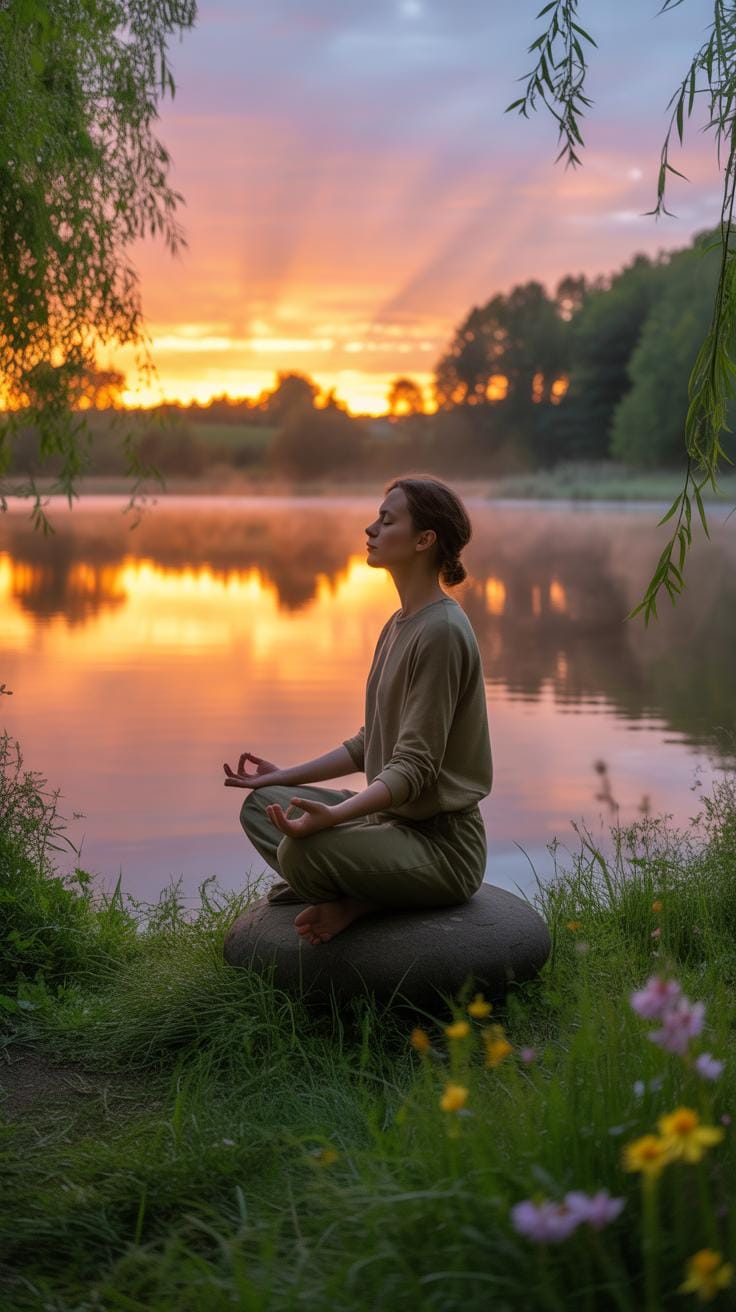
Inner peace isn’t just a nice-to-have; it genuinely matters for your mental and physical health. Research shows that people who cultivate inner calm tend to have better emotional stability and less anxiety. Think about it—when your mind is at ease, your body follows suit with lower blood pressure and reduced inflammation.
Stress triggers the release of hormones like cortisol, which in excess can wreak havoc on your nervous system. But when you maintain a peaceful state, it creates a buffer against these stress responses. So, you might find you’re coping better with life’s challenges and feeling more, well, content. One randomized trial found that mindfulness training boosted inner peace and slashed stress symptoms in participants, hinting that peace supports resilience and happiness.

It’s fascinating, isn’t it? That by focusing inward and calming the storm within, you actually improve your overall wellbeing. Of course, it’s not always straightforward—inner peace requires patience and practice. But it often translates into noticeable benefits, subtle or profound, that ripple through both mind and body.
Effects Of Stress On Mind And Body
Stress does more harm than people often realize. It’s linked to anxiety and depression, which can spiral if left unchecked. Chronic stress keeps your body in a state of high alert, exhausting your mental energy and wearing down your physical health.
This ongoing tension interferes with sleep quality and concentration, making everyday tasks harder. You might notice mood swings or irritability as your nervous system struggles under pressure. The absence of inner peace often means being caught in this cycle, where stress feeds anxiety, and anxiety worsens stress.
Over time, this imbalance can contribute to serious conditions such as heart disease, digestive problems, and even weakened immune function. It’s a tough spiral to break. But understanding the chain reaction stress sets off is a first step towards seeking more calm in your life.
Benefits From A Peaceful Mind
When you do find that calm center, life improvement becomes clear. Better sleep often comes naturally because your body isn’t on edge. Your mood lifts, sometimes almost imperceptibly at first, making daily interactions smoother. Improved focus follows because your mind isn’t so scattered by worry and stress.

People with inner peace often report a greater ability to cope with difficulties without getting overwhelmed. This can open up more space for creativity and problem-solving. And while inner peace doesn’t erase problems, it changes how you respond to them, which can mean a big difference in your overall quality of life.
So, picture this: by focusing on nurturing inner calm, you might unlock clearer thinking, more restful nights, and a lighter emotional load. It feels a bit like reclaiming your mental space and, with it, a chance to live more fully and happily.
Examples Of Effective Vision Board Elements
Images Of Nature And Calm Places
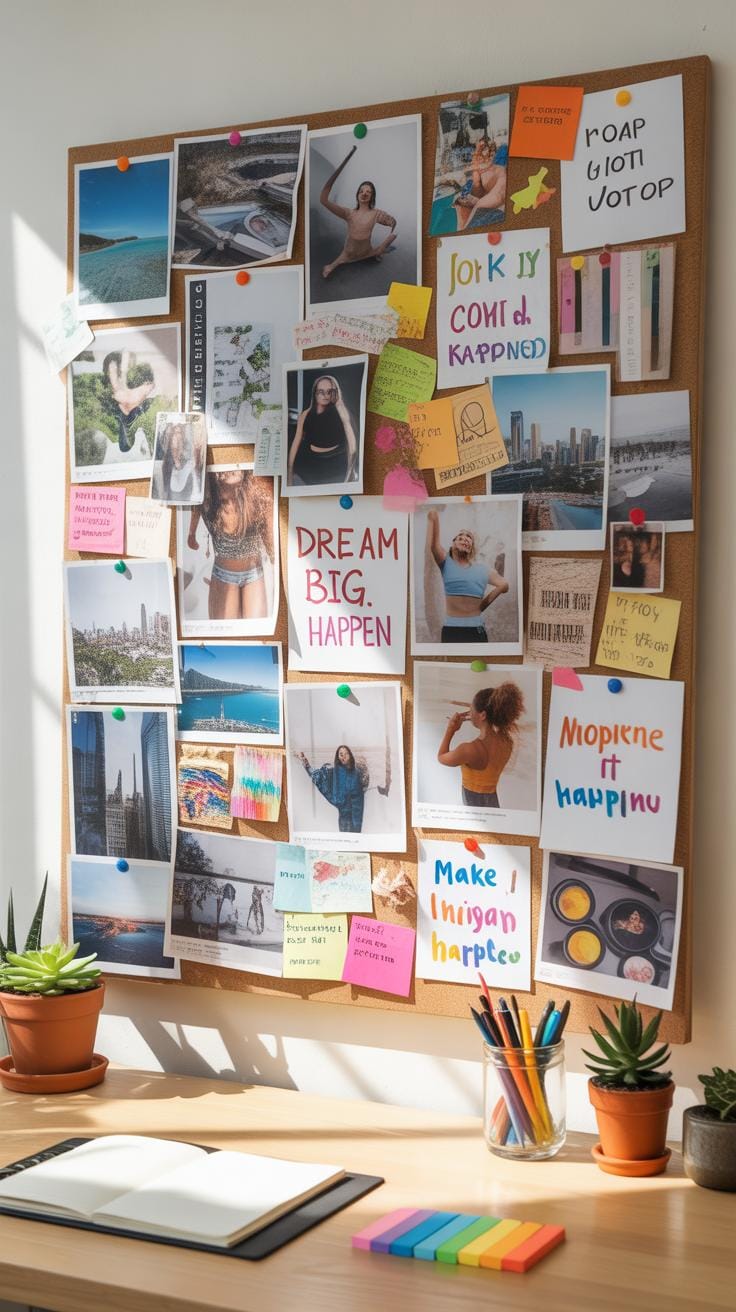
Nature has a soothing effect, right? Pictures of vast beaches where the waves gently lap the shore, dense green forests with rays of sunlight breaking through leaves, or soft sunsets melting into the horizon all seem to quiet the mind. These scenes remind you of places where life slows down, where there’s room to breathe and no noise to scramble your thoughts. Such images can pull you out of a busy moment and plant you somewhere peaceful, even if just briefly. I find a photo of a quiet forest trail especially grounding—like it invites you to walk in, step by step, leaving tension behind.
Words And Quotes That Encourage Calm
Sometimes, a single word or phrase can be remarkably powerful. Including words like “balance,” “serenity,” or “stillness” on your vision board can act like gentle reminders to pause and reset when stress creeps in. Quotes work similarly—they create a frame for your thoughts. Consider phrases such as, “Peace begins with a smile,” or “Calmness is the cradle of power.” These aren’t just pretty lines; they have a way of nudging your mood toward quiet confidence. I’ve noticed that stumbling across a calming quote in moments of unrest can shift my focus enough to catch a breath and rethink the day.
Techniques To Maintain Inner Peace Daily


Maintaining inner peace is not a one-time achievement—it’s a daily practice. You might think staying calm means hours of meditation or complete silence, but even small steps work. Breathing exercises are a solid place to start. Just a few minutes of deep, slow breaths can reset your nervous system and clear the clutter in your head.
Meditation might feel intimidating at first, but even brief sessions help build resilience against stress. Imagine sitting quietly, focusing just on the present moment—sounds simple, but it’s surprisingly tough. This practice gently teaches your mind to let go of racing thoughts, which can bring a surprising sense of mental calm.
Don’t underestimate the power of mindful breaks during a busy day. Pausing to notice how you feel, stretch, or look out a window can feel like hitting a mini-reset button amid chaos. These short moments can create a buffer against anxiety, even if life keeps rushing by.
Simple Breathing And Mindfulness Exercises
One easy technique you can try anywhere is the 4-7-8 breathing method: breathe in quietly through your nose for 4 seconds, hold for 7 seconds, and exhale through your mouth for 8 seconds. It slows your heart rate and calms your mind, but it only takes a minute or two.
Another mindful practice is the body scan: focus attention on your feet, then slowly move upward, noticing sensations. It grounds you in the present and can lower tension. Give it a go next time you feel overwhelmed. Maybe it won’t fully erase stress, but it often makes it manageable.
Integrating Calm Breaks In Busy Days
Busy schedules can make peace feel unreachable. Try slipping in calm moments: a quiet coffee without screens, a five-minute walk focusing on your surroundings, or a couple of stretches at your desk. These tiny rituals break up the noise and bring your focus back.

Set reminders if you have to. Maybe your phone buzzes to prompt a breath or a pause. It might feel odd at first, but over time, these breaks make you more aware and less reactive. Your mind, surprisingly, can find calm in small pockets of everyday life, not just in quiet retreats.
Common Obstacles To Inner Peace

Inner peace can seem elusive when confronted by everyday obstacles. Stress, for example, creeps in through work deadlines, family demands, or moments when everything feels urgent all at once. It’s like the mind gets hijacked, making calmness hard to hold onto. Busy schedules add their own weight; when time is scarce, slowing down feels almost impossible.
Negative thoughts are another challenge. They often spiral quietly, unchecked, turning small worries into big storms. You might catch yourself thinking, “I’m not enough” or “This will never get better,” without realizing the impact. The tricky part? These thoughts feel so automatic that you don’t always notice them until they’ve shaped your mood.
Overcoming these hurdles often means first acknowledging their presence. Simple steps can help: carving out brief moments to breathe during a busy day, journaling to capture and question negative thoughts, or reshaping your schedule to include small resets. It’s not a magic fix—progress might be slow and uneven—but with patience, these barriers can become more manageable.
Dealing With Stressful Situations
Stress doesn’t always arrive announced. It can hit unexpectedly, leaving you flustered. When this happens, stepping back for a moment might be the trick. Even a few deep breaths can prevent stress from escalating. Some find it helpful to have a mental anchor—a soothing image, a phrase, or a familiar routine—to regain control. Others prefer to briefly shift their focus, such as stretching or listening to a favorite song.

Accepting that stress is sometimes unavoidable helps too. Rather than fighting it tooth and nail, giving yourself permission to feel overwhelmed can ease tension. Afterwards, reflecting on what triggered stress and what helped calm you down can build a toolkit for next time. It’s like learning how to ride out a rough patch rather than resisting the waves.
Preventing Negative Thought Spirals
Negative thoughts can feel sticky. They loop and repeat without offering solutions, feeding doubt and anxiety. Catching these patterns early makes a difference. One practice is labeling the thought as just that—a thought, not a fact. This tiny shift creates space to choose responses rather than react automatically.
Next, try to challenge those thoughts gently. Ask yourself, “Is this really true? What evidence do I have?” Sometimes, simply noticing a negative thought and writing it down makes it less daunting. Over time, replacing persistent doubts with balanced phrases or hopeful perspectives can change the tone of your inner dialogue.
Keeping a calm vision board nearby could serve as a reminder of peace and clarity, encouraging your mind to pause and reset when negativity arises. It’s an ongoing process, and each step toward gentler self-talk contributes to a calmer mind.
Vision Board Vs Meditation For Peace
How Vision Boards Support Peace Of Mind
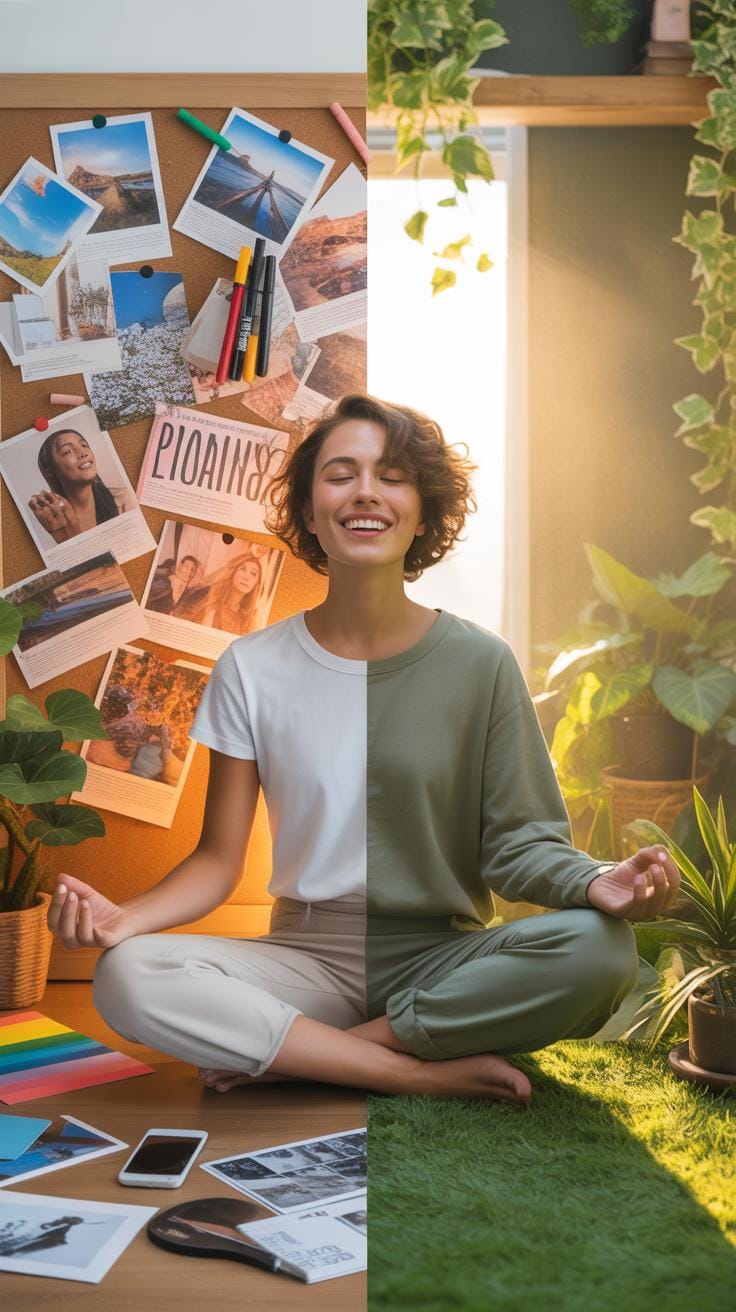
Using a vision board creates a visual anchor for your thoughts and intentions. Having a physical representation of peace on your desk or wall can constantly remind you of your goals toward calmness. It’s not just about dreaming; it’s about making those peaceful moments more real in your daily life. People say the habit of seeing your aspirations can spark motivation and reinforce positive thinking. There’s also something grounding in the tactile experience — clipping, arranging, and creating your peace tool. This action can slow your mind, even if just briefly.

However, one might wonder, does a vision board really quiet the mind or just stimulate mental activity? It’s worth considering how some might get lost in over-planning or excessive daydreaming instead of feeling serene.
Meditation Techniques To Quiet The Mind
Meditation offers direct, intentional moments to quiet mental chatter. Styles like mindfulness meditation encourage observing thoughts without attachment, giving space to calm responses rather than reactive ones. Then there are breathing-focused meditations aimed at reducing stress by anchoring attention on inhales and exhales. These approaches can lead to immediate, observable dips in anxiety and tension.
That said, meditation isn’t always easy to start or maintain. Some find their minds wandering too much, or sit in frustration from the expectation to “clear the mind.” Despite this, meditation remains a powerful tool for cultivating inner peace, especially in moments needing focused calm away from distractions.
In different situations, vision boards and meditation may suit you differently. If you connect more with visual and creative processes, the board might be a useful daily reminder. If you seek quick stress relief or a moment of pause anytime, meditation could serve better. Perhaps combining these practices brings a balance—using the vision board to set peaceful intentions, and meditation to embody that peace moment to moment.
Checklist For Setting Up Your Peace Space
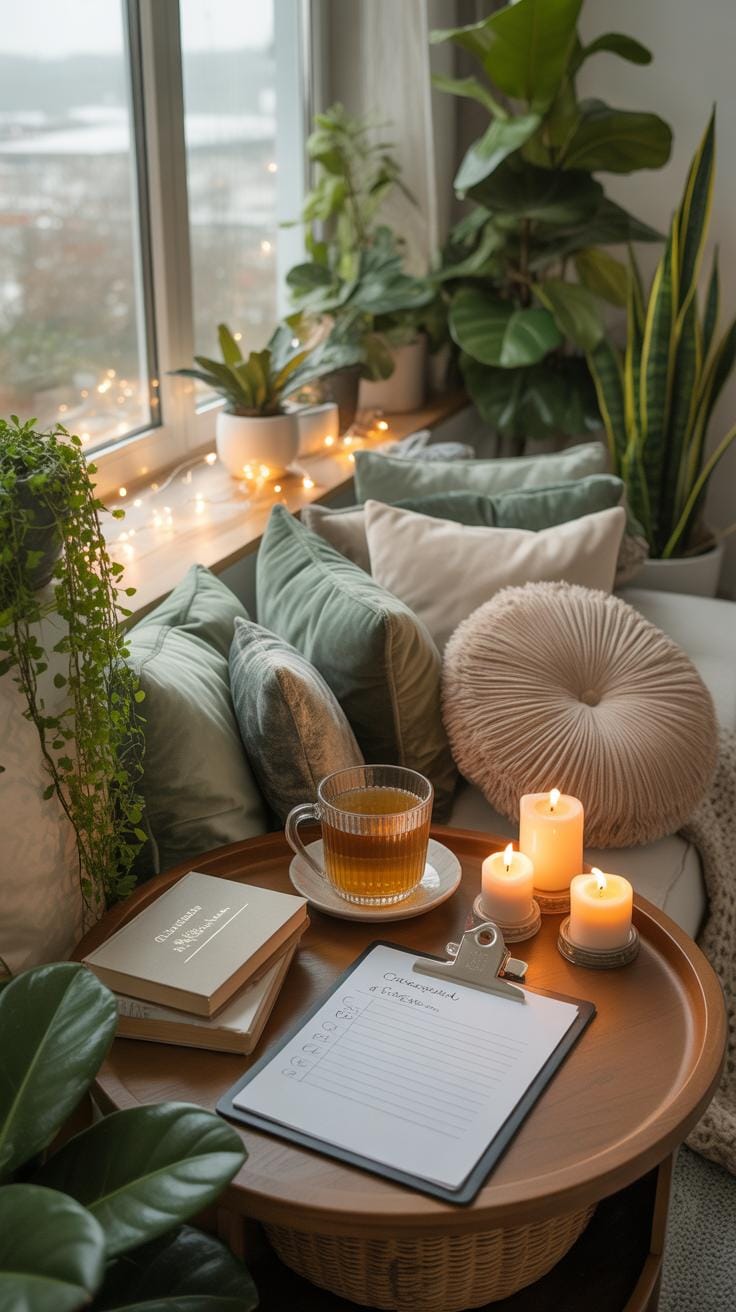

Creating a dedicated space that fosters inner peace can feel a bit tricky, but having a checklist might help you avoid overlooking essentials. When setting up your area, think about these key elements:
- Choose a quiet corner free from distractions and noise.
- Pick comfortable seating—perhaps cushions or a soft chair.
- Include items that evoke calm—candles, plants, or gentle artwork.
- Have a small surface or wall space to display your vision board, making it easily visible.
- Add a source of soft lighting, like dimmable lamps or natural light.
- Use natural materials where possible, like wood or fabric, for a soothing texture.
- Make sure the area is well-ventilated to keep the air fresh.
It might feel overwhelming to gather all this at once, but starting small is okay. You can expand your space as you discover what truly resonates with you.
Physical Items To Include In Peace Area
Including certain physical items can help build a calm atmosphere. For example, scented candles with mild fragrances like lavender or sandalwood can create a tranquil scent without overpowering the senses. Adding plants, even a low-maintenance succulent, brings a touch of nature that often soothes the mind. Cushions or a soft rug invite comfort, which is critical when you want to dwell in peaceful moments. Art or images that inspire calm—like serene landscapes or abstract shapes in soft colors—can gently steady your thoughts. Feel free to experiment with what feels peaceful. What calms one person might feel distracting to another.
How To Keep Peace Area Organized And Inviting
Maintaining your peaceful space takes a little effort, but it pays off. Try to keep clutter to a minimum—regularly tidy up to avoid overwhelming your senses. Develop a simple routine, like resetting things after each use, so disorder doesn’t creep in unnoticed. Keep cleaning supplies handy for quick freshening, but avoid harsh chemicals that might intrude on your calm. Let your arrangement feel natural rather than forced; sometimes small imperfections make the space feel lived-in and welcoming. Remember, it’s okay if your peace corner isn’t perfect. The key is that it invites you in, again and again, to pause and feel centered.
Tracking Progress To Stay At Peace

Tracking your journey toward inner calm can feel a bit like keeping a gentle pulse on your mental state—nothing too rigid, just enough to notice shifts. You might think, why bother? Well, keeping track can actually anchor your peace efforts, reminding you where you started and highlighting small wins often missed in day-to-day life.
Journaling is a simple yet powerful tool. Writing about how you feel each day, no matter how small the change, can uncover patterns or triggers that either disturb your calm or help build it. Mood charts offer another angle—they plot daily feelings visually, which can make subtle progress more tangible.
Daily Journaling Prompts For Calm Reflection
If you’re not sure what to write, here are a few questions to consider:
- What moments today felt peaceful, even if just briefly?
- What thoughts or actions disturbed my calm and why?
- How did my body respond to stress or relaxation?
- What can I do differently tomorrow to promote peace?
Answering these can encourage a clearer understanding of your inner world and help deepen your commitment to calmness.
Using Mood Trackers To Notice Changes
Try something as straightforward as a daily mood log using colors or numbers—maybe green for calm, yellow for neutral, red for stressed. Seeing a series of green days grow can be surprisingly motivating. It gives feedback you can’t always access just by thinking about your mood.
Tracking like this may feel tedious at times, and yes, not every day will show improvement. Still, it teaches patience with yourself. You start to see peace not as a constant state but a direction you’re nudging yourself toward, one day at a time.
Case Studies On Peace Vision Board Success

A Student Using A Vision Board To Manage Anxiety
Consider a student overwhelmed by school pressures—constant deadlines, exams, and social challenges. Before, their anxiety would spike, leaving them restless and unfocused. When they started using a calm vision board, things shifted gradually. The board featured serene images, quotes about mindfulness, and personal reminders to breathe deeply when stressed.
Over time, the student reported feeling less overwhelmed. The process of assembling the board itself helped clarify what calm meant for them. Seeing it daily became a small but real anchor during taxing school days. Perhaps it’s not a magic fix, but it shaped a mental pause that made coping easier.
Key lessons? Personal connection matters. The vision board wasn’t just about aesthetics; it was about intentional reflection and consistent gentle reminders to calm down.
An Office Worker Creating Calm At Work
Now, take an office worker caught in the whirlwind of meetings and tight deadlines. Their workspace was a source of stress until they designed a peace vision board right by their desk. Featuring soft colors, images of nature, and motivational words about patience and focus, the board served as both inspiration and a subtle call to slow down.
Before, tension crept in easily, leading to frustration and distractions. After introducing the board, the worker noticed improved concentration and a less reactive mindset during stressful moments. They’d glance at the board during short breaks, using it as a soft reset.
This case highlights that a calm vision board can act as a quiet companion, influencing daily habits and mental state without demanding overt effort. It’s less about dramatic change and more about steady shifts that create pockets of inner peace at work.
Conclusions
Creating a calm vision board targeted at inner peace is a simple, tangible way to help your mind stay calm amid stress. By focusing on peace, you build habits that improve your psychological balance.
Use the steps and inspiration shared here to put together your own board. Let it guide your thoughts and actions towards steady calm. Your peaceful mind is a key to better wellbeing every day.