

The Succulent Wall Lie: Why “Stylish” Is A Trap

Aesthetics Without Function Is Just Decoration
You want people to see your vertical succulent wall and think you have taste. That’s the real reason you’re reading this. The mechanism is simple: most people confuse visual appeal with actual design. They buy a wall structure, throw plants at it, snap a photo, and call it done. Real design solves a problem first, then looks good while solving it. A vertical succulent wall works only when it accounts for light exposure, water drainage, soil retention, and root access. Ignore these, and you have a dead plant arrangement in six months.
The difference between a styled prop and a functioning garden comes down to structural integrity. A wall that looks impressive but lacks proper drainage channels or mounting depth fails immediately. Soil compacts, roots rot, plants drop. Design means the frame, substrate, and irrigation work together before anyone cares what it looks like. Every material choice either serves the plants or serves the camera. You need both, but function must come first.
The Instagram Cycle Kills Longevity
Vertical succulent walls exploded in popularity because they photograph well in tight spaces. That trend has created a market of mediocre products built to look good for 30 days, not 30 months. The real problem: people chase what worked in someone else’s environment. Climate, light angle, humidity, indoor temperature, watering frequency—these variables change everything. What thrives on a south-facing wall in Arizona fails on an east-facing wall in Seattle. Following trends means copying aesthetics without copying conditions.
Lasting vertical succulent gardens require you to understand your specific space first, then choose plants and materials accordingly. This is the opposite of how Instagram posts work. You identify your light hours, temperature swing, and humidity level. You then select succulents that actually survive those conditions and a frame that supports their specific water and nutrient needs. The plants that stay alive are the ones that look good for years. That’s where real style lives.
Your Vertical Succulent Wall: The Neglect Proof Blueprint

The Substrate That Actually Drains
You want this thing to survive your actual life, not just look good in the photo. Here’s the mechanism: drainage failure isn’t about water volume—it’s about capillary action trapping moisture in soil layers. Think of hydrology: water moves through channels of least resistance, and poor substrate creates dead zones where it pools instead of flowing through.
Standard potting soil is your enemy here. It retains too much moisture and compacts over time, suffocating roots. You need a mix that mimics natural succulent habitat—fast drainage with zero water-holding capacity. Combine 50% coarse mineral material (pumice or perlite), 30% gritty sand, and 20% organic matter. The mineral particles create air channels; water moves straight through without stalling. Test your mix by pouring water onto a handful—it should drain in under three seconds, leaving the substrate barely damp.
Your substrate choice determines whether the wall thrives or rots from the inside. Many people use generic potting mix because it’s convenient. That’s why their vertical walls fail by month four. The substrate is your entire system’s foundation—get it wrong and no other component compensates. When installing, pack the mix firmly enough to hold plants upright, but loose enough that water never pools. This requires hands-on testing before full installation.
Build For Structural Endurance
The frame carries load that multiplies over time as soil moisture and plant weight accumulate. Your wall’s durability depends entirely on frame material and fastening strategy, not on how well the wall looks initially.
Steel or aluminum frames withstand repeated moisture cycles better than wood, which swells, warps, and deteriorates regardless of sealant. If you use wood, choose cedar or redwood heartwood—they resist rot better than treated lumber, though they still degrade. Stainless steel hardware is non-negotiable; galvanized fasteners corrode from inside out when trapped against wet substrate. Mount the frame to studs or solid backing, using minimum 3/8-inch fasteners spaced 16 inches apart. Don’t anchor to drywall alone; it won’t hold the distributed load.
The backing material matters as much as the frame itself. Use rigid substrate like plywood or cement board behind the frame to distribute plant weight evenly. Fabric-only installations fail because they create pressure points that tear. Your frame and backing system must handle the weight when soil is fully saturated—that’s two to three times the dry weight. Check fastener torque every six months; vibration from air conditioning and temperature shifts gradually loosens bolts. This protocol prevents catastrophic failure.
The Photosynthesis Protocol For Succulent Wall Gardens

Light Mapping For Growth
You want this wall to look effortless. That’s why you’re reading about light. But the real problem is that most people treat light like decoration instead of fuel. Succulents don’t care about your aesthetic preference. They respond to photosynthetically active radiation, the specific wavelengths plants actually convert to energy. Map your wall’s light exposure the way a military strategist maps terrain. One mistake costs you the entire installation.
Start by tracking light patterns for three days minimum. Note direct sun hours, partial shade zones, and reflected light from walls or windows. Most vertical succulent walls fail because they’re positioned where aesthetics win but photosynthesis loses. South and west-facing walls in the Northern Hemisphere receive the most usable light. East-facing walls get morning sun without afternoon burn. North-facing walls require supplemental grow lights to sustain most succulent species. Document shadow patterns throughout the day. Place high-light species like Echeveria and Aloe where direct sun hits for six hours or more. Reserve shade-tolerant varieties like Haworthia for areas receiving two to four hours of indirect light. Test your theory before committing plants to the wall.
Water Cycles And Drought Resistance
The standard advice is to water less and space dries between soakings. That’s incomplete and misses why succulents need irregular watering patterns in the first place. Succulents evolved in environments where water arrives unpredictably. Their tissues store moisture specifically to survive months without rain. Mimicking natural drought cycles doesn’t mean watering on a schedule. It means creating stress periods that trigger the physiological responses their tissues are designed for.
Water your vertical wall thoroughly until drainage runs from the base, then wait until the growing medium dries completely before watering again. This cycle typically takes ten to fourteen days depending on temperature, humidity, and light. In winter, extend intervals to three to four weeks or longer. Never use a spray bottle for watering a vertical wall. Misting leaves surface moisture that promotes fungal issues without hydrating the root zone. Install drip irrigation at the top of the wall and let gravity handle distribution. Monitor the lowest plants on the wall for water stress first. If they’re thriving, plants higher up are fine. If lower plants wilt before the medium dries completely, your wall’s irrigation system has a pressure or distribution problem that needs immediate repair.
Plant Selection: The Vertical Succulent Gardens That Endure

Hardiness Hierarchy: Choosing Resilient Succulent Species
You want a wall that looks intentional in six months, not sad in three. The real mechanism is this: not all succulents tolerate vertical growing conditions equally because gravity and drainage work against delicate root systems differently than they do in horizontal soil. A vertical wall is essentially a drainage acceleration device. Water moves down faster. Roots dry out faster. Sedums and Echeveria species handle this physics. Aloe and tender tropical hybrids do not. The wall forces a hardiness hierarchy that flat gardeners ignore.
Pick species that evolved in arid climates with shallow root penetration. Sedum acre, Sedum spurium, and Sempervivum cultivars were engineered by millennia of rocky slopes and poor soil retention. They’ve adapted to thrive when water abandons them quickly. Echeveria species tolerate the stress because their leaves store water as a survival strategy, not a luxury. The common advice to “choose what you love” is incomplete. You choose what survives the wall’s environment first, then aesthetic preference second. The order matters because failure looks worse than compromise.
Root System Compatibility: Preventing Competition, Ensuring Health
Think of root systems like real estate in a shallow pocket of soil. When you stack incompatible species, they fight for the same shallow space. This is a competition problem from ecology: niche overlap causes resource scarcity. On a vertical wall, the soil pocket is already tiny. Shallow-rooting sedums and echeveria occupy different ecological niches than deeper-rooting sempervivums. Stack species with radically different root depths, and you distribute the competition pressure. Shallow rooters in upper pockets, moderate rooters in middle sections, deeper species in lower zones where soil settles. Separation prevents silent death.
Monitor root development by inspecting the drainage pattern after watering. If water channels predictably to one side, roots are clustering there and strangling growth elsewhere. Rotate or replace plants that crowd their zone. The protocol is simple: every 8 to 12 weeks, check soil moisture patterns and root positioning through the backing. If clustering occurs, separate conflicting species or thin aggressive growers. This is your only insurance against a wall that looks full but performs hollow.
Installation Mastery: Crafting Your Succulent Garden Wall

Build For Change, Not Permanence
You want this to look finished and permanent the moment it’s installed. That’s the trap. The real mechanism here is modularity, borrowed from systems design: you build components that connect and disconnect without degradation. A vertical succulent wall that’s truly modular treats each planting pocket or frame section as a replaceable unit. This means individual plants die or underperform without forcing you to rebuild the entire structure.
Use a frame system with individual pockets mounted on rails or a grid substrate. Avoid gluing plants directly to wood or felt backing. The pockets should slide in and out horizontally or vertically depending on your frame design. This lets you replace dead specimens, swap species seasonally, or expand upward and sideways without touching what already works. Your maintenance shifts from “occasional replacement” to “quarterly pocket swaps,” which is manageable instead of demoralizing.
Anchor Like It Carries Weight
Most homeowners underestimate wall load because they think succulents weigh nothing. False. Wet soil in a vertical system weighs substantially more than the plants themselves. A two-foot by three-foot wall filled with moist soil can easily exceed 150 pounds. Anchoring matters more than aesthetics or plant selection combined, and nobody says this plainly enough.
Find studs in your wall using a stud finder, not guesswork. Mount your frame directly into studs using lag bolts rated for at least three times your estimated wall weight. If studs don’t align with your desired placement, install a horizontal ledger board between studs first, then mount your frame to that. Use toggle bolts only as a last resort for non-stud areas, and only for lightweight experimental setups under 40 pounds. After installation, physically pull down on the frame with force. If it moves, your anchoring failed. Fix it before planting.
The Cybernetic Succulent Wall: Feedback Loops For Growth
Reading Plant Signals Before They Die
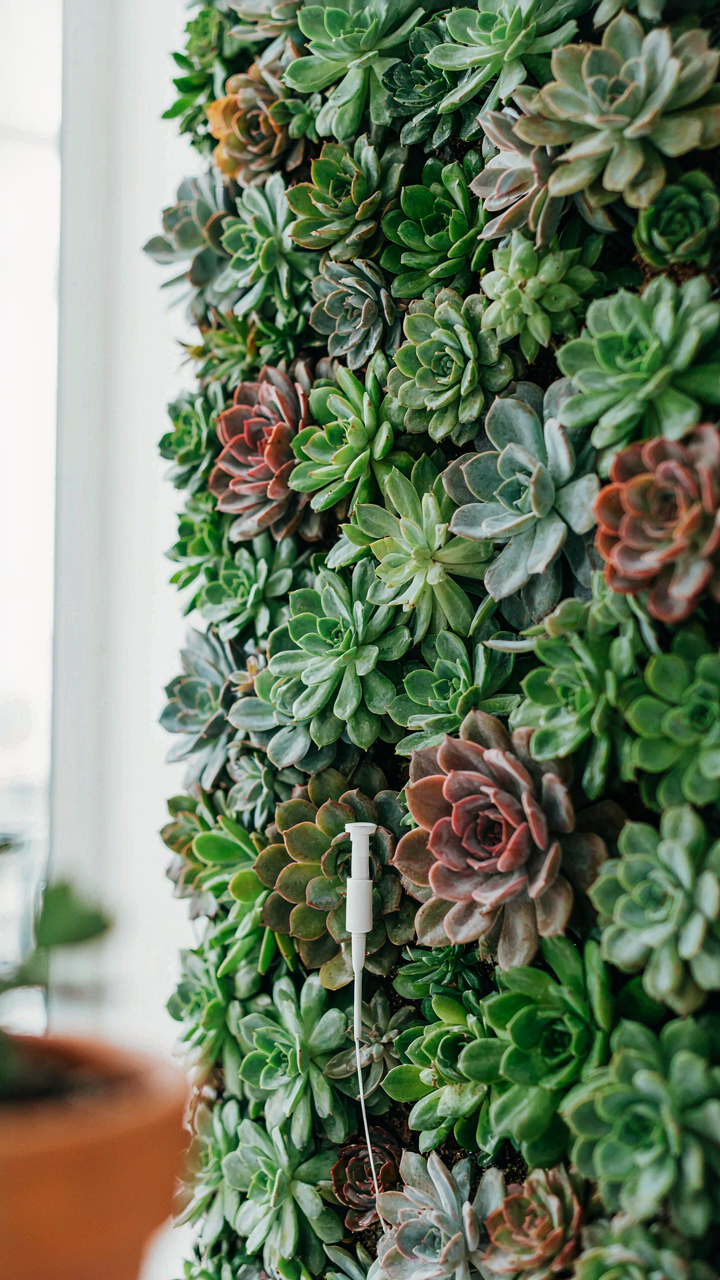
You want a vertical succulent wall that runs itself so you look like you have your life together. Here’s the mechanism: cybernetics is the study of control systems and feedback loops. A vertical succulent wall becomes a feedback loop when you measure actual plant response and adjust inputs based on what you observe, not on a predetermined schedule.
Most people water on a timer. That’s not feedback, that’s guessing. Real control happens when you monitor soil moisture, leaf firmness, and color shifts, then respond by changing watering frequency, light exposure, or airflow. The wall tells you what it needs if you’re watching for the signal instead of ignoring it until plants brown out.
Building The System That Runs Itself
Self-regulating doesn’t mean no intervention. It means designing conditions that minimize the variables you need to manage. A vertical succulent wall with proper drainage, airflow, and light exposure requires fewer corrections than one built without those foundations.
Start with a system that drip-irrigates on a timer but includes a moisture sensor that bypasses watering if soil stays above a threshold. Install the wall where it receives indirect bright light for at least four hours daily. Ensure airflow by mounting the wall at least six inches from any solid surface behind it. Check these conditions once monthly and adjust the timer based on seasonal moisture needs. This protocol eliminates daily guessing and catches drift before it becomes damage.
Beyond “DIY”: The Succulent Garden Wall As An Investment

Time Or Money: Pick Your Constraint
You want to believe building it yourself saves cash. That’s the real question under this section. Here’s the mechanism: labor hours have a cost whether you pay someone or spend them yourself. A pre-built vertical succulent wall system costs 300 to 1200 dollars depending on size and material quality. Building one from scratch takes 20 to 40 hours if you source materials, assemble the frame, install irrigation, and establish plants. Your time has a market rate whether you acknowledge it or not.
- Buy pre-built systems: Professional assembly, warranty coverage, tested irrigation. Faster installation. Higher upfront cost, less customization options available.
- Build from salvaged materials: Lowest material cost. Requires research, trial and error, and problem solving. High time investment, unpredictable results.
- Hybrid approach: Purchase frame and irrigation, source your own plants. Balances cost and control. Requires moderate DIY skill and planning.
- Commission a custom build: Designer or contractor handles everything. Premium pricing. Zero labor on your end. Guaranteed aesthetic alignment with space.
- Rent succulent wall service: Some installers maintain walls seasonally. Monthly fee structure. No ownership responsibility. Best for temporary displays or events.
The math shifts when you factor in failure cost. A botched irrigation system kills plants in weeks. A structural failure means rebuilding. Buying professional saves you from expensive mistakes that consume more time and money than the original build would have cost.
Systems Compound Over Years
Economics calls this capital appreciation. A vertical succulent wall built to last compounds value through three mechanisms: reduced replacement cycles, appreciation in specimen value, and avoided aesthetic decline. A wall installed in 2015 with quality materials and proper drainage still functions today. A cheap system fails within three to five years, forcing complete replacement and wasting the initial investment.
Well-established specimens gain specimen value over time. A young echeveria propagation costs two dollars. The same plant at three years old, established in a wall system, holds visual and structural importance in your design. The wall itself becomes part of your home’s story. Neglected walls age badly and drag your space down. Maintained walls age well and hold or gain property value. The maintenance protocol determines which path you take: quarterly checks on irrigation, seasonal pruning, and pest monitoring cost nothing compared to replacing an entire failed system.
Common Fails: Why Most Succulents Wall Ideas Collapse
The Watering Trap That Kills Everything
You want your vertical succulent wall to look effortless and thriving, but the effort kills it. Here’s the mechanism: gravity works against you. Water pools at the base of vertical systems and doesn’t drain fast enough. Most people water on a schedule instead of reading soil moisture, which turns the wall into a slow-drip swamp. Succulents store water in their tissues. Constant moisture forces them to absorb what they can’t use, and the roots rot from the inside out.
The common advice is just “water less.” That’s incomplete. You need to understand the difference between drying out between waterings and staying perpetually moist. Test soil at the middle and lower sections of your wall with your finger before watering. If moisture exists two inches down, skip watering entirely that week. This isn’t complicated, but it requires paying attention instead of following a fixed schedule.
Insufficient Light Destroys Structure
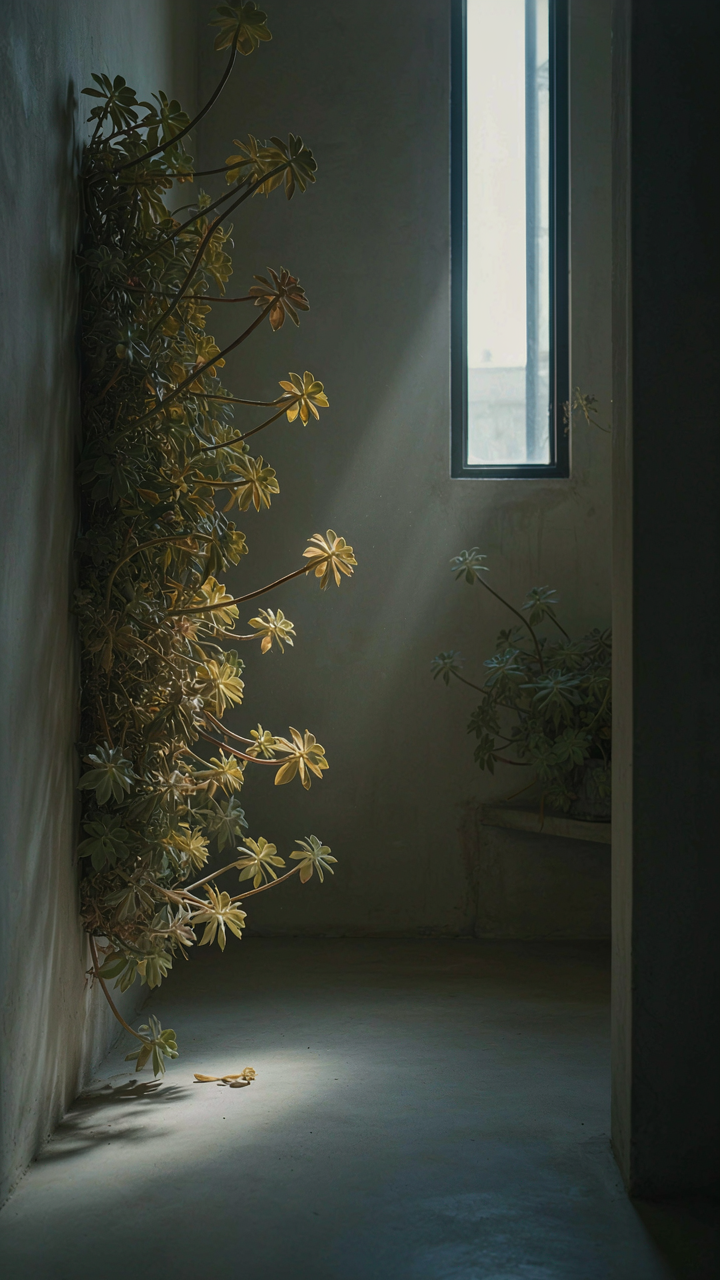
Light determines whether succulents compact or stretch. This comes straight from plant physiology: succulents produce a hormone that triggers stem elongation when light intensity drops. Weak light means weak, leggy growth that can’t support itself vertically. Most people install vertical walls in corners or shaded areas because the aesthetics work for the room layout. The succulents then become pale, thin, and fail structurally.
Your vertical succulent wall needs minimum four hours of direct sunlight daily. Indirect bright light works but produces slower, denser growth. If your wall location gets less than this, add a grow light positioned six to twelve inches above the densest growth area. Run it ten to fourteen hours daily. This single change reverses the etiolation that causes collapse and keeps plants compact enough to grip the wall structure properly.
The Plant Wall Ideas Myth: True Value Beyond Aesthetics

How Plants Actually Change Your Air
You want proof that your vertical succulent wall does something. Here’s the mechanism: Plants are biological air filters operating through transpiration and gas exchange, the same principle that drives industrial HVAC systems. Succulents specifically absorb CO2 during photosynthesis and release oxygen. A mature vertical wall with 50+ plants measurably shifts indoor air composition in enclosed spaces under 400 square feet.
Temperature regulation works through evaporative cooling during transpiration cycles. The wall absorbs heat from surrounding air, moderates temperature swings, and reduces reliance on climate control during shoulder seasons. This isn’t magic. This is thermodynamics. A densely planted vertical wall reduces peak room temperature by 3 to 5 degrees Fahrenheit on sunny afternoons, lowering energy load on air conditioning systems during peak hours.
Why Being Near Plants Rewires Your Nervous System
The common advice says plants make you feel calm. That’s incomplete. Neurobiology shows nature exposure triggers parasympathetic activation, the same branch of your nervous system that governs rest and digestion. Your brain registers plant density, leaf color variation, and organic shapes as safety signals. Being near a vertical succulent wall literally lowers cortisol production and heart rate variability within minutes of visual contact.
Attention restoration theory, documented in environmental psychology research, explains why plant walls work in offices and high-stress environments. Your prefrontal cortex fatigues from directed attention tasks. Plants redirect focus to involuntary attention, letting your cognitive resources recover. Place a vertical succulent wall in your workspace or bedroom, and you activate a measurable shift in mental performance after 15 to 20 minutes of exposure. The mechanism is neurological, not motivational. Track your stress markers before and after installation to quantify the effect.
The Real Obstacle Isn’t Plant Care; It’s Your Addiction To Overcomplicating Simple Systems

You don’t need the perfect vertical succulent wall system. You need to stop waiting for perfection and nail a piece of wood to your wall today. Pick five succulents. Drill holes. Plant them. The system reveals itself through action, not research. Every expert you follow started exactly here, not in analysis paralysis. Your competitors are building while you’re still reading about building. Stop designing the ideal setup and start with the worst one you can tolerate.



