

Beyond Drainage: The Aeration Advantage Of Terracotta Pot Feet

When Water Sits, Roots Die
You want terracotta pot feet because you think they look intentional. The real reason they matter: stagnant water kills roots faster than drought ever will. Waterlogged soil suffocates root tissue. Roots need oxygen to respire and absorb nutrients. When water pools at the pot base without moving, anaerobic bacteria colonize the soil. The plant declines. You see wilting and blame underwatering. Wrong diagnosis.
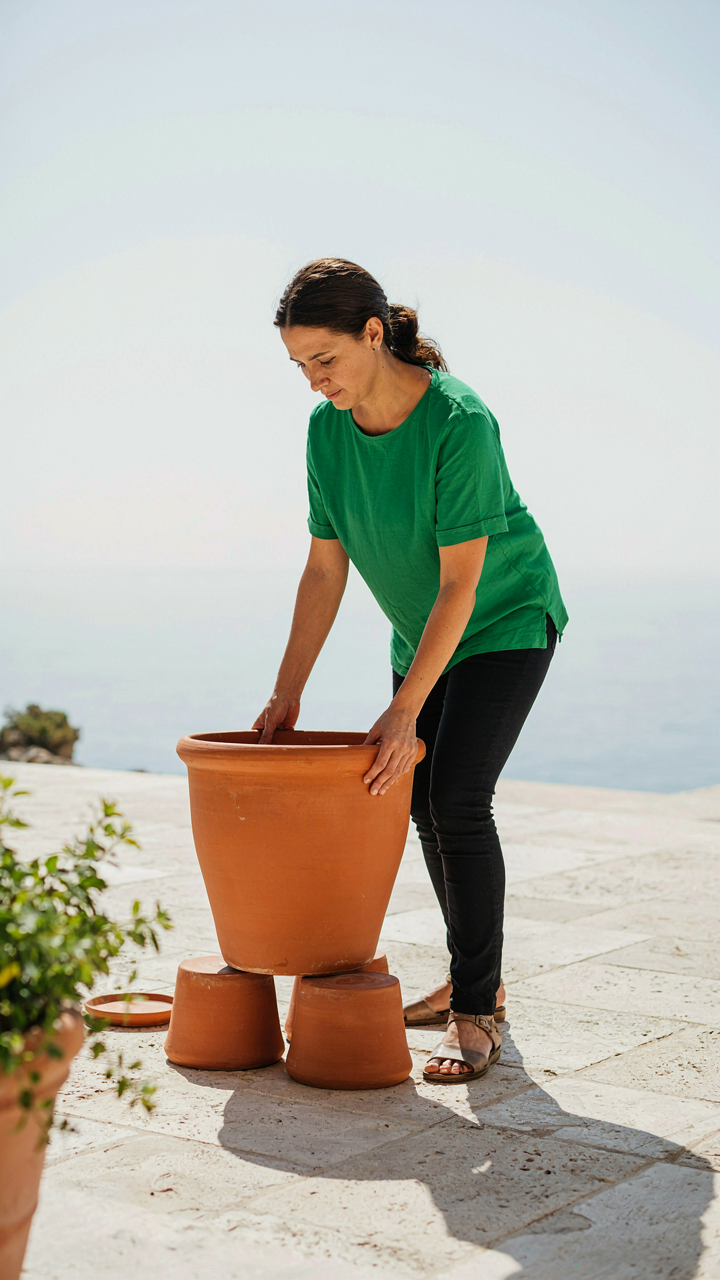
Terracotta pot feet create the gap that breaks the seal between pot and surface. This gap forces water to move through the soil and drain completely rather than sit in the compressed zone where pot meets ground. The mechanism is simple physics: gravity pulls water down, but a solid contact point traps it. Feet eliminate that contact point. Water flows through instead of pooling.
The Root Respiration Protocol
Roots operate under the same oxygen economy that governs any aerobic system in biology: they consume oxygen to generate ATP and perform metabolic work. Terracotta pot feet function as oxygen bridges, maintaining the gradient that keeps root cells in aerobic conditions instead of slipping into hypoxic crisis. This distinction separates a thriving root zone from a dying one.
When soil stays saturated, oxygen diffusion stops. Roots begin anaerobic fermentation within hours, producing toxic byproducts like ethanol and hydrogen sulfide. Terracotta feet prevent this by maintaining airflow below the pot, keeping the soil-air interface active. Install pot feet at least one-quarter inch tall minimum. This height allows water to drain and air to circulate beneath the vessel continuously. Measure your pot base to ensure feet contact all four sides evenly.
The Geodesic Pot Feet System: Engineered For Optimal Plant Health
How Elevation Breaks Capillary Action
You want to believe pot feet are optional cosmetics. They’re not. Capillary action is a physics term that describes how water moves upward through soil against gravity, and terracotta pot feet interrupt this mechanism entirely. Without elevation, soil wicks moisture directly from the drainage hole into whatever surface sits below—then back up into the pot’s base. Your drainage hole becomes useless.
The gap created by pot feet prevents direct contact between the pot’s base and the ground or shelf. Water that drains out hits air instead of a solid surface, breaking the capillary chain. Terracotta itself is porous and accelerates this wicking problem compared to plastic. Raise the pot even one inch and you solve root rot at the source, not after it starts.
Weight Distribution On Uneven Surfaces
The structural logic here mirrors load-bearing architecture: force concentrates at contact points. Terracotta pot feet act like footings, scattering the pot’s weight across multiple small zones instead of one continuous base edge. This matters on real surfaces—uneven patios, warped shelves, tile grout lines. A single contact point creates stress concentration that cracks the pot. Four feet spread that load.
Terracotta’s brittleness makes this non-negotiable. Unlike plastic pots that flex and absorb pressure, terracotta transmits force directly to wherever it touches. Feet elevate the pot just enough to let air flow underneath while reducing the chance of a single pressure point cracking the sidewall. This is why pot feet with wider bases and proper spacing outperform thin, single-contact designs—they distribute force across a larger footprint and protect your investment from breaking under its own weight plus soil and water.
Debunking Pot Feet Myths: What Most “Experts” Get Wrong
The One Size Fits All Trap
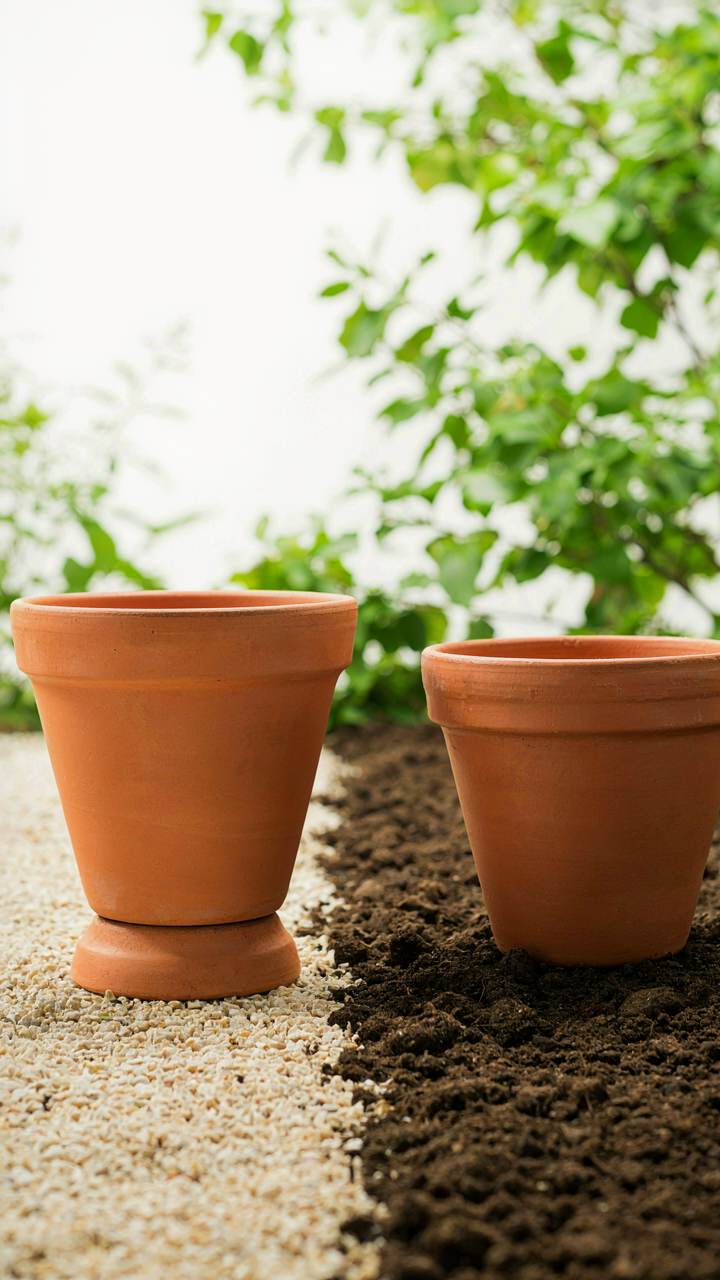
You want to believe there’s a universal answer because it saves you from thinking. There isn’t. Most garden writing treats pot feet as interchangeable objects, but the real mechanism is drainage velocity. Different soil densities, pot materials, and climates create different water evacuation rates. A terracotta pot on concrete in humid Seattle performs completely differently than one on gravel in Arizona. The myth persists because it’s easier to say “use pot feet” than to acknowledge that the specific height, material, and ground surface matter enormously.
When you buy generic pot feet without considering your actual conditions, you’re not solving a problem. You’re guessing. The standard advice ignores that terracotta itself is porous and already manages some moisture, which changes how much clearance you actually need. A three-inch riser on clay soil behaves like a one-inch riser on sand. Matching your pot feet to your specific environment determines whether they prevent root rot or just look decorative while your plant drowns anyway.
Unseen Damage Happens Before You See It
The damage mechanism starts invisible. Most people think root rot announces itself loudly. It doesn’t. By the time you notice yellowing leaves or soft stems, the fungal colonization beneath the soil has already consumed weeks of root tissue. This is where pot feet intervene, but only if they actually break the water contact cycle between soil and ground. A poorly chosen riser height leaves the soil moisture gradient intact. The capillary action still pulls water upward into your pot from the substrate below. Pot feet work by interrupting this mechanism completely, not partially.
Air circulation underneath the pot matters less than people claim. The real function is eliminating capillary moisture rise. When terracotta sits directly on damp ground or a solid surface, water moves up into the pot like a wick. Height prevents this. The feet must clear the wet zone below. In most climates, one to two inches suffices. In exceptionally wet or poorly draining areas, three inches becomes necessary. The specific height you need depends on how fast your ground drains and how quickly your pot material allows water to evaporate from the bottom. Measure your drainage time, then choose your riser height accordingly.
Terracotta Pot Feet: The Unseen Battle Against Pests And Disease

Why Elevation Actually Matters
You want to believe a pot riser is just decoration, but that’s denial dressed up as pragmatism. Elevation works because it interrupts the moisture gradient between soil and ground. Slugs and snails operate on a basic principle from biology called chemotaxis—they move toward chemical signals. The primary signal is moisture. When a pot sits flush on wet ground, it creates a continuous damp pathway they follow directly to your plants. A riser breaks that pathway by introducing air underneath, which these pests actively avoid.
Terracotta risers amplify this effect because the material itself is porous and hygroscopic. It wicks moisture upward and outward from the contact point, creating a perimeter of drying rather than pooling. This matters tactically: slugs need unbroken moisture to travel safely. They dehydrate fast in open air, so they won’t cross a zone where water is being pulled away from the surface. The riser doesn’t kill them. It eliminates their preferred route to your plants.
Fungal Growth And Air Movement
The conventional take on fungal disease is that you need good drainage, which is true but incomplete. Drainage stops water accumulation in the soil. Air circulation stops water accumulation on the pot itself and in the immediate microclimate around the root zone. These are different problems requiring different solutions.
When a pot sits directly on soil, stone, or mulch, the underside stays saturated for hours after rain or watering. Terracotta is porous—it absorbs this moisture. Fungal spores don’t need the soil to stay wet indefinitely; they need a surface with high humidity and limited air exchange. A riser creates an air gap that allows water on the pot’s base to evaporate instead of persisting. This cuts the window where fungal germination can occur. Install risers so at least one inch of clearance exists beneath the pot. This gap must run continuously around the pot’s perimeter, not just at two contact points. Check the riser placement monthly to ensure debris hasn’t blocked airflow underneath.
The Material Mandate: Why Terracotta Pot Feet Dominate

Porous Exchange: How Air Moves Through Clay
You want terracotta because it signals you know something others don’t. The real mechanism: terracotta’s porous structure operates like a capillary system in biology, where microscopic channels allow gas diffusion between soil and atmosphere. Those tiny holes aren’t decorative. They’re the delivery mechanism for oxygen to roots and outbound pathways for carbon dioxide and ethylene gas that roots produce.
Most risers fail because people treat material as interchangeable. Terracotta works because its fired clay body maintains consistent porosity across temperature swings. Plastic risers seal moisture underneath. Metal conducts heat into the soil mass. Terracotta breathes. When you set a pot on terracotta feet, you’re creating an air gap that terracotta itself continues to ventilate passively. This prevents root rot before it starts.
Thermal Ballast: Soil Temperature Without Fluctuation
Terracotta stabilizes soil temperature because clay has high thermal mass relative to its weight. Physics calls this heat capacity. In the context of pot risers, thermal mass means terracotta absorbs heat during the day and releases it slowly at night, buffering soil from rapid temperature swings that stress roots and interrupt nutrient uptake.
Concrete risers hold heat longer. Wood risers conduct poorly and rot. Terracotta finds the middle ground: it moderates without overcompensating. The feet elevate the pot so air circulates underneath, and the terracotta itself regulates what that circulating air does to the soil temperature. This matters most in transitional seasons when day and night temperatures swing 20+ degrees. Terracotta dampers those swings. Your soil stays in the stable zone where roots actually function.
Strategic Placement: Maximizing Planter Feet Effectiveness

Surface Contact: Optimizing For Stability
You care about this because wobbly pots feel like failure. Here’s the mechanism: terracotta feet create contact points that must align with your base surface. Use physics language here—we’re talking about load distribution across discrete points rather than a continuous plane. A pot on three feet sits stable only when all three touch the ground simultaneously. Most people set feet on uneven surfaces and wonder why their arrangement fails.
The real work happens before placement. Inspect your base surface. Concrete, tile, and wood decking vary in levelness. Terracotta feet, typically 1 to 2 inches tall, amplify any underlying inconsistency. Place your pot on the intended spot and check for rocking. If it moves, adjust the feet themselves or select a different location. Placement precision determines whether feet prevent water pooling or create new problems.
Weight Distribution: Stress Point Avoidance
Terracotta is brittle under concentrated load. The feet on your pot are structural weak points, not afterthoughts. When weight concentrates unevenly across feet, cracks propagate from the attachment zone into the pot’s base. Most guidance ignores this: people assume bigger pots need bigger feet. Wrong. Bigger pots need feet positioned to match their internal weight distribution, not their exterior dimensions.
Three-point feet work when weight centers between them. Four-point feet distribute load more evenly but require absolute levelness. Position feet to sit directly beneath the pot’s thickest walls and heaviest soil mass. A pot heavy with wet soil on one side will stress the nearest foot first. Rotate your pot monthly if it stays in place, or adjust foot positioning when you first plant it to account for your soil and water load pattern.
The Investment Fallacy: Cheap Pot Feet Vs. Long Term Plant Value

What A Dollar In Risers Actually Costs
You’re afraid you’re wasting money on something that looks optional. Here’s the mechanism: economics calls this cost-benefit analysis, and terracotta pot feet risers are a capital investment in drainage infrastructure, not decoration. A three-dollar set of risers prevents root rot, which kills a fifty-dollar plant and forces you to replace soil, pot, and start over. The real cost isn’t the riser. It’s the compounding failure you avoid.
Most people calculate wrong here. They see the upfront price of cheap risers and think that’s the expense. It isn’t. The expense is what happens when water pools under the pot for six months and destroys the root system. Cheap plastic feet crack under weight and UV exposure within two seasons. Terracotta feet, though fragile individually, cost less per year of service because you’re replacing them less often than you’re replacing dead plants.
The True Price Of Replacement Cycles
Opportunity cost in economics means what you give up to choose something else. With pot feet, you’re choosing between spending three dollars yearly on risers or spending thirty to sixty dollars replacing dead plants yearly. That’s not a neutral choice you can ignore. The dead plant represents lost soil investment, lost pot investment, and lost time waiting for a new plant to establish itself.
When you skip risers, you don’t save money. You redirect it toward replacements instead of prevention. A plant that dies because water sat beneath it for weeks didn’t die from neglect or bad luck. It died from a design failure you could have fixed for less than a coffee. Track what you actually spend replacing plants across a season. Compare that number to buying risers. The math is unforgiving.
Beyond Aesthetics: Planter Feet As Structural Imperatives

How Weight Distribution Actually Works
You want risers because you think they look intentional. The real reason they matter is weight. Terracotta pot feet operate as load distribution devices, spreading concentrated force across a wider footprint than the pot’s base alone provides. In structural engineering, this principle is called bearing stress reduction—the lower the pressure per square unit, the longer the surface survives. Your terracotta isn’t failing because of what’s inside it. It’s failing because all that weight concentrates at five or six contact points instead of dispersing evenly.
Without feet, a wet terracotta pot bearing thirty pounds of soil and water transfers that load through only the rim’s edges. Concrete, stone, and wood surfaces erode fastest where pressure concentrates. Feet lift the pot body away from the surface entirely, moving the load to independent contact points engineered to absorb compression. This simple geometry extends the life of both pot and surface by eliminating edge-to-edge friction and pressure degradation that concrete and pavers can’t resist.
The Real Cost Of Ignoring Ground Contact
Most guides tell you risers prevent water damage. That’s incomplete. Water damage happens regardless. The actual threat is structural failure of the pot itself. When terracotta sits directly on wet surfaces, capillary action pulls moisture into the clay body’s lowest edge. Freezing cycles then crack and separate layers from the inside out—not from sitting in water, but from repeated expansion and contraction at the clay’s weakest point: its bottom.
Feet eliminate this failure mechanism by maintaining air gap and drainage around the pot’s entire perimeter. Without risers, you replace pots every two to three seasons in climates with frost. With proper feet, the same pot survives five to seven years because the base never experiences that pressure-temperature cycle. The cost difference between a two-dollar set of terracotta feet and replacing a twenty-dollar pot annually makes this a protocol, not an option.
Terracotta Pot Feet: A Microclimate Management Protocol

What Elevation Actually Controls
You want terracotta feet risers because you’re afraid your plants will rot and you’ll look incompetent. That’s the real reason. Here’s the mechanism: elevation creates airflow underneath the pot. In thermodynamics, convection moves heat and moisture away from surfaces. Terracotta feet function as convection accelerators, interrupting the boundary layer of stagnant air that forms between pot base and soil. Without them, moisture pools. With them, it disperses. The difference isn’t visual. It’s measurable in root health.
Terracotta itself is porous and hygroscopic, meaning it absorbs and releases water based on humidity. This property only works to your advantage if air reaches the pot’s underside. A pot sitting flat on soil or a flat surface creates a moisture trap. The terracotta can’t dry properly because the wet surface blocks vapor exchange. Feet break that seal and restore terracotta’s ability to breathe. This is why drainage holes alone aren’t enough. You need active airflow, not just gravity.
Where Placement Determines Outcome
Strategic positioning means understanding that pot feet aren’t decoration, they’re infrastructure for your specific growing environment. Different spaces have different humidity levels, air movement patterns, and evaporation rates. Where you place your pots determines how effectively the feet function.
- High humidity indoors: Place pots away from walls and in center positions where air circulates freely. Enclosed corners trap moisture despite feet elevation.
- On patios or decks: Feet perform best on hard surfaces where water can’t pool underneath. Soil or mulch contact negates the airflow benefit entirely.
- Greenhouse or covered spaces: Position risers where existing ventilation flows across them, not stagnant zones where humid air settles.
- Windowsills with condensation: Elevate away from glass or cold surfaces that create temperature differentials. Direct contact accelerates moisture problems.
- Outdoor full sun: Feet create shadow and air pocket underneath, which actually moderates extreme heat stress and reduces evaporation volatility.
Placement hierarchy is simple: air access first, surface type second, existing moisture patterns third. A pot on wet soil with feet performs worse than a pot on gravel with feet. A pot in dead air with feet works worse than a pot in moving air with feet. The feet only solve half the problem. You control the other half with placement. Measure success by checking the soil contact point after rain or watering. If it’s bone dry within hours, your placement works. If moisture persists, reposition before rot starts.
The Ignored Truth: Your Plant’s Lifespan Is A Direct Reflection Of Your Riser Rigor

Most people kill plants because they refuse to accept a simple fact: drainage isn’t optional, it’s non-negotiable. Terracotta pot feet risers aren’t decorative. They’re the difference between a thriving root system and root rot that ends everything. Stop treating them as an afterthought. Go buy risers today for every pot sitting directly on soil or tile. Your plants will reward you with years instead of months, and you’ll finally stop wondering why your green thumb isn’t working.



