
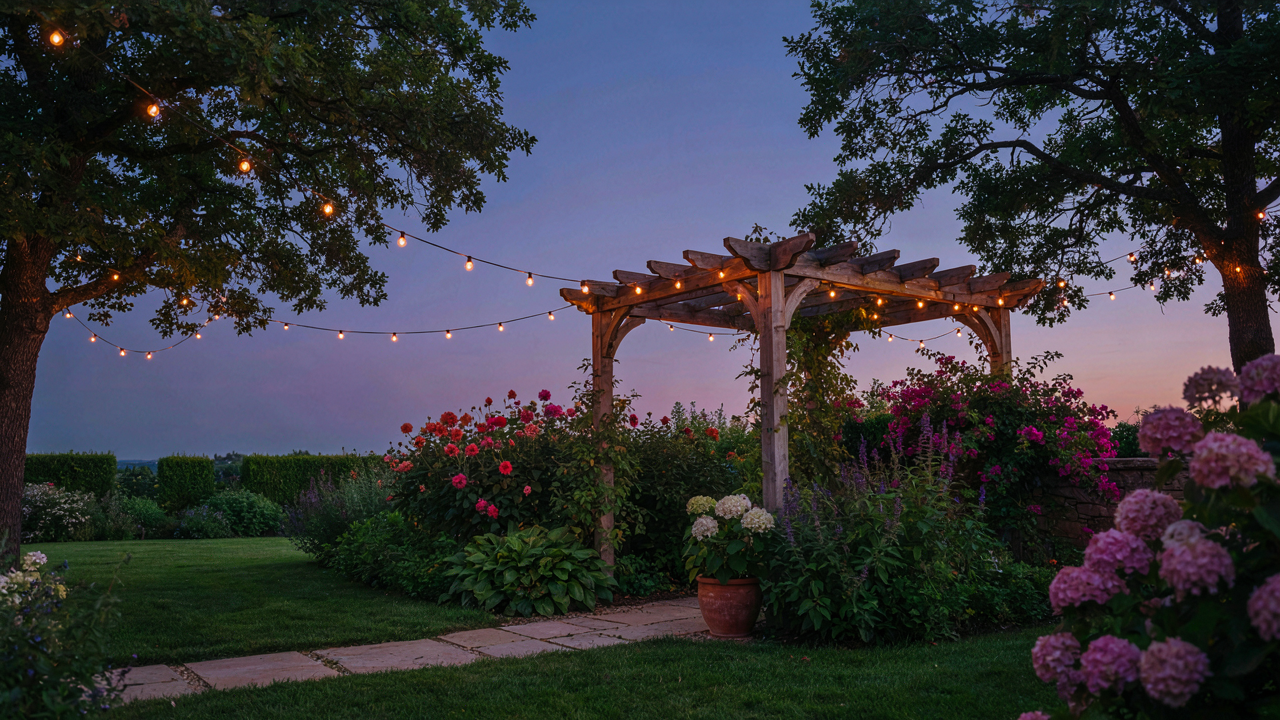
The Illusion Protocol: Bypassing Generic Backyard Lighting Ideas

Effort Perception And The Lighting Decision
You want people to think you did this effortlessly. That’s the real calculation here—not the lights themselves, but the status signal of making something look intentional without sweat. In psychology, this is called the “effort justification effect”: we assign more value to outcomes we believe required minimal work. String lights trigger this exact mechanism because they signal design competence without the visible labor of electrical wiring or construction. The observer sees the result, not the setup, which means the perceived sophistication stays high while actual effort stays low.
This gap between perceived and actual effort is where amateurs lose leverage. Most people string lights in a grid pattern or drape them randomly, then wonder why the space feels uninspired. They spent the same time as someone who positioned lights along sight lines, created focal points, and layered brightness intentensities. The second approach doesn’t require more physical labor. It requires understanding the one principle nobody mentions: visibility hierarchy. What gets seen first shapes everything that follows.
The Commodity Trap And How To Escape It
Generic string light advice is garbage. Every design blog tells you to hang warm white bulbs in a “romantic” arc over your patio, as if the formula itself creates atmosphere. It doesn’t. Thousands of backyards use this exact pattern, which means yours automatically registers as derivative. The trap isn’t the product—it’s the assumption that hanging lights correctly means following the established template. String lights are a tool. The template is the problem.
The escape is specificity to your space’s actual structure and sightline. Where does someone’s eye naturally land when they enter? Where do shadows fall at different times? What surfaces reflect light, and which absorb it? Build your string light placement around answers to those three questions, not around Pinterest layouts. Once you map your space this way, you stop choosing lights based on what looks good in a photo and start choosing them based on how they function in your particular geometry. This is the real difference between a basic setup and one that works.
Density As Design: Why “More” Is The Wrong Metric For Fairy Lights Outside

Anchor Points Over Coverage
You want people to notice your setup and assume you know what you’re doing. That’s the real reason this matters. The mechanism is borrowed from contrast theory in visual design: your eye moves toward what breaks pattern, not toward saturation. One bright focal point in darkness reads as intentional. A wall of lights reads as confusion.
String lights work like a spotlight in theater production. You don’t illuminate the entire stage equally. You establish hierarchy. Pick one zone—a seating area, a tree, an entryway—and concentrate your density there. Everything else stays sparse. This creates the optical illusion that your space is larger and more curated than it actually is.
The Power Of Empty Space
Negative space is not wasted real estate. It’s the actual product. Most people string lights in a grid pattern because it feels safe and complete. This is wrong. Empty zones between lit areas force the eye to move and explore, which triggers deeper engagement than passive saturation does.
Test this with a simple protocol: install lights in one area first, then stop. Leave at least two-thirds of your visible garden unlit. The contrast between lit and dark creates perceived depth that no amount of additional coverage can match. This is why high-end outdoor installations look sparse compared to suburban overload.
The Architect’s Eye: Creating Outdoor Rooms With String Lights Garden Decor
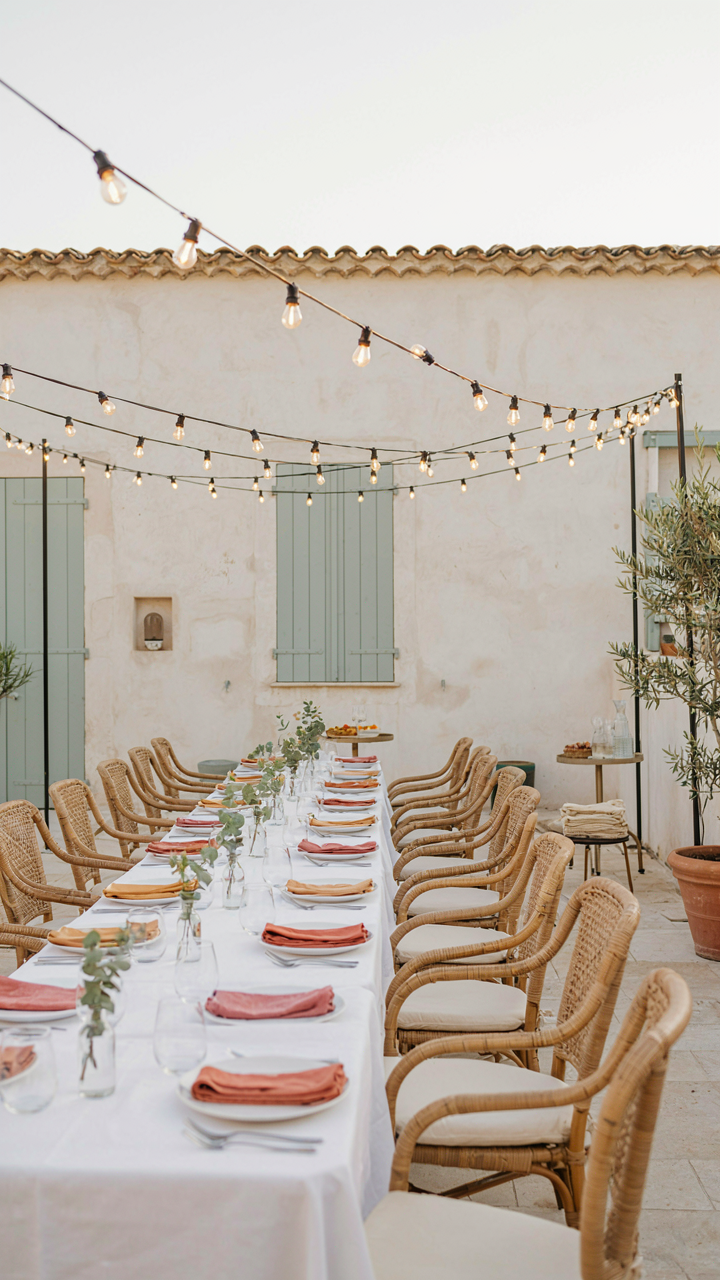
Edges Without Walls
You want people to think your outdoor space is intentional and valuable, not just a yard. The mechanism is borrowed from architecture: string lights function as visual boundaries the way load-bearing walls define interior rooms. They create containment without physical obstruction. A perimeter of lights signals “this area has purpose” to both your eye and your brain. The lights don’t need to form a complete box. Two parallel lines of bulbs running the length of a patio establish a corridor. Diagonal strands from corner posts compress a sprawling lawn into a defined zone. The human eye stops at light and assumes structure exists there, even when it doesn’t.
String lights stop the visual bleeding that makes yards feel formless. Mount them at consistent height around your seating area or dining zone. Use warm-white bulbs, not color-changing variants that signal temporary decoration rather than design. The frame you create becomes the boundary your mind recognizes as an “outdoor room,” not random space. That boundary is what makes people want to sit there instead of inside.
Rhythm Guides Where Eyes And Feet Go
Movement follows lines. Urban planners use this principle on streets; you deploy it in a garden through string light placement. The guidance is not “hang lights everywhere” but rather “use them as arrows.” A diagonal string of lights draws foot traffic from the back door toward a seating area. Parallel strands create a visual path without saying “walk here.” The spacing between bulbs and the direction of the line control flow. Tight spacing feels intimate and slows movement. Wide spacing with lights strung in one direction feels like invitation toward that endpoint.
Most people hang lights and hope guests mill around nicely. That fails because random placement offers no guidance. Instead, run lights along the edge of a pathway to anchor movement there, or create a V-shape that narrows toward a fire pit or table. The lights don’t force movement, they simply make one direction feel more intentional than others. Your guests follow that intention without thinking about it. When the path is clear, people move with purpose instead of hesitation.
Hacking Ambiance: Color Temperature And Emotional Response For Outdoor Lights

The Physics Of Kelvin And Why You Actually Care
You want people to think your space is expensive and intentional, not like you grabbed whatever was on sale. The real mechanism is color temperature, borrowed from physics, where Kelvin measurement directly controls the wavelength your eye receives. Warm light sits around 2700K. Cool light hits 5000K and above. This isn’t preference—it’s neurology. Your brain interprets warm light as safe and established. Cool light signals alertness and formality. String lights garden decor that ignores this sells mediocrity.
Warm lights trigger the parasympathetic nervous system, the one that tells your body to relax. Cool lights activate the opposite response. This is why restaurants use 2700K bulbs and hospitals use 4000K. Most people choose string lights based on how they look in product photos, not on the actual response they’ll trigger in guests standing in the space. That’s where execution fails. Pick your Kelvin target before you buy anything. The bulb itself determines the outcome, not hope.
Matching Light To Behavior, Not Aesthetics
Stop pairing lights to your patio furniture. Pair them to what you want people to do there. Entertainment spaces need warm light around 2700K to lower inhibition and encourage conversation. Working or dining spaces benefit from 3000K to 4000K, which keeps people alert without feeling clinical. Garden areas where you move around can handle cooler tones because the movement itself offsets formality.
The mechanism works because color temperature shapes perceived time and effort. Warm light makes a two-hour dinner feel like thirty minutes. Cool light stretches it. Your string lights garden decor becomes a behavior tool once you see it this way. Test by sitting in the space at night for ten minutes under each temperature you’re considering. Notice if you want to stay longer, leave sooner, or shift your posture. That’s your actual data. Install based on what you observed, not what the catalog promised.
The Kinetic Energy Method: Dynamic Lighting For Enchanted Forest Wedding
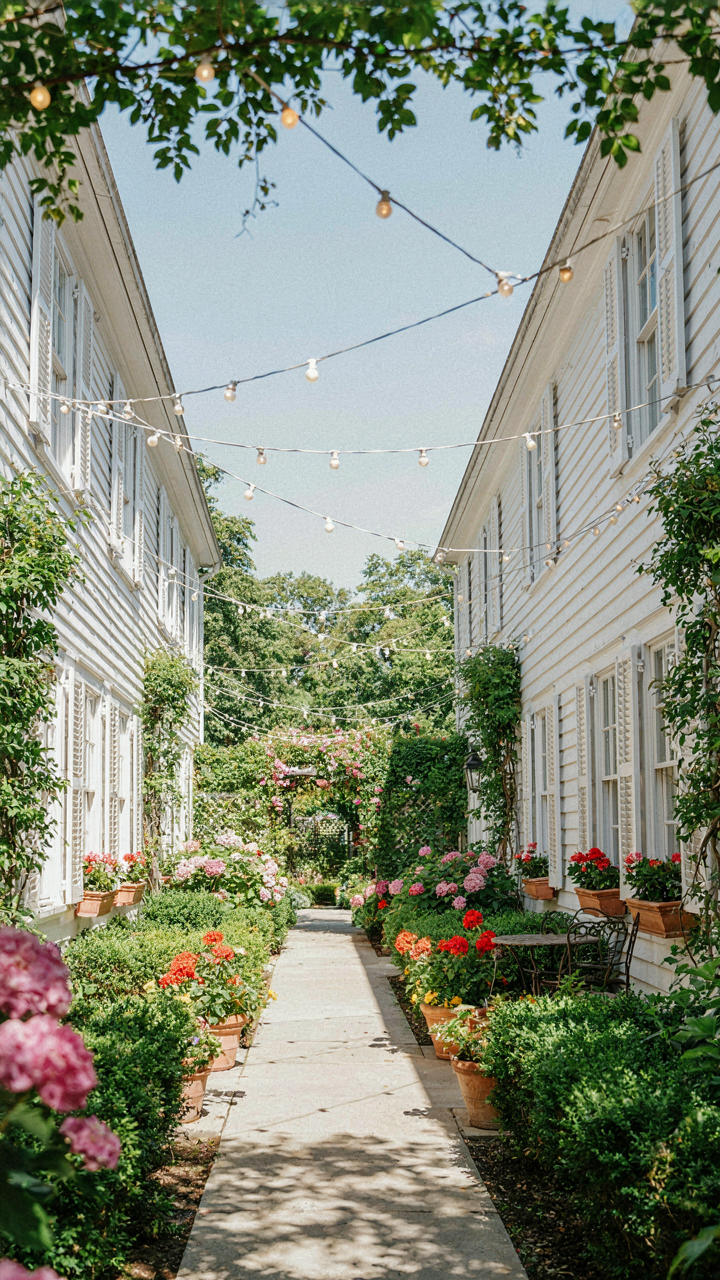
Why Moving Light Captures Attention Better Than Static Light
You want your garden to feel alive because you’re afraid static lights look dead. Here’s the mechanism: biology borrowed from phototropism shows us that human attention tracks movement before it registers color or position. Plants grow toward light sources that shift. Your eye does the same thing, except you’re conscious of it. A string light that flickers, sways, or cycles through patterns hijacks the visual cortex faster than a steady glow ever will. The nervous system prioritizes change over constancy. Movement signals relevance.
The physics here matters. When you hang string lights without accounting for wind, water, or intentional suspension angles, you’re wasting their kinetic potential. Lights that move—whether by actual breeze response or deliberate staging—create what lighting designers call “temporal variety.” Your guests perceive the space as larger, more active, and less boring. Static strings fade into wallpaper. Moving strings become focal points. The difference isn’t subtle. It’s the core reason why wedding installations with swaying strands outperform rigid grids in guest engagement metrics.
How To Design For Sway Without Chaos
Most garden lighting advice tells you to stretch strings tight. That’s wrong. Tension removes the mechanism you need. Instead, create intentional slack in your string layout—enough that wind or deliberate hand-positioning creates visible but controlled movement. Hang your primary strings at two anchor points with 4 to 6 inches of sag per 10 feet of span. This generates the right oscillation frequency: slow enough to feel elegant, fast enough to register as dynamic.
The second layer is layering strings at different heights and angles. When you stack lighting planes—one set at eight feet, another at six feet, a third at ten feet—movement in the upper strings casts shifting shadows through the lower ones. The eye tracks these shadow patterns as they evolve. This creates perceived motion even when individual strings hang still. For a forest wedding effect, run strings in loose geometric grids rather than parallel lines. Each intersection becomes a point where light and shadow converge differently as ambient conditions change.
Beyond Overhead: The Unconventional Placement Playbook For Dream Wedding Decorations

Wrapping Ground Level For Hidden Impact
You want people to notice your setup without looking obvious about wanting them to notice. That’s the real play here. Ground-level string lights work because they operate on contrast principle borrowed from theatrical lighting: the eye tracks toward light sources positioned against dark backgrounds, especially when that light sits below typical eye level. Most people string lights overhead and call it done. Wrong move.
Position strings along garden beds, fence bases, or hardscape edges where they cast upward glow onto plants and structures. This creates ambient perimeter lighting that reads as intentional design, not accident. Low-mounted lights also reduce glare in guests’ direct line of sight while illuminating walkways and seating areas with soft definition. The mechanism is simple: light at ground level pushes visibility outward and upward, making the entire space feel larger and more intentional than overhead-only installations.
Layering Texture Through Strategic Glow
Most wedding guidance skips this entirely because it requires actual site observation. Architectural features and plant textures demand specific light angles to register visually. String lights positioned to graze across brick, stone, or foliage surfaces create shadow play that adds depth overhead approaches never achieve. This isn’t decoration. It’s visual weight distribution.
Mount strings parallel to textured walls or dense plantings so light hits them at acute angles rather than straight-on. Brick patterns reveal themselves through raking light. Tree bark and branch structure become visible rather than silhouetted. Vine-covered structures gain dimension instead of reading as flat dark masses. The result converts your garden from two-dimensional backdrop into layered environment. Install strings on brackets or guides that let you angle placement toward specific textures you want highlighted, not just where wiring is easiest to run.
The “Mariage Champetre” Effect: Cultivating Rustic Elegance

Layering Lights With Living Structure
You want people to think your garden happened naturally, that you didn’t try. That’s the real game here. The mechanism is contrast: string lights work because they introduce human geometry into organic space. Plants grow without lines. Wires and bulbs impose them. The tension between order and chaos is what reads as intentional but effortless.
Weave lights through existing plant architecture instead of treating plants as decoration around the lights. Run strings along pergola beams, thread them through climbing vines, anchor them to mature tree limbs. The plants conceal the infrastructure. Viewers see glow points floating in foliage, not the structural system. This is how French country estates do it: the framework disappears into the landscape.
Restraint Creates The Illusion
The common advice is wrong: more lights don’t mean more elegance. They mean more clutter. Real sophistication in string lights garden decor lives in negative space. One well-placed strand creates atmosphere. Five strands create a trade show booth. Deploy lights where they solve a functional problem first, aesthetic problem second.
Place string lights to define pathways, frame seating areas, or highlight focal points like water features. This gives them a job beyond decoration. People interpret purposeful placement as taste. They interpret uniform coverage as trying too hard. The moment you stop arranging lights to impress and start arranging them to function, the space becomes visibly more refined.
Durability Deception: Investing In Longevity For Backyard Lighting Ideas
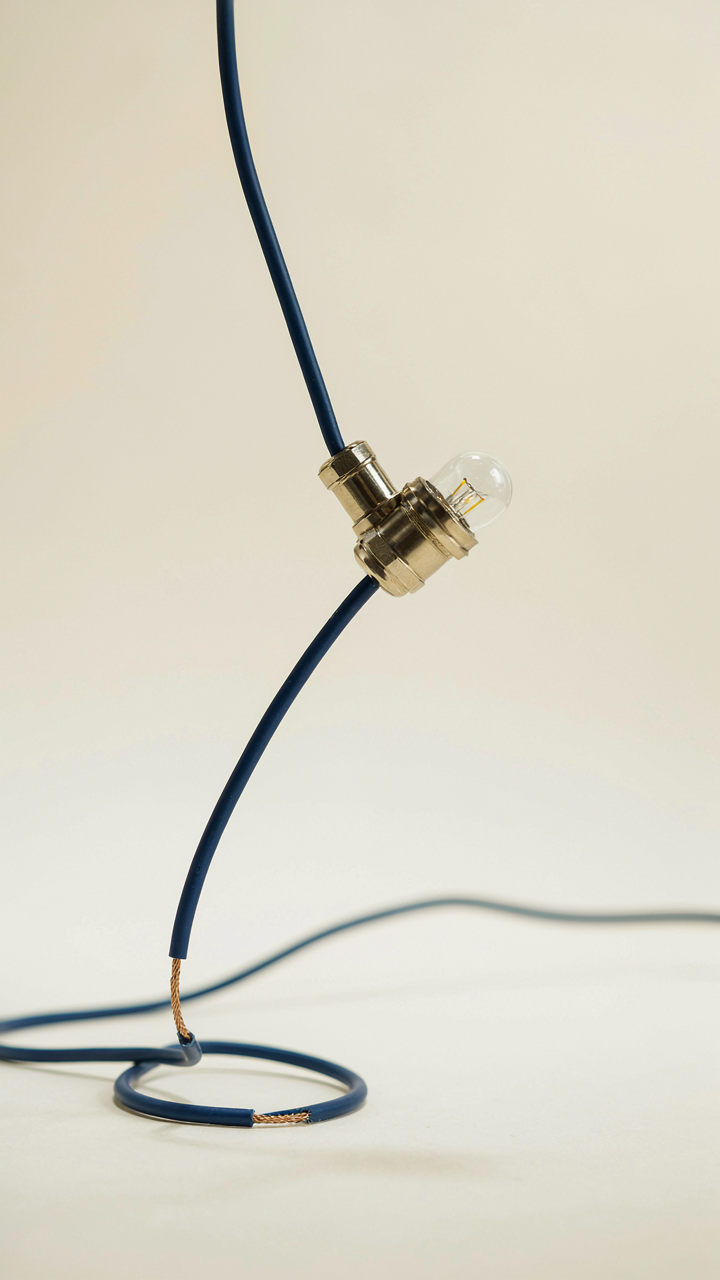
What Actually Stops String Lights From Failing
You’re worried about money wasted on lights that die in one season. Here’s what matters: the industry uses “weatherproof” to mean water-resistant, not weather-proof. These are different categories. Water-resistant materials handle moisture but fail under UV exposure, temperature swings, and corrosion from salt or humidity cycles. The mechanism is material degradation, not just water intrusion. Cheaper strings use PVC that becomes brittle within eighteen months outdoors. Bulbs oxidize inside sockets long before the cord fails.
The real durability play isn’t the initial material grade. It’s the protection layer and the socket design. Marine-grade silicone jackets on cords outperform standard PVC because they resist UV breakdown. Sealed sockets with stainless steel or nickel-plated brass prevent moisture from reaching the connection point where corrosion starts. Test vendors on socket construction first, cord material second. Most don’t disclose either.
Anchor Points Change Everything
Installation technique determines lifespan more than product specs. Think of this like load distribution in structural engineering: tension concentrated at one point fails faster than tension spread across multiple anchor points. String lights fail when you tie them too tight to a single fixture or let them sag into a catenary curve that creates stress concentration at the lowest point. Proper installation uses a series of slack anchor points that allow thermal expansion without pulling the cord.
Secure strings at intervals no greater than eight feet apart, always with slight natural sag between points. Use stainless steel eye hooks or marine-grade fasteners, not standard hardware store hooks that corrode. Route the cord away from sharp edges and rough surfaces where abrasion cuts through the jacket. Loop the cord through anchor points rather than wrapping it, which distributes load and lets you adjust tension without crimping the wire inside.
The Shadow Play Strategy: Maximizing Impact With Minimal String Lights Garden Decor
Contrast Creates The Illusion Of Abundance
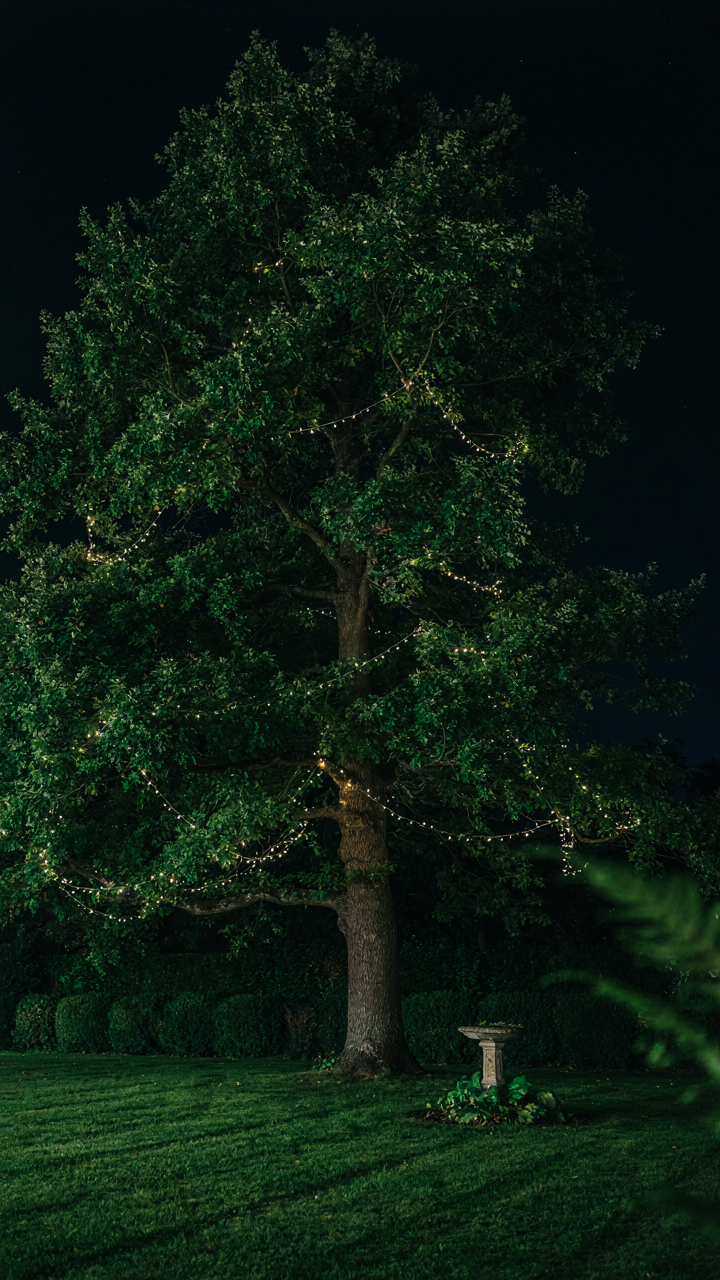
You want people to think you spent more money and effort than you actually did. The mechanism is simple: contrast. In visual design, the eye doesn’t measure absolute brightness—it measures the difference between light and dark. A string light in complete darkness reads as brighter than the same light surrounded by ambient illumination. This is the Fechner Law from psychophysics applied to your garden. Ten lights strategically placed in shadow create more perceived brightness than thirty lights in a uniformly lit space.
Most people assume more lights equal more impact. Wrong. They space lights evenly, drowning out individual definition. The real play is asymmetry. Light a focal point—a tree, a seating area, a wall—and leave surrounding zones dark. The eye gravitates to the illuminated element because contrast demands attention. This costs you fewer string lights, less wiring, and less electricity, while delivering stronger visual weight. The darkness isn’t empty space. It’s a design choice that amplifies everything you light.
Darkness As The Backdrop, Not The Problem
Most amateur garden designs treat shadows as failures to fix. Flip this. Darkness is structural material. Without it, you have no stage. With it, you create theater. String lights perform against darkness the way stars perform against a night sky. A completely lit garden is a washed-out space. A strategically darkened garden with points of light becomes navigable, memorable, and intentional.
The practical application: identify your darkest zones first. These become your high-contrast canvases. Run string lights through these areas at low density. Space them wider than you’d normally think safe. The gaps between lights matter more than the lights themselves. The human brain fills those gaps with anticipation. You’re not illuminating a path or a space. You’re creating visual punctuation that forces the eye to move, pause, and discover. Let darkness do the heavy lifting.
Power Grid Paradox: Optimizing Energy For Forest Wedding Installations

Solar Vs. Wired: The Real Trade Off
You want solar because it sounds free and requires no planning. That’s the trap. Solar string lights underperform in forest settings where canopy coverage blocks direct sun, and battery degradation means you’re replacing units every two to three years. Wired systems require upfront infrastructure work but deliver consistent brightness and operate indefinitely. Think in economic terms: wired is capital expense, solar is recurring expense disguised as convenience.
- Wired systems (120V or low-voltage): Require trenching or overhead runs but provide full brightness regardless of weather or season. Upfront cost is higher but operational cost approaches zero after installation.
- Solar LED strings: Battery-dependent and weather-sensitive. Forest canopy reduces charging efficiency by 40 to 60 percent. Batteries fail within 24 to 36 months of regular use.
- Hybrid approach: Wire power to a central hub, then run solar strings as supplemental accent lighting. Reduces wire runs while maintaining reliability where it matters.
- Voltage selection for wired: Low-voltage (12V or 24V) requires thicker wire and more frequent transformer placement but is safer for outdoor installation near water and guests.
- Battery capacity myth: Manufacturer claims of 8 to 12 hour runtime assume full charge and ideal conditions. Forest installations see 4 to 6 hours in practice.
Most installers choose solar to avoid the labor of running wire. That decision costs your client money in replacements and operational headaches. Wired systems demand site assessment and trenching, but they separate you from the amateur bracket immediately. Calculate total cost of ownership across five years, not purchase price on day one.
Power Placement Wins Before Installation
Efficiency follows from load mapping, not convenience. Run your string lights to the nearest existing structure or power source, not to the aesthetic spot on the property. A forest wedding site has natural power anchors: garage, exterior outlets, generator shed. Locate your transformer or junction point there first. Then run wire along existing pathways or fence lines to minimize trenching and damage.
The longest run should be under 150 feet for 12V systems without voltage drop issues. If your setup exceeds that distance, add a secondary transformer at the midpoint rather than overload a single source. Place junction boxes at least three feet above ground to prevent damage during cleanup and guest foot traffic. Use weatherproof, locking enclosures rated for outdoor use. Test the entire circuit before the event and confirm breaker capacity accommodates your total wattage load to prevent mid-event blackouts.
The Real Obstacle Isn’t The Light; It’s Your Timid Imagination

Most people kill their string lights garden decor before hanging the first strand. They play it safe. Neutral colors. Minimal coverage. Sparse placement. But the magic lives in abundance and intention. Stop waiting for permission to make your space bold. Go buy one box of warm white lights today and string them asymmetrically across your garden without overthinking it. Your neighbors will copy what you build.



