

The Illusion Of Illumination: Why Most Garden Lights Ideas Outdoor Fail

Placement Without Purpose
You want your garden to look intentional because randomness signals negligence. But most people scatter lights like they’re decorating a Christmas tree, hoping something sticks. The real mechanism is this: lighting works like architecture in urban planning. You don’t light a space. You light the path through it. Generic advice says “put lights along the walkway.” The truth is harder. You need focal points first, then you light backward from them. A focal point is where the eye should travel. That’s either a tree, a seating area, a water feature, or the house itself. Every other light exists only to guide the viewer’s gaze toward that anchor. Without it, you get brightness everywhere and interest nowhere. Start by choosing what you actually want people to look at when they step outside. Then place the first light there. Everything else follows from that decision, not from a diagram in a design magazine.
The spacing between lights matters less than most people think. What matters is whether each light serves the path or serves the focal point. A common mistake: installing uplights on trees because uplights look dramatic in catalog photos. They do. But they destroy depth. They flatten the garden into a stage set. Instead, place light sources lower and wider apart. Let shadow define the space as much as light does. You’re not trying to turn night into day. You’re trying to make darkness navigable while keeping the garden readable. This shift from “brightness everywhere” to “strategic illumination” changes the entire outcome. Test this by walking your patio at dusk with one light on, then two, then three. You’ll feel the difference immediately. That feeling is the mechanism working.
The Cost Of Beautiful Mediocrity
Running expensive LED systems on bad placement burns money for worse results than cheap lights placed right. This is where people confuse investment with strategy. High-end patio lighting systems cost anywhere from 2,000 to 10,000 dollars installed. They fail because the property owner never answered the basic question: what am I lighting for? They bought the system, then hired someone to install it in the same scattered pattern they would have used anyway. The real cost isn’t the equipment. It’s the wasted opportunity. A well-lit garden becomes an extension of your living space. A poorly-lit one becomes a liability, another zone of your home you avoid at night.
The math is brutal here. A mediocre placement with premium gear still reads as mediocre. You notice the expense but not the purpose. A strategic placement with mid-range gear reads as intentional. You see the function first, then appreciate the execution. Start with plan. Choose your focal points on paper. Measure sightlines from your main seating area, from the house windows, from the entry point. Mark where shadows naturally fall and where you need to interrupt them. Only then select fixtures. Budget the money for planning, not just for products. This prevents the most common failure: installing lights, realizing they’re wrong, and either living with them or ripping them out. That’s when mediocrity becomes expensive.
The ‘Spatial Redefinition’ Protocol: Beyond Basic Backyard Lighting
How Light Creates Functional Zones
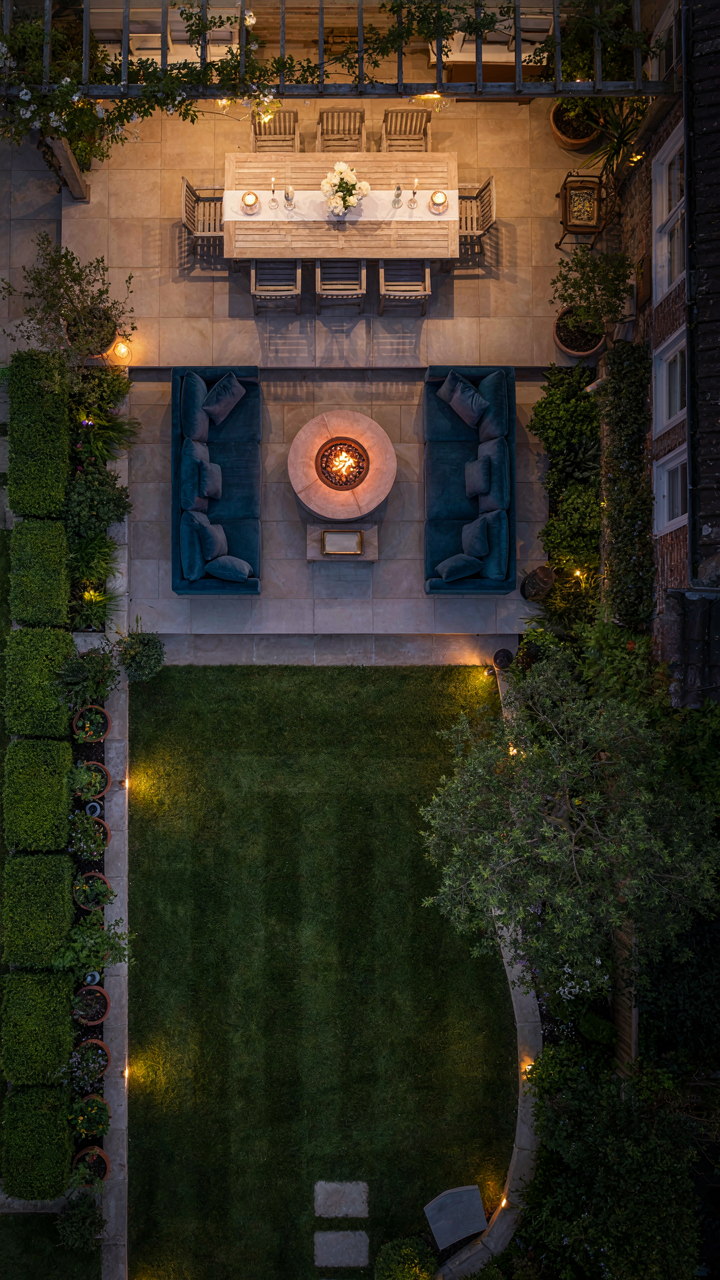
You want people to think your space is bigger and better organized than it actually is. That’s the real driver here. Light doesn’t just illuminate. It partitions. Urban planners use zoning to separate incompatible functions. You do the same with fixtures. A pool area needs bright, even task lighting at 50-75 foot-candles. A seating zone 15 feet away needs ambient light at 10-20 foot-candles. The shift in intensity creates a boundary without walls. Install path lights along walkways to define circulation routes. Place spotlights on architectural features to anchor separate gathering spots. Each zone becomes distinct because the light intensity changes, not because you built something physical.
The mechanism works because human eyes follow brightness gradients. They perceive distinct spaces where light changes. A patio without zoning looks like one flat, undifferentiated area. Zoned patio garden lighting ideas transform it into multiple functional rooms. Start with your layout. Identify where people will actually stand, sit, and move. Install fixtures at ground level for low zones, overhead for activity zones, and accent lights for visual anchors. This three-layer approach creates psychological separation across the entire space.
Depth Through Contrast And Distance
Most people think depth comes from having lots of lights everywhere. Wrong. Depth comes from controlled contrast. Stage lighting uses the inverse square law: light intensity drops as distance squared increases. Use this. Place bright accent lights near the home’s entrance at 40-50 foot-candles. Place softer ambient lights at the far end of the yard at 5-10 foot-candles. This pulls the eye forward then back, making shallow patios feel longer. Layered lighting creates perceived distance your actual footage cannot match.
Bright lights appear closer. Dim lights appear farther. Position uplighting on trees at the yard’s perimeter to push the boundary back visually. Place low-level lighting near seating areas to anchor them forward. The human eye naturally reads brightness as proximity. You engineer that perception deliberately. Test this before committing to permanent fixtures. Use temporary spotlights and string lights to map intensity levels. Adjust until the gradient feels natural. When light intensity drops steadily toward the yard’s edge, the space expands perceptually by 20-30 percent without actual square footage change.
The ‘Emotional Resonance’ Framework: Garden Lighting Ideas That Connect

Light’s Psychological Effect On Outdoor Spaces
You want your patio to feel like an extension of who you are, not just a place you sit. Light controls this entirely. Neuroscience shows that brightness, color, and direction trigger specific emotional states before conscious thought arrives. Your nervous system reads a bright white downlight as institutional, a warm amber glow as intimate. The mechanism isn’t subtle or mysterious. Photoreceptors in your eye send signals to the brain’s circadian and emotional centers simultaneously. Garden lighting doesn’t decorate space. It programs how your body feels inside that space.
Most people think lighting is about visibility. Wrong. A well-lit patio you hate to use teaches nothing. A dimly lit corner where you linger for hours teaches everything. The real work happens below consciousness. Install uplighting on trees or the house face instead of flooding the ground. This mimics natural dusk and tells your nervous system the space is safe, not exposed. The direction of light matters more than the wattage.
Choosing Color Temperature For Specific Moods
Color temperature in lighting borrows directly from physics and the concept of thermal radiation. Warmer light (2700K to 3000K) mirrors fire and sunset, frequencies that signal safety to ancient parts of your brain. Cooler light (4000K and above) signals alertness and task focus. Most patio advice bundles these together as if context doesn’t exist. It does. Your job is mapping the mood you want to the color temperature that delivers it, then stopping there.
A dining area needs 2700K warm white. You’re building intimacy and appetite. A pathway or functional workspace needs 3500K to 4000K neutral white for clarity without harshness. Never mix temperatures within the same visual field unless you’re intentionally creating zones. The human eye detects mismatches and reads them as chaos. Start with warm light as your base layer, then add cooler accent light only where function demands it.
The Unseen Advantage: Backyard Lighting Ideas For Security And Safety
How Light Controls Perception
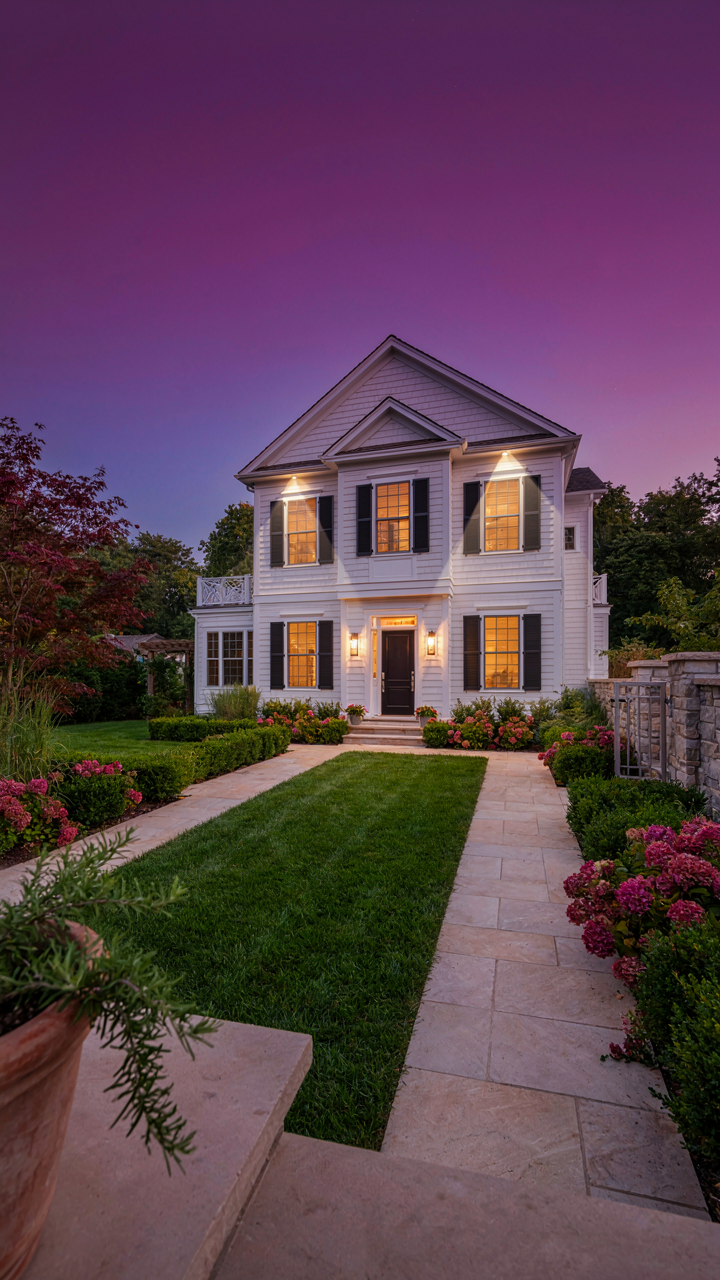
You want this section because you’re afraid of what you can’t see happening in your own yard. The real mechanism is visibility denial. Criminals operate on simple economics: they avoid spaces where they can be identified. Borrow the military concept of “observation post advantage.” Your patio lighting becomes an observation post. When you illuminate entry points, corners, and perimeter zones, you eliminate the shadow zones where someone operates undetected. The intruder doesn’t think about beauty. They think about whether a camera could catch them or a neighbor could see them clearly.
Dark yards signal abandonment and opportunity. Criminals read your yard the way a hunter reads terrain. Unlit areas say no one is watching. Strategic placement means mounting lights at entry vectors: side gates, ground-level access points, corners where the house meets the property line. Motion-activated lights multiply this effect because they create surprise. The intruder expects a predictable environment. A light that ignites when triggered breaks that assumption and forces retreat. Install lights at heights between six and eight feet. This angle eliminates shadows cast by the fixture itself and creates no dark zones below the light source.
Where People Actually Fall
Most backyard lighting advice ignores the real hazard zones. People don’t trip over open space. They trip over the transition between lit and unlit surfaces, over the curb they didn’t see coming, over the one step they miscalculated because their eyes adjusted to dark. Pathway lighting solves this through contrast and rhythm, not volume. One light every ten to fifteen feet creates a visual corridor. Your eye follows the points of light and your feet track what you can see. Ground-level accent lights along garden beds and raised planters eliminate the gap between path and planting. Low-voltage LED strips running along the edge of decking show elevation change instantly.
The mechanism is cognitive load reduction. When you see the path marked, your brain stops hunting for hazards and focuses on walking. Install path lights on the approach to your patio entry first, then extend outward. Aim them downward and slightly forward. Avoid lights that point back at eye level because glare destroys depth perception. Test your lighting at night in dark conditions. If you can’t walk the path at normal speed without adjusting your gaze or stride, the lighting isn’t working.
The ‘Ecosystem’ Approach To Outdoor Garden Lighting

How Nocturnal Life Responds To Light Wavelengths
You want your garden to look intentional at night because you know people judge you by what they see after dark. The mechanism is biology: nocturnal insects, birds, and pollinators navigate by light wavelength, not brightness. Most outdoor lighting uses warm white or cool white—but the spectrum matters more than the lumens. Warm light attracts fewer insects than blue-heavy spectrum. Cool white draws moths and beetles aggressively. Your patio lighting creates a behavioral zone, not just aesthetic one.
Gardens with active nighttime ecosystems depend on light color as much as positioning. Use 2700K warm white near planting beds if you want minimal insect disruption. Reserve higher color temperatures (4000K+) for functional areas away from vegetation. The ecosystem doesn’t care about your design vision—it responds to photon wavelength. Control what shows up at night by controlling what you emit.
Lumen Density And Real World Visibility
Physics dictates that lumens per square meter determine what the human eye actually perceives—not total watts or fixture count. Most people oversupply lumens to patios because they confuse brightness with coverage. A single 800-lumen fixture lights roughly 40 square meters with usable visibility at two meters distance. Add a second fixture and you create overlap zones that waste energy and flatten visual depth. The real skill is matching lumen density to task, not maxing output.
Calculate your patio area in square meters and divide by the coverage zone each fixture provides. A 15-square-meter patio needs roughly 1200-1600 lumens distributed across three to four points, not one bright source. Layer fixtures at different heights and intensities to create visual hierarchy. Place low-density ambient lighting at perimeter, higher density where function matters. Position the brightest fixture last—only after you see what lower output actually reveals.
Outdoor Patio Lights: From Bland To Bold With Minimalist Principles
Strategic Fixture Selection
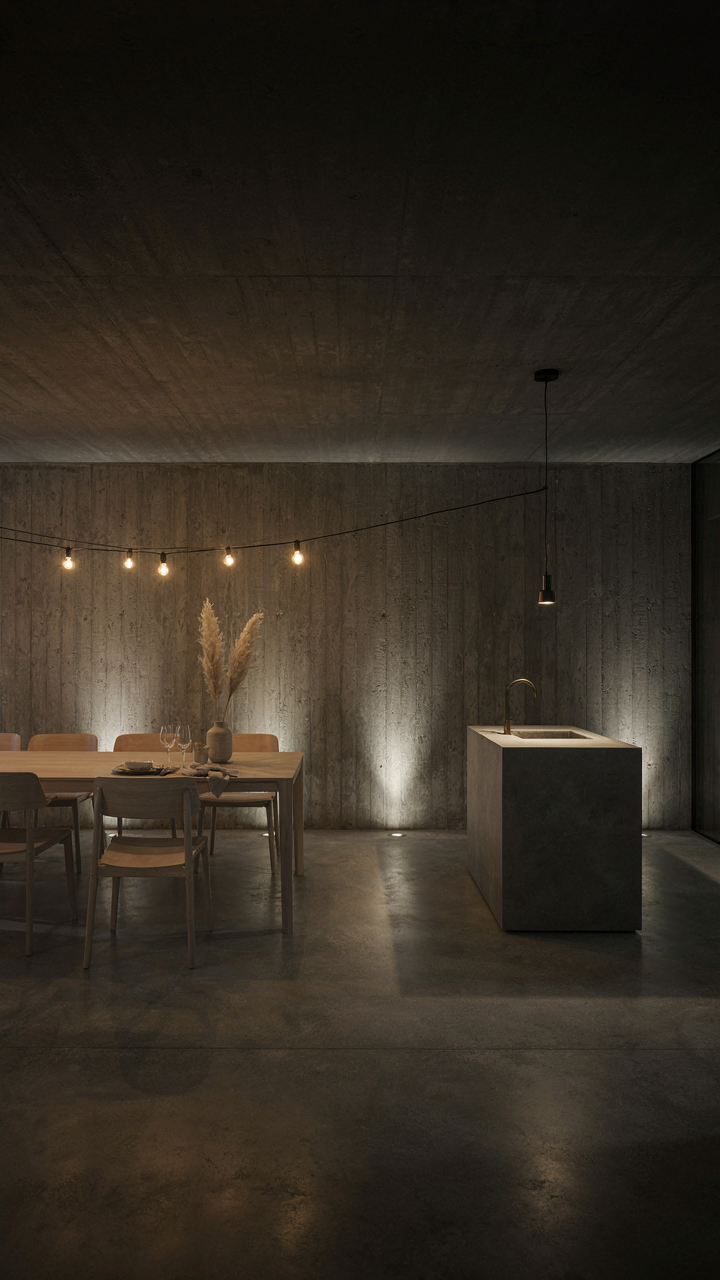
You want your patio to look expensive without admitting you’re worried about overspending or looking like you tried too hard. The mechanism is constraint. Minimalism in lighting isn’t about having fewer lights—it’s about treating each fixture like a load-bearing wall in architecture. One fixture does real work, or it doesn’t exist.
Most advice says “layer your lighting” and leaves you paralyzed with options. That’s lazy. Start by identifying the three functional zones your patio actually serves: task (cooking, dining), ambient (general visibility), and accent (visual interest). Assign one fixture type to each. A single string of warm Edison bulbs handles ambient. A focused downlight addresses task. One well-placed uplighter creates accent. That’s your system. Everything else is noise.
Highlighting Features, Not Flooding Space
You don’t need brightness everywhere. You need brightness where it matters. In landscape design, contrast ratio—borrowed from visual hierarchy in graphic design—determines what your eye actually registers. A patio flooded evenly with light erases depth and makes a small space feel smaller. A patio with deliberate shadows and focal points reads as intentional.
Identify one architectural feature worth illuminating: a textured wall, a plant specimen, a water element, a seating arrangement. Place your accent light to graze it, not blast it. Keep ambient light at fifty percent of what you think you need. The human eye adapts to low light faster than most people realize. Underlight your space by design, then add a single portable fixture you move based on function. This gives you flexibility without the visual clutter of unused fixtures.
Cozy Backyard Transformation: Beyond Fairy Lights And Lanterns

The Three Layer System
You want people to feel invited into your space without admitting you designed it that way. That’s the real reason this matters. Lighting design uses the same principle as audio mixing: ambient, mid, and high frequencies. In patio lighting, this translates to ambient base light, task-specific mid-level fixtures, and accent focal points. Most people dump cheap string lights everywhere and call it done. That approach produces visual noise, not atmosphere.
The mechanism is contrast and hierarchy. Your eye needs reference points. Start with soft overhead ambiance that covers the entire patio—this is your foundation. Then add task lighting near seating areas and walkways. Finally, place accent lights to highlight architectural features or plantings. This three-tier structure creates depth and makes spaces feel intentional rather than randomly lit.
- Ambient Base: Soft overhead sources like recessed fixtures or upward-facing uplighters that bounce light off soffits. Aim for 5-10 lumens per square foot to avoid harsh shadows.
- Task Lighting: Wall sconces flanking seating areas or path lights along walkways. These fixtures serve function while reinforcing the layering effect.
- Accent Focal Points: Directed spotlights on trees, water features, or architectural details. Use lower wattage—25-50 watts—to avoid floodlight effect.
- Warm Color Temperature: All sources should run 2700K or lower. Anything cooler kills intimacy and reads institutional.
- Dimming Capability: Install dimmers on ambient and task circuits. Flexibility to shift mood from entertaining to quiet evening is non-negotiable.
The layers work because they eliminate the either/or problem: bright enough to function, but not so bright the space feels like a parking lot. Implement dimmers first, then add fixtures gradually rather than installing everything at once.
The Connected Ecosystem
Smart controls aren’t about convenience theater. They’re about matching light output to actual behavior patterns. Automation remembers what you forget, and that’s where the real savings sit. You program scenes—entertaining mode, winding down mode, security mode—and the system executes them without thought. No fumbling for switches or remembering which fixture controls what.
The practical setup requires a hub, compatible bulbs or fixtures, and a phone app or voice integration. Lutron, Nanoleaf, and LIFX all ship products that work outdoors. The trap is overcomplicating it. Start with one zone—your main seating area—on a dimmer-enabled circuit. Add secondary zones after you understand your actual usage patterns. Sunset-triggered gradual dimming and motion-activated path lights reduce friction without requiring micromanagement.
Deck Lighting: Modern Patio Extension And Vertical Plane Enhancement
Architectural Detail Emphasis Through Strategic Placement
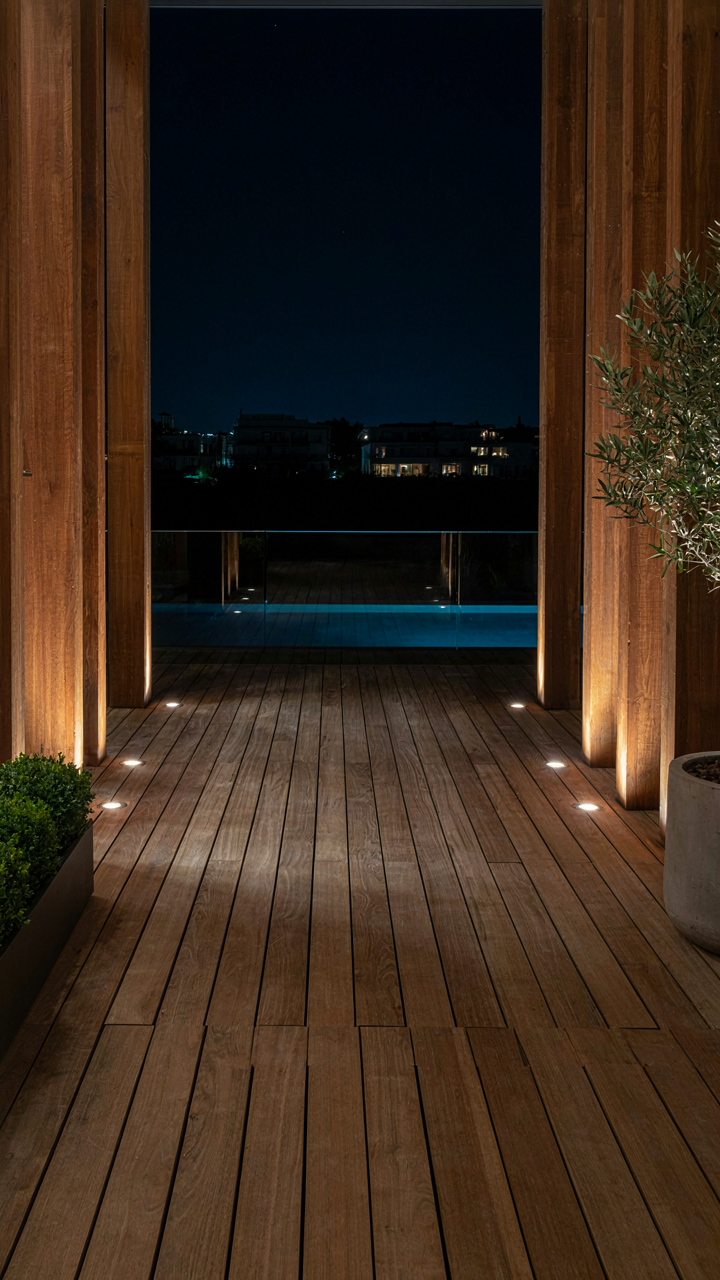
You want your deck to look intentional because it proves you didn’t waste money on a structure that sits invisible at night. Here’s the mechanism: architectural details only exist when light hits them at an angle. A textured beam, a deck railing, a built-in bench—these become visual anchors only when you control the light direction.
Deck lighting succeeds when it reveals what’s already there rather than adding decoration. Mount fixtures on posts or under railings to graze surfaces. This angle creates shadow and depth, making materials read as substantial instead of flat. Wood grain, stone patterns, and metal finishes only register because light bounces off them at forty-five degrees, not straight down.
Uplighting, Downlighting, And Accent Layers
Uplighting and downlighting aren’t interchangeable tactics—they solve different problems. Uplighting throws light upward from ground level, which makes trees, pergolas, and overhead structures become visible anchors for your eye. Downlighting comes from above and flattens the space unless you layer it with accent sources. Most people skip this layering, which is why their decks look either washed out or like a parking lot.
The real move is using downlighting for functional safety on walking paths and stairs, then layering uplighting on vertical elements to create depth. Add accent lights on railings or planters to pull the eye toward specific zones. This three-tier system prevents the false choice between dark and glaring. Start with one downlight per eight feet of walking surface, then add uplights at sixty-degree angles on architectural features you want to emphasize.
The Future Of Illumination: Smart Systems And Sustainable Modern Patio Solutions

When Lighting Thinks For You
You want this because it makes you feel ahead of the curve, but the real mechanism is delegation. Automation in patio lighting operates on the same principle as inventory management in supply chains: the system tracks variables and adjusts output without human intervention, reducing waste. Smart controllers use sensors to detect ambient light, occupancy, and time of day, then trigger preset scenes automatically. You set the rules once. The system enforces them. No daily decisions required.
The payoff is consistency and recovery of mental bandwidth. A motion sensor paired with dimmable LED fixtures means your patio responds to actual use rather than your memory of when you last adjusted things. Geofencing lets your lights activate before you arrive home. Scheduling ensures outdoor spaces dim during off-peak hours. The friction between intention and execution vanishes. Your lighting performs the same regardless of your mood or schedule.
Solar Plus Grid Thinking
Energy-conscious design borrows from load balancing in electrical engineering. Your patio lighting system becomes a distributed network rather than a single power draw, spreading energy demand across multiple sources instead of stacking it all on the grid. Solar-powered fixtures charge during daylight and discharge at night. Battery-backed systems store excess energy. Hybrid setups run solar primary with grid fallback. This redundancy eliminates the false choice between sustainability and reliability.
The mechanics matter here. Monocrystalline solar panels convert roughly 15 to 22 percent of sunlight to usable energy, which means placement and panel angle directly impact performance. Winter output drops significantly in northern climates. Batteries rated for 500 plus charge cycles last three to five years before degradation forces replacement. You choose solar when your patio gets unobstructed southern or western exposure and you accept seasonal variation. You choose hybrid when consistency matters more than carbon reduction.
The Real Obstacle Isn’t Finding The Right Light, It’s Understanding How Light Sculpts Experience
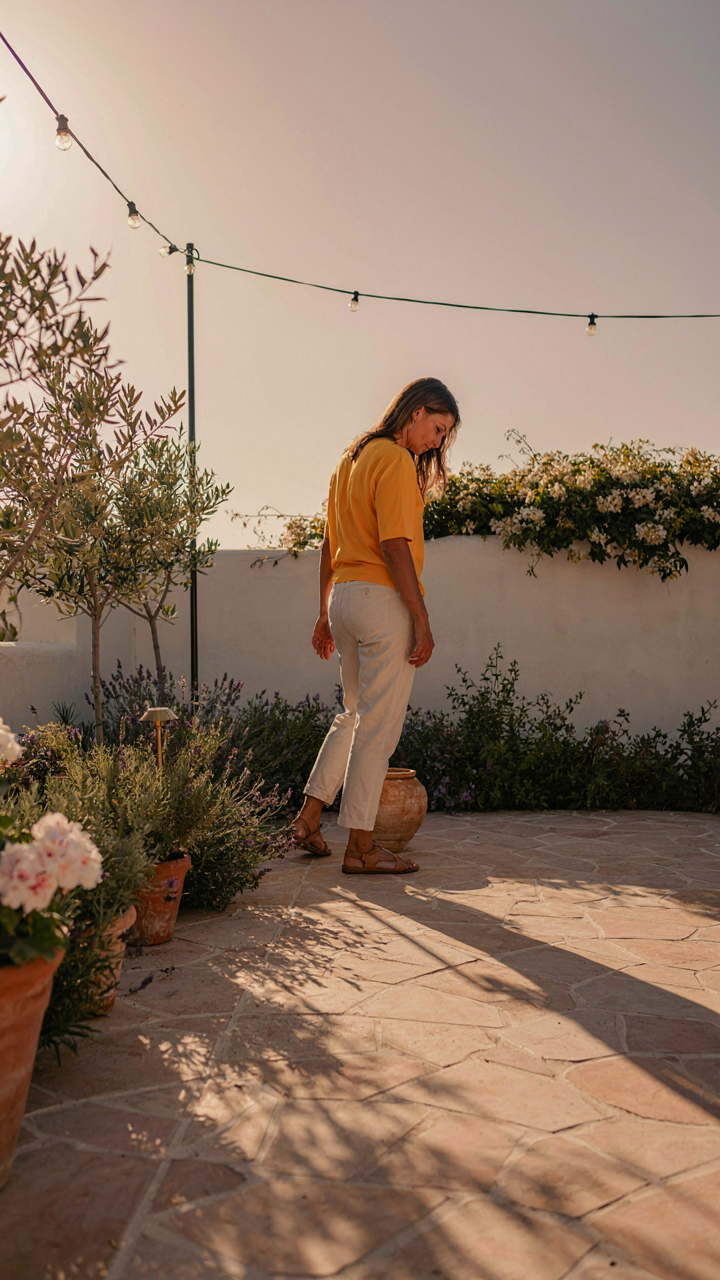
Most people buy lights. Smart ones design moods. Your patio isn’t a problem to solve with more lumens. It’s a canvas to shape how people feel when they enter it. The difference between a lit yard and a living space is intention. Stop thinking about brightness and start thinking about the story each light tells. Today, walk your patio at sunset and notice where shadows fall. That’s where your design actually begins. Light doesn’t fill space, it creates it.



