

The Square Foot Gardening Deception: Why Most “Trends” Are Just Noise

What The Industry Won’t Tell You About “New” Methods
You’re looking for a shortcut that makes you feel ahead of the curve. That’s the real reason trends matter to you. Here’s what nobody states plainly: square foot raised beds aren’t trendy because they’re new. They’re trendy because marketing has convinced people that minor material swaps or grid adjustments are innovations when they’re just rebranding. Mel Bartholomew’s original 1981 system worked on a fundamental principle: maximize yield per square foot through intensive spacing and organized layout. Everything sold as a “trend” today is either a regression to his baseline or a cosmetic variation that changes nothing about output.
The mechanism is economic signaling dressed as progress. Garden companies need new products to move inventory. They can’t sell you the same wooden box twice, so they invent categories: “smart raised beds” with soil sensors, “heirloom aesthetic” designs that cost three times more, “modular systems” that do exactly what stacked boards already do. You absorb the noise because you assume if it’s being marketed, it must be better. It isn’t. Verify every claim against actual growing results, not marketing language.
Separating Signal From Performance
Marketing fads collapse the moment you apply a simple filter: does this change how plants grow or just how they’re sold? A corrugated metal bed doesn’t outperform pressure-treated wood at producing tomatoes. A composite frame doesn’t increase yield compared to cedar. Depth requirements, soil composition, drainage, and sunlight exposure drive results. Everything else is aesthetic preference wrapped in trend language. The bed materials are secondary variables. Crop selection, spacing density, and soil quality are primary. If a trend doesn’t touch those three factors, it’s noise.
The way to identify true efficiency is binary: measure input against output. Track what you spend on materials and labor against what you harvest. A trend that reduces your actual cost per pound of produce while maintaining or improving quality is worth adopting. Most don’t. They increase cost for no measurable gain. Run the math on any raised bed system you’re considering. Compare the price per square foot of growing space to your expected harvest. If the math doesn’t improve on traditional wood frame construction, you’re buying a marketing story, not efficiency.
The “Lazy Gardener’s” Raised Beds Protocol: Maximize Output, Minimize Toil
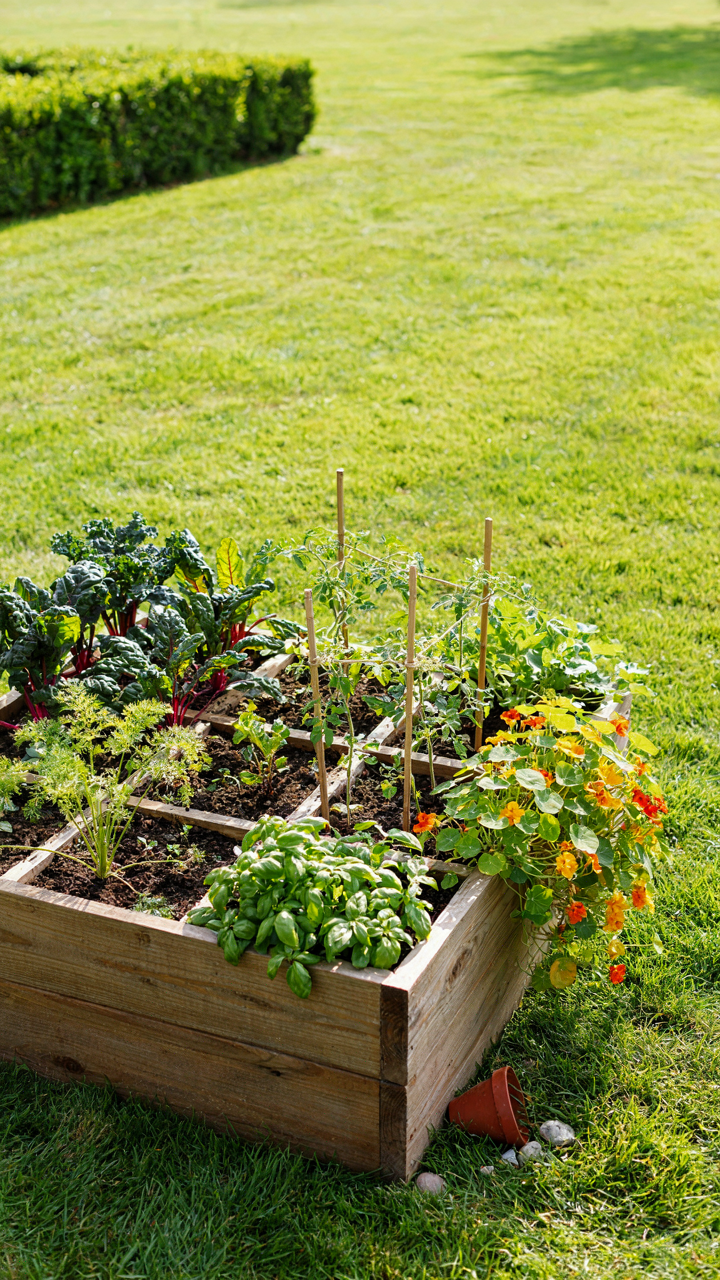
Position Your Bed Before You Build It
You want the lifestyle image of a thriving garden without the daily grind. Here’s what actually matters: sunlight and water access determine your workload before you plant a single seed. Think of it like real estate—location multiplies or kills your return on effort. A bed placed in afternoon shade requires constant watering; one positioned for morning sun and afternoon shelter cuts that demand in half. Water should flow toward your bed, not away from it. Sloped terrain kills drainage plans instantly. Measure sunlight patterns across your property for three days minimum before digging.
The common mistake is treating placement as aesthetic. It’s not. A bed that catches six hours of direct sun with natural slope-fed water access produces more with less intervention than a south-facing bed in clay that bakes hard every July. Survey your yard’s microclimate first—wind direction, water runoff patterns, soil moisture pockets. Place the bed where gravity and sun already want to work. This single decision cuts maintenance time by thirty percent.
Stacking Plants That Work Together
Companion planting is applied ecology—you’re building a self-regulating system instead of managing isolated plants. The mechanism is simple: certain plant combinations reduce pest pressure, fix nitrogen, provide shade, or attract pollinators, which means fewer interventions from you.
- Tomatoes with basil and marigolds: Basil repels spider mites and flies; marigolds deter nematodes. The three create a closed defense loop that reduces your spraying or monitoring time.
- Beans with corn and squash: Beans fix nitrogen in soil; corn provides structural support; squash leaves shade soil to retain moisture and suppress weeds. This is the Three Sisters model—it self-sustains.
- Lettuce under taller plants: Tall crops create afternoon shade that extends cool-season greens into heat. You get two harvests from one bed footprint without extra watering.
- Carrots with onions: Onions repel carrot rust flies; carrots don’t compete for nutrients. Both store well, extending your harvest window and reducing replanting work.
- Nasturtiums as perimeter guards: These trap aphids and beetles before they reach food crops. They’re sacrificial—pests attack them first, leaving your main plants untouched.
The protocol is this: never plant a single crop in isolation inside a four-by-four bed. Pair slow-growing plants with fast-growing ones. Stack vertical with horizontal. Layer deep-rooted with shallow-rooted. Each combination reduces the total system maintenance burden because the plants handle pest and soil problems you’d otherwise manage manually. Choose combinations where the plants’ needs don’t collide on water or nutrient timing.
Beyond The Grid: Rethinking Your Square Foot Gardening Layout For Natural Flow

Paths And Access Points That Actually Work
You want the layout to look intentional, like you planned it instead of just cramming beds together. Here’s what matters: access determines how often you’ll actually maintain the bed, and maintenance frequency determines yield. Think of pathways like supply lines in military logistics. Your plants are the objective, and paths are the routes that determine how efficiently you reach them. A two-foot pathway between beds isn’t decoration—it’s the difference between weeding every week and abandoning the bed in July.
Most gardeners place paths as an afterthought, leaving eighteen inches of cramped space. That forces you to step into beds or reach awkwardly, compacting soil and killing roots. Instead, design for your actual body. If you’re right-handed, approach from the left side. If you garden from a chair, paths need three feet minimum. Mark these before building. Your future self harvesting tomatoes at 6 AM will either thank you or resent you based on whether you can walk without sideways shuffling.
Plant Spacing Ignores Root Competition
The grid system assumes each plant occupies one square foot. It doesn’t account for roots. Tomatoes send tap roots down eighteen inches and lateral roots out in all directions—they’re claiming territory far beyond their square. Basil’s fibrous roots spread aggressively through soil, competing for nutrients against adjacent plants in adjacent squares. The real mechanism is underground: root density determines nutrient availability, not surface area.
Space by root depth and spread, not by Mel Bartholomew’s original 1981 grid. A six-inch basil plant needs one square foot. A determinate tomato needs four. Peppers need two. Spacing this way means fewer replants mid-season and actual harvests instead of stunted growth. Place a soil depth gauge into your bed before planting. Root-bound plants stop producing. Cramped plants attract pests because they’re already stressed. Build your layout by counting root reach, not counting squares.
The Soil As Your Engine: Fueling Raised Beds For Perennial Production

Build Living Soil With Minimal Inputs
You want soil that works for you instead of against you. That’s the real reason you care about this section. The mechanism is biological succession: soil organisms colonize, die, and decompose in layers, creating structure and nutrient availability without your constant intervention. Think of it like an ecosystem bootstrapping itself. Most people treat raised bed soil as inert material to replace yearly. That’s backwards. Living soil is a population of microbes, fungi, and invertebrates that self-perpetuate if you stop poisoning it.
The build starts with a base layer of coarse organic material: wood chips, aged bark, or straw. This creates air pockets and feeds fungal networks for years. Above that, add compost or aged manure. The biology begins immediately. Fungi colonize the woody material. Bacteria work the compost. Earthworms move in. After one season, you stop adding nitrogen fertilizer because the system produces it. After two seasons, the structure improves visibly. The secret nobody states plainly: you’re not feeding plants, you’re feeding soil organisms that feed plants.
Compost And Mulch Are Your Regeneration Loop
Composting is applied thermodynamics to raised beds. Heat breaks down material. Microbes accelerate the process. Mulch is the insulation layer that moderates temperature swings and feeds decomposers continuously. Most gardeners use these as cosmetic additions. Wrong. They’re the operating system of a self-renewing bed. Add two to three inches of finished compost each spring. Add four inches of wood chip mulch around plants. The mulch breaks down into humus. The compost feeds immediate plant needs and builds carbon reserves underground.
The regeneration loop works like this: mulch decays, creating habitat for fungi and arthropods. Their waste enriches soil structure. Compost provides available nutrients for the growing season. Dead roots and plant matter from harvest cycle back in. By year three, your raised bed requires almost no external amendment. You’re harvesting fertility as much as food. This is why perennial production scales in raised beds, not depletes. Test soil carbon levels annually. When they stabilize above four percent, your system is generating its own wealth.
The Bio Mimicry Approach: Designing Raised Beds Like A Natural System

Ecological Succession Applied To Your Garden Layout
You want this section to validate that your garden method is sophisticated. The real mechanism is this: ecological succession describes how ecosystems rebuild after disturbance—pioneer species colonize bare ground, stabilizers follow, then complexity deepens. Your raised bed mimics this timeline compressed into one season. You don’t plant everything simultaneously. You plant fast-cycling crops first, then slower ones, then perennials or soil-building cover crops. This staggered approach reduces pest pressure because predators arrive as prey populations grow, mirrors nature’s recruitment pattern, and maximizes nutrient cycling by layering root depths and growth rates.
Most gardeners treat the raised bed as a static box filled once and planted once. That’s wrong. Watch what happens when you seed lettuce in week one, add transplanted tomatoes in week three, then broadcast clover in week six. Each wave triggers different soil biology. Early crops consume readily available nitrogen. Later roots access deeper reserves. Cover crops prepare the bed for next season before it goes dormant. This is succession operating at a compressed timescale. The raised bed becomes a living system with phases, not a storage container.
Nature’s Resilience As Design Principle
Resilience in ecology means a system absorbs stress and returns to function without external intervention. Your raised bed demonstrates this when you design for redundancy and layered defense rather than monoculture or reliance on single inputs. Mix crop families within the same bed. Vary root depths. Include trap crops for pests. Plant some seeds and some transplants so failure of one propagation method doesn’t empty a bed. Build soil depth and organic matter so drought stress takes longer to damage production.
Observation reveals the mechanism: natural systems fail softly. One pathogen doesn’t topple the whole structure because diversity absorbs losses. Translate this directly into raised bed protocol. Document which plants perform in your microclimate. Repeat those. Add one new variety per season, not five. Rotate families predictably so soil-borne disease pressure cycles down. Use compost inoculated with varied microbes, not sterile amendments. Diversify your input sources so supply chain disruption of one seed supplier doesn’t starve your entire system. Resilience builds through deliberate, repeated design choices that distribute risk across components.
Water Wisdom: The Overlooked Secret To Sustainable Raised Beds

Drip Lines Beat Overhead Watering
You want to look like you know what you’re doing. Most people spray water from above and call it done, which is why their soil dries unevenly and their yields plateau. Hydraulics teaches us about flow rate and pressure distribution, and raised beds operate on the same principle: water moves to the path of least resistance. Overhead watering wastes 30-40 percent to evaporation and runoff before it reaches roots.
Drip irrigation places water directly at soil level where roots feed. A soaker hose or drip line buried two inches deep in your bed delivers consistent moisture without surface waste. Run water early morning or evening to minimize evaporation loss. Attach lines to a simple timer so you stop guessing and start measuring. The soil stays moist, not waterlogged, which means better root development and fewer fungal problems that kill productivity.
Capture What Falls, Use What Stays
Rainwater harvesting isn’t trendy, it’s mechanical. Every inch of rain that hits your roof or surrounding area is free water you’re currently letting run off. A four by four raised bed catches sixteen square feet of precipitation per rainfall event, but most gardeners let it drain sideways into surrounding ground instead of holding it in place.
Build a shallow basin around the perimeter of your bed using cardboard or landscape fabric during the first two weeks after planting. This forces water to pool and infiltrate downward instead of flowing away. Alternatively, mulch your bed with three to four inches of straw or wood chips to reduce surface evaporation by fifty percent and keep soil temperature stable. Water that stays in the soil stays available to plants for weeks after rain ends.
Minimalist Tools, Maximum Impact: The Essentialist’s Approach To Raised Beds
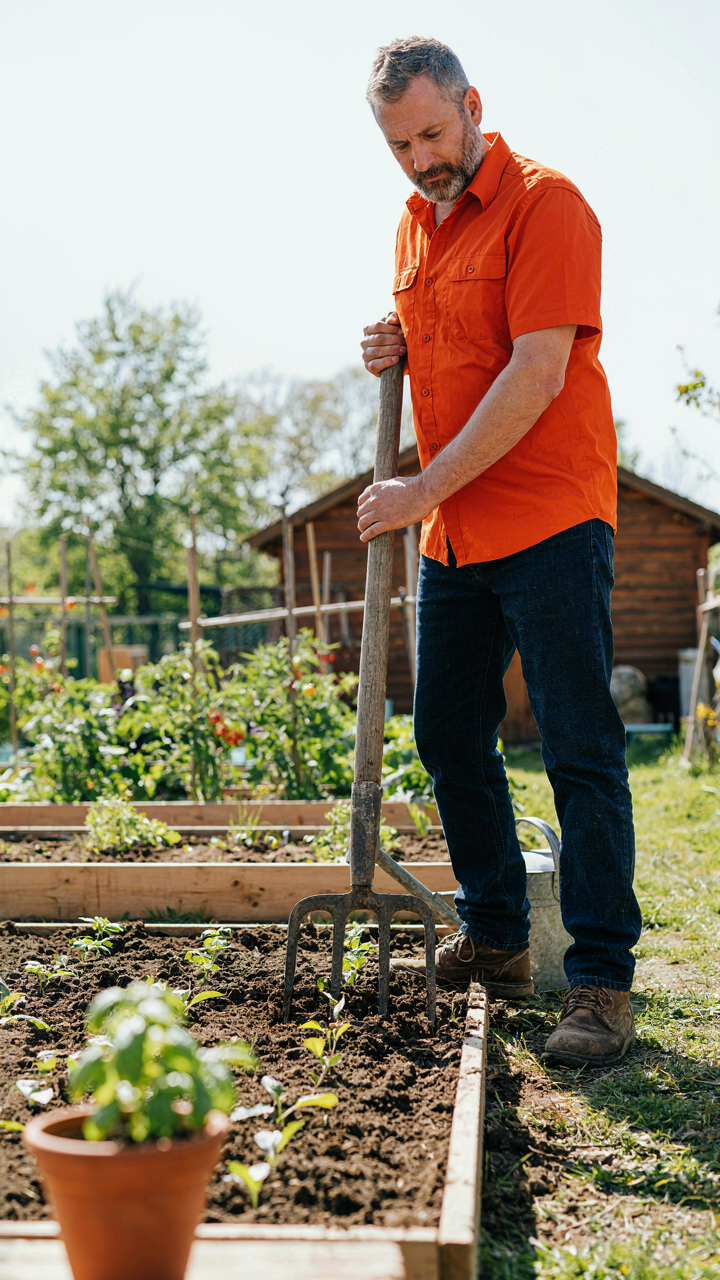
The One Tool That Actually Earns Its Place
You want to feel productive without actually buying more stuff. Here’s the mechanism: most gardeners treat tools as a status collection rather than force multipliers. A square foot raised bed demands specific work. The wrong tool creates friction. The right tool vanishes into the task. You need implements that solve multiple problems within the raised bed context, not single-purpose equipment gathering rust.
A quality broadfork, spading fork, or sturdy cultivator handles soil preparation, bed refreshes, and compaction breaking. These tools work across seasons. A hand rake with a long handle reaches bed centers without stepping into growing zones. Bypass pruners cut through stems and small branches cleanly. These three tools cover ninety percent of raised bed maintenance. Everything else is performance theater.
Leverage Points And Soil Resistance
Physics calls it mechanical advantage. In raised bed gardening, it’s the broadfork. A broadfork applies force through leverage rather than raw strength. Insert the two tines into compacted soil at the bed’s edge, step down, and rock the handle back. The tines fracture soil without turning it over. This matters because square foot beds depend on consistent soil structure year to year.
Most people skip this step and dig manually every season, destroying soil architecture. The broadfork takes fifteen minutes per bed and costs thirty to eighty dollars once. After that, seasonal soil work takes half the time and half the effort. Position yourself at one end of the raised bed, work from outside the perimeter inward, and space your insertions eight to ten inches apart. This single protocol prevents the compaction spiral that kills productivity in square foot systems.
The “Set And Forget” Raised Beds Strategy: Beyond Constant Intervention

Design For Minimal Daily Maintenance
You want this to work without becoming your second job. That’s the real reason you care about this section. The mechanism is simple: a well-designed square foot bed with the right soil composition, spacing, and water delivery system eliminates the need for constant fussing. Most gardeners treat their beds reactively, fixing problems as they appear. That’s backwards.
Design for self-sufficiency means building your bed structure, soil mix, and irrigation to run on predetermined inputs. Use drip lines on timers instead of hand-watering daily. Choose soil depths and amendments that retain moisture without waterlogging. Space plants according to mature size, not seedling size, so you avoid crowding and disease pressure. The work happens in week one, not every week.
Plan Annually, Not Weekly
Long-term planning is the opposite of reactive gardening, and most growers operate in reaction mode. In military strategy, this is the difference between campaign planning and tactical firefighting. Your raised bed is your campaign. You decide in January what goes where in each season, accounting for soil depletion, pest cycles, and crop rotation. Reactive gardeners see a problem, spray something, move on. Strategic gardeners prevent the problem before it arrives.
Build a three-year crop rotation schedule for each bed section. Document what you grew, when you harvested, and what pests appeared. Amend soil once per season based on this data, not based on hunches. When you plan annually and execute systematically, your bed becomes predictable. You know exactly when to plant, when to irrigate at half capacity, and when to stop watering to trigger ripening. That predictability is what frees you from constant intervention.
The Unspoken Advantage Of Raised Beds: Your Time As The Ultimate Crop

Reclaiming Hours Through Efficient Layout
You’re reading this because you suspect raised beds save time, and you want proof you’re not wasting money on a trend. Here’s the mechanism: raised beds function like a constraint in systems design. You don’t optimize what you can expand infinitely. Ground beds let you sprawl. Raised beds force you to choose. A four by four foot bed holds roughly sixteen square foot sections. You know exactly what fits. You stop planning mid-season. You eliminate decision fatigue on bed depth, spacing, and pathways because the structure itself answers these questions.
The real efficiency isn’t romantic. It’s arithmetic. You walk less. You bend less. Your tools stay within arm’s reach of the bed perimeter. A standard raised bed reduces the average distance you travel per harvest or weeding session by forty to fifty percent compared to in-ground rows. You also eliminate the negotiation between what you want to plant and what the soil allows. Raised beds let you import your substrate. You control drainage, pH, and nutrient density from day one. No surprises mid-season. No fighting clay. This compounds over years.
Leisure Becomes The Byproduct
The common pitch is that raised beds “give you your weekends back.” That’s incomplete marketing speak. What actually happens is this: raised beds eliminate the longest tasks, leaving only the tasks that feel like maintenance instead of labor. Weeding a raised bed takes half the time of weeding a ground bed because soil stays contained. You don’t chase weeds into pathways. Watering concentrates in one zone. Pest pressure stays localized. You spend time on planting and harvesting, not damage control.
The mechanic that matters is rhythmic repetition over sprawling chaos. You can garden for twenty minutes and feel progress. You cannot feel progress in a half-acre ground garden in twenty minutes. Raised beds collapse the feedback loop. You see results fast. You return often. You build a sustainable habit instead of a seasonal sprint followed by abandonment. Time becomes the crop you’re actually optimizing for, not tomatoes.
Your Garden Isn’t Lacking Innovation; It’s Burdened By Complexity. The True Barrier Is Always The Self-imposed One

Stop waiting for the perfect square foot raised bed system to exist. Pick one today, build it this weekend, and plant something next week. The trends don’t matter. The action does. Every gardener who actually grows food started exactly where you are now, paralyzed by options instead of moving. Your garden succeeds or fails based on what you do in the next seven days, not which bed you choose. Stop researching and start digging.



